
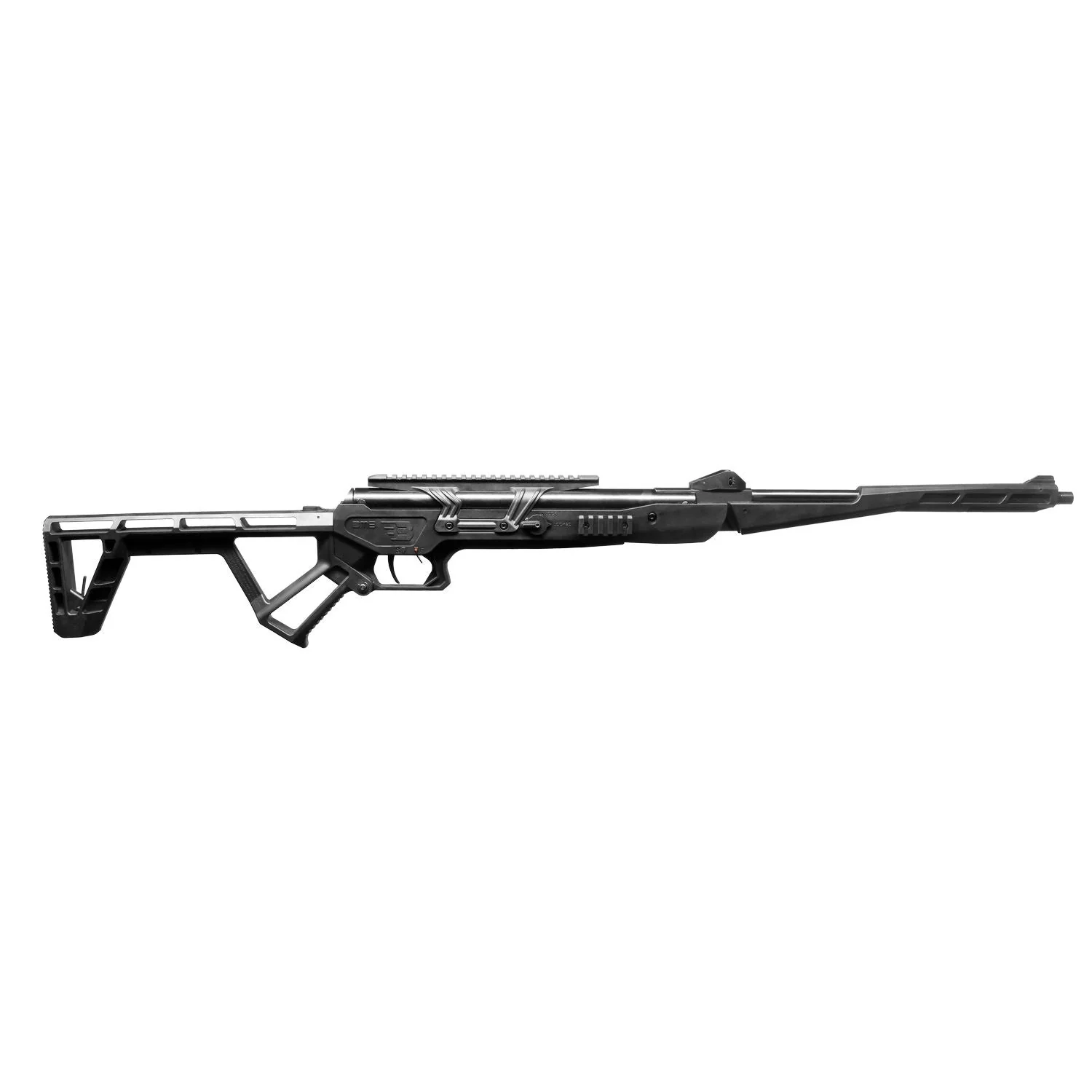
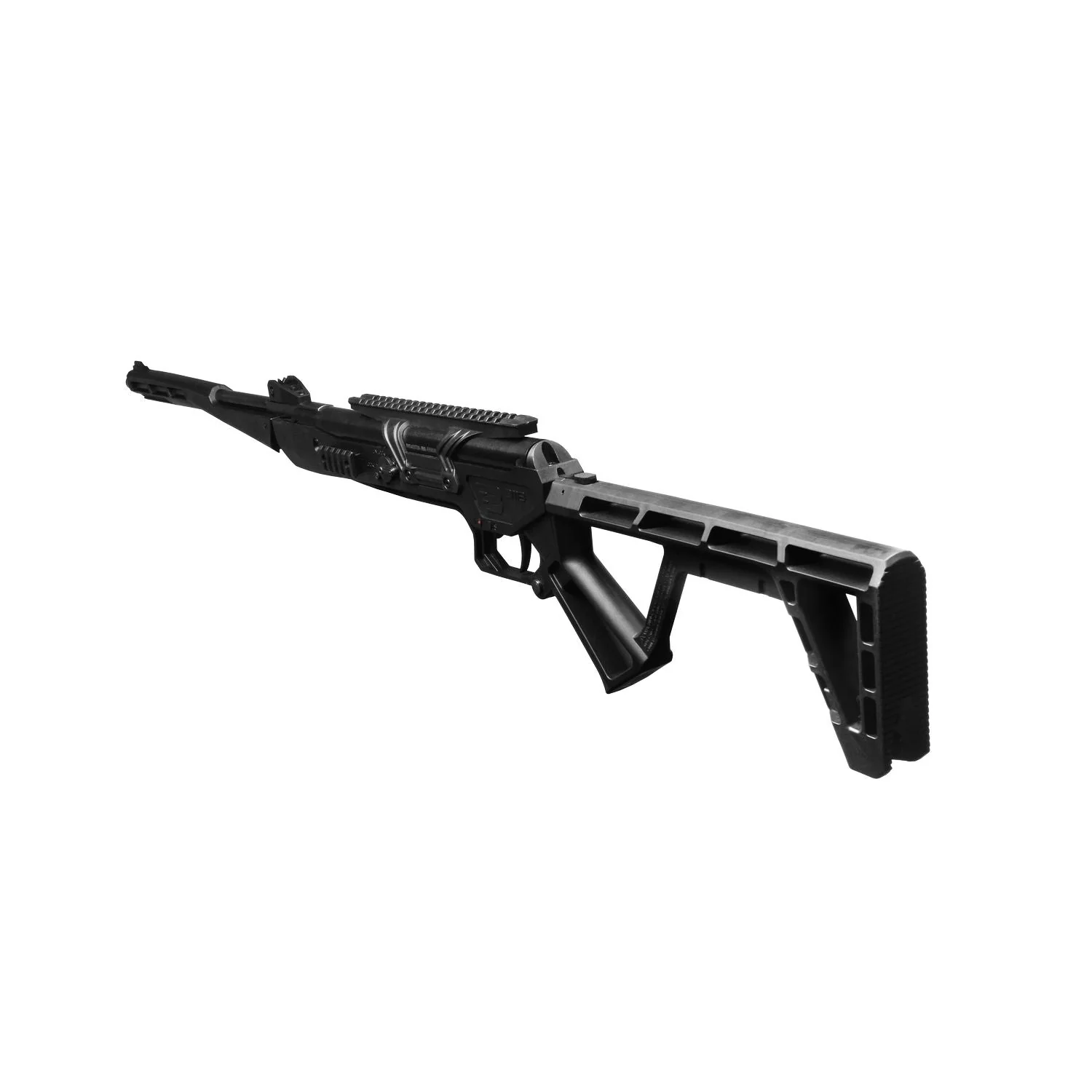
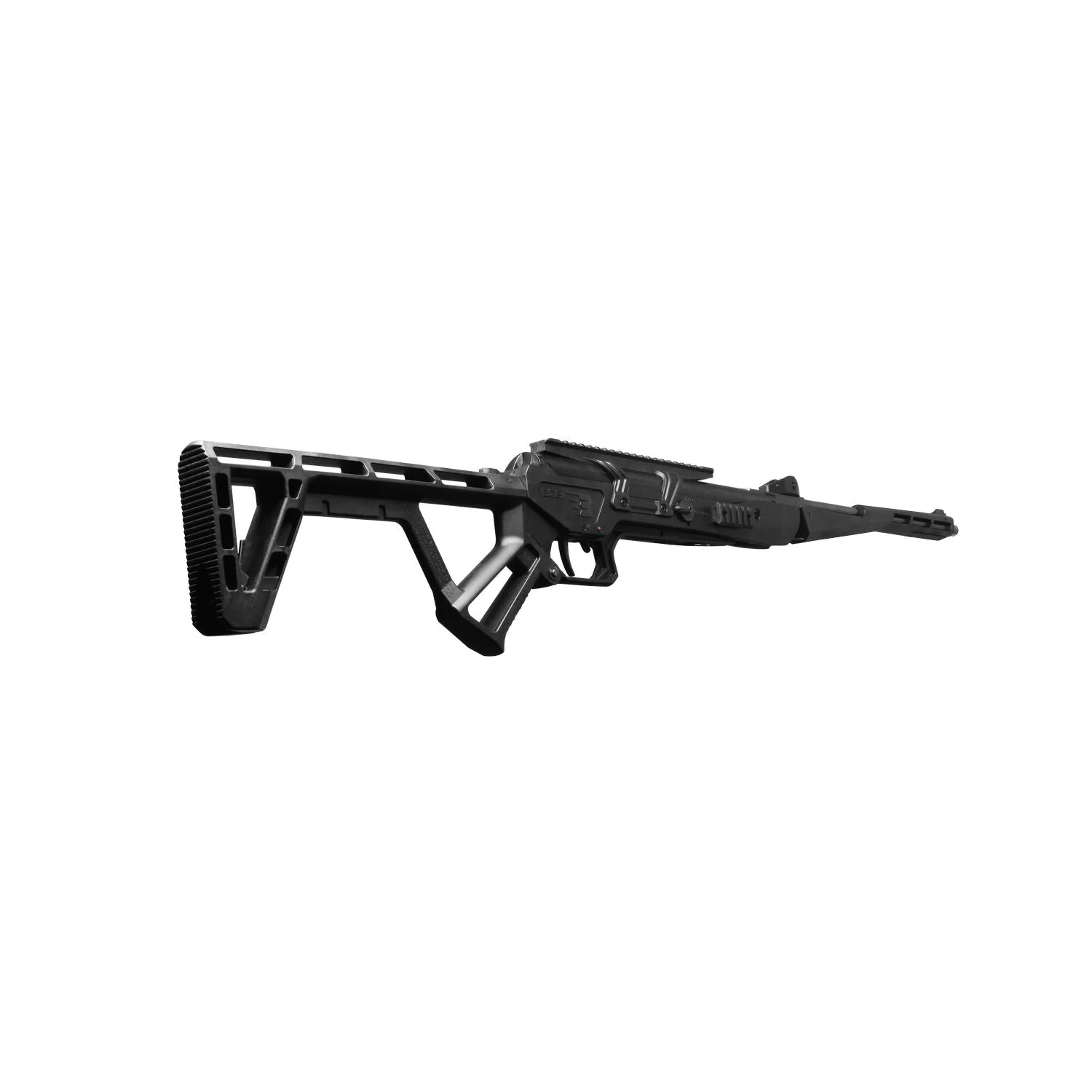
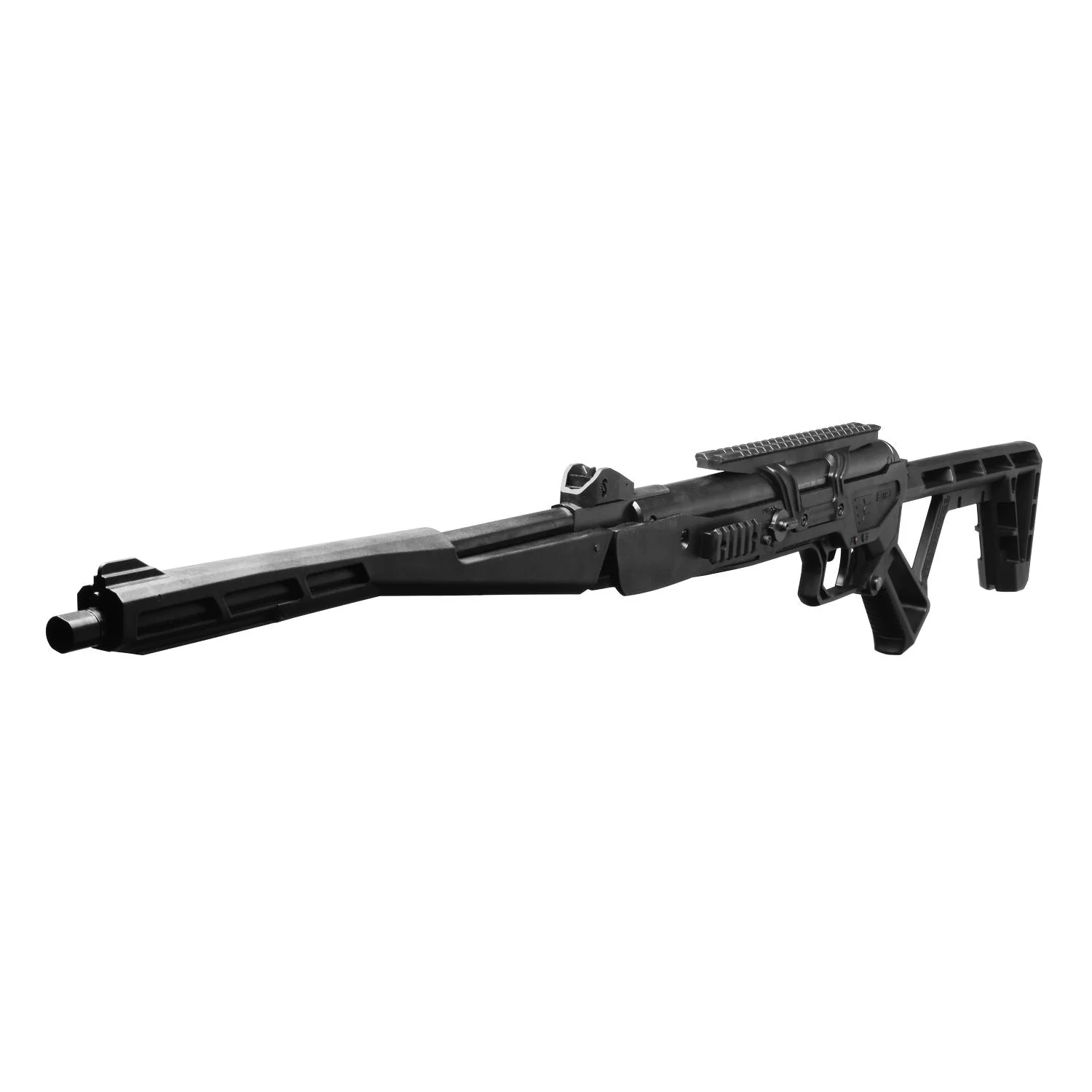
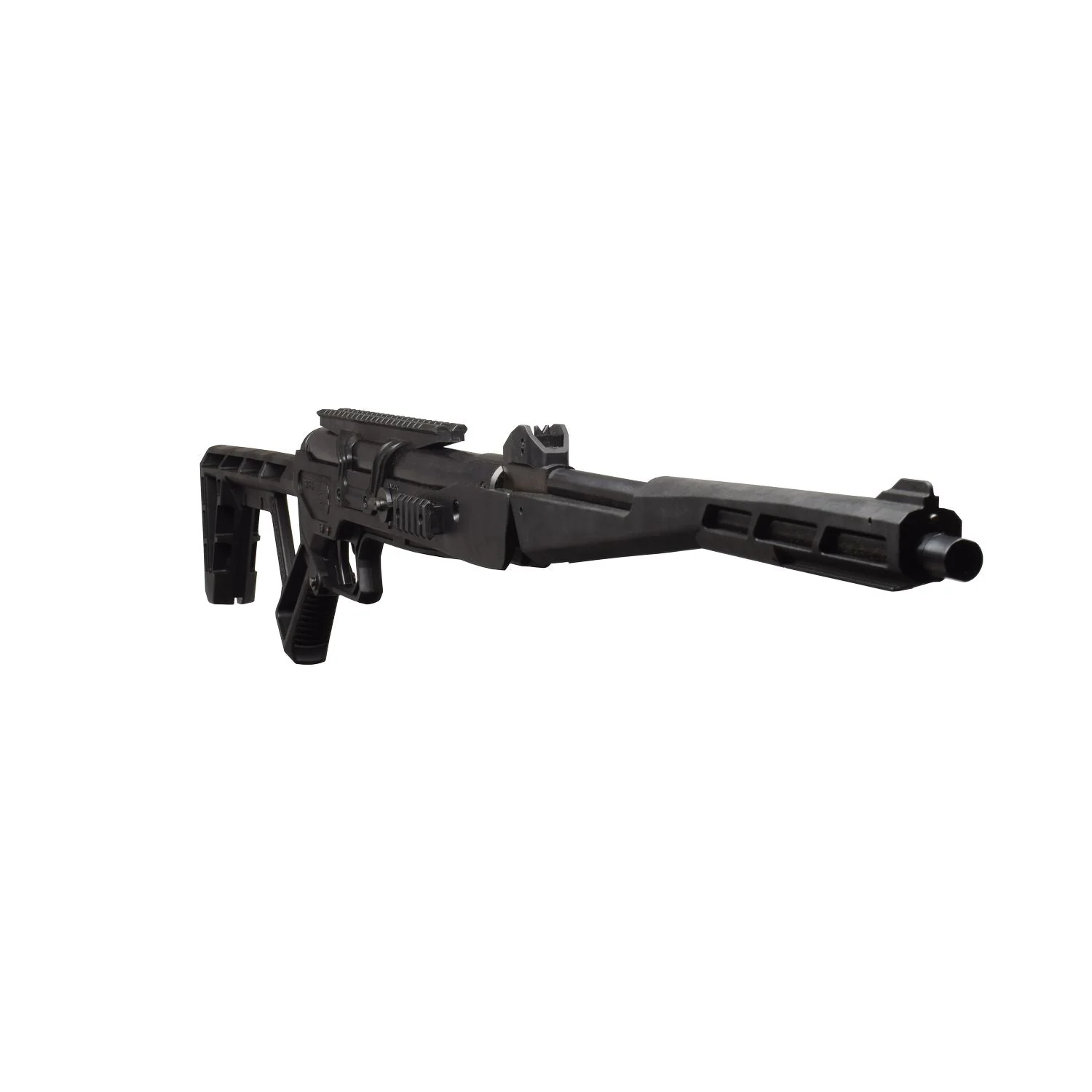
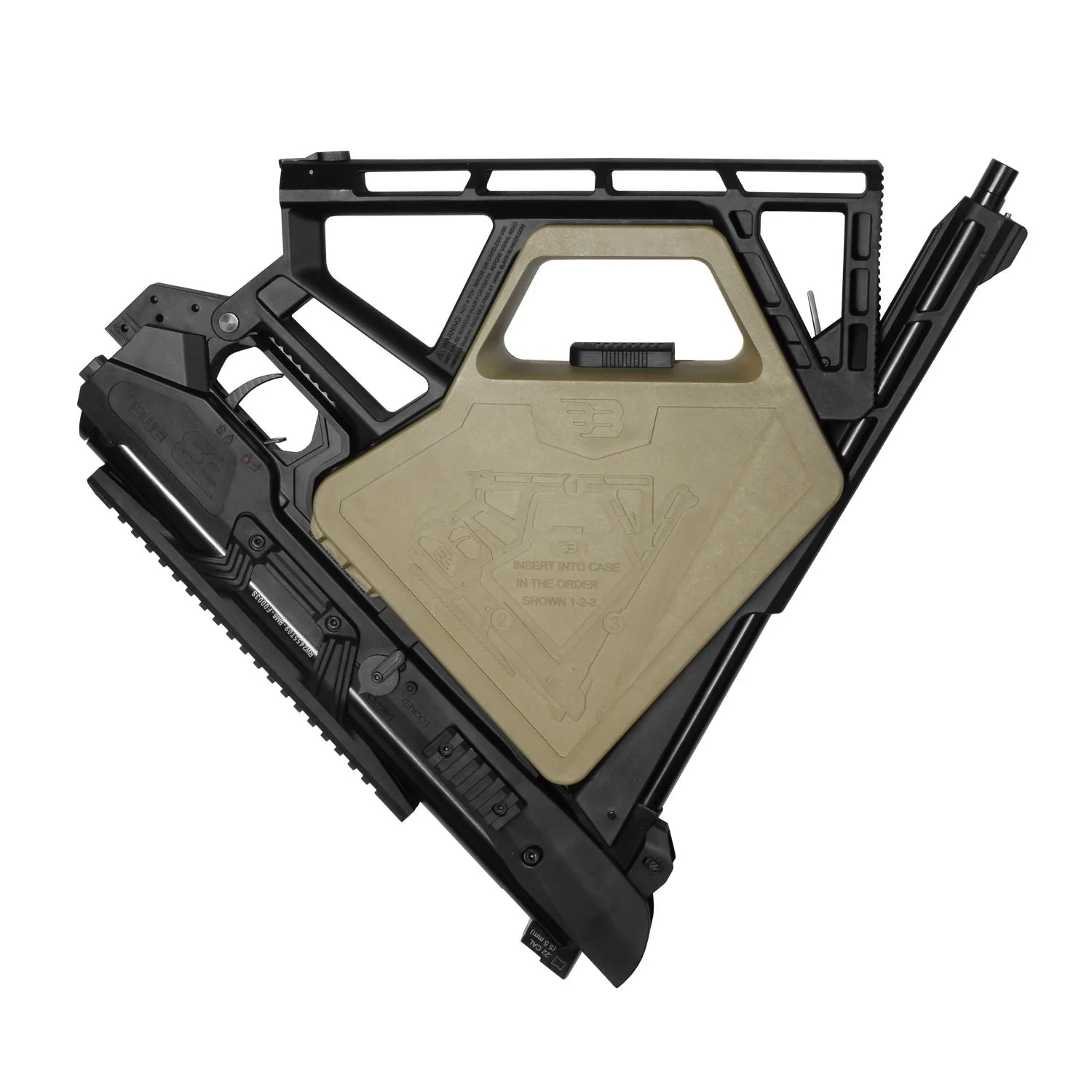
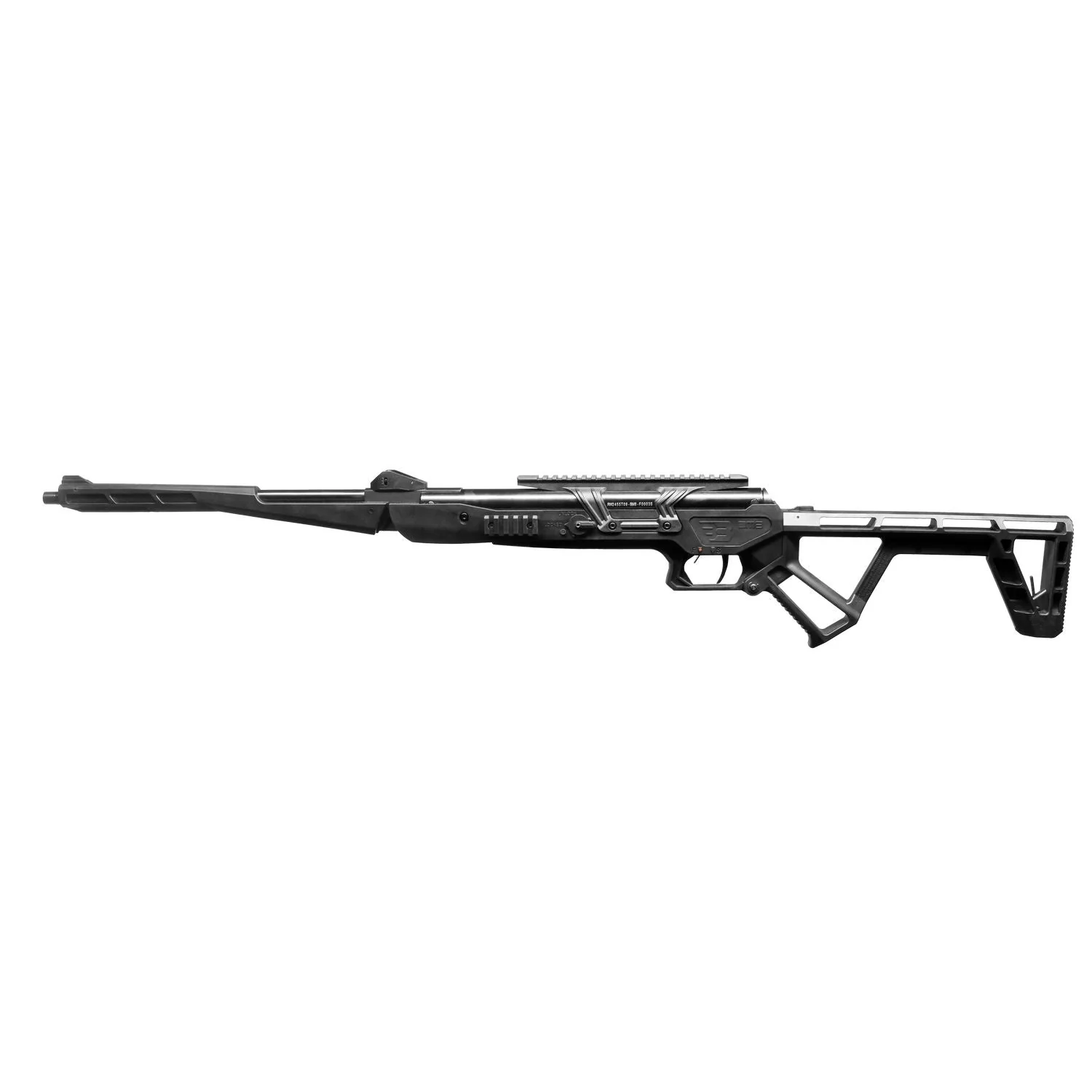
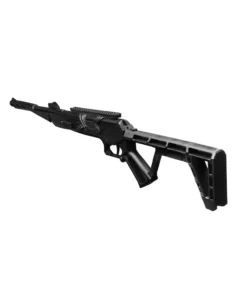
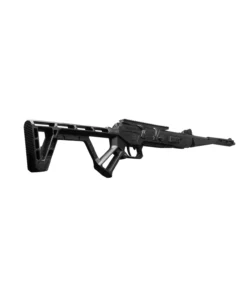
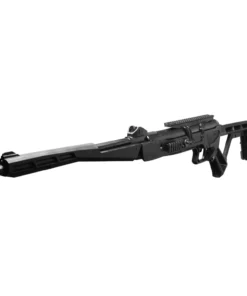

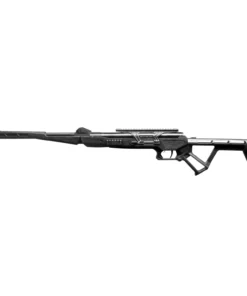
Black Bunker BM8 – Full Black – Thread – .177 Cal
€115.00
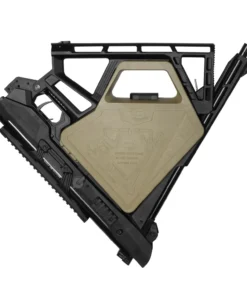
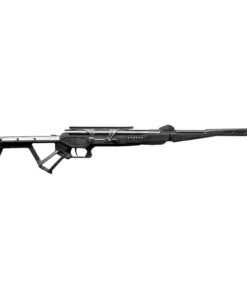
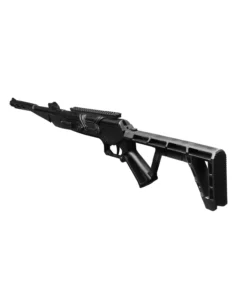
- The first foldable Survival Air Rifle.
- Ultra compact and easy to store & carry.
- Break barrel technology.
- GAS ram powerplant for increased accuracy, noise reduction, reduced recoil, and increased durability.
- Velocity (full power versions)
- Cal. .177/ 4.5mm: Up to 1000 Fps with lead pellets / Up to 1200 fps with alloy pellets.
- Available in detuned versions for markets with limitations: 19.9J, • 16J / 12 ft/lbs, 10J, 7.5J.
- 2-stage safety lock system.
- Military grade reinforced polymer stock.
- Textured buttstock for better grip
- Picatinny rails for scope mount – high mount recommended.
- Picatinny rails on sides for additional accessories such as flashlight, laser and bipod.
- Open sights. Rear sight adjustable.
- Includes water resistant case for tools, pellets, and survival kit. (Tools not included)
- Bonus: Includes muzzle break- and breech protection cover.
- Color: Full Black
- Overall length: 42.7 inches/ 106cm
- Weight: 7.5Lbs/ 3.4kg
- Serial number will tell power level, caliber, color, and configuration.
- Patent pending
Black Bunker BM8 Full Black Threaded .177 Cal – Folding Design, Specifications, Performance, and Safety Guide
Black Bunker BM8 Full Black Threaded .177 Cal Overview
What Is the Black Bunker BM8 Full Black Threaded .177 Cal?
The black bunker bm8 Full Black Threaded .177 Cal is a single-shot, break-barrel air rifle built around a distinctive three-section folding structure. Its barrel, receiver, and rear stock components fold into a triangular storage arrangement, allowing the black bunker platform to occupy less storage space when it is not in its operating configuration.
The bm8 described here uses .177-caliber, or 4.5 mm, pellets and a gas-ram powerplant. It is finished in full black and equipped with a threaded muzzle intended for compatible accessories where those accessories are lawful. Kore Outdoor identifies the BM8 range as available in two colors, two calibers, and both standard and threaded barrel formats.
Although users may casually refer to the product as a black gun, it is technically an air-powered pellet rifle rather than a cartridge-firing firearm. Nevertheless, it can cause serious injury and must never be treated as a toy.
Why the Folding Construction Matters
The rifle is frequently described as a collapsible pellet gun, although “foldable break-barrel air rifle” is a more precise technical description. Its main sections pivot around the central structure to create a compact triangular shape.
This engineering concept places the platform within the category of survival airguns. The manufacturer states that the folded design is intended to simplify storage and transportation, including placement in a suitable backpack, vehicle compartment, shelf, or dedicated case.
Therefore, the terms Black Bunker foldable airgun, backpack air rifle, compact survival airgun, and foldable airgun refer to the storage-oriented structure. However, the compact format does not authorize concealed public carrying, unlawful transportation, defensive use, or discharge in prohibited areas.
How the Gas-Ram Mechanism Operates
The rifle uses break-barrel gas-ram technology. During the cocking process, the barrel pivots downward and compresses the internal gas piston. A single pellet is then inserted into the breech before the barrel is carefully returned to its locked position.
The phrase gas ram survival rifle refers to this mechanical powerplant. Since it relies on stored mechanical energy, it is not a battery powered air gun. No rechargeable battery, carbon-dioxide capsule, or external pneumatic bottle is required for routine operation.
Kore Outdoor describes the platform as using break-barrel gas-ram technology and reinforced nylon-fiber and carbon-steel materials.
Understanding the .177-Caliber Configuration
The BM8 .177 uses 4.5 mm pellets, so Black Bunker 4.5mm accurately describes this version. Kore Outdoor lists a full-power .177 velocity claim of up to 1,100 feet per second with lead pellets, although real-world performance may vary with pellet weight, rifle condition, temperature, maintenance, regional restrictions, and test methodology.
The BM8 .22, also called the Black Bunker 5.5mm, is a separate caliber configuration. Likewise, the phrase compact .22 air rifle applies to the larger-bore version rather than the .177 model discussed here.
Only ammunition matching the caliber marked on the barrel should be used. Incorrectly sized projectiles may obstruct the bore, damage components, or create a serious safety risk.
What the Threaded Muzzle Provides
The threaded barrel end is designed to accept a compatible barrel brake or moderator where local law permits such equipment. The manufacturer’s product page specifically identifies the threaded muzzle as an attachment point for those accessories.
Compatibility should always be confirmed before an accessory is installed. Thread dimensions, clearance, barrel alignment, folding movement, and legal restrictions must all be considered. A poorly fitted component may interfere with operation or create unsafe alignment.
Full-Black Construction and External Features
The full-black finish creates a uniform appearance across the stock and external structure. Kore Outdoor states that the rifle uses reinforced nylon-fiber and carbon-steel materials. It also includes open sights, an adjustable rear sight, Picatinny rails, a custom storage case, and a barrel-and-breech protection cover.
Searches using black gun big, big black gun, and blackgun may produce unrelated products. These broad phrases should not replace the correct model name, caliber, finish, or barrel specification.
The Black Bunker Coyote Tan is an alternative finish within the same product family. Its color does not automatically determine its caliber, power level, or muzzle configuration.
Where and When the Rifle May Be Used
The manufacturer categorizes the platform as a Black Bunker survival rifle, while some users may describe it as a backpack hunting rifle. However, lawful use depends on local rules involving ownership, minimum age, licensing, hunting species, power limits, landowner authorization, storage, transportation, and discharge areas.
The .177 configuration may be used for supervised target shooting where lawful and where a reliable pellet-catching backstop is installed. Any pest-control activity must be legal, humane, suitable for the rifle’s available energy, and performed only by a trained adult.
Manufacturer and Brand Identification
The product line is associated with Kore Outdoor Black Bunker. Kore Outdoor introduced the BM8 as a folding break-barrel platform offered in .177 and .22 calibers, Full Black and Coyote Tan finishes, and standard or threaded barrel versions.
The term bunkrr.com appears to be a misspelling or unrelated domain phrase. Similarly, b & r guns & outdoor range does not identify the manufacturer. Product information should be verified through reliable documentation and the markings on the individual rifle.
Clarifying Unrelated Search Phrases
Several supplied phrases are not official model names, parts, or specifications of the BM8.
The terms black bomb, plank gun, blackberry gun, b c 8, bedbunker, inflatable gun, banair, air bk, and b 8 bomber are unrelated or inaccurate descriptions.
Likewise, how to get the black hole sniper rifle appears to refer to a fictional or gaming-related item rather than this physical air rifle. These terms should not be used to support claims about power, caliber, construction, compatibility, or authenticity.
Why Responsible Handling Is Essential
The platform includes a two-stage safety-lock arrangement intended to render the rifle non-functional during storage and transportation. However, no mechanical safety system replaces responsible handling.
The black bunker bm8, black bunker bm8, and black bunker bm8 should always be treated as loaded until personally checked. Keep the muzzle pointed in a safe direction, keep fingers outside the trigger guard, identify the target and everything beyond it, and use a suitable backstop.
When not in use, the collapsible pellet gun should be unloaded, folded, secured, and stored separately from pellets. Access by children and unauthorized individuals must be prevented at all times.
Mechanical Construction, Handling Characteristics, Maintenance Procedures, and Long-Term Reliability
Understanding the Engineering Approach
Modern break-barrel platforms are designed around the principles of durability, simplicity, portability, and efficiency. Rather than depending on external charging systems, these platforms rely on integrated mechanical components that work together to provide consistent operation.
Every component contributes to the overall balance of the system. Consequently, engineers devote considerable attention to structural integrity, weight distribution, material strength, and ease of maintenance.
The objective is not simply to maximize performance but also to create a design that remains dependable over an extended period of use.
Material Selection and Structural Integrity
Manufacturers carefully select materials according to the demands placed upon each component. Durability remains particularly important because moving parts are exposed to repeated stress during operation.
Several factors influence material selection:
- Structural strength
- Resistance to corrosion
- Weight reduction
- Long-term reliability
- Resistance to environmental exposure
- Ease of maintenance
Because every component performs a specific function, selecting appropriate materials remains an essential aspect of the design process.
Understanding Mechanical Operation
Break-barrel systems depend upon a carefully engineered sequence of mechanical actions. During operation, internal components work together to store energy and release it in a controlled manner.
Several factors contribute to efficient operation:
- Precise component alignment
- Consistent lubrication
- Clean operating surfaces
- Proper maintenance procedures
- Stable environmental conditions
Although the process appears straightforward, precision engineering remains essential because even minor variations may affect consistency.
Why Balance and Stability Matter
Balance plays an important role in comfort, control, and long-term usability. Equipment that is properly balanced often feels more natural to operate, particularly during extended sessions.
Several factors influence stability:
- Weight distribution
- Body positioning
- Grip consistency
- Trigger control
- Environmental conditions
- Routine maintenance
Because these factors constantly interact with one another, careful preparation frequently produces better results.
Accuracy and Precision Considerations
Accuracy depends upon numerous variables working together simultaneously. Mechanical quality remains important, yet operating techniques, environmental conditions, and maintenance practices also influence overall performance.
Several factors contribute to greater consistency:
- Stable positioning
- Consistent movements
- Careful preparation
- Regular inspections
- Environmental awareness
- Effective maintenance procedures
Improvement often occurs gradually as experience and familiarity increase.
Routine Maintenance Procedures
Maintenance should be viewed as a continuous process rather than an occasional task. Dirt, moisture, dust, and other contaminants may accumulate over time, which is why regular inspections remain essential.
A comprehensive maintenance routine may include the following steps:
- Inspect external surfaces carefully.
- Remove visible contaminants.
- Examine moving components.
- Verify that all attachment points remain secure.
- Return equipment to an appropriate storage environment.
Although these procedures are simple, they often contribute significantly to long-term reliability.
Environmental Influences on Performance
Environmental conditions can influence both performance and durability. Wind, humidity, moisture, dust, and temperature changes should always be taken into consideration.
Several conditions deserve particular attention:
- Wind speed and direction
- Relative humidity
- Exposure to moisture
- Dust accumulation
- Sudden temperature fluctuations
Understanding these factors often allows owners to make better decisions regarding maintenance and preparation.
Transportation and Storage Recommendations
Transportation procedures should always be approached carefully because movement, vibration, and environmental exposure may gradually affect mechanical components.
Several recommendations should always be followed:
- Store equipment in a cool and dry environment.
- Minimize exposure to excessive heat.
- Protect exposed surfaces from moisture.
- Avoid unnecessary impacts.
- Restrict access by unauthorized individuals.
These precautions often help preserve reliability while reducing avoidable wear.
Frequently Asked Questions
Why is routine maintenance necessary?
Routine maintenance helps protect components from unnecessary wear while allowing developing problems to be identified early.
Why is balance important?
Proper balance often improves comfort, stability, and consistency during operation.
How frequently should inspections be performed?
Inspection intervals depend upon environmental conditions and frequency of use, although regular inspections remain strongly recommended.
Can environmental conditions influence performance?
Yes. Wind, moisture, humidity, dust, and temperature changes may all affect consistency and long-term durability.
Final Thoughts
Long-term reliability depends upon preparation, discipline, maintenance, environmental awareness, and responsible ownership. Owners who consistently follow these principles often preserve both performance and durability over many years.
Performance Characteristics, Practical Applications, Equipment Care, and Long-Term Ownership
Understanding Real-World Performance
Real-world performance is influenced by a combination of engineering quality, environmental conditions, maintenance routines, and operating techniques. Although modern manufacturing methods have improved consistency considerably, dependable operation still relies upon careful preparation and disciplined handling.
Mechanical systems are designed to function efficiently under a wide range of conditions. Nevertheless, environmental influences and individual operating habits often determine whether performance remains consistent over extended periods.
For this reason, experienced owners generally emphasize preparation and maintenance just as much as technical specifications.
Why Consistency Is So Important
Consistency allows owners to evaluate performance more accurately while reducing the influence of avoidable variables. Even small changes in posture, grip pressure, or body positioning may affect overall results.
Several factors contribute to consistent operation:
- Stable positioning
- Controlled movements
- Appropriate maintenance procedures
- Environmental awareness
- Proper storage conditions
- Routine inspections
Because all these elements interact continuously, improvements in one area frequently support improvements in another.
How Preparation Improves Reliability
Preparation should always begin before operation takes place. Thorough inspections provide an opportunity to identify developing concerns while ensuring that all visible components remain in satisfactory condition.
An effective preparation routine often includes the following steps:
- Examine external surfaces.
- Inspect moving components carefully.
- Confirm that attachment points remain secure.
- Remove visible contaminants.
- Evaluate environmental conditions.
Although these procedures require relatively little time, they often provide considerable long-term benefits.
Environmental Conditions and Their Effects
Environmental conditions constantly change, and every change has the potential to influence performance. Temperature fluctuations, humidity, wind, dust, and moisture exposure should all be considered carefully.
Several environmental factors deserve particular attention:
- Wind speed and direction
- Relative humidity
- Air quality
- Rain and moisture exposure
- Changes in temperature
- Lighting conditions
By understanding these variables, owners may be better prepared to protect both equipment and performance.
Developing Effective Handling Techniques
Proper handling techniques frequently improve through repetition and experience. Smooth and deliberate movements generally provide more predictable results than hurried adjustments.
Several recommendations should always be remembered:
- Maintain a comfortable position.
- Apply steady and controlled movements.
- Avoid unnecessary adjustments.
- Focus on consistency.
- Develop disciplined habits.
These practices often contribute to greater confidence and improved control.
Long-Term Durability and Equipment Protection
Durability depends upon material quality, manufacturing precision, maintenance procedures, and environmental exposure. Every mechanical system experiences wear over time, which makes regular inspections especially important.
Several factors influence longevity:
- Frequency of use
- Storage conditions
- Environmental exposure
- Transportation methods
- Maintenance routines
Although deterioration cannot be eliminated completely, careful maintenance may significantly reduce unnecessary wear.
Transportation and Storage Considerations
Transportation procedures should always be approached carefully because movement and vibration may gradually influence the condition of mechanical components.
Several recommendations should be followed consistently:
- Store equipment in a clean and dry location.
- Protect surfaces from moisture and contamination.
- Avoid prolonged exposure to direct sunlight.
- Inspect components after transportation.
- Restrict access by unauthorized individuals.
These precautions often contribute to improved long-term reliability.
Responsible Ownership Principles
Responsible ownership extends beyond maintenance and operation. Knowledge, patience, discipline, and attention to detail all contribute to a safer and more effective experience.
Several principles should always be observed:
- Follow all applicable laws and regulations.
- Continue improving operating techniques.
- Establish regular maintenance schedules.
- Maintain secure storage conditions.
- Protect equipment from avoidable damage.
These habits promote both safety and long-term durability.
Frequently Asked Questions
Why should preparation become a regular habit?
Preparation allows owners to identify potential concerns before operation begins while supporting more dependable performance.
Why is environmental awareness important?
Environmental conditions influence both durability and consistency, particularly when moisture, heat, or dust is involved.
How often should maintenance be performed?
Maintenance intervals vary according to environmental conditions and frequency of use, although routine inspections remain essential.
Why is secure storage necessary?
Secure storage helps protect equipment from environmental exposure while preventing unauthorized access.
Final Assessment
Long-term reliability depends upon preparation, responsible ownership, regular maintenance, and careful handling practices. By applying these principles consistently, owners often preserve performance while extending the useful life of their equipment.
Advanced Maintenance Practices, Performance Optimization, and Long-Term Preservation
Examining the Relationship Between Design and Reliability
Every mechanical system is influenced by the relationship between its individual components. Although each part performs a specific function, overall performance depends upon the way those parts interact with one another over time.
Modern engineering emphasizes durability, efficiency, and structural stability because these characteristics contribute directly to long-term reliability. Consequently, routine maintenance remains just as important as the quality of the original design.
Owners who understand these principles often develop more effective operating habits and experience fewer avoidable problems.
Why Material Quality Matters
Material quality has a direct influence on durability and resistance to wear. Manufacturers select specific materials according to their intended purpose because each component must withstand particular environmental and mechanical conditions.
Several factors influence material selection:
- Structural strength
- Resistance to corrosion
- Weight reduction
- Dimensional stability
- Environmental resistance
- Ease of maintenance
Although no material is entirely immune to wear, careful maintenance often extends the useful lifespan of individual components.
Understanding Long-Term Performance Factors
Long-term performance depends upon a combination of preparation, maintenance, environmental awareness, and consistent handling techniques. Mechanical systems naturally experience wear during regular operation; therefore, inspections should be performed regularly.
Several factors frequently influence reliability:
- Frequency of use
- Storage conditions
- Environmental exposure
- Transportation practices
- Maintenance routines
- Operating techniques
Because these factors interact continuously, a balanced approach often provides the best results.
How Preparation Supports Consistency
Preparation remains essential because it allows owners to identify developing concerns before they become more serious. In many cases, early intervention prevents unnecessary wear while improving long-term reliability.
An effective preparation routine may include the following actions:
- Inspect external surfaces.
- Examine moving components carefully.
- Remove visible contaminants.
- Confirm that attachment points remain secure.
- Evaluate environmental conditions.
These procedures require only a limited amount of time, yet they frequently provide substantial benefits.
Environmental Conditions and Their Influence
Environmental conditions should always be considered because they affect both performance and durability. Exposure to excessive moisture, dust, wind, and extreme temperatures may gradually influence mechanical components.
Several conditions deserve particular attention:
- Relative humidity
- Temperature changes
- Wind speed
- Dust accumulation
- Exposure to direct sunlight
By monitoring these factors carefully, owners often improve both reliability and long-term performance.
Establishing Effective Maintenance Routines
Maintenance routines become increasingly valuable as equipment ages. Dirt, dust, and environmental contaminants accumulate gradually, which makes regular cleaning procedures especially important.
Several maintenance recommendations should always be followed:
- Inspect components regularly.
- Remove visible contaminants promptly.
- Protect exposed surfaces.
- Monitor signs of wear carefully.
- Maintain appropriate storage conditions.
Consistent attention to these details frequently reduces the likelihood of avoidable damage.
Transportation and Storage Considerations
Transportation procedures require careful planning because movement and vibration may influence structural integrity over time. Appropriate storage methods also help protect equipment from unnecessary environmental exposure.
Several recommendations may contribute to long-term preservation:
- Store equipment in a clean, dry location.
- Avoid excessive heat and moisture.
- Protect surfaces from contamination.
- Minimize unnecessary impacts.
- Restrict unauthorized access.
These precautions often help preserve both appearance and functionality.
Responsible Ownership and Continued Learning
Responsible ownership involves continuous learning and a commitment to proper maintenance practices. Experience often improves judgment, yet discipline remains equally important.
Several principles should always guide long-term ownership:
- Follow applicable regulations.
- Continue refining operating techniques.
- Maintain regular inspection schedules.
- Develop effective maintenance habits.
- Protect equipment from avoidable damage.
These practices help create safer and more reliable operating conditions.
Frequently Asked Questions
Why is material quality so important?
Material quality influences durability, structural integrity, and resistance to environmental exposure.
Why should maintenance become a routine practice?
Routine maintenance helps preserve reliability while reducing the likelihood of unnecessary wear.
How do environmental conditions affect equipment?
Environmental factors such as moisture, dust, heat, and wind may gradually influence both performance and durability.
Why are transportation procedures important?
Transportation procedures help protect equipment from vibration, impacts, and changing environmental conditions.
Final Thoughts
Long-term reliability is achieved through preparation, discipline, maintenance, and environmental awareness. Owners who consistently apply these principles often preserve performance while extending the overall lifespan of their equipment.
Long-Term Ownership, Equipment Care, Performance Consistency, and Practical Considerations
Developing Effective Long-Term Habits
Long-term reliability is built through consistency, preparation, and attention to detail. Although modern engineering methods have improved durability significantly, every mechanical system experiences wear throughout its operational life. Consequently, owners should establish regular maintenance routines that help preserve reliability and reduce the possibility of unnecessary deterioration.
These habits often become increasingly valuable over time because small concerns can frequently be identified before they develop into more serious problems. Furthermore, a structured maintenance routine allows owners to maintain greater confidence in the condition of their equipment.
Experience, patience, and discipline continue to play an essential role in preserving long-term performance.
Why Routine Maintenance Remains Essential
Maintenance should never be regarded as an occasional responsibility. Instead, it should become a regular part of ownership because dust, dirt, moisture, and environmental contaminants gradually accumulate during normal use.
Several practices should be incorporated into a maintenance routine:
- Inspecting visible components carefully
- Removing accumulated debris
- Protecting exposed surfaces
- Monitoring signs of wear
- Verifying the condition of moving parts
- Evaluating storage conditions
These procedures require relatively little effort, yet they often contribute significantly to long-term durability.
How Storage Conditions Affect Reliability
Storage conditions influence both appearance and performance. Excessive humidity, sudden temperature changes, direct sunlight, and airborne contaminants may gradually affect external surfaces and internal components.
Several recommendations should always be followed:
- Store equipment in a clean environment.
- Minimize exposure to moisture.
- Protect surfaces from contamination.
- Avoid unnecessary impacts.
- Inspect equipment periodically.
When these precautions become part of a regular routine, the possibility of avoidable damage is often reduced considerably.
Understanding Environmental Influences
Environmental conditions should always be taken seriously because they constantly affect mechanical systems. Wind, humidity, temperature changes, dust, and moisture exposure all have the potential to influence long-term reliability.
Several factors deserve particular attention:
- Relative humidity levels
- Exposure to moisture
- Air quality
- Wind conditions
- Temperature fluctuations
Understanding these influences often allows owners to develop more effective maintenance procedures.
Transportation and Protective Measures
Transportation procedures require careful preparation because movement, vibration, and changing environmental conditions may place additional stress on mechanical components.
Several important recommendations should be considered:
- Inspect all visible components before transportation.
- Secure the equipment carefully.
- Protect exposed surfaces from contamination.
- Avoid unnecessary impacts whenever possible.
- Perform another inspection after transportation.
These procedures may significantly improve long-term reliability while reducing the possibility of unnecessary wear.
Why Consistency Improves Performance
Consistency often becomes one of the most important factors influencing long-term performance. Repeated practice helps owners refine their techniques while improving stability, control, and confidence.
Several habits frequently contribute to more predictable results:
- Maintaining consistent positioning
- Applying controlled movements
- Performing regular inspections
- Monitoring environmental conditions
- Following established routines
These habits often become more effective as experience increases.
Responsible Ownership Principles
Responsible ownership extends beyond operation and maintenance. Knowledge, preparation, discipline, and continuous learning all contribute to a safer and more effective experience.
Several principles should always guide long-term ownership:
- Follow all applicable regulations.
- Continue improving operating techniques.
- Maintain secure storage conditions.
- Protect equipment from unnecessary damage.
- Perform regular maintenance procedures.
These practices help preserve reliability while supporting safe and responsible operation.
Frequently Asked Questions
How frequently should maintenance procedures be performed?
Maintenance schedules depend upon environmental conditions, storage practices, and frequency of use. Nevertheless, regular inspections remain highly recommended.
Why should environmental conditions be monitored?
Environmental factors may influence both performance and durability, especially when equipment is exposed to moisture, heat, dust, or sudden temperature changes.
Why is secure storage important?
Secure storage protects equipment from unnecessary environmental exposure while reducing the possibility of unauthorized access.
How can long-term reliability be improved?
Long-term reliability is generally supported through careful handling, regular maintenance, responsible ownership, and effective storage practices.
Final Remarks
Durability, reliability, and consistent performance are closely connected. Owners who develop disciplined maintenance habits, remain aware of environmental conditions, and follow responsible storage practices often preserve the condition and functionality of their equipment for many years Kore Outdoor Black Bunker.
Be the first to review “Black Bunker BM8 – Full Black – Thread – .177 Cal”
Related products
Black Bunker
Black Bunker


Reviews
There are no reviews yet.