


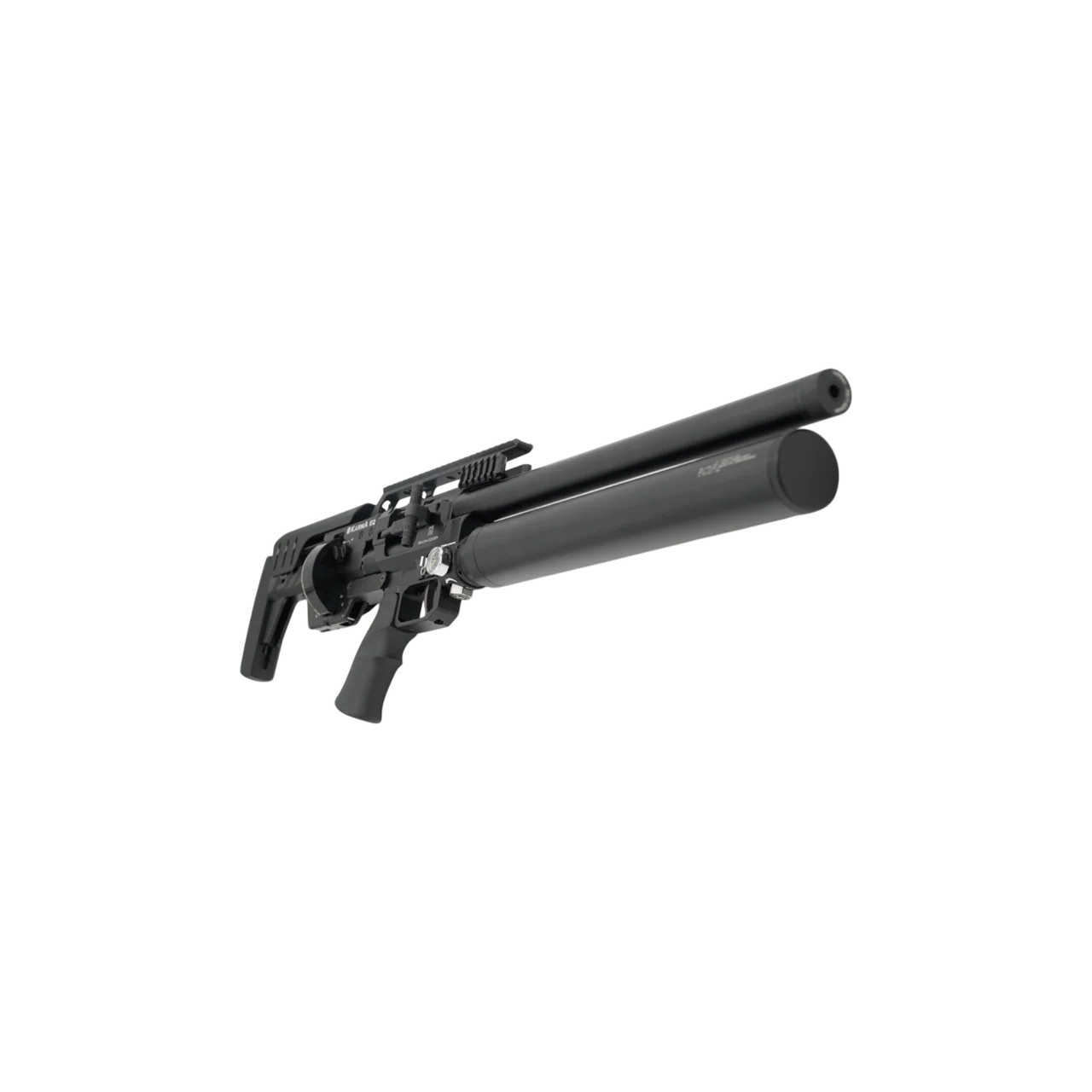



Karma EQ

€695.00
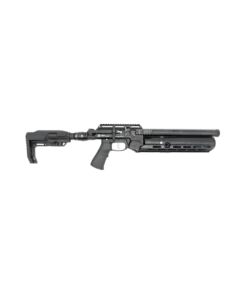
The Karma Airguns EQ PCP air rifle is built for high-power precision at an affordable price, delivering exceptional performance with both slugs and pellets. Engineered for serious hunters and aspiring competitive shooters, the Karma EQ features a large plenum designed to maximize power output, making it capable of driving heavy-for-caliber slugs with authority. Its adjustable regulator puts the shooter in control of the velocity and provides consistent shot-to-shot performance for long-range precision. With a high-capacity magazine and fully adjustable tuning capabilities, the Karma EQ delivers the reliability, customization, and raw power needed to excel in both the field and competition—without the premium price tag.
Power and Versatility
With the ability to fine-tune both pellets and slugs for extremely high levels of precision and a wide band of adjustability of available power, the Karma EQ comes in .22, .25, and .30 calibers to suit your shooting needs.
• Adjustable Trigger for precision trigger control
• Externally Adjustable Regulator for tuning
• High-capacity magazine for fewer reloads
• 24-Inch Barrel for improved velocity and precision
• 70cc Plenum to push heavy for caliber pellets or slugs
• High power valve adjustability
• 500cc Air Tank (310 BAR) for higher shot count
• Threaded 1/2×20 UNF Shroud for air gun moderators
The Karma EQ is ideal for target shooting, pest control, or competitive shooting — delivering precision, power, and reliability in a well-rounded build. Experience serious performance with the Karma Airguns EQ — a powerhouse in PCP air rifles.
| Specification | .22 CAL | .25 CAL | .30 CAL |
|---|---|---|---|
| General Specifications | |||
| Barrel Twist Rate | 1:17.7 | 1:17.7 | 1:16 |
| Barrel Length | 609 mm / 24 in | 609 mm / 24 in | 609 mm / 24 in |
| Overall Length | 840 mm / 33 in | 840 mm / 33 in | 840 mm / 33 in |
| Weight | 9.3 lbs / 4.2 kg | 9.3 lbs / 4.2 kg | 9.3 lbs / 4.2 kg |
| Air Capacity | 500 cc / 310 BAR | 500 cc / 310 BAR | 500 cc / 310 BAR |
| Plenum Size | 70 cc | 70 cc | 70 cc |
| Shroud | Threaded 1/2×20 UNF | Threaded 1/2×20 UNF | Threaded 1/2×20 UNF |
| Optics Rail | 20 MOA Picatinny | 20 MOA Picatinny | 20 MOA Picatinny |
| Safety | Ambidextrous Lever | Ambidextrous Lever | Ambidextrous Lever |
| Performance Tune | |||
| Base Projectile | 25 grain pellet | 33.9 grain pellet | 44.9 grain pellet |
| Adjustable Regulator | 2000 PSI | 2000 PSI | 2000 PSI |
| Transfer Port | -5 from Max | Max | Max |
| Hammer Spring Setting | 2/7 | 1/7 | 1/7 |
| Velocity (FPS) | 908 | 904 | 882 |
| Energy (FPE) | 45 | 61 | 77 |
| Shots per Fill | 56 | 78 | 40 |
| Maximum Energy | 75 (with 38.6 grain slug) | 78 | 102 |
| Magazine Capacity | |||
| Rounds | 28 | 26 | 22 |
Karma EQ PCP Air Rifle — High-Capacity Regulated Air System, 24-Inch Barrel, Precision Engineering, and Multi-Caliber Performance
Karma EQ Engineering, Precision, Regulated Air Delivery, Handling, and Technical Overview
The Karma EQ is a regulated pre-charged pneumatic air rifle developed around high air capacity, precision-oriented barrel architecture, magazine-fed operation, and compatibility with both pellets and slugs. Karma currently offers the EQ in .22, .25, and .30 calibers, allowing the platform to address different precision-shooting requirements while retaining the same fundamental pneumatic architecture.
Across all three calibers, the current rifle uses a 609 mm / 24-inch barrel, 500cc air reservoir, 70cc plenum, and maximum fill pressure of 310 BAR. Overall length is approximately 840 mm / 33 inches, while weight is approximately 9.3 lb / 4.2 kg. It also incorporates a 20 MOA Picatinny optics rail, ambidextrous safety lever, adjustable trigger, externally adjustable regulator, and a threaded 1/2×20 UNF shroud.
Magazine capacity is unusually substantial for a PCP platform: Karma lists 28 rounds in .22, 26 rounds in .25, and 22 rounds in .30. The factory reference configurations produce approximately 45 FPE in .22, 61 FPE in .25, and 77 FPE in .30, although actual output depends on ammunition, configuration, environmental conditions, and the individual rifle. The system should always be operated within manufacturer-approved limits.
.22 Karma SLS Compact Folding Stock
The .22 Karma SLS Compact Folding Stock belongs to a separate Karma platform. It uses a shorter 12-inch barrel and 250cc reservoir, whereas the EQ uses a 24-inch barrel and 500cc reservoir.
Karma Airguns
Karma Airguns produces several PCP families, including the EQ, SLS, and Red Panda. Each platform targets a different balance of compactness, precision, air capacity, and operating architecture.
Karma Red Panda
The Karma Red Panda is Karma’s competition-focused precision platform. It uses a more specialized architecture, including greater onboard air capacity and extensive competition-oriented adjustment.
Karma SIS Compact
The phrase Karma SIS Compact generally appears to be a misspelling of SLS Compact rather than a documented separate model.
Karma EQ
The Karma EQ combines a large reservoir, substantial plenum, long barrel, adjustable regulator, and high-capacity magazine in one regulated PCP platform.
Karma Air Conditioning
Karma air conditioning is unrelated to Karma Airguns and has no technical relationship to the EQ air rifle.
Karma SIS
The phrase Karma SIS is commonly a mistaken spelling of SLS rather than an independent Karma rifle family.
Air Karma
Air Karma is a broad search phrase that may lead users toward Karma’s PCP rifle range, including the EQ.
Karma EQ Air Rifle
The Karma EQ air rifle uses the same 24-inch barrel length and 500cc air capacity across its .22, .25, and .30 caliber configurations.
25 Karma
A 25 Karma search often refers to the .25-caliber EQ or other .25 Karma platforms. In the EQ, Karma lists a 1:17.7 barrel twist and a 26-round magazine.
Kaarma Dealer
A kaarma dealer search generally refers to Karma’s dealer network. Availability varies by country and local regulations.
EQ Magazine
The EQ magazine is purpose-built for this platform. Karma describes caliber-specific versions with CNC-machined internal components, reinforced polymer construction, and a clear lid. Importantly, the manufacturer states that it is not compatible with other Karma platforms.
Panda Gun
The phrase panda gun commonly refers to the Red Panda rather than the EQ. Although both use PCP technology, their intended roles and internal architecture differ.
EQ Air
EQ air generally refers to the EQ’s regulated pneumatic system, which combines the 500cc reservoir with a 70cc plenum.
Karma EQ PCP Air Rifle
The Karma EQ PCP air rifle uses compressed air stored onboard and regulated before each firing cycle. Its large reservoir is intended to support extended shooting sessions.
Karma Airguns EQ
Karma Airguns EQ is positioned by the manufacturer as a versatile platform designed around consistent performance with both pellets and slugs.
Karma SLS Air Rifle
The Karma SLS air rifle belongs to a different family that emphasizes compact dimensions and selectable action operation in applicable versions.
Karma Red Panda Air Rifle
The Karma Red Panda air rifle is the more specialized competition-oriented platform, while the EQ provides a broader precision and general-purpose configuration.
Karma Airguns PCP Rifle
A Karma Airguns PCP rifle stores compressed air in an onboard reservoir. Proper filling equipment must therefore be rated for the working pressure specified by the manufacturer.
Karma EQ Bullpup
The Karma EQ bullpup phrase generally reflects the compact rear-action appearance and handling comparisons users make when researching the platform.
Karma SLS Standard
The Karma SLS Standard uses an 18-inch barrel and 350cc air capacity, making it shorter and lower in reservoir capacity than the EQ.
Karma EQ PCP Air Rifle for Sale
The phrase Karma EQ PCP air rifle for sale reflects buyer-intent searches. Buyers should verify exact caliber, local airgun regulations, condition, and manufacturer specifications before acquisition.
Karma EQ .25 Caliber Review
A Karma EQ .25 caliber review should consider the .25 configuration’s 24-inch barrel, 1:17.7 twist, 500cc reservoir, 70cc plenum, and 26-round magazine capacity.
Karma Airguns Red Panda .30
The Karma Airguns Red Panda .30 uses a different competition-oriented architecture and should not be used as a direct technical reference for the EQ .30.
Karma SLS Compact PCP Rifle
The Karma SLS Compact PCP rifle is significantly shorter, using a 12-inch barrel and 250cc air reservoir. The EQ instead prioritizes larger air capacity and a longer barrel.
Karma Airguns PCP
Karma Airguns PCP platforms rely on high-pressure compressed air rather than spring-piston or CO₂ propulsion. The EQ’s maximum fill pressure is listed at 310 BAR.
High Power PCP Air Rifle Karma
The phrase high power PCP air rifle Karma aligns with the EQ’s higher-output configurations. Karma lists maximum manufacturer reference energies reaching approximately 75 FPE in .22, 78 FPE in .25, and 102 FPE in .30, depending on projectile and configuration. These are manufacturer references, not targets for user modification.
Karma EQ Sidelever Bullpup
The Karma EQ sidelever bullpup phrase generally refers to the rifle’s compact handling and manual action arrangement. The exact operating configuration should be confirmed from the current model documentation.
Karma Airguns USA
Karma Airguns USA searches commonly concern the company’s North American presence and dealer network.
Karma EQ Large Plenum
The Karma EQ large plenum is one of the rifle’s defining engineering features. Karma specifies a 70cc plenum, designed to provide substantial regulated air volume for consistent operation across its caliber range.
Karma SLS Semi-Auto Air Rifle
The Karma SLS semi-auto air rifle belongs to the SLS family. Semi-automatic capability is a defining SLS feature and should not be automatically attributed to the EQ.
Why the EQ Air System Matters
The combination of a 500cc reservoir and 70cc plenum provides the pneumatic foundation for the rifle’s performance. A larger reservoir increases available onboard air, while the regulated system is designed to improve shot-to-shot consistency throughout the useful pressure range.
How Good Is the Precision?
Precision depends on far more than manufacturer specifications. Nevertheless, the 24-inch barrel, caliber-specific twist rates, stable optics rail, adjustable trigger, and regulated air system provide a strong mechanical foundation for repeatable shooting.
Karma uses a 1:17.7 twist in .22 and .25 and a 1:16 twist in .30. These barrel specifications are intended to support the projectile types appropriate to each caliber.
Where the Platform Works Best
The rifle is most naturally suited to controlled target environments and other lawful applications where a stable PCP platform and substantial onboard air capacity are useful.
Its 20 MOA Picatinny rail also provides a secure mounting interface for appropriate optics. Any shooting should take place with a suitable backstop and according to local laws and range rules.
When Consistent Air Delivery Becomes Important
Regulated air delivery becomes particularly valuable during longer precision sessions because changing pressure can influence shot behavior.
The large reservoir also means the shooter can spend more time evaluating consistency before refilling. Karma’s factory reference figures list approximately 56 shots in .22, 78 in .25, and 40 in .30 under its published base configurations.
Important Information About the Rifle
The EQ should always be treated as a high-pressure pneumatic system. Filling equipment must be rated for 310 BAR, and the reservoir should never be intentionally overfilled.
Internal pressure-system servicing or modification should be left to appropriately qualified personnel. Additionally, the rifle should be stored unloaded, secured against unauthorized access, protected from excessive heat and moisture, and operated only where airgun ownership and use are lawful.
Overall, the Karma EQ combines a long barrel, substantial 500cc air supply, 70cc regulated plenum, large magazine capacities, adjustable ergonomics, and multi-caliber availability into a versatile precision-oriented PCP platform. Its strongest attributes are controlled air delivery, substantial capacity, stable optics mounting, and a design intended to work consistently with a range of appropriate projectiles.
Air Management, Precision Stability, Loading Consistency, Trigger Control, and Practical Reliability
High-Pressure Air System
The rifle uses a pre-charged pneumatic system that stores compressed air inside an onboard reservoir and meters it through the firing mechanism.
For dependable operation, the reservoir, regulator, valve components, seals, filling port, gauges, and related hardware should all remain in good condition.
The system should always be filled within the manufacturer’s approved pressure limit.
Overfilling should never be used as a way to increase performance because it can place unnecessary stress on pressure-bearing components.
If the air system behaves abnormally, the rifle should be inspected before further use.
Why Pressure Stability Matters
Stable pressure helps maintain consistent air delivery from one shot to the next.
When the regulator and reservoir operate correctly, each firing cycle is more likely to receive a predictable amount of air.
That consistency supports repeatable shot behavior and makes performance easier to evaluate.
However, pressure is only one factor.
Projectile condition, barrel stability, optic mounting, trigger technique, body position, and environmental conditions also influence precision.
For that reason, accuracy should be judged as the result of the complete system rather than one mechanical component.
Reservoir Monitoring
The reservoir pressure should be checked before and after a shooting session.
A normal reduction in pressure during use is expected.
However, unexpected pressure loss while the rifle is stored may indicate a sealing issue.
If the gauge reading falls rapidly without use, the system should not simply be refilled and ignored.
The source of the loss should be identified.
Because the rifle operates under high pressure, internal repairs should be left to appropriately qualified personnel.
Filling Equipment Care
Filling equipment should always be rated for the required working pressure.
Hoses, connectors, fill probes, gauges, compressors, and cylinders should remain clean and undamaged.
Dust or grit around the fill connection can interfere with seals or enter the pneumatic system.
Before filling, the connection should be inspected carefully.
If leakage occurs, filling should stop until the fitting is checked.
Damaged or questionable high-pressure equipment should not be used.
Regulator Consistency
The regulator helps control the pressure delivered to the firing system.
When it performs consistently, the rifle is more likely to maintain stable behavior through the useful portion of the reservoir pressure range.
Changes in firing sound, air consumption, or point of impact can sometimes indicate a regulator-related issue.
However, external causes such as temperature changes, projectile variation, or loose optics should also be considered.
Internal regulator servicing should remain within manufacturer guidance.
Air Efficiency
Air efficiency describes how effectively the rifle uses the stored pressure during normal operation.
A well-managed setup provides useful shot consistency without unnecessary air consumption.
The exact number of shots obtained from a fill can vary with caliber, projectile type, temperature, and factory configuration.
The goal should not be to force maximum output.
Instead, the system should remain within its intended operating range so performance remains stable and predictable.
Large Reservoir Benefits
A larger reservoir can support longer shooting sessions before refilling becomes necessary.
That can be useful during target practice or precision testing because fewer interruptions are required.
However, the added air capacity also increases the importance of proper filling and pressure monitoring.
The reservoir should be protected from impact, excessive heat, and contamination.
Its exterior should be inspected periodically for visible damage or unusual wear.
Plenum and Air Delivery
The plenum provides a controlled volume of air for each firing cycle.
Its interaction with the regulator and valve system contributes to shot consistency.
If the air-delivery system remains stable, the rifle is more likely to produce predictable results throughout a session.
Internal plenum work should not be approached casually.
Any servicing should follow manufacturer procedures or be completed by personnel familiar with high-pressure pneumatic systems.
Magazine Condition
The magazine should remain clean and free from impact damage.
Projectiles should seat correctly and feed without excessive resistance.
If feeding becomes inconsistent, the magazine should be inspected rather than forced.
Dirt, deformation, or damaged internal components can interfere with operation.
During storage and transport, magazines should be protected from loose objects and hard impacts.
Good magazine condition supports reliable loading and reduces unnecessary wear.
Loading Consistency
Consistent loading supports repeatable shot behavior.
Each projectile should enter the chamber smoothly and should not require unusual force.
If resistance suddenly increases, the projectile, magazine, chamber area, and action should be checked.
Forcing the mechanism can deform the projectile or damage components.
The loading area should remain clean because dust and debris can interfere with smooth operation.
A consistent loading feel also makes developing issues easier to identify.
Projectile Condition
Projectile quality has a direct influence on practical precision.
Bent, dented, dirty, or visibly deformed projectiles can produce inconsistent results.
Ammunition should be stored where it remains protected from moisture, dust, and impact.
For meaningful testing, the same projectile type and batch should be used whenever possible.
Changing several projectile variables during one session makes it difficult to determine whether a performance difference comes from the rifle or the ammunition.
Barrel Stability
The barrel should remain secure and protected from impact.
Any visible movement or change in alignment should be investigated.
The rifle should not be carried by the barrel or rested against hard surfaces in a way that places unnecessary pressure on the front assembly.
Accessories should be positioned so they do not contact the barrel or shroud.
Stable barrel support helps preserve consistent point of impact.
Bore Care
The bore should remain free from obstruction and excessive contamination.
Cleaning should be performed carefully and only when necessary.
Aggressive or frequent cleaning with unsuitable equipment can damage precision surfaces.
Before assuming the barrel requires cleaning, the shooter should first check projectile consistency, optic security, pressure behavior, and technique.
A conservative maintenance approach is generally preferable to unnecessary intervention.
Muzzle Protection
The muzzle and crown should remain protected from knocks and careless handling.
The rifle should not be stored with the front of the barrel pressed against a hard surface.
Damage in this area can influence projectile exit consistency.
If the rifle experiences a significant impact and accuracy changes afterward, the muzzle area should be checked.
Protecting the crown is a simple but important part of preserving precision.
Trigger Control
The trigger should remain smooth and predictable.
Pressure should be applied steadily rather than abruptly.
A consistent release helps preserve sight alignment during firing.
If the trigger begins to feel rough, unusually heavy, or unexpectedly light, the rifle should be inspected.
Any adjustment should remain within manufacturer-approved limits.
Aggressive trigger modification can affect reliability and safe operation.
The goal should be predictable control rather than extreme adjustment.
Grip Position
The grip should allow the hand and wrist to remain in a natural position.
Excessive grip pressure can create unnecessary muscular tension and disturb sight alignment.
A grip that is too loose can also reduce control.
The ideal position is one that can be repeated consistently without strain.
The trigger finger should move smoothly while the rest of the hand remains stable.
Shoulder Position
Shoulder contact should remain consistent from shot to shot.
The rear support should help the rifle settle naturally into position without forcing the body into an uncomfortable posture.
If the stock or rear adjustment hardware moves unexpectedly, eye alignment and point of aim can change.
Once a suitable position has been established, the adjustment points should remain secure.
Comfort and repeatability should work together.
Eye Alignment
The shooter should be able to establish a natural eye position behind the optic.
Excessive head tilt or stretching can reduce consistency.
If alignment feels awkward, stock position or optic height may need to be reconsidered.
Once the setup is comfortable, unnecessary changes should be avoided.
Repeatable eye alignment helps preserve a stable sight picture and makes accuracy testing more meaningful.
Optic Mounting Stability
The sighting system should remain secure.
The rail, rings, mounts, and fasteners should all be checked periodically.
If point of impact changes unexpectedly, the optic mounting system should be inspected before internal rifle components are blamed.
Loose hardware can easily create inconsistent results.
Fasteners should be tightened appropriately without excessive force because overtightening can damage threads, rails, or optic components.
Support Position
A stable support position helps reveal the rifle’s actual mechanical consistency.
Whether the rifle is used from a bench, rest, bag, or another lawful support, contact points should remain repeatable.
Changes in support height or pressure can influence alignment.
Sensitive components should not be used as direct support points.
Consistent support reduces unnecessary shooter movement and makes results easier to interpret.
Environmental Effects
Temperature and humidity can influence pneumatic behavior.
Cold conditions may affect pressure and efficiency, while excessive heat can increase reservoir pressure.
The rifle should not be left inside a hot vehicle or exposed to direct sunlight for long periods.
Humidity can contribute to corrosion on exposed metal parts.
Environmental conditions should therefore be considered when comparing air consumption, point of impact, or precision between separate sessions.
External Surface Care
External surfaces should be kept clean and dry.
Dust, fingerprints, moisture, and debris can accumulate around rails, screws, joints, and adjustment points.
A soft cloth is generally suitable for routine cleaning.
Strong solvents should be avoided unless they are known to be compatible with the materials and finish.
After use in damp conditions, the rifle should be dried before storage.
Transport Protection
A suitable case should protect the rifle from impact, vibration, moisture, and pressure on the optic or barrel.
Loose accessories should not move freely inside the case.
The rifle should be unloaded and transported according to applicable local requirements.
After a long journey, optic mounts, pressure readings, and external hardware should be checked before use.
Transport protection helps preserve both mechanical alignment and cosmetic condition.
Secure Storage
The rifle should be stored unloaded, secured, and protected from unauthorized access.
The storage environment should remain dry and free from excessive heat.
Reservoir pressure during storage should follow manufacturer guidance.
Magazines, projectiles, filling equipment, and accessories should also be kept clean and organized.
Good storage helps protect the pneumatic system, external finish, optics, seals, and mechanical components.
Long-Term Practical Reliability
Long-term reliability depends on disciplined maintenance, correct filling, careful loading, secure optics, stable hardware, and protection from impact.
Reservoir pressure, regulator behavior, trigger feel, magazine function, barrel stability, filling connections, and external fasteners should all be monitored over time.
Changes in air consumption, loading resistance, firing sound, pressure retention, or point of impact may indicate that inspection is required.
Internal high-pressure work should be left to appropriately qualified personnel.
When the rifle is kept within manufacturer limits, maintained carefully, stored properly, and handled consistently, it is more likely to preserve dependable precision, reliable operation, and stable mechanical performance over extended use.
Precision Behavior, Air Efficiency, Loading Consistency, Sight Stability, and Long-Term Mechanical Care
Understanding Practical Precision
Practical precision depends on several factors working together.
The rifle, projectile, optic, pressure system, trigger, stock position, environmental conditions, and shooter technique all influence the final result.
For meaningful accuracy testing, the setup should remain as consistent as possible.
The same support position, optic setting, projectile type, body alignment, and pressure range should be maintained throughout a test session.
This makes it easier to identify whether a performance change comes from the rifle, ammunition, environment, or shooting technique.
Shot-to-Shot Consistency
Shot-to-shot consistency is one of the most useful indicators of stable mechanical performance.
When the regulator, valve system, reservoir, loading process, and projectile seating remain predictable, the rifle is more likely to produce repeatable results.
If performance begins changing, the shooter should avoid adjusting several components at once.
Pressure level, projectile condition, magazine function, optic security, barrel condition, and environmental changes should be checked separately.
Testing one variable at a time provides more useful information.
Air Efficiency During Use
Efficient air use helps reduce unnecessary refilling during normal shooting sessions.
However, efficiency should not be judged only by the highest possible shot count.
Stable performance is more important.
Caliber, projectile weight, temperature, and factory configuration can all affect how quickly pressure is consumed.
The useful goal is predictable air behavior rather than extreme output.
Pressure should therefore be monitored through the session so the shooter understands the rifle’s normal operating pattern.
Recognizing Pressure Changes
Pressure should decrease in a predictable way during use.
Unexpected pressure loss while the rifle is stored may indicate a leak or sealing issue.
The gauge should be checked before and after shooting.
If pressure falls significantly without use, continued refilling should not replace proper inspection.
Rapid leakage, unusual sounds, or irregular gauge behavior should be taken seriously.
Because the system operates under high pressure, internal repairs should be left to appropriately qualified personnel.
Reservoir Balance and Stability
A larger onboard air supply can support extended shooting sessions, but it also contributes to the rifle’s weight and balance.
The shooter should become familiar with how the rifle settles on a bench or rest.
Any significant change in balance after adding accessories can affect handling.
For consistent precision, the rifle should return naturally to the same position without requiring excessive muscular correction between shots.
Consistent Magazine Loading
The magazine should be loaded carefully.
Each projectile should seat correctly without being forced.
If loading becomes difficult, the magazine should be checked for dirt, impact damage, deformation, or alignment problems.
Damaged projectiles can also create unnecessary resistance.
Smooth magazine operation helps protect the loading system and supports repeatable projectile positioning.
Forcing a magazine that does not cycle normally can damage both the magazine and surrounding components.
Projectile Selection and Condition
Projectile consistency has a major influence on precision.
Bent, scratched, dirty, or heavily deformed projectiles can produce inconsistent results even when the rifle is functioning correctly.
Ammunition should therefore be stored in a clean, dry location.
For useful comparison, the same projectile type and batch should be used throughout an accuracy test.
Changing several projectile characteristics during the same session can make it difficult to identify the real cause of a grouping change.
Barrel Stability
The barrel should remain secure and protected from impact.
Any visible movement or change in alignment should be investigated.
The rifle should not be carried by the barrel or placed where unnecessary pressure is applied to the front assembly.
Accessories should also be mounted so they do not interfere with the barrel or shroud.
Stable barrel support is important because even small changes in alignment can influence point of impact.
Bore Condition
The bore should remain free from obstruction and excessive contamination.
Cleaning should be performed only when necessary and with appropriate equipment.
Aggressive cleaning can damage precision surfaces if unsuitable rods, abrasives, or chemicals are used.
Before assuming that the barrel requires cleaning, the shooter should first check projectiles, optics, pressure behavior, and technique.
A conservative approach generally helps preserve long-term barrel condition.
Crown Protection
The muzzle crown influences the final stage of projectile exit.
For that reason, it should remain protected from dirt, impact, and careless handling.
The rifle should not be stored with the muzzle resting on a hard surface.
If the rifle receives a significant front-end impact and accuracy changes afterward, the crown should be inspected.
Damage may be small but can still affect consistency.
Protecting this area is a simple way to preserve precision.
Trigger Predictability
A predictable trigger helps reduce unwanted movement during firing.
The trigger should feel consistent from shot to shot.
If it suddenly becomes rough, unusually heavy, or unexpectedly light, the rifle should be inspected.
Adjustments should remain within approved limits.
Frequent unnecessary changes can make accuracy testing difficult because the shooter introduces another variable.
The objective should be a stable and repeatable release rather than the lightest possible trigger.
Grip Pressure
Grip pressure should remain natural and consistent.
Holding the rifle too tightly can create unnecessary muscular tension and disturb alignment.
Holding it too loosely can reduce control.
The grip, trigger finger, support hand, and shoulder position should work together comfortably.
A relaxed but controlled hold is generally easier to reproduce over many shots.
Repeatable grip pressure helps make performance testing more meaningful.
Shoulder Position
Shoulder contact should remain consistent.
The rear support should allow the rifle to settle naturally without forcing the body into an awkward position.
If stock hardware moves between shots, eye alignment and body position can change.
Adjustment points should therefore be checked periodically.
The goal is to create a natural position that can be repeated without excessive physical effort.
Eye Alignment
The shooter should be able to establish a natural eye position behind the optic.
Excessive head tilt or stretching may indicate that stock position or optic height should be reconsidered.
Once a suitable setup has been found, the relationship between the eye, stock, and optic should remain consistent.
Repeatable eye alignment helps preserve a stable sight picture and reduces variation between shots.
Optic Mounting Security
The optic, rings, rail, and fasteners should remain secure.
A loose mounting system can create point-of-impact changes that may look like an internal rifle problem.
If zero shifts unexpectedly, the optic system should be checked before the pneumatic system is adjusted.
Fasteners should be tightened appropriately without excessive force.
Overtightening can damage rails, threads, rings, or the optic itself.
Support Position
A stable support position helps reveal the rifle’s actual mechanical consistency.
Whether the rifle is used from a bench, rest, bag, or another lawful support, the contact points should remain repeatable.
Changes in support pressure or height can influence alignment.
Sensitive components should not be used as direct support points.
Consistent support reduces unnecessary shooter movement and makes results easier to interpret.
Regulator Stability Over Longer Sessions
During a longer shooting session, stable regulator behavior becomes increasingly important.
The shooter should pay attention to whether firing sound, point of impact, or air use changes as reservoir pressure falls.
A sudden change does not automatically mean the regulator is at fault, but it can be one factor worth investigating.
Projectile condition, ambient temperature, and optic stability should also be considered before any internal servicing is attempted.
Environmental Conditions
Temperature, wind, and humidity can influence performance.
Cold conditions can affect air pressure and efficiency.
Excessive heat can increase reservoir pressure.
Wind can influence projectile flight, especially as distance increases.
Humidity can contribute to corrosion and may also affect stored projectiles or optics.
When comparing results from separate sessions, environmental differences should therefore be considered.
Heat Management
The rifle should not remain in direct sunlight or inside a hot vehicle for extended periods.
Excessive heat can increase internal reservoir pressure and may affect seals or external components.
External heat should never be applied to the reservoir.
If the rifle becomes unusually hot, it should be allowed to return to a suitable temperature before continued use or storage.
Moisture Protection
Moisture should be removed before the rifle is stored.
Water can collect around rails, fasteners, stock hardware, joints, and optic mounts.
The rifle should be dried before being placed in a closed case.
A damp case can trap moisture and encourage corrosion.
Magazines and projectiles should also remain dry because contamination can affect both feeding and precision.
Fastener Inspection
Fasteners should be checked periodically for movement.
If the same screw repeatedly loosens, the underlying cause should be investigated.
Applying more force is not always the correct solution.
Thread condition, component alignment, or surrounding hardware may need attention.
Overtightening can damage threads or distort parts.
Proper hardware care supports mechanical stability.
External Surface Condition
External finishes should remain clean and free from unnecessary chemical exposure.
Dust and moisture can collect around mounting points, adjustment hardware, and metal surfaces.
Routine wiping after use can help reduce accumulation.
If the rifle is used in humid conditions, drying should be completed before storage.
Surface care is not only cosmetic because corrosion or contamination can eventually affect nearby mechanical components.
Transport Protection
Transport should protect the rifle from vibration, impact, moisture, and pressure on the barrel, optic, reservoir, or stock.
A suitable case should hold the rifle securely.
Loose accessories should not move freely inside the case.
The rifle should be unloaded and transported according to applicable local requirements.
After a long journey, optic mounts, pressure readings, and external components should be checked before use.
Storage and Pressure-System Protection
Storage should take place in a secure, dry environment away from excessive heat and unauthorized access.
The rifle should remain unloaded.
Reservoir pressure during storage should follow manufacturer guidance.
The filling port should remain protected from dust and debris.
Magazines, projectiles, filling equipment, and accessories should also be organized and kept clean.
Proper storage helps reduce contamination and protects precision components from accidental damage.
Long-Term Mechanical Reliability
Long-term reliability depends on stable air management, careful loading, secure optics, predictable trigger behavior, protected barrel components, and regular inspection.
Pressure retention, regulator behavior, magazine condition, optic mounts, filling connections, fasteners, and external hardware should all be monitored over time.
Changes in air consumption, loading resistance, firing sound, pressure retention, or point of impact may indicate that servicing is required.
Internal high-pressure work should be left to appropriately qualified personnel.
When the rifle is operated within manufacturer limits, protected from impact, maintained carefully, and stored correctly, it is more likely to preserve dependable precision, stable handling, and consistent mechanical performance over extended use.
Build Quality, Handling Comfort, Maintenance, Storage, and Long-Term Reliability
Overall Construction Quality
A precision pneumatic rifle should be evaluated as a complete mechanical system rather than as separate individual components.
The action, barrel assembly, reservoir, regulator, trigger group, stock structure, magazine system, optics rail, and external fasteners all contribute to overall performance.
Normal cosmetic wear is not automatically a concern, but structural movement, loose hardware, cracking, or visible deformation should be investigated.
Mechanical stability matters because even small changes in alignment can influence handling, sight position, and repeatable accuracy.
Why Handling Comfort Matters
Comfort plays an important role in precision because the shooter must be able to return to the same body position consistently.
If shoulder pressure, grip position, head angle, or support-hand placement changes constantly, shot-to-shot repeatability becomes harder to maintain.
The rifle should therefore be set up so the shooter can adopt a natural position without unnecessary tension.
Once a comfortable configuration has been established, adjustment points should remain secure.
A stable ergonomic setup also helps reduce fatigue during longer sessions.
Balance and Weight Distribution
A larger reservoir and long barrel can influence overall balance.
Optics, mounts, bipods, rests, or other accessories can shift the center of gravity further.
A rifle that becomes excessively front-heavy may require more effort to control.
Accessories should therefore be added carefully.
The goal is to maintain a setup that settles naturally into position and does not require constant muscular correction.
Balanced weight distribution supports repeatable handling and more consistent shooting posture.
Reservoir Condition
The high-pressure reservoir should remain free from dents, deep scratches, corrosion, swelling, or impact damage.
It should never be deliberately heated, drilled, or structurally modified.
Any visible concern should be professionally evaluated before the rifle is filled again.
Pressure-bearing components operate under significant internal force, so external condition matters.
The reservoir should always remain within the manufacturer’s approved pressure limits.
Overfilling should never be used as a method of increasing performance.
Fill Connection Care
The fill port should remain clean and protected from dust, grit, and moisture.
Contamination can interfere with seals or enter the pneumatic system during filling.
Before connecting filling equipment, the area should be inspected visually.
The probe or connector should engage smoothly without being forced.
If leakage occurs, filling should stop until the connection has been checked.
Keeping the fill area clean is a simple maintenance practice that can reduce unnecessary seal wear.
Pressure Gauge Monitoring
The pressure gauge should be checked before and after use.
A gradual pressure reduction during shooting is normal, but unexpected loss while stored can indicate a sealing issue.
If the gauge behaves irregularly, the rifle should not be overfilled to compensate.
Instead, the gauge and pneumatic system should be inspected.
Reliable pressure monitoring helps the shooter recognize changes in system behavior and supports safer long-term use.
Regulator Condition
The regulator helps control air delivery during the firing cycle.
When it operates consistently, the rifle is more likely to maintain stable performance across the useful pressure range.
Changes in firing sound, air consumption, velocity behavior, or point of impact can sometimes indicate a regulator-related issue.
However, projectile condition, temperature, and optic movement should also be considered.
Internal regulator work should be left to personnel familiar with high-pressure pneumatic systems.
Plenum and Air Delivery
The plenum is an important part of the regulated air-delivery system.
Its role is to provide a controlled volume of air before each firing cycle.
If the regulator and plenum operate consistently together, shot behavior is more likely to remain stable.
Internal work in this area should not be performed casually.
Any servicing should follow manufacturer guidance because unnecessary disassembly can damage seals, alter performance, or create pressure-related risks.
Magazine Care
The magazine should remain clean, dry, and free from impact damage.
Projectiles should seat correctly and feed without excessive resistance.
If feeding becomes difficult, the magazine should be inspected rather than forced.
Dirt, deformation, or damaged internal components can interfere with reliable operation.
During storage and transport, magazines should be protected from loose objects and hard impacts.
Good magazine condition supports smooth loading and reduces unnecessary wear on the action.
Loading Area Maintenance
The loading area should remain free from debris, damaged projectiles, and excessive residue.
If the action suddenly becomes harder to cycle, the cause should be identified before additional force is applied.
The magazine, chamber area, projectile condition, and visible mechanism should all be checked.
Forcing the action can deform the projectile or damage surrounding components.
Keeping the loading area clean also makes developing issues easier to recognize.
Trigger Condition
The trigger should remain smooth and predictable.
A sudden change in pull weight, travel, or release feel should not be ignored.
The shooter should avoid unnecessary adjustment.
Any changes should remain within manufacturer-approved limits.
A predictable trigger helps preserve sight alignment and supports controlled shooting.
If the trigger becomes rough, unusually heavy, unusually light, or inconsistent, the rifle should be inspected before further use.
Grip Security
The grip should remain firmly attached and comfortable.
Any movement between the grip and action can affect handling and trigger control.
The shooter should use a natural hand position without excessive pressure.
If grip screws loosen repeatedly, the cause should be investigated.
Overtightening should also be avoided because it can damage threads or surrounding material.
Stable grip positioning contributes to repeatable control.
Rear Support Stability
The rear support should remain secure once adjusted.
Any unwanted movement can change shoulder position and eye alignment.
Adjustment hardware should operate smoothly but should not slip during normal use.
If the position changes without being intentionally adjusted, the locking components should be inspected.
A stable rear setup helps the shooter return to the same body position consistently.
Comfort and mechanical security should work together.
Optics Rail Condition
The optics rail should remain straight, clean, and securely attached.
Mounting surfaces should not be damaged or heavily contaminated.
If the optic shifts unexpectedly, the rail and mounts should be checked before other mechanical causes are considered.
Fasteners should be tightened appropriately rather than excessively.
A stable rail supports repeatable sight alignment and helps preserve point of impact.
Optic Mounting Security
Rings and mounts should remain secure throughout use.
If zero changes unexpectedly, the sighting system should be inspected before internal rifle components are blamed.
Loose screws, shifting rings, or damaged mounts can create inconsistent results.
Mounting hardware should be checked periodically.
However, excessive torque should be avoided because it can damage the rail, optic, or fasteners.
Stable mounting is essential for reliable precision testing.
Barrel Protection
The barrel should remain protected from impact and unnecessary pressure.
It should not be used as a carrying handle or rested against hard surfaces.
Accessories should be positioned so they do not press against the barrel or shroud.
If the rifle receives a significant impact and accuracy changes afterward, the barrel, mounting area, and surrounding components should be inspected.
Protecting the barrel helps preserve mechanical consistency.
Muzzle and Crown Care
The muzzle crown should remain clean and undamaged.
This area influences how consistently the projectile exits the barrel.
The rifle should not be stored with the muzzle pressed against a hard object.
Cleaning tools should also be used carefully.
If accuracy changes after a front-end impact or improper cleaning, the muzzle area should be inspected.
Protecting the crown is a simple but important part of maintaining precision.
External Surface Maintenance
External surfaces should be kept clean and dry.
Dust, moisture, fingerprints, and residue can accumulate around rails, fasteners, adjustment points, and joints.
A soft cloth is generally suitable for routine cleaning.
Harsh solvents should be avoided unless they are known to be compatible with the finish and materials.
After use in damp conditions, the rifle should be dried before storage.
Environmental Protection
Heat, cold, and humidity can influence both pneumatic behavior and material condition.
The rifle should not be left in direct sunlight or inside a hot vehicle for extended periods.
Cold conditions can affect pressure and efficiency.
Humidity can contribute to corrosion on exposed metal parts and optic hardware.
Environmental conditions should therefore be considered when comparing performance between different shooting sessions.
Transport Protection.
A suitable case should protect the rifle from impact, vibration, moisture, and pressure on the optic, barrel, reservoir, or stock.
Loose accessories should not move freely inside the case.
The rifle should be unloaded and transported according to applicable local requirements.
After a long journey, optic mounts, pressure readings, adjustment points, and external hardware should be checked before use.
Secure Storage
The rifle should be stored unloaded, secured, and protected from unauthorized access.
The storage environment should remain dry and free from excessive heat.
Reservoir pressure during storage should follow manufacturer guidance.
Magazines, projectiles, filling equipment, and accessories should also be kept clean and organized.
Good storage helps preserve seals, finishes, hardware, optics, and the pneumatic system over time.
Long-Term Reliability and Serviceability
Long-term reliability depends on correct filling, careful loading, secure optics, stable hardware, protected barrel components, and regular inspection.
Reservoir condition, pressure retention, regulator behavior, trigger feel, magazine function, filling connections, optic mounting, and external fasteners should all be monitored over time.
Changes in loading resistance, air consumption, firing sound, pressure behavior, or point of impact may indicate that servicing is required.
Internal high-pressure work should be left to appropriately qualified personnel.
When the rifle is operated within manufacturer limits, protected from impact, maintained carefully, and stored correctly, it is more likely to preserve dependable precision, stable handling, and consistent mechanical performance over extended use.
Be the first to review “Karma EQ”
Related products

karma air rifles


karma air rifles

karma air rifles
Reviews
There are no reviews yet.