
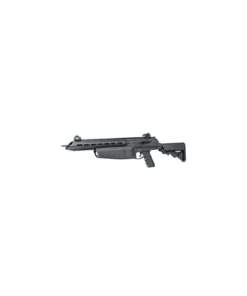
Umarex Air Javelin

€200.00
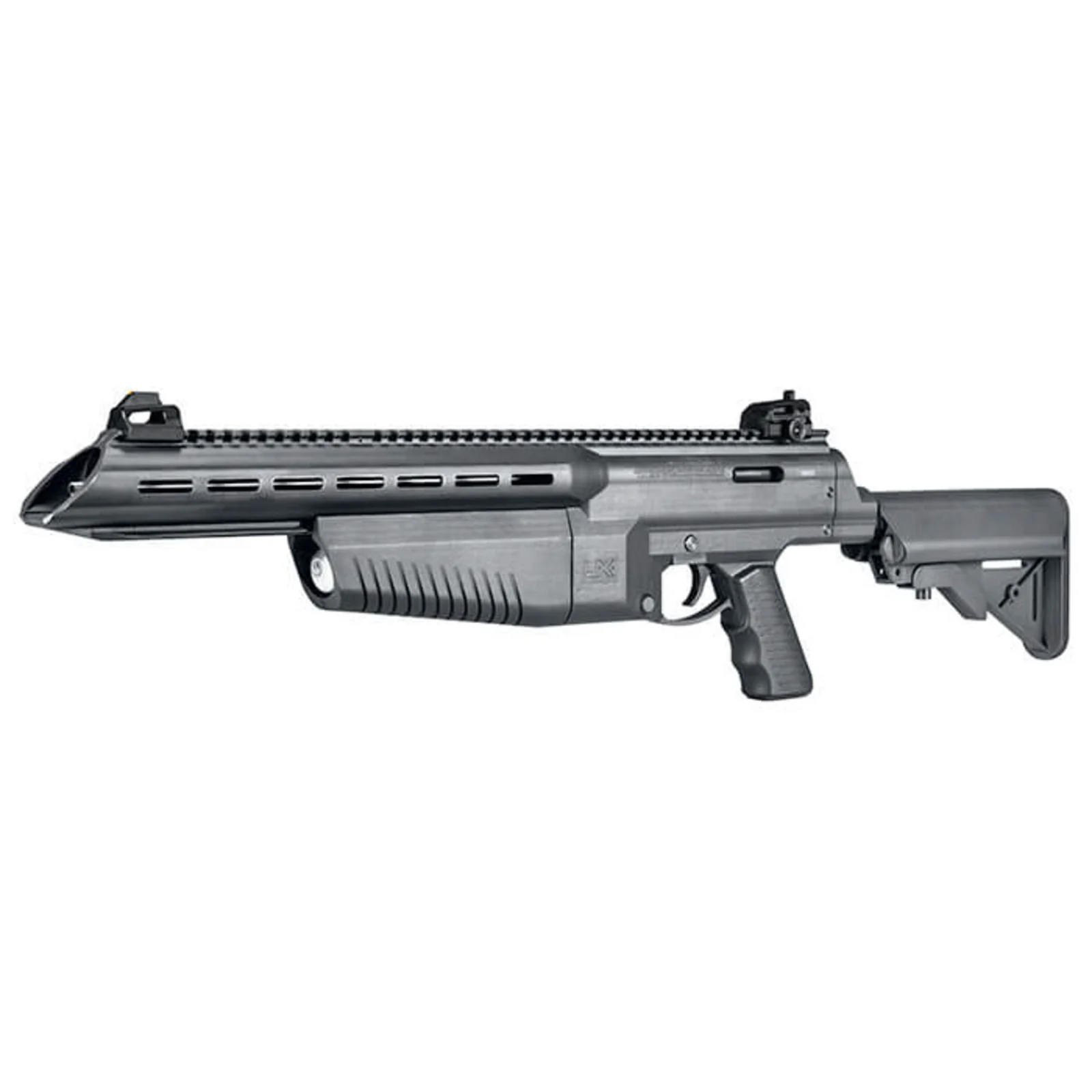
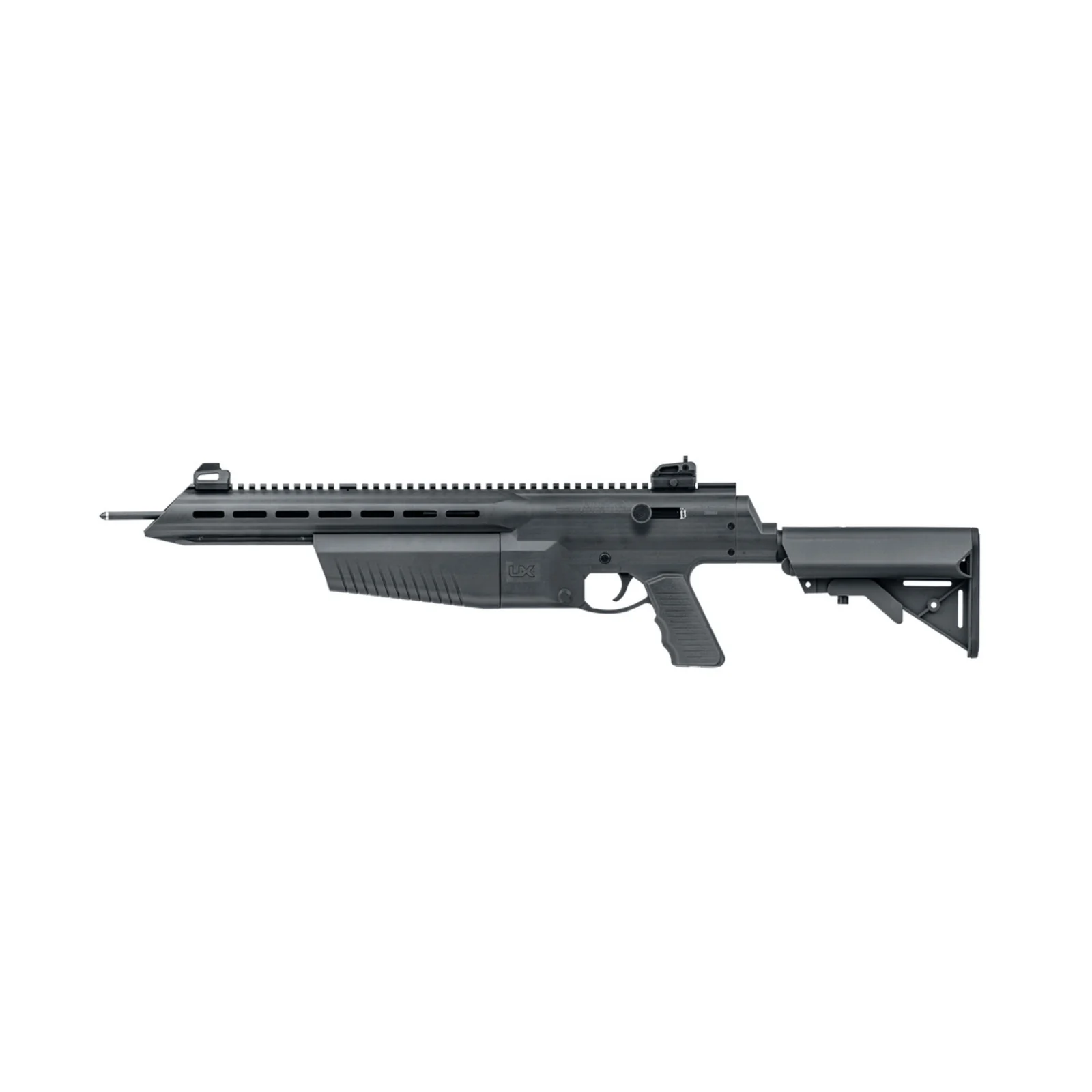
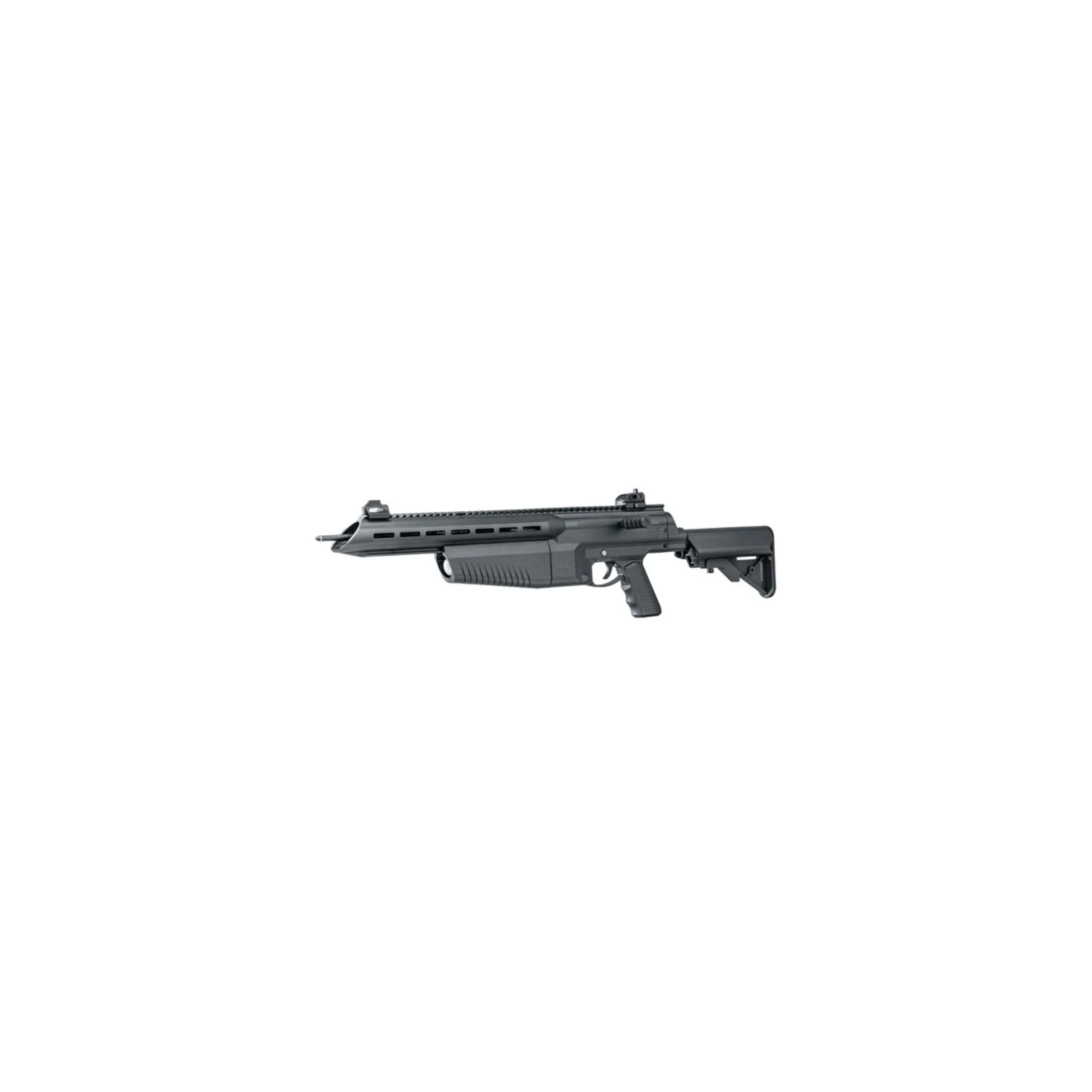
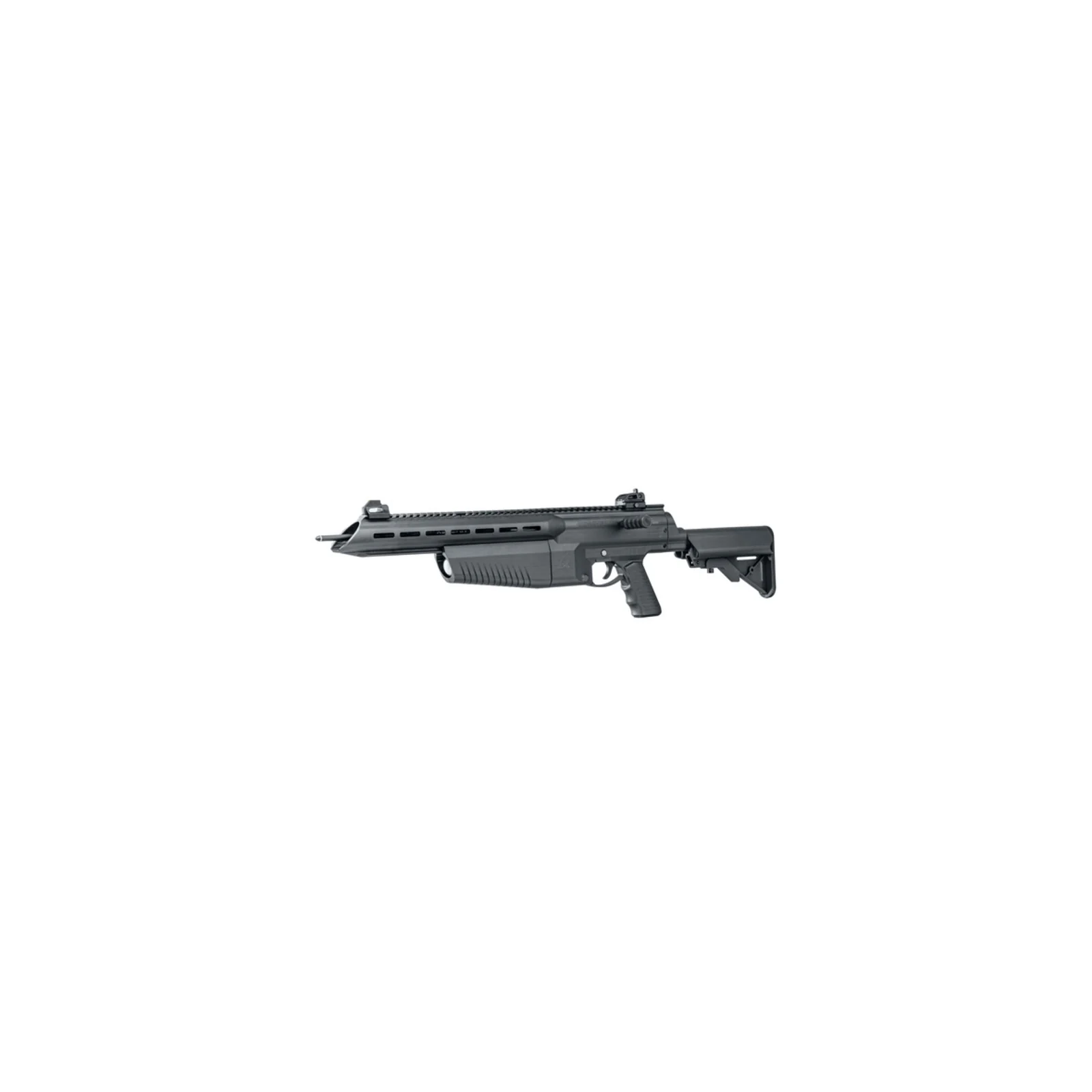
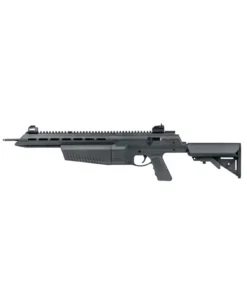
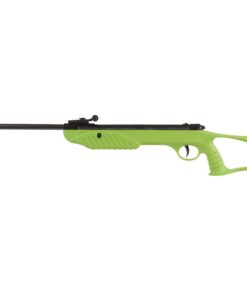
The Umarex Air Javelin is a Co2 airgun designed to shoot arrows.
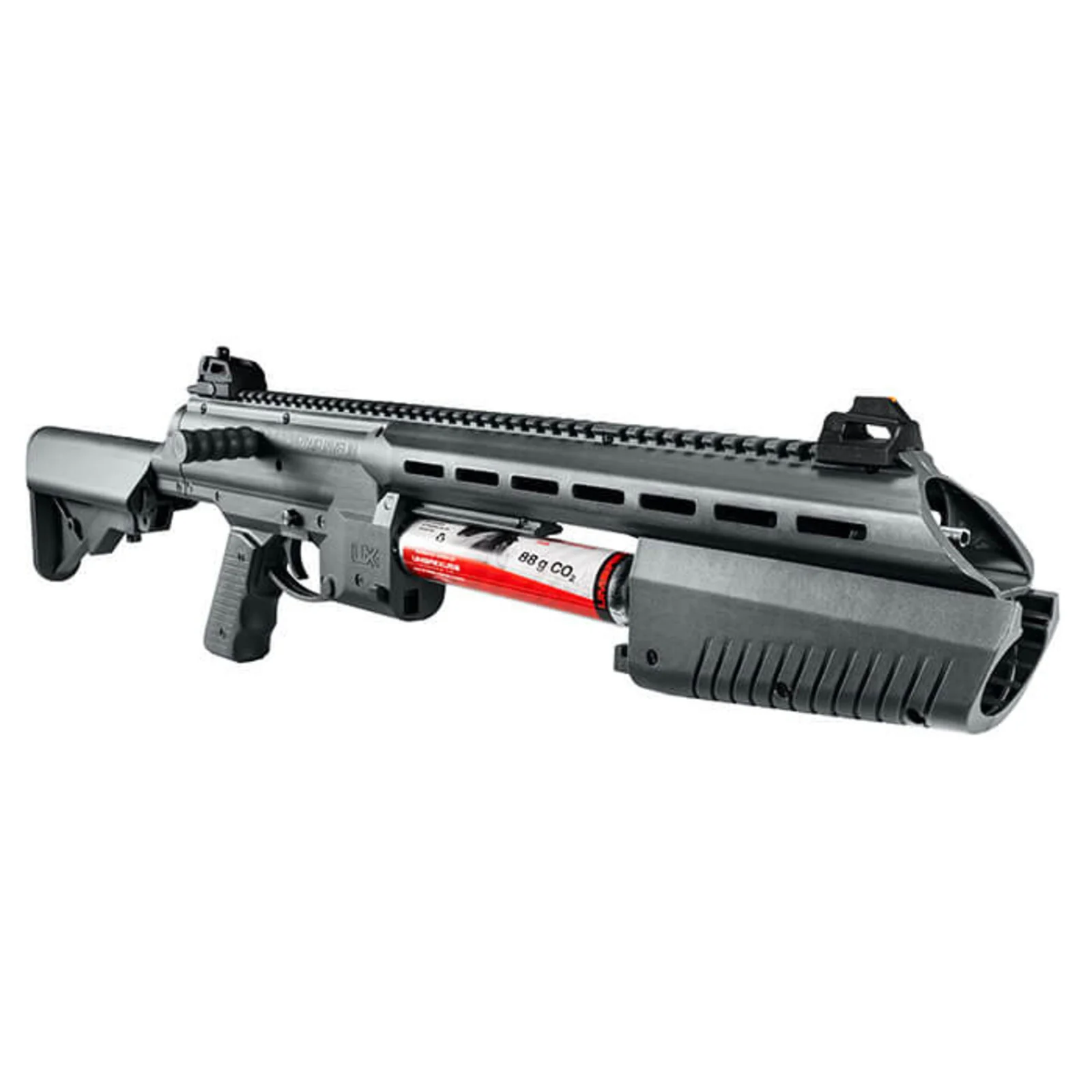
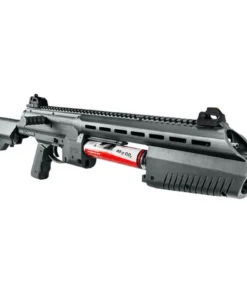
After opening the stock (slides open with a button), an 88 grams Co2 cartridge can be inserted.
This cartridge can also be replaced by a 12 grams Co2 adapter (not included).
On top of the airgun, there is a 22mm picatinny rail for mounting optics.
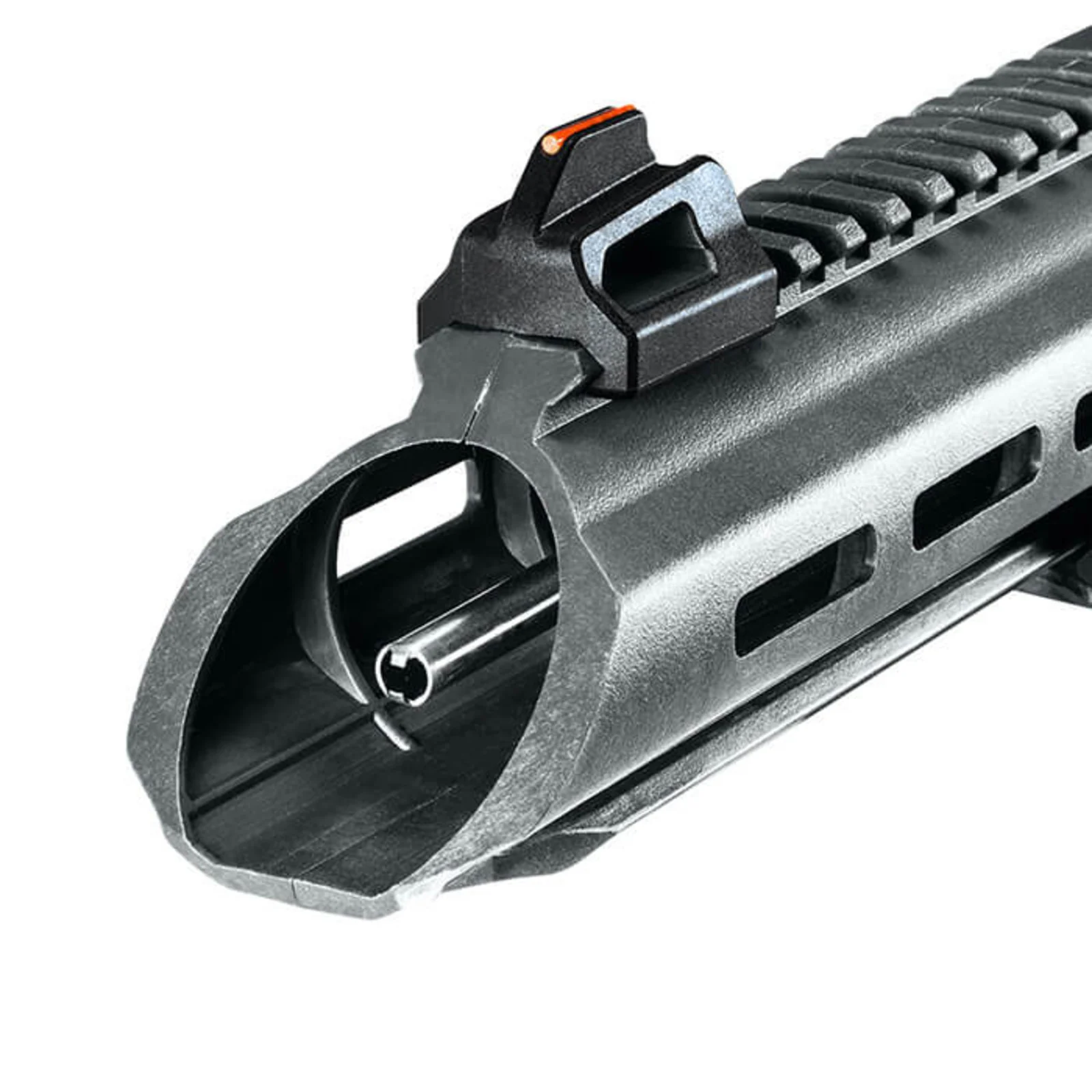
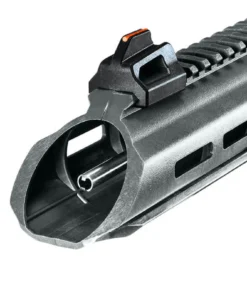
Included with the rifle are a set of removable iron sights.
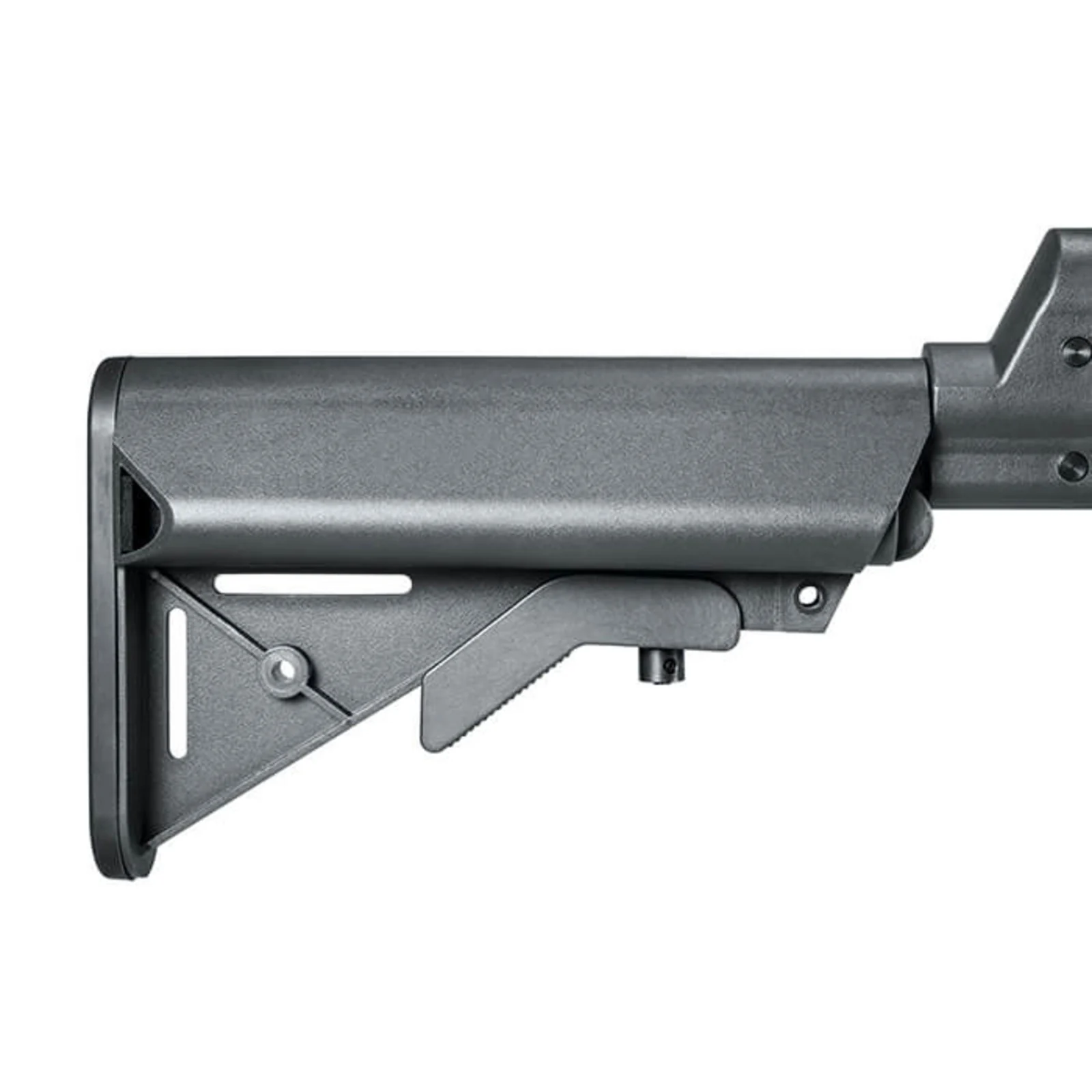
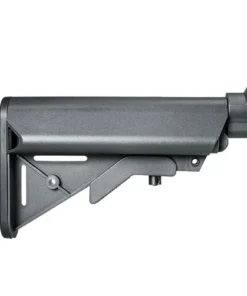
The shoulder piece is in 6 positions adjustable for length.
The cocking handle is ambidextrous and can be mounted on either the left or right side.
3x carbon fiber arrows included.
Umarex AirJavelin PCP Arrow Launcher
Product Introduction, Design, Engineering and Technical Overview
1.1 Introducing the Umarex AirJavelin
The Umarex AirJavelin is a distinctive compressed-air-powered sporting product that introduces an alternative approach to traditional pneumatic equipment. Manufactured by Umarex, it combines a contemporary exterior design with an arrow-based launching platform.
Unlike conventional pellet-firing products, this model belongs to a different category of pneumatic sporting equipment. Its design and intended ammunition classification distinguish it from ordinary recreational air rifles and CO2-powered BB replicas.
Furthermore, its lightweight construction and modern appearance make it an interesting addition to the wider Umarex product portfolio.
The AirJavelin is particularly relevant to customers researching alternative sporting equipment, pneumatic product engineering and the development of modern compressed-air platforms.
1.2 Design Philosophy and Product Identity
The product reflects a modern approach to pneumatic equipment design. Its exterior combines practical industrial styling with a streamlined appearance.
Additionally, its construction demonstrates how compressed-air technology can be incorporated into sporting products beyond conventional pellet platforms.
The design should be understood independently from other products in the manufacturer’s catalogue. Although the Umarex range includes several CO2 and PCP-powered models, their ammunition classifications, construction and intended applications differ.
1.3 Understanding the PCP Technology
PCP stands for pre-charged pneumatic. This describes a system that uses compressed air stored in a dedicated pressure vessel.
The technology is used across different categories of sporting equipment. However, individual products differ considerably in their engineering, pressure specifications and operating requirements.
For this reason, the manufacturer’s documentation should always be consulted when identifying the correct product specifications.
1.4 Why the AirJavelin Stands Out
The most distinctive characteristic is its arrow-based platform rather than a conventional pellet configuration.
This creates a different product identity within the wider pneumatic sporting equipment market.
Moreover, its contemporary styling distinguishes it from traditional wooden-stock sporting designs.
Customers considering this product should evaluate its classification, intended sporting application, compatibility requirements and local legal status before purchasing.
1.5 Important Product Specifications
According to Umarex’s published product information, the original AirJavelin includes the following characteristics:
-
Manufacturer: Umarex
-
Product: AirJavelin
-
Product category: CO2-powered arrow launcher
-
Power source: One 88-gram CO2 cartridge
-
Action: Straight-pull bolt action
-
Ammunition: Dedicated Umarex AirJavelin arrows
-
Advertised velocity: 300+ FPS
-
Advertised energy: Approximately 34 ft-lbs
-
Overall length: Approximately 31.25–34 inches
-
Weight: Approximately 3.9 lbs without CO2
-
Stock: Adjustable
-
Sights: Fibre-optic front and adjustable rear
-
Accessory mounting: Picatinny rail and M-LOK slots
-
Safety: Manual
-
Included arrows: Three
These specifications relate to the original CO2 model, not the separately marketed AirJavelin Pro.
Umarex USA+1
1.6 Accessories and Compatibility
The manufacturer provides dedicated accessories for this product family. However, compatibility must be established using the exact model designation.
An important safety distinction concerns ammunition compatibility: Umarex expressly requires its dedicated AirJavelin arrows. Conventional arrows intended for bows and crossbows are not suitable substitutes and can fail under the system’s pressure, potentially causing severe injuries.
Umarex USA
1.7 Understanding the Wider Umarex Product Range
Umarex manufactures several different categories of sporting and recreational equipment.
Its wider catalogue includes the Umarex Notos, Umarex Gauntlet, Umarex Origin, Umarex Hammer, Umarex AirSaber and Umarex Legends products.
Although these products share a manufacturer, they should not be confused with the AirJavelin.
For example, the AirSaber is a separate PCP-powered arrow platform, whereas the original AirJavelin uses an 88-gram CO2 cartridge.
Similarly, the Umarex Hammer, Umarex Primal 20 and Umarex Legends MP40 have different product classifications and ammunition systems.
Umarex USA+1
1.8 Why Product Identification Matters
Customers researching Umarex airguns should pay particular attention to model names and product generations.
This is especially important when comparing the original AirJavelin with the AirJavelin Pro and other products in the same manufacturer’s catalogue.
Unrelated search phrases such as Hatsan Sortie, Hatsan Hercules, Hatsan Flash, Hatsan BT65 and Hatsan Piledriver refer to different products and manufacturers. They should not be presented as AirJavelin specifications.
Accurate product identification creates more useful website content, improves customer understanding and prevents misleading purchasing information.
1.9 Who Should Research This Product?
The product may interest collectors of pneumatic sporting equipment, customers researching air-powered archery platforms and individuals comparing different approaches to modern sporting equipment.
Before purchasing, customers should establish whether the product is legally permitted in their jurisdiction, whether suitable manufacturer-approved accessories are available and whether appropriate technical support can be obtained.
The product should only be considered within lawful, controlled and appropriately supervised sporting environments.
Construction Quality, Material Engineering, Design Philosophy, Durability and Long-Term Ownership
2.1 Understanding the Overall Construction
The quality of a manufactured sporting product depends on several interconnected factors. These include material selection, manufacturing consistency, structural design, finishing quality and inspection procedures.
A well-designed product should maintain consistency between its individual exterior components while providing an appropriate level of durability for its intended environment.
Furthermore, the relationship between different materials influences the overall appearance and longevity of the finished assembly.
Modern manufacturing combines traditional industrial techniques with contemporary production technologies. Consequently, manufacturers can achieve more consistent exterior finishes and improved dimensional control.
However, the quality of a finished product cannot be determined through appearance alone. Manufacturing documentation and appropriate quality-control information provide a more reliable basis for evaluating construction standards.
2.2 Material Selection and Industrial Design
Material selection is one of the most important considerations in contemporary product engineering.
Different materials offer different combinations of strength, weight, rigidity and environmental resistance.
Metallic materials are commonly selected where structural stability and dimensional consistency are important. Meanwhile, engineered polymers provide opportunities for producing lightweight exterior components.
Each material also has limitations.
For example, certain polymers may become vulnerable to prolonged ultraviolet exposure, while some metallic surfaces may deteriorate when exposed to excessive moisture.
Consequently, manufacturers must consider the environment in which the finished product will be used and stored.
Material selection should therefore be understood as an engineering decision rather than simply an aesthetic preference.
2.3 The Importance of Structural Consistency
Structural consistency contributes to the overall quality of a manufactured product.
Components should correspond with established manufacturing specifications and maintain appropriate compatibility.
Furthermore, production tolerances help manufacturers maintain consistency between individual examples.
Variations in material composition or manufacturing dimensions may influence the appearance and condition of finished products.
Quality assurance therefore plays an important role throughout production.
Manufacturers may employ different inspection procedures to identify inconsistencies before products enter commercial distribution.
These procedures contribute to manufacturing reliability and help establish confidence in the finished assembly.
2.4 Exterior Finishing and Appearance
Exterior finishing influences how a product looks and how its surfaces respond to ordinary environmental exposure.
Different finishing techniques may be selected according to material composition and manufacturing requirements.
A consistent finish contributes to a professional appearance.
However, cosmetic quality should not be confused with structural integrity.
A product may display minor surface imperfections without necessarily having significant structural deterioration.
Similarly, an attractive exterior does not establish the condition of internal components.
Customers should therefore consider both appearance and documented manufacturing quality when evaluating a purchase.
2.5 Ergonomic Design Considerations
Ergonomics concerns the relationship between a product’s physical design and the people interacting with it.
Manufacturers consider factors such as overall dimensions, weight distribution, external contours and the accessibility of non-operational controls.
These considerations can influence how comfortable a product feels during ordinary handling and transportation.
Furthermore, individual preferences and physical characteristics vary considerably.
Consequently, a design that feels comfortable to one person may not provide the same experience for another.
Product dimensions and published weight specifications therefore provide useful information when assessing suitability.
Customers should evaluate these characteristics before making a purchasing decision.
2.6 Weight and Portability
Weight represents an important consideration when evaluating sporting equipment.
Lighter construction may simplify transportation and storage, while heavier materials can contribute to particular structural characteristics.
However, weight should not be considered independently of overall dimensions and material composition.
The distribution of weight also influences how a product feels when handled.
Furthermore, additional accessories and protective packaging may increase the total transportation weight.
Customers should therefore distinguish between the manufacturer’s published product weight and the combined weight of the product and its accessories.
This distinction becomes particularly important when arranging international transportation.
2.7 Manufacturing Standards and Quality Control
Manufacturing standards establish expectations concerning product consistency and inspection.
Different manufacturers employ different quality-management systems depending on their production requirements.
These systems may include material verification, dimensional assessment and visual inspection.
Furthermore, documented production procedures help identify potential inconsistencies.
Quality assurance should extend throughout the manufacturing process rather than being limited to the final inspection stage.
Material suppliers, production equipment and finishing processes can all influence the finished result.
Consequently, consistent manufacturing depends on the coordination of several industrial processes.
Customers evaluating product quality should consider manufacturer documentation and established distribution arrangements.
2.8 Environmental Resistance
Environmental conditions can influence the long-term condition of manufactured products.
Humidity, temperature fluctuations, dust and prolonged exposure to sunlight may affect different materials.
For example, moisture can contribute to deterioration in susceptible metallic surfaces.
Meanwhile, certain polymer materials may experience changes after extended exposure to ultraviolet radiation.
Consequently, suitable storage conditions contribute to preservation.
Manufacturers may provide recommendations concerning acceptable environmental conditions.
Customers should follow these instructions rather than assuming that all materials respond identically to environmental exposure.
Appropriate preservation can help maintain exterior condition over an extended period.
2.9 Packaging and Transportation Protection
Packaging is an important part of commercial product distribution.
Manufacturers and distributors use protective materials to reduce the likelihood of accidental damage during storage and transportation.
Appropriate packaging can help protect exterior surfaces against abrasion and impact.
Furthermore, original packaging may contain product identification information and accompanying documentation.
Customers should retain relevant packaging information where practical.
International transportation requires additional consideration.
Different countries may impose restrictions on sporting equipment, pressurized cartridges and related accessories.
Consequently, buyers should verify applicable transportation and customs requirements before arranging shipment.
2.10 Product Documentation and Traceability
Product documentation helps establish manufacturing identity and technical specifications.
It may include product references, warranty information, identification details and general maintenance recommendations.
Furthermore, documentation can help distinguish different manufacturing generations.
This is particularly useful when a manufacturer introduces revised products or replacement components.
Customers should retain original purchase documentation and relevant manufacturer information.
Digital copies can also provide convenient access when contacting technical support.
However, unofficial product descriptions should not automatically replace original manufacturer instructions.
Accurate documentation remains an important part of responsible ownership.
2.11 Understanding Product Generations
Manufacturers occasionally introduce revised product generations.
These revisions may involve exterior changes, material substitutions or updated manufacturing standards.
Consequently, products sharing similar names may not necessarily have identical specifications.
Customers should identify the exact version before purchasing accessories or replacement components.
This becomes particularly important when purchasing through online retailers.
Product photographs may represent a different manufacturing generation from the item currently available.
Therefore, accurate descriptions and manufacturer references help reduce purchasing confusion.
Retailers should provide clear information about the exact version being offered.
2.12 Replacement Components and Compatibility
Replacement components should be selected according to the manufacturer’s compatibility information.
Different production generations may incorporate components that appear similar but have different specifications.
Consequently, visual similarity alone is insufficient to establish compatibility.
Customers should consult authorized technical support when identification is uncertain.
Furthermore, genuine replacement components are generally preferable when manufacturer support is available.
Unauthorized substitutions may introduce compatibility concerns or affect warranty coverage.
Keeping original purchase documentation can simplify the identification process.
Professional assistance should be obtained whenever structural condition or component compatibility becomes uncertain.
2.13 Professional Inspection
Professional inspection provides an opportunity to evaluate the condition of manufactured equipment.
Qualified technicians can assess visible deterioration and identify circumstances requiring further attention.
However, external appearance cannot establish the condition of every internal component.
Consequently, suspected damage should be evaluated by an appropriately qualified professional.
Customers should avoid unauthorized modifications or attempts to repair components beyond their technical competence.
Manufacturer documentation should remain the primary reference for maintenance requirements.
Professional evaluation can also help establish whether an individual product remains suitable for its intended lawful sporting application.
2.14 Long-Term Preservation
Long-term preservation involves maintaining appropriate environmental conditions and following manufacturer recommendations.
Dust, moisture and unsuitable storage arrangements may influence material condition.
Furthermore, prolonged exposure to environmental contaminants can affect exterior finishes.
Customers should therefore consider storage arrangements before purchasing sporting equipment.
Secure storage is equally important.
Appropriate arrangements help prevent unauthorized access and accidental damage.
Original documentation should also be retained.
Together, suitable storage and accurate records contribute to responsible ownership.
2.15 Warranty and Manufacturer Support
Warranty arrangements provide important information about a manufacturer’s responsibilities.
However, coverage differs between products, distributors and purchasing jurisdictions.
Customers should review the applicable warranty documentation before completing a purchase.
Important considerations include coverage duration, exclusions and authorized servicing arrangements.
Furthermore, accidental damage and unauthorized modifications may fall outside standard warranty protection.
Customers should retain their original receipts and product identification information.
An established retailer with appropriate technical support arrangements may provide a more convenient ownership experience.
2.16 Purchasing Through Established Retailers
Retailer credibility is an important consideration when purchasing specialized sporting products.
Customers should examine the retailer’s business information, contact details and published purchasing conditions.
Furthermore, accurate product descriptions help establish realistic expectations.
A responsible retailer should identify the exact product generation and provide relevant manufacturer documentation.
Customers should be cautious when encountering unusually incomplete descriptions or unsupported technical claims.
Payment protection and clearly explained return arrangements are also important.
Ultimately, a transparent purchasing experience contributes to customer confidence.
2.17 Understanding Product Value
Product value involves more than the initial purchase price.
Customers may also consider warranty coverage, documentation, component availability and access to professional support.
Furthermore, the condition of an individual example can influence its overall value.
For previously owned products, documented history may provide useful information.
However, future resale values cannot be guaranteed.
Market demand, product availability and regulatory developments can influence commercial value.
Customers should therefore make purchasing decisions based on current product condition and realistic ownership expectations.
2.18 Responsible Ownership
Responsible ownership involves understanding the product’s classification and applicable legal requirements.
Different jurisdictions establish different rules concerning sporting equipment, transportation and possession.
Consequently, customers should verify local legislation before purchasing.
International shipments may introduce additional customs and transportation requirements.
These should be investigated before placing an order.
Secure storage is another important responsibility.
Products should be kept away from unauthorized individuals and stored according to manufacturer recommendations.
Furthermore, customers should understand that regulations can change.
Remaining informed helps support continued legal compliance.
2.19 Understanding Historical and Contemporary Sporting Equipment
Modern sporting equipment reflects developments in material science and industrial design.
Traditional manufacturing principles continue to influence contemporary products, although production technologies have changed considerably.
Modern machinery can improve dimensional consistency and production efficiency.
Furthermore, contemporary materials provide manufacturers with additional design possibilities.
However, technological innovation should be evaluated through established specifications rather than promotional terminology.
A newer product does not automatically provide superior quality in every respect.
Customers should consider documented manufacturing characteristics and the availability of appropriate technical support.
2.20 Customer Service and After-Sales Assistance
After-sales assistance contributes significantly to the overall purchasing experience.
Customers may require clarification concerning product documentation, warranty coverage or replacement-component identification.
An established retailer should provide clear information about available support channels.
Furthermore, prompt communication can help resolve ordinary purchasing concerns.
Customers should retain order confirmations and relevant correspondence.
These records may assist when requesting support.
Where a technical issue arises, the manufacturer or an authorized service provider should be consulted.
Clear communication and accurate documentation contribute to more efficient customer service.
2.21 Evaluating Previously Owned Products
Previously owned sporting equipment requires careful assessment.
Customers should consider general appearance, documented history and available manufacturer information.
Cosmetic deterioration may not necessarily indicate structural damage.
However, substantial deformation, corrosion or other visible abnormalities deserve professional evaluation.
Photographs can provide an initial impression but cannot independently establish the condition of internal components.
Furthermore, an accurate description from the seller is important.
Customers should request information about previous ownership and available documentation.
Professional inspection may be appropriate when significant uncertainty remains.
2.22 Authenticity and Product Identification
Authenticity should be established through reliable manufacturer and retailer information.
Exterior appearance alone cannot establish whether an item is genuine.
Customers should consider product identification details, original documentation and the credibility of the seller.
Furthermore, different manufacturing generations may have distinct specifications.
This makes accurate identification particularly important when purchasing previously owned products.
Customers should retain relevant documentation after completing a purchase.
These records may help establish product identity when requesting future technical support.
2.23 Safety and Legal Considerations
Sporting equipment must be treated according to its actual classification and intended application.
Customers should never assume that different products share identical legal requirements.
Local legislation may establish particular restrictions concerning possession, transportation and authorized use.
Furthermore, international transportation can introduce additional requirements.
Customers should consult the relevant authorities whenever uncertainty exists.
Secure storage and responsible handling remain essential.
The manufacturer’s documentation should be consulted for product-specific safety information.
Legal compliance is an ongoing responsibility rather than a consideration limited to the purchasing stage.
2.24 The Importance of Accurate Product Information
Accurate product information helps customers make informed purchasing decisions.
Descriptions should distinguish confirmed specifications from general observations.
Furthermore, manufacturers may revise products over time.
Consequently, retailers should avoid presenting outdated information as current.
Technical claims should correspond with manufacturer documentation.
This includes published dimensions, materials, weight and product classification.
Customers benefit from descriptions that explain both the product’s characteristics and its limitations.
Accurate information also helps establish realistic expectations and reduces unnecessary purchasing misunderstandings.
2.25 Final Assessment of Construction and Long-Term Ownership
The overall quality of a manufactured sporting product reflects the combined contributions of material selection, industrial design and manufacturing consistency.
Exterior finishing, dimensional accuracy and component compatibility all contribute to the finished result.
However, long-term ownership also depends on appropriate storage, reliable documentation and access to professional support.
Customers should establish the exact product generation before purchasing accessories or replacement components.
Furthermore, warranty conditions and applicable legal requirements should be reviewed carefully.
Ultimately, informed ownership involves understanding the product’s construction, maintaining suitable storage conditions and following the manufacturer’s recommendations.
A responsible purchasing decision should be based on verified information, realistic expectations and an appropriate understanding of the product’s intended classification.
Performance Characteristics, Product Applications, Technical Comparisons, Maintenance Considerations and Frequently Asked Questions
3.1 Understanding the Product’s Sporting Classification
The development of modern pneumatic sporting equipment has introduced several different approaches to compressed-air technology. Although many products share similar external characteristics, their engineering, ammunition classifications and intended applications can differ considerably.
The distinction between conventional pellet equipment and arrow-based pneumatic systems is particularly important. Each category requires its own compatible accessories, documentation and maintenance considerations.
When researching a product, customers should begin by identifying its exact manufacturer designation and production generation. This prevents confusion between products that share similar names but have different technical characteristics.
Furthermore, understanding the original equipment classification helps establish realistic expectations regarding ownership and long-term support.
3.2 Understanding Accuracy and Consistency
Accuracy is an important consideration when evaluating sporting equipment. However, it should not be confused with advertised velocity or energy figures.
Consistency, manufacturing tolerances, material condition and environmental factors can all influence the overall characteristics of a product.
For this reason, published manufacturer specifications should be distinguished from independently measured results.
Another important consideration is measurement methodology. Different testing environments may produce different reported results.
Temperature, environmental conditions and the condition of individual components can also influence measurements.
Consequently, customers should avoid assuming that every example will produce identical results.
Reliable technical documentation provides a more useful basis for understanding product characteristics.
3.3 Understanding Environmental Influences
Environmental conditions can influence the performance and long-term condition of compressed-gas equipment.
Temperature fluctuations may affect the characteristics of stored gases and associated materials.
Humidity can also influence exterior components, particularly where susceptible metallic surfaces are exposed to moisture.
Furthermore, prolonged exposure to sunlight may contribute to deterioration in certain polymer materials.
These considerations make appropriate storage particularly important.
Customers should consult manufacturer documentation for the applicable environmental requirements.
3.4 Understanding Material Durability
Material durability depends on several factors, including composition, manufacturing quality and environmental exposure.
Metallic materials and engineered polymers respond differently to environmental conditions.
Consequently, a product containing multiple material types requires appropriate preservation.
Surface deterioration should also be distinguished from structural damage.
Minor cosmetic imperfections may not indicate a significant mechanical concern. However, visible deformation or suspected structural deterioration deserves professional assessment.
This distinction is particularly important when evaluating previously owned equipment.
3.5 Product Identification and Accessory Compatibility
Accessory compatibility should always be established through manufacturer documentation.
Different product generations may incorporate different exterior dimensions or accessory interfaces.
Therefore, visually similar products should not automatically be considered compatible.
Customers should verify product references before purchasing replacement components.
Authorized distributors may also provide assistance with identification.
Keeping original documentation can simplify these enquiries.
3.6 Understanding the Wider Sporting Equipment Market
The modern sporting equipment market includes numerous manufacturers and product categories.
Some products use compressed air, while others rely on different power sources and mechanical arrangements.
These distinctions influence product classification, servicing requirements and accessory availability.
For example, conventional pneumatic rifles, CO2-powered recreational replicas and arrow-based sporting platforms should not be treated as interchangeable categories.
Customers researching different products should compare verified specifications rather than relying exclusively on similarities in appearance.
3.7 Why Manufacturer Documentation Matters
Manufacturer documentation provides the most reliable starting point for understanding a particular product.
It can identify the correct production generation, original specifications and applicable maintenance requirements.
Furthermore, documentation may explain warranty conditions and identify authorized service providers.
Customers should retain these materials throughout the ownership period.
Where information is unclear, contacting the manufacturer or an authorized distributor is preferable to relying on unsupported online claims.
3.8 Responsible Storage and Preservation
Appropriate storage contributes to long-term product preservation.
Customers should consider environmental conditions, security and manufacturer recommendations.
Moisture, excessive heat and unsuitable cleaning substances may contribute to deterioration.
Secure storage also helps prevent unauthorized access.
Original documentation and purchase records should be retained alongside other ownership information.
These measures contribute to responsible ownership and help simplify future technical enquiries.
3.9 Frequently Asked Questions
What makes this product different from a conventional pellet rifle?
Its principal distinction is its arrow-based classification. It belongs to a different category from conventional pellet-firing equipment.
Is the product powered by compressed air or CO2?
The original model uses an 88-gram CO2 cartridge rather than the conventional onboard compressed-air arrangement found in many PCP rifles.
Is the original model identical to the Pro version?
No. The original model and the Pro version have different specifications and should be identified separately.
Can ordinary arrows be substituted?
No. Only the manufacturer-designated compatible ammunition should be used. Ordinary arrows should never be substituted.
Does the product require special storage?
Yes. It should be stored securely in accordance with the manufacturer’s instructions and applicable local regulations.
Does temperature influence its characteristics?
Environmental temperature can influence compressed-gas systems. Customers should consult the manufacturer for applicable operating and storage conditions.
Can accessories from other models be used?
Compatibility must be confirmed through official documentation. Similar-looking accessories are not necessarily interchangeable.
How should customers verify authenticity?
Check the manufacturer’s product identification, purchase documentation and retailer credibility.
Is the advertised velocity guaranteed?
No. Published figures are manufacturer specifications and should not automatically be interpreted as guaranteed measurements for every individual example.
Why is professional maintenance important?
Qualified technicians can identify concerns that cannot necessarily be established through external visual inspection.
What should customers check before purchasing?
Confirm the exact model, production generation, included accessories, warranty conditions and applicable legal requirements.
Where should customers obtain technical information?
The manufacturer’s official documentation and authorized customer-support channels should be treated as the primary sources.
3.10 Final Product Assessment
A proper understanding of modern sporting equipment requires consideration of its construction, classification and intended application.
Manufacturer specifications provide an important foundation, but individual product condition and environmental influences must also be considered.
Furthermore, appropriate storage, reliable documentation and professional technical support contribute to long-term ownership.
Customers should prioritize verified information and establish compatibility before purchasing accessories or arranging servicing.
Ultimately, an informed approach helps establish realistic expectations and supports responsible ownership Umarex AirJavelinUmarex AirJavelinUmarex AirJavelinUmarex AirJavelinUmarex AirJavelinUmarex AirJavelin Umarex AirJavelin Umarex AirJavelinUmarex AirJavelinUmarex AirJavelinUmarex AirJavelinUmarex AirJavelinUmarex AirJavelinUmarex AirJavelinUmarex AirJavelinUmarex AirJavelinUmarex AirJavelinUmarex AirJavelinUmarex AirJavelinUmarex AirJavelin .
Be the first to review “Umarex Air Javelin”
Related products
umarex AirRifle
umarex AirRifle
umarex AirRifle
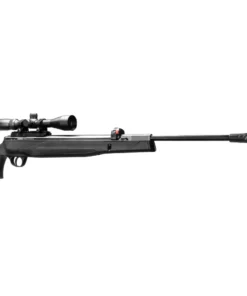
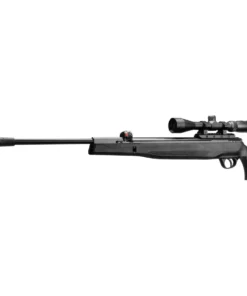
umarex AirRifle
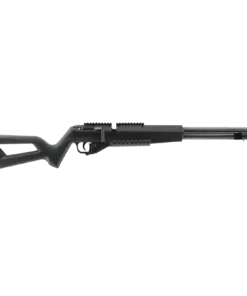
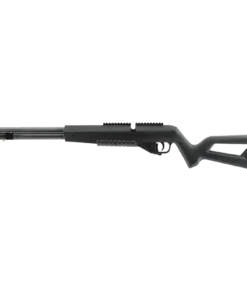
umarex AirRifle
umarex AirRifle
umarex AirRifle
umarex AirRifle
Reviews
There are no reviews yet.