
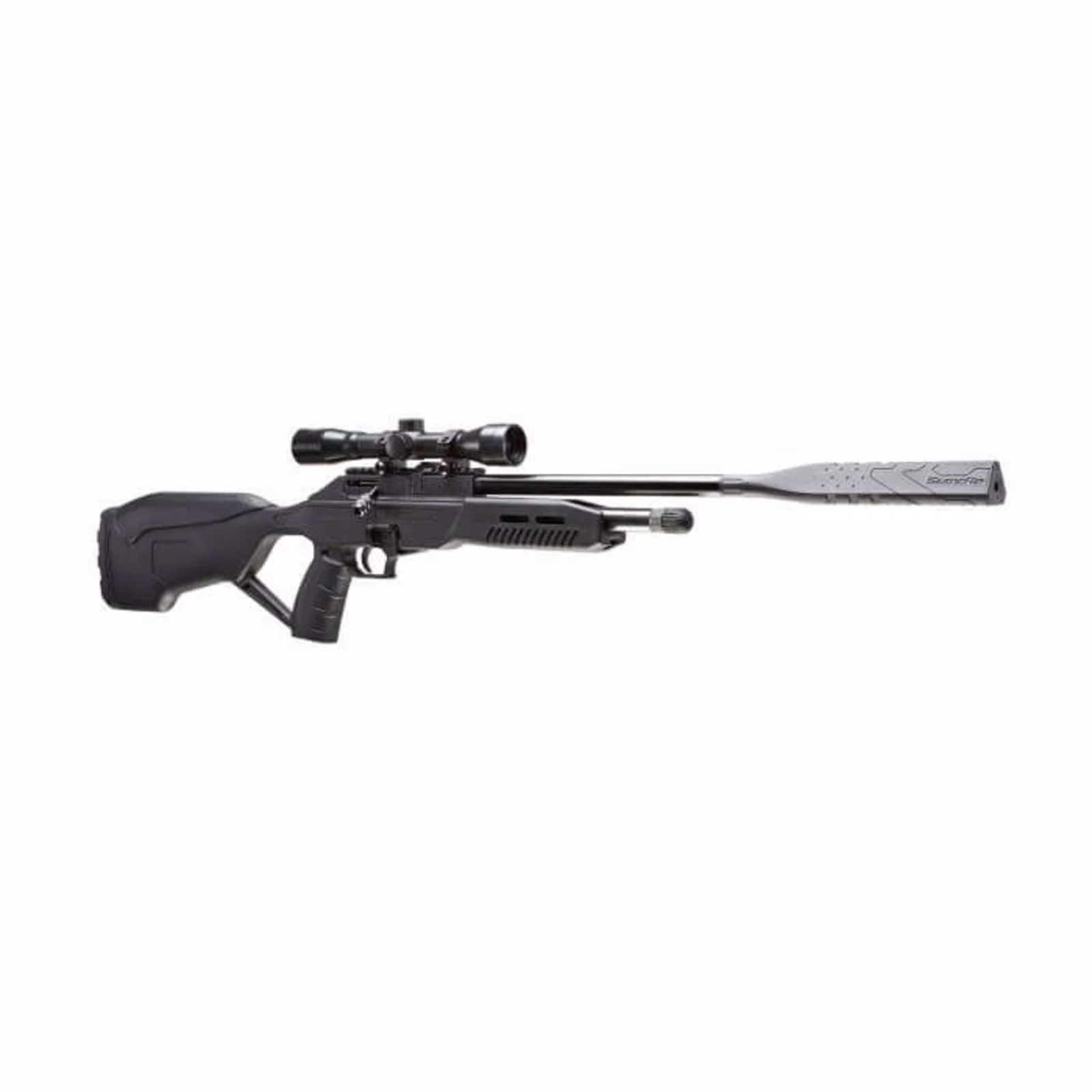
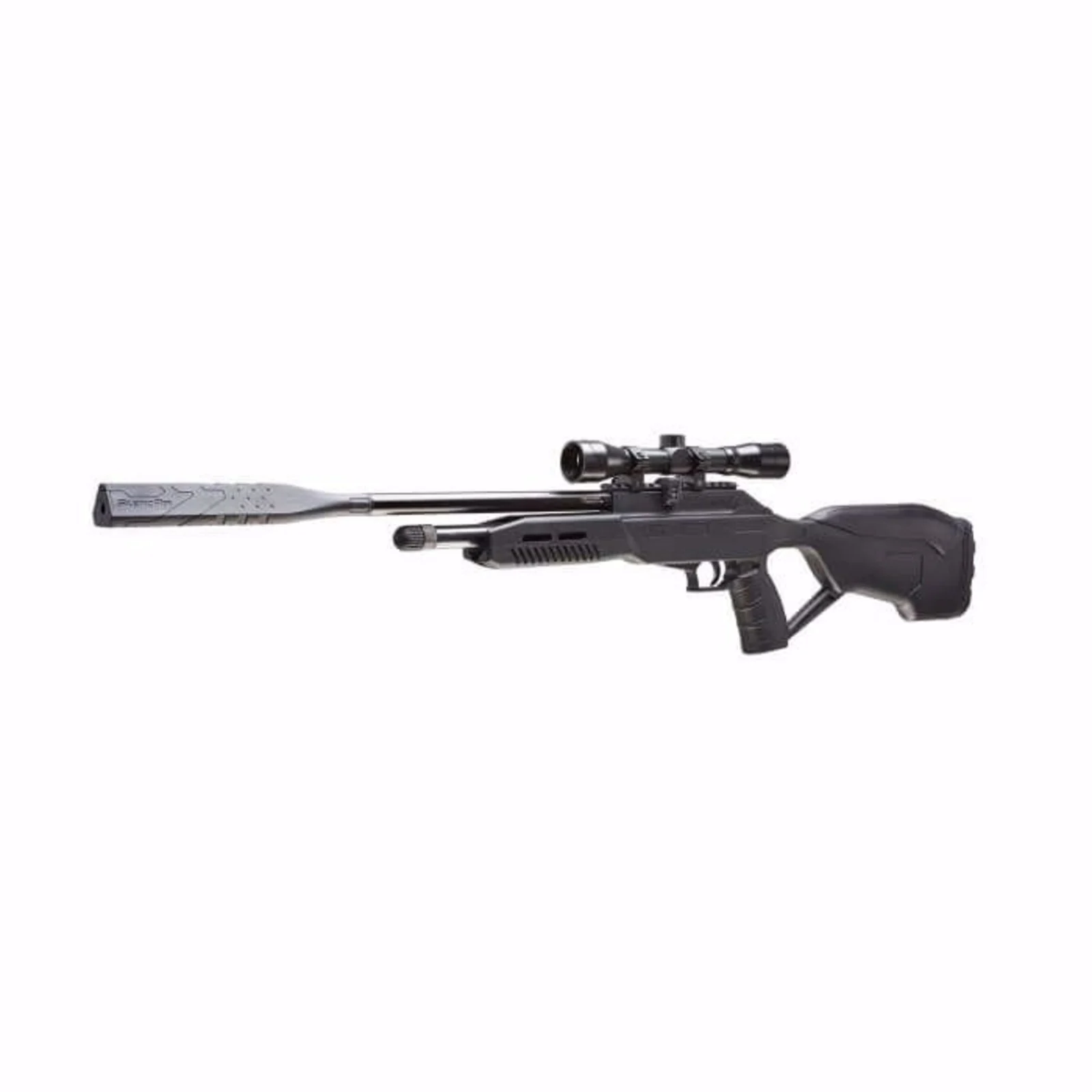
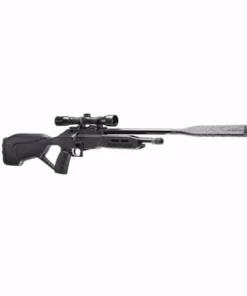
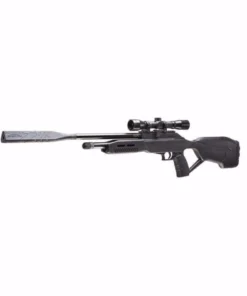
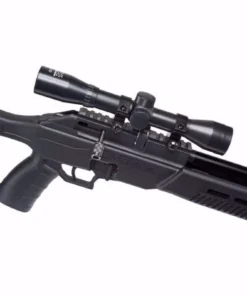
Umarex Fusion II 4,5mm Co2 rifle
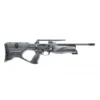
€200.00
The Umarex Fusion 2 is a fusion of the best parts of the shooting experience without all the noise.
It’s equipped for the use of two 12-gram CO2 capsules or you can 88 gram CO2 tanks.
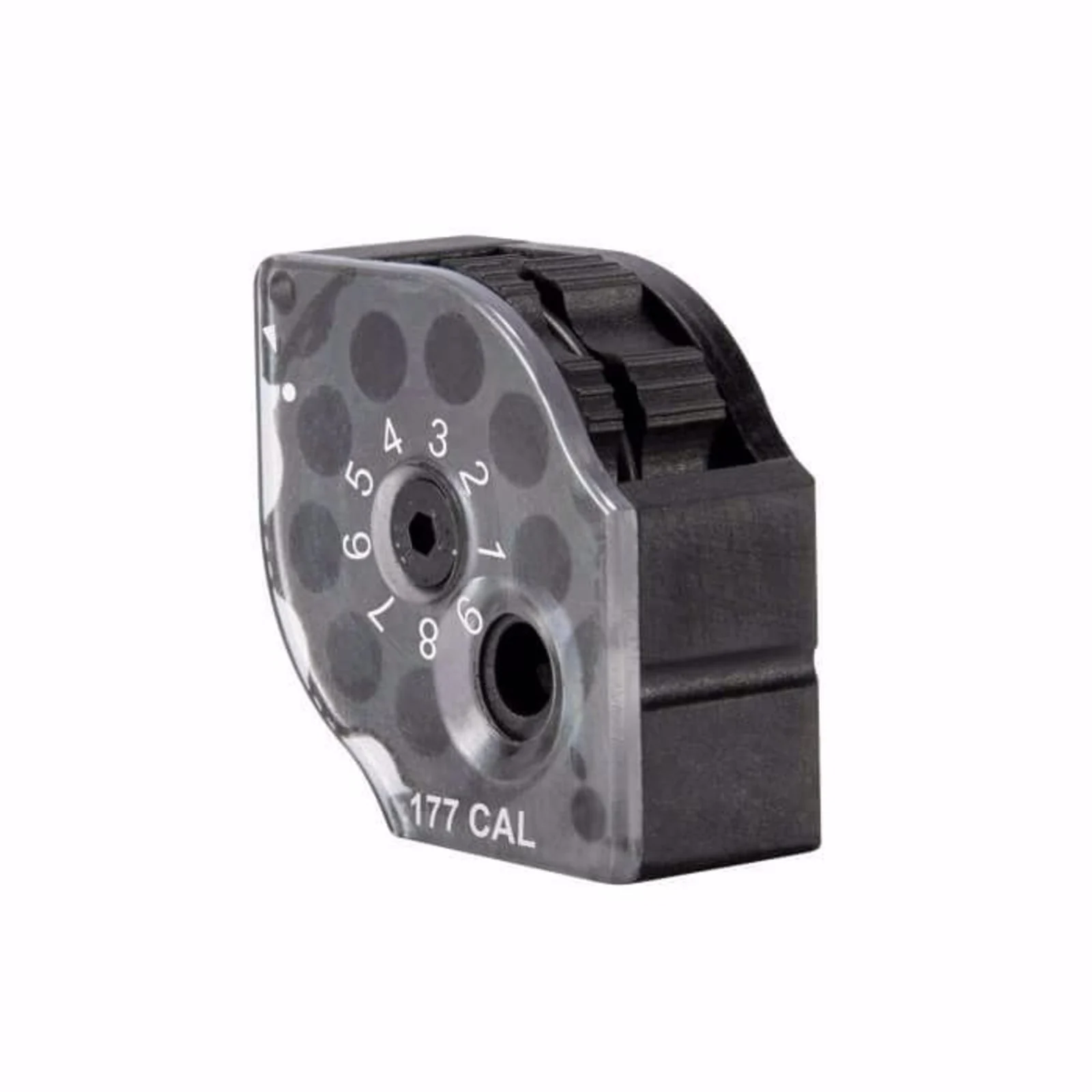
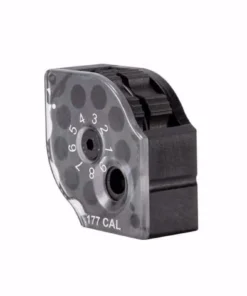
The 9 shot magazines are some of the easiest loading pellet magazines that exist. Shooters can expect to get over 70 shots on each pair of 12 gram CO2 cartridges and upwards of 250 shots on a single 88 gram cylinder.
Discover the pleasure of shooting air rifles with an excellent fusion of technology and features.
| Power source: | Co2 (88 grams thread. Adapter tot 12grams included) |
| Caliber: | 4.5mm (.177) |
| Muzzle energy: | 15 joules |
| Magazine: | 9 shots |
| Operating system: | Bolt action |
| Trigger: | |
| Optics mounting: | 22mm Picatinny/Weaver |
| Barrel length: | |
| Total length: | 1010mm |
| Weight: | |
| Muzzle: | Built in moderator |
| Extra: | |
| Accessories: | Scope, 2 magazines, Co2 adapter |
Umarex Fusion II 4.5mm (.177) CO2 Air Rifle
PRODUCT INTRODUCTION, DESIGN, ENGINEERING AND PERFORMANCE CHARACTERISTICS
1.1 Introducing the Umarex Fusion II CO2 Rifle
The Umarex Fusion II is a modern CO2-powered sporting air rifle designed around a combination of traditional rifle styling and contemporary pneumatic technology. Chambered in 4.5mm (.177) calibre, this model offers a distinctive approach to recreational target shooting and precision-oriented sporting activities.
Manufactured by Umarex, the Fusion II combines a bolt-action operating system, a nine-shot rotary magazine and an integrated noise-reduction assembly. Furthermore, its synthetic thumbhole stock provides a contemporary appearance while maintaining a practical exterior design Umarex Fusion II 4.5mm Co2 rifle.
Unlike conventional spring-powered rifles, this model uses carbon dioxide as its power source. Consequently, its operating characteristics differ from those of pre-charged pneumatic and spring-piston platforms.
1.2 Understanding the 4.5mm (.177) Calibre
The 4.5mm calibre, commonly identified as .177, is one of the established pellet classifications in recreational airgun shooting.
This configuration is associated with a wide selection of commercially available pellet types. However, ammunition compatibility should always be established using the manufacturer’s documentation.
The rifled barrel is an important part of the product’s overall engineering. Its construction distinguishes the rifle from smoothbore products designed for different projectile classifications.
1.3 CO2 Power System and Operating Technology
The Fusion II uses a CO2-powered pneumatic system. Depending on the supplied configuration, the rifle accommodates either one 88-gram CO2 cylinder or two 12-gram CO2 capsules through the appropriate adapter.
This arrangement provides flexibility between different CO2 supply formats.
Unlike a PCP platform, which uses a high-pressure air reservoir, the Fusion II relies on carbon dioxide. Therefore, its operating characteristics are influenced by environmental temperature and the properties of the gas.
The manufacturer advertises different shot capacities depending on the selected CO2 configuration. Actual results can vary with operating conditions.
1.4 Bolt-Action Construction and Magazine Design
The product features a conventional bolt-action arrangement and a nine-shot rotary magazine.
Its magazine configuration provides a recognizable sporting-rifle appearance while distinguishing it from single-shot CO2 products.
The manufacturer includes two rotary magazines in the advertised package.
Additionally, the overall design incorporates a manual safety system. This is an important feature of the rifle’s safety architecture.
1.5 SilencAir Noise-Reduction Technology
One of the most distinctive characteristics of the Fusion II is its integrated SilencAir assembly.
The manufacturer describes this system as a five-chamber noise-dampening design intended to reduce the sound associated with the product.
This feature contributes to the rifle’s distinctive engineering identity.
However, noise reduction should not be interpreted as complete silence. Appropriate hearing and environmental safety considerations remain important.
1.6 Synthetic Stock and Exterior Design
The Fusion II incorporates a synthetic thumbhole stock with an ambidextrous design.
Its exterior combines textured surfaces with a rubber butt pad.
The synthetic construction provides a contemporary alternative to conventional wooden sporting-rifle furniture.
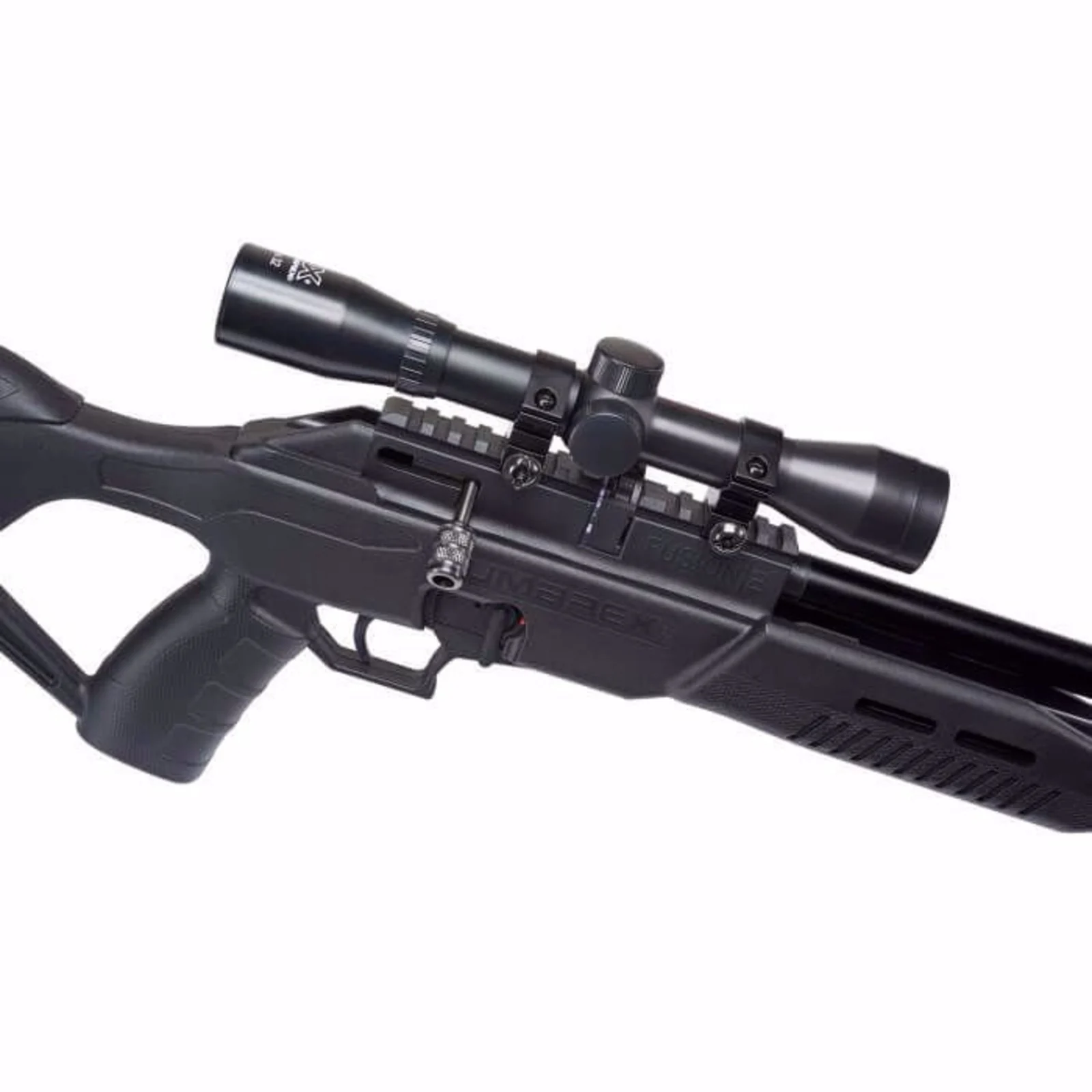
Furthermore, the overall styling incorporates M-LOK-compatible exterior slots and an optical mounting interface.
These characteristics contribute to the product’s modern appearance.
1.7 Optical Equipment and Included Accessories
The advertised package includes a 4×32 optical sight with mounting rings.
The rifle also features a mounting rail compatible with appropriate optical equipment.
Customers should confirm the exact contents of the package with their retailer because regional bundles and promotional configurations may differ.
1.8 Important Published Specifications
- Manufacturer: Umarex
- Model: Fusion II / Fusion 2
- Product type: CO2-powered air rifle
- Calibre: 4.5mm (.177)
- Ammunition classification: Pellets
- Operating system: Bolt action
- Magazine capacity: 9 rounds
- Power source: CO2
- CO2 compatibility: One 88g cylinder or two 12g capsules with the appropriate adapter
- Advertised velocity: Up to 700 FPS with alloy pellets
- Advertised velocity with lead pellets: Approximately 650 FPS
- Barrel: Rifled
- Barrel length: Approximately 470mm
- Overall length: Approximately 1,030mm
- Weight: Approximately 2.7kg
- Optical equipment: 4×32 scope included in advertised package
- Noise-reduction system: SilencAir
- Safety: Manual
- Stock: Synthetic thumbhole configuration
Specifications should be checked against the exact regional version before purchase.
1.9 Understanding the Wider Umarex Collection
The Fusion II belongs to a broader product collection that includes several different pneumatic and recreational platforms.
Other recognizable models include the Umarex Notos, Gauntlet, Origin, Zelos, Hammer, AirSaber, AirJavelin and Primal 20.
The Legends collection also includes historically styled recreational replicas, while the T4E range represents a different product category.
Although these products share the manufacturer’s brand identity, their operating systems, ammunition classifications and intended applications differ.
1.10 Why Consider the Fusion II?
The Fusion II combines several recognizable design characteristics: CO2 operation, conventional bolt-action construction, a rotary magazine and an integrated noise-reduction assembly.
Its synthetic exterior and included optical equipment also contribute to its overall presentation.
For customers comparing recreational sporting products, these characteristics provide useful points of evaluation.
Nevertheless, prospective owners should examine local legislation, manufacturer documentation, warranty conditions and secure-storage requirements before making a purchasing decision.
PRACTICAL APPLICATIONS, DESIGN EXPERIENCE, MATERIAL QUALITY, ENVIRONMENTAL CONSIDERATIONS, OWNERSHIP AND LONG-TERM VALUE
2.1 Understanding the Product’s Intended Purpose
Modern recreational sporting equipment is developed to provide a combination of functionality, manufacturing quality and an enjoyable ownership experience. However, selecting an appropriate product requires more than considering its external appearance or advertised specifications.
Several factors should be evaluated before making a purchasing decision. These include construction quality, overall dimensions, weight, material selection, maintenance requirements and the availability of manufacturer support.
Furthermore, different sporting products are developed for different environments. Some are intended for recreational activities, while others are designed around specialized sporting applications.
Understanding these distinctions helps establish realistic expectations.
A responsible purchasing decision should begin with an assessment of the manufacturer’s documentation and the applicable legal requirements. Additionally, customers should consider whether suitable storage arrangements and professional maintenance services are available.
2.2 Recreational Sporting Applications
Recreational sporting activities provide opportunities to develop patience, concentration and an appreciation of technical equipment.
A suitable sporting environment should provide adequate space, controlled access and appropriate supervision.
Furthermore, the environment should be selected according to applicable regulations and established safety requirements.
An important consideration is the difference between recreational participation and professional sporting activities. Each may involve different expectations, equipment classifications and organizational requirements.
For beginners, understanding the rules and responsibilities associated with an activity is particularly important.
Experienced participants may place greater emphasis on manufacturing consistency, documentation and long-term equipment preservation.
Regardless of experience, responsible participation should remain the priority.
2.3 Understanding Precision as a Product Characteristic
Precision is frequently discussed when evaluating manufactured sporting equipment. Nevertheless, the term should be understood carefully.
In engineering, precision describes the consistency of repeated measurements or results.
Accuracy, by comparison, concerns how closely a measured result corresponds with an established reference.
These characteristics are related, but they are not interchangeable.
Manufacturing tolerances, material consistency and quality assurance procedures contribute to the overall characteristics of a finished product.
However, promotional descriptions should not be treated as independent verification of performance.
Customers should distinguish between manufacturer specifications, independently documented measurements and subjective opinions.
This approach creates more realistic expectations and reduces the possibility of purchasing based on unsupported claims.
2.4 Understanding Consistency and Manufacturing Quality
Consistency is an important consideration when evaluating manufactured products.
A manufacturer must maintain appropriate production standards across individual units.
Variations in material composition, dimensional tolerances and finishing quality can influence the overall condition of finished products.
Consequently, established quality-control procedures are important.
Manufacturers may employ inspection systems to assess production characteristics and identify irregularities.
Additionally, documentation helps establish product identity and manufacturing history.
Customers should consider these factors when comparing different purchasing options.
An attractive exterior does not necessarily establish the quality of every internal component.
Similarly, a higher advertised price does not automatically guarantee superior manufacturing standards.
A balanced assessment should consider available evidence rather than relying exclusively on marketing language.
2.5 Exterior Construction and Design Presentation
Exterior design contributes significantly to the overall perception of a sporting product.
Manufacturers consider dimensions, material selection, surface finishing and visual presentation during the development process.
A well-presented exterior can communicate the intended design identity.
Furthermore, consistent finishing contributes to the perception of manufacturing quality.
Synthetic materials have become increasingly common because they provide opportunities for producing consistent shapes and different surface textures.
They can also offer practical manufacturing advantages compared with certain traditional materials.
However, material quality varies between products.
Customers should therefore consider documented material specifications rather than assuming that every synthetic component offers identical characteristics.
2.6 Understanding the Importance of Ergonomics
Ergonomics examines how people interact with manufactured products.
It considers physical dimensions, weight, external contours and the relationship between the product and its intended user.
These considerations are important because individuals have different physical characteristics and preferences.
For example, a product that feels appropriately proportioned to one person may feel different to another.
Furthermore, total weight and weight distribution can influence the general ownership experience.
Published dimensions can therefore provide useful information before purchasing.
Customers should also consider whether the exterior construction is appropriate for their intended environment.
Ultimately, ergonomic suitability cannot be established through advertising photographs alone.
Accurate product measurements and reliable manufacturer information provide a more useful basis for evaluation.
2.7 Material Durability and Long-Term Preservation
Material durability is influenced by several factors.
These include material composition, manufacturing quality, environmental exposure and preservation practices.
Metallic materials and engineered polymers respond differently to environmental conditions.
For example, certain metallic surfaces may be vulnerable to corrosion when exposed to moisture.
Likewise, some synthetic materials may experience deterioration following prolonged exposure to ultraviolet radiation.
Consequently, environmental preservation is important.
Customers should follow the manufacturer’s recommendations concerning storage and cleaning.
Unsuitable cleaning substances may affect protective finishes.
Similarly, excessive environmental exposure may contribute to premature deterioration.
A consistent preservation routine can help maintain the exterior condition throughout the ownership period.
2.8 The Importance of Temperature Management
Environmental temperature can influence different manufactured products.
Materials may expand or contract as temperatures change.
Additionally, products containing pressurized gases may exhibit temperature-dependent characteristics.
These effects should be considered when reviewing manufacturer documentation.
CO2-based systems, in particular, have operating characteristics that can be influenced by environmental temperature.
This does not mean that every temperature variation produces identical results.
The actual influence depends on the system’s construction and the manufacturer’s specifications.
Consequently, customers should avoid relying on generalized internet recommendations when determining suitable environmental conditions.
Manufacturer instructions should remain the primary reference.
2.9 Understanding Noise Characteristics
Noise characteristics are another consideration when evaluating sporting equipment.
Different products produce different sound levels depending on their construction and operating principles.
Manufacturers may incorporate sound-management components into certain designs.
However, the presence of a noise-reduction feature does not mean that a product becomes completely silent.
Environmental surroundings can also influence how sound is perceived.
Enclosed spaces, hard surfaces and nearby structures may affect sound reflection.
Customers should therefore consider the surrounding environment and applicable noise regulations.
Furthermore, sound-reduction terminology should be interpreted according to the manufacturer’s published description.
Unsupported claims about complete silence should be avoided.
2.10 Understanding Included Accessories
Included accessories can influence the overall value of a purchasing package.
However, customers should distinguish between standard equipment and optional additions.
Some retailers advertise products with optical accessories, mounting components or supplementary documentation.
Other packages may contain only the principal product and essential manufacturer materials.
Consequently, package contents should be confirmed before completing a transaction.
Written confirmation is preferable to relying on general product photographs.
This is particularly important when retailers use images representing several different package configurations.
Customers should also establish whether accessories are covered by the same warranty arrangements as the main product.
Clear package information reduces misunderstandings and supports a more transparent purchasing experience.
2.11 Understanding Optical Equipment Quality
Optical equipment is an important category within the wider sporting accessories market.
Different products offer different combinations of magnification, lens construction, external dimensions and mounting arrangements.
However, optical specifications should be evaluated independently.
Magnification alone does not establish overall optical quality.
Other considerations include image clarity, light transmission, adjustment characteristics and manufacturing consistency.
Customers should also consider the manufacturer’s warranty and the availability of technical support.
Additionally, mounting compatibility should be confirmed through official documentation.
Visually similar mounting systems are not necessarily interchangeable.
A responsible purchasing decision should prioritize verified compatibility and suitable professional assistance.
2.12 Product Storage and Security
Secure storage is an essential responsibility associated with sporting equipment.
Storage arrangements should prevent unauthorized access and protect the product from environmental deterioration.
Furthermore, applicable local regulations may establish specific storage requirements.
Customers should establish these requirements before purchasing.
A suitable storage environment should minimize unnecessary exposure to moisture, excessive heat and other damaging conditions.
Original documentation should also be kept in a secure location.
Where appropriate, purchase records and warranty information should be retained separately from the product itself.
These arrangements contribute to responsible ownership and make future technical enquiries easier.
2.13 Routine Exterior Inspection
Regular external inspection can help identify visible deterioration.
Customers may examine the general condition of exposed surfaces and look for obvious signs of corrosion, deformation or accidental damage.
However, visual inspection cannot establish the condition of every internal component.
Consequently, suspected mechanical concerns should be referred to a qualified professional.
Customers should avoid attempting unauthorized repairs or modifications.
These activities may introduce additional risks and affect warranty eligibility.
Furthermore, specialist products may require particular maintenance qualifications.
The manufacturer’s documentation should identify appropriate servicing arrangements.
Keeping a record of professional inspections can also provide useful information about ownership history.
2.14 Professional Maintenance and Technical Support
Professional maintenance contributes to the long-term preservation of specialized equipment.
Qualified technicians can assess concerns that may not be visible during an ordinary external inspection.
Additionally, authorized servicing arrangements help establish whether replacement components correspond with the original manufacturing specification.
This is particularly important where production generations contain different components.
Customers should identify appropriate technical support before purchasing.
The availability of servicing can influence long-term ownership convenience.
Furthermore, warranty conditions may specify which service providers are authorized to undertake particular work.
Unauthorized disassembly or modification may affect coverage.
Consequently, manufacturer-approved support should remain the preferred option whenever a technical concern arises.
2.15 Replacement Components and Compatibility
Replacement components should be identified through accurate product documentation.
Different production generations may incorporate changes to dimensions, materials or component arrangements.
Therefore, visual similarities should not be treated as proof of compatibility.
Customers should provide accurate identification information when contacting a retailer or service provider.
Where necessary, the manufacturer may be able to identify the correct replacement reference.
Genuine components are generally intended to correspond with the original engineering arrangement.
Unverified substitutes may introduce compatibility concerns.
Furthermore, replacement availability can influence long-term ownership costs.
Before purchasing, customers should establish whether appropriate technical support and replacement components are available in their market.
2.16 Understanding Product Lifespan
Product lifespan depends on a combination of manufacturing quality, material characteristics and environmental conditions.
No responsible assessment should promise a particular service life without supporting manufacturer information.
Some materials may maintain their appearance for extended periods under suitable conditions.
Others may experience deterioration more quickly when exposed to unsuitable environments.
Maintenance history is another important consideration.
Products that receive appropriate professional attention may have a more predictable documented ownership history.
However, maintenance cannot reverse every form of deterioration.
Consequently, customers should distinguish between normal cosmetic aging and significant structural concerns.
Professional assessment may be necessary when the condition of an individual example is uncertain.
2.17 Evaluating New and Previously Owned Products
New and previously owned products present different purchasing considerations.
A new example may offer the advantage of original packaging, manufacturer documentation and applicable warranty protection.
However, customers should still verify package contents and retailer credibility.
Previously owned products require additional attention.
Their condition may depend on storage history, previous maintenance and environmental exposure.
Cosmetic marks do not automatically establish structural damage.
Likewise, an attractive exterior does not guarantee that every component remains in its original condition.
Customers should request accurate descriptions and available ownership records.
Where uncertainty remains, professional inspection may provide additional reassurance.
A careful evaluation helps establish realistic expectations.
2.18 Understanding Warranty Protection
Warranty protection can contribute to purchasing confidence.
However, warranty arrangements differ between manufacturers, retailers and countries.
Customers should examine the applicable conditions before completing a transaction.
Important considerations include coverage duration, exclusions and authorized servicing requirements.
Additionally, warranty coverage may differ between the principal product and supplementary accessories.
Accidental damage, unauthorized modifications and unsuitable maintenance may not be covered.
Consequently, the complete warranty documentation should be retained.
Customers should also confirm the appropriate procedure for reporting manufacturing concerns.
Clear warranty information contributes to a more transparent purchasing experience.
2.19 Transportation and International Ownership
International purchasing introduces additional considerations.
Customs regulations, transportation restrictions and product classifications may differ between countries.
Consequently, customers should establish whether a particular product can legally be imported into their destination.
Retailer assurances should not replace confirmation from relevant authorities.
Additionally, transportation companies may impose specific documentation requirements.
Customers should verify these conditions before making payment.
Where international delivery is permitted, appropriate packaging and accurate customs descriptions are important.
Incorrect product declarations can create unnecessary delays.
Ultimately, responsible international purchasing requires advance verification of legal and transportation requirements.
2.20 Environmental Responsibility
Responsible ownership also involves considering the environmental impact of associated materials.
CO2 capsules and other disposable components require appropriate handling and disposal.
Customers should follow local waste-management requirements.
Furthermore, packaging materials should be disposed of responsibly.
Where recycling facilities are available, suitable materials should be separated according to local guidance.
Manufacturers and retailers may also provide information about packaging and product-support arrangements.
These considerations form part of a broader approach to responsible consumer ownership.
2.21 Understanding Product Value
Product value should not be determined exclusively by the initial purchase price.
Manufacturing quality, package contents, warranty protection and technical support all contribute to the overall purchasing proposition.
Additionally, accessory availability may influence long-term expenses.
Customers should compare equivalent packages rather than comparing products with different included components.
Retailer credibility is equally important.
A lower advertised price may not necessarily represent the best overall purchasing option.
Clear product documentation and reliable after-sales support can provide additional value.
Ultimately, a balanced purchasing decision should consider both the initial financial commitment and the expected ownership requirements.
2.22 Customer Service and Retailer Reliability
Retailer reliability is an important consideration when purchasing specialized sporting equipment.
A professional distributor should provide accurate product information and transparent purchasing conditions.
Furthermore, customers should be able to obtain clear information about delivery, warranty arrangements and technical assistance.
Communication quality can make a significant difference when resolving purchasing concerns.
Customers should retain receipts and order confirmations.
These records can assist when requesting support.
Additionally, a retailer should be willing to clarify differences between regional versions.
Accurate communication reduces the possibility of misunderstandings.
A responsible purchasing experience depends on both product quality and reliable customer service.
2.23 Understanding Market Differences
Different countries may receive different product configurations.
These variations can involve specifications, included accessories and regulatory classifications.
Consequently, information published for one market should not automatically be applied to another.
Customers should establish the exact regional version before purchasing.
This is especially important when comparing technical specifications.
Retailers should identify the relevant product reference and provide accurate documentation.
Furthermore, international listings may contain outdated or incomplete information.
The manufacturer’s current regional catalogue should therefore be consulted.
2.24 Frequently Asked Ownership Questions
Why is material quality important?
Material quality influences durability, manufacturing consistency and environmental resistance. Different materials have different strengths and limitations.
Does exterior appearance establish overall quality?
No. Exterior appearance provides only limited information about the condition and manufacturing quality of a complete product.
Why should original documentation be retained?
Original documentation helps establish product identity, specifications, warranty conditions and appropriate maintenance requirements.
Can environmental conditions affect long-term preservation?
Yes. Moisture, excessive heat and prolonged sunlight may contribute to material deterioration.
Why is professional servicing important?
Qualified technicians can assess concerns that cannot necessarily be identified through external visual inspection.
Should customers purchase replacement components based on photographs?
No. Compatibility should be established through accurate identification and manufacturer documentation.
Does a warranty cover every type of damage?
No. Warranty protection is subject to specific conditions, exclusions and manufacturer policies.
Why should regional specifications be checked?
Different markets may receive different configurations and regulatory classifications.
Is a previously owned product necessarily inferior?
Not necessarily. Its condition depends on manufacturing history, preservation, maintenance and previous ownership.
Why is secure storage important?
Secure storage helps prevent unauthorized access and contributes to environmental preservation.
2.25 Final Considerations for Prospective Owners
Selecting sporting equipment requires a balanced understanding of manufacturing quality, intended classification and long-term ownership responsibilities.
Exterior design, material composition and dimensional characteristics all contribute to the overall purchasing experience.
Nevertheless, these characteristics should be evaluated alongside reliable documentation and professional support arrangements.
Customers should establish the exact product configuration before purchasing additional components.
Furthermore, warranty protection, transportation requirements and applicable legislation should be considered.
Long-term preservation depends on suitable storage and adherence to manufacturer recommendations.
A responsible approach also includes maintaining accurate purchase records and obtaining professional assistance when necessary Umarex Fusion II 4.5mm Co2 rifleUmarex Fusion II 4.5mm Co2 rifleUmarex Fusion II 4.5mm Co2 rifleUmarex Fusion II 4.5mm Co2 rifleUmarex Fusion II 4.5mm Co2 rifleUmarex Fusion II 4.5mm Co2 rifleUmarex Fusion II 4.5mm Co2 rifleUmarex Fusion II 4.5mm Co2 rifleUmarex Fusion II 4.5mm Co2 rifleUmarex Fusion II 4.5mm Co2 rifleUmarex Fusion II 4.5mm Co2 rifle.
Ultimately, informed ownership begins with reliable information, realistic expectations and a clear understanding of the responsibilities associated with specialized sporting equipment Umarex Fusion II 4.5mm Co2 rifleUmarex Fusion II 4.5mm Co2 rifleUmarex Fusion II 4.5mm Co2 rifleUmarex Fusion II 4.5mm Co2 rifleUmarex Fusion II 4.5mm Co2 rifleUmarex Fusion II 4.5mm Co2 rifleUmarex Fusion II 4.5mm Co2 rifleUmarex Fusion II 4.5mm Co2 rifleUmarex Fusion II 4.5mm Co2 rifleUmarex Fusion II 4.5mm Co2 rifleUmarex Fusion II 4.5mm Co2 rifleUmarex Fusion II 4.5mm Co2 rifle.
PRODUCT PERFORMANCE CHARACTERISTICS, PRACTICAL APPLICATIONS, TECHNICAL COMPARISONS AND OWNERSHIP GUIDE
3.1 Understanding the Overall Product Experience
The overall experience of owning sporting equipment depends on several factors beyond its initial appearance. Manufacturing quality, material selection, environmental conditions and long-term preservation all contribute to customer satisfaction.
A well-informed purchasing decision should therefore consider the complete ownership experience.
Furthermore, customers should understand the differences between individual product categories before comparing specifications. Products that share similar exterior characteristics may have entirely different engineering arrangements.
This distinction is particularly important when researching recreational sporting equipment.
3.2 Understanding CO2 Technology
Carbon dioxide is used in several categories of recreational pneumatic equipment.
Its characteristics differ from those of conventional compressed-air systems. Consequently, the environmental conditions surrounding a product may influence its operating characteristics.
Temperature is particularly relevant because the physical properties of carbon dioxide change with environmental conditions.
Manufacturers establish specific operating requirements to account for these characteristics.
Customers should consult the original documentation rather than relying on generalized recommendations.
Furthermore, different CO2-powered products may have different cylinder compatibility requirements.
Understanding these distinctions helps prevent confusion when purchasing replacement accessories.
3.3 Manufacturing Quality and Consistency
Manufacturing consistency is an important consideration when evaluating sporting equipment.
Industrial production involves several processes, including material preparation, component manufacturing, finishing and quality inspection.
Each stage contributes to the final product.
Furthermore, dimensional tolerances help ensure that individual components correspond with their intended manufacturing specifications.
Quality-control procedures may identify irregularities before products enter commercial distribution.
However, manufacturing quality should not be evaluated through promotional descriptions alone.
Customers should consider available technical documentation and manufacturer information.
3.4 Understanding Precision and Accuracy
Precision and accuracy are related engineering concepts, although they describe different characteristics.
Precision concerns the consistency of repeated measurements.
Accuracy describes how closely a measurement corresponds with an established reference.
Both concepts are important when evaluating technical products.
However, advertised specifications should not automatically be interpreted as independently verified measurements.
Manufacturing variation, environmental conditions and measurement methodology may influence reported results.
Consequently, customers should distinguish between published manufacturer information and independently documented testing.
3.5 Environmental Considerations
Environmental conditions influence the preservation of different materials.
Humidity may contribute to deterioration in susceptible metallic surfaces.
Similarly, prolonged exposure to sunlight may affect certain synthetic materials.
Temperature fluctuations can also influence products containing pressurized gases.
These factors demonstrate why suitable storage is important.
Customers should follow manufacturer recommendations concerning acceptable environmental conditions.
Furthermore, unsuitable cleaning substances should be avoided.
Appropriate preservation helps maintain exterior condition and supports responsible ownership.
3.6 Understanding Product Accessories
Accessories contribute to the wider sporting equipment market.
Different categories include optical equipment, protective storage products and supplementary mounting components.
However, compatibility should always be established through manufacturer documentation.
Visually similar products may incorporate different dimensions or mounting arrangements.
Therefore, customers should avoid purchasing accessories based exclusively on photographs.
Accurate product identification provides a more reliable basis for determining compatibility.
Furthermore, retailers should clearly distinguish between standard package contents and optional additions.
This helps customers understand exactly what they are purchasing.
3.7 Understanding Long-Term Product Value
Product value involves more than the initial purchase price.
Customers should consider manufacturing quality, warranty arrangements, product documentation and the availability of technical support.
Additionally, replacement-component availability may influence long-term ownership expenses.
A product supported by an established distribution network may provide a more convenient ownership experience.
However, a higher price does not automatically guarantee superior quality.
Customers should compare equivalent products and examine their published specifications.
Furthermore, future resale values cannot be guaranteed.
Market conditions and product availability may change.
3.8 Responsible Storage and Preservation
Storage is an important aspect of responsible ownership.
Suitable arrangements should protect products against environmental deterioration and unauthorized access.
Furthermore, applicable local regulations may establish particular storage requirements.
Customers should establish these conditions before purchasing.
Original documentation should also be retained.
Purchase receipts, warranty information and product identification records may become useful when requesting technical assistance.
Secure storage contributes to product preservation and responsible ownership.
3.9 Understanding Warranty Coverage
Warranty arrangements vary according to manufacturer, retailer and purchasing jurisdiction.
Customers should examine the relevant documentation before completing a transaction.
Important considerations include coverage duration, exclusions and authorized servicing requirements.
Furthermore, accessories may have different warranty conditions from the principal product.
Unauthorized modifications and accidental damage may not qualify for coverage.
Consequently, customers should retain original purchase records.
Clear warranty information helps establish realistic expectations and provides a reference when technical concerns arise.
3.10 Professional Maintenance
Professional maintenance can help identify concerns that cannot be established through ordinary external inspection.
Qualified technicians have the appropriate training to assess particular manufacturing and mechanical characteristics.
Furthermore, authorized servicing arrangements help maintain consistency with manufacturer specifications.
Customers should avoid unauthorized modifications or repairs beyond their competence.
These activities may introduce additional concerns and affect warranty eligibility.
Manufacturer documentation should remain the primary reference for maintenance requirements.
3.11 Previously Owned Equipment
Previously owned sporting equipment requires careful evaluation.
Customers should consider general appearance, ownership history and available maintenance records.
Cosmetic deterioration does not automatically indicate structural damage.
However, substantial corrosion, deformation or other visible abnormalities deserve professional assessment.
Photographs provide useful preliminary information but cannot establish the condition of every internal component.
Consequently, accurate seller descriptions and appropriate documentation are important.
Professional inspection may be appropriate when significant uncertainty remains.
3.12 Understanding Different Product Categories
The wider sporting equipment industry includes several distinct product classifications.
These may include conventional pneumatic rifles, CO2-powered recreational products, spring-operated systems and specialized sporting platforms.
Although they may share certain exterior characteristics, their operating principles and technical requirements differ.
Customers should therefore compare products within appropriate categories.
Furthermore, manufacturers may introduce several product generations with different specifications.
Accurate identification helps prevent confusion when purchasing accessories or requesting technical support.
3.13 Frequently Asked Questions
Why is manufacturer documentation important?
It provides reliable information concerning specifications, product identity, warranty conditions and maintenance requirements.
Can environmental conditions affect product condition?
Yes. Moisture, excessive heat and prolonged sunlight may influence different materials.
Does an attractive exterior guarantee manufacturing quality?
No. Exterior appearance cannot independently establish the condition of internal components.
Why should replacement components be verified?
Different manufacturing generations may contain components with different dimensions or specifications.
Is professional inspection necessary?
It may be appropriate when visible deterioration, suspected damage or technical uncertainty arises.
Can warranty conditions differ between countries?
Yes. Warranty arrangements may vary according to regional distribution and applicable purchasing conditions.
Why should customers retain purchase documentation?
Purchase records help establish ownership and simplify future warranty or technical enquiries.
Does a higher purchase price guarantee better quality?
No. Product value should be assessed through verified specifications, manufacturing quality and available support.
Why is secure storage important?
It helps prevent unauthorized access and contributes to environmental preservation.
Should customers rely entirely on online product descriptions?
No. Manufacturer documentation should remain the primary reference for technical information.
3.14 Final Ownership Assessment
The long-term ownership experience depends on a combination of manufacturing quality, environmental preservation and appropriate technical support.
Customers should establish the exact product configuration before purchasing accessories or replacement components.
Furthermore, warranty arrangements and applicable legislation should be reviewed carefully Umarex Fusion II 4.5mm Co2 rifleUmarex Fusion II 4.5mm Co2 rifleUmarex Fusion II 4.5mm Co2 rifleUmarex Fusion II 4.5mm Co2 rifleUmarex Fusion II 4.5mm Co2 rifleUmarex Fusion II 4.5mm Co2 rifleUmarex Fusion II 4.5mm Co2 rifleUmarex Fusion II 4.5mm Co2 rifleUmarex Fusion II 4.5mm Co2 rifleUmarex Fusion II 4.5mm Co2 rifle.
Responsible ownership also involves suitable storage, accurate documentation and professional maintenance whenever necessary.
Ultimately, an informed purchasing decision should be based on verified specifications, realistic expectations and a clear understanding of the responsibilities associated with the product Umarex Fusion II 4.5mm Co2 rifleUmarex Fusion II 4.5mm Co2 rifleUmarex Fusion II 4.5mm Co2 rifleUmarex Fusion II 4.5mm Co2 rifleUmarex Fusion II 4.5mm Co2 rifleUmarex Fusion II 4.5mm Co2 rifleUmarex Fusion II 4.5mm Co2 rifleUmarex Fusion II 4.5mm Co2 rifleUmarex Fusion II 4.5mm Co2 rifleUmarex Fusion II 4.5mm Co2 rifleUmarex Fusion II 4.5mm Co2 rifleUmarex Fusion II 4.5mm Co2 rifleUmarex Fusion II 4.5mm Co2 rifleUmarex Fusion II 4.5mm Co2 rifleUmarex Fusion II 4.5mm Co2 rifle.
Be the first to review “Umarex Fusion II 4,5mm Co2 rifle”
Related products
umarex AirRifle
umarex AirRifle
umarex AirRifle
umarex AirRifle
umarex AirRifle


umarex AirRifle
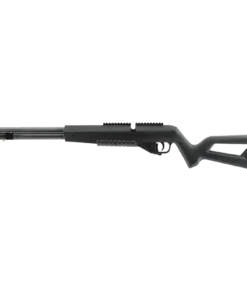
umarex AirRifle
umarex AirRifle
Reviews
There are no reviews yet.