







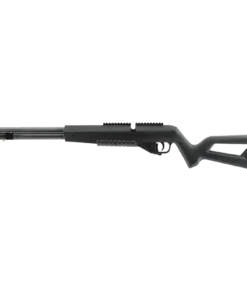
Umarex Arrax Magnum Air Rifle


€150.00
Description
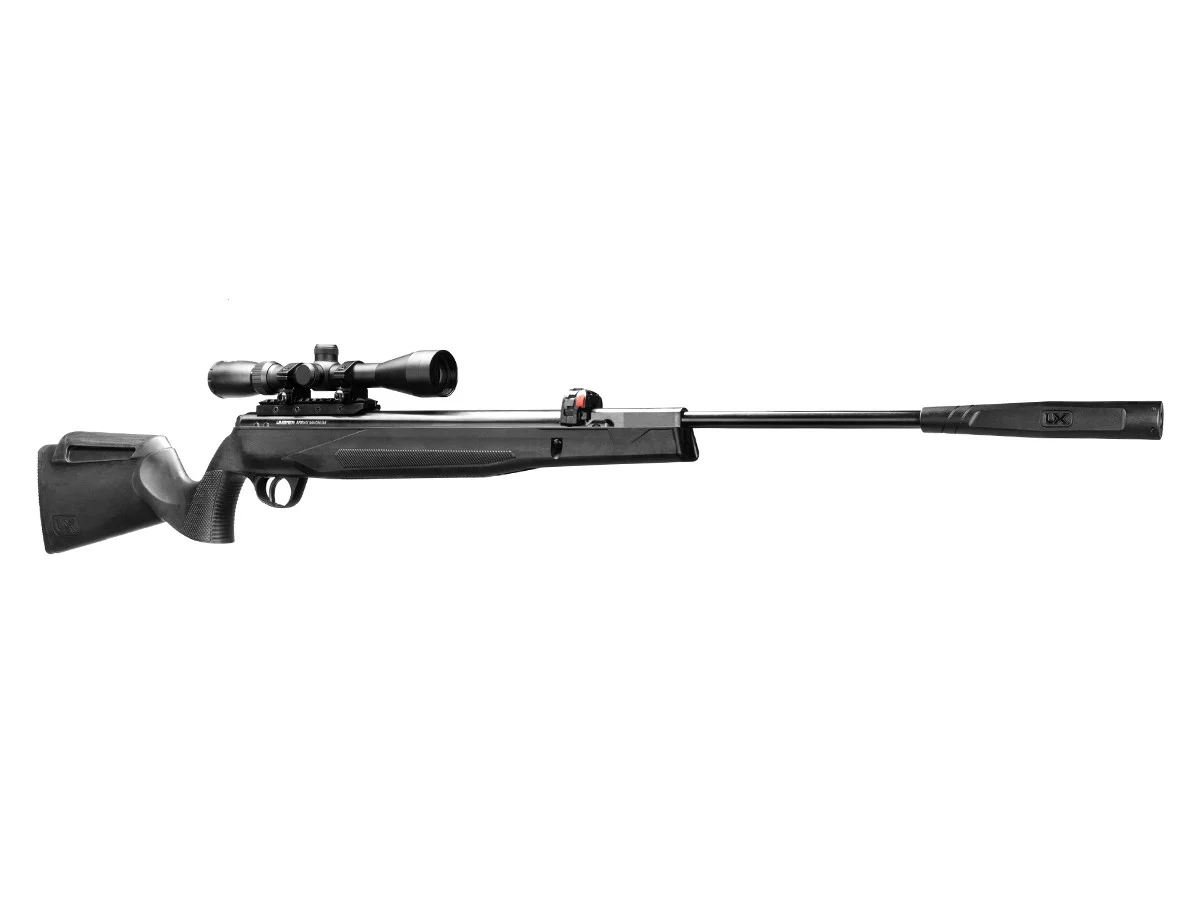
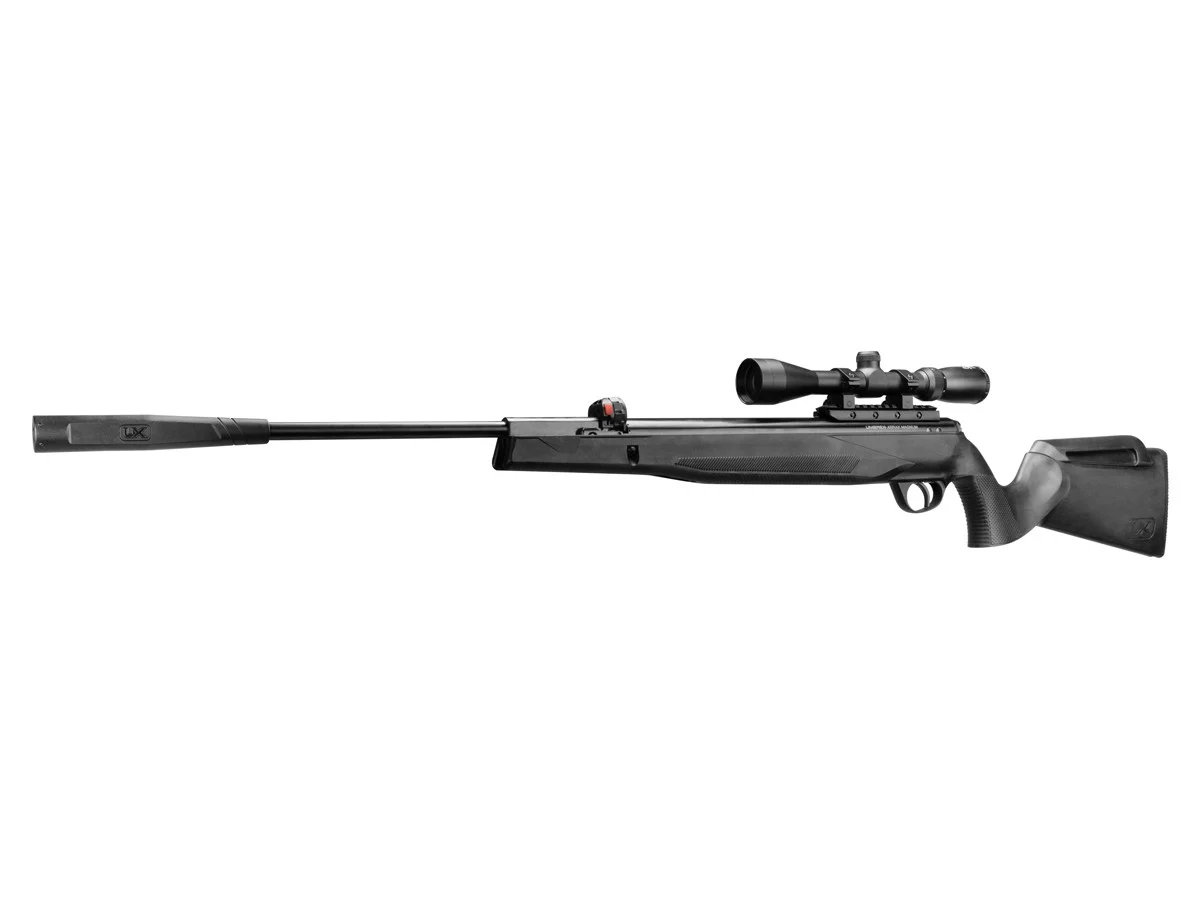
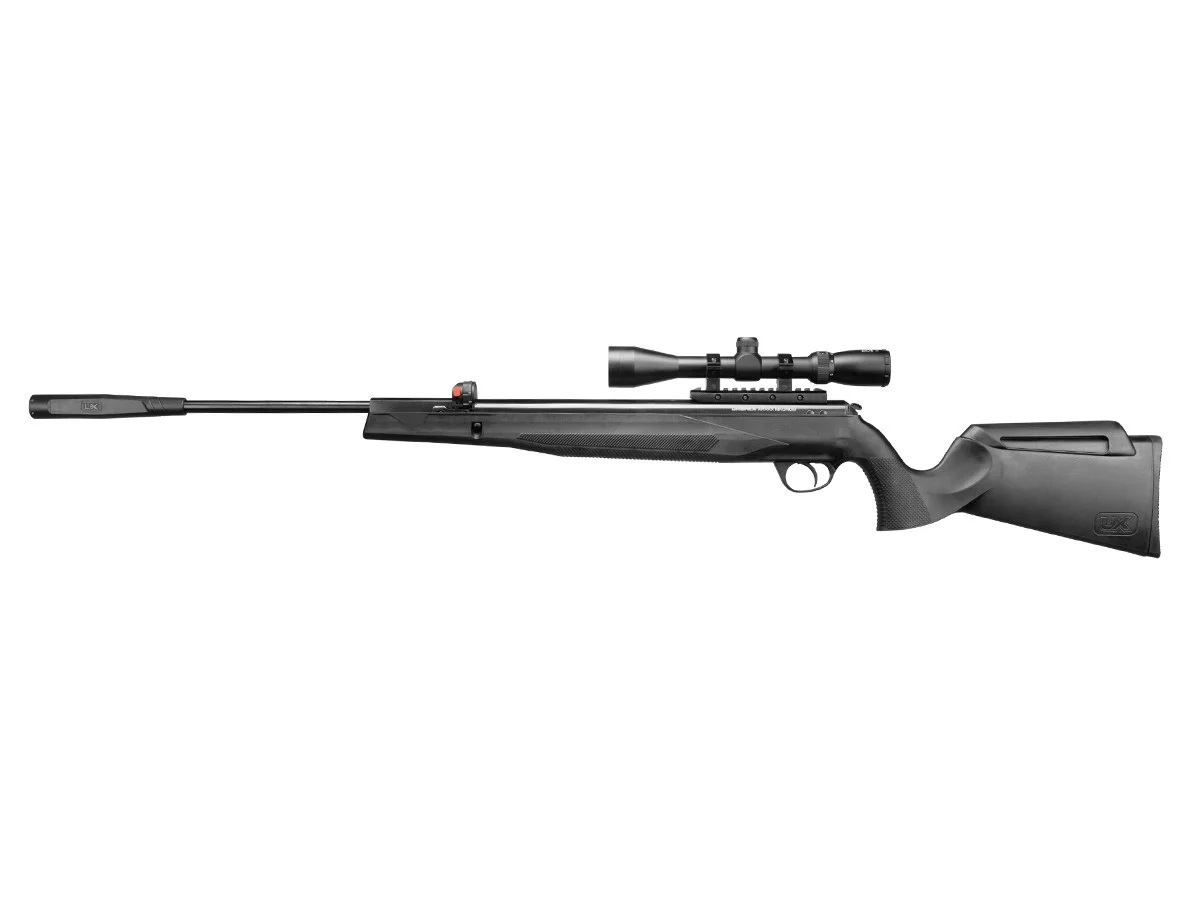
The Umarex Arrax Magnum Break Barrel .22 Caliber Air Rifle is a powerful pest control air gun. It has a rifled 18.9” barrel with a gas piston powerplant to propel 12 grain pellets up to 1,100 FPS. Accuracy is achieved thanks to the Picatinny-mounted 3-9×40 optical scope and single-action trigger. It boasts an auto-advancing, 10-round magazine to keep you shooting, with a manual safety to prevent unintended discharges.
Its overall length is 49.5 inches, and it weighs 8.5lbs. The Arrax is easy to operate with a simple break-action design that is great for small game, plinking, or longer range target shooting. An all-weather stock with a rubber butt plate provides comfortable durability for all day range sessions. The SilenceAir Moderator ensures quiet operation to help you go unnoticed.
Umarex Arrax Magnum Air Rifle
- 22 caliber
- Break barrel action
- Gas piston
- Weight: 8.5lbs
- Barrel length: 18.9″
- Overall length: 49.5″
- Single action trigger
- SilenceAir Moderator
- All weather synthetic stock
- Weaver/Picatinny optics rail
- 10 round auto advancing magazine
- Max. velocity: 1,100 FPS with 12gr pellet
- Max. energy: 32 FPE with 12gr pellet
- Includes 3-9×40 optic and rings
Specifications
BrandCaliber.22 (5.5mm)Max Velocity1100 fps Muzzle Energy32 ft/lbsSuggested forSmall game hunting/target practicePowerplantGas-pistonLoudness3-MediumWeight8.5 lbsFunctionSingle-shotActionBreak barrelScopeableWeaver/PicatinnyFront SightsnoneRear SightsnoneSafetyManualTrigger ActionSingle-ActionBarrelRifledCapacity10 round(s)Body TypeRifleStockSyntheticButtplateRubberColorBlackBarrel Length18.9 inGrip OrientationAmbidextrousOverall Length49.5 inIs Safe To Dry FireNoMagazine Included1
Umarex Arrax Magnum Air Rifle – .22 Calibre Multi-Shot Gas-Piston Sporting Rifle
Product Introduction, Technical Engineering, Design, Precision, Features and Performance
Introducing the Umarex Arrax Magnum Air Rifle
The Umarex Arrax Magnum Air Rifle is a modern .22-calibre sporting air rifle combining gas-piston power, break-barrel construction and a convenient 10-shot rotary magazine. Introduced as part of the manufacturer’s 2026 range, this model brings together familiar mechanical engineering and contemporary multi-shot technology.
Developed by Umarex, the rifle has been designed around a magnum-powered pneumatic mechanism, a rifled barrel, an all-weather synthetic stock and an integrated SilencAir sound-management system.
Unlike pre-charged pneumatic equipment, the Arrax Magnum does not require an external high-pressure reservoir, filling compressor or compressed-air cylinder.
Instead, its self-contained gas-piston powerplant forms part of the mechanical assembly.
Furthermore, its rotary magazine distinguishes it from traditional single-shot break-barrel air rifles. The manufacturer incorporates a newly designed 10-round magazine intended to provide a repeating ammunition arrangement within the break-barrel architecture.
The rifle also includes a 3–9×40 AO optical scope and compatible mounting rings in the manufacturer’s advertised package.
One of the significant specifications is its manufacturer-reported maximum velocity of approximately 1,100 feet per second with an 11.9-grain pellet.
Under those stated testing conditions, the manufacturer advertises approximately 32 foot-pounds of muzzle energy.
However, actual results depend on ammunition weight, the condition of the equipment and testing circumstances. These figures should therefore be understood as advertised specifications rather than guaranteed performance with every pellet.
Umarex USA+1
The Development of the Arrax Magnum Platform
The original Arrax family introduced a repeating break-barrel arrangement within the manufacturer’s traditional sporting airgun range.
Rather than relying on a conventional single-shot loading configuration, the platform incorporates a rotating magazine.
This design combines familiar break-barrel construction with a modern ammunition-handling system.
The Magnum represents a more powerful configuration developed around the same general product philosophy.
Its .22-calibre specification, gas-piston mechanism and extended sporting dimensions distinguish it from the standard models.
Furthermore, the manufacturer has equipped the rifle with a larger optical package and a redesigned magazine system.
The result is a distinctive sporting platform that combines self-contained pneumatic power with contemporary construction.
Understanding the Magnum Designation
The term Magnum identifies the rifle’s higher-energy positioning within the manufacturer’s traditional airgun range.
In this context, the designation relates to the construction and advertised output of the gas-piston powerplant.
It does not mean the rifle uses conventional firearm cartridges.
The equipment remains a pneumatic sporting air rifle designed for compatible pellets.
Furthermore, the designation does not establish universal performance across every ammunition type.
Published velocity and energy figures depend on specific testing conditions.
Consequently, accurate product information should identify both the calibre and the relevant manufacturer specifications.
.22 Calibre Pellet Construction
The Arrax Magnum is specified for .22-calibre pellets, corresponding to a nominal diameter of approximately 5.5mm.
This calibre is widely recognised within the sporting airgun industry.
Pellets may differ in shape, construction, material and weight.
However, compatibility should always be established through the manufacturer’s instructions.
The rifle’s magazine and barrel are designed around the intended pellet category.
Consequently, unsuitable ammunition should never be used.
The .22 configuration also distinguishes this model from the standard .177-calibre Arrax and from the manufacturer’s separate BB and airsoft products.
Gas-Piston Powerplant Engineering
The gas-piston mechanism is central to the rifle’s construction.
Unlike conventional steel coil-spring systems, a gas-piston powerplant uses a sealed pneumatic component as part of the energy-storage assembly.
This creates different mechanical characteristics from traditional spring-powered equipment.
Furthermore, the mechanism is incorporated directly into the rifle.
Therefore, external compressed-air filling equipment is not required.
The internal gas-piston assembly is a precision component and should remain within the manufacturer’s original specifications.
Unauthorised dismantling or alteration can create mechanical and safety hazards.
Break-Barrel Mechanical Architecture
The break-barrel configuration provides the principal external operating architecture.
In this design, the barrel assembly forms part of the mechanical cocking arrangement.
This differs from fixed-barrel underlever and pre-charged pneumatic systems.
The barrel, pivot assembly and associated locking components must maintain appropriate structural relationships.
Manufacturing tolerances are therefore important.
Furthermore, a high-energy gas-piston mechanism places specific demands on the surrounding mechanical components.
Any unusual resistance, damage or abnormal movement should be assessed professionally.
Why the Multi-Shot Design Is Distinctive
Traditional break-barrel sporting rifles often incorporate a single-shot ammunition arrangement.
The Arrax Magnum differs through its integrated rotary magazine.
This mechanical feature introduces a repeating ammunition system while retaining the break-barrel design.
However, the magazine must remain compatible with the exact rifle configuration.
The magazine housing, indexing arrangement and surrounding components require appropriate alignment.
Furthermore, replacement magazines must correspond to the relevant manufacturer reference.
Newly Designed 10-Shot Rotary Magazine
The manufacturer specifies a newly developed 10-shot rotary magazine.
Its purpose is to accommodate ten compatible pellets within the magazine assembly.
The rotary design introduces additional mechanical components compared with conventional single-shot arrangements.
Its construction must provide appropriate dimensional consistency.
Furthermore, the magazine should remain free from cracks, deformation and contamination.
Replacement magazine reference 2254881 is identified in the manufacturer’s 2026 catalogue.
The magazine should not be confused with those supplied for the standard Arrax configurations.
Automatic Magazine Indexing
The magazine system incorporates automatic indexing technology.
This arrangement forms part of the rifle’s repeating mechanical architecture.
The indexing mechanism and magazine must remain correctly aligned.
Manufacturing tolerances and appropriate component condition are therefore important.
Any abnormal mechanical behaviour should be investigated rather than corrected through unauthorised adjustment.
The original design should remain intact.
Rifled Barrel Construction
The rifle incorporates a rifled barrel.
Rifling consists of spiral features manufactured within the bore.
These features are intended to impart rotational stabilisation to compatible projectiles.
The quality of the finished barrel depends on appropriate material selection, dimensional accuracy and internal finishing.
Furthermore, the barrel must maintain its intended structural relationship with the break-barrel pivot and receiver.
Physical damage or unsuitable cleaning procedures can compromise its condition.
Precision and Manufacturing Consistency
Precision is influenced by several interconnected engineering factors.
The barrel’s manufacturing quality is important, but it is not the only relevant component.
The receiver, break-barrel locking assembly, magazine and operating mechanism must also remain in suitable condition.
Furthermore, ammunition consistency and environmental conditions can influence observed performance.
Consequently, the presence of a rifled barrel does not establish a guaranteed accuracy figure.
Any claim concerning specific group sizes should be supported by reliable testing.
Integrated SilencAir Sound Management
The manufacturer identifies an integrated SilencAir sound-management system.
This design incorporates internal sound-moderating features intended to influence the acoustic characteristics of operation.
However, reduced noise does not mean complete silence.
The rifle produces both mechanical and pneumatic sounds during its operating cycle.
Furthermore, sound characteristics can vary with ammunition and environmental conditions.
Appropriate hearing protection and responsible use remain important.
All-Weather Synthetic Stock
The rifle incorporates a black synthetic stock.
Synthetic materials are commonly used in sporting equipment because they provide practical resistance to certain environmental conditions.
They also allow manufacturers to incorporate detailed external shapes and textured contact surfaces.
However, the term all-weather does not mean the stock is completely resistant to damage.
Excessive heat, impact and unsuitable chemicals should still be avoided.
The stock should be maintained according to the manufacturer’s instructions.
Ergonomic Stock Geometry
The stock provides the main external support arrangement.
Its dimensions influence the general handling characteristics.
The manufacturer describes the rifle as having an ergonomic design.
However, comfort varies between individuals.
The overall length, weight distribution and shoulder-contact surfaces should therefore be evaluated according to personal requirements.
Optical Equipment Included
The advertised manufacturer package includes a 3–9×40 AO scope.
The variable magnification provides different viewing configurations within the optical system.
The 40mm objective lens forms part of the scope’s optical construction.
Additionally, the AO designation identifies an adjustable-objective arrangement.
Mounting rings are also included in the advertised package.
The exact accessory contents should be checked against the product packaging.
Picatinny Optical Mounting Rail
The rifle incorporates a Picatinny rail for compatible optical equipment.
This provides a standardised mounting interface.
However, mounting compatibility depends on the exact equipment and hardware.
The rail should remain structurally sound.
Furthermore, unsuitable accessories or improvised mounting modifications should be avoided.
Understanding the Published Velocity
The manufacturer advertises approximately 1,100 FPS using specified 11.9-grain pellets.
This is a maximum performance figure associated with particular testing conditions.
It should not be interpreted as a universal result.
Different pellets can produce different observed velocities.
Furthermore, environmental conditions and the state of the equipment may influence results.
Understanding the Advertised Energy
The published maximum muzzle-energy figure is approximately 32 foot-pounds.
This is equivalent to approximately 43 joules.
Muzzle energy expresses the kinetic energy associated with a moving projectile.
The figure must be considered alongside the exact ammunition and testing conditions.
Consequently, headline energy specifications should not be presented as guaranteed results with all pellets.
Understanding Cocking Effort
Magnum gas-piston break-barrel systems may require substantial mechanical effort compared with lower-powered sporting rifles.
Independent reporting from the 2026 product introduction identified an approximate cocking effort of 45 pounds.
This figure should be treated as an early published specification rather than an independently verified measurement for every production unit.
The amount of effort required is an important ergonomic consideration.
Customers should consult the manufacturer’s current documentation and assess their physical suitability before purchasing.
Why This Rifle Does Not Require a PCP Compressor
The rifle uses a self-contained gas-piston powerplant.
Consequently, it does not require the external high-pressure filling equipment associated with PCP rifles.
This is an important distinction between different sporting airgun technologies.
However, the internal powerplant still requires appropriate maintenance.
Its components should only be serviced according to manufacturer-approved procedures.
Understanding the Included 3–9×40 AO Scope
The included optical package is an important distinction between the Magnum configuration and certain more basic sporting rifles.
The first figure, 3–9, describes the variable magnification range. The 40 identifies the objective lens diameter in millimetres.
Meanwhile, AO refers to the adjustable-objective construction.
The optical system incorporates several components that require suitable manufacturing and appropriate maintenance.
Lens quality, mechanical integrity and environmental conditions influence the overall viewing experience.
However, an included scope should not automatically be represented as equivalent to premium specialist optical equipment.
The manufacturer’s supplied accessory provides a defined optical configuration, while individual expectations may differ.
Riflescope Durability and Compatibility
The mechanical characteristics of a magnum gas-piston system make compatible optical equipment an important consideration.
A scope must be suitable for the operating characteristics of the rifle.
Furthermore, the mounting arrangement must maintain appropriate structural compatibility.
The included scope and rings form part of the manufacturer’s advertised package.
Replacement optical equipment should be selected according to the manufacturer’s recommendations.
The original rail should not be modified through improvised machining.
Why the All-Weather Stock Matters
The synthetic stock offers practical material characteristics.
Unlike untreated wooden surfaces, suitably manufactured synthetic materials generally require less specialised cosmetic maintenance.
Furthermore, their external construction can accommodate textured grip surfaces and distinctive ergonomic shapes.
However, environmental resistance should not be confused with complete immunity to damage.
Excessive heat, severe impact and unsuitable cleaning chemicals may affect the material.
Appropriate storage and routine inspection remain necessary.
Understanding External Weight and Dimensions
The Magnum configuration is physically substantial.
Independent coverage of its 2026 introduction described an overall length exceeding 49 inches and a weight exceeding eight pounds.
These figures indicate a full-sized sporting configuration.
However, the exact production-unit dimensions should be confirmed against current manufacturer documentation.
Weight and length are important ownership considerations because they influence transport, storage and general ergonomic suitability.
Additional accessories may also change the final assembled weight.
Hard Air Magazine Community
Comparing the Magnum With the Standard Arrax .177
The standard .177 version incorporates a smaller calibre and a different advertised velocity specification.
The manufacturer’s 2026 catalogue identifies a maximum velocity of approximately 1,000 FPS for this version.
It also uses a 10-round magazine and gas-piston powerplant.
However, the standard configuration should not be assumed to possess the same energy rating or dimensions as the Magnum.
Furthermore, the compatible magazine reference differs.
These distinctions are important for customers comparing closely related models.
Comparing the Magnum With the Standard Arrax .22
The standard .22 configuration shares the same nominal calibre as the Magnum.
However, the manufacturer’s published maximum velocity for the standard model is approximately 900 FPS.
By comparison, the Magnum is advertised at approximately 1,100 FPS under its stated test conditions.
The models also use different magazine references.
Consequently, the products should be presented as separate configurations rather than interchangeable versions with identical specifications.
Differences From the Umarex Notos and Gauntlet
The Notos and Gauntlet families use pre-charged pneumatic technology.
Their systems rely on refillable high-pressure reservoirs.
By comparison, the Arrax Magnum uses a self-contained gas-piston mechanism.
This distinction affects the equipment required for ownership.
Furthermore, the respective magazines and operating assemblies belong to different engineering configurations.
The products should therefore be evaluated according to their actual specifications.
Differences From the Umarex Synergis Elite
The Synergis Elite incorporates an underlever operating arrangement.
Its fixed-barrel configuration differs from the break-barrel construction of the Magnum.
Both product families demonstrate how repeating-magazine systems can be incorporated into different mechanical platforms.
However, the barrel arrangements, operating mechanisms and magazine components should not be treated as interchangeable.
Differences From Umarex BB and Airsoft Products
The manufacturer’s wider catalogue includes Glock-branded BB pistols, airsoft replicas, T4E training products and Legends-series equipment.
These products serve different categories and use different ammunition or operating systems.
For example, a CO2-powered BB pistol should not be compared directly with a magnum gas-piston pellet rifle using only advertised velocity.
Their mechanical architectures and intended sporting categories differ significantly.
Comparing Other Sporting Manufacturers
Other brands, including Stoeger, manufacture different types of pneumatic sporting equipment.
The Stoeger XM1 is associated with PCP technology, while the RX20 belongs to a different airgun category.
However, these products do not share the Magnum’s complete engineering configuration.
Similarly, Beretta’s corporate history and related sporting brands are separate topics rather than technical features of this model.
Accurate comparison requires matching the power system, calibre, operating architecture and relevant manufacturer specifications.
Product Safety and Responsible Ownership
The Magnum’s advertised energy is substantial for a recreational sporting air rifle.
Consequently, responsible handling is essential.
Appropriate shooting activities should only take place in lawful, controlled environments with adequate projectile containment.
The equipment should remain inaccessible to children and unauthorised individuals.
Furthermore, the owner’s manual should be read before use.
No mechanical safety feature can replace responsible handling practices.
Maintenance of the Gas-Piston Assembly
The internal gas-piston mechanism must remain in its original manufacturer-approved configuration.
Its components are subject to mechanical stresses during normal operation.
Any suspected malfunction should be investigated by a qualified technician.
Unauthorised dismantling or modifications should be avoided.
Furthermore, unsuitable lubricants may damage certain internal components.
Maintenance should therefore follow the manufacturer’s specific recommendations.
Cleaning the Barrel and External Components
Routine external cleaning contributes to the preservation of the equipment.
The synthetic stock should be maintained using appropriate cleaning products.
Metal surfaces should remain protected against unnecessary moisture exposure.
Meanwhile, the barrel should only be cleaned using methods approved by the manufacturer.
Aggressive chemicals and improvised tools should be avoided.
Magazine Inspection and Replacement
The magazine should be inspected periodically for visible damage.
Cracking, deformation or abnormal mechanical behaviour may indicate that replacement is necessary.
The correct replacement reference should be verified against the exact model.
The manufacturer’s 2026 catalogue identifies 2254881 for the Magnum’s .22-calibre 10-round magazine.
This reference should not be confused with the magazines for the standard variants.
When to Seek Professional Servicing
Professional assessment is appropriate when the rifle exhibits unusual mechanical resistance, visible structural damage or suspected malfunction.
The barrel-locking arrangement, gas-piston powerplant and repeating mechanism are important mechanical assemblies.
Their original configuration should remain intact.
Furthermore, authorised servicing helps preserve the manufacturer’s intended safety and performance characteristics.
Technical Specifications
| Specification | Published information |
|---|---|
| Product name | Umarex Arrax Magnum Air Rifle |
| Manufacturer | Umarex USA |
| Model introduction | 2026 |
| Calibre | .22 / 5.5mm |
| Ammunition | Compatible airgun pellets |
| Power source | Self-contained gas piston |
| Action | Break barrel |
| Magazine type | Auto-indexing rotary |
| Magazine capacity | 10 pellets |
| Replacement magazine | 2254881 |
| Barrel | Rifled |
| Sound-management system | Integrated SilencAir |
| Stock | All-weather synthetic |
| Stock colour | Black |
| Optical rail | Picatinny |
| Included scope | 3–9×40 AO |
| Mounting rings | Included |
| Advertised maximum velocity | 1,100 FPS with specified ammunition |
| Advertised maximum energy | Approximately 32 foot-pounds |
| Cocking effort | Approximately 45 pounds, independently reported |
| Overall length | Reported as exceeding 49 inches |
| Weight | Reported as exceeding 8 pounds |
| External PCP compressor | Not required |
The manufacturer’s catalogue identifies the rifle as 2254800, while one retailer identifies the commercial SKU as 2254880. The precise SKU and UPC should be verified against the actual packaging before publication.
UMAREX USA+2
Why Engineering Accuracy Matters in Product Descriptions
A professional product description should distinguish verified features from unsupported claims.
The magazine capacity, calibre, operating mechanism and included scope are supported by published manufacturer information.
However, dimensions and retailer-specific package details should be checked against the actual unit.
Furthermore, maximum advertised performance should not be represented as universal performance across every ammunition type.
Clear distinctions help customers compare the correct models without confusing their technical characteristics.
Final Product Assessment
The Umarex Arrax Magnum Air Rifle combines a self-contained gas-piston powerplant with a modern repeating-magazine arrangement.
Its .22-calibre configuration, newly designed 10-shot magazine, rifled barrel and all-weather synthetic stock form the principal mechanical features.
Furthermore, the integrated SilencAir system and included 3–9×40 AO scope distinguish the manufacturer package.
Unlike PCP platforms, the rifle does not require an external high-pressure filling system.
However, the substantial magnum mechanism and full-sized construction introduce their own ergonomic and maintenance considerations.
For customers comparing traditional pneumatic sporting rifles, the most important factors are the exact model configuration, compatible ammunition, published specifications and access to manufacturer-approved servicing.
The platform demonstrates how modern gas-piston technology and repeating-magazine construction can be integrated into one traditional break-barrel sporting design.
Advanced Mechanical Engineering, Gas-Piston Technology, Structural Construction, Material Science, Durability, Maintenance and Long-Term Ownership
Understanding the Engineering Behind Modern Gas-Piston Sporting Equipment
Modern gas-piston sporting equipment represents an important development in mechanical and pneumatic engineering. Its construction combines specialised pressure components, mechanical assemblies, precision manufacturing and carefully selected materials.
Unlike traditional spring-powered mechanisms, a gas-piston system incorporates a sealed pneumatic component as part of its internal energy-storage arrangement.
This creates a different mechanical architecture from conventional steel coil-spring systems.
Furthermore, the complete assembly must be engineered to accommodate mechanical movement, internal pressure and structural stresses.
The receiver, barrel assembly, pivot mechanism, trigger housing and external stock all contribute to the finished design.
Each component performs a separate function. However, the overall reliability depends on the compatibility of these interconnected assemblies.
Manufacturing quality, material selection and dimensional consistency therefore remain essential considerations.
The Principles of Gas-Piston Technology
Gas-piston technology uses a sealed pneumatic component within the mechanical powerplant.
The component is designed to operate within defined manufacturing and pressure specifications.
Its construction differs from that of a traditional steel spring.
Furthermore, its internal characteristics depend on the manufacturer’s engineering choices, including material selection, sealing arrangements and structural dimensions.
The system is integrated into the complete mechanical assembly.
Consequently, the powerplant should not be regarded as an ordinary replaceable household gas component.
It requires appropriate technical knowledge and manufacturer-approved maintenance.
Understanding the Difference Between Gas Pistons and Steel Springs
Traditional spring-powered sporting equipment incorporates a mechanical spring as part of its energy-storage system.
A gas-piston design instead uses a sealed pneumatic component.
Both approaches have different engineering characteristics.
Steel springs depend on the mechanical properties of the selected spring material, while gas-piston systems incorporate pressure-related components.
Furthermore, each construction requires different manufacturing and maintenance considerations.
Neither design should automatically be considered superior in every application.
The appropriate engineering arrangement depends on the manufacturer’s intended performance, durability and mechanical requirements.
Internal Gas-Piston Construction
The internal assembly incorporates several interconnected components.
These may include a sealed cylinder, moving piston assembly, structural supports and associated mechanical interfaces.
The exact internal arrangement depends on the manufacturer’s proprietary design.
Dimensional accuracy is particularly important because the components must remain compatible throughout their intended service life.
Additionally, material quality contributes to the mechanical integrity of the assembly.
Any suspected internal damage should be referred to a qualified technician.
Pressure Containment and Sealing Materials
Sealing materials are important within enclosed pneumatic components.
Their purpose is to maintain the intended relationship between internal pressure and the surrounding mechanical structure.
Different materials provide different characteristics.
These may include flexibility, temperature resistance, chemical compatibility and resistance to deterioration.
However, no sealing material is completely immune to ageing.
Consequently, maintenance should follow the manufacturer’s approved recommendations.
Unsuitable lubricants and cleaning chemicals should be avoided.
Material Selection in Modern Manufacturing
Material selection influences strength, weight, durability and manufacturing consistency.
Different components require different material characteristics.
Metallic materials may provide structural rigidity.
Polymers can offer useful moulding flexibility and reduced weight.
Meanwhile, rubber-based materials may be used where resilient contact surfaces are required.
The suitability of each material depends on the component’s intended function.
Furthermore, material quality must be considered alongside the manufacturing process.
Metallic Receiver Construction
The receiver provides structural support for important mechanical assemblies.
Its dimensions must remain consistent with the original engineering design.
The receiver may incorporate several machined surfaces and mounting interfaces.
These must maintain appropriate relationships with the barrel assembly and other mechanical components.
Manufacturing tolerances therefore influence overall assembly compatibility.
Additionally, external damage may indicate a problem requiring inspection.
Structural Rigidity and Mechanical Stability
Structural rigidity describes the ability of a component to resist deformation.
Within sporting equipment, this characteristic helps maintain the intended relationships between mechanical assemblies.
However, rigidity must be balanced against weight and other material characteristics.
A manufacturer considers these factors when developing the overall design.
Furthermore, different components may require different levels of flexibility or resistance.
Consequently, the finished product represents a combination of carefully selected structural characteristics.
Precision Manufacturing and Dimensional Accuracy
Precision manufacturing involves producing components according to defined engineering dimensions.
This is particularly important where several parts must interact mechanically.
Manufacturing tolerances establish acceptable dimensional variations.
Furthermore, surface finishing and assembly quality influence the final result.
A component may appear visually smooth but still contain dimensional inconsistencies.
Therefore, manufacturing quality should not be judged solely by external appearance.
Understanding Manufacturing Tolerances
Engineering tolerances establish the permitted variation around an intended dimension.
These values allow components to be manufactured consistently while accommodating normal production differences.
The appropriate tolerance depends on the function of each component.
Some assemblies require particularly close dimensional relationships.
Others require sufficient clearance for normal mechanical movement.
Consequently, tolerances should be evaluated within the complete engineering design.
Barrel Construction and Internal Geometry
The barrel forms one of the most important structural components.
Its internal bore is manufactured according to the intended calibre specification.
The rifling consists of spiral features designed to impart rotational stabilisation to compatible projectiles.
The internal dimensions must remain consistent.
Furthermore, the barrel material must possess appropriate mechanical characteristics.
The quality of the finished component depends on material selection, machining accuracy and surface finishing.
Understanding Barrel Steel
Steel is widely used in sporting barrel manufacturing.
Its mechanical characteristics make it suitable for applications requiring structural strength and dimensional stability.
Different alloys possess different properties.
The manufacturer selects materials according to the intended design.
Furthermore, the finished barrel must meet the original dimensional and structural requirements.
The material alone does not establish overall accuracy or quality.
Rifling and Manufacturing Consistency
Rifling is incorporated into the bore during manufacturing.
Its geometry determines the spiral characteristics of the internal surface.
Different sporting platforms use different rifling specifications.
However, no single specification should be considered universally superior.
Compatibility with the intended ammunition remains essential.
Furthermore, the condition of the internal bore contributes to the overall mechanical characteristics.
Barrel Surface Finishing
The internal surface of a barrel requires suitable manufacturing and finishing.
Surface characteristics can influence the interaction between the bore and compatible projectiles.
However, the quality of the finished surface must be considered alongside other manufacturing factors.
Unsuitable cleaning products and abrasive tools may damage internal surfaces.
Maintenance should therefore follow the manufacturer’s instructions.
Barrel Pivot Assembly
Break-barrel sporting equipment incorporates a mechanical pivot arrangement.
The barrel assembly is connected to the surrounding structure through a pivot mechanism.
This construction requires appropriate material strength and dimensional accuracy.
The pivot components must maintain their intended structural relationships.
Furthermore, wear or damage may affect mechanical consistency.
Any abnormal movement should be professionally assessed.
Understanding Break-Barrel Structural Engineering
The break-barrel architecture combines the barrel assembly with the overall mechanical cocking system.
This arrangement differs from fixed-barrel sporting platforms.
The receiver, pivot and locking components must function as an integrated assembly.
Consequently, manufacturing tolerances are important.
The mechanical structure should remain within its original configuration.
Unauthorised modification may compromise safety and structural integrity.
Barrel Locking Components
Locking components provide structural retention within the original design.
Their construction requires appropriate material selection and manufacturing consistency.
The exact mechanical arrangement depends on the manufacturer’s engineering.
Visible damage, excessive movement or suspected deterioration should be investigated.
Replacement components must match the original specifications.
Mechanical Fatigue and Structural Wear
Mechanical components experience repeated stresses throughout their service life.
Material fatigue describes progressive deterioration associated with repeated loading.
The degree of fatigue depends on several factors.
These include material properties, component dimensions, manufacturing quality and operating conditions.
Furthermore, unsuitable maintenance may contribute to premature deterioration.
Regular inspection helps identify visible problems.
Understanding the Trigger Assembly
The trigger assembly forms part of the mechanical control system.
Its construction incorporates several components that must maintain appropriate mechanical relationships.
The housing provides structural support.
Internal parts must remain compatible with the original design.
Furthermore, the trigger mechanism must retain its intended safety characteristics.
Any suspected malfunction requires professional assessment.
Trigger Material Selection
Trigger components may incorporate metallic and polymer materials.
Their selection depends on structural and ergonomic requirements.
Metallic components can provide mechanical strength, while suitable polymers may contribute to external contact surfaces.
However, the complete assembly must meet the manufacturer’s engineering requirements.
Understanding Two-Stage Trigger Construction
A two-stage trigger incorporates distinct phases of mechanical movement.
This arrangement differs from a conventional single-stage design.
The exact mechanical characteristics depend on the manufacturer’s construction.
Furthermore, adjustment should remain within the original authorised limits.
The trigger should never be modified in a way that compromises its safety features.
Safety Mechanism Construction
Safety systems form an important part of sporting equipment.
Their purpose is to provide additional mechanical protection.
However, no mechanical safeguard eliminates the need for responsible handling.
The safety mechanism should remain fully functional.
Any unusual movement or suspected defect requires inspection by a qualified technician.
Synthetic Stock Material Engineering
Synthetic stock construction has become common across modern sporting equipment.
Engineered polymers allow manufacturers to create detailed external shapes and integrated surface textures.
Furthermore, these materials can provide practical resistance to certain environmental conditions.
However, synthetic materials are not completely immune to damage.
Excessive heat, significant impact and unsuitable chemicals may affect their properties.
Appropriate storage and maintenance remain important.
Polymer Durability and Environmental Resistance
Polymer materials respond differently to temperature, ultraviolet exposure and chemical contact.
Their long-term durability depends on their formulation and manufacturing quality.
Some polymers provide useful impact resistance.
Others are selected for dimensional stability or reduced weight.
Consequently, material performance should be evaluated according to the manufacturer’s specifications.
Ergonomic Stock Geometry
The stock provides the main external support structure.
Its geometry influences the general handling characteristics.
Different users have different physical proportions and preferences.
Consequently, comfort is subjective.
The complete stock dimensions should be considered rather than relying on appearance alone.
Grip Texture and Surface Construction
Textured surfaces provide defined external contact areas.
Their design can incorporate moulded patterns and different surface finishes.
The texture and material must remain suitable for the intended application.
Furthermore, surface deterioration may occur through environmental exposure.
Routine external inspection is therefore important.
Shoulder Support and Contact Materials
The rear portion of a sporting stock provides a shoulder-contact surface.
Some designs incorporate resilient rubber-based materials.
These materials can provide different contact characteristics compared with rigid polymers.
However, rubber components may deteriorate over time.
Cracking, detachment or visible damage should be addressed appropriately.
Optical Mounting System Engineering
Optical mounting systems provide an interface for compatible accessories.
Their construction requires appropriate dimensions and structural stability.
The mounting rail must correspond to the selected hardware.
Furthermore, the weight of additional equipment contributes to the complete assembly.
The manufacturer’s compatibility guidance should be followed.
Understanding Picatinny Rail Standards
A Picatinny rail is a recognised mounting standard.
Its dimensions and transverse slots provide a standardised interface for compatible accessories.
However, a matching external appearance does not guarantee compatibility.
Mounting hardware must satisfy the relevant specifications.
The original mounting structure should not be modified through improvised machining.
Optical Equipment Construction
Optical equipment incorporates lenses, mechanical adjustment systems and protective housings.
Each component contributes to the overall optical arrangement.
The quality of the viewing experience depends on lens characteristics and mechanical construction.
Furthermore, environmental protection and appropriate maintenance influence longevity.
An included accessory should always be distinguished from separately purchased equipment.
Sound-Management Technology
Sound-management systems form part of the construction of certain modern sporting products.
Their design may incorporate specialised internal structures intended to influence acoustic output.
However, reduced sound does not mean silent operation.
Mechanical movement and other operating sounds may remain noticeable.
Furthermore, sound characteristics depend on the surrounding environment.
Appropriate hearing protection remains important.
Understanding Mechanical Noise
Mechanical noise may originate from moving components and associated structural assemblies.
Different materials produce different acoustic characteristics.
Furthermore, environmental conditions can influence perceived noise.
An unexpected change in mechanical sound may indicate a problem.
Consequently, abnormal operation should be investigated rather than ignored.
Magazine Engineering and Component Alignment
Rotary magazines incorporate several interconnected mechanical components.
Their construction requires dimensional consistency and compatibility with the surrounding assembly.
The magazine housing must retain its intended shape.
Furthermore, internal components should remain free from contamination and visible damage.
Replacement parts must correspond to the exact manufacturer specification.
Polymer and Metallic Magazine Materials
Magazine components may incorporate polymer, metal or a combination of materials.
Polymer construction allows complex shapes to be manufactured.
Metallic components may provide additional structural characteristics where required.
However, durability depends on the complete engineering design.
Material selection should not be considered independently of manufacturing quality.
Magazine Inspection and Maintenance
Magazines should be inspected for visible deterioration.
Cracks, deformation and abnormal movement may indicate a problem.
Furthermore, replacement components should be obtained using the correct manufacturer reference.
Improvised repairs are unsuitable.
Internal Component Compatibility
Mechanical assemblies are designed around specific dimensional relationships.
A replacement part must correspond to the original design.
Even minor differences may influence compatibility.
Consequently, genuine manufacturer documentation should guide replacement decisions.
Temperature and Material Behaviour
Temperature can influence the physical properties of different materials.
Polymers may respond differently from metals.
Rubber-based components can also change their characteristics under unsuitable environmental conditions.
Therefore, equipment should remain within the manufacturer’s recommended temperature range.
Humidity and Corrosion Prevention
Humidity may contribute to corrosion on exposed metallic surfaces.
Wooden and polymer components may also experience environmental deterioration.
Suitable storage helps reduce unnecessary exposure.
Furthermore, external surfaces should be maintained using appropriate cleaning products.
Long-Term Structural Durability
Durability depends on the interaction between material selection, manufacturing quality and environmental conditions.
No single component determines the service life of the complete product.
The mechanical assemblies must remain compatible.
Additionally, routine inspection and authorised maintenance contribute to preserving the intended condition.
Routine External Maintenance
External maintenance should focus on preserving the original surfaces and identifying visible damage.
The stock should remain clean.
Metallic surfaces should be protected against unnecessary moisture exposure.
Furthermore, the barrel assembly and accessible mechanical components should be inspected periodically.
Internal Servicing Requirements
Internal servicing requires appropriate technical knowledge.
The gas-piston mechanism and associated components should not be dismantled without manufacturer-authorised procedures.
Furthermore, unsuitable lubricants may affect internal materials.
Qualified technicians should handle suspected internal mechanical problems.
Recognising Potential Mechanical Problems
Abnormal resistance, unusual movement, visible cracking or unexpected changes in mechanical behaviour may indicate deterioration.
These observations do not automatically establish a specific diagnosis.
However, they provide reasons to discontinue use and arrange professional inspection.
Replacement-Part Standards
Replacement parts should match the original product specifications.
The manufacturer may use specialised dimensions and materials.
Consequently, similar-looking components should not automatically be considered interchangeable.
Genuine parts and authorised service channels are preferable.
Understanding Manufacturer Documentation
Manufacturer manuals provide important information concerning operating limitations and maintenance.
The documentation should correspond to the exact product version.
Furthermore, different regional configurations may have separate requirements.
Owners should retain the original paperwork and purchase documentation.
Product Quality Control
Manufacturing quality control helps establish whether components meet the intended specifications.
Processes may include dimensional inspection, surface evaluation and mechanical testing.
The exact procedures depend on the manufacturer.
However, quality control does not eliminate the need for ongoing inspection.
Accuracy and Precision as Engineering Concepts
Accuracy and precision are related but different concepts.
Accuracy refers to closeness to an intended reference.
Precision concerns the consistency of repeated measurements.
Both are important in manufacturing and mechanical engineering.
However, neither concept should be used to promise an unsupported performance result.
Understanding Mechanical Consistency
Mechanical consistency depends on the condition of interconnected components.
Manufacturing quality, material properties and environmental conditions all contribute.
Furthermore, appropriate maintenance helps preserve the original configuration.
The complete assembly should therefore be considered rather than one isolated component.
Storage and Security Requirements
Secure storage is essential for responsible ownership.
The equipment should remain inaccessible to children and unauthorised individuals.
Appropriate locking arrangements should be used according to applicable laws.
Furthermore, the storage environment should protect the equipment against excessive moisture and heat.
Transportation and Protective Cases
Protective cases can help reduce accidental impact and environmental exposure.
However, transportation must also comply with applicable legal requirements.
Owners should verify the rules governing possession and transport in their jurisdiction.
Furthermore, the equipment should be secured appropriately.
Appropriate Sporting Environments
Sporting equipment should only be used in lawful and appropriately controlled environments.
Suitable facilities must provide adequate safety infrastructure and projectile containment.
The presence of people and property must always be considered.
Furthermore, protective equipment and responsible handling practices are essential.
Environmental Responsibility
Responsible sporting activities should consider environmental effects.
Waste materials should be managed appropriately.
Outdoor areas should not be treated as unrestricted recreational spaces.
Additionally, local environmental requirements should be respected.
Warranty and Customer Support
Warranty conditions depend on the manufacturer’s terms and applicable consumer protection laws.
Customers should retain purchase records and original documentation.
Unauthorised modifications may affect warranty eligibility.
Consequently, technical problems should be reported through appropriate authorised service channels.
Service Records and Long-Term Ownership
Service records provide a useful reference for long-term ownership.
They may include inspection dates, authorised repairs and replacement-part details.
Furthermore, these records can help identify the correct configuration when technical support is requested.
Evaluating the Complete Engineering System
The complete construction combines mechanical, pneumatic and material-engineering principles.
The powerplant provides the internal energy-storage arrangement.
The receiver supports the principal mechanical components.
The barrel forms the projectile pathway.
The magazine provides the repeating ammunition arrangement.
Meanwhile, the stock contributes to the external structure and ergonomic configuration.
Each component must remain compatible with the original design.
Final Assessment of Manufacturing Quality and Durability
Modern sporting equipment demonstrates how traditional mechanical engineering can be combined with contemporary materials and manufacturing techniques.
Gas-piston technology provides an alternative to conventional spring construction.
Precision machining supports dimensional consistency.
Synthetic materials offer different structural and environmental characteristics.
Furthermore, integrated mounting and sound-management systems contribute to modern product design.
The complete assembly depends on the compatibility of all its components.
Material selection, manufacturing accuracy and appropriate maintenance remain essential.
High-stress mechanical assemblies require particular attention.
Consequently, suspected damage should always be assessed professionally.
The manufacturer’s original specifications should guide maintenance and replacement decisions.
Conclusion: Engineering Quality, Structural Integrity and Responsible Ownership
The engineering of modern sporting equipment involves several interconnected disciplines.
Mechanical construction, material science, dimensional accuracy and environmental protection all contribute to the finished product.
The powerplant, receiver, barrel, magazine and external stock each perform distinct functions.
However, the overall reliability depends on their integration.
Furthermore, long-term ownership requires appropriate storage, routine inspection and access to qualified technical support.
Unauthorised modifications should be avoided, particularly where safety-related components are involved Umarex Arrax Magnum Air RifleUmarex Arrax Magnum Air RifleUmarex Arrax Magnum Air RifleUmarex Arrax Magnum Air RifleUmarex Arrax Magnum Air Rifle Umarex Arrax Magnum Air Rifle Umarex Arrax Magnum Air RifleUmarex Arrax Magnum Air RifleUmarex Arrax Magnum Air RifleUmarex Arrax Magnum Air RifleUmarex Arrax Magnum Air RifleUmarex Arrax Magnum Air RifleUmarex Arrax Magnum Air Rifle.
The most important considerations remain structural integrity, manufacturer-approved maintenance, genuine replacement parts and compliance with applicable laws Umarex Arrax Magnum Air RifleUmarex Arrax Magnum Air RifleUmarex Arrax Magnum Air Rifle Umarex Arrax Magnum Air RifleUmarex Arrax Magnum Air RifleUmarex Arrax Magnum Air Rifle Umarex Arrax Magnum Air RifleUmarex Arrax Magnum Air RifleUmarex Arrax Magnum Air RifleUmarex Arrax Magnum Air Rifle
Umarex Arrax Magnum Air Rifle Umarex Arrax Magnum Air RifleUmarex Arrax Magnum Air RifleUmarex Arrax Magnum Air Rifle Umarex Arrax Magnum Air RifleUmarex Arrax Magnum Air RifleUmarex Arrax Magnum Air RifleUmarex Arrax Magnum Air RifleUmarex Arrax Magnum Air Rifle Umarex Arrax Magnum Air RifleUmarex Arrax Magnum Air RifleUmarex Arrax Magnum Air RifleUmarex Arrax Magnum Air Rifle.
By understanding these engineering principles, owners can make more informed decisions about product condition, maintenance requirements and long-term ownership responsibilities Umarex Arrax Magnum Air RifleUmarex Arrax Magnum Air RifleUmarex Arrax Magnum Air Rifle Umarex Arrax Magnum Air RifleUmarex Arrax Magnum Air RifleUmarex Arrax Magnum Air Rifle Umarex Arrax Magnum Air RifleUmarex Arrax Magnum Air RifleUmarex Arrax
Magnum Air Rifle Umarex Arrax Magnum Air RifleUmarex Arrax Magnum Air RifleUmarex Arrax Magnum Air RifleUmarex Arrax Magnum Air RifleUmarex Arrax Magnum Air RifleUmarex Arrax Magnum Air RifleUmarex Arrax Magnum Air Rifle.
Be the first to review “Umarex Arrax Magnum Air Rifle”
Related products


umarex AirRifle


umarex AirRifle


umarex AirRifle

umarex AirRifle
umarex AirRifle

umarex AirRifle


umarex AirRifle

umarex AirRifle
Reviews
There are no reviews yet.