
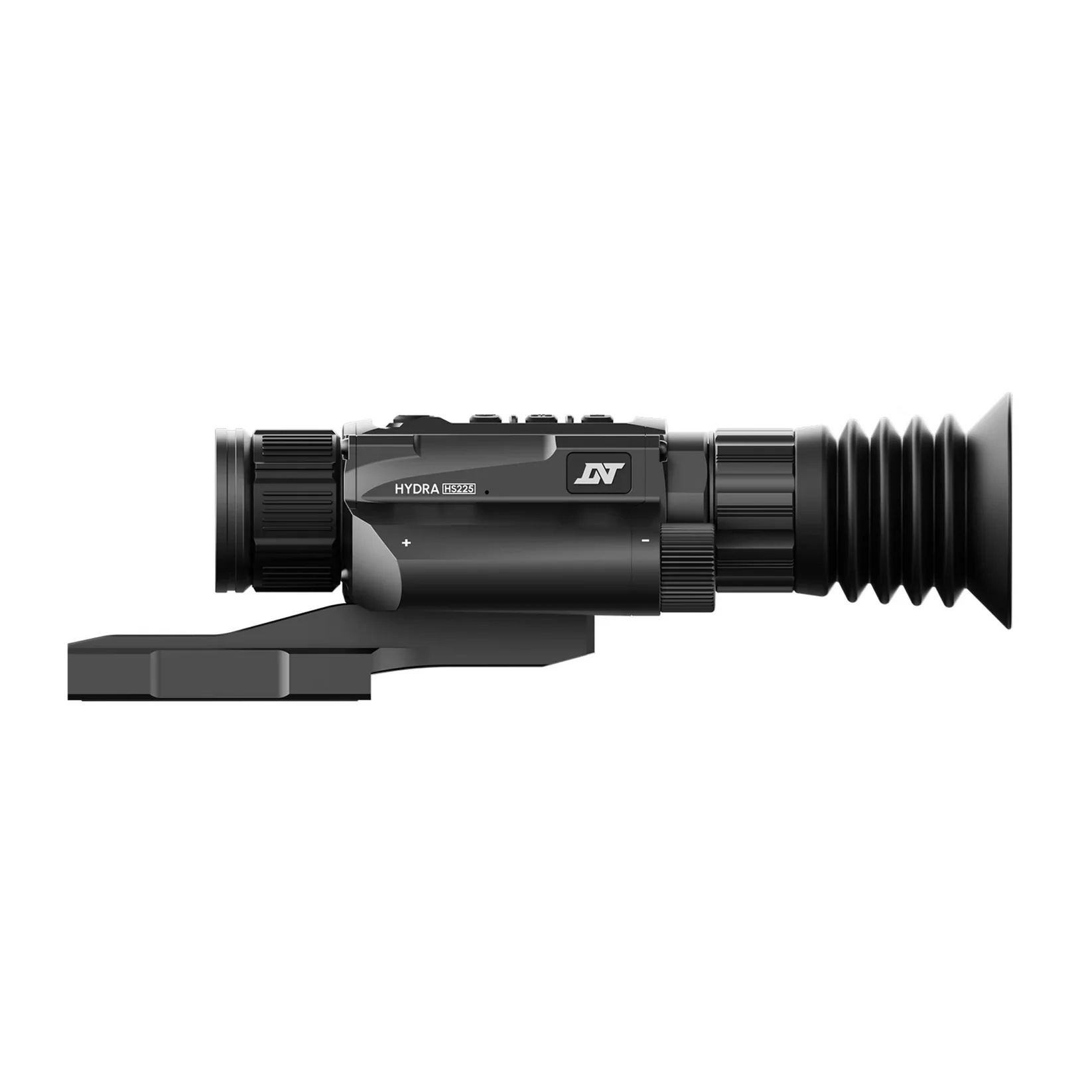
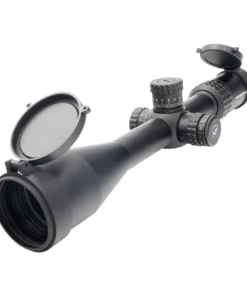
DNT Optics HYDRA 3-12x Multi-Function Thermal Scope/Spotter
€800.00
DNT Optics HYDRA 3-12x Multi-Function Thermal Scope/Spotter
AI-Enhanced Clarity, Ultra-Light Versatility
The DNT HYDRA HS225 is a cutting-edge thermal optic that can function as both a scope and a handheld spotter. Designed for shooters, hunters, and professionals who demand high performance in a compact package, the HYDRA combines a high-end <25mk NETD thermal sensor with DNT’s proprietary Super Resolution Image Algorithm for exceptional clarity—even at higher digital zoom levels where other thermals lose definition.
At its core is a 12μm uncooled infrared sensor delivering 256×192 resolution at 50Hz, paired with a crisp 1024×768 Micro-OLED display. The result is smooth, high-contrast thermal imaging in a wide range of conditions. Picture-in-Picture mode provides precise target detail without losing your wider field of view.
Weighing just 372g, the HYDRA is ultra-light, IP67 waterproof, and recoil-rated up to .50 BMG—making it ready for everything from demanding field work to rugged outdoor pursuits. Powered by a replaceable 18650 battery, you get up to 5.5 hours of runtime, with USB-C external power support for extended sessions.
Key Features
- 12μm <25mk NETD Thermal Sensor – Exceptional detail and sensitivity in varied conditions
- Super Resolution Image Technology – AI-enhanced clarity even at higher zoom
- Dual Use – Scope or handheld spotter
- Ultra-Lightweight – Just 372g for all-day carry
- Picture-in-Picture Mode – Zoom without losing situational awareness
- One-Shot Zero – Fast and simple sight-in process
- Replaceable 18650 Battery – 5.5h operation + USB-C power option
- IP67 Waterproof – Weatherproof for harsh conditions
- High Recoil Resistance – Rated for up to .50 BMG
Specifications
- Model: HYDRA HS225
- Sensor Resolution: 256×192 pixels
- Pixel Size: 12μm
- NETD: <25mk (@25°C)
- Frame Rate: 50Hz
- Objective Lens: 25mm focal length
- Base Magnification: 3x
- Digital Zoom: 3x / 4.5x / 6x / 9x / 12x
- Display: Micro-OLED, 1024×768, 50Hz
- Eye Relief: 65mm (2.5″)
- Battery: 18650 (flat top) – Not Included
- Runtime: 5.5 hours
- External Power: 5V USB-C
- Weight: 372g (13.1oz)
- Dimensions: 202×68×50mm
- Storage: 32GB built-in
- Connectivity: WiFi & DNT App support
- Operating Temp: -20°C to +50°C
- Waterproof Rating: IP67
- Recoil Proof: 800GS / .50 BMG
Includes:
- DNT HS225 HYDRA Thermal Optic
- Picatinny Mounting Rail
- Rear Eye Cup
- Front Flip Lens Cap
DNT Optics HYDRA 3-12x Multi-Function Thermal Scope/Spotter – Advanced Thermal Imaging, Micro-OLED Display and Compact Design
DNT Optics HYDRA 3-12x – Thermal Imaging Technology, Optical Engineering, Technical Specifications and Construction
1. Introduction to the DNT Optics HYDRA 3-12x
The DNT Optics HYDRA 3-12x Multi-Function Thermal Scope/Spotter is a compact electronic thermal imaging instrument developed around versatility, digital image processing and practical outdoor observation. Manufactured by DNT Optics, the HYDRA range combines thermal imaging technology, an advanced Micro-OLED display and integrated digital functionality within a compact aluminium housing.
One of its defining characteristics is its multifunctional design. The system has been developed to support three different viewing configurations: standalone electronic viewing, compatible optical-system integration and handheld thermal observation.
Furthermore, its compact construction makes it convenient for outdoor transportation and general thermal imaging applications.
The 3-12x configuration corresponds to the HS225 model, featuring a 256 × 192 thermal sensor and a 25mm objective lens.
2. Technical Specifications
- Brand: DNT Optics
- Product: HYDRA Multi-Function Thermal Imaging System
- Model: HS225
- Sensor resolution: 256 × 192 pixels
- Sensor type: Uncooled infrared
- Pixel pitch: 12μm
- Thermal sensitivity: ≤25mK at 25°C
- Frame rate: 50Hz
- Objective lens: 25mm
- Base magnification: 3x
- Digital magnification: 3x, 4.5x, 6x, 9x and 12x
- Display: Micro-OLED
- Display resolution: 1024 × 768 pixels
- Display refresh rate: 50Hz
- Eye relief: 65mm
- Internal storage: 32GB
- Connectivity: Wi-Fi and DNT application support
- Battery: Flat-top 18650 rechargeable battery
- Manufacturer-rated operating time: Up to 5.5 hours
- External power: 5V USB Type-C
- Dimensions: Approximately 202 × 68 × 50mm
- Weight: Approximately 372g
- Operating temperature: -20°C to +50°C
- Water protection: IP67
- Housing: 6061 aircraft-grade aluminium
3. Advanced Thermal Imaging Technology
The thermal imaging system uses an uncooled infrared sensor to detect differences in infrared radiation.
Unlike conventional cameras, thermal imaging does not depend on visible light to produce an image.
Consequently, it provides a different approach to observing temperature variations in surrounding environments.
The 256 × 192 detector resolution establishes the foundation for image formation, while its 12μm pixel pitch contributes to the compact sensor architecture.
Furthermore, the specified thermal sensitivity of 25mK or lower at 25°C describes its ability to distinguish relatively small temperature differences under the manufacturer’s testing conditions.
4. Micro-OLED Display Technology
The integrated 1024 × 768 Micro-OLED display provides the electronic viewing interface.
OLED technology is valued for its contrast characteristics, individual pixel illumination and compact construction.
Furthermore, the 50Hz display refresh rate contributes to the presentation of continuously updated thermal imagery.
5. Digital Imaging and Connectivity
The system incorporates 32GB of internal storage for supported digital recordings and photographs.
Additionally, Wi-Fi connectivity provides compatibility with the DNT Optics application.
This creates opportunities for digital media management, supported image viewing and convenient connectivity with compatible devices.
6. Durable Aluminium Construction
The external housing is CNC-machined from 6061 aircraft-grade aluminium.
This engineering material offers a useful combination of structural strength, manageable weight and manufacturing versatility.
Furthermore, the IP67 protection rating provides resistance against dust ingress and specified temporary water immersion conditions.
The manufacturer also specifies an 800G recoil-resistance rating for the product.
7. Battery Technology and Power Management
The HS225 uses flat-top 18650 rechargeable batteries.
The manufacturer specifies an operating time of up to 5.5 hours, although actual performance can vary according to temperature and electronic settings.
Furthermore, 5V USB Type-C external power support provides additional charging flexibility.
8. Why Consider the DNT Optics HYDRA?
The main attraction of this electronic imaging system is its combination of thermal detection, digital processing, compact construction and integrated recording capabilities.
Its specifications make it an interesting option for customers researching portable thermal imaging technology and multifunctional outdoor observation equipment.
Its lightweight construction, internal storage and wireless connectivity also contribute to its overall versatility.
9. Related Optical Industry Search Terms
The following supplied terms relate to broader optical equipment markets rather than confirmed features of this product:
- optics warehouse
- optic warehouse
- red dot UK
- minotaur 10-50×60
- vector minotaur 10-50×60
- SWFA SS 10×42
- Delta Stryker
- Delta Optics
- Element Optics
- Schmidt and Bender scopes
- Falcon Optics
- ZCO Optics
- TPO scopes
- HIKMICRO Stellar SX60L thermal scope
- best digital night vision scope
- best night vision scope
- DNT Optics review
- DNT thermal scope review
- TNC225R review
- SWFA scope review
- PRS spotting scope setups
Other supplied terms, including Picatinny dimensions, 1913 rail, scope mounts, zero-stop systems, parallax, ballistic solvers and conventional rifle accessories, concern separate equipment categories. They should not be presented as included components or specifications of this thermal imaging instrument.
Advanced Thermal Imaging Technology, Image Quality, Electronic Construction, Durability, Maintenance and Frequently Asked Questions
Understanding Thermal Imaging Technology
How Thermal Imaging Works
Thermal imaging is based on the detection of infrared radiation emitted by objects and surfaces. Unlike conventional photography, which relies on reflected visible light, thermal imaging identifies differences in infrared energy.
Every object above absolute zero emits infrared radiation. However, the amount of radiation detected can vary according to temperature, material properties, surface characteristics and environmental conditions.
An electronic detector receives this radiation and converts it into electrical information. The information is subsequently processed and presented as a visible image on an electronic display.
Consequently, thermal imaging provides a different way of observing the surrounding environment.
Understanding Infrared Radiation
Infrared radiation forms part of the electromagnetic spectrum and exists beyond the red portion of visible light.
Although it cannot normally be seen with the human eye, specialized electronic sensors can detect particular infrared wavelengths.
Furthermore, infrared technology is used across several industries, including industrial inspection, building diagnostics, environmental monitoring and scientific research.
Its applications extend beyond outdoor observation.
Understanding Thermal Sensitivity
Thermal sensitivity describes how effectively an imaging system can distinguish small temperature differences.
It is commonly expressed in millikelvin.
A lower numerical sensitivity figure generally indicates the ability to distinguish smaller temperature differences under specified testing conditions.
However, sensitivity should not be considered the only measure of image quality.
Sensor resolution, optical transmission, processing algorithms and environmental conditions also contribute.
Understanding Thermal Resolution
Thermal resolution refers to the number of individual detector pixels used to produce an image.
A higher resolution provides more individual image points.
However, image quality depends on more than pixel count.
Furthermore, detector performance, lens characteristics and electronic processing influence the final presentation.
The Importance of Pixel Pitch
Pixel pitch describes the distance between the centres of adjacent detector pixels.
It is generally measured in micrometres.
Pixel pitch is an important characteristic of infrared sensor architecture.
However, smaller pixel pitch does not automatically guarantee superior image quality.
The complete optical and electronic design must also be considered.
Understanding Frame Rate
Frame rate describes how frequently an imaging system updates its displayed information.
It is normally expressed in frames per second.
A higher frame rate can provide a smoother presentation of changing scenes.
Furthermore, frame rate influences how movement is represented on the display.
Actual visual performance also depends on processing speed and display characteristics.
Digital Image Processing and Visual Presentation
Understanding Image Processing
Digital image processing involves converting electronic sensor information into a format that can be displayed and interpreted.
Different processing methods may improve image presentation.
These can include noise reduction, contrast adjustment and image enhancement.
Furthermore, processing quality influences how clearly individual thermal features are represented.
Contrast and Image Definition
Contrast describes differences in brightness between areas of an image.
Good contrast can make temperature variations easier to distinguish.
However, excessive contrast can sometimes reduce the visibility of subtle information.
Consequently, a balanced presentation is important.
Understanding Image Noise
Electronic imaging systems may produce unwanted variations known as image noise.
Noise can arise from sensor characteristics, temperature changes and electronic processing.
Furthermore, environmental conditions may influence the final image.
Modern digital processing systems incorporate techniques intended to manage these effects.
Image Consistency
Image consistency describes how reliably an imaging system presents information across different observation conditions.
Several characteristics contribute, including detector stability, processing quality and electronic calibration.
Furthermore, manufacturing precision plays an important role.
Electronic Display Technology
An electronic display converts digital image information into a visual presentation.
Display resolution, brightness, contrast and refresh rate all influence the viewing experience.
Furthermore, display quality should be considered alongside the detector and processing system.
Understanding OLED Display Technology
How OLED Displays Work
OLED stands for Organic Light-Emitting Diode.
Unlike conventional LCD technology, OLED pixels generate their own light.
This allows individual pixels to be controlled independently.
Consequently, OLED technology can provide strong contrast and deep black presentation.
Contrast and Black Levels
OLED displays can switch individual pixels off when black information is presented.
This contributes to strong contrast characteristics.
Furthermore, high contrast can improve the appearance of electronic images.
Display Resolution
Display resolution describes the number of pixels used to create the visible image.
Higher resolution can provide a more detailed presentation.
However, the final experience also depends on the source image and the processing system.
Display Comfort
Electronic viewing comfort depends on several factors.
Brightness, contrast, refresh rate and viewing position all contribute.
Furthermore, excessive brightness in dark environments may cause discomfort.
Users should select comfortable viewing conditions and take regular breaks.
Electronic Recording and Digital Storage
Understanding Internal Storage
Internal digital storage provides space for supported recordings and photographs.
Storage capacity determines how much information can be retained before files need to be transferred or deleted.
Furthermore, recording quality and file format influence the amount of storage required.
Digital Photography
Electronic imaging systems may provide still-image capture functionality.
This allows supported images to be saved for later review.
Furthermore, digital photography can be useful for documenting equipment inspections and general observation activities.
Video Recording
Video recording allows electronic imaging information to be stored as moving images.
The actual recording format and available settings depend on the manufacturer’s software.
Furthermore, recording duration depends on available storage and battery capacity.
File Management
Digital files should be organized appropriately.
Regular file transfers can help maintain available storage capacity.
Furthermore, important recordings should be backed up to a separate storage location.
Wireless Connectivity
Wireless connectivity provides communication between compatible electronic devices.
Depending on the manufacturer’s application, supported functions may include media viewing and file management.
Furthermore, connection quality can vary according to distance, interference and device compatibility.
Application Compatibility
Mobile applications can provide additional digital management functions.
However, software compatibility may depend on the operating system and application version.
Users should consult the manufacturer’s current compatibility information.
Electronic Construction and Component Protection
Understanding Aluminium Housing
Aluminium is widely used in precision electronic equipment.
Its popularity is based on a useful combination of strength, manageable weight and manufacturing flexibility.
Furthermore, it can be machined accurately.
These properties make it suitable for housings that protect sensitive electronic components.
Material Quality and Manufacturing
Manufacturing quality influences dimensional accuracy and component alignment.
Precision machining helps ensure that individual components fit within their intended tolerances.
Furthermore, suitable finishing procedures contribute to external appearance and protection.
Protection of Internal Electronics
Electronic imaging instruments contain sensitive components.
These may include circuit boards, detector assemblies, connectors and display components.
Consequently, external protection is important.
However, even a well-protected instrument can be damaged by severe impacts or unsuitable handling.
Understanding Water Protection
Water protection ratings describe the conditions under which equipment has been tested.
Different ratings represent different levels of protection.
Furthermore, users should distinguish between resistance to water exposure and unrestricted underwater operation.
Manufacturer instructions should always be consulted.
Dust Protection
Dust can affect external surfaces and mechanical components.
Furthermore, particles may accumulate around connectors and protective covers.
Appropriate inspection and cleaning help maintain equipment condition.
Impact Protection
Electronic equipment should be protected against drops and accidental impacts.
Even when external damage is not immediately visible, internal components may have been affected.
Consequently, equipment that has experienced a substantial impact should be inspected before further use.
Battery Technology and Energy Management
Understanding Rechargeable Lithium Batteries
Rechargeable lithium batteries are widely used in portable electronic equipment.
They provide useful energy density and can be recharged repeatedly under appropriate conditions.
However, battery performance changes with temperature, age and usage.
Battery Capacity and Operating Time
Operating time describes how long an instrument can remain active under specified conditions.
Actual battery duration may differ from manufacturer figures.
Furthermore, display brightness, wireless connectivity and recording functions may influence power consumption.
Temperature and Battery Performance
Low temperatures can temporarily reduce available battery capacity.
Furthermore, excessive heat may accelerate battery deterioration.
Consequently, batteries should be stored and used within their recommended temperature ranges.
Safe Charging Practices
Only suitable charging equipment should be used.
Furthermore, damaged batteries should not be charged.
Users should avoid exposing rechargeable batteries to excessive heat, moisture or physical damage.
Battery Storage
Batteries should be stored according to manufacturer instructions.
Long-term storage conditions can influence their performance.
Furthermore, unsuitable storage may shorten service life.
Recognizing Battery Deterioration
Battery deterioration may become noticeable through reduced operating time or inconsistent charging.
Damaged or swollen batteries should be removed from service.
Professional replacement may be necessary.
Environmental Conditions and Outdoor Reliability
Operating in Cold Conditions
Cold environments can influence electronic displays and battery performance.
Furthermore, condensation may develop when equipment is moved between different temperature conditions.
Gradual temperature adjustment can help reduce this problem.
Operating in Warm Conditions
High temperatures may affect battery performance and electronic components.
Consequently, equipment should not be left inside excessively hot vehicles.
Suitable storage practices contribute to long-term preservation.
Humidity and Moisture
Humidity can affect electronic equipment if moisture enters unprotected areas.
Furthermore, condensation can develop during rapid temperature changes.
Equipment should be dried appropriately before long-term storage.
Dusty Environments
Dust can accumulate on the housing and around connectors.
Suitable protective covers can reduce contamination.
Furthermore, cleaning should be performed carefully.
Coastal Conditions
Coastal environments may expose equipment to salt spray.
Salt deposits can affect external surfaces and metal components.
Consequently, appropriate cleaning after exposure is important.
General Outdoor Handling
Outdoor equipment should be transported securely.
Furthermore, protective storage helps reduce accidental damage.
Users should inspect the housing and external connections regularly.
Maintenance and Long-Term Care
Establishing a Maintenance Routine
Regular inspection contributes to long-term equipment preservation.
The external housing, display, connectors and protective accessories should be checked periodically.
Furthermore, unusual changes should be investigated before they develop into larger problems.
Cleaning the External Housing
A soft, suitable cloth can be used to remove ordinary dust and fingerprints.
Abrasive materials should be avoided.
Furthermore, unsuitable cleaning chemicals may damage external finishes.
Cleaning Optical Surfaces
Optical surfaces require careful attention.
Loose particles should be removed before wiping.
Otherwise, dust may produce scratches.
Manufacturer-approved optical cleaning materials should be used.
Maintaining Connectors
Connectors should remain clean and dry.
Furthermore, protective covers should be fitted when appropriate.
Damaged connectors should be inspected by qualified technicians.
Maintaining the Display
The display should be protected against scratches and impacts.
Furthermore, excessive pressure should not be applied.
Suitable cleaning materials should be used to maintain the viewing surface.
Software Maintenance
Electronic products may receive software updates.
These updates can introduce improvements or compatibility changes.
Furthermore, software should only be obtained through official manufacturer channels.
Professional Servicing
Internal electronic repairs require appropriate technical knowledge.
Attempting unauthorized disassembly can cause additional damage.
Consequently, professional servicing is preferable when internal faults are suspected.
Purchasing Considerations and Long-Term Value
Understanding Product Specifications
Technical specifications provide important information about an electronic instrument.
However, individual figures should not be considered independently.
Furthermore, the exact model number should be checked before purchasing.
Understanding Product Authenticity
Authenticity is important when purchasing specialized electronic equipment.
Customers should verify product identification, manufacturer documentation and seller information.
Furthermore, serial numbers and original packaging may assist with verification.
Included Accessories
Package contents should be confirmed with the seller.
Promotional photographs do not necessarily show every included component.
Furthermore, used equipment may have incomplete accessories.
Warranty Considerations
Warranty conditions depend on the manufacturer, seller and purchase circumstances.
Customers should confirm applicable coverage before completing a purchase.
Pre-Owned Equipment
Previously owned electronic equipment should be inspected carefully.
Visible damage, missing accessories and battery condition should be disclosed.
Furthermore, current photographs should represent the actual product.
Long-Term Ownership
Long-term ownership involves appropriate maintenance, storage and battery care.
Furthermore, software compatibility and replacement-part availability may influence the ownership experience.
Responsible Use and General Safety
Following Manufacturer Instructions
Manufacturer documentation should always be consulted before operating electronic equipment.
Furthermore, users should understand its environmental limitations and safety requirements.
Protecting Other People
Thermal imaging equipment should be used responsibly.
Privacy and local regulations should be respected.
Furthermore, electronic observation should never be used to interfere with the safety or privacy of others.
Transportation and Storage
Equipment should be transported in suitable protective packaging.
Furthermore, batteries should be handled according to their safety instructions.
General Electronic Equipment Safety
Damaged cables, batteries and connectors should not be used.
Furthermore, equipment should be kept away from unauthorized handling.
Frequently Asked Questions
1. What is thermal imaging?
Thermal imaging is an electronic imaging technology that detects infrared radiation and converts differences in detected energy into visible images.
2. Does thermal imaging require visible light?
No. Thermal imaging detects infrared radiation rather than depending on visible illumination.
3. What is an uncooled thermal detector?
It is an infrared sensor that operates without requiring a mechanical cryogenic cooling system.
4. What does thermal sensitivity mean?
Thermal sensitivity describes how effectively a detector can distinguish small differences in temperature.
5. What does mK mean?
Millikelvin is a unit representing one-thousandth of a kelvin.
6. What is pixel pitch?
Pixel pitch describes the distance between the centres of adjacent detector pixels.
7. Does higher sensor resolution always mean better image quality?
Not necessarily. Optical quality, processing, sensitivity and environmental conditions also influence the final image.
8. What does frame rate mean?
Frame rate describes how frequently the imaging system updates its displayed information.
9. What is OLED technology?
OLED is a display technology in which individual pixels produce their own light.
10. Why is contrast important?
Contrast helps distinguish different brightness levels within an image.
11. What is digital image processing?
It involves converting electronic sensor information into a visual image through software and electronic processing.
12. What causes image noise?
Image noise may result from sensor characteristics, electronic interference and environmental conditions.
13. What is internal digital storage used for?
It provides space for supported photographs, recordings and other digital files.
14. Why is wireless connectivity useful?
Wireless connectivity allows compatible devices to exchange supported information.
15. Does wireless connectivity always work at every distance?
No. Connection quality depends on distance, interference and device compatibility.
16. What is the purpose of rechargeable batteries?
They provide portable electrical energy for electronic operation.
17. Does cold weather affect rechargeable batteries?
Yes. Low temperatures can temporarily reduce available battery capacity.
18. Can excessive heat damage batteries?
Yes. High temperatures may accelerate battery deterioration.
19. What does IP67 mean?
It indicates a specified level of protection against dust and temporary water immersion under defined testing conditions.
20. Does an IP67 rating mean unrestricted underwater use?
No. The rating applies to defined testing conditions and should not be interpreted as permission for unrestricted underwater operation.
21. Why is aluminium used in electronic equipment?
It offers a useful combination of strength, manageable weight and manufacturing versatility.
22. What is the purpose of USB Type-C?
It provides a standardized connector format for supported power and data functions.
23. How should electronic equipment be stored?
A clean, dry and secure location away from excessive heat is generally preferable.
24. Can ordinary household cleaners be used?
Not automatically. Cleaning products should be compatible with the external materials and approved by the manufacturer.
25. Why should connectors remain clean?
Contamination can interfere with electrical contact and may contribute to connection problems.
26. What should be done if the display stops working?
The product should be checked according to the manufacturer’s troubleshooting instructions. Persistent faults should be assessed by qualified technicians.
27. Can damaged rechargeable batteries be reused?
Damaged, swollen or leaking batteries should be removed from service and handled according to appropriate battery-disposal guidance.
28. Why should software updates come from official sources?
Official software helps reduce compatibility problems and the risk of installing unauthorized or harmful files.
29. What should buyers inspect when purchasing used equipment?
They should inspect the external condition, display, connectors, battery condition, accessories and available ownership documentation.
30. Does maintenance influence long-term reliability?
Yes. Appropriate cleaning, safe battery handling, suitable storage and professional servicing contribute to long-term equipment preservation.
Final Product Assessment
Electronic thermal imaging technology represents an important development in modern observation and measurement equipment.
Its operation combines infrared detection, electronic processing, digital display technology and rechargeable power systems.
Furthermore, construction quality, environmental protection and responsible maintenance contribute to the overall ownership experience.
Customers should verify the exact model specifications, package contents, warranty conditions and product condition before purchasing.
Ultimately, informed purchasing decisions and responsible electronic equipment ownership help preserve long-term functionality and value DNT Optics HYDRA 3-12x Multi-Function Thermal Scope/SpotterDNT Optics HYDRA 3-12x Multi-Function Thermal Scope/SpotterDNT Optics HYDRA 3-12x Multi-Function Thermal Scope/SpotterDNT Optics HYDRA 3-12x Multi-Function Thermal Scope/SpotterDNT Optics HYDRA 3-12x Multi-Function
Thermal Scope/SpotterDNT Optics HYDRA 3-12x Multi-Function Thermal Scope/SpotterDNT Optics HYDRA 3-12x Multi-Function Thermal Scope/SpotterDNT Optics HYDRA 3-12x Multi-Function Thermal Scope/SpotterDNT Optics HYDRA 3-12x Multi-Function Thermal Scope/SpotterDNT Optics HYDRA 3-12x Multi-Function Thermal Scope/SpotterDNT Optics HYDRA 3-12x Multi-Function Thermal Scope/SpotterDNT Optics HYDRA 3-12x Multi-Function Thermal Scope/SpotterDNT Optics HYDRA 3-12x Multi-Function Thermal Scope/Spotter.
Be the first to review “DNT Optics HYDRA 3-12x Multi-Function Thermal Scope/Spotter”
Related products



Reviews
There are no reviews yet.