
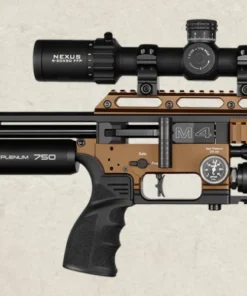
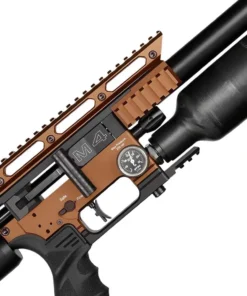
FX Impact M4 Compact Copper
€1,900.00
FX Impact M4 Compact Copper
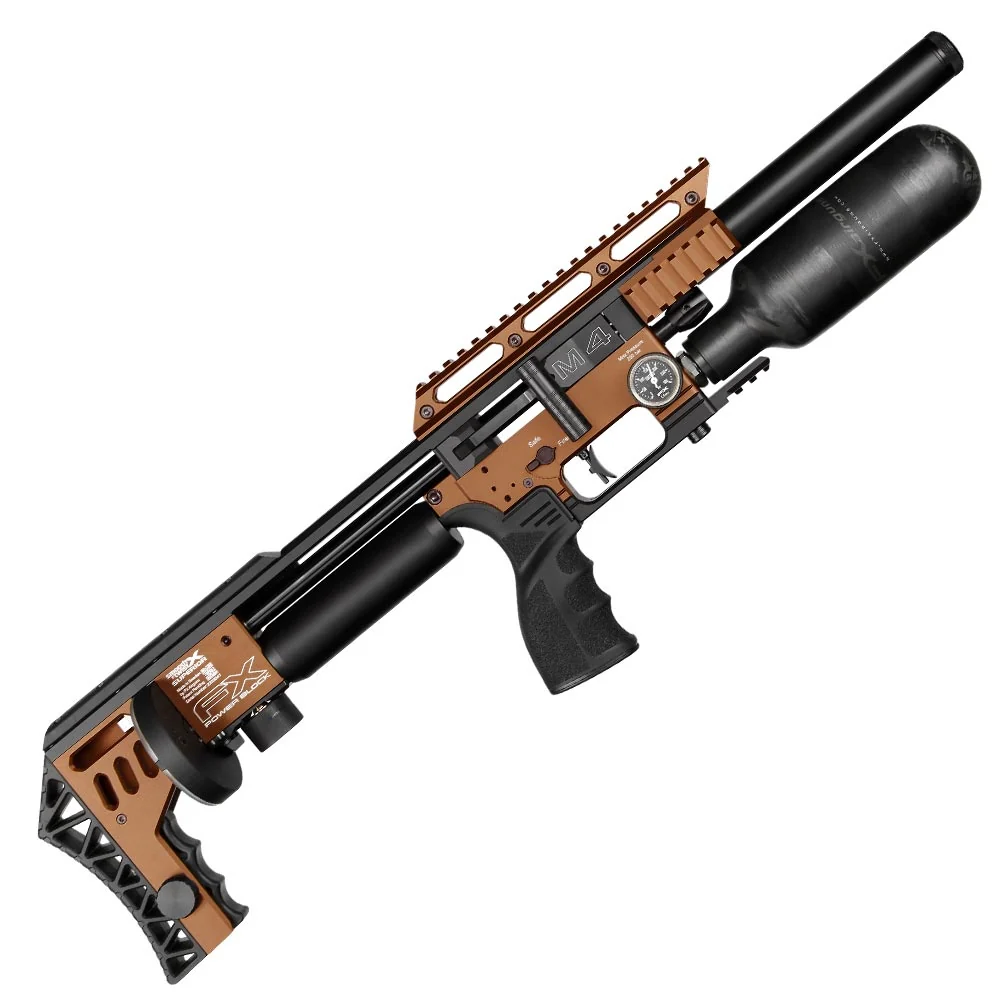
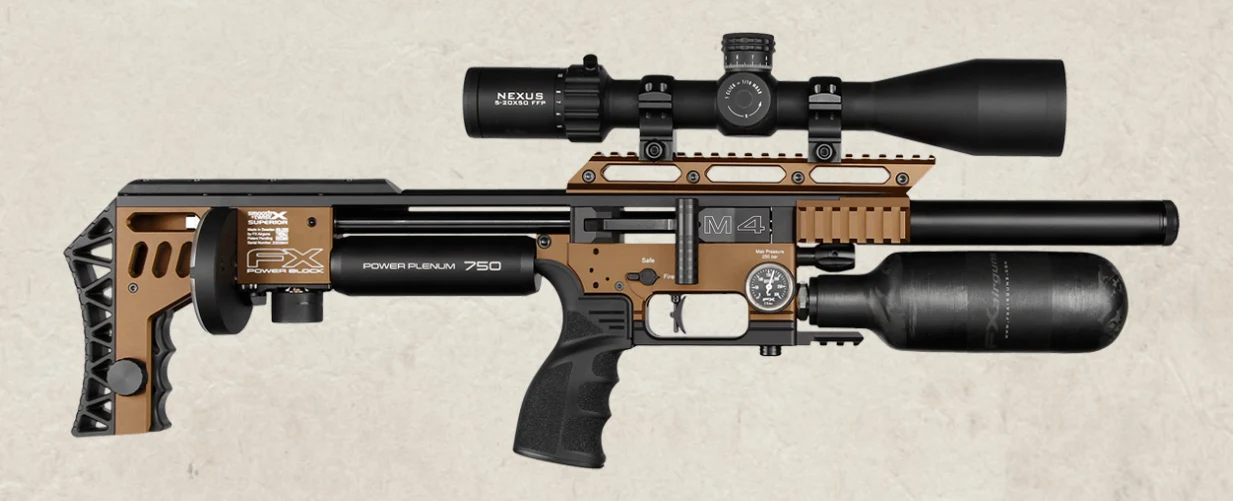
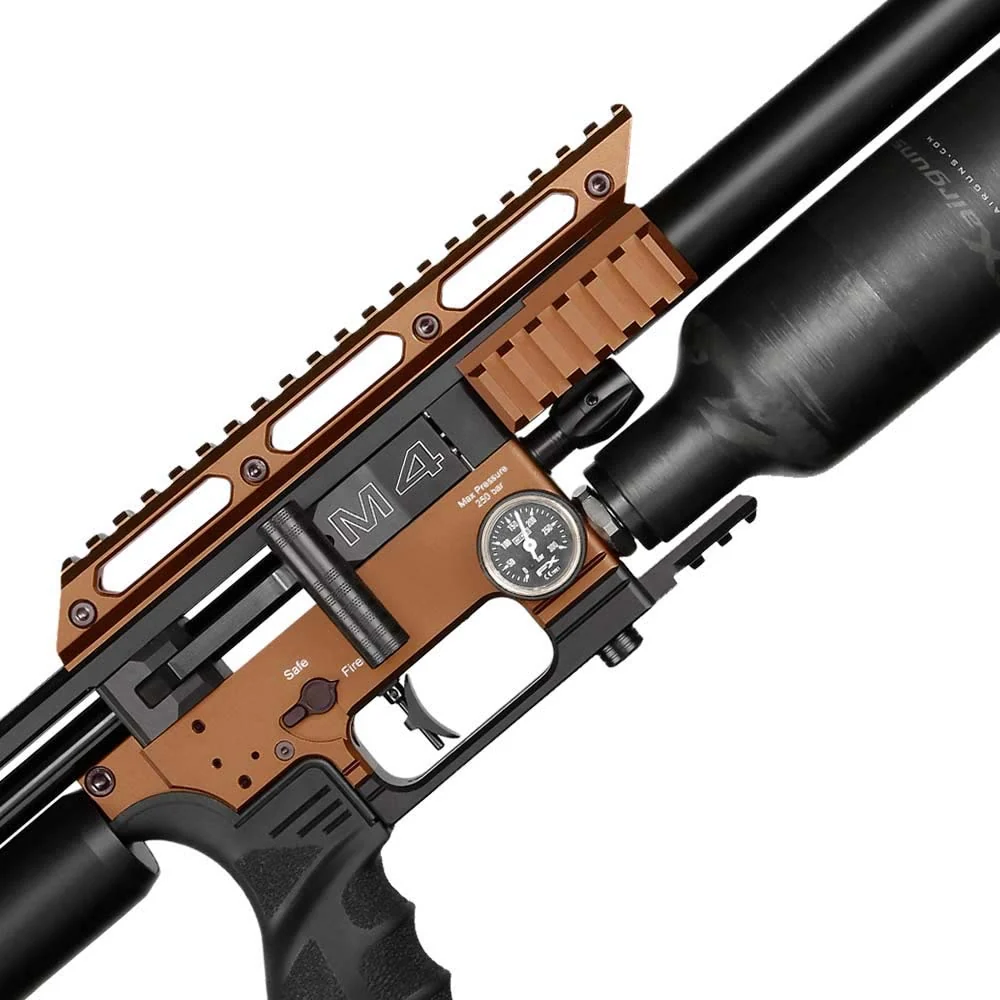
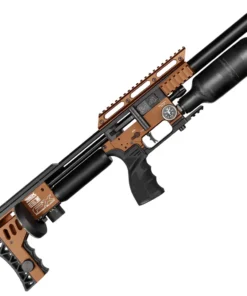
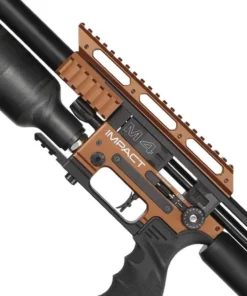
The FX Impact M4 is the latest iteration in the hugely successful Impact series, pushing precision and shooting capability in the airgun industry. This airgun is available in two distinct colours – the original all-black version or the bronze version to give it just that little extra. As well as this, the gun is available in multiple configurations, including a compact and standard version, sniper, or extended for every use. The Impact has a new design throughout without deviating too far from the M3.
This has allowed improvements in all areas without changing the overall aesthetics or feel of the system.
The FX Impact M4 has a completely redesigned high-capacity magazine which are now made from much stronger materials and include a new internal mechanism to ensure the inner drum will rotate smoother even when loading the heaviest slugs available on the market.
The Impact M4 also now comes standard with a new brass piston regulator that is stronger and has faster refresh rates. A far more consistent and easily handled higher bottle pressures with a max pressure of 170bar.
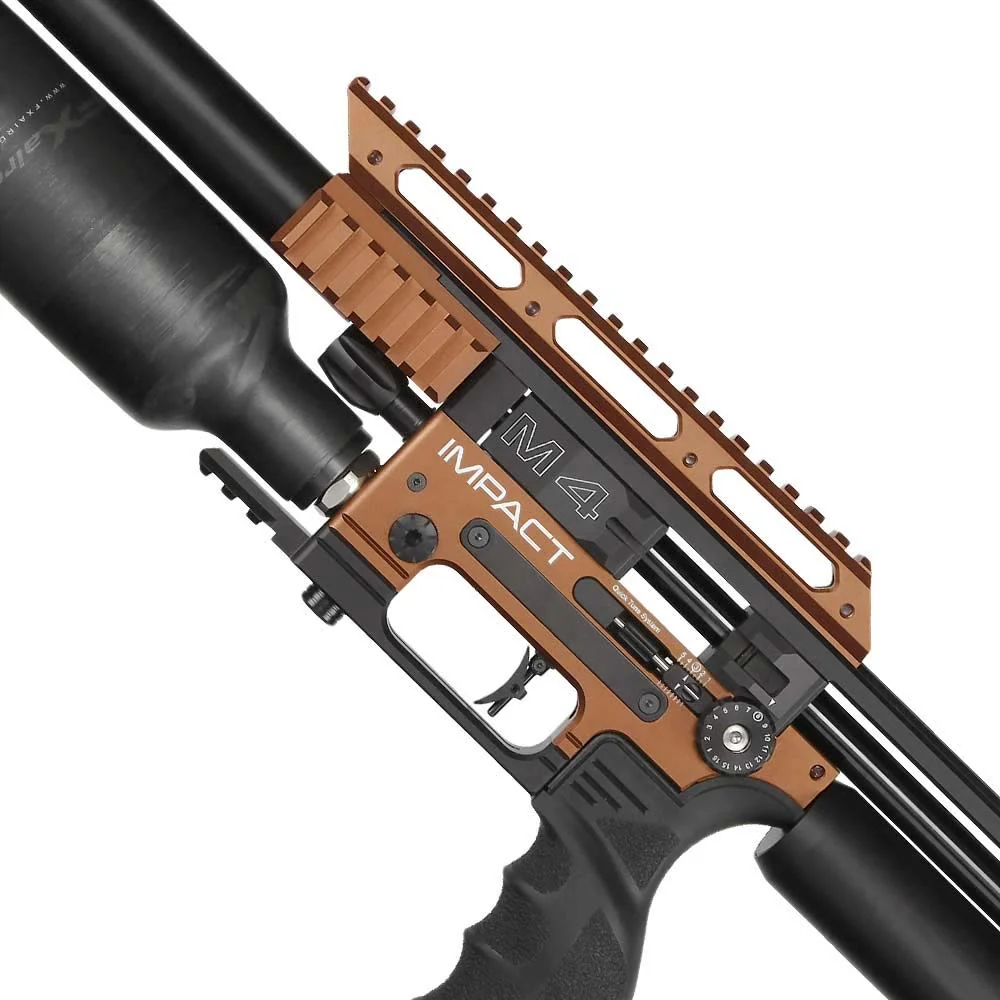
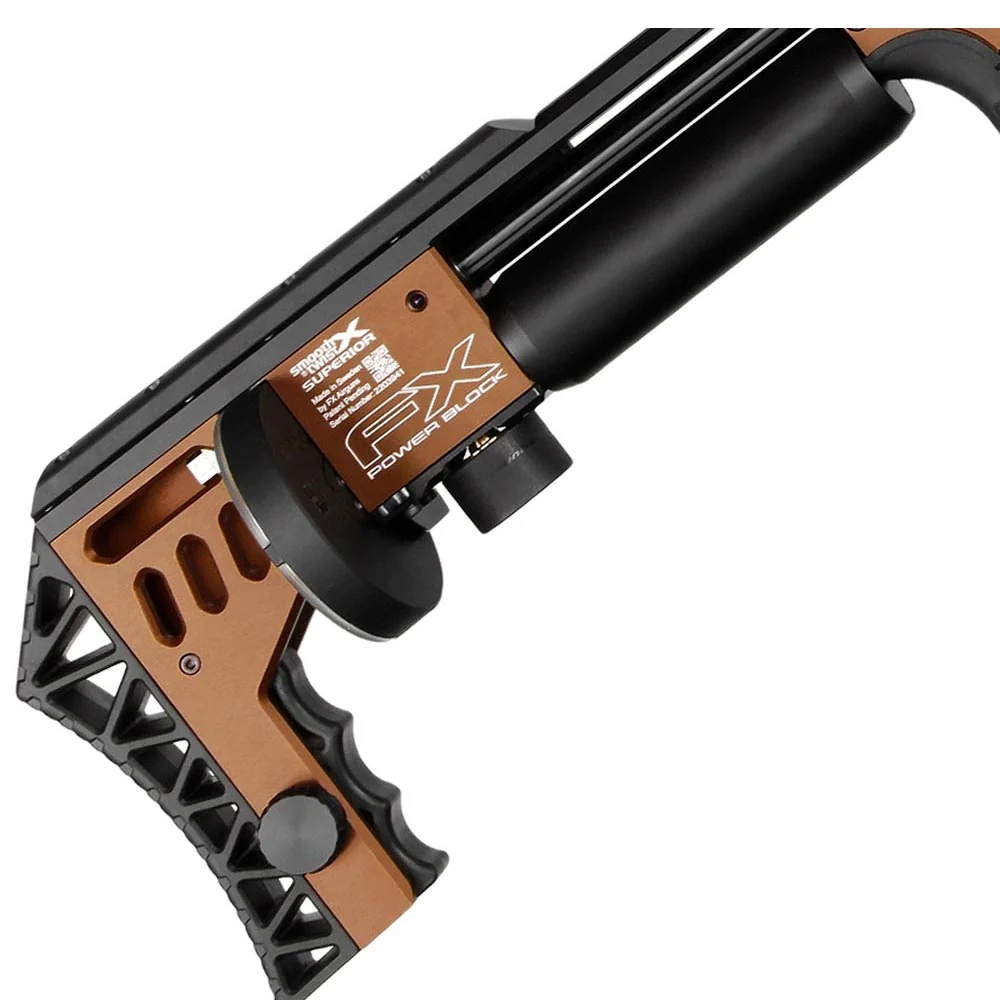
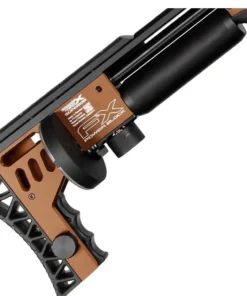
To further enhance the performance and shooting experience, FX have improved the overall rigidity of the Impact M4 by designing a new top plate that is much stronger and thicker which brings more strength and rigidity throughout the entire platform. The new QS trigger unit and top rail introduced have increased the comfort of shooting the Impact, as well as the all new FX grip that is more defined and comfortable to grip to.
The first major upgrade to the Impact M4 is a completely new trigger system. The FX quick set trigger has been adjusted to allow the user to change from standard, hunter, or match-grade, all with the change of one screw.
Scopes not included,
Specifications
| Calibre | .177 .22 |
| Length | 640mm (25″) – Compact 860mm (34″) – Standard |
| Weight | 2.8kg (6.10lbs) – Compact 3.1kg (6.85lbs) – Standard |
| Barrel Length | 500mm – Compact 600mm – Standard |
| Barrel | Superior STX |
| Fill Pressure | 250 Bar |
| Air Capacity | 300cc – Compact 480cc – Standard |
| Plenum | Sub12 Limited Plenum |
| Regulator | Brass Piston AMP MKII |
| Trigger | Quick Set Trigger |
| Grip | FX UG1 Grip AR15 Style |
| Safety | Switch Style |
| Optics Rail | 30MOA Picatinny |
| Cocking System | Reversible Smooth Side Lever |
| Magazine | 34 Shots – .177 28 Shots – .22 |
| Shot Capacity | 475 Shots – .177 500 Shots – .22 |
| Energy | Up to 12ft/lbs |
FX Impact M4 Compact Copper – Advanced Compact PCP Performance
The FX Impact M4 Compact Copper combines the advanced engineering of the fourth-generation Impact platform with a remarkably compact 500mm configuration and distinctive Copper finish. Designed for shooters who value portability, precision, extensive adjustment, and premium construction, this model measures approximately 640mm overall while retaining a full 500mm barrel and a 300cc carbon-fiber air bottle. It is available in several calibres, including .177, .22, .25, and .30, with magazine capacity varying by calibre.
Rather than functioning as a basic pellet gun, the M4 Compact is a sophisticated regulated pcp air gun built around a modular platform that can support pellets and suitable slugs. FX redesigned several areas of the M4 generation, including the trigger system, regulator architecture, chassis rigidity, magazine construction, and grip ergonomics.
FX Airguns Sverige and Swedish Engineering
Searches for fx airguns sverige, fx airguns sweden, fx airguns, and fxairguns connect directly with the Swedish engineering behind this platform.
The Impact family has become closely associated with external adjustability, modular construction, regulated air delivery, interchangeable barrel technology, and compact bullpup-style ergonomics.
For shooters exploring fx air guns, fx air rifle, air guns, air gun, pcp airguns, fx pcp, or high end air rifles, the Copper Compact represents one of the most advanced iterations of that philosophy.
FX Impact M4 and the Compact 500mm Platform
The fx impact m4, fx m4, and impact m4 platform introduces several important changes compared with previous generations.
The Compact version uses a 500mm barrel and measures approximately 640mm overall, making impact m4 500mm a particularly relevant search term for shooters who want maximum portability without abandoning the Impact architecture.
The M4 also introduces a thicker and stronger top plate intended to increase overall rigidity. Greater rigidity helps maintain a stable relationship between the action, barrel, optic rail, and other mounted components.
For buyers searching impact m4 air rifle or fx impact m4 for sale, the Compact Copper offers an especially distinctive combination of short overall length and premium visual finish.
Quick Set Trigger and Shooting Control
One of the most important improvements is the Quick Set Trigger.
The system allows the trigger characteristics to be adjusted between a more conventional hunting-oriented feel and a lighter match-style configuration through a simplified adjustment system.
This gives experienced shooters greater control over trigger behavior without requiring an entirely different trigger assembly.
Precise trigger control matters because unwanted movement immediately before projectile release can enlarge groups, particularly at longer distances.
AMP MKII Regulator and Consistent Air Delivery
The M4 uses FX’s newer brass-piston AMP MKII regulator architecture. FX states that the regulator is designed for increased strength, faster refresh, and improved consistency, with a maximum working pressure of 170 bar.
Regulated air delivery is particularly valuable because consistent pressure helps produce repeatable shot behavior.
Rather than relying solely on raw power, serious shooters generally look for predictable velocity and stable grouping.
This is also why an fx chronograph or fx pocket chronograph can be useful when verifying actual performance.
FX Impact M3 and Earlier Impact Generations
The M4 naturally attracts comparisons with the fx impact m3, f x impact m3, fx m3, fx m3 airgun, fx impact m3 air rifle, fx impact m3 .22cal air rifle, and fx impact m3 .22cal air rifle. 600mm barrel.
Searches for fx impact, f x impact, and fx impact air rifle also include older generations.
The M4 builds on that established platform while introducing changes to the trigger, regulator, chassis rigidity, grip, and magazine construction.
For owners familiar with the M3, the M4 therefore represents evolutionary refinement rather than a completely unrelated design.
FX Panthera MkII and Competition Comparison
The FX Panthera MkII, fx panthera, and fxpanthera are often researched by shooters considering precision-oriented FX platforms.
The Panthera family has a stronger competition-chassis emphasis, while the Impact Compact prioritizes short overall length and broad modularity.
Both platforms appeal to experienced shooters, but their ergonomics and intended roles differ considerably.
FX DRS Tactical, Classic and Pro
The fx drs tactical, fx drs, fx drs classic, fx drs pro, and fx drs air rifle belong to another branch of the FX range.
The DRS platform follows a more conventional rifle profile, while the Impact places its action farther rearward to create an extremely compact package.
A buyer who prioritizes traditional handling may favor the DRS, while someone focused on maximum compactness and extensive adjustment may find the Impact more suitable.
FX Leopard, Wildcat, Maverick and Other FX Models
The M4 Compact can also be compared with the fx leopard, fx leopard airgun, fx leopard air rifle, fx wildcat, fx wildcat mk3, fx maverick, fx king, fx dreamline, fx dreamline classic, fx dynamic, fx dynamics, fx crown, fx crown mk2, fx crown mkii, and fx crown mkll.
Each represents a different balance of size, ergonomics, power delivery, and intended use.
The Compact M4 stands apart because its 500mm barrel is housed within an overall platform measuring only about 25 inches.
High-Capacity Magazine System
The M4 magazine was redesigned using a stronger material and revised internal mechanism to support smoother drum rotation, including when loaded with heavier compatible projectiles.
Published capacities include 34 shots in .177, 28 in .22, 25 in .25, and 23 in .30.
This capacity is particularly useful during longer target sessions where frequent magazine reloading would otherwise interrupt shooting rhythm.
FX Pellets, Slugs and Ballistic Performance
Searches for fx pellets, fx halo slugs, and impact m4 ballistic coefficient generally reflect interest in projectile compatibility and downrange efficiency.
Actual ballistic performance depends on calibre, projectile weight, shape, velocity, barrel setup, and atmospheric conditions.
For this reason, ballistic coefficient values should be verified for the actual projectile rather than assumed from the rifle model.
FX Outdoors, FX USA and International Support
Terms such as fx outdoors, fx usa, and fx airguns usa are commonly associated with owners seeking rifles, accessories, manuals, service information, and compatible components.
FX currently provides official Impact M4 documentation through its support resources, including the user manual and exploded-view information.
Reximex Lyra K and Alternative PCP Searches
Buyers comparing other manufacturers may also search for Reximex Lyra K, reximex, reximex airguns, reximex throne gen2, reximex throne gen 2, reximex гр, reximex mito, reximex mitos, reximex rра, reximex lieva, and reximex accura pcp air rifle.
Likewise, terms such as Reximex Lyra-K PCP air rifle, Reximex Lyra-K airgun, and Reximex Lyra-K review usually indicate comparison shopping.
These rifles use different layouts and engineering approaches, so their specifications should not be confused with those of the Impact M4 Compact.
Energy Calculators and Performance Research
Search phrases such as tps to joules calculator, Tps joule calculator, fps to ft Ibs, and airgun joules calculator relate to projectile-energy calculations.
Other broad terms such as gunseek, roxy max, and mx rex may also appear during wider product research.
Accurate energy calculations should always use measured projectile velocity and verified projectile mass.
Why Choose the FX Impact M4 Compact Copper?
The strongest reason to choose the Compact Copper configuration is the combination of sophisticated adjustability and very small overall dimensions.
The rifle delivers a 500mm barrel within an approximately 640mm package, uses a 300cc carbon-fiber bottle, incorporates a reinforced M4 chassis, offers the Quick Set Trigger, and uses FX’s updated brass-piston regulator design.
For shooters who value compact handling, extensive tuning capability, premium construction, high magazine capacity, and an unmistakable Copper finish, the M4 Compact offers one of the most technically advanced configurations within the modern Impact family.
Section 2 – Engineering, Accuracy, Handling, Efficiency and Practical Performance
Compact Design With Serious Precision Capability
One of the strongest characteristics of this rifle is the way a long precision barrel has been integrated into a remarkably short overall platform. The compact bullpup-style architecture places the action farther rearward, allowing the rifle to retain useful barrel length without creating the overall dimensions associated with a conventional full-length rifle.
This creates several practical advantages.
The rifle is easier to move between shooting positions, easier to transport, and less cumbersome when used around benches, bags, tripods, or confined shooting areas. At the same time, the long barrel still provides compressed air with sufficient distance to accelerate the projectile efficiently.
That combination makes the rifle particularly appealing to shooters who want portability without giving up precision potential.
The short overall length also makes the rifle feel responsive in the hands. Instead of having a large amount of weight extending forward, the mass remains concentrated closer to the shooter.
This can improve balance when the rifle is fitted with a large optic, bipod, or additional accessories.
Why Balance Matters
Balance affects both comfort and accuracy.
A rifle that is excessively front-heavy can become tiring during extended shooting sessions. The shooter may need to apply additional muscular effort simply to hold the muzzle steady.
That additional tension can influence accuracy.
A better-balanced platform allows the rifle to settle more naturally.
The shooter can maintain the firing position with less physical effort.
This becomes particularly useful during supported standing, kneeling, tripod, or barricade shooting.
The final balance will depend on the selected accessories.
A large scope can shift weight upward and rearward.
A bipod can move the center of gravity forward.
Other equipment may also alter handling.
For this reason, accessory placement should be considered carefully rather than treated as purely cosmetic.
Chassis Rigidity and Stability
A rigid chassis helps maintain the mechanical relationship between the barrel, optic, action, and support system.
Flex may be difficult to see, but even small changes can influence precision when the shooter is aiming at small targets.
The reinforced receiver structure provides a stable base for the rest of the system.
This becomes particularly valuable when using heavier optics or when supporting the rifle through different rail-mounted accessories.
A strong platform also gives the shooter greater confidence that minor support changes will not significantly disturb alignment.
However, the rifle should still be supported consistently.
Mechanical rigidity cannot completely eliminate the effects of poor technique.
Barrel Length and Efficiency
The 500mm barrel represents an excellent compromise between compactness and pneumatic efficiency.
Compressed air needs time to accelerate the projectile.
If the barrel is extremely short, the system may need to release more air to reach a particular velocity.
A longer barrel allows the expanding air to continue working over a greater distance.
This can improve efficiency.
However, excessive barrel length increases overall size and can change handling characteristics.
The 500mm format provides enough length for serious performance while keeping the overall rifle exceptionally compact.
This balance is one of the defining strengths of the configuration.
Understanding Barrel Performance
A quality barrel provides the foundation for accurate shooting, but the projectile must still match the barrel correctly.
Different projectile designs interact with the bore in different ways.
Weight, diameter, shape, length, and manufacturing consistency all influence performance.
A projectile that produces excellent groups in one rifle may behave differently in another rifle of the same calibre.
For this reason, careful testing is important.
Shooters should compare several suitable projectile options under consistent conditions.
The target should determine which ammunition performs best.
Projectile Testing
Testing should be performed methodically.
The shooter should use the same distance, support system, optic setting, and fill procedure whenever possible.
Several groups should be fired with each projectile.
A single unusually small group is not enough to prove superior performance.
Repeated results are more meaningful.
For example, one projectile may occasionally produce an exceptional group but also produce several inconsistent groups.
Another option may produce slightly larger groups on average but remain far more predictable.
For practical precision, consistency usually matters more than one outstanding target.
Projectile Condition
A damaged projectile can create accuracy problems.
Bent skirts, deformed noses, or inconsistent shapes can alter flight behavior.
A damaged projectile may also enter the barrel differently.
For serious testing, projectiles should be inspected carefully.
Damaged examples should be removed from the test sample.
This helps ensure that ammunition quality does not confuse the evaluation process.
Regulated Air Delivery
The regulated air system is one of the most important components in maintaining consistent performance.
As shots are fired, the pressure inside the main bottle gradually decreases.
Without regulation, the amount of pressure reaching the firing system could change significantly.
A regulator creates a controlled working pressure.
This allows the valve to receive a more predictable amount of air from shot to shot.
Stable pressure contributes to stable velocity.
Stable velocity contributes to more predictable trajectory.
This becomes increasingly important as distance increases.
Understanding the Regulator
The regulator should not be treated as an isolated adjustment.
Its behavior is connected to hammer energy, valve operation, projectile resistance, and barrel efficiency.
Increasing pressure does not automatically improve performance.
If the regulator is set too high for the rest of the system, efficiency may decrease.
The valve may also become harder to open effectively.
If pressure is too low, the rifle may not achieve the intended performance.
A good configuration balances all of these factors.
Hammer Energy
The hammer provides the mechanical force required to open the valve.
If the strike is too weak, the valve may not release enough air.
If the strike is excessively strong, the valve may stay open longer than necessary.
This can waste air.
Experienced shooters therefore look for the point where sufficient energy is produced without unnecessary excess.
Once additional hammer force stops producing meaningful velocity increases, the system may have reached an efficient limit.
Continuing to add force beyond that point usually provides little benefit.
Valve Timing
Valve timing controls how long air is released.
The goal is to provide enough airflow to accelerate the projectile efficiently while closing the valve at the correct time.
If the valve remains open too long, air may continue escaping after most useful acceleration has already occurred.
This reduces shot count and may increase noise.
A short, efficient air pulse is generally preferable.
The exact behavior depends on the overall setup.
Why Maximum Output Is Not Always Best
Maximum velocity can look impressive, but it does not automatically create maximum accuracy.
Some projectiles perform poorly when driven too fast.
They may become less stable.
Higher output also consumes more air.
This means the shooter may gain only a small increase in velocity while losing a significant number of shots per fill.
The best configuration is therefore usually the one that produces reliable accuracy, adequate energy, and reasonable efficiency.
Raw numbers should not replace practical results.
Quick Trigger Adjustment
Trigger feel has a major influence on shooting consistency.
A predictable trigger allows the shooter to apply pressure gradually without disturbing the rifle.
The adjustable system can be configured to provide a more conventional feel or a lighter precision-oriented release.
The goal should not automatically be the lightest possible trigger.
A trigger that is too light for the shooter’s experience or intended use may be difficult to manage safely and consistently.
The ideal setting provides a predictable break while maintaining deliberate control.
Trigger Finger Placement
The trigger finger should contact the blade in a position that allows pressure to move mostly rearward.
Too much finger can pull the rifle sideways.
Too little contact may reduce control.
The rest of the hand should remain relaxed.
An excessively tight grip can introduce tension through the wrist and forearm.
This may cause small movements during the firing cycle.
Consistency is more important than force.
Grip Design and Hand Position
A comfortable grip helps place the firing hand naturally behind the trigger.
The wrist should not feel excessively twisted.
A relaxed grip allows the trigger finger to move independently.
This is especially useful during precision shooting.
The thumb and remaining fingers should provide enough control without squeezing the grip aggressively.
The rifle should feel supported rather than restrained.
Shoulder Position
The rear of the rifle should contact the shoulder in a repeatable position.
Different shoulder pressure can change how the rifle moves during the shot.
Although recoil is limited compared with a firearm, internal movement and rapid air release still occur.
The shooter should therefore use consistent contact.
The rifle should be held firmly enough to remain stable but not so tightly that unnecessary muscular tension develops.
Cheek Position
Eye alignment behind the optic depends heavily on cheek placement.
The shooter should position the head naturally.
The eye should line up immediately with the center of the scope.
If the shooter needs to move the head repeatedly to find the full image, the optic may need repositioning.
A repeatable cheek position improves both comfort and precision.
It also helps reduce parallax-related aiming errors.
Scope Installation
Optic installation deserves careful attention.
The scope should be mounted securely using suitable rings.
Eye relief should be set while the shooter is in the normal firing position.
The rings should then be tightened evenly.
Excessive tightening can damage components.
Insufficient tightening may allow the scope to move.
Either problem can create accuracy issues.
A properly mounted optic should maintain its position through repeated use.
Parallax Control
Parallax can create aiming error even when the rifle itself is perfectly stable.
If the shooter moves the eye behind the optic and the reticle appears to move across the target, parallax has not been completely corrected.
The adjustment should be set according to the target distance.
This becomes increasingly important at higher magnification.
A small eye-position difference can cause noticeable aiming changes.
Correct parallax adjustment helps reduce this source of error.
Choosing Magnification
Higher magnification is not always better.
Strong magnification makes small targets easier to see, but it also exaggerates visible movement.
The reticle may appear to shake dramatically even when actual movement is small.
This can encourage the shooter to overcorrect.
Moderate magnification often provides better practical stability.
Higher settings can be useful for bench testing and very small targets.
The best magnification depends on distance and shooting position.
Zeroing the Rifle
Zeroing should be performed in a controlled environment with a safe backstop.
A shorter initial distance can be useful for confirming that the point of impact is reasonably close to the aiming point.
The shooter can then move to the preferred zero distance.
Several groups should be fired before final adjustments are made.
Adjusting the scope after every single shot can create confusion.
A group provides more reliable information.
Confirming Zero
Once the rifle appears zeroed, the shooter should confirm the result with additional groups.
The zero should also be checked at later sessions.
A rifle may maintain zero very well, but transport, temperature changes, or optic movement can occasionally shift the point of impact.
Regular confirmation prevents surprises.
Long-Range Trajectory
As distance increases, trajectory becomes more important.
The projectile begins below the line of sight, rises relative to that line, and later drops increasingly due to gravity.
The shooter therefore needs to understand the relationship between zero distance and impact at longer ranges.
Ballistic software can provide useful estimates.
However, these estimates should always be verified on actual targets.
Velocity Measurement
A chronograph allows the shooter to measure actual projectile velocity.
This information is useful for evaluating consistency and calculating trajectory.
Several shots should be recorded.
The average value provides more useful information than a single reading.
The difference between the fastest and slowest shots can also indicate how consistently the air system is operating.
Understanding Extreme Spread
Extreme spread describes the difference between the highest and lowest velocity in a shot string.
A very large spread may contribute to vertical dispersion.
A narrow spread suggests more consistent energy delivery.
However, extreme spread is not the only measure of accuracy.
A rifle can produce very consistent velocity and still group poorly if the projectile does not suit the barrel.
Chronograph data should therefore be combined with target results.
Standard Deviation and Practical Meaning
Standard deviation provides another way to describe velocity consistency.
It shows how closely individual readings cluster around the average.
Lower variation can be useful for precision shooting.
However, shooters should avoid becoming obsessed with numerical perfection.
The target remains the ultimate test.
If a rifle consistently produces excellent groups, slightly imperfect chronograph numbers may not matter in practical use.
Building a Baseline
Before making adjustments, the shooter should establish a reliable baseline.
A baseline includes known ammunition, known pressure settings, a confirmed zero, and a consistent shooting position.
Several groups should be fired.
Velocity data should be recorded if possible.
This information becomes the reference for future changes.
Without a baseline, tuning can quickly become confusing.
One Change at a Time
Changing several settings at once makes it difficult to understand what happened.
A better approach is to adjust one variable.
The rifle is then tested.
The result is recorded.
Only after the effect is understood should another change be made.
This method requires patience, but it saves time in the long run.
It also prevents the owner from losing a good configuration.
Keeping Detailed Records
A shooting log can include projectile type, projectile weight, fill pressure, regulator pressure, power setting, average velocity, group size, distance, temperature, and wind.
These records can become extremely valuable.
If the rifle is later adjusted for another purpose, the original setup can be restored.
Records also help identify trends.
A gradual velocity change across several months may reveal a developing maintenance issue.
Air Bottle Capacity
The compact configuration uses a relatively small carbon-fiber bottle compared with some longer models.
This helps reduce overall dimensions and weight.
The tradeoff is that the available air supply is smaller than that of larger bottle configurations.
For most shooting sessions, this is manageable.
However, shooters using higher output settings should expect fewer shots per fill.
The exact number will depend on calibre, projectile, pressure, and tuning.
Shot Count
Shot count should be considered alongside consistency.
A large number of shots is not useful if the final portion of the fill becomes inconsistent.
The shooter should identify the useful pressure range.
Once the bottle pressure approaches the point where regulated operation can no longer be maintained properly, performance may begin to change.
Refilling before that point helps preserve consistency.
Safe Filling Procedure
The bottle should be filled using suitable high-pressure equipment.
Connections should remain clean.
The fill rate should be controlled.
Rapid filling creates heat.
After the system cools, the displayed pressure may decrease slightly.
This is normal.
The rifle should never be filled beyond the approved pressure rating.
Air Quality
Clean, dry air helps protect internal components.
Moisture, oil, and debris should be kept away from the filling system.
The quick-connect fitting should remain protected.
Hose ends should not be placed on dirty surfaces.
High-pressure equipment should be inspected regularly.
Damaged hoses or connectors should be replaced.
Magazine Capacity and Practical Use
The high-capacity magazine reduces interruptions during longer shooting sessions.
This can be useful during target practice, competition-style stages, or extended testing.
However, capacity does not eliminate the need for careful loading.
Projectiles should be inserted properly.
Damaged ammunition should not be forced into the magazine.
Smooth loading contributes to smooth feeding.
Magazine Care
The magazine should remain clean.
Dust and debris can interfere with movement.
If rotation becomes difficult, the cause should be investigated.
The shooter should avoid forcing the mechanism.
A clean and correctly loaded magazine reduces the chance of feeding problems.
Sidelever Operation
The sidelever allows the shooter to cycle the action quickly.
It should move smoothly.
A consistent motion helps preserve shooting rhythm.
Aggressive operation is unnecessary.
If resistance suddenly increases, the shooter should stop.
Possible causes include magazine misalignment, projectile deformation, or contamination.
Forcing the action can damage components.
Bench Shooting
The compact rifle performs very well from a bench.
A stable front rest or bipod can reduce movement.
A rear bag can provide fine elevation control.
The rifle should not be clamped unnaturally.
Instead, it should be allowed to settle consistently.
Bench shooting is one of the best ways to test ammunition and establish a reliable baseline.
Bipod Use
A bipod provides excellent stability.
The shooter should use consistent forward pressure.
Too much pressure can change the way the rifle settles.
Too little may allow unnecessary movement.
The same technique should be repeated for every shot.
Adjustable bipod height can also help maintain a comfortable body position.
Tripod Use
A tripod can provide useful support in standing, kneeling, or uneven terrain.
The rifle should be balanced securely.
The shooter should avoid placing excessive sideways pressure on the system.
Tripod shooting requires practice.
It behaves differently from a bench or bipod.
Once mastered, it can provide excellent practical stability.
Barricade and Positional Shooting
Compact overall dimensions are particularly useful around barricades and other positional shooting supports.
A shorter rifle can be repositioned quickly.
The shooter can move between different support surfaces without managing excessive barrel length.
Stable bags and other supports can help create repeatable contact.
Practice remains essential.
The rifle’s compactness provides an advantage, but technique determines how effectively that advantage is used.
Standing Position
Standing is one of the most difficult shooting positions.
The rifle will naturally move.
The goal is not to eliminate movement completely.
Instead, the shooter should create a stable stance and allow the reticle to move predictably around the target.
The trigger can be released during the most stable part of that movement.
Excessive muscular tension generally makes the position worse.
Kneeling Position
Kneeling provides more support.
The shooter can use body structure rather than relying entirely on muscle.
The elbow may be supported against the knee depending on technique.
The position should remain comfortable.
If the shooter is fighting the position, accuracy will suffer.
Breathing
Breathing naturally moves the rifle.
The shooter can use the brief pause after exhaling to complete the shot.
This pause should not become an uncomfortable breath hold.
If the sight picture is not correct, the shooter should breathe normally and restart.
A calm shooting rhythm is generally more accurate than forcing the shot.
Follow-Through
After the trigger breaks, the shooter should maintain position.
The eye remains behind the optic.
The cheek stays on the rest.
Shoulder pressure remains consistent.
This helps avoid movement while the projectile is still traveling through the barrel.
Follow-through also makes it easier to observe impact.
Reading Wind
Wind becomes increasingly important at longer distances.
A light crosswind can move a projectile noticeably.
Grass, flags, vegetation, dust, and other visible indicators can help estimate wind direction and strength.
Conditions may vary along the flight path.
This makes wind reading one of the most difficult aspects of precision shooting.
Experience is essential.
Temperature Effects
Compressed air responds to temperature.
A bottle filled in a warm environment may display slightly lower pressure after cooling.
This does not automatically indicate a leak.
Similarly, pressure may rise when the rifle becomes warmer.
For serious testing, the rifle should be allowed to stabilize in the environment where it will be used.
Noise and Air Efficiency
A poorly balanced system may release more air than necessary.
This can increase sound and reduce shot count.
An efficient configuration uses enough air to achieve the intended performance without excessive waste.
Noise can therefore provide some clues about tuning.
However, sound alone should not be used to diagnose the system.
Chronograph and target data are more reliable.
Barrel Cleaning
The barrel should not automatically be cleaned after every session.
If accuracy remains consistent, unnecessary cleaning may provide no benefit.
When groups begin to deteriorate unexpectedly, barrel condition can be investigated.
Suitable cleaning materials should be used.
Aggressive tools may damage internal surfaces.
After cleaning, several shots may be needed before accuracy fully stabilizes again.
Seal Monitoring
The high-pressure system depends on several seals.
If the rifle gradually loses pressure during storage, a seal may require attention.
Temperature effects should first be ruled out.
If a genuine leak is confirmed, the correct replacement parts should be used.
Improvised seals or unsuitable materials should be avoided.
Reliability
Reliability comes from good design, correct setup, clean air, proper ammunition, and sensible maintenance.
The action should feel consistent.
The magazine should feed smoothly.
The pressure system should hold air.
The trigger should behave predictably.
Any sudden change deserves investigation.
Early attention can prevent a minor issue from becoming a larger problem.
Troubleshooting Accuracy Problems
Accuracy problems should be approached logically.
Start with the optic.
Check mounts and screws.
Confirm that the correct ammunition is being used.
Inspect the barrel condition.
Check velocity consistency.
Review shooting technique.
Only then should internal adjustments be considered.
This prevents unnecessary tuning.
Tight Groups That Shift
If the group remains small but moves away from the expected point of impact, the rifle may still be mechanically accurate.
Possible causes include optic movement, zero changes, wind, temperature, or support position.
This is different from random dispersion.
Understanding the difference can save a great deal of time.
Groups That Open Up
If the group becomes much larger, ammunition, barrel condition, pressure consistency, optic stability, or technique may be responsible.
The shooter should return to a previously verified baseline.
If the original setup performs well again, the problem is likely related to a recent change.
Transport
The compact dimensions make the rifle relatively easy to transport.
A suitable padded or rigid case should be used.
The rifle should be unloaded.
Accessories should be secured.
The optic should be protected from impact.
Local transport rules should always be followed.
Storage
The rifle should be stored securely in a dry environment.
Unauthorized users should not have access.
Humidity should be controlled where possible.
The optic should be protected.
The air system should be stored according to manufacturer recommendations.
Good storage helps preserve seals, metal surfaces, and mechanical components.
Who Will Appreciate This Configuration
This configuration is especially appealing to experienced shooters who want extensive performance capability in a compact platform.
It suits users who value detailed adjustment, precision shooting, high magazine capacity, and short overall dimensions.
It is also well suited to shooters who regularly move between benches, tripods, bags, and other supported positions.
Why the Compact Format Is Valuable
The compact design makes the rifle easier to maneuver without sacrificing useful barrel length.
This creates a platform that feels equally comfortable during careful bench testing and more dynamic positional shooting.
The shooter receives the mechanical sophistication of a premium regulated system without the bulk of a much longer rifle.
Final Practical Assessment
The Compact configuration succeeds because it combines several desirable qualities in one platform.
The 500mm barrel provides useful pneumatic efficiency.
The short chassis creates excellent maneuverability.
The regulated air system supports shot-to-shot consistency.
The adjustable trigger allows precise control.
The reinforced receiver provides a stable foundation.
The high-capacity magazine supports longer shooting sessions.
Together, these features create a highly capable precision platform.
However, the best results still come from disciplined setup.
The shooter should choose ammunition carefully, establish a reliable baseline, record useful data, and change settings methodically.
Good shooting technique remains equally important.
Stable body position, correct breathing, consistent trigger control, proper follow-through, and careful wind observation all contribute to precision.
When these mechanical and human factors work together, the rifle offers an impressive combination of compact handling, efficiency, repeatability, and advanced performance.
Be the first to review “FX Impact M4 Compact Copper”
Related products

FX Air Gun
FX Air Gun
FX Air Gun
FX Air Gun

FX Air Gun

FX Air Gun
FX Air Gun
FX Air Gun
Reviews
There are no reviews yet.