
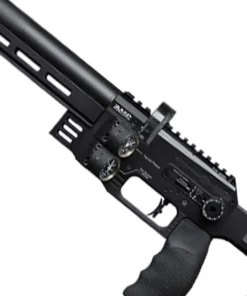
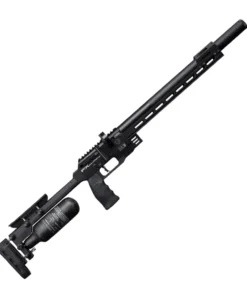
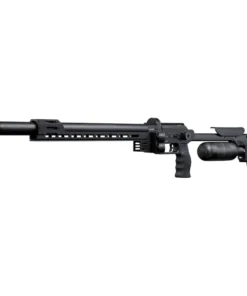
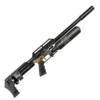
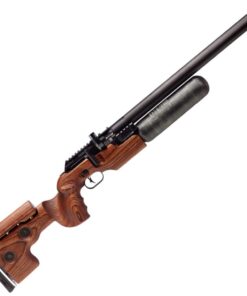
FX Panthera Black 500mm FAC

€1,900.00
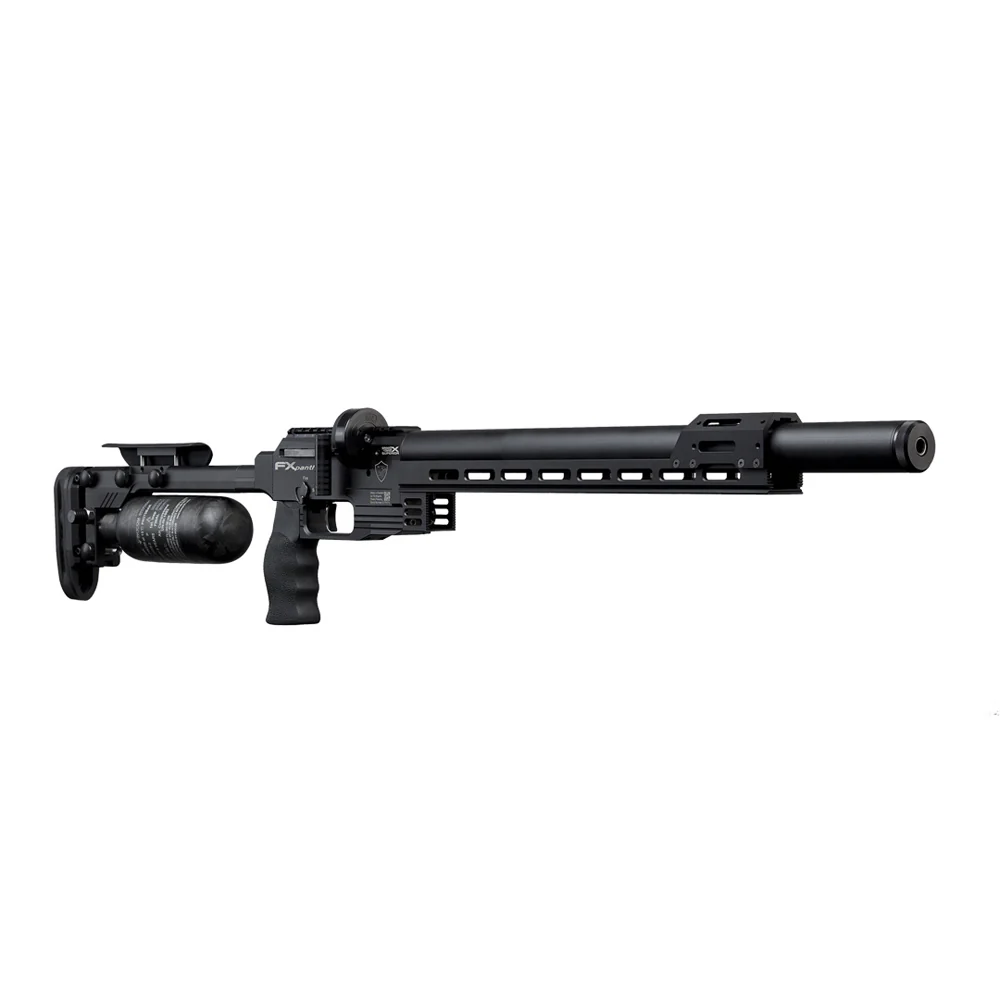
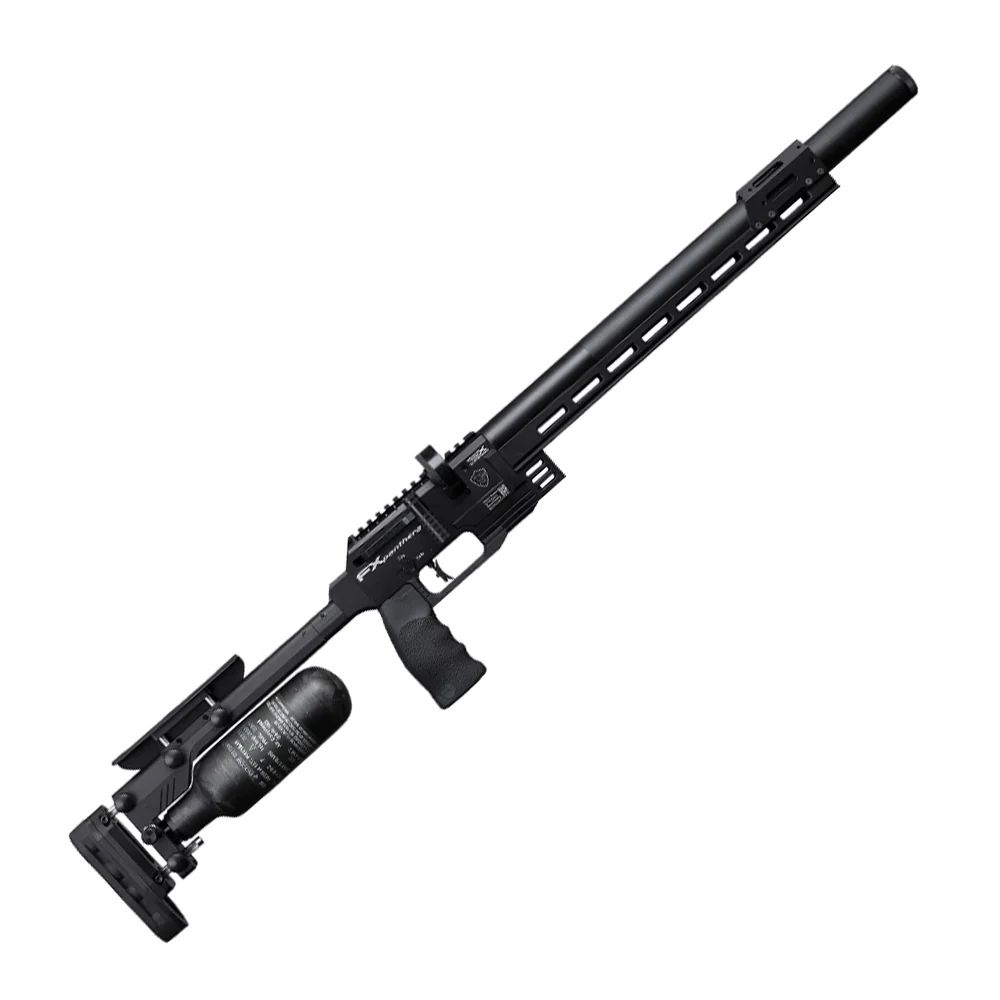
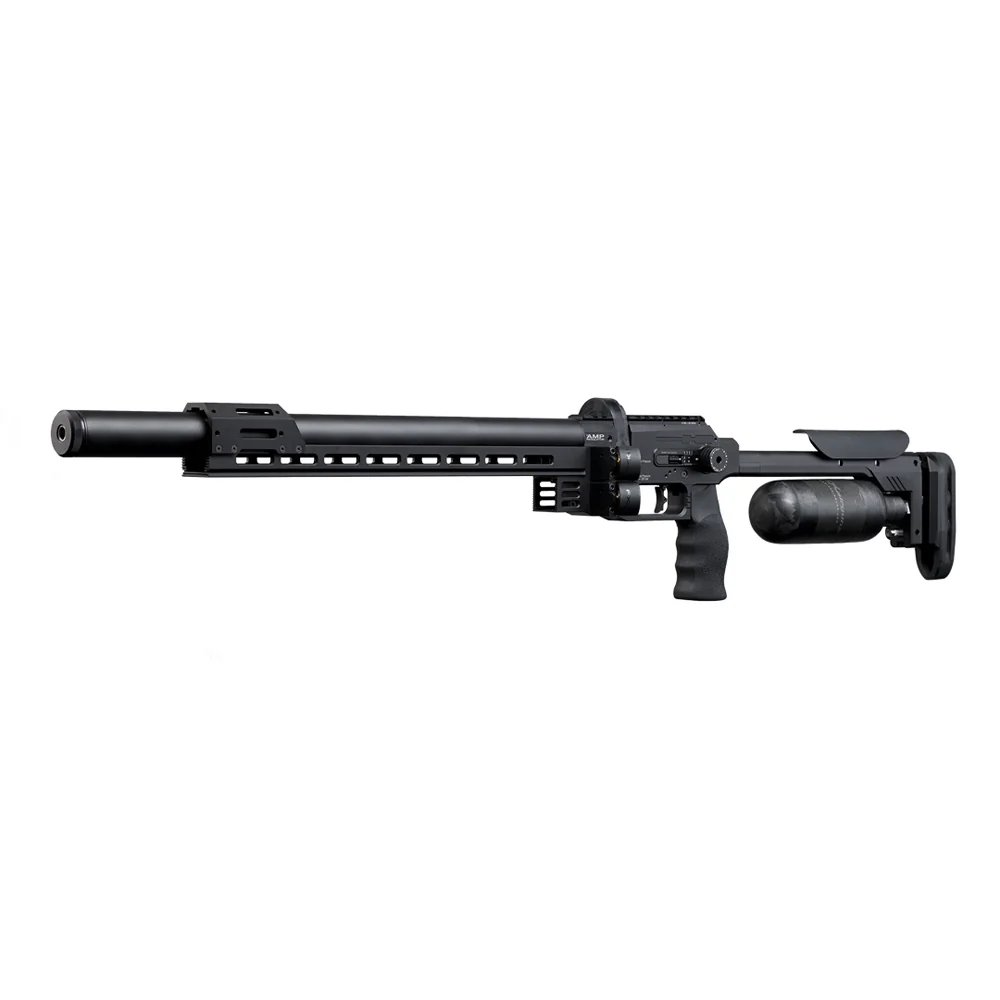
FX Panthera Black 500mm Air Rifle
A dedicated, purpose-built air rifle made to win precision rifle competitions
The FX Panthera is unlike any rifle FX Airguns have made before. It is a dedicated slug rifle, purpose-built with precision competition in mind, and complete with airgun innovation that continues the FX Airguns tradition of pushing the boundaries of airgun performance.
A Generational Leap Forwards
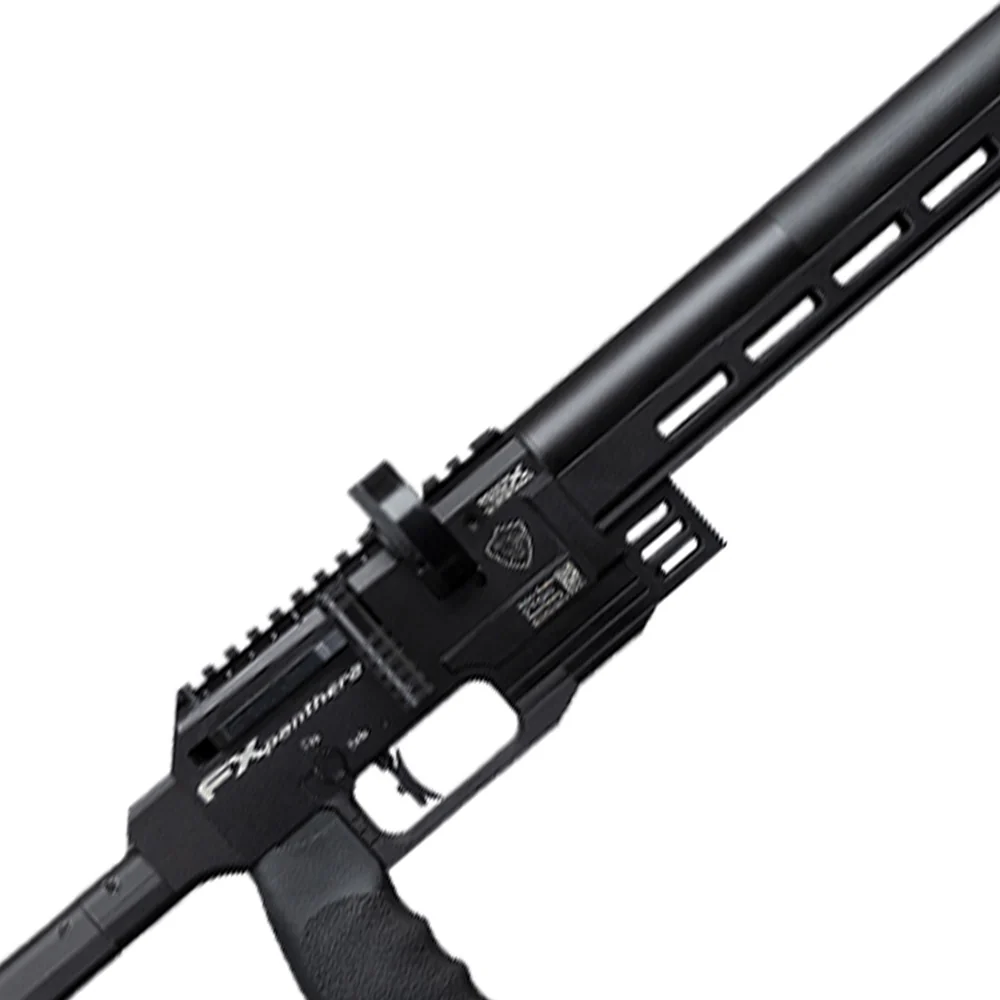
The Panthera includes technology that is a generational leap-forward for an airgun. It begins with the new Dynamic Block, a new breech block designed from the ground up for performance slug shooting. The Dynamic Block utilises a compact one-piece valve. This High-Power / Short-Impulse Valve is extremely efficient while allowing an immense and precise flow of air.
The plenum feeding the Panthera is revolutionary and the first of its kind. The Dynamic Plenum is an over-the-barrel plenum which provides a consistent regulated pressurized plenum around the barrel, adding incredible stiffness to the barrel as well as allowing multiple plenum lengths to be employed to match the calibre and power of the rifle.
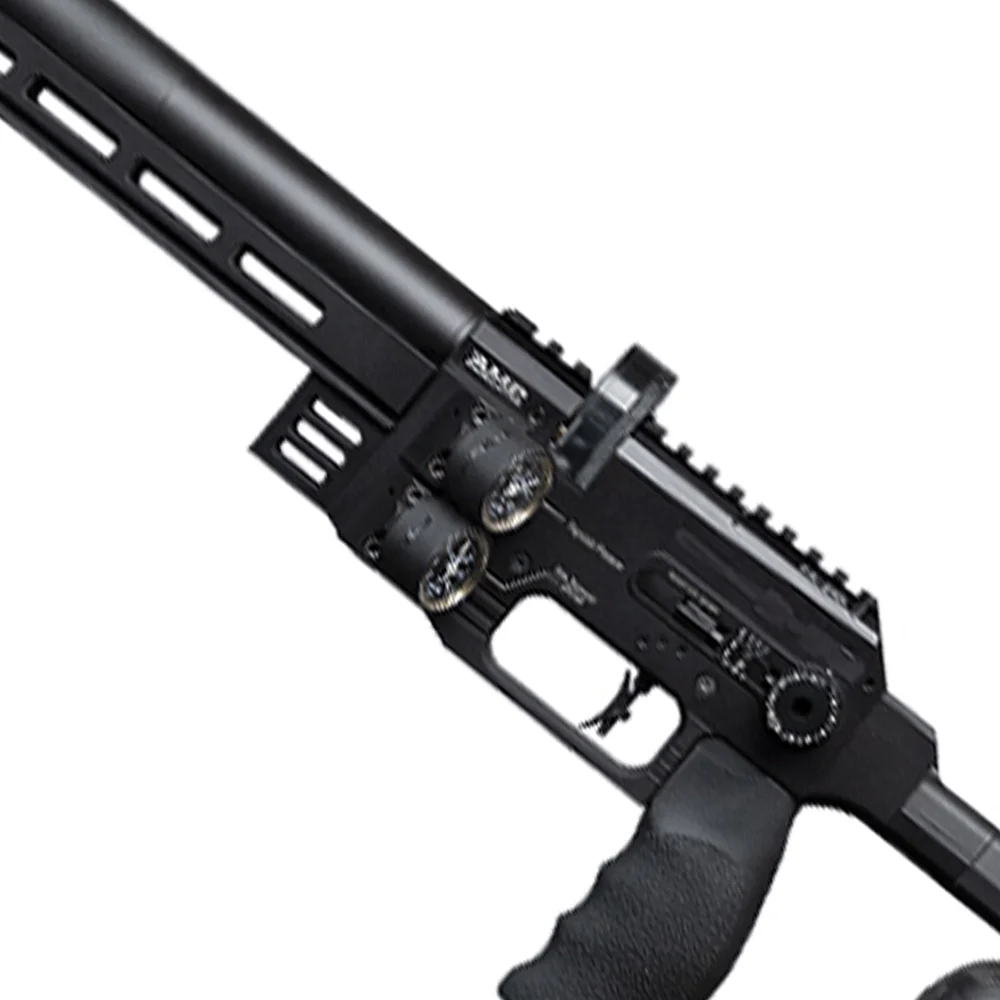
Precise levels of pressure are maintained by the single AMP MKII Regulator
The results of the Dynamic Breech & Plenum are extraordinary! Testing has yielded constant 10 shot strings with standard deviations in the low 1.0–2.0 range with extreme spreads as low as 3-4. This ability to precisely control air flow paired with the world-class FX Superior STX barrel using premium slugs will yield competition wins, and not just in airgun competitions.
Designed for Competition Shooting
The Panthera stock is designed for competition. It features a 14.75” long Arca rail complete with M-LOK sections and a barricade block nestled next to the breech. Achieve an ideal balance point by adding external M-LOK compatible weights or internal FX Barrel Weights that attach under the shroud
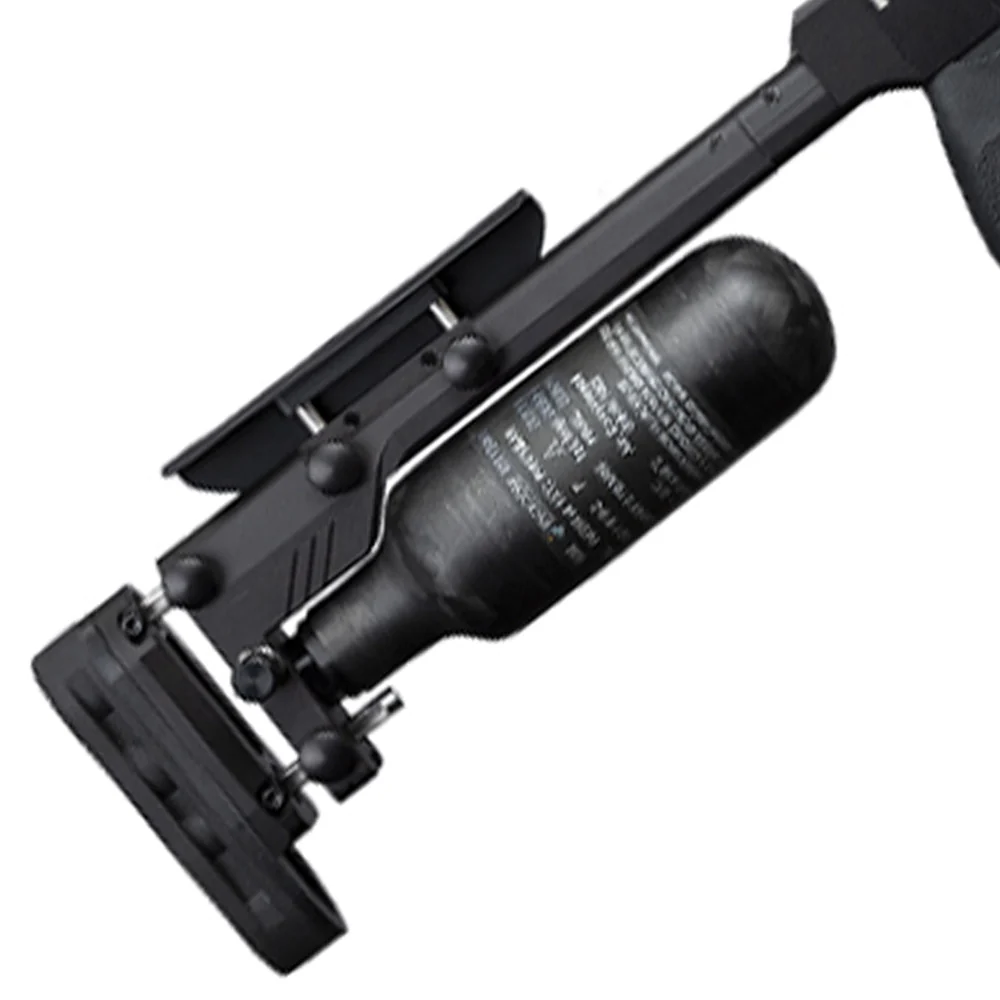
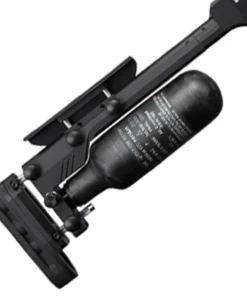
The Panthera further fits the shooter using a fully adjustable buttstock and an adjustable cheekpiece that is also ambidextrous. The Panthera’s air source is a 300cc carbon fiber bottle attached in the rear and is filled via a rear located foster quick disconnect.
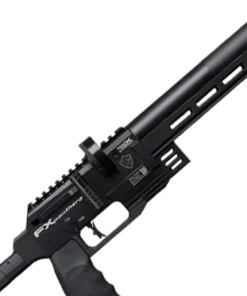
The Dynamic block has a larger breech than previous rifles that allows projectiles up to 13mm in length. It uses the Standard Side-Shot Magazine but with a newly designed deeper lid to accommodate longer length slugs. The FX Panthera employs the Quick Tune System, a 20MOA picatinny scope rail, comes standard with a zero-angle grip and has an ambidextrous sidelever cocking handle that is reversible to the left side of the rifle. Dual angled Manometers on the left side of the block show the bottle pressure and the regulated plenum pressure.
World Changing
Truly the precision rifle world will forever be changed with the new FX Panthera. The rifle feels and shoots like a precision 22LR, enjoying straight back recoil, but with precision and accuracy only found with an FX Airgun!
| COCKING SYSTEM | Reversible Sidelever |
|---|---|
| MAGAZINE | 22rds in .177
18rds in .22 16rds in .25 13rds in .30 |
| MAGAZINE DEPTH | 13mm (0.51″) |
| BARREL | Superior Heavy STX |
| TRIGGER | Adjustable match trigger |
| REGULATOR | AMP MKII Regulator |
| VALVE | High Power / Short Impulse |
| MUZZLE ENERGY | Up to 11.5ft/lbs |
| AIR CAPACITY | Carbon Fiber 300cc |
| FILL PRESSURE | 250 BAR (6,625 PSI) |
| LENGTH | 965mm (38″) |
| WEIGHT | 3.5kg (7.65lbs) |
| CHARGING | Rear Located Foster QD |
| FOREND RAIL | Arca Rail / M-LOK |
| OPTICS RAIL | Picatinny |
FX Panthera Black 500mm FAC – Precision-Driven PCP Air Rifle
The FX Panthera Black 500mm FAC is a high-performance precision air rifle engineered around competitive shooting, efficient airflow, advanced adjustability, and stable long-range performance. With its 500mm barrel, compact 38-inch overall configuration, 300cc carbon-fiber air bottle, adjustable regulator, two-stage match trigger, and competition-oriented rail system, the platform brings together many of the characteristics experienced shooters expect from a serious modern PCP rifle. Depending on calibre and configuration, performance specifications vary, so the rifle should always be matched to the legal power limits and licensing rules in the owner’s jurisdiction. FX Panthera MkII and the Evolution of the Panthera Platform.
Shooters researching the FX Panthera MkII will notice that the newer generation builds on the competitive philosophy established by the original Panthera. The 500mm configuration remains especially attractive to shooters who want a relatively compact platform without giving up the rigid chassis, precision-oriented ergonomics, and carefully managed airflow that define the Panthera concept.
Searches involving fx panthera and fxpanthera often overlap with interest in the newer MkII because both platforms focus heavily on precision shooting and advanced tuning rather than simple recreational plinking.
FX Airguns Sverige and Swedish Engineering
The terms fx airguns sverige, fx airguns sweden, fx airguns, and fxairguns reflect the Swedish origin of the brand. FX has developed a reputation around regulated PCP systems, interchangeable barrel technologies, external adjustment, and modular rifle architecture.
For buyers comparing fx air guns, an fx air rifle, or simply fx, the Panthera is positioned as one of the brand’s most precision-oriented chassis rifles.
FX Impact M4 and Impact M4 500mm Comparison
Buyers researching fx impact m4, fx m4, impact m4, impact m4 500mm, or impact m4 air rifle may naturally compare those rifles with the Panthera.
The Impact platform emphasizes compact modularity and broad tuning flexibility, whereas the Panthera places stronger emphasis on competition-style balance, straight-line chassis ergonomics, long-range positional shooting, and rail-mounted accessories.
Searches such as impact m4 ballistic coefficient and fx impact m4 for sale usually come from shooters comparing projectile efficiency, barrel configuration, tuning potential, and current-generation FX designs.
FX Impact M3 and Earlier Impact Platforms
The fx impact m3, f x impact m3, fx m3, fx m3 airgun, fx impact m3 air rifle, fx impact m3 .22cal air rifle, and fx impact m3 .22cal air rifle. 600mm barrel remain important comparison points.
The Panthera uses tuning concepts familiar to experienced Impact owners, including regulator management and adjustable power delivery. Its Quick Tune System was also associated with the Impact M3 generation.
Searches for fx impact, f x impact, and fx impact air rifle therefore often lead shooters toward the Panthera when their priority shifts toward competition-style ergonomics.
FX DRS Tactical, DRS Pro and DRS Classic
The fx drs tactical, fx drs, fx drs classic, fx drs pro, and fx drs air rifle belong to another branch of the FX family.
While those models offer different proportions and styling, the Panthera is better understood as a specialist precision platform with a long forend, Arca-Swiss and M-LOK compatibility, an adjustable cheekpiece, and a fully adjustable rear support.
FX Leopard, FX Wildcat and Other FX Platforms
Shoppers may also compare the Panthera with the fx leopard, fx leopard airgun, fx leopard air rifle, fx wildcat, fx wildcat mk3, fx maverick, fx king, fx dreamline, fx dreamline classic, fx dynamic, fx dynamics, fx crown, fx crown mk2, fx crown mkii, and fx crown mkll.
These are distinct rifles with different intended roles. The Panthera 500mm stands apart because its architecture is strongly focused on precision rifle competition, supported-position stability, accessory mounting, and controlled tuning.
Precision Barrel and Dynamic Airflow System
The 500mm model uses FX’s Superior STX barrel architecture and is designed around a Dynamic Block system with a high-power, short-impulse valve. Its deeper magazine arrangement also allows longer projectiles than earlier designs. The rifle incorporates a 20-MOA Picatinny optics rail, reversible sidelever, dual pressure gauges, and a rear Foster quick-disconnect filling point.
For users researching fx pellets, fx halo slugs, pcp airguns, fx pcp, pcp air gun, air gun, air guns, pellet gun, air rifle, or high end air rifles, these features demonstrate why the Panthera sits firmly within the precision-performance category rather than the entry-level recreational segment.
Chronograph Testing and Consistency
An fx chronograph or fx pocket chronograph can help the shooter monitor velocity consistency while evaluating approved ammunition and factory-supported settings.
Chronograph data becomes particularly useful when checking whether a selected configuration is operating consistently. Rather than chasing the highest velocity, experienced shooters typically focus on stable readings and repeatable target performance.
FX Outdoors, FX USA and International Ownership
Searches for fx outdoors, fx usa, and fx airguns usa often come from shooters looking for FX products, technical information, accessories, or distributor support.
The Panthera’s 500mm configuration is relatively compact, measuring about 965mm or 38 inches overall and weighing approximately 3.5kg in the original 500mm specification. It uses a 300cc carbon-fiber reservoir and is commonly specified for a maximum fill pressure of 250 bar. airgundepot.com
The term luftgevær may also appear in European searches for air rifles, especially in Scandinavian markets.
Reximex Lyra K and Alternative PCP Comparisons
Buyers comparing other manufacturers may search for Reximex Lyra K, reximex, reximex airguns, reximex throne gen2, reximex throne gen 2, reximex гр, reximex mito, reximex mitos, reximex rра, reximex lieva, or reximex accura pcp air rifle.
Likewise, searches for Reximex Lyra-K PCP air rifle, Reximex Lyra-K airgun, and Reximex Lyra-K review usually reflect buyers comparing different regulated PCP platforms.
These rifles should not be confused with the Panthera because their architecture, dimensions, tuning systems, and intended use differ.
Energy Calculations and Performance Research
Terms such as tps to joules calculator, Tps joule calculator, fps to ft Ibs, and airgun joules calculator generally relate to energy and velocity research.
Other broad search terms such as gunseek, roxy max, and mx rex may also appear during comparison shopping.
Energy calculations should always use verified projectile mass and measured velocity, while local power limits and FAC requirements should be confirmed independently.
Why Choose the 500mm Configuration?
The strongest reason to consider the 500mm Panthera is balance.
Its shorter barrel configuration keeps the rifle more manageable than longer competition versions while retaining the sophisticated airflow system, regulated PCP architecture, adjustable ergonomics, precision trigger, and accessory-ready chassis.
The Arca-Swiss and M-LOK forend gives shooters extensive support and balance options, while the adjustable cheekpiece and buttstock help establish a repeatable firing position. The reversible sidelever also accommodates right- and left-handed users.
For experienced shooters who value precise adjustment, stable supported shooting, modularity, and disciplined long-range performance, the FX Panthera Black 500mm FAC provides a highly specialized foundation for serious precision airgun use.
Performance, Engineering, Accuracy and Practical Use
Precision-Oriented Engineering
This rifle is built around a competition-focused design philosophy where stability, repeatability, and user control matter as much as raw output. Instead of relying on a simple fixed configuration, the platform gives experienced shooters a highly structured foundation for tuning, positional shooting, supported shooting, and careful performance evaluation.
Its chassis-style construction creates a rigid base for the action, barrel, optics, and accessories. Rigidity is important because excessive flex can introduce small changes in the relationship between the barrel and sighting system. Although those movements may appear insignificant, they can become noticeable when shooting at longer distances or aiming at very small targets.
The rifle therefore feels more like a purpose-built precision platform than a conventional sporting air rifle.
This distinction becomes especially important for shooters who regularly work from benches, bags, bipods, tripods, barricades, or other supported positions.
Why the 500mm Configuration Is Important
The 500mm barrel format creates an effective balance between compact handling and useful barrel length.
Longer barrels can provide additional efficiency because compressed air has more time to accelerate the projectile before it exits. However, additional length also changes balance and overall maneuverability.
A shorter barrel generally produces a more compact rifle, but it may require more careful setup to achieve similar performance.
The 500mm configuration sits between these extremes.
It remains short enough to feel manageable while still offering enough barrel length for efficient high-pressure operation.
This makes it useful for shooters who want a precision-oriented setup without carrying the additional length of a much larger competition configuration.
The result is a rifle that can work well from a shooting bench, supported field position, competition barricade, or transport case without becoming unnecessarily cumbersome.
Stability During Supported Shooting
Stability is one of the strongest characteristics of this design.
The extended lower rail allows the rifle to sit securely on front supports. Depending on the accessory setup, the shooter can use a bipod, bench rest, shooting bag, tripod adapter, or similar support equipment.
This provides flexibility when changing shooting positions.
For example, a bench shooter may prefer a broad, stable front support. A competition shooter may require faster transitions between bags, barricades, and tripods.
The rifle’s chassis makes those changes easier because accessories can be positioned according to the shooter’s balance preference.
A more forward support point generally increases stability on a bench.
A support point closer to the receiver can improve maneuverability.
The correct arrangement depends on the shooting discipline and personal technique.
Balance and Weight Distribution
Balance affects how stable a rifle feels before and during the shot.
A rifle with too much forward weight may become tiring during unsupported use. Conversely, excessive rear weight can make the muzzle feel unstable.
The compact 500mm configuration reduces some of the forward mass associated with longer barrels.
This can create a more neutral feel when the rifle is equipped with an optic and supporting accessories.
However, the final balance will also depend on the scope, rings, bipod, rear support, and additional equipment installed.
Experienced shooters often use the accessory rail strategically to fine-tune balance.
Moving a bipod farther forward can increase stability.
Moving equipment rearward can reduce the feeling of front heaviness.
These small changes can have a noticeable effect on practical handling.
Consistent Cheek Position
Cheek placement is extremely important in precision shooting.
The shooter should place the head behind the optic in nearly the same position for every shot.
An adjustable cheekpiece helps achieve this.
Once the correct height is established, the shooter can maintain a repeatable visual relationship with the scope.
This helps reduce parallax-related errors and inconsistent eye alignment.
The cheekpiece should support the head naturally rather than forcing the shooter to lift or lower the neck excessively.
Comfort matters because tension can influence stability.
A natural head position allows the shooter to concentrate on the target and trigger rather than fighting the rifle.
Adjustable Rear Support
The rear stock arrangement provides another level of ergonomic control.
A shooter can adjust the rear position to match arm length, shoulder position, shooting stance, and optic placement.
This is especially useful when switching between prone, seated, bench, or supported standing positions.
The rear support should sit comfortably in the shoulder pocket.
If the stock is too long, the shooter may reach excessively for the trigger.
If it is too short, the shooting position may feel compressed.
Correct adjustment allows the firing hand to remain relaxed.
This improves trigger control and reduces unnecessary muscular tension.
Trigger Characteristics
A good trigger contributes directly to precision.
The goal is not simply to create the lightest possible trigger pull.
Instead, the trigger should provide a predictable, repeatable release.
A well-adjusted two-stage trigger allows the shooter to take up the first stage deliberately before reaching the final release point.
This creates a clear mental and physical sequence.
The shooter can settle the reticle, control breathing, prepare the trigger, and complete the shot when the sight picture is correct.
Predictability is particularly important during competition or long-range shooting because sudden trigger movement can disturb the rifle.
A controlled release reduces this risk.
Trigger Finger Placement
Trigger technique deserves careful attention.
The finger should contact the trigger in a position that allows pressure to move rearward rather than sideways.
Too much finger can pull the rifle toward the trigger hand.
Too little contact may reduce control.
The remaining fingers should hold the grip firmly enough to maintain stability without squeezing excessively.
Over-gripping can create tension through the wrist and forearm.
This tension can influence the rifle during the firing cycle.
A relaxed but controlled grip generally produces better repeatability.
Firing Position and Body Alignment
Body position should support the rifle naturally.
If the shooter must force the rifle onto the target, muscular tension will build.
After firing, the rifle may move back toward the body’s natural alignment.
This can create inconsistent results.
A better approach is to adjust the body until the sights naturally settle near the target.
This concept is often referred to as natural point of aim.
When the body and rifle are aligned correctly, less muscular effort is required.
That makes it easier to maintain the same position throughout a shooting session.
Breathing Control
Breathing causes movement.
This is unavoidable.
However, the shooter can work with the natural breathing cycle rather than fighting it.
A common technique is to inhale normally, exhale, and then use the brief natural pause before the next breath.
During this pause, the reticle can be refined and the trigger released.
The pause should remain comfortable.
Holding the breath for too long can create tension, visual disturbance, and increased heart rate.
If the shot is not ready within a few seconds, the shooter should breathe normally and restart the process.
Follow-Through
Follow-through is often underestimated.
The shooter should maintain the firing position immediately after the trigger breaks.
The eye should remain behind the optic.
Shoulder pressure should stay consistent.
The rifle should not be lifted or moved suddenly.
The projectile still requires a short amount of time to travel through the barrel.
Movement during this period can affect the result.
Good follow-through also helps the shooter observe the impact.
This is useful when evaluating wind, hold, and shooting technique.
Regulated Air Delivery
A regulated pneumatic system attempts to deliver a consistent working pressure to the firing valve.
This is important because reservoir pressure changes as shots are fired.
Without pressure control, those changes could influence projectile velocity significantly.
The regulator creates a separate working pressure that remains more stable across the useful part of the air supply.
This provides a more predictable firing cycle.
Consistency is particularly valuable when shooting at longer distances.
A small velocity difference may have little effect at short range.
At greater distances, the same difference can produce noticeable vertical movement.
Stable air delivery therefore supports repeatable trajectory behavior.
Understanding the Pressure Relationship
The regulator does not operate independently.
Its setting must work with the hammer system, valve timing, projectile, and barrel.
If the pressure is too high for the selected hammer energy, the valve may not open efficiently.
If pressure is too low, the system may not deliver the desired output.
The objective is balance.
Experienced shooters generally avoid making large changes without a clear reason.
Instead, they establish a reliable starting point and make small adjustments.
Each change should be tested before another variable is altered.
This method makes it easier to identify what actually improved or reduced performance.
Hammer Energy and Efficiency
The hammer provides the mechanical force that opens the firing valve.
Increasing hammer energy can increase airflow, but only to a certain point.
Eventually, additional hammer force produces little extra velocity.
When that point is reached, further adjustment may simply waste air.
An efficient setup uses enough hammer energy to operate the valve correctly without keeping it open longer than necessary.
This can improve shot count while reducing excess muzzle blast.
Efficiency is therefore closely related to tuning quality.
The highest mechanical setting is not always the most effective setting.
Valve Behavior
Valve timing affects how long compressed air is released.
A short, efficient pulse can deliver useful energy without wasting excessive air.
If the valve remains open too long, more air may escape after the projectile has already gained most of its useful acceleration.
That wasted air reduces efficiency.
It may also increase noise.
A well-balanced firing cycle allows the valve, regulator, and hammer to work together.
This is one reason precision pneumatic rifles benefit from careful setup rather than random adjustment.
Projectile Selection
Projectile choice can dramatically change performance.
Weight is important, but it is not the only factor.
Diameter, shape, length, skirt design, manufacturing consistency, and surface finish also matter.
A projectile that performs extremely well in one barrel may produce average results in another.
Testing should therefore be systematic.
Shooters should compare multiple suitable options under similar conditions.
The same distance, support, fill pressure, and shooting technique should be used whenever possible.
This reduces the number of uncontrolled variables.
Testing for Accuracy
A single group does not provide enough information.
Random variation can produce one unusually small group.
A better approach is to shoot several groups and evaluate the overall pattern.
If one projectile repeatedly produces smaller groups, that result is more meaningful.
The shooter should also observe whether the point of impact remains stable.
A projectile that occasionally produces a tiny group but regularly throws unexplained shots may be less useful than one that produces slightly larger yet more consistent groups.
Repeatability is usually more valuable than one impressive target.
Velocity Versus Accuracy
High velocity can look attractive on paper.
However, maximum speed does not automatically produce the best accuracy.
Some projectiles become less stable when pushed too hard.
Others may require more velocity before they perform efficiently.
The correct speed range depends on projectile design, barrel characteristics, and shooting distance.
The goal should be consistent accuracy rather than the highest possible reading.
If reducing velocity improves grouping and efficiency, the slower configuration may be the better choice.
Chronograph Testing
A chronograph is useful for evaluating consistency.
It records the velocity of each shot.
From this information, the shooter can calculate average velocity, extreme spread, and other useful data.
However, chronograph numbers should never replace target testing.
A configuration can produce highly consistent velocity and still group poorly.
The target remains the final measure of practical accuracy.
Chronograph data is most useful when combined with group testing.
Together, they provide a clearer picture of system performance.
Developing a Baseline
Before experimenting with adjustments, the shooter should establish a baseline.
The baseline should include a known projectile, known pressure settings, a stable optic, and a consistent shooting position.
Several groups should be fired.
Velocity data should also be recorded if possible.
Once the baseline is established, one adjustment can be made.
The new result can then be compared directly with the original.
This process prevents confusion.
Without a baseline, the shooter may forget which settings actually worked best.
Recording Settings
Keeping written records is extremely useful.
The shooter can record projectile weight, velocity, regulator pressure, power setting, fill pressure, group size, distance, temperature, and wind conditions.
Over time, these notes create a performance history.
If the rifle is later adjusted for a different purpose, the previous configuration can be restored.
This is especially valuable for shooters who use different projectiles for different disciplines.
Accurate notes save time and reduce unnecessary experimentation.
Barrel Behavior
Barrel condition can influence accuracy.
Residue may gradually build up during shooting.
Some barrels continue performing well for long periods without cleaning.
Others may show a reduction in accuracy sooner.
Cleaning should therefore be based on performance rather than an arbitrary shot count.
If groups remain consistent, excessive cleaning may not be necessary.
When accuracy changes unexpectedly, the barrel can be inspected as part of the troubleshooting process.
Barrel Cleaning
Cleaning should be performed carefully.
Aggressive brushes or unsuitable chemicals can damage internal surfaces.
Only appropriate cleaning materials should be used.
The cleaning method should follow manufacturer recommendations.
After cleaning, the barrel may require several shots before performance stabilizes again.
This occurs because the internal surface is being conditioned by projectile material.
The shooter should therefore avoid judging accuracy based only on the first shot after cleaning.
Optics Selection
The optic should match the rifle’s intended use.
High magnification can be useful for bench shooting and small targets.
However, excessive magnification may make field shooting more difficult.
It narrows the field of view and exaggerates visible movement.
Moderate magnification can provide a better balance for varied shooting conditions.
The scope should also provide reliable mechanical adjustments.
Clear glass is useful, but repeatable turret tracking is equally important for shooters who regularly adjust elevation.
Mounting the Scope
Correct scope installation is essential.
The rings should be aligned and secured properly.
The scope should sit at a height that allows comfortable cheek contact.
Eye relief should be set while the shooter is in the normal firing position.
The optic should not be positioned based only on how the rifle looks.
Comfort and repeatability matter more.
Once the correct position is found, screws should be tightened evenly using suitable torque.
Over-tightening can damage components.
Parallax Control
Parallax can produce aiming error even when the reticle appears to be centered.
If the shooter’s eye moves behind the scope and the reticle appears to shift across the target, parallax is still present.
Adjustable parallax helps reduce this effect.
The shooter should set the adjustment for the target distance and confirm it visually.
This becomes especially important at high magnification.
Even small eye-position differences can create measurable movement on a distant target.
Zeroing
Zeroing should begin at a safe, controlled range.
The first objective is to place the group close to the aiming point.
Once this is achieved, finer adjustments can be made.
The rifle should then be tested at several distances.
This helps the shooter understand trajectory behavior.
A single zero distance does not mean the projectile will strike at the same point everywhere.
The projectile travels along a curved path relative to the line of sight.
Understanding this relationship improves practical accuracy.
Long-Range Shooting
Long-range shooting increases the importance of every variable.
Small velocity differences become more visible.
Wind becomes more influential.
Distance estimation becomes more important.
Projectile efficiency also becomes more significant.
This means long-range performance requires more than power.
The shooter must combine accurate data with good technique.
Stable support, correct range measurement, wind observation, and consistent trigger control all become essential.
Reading Wind
Wind can move a projectile significantly.
The shooter should look for visual indicators such as grass, leaves, flags, dust, or vegetation.
Wind direction may also change along the projectile’s flight path.
Conditions near the shooter may differ from conditions near the target.
This makes wind reading one of the most challenging skills in precision shooting.
Practice is essential.
Recording wind conditions alongside shot results can help the shooter build experience.
Environmental Temperature
Temperature can influence compressed air pressure.
A rifle filled indoors may show a slightly different pressure after being taken into colder outdoor conditions.
Likewise, pressure may increase slightly when the rifle becomes warmer.
These changes are normal.
The shooter should allow the rifle and ammunition to stabilize when moving between very different environments.
This is particularly useful during careful testing.
Consistent environmental conditions produce more meaningful data.
Benchrest Use
The rifle works particularly well from a stable bench.
The extended chassis provides multiple support options.
A front rest or bipod can stabilize the rifle while a rear bag controls elevation.
The shooter should avoid placing excessive pressure on the rifle.
A natural, repeatable position usually produces better results.
Bench shooting is ideal for ammunition testing because it removes much of the movement associated with unsupported positions.
Bipod Use
A bipod can provide excellent stability.
However, technique still matters.
The shooter should load the bipod consistently.
Too much forward pressure may change the way the rifle settles.
Too little pressure can allow unnecessary movement.
The goal is to create a repeatable position.
Bipod height should also match the shooting position.
If the rifle sits too high or too low, the shooter may strain to reach the optic.
Tripod Use
Tripod shooting can be highly effective.
A strong tripod allows the rifle to be supported at multiple heights.
This can be useful when shooting from standing or kneeling positions.
The connection should remain secure.
The shooter should also understand that tripods behave differently from benches or bipods.
They may introduce some movement.
Good technique involves balancing the rifle carefully and controlling body contact without forcing the system.
Positional Shooting
Competition-style shooting often requires rapid position changes.
The shooter may move from a barricade to a bag, then to a tripod or another support.
A modular chassis is useful because accessories can be arranged to support these transitions.
Consistency remains important.
The shooter should practice mounting the rifle in each position.
The goal is to establish repeatable contact points quickly.
This requires practice rather than equipment alone.
Magazine Loading
The magazine should be loaded carefully.
Projectiles should not be forced.
Damaged ammunition can reduce accuracy.
A deformed skirt or nose can behave differently in flight.
The magazine should rotate smoothly.
If unusual resistance is felt while cycling the action, the shooter should stop and inspect the system.
Forcing the mechanism can damage internal components.
Sidelever Operation
The sidelever should be operated smoothly.
A consistent cycling motion helps maintain shooting rhythm.
The shooter should avoid slamming the lever unnecessarily.
If the mechanism becomes difficult to operate, the cause should be investigated.
Possible issues include projectile alignment, magazine position, debris, or mechanical wear.
Smooth operation is generally a sign that the feeding system is working correctly.
Air Filling
Filling should always be performed with high-pressure equipment designed for the required working pressure.
Connections should be clean and secure.
The fill process should be controlled.
Filling too rapidly can generate heat.
As the air cools, the indicated pressure may drop slightly.
This is normal.
The rifle should never be filled beyond its approved pressure rating.
Keeping the Air System Clean
Clean air is essential for long-term reliability.
Dust, oil, moisture, and debris should be kept away from the filling system.
The fill probe or quick-connect fitting should remain protected when not in use.
Hoses should also be inspected regularly.
Damaged hoses or fittings should be replaced rather than improvised.
High-pressure air systems require careful handling.
Air Efficiency
Air efficiency becomes especially important during long shooting sessions.
An efficient configuration produces the desired performance without wasting unnecessary air.
Excess valve duration may consume more air than required.
Excessive hammer energy can also reduce efficiency.
The most efficient setup usually occurs when the firing system is balanced rather than pushed to its maximum.
This improves the number of useful shots available from each fill.
Useful Shot Range
As reservoir pressure drops, the rifle eventually reaches a point where the regulator can no longer maintain the selected working pressure.
Performance may then begin to change.
Shooters should learn where this point occurs.
Chronograph testing can identify the pressure at which velocity begins to fall.
Knowing this limit allows the shooter to refill before consistency is affected.
Maintenance
Regular maintenance should focus on cleanliness, inspection, and correct operation.
External surfaces should remain dry and free from debris.
Moving parts should be inspected for unusual wear.
Screws and mounts should be checked periodically.
The shooter should avoid unnecessary disassembly.
High-pressure internal work should be performed only by someone who understands the system.
Seal Inspection
Seals are essential for maintaining pressure.
A gradual loss of air may indicate an O-ring or another sealing issue.
However, temperature changes can also alter pressure readings.
The shooter should observe the system over time before assuming a leak exists.
If a leak is confirmed, the correct replacement seal should be used.
Incorrect seal size or material can create repeated problems.
Troubleshooting Accuracy Problems
Accuracy problems should be investigated systematically.
The optic should be checked first because loose mounts are common.
The projectile should also be inspected.
The barrel condition should be considered.
Air pressure and velocity consistency should then be evaluated.
Shooter technique should not be ignored.
Changing several components at once makes troubleshooting more difficult.
A step-by-step process usually finds the cause faster.
Troubleshooting Point-of-Impact Shifts
If groups remain tight but move to a different location, the rifle may still be mechanically accurate.
Possible causes include optic movement, environmental conditions, support changes, or altered shooting position.
If the groups themselves become larger, the problem may be different.
Recognizing this distinction is useful.
A shifted group and an inaccurate group are not necessarily the same problem.
Practical Field Handling
The compact barrel configuration makes the rifle relatively manageable during movement.
It can be repositioned more easily than a much longer setup.
However, accessories can add substantial weight.
A large scope, bipod, tripod adapter, and other equipment may change the handling considerably.
The shooter should therefore build the rifle around actual needs rather than adding accessories simply because mounting space is available.
Transport
A secure case protects the rifle during transport.
Rigid cases provide strong impact resistance.
Padded soft cases can work for lighter transport requirements.
The rifle should be unloaded.
Magazines and accessories should be organized carefully.
The optic should be protected from heavy impacts.
Transport requirements may vary by location, so local rules should always be followed.
Storage
The rifle should be stored in a dry, secure place.
Unauthorized persons should not have access.
Humidity should be controlled where possible.
Optic lenses should be protected.
External metal surfaces can be kept clean using suitable products.
The air system should be stored according to manufacturer recommendations.
Who Benefits Most From This Platform
This design is particularly well suited to shooters who enjoy precision setup and disciplined testing.
It rewards users who are willing to understand pressure, airflow, projectile behavior, balance, optics, and shooting technique.
A beginner may still appreciate the platform, but the full advantage becomes clearer as experience increases.
The ability to adjust multiple variables creates flexibility.
That flexibility becomes valuable when the shooter understands how the variables interact.
Why Methodical Setup Matters
Random adjustment rarely produces reliable results.
A better approach begins with a clear goal.
The shooter might want better accuracy, greater efficiency, smoother operation, or improved performance with a specific projectile.
One variable should then be changed.
The result should be measured.
If the change improves performance, it can be retained.
If not, the previous setting can be restored.
This process builds knowledge rather than relying on guesswork.
Building a Personal Configuration
One of the most satisfying aspects of an adjustable precision rifle is developing a personal setup.
The shooter can refine balance, cheek height, stock length, trigger feel, optic position, support placement, and power configuration.
Eventually, the rifle begins to fit the shooter rather than forcing the shooter to adapt.
This improves comfort and confidence.
A familiar rifle is easier to operate consistently.
Long-Term Ownership
Long-term satisfaction depends on realistic expectations.
A sophisticated rifle is not automatically perfect without setup.
It provides the tools required for high performance.
The owner must still select suitable ammunition, mount the optic correctly, maintain the system, and develop proper technique.
When those elements come together, the platform can deliver highly repeatable performance.
Final Practical Assessment
The 500mm configuration provides a strong combination of compact dimensions, precision-oriented chassis design, adjustable ergonomics, regulated air delivery, and adaptable support options.
Its greatest strength is balance.
It offers enough barrel length for effective performance while remaining manageable.
The chassis provides a stable base.
The trigger supports controlled firing.
The regulator promotes consistent pressure delivery.
The adjustable stock helps the shooter establish repeatable body position.
Together, these features create a platform capable of serious precision work.
However, the rifle performs best when approached systematically.
The owner should establish a baseline, test ammunition carefully, record settings, verify velocity, confirm zero, and make adjustments gradually.
Good technique should accompany good equipment.
Stable body position, proper trigger control, breathing, follow-through, and environmental awareness remain essential.
When the mechanical system and shooter technique work together, the rifle becomes much more than a high-powered pneumatic platform.
It becomes a carefully tuned precision system capable of delivering consistent, confidence-inspiring results across a wide range of controlled shooting conditions.
Be the first to review “FX Panthera Black 500mm FAC”
Related products

FX Air Gun
FX Air Gun
FX Air Gun
FX Air Gun
FX Air Gun

FX Air Gun

FX Air Gun
FX Air Gun
Reviews
There are no reviews yet.