
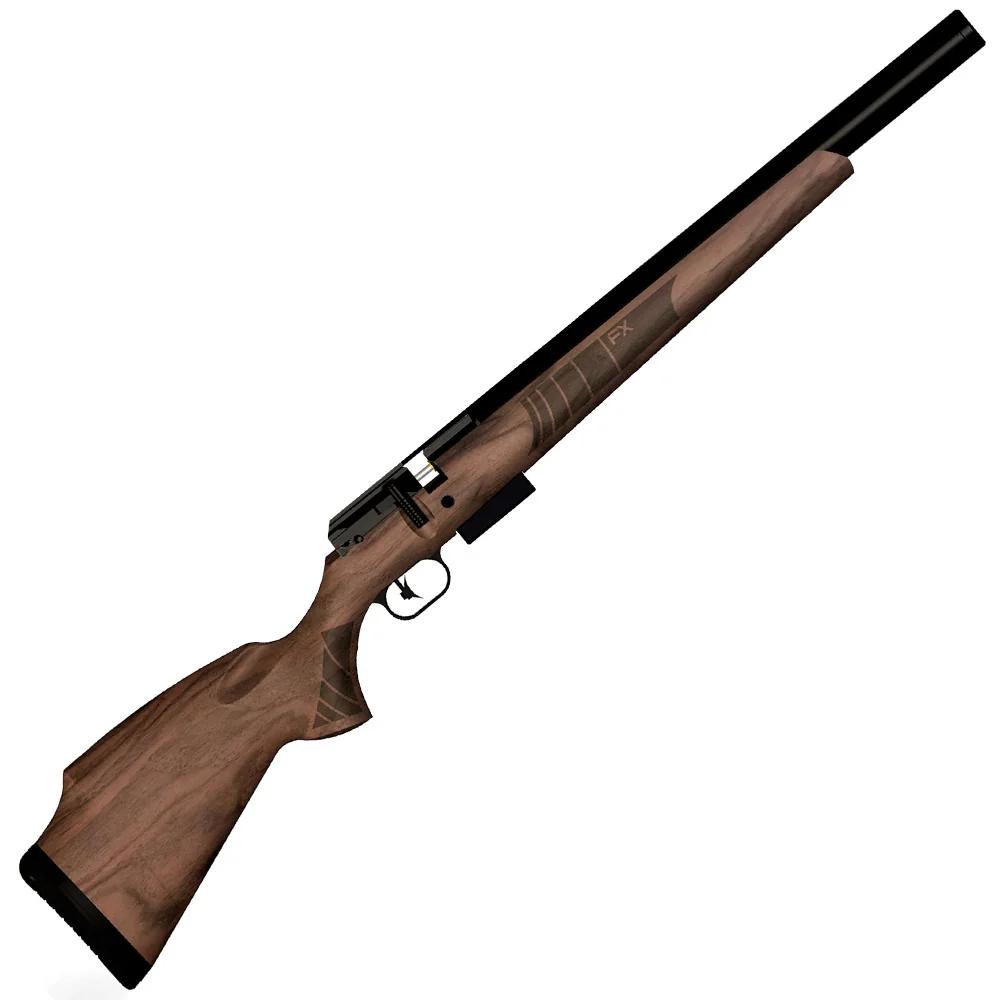
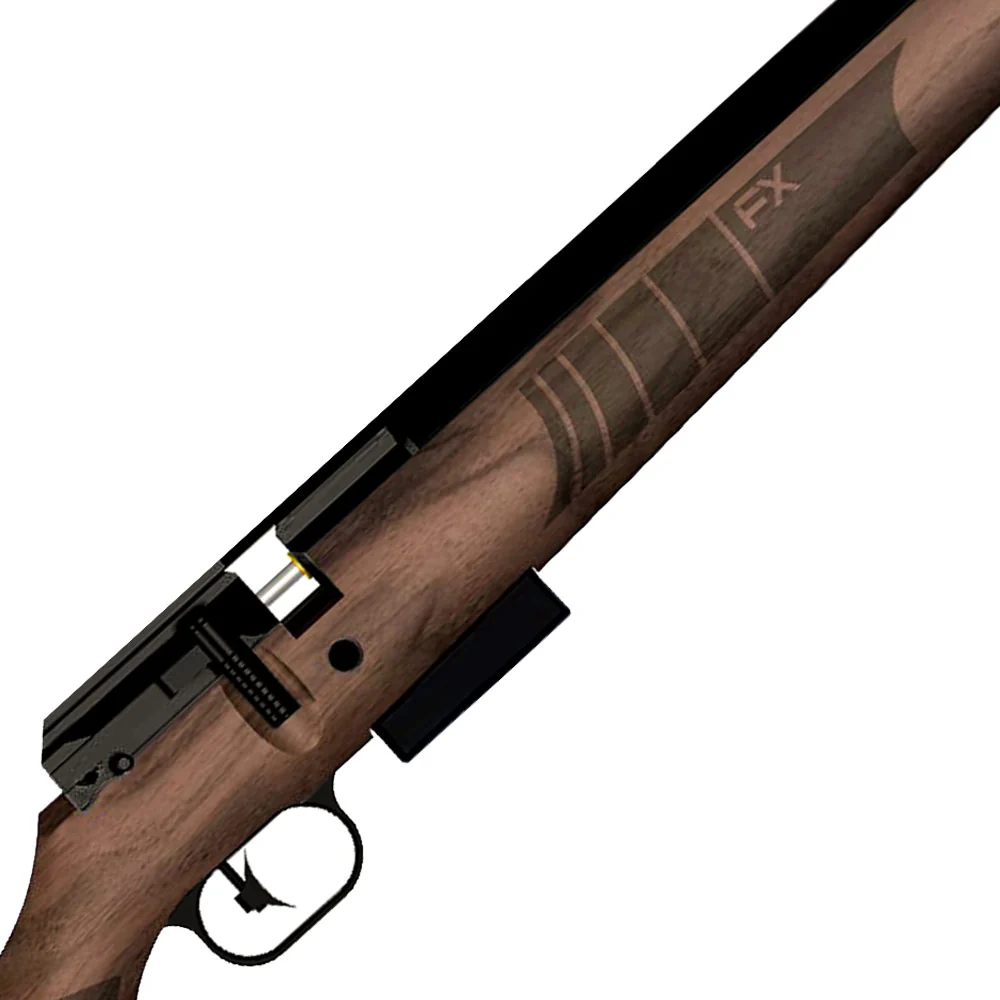
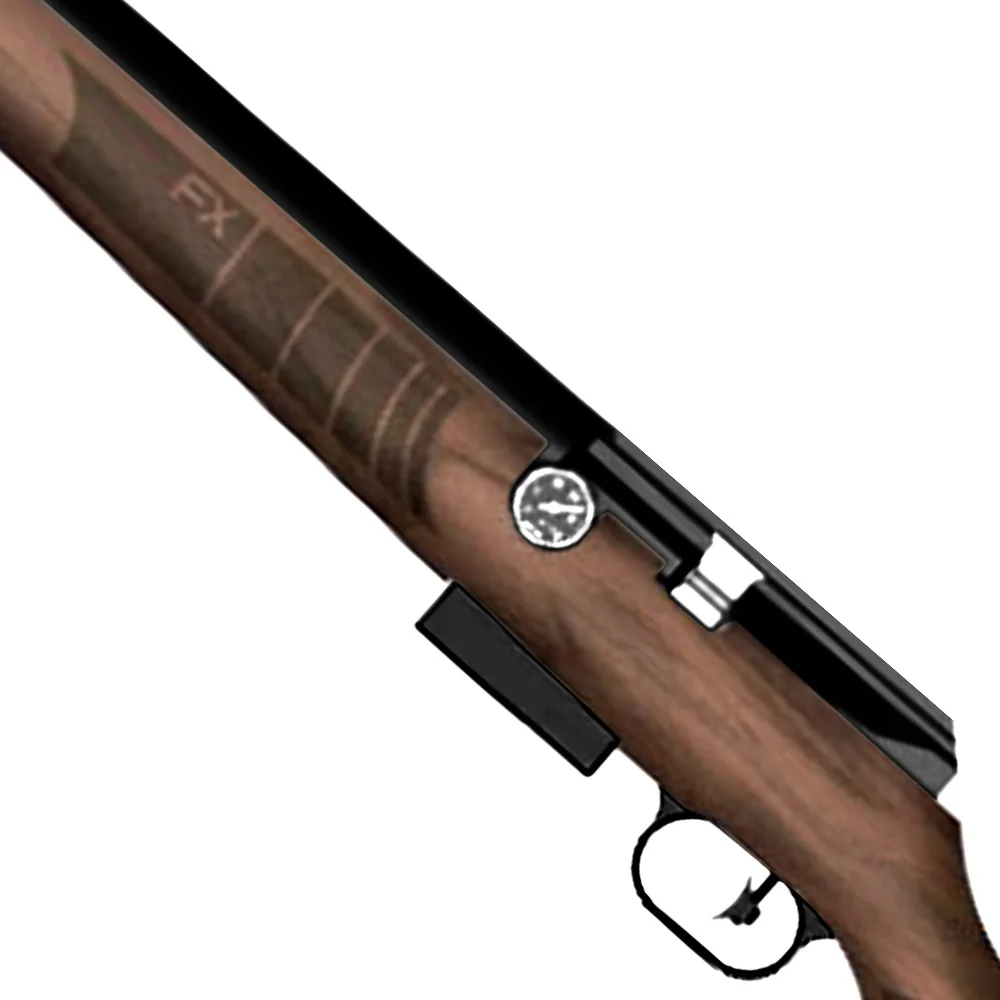
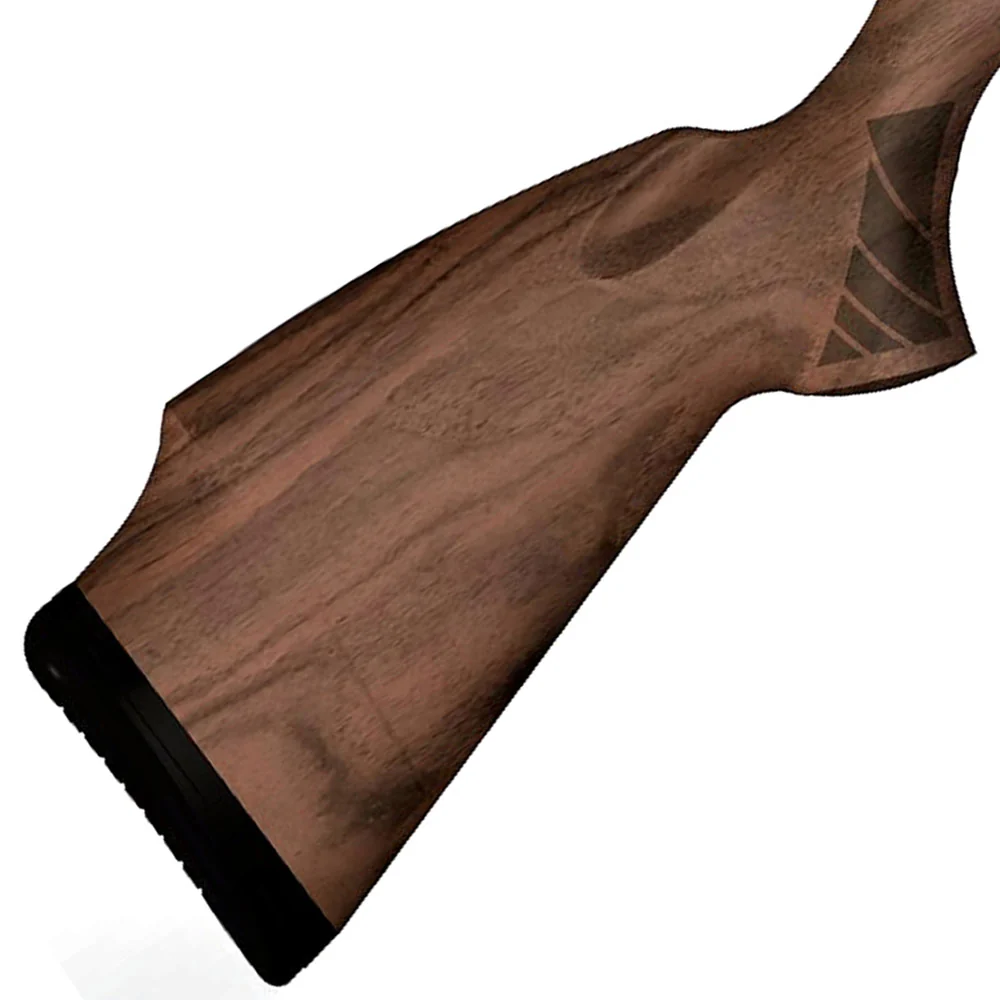
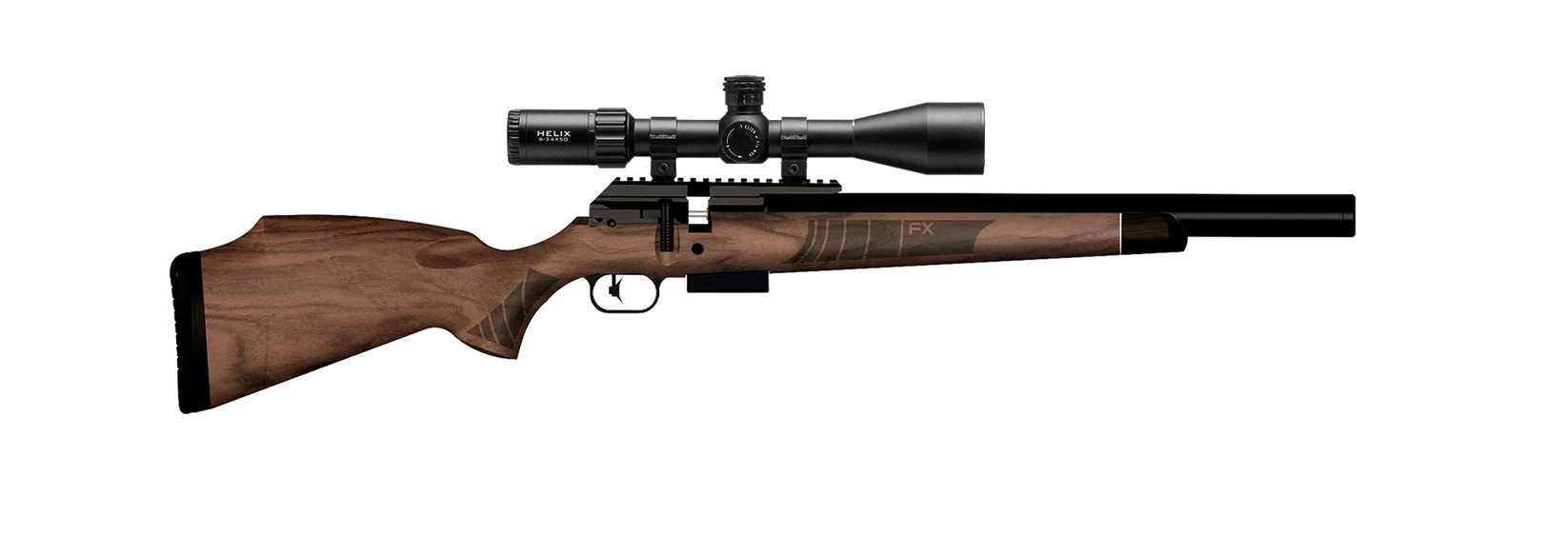

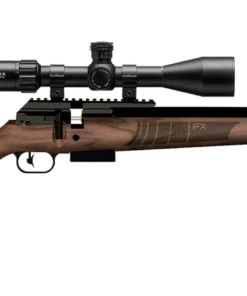
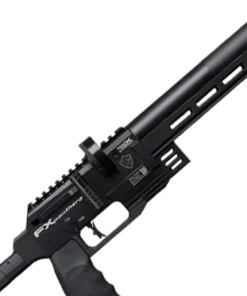
FX DRS Classic Walnut 500mm Air Rifle
€900.00
The FX DRS platform has been built from the ground up to meet the needs of the most demanding shooters. The simple yet sophisticated FX DRS design allowed FX to create a truly high-end airgun like never before. By eliminating some of the distinguishing features inherent to airguns, such as the air tank, the FX DRS looks more minimalistic in design with the appearance of a traditional rifle.
All this while still maintaining the important features you’ve come to expect from a modern high-end airgun. The FX DRS is modular in design, giving the user many options to customise it to their specific needs.
“The FX DRS is not just a tool, it sets a new standard for the way we look at airguns”
Introducing the FX DRS Classic – a masterpiece hunting rifle that redefines the way we look at airguns. From the fine tailored stock to its groundbreaking design, the FX DRS Classic is not just a rifle, it’s a statement.
A minimalistic look and innovative features are what sets the FX DRS Classic apart from the rest. The FX DRS is available in two stock options, a rugged black synthetic soft touch for the bold and practical shooter, providing a secure grip, ensuring confidence in every shot or the Minelli walnut stock version that pays tribute to tradition and craftsmanship.
Immerse yourself in the rich and luxurious feel of genuine Italian walnut. The warmth and character of the wood elevate your shooting experience, making every moment with the FX DRS Classic Sub 12 ft/lbs an affair of timeless sophistication.
Our commitment to pushing boundaries led us to creative design solutions that transform the FX DRS Classic into a vision of traditional rifle perfection. The over the barrel air tank not only creates a more traditional look but also enhances barrel stability, eliminating the need for a conventional carbon fibre bottle. The result? A sleek and powerful hunting companion that rises above all expectations.
But it’s not just about traditional rifle looks, the FX DRS Classic delivers exceptional performance. The 4CC plenum design, cleverly disguised as a traditional magazine, seamlessly integrates with the FX DRS looks while delivering the right amount of performance creating a overall better shooting experience.
The ergonomic feel, achieved through thoughtful design adjustments provides a balanced and comfortable experience, setting a new standard in the world of air rifles.
Picture yourself in the field with the FX DRS Classic, a lightweight, easy to carry hunting rifle that doesn’t compromise on features. Perfect for both seasoned hunters and competitive shooters. This air rifle isn’t only about looks, it also offers the important features you come to expect from a modern air rifle.
A smooth side lever action, a high-capacity magazine refined for larger projectiles, the flexibility to tailor the trigger unit to your exact preferences and a 11 mm dovetail rail. Upgrade options, including a match-grade trigger system, picatinny rails, plenums, barrel lengths etc offer a personalized touch for every shooter.
With the latest AMP regulator version, the FX DRS classic ensures unrivalled consistency in velocity, giving you the edge you need in any shooting scenario.
If you could sum up “Swedish Minimalism” in one product, it would be the DRS! It has everything you need an nothing you don’t need (Dubber M.).
Specifications
| Calibre | .177 | .22 |
| Weight | 2.2kg 4.9lbs |
2.2kg 4.9lbs |
| Cocking System | Smooth Sidelever | Smooth Sidelever |
| Length | 927mm 36.4″ |
927mm 36.4″ |
| Barrel | Superior STX Liner | Superior STX Liner |
| Barrel Length | 500mm 19.7″ |
500mm 19.7″ |
| Mini Magazine | 16rds | 14rds |
| Magazine Depth | 11.3mm 0.47″ |
11.3mm 0.47″ |
| Air Capacity | 208cc | 208cc |
| Fill Pressure | 230 BAR 3335 psi |
230 BAR 3335 psi |
| Charging | Pin Probe Style | Pin Probe Style |
| Shots Per Fill | 143 Shots (10.3gr @720fps) – with carbon fibre airtube upgrade | 208 Shots (15.89gr @580fps) – with carbon fibre airtube upgrade |
| Muzzle Energy | 11.86ft/lbs (10.3gr @720fps) | 11.87ft/lbs (15.89gr @580fps) |
| Trigger | Fully Adjustable | Fully Adjustable |
| Valve | Modular / Short Impulse | Modular / Short Impulse |
| Regulator | AMP MKII Regulator | AMP MKII Regulator |
| Optics Rail | 11mm Dovetail | 11mm Dovetail |
| Stock | Walnut | Walnut |
FX DRS Classic Walnut 500mm Air Rifle – Elegant Swedish PCP Precision
The FX DRS Classic Walnut 500mm Air Rifle combines traditional rifle styling with modern regulated PCP engineering. Unlike many contemporary pre-charged pneumatic rifles that use a visually prominent air bottle, this model hides its 208cc air reservoir around the barrel, creating a cleaner, more conventional profile while retaining the performance expected from a modern precision platform. In the 500mm configuration, the rifle measures about 927mm overall, uses a 500mm Superior STX barrel, fills to 230 bar, and features FX’s AMP MKII regulator.
Its walnut stock, compact dimensions, smooth sidelever action, adjustable two-stage trigger, modular plenum architecture, and 11mm dovetail optics rail make it especially attractive to shooters who want an elegant air rifle with modern internal technology.
FX Airguns Sverige and Swedish Minimalism
Searches for fx airguns sverige, fx airguns sweden, fx airguns, and fxairguns naturally connect with this model because the DRS platform was developed around a distinctly Swedish minimalist design philosophy.
Instead of adding unnecessary visual bulk, FX integrated the high-pressure air cylinder around the barrel. This allows the rifle to retain the appearance and handling characteristics of a more traditional sporting rifle while still functioning as a sophisticated pcp air gun.
For buyers exploring fx air guns, fx pcp, fx air rifle, air guns, air gun, pcp airguns, or high end air rifles, this combination of classic styling and modern technology is one of the strongest reasons to consider the 500mm Classic.
FX DRS Classic and DRS Family
The fx drs classic sits within a wider modular family that includes searches for fx drs, fx drs tactical, fx drs pro, and fx drs air rifle.
The Classic distinguishes itself through its walnut stock and traditional sporting-rifle presentation. By contrast, other versions can place greater emphasis on accessory mounting, tactical ergonomics, or specialized competition use.
The 500mm Classic remains particularly appealing for users who want a relatively compact rifle with enough barrel length to maintain strong pneumatic efficiency.
FX Panthera MkII and Precision Comparison
Shooters researching FX Panthera MkII, fx panthera, or fxpanthera may also encounter the DRS.
The Panthera family is built more obviously around competition-style chassis ergonomics, whereas the Classic focuses on traditional handling and lightweight field usability.
Both platforms demonstrate FX’s emphasis on regulation, barrel quality, airflow management, and precision, but their ergonomic philosophies are quite different.
FX Impact M4 and Impact M4 500mm
Searches for fx impact m4, fx m4, impact m4, impact m4 500mm, impact m4 air rifle, impact m4 ballistic coefficient, and fx impact m4 for sale often come from buyers comparing advanced FX platforms.
The Impact family uses a much more compact modular bullpup-style architecture. The Classic, however, provides a familiar rifle-shaped configuration.
This makes it especially attractive to shooters who appreciate modern internal engineering without wanting an aggressively technical exterior appearance.
FX Impact M3 and Earlier Impact Models
The same comparison applies to fx impact m3, f x impact m3, fx m3, fx m3 airgun, fx impact m3 air rifle, fx impact m3 .22cal air rifle, fx impact m3 .22cal air rifle. 600mm barrel, fx impact, f x impact, and fx impact air rifle.
These models reflect another branch of FX’s modular design philosophy, while the DRS Classic pursues simplicity and traditional balance.
Its 500mm configuration is especially useful for shooters who value a shorter overall rifle without sacrificing the advantages of a regulated PCP platform.
Walnut Stock and Traditional Handling
One of the most distinctive features is the walnut stock. The material gives the rifle a warmer and more traditional appearance than synthetic or chassis-based alternatives.
The stock incorporates practical shaping around the grip and fore-end, while the cheek area supports repeatable eye alignment behind an optic.
The overall weight is approximately 2.2–2.35kg depending on specification source and configuration, making it relatively light for a regulated PCP rifle.
This low weight helps during field carry, supported shooting, and extended handling.
Superior STX Barrel and Precision Potential
The 500mm barrel uses the FX Superior STX liner system. This architecture is designed to work with pellets and lighter slug-type projectiles, while alternative liner configurations can be used where compatible.
That barrel technology contributes strongly to the rifle’s precision-oriented character.
Buyers searching fx pellets, fx halo slugs, pellet gun, air rifle, or luftgevær are often looking for exactly this combination of projectile compatibility and repeatable barrel behavior.
AMP MKII Regulation and Consistency
The AMP MKII regulator helps provide controlled air delivery between shots. Rather than relying directly on changing reservoir pressure, the regulated system meters air into the working chamber at a more consistent pressure.
This improves shot-to-shot repeatability.
The rifle also uses a modular short-impulse valve and adjustable trigger system, while the 500mm model employs a 208cc air reservoir and 230-bar maximum fill specification.
For shooters who want to verify performance carefully, an fx chronograph or fx pocket chronograph can help measure actual velocity consistency.
FX Leopard, Wildcat, Maverick and Other FX Comparisons
The Classic may also be compared with the fx leopard, fx leopard airgun, fx leopard air rifle, fx wildcat, fx wildcat mk3, fx maverick, fx king, fx dreamline, fx dreamline classic, fx dynamic, fx dynamics, fx crown, fx crown mk2, fx crown mkii, and fx crown mkll.
These models serve different roles, ranging from compact hunting platforms to highly adjustable performance rifles.
The Classic’s advantage lies in combining modern FX internals with understated traditional styling.
FX Outdoors, FX USA and International Interest
Searches for fx outdoors, fx usa, and fx airguns usa reflect the international reach of the brand.
The rifle is manufactured in Sweden, while specifications and available power levels can vary depending on market regulations. For this reason, buyers should always confirm local calibre, energy, licensing, and ownership requirements.
Reximex Lyra K and Alternative PCP Comparisons
Buyers comparing competing brands may also encounter Reximex Lyra K, reximex, reximex airguns, reximex throne gen2, reximex throne gen 2, reximex гр, reximex mito, reximex mitos, reximex rра, reximex lieva, and reximex accura pcp air rifle.
Likewise, Reximex Lyra-K PCP air rifle, Reximex Lyra-K airgun, and Reximex Lyra-K review are common comparison searches.
These are separate products with different internal layouts and specifications, so they should not be treated as equivalents to the DRS.
Energy Research and Performance Calculations
Terms such as tps to joules calculator, Tps joule calculator, fps to ft Ibs, and airgun joules calculator usually appear when shooters want to compare projectile energy and velocity.
Other research terms such as gunseek, roxy max, and mx rex may appear during broader equipment searches.
Actual energy should always be calculated from verified projectile mass and measured velocity rather than assumed figures.
Why Choose the 500mm Classic?
The strongest reason to choose this configuration is balance.
The rifle provides a 500mm precision barrel, regulated airflow, a compact 927mm overall length, smooth sidelever cocking, a traditional walnut stock, and a concealed 208cc reservoir without the visual bulk associated with many PCP designs.
For shooters who want sophisticated Swedish pneumatic engineering combined with traditional rifle aesthetics, the 500mm Classic delivers a distinctive combination of precision, portability, modularity, and understated design.
Section 2 – Engineering, Accuracy, Handling, Efficiency and Practical Use
Traditional Styling With Modern Engineering
One of the most appealing qualities of this rifle is the way traditional sporting-rifle styling has been combined with contemporary pneumatic engineering. At first glance, the walnut stock and familiar rifle profile create a classic appearance. Underneath that traditional exterior, however, the platform uses a regulated high-pressure air system, a precision barrel, a modern sidelever action, and a modular internal layout.
That combination gives the rifle a distinctive character.
Some shooters prefer highly technical-looking chassis systems, while others want something that feels more natural and familiar in the shoulder. This model caters strongly to the second group without sacrificing the performance potential expected from a modern regulated system.
The design therefore works well for users who appreciate refined engineering but do not necessarily want a rifle that looks heavily competition-focused or tactical.
Why the 500mm Configuration Works So Well
The 500mm barrel length provides an excellent middle ground between compact handling and efficient air use.
A longer barrel generally gives compressed air more time to accelerate the projectile. This can improve efficiency because useful velocity can be produced without requiring excessive pressure.
However, longer barrels also increase overall length and can move the balance farther forward.
Short barrels improve maneuverability, but they may require a different tuning strategy to obtain similar performance.
The 500mm format balances these considerations.
It provides enough barrel length to support efficient acceleration while keeping the rifle relatively compact and easy to handle.
This makes the configuration particularly suitable for general target shooting, supported field use, bench shooting, and other situations where the owner wants a rifle that remains manageable.
Lightweight Handling
Weight influences how a rifle feels during a full shooting session.
A heavier rifle can feel extremely stable when supported, but it may become tiring to carry or hold unsupported.
A lighter rifle is easier to transport and reposition.
The relatively low mass of this platform makes it particularly comfortable for shooters who move regularly between firing positions.
It also feels less cumbersome when carried over longer distances.
However, lower weight means the shooter must maintain good technique because small movements may be more noticeable than they would be with a much heavier bench-oriented platform.
This is not necessarily a disadvantage.
With correct technique, the lighter construction creates a very responsive and comfortable shooting experience.
Walnut Stock Feel and Balance
Natural walnut provides more than appearance.
A well-shaped wooden stock gives the shooter a warm, solid contact surface and helps create a traditional balance in the hands.
The fore-end provides a natural supporting position, while the grip allows the firing hand to remain relaxed.
Stock fit is important because the shooter should not have to force the body into an unnatural position.
When the rifle fits properly, cheek position, shoulder contact, and trigger reach become easier to repeat.
Repeatability is one of the foundations of practical accuracy.
The stock should therefore be treated as a functional component rather than simply a cosmetic feature.
Natural Point of Aim
One of the most useful shooting principles is natural point of aim.
This means positioning the body so the rifle settles naturally onto the target without excessive muscular effort.
If the shooter must constantly push or pull the rifle into alignment, tension builds in the arms and shoulders.
After the trigger breaks, that tension may cause the rifle to move.
A better method is to shift the body until the sights naturally settle near the target.
Once this position is found, less effort is required to maintain alignment.
This can improve consistency considerably, especially during longer shooting sessions.
Cheek Placement
Consistent cheek placement helps the eye return to the same position behind the optic.
Even small differences in head position can influence the sight picture.
This becomes particularly important when using higher magnification.
The shooter’s cheek should rest naturally rather than being forced downward.
A comfortable position reduces neck tension.
It also makes it easier to maintain eye alignment.
If the optic is mounted too high, the shooter may lose contact with the stock.
If it is mounted too low, the shooter may need to press the head downward unnaturally.
Correct scope height therefore contributes directly to comfort and accuracy.
Scope Mounting
The optic should be installed carefully.
Mounts need to fit the rail correctly.
The rings should hold the scope securely without excessive pressure.
Eye relief should be established before final tightening.
To determine eye relief, the shooter should shoulder the rifle naturally and move the scope until the full field of view appears immediately.
This prevents the shooter from having to move the head backward or forward each time the rifle is mounted.
A stable scope installation also prevents unexplained changes in zero.
Loose mounts are one of the most common causes of apparent accuracy problems.
Choosing a Suitable Scope
The best scope depends on how the rifle will be used.
For general target shooting, moderate magnification often provides an excellent balance between target detail and field of view.
Higher magnification can be useful for small targets and careful bench testing.
However, very high magnification also makes natural movement appear larger.
This can tempt the shooter to overcorrect constantly.
A lower setting may actually produce more consistent results in some situations.
The optic should therefore match the intended shooting distance rather than simply offering the largest magnification number available.
Understanding Parallax
Parallax can introduce aiming error even when the scope appears perfectly clear.
If the shooter’s eye moves slightly behind the optic and the reticle seems to move across the target, parallax is present.
An adjustable scope can help reduce this effect.
The shooter should set the adjustment for the intended distance and then verify it visually.
This becomes especially important when aiming at small targets.
Correct parallax adjustment helps ensure that minor differences in eye position do not create unnecessary point-of-impact changes.
Barrel Performance and Consistency
The barrel is a major contributor to accuracy, but its performance depends on the projectile being used.
Different projectiles can behave very differently even when they have similar weights.
Head diameter, skirt shape, length, material consistency, and surface finish can all influence how they engage the barrel.
For this reason, ammunition testing is essential.
Shooters should not assume that the heaviest or most expensive option will automatically perform best.
The barrel must be allowed to show which projectile it prefers.
Projectile Testing
Testing should be conducted methodically.
The rifle should be supported consistently.
The same distance should be used.
Pressure levels should be similar.
Weather conditions should also be considered.
Several groups should be fired with each projectile.
One unusually small group is not enough to prove superior performance.
The best choice is generally the projectile that produces reliable results repeatedly.
Consistency matters more than one exceptional target.
Pellet Condition
Projectile condition is also important.
A damaged skirt can alter the way the projectile seals inside the barrel.
A bent or deformed pellet may travel unpredictably.
Before loading, shooters should inspect ammunition if maximum accuracy is the goal.
Damaged projectiles should not be used for serious testing.
Even a perfectly tuned rifle cannot compensate for badly damaged ammunition.
Magazine Loading
The magazine should be loaded carefully.
Projectiles should sit correctly in each chamber.
They should not be forced.
If resistance is encountered while cycling the action, the shooter should stop and investigate.
Forcing the lever can damage projectiles or internal parts.
Smooth magazine operation contributes to reliable shooting.
Keeping the magazine free of dirt and debris also helps prevent feeding problems.
Sidelever Handling
The sidelever is designed to make loading quick and comfortable.
It should move smoothly with deliberate pressure.
There is no need to operate it aggressively.
A consistent cycling motion helps maintain a good shooting rhythm.
If the action suddenly becomes unusually stiff, the rifle should be inspected.
Possible causes may include a misaligned projectile, magazine issue, contamination, or mechanical wear.
Ignoring abnormal resistance can turn a minor problem into a more serious one.
Regulated Air Delivery
A regulated air system helps keep the pressure delivered to the firing valve more consistent.
This is important because the pressure inside the main reservoir gradually decreases as the rifle is used.
Without regulation, that changing pressure can influence projectile velocity.
A regulator creates a controlled working pressure for each shot.
This helps improve repeatability.
Velocity consistency becomes increasingly important as range increases because small differences can produce noticeable changes in trajectory.
Understanding the Working Pressure
The regulator setting should be viewed as part of a complete system.
It works together with hammer energy, valve timing, barrel length, and projectile resistance.
Higher pressure does not automatically mean better performance.
If pressure is increased unnecessarily, efficiency may decrease.
The firing valve may also become harder to operate properly.
A balanced configuration uses enough pressure to achieve the intended result without introducing unnecessary stress or wasted air.
Hammer Energy
The hammer provides the force required to operate the firing valve.
If the strike is too weak, the valve may not open sufficiently.
If it is too strong, the valve may remain open longer than needed.
This can waste air.
The ideal setting is therefore not always the maximum setting.
A well-balanced system releases enough air to achieve the desired velocity while keeping the firing cycle efficient.
Valve Timing
Valve timing determines how long compressed air is released.
An efficient firing cycle uses a relatively short, controlled pulse.
If the valve remains open longer than necessary, compressed air can continue escaping after the projectile has already gained most of the acceleration it can use.
This reduces shot count.
It may also increase noise.
A properly balanced valve system therefore contributes to both performance and efficiency.
Air Efficiency
Efficiency describes how well the rifle converts stored compressed air into useful projectile energy.
A highly efficient setup produces the required performance without consuming excessive air.
This means the shooter can obtain more useful shots from each fill.
Efficiency becomes especially valuable during longer sessions when frequent refilling would be inconvenient.
Several factors influence efficiency, including projectile weight, barrel length, regulator pressure, valve duration, and hammer energy.
These variables should be considered together.
Fill Pressure and Safe Filling
The air reservoir operates at high pressure.
Only suitable filling equipment should be used.
This may include a high-pressure hand pump, certified cylinder, or suitable compressor.
Connections should be checked before filling.
The fill process should remain controlled.
Filling too quickly can generate heat.
Once the air cools, the pressure reading may fall slightly.
This is normal.
The shooter should never exceed the recommended pressure rating.
Clean Air Matters
Air quality can influence long-term reliability.
Dust, moisture, oil, and other contaminants should be kept away from the filling system.
The fill connection should remain clean.
Hoses should be inspected regularly.
Damaged equipment should be replaced rather than temporarily repaired.
High-pressure systems deserve careful treatment.
Good filling habits help protect regulators, valves, seals, and other internal components.
Shot-to-Shot Consistency
Consistency is one of the strongest indicators of good setup.
The rifle should ideally produce similar behavior throughout the useful part of the air fill.
If velocity changes significantly from one shot to another, the cause should be investigated.
Possible causes may include pressure imbalance, inconsistent ammunition, regulator behavior, or mechanical issues.
A chronograph can help reveal patterns that are difficult to detect simply by listening to the rifle.
Chronograph Testing
Chronograph data provides valuable information.
The shooter can record the velocity of each shot and calculate the average.
The difference between the fastest and slowest shots can also be monitored.
A relatively narrow spread suggests that the air system is operating consistently.
However, chronograph results should always be compared with actual target performance.
Perfect velocity numbers do not guarantee good groups.
A projectile may still interact poorly with the barrel.
The target ultimately provides the final answer.
Accuracy Testing From a Bench
A stable bench is one of the best environments for evaluating rifle performance.
The rifle can be supported using bags, rests, or another stable system.
The objective is to reduce unnecessary shooter movement.
The support should stabilize the rifle without clamping it unnaturally.
A consistent front and rear support arrangement allows the shooter to evaluate ammunition and setup more accurately.
Bench testing is particularly valuable when establishing a baseline.
Establishing a Baseline
Before making adjustments, the owner should establish a known working configuration.
This baseline should include a selected projectile, a known pressure level, a stable scope, and consistent shooting technique.
Several groups should be fired.
Velocity data may also be collected.
Once this information is available, any later adjustment can be compared with the original setup.
Without a baseline, tuning becomes guesswork.
Changing One Variable at a Time
One of the most common mistakes is changing too many things at once.
If the shooter adjusts pressure, changes ammunition, cleans the barrel, alters the optic, and moves the support position at the same time, it becomes nearly impossible to know which change affected the result.
A more effective method is to alter one variable.
The rifle is then tested.
The result is recorded.
Only then should another change be considered.
This disciplined approach saves time.
Keeping Records
A simple shooting log can become extremely valuable.
The shooter can record projectile type, weight, fill pressure, velocity, group size, shooting distance, temperature, and wind conditions.
Over time, these notes reveal patterns.
They also make it easier to return to a configuration that worked well previously.
Accurate records prevent good settings from being lost.
Power and Accuracy
Maximum power does not automatically produce maximum accuracy.
Some projectiles perform better at moderate velocities.
Driving them too fast can reduce stability.
More power also consumes more air.
This means a lower-energy configuration may provide better groups, quieter operation, and more shots per fill.
The correct setting is therefore the one that matches the intended application.
Performance should be measured by accuracy and consistency rather than velocity alone.
Long-Range Considerations
As shooting distance increases, small errors become larger.
Velocity variation can create vertical dispersion.
Wind can move the projectile sideways.
Incorrect distance estimation can cause significant elevation error.
For this reason, long-range shooting requires accurate data.
The shooter should know the actual distance to the target.
Measured velocity should be used for trajectory calculations.
Results should then be verified by shooting at known ranges.
Wind Reading
Wind is one of the most difficult variables to manage.
Even a light breeze can influence a projectile noticeably at longer distances.
Wind may also vary along the flight path.
Conditions near the firing point may not match conditions near the target.
The shooter can observe grass, leaves, flags, dust, and other visual indicators.
With practice, these clues become easier to interpret.
Temperature Effects
Compressed air responds to temperature changes.
A rifle filled in a warm environment may display a slightly lower pressure after being taken outside into cooler conditions.
Likewise, pressure may rise slightly when the rifle warms.
These effects are normal.
During serious testing, it is useful to allow the rifle and ammunition to stabilize in the shooting environment.
This makes comparisons more reliable.
Trigger Control
A predictable trigger helps the shooter maintain a stable firing position.
The trigger should be pressed smoothly.
The finger should move mostly rearward rather than pulling sideways.
A sudden jerk can disturb the aim.
The grip should also remain relaxed.
Excessive hand pressure can introduce unwanted movement.
Consistent trigger technique improves repeatability.
Breathing Technique
Breathing naturally moves the upper body.
For precision shooting, many shooters release the shot during the natural pause after exhaling.
The pause should remain comfortable.
Holding the breath for too long can create tension and visual disturbance.
If the shot does not feel correct, the shooter should breathe normally and begin again.
There is no benefit in forcing a poorly prepared shot.
Follow-Through
The firing sequence does not end the instant the trigger breaks.
The shooter should maintain the position briefly.
The eye remains behind the optic.
Shoulder contact stays consistent.
The grip does not change suddenly.
This follow-through helps prevent movement before the projectile exits the barrel.
It also makes it easier to observe impact.
Supported Field Use
The relatively compact format makes this configuration useful outside the bench.
The rifle can be used from shooting sticks, bags, supported kneeling positions, or other stable rests.
Because the rifle is relatively light, it can be repositioned quickly.
The shooter should still seek support whenever possible.
A stable rest usually improves accuracy far more than attempting an unsupported shot.
Standing Position
Unsupported standing is one of the most difficult shooting positions.
The rifle will move naturally.
The goal is not to eliminate all movement.
Instead, the shooter should control it.
A balanced stance, relaxed grip, and correct breathing can help.
The trigger should be released when the sight movement becomes predictable around the target.
Trying to hold the reticle perfectly still often creates unnecessary tension.
Kneeling and Sitting Positions
Kneeling and sitting positions can provide better stability than standing.
The shooter should use bone support rather than relying only on muscle strength.
The elbow may rest against the knee depending on the technique.
The position should remain comfortable enough to hold without excessive shaking.
Practice helps determine which position works best for the individual shooter.
Carrying Comfort
The lightweight construction and traditional stock make the rifle comfortable to carry.
A suitable sling can make transport easier.
However, the sling attachment should be secure.
The rifle should remain controlled at all times.
When moving through obstacles, the muzzle should stay in a safe direction.
Storage
The rifle should be stored in a dry, secure location.
Unauthorized users should not have access.
Humidity should be controlled where possible.
Wooden stocks can also benefit from protection against excessive moisture.
The rifle should not be left exposed to damp conditions for long periods.
Proper storage supports both reliability and appearance.
Walnut Stock Care
Walnut deserves basic maintenance.
The surface should be wiped clean after use.
Excessive moisture should be removed.
Harsh cleaning chemicals should be avoided.
If the stock has an oil finish, occasional maintenance with an appropriate product may help preserve its appearance.
The owner should follow the manufacturer or stock maker’s recommendations.
Barrel Cleaning
The barrel does not necessarily need constant cleaning.
If accuracy remains good, excessive cleaning may provide little benefit.
When accuracy begins to decline without another clear cause, cleaning may be considered.
Suitable cleaning materials should be used.
Aggressive tools can damage sensitive internal surfaces.
After cleaning, several shots may be required before the barrel settles again.
Seal Monitoring
The rifle depends on multiple seals to hold pressure.
If pressure drops continuously during storage, a leak may be present.
Temperature changes should first be considered because they can influence gauge readings.
If a leak is confirmed, the source should be identified.
Correct replacement seals should be used.
Improvised repairs should be avoided.
Troubleshooting Accuracy Changes
If accuracy suddenly deteriorates, the shooter should work through possible causes systematically.
The optic should be checked.
Mounting screws should be inspected.
The projectile should be confirmed.
Barrel condition should be considered.
Air pressure and velocity consistency should also be evaluated.
Shooter technique may be another factor.
Changing everything at once makes diagnosis harder.
Point-of-Impact Shifts
A point-of-impact shift is not necessarily the same as a loss of accuracy.
If groups remain tight but move together, the problem may involve zero, scope movement, position, or environmental conditions.
If the groups themselves become much larger, the cause may be different.
Understanding this distinction helps the shooter troubleshoot efficiently.
Reliability Over Long Sessions
A reliable rifle should continue functioning smoothly throughout an extended session.
The action should remain easy to cycle.
Magazine feeding should stay consistent.
The pressure system should behave predictably.
The trigger should feel the same from the first shot to the last.
Any sudden change should be investigated.
Recognizing early warning signs can prevent more serious problems.
Who Will Appreciate This Rifle Most
This configuration is especially suitable for shooters who value traditional ergonomics but still want modern precision technology.
It is a strong choice for those who enjoy target shooting, supported field use, careful ammunition testing, and general recreational precision work.
It also suits users who prefer a lighter rifle rather than a heavy chassis-based system.
Why Simplicity Matters
Although the internal engineering is sophisticated, the overall user experience remains relatively straightforward.
The rifle does not need to look overly complicated to perform at a high level.
This is one of its main strengths.
The owner receives regulated air delivery, a precision barrel, quality trigger control, and efficient handling in a package that still feels familiar.
Building Confidence
Confidence develops when the shooter knows what the rifle will do.
Repeated testing creates this confidence.
Once the rifle has demonstrated consistent accuracy, the shooter can focus less on equipment doubts and more on technique.
This makes shooting more enjoyable.
It also helps the owner identify genuine problems faster.
Long-Term Ownership
A well-maintained precision rifle can remain enjoyable for many years.
Regular inspection, sensible storage, clean filling equipment, and careful handling help preserve performance.
The owner should avoid unnecessary disassembly.
Professional servicing may be appropriate when internal high-pressure work is required.
Correct maintenance protects both reliability and safety.
Final Practical Assessment
The 500mm walnut configuration offers an attractive combination of traditional styling, lightweight handling, efficient barrel length, regulated air delivery, and modern precision engineering.
Its relatively compact size makes it easy to manage.
The walnut stock gives it a classic sporting character.
The barrel and regulated system provide the foundation for repeatable accuracy.
The sidelever supports smooth operation.
The overall design remains comfortable and practical.
However, the strongest performance still comes from disciplined use.
The shooter should select ammunition carefully.
The optic should be mounted correctly.
A reliable baseline should be established.
Changes should be made gradually.
Results should be recorded.
Good trigger control, breathing, body position, and follow-through should also become part of the shooting routine.
When those elements are combined, the rifle becomes more than simply an attractive lightweight PCP.
It becomes a capable precision platform that blends traditional handling with modern pneumatic performance in a balanced and highly usable package.
Section 3 – Advanced Precision, Reliability, Long-Term Ownership and Practical Performance
Precision Is Built on Repeatable Performance
Serious accuracy is not defined by one unusually small group. Instead, it is demonstrated when the rifle repeatedly delivers similar results across different strings of fire under controlled conditions.
This distinction matters because a single target can be misleading. A shooter may occasionally produce an outstanding group simply because every variable aligned perfectly for a few shots. However, true precision becomes clear when similar results can be reproduced again and again.
Repeatability depends on several factors working together. Air pressure must remain consistent. The barrel must interact properly with the chosen projectile. The trigger should break predictably. The optic must maintain zero. Finally, the shooter must use a stable and consistent technique.
When these elements are controlled, the rifle becomes much easier to evaluate.
Establishing Mechanical Confidence
Mechanical confidence develops when the shooter knows the rifle can perform without constantly questioning the equipment.
The best way to build this confidence is through controlled testing.
A stable bench, quality front support, rear bag, properly mounted optic, and selected ammunition create a useful starting point. Several groups can then be fired at a known distance.
If similar results appear repeatedly, the shooter gains confidence that the basic setup is functioning correctly.
Once that baseline has been established, future changes become easier to interpret.
If accuracy later declines, the shooter can compare new results against previous data rather than relying on memory.
Why Group Consistency Matters
Group size is useful, but group consistency can be even more valuable.
A rifle that produces one extremely small group followed by several poor groups may be less useful than a rifle that produces slightly larger but highly repeatable groups.
Consistency provides predictability.
Predictability is important during serious target shooting because the shooter needs to know where the projectile is likely to land when the same aiming point is used.
This is why experienced shooters often judge ammunition across multiple groups.
The average result usually provides a more realistic picture than the best individual target.
Understanding Vertical Dispersion
Vertical dispersion can occur for several reasons.
Velocity variation is one possible cause.
If one projectile leaves the barrel significantly faster than another, the two may follow slightly different trajectories.
At short range, this difference may appear small.
At longer distances, the vertical separation may become much more noticeable.
However, velocity is not the only possible cause.
Inconsistent shoulder pressure, breathing technique, support height, or rear bag pressure can also create vertical movement.
The shooter should therefore investigate patterns carefully rather than assuming every vertical group is caused by the air system.
Understanding Horizontal Dispersion
Horizontal spread may be influenced by wind, grip pressure, trigger technique, or rifle cant.
A sideways trigger pull can shift the rifle just before the shot.
Changing grip pressure can create similar effects.
Wind is another major factor, especially at longer distances.
The shooter should therefore consider environmental conditions before adjusting the rifle.
If horizontal dispersion appears only when wind is present, the equipment may be functioning correctly.
Long-Range Precision
Longer distances expose small imperfections.
A minor error that has little effect at short range can become much larger farther away.
This includes errors in distance estimation, velocity consistency, wind reading, trigger control, and rifle alignment.
Long-range accuracy therefore requires more than mechanical capability.
The shooter must also understand trajectory and environmental influence.
A good long-distance setup combines reliable equipment with accurate data and disciplined technique.
Projectile Flight and Stability
The projectile begins interacting with the air immediately after leaving the muzzle.
Its shape, weight, diameter, initial velocity, and aerodynamic characteristics all influence how it behaves.
Some projectiles remain stable over longer distances.
Others perform well at moderate range but begin to open groups farther away.
This is why testing should not stop at one distance.
A projectile that performs extremely well at 25 metres may behave differently at 50 or 75 metres.
Progressive testing reveals whether accuracy remains stable.
Ballistic Efficiency
Aerodynamic efficiency affects how quickly a projectile loses velocity.
A design that retains speed well can resist wind more effectively and maintain a flatter trajectory over part of its flight.
However, theoretical efficiency does not guarantee good accuracy.
The projectile still needs to match the barrel.
A highly aerodynamic projectile that does not stabilize properly may perform worse than a simpler design.
Real-world testing therefore remains essential.
Using Measured Data
Measured information is more useful than assumptions.
Actual velocity should be recorded whenever detailed ballistic calculations are required.
Projectile weight should also be confirmed.
Once these values are known, trajectory software can provide useful estimates.
However, software should be treated as a starting point.
Predictions should always be confirmed on actual targets.
Be the first to review “FX DRS Classic Walnut 500mm Air Rifle”
Related products
FX Air Gun
FX Air Gun
FX Air Gun

FX Air Gun
FX Air Gun
FX Air Gun
FX Air Gun
FX Air Gun
Reviews
There are no reviews yet.