
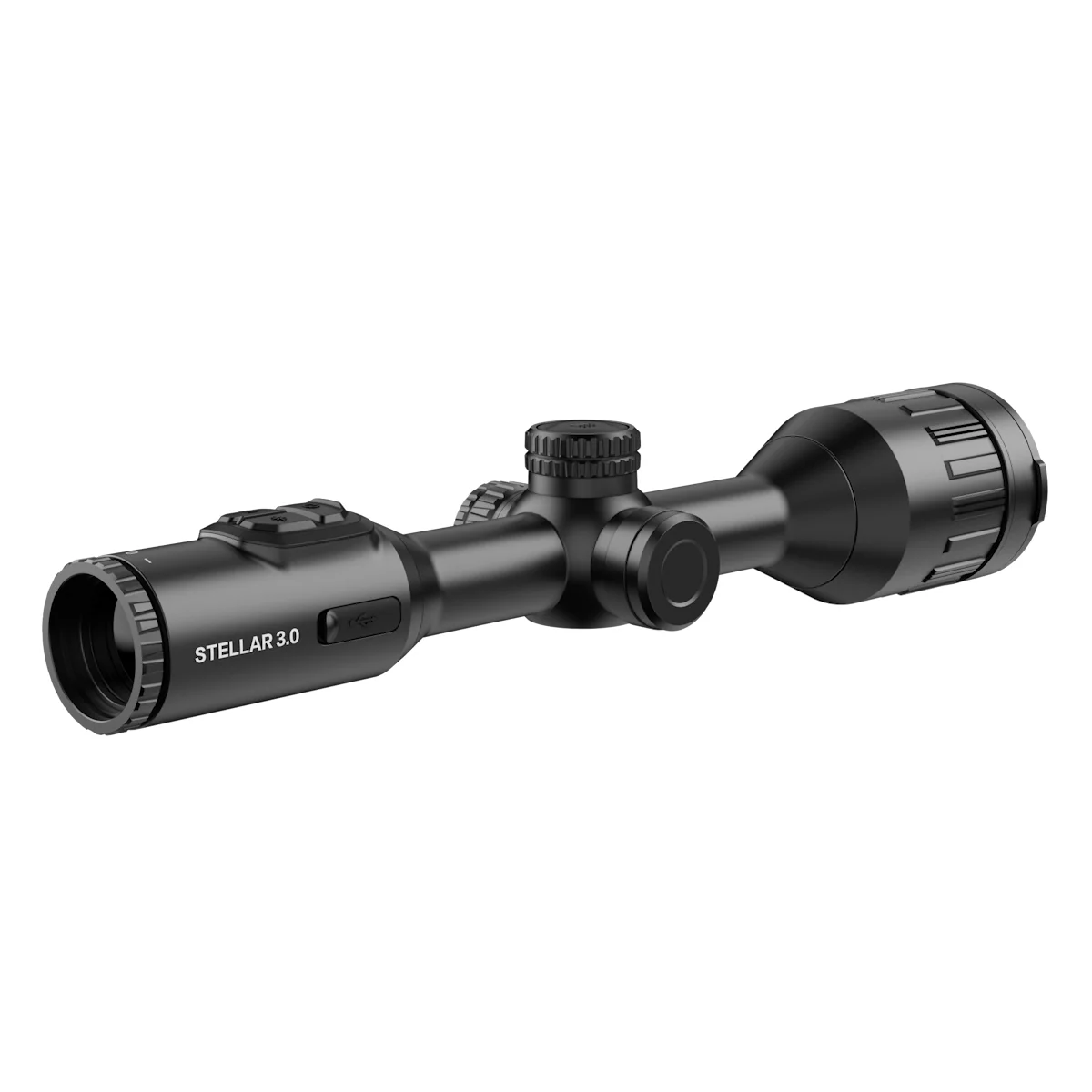
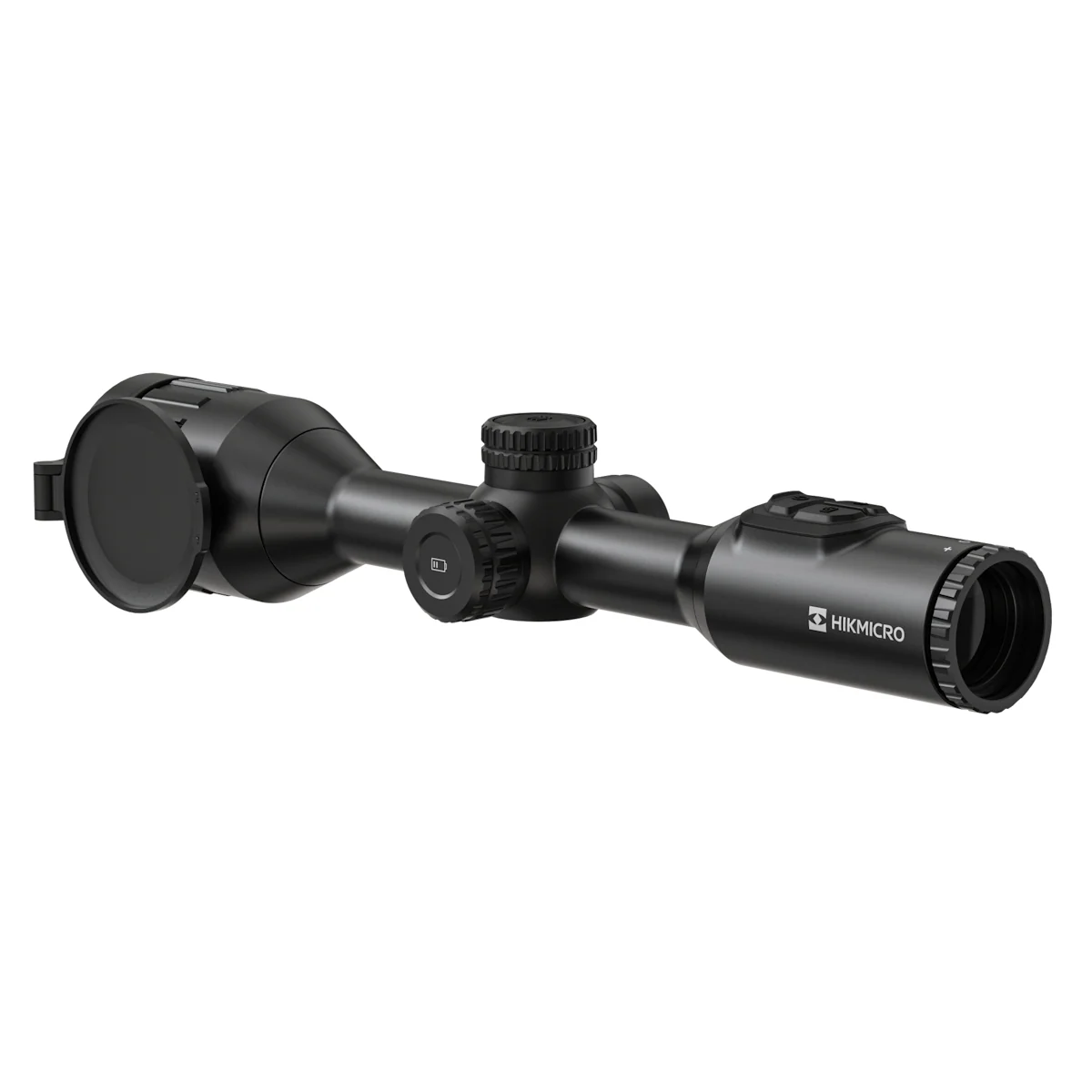
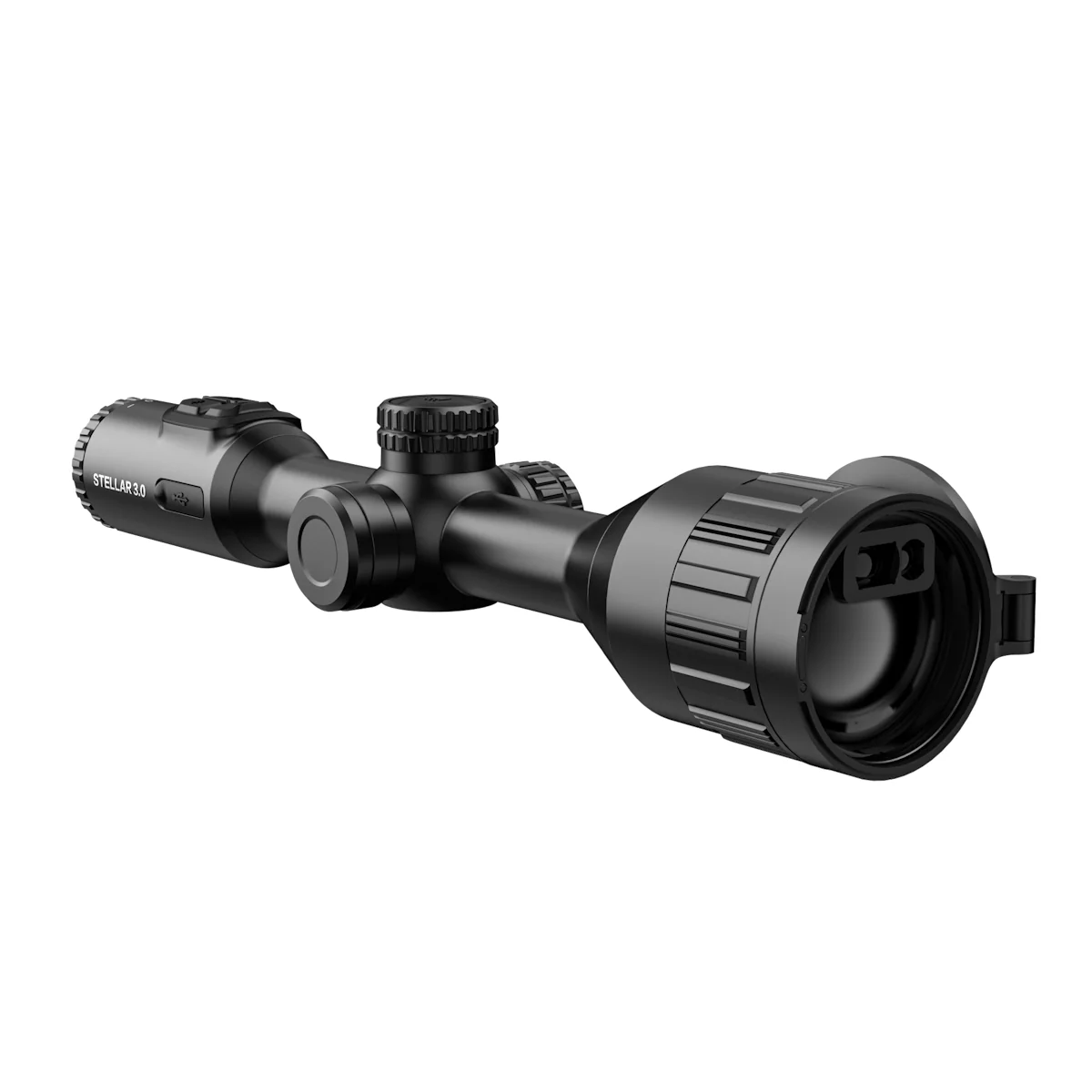
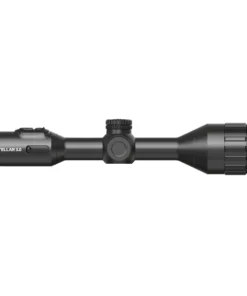
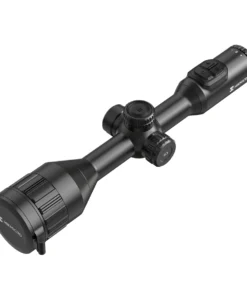
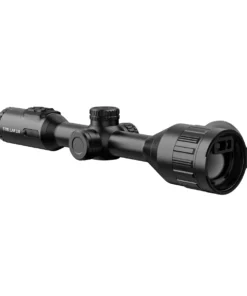
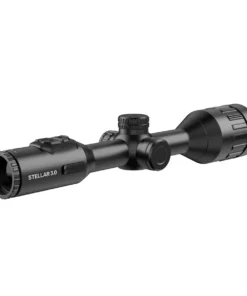
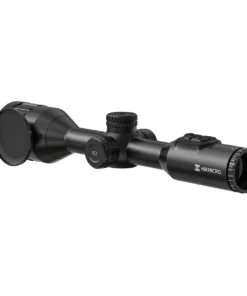
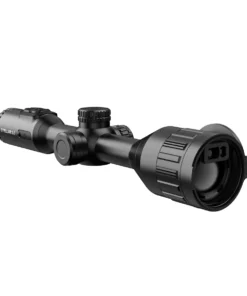
HIKMICRO Stellar 3.0 SQ50L Thermal Rifle Scope with LRF
€4,000.00
HIKMICRO Stellar 3.0 SQ50L Thermal Rifle Scope with LRF
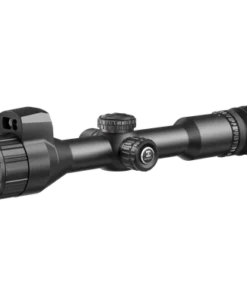
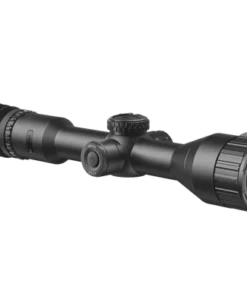
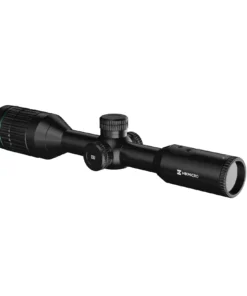
The HIKMICRO Stellar 3.0 utilises industry leading sensor technology and innovative software to create the ultimate thermal riflescope.
The Stellar 3.0 introduces many innovations to enhance your hunting experience including shutterless technology and the integrated Laser Rage Finder (LRF) which allows you to access HIKMICRO’s advanced ballistic calculator while retaining the traditional appearance of your scope.
Built around HIKMICRO’s latest generation 640x512px, Sub 15mK NETD sensors, the Stellar 3.0 is capable of delivering an unbelievably detailed image. Not only does this help you to positively identify animals but also gives you a clear view of the surroundings and background. This highly accurate thermal sensor will also continue to deliver in the most challenging conditions, such as rain and fog.
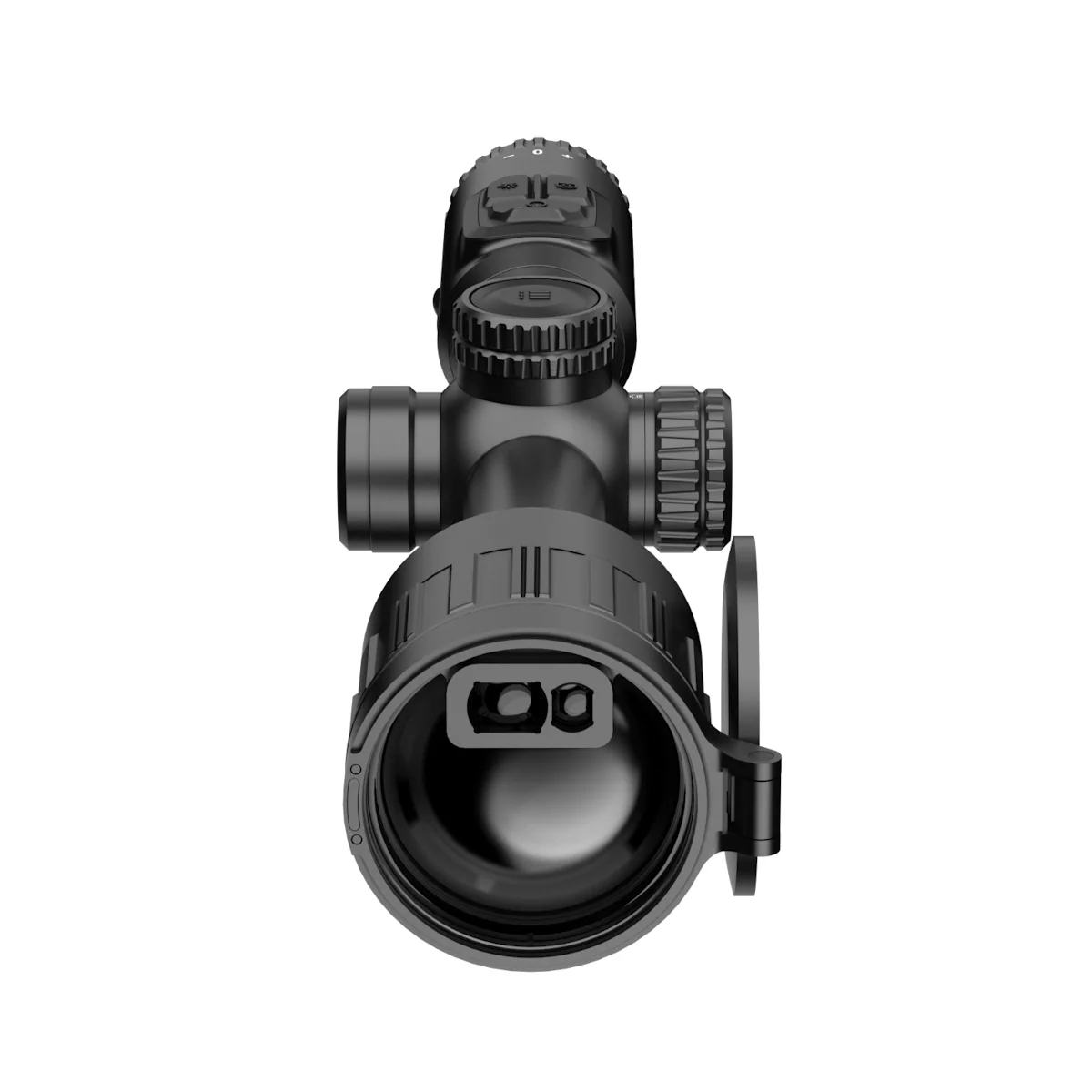
The 1000m LRF discreetly fits inside the front objective lens which allows you to accurately judge the distance to your target without compromising the traditional look of your rifle. The built-in ballistic calculator displays the holdover point on your reticle, making it possible to accurately adjust for shooting at different distances, even in total darkness.
The new viewfinder screen delivers an immersive experience, with an exceptionally wide field of view. You can customise the display to give you all the information you need in a rounded viewing area that will feel familiar to anyone who has used a traditional optical scope.
In addition to the latest hardware, HIKMICRO are committed to developing advanced software to enhance your hunting experience. The Stellar 3.0 is loaded with new technology like Image Pro 2.0 which uses intelligent algorithms to build extra detail to the image.
Another unique technology which is set to revolutionise your thermal shooting experience is shutterless technology. The shutter is used in traditional thermal devices to control image noise. It is a physical process which requires your image to freeze for a few seconds to complete. During that interruption it is impossible to take your shot. To avoid this problem, HIKMICRO have developed software which has replaced the physical shutter and removed this problem.
Powered by a combination of internal batteries and a removable 18650, the Stellar 3.0 delivers an impressive run time of 9 Hours. The display also shows you the status of the internal battery and the external battery separately so it is easy to manage your power consumption.
HIKMICRO Stellar 3.0 SQ50L Thermal Rifle Scope with LRF – 640×512 Thermal Imaging, OLED Display, Laser Rangefinding and Advanced Digital Technology
HIKMICRO Stellar 3.0 SQ50L Thermal Rifle Scope with LRF – Advanced Thermal Imaging and Digital Engineering
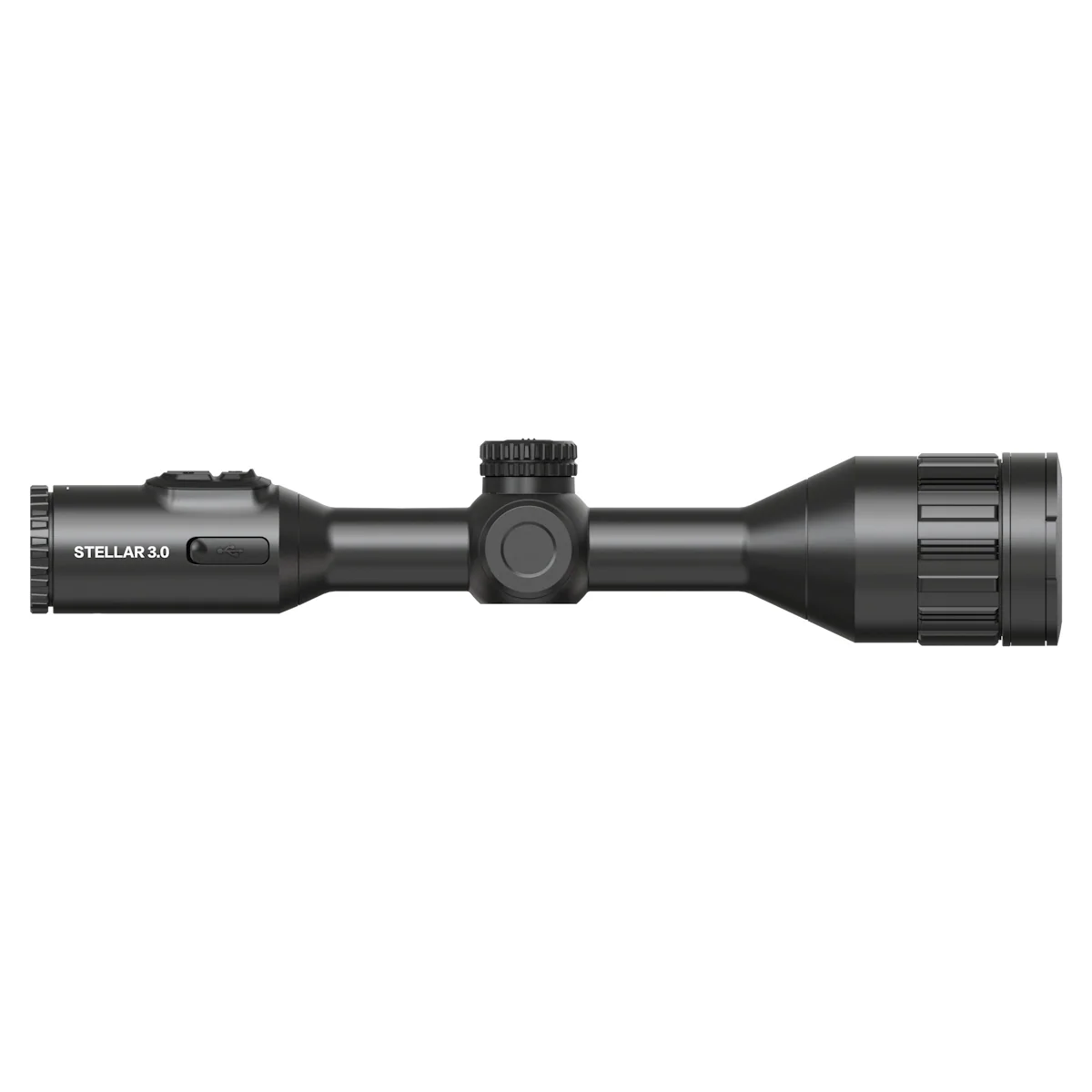
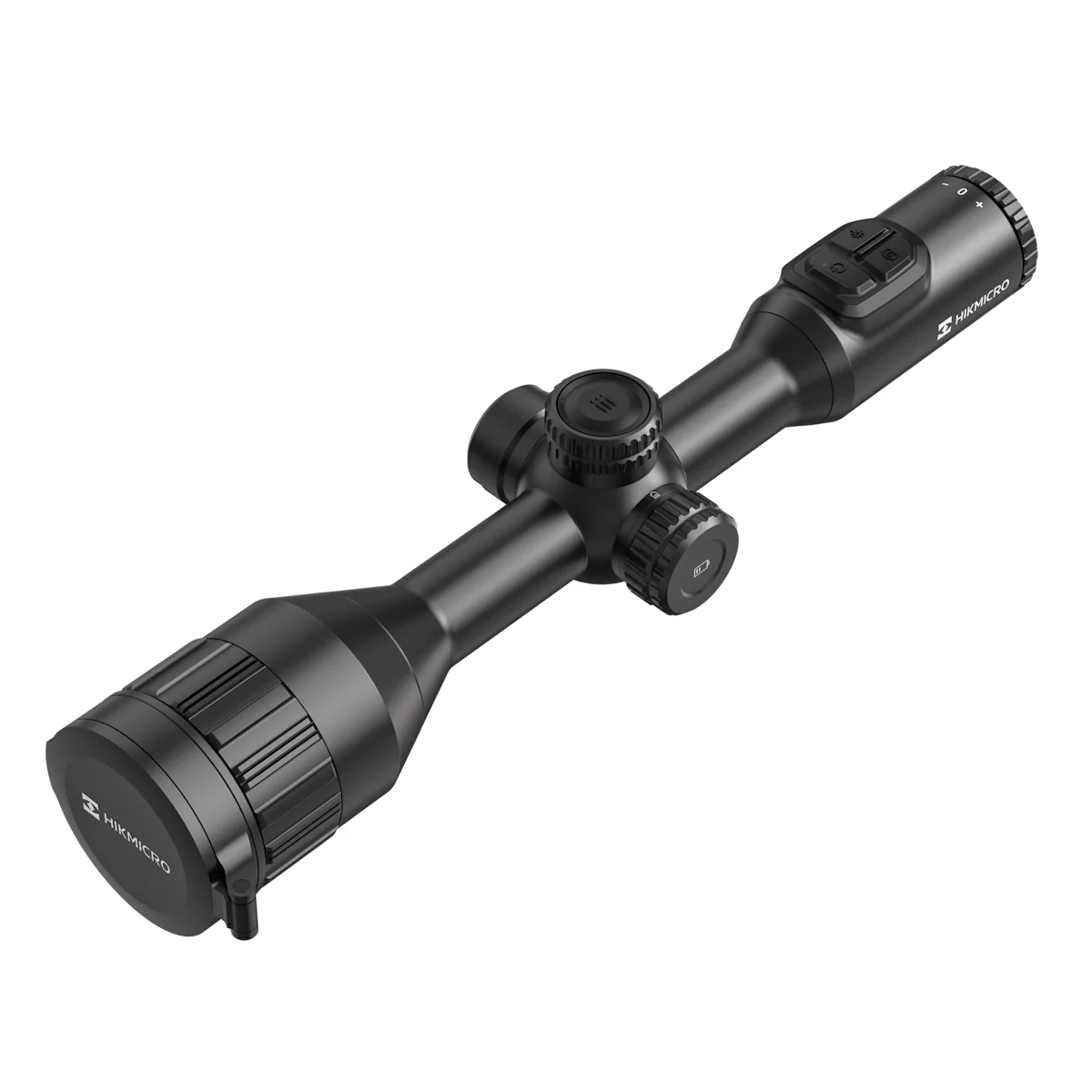
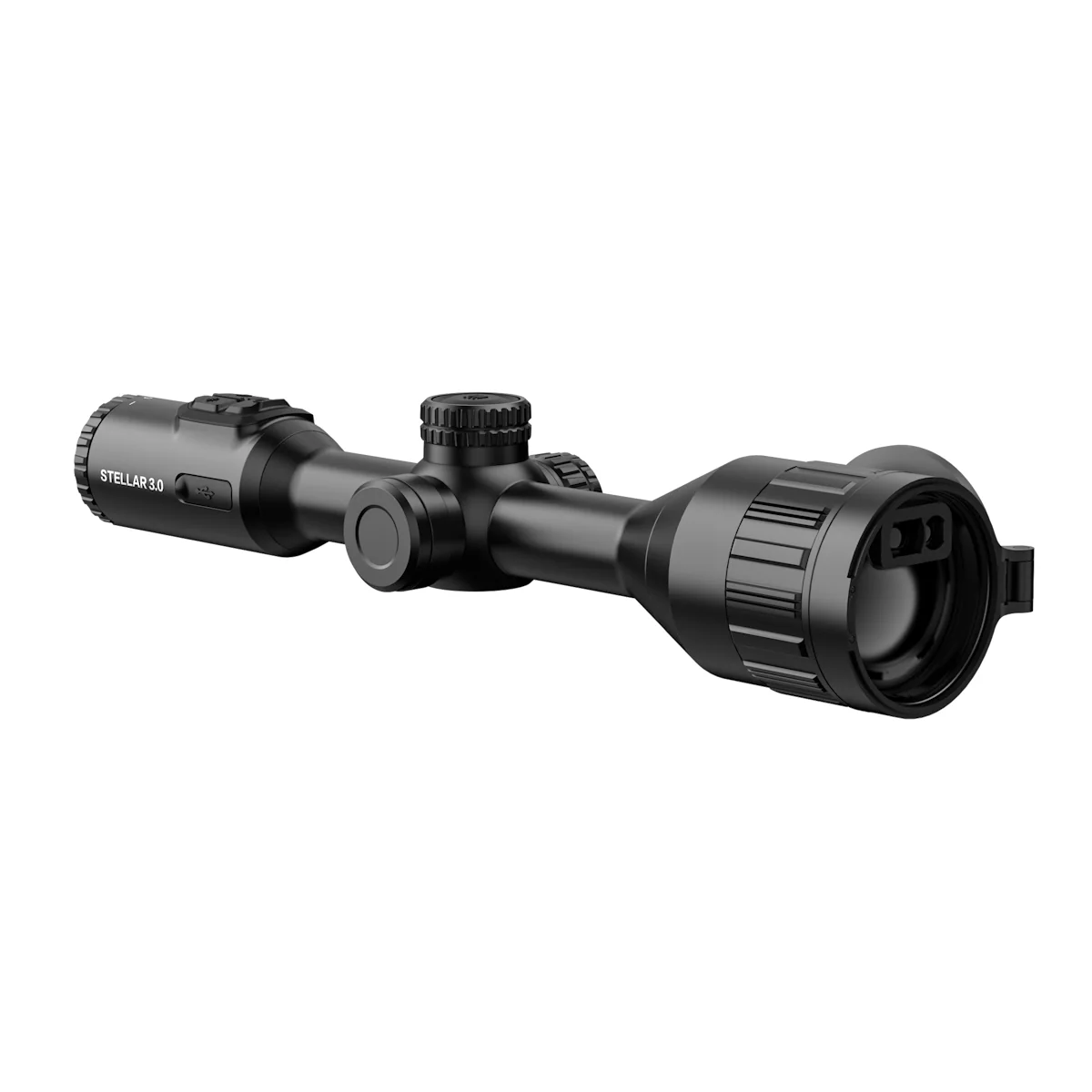
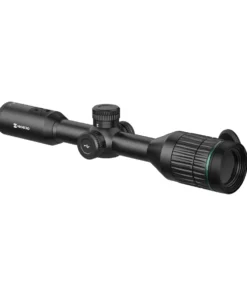
The HIKMICRO Stellar 3.0 SQ50L Thermal Rifle Scope with LRF combines advanced infrared sensing, digital image processing, high-resolution display technology, and a traditional tubular exterior.
At the center of its electronic imaging system is a 640×512 uncooled VOx thermal detector with a 12μm pixel pitch and 50Hz refresh rate.
Furthermore, the device incorporates a 50mm F1.0 thermal objective and a 2560×2560 OLED display.
Its thermal sensitivity rating of less than 15mK, under specified laboratory conditions, reflects the detector’s ability to distinguish relatively small temperature differences.
Additionally, the integrated Class 1 laser rangefinder provides electronic distance-measurement functionality.
The manufacturer’s Image Pro 2.0, Zoom Pro, and shutterless image-processing technologies contribute to its digital imaging architecture.
However, thermal imaging does not reproduce natural visible-light photographs. Instead, it translates detected infrared radiation into electronically generated pictures.
Consequently, image interpretation depends on environmental conditions, sensor characteristics, and the physical properties of observed surfaces.
Advanced VOx Thermal Sensor and Infrared Detection
The vanadium oxide detector responds to long-wave infrared radiation within the 8–14μm spectral region.
Furthermore, its uncooled architecture avoids the complex refrigeration systems associated with certain specialized scientific detectors.
The sensor converts incoming thermal information into electronic measurements.
However, detector resolution alone cannot determine complete image quality. Optical transmission, thermal contrast, image processing, and atmospheric conditions also matter.
High-Resolution OLED Display and Digital Clarity
The 1.03-inch OLED display incorporates a 2560×2560 resolution.
Its self-emissive pixels support high-contrast image reproduction, while the internal processor transforms sensor measurements into visible patterns.
Additionally, the instrument supports multiple thermal palettes, including White Hot, Black Hot, Red Hot, Fusion, Red Monochrome, and Green Monochrome.
These presentation modes change how existing thermal information appears; they do not add information that the sensor never captured.
Integrated Laser Rangefinder and Electronic Measurement
The instrument incorporates a Class 1, 905nm laser distance-measurement system.
The manufacturer’s stated measurement range reaches 1,000 meters under appropriate conditions.
However, laser measurement depends on environmental conditions, reflecting surfaces, and other physical limitations.
The device also incorporates manufacturer-supported electronic calculation features, which remain separate from the underlying thermal sensor.
Image Processing, Digital Recording and Connectivity
The internal digital architecture supports photo capture, video recording, audio recording, and picture-in-picture presentation.
Furthermore, 64GB of integrated storage provides space for supported media files.
Wireless hotspot functionality supports compatible external connections.
The device incorporates electronic contrast, brightness, and tonal settings.
However, processing cannot guarantee accurate identification of every object visible in a thermal scene.
Optical Retailers and Mounting-Standard Terminology
Related search expressions include optics warehouse, optic warehouse, red dot uk, picatinny, picatinny dimensions, 1913 rail, what is a picatinny rail, scope mount, and difference between weaver and picatinny rail.
Further terms include parker hale scope rings for sale, bipod for rifle, and best rifle bipod for long range shooting.
These concern separate accessories and interface standards. Their inclusion does not establish compatibility or indicate that accessories are supplied with this instrument.
Optical Adjustments and Technical Research
Related educational expressions include zero stop scope, what is zero stop on a scope, scope illumination, what is parallax in optics, ballistic solver, and chrony chronograph.
Additional searches include sniper hider, ir illuminator, and prs spotting scope setups.
These phrases refer to independent optical concepts, measurement technologies, or equipment categories rather than confirmed package contents.
Premium Optical Manufacturers and Comparative Products
Other optical searches include minotaur 10-50×60, swfa ss 10×42, delta stryker, delta optics, element optics, schmidt and bender scopes, and falcon optics.
Additional research includes march riflescope adjustments argon filled d42hv56wfml g2 and dnt optics review.
These products and manufacturers use different optical technologies and technical configurations.
Digital Night Vision and Thermal Imaging Comparisons
Related searches include hikmicro stellar sx60l thermal scope, best digital night vision scope, and best night vision scope.
Thermal imaging detects emitted infrared radiation, whereas conventional digital night vision primarily captures available or artificially supplied reflected light.
Furthermore, different detector resolutions and optical assemblies distinguish individual models.
The SQ50L should not be confused with the higher-resolution SX60L configuration.
BinTac Sporting Equipment and Related Searches
Separate product research includes bintac t9, bintac, bintac lIc, bintac m50, bintac t9 price, bin tac, bintaclic, bintac t 50, and b&w m50.
Other searches include bintac mcar, bintac mcar air rifle, bintac mcar 457, bintac t50, bintac t50 for sale, bintac m50 for sale, bintac s45 aea, and bintac s45 for sale.
These are separate sporting equipment searches and do not describe the featured thermal imaging device.
AEA Sporting Equipment and Alternative Product Research
Further expressions include aea harpoon, aea harpoon price, AEA Zeus MKII (Bullpup) Standard 18 Big Bore, bintac aea harpoon, aea airguns, aea megalodon, harpoon for sale, and aea harpoon magnum.
These refer to other product families with independent specifications and legal requirements.
Technical Specifications
Thermal Imaging and Display
- Manufacturer: HIKMICRO
- Model: Stellar 3.0 SQ50L
- Sensor type: Uncooled VOx focal plane array
- Thermal sensor resolution: 640×512
- Pixel interval: 12μm
- Frame rate: 50Hz
- Spectral response: 8–14μm
- Thermal sensitivity: Less than 15mK under specified laboratory conditions
- Thermal objective: 50mm F1.0
- Display: 1.03-inch OLED
- Display resolution: 2560×2560
- Digital image technologies: Image Pro 2.0, Zoom Pro, HSIS
- Thermal presentation: Six color palettes
- Integrated storage: 64GB
- Media: Photo, video, and audio recording
Electronics and Construction
- Distance measurement: Integrated Class 1 laser rangefinder
- Laser wavelength: 905nm
- Manufacturer-stated measuring range: Up to 1,000 meters
- Housing protection: IP67
- Dimensions: 422.5 × 88.4 × 74.5mm
- Weight: Approximately 860g without external battery
- Electrical power: Two internal rechargeable lithium batteries and one replaceable rechargeable 18650 battery
- Published runtime: Up to nine hours under specified test conditions
- Charging interface: USB Type-C
- Wireless functionality: Supported hotspot connection
- Operating temperature range: -30°C to 55°C
Standard Accessories
The manufacturer identifies a quick-start guide, two batteries, USB Type-C cable, cleaning cloth, carrying bag, and battery charger among the standard accessories.
Exact regional package contents should be confirmed with the distributor.
Durability, Maintenance and Responsible Ownership
The electronic assembly requires protection against unsuitable cleaning products, accidental impacts, and environmental damage.
Although the housing carries an IP67 classification, damaged seals may compromise the original protection.
Furthermore, thermal optical surfaces require appropriate cleaning materials.
Battery maintenance should follow manufacturer instructions.
The equipment should be used only in lawful circumstances and stored securely against unauthorized access.
Final Product Overview
The SQ50L combines a high-resolution thermal detector, sophisticated OLED display, electronic image processing, integrated distance measurement, and digital recording.
Its tubular construction preserves a traditional exterior appearance while accommodating modern thermal electronics.
The instrument offers advanced imaging and documentation features, subject to the limitations of environmental conditions and thermal interpretation.
Ultimately, its long-term value depends on authentic specifications, responsible handling, proper maintenance, and reliable manufacturer support.
Advanced Thermal Imaging Technology, Digital Sensor Engineering, High-Resolution OLED Display, Intelligent Image Processing, Environmental Durability and Long-Term Product Performance
2.1 Advanced Thermal Imaging and Modern Electronic Engineering
Modern thermal imaging represents an important development in electronic observation technology. Unlike conventional visible-light instruments, infrared imaging systems detect thermal radiation emitted by objects and surrounding surfaces.
The featured equipment combines specialized infrared sensors, digital processors, high-resolution electronic displays, and carefully manufactured optical components.
Furthermore, these technologies operate together to transform invisible infrared radiation into recognizable visual information.
Sophisticated electronic engineering contributes to the coordination of individual components while maintaining a compact physical design.
However, thermal imaging cannot guarantee accurate identification of every observed object.
Environmental temperatures, atmospheric conditions, surface materials, and sensor characteristics influence the resulting image.
Consequently, understanding the underlying technology supports realistic expectations about its capabilities and limitations.
2.2 Vanadium Oxide Sensor Technology and Infrared Detection
Vanadium oxide technology plays an important role in modern uncooled infrared detectors.
Specialized sensing elements respond to changes in thermal radiation, producing electrical information that digital processing systems can interpret.
Furthermore, uncooled detector construction eliminates the need for complex refrigeration systems associated with certain scientific imaging devices.
This arrangement supports comparatively compact electronic designs.
However, detector performance depends on several interacting characteristics.
Sensitivity, pixel count, optical transmission, and electronic processing contribute to the final image.
Consequently, sensor technology should be evaluated as part of a complete imaging system.
The integration demonstrates how semiconductor manufacturing and material science contribute to sophisticated digital observation equipment.
2.3 Understanding Thermal Radiation and Heat Patterns
All objects above absolute zero emit electromagnetic radiation.
The amount and spectral distribution of this radiation depend on temperature and material properties.
Thermal imaging instruments detect selected portions of the infrared spectrum and translate the resulting measurements into visible representations.
Furthermore, different surfaces may appear distinct because of variations in temperature, emissivity, and environmental exposure.
However, thermal appearance does not always correspond directly to an object’s actual temperature.
Reflective surfaces and atmospheric effects may create misleading visual information.
Consequently, electronic heat patterns require careful interpretation.
This distinction remains important when using infrared imagery for observation, inspection, or educational documentation.
2.4 High-Resolution Infrared Detector Construction
The imaging sensor contains a structured array of individual detection elements.
Each element contributes information that the internal processor combines into an electronic picture.
Furthermore, the number of sensing elements influences the amount of spatial information available.
However, numerical resolution does not independently establish overall image quality.
Lens characteristics, temperature differences, electronic noise, and atmospheric conditions remain important.
Consequently, comparisons between digital instruments should consider the complete sensor and display architecture.
Higher pixel counts may support more detailed visual representations under suitable conditions, but they cannot eliminate environmental limitations.
The technology illustrates the relationship between semiconductor precision and digital image formation.
2.5 Pixel Pitch and Microscopic Sensor Architecture
Pixel pitch describes the distance between adjacent sensing elements within a detector array.
This measurement reflects an important physical characteristic of the sensor’s microscopic construction.
Furthermore, sensor dimensions influence how optical information interacts with the individual detection elements.
However, smaller pixel pitch does not automatically guarantee superior imagery.
Detector sensitivity, lens design, processing quality, and overall system engineering remain influential.
Consequently, numerical measurements should receive consideration alongside other specifications.
Modern microfabrication allows manufacturers to produce sophisticated sensing arrays within compact electronic components.
The resulting technology demonstrates how advanced semiconductor manufacturing contributes to portable observation systems.
2.6 Exceptional Thermal Sensitivity and Temperature Differentiation
Thermal sensitivity describes an infrared detector’s ability to distinguish relatively small differences in thermal radiation.
Manufacturers commonly express this property using noise-equivalent temperature difference measurements.
Furthermore, a lower value under comparable laboratory conditions generally indicates improved sensitivity to subtle temperature differences.
However, published measurements do not guarantee identical results in every environment.
Humidity, atmospheric transmission, electronic processing, and the characteristics of observed surfaces influence practical image quality.
Consequently, laboratory specifications should be interpreted within their documented testing conditions.
The technology demonstrates how sensitive electronic components convert small physical differences into visual information.
Understanding this distinction supports more informed product comparisons.
2.7 Fifty-Hertz Image Refresh Technology
The electronic sensor refresh rate describes how frequently new image information becomes available.
A fifty-hertz imaging system produces successive thermal frames at a frequency of fifty updates per second.
Furthermore, consistent image updates can contribute to smooth visual presentation when supported by suitable processing hardware.
However, refresh rate alone cannot determine complete image quality.
Electronic latency, detector characteristics, display performance, and environmental conditions remain relevant.
Consequently, customers should distinguish sensor update frequency from the capabilities of the internal display.
The relationship demonstrates how multiple electronic components contribute to the finished viewing experience.
2.8 Advanced Thermal Objective and Optical Materials
The thermal objective directs incoming infrared radiation toward the detector.
Unlike ordinary visible-light optics, long-wave infrared systems require specialized materials capable of transmitting the relevant wavelengths.
Furthermore, lens geometry and surface treatments influence the information reaching the sensor.
However, sophisticated optics cannot overcome every environmental limitation.
Atmospheric absorption, contamination, and material characteristics may influence the image.
Consequently, the objective should receive appropriate protection and maintenance.
The exposed optical surface requires cleaning materials compatible with its specialized construction.
Aggressive solvents and abrasive fabrics may damage delicate coatings.
The assembly demonstrates how traditional optical science supports contemporary electronic sensing technology.
2.9 Understanding Infrared Spectral Response
Infrared detectors operate within particular wavelength regions of the electromagnetic spectrum.
The supported spectral range determines which radiation the sensing system can detect.
Furthermore, this characteristic distinguishes thermal observation from conventional visible-light imaging.
Long-wave infrared information originates primarily from thermal emission rather than reflected daylight.
However, infrared radiation does not pass freely through every material.
Ordinary glass, walls, and many solid barriers prevent the formation of usable thermal images.
Consequently, thermal imaging should never be described as technology that sees through solid objects.
Understanding spectral response helps establish realistic expectations concerning electronic observation capabilities.
2.10 High-Resolution OLED Display Engineering
The electronic display converts processed sensor information into a visible picture.
Organic light-emitting diode technology uses individual pixels that generate their own light.
Furthermore, this construction can support deep black levels and strong contrast within a compact display.
However, screen resolution and detector resolution represent different specifications.
A high-resolution display cannot recreate spatial information absent from the original sensor measurements.
Consequently, customers should evaluate the complete electronic imaging system.
Display brightness, color reproduction, and processing quality influence perceived clarity.
The technology illustrates how advanced semiconductor manufacturing contributes to sophisticated digital optical equipment.
2.11 Digital Image Processing and Electronic Clarity
Modern image processors perform complex calculations on information received from electronic sensors.
These calculations transform raw measurements into visual representations suitable for display.
Furthermore, software algorithms may manage brightness, contrast, image noise, and other presentation characteristics.
However, electronic processing cannot guarantee the recovery of information that the sensor never captured.
Excessive enhancement can sometimes produce artificial-looking details or misleading visual patterns.
Consequently, image quality should be assessed with an understanding of processing limitations.
The integration of software and hardware demonstrates how contemporary thermal instruments combine semiconductor engineering with advanced computational technology.
2.12 Intelligent Noise Reduction and Image Consistency
Electronic noise occurs within imaging systems because of sensor characteristics, electrical processes, and environmental conditions.
Digital algorithms can reduce certain unwanted variations within the displayed picture.
Furthermore, suitable processing contributes to a more visually consistent representation of available thermal information.
However, aggressive noise reduction may remove subtle details or produce artificial smoothing.
Consequently, processing quality involves balancing visual presentation with preservation of genuine sensor information.
Different environments may produce different results.
The technology demonstrates how digital imaging depends on carefully designed software as well as physical detector quality.
Realistic expectations remain important when evaluating enhanced electronic imagery.
2.13 Shutterless Imaging Technology and Electronic Stability
Some thermal imaging systems incorporate software and hardware designed to reduce interruptions associated with conventional calibration shutters.
This technology contributes to the manufacturer’s modern electronic imaging architecture.
Furthermore, internal calibration and compensation processes help manage changes affecting detector measurements.
However, shutterless operation should not be interpreted as an absence of calibration requirements.
Electronic sensors remain subject to temperature-dependent behavior and other physical limitations.
Consequently, image quality can still vary with operating conditions.
The construction demonstrates how manufacturers continue developing sophisticated calibration methods within compact observation equipment.
2.14 Thermal Color Palettes and Digital Presentation
Electronic color palettes transform sensor measurements into different visual representations.
A thermal image may use grayscale, monochrome, or combinations of artificial colors.
Furthermore, these presentation methods can emphasize differences within the available data.
However, changing the displayed colors does not alter the underlying thermal radiation detected by the sensor.
Consequently, color palettes should be understood as visualization methods rather than independent measurement technologies.
The appearance of an object may change substantially between different presentation modes.
Such differences do not necessarily indicate changes in its physical temperature.
Understanding this distinction contributes to responsible interpretation of digital thermal imagery.
2.15 Digital Magnification and Image Information
Digital enlargement changes how existing sensor information appears on the electronic display.
Software processing can present selected image regions at greater apparent size.
Furthermore, modern interpolation techniques may improve the visual continuity of electronically enlarged images.
However, digital enlargement cannot create genuine sensor detail that was never recorded.
Consequently, displayed sharpness may vary according to the original resolution and processing method.
Excessive enlargement can reveal pixelation or electronic artifacts.
The relationship between sensor information and display presentation illustrates an important limitation of digital imaging technology.
Accurate product descriptions should distinguish electronic enlargement from native detector resolution.
2.16 Picture-in-Picture Display and Visual Interface Design
Picture-in-picture technology allows compatible electronic instruments to display more than one image region within a coordinated screen layout.
Its implementation depends on software design and processing hardware.
Furthermore, modern display systems can organize information in ways that differ from conventional glass optics.
However, interface complexity does not automatically improve sensor accuracy.
All displayed regions remain dependent on the underlying detector data.
Consequently, the feature should be considered part of the electronic presentation system.
The technology demonstrates how modern observation instruments incorporate software-controlled visual interfaces alongside specialized physical sensors.
2.17 Laser Distance Measurement and Electronic Instrumentation
The integrated laser distance-measurement system represents a separate electronic sensing technology.
Laser measurement generally relies on detecting the return of emitted light from a surface and interpreting the associated timing information.
Furthermore, compact optical instrumentation can combine different sensor technologies within one protective housing.
However, measurement performance depends on atmospheric conditions, surface reflectivity, alignment, and the manufacturer’s documented limitations.
Consequently, published maximum-distance figures do not guarantee identical measurements in every environment.
The equipment’s laser classification and applicable safety instructions should always be respected.
The technology demonstrates how contemporary electronic instruments combine optical measurement with digital information processing.
2.18 Digital Calculation Technology and Software Integration
Sophisticated electronic equipment increasingly incorporates calculation software alongside physical measurement components.
Such systems demonstrate the integration of mathematical processing within portable optical instruments.
Furthermore, manufacturer-developed software allows selected information to appear through the digital interface.
However, calculated outputs depend on the quality of their input data and the assumptions built into the software.
Consequently, electronic calculations should not automatically be treated as definitive measurements.
Updates, configuration differences, and sensor limitations may influence available functions.
The technology illustrates how modern optical equipment combines specialized sensing components with embedded computational systems.
2.19 Digital Media Recording and Electronic Documentation
Digital recording allows compatible instruments to preserve visual information produced by their electronic imaging systems.
The recorded material may support lawful environmental observation, technical documentation, and educational review.
Furthermore, integrated recording reduces dependence on separate external camera equipment for certain applications.
However, recorded footage does not necessarily reproduce every characteristic of the original viewing experience.
Compression, processing, display settings, and environmental conditions influence recorded detail.
Consequently, video files should be interpreted with appropriate technical awareness.
Privacy requirements must also receive consideration.
The capability demonstrates how modern observation equipment incorporates functions associated with contemporary consumer electronics.
2.20 Integrated Storage and File Management
Internal electronic memory provides a location for supported recordings, photographs, and system data.
Furthermore, integrated storage contributes to the instrument’s independent digital functionality.
However, storage capacity does not guarantee unlimited recording time.
File sizes vary according to recording format, duration, and processing characteristics.
Consequently, important files should receive appropriate backup and management.
Unexpected power loss, software faults, or storage deterioration may affect retained information.
Responsible management also includes protecting personal or sensitive recordings.
The feature demonstrates how electronic observation equipment combines sensing technology with modern data-storage systems.
2.21 Wireless Connectivity and Digital Communication
Wireless connectivity enables compatible devices to exchange supported electronic information.
Its functionality depends on the manufacturer’s software, communication hardware, and external device compatibility.
Furthermore, wireless communication reflects the growing integration of observation equipment with modern digital ecosystems.
However, connection reliability may vary because of interference, environmental conditions, and software differences.
Consequently, users should consult the official compatibility documentation.
Appropriate security practices help protect stored media and connected devices.
Wireless features should remain disabled when unnecessary if recommended by the manufacturer.
The technology demonstrates how contemporary optical instruments increasingly incorporate communication capabilities alongside specialized imaging hardware.
2.22 Firmware Architecture and Long-Term Software Support
Firmware provides the internal instructions required to coordinate electronic components.
It influences sensor communication, display behavior, recording features, and other supported functions.
Furthermore, official updates may improve compatibility or address documented software issues.
However, firmware cannot automatically provide capabilities that require additional physical hardware.
Consequently, customers should distinguish software improvements from changes in underlying sensor specifications.
Updates should come from approved manufacturer sources.
Interrupted installation or incompatible files may affect device operation.
Maintaining accurate records of installed versions contributes to responsible digital ownership.
The relationship between software and hardware demonstrates the complexity of contemporary electronic imaging equipment.
2.23 Rechargeable Battery Technology and Power Management
Rechargeable batteries supply electrical energy to the detector, processor, display, and supporting electronic components.
Furthermore, efficient power management contributes to the practical operation of portable equipment.
However, published operating times depend on specific testing conditions.
Ambient temperature, display brightness, recording activity, and wireless functions may influence battery duration.
Consequently, advertised runtime should not be interpreted as a universal guarantee.
Approved charging equipment and compatible replacement cells remain important.
Damaged or overheating batteries require appropriate handling and professional assessment.
The technology demonstrates how energy-storage engineering supports modern portable electronic instruments.
2.24 Battery Safety and Electrical Reliability
Lithium-based rechargeable batteries contain substantial stored electrical energy.
Their safe operation depends on suitable charging equipment, appropriate environmental conditions, and the integrity of the battery housing.
Furthermore, internal power-management circuitry helps coordinate electrical supply to different electronic components.
However, damaged cells, unauthorized modifications, and unsuitable chargers may create safety risks.
Consequently, owners should follow official manufacturer instructions.
Batteries displaying swelling, leakage, or unusual heating should not remain in normal service.
Protective storage also reduces accidental electrical contact.
Responsible battery care contributes to preserving both the equipment and its surrounding environment.
2.25 Thermal Management and Operating Temperature
Electronic processors and display components generate heat during normal operation.
The surrounding housing must accommodate these thermal characteristics while protecting sensitive internal components.
Furthermore, environmental temperature may influence battery efficiency, sensor behavior, and electronic performance.
However, operation outside the manufacturer’s specified limits can affect reliability.
Consequently, prolonged exposure to excessive heat should be avoided.
Storage inside vehicles exposed to intense sunlight may create unfavorable conditions.
Unexpected overheating requires attention according to manufacturer guidance.
The construction demonstrates how mechanical engineering, material selection, and electronic design work together to manage operating conditions.
2.26 Environmental Sealing and Water Resistance
Environmental sealing helps protect sensitive electronic components against certain forms of dust and moisture exposure.
Specialized gaskets and carefully manufactured housing interfaces contribute to the intended protection.
Furthermore, formal resistance classifications provide useful information about standardized testing conditions.
However, environmental protection does not guarantee immunity to every form of water damage.
Severe impacts, damaged seals, and unauthorized disassembly may compromise the original construction.
Consequently, owners should respect the documented environmental limits.
Suspected internal moisture requires qualified professional assessment.
Appropriate storage remains important regardless of the published resistance classification.
2.27 Structural Durability and Exterior Housing Quality
The exterior housing provides support and protection for the instrument’s internal sensors, display electronics, and optical components.
Its construction requires suitable materials, dimensional accuracy, and reliable mechanical integration.
Furthermore, the tubular profile contributes to the product’s distinctive exterior identity.
However, structural durability cannot guarantee immunity to accidental damage.
Severe impacts, excessive pressure, or unsuitable repairs may compromise internal alignment and protective sealing.
Consequently, visible deformation or unusual electronic behavior requires professional assessment.
The construction demonstrates how contemporary industrial engineering combines protective structures with sophisticated digital technology.
2.28 Specialized Lens Cleaning and Surface Protection
Infrared optical components require particular care because their materials and coatings may differ from conventional glass lenses.
Exposed surfaces can accumulate dust, fingerprints, moisture residue, and other contamination.
Furthermore, unsuitable cleaning products may damage delicate coatings.
Consequently, maintenance should follow the manufacturer’s documented recommendations.
Abrasive fabrics, excessive cleaning pressure, and aggressive solvents should be avoided.
Protective covers help reduce contamination during storage.
However, visible scratches or suspected optical damage may require qualified assessment.
Careful maintenance contributes to preserving the instrument’s original image characteristics and material condition.
2.29 Understanding Atmospheric Conditions and Thermal Visibility
Atmospheric conditions influence the transmission of infrared radiation.
Humidity, precipitation, fog, and airborne particles may affect the amount of usable information reaching the detector.
Furthermore, environmental temperature influences the contrast between observed surfaces.
However, thermal imaging should not be described as technology that always sees clearly through heavy fog or rain.
Performance depends on the severity of atmospheric interference and the physical characteristics of the scene.
Consequently, realistic expectations remain important.
The relationship between environmental conditions and infrared transmission demonstrates why laboratory specifications cannot guarantee identical results outdoors.
2.30 Material Reflectivity and Thermal Image Interpretation
Different materials interact with infrared radiation in different ways.
Some surfaces emit thermal radiation efficiently, while others reflect a substantial portion of surrounding infrared energy.
Furthermore, these characteristics can create unexpected visual patterns.
However, the brightest-looking region of a thermal image does not always identify the hottest physical surface.
Reflections and material properties may influence electronic interpretation.
Consequently, observed images should not automatically be treated as direct temperature measurements.
Understanding emissivity and reflectivity helps explain why visually similar objects may produce different thermal appearances.
The distinction demonstrates the importance of physical science in electronic image interpretation.
2.31 Product Identification and Model Specifications
Manufacturers frequently offer several configurations within the same equipment family.
Individual versions may incorporate different detectors, objectives, displays, or electronic features.
Furthermore, software revisions can introduce changes without altering the overall exterior appearance.
However, visually similar devices should not automatically be assumed identical.
Consequently, customers should verify the precise manufacturer reference before purchasing.
Original packaging and technical documentation may assist with identification.
Optional accessories should only be considered included when confirmed by the supplier.
Accurate product information contributes to transparent commercial descriptions and informed ownership decisions.
2.32 Warranty Coverage and Professional Technical Support
Warranty arrangements represent an important consideration when purchasing sophisticated electronic equipment.
Coverage may depend on the distributor, purchase location, production version, and applicable manufacturer terms.
Furthermore, professional technical support can assist with suspected sensor, display, battery, or software problems.
However, warranties do not necessarily cover accidental damage, unauthorized modification, or ordinary wear.
Consequently, customers should review the relevant conditions before purchasing.
Retaining purchase records and technical documentation supports future service inquiries.
Professional assessment remains appropriate whenever internal malfunction is suspected.
Reliable manufacturer support contributes to long-term ownership value.
2.33 Responsible Observation, Privacy and Safety
Electronic imaging technology can support lawful observation, environmental documentation, and educational activities.
Its capabilities also create responsibilities concerning privacy, safety, and appropriate interpretation.
Furthermore, digital recordings may contain information about people or private property.
Consequently, local recording regulations should be respected.
Thermal imagery should not be treated as definitive evidence of identity or circumstances without additional reliable information.
High-stakes decisions require appropriate verification.
The equipment should remain securely stored and accessible only to authorized users.
Responsible use recognizes the limitations of the technology while respecting applicable laws and the rights of others.
2.34 Long-Term Ownership Value and Equipment Preservation
Long-term value depends on manufacturing quality, electronic reliability, maintenance practices, and access to authorized support.
Furthermore, software compatibility and battery condition contribute to the ownership experience.
However, sophisticated specifications cannot guarantee permanent performance.
Electronic components may deteriorate through age, unsuitable storage, or accidental damage.
Consequently, owners should maintain realistic expectations concerning servicing and replacement parts.
Appropriate documentation helps identify the exact configuration.
Protective storage and careful cleaning contribute to preserving original materials.
Overall value extends beyond initial specifications to include reliability, support, and responsible maintenance.
2.35 Final Assessment of Advanced Thermal Imaging Engineering
The featured instrument combines sensitive infrared detection, high-resolution electronic display technology, sophisticated digital processing, integrated measurement hardware, and modern recording capabilities.
Furthermore, its protective housing, rechargeable power architecture, wireless connectivity, and specialized optical components demonstrate the complexity of contemporary electronic observation equipment.
The system reflects advances in semiconductor manufacturing, material science, computational imaging, and digital electronics.
However, responsible ownership remains essential.
Environmental conditions can influence image quality, electronic systems require appropriate maintenance, and suspected internal malfunction should receive qualified professional assessment.
For customers interested in advanced thermal technology, lawful environmental observation, and modern digital engineering, the equipment represents a sophisticated combination of contemporary sensing and visual presentation systems.
Ultimately, its long-term value rests on authentic specifications, reliable construction, responsible use, software support, and appropriate preservation throughout its intended service life.
Be the first to review “HIKMICRO Stellar 3.0 SQ50L Thermal Rifle Scope with LRF”
Related products
Scope


Reviews
There are no reviews yet.