
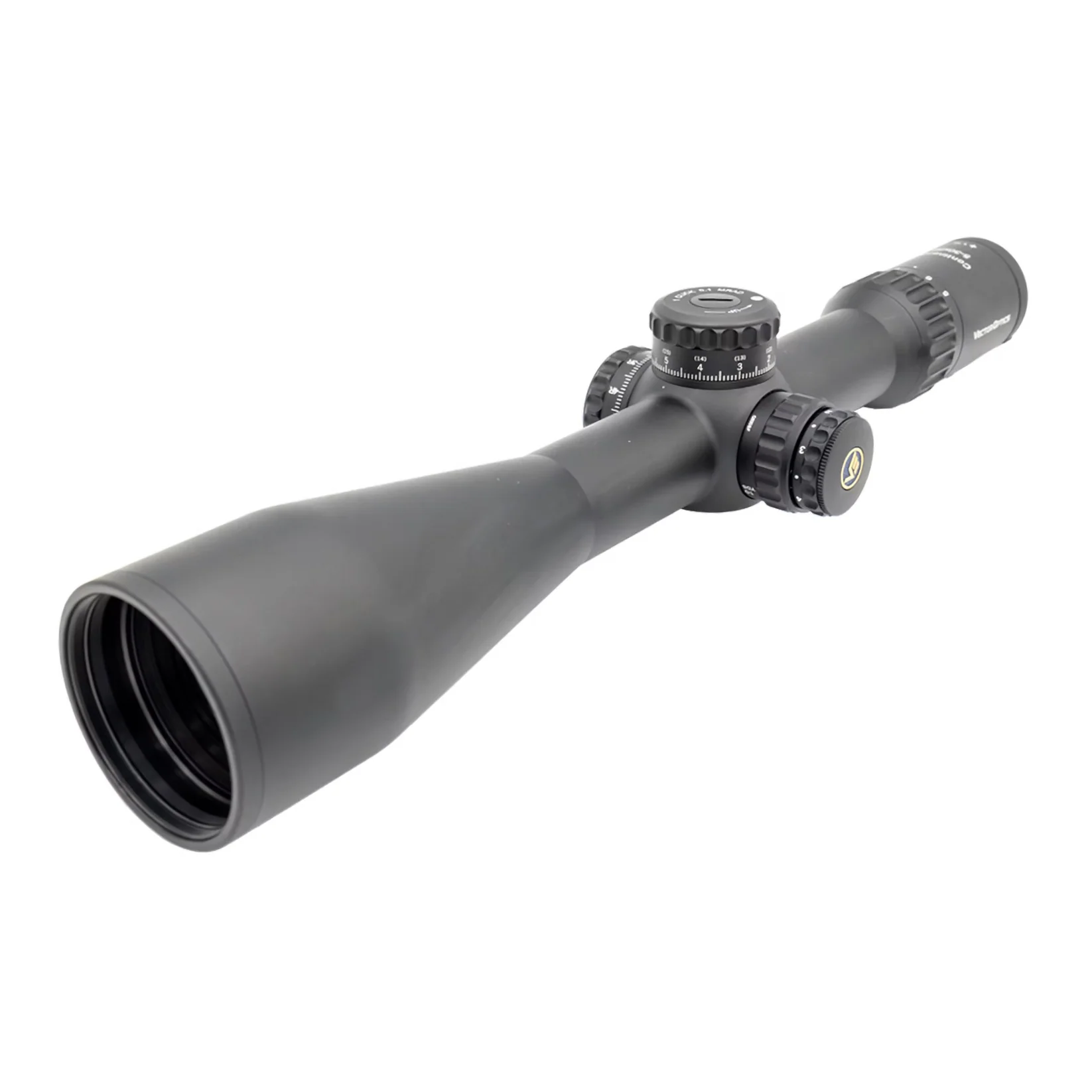


Vector Optics Continental 5-30×56 FFP 34mm Scope


€700.00
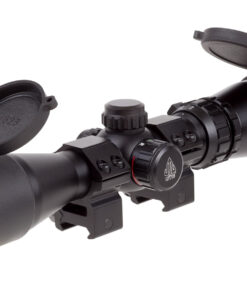
Introducing the Vector Optics Continental 5-30×56 First Focal Plane 34mm Scope – the pinnacle of long-range precision optics, designed to exceed the expectations of even the most discerning shooters. As the flagship of the Continental range, this scope represents the apex of Vector Optics’ dedication to innovation and performance, setting new standards in the world of high-end optics.
The Titan of the Range: The Continental series stands as the pinnacle of Vector Optics’ evolution, succeeding the esteemed Paragon range as the top-of-the-line scopes. Purposefully engineered to rival scopes priced in quadruple figures, the Continentals have emerged as the leaders in the realm of precision optics.
Unmatched Clarity and Precision: The 5-30x magnification range of the Continental is tailored for long-range target shooting, offering unmatched clarity and precision thanks to its high light transfer rate. Whether you’re engaging distant targets on the range or pursuing precision shots in the field, the Continental delivers unparalleled performance.
German Schott HD Glass: Housed within its robust 34mm monotube made of 6061 T6 aluminum alloy, the Continental features German Schott HD Glass, renowned for its exceptional clarity and light transmission. Combined with VePRO Full Multi-Coating, this scope achieves over 90% light transmission with minimal distortion, ensuring exceptional image quality in all lighting conditions.
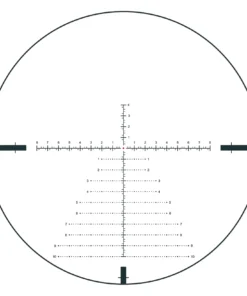
First Focal Plane Precision: The etched glass VCT-34FFP reticle ensures consistent subtension values at all magnification levels, allowing for precise holdover and ranging. With a first focal plane design, the reticle maintains its subtensions relative to the target, providing accurate ranging and holdover at any magnification setting.
Ideal for Low-Light Shooting: With its high light transmission and low dispersion characteristics, the Continental excels in low-light conditions, making it perfect for dawn, dusk, and nighttime shooting sessions. Paired with your favourite night-vision add-ons, the Continental ensures optimal performance even in challenging lighting environments.
Practical Features: Featuring side focus adjustment from 10 yards to infinity and 6-step red illumination, the Continental offers enhanced visibility and precision in any shooting scenario. The turret lock and zero-stop feature ensures reliable adjustments and precise zero retention, even under heavy recoil.
Specifications:
- Magnification: 5-30x (True 6x)
- Objective Lens Dia.: 56mm
- Ocular Lens Dia.: 42mm / 1.7 inch
- Exit Pupil: 8-1.8mm
- Field of View: 24.5-4.1 feet @ 100 yards
- Eye Relief: 100mm / 4.0 inch
- Length: 395mm
- Weight: 845g
- Tube Dia.: 34mm Monotube
- Click Value: 1/10 MIL
- Elevation Range: 26MIL
- Windage Range: 16MIL
- Side Focus: 10 Yds to infinite
- Reticle: Etched glass VCT-34FFP
- Illumination: 6 gear red
- Battery type: CR2032 (Not Included)
Experience the pinnacle of long-range precision with the Vector Optics Continental 5-30×56 FFP 34mm Scope. Whether you’re a competitive marksman, avid long-range shooter, or tactical professional, the Continental sets new benchmarks for performance, clarity, and precision, elevating your shooting experience to unprecedented levels of excellence.
Vector Optics Continental 5-30×56 FFP 34mm Scope – Premium Long-Range Riflescope with German Schott HD Glass, First Focal Plane Reticle, Zero Stop and Illuminated Precision Optics
Vector Optics Continental 5-30×56 FFP 34mm Scope – Technical Specifications, Optical Clarity, Precision Engineering, Advanced Reticle Technology and Product Comparisons
Vector Optics Continental 5-30×56 FFP 34mm Scope – Premium Optical Engineering
The Vector Optics Continental 5-30×56 FFP 34mm Scope combines German Schott HD glass, fully multi-coated lenses and a first focal plane optical system in a precision-manufactured aluminium housing.
Developed for demanding sporting applications, this model features 5–30x magnification, a 56mm objective lens and a robust 34mm main tube vector optics continental 5 30×56 ffp 34mm scope.
Furthermore, the etched-glass VCT-34FFP reticle provides a graduated MIL-based reference system that maintains its angular proportions throughout the magnification range.
The manufacturer also incorporates six levels of red illumination, a locking turret arrangement and a mechanical zero-stop system.
Additionally, the side-focus mechanism accommodates viewing distances from approximately 10 yards to infinity.
Consequently, the Continental offers an extensive combination of optical and mechanical features for experienced adult sporting enthusiasts.
Vector Optics+1
Technical Specifications – Premium 34mm Optical System
- Manufacturer: Vector Optics
- Product family: Continental
- Reference model: SCFF-30
- Magnification: 5–30x
- Objective diameter: 56mm
- Main tube diameter: 34mm
- Focal plane: First focal plane (FFP)
- Reticle: VCT-34FFP etched-glass MIL
- Lens system: German Schott HD glass
- Optical coating: VePRO fully multi-coated
- Eye relief: 100mm / 4 inches
- Field of view: 24.5–4.1 feet at 100 yards
- Side focus: 10 yards to infinity
- Click value: 0.1 MIL
- Turrets: Locking, with zero stop
- Illumination: Six red brightness settings
- Battery: CR2032
- Housing: 6061-T6 aluminium alloy
- Waterproof rating: IP67
- Internal protection: Nitrogen-filled
- Approximate length: 393mm
- Approximate weight: 810g.
Manufacturer listings differ on total elevation travel: the official product page currently states 30 MIL, while another official regional listing states 26 MIL. Confirm the precise version before publishing a fixed adjustment figure.
Vector Optics+1
German Schott HD Glass – Why Optical Quality Matters
German Schott glass contributes to the scope’s advanced optical construction.
Furthermore, the manufacturer’s VePRO coating system is advertised as delivering over 90% light transmission.
This combination is intended to support image brightness, contrast and clarity.
However, actual visibility depends on ambient lighting and viewing conditions.
Consequently, optical quality should be assessed through the complete lens system rather than magnification alone.
First Focal Plane Reticle and Precision Adjustments
The first focal plane arrangement allows the reticle’s angular subtensions to remain consistent as magnification changes.
Furthermore, the zero stop scope feature offers a mechanical reference point for the elevation turret.
Customers asking what is zero stop on a scope, what is the moa of a scope or what is parallax in optics are exploring fundamental optical concepts.
Related searches include what is parallax in a scope, what is parallax in a rifle scope, scope illumination and ballistic solver.
However, this particular model uses MIL-based adjustments rather than MOA-based turret graduations.
Picatinny Rail, Scope Mount and Mounting Compatibility
A compatible scope mount provides a mechanical interface between the optic and an approved mounting platform.
Buyers researching picatinny, 1913 rail, tactical rail, picatinny scope base, picatinny dimensions and what is a picatinny rail are comparing attachment standards.
Furthermore, difference between weaver and picatinny rail, parker hale scope rings for sale and scope torque wrench are related compatibility and maintenance topics.
The manufacturer’s SCFF-30 package lists a pair of 34mm Picatinny rings, although individual retailer bundles should be verified.
Vector Optics
Vector Optics and Alternative Premium Riflescopes
Buyers comparing optical equipment may encounter minotaur 10-50×60, vector minotaur 10 50×60, delta stryker, delta optics, element optics, falcon optics, zco optics, tpo scopes and schmidt and bender scopes.
Additional research includes swfa ss 10×42, swfa scope review, dnt optics review, tnc225r review and march riflescope adjustments argon filled d42hv56wfml g2.
These terms concern separate products, optical technologies or reviews.
Consequently, their technical characteristics should not be attributed to the Continental.
Optical Retailers and Professional Equipment Comparisons
Customers often search optics warehouse, optic warehouse, optics planet and red dot uk when researching optical products.
Furthermore, prs spotting scope setups, chrony chronograph, best scope for air rifle, bipod for rifle and best rifle bipod for long range shooting concern other sporting equipment categories.
However, these accessories and products require independent evaluation.
Digital, Thermal and Night-Vision Optical Alternatives
The Continental is a conventional illuminated optical riflescope rather than an electronic imaging device.
Consequently, searches involving hikmicro stellar sx60l thermal scope, best digital night vision scope, best night vision scope, dnt thermal scope review and ir illuminator concern different technologies.
Similarly, sniper hider is an unrelated search expression rather than a verified feature of this optic.
Why Consider the Vector Optics Continental 5-30×56 FFP 34mm Scope?
The Continental combines a six-times zoom range, large objective lens, first focal plane reticle and locking mechanical adjustments.
Furthermore, its German optical glass and nitrogen-filled aluminium construction contribute to a well-defined technical specification.
The model’s IP67 environmental rating provides an additional consideration for outdoor sporting applications.
However, performance depends on optical condition, proper compatibility and the specific production version.
The Vector Optics Continental 5-30×56 FFP 34mm Scope combines premium glass technology, illuminated precision optics and sophisticated mechanical construction in one comprehensive sporting optical system.
Advanced Optical Engineering, Premium Glass Construction, Image Clarity, Mechanical Precision, Weather Resistance, Ergonomic Design, Durability and Long-Term Ownership Value
Understanding the Importance of Advanced Optical Engineering
Modern optical engineering combines material science, precision manufacturing and sophisticated lens design to create instruments capable of delivering detailed visual information across varying viewing conditions. Every internal component contributes to the overall viewing experience, from the objective assembly to the eyepiece and protective housing.
Furthermore, premium optical construction requires careful coordination between glass quality, surface treatments, mechanical alignment and environmental protection. An impressive magnification specification alone cannot establish the quality of the finished instrument.
Consequently, discerning buyers should evaluate the complete optical system rather than concentrate exclusively on one advertised feature.
When carefully manufactured, advanced optical equipment can provide consistent image characteristics, comfortable observation and dependable mechanical construction throughout years of responsible ownership.
Why Premium Glass Quality Matters
Glass quality represents one of the most important considerations in high-performance optical equipment. Specialized optical glass is manufactured with carefully controlled properties that influence how light travels through individual elements.
Furthermore, different glass formulations exhibit different levels of dispersion, transmission and optical correction. Engineers select appropriate materials according to the requirements of the complete lens system.
However, expensive glass alone cannot guarantee an exceptional viewing experience.
The arrangement of individual elements, manufacturing accuracy and surface coatings remain equally important.
Consequently, the most effective optical designs combine high-quality materials with carefully calculated lens geometry and professional assembly.
Understanding Advanced Lens Manufacturing
Precision lens manufacturing requires specialized production equipment and strict dimensional control.
Individual optical elements must correspond to carefully established design specifications. Furthermore, the curvature, thickness and surface condition of each element contribute to the finished optical system.
During manufacturing, specialized measurement instruments help evaluate whether individual components satisfy their intended requirements.
However, accurately manufactured elements must also be assembled correctly.
Consequently, professional alignment and final inspection play important roles in overall image quality.
A carefully constructed optical instrument demonstrates how multiple manufacturing disciplines work together to produce a coordinated visual system.
Why Image Clarity Is Important
Image clarity describes how effectively an optical instrument presents visible details.
A high-quality system should provide a recognizable separation between fine visual features under suitable viewing conditions.
Furthermore, clarity depends on several interconnected characteristics, including glass selection, lens geometry and optical alignment.
However, magnification does not create information that the original optical system cannot resolve.
Increasing image size may make existing limitations more noticeable.
Consequently, overall optical quality should receive greater consideration than advertised enlargement alone.
Clear imaging contributes to comfortable observation and a more satisfying experience during permitted outdoor sporting activities.
Understanding Contrast and Image Definition
Contrast describes the difference between brighter and darker areas within a viewed scene.
Strong contrast contributes to recognizable outlines, visible surface textures and clear separation between neighboring objects.
Furthermore, optical coatings and internal light control influence how effectively contrast is preserved.
However, environmental conditions can substantially affect perceived image quality.
Haze, atmospheric moisture and changing illumination may reduce visible contrast even when the instrument remains in excellent condition.
Consequently, buyers should distinguish optical quality from environmental limitations.
A well-engineered lens system aims to preserve useful visual information within the physical limits of available light.
Why Light Transmission Matters
Light transmission describes the proportion of incoming light that passes through an optical system.
Every glass surface introduces opportunities for reflection or absorption. Therefore, optical engineers must consider the cumulative effects of multiple internal elements.
Furthermore, high-quality surface treatments help reduce unnecessary reflections.
However, published transmission percentages should be interpreted carefully because testing methods and measurement conditions may differ.
A single transmission figure cannot fully describe contrast, color rendition or overall sharpness.
Consequently, the complete visual experience remains important.
Professional optical engineering seeks to balance transmission efficiency with other essential image characteristics.
Understanding Multi-Layer Lens Coatings
Modern optical coatings consist of carefully engineered layers applied to glass surfaces.
These treatments are designed to influence reflections and improve the efficiency of light transfer through the optical assembly.
Furthermore, sophisticated coating systems can help preserve image contrast by reducing unwanted light interactions.
However, coatings cannot compensate for every limitation in lens design.
Their effectiveness depends on material quality, application consistency and the complete optical configuration.
Consequently, premium construction requires both carefully selected glass and professionally applied surface treatments.
Why Color Accuracy Is Important
Color accuracy influences how naturally objects appear through an optical instrument.
Optical materials and coatings affect the transmission of different wavelengths of visible light.
Furthermore, sophisticated lens design aims to preserve balanced color reproduction across the visible spectrum.
However, perceived color also depends on environmental lighting and individual eyesight.
Consequently, buyers should avoid assuming that a brighter-looking image automatically provides more accurate color.
A well-developed optical system seeks to preserve natural visual characteristics while maintaining useful contrast and image definition.
Understanding Chromatic Aberration
Chromatic aberration occurs because different wavelengths of light may refract differently as they pass through optical materials.
This phenomenon can produce unwanted color fringes around high-contrast objects.
Furthermore, its visibility may vary according to the optical design and viewing conditions.
Manufacturers can reduce these effects through suitable glass selection and carefully calculated lens combinations.
However, no optical instrument should automatically be assumed completely free from aberrations.
Consequently, accurate product evaluation requires consideration of the complete optical system.
Why Edge-to-Edge Clarity Matters
Image quality near the center of the viewing area may differ from quality toward the outer edges.
Optical engineers consider these differences when designing complex lens assemblies.
Furthermore, specialized manufacturing methods help maintain consistent optical relationships throughout production.
However, edge performance depends on the complete lens configuration.
Consequently, buyers should evaluate the overall image rather than assume that central sharpness represents the entire viewing field.
Balanced optical design contributes to a comfortable and coherent visual experience.
Understanding the Importance of Eye Relief
Eye relief describes the approximate distance between the final optical surface and the position from which the complete image can be viewed.
This characteristic influences viewing comfort and compatibility with individual physical requirements.
Furthermore, different optical designs provide different eye-relief specifications.
However, published figures may vary across operating conditions and product configurations.
Consequently, owners should consult the documentation corresponding to their exact model.
Comfortable viewing remains an important consideration during prolonged observation.
Why the Exit Pupil Matters
The exit pupil represents the diameter of the light beam emerging from an optical instrument.
Its size changes according to the relationship between the objective diameter and magnification.
Furthermore, the viewer’s own pupil size influences how much of the available light can be used.
However, a larger exit pupil does not automatically establish superior image quality.
Glass transmission, optical corrections and lighting conditions also contribute.
Consequently, exit-pupil characteristics should be considered within the complete optical design.
Understanding Field of View
Field of view describes the observable area presented through an optical instrument at a specified distance.
Different magnification settings generally produce different viewing fields.
Furthermore, optical design influences the relationship between apparent image size and the surrounding visible area.
However, a broad viewing field does not independently establish superior clarity.
Consequently, buyers should evaluate field of view alongside resolution, contrast and viewing comfort.
The best overall experience depends on the combination of these characteristics.
Why Optical Resolution Matters
Optical resolution describes an instrument’s ability to distinguish fine details.
This characteristic depends on lens design, glass quality, manufacturing accuracy and other physical factors.
Furthermore, environmental conditions may influence apparent resolution.
However, advertised magnification should not be confused with resolving power.
Enlarging an image cannot restore detail that the optical system failed to capture.
Consequently, sophisticated optical design focuses on preserving detail rather than merely increasing apparent image size.
Understanding Internal Light Control
Unwanted internal reflections can reduce perceived contrast and create distracting visual effects.
Optical engineers address these concerns through carefully selected materials and internal surface treatments.
Furthermore, precision assembly contributes to proper alignment throughout the optical path.
However, the effectiveness of internal light control varies between designs.
Consequently, buyers should consider verified construction quality.
Careful management of unwanted light contributes to a clearer and more comfortable viewing experience.
Why Mechanical Construction Deserves Attention
Mechanical engineering contributes significantly to the quality of premium optical instruments.
Internal mechanisms require accurate manufacturing, durable materials and dependable component relationships.
Furthermore, the exterior housing must provide suitable structural protection.
However, attractive external styling cannot establish internal mechanical reliability.
Consequently, construction quality should be evaluated through technical documentation and appropriate inspection.
A carefully manufactured instrument combines optical performance with mechanical integrity.
Understanding High-Strength Aluminium Construction
Aluminium alloys are widely used in precision instruments because they offer useful combinations of strength, machinability and manageable weight.
Furthermore, specialized alloys can support detailed manufacturing and protective finishing processes.
However, material designation alone cannot guarantee structural durability.
Wall thickness, component geometry and manufacturing quality remain important.
Consequently, buyers should consider the complete housing design rather than focus exclusively on the alloy name.
Appropriate care helps preserve exterior condition.
Why Main-Tube Construction Matters
The main housing forms an important structural element of a premium optical instrument.
Its construction supports the relationship between internal components and exterior interfaces.
Furthermore, accurate machining contributes to dimensional consistency.
However, housing diameter alone does not establish superior optical quality.
Internal design, material strength and professional assembly remain important.
Consequently, technical evaluation should consider the complete structure.
Understanding Precision Turret Manufacturing
Adjustment turrets incorporate carefully manufactured components designed to provide repeatable mechanical movement.
Manufacturers must consider dimensional accuracy, material wear and assembly consistency.
Furthermore, professional inspection contributes to dependable construction.
However, advertised adjustment features do not automatically guarantee long-term reliability.
Environmental exposure, mechanical wear and improper servicing may influence condition.
Consequently, unusual behavior requires professional assessment.
Preserving the original mechanical configuration supports responsible ownership.
Why Mechanical Repeatability Matters
Mechanical repeatability describes the ability of a mechanism to return to a consistent position under the conditions for which it was designed.
This characteristic depends on component quality, manufacturing tolerances and appropriate maintenance.
Furthermore, careful engineering helps reduce unnecessary mechanical variation.
However, repeatability cannot be established solely through promotional descriptions.
Consequently, independent evaluation and suitable technical documentation remain valuable.
A dependable mechanism contributes to confidence in the instrument’s original manufacturing quality.
Understanding Reticle Manufacturing
Reticle construction represents a specialized element of optical engineering.
Manufacturers may incorporate precisely defined markings within an internal optical assembly.
Furthermore, accurate production supports the intended visual characteristics.
However, reticle appearance and technical design vary between models.
Consequently, buyers should confirm the exact version before purchasing.
An accurately manufactured reticle contributes to the overall consistency of the viewing experience.
Why Reticle Visibility Matters
Reticle visibility depends on design, illumination conditions and individual eyesight.
Different patterns may appear more or less prominent against certain backgrounds.
Furthermore, optical contrast influences visual recognition.
However, no single design provides identical visibility under every condition.
Consequently, prospective owners should consider their intended lawful sporting application and personal viewing requirements.
A well-designed reticle should complement the optical system without unnecessarily obscuring visual detail.
Understanding Illuminated Optical Components
Illuminated optical systems incorporate electronic components that provide selectable reticle lighting.
These assemblies require appropriate materials, electrical connections and protective construction.
Furthermore, manufacturers establish operating limitations for the electronic components.
However, illumination does not convert a conventional optical instrument into a thermal or digital imaging system.
Consequently, buyers should distinguish ordinary reticle illumination from electronic image-generation technologies.
Responsible maintenance helps preserve the original electronic assembly.
Why Battery Compartment Quality Matters
Battery compartments form an important part of illuminated optical equipment.
Manufacturers consider electrical contact quality, sealing integrity and material compatibility.
Furthermore, appropriate construction helps protect internal components.
However, battery leakage may damage electrical contacts.
Consequently, owners should follow manufacturer recommendations concerning storage and battery replacement.
Damaged compartments require professional assessment.
Understanding Weather-Resistant Engineering
Outdoor optical equipment may encounter humidity, rainfall, dust and temperature variation.
Manufacturers address these conditions through protective housing construction and appropriate sealing systems.
Furthermore, recognized environmental ratings help describe tested protection levels.
However, weather resistance does not mean that equipment can tolerate unlimited environmental exposure.
Consequently, owners should observe manufacturer restrictions.
Appropriate storage remains important even for well-protected instruments.
Why Waterproof Construction Matters
Water-resistant and waterproof construction aims to reduce the likelihood of moisture reaching sensitive internal components.
Manufacturers incorporate suitable sealing materials and carefully designed exterior interfaces.
Furthermore, professional assembly supports the intended protective characteristics.
However, accidental damage may compromise sealing integrity.
Consequently, equipment showing signs of internal moisture requires qualified inspection.
Protective construction should complement, rather than replace, responsible maintenance.
Understanding Internal Gas Filling
Some premium optical instruments contain a controlled internal gas environment.
This construction helps address certain moisture-related concerns within the sealed optical assembly.
Furthermore, professional production requires appropriate sealing procedures.
However, internal gas filling cannot prevent every form of environmental or mechanical damage.
Consequently, compromised seals require qualified professional assessment.
Owners should avoid unauthorized dismantling.
Why Fog Resistance Matters
Fogging can interfere with visual clarity.
External condensation may occur when environmental conditions cause moisture to collect on exposed surfaces.
Internal fogging, however, may indicate a compromised protective seal.
Consequently, owners should distinguish ordinary exterior condensation from suspected internal moisture intrusion.
Qualified assessment may be necessary when persistent internal fogging appears.
Appropriate storage supports long-term preservation.
Understanding Temperature Resistance
Optical instruments incorporate materials that respond differently to temperature variation.
Metal housings, glass components, polymers and sealing materials possess distinct physical characteristics.
Furthermore, prolonged extreme temperatures may influence certain protective elements.
Consequently, equipment should remain within manufacturer-recommended conditions.
However, ordinary seasonal changes do not automatically establish damage.
Responsible environmental protection contributes to long-term equipment care.
Why Protective Exterior Finishes Matter
Exterior finishes contribute to appearance and material preservation.
Manufacturers may apply specialized treatments that correspond to the underlying metal.
Furthermore, carefully applied coatings support consistent visual presentation.
However, protective finishes remain vulnerable to abrasion and unsuitable cleaning chemicals.
Consequently, routine care should follow official recommendations.
Appropriate storage helps preserve original surface condition.
Understanding Lens Protection
Exposed optical surfaces require careful handling.
Dust, abrasive particles and unsuitable cleaning materials may influence coating condition.
Furthermore, protective accessories can reduce unnecessary environmental exposure.
However, protective covers cannot eliminate every possibility of damage.
Consequently, owners should follow manufacturer-approved cleaning guidance.
Professional servicing may become necessary when optical surfaces show significant deterioration.
Why Routine Cleaning Matters
Routine cleaning helps preserve optical clarity and exterior appearance.
However, delicate lens coatings require different treatment from ordinary metal surfaces.
Consequently, owners should use only cleaning methods suitable for the instrument.
Aggressive chemicals and abrasive materials should be avoided.
Furthermore, unnecessary contact with optical surfaces may increase the likelihood of cosmetic damage.
Careful maintenance supports long-term optical preservation.
Understanding Storage Conditions
Suitable storage helps protect optical instruments against environmental deterioration.
A clean, dry environment reduces unnecessary exposure to moisture and contamination.
Furthermore, protective cases may help prevent accidental contact with other objects.
However, storage accessories cannot eliminate every potential maintenance concern.
Consequently, periodic visual inspection remains worthwhile.
Responsible storage contributes to preserving the original optical and mechanical condition.
Why Protective Transportation Matters
Transportation exposes precision instruments to vibration, accidental impact and environmental changes.
Suitable protective packaging may reduce unnecessary exterior damage.
Furthermore, organized storage helps prevent accessories from contacting sensitive surfaces.
However, protective cases cannot guarantee immunity from significant impact.
Consequently, equipment should receive appropriate inspection following suspected damage.
Responsible transportation supports long-term preservation.
Understanding Product Compatibility
Compatibility depends on the relationship between component dimensions and manufacturer-approved standards.
Different accessories may appear visually similar without sharing identical technical requirements.
Furthermore, manufacturing revisions can introduce compatibility differences.
Consequently, prospective owners should consult accurate documentation.
Unauthorized alterations should be avoided.
Professional technical assistance can help resolve uncertainties concerning component suitability.
Why Original Documentation Matters
Manufacturer documentation provides important information about construction, operating limitations and maintenance requirements.
Furthermore, technical manuals may identify the exact specifications associated with a particular production version.
However, different generations may incorporate changes.
Consequently, owners should retain the documentation supplied with their instrument.
Accurate information supports professional servicing and replacement-component identification.
Understanding Quality Assurance
Quality assurance helps manufacturers determine whether completed products satisfy established technical requirements.
Inspection procedures may examine optical alignment, component dimensions, material condition and assembly quality.
Furthermore, documented manufacturing processes contribute to consistency.
However, final visual inspection cannot establish every aspect of long-term durability.
Consequently, quality control should extend throughout production.
Professional assessment supports dependable manufacturing standards.
Why Skilled Optical Craftsmanship Matters
Experienced optical engineers and technicians contribute specialized knowledge throughout manufacturing.
Their expertise supports lens design, material selection, component assembly and inspection.
Furthermore, professional craftsmanship contributes to consistent finishing.
However, manufacturer reputation alone cannot establish the condition of every individual instrument.
Consequently, buyers should consider verified documentation and actual construction quality.
Understanding Long-Term Mechanical Durability
Mechanical durability depends on original material quality, environmental exposure and maintenance history.
Carefully manufactured mechanisms may provide extended service when appropriate requirements remain satisfied.
Furthermore, protective storage and professional inspection contribute to preservation.
However, no mechanical system remains permanently unaffected by wear.
Consequently, qualified assessment may eventually become necessary.
Long-term durability reflects quality construction combined with responsible care.
Why Professional Servicing Matters
Professional servicing provides access to specialized technical knowledge and appropriate inspection procedures.
Qualified technicians can evaluate internal condition, damaged components and maintenance requirements.
Furthermore, approved replacement parts help preserve compatibility with original construction.
However, servicing must follow manufacturer instructions.
Consequently, unauthorized dismantling should be avoided.
Professional assistance supports the preservation of delicate optical assemblies.
Understanding Warranty Coverage
Warranty protection provides a framework for addressing qualifying manufacturing defects.
Manufacturers and retailers establish specific coverage periods and exclusions.
Furthermore, proof of purchase may be required when requesting assistance.
However, accidental damage, ordinary wear and unauthorized modifications may fall outside coverage.
Consequently, buyers should review applicable conditions before purchasing.
Clear documentation supports realistic expectations.
Why After-Sales Support Matters
After-sales support influences the overall ownership experience.
Authorized providers may offer technical guidance, replacement components and professional servicing.
Furthermore, reliable communication helps resolve legitimate maintenance concerns.
However, service availability varies between regions.
Consequently, prospective owners should verify accessible assistance.
Dependable support contributes value beyond the initial purchase.
Understanding Total Ownership Costs
The purchase price represents only part of the financial commitment associated with premium optical equipment.
Protective accessories, professional servicing and replacement components may create additional expenses.
Furthermore, regional warranty arrangements can influence ownership costs.
However, future maintenance expenses cannot always be predicted precisely.
Consequently, realistic budgeting supports informed purchasing decisions.
Why Long-Term Optical Value Matters
Long-term value depends on more than initial appearance or advertised specifications.
Optical clarity, mechanical integrity, maintenance accessibility and manufacturer support all contribute.
Furthermore, accurate documentation supports future servicing.
However, attractive exterior styling alone cannot guarantee dependable internal condition.
Consequently, buyers should evaluate the complete ownership experience.
Responsible maintenance contributes to lasting satisfaction.
Understanding Responsible Sporting Use
Responsible ownership includes appropriate equipment selection, secure storage and compliance with applicable laws.
Furthermore, individuals should understand the manufacturer’s operating limitations.
However, personal familiarity cannot replace professional technical expertise.
Consequently, complex servicing should remain the responsibility of qualified personnel.
A safety-focused approach supports appropriate recreational participation.
Why Transparent Technical Information Builds Confidence
Accurate product information helps buyers distinguish verified features from promotional claims.
Furthermore, clear documentation allows meaningful comparison between different optical instruments.
However, exaggerated descriptions may create unrealistic expectations.
Consequently, responsible product listings should communicate relevant limitations alongside technical characteristics.
Transparency supports informed purchasing decisions and long-term customer confidence.
Final Assessment of Optical Quality, Precision Engineering and Long-Term Ownership
Premium optical equipment reflects the combined expertise of optical engineers, material specialists and precision-manufacturing professionals.
Its overall quality depends on carefully selected glass, accurate production methods, effective coatings and dependable mechanical construction.
Furthermore, sophisticated optical design contributes to clarity, contrast and comfortable observation.
Durable housing materials provide structural protection, while environmental sealing helps protect sensitive internal components.
However, advanced engineering introduces corresponding maintenance responsibilities.
Delicate optical surfaces require appropriate care, and internal mechanisms should remain within the manufacturer’s approved configuration.
Consequently, unauthorized modifications and improvised repairs should always be avoided.
Professional servicing supports mechanical integrity and optical preservation.
Furthermore, protective storage helps reduce accidental damage and environmental deterioration.
Accurate documentation contributes to future maintenance and technical assistance.
For prospective owners, important considerations include verified specifications, authentic manufacturing, optical condition and accessible after-sales support.
However, impressive magnification figures cannot replace an evaluation of overall image quality.
Long-term value depends on the relationship between original manufacturing standards and responsible ownership.
Consequently, purchasing decisions should account for immediate suitability, comfort and future maintenance obligations.
A carefully selected instrument can provide lasting satisfaction when supported by dependable construction, realistic expectations and appropriate technical assistance.
Ultimately, responsible ownership requires continued attention to optical condition, mechanical integrity, protective storage and preventive maintenance.
Lasting value comes from combining premium glass technology, precision manufacturing, dependable mechanical engineering, professional servicing, accurate documentation and responsible equipment preservation.
Be the first to review “Vector Optics Continental 5-30×56 FFP 34mm Scope”
Related products


Scope

Reviews
There are no reviews yet.