
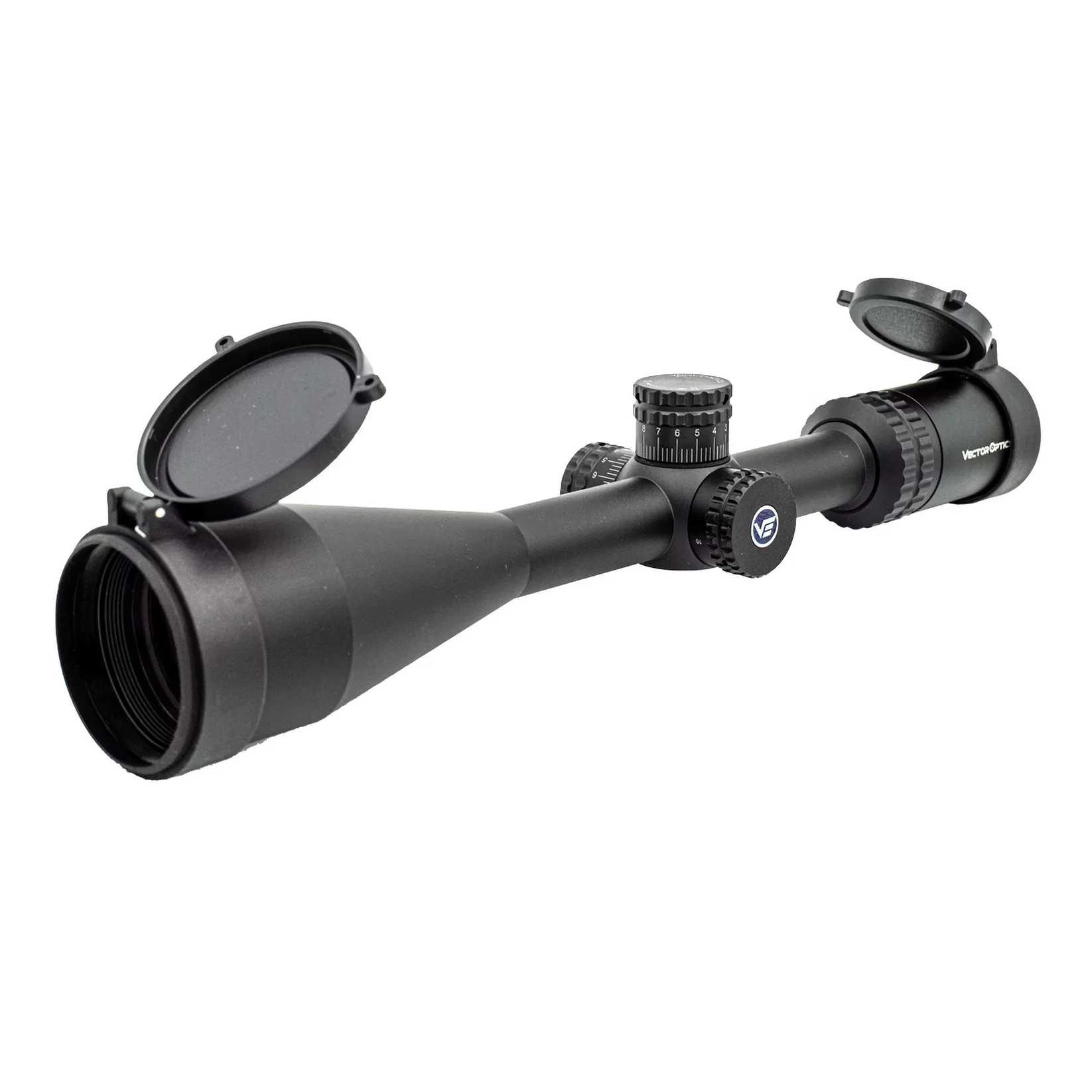
Vector Optics Hugo 6-24×50 SFP Scope
€115.00
Introducing the Vector Optics Hugo 6-24×50 Second Focal Plane Scope – a revered series making a triumphant return to the market, bridging the gap with its affordable pricing and top-tier optics.
Quality Glass, Affordable Price: Equipped with fully multi-coated lenses, the Hugo scope delivers edge-to-edge clarity, offering shooters a great image quality. Whether you’re a novice refining your skills or an experienced shooter seeking precision, the Hugo scope provides exceptional value without compromising on performance.
Long-Distance Target Shooting: With its larger magnification range of 6-24x, the Hugo scope is tailored for long-distance target shooting, providing shooters with the necessary clarity and precision to engage targets at extended ranges.
Deep Parallax Window: The Hugo scope’s 1″ tube offers a deep parallax window, similar to the narrow aperture of a camera lens. This unique feature ensures that targets remain consistently in view, enhancing your shooting experience and allowing for improved target acquisition and tracking, even at long distances.
Budget-Friendly Optic: Designed with affordability in mind, the Hugo scope caters to shooters looking for quality optics without breaking the bank. Offering exceptional performance at a fraction of the cost of high-end scopes, the Hugo series proves that quality optics can be accessible to all.
Specifications:
- Magnification: 6-24x
- Objective Lens Dia.: 50mm
- Ocular Lens Dia.: 38mm / 1.5 inch
- Exit Pupil: 8.3-2mm
- Optics Coating: Fully-multi coat
- Field of View: 15.8-4.0 feet @ 100 yds
- Eye Relief: 105-100mm / 4.1-3.9 inch
- Length: 360mm / 14.2 inch
- Weight: 660g / 23.3 ounce
- Tube Dia.: 25.4mm 1“ Monotube
- Click Value: 1/4 MOA
- Elevation Range: 40MOA
- Windage Range: 40MOA
- Parallax Setting: 10 yards to infinite
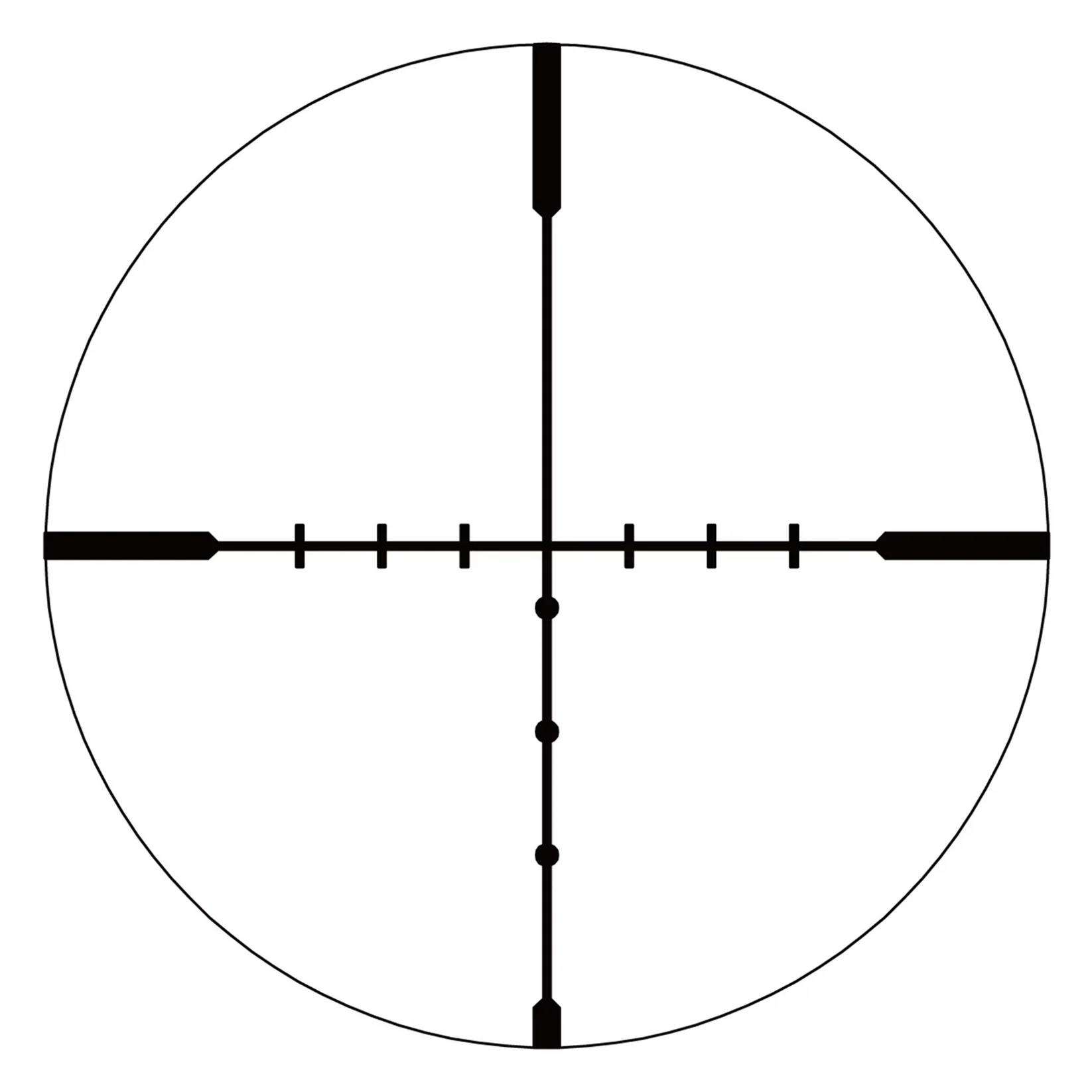
- Reticle: VOW-10BDC
- Illumination: None
- BDC & Ranging Reticle: Usage set at 10x power, suitable for big game, 22LR Rimfire, and varmint rifles with a maximum range of 600 yards
- Distance between objective lens part and middle turret: 58mm (2.3 inch)
- Length of middle turret part: 37mm (1.5 inch)
- Distance between middle turret part to power ring: 57mm (2.2 inch)
- Side focus marks: 10, 15, 25, 50, 100, 200, 500, and infinite yards
- Shock tested: To 750g and waterproof
- Fully nitrogen purged: To eliminate any fogging of the lenses internally
- High-quality 6061 T6 aircraft-grade aluminum
The Vector Optics Hugo 6-24×50 SFP Scope offers shooters unmatched performance and clarity at an affordable price point, making it the ideal choice for long-distance shooting enthusiasts and budget-conscious shooters alike.
Vector Optics Hugo 6-24×50 SFP Scope – Fully Multi-Coated Optics, 50mm Objective Lens and Premium Optical Construction
Vector Optics Hugo 6-24×50 SFP Scope – Optical Performance, Technical Specifications, Construction and Features
1. Introduction to the Vector Optics Hugo 6-24×50 SFP Scope
The Vector Optics Hugo 6-24×50 SFP Scope combines versatile optical magnification, fully multi-coated glass and durable aluminium construction in a practical sporting optics design. Developed by Vector Optics, this model is intended for customers seeking a variable-magnification optical instrument with a substantial objective lens and a conventional Second Focal Plane reticle.
With its 6-24x magnification range and 50mm objective lens, the instrument provides flexibility for different observation requirements. Furthermore, its fully multi-coated optical system contributes to image brightness, contrast and visual clarity.
The compact 25.4mm main tube and 6061-T6 aluminium housing provide a practical combination of structural durability and manageable weight.
2. Technical Specifications
- Brand: Vector Optics
- Model: Hugo 6-24×50 SFP
- Model number: SCOL-31
- Magnification: 6-24x
- Objective lens: 50mm
- Focal plane: Second Focal Plane (SFP)
- Reticle: VOW-10BDC
- Lens coating: Fully Multi-Coated (FMC)
- Tube diameter: 25.4mm / 1 inch
- Eye relief: 105-100mm
- Field of view at 100m: 5.26-1.33m
- Parallax adjustment: 10 yards to infinity
- Adjustment value: 1/4 MOA
- Elevation adjustment range: 40 MOA
- Windage adjustment range: 40 MOA
- Diopter compensation: -2 to +2
- Illumination: Not included
- Water resistance: IPX4
- Fog protection: Nitrogen-filled
- Shock resistance: Manufacturer-rated 750G
- Housing: 6061-T6 aluminium alloy
- Finish: Matte black
- Length: 363mm
- Weight: Approximately 660g
3. Fully Multi-Coated Optical System
Optical clarity is an important consideration when selecting sporting optics.
The Hugo incorporates fully multi-coated lenses designed to reduce unwanted reflections and improve light transmission.
Furthermore, the optical construction contributes to a balanced viewing experience, with attention given to contrast and image definition.
Its 50mm objective lens provides a substantial light-collecting surface, while the variable magnification offers flexibility across different viewing conditions.
4. Second Focal Plane Reticle Technology
The Second Focal Plane configuration maintains a consistent apparent reticle size as magnification changes.
This is an important characteristic for customers comparing different optical systems.
The VOW-10BDC reticle provides the model-specific reticle configuration.
Furthermore, the instrument features a conventional optical layout that will appeal to customers who prefer a familiar viewing arrangement.
5. Durable Aluminium Construction
The housing is manufactured from 6061-T6 aluminium alloy.
This material is widely used in precision equipment because of its useful combination of mechanical strength, manageable weight and corrosion resistance.
Additionally, the matte-black finish provides a professional appearance.
The nitrogen-filled construction contributes to internal fog protection, while the IPX4 rating provides protection against water splashes under specified conditions.
6. Mechanical Design and Included Accessories
The manufacturer specifies a 25.4mm main tube, turret-lock functionality and mechanical adjustment ranges.
The original package is listed as including a pair of compatible 25.4mm Weaver rings, protective flip-up caps, a sunshade and a cleaning cloth. Package contents should be confirmed with the seller before purchase.
7. Understanding Other Optical Products and Related Search Terms
Customers researching sporting optics may also encounter the following products, retailers and technical terms:
Optical products and competing brands:
- minotaur 10-50×60
- vector minotaur 10 50×60
- swfa ss 10×42
- delta stryker
- delta optics
- element optics
- schmidt and bender scopes
- falcon optics
- zco optics
- tpo scopes
- hikmicro stellar sx60l thermal scope
- best digital night vision scope
- best night vision scope
- dnt optics review
- dnt thermal scope review
- tnc225r review
- swfa scope review
- march riflescope adjustments argon filled d42hv56wfml g2
Optical retailers:
- optics warehouse
- optic warehouse
- optics planet
- red dot uk
Mounting and accessory terminology:
- picatinny
- picatinny dimensions
- picatinny scope base
- 1913 rail
- tactical rail
- scope mount
- parker hale scope rings for sale
- difference between weaver and picatinny rail
- what is a picatinny rail
Additional industry search terms:
- sniper hider
- bipod for rifle
- best rifle bipod for long range shooting
- ir illuminator
- zero stop scope
- what is zero stop on a scope
- scope illumination
- what is parallax in optics
- what is parallax in a scope
- what is parallax in a rifle scope
- ballistic solver
- chrony chronograph
- scope torque wrench
- best scope for air rifle
- what is the moa of a scope
These terms represent broader optical equipment research and are not additional features or accessories included with this particular product.
8. Why Consider the Vector Optics Hugo?
The Hugo 6-24×50 SFP offers a combination of variable magnification, fully multi-coated optics, a 50mm objective lens and a durable aluminium housing.
Its conventional optical configuration and practical construction make it an interesting option for customers researching sporting optics.
Furthermore, its protective features and manufacturer-supported product documentation contribute to its overall appeal.
Optical Engineering, Image Quality, Construction, Durability, Maintenance, Practical Applications and Frequently Asked Questions
Advanced Optical Engineering and Image Quality
Understanding Optical Performance
The quality of an optical instrument is determined by several interconnected characteristics. These include glass quality, lens alignment, light transmission, contrast, resolution and the consistency of the image presented to the observer.
A well-designed optical system should provide a balanced viewing experience rather than concentrating on a single specification.
Furthermore, optical performance can change depending on environmental conditions. Atmospheric haze, humidity, dust and temperature variations may influence the appearance of distant objects.
Consequently, an instrument should be evaluated according to its complete optical construction and intended application.
Image Resolution and Fine Detail
Resolution describes the ability of an optical system to distinguish individual details.
Higher resolution allows closely spaced visual features to appear more distinct. However, this characteristic depends on the quality of the complete optical assembly.
Glass composition, manufacturing tolerances and internal alignment all contribute.
Furthermore, the amount of available light influences how clearly fine details can be perceived.
A carefully manufactured optical system is therefore valuable for customers who appreciate visual consistency and clarity.
Contrast and Image Definition
Contrast refers to the difference between light and dark areas within an image.
Good contrast makes it easier to distinguish individual objects from their backgrounds.
Furthermore, balanced contrast can improve the appearance of fine details and natural colours.
However, excessively strong contrast may sometimes make subtle visual information more difficult to appreciate.
The objective should therefore be a natural and comfortable image.
Colour Reproduction
Colour reproduction contributes significantly to the overall viewing experience.
Accurate colour presentation helps distinguish different objects and environmental features.
For example, outdoor observation may involve identifying variations in vegetation, terrain and natural surroundings.
Furthermore, optical glass and surface treatments influence how different wavelengths of light are transmitted.
The surrounding illumination also contributes to the final appearance.
Understanding Light Transmission
Light transmission describes the amount of incoming light that passes through an optical system.
Every glass surface can produce some reflection and transmission loss.
Consequently, optical coatings are used to manage unwanted reflections.
Furthermore, the number and arrangement of optical elements influence the overall result.
A carefully designed system aims to provide a useful balance between brightness, contrast and clarity.
The Importance of Optical Coatings
Optical coatings are specialized surface treatments applied to glass.
Their primary purpose is to manage reflection and improve light transmission.
Furthermore, they can contribute to image contrast and reduce unwanted glare.
However, coating quality depends on manufacturing processes and material selection.
Proper maintenance is equally important because scratches and contamination may affect the viewing experience.
Image Uniformity
Image uniformity concerns the consistency of visual quality throughout the viewing area.
A well-balanced optical system should present a reasonably consistent image.
Furthermore, differences in sharpness, brightness and distortion can influence user satisfaction.
Manufacturing precision contributes to this consistency.
Understanding Magnification
Magnification describes how large an observed subject appears through an optical instrument compared with unaided viewing.
Different magnification levels provide different viewing experiences.
Furthermore, increased magnification generally reduces the visible field of view.
This relationship is important because a larger image does not automatically contain more information.
Optical resolution remains essential.
Why Higher Magnification Is Not Always Better
Higher magnification can make distant objects appear larger.
However, it can also make image movement more noticeable and reduce the visible area.
Furthermore, environmental disturbances may become more apparent.
Consequently, optical instruments should be evaluated according to practical viewing requirements rather than maximum magnification alone.
Field of View and Observation Comfort
Field of view describes the amount of visible area presented through an optical instrument.
A wider field makes it easier to observe larger surroundings.
Conversely, a narrower field provides a more restricted image.
Furthermore, viewing comfort depends on eye position, optical alignment and individual eyesight.
These characteristics contribute to the overall experience.
Optical Focus and Individual Viewing Requirements
Understanding Optical Focus
Focus describes the adjustment required to produce a clear image.
Different observation distances may require different focus conditions.
Furthermore, optical systems are designed with particular adjustment ranges.
A correctly focused image should appear comfortable and clearly defined.
Diopter Compensation
Diopter compensation accommodates differences in individual eyesight.
It allows the observer to establish a comfortable viewing reference.
However, it does not replace prescription eyewear or correct every visual condition.
Manufacturer instructions should be followed when making adjustments.
Eye Relief and Comfort
Eye relief describes the distance between the eye and the optical viewing surface at which the complete image can be comfortably observed.
Appropriate eye relief contributes to viewing comfort.
Furthermore, users who wear glasses may have different preferences from those who do not.
An appropriate viewing position should be established without forcing the eye against the instrument.
Reducing Visual Fatigue
Extended observation can produce eye fatigue.
Consequently, regular breaks are recommended.
Furthermore, comfortable positioning and suitable environmental lighting can improve the experience.
Users should avoid prolonged observation when experiencing discomfort.
Mechanical Construction and Material Quality
Understanding Aluminium Alloy Construction
Aluminium alloys are widely used in precision equipment.
Their popularity comes from a combination of strength, manageable weight and manufacturing versatility.
Furthermore, different alloy compositions provide different mechanical characteristics.
The quality of the finished housing depends on material selection, machining and finishing procedures.
The Importance of 6061-T6 Aluminium
6061-T6 aluminium is a widely used engineering material.
Its properties make it suitable for equipment requiring a useful balance between strength and weight.
Furthermore, the material can be machined into precise shapes.
The T6 designation identifies a particular heat-treatment condition.
Consequently, it should not be confused with a generic description of all aluminium materials.
Manufacturing Precision
Precision manufacturing involves controlling dimensional variations during production.
This is particularly important in equipment containing optical and mechanical components.
Furthermore, accurate manufacturing contributes to consistent assembly and mechanical movement.
Quality control helps ensure that finished products meet their intended specifications.
Structural Protection
An external housing protects internal components from ordinary environmental exposure.
However, protection depends on the quality of the construction and the conditions under which the instrument is used.
Strong impacts can still cause damage.
Consequently, careful handling remains important.
Mechanical Adjustment Consistency
Mechanical controls contribute to the overall user experience.
Their movement and resistance should remain consistent with the manufacturer’s intended design.
Furthermore, excessive force should never be applied.
If a control becomes unusually stiff or inconsistent, professional assessment may be appropriate.
Surface Finishing
A suitable external finish contributes to appearance and surface protection.
Furthermore, it helps create a professional presentation.
However, finishes can become worn through repeated contact or unsuitable cleaning.
Protective storage can help preserve their appearance.
Environmental Protection and Outdoor Durability
Understanding Water Resistance
Water resistance describes the degree of protection provided against specified water exposure.
Different ratings represent different testing conditions.
Consequently, users should not assume that every water-resistant instrument can withstand prolonged immersion.
Manufacturer documentation should always be consulted.
Understanding Internal Fogging
Fogging can occur when moisture enters an optical system or when temperature differences produce condensation.
Internal fogging can interfere with image clarity.
Furthermore, environmental sealing and suitable internal filling methods are used to reduce this risk.
If persistent internal condensation develops, professional servicing may be required.
Protection Against Dust
Dust can accumulate on external surfaces.
Furthermore, small particles may affect mechanical movement or optical clarity if handled incorrectly.
Loose particles should be removed using suitable cleaning tools.
Rubbing dry dust across delicate glass surfaces should be avoided.
Temperature Changes
Optical equipment may experience different temperatures during transportation and outdoor use.
Sudden changes can produce temporary condensation.
Consequently, gradual temperature adjustment may help reduce this problem.
Equipment should also be protected against excessive heat.
Humidity and Storage Conditions
High humidity can contribute to moisture-related problems.
Furthermore, unsuitable storage may affect protective materials over time.
A clean, dry and ventilated location is generally preferable.
Protection Against Accidental Impacts
Precision equipment should be protected against drops and impacts.
Even when an external housing appears undamaged, a strong impact may affect internal alignment.
Consequently, suitable protective packaging is recommended.
Practical Applications and Everyday Ownership
General Sporting Observation
Optical equipment can support different recreational observation activities.
Its usefulness depends on the user’s requirements and the environmental conditions.
Furthermore, a comfortable viewing arrangement can improve the overall experience.
Outdoor Recreation
Outdoor recreation provides opportunities to observe landscapes and natural surroundings.
Suitable equipment should be selected according to portability, environmental protection and personal preferences.
Furthermore, responsible handling helps preserve the product.
Educational Observation
Optical instruments can be useful in educational settings.
Students may use them to explore natural environments and understand visual details.
Furthermore, supervised observation can encourage curiosity and scientific interest.
Equipment Transportation
Transportation introduces risks associated with accidental impacts and movement.
Consequently, protective packaging should be used.
Furthermore, the instrument should be secured appropriately during travel.
Storage Between Uses
After use, equipment should be inspected and cleaned where necessary.
Furthermore, protective covers can reduce dust accumulation.
A suitable storage location helps preserve the external finish and internal components.
Maintenance and Long-Term Care
Establishing a Maintenance Routine
Regular inspection is an important part of responsible ownership.
The exterior should be checked for visible damage, contamination and unusual changes.
Furthermore, cleaning should be performed only when necessary.
Excessive handling of optical surfaces should be avoided.
Cleaning the Exterior Housing
The exterior can be cleaned using a soft, suitable cloth.
Furthermore, abrasive materials should not be used.
Suitable cleaning products should be selected according to the manufacturer’s recommendations.
Cleaning Optical Surfaces
Optical glass requires careful treatment.
Loose particles should be removed before wiping.
Otherwise, dust and small debris may cause scratches.
Suitable optical cleaning materials should be used.
Avoiding Harsh Chemicals
Certain chemicals may affect protective coatings and external finishes.
Consequently, household solvents should not be used unless expressly approved.
Furthermore, cleaning products should never be applied directly to internal openings without manufacturer guidance.
Maintaining Protective Accessories
Protective covers and carrying cases should also be inspected.
Damaged padding may provide reduced protection.
Furthermore, contaminated covers should be cleaned appropriately.
Professional Servicing
Internal optical repairs require appropriate technical knowledge.
Attempting unauthorized disassembly may cause additional damage.
Consequently, professional servicing is preferable when an internal problem is suspected.
Preserving Long-Term Appearance
A clean exterior contributes to the overall presentation of precision equipment.
Furthermore, avoiding unnecessary contact with abrasive surfaces can reduce cosmetic wear.
Appropriate storage is therefore important.
Purchasing Considerations and Product Value
Understanding Product Specifications
Technical specifications provide information about the intended characteristics of an instrument.
However, individual specifications should not be considered independently.
Furthermore, customers should verify the exact model and manufacturer documentation before purchasing.
Comparing Different Products
Different optical products are designed for different applications.
Some emphasize portability, while others prioritize specialized electronic features or particular optical characteristics.
Consequently, comparisons should focus on actual requirements.
Understanding Included Accessories
Customers should confirm the contents of the original package.
Accessories shown in promotional images may not automatically be included.
Furthermore, used products may have different package contents from new retail versions.
Warranty Considerations
Warranty conditions depend on the manufacturer, seller and purchase circumstances.
Furthermore, pre-owned products may have different coverage arrangements.
Customers should confirm all applicable conditions before purchase.
Long-Term Value
Long-term value depends on product condition, authenticity, maintenance history and market demand.
Furthermore, the availability of newer alternatives may influence resale prices.
Future resale value cannot be guaranteed.
Importance of Authenticity
Authenticity helps establish the identity of the product.
Furthermore, accurate identification supports correct compatibility and specification checks.
Customers should request appropriate documentation where available.
Frequently Asked Questions
1. What is the main purpose of this optical instrument?
It is designed to provide magnified viewing through an optical system, allowing users to observe subjects with greater apparent detail.
2. Why is optical clarity important?
Optical clarity contributes to image definition, contrast and overall viewing comfort.
3. Does magnification determine image quality?
No. Magnification is only one factor. Glass quality, optical coatings and environmental conditions also influence image quality.
4. What is resolution?
Resolution describes the ability to distinguish closely spaced visual details.
5. What is contrast?
Contrast describes differences in brightness between areas of an image.
6. Why are optical coatings applied?
They help manage unwanted reflections and improve light transmission.
7. Can optical coatings become damaged?
Yes. Scratches, abrasive cleaning and unsuitable chemicals can damage delicate surfaces.
8. Why is aluminium used in equipment construction?
It offers a useful combination of strength, weight and manufacturing versatility.
9. What does 6061-T6 represent?
It identifies an aluminium alloy and a specific heat-treatment condition.
10. Can equipment be damaged by dropping it?
Yes. Impacts may affect external and internal components.
11. Why is environmental protection important?
It helps reduce the effects of moisture, dust and other environmental contaminants.
12. Does water resistance mean waterproof under every condition?
No. Protection ratings apply to specified testing conditions.
13. What causes internal condensation?
Temperature differences and moisture can contribute to condensation.
14. How should equipment be stored?
A clean, dry location away from excessive heat and direct sunlight is generally preferable.
15. Can ordinary household cleaning products be used?
Not automatically. Cleaning products should be compatible with the materials and approved by the manufacturer.
16. Why should optical surfaces be cleaned carefully?
Improper cleaning can cause scratches and affect image quality.
17. Can paper towels be used on optical glass?
They are generally unsuitable because their fibres and particles may scratch delicate surfaces.
18. What is eye relief?
It describes the distance at which an observer can comfortably receive the complete visible image.
19. Why is diopter adjustment useful?
It accommodates differences in individual eyesight.
20. Can optical equipment cause eye fatigue?
Extended observation may contribute to fatigue. Regular breaks and comfortable positioning are recommended.
21. Why is manufacturing precision important?
It contributes to dimensional consistency and the correct assembly of internal components.
22. What should be done if a mechanical control becomes stiff?
Avoid applying excessive force and consult an appropriate technician.
23. Can professional servicing restore damaged equipment?
Some problems can be repaired, depending on their nature and severity.
24. Why should the original specifications be checked?
They provide a reliable reference for understanding the product’s actual characteristics.
25. Are accessories always included?
No. Only accessories expressly confirmed by the seller should be considered included.
26. Does a used product automatically retain its original warranty?
Not necessarily. Warranty transferability depends on the applicable terms.
27. Why are current photographs important?
They help establish the actual product’s appearance and visible condition.
28. Can photographs establish internal condition?
Not completely. Internal issues may require professional inspection.
29. What influences resale value?
Condition, authenticity, product age, maintenance and market demand all contribute.
30. What is the most important aspect of long-term ownership?
Responsible handling, appropriate cleaning, suitable storage and regular inspection all contribute to long-term preservation.
Final Assessment
Quality optical equipment should be evaluated through its complete design, construction, image characteristics and intended applications.
Furthermore, responsible maintenance contributes significantly to preserving its appearance and functionality.
Customers should verify the exact specifications, package contents, warranty arrangements and product condition before making a purchase.
Ultimately, informed product selection and responsible ownership provide the foundation for a satisfactory long-term experience.
Be the first to review “Vector Optics Hugo 6-24×50 SFP Scope”
Related products

Reviews
There are no reviews yet.