
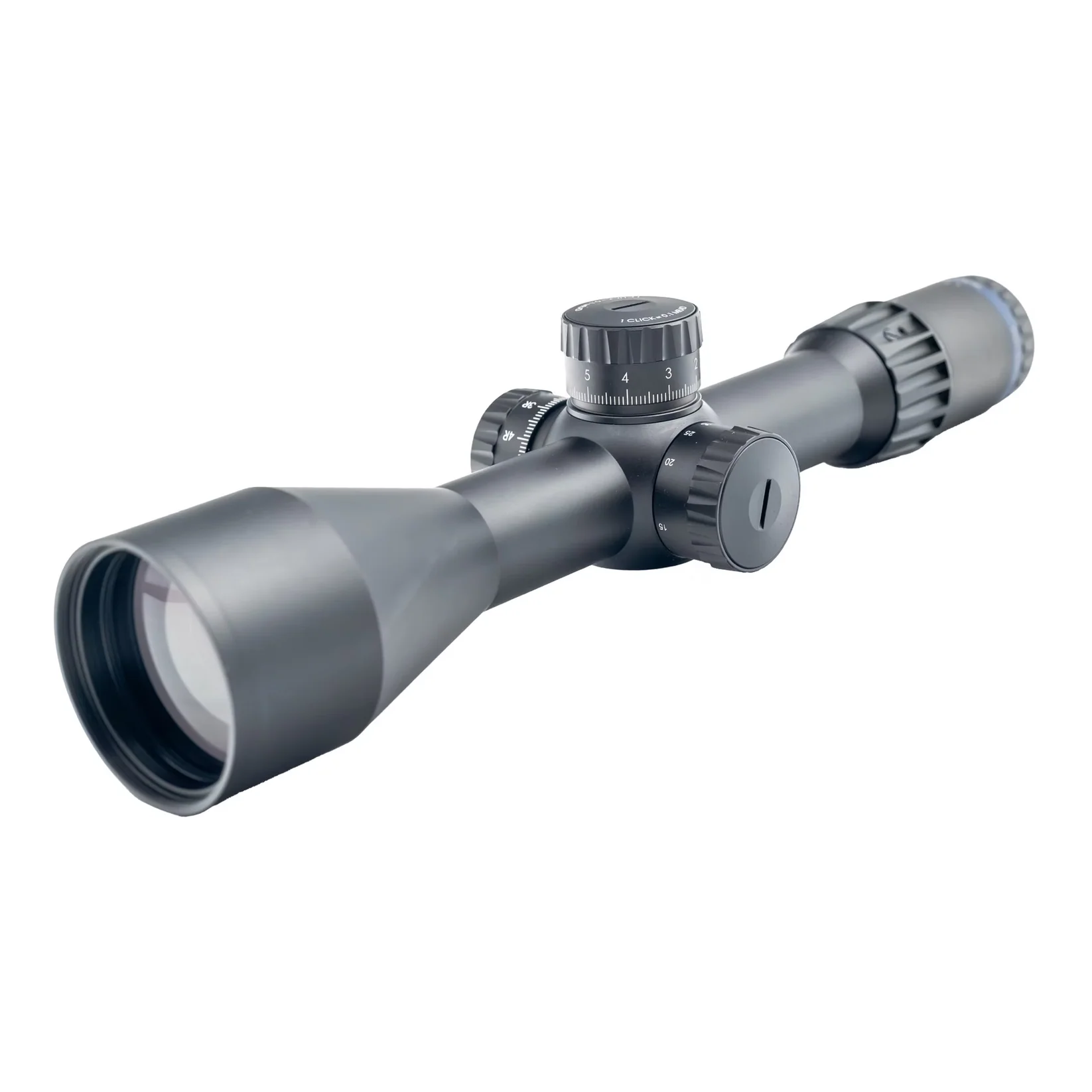
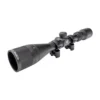
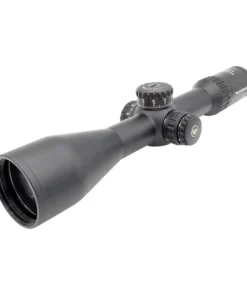
Vector Optics Taurus GEN2 34mm 3-24×56 FFP Scope
€300.00
Unlock Versatility and Precision with the Vector Optics Taurus 34mm 3-24×56 FFP Scope (SCFF-33), the ultimate companion for hybrid shooters seeking unparalleled performance across various shooting scenarios.
Unmatched Versatility: Engineered for hybrid shooters who demand excellence in every situation, the Taurus scope boasts a remarkable 34mm tube diameter, ensuring optimal light transmission for crisp, clear imagery in any lighting condition. Its compact design, despite its powerful specifications, makes it a versatile choice for shooters on the move.
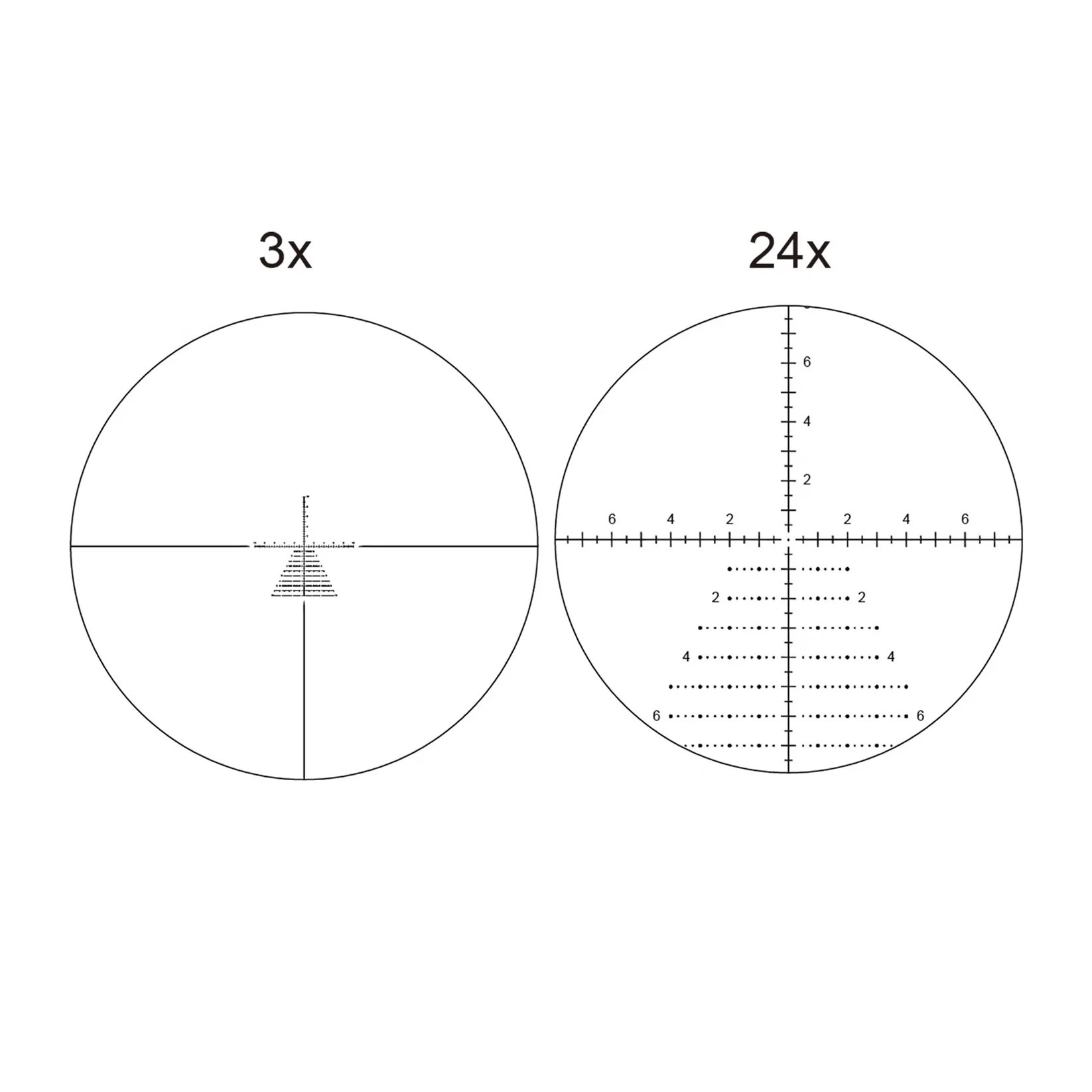
First Focal Plane Precision: Elevate your shooting game with the first focal plane (FFP) reticle, providing consistent subtension at all magnification levels. With FFP, the reticle’s size adjusts proportionally to the target, ensuring accurate holdovers and ranging at any zoom level, empowering shooters with unmatched precision and confidence.
Speed and Accuracy Unleashed: With a zoom range from 3x to 24x, the Taurus scope offers the flexibility to adapt to various shooting scenarios seamlessly. While it excels in high-value, flexible situations, its impressive magnification range makes it a formidable choice for speed shooting, ensuring rapid target acquisition and precise shot placement, even at long distances.
Unrivalled Focus: Experience unmatched clarity and focus with the Taurus scope’s ability to focus at as close as 10 yards, catering to a wide range of shooting applications. Whether you’re engaging targets up close or at extended ranges, this scope delivers uncompromising performance, allowing you to stay on target with confidence.
Sleek Design, Exceptional Performance: Crafted from premium 6061 T6 aluminum alloy, the Taurus scope combines durability with elegance. Its matte black finish exudes sophistication, while its compact profile complements modern compact firearms and bullpup platforms, enhancing both aesthetics and functionality.
Elevate your shooting experience with the Vector Optics Taurus 34mm 3-24×56 FFP Scope – where versatility meets precision, and performance knows no bounds.
Specifications:
- Magnification: 3-24x
- Objective Lens: 56 mm
- Focal Plane: First Focal Plane
- Eye Relief: 95 mm
- Exit Pupil: 18.6-2.3 mm
- Lens Coating: Fully Multi-coated
- Linear Field of View @ 100 yd: 41.1-5.13 ft @ 100 yards
- Linear Field of View @ 100 m: 13.69-1.71 m @ 100 meters
- Angular Field of View: 7.84-0.97°
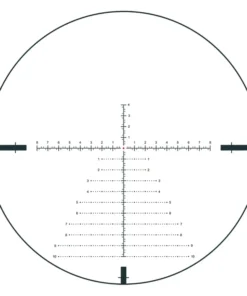
- Reticle: VTA-5 MIL
- Tube Dia: 34 mm
- Side Focus: 10 yards to Infinity
- Click Value: 1/10 MIL
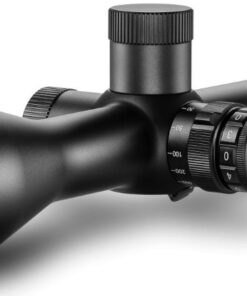
- Turret Function: Zero Stop
- Elevation Adjustment Range: 30 MIL
- Windage Adjustment Range: 20 MIL
- Diopter Compensation: +2 to -2
- Waterproof: IP67
- Fogproof: Nitrogen Filled
- Shockproof: 1000 G
- Housing Material: 6061 T6 Aluminum Alloy
- Finish: Matte Black
- Length: 348 mm / 13.9 in
- Weight (net): 1007 g / 35.5 oz
Recommended Mounts
For optimal performance, it is recommended to use adjustable mounts when purchasing the Sentinel 5-25×50 FFP Long Range Target Scope, ensuring precise alignment and stability on your rifle. See Available Compatible mounts here: Adjustable 30mm Mounts
Vector Optics Taurus GEN2 34mm 3-24×56 FFP Scope – ED Glass, First Focal Plane Reticle, 34mm Tube and Premium Optical Clarity
Vector Optics Taurus GEN2 34mm 3-24×56 FFP Scope – Advanced Optical Engineering and Premium Construction
Vector Optics Taurus GEN2 3-24×56 FFP – Premium Optical Performance
The Vector Optics Taurus GEN2 34mm 3-24×56 FFP Scope combines advanced optical engineering, versatile magnification and durable construction in a premium riflescope designed for demanding sporting and recreational observation applications.
Manufactured by Vector Optics, this second-generation model features an Extra-Low Dispersion (ED) optical system, fully multi-coated lenses and a First Focal Plane (FFP) reticle. Furthermore, its substantial 34mm main tube provides an advanced mechanical platform.
With variable magnification ranging from 3x to 24x, this model offers flexibility across different viewing requirements. Its 56mm objective lens also contributes to its optical design, while the VTA-5 MIL reticle provides a clearly defined reference pattern.
Technical Specifications
- Brand: Vector Optics
- Model: Taurus GEN2 / Tauron GENII
- Model number: SCFF-33
- Magnification: 3-24x
- Objective lens: 56mm
- Main tube diameter: 34mm
- Focal plane: First Focal Plane (FFP)
- Reticle: VTA-5 MIL
- Glass: Extra-Low Dispersion (ED)
- Lens coating: Fully multi-coated
- Eye relief: 95mm
- Field of view at 100m: 13.69-1.71m
- Parallax adjustment range: 10 yards to infinity
- Adjustment unit: 1/10 MIL
- Elevation adjustment range: 30 MIL
- Windage adjustment range: 20 MIL
- Zero-stop feature: Yes
- Illumination: Not included
- Waterproof rating: IP67
- Fog protection: Nitrogen-filled
- Housing: 6061-T6 aluminium alloy
- Finish: Matte black
- Length: 348mm
- Weight: Approximately 1,007g
Advanced ED Glass and Optical Clarity
One of the most important features of this optical instrument is its Extra-Low Dispersion glass.
ED glass is designed to reduce chromatic aberration, which can otherwise produce unwanted colour fringing around contrasting edges.
Consequently, improved colour fidelity and image definition can be achieved.
Additionally, fully multi-coated optical surfaces contribute to light transmission and contrast.
These characteristics make the instrument an appealing option for customers who value image clarity, optical consistency and refined glass technology.
First Focal Plane Reticle Technology
The First Focal Plane configuration is an important characteristic of this model.
The reticle changes apparent size as magnification changes, maintaining its proportional relationship with the magnified image.
Furthermore, the VTA-5 MIL reticle provides a structured optical reference pattern.
This design distinguishes the product from conventional Second Focal Plane configurations, where the reticle maintains a more consistent apparent size.
Durable 34mm Main Tube Construction
The 34mm main tube provides a substantial structural platform.
Its housing is manufactured from 6061-T6 aluminium alloy, a material commonly selected for its combination of strength, manageable weight and corrosion resistance.
Furthermore, the matte-black finish provides a professional appearance.
Zero-Stop System and Mechanical Features
The integrated zero-stop feature is an important part of the mechanical design.
It provides a defined reference point within the elevation adjustment system.
Additionally, the windage adjustment incorporates a turret-lock feature.
The adjustment system is specified in 1/10 MIL increments, providing a consistent measurement format for optical reference and evaluation.
Parallax Adjustment and Optical Focus
Parallax is an optical phenomenon involving apparent movement between the reticle and viewed image when the observer’s eye position changes.
The side-focus system provides a specified adjustment range from 10 yards to infinity.
Furthermore, diopter compensation accommodates different individual eyesight requirements.
These features contribute to a more adaptable viewing experience.
Picatinny Rail and Scope Mount Compatibility
Customers researching a Picatinny scope base, 1913 rail, tactical rail, or scope mount should verify mounting compatibility before purchasing additional equipment.
A Picatinny rail is a standardized mounting interface commonly associated with a 1913 profile.
The difference between Weaver and Picatinny rail systems concerns their dimensional and interface specifications. Therefore, mounting compatibility should never be assumed from appearance alone.
Searches for Picatinny dimensions, what is a Picatinny rail, and difference between Weaver and Picatinny rail are relevant when researching mounting accessories.
Weather Protection and Nitrogen-Filled Construction
The IP67 protection rating indicates resistance to dust ingress and specified water exposure.
Furthermore, nitrogen-filled construction helps reduce internal fogging caused by moisture.
These characteristics contribute to durability in changing outdoor environments.
Why Choose the Vector Optics Taurus GEN2?
This model combines advanced ED glass, variable magnification, a first focal plane reticle and durable aluminium construction.
Its substantial objective lens, fully multi-coated optical surfaces and refined mechanical features make it an attractive option for customers seeking a premium optical instrument.
With its professional matte-black appearance and versatile optical specification, the Vector Optics Taurus GEN2 represents an interesting addition to the modern sporting optics market.
Optical Quality, Glass Technology, Image Clarity, Mechanical Construction, Durability, Maintenance and Frequently Asked Questions
Advanced Optical Engineering and Image Quality
Understanding Modern Optical Technology
Optical instruments are designed to collect, transmit, and present visual information with clarity and consistency. Their effectiveness depends on several interacting elements, including glass quality, lens geometry, surface treatments, internal alignment, and mechanical construction.
Furthermore, optical performance should not be judged by magnification alone. A higher magnification setting does not automatically produce a clearer image. Instead, the quality of the complete optical system determines how much useful visual information can be presented.
The relationship between resolution, contrast, brightness, and colour reproduction is particularly important.
Consequently, a well-designed optical instrument should provide a balanced viewing experience across its available magnification range.
Image Resolution and Detail Recognition
Resolution describes the ability of an optical system to distinguish closely spaced details.
Several factors influence this characteristic, including glass quality, manufacturing tolerances, lens alignment, and environmental conditions.
Furthermore, resolution may appear different under bright daylight compared with dimmer surroundings.
Atmospheric conditions can also influence perceived detail.
For example, heat shimmer, airborne particles, humidity, and changing temperatures may reduce visual clarity.
Therefore, an instrument’s published specifications should be considered alongside realistic environmental expectations.
Contrast and Image Definition
Contrast refers to the difference in brightness between different parts of an image.
Good contrast helps distinguish objects from their surroundings.
Furthermore, contrast contributes to the perceived sharpness of fine details.
Optical coatings, internal light management, and glass characteristics can influence this performance.
However, excessive brightness does not necessarily produce better contrast.
A balanced image is generally more comfortable and informative.
Colour Reproduction
Accurate colour reproduction contributes to a natural viewing experience.
Different optical materials can influence the way wavelengths of light pass through a lens system.
Consequently, advanced glass formulations are frequently selected to improve colour consistency.
Colour accuracy is particularly noticeable when observing objects against contrasting backgrounds.
However, the appearance of colours can still vary with lighting conditions and the observer’s visual characteristics.
Understanding Chromatic Aberration
Chromatic aberration occurs when different wavelengths of light are not focused at exactly the same position.
This can create coloured fringes around high-contrast edges.
Furthermore, the effect may become more noticeable when observing fine details against bright backgrounds.
Specialized optical glass helps reduce this phenomenon.
Nevertheless, the overall result depends on the complete lens design rather than one material alone.
Lens Coatings and Light Transmission
Modern optical systems frequently incorporate several protective and performance-oriented surface treatments.
These coatings influence how light interacts with the glass surfaces.
Furthermore, they can reduce unwanted reflections and improve transmission.
Different coating technologies are designed to address different optical requirements.
The quality and consistency of their application are important.
Consequently, the number of coating layers should not be treated as the only measure of optical quality.
Fully Multi-Coated Optical Surfaces
Fully multi-coated optical surfaces have multiple treatment layers applied to relevant air-to-glass interfaces.
These coatings help manage reflection losses.
Furthermore, improved transmission can contribute to image brightness and contrast.
However, coating performance also depends on manufacturing quality and the characteristics of the underlying glass.
Proper cleaning and storage help preserve the original surface condition.
Edge Definition and Image Uniformity
Image quality should remain reasonably consistent throughout the visible field.
Differences in sharpness between the centre and outer regions may influence the viewing experience.
Furthermore, optical distortion can become more noticeable under certain conditions.
A carefully designed optical system aims to provide a balanced presentation.
However, individual perception and viewing conditions can influence how these characteristics are experienced.
Low-Light Viewing Characteristics
Light availability changes throughout the day.
Consequently, optical performance may appear different during bright daylight, overcast conditions, and twilight.
The diameter of the objective lens is one factor influencing the instrument’s light-gathering potential.
However, exit pupil, optical transmission, magnification, and observer characteristics also matter.
Therefore, objective diameter alone does not establish how effectively an instrument performs in low light.
Eye Comfort During Extended Observation
Comfort is an important part of the overall optical experience.
Eye position, eye relief, focus adjustment, and viewing duration can influence fatigue.
Furthermore, an appropriate viewing position helps maintain a consistent image.
Users should avoid forcing an uncomfortable posture.
Regular breaks are beneficial during extended observation.
Understanding Magnification and Viewing Flexibility
Variable Magnification Explained
Variable magnification allows an observer to change the apparent size of a viewed image.
This provides flexibility when examining objects at different distances or under changing observation requirements.
However, magnification also influences the field of view.
As magnification increases, the visible area generally becomes narrower.
Furthermore, image movement may appear more pronounced at higher settings.
Consequently, the most appropriate setting depends on the intended observation task.
Understanding the Field of View
Field of view describes the width of the visible area at a specified distance.
It is commonly expressed as a linear measurement at a reference distance or as an angular value.
A wider field can make it easier to observe larger surrounding areas.
Conversely, a narrower field provides a more restricted visual presentation.
These differences should be considered when evaluating an optical instrument.
Why Magnification Does Not Equal Resolution
Magnification enlarges the apparent image.
Resolution determines how much detail can actually be distinguished.
Furthermore, the optical system must provide sufficient image quality to support increased magnification.
If the original image lacks sufficient detail, enlargement cannot create information that was never captured.
Consequently, optical quality is more important than simply choosing the highest available magnification.
Image Stability and Environmental Conditions
Environmental conditions can influence perceived image stability.
Air movement, atmospheric turbulence, and vibration may affect observation.
Furthermore, the surrounding environment can produce visible distortion.
A stable viewing position and suitable environmental conditions can improve comfort.
Diopter Adjustment and Individual Vision
Diopter adjustment accommodates differences in individual eyesight.
It helps establish a clear reticle or internal reference appearance for the observer.
However, it does not replace prescription eyewear or correct every vision problem.
The manufacturer’s instructions should be followed when making adjustments.
Eye Relief and Viewing Comfort
Eye relief describes the distance between the observer’s eye and the optical viewing surface at which the image can be comfortably viewed.
Appropriate eye relief is particularly important when using equipment for extended periods.
Furthermore, individual facial characteristics and eyewear may influence comfort.
A consistent viewing position can help reduce unnecessary eye strain.
Mechanical Construction and Material Quality
Aluminium Alloy Engineering
Aluminium alloys are widely used in precision equipment because they provide a useful balance between strength, weight, and corrosion resistance.
Different alloy compositions offer different mechanical characteristics.
Furthermore, heat treatment and manufacturing processes influence the finished material.
A properly manufactured housing can protect delicate internal optical components from normal environmental exposure.
However, no housing should be regarded as completely immune to impact damage.
Understanding 6061-T6 Aluminium
6061-T6 is a commonly used aluminium alloy.
Its mechanical properties make it suitable for various engineering and sporting applications.
The T6 designation refers to a specific heat-treatment condition.
Furthermore, the material can be machined and finished to achieve precise dimensions.
Surface treatments may provide additional protection against environmental exposure.
Mechanical Precision and Manufacturing Tolerances
Precision manufacturing involves controlling dimensional variations during production.
In optical instruments, this can influence the alignment of internal components and the consistency of mechanical movement.
Furthermore, manufacturing tolerances contribute to the reliability of adjustment systems.
Quality control is therefore an important aspect of finished product consistency.
Turret Construction and Mechanical Feel
Adjustment controls should provide a consistent mechanical experience.
Their movement, indexing, and resistance contribute to the user’s perception of product quality.
Furthermore, mechanical components should remain protected from contamination and unnecessary force.
If an adjustment becomes unusually stiff or inconsistent, professional assessment may be appropriate.
Protective Sealing
Sealing helps protect internal components against environmental contaminants.
Different products use different sealing arrangements.
Furthermore, their effectiveness depends on manufacturing quality and proper maintenance.
Customers should follow the manufacturer’s instructions regarding immersion, cleaning, and environmental exposure.
Resistance to External Conditions
Outdoor equipment may experience temperature changes, humidity, dust, and rainfall.
Consequently, suitable environmental protection contributes to long-term reliability.
However, environmental ratings should always be interpreted according to their official testing conditions.
A protection rating does not mean that equipment is indestructible.
Understanding Optical Focus and Parallax
What Is Parallax?
Parallax is an apparent displacement between two visual references when the observer changes viewing position.
In optical systems, this can occur when the image and internal reference do not appear to occupy the same optical plane.
Furthermore, the effect may become more noticeable under particular viewing conditions.
Understanding this concept helps explain why some optical instruments incorporate adjustable focus systems.
Why Parallax Matters in Optical Instruments
Parallax can influence the consistency of the viewing experience.
The apparent relationship between the observed image and internal reference may change as the observer’s eye position changes.
Consequently, appropriate optical adjustment contributes to a more consistent presentation.
However, users should follow manufacturer guidance rather than assume that one adjustment method applies to every instrument.
Focus Adjustment and Image Clarity
Focus adjustment helps improve the clarity of the observed image.
It compensates for differences in viewing conditions and optical distance.
Furthermore, the correct focus contributes to a more comfortable viewing experience.
Unnecessary repeated adjustments should be avoided when the image is already clear.
Understanding the Infinity Setting
An infinity setting represents a focus condition intended for very distant subjects.
However, actual optical performance may still be influenced by atmospheric conditions.
Furthermore, temperature and environmental factors can influence the appearance of distant objects.
Consequently, infinity should be understood as an optical reference rather than a guarantee of unlimited clarity.
Durability and Long-Term Ownership
Why Product Care Matters
Regular care contributes to the preservation of optical equipment.
Dust, moisture, fingerprints, and environmental contamination can affect the exterior and optical surfaces.
Furthermore, careless cleaning may create permanent marks.
Appropriate maintenance helps protect the product’s appearance and functionality.
Protecting External Optical Surfaces
Optical surfaces should be handled carefully.
Fingerprints and dust should be removed using suitable cleaning materials.
Furthermore, rough fabrics and ordinary paper products may cause scratches.
Manufacturer-approved cleaning accessories are preferable.
Safe Cleaning Practices
Cleaning should begin with the removal of loose particles using an appropriate optical cleaning tool.
Suitable lens-cleaning products may then be used according to the manufacturer’s instructions.
Furthermore, excessive pressure should be avoided.
Cleaning should not be performed unnecessarily because repeated contact increases the possibility of surface wear.
Protecting Against Moisture
Moisture can accumulate when equipment moves between different temperature environments.
Furthermore, prolonged storage in damp conditions may create unnecessary risks.
A dry, ventilated storage location is generally preferable.
If internal condensation is suspected, professional assessment may be appropriate.
Avoiding Excessive Heat
Excessive heat may affect seals, coatings, lubricants, and other internal materials.
Consequently, prolonged exposure to high temperatures should be avoided.
Vehicle interiors can become particularly hot in direct sunlight.
Suitable storage conditions help preserve long-term product quality.
Protecting Against Accidental Impacts
Precision optical equipment contains delicate internal components.
A fall or strong impact may affect alignment or mechanical consistency.
Consequently, protective packaging and careful handling are important.
The instrument should not be placed loosely among heavy tools or other equipment.
Long-Term Storage
Before long-term storage, the exterior should be cleaned appropriately.
Furthermore, the equipment should be kept in a dry environment away from unnecessary heat and direct sunlight.
Protective covers may help reduce dust accumulation.
The manufacturer’s storage recommendations should always take priority.
Buyer Considerations and Ownership Value
Understanding Premium Optical Equipment
Premium optical instruments are evaluated through several characteristics.
These include glass quality, mechanical consistency, construction materials, environmental protection, and overall usability.
Furthermore, the quality of manufacturing and after-sales support may influence the purchasing decision.
Consequently, customers should evaluate the complete product rather than rely on a single advertised feature.
Why Accurate Specifications Matter
Accurate specifications help buyers understand the actual capabilities of an instrument.
Furthermore, they make it easier to compare different products.
Incorrect specifications can create unrealistic expectations.
Therefore, official manufacturer documentation should be used wherever possible.
Comparing Different Optical Categories
Different optical instruments are designed for different applications.
Some prioritize compact dimensions, while others emphasize larger objective lenses or specialized electronic features.
Furthermore, thermal and digital systems operate differently from conventional optical systems.
Consequently, products should be compared according to their intended purpose.
Understanding Additional Accessories
Accessories may include protective covers, cleaning equipment, carrying cases, and compatible mounting components.
However, accessories shown in promotional photographs should not automatically be assumed to be included.
The seller should identify all supplied items clearly.
Warranty and Customer Support
Warranty coverage depends on the manufacturer, seller, and purchase conditions.
Furthermore, pre-owned equipment may have different warranty arrangements from new products.
Customers should verify the applicable terms before completing a purchase.
Long-Term Value
Long-term value depends on product condition, authenticity, maintenance history, and market demand.
Furthermore, technological developments may influence resale prices.
A well-maintained instrument may retain appeal, although future resale value cannot be guaranteed.
Why Transparent Product Information Matters
Clear product information supports buyer confidence.
Known defects, missing accessories, and previous repairs should be disclosed.
Furthermore, photographs should represent the actual item being offered.
Transparent descriptions help reduce misunderstandings and encourage informed purchasing decisions.
Frequently Asked Questions
1. What makes this optical instrument different?
Its optical architecture, variable magnification, advanced glass materials, and mechanical construction distinguish it within its product category.
2. What does variable magnification mean?
It means that the observer can change the apparent size of the viewed image within the instrument’s specified magnification range.
3. Does higher magnification always provide a better image?
No. Image quality depends on resolution, optical construction, environmental conditions, and available light.
4. What is image resolution?
Resolution describes the ability to distinguish closely spaced details.
5. Why is contrast important?
Contrast helps distinguish different elements within an image.
6. What causes colour fringing?
Colour fringing can result from chromatic aberration, where different wavelengths of light are focused differently.
7. What is the purpose of specialized optical glass?
It can help reduce unwanted optical effects and improve image quality.
8. Why are lens coatings important?
They help manage reflections and light transmission at optical surfaces.
9. What does fully multi-coated mean?
It indicates that multiple coating layers are applied to relevant optical surfaces.
10. Can coatings prevent every scratch?
No. Optical coatings do not make glass completely scratch-proof.
11. What influences low-light performance?
Objective diameter, optical transmission, magnification, exit pupil, and environmental conditions all contribute.
12. Does a larger objective automatically mean a brighter image?
No. Other optical characteristics must also be considered.
13. What is eye relief?
It is the distance at which the observer’s eye can comfortably receive the complete visible image.
14. Why is diopter adjustment useful?
It accommodates individual eyesight differences when establishing a clear internal reference.
15. What does image distortion mean?
It describes changes in the apparent shape or position of objects compared with their actual appearance.
16. Can atmospheric conditions influence image quality?
Yes. Heat shimmer, humidity, and airborne particles can affect visual clarity.
17. What is parallax?
It is an apparent displacement between visual references caused by a change in viewing position.
18. Why is adjustable focus useful?
It helps establish a clearer image under different observation conditions.
19. What does aluminium alloy construction offer?
It provides a balance of mechanical strength, manageable weight, and corrosion resistance.
20. What does 6061-T6 mean?
It identifies a particular aluminium alloy and heat-treatment condition.
21. Why are manufacturing tolerances important?
They influence dimensional consistency and the alignment of precision components.
22. Can an optical instrument be damaged by impacts?
Yes. Strong impacts can affect internal alignment and mechanical components.
23. Does environmental protection mean the instrument is indestructible?
No. Environmental ratings describe specified protection conditions, not immunity from every form of damage.
24. Why is protective sealing important?
It helps prevent environmental contaminants from entering internal areas.
25. How should optical surfaces be cleaned?
They should be cleaned using suitable optical materials and manufacturer-approved methods.
26. Can ordinary paper towels be used?
They are not recommended because they may scratch delicate surfaces.
27. Why should excessive heat be avoided?
High temperatures can affect certain internal materials, seals, and protective components.
28. How should the instrument be stored?
A clean, dry location away from excessive heat and direct sunlight is generally preferable.
29. Can humidity affect optical equipment?
Yes. Moisture can create condensation and other environmental concerns.
30. Should cleaning be performed after every use?
Cleaning frequency depends on exposure and contamination. Unnecessary contact with optical surfaces should be avoided.
31. Can protective covers help?
Yes. Suitable covers can reduce dust accumulation and accidental contact.
32. Are additional accessories automatically included?
No. Only accessories expressly confirmed in the product listing should be considered included.
33. Does the manufacturer’s warranty automatically transfer?
Not necessarily. Warranty conditions should be verified with the manufacturer or seller.
34. Why should buyers request photographs?
Current photographs help establish the actual item’s cosmetic condition.
35. Can photographs establish internal optical condition?
Not completely. Internal condition may require specialist assessment.
36. Why should product authenticity be verified?
It helps confirm the product’s identity and the accuracy of its specifications.
37. Can different product generations have different specifications?
Yes. Manufacturers may introduce design and construction changes between generations.
38. What influences long-term value?
Condition, authenticity, maintenance history, demand, and market availability all contribute.
39. Does premium construction eliminate maintenance requirements?
No. All precision equipment benefits from appropriate care.
40. What should customers verify before purchase?
The exact model, specifications, physical condition, supplied accessories, warranty arrangements, and seller return policy should all be confirmed.
Final Assessment: Optical Quality, Mechanical Engineering and Long-Term Ownership
An advanced optical instrument represents the combination of precision manufacturing, carefully selected materials, and specialized optical engineering.
Its value should be evaluated through image quality, mechanical consistency, construction, durability, and practical usability.
Furthermore, responsible maintenance and suitable storage contribute to preserving its condition over time.
Customers should always consult the manufacturer’s documentation for technical specifications, compatibility, care requirements, and warranty information Vector Optics Taurus GEN2 34mm 3-24×56 FFP ScopeVector Optics Taurus GEN2 34mm 3-24×56 FFP ScopeVector Optics Taurus GEN2 34mm 3-24×56 FFP ScopeVector Optics Taurus GEN2 34mm 3-24×56 FFP ScopeVector Optics Taurus GEN2 34mm 3-24×56 FFP ScopeVector Optics Taurus GEN2 34mm 3-24×56 FFP ScopeVector Optics Taurus GEN2 34mm 3-24×56 FFP ScopeVector Optics Taurus GEN2 34mm 3-24×56 FFP ScopeVector Optics Taurus GEN2 34mm 3-24×56 FFP ScopeVector Optics Taurus GEN2 34mm 3-24×56 FFP Scope.
Ultimately, informed purchasing decisions are based on accurate product information, realistic expectations, and an understanding of the characteristics that distinguish one optical instrument from another Vector Optics Taurus GEN2 34mm 3-24×56 FFP ScopeVector Optics Taurus GEN2 34mm 3-24×56 FFP Scopevv Vector Optics Taurus GEN2 34mm 3-24×56 FFP ScopeVector Optics Taurus GEN2 34mm 3-24×56 FFP ScopeVector Optics Taurus GEN2 34mm 3-24×56 FFP Vector Optics Taurus GEN2 34mm 3-24×56 FFP ScopeVector Optics Taurus GEN2 34mm 3-24×56 FFP ScopeVector Optics Taurus GEN2 34mm 3-24×56 FFP ScopeVector Optics Taurus GEN2 34mm 3-24×56 FFP Scope
Vector Optics Taurus GEN2 34mm 3-24×56 FFP ScopeVector Optics Taurus GEN2 34mm 3-24×56 FFP ScopeVector Optics Taurus GEN2 34mm 3-24×56 FFP ScopeVector Optics Taurus GEN2 34mm 3-24×56 FFP Scope
ScopeVector Optics Taurus GEN2 34mm 3-24×56 FFP ScopeVector Optics Taurus GEN2 34mm 3-24×56 FFP ScopeVector Optics Taurus GEN2 34mm 3-24×56 FFP ScopeVector Optics Taurus GEN2 34mm 3-24×56 FFP ScopeVector Optics Taurus GEN2 34mm 3-24×56 FFP ScopeVector Optics Taurus GEN2 34mm 3-24×56 FFP Scope Vector Optics Taurus GEN2 34mm 3-24×56 FFP Scope Vector Optics Taurus GEN2 34mm 3-24×56 FFP ScopeVector Optics Taurus GEN2 34mm 3-24×56 FFP Scope Vector Optics Taurus GEN2 34mm 3-24×56 FFP Scope.
Be the first to review “Vector Optics Taurus GEN2 34mm 3-24×56 FFP Scope”
Related products


Scope
Reviews
There are no reviews yet.