





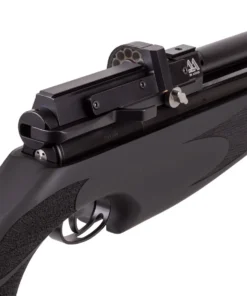

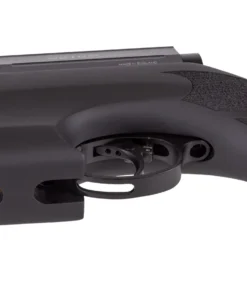

Air Arms S510 XS Ultimate Sporter Xtra FAC, Black Soft Touch

€1,200.00
Description
The Ultimate Sporter Xtra XS takes one of the most cherished platforms among airgunners worldwide and adds even more value to an airgun platform at the height of its powers. Now with the introduction of a regulator to this system, the Air Arms S510 Xtra XS is the S510 action perfected, giving shooters more consistency and shots per fill than ever before.
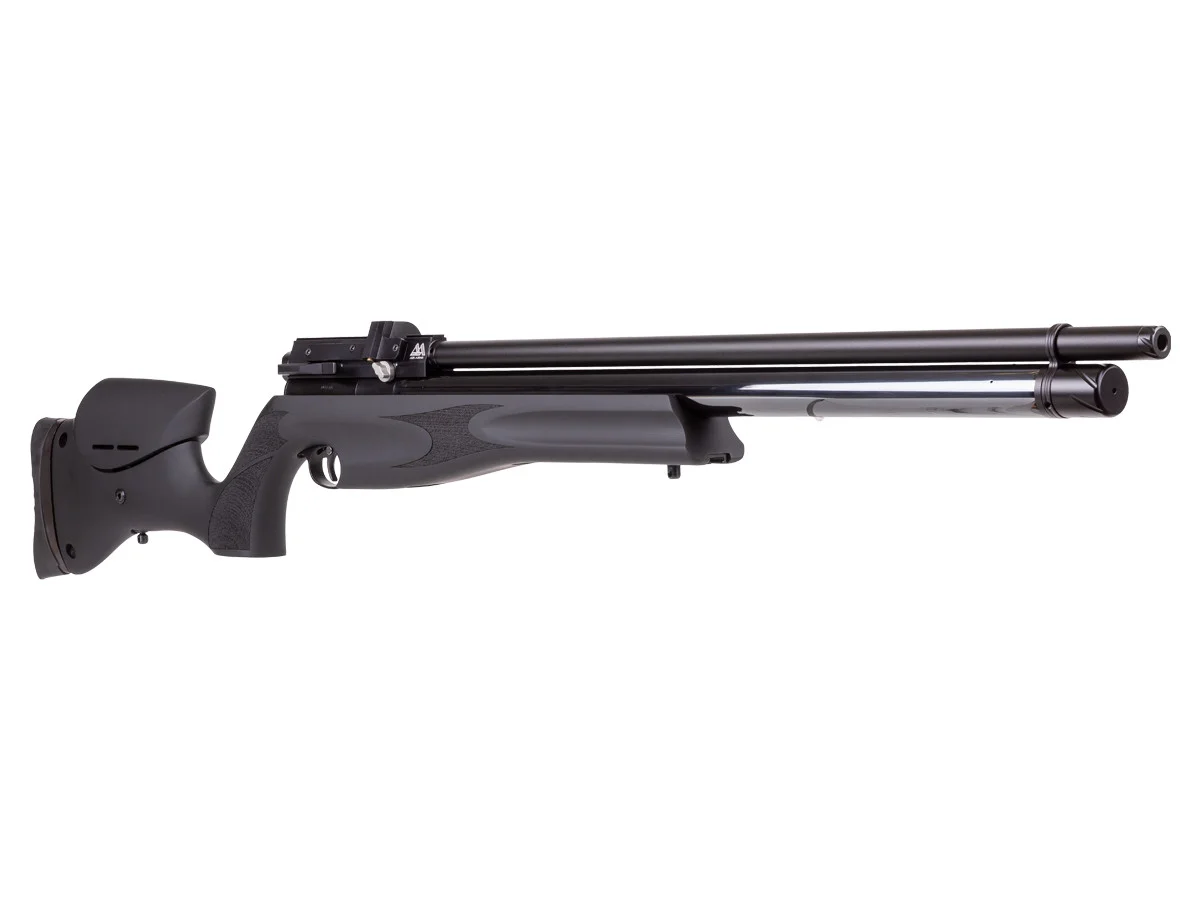
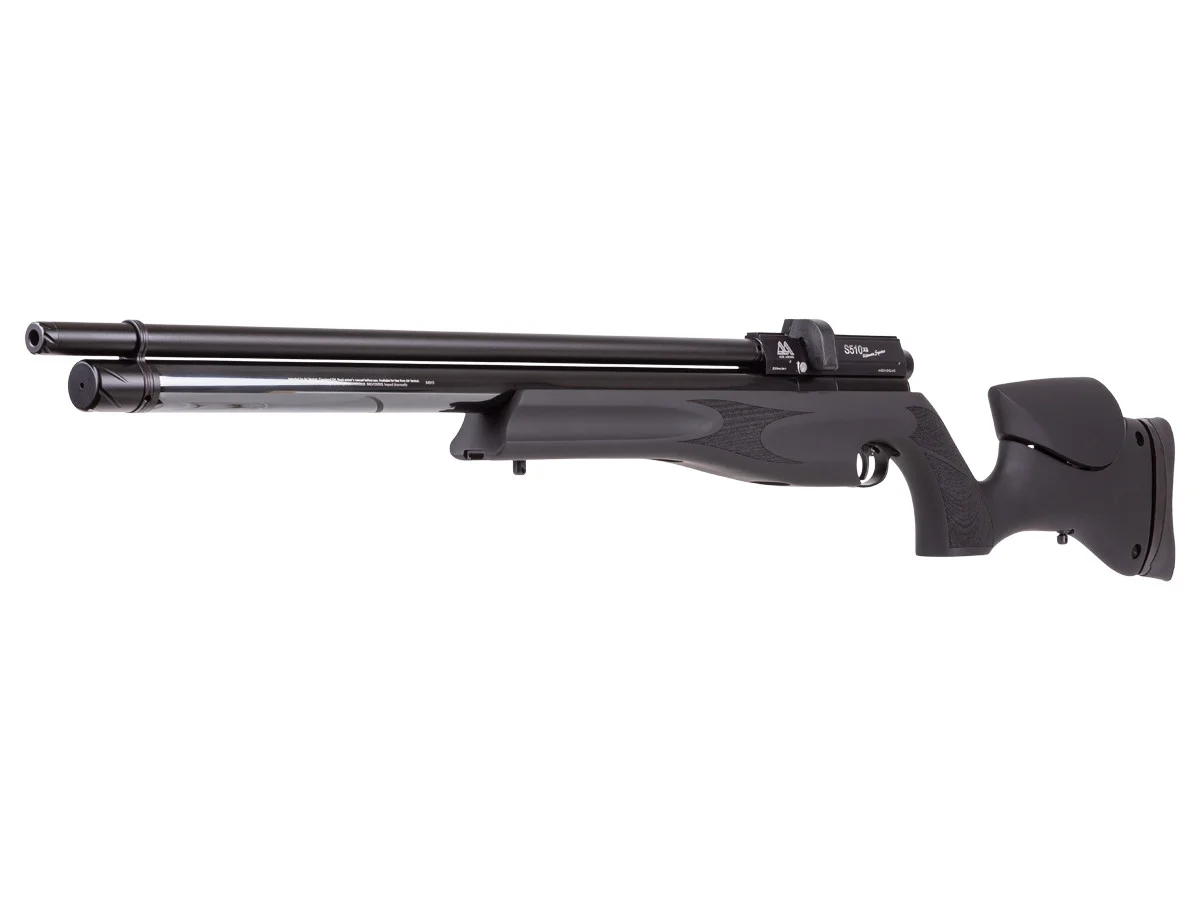
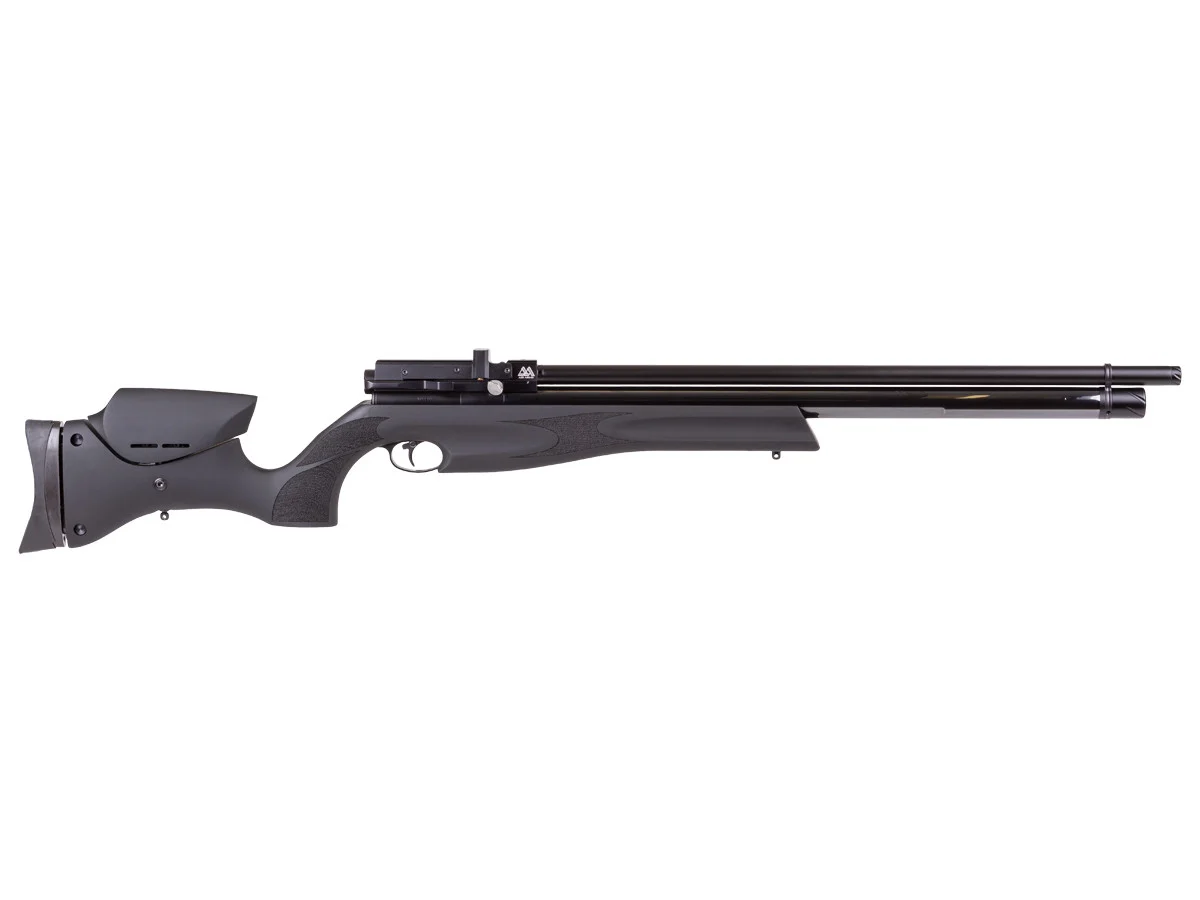
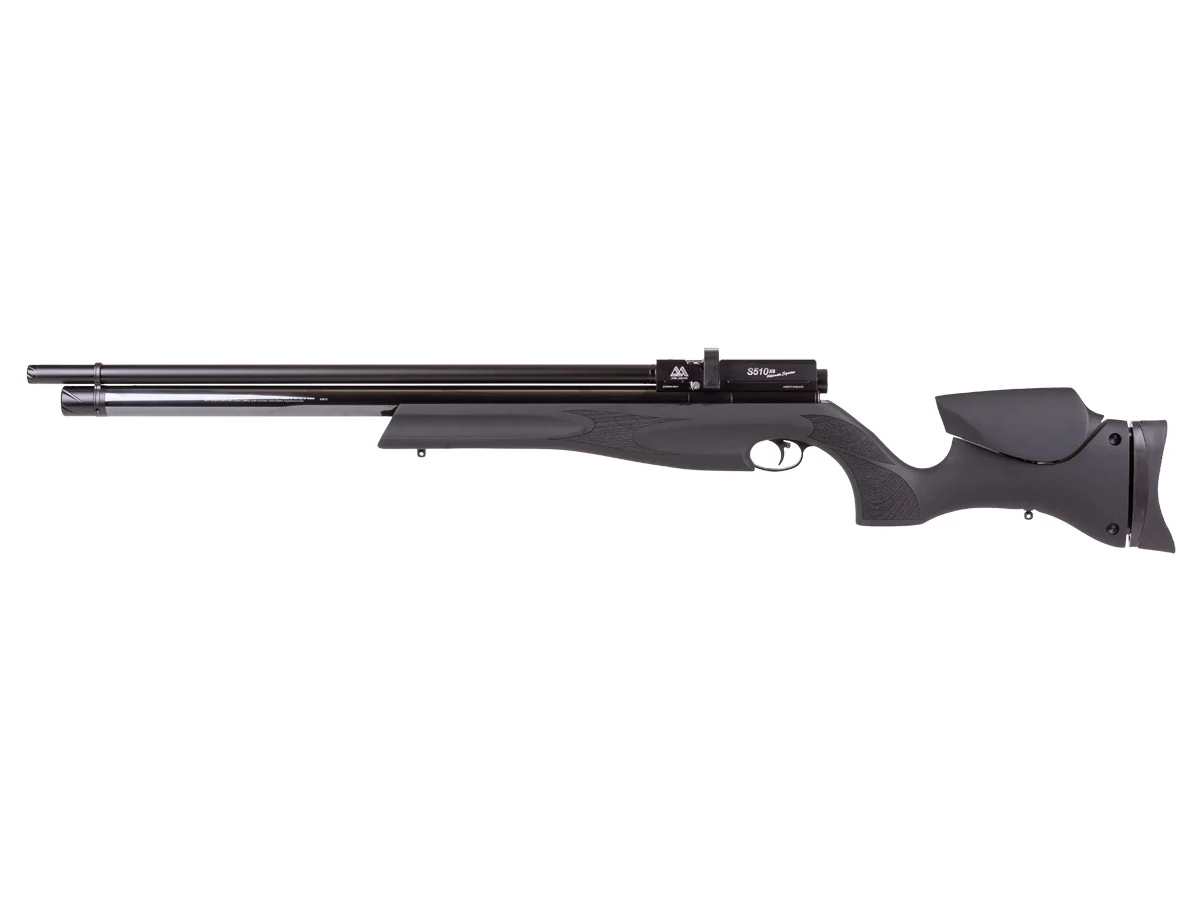
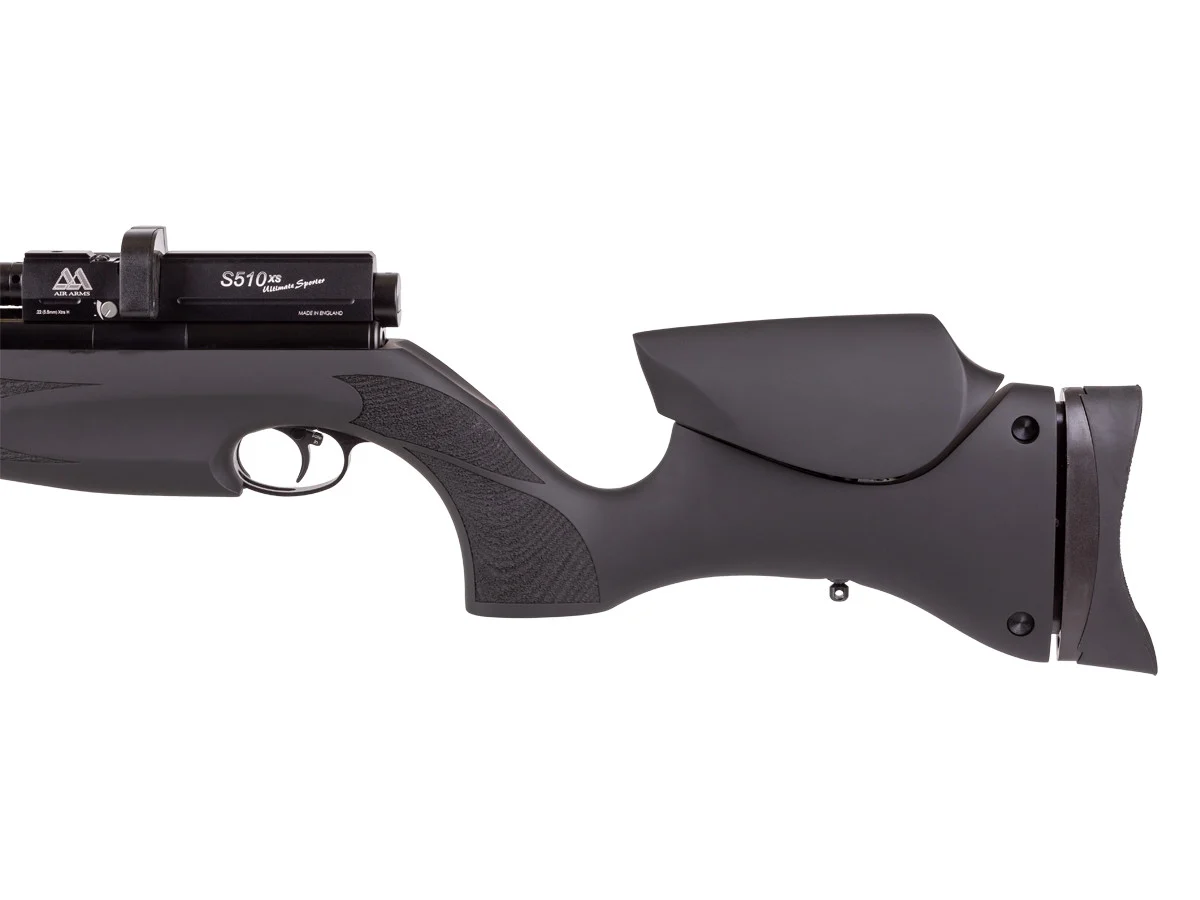
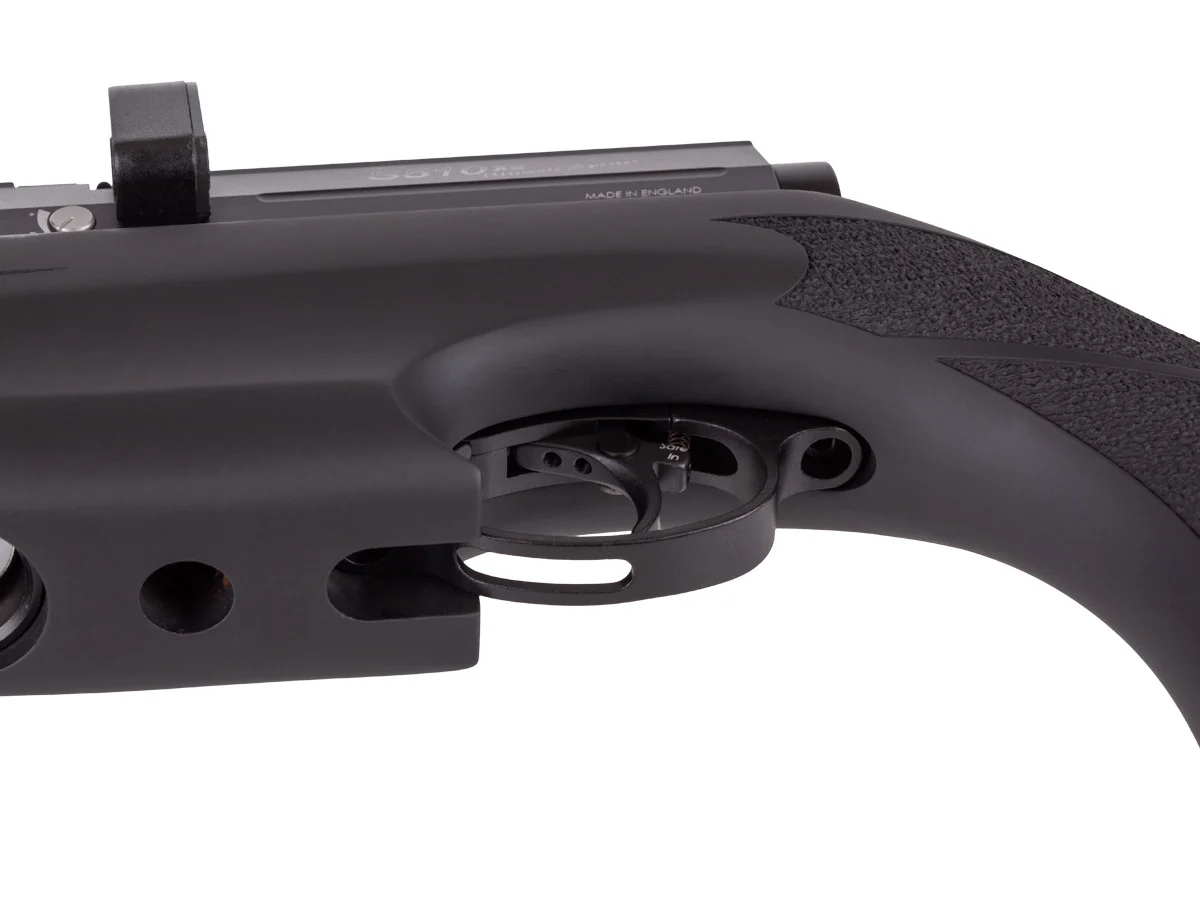
This XS features an all-weather, Ultimate Sporter tactical black Soft-Touch stock with seamless fit and finish that reflects Air Arms dedication to traditional craftsmanship. Born for long woodland hunting, the XS includes checkering on the grip and forend ensuring a sure hold, further enhanced by an adjustable cheekpiece and buttpad. Each of these rifles includes integrated sling mounts for field carry and an accessory rail ready to accept a bipod or palm shelf.
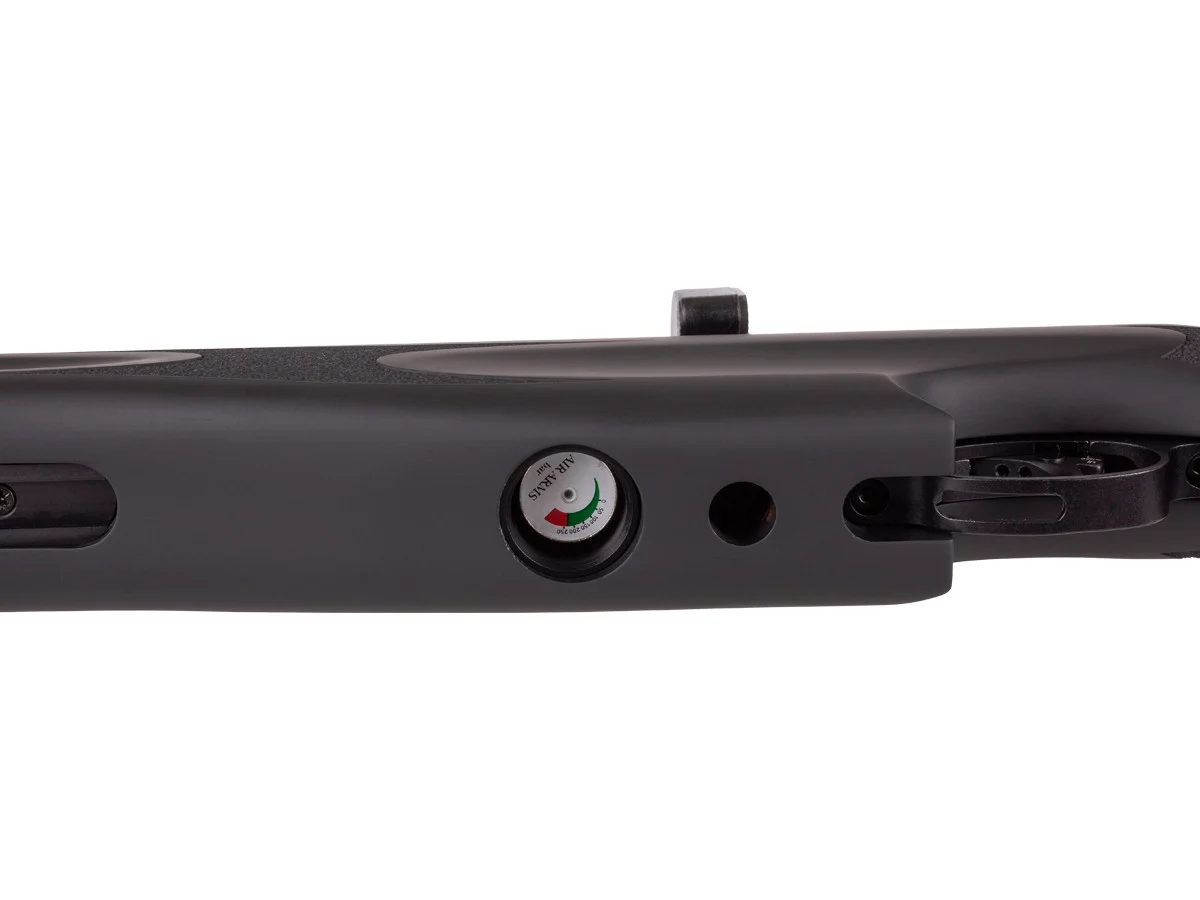
Airgunners dreamed of a regulated S510, and Air Arms delivered, all while boosting the power of the increasingly popular .25 caliber. With this regulated upgrade, the XS can achieve a whopping 44 ft-lbs in .25, 32 ft-lbs in .22 and 20 ft-lbs in .177. Power isn’t the only thing increasing in the XS. The Xtra’s regulator offers increased consistency and shot counts from its 288cc cylinder, delivering an impressive 60 (.177), 55 (.22) and 40 (.25) shots per fill with minimal velocity change.
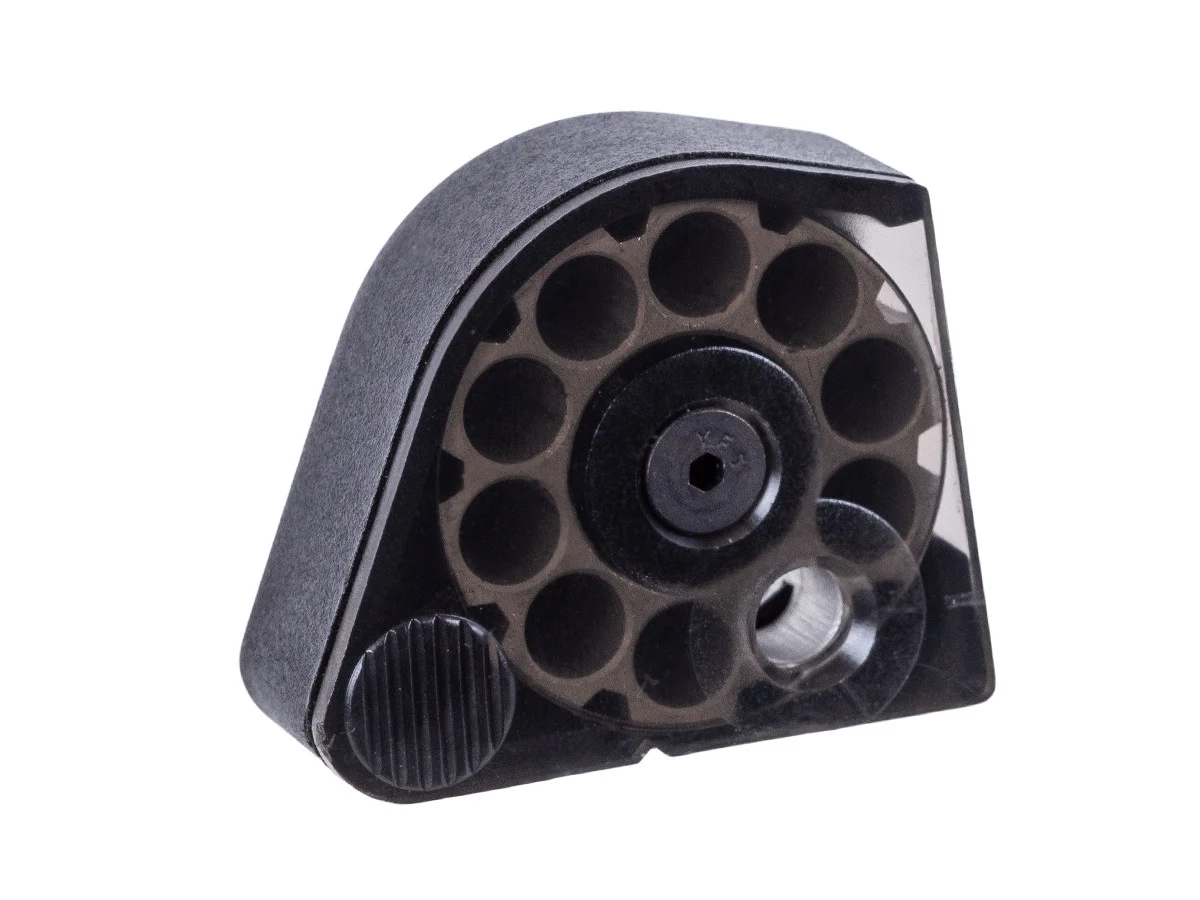
These long shot strings are further aided by a built-in power adjuster to balance power and shot count. Each XS Xtra features the prized Lothar Walther barrel, which gives this platform its renowned accuracy. Each rifle includes 2 of Air Arms perfected 10-shot indexing magazines, smooth sidelever cocking mechanism, and an easy to read built-in manometer.
The Air Arms Ultimate Sporter platform has turned heads at the range since 2013 with shots so accurate they require a double-take. If you want the longest, most consistent shot strings with surgical accuracy, join the elite ranks of Air Arms airgunners with S510 Ultimate Sporter XS Xtra.
Air Arms S510 XS Ultimate Sporter Xtra Air Rifle, FAC, Black Soft Touch
- Precharged pneumatic
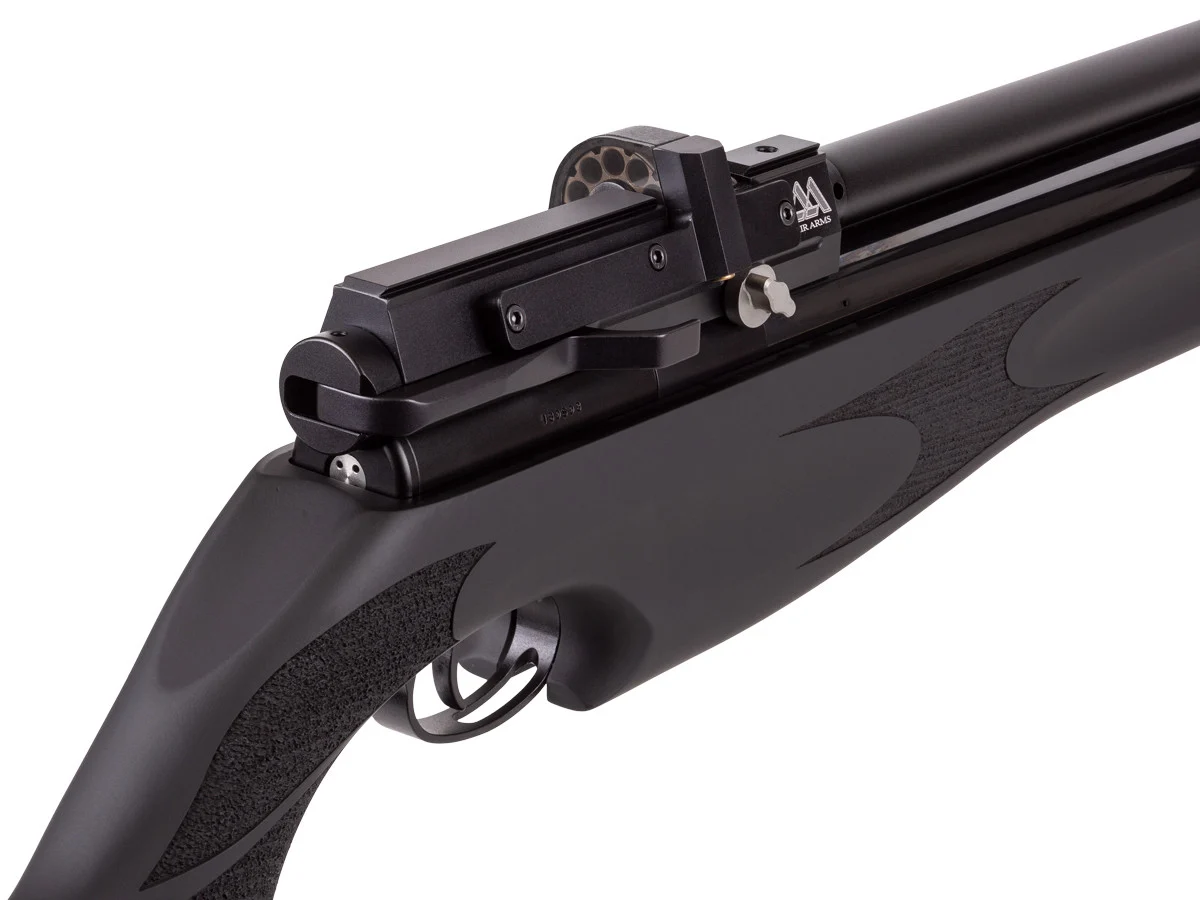
- Smooth sidelever cocking mechanism
- 10-shot repeater
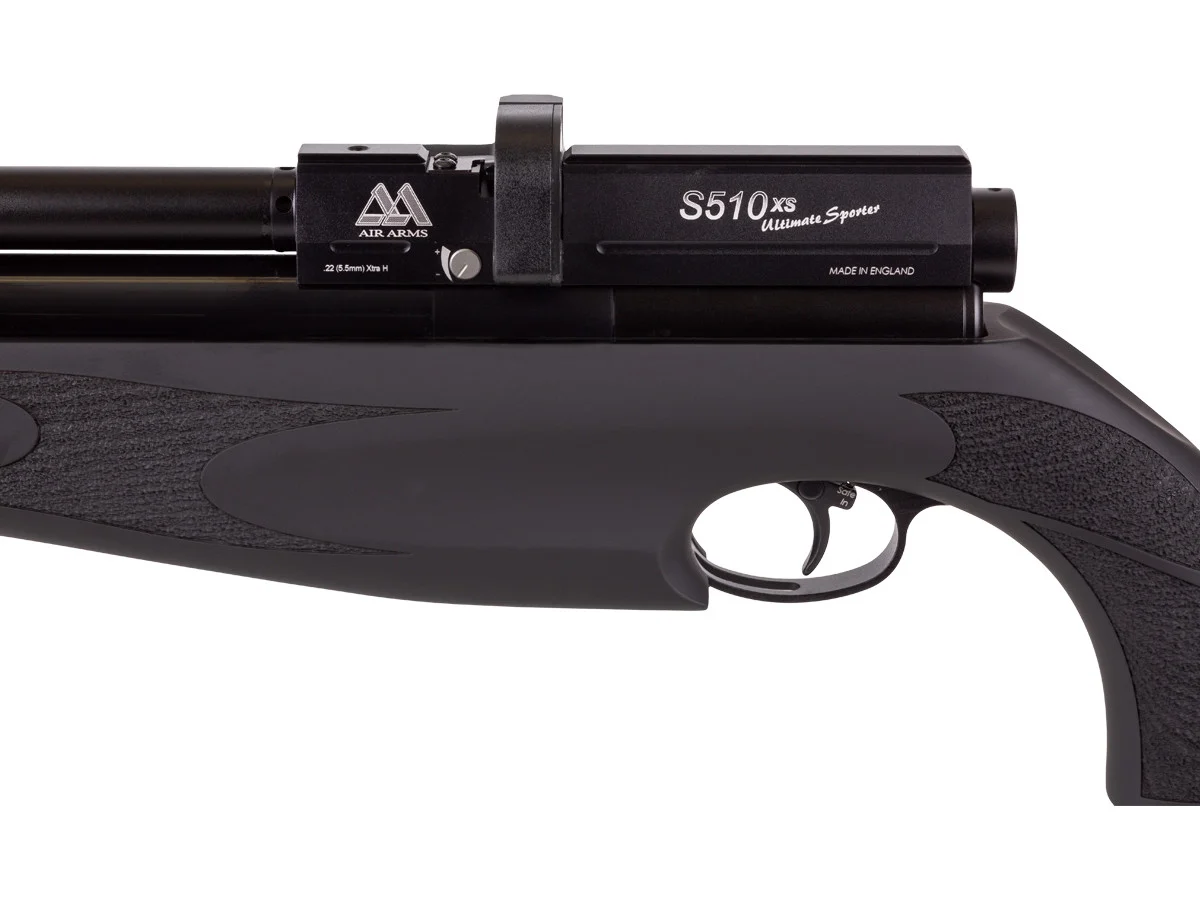
- 2-stage adjustable trigger with safety
- 11mm scope grooves (no open sights)
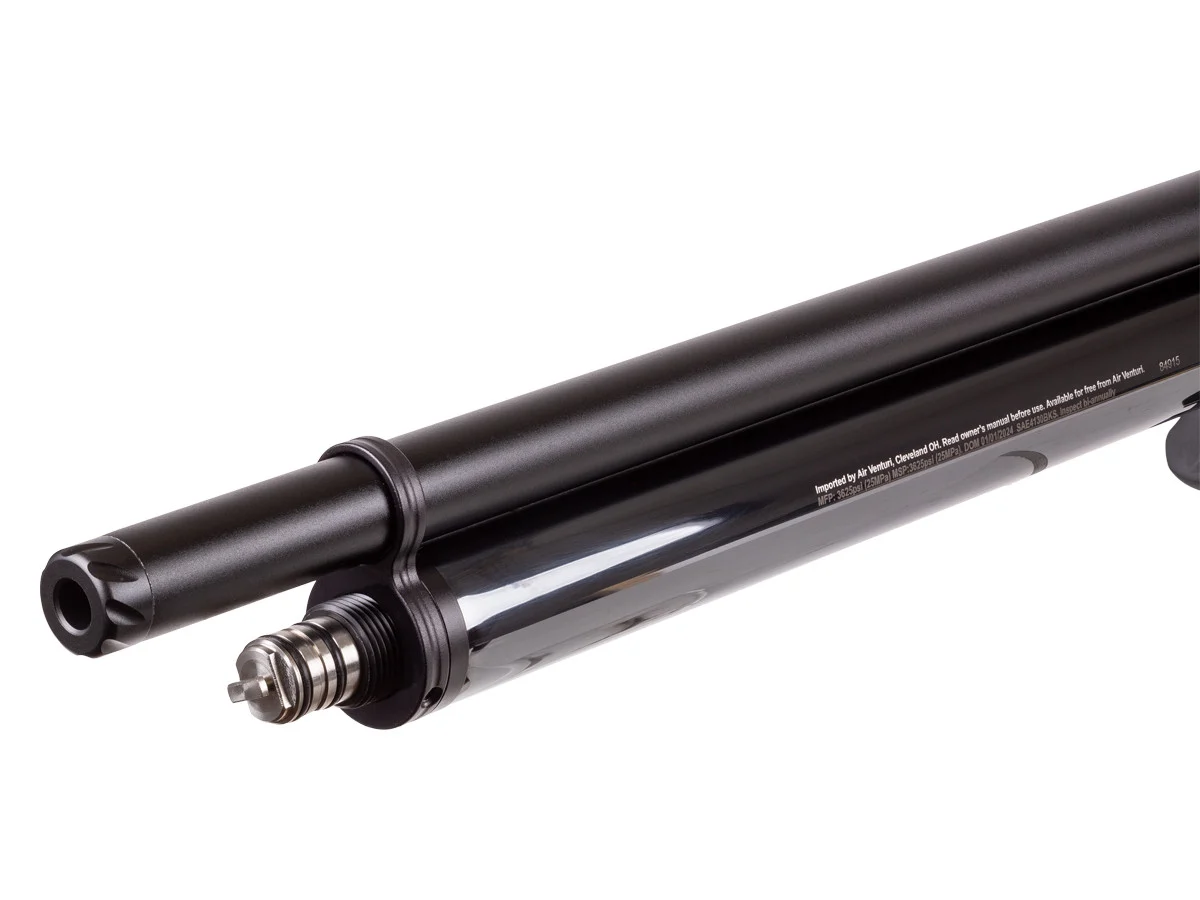
- 250 Bar / 3,626 PSI Fill Pressure
- Built-in manometer (air pressure gauge)
- Built-in adjustable power
- Fully shrouded Lothar Walther barrel
- Ambidextrous Black Soft-Touch Stock
- Adjustable cheekpiece
- Checkered pistol grip and forearm
- Adjustable rubber buttpad
- Rear sling swivel stud
- Fully-Regulated 288cc cylinder
- Regulator Output Pressure: 150 BAR / 2175 PSI
- 60 shots in .177, 55 shots in .22, 40 shots in .25
- Accessory rail under forearm with built-in adjustable sling mount
- Includes 2 rotary magazines, 4 hex wrenches, and fill adapter
Specifications
BrandAir Arms
Caliber.177 (4.5mm)Max Velocity1035 fpsMuzzle Energy20 ft/lbsSuggested forSmall game hunting/target practicePowerplantPre-charged pneumaticLoudness3-MediumWeight8.59 lbsFunctionRepeaterMax Shots per Fill60Cylinder Size288 ccActionSideleverFixed/adj. powerMultiple settingsShroudedYesScopeable11mm dovetailFront SightsnoneRear SightsnoneSafetyManualTriggerTwo-stage adjustableBarrelRifledBarrel Length19.75″Overall Length44.74″Capacity10 round(s)Body TypeRifleStockHardwoodButtplateAdjustableColorBlackOperating Pressure3625 PSI / 250 BARGrip OrientationAmbidextrousRegulatedYesIs Safe To Dry FireYes
Air Arms S510 XS Ultimate Sporter Xtra FAC, Black Soft Touch – Regulated High-Power PCP Precision with Premium All-Weather Handling
Air Arms S510 XS Ultimate Sporter Xtra FAC, Black Soft Touch Overview
The Air Arms S510 XS Ultimate Sporter Xtra FAC, Black Soft Touch combines premium British engineering, regulated pneumatic consistency, adjustable power, smooth side-lever operation, and a durable ambidextrous stock. It is built for shooters who want a high-performance air rifle with excellent shot consistency, strong ergonomics, and a refined firing cycle.
Current specifications list a fully regulated 288cc cylinder, 250 BAR / 3,625 PSI working pressure, 150 BAR regulator output, fully shrouded Lothar Walther barrel, two 10-shot rotary magazines, adjustable two-stage trigger, built-in power control, pressure gauge, 11mm scope rail, adjustable cheekpiece, adjustable buttpad, and integrated accessory rail.
Why Choose the Air Arms S510 XS Ultimate Sporter FAC?
The Air Arms S510 XS Ultimate Sporter FAC platform is designed around consistency and control. Its regulator helps provide stable pressure to the firing system, while the large cylinder supports extended shot strings.
For anyone comparing an air gun, air arms, air rifles, pellet guns, airguns, airgins, or an Air Arms air rifle, the XS Ultimate Sporter Xtra represents a premium PCP configuration rather than a basic recreational platform.
The black soft-touch stock also provides a weather-resistant alternative to traditional wood while maintaining the adjustable ergonomics associated with the Ultimate Sporter family. Air Arms currently lists black soft-touch, walnut, and laminate variants in its FAC Ultimate Sporter collection.
How Good Is the Regulated Performance?
The rifle uses a regulated action designed to maintain more consistent pressure from shot to shot.
Pyramyd AIR currently lists approximately 60 shots in .177, 55 in .22, and 40 in .25 from the 288cc cylinder. It also lists maximum energy figures of about 20 ft-lb in .177, 32 ft-lb in .22, and 44 ft-lb in .25.
This makes the platform especially relevant for air riflery, target air rifle shooting, and shooters searching airgun shooting range near me who want to evaluate grouping consistency under controlled conditions.
Caliber Options and Precision
The rifle is offered in .177, .22, and .25 FAC configurations. Air Arms describes .177 as the precision and flatter-trajectory option, .22 as a balance between accuracy and impact, and .25 as the higher-impact FAC choice.
Therefore, searches for cal .177 pellets, 177 caliber, 177 air rifle, 177 pellet vs.22 pellet, 177 caliber vs 22, .22 air rifle, and broader air rifle calibers are all relevant when choosing a configuration.
The air arms s510 ultimate sporter .177 sub 12 belongs to a lower-power category and should not be confused with this FAC Xtra model.
What Is a PCP Airgun?
Anyone asking what is a pcp airgun, what is an air rifle, or how do air guns work should understand that this rifle stores compressed air inside an onboard reservoir.
It is not a break barrel pellet gun, so anyone researching what is break barrel air rifle is looking at a different operating system.
The reservoir can be filled with a properly rated pcp hand pump or compatible air compressor rifle charging system.
Because the rifle operates at high pressure, clean and dry air should be used, and the correct fill pressure should always be observed.
Smooth Side-Lever and 10-Shot Repeater
The S510 platform uses a smooth side-lever cocking system and two supplied 10-shot rotary magazines.
This arrangement supports efficient repeated shooting while allowing the shooter to remain settled behind the optic.
The combination of a regulated action, repeater system, adjustable trigger, and Lothar Walther barrel gives the rifle a strong foundation for precision shooting.
Black Soft-Touch Stock and Ergonomics
The black soft-touch stock is fully ambidextrous and features an adjustable cheekpiece, adjustable rubber buttpad, checkered pistol grip, checkered fore-end, rear sling attachment, and accessory rail.
These adjustments allow the rifle to be fitted more naturally to the shooter.
Correct cheek height and shoulder position are important because consistent head placement improves optic alignment and shot repeatability.
Comparing Other Air Arms Models
Buyers considering this rifle may also encounter the air arms s510, air arms s410, air arms tx200, prosport air arms, or a general air arm search.
Related variants include the Air Arms S510 XS Ultimate Sporter FAC Walnut Stock, Air Arms S510 XS Ultimate Sporter, Air Arms S510 FAC, and Air Arms S510 XS FAC PCP Air Rifle.
The standard S510 family includes regulated and unregulated versions, multiple stock options, and both carbine and full-length configurations.
Maintenance and Long-Term Care
A suitable Air rifle cleaning kit can be useful for periodic barrel maintenance, although unnecessary aggressive cleaning should be avoided when accuracy remains consistent.
The magazines, side lever, fill connection, trigger, optic mounts, stock hardware, and pressure system should also be inspected regularly.
Clean filling practices are particularly important because contamination introduced through the charging system can affect long-term reliability.
Important Legal and Use Considerations
Searches involving air guns for home defense should be treated separately from the normal sporting purpose of this rifle. FAC-rated models are high-power sporting equipment, and ownership, transport, use, and licensing requirements vary by jurisdiction.
The rifle should be used only where shooting is permitted and with a suitable backstop.
Other Pneumatic Search Terms Buyers May Encounter
Broad searches sometimes mix this rifle with unrelated pneumatic products such as Snowpeak PP750L, Snowpeak Air Pistol, PCP Pistol, Airgun Pistol, High power PCP air pistol, Snowpeak PP750L PCP Air Pistol for sale, and pistolet pcp arcea-snowpeak onix sport.
These are separate pistol-oriented products and should not be confused with the S510.
Likewise, snow peak customer service and snow peak brand origin concern another manufacturer.
The phrase air pisto may also appear in broader search results but does not describe this rifle.
Similarly, unrelated searches such as how much did the m60 weigh and t rex 6000 do not refer to any specification or feature of the product.
Why the Air Arms S510 XS Ultimate Sporter Xtra FAC, Black Soft Touch Stands Out
The Air Arms S510 XS Ultimate Sporter Xtra FAC, Black Soft Touch brings together regulated pressure control, a 288cc cylinder, adjustable power, multi-shot operation, a precision barrel, smooth side-lever action, and a highly adjustable all-weather stock.
For shooters who want a premium regulated PCP with long shot strings, strong ergonomic adjustment, and a mature mechanical platform, it offers a well-developed balance of precision, consistency, comfort, and practical field usability.
Regulated Performance, Shot Consistency, Adjustable Power, Handling, Trigger Control, and Practical Shooting Experience
The Air Arms S510 XS Ultimate Sporter Xtra FAC, Black Soft Touch is designed to provide a refined combination of regulated performance, smooth operation, comfortable handling, and precision-oriented control. Its overall shooting character comes from the way the regulator, power adjustment system, barrel, side lever, trigger, stock geometry, reservoir, and optic setup work together. When these elements are properly matched to the shooter, the rifle can provide a highly consistent and enjoyable experience during extended range sessions and lawful field use.
Understanding Regulated Performance
The regulator is one of the most important components in the rifle.
Its role is to manage the pressure supplied from the main reservoir to the firing valve.
As the reservoir pressure gradually decreases, the regulator helps maintain a more consistent operating pressure.
This reduces the amount of variation between shots.
More consistent pressure can support more predictable velocity and reduce unnecessary vertical movement on the target.
For precision shooting, this consistency is especially valuable because the shooter can focus more confidently on technique, wind, and ammunition performance.
Consistent Shot Behavior
A well-regulated rifle should feel predictable.
The firing impulse, trigger release, sound, and point of impact should remain relatively stable throughout the useful portion of the fill.
This allows the shooter to detect other problems more easily.
If accuracy suddenly changes, it becomes easier to investigate factors such as loose optics, changing ammunition, environmental conditions, or technique rather than assuming pressure alone is responsible.
Adjustable Power Control
The adjustable power system gives the shooter greater flexibility.
Different shooting situations may require different output levels.
Lower settings may be useful for range practice, reduced air consumption, or shorter-distance shooting where maximum output is unnecessary.
Higher settings may be selected where lawful and appropriate.
The important point is that power should be adjusted deliberately rather than constantly changed without reason.
A consistent setting makes trajectory and accuracy easier to evaluate.
Power and Air Consumption
Higher output usually requires more compressed air per shot.
Therefore, the shooter should expect shot count to vary depending on the selected setting.
A lower setting may increase the number of useful shots available from a fill.
A higher setting may reduce that number.
This relationship should be understood before a long session begins.
Tracking practical shot count at different settings can help the shooter plan refilling more effectively.
Smooth Side-Lever Operation
The side-lever system provides a refined loading experience.
It allows the action to be cycled with relatively little disruption to the shooting position.
The shooter can remain behind the optic while preparing the next shot.
The lever should move smoothly through its full travel.
If unusual resistance is felt, the action should not be forced.
The magazine and loading path should be checked first.
Magazine Operation
The multi-shot magazine makes repeated shooting convenient.
It reduces the need to handle individual pellets before every shot.
However, convenience should not encourage rushed shooting.
Each shot should still begin with proper alignment, breathing, and trigger control.
The magazine should be loaded carefully.
Damaged ammunition or debris can create indexing problems and reduce feeding reliability.
Pellet Selection and Accuracy
Different pellets may perform very differently in the same barrel.
The shooter should test several suitable types.
Testing should be done under similar conditions.
The same distance, pressure range, power setting, rest position, and optic setup should be maintained whenever possible.
Several groups should be fired with each option.
A single excellent group may not represent normal performance.
Repeated results are more useful.
Lothar Walther Barrel Performance
The precision barrel provides the mechanical foundation for consistent projectile flight.
However, a quality barrel still depends on the correct ammunition, proper cleaning, stable pressure, and good shooting technique.
The barrel should not be assumed to perform equally well with every pellet.
Finding a consistent ammunition match can make a noticeable difference.
Once a reliable option is found, changing unnecessarily may reduce consistency.
Trigger Control
The adjustable two-stage trigger allows the shooter to prepare the shot deliberately.
The first stage should be taken up smoothly.
Once the sight picture is stable, the final stage can be completed with gradual pressure.
The finger should move directly rearward.
Sideways pressure can shift the rifle.
The trigger should feel predictable rather than excessively light.
Safe control is always more important than achieving the lowest possible pull weight.
Black Soft-Touch Stock Handling
The stock is designed to provide a secure and comfortable grip.
The soft-touch finish can help the rifle remain manageable in dry or slightly damp conditions.
Its ambidextrous design also makes the platform adaptable for different shooters.
The fore-end should rest naturally in the supporting hand.
The pistol grip should be held firmly enough for control but not so tightly that unnecessary tension is introduced.
Adjustable Cheekpiece
The cheekpiece allows the shooter to refine head position.
This is especially important when using a scope.
The eye should align naturally with the optic.
If the head must be lifted or lowered significantly, the setup should be adjusted.
A repeatable cheek position improves sight alignment.
It also makes the rifle more comfortable during long sessions.
Adjustable Buttpad
The buttpad helps control shoulder fit.
Small changes in position can improve how the rifle sits against the body.
A correct setup should allow the shooter to shoulder the rifle naturally without raising or lowering the shoulder excessively.
Once the best position is found, the adjustment hardware should remain secure.
A shifting buttpad can change head position and affect consistency.
Optic Position
The scope should be positioned for comfortable eye relief.
The shooter should see a full image without stretching the neck.
The mounts should remain secure.
A loose optic can create point-of-impact changes that may appear to be a rifle problem.
Before changing ammunition or making internal adjustments, optic security should always be checked.
Benchrest Shooting
A stable bench can help reveal the rifle’s mechanical potential.
A suitable front rest and rear support can reduce movement.
The rifle should settle naturally on the target.
If the shooter constantly forces the rifle into position, the support setup should be adjusted.
Consistent contact with the rest is important.
The rifle should not be held differently from one shot to the next.
Bipod Use
A bipod can provide a stable shooting platform where appropriate.
The rifle should be positioned so that the bipod sits evenly on the surface.
Forward pressure should remain consistent.
Changing the amount of pressure dramatically between shots can alter the way the rifle settles.
Consistency is more important than using excessive force.
Unsupported Shooting
The stock design and overall balance can also support unsupported shooting.
The supporting hand should be placed where the rifle feels naturally balanced.
The shoulders should remain relaxed.
Shorter unsupported strings can help prevent fatigue.
Once arm or shoulder tension increases, the sight picture often becomes less stable.
Taking a short break is better than forcing the position.
Breathing Control
Breathing naturally creates movement.
The shooter should maintain a calm rhythm.
After a normal exhale, there is often a brief period of reduced movement.
This can provide a good opportunity to complete the shot.
If the sight picture is not stable, the breathing cycle should be restarted.
Rushing generally creates more inconsistency.
Follow-Through
The shooter should remain behind the optic after the trigger releases.
The head should stay in place.
The rifle should remain supported.
The trigger finger should remain controlled.
This helps preserve alignment during the complete firing cycle.
Follow-through also allows the shooter to observe movement and better understand whether the shot was executed cleanly.
Pressure Management
The reservoir gauge should be checked throughout longer sessions.
The rifle performs most consistently within its normal operating range.
Once pressure drops too far, performance may begin to change.
The shooter should learn the practical shot count for the chosen power setting.
This makes refill planning easier.
Temperature Effects
Temperature can influence reservoir pressure and equipment behavior.
A rifle moved from a warm environment into cooler conditions may need time to stabilize.
Likewise, direct sunlight can raise temperature.
For serious accuracy testing, the rifle should be allowed to reach ambient conditions before results are judged.
This reduces unnecessary variation.
Wind and Downrange Performance
Wind can move a pellet significantly.
The shooter should observe vegetation, flags, dust, or other indicators.
Conditions near the firing point may be different from conditions closer to the target.
Horizontal group movement should therefore be evaluated carefully before scope adjustments are made.
Long Shooting Sessions
Extended shooting can introduce fatigue.
Neck tension, shoulder strain, and reduced concentration may gradually affect accuracy.
Short breaks help restore technique.
The shooter should also avoid changing power settings, ammunition, and optic adjustments repeatedly during one session.
Keeping conditions stable makes performance easier to evaluate.
Practical Performance Value
The Air Arms S510 XS Ultimate Sporter Xtra FAC, Black Soft Touch delivers its best results when its regulated action, adjustable power, smooth loading system, precision barrel, adjustable stock, and trigger are combined with disciplined technique.
Consistent pressure supports predictable velocity.
Correct stock fit improves alignment.
Good trigger control protects the sight picture.
Suitable pellets improve grouping.
Stable optics maintain zero.
When these factors are managed together, the rifle becomes a refined, predictable, and highly capable platform for accurate and controlled shooting.
Maintenance, Reservoir Care, Magazine Service, Stock Protection, Storage, and Long-Term Reliability
The Air Arms S510 XS Ultimate Sporter Xtra FAC, Black Soft Touch is a refined regulated pneumatic platform, and long-term performance depends on consistent maintenance rather than excessive intervention. Its reservoir, regulator, fill connection, seals, magazine, side lever, trigger, barrel, stock hardware, optic mounts, and pressure gauge all contribute to overall reliability. When these systems are kept clean, dry, secure, and correctly serviced, the rifle can maintain smooth operation and consistent precision across many years of use.
Building a Consistent Maintenance Routine
A simple routine should begin after every serious shooting session.
The rifle should be checked for moisture, dust, loose screws, unusual marks, and any change in the feel of the action.
The exterior can be wiped with a clean soft cloth.
If the rifle has been used in damp conditions, all exposed surfaces should be dried before storage.
Regular light maintenance is usually more effective than infrequent heavy cleaning.
Reservoir Condition
The air reservoir is a critical pressure-bearing component.
Its exterior should remain free from corrosion, deep scratches, dents, or signs of impact.
The pressure gauge should be checked before and after longer sessions.
If pressure falls unexpectedly while the rifle is stored, the system should be inspected.
A persistent leak should not simply be ignored and compensated for with repeated filling.
Fill Connection Care
The fill port should remain clean.
Dust, moisture, and debris can enter the system during charging if the fitting is not protected.
Before connecting a pump, compressor, or charging cylinder, both fittings should be inspected.
The connection should engage smoothly.
If unusual resistance is felt, the fitting should be checked rather than forced.
Using Clean, Dry Air
The quality of the charging air matters.
Moisture introduced into the reservoir can eventually affect internal components.
The filling source should therefore be properly maintained.
In humid conditions, filters and moisture separators deserve additional attention.
Dry compressed air helps preserve seals and reduces the risk of internal contamination.
Avoiding Overfilling
The reservoir should only be filled to the correct pressure.
More pressure does not automatically produce better performance.
Overfilling can place unnecessary stress on the system and may move the action outside its ideal operating range.
The gauge on the filling equipment should be watched carefully throughout the process.
Controlled filling is always preferable to rushing.
Seal and O-Ring Condition
Seals are essential for retaining pressure.
Over time, they can be affected by age, temperature, contamination, or unsuitable lubricants.
The rifle should hold pressure predictably.
If a leak develops, the source should be identified.
Only appropriate products should be used where lubrication is recommended.
Incorrect oils can damage sealing materials or create unnecessary residue.
Regulator Monitoring
The regulator helps maintain shot consistency.
If performance begins to vary, the regulator may be one possible cause, but it should not be blamed immediately.
Loose optics, ammunition differences, pressure changes, temperature, barrel condition, or technique can produce similar symptoms.
Troubleshooting should therefore be systematic.
Internal adjustment should not be performed casually.
Side-Lever Maintenance
The side lever should move smoothly through its full travel.
The shooter should become familiar with its normal resistance.
If the lever suddenly feels rough, unusually stiff, or incomplete, the action should be inspected before further use.
The magazine and loading path should be checked first.
Forcing the mechanism can create unnecessary wear.
Linkage and Moving Parts
Moving parts should remain clean and free from grit.
Excessive lubrication should be avoided because it can attract dust.
If the action begins to feel dry or rough, servicing should follow proper guidance.
Randomly applying oil to every moving component is not an effective maintenance strategy.
Magazine Care
The magazines should be handled carefully and kept clean.
Pellets should be loaded gently.
If indexing becomes rough, the magazine should be inspected.
Dust, damaged ammunition, or worn components can affect feeding.
Spare magazines should be stored in a protected container rather than carried loose with tools or debris.
Inspecting Pellets Before Loading
Damaged pellets can affect both accuracy and reliability.
The skirt and head should be checked before loading.
A deformed pellet can create resistance in the magazine or loading path.
If one feels unusual, it should be removed rather than forced.
Consistent ammunition condition supports consistent mechanical operation.
Barrel Maintenance
The barrel does not need aggressive cleaning after every session.
If accuracy remains stable, unnecessary cleaning should be avoided.
However, if groups begin to open without another obvious cause, barrel condition may deserve attention.
Suitable cleaning materials should be used carefully.
Harsh abrasives should be avoided.
Protecting the Muzzle
The muzzle and crown should remain protected from impact.
Damage in this area can affect precision.
The rifle should never be rested directly on the front of the barrel.
During transport, the muzzle should be protected inside a suitable case.
Any front-mounted accessory should also remain secure and correctly aligned.
Trigger Care
The two-stage trigger should remain clean and predictable.
Once a safe and comfortable adjustment has been established, constant changes are unnecessary.
If the trigger suddenly becomes unusually light, heavy, rough, or inconsistent, the rifle should be inspected.
A stable trigger feel contributes directly to shooting confidence.
Safety Mechanism Check
The safety should be checked periodically.
It should engage and disengage correctly.
Any unusual movement should be investigated.
The safety mechanism should never replace responsible handling.
The muzzle should remain pointed in a safe direction, and the trigger should only be touched when the shooter is ready to fire.
Soft-Touch Stock Care
The black soft-touch stock should be kept clean and dry.
A soft cloth can remove dust, fingerprints, and light moisture.
Harsh solvents should be avoided unless specifically approved for the stock material.
The surface should also be protected from sharp objects and excessive abrasion.
Damage to the finish may not affect function, but careful handling preserves appearance and grip quality.
Adjustable Cheekpiece Maintenance
The cheekpiece should remain secure once correctly positioned.
If it moves during shooting, head position can change.
Adjustment screws should be checked periodically.
The same applies after transport.
A stable cheek position supports repeatable optic alignment.
Buttpad Stability
The adjustable buttpad should remain firmly positioned.
If it shifts, shoulder placement can change.
This can affect comfort and consistency.
The adjustment hardware should be secure without being overtightened.
Once a preferred position is found, it can be marked or recorded for easy reference.
Optic Mount Inspection
The optic and mounts should be checked regularly.
A loose scope can create sudden point-of-impact changes.
Before changing ammunition, adjusting the regulator, or cleaning the barrel aggressively, mount security should be confirmed.
Screws should be tightened correctly rather than excessively.
Secure optics make troubleshooting much easier.
Accessory Rail Care
Any accessory rail should remain clean and secure.
Mounted equipment should not shift.
Loose accessories can affect balance and create unwanted movement.
If performance changes after an accessory is added, its mounting position and weight should be considered.
Moisture Management
Rain, condensation, and humidity can affect both external and internal components.
After wet use, the rifle should be dried thoroughly.
It should not be sealed immediately inside a damp case.
The case should also be allowed to dry.
Good moisture management reduces the risk of corrosion and long-term deterioration.
Temperature Management
Extreme heat should be avoided.
A closed vehicle can become very hot and may affect reservoir pressure, seals, stock materials, and optics.
Cold conditions can also alter how some components feel.
When the rifle is moved between very different environments, it should be allowed to stabilize gradually.
This also helps reduce condensation.
Transport Protection
A padded case provides useful protection.
The barrel, stock, optic, reservoir, and controls should remain supported.
The rifle should not move freely inside the case.
Heavy equipment should not be placed directly on top.
Careful transport helps preserve both zero and cosmetic condition.
Storage Between Sessions
The rifle should be stored in a dry and secure environment.
Unauthorized access should be prevented.
The storage position should not place constant pressure on the optic or barrel.
The area should remain reasonably stable in temperature and humidity.
Before the next session, the rifle should be inspected again.
Recognizing Changes Early
Long-term owners become familiar with how the rifle normally behaves.
The side lever, trigger, pressure gauge, magazine, and firing cycle all develop a recognizable feel.
A new sound, pressure loss, rough loading cycle, or sudden accuracy shift should be investigated.
Early attention often prevents a small issue from becoming more serious.
Keeping Maintenance Records
A simple maintenance log can be useful.
The owner can record filling behavior, cleaning, magazine replacement, optic changes, seal service, and any unusual symptoms.
These notes make troubleshooting easier.
They can also help a technician understand the rifle’s history if professional service becomes necessary.
Long-Term Reliability
The Air Arms S510 XS Ultimate Sporter Xtra FAC, Black Soft Touch can remain highly dependable when maintenance is consistent.
Clean filling protects the pneumatic system.
Dry storage protects the exterior.
Magazine care supports smooth feeding.
Correct barrel maintenance preserves precision.
Secure optics help maintain zero.
Regular inspection makes developing problems easier to recognize.
With sensible servicing, careful handling, correct filling, and proper storage, the rifle can retain its smooth side-lever action, regulated consistency, comfortable stock fit, and precise shooting character across many years of regular use.
Practical Field Handling, Shooting Positions, Environmental Performance, Range Workflow, and Accuracy Optimization
The Air Arms S510 XS Ultimate Sporter Xtra FAC, Black Soft Touch is designed to perform consistently across a wide range of shooting conditions, but the rifle delivers its best results when the shooter uses a structured approach. The regulated action, adjustable stock, smooth side lever, large air reservoir, and refined trigger all provide a strong mechanical foundation. However, practical precision still depends on body position, optic setup, ammunition testing, pressure management, environmental awareness, and consistent handling.
Preparing the Rifle Before Shooting
A short pre-shooting inspection helps prevent avoidable problems.
The shooter should confirm reservoir pressure, magazine condition, optic security, stock adjustments, and smooth side-lever operation.
The muzzle should be checked for visible obstruction, while accessories should remain tight and correctly positioned.
If the rifle has recently been transported, the mounts and adjustable stock components deserve extra attention.
A consistent preparation routine makes it easier to recognize anything unusual before the first shot.
Establishing a Natural Shooting Position
The rifle should settle into the shoulder without being forced.
If the shooter must twist the torso or apply constant muscular pressure to keep the sights aligned, body position should be adjusted.
A natural point of aim reduces fatigue and improves consistency.
The rifle should point toward the target with minimal muscular correction.
This is especially important during longer sessions where small inconsistencies can gradually enlarge group size.
Standing Position
The adjustable stock can make unsupported shooting more comfortable when correctly configured.
The feet should provide a stable base.
The supporting hand should carry the rifle naturally, while the shooting hand should remain relaxed around the grip.
The shoulders should not be raised unnecessarily.
Trying to hold the rifle perfectly still for too long usually creates more movement.
Shorter aiming periods are often more effective.
Kneeling Position
Kneeling can provide greater stability than standing while maintaining flexibility.
The supporting elbow can rest against the knee or thigh where appropriate.
The stock should sit naturally in the shoulder.
The shooter should avoid leaning excessively forward or sideways.
A comfortable position is easier to reproduce than one that depends on muscular tension.
Sitting Position
Sitting can create a very stable shooting platform.
The shooter can use the knees and elbows to form a supportive structure.
The rifle should remain balanced rather than clamped tightly.
The adjustable cheekpiece becomes particularly useful because it can help maintain consistent head position even when body posture changes between standing, kneeling, and sitting.
Benchrest Shooting
A bench allows the shooter to evaluate the rifle’s mechanical consistency more accurately.
A stable front rest and suitable rear support can reduce movement.
The rifle should contact the rest in the same place for each shot.
The shooter should avoid pushing the rifle heavily into the rest.
A relaxed position generally produces more repeatable results.
Bipod Use
A bipod can provide excellent support when used consistently.
The legs should rest evenly on the shooting surface.
Forward pressure should remain similar from shot to shot.
Large changes in loading pressure can alter how the rifle settles.
The shooter should focus on repeatability rather than excessive force.
Rear Support
A rear bag can help control elevation.
Instead of lifting or lowering the stock with the shoulder, the shooter can make small adjustments through the support.
This reduces muscular effort.
If the sights naturally settle high or low, the support setup should be adjusted instead of forcing the rifle into position.
Trigger Technique
The trigger should be pressed smoothly and directly to the rear.
The first stage provides a preparation phase.
Once alignment is stable, the final pressure can be applied gradually.
The finger should move independently.
Sideways pressure can disturb the rifle just before the shot.
A predictable trigger release is one of the most important elements of accurate shooting.
Breathing Control
Breathing creates natural movement.
The shooter should maintain a calm rhythm rather than holding the breath for too long.
After a normal exhale, there is often a brief pause when body movement decreases.
This can be a useful moment to complete the shot.
If the sight picture is not stable, the breathing cycle should simply be restarted.
Follow-Through
The shooting process should continue after the trigger releases.
The head should remain behind the optic.
The rifle should stay supported.
The trigger finger should remain controlled.
Good follow-through prevents unnecessary movement during the final part of the shot cycle and gives the shooter a better understanding of how the sights moved.
Managing the Side Lever
The side lever should be operated smoothly and fully.
One of its advantages is that the shooter can remain behind the scope while cycling the action.
This helps maintain head position and shooting rhythm.
The lever should never be forced if resistance is encountered.
The magazine and loading path should be checked before continuing.
Magazine Handling
Spare magazines should be kept clean and protected.
They should not be carried loose with tools or dirty equipment.
During a magazine change, the loading area should remain free from debris.
A consistent loading routine reduces interruptions and helps preserve concentration during longer sessions.
Ammunition Testing
Different pellets can produce noticeably different results.
The shooter should test several suitable options under similar conditions.
The same pressure range, distance, support method, power setting, and optic configuration should be maintained.
Several groups should be fired before making a final decision.
Repeated results are more useful than one unusually small group.
Keeping Testing Controlled
Only one major variable should be changed at a time.
If ammunition, scope settings, power level, and shooting position are changed together, it becomes difficult to understand what caused the result.
A more controlled approach produces better information.
This is especially important when trying to find the most accurate setup for a particular distance.
Pressure Planning
The reservoir gauge should be checked throughout longer sessions.
The rifle performs most consistently within its stable operating range.
The shooter should learn how many useful shots are available at the selected power level.
This makes it easier to plan refills before performance begins to change.
Power Setting Consistency
The adjustable output system can be useful, but frequent changes can make accuracy testing confusing.
For serious evaluation, one setting should be selected and maintained.
Once performance is understood at that level, another setting can be tested separately.
This creates more meaningful comparisons.
Wind Awareness
Wind can influence projectile flight significantly.
The shooter should observe flags, vegetation, dust, or other indicators.
Conditions may differ between the firing point and the target.
Horizontal movement should therefore be evaluated carefully before large optic adjustments are made.
Wind should be treated as a variable rather than automatically blamed on the rifle.
Temperature Effects
Temperature can influence reservoir pressure and equipment behavior.
A rifle moved from a warm environment into cooler conditions should be allowed to stabilize.
Direct sunlight can also warm the reservoir and optic.
For serious accuracy testing, equipment should reach ambient conditions before results are judged.
Humidity and Moisture
Moisture can affect comfort, optics, and exposed components.
After shooting in damp conditions, the rifle should be dried carefully.
The soft-touch stock should also be wiped clean.
A damp case should be allowed to dry separately before the rifle is stored.
Managing Shooter Fatigue
Long sessions can reduce concentration.
Neck tension, shoulder fatigue, and reduced trigger control may gradually affect group size.
Short breaks can restore technique.
Once the shooter begins forcing the position, results become less useful because fatigue rather than rifle performance may be responsible.
Recording Results
Simple notes can improve long-term performance.
The shooter can record pellet type, distance, pressure, power setting, weather, support method, and group size.
Over time, these records can reveal useful patterns.
A certain setup may consistently perform better under specific conditions.
Range Workflow
A structured workflow makes shooting sessions more efficient.
The shooter can begin with a pressure check, confirm zero, test several controlled groups, monitor reservoir pressure, and refill before consistency begins to decline.
This reduces unnecessary adjustments and helps maintain a clear understanding of performance.
Safe and Responsible Use
The rifle should only be used in places where shooting is legally permitted.
A safe backstop is essential.
The shooter should always know what lies beyond the target.
The muzzle should remain pointed in a safe direction, and the trigger should only be touched when the shooter is ready to fire.
Applicable licensing, transport, storage, and power regulations should always be followed.
Practical Performance Optimization
The Air Arms S510 XS Ultimate Sporter Xtra FAC, Black Soft Touch performs best when mechanical consistency and disciplined technique are combined.
Stable support reduces movement.
Correct stock adjustment improves head and shoulder alignment.
Smooth trigger control protects the sight picture.
Consistent power settings make testing more meaningful.
Pressure planning keeps the rifle within its reliable operating range.
Careful ammunition testing identifies the best-performing combinations.
When these factors are managed together, the rifle becomes a refined, predictable, and highly capable platform for accurate and controlled shooting across a wide range of practical conditions.
Be the first to review “Air Arms S510 XS Ultimate Sporter Xtra FAC, Black Soft Touch”
Related products

Air Arms


Air Arms


Air Arms

Air Arms
Reviews
There are no reviews yet.