


Air Arms Galahad Carbine, REG FAC Walnut Stock
€1,150.00
Description
Manufactured in the United Kingdom with Air Arms state-of-the-art engineering and production technology, the new Galahad PCP air rifle is one of the quietest bullpup air rifles available.
Air Arms Galahad Carbine REG FAC Walnut Stock
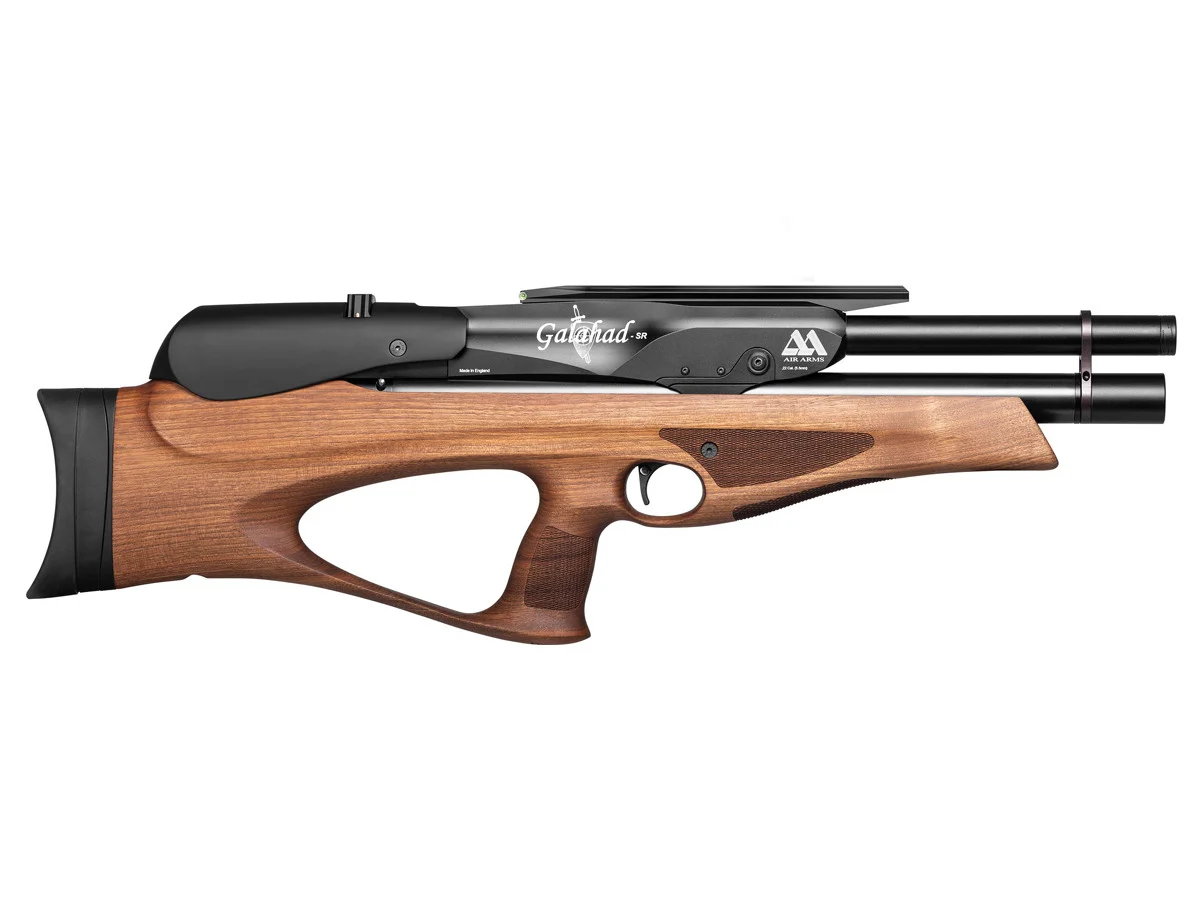
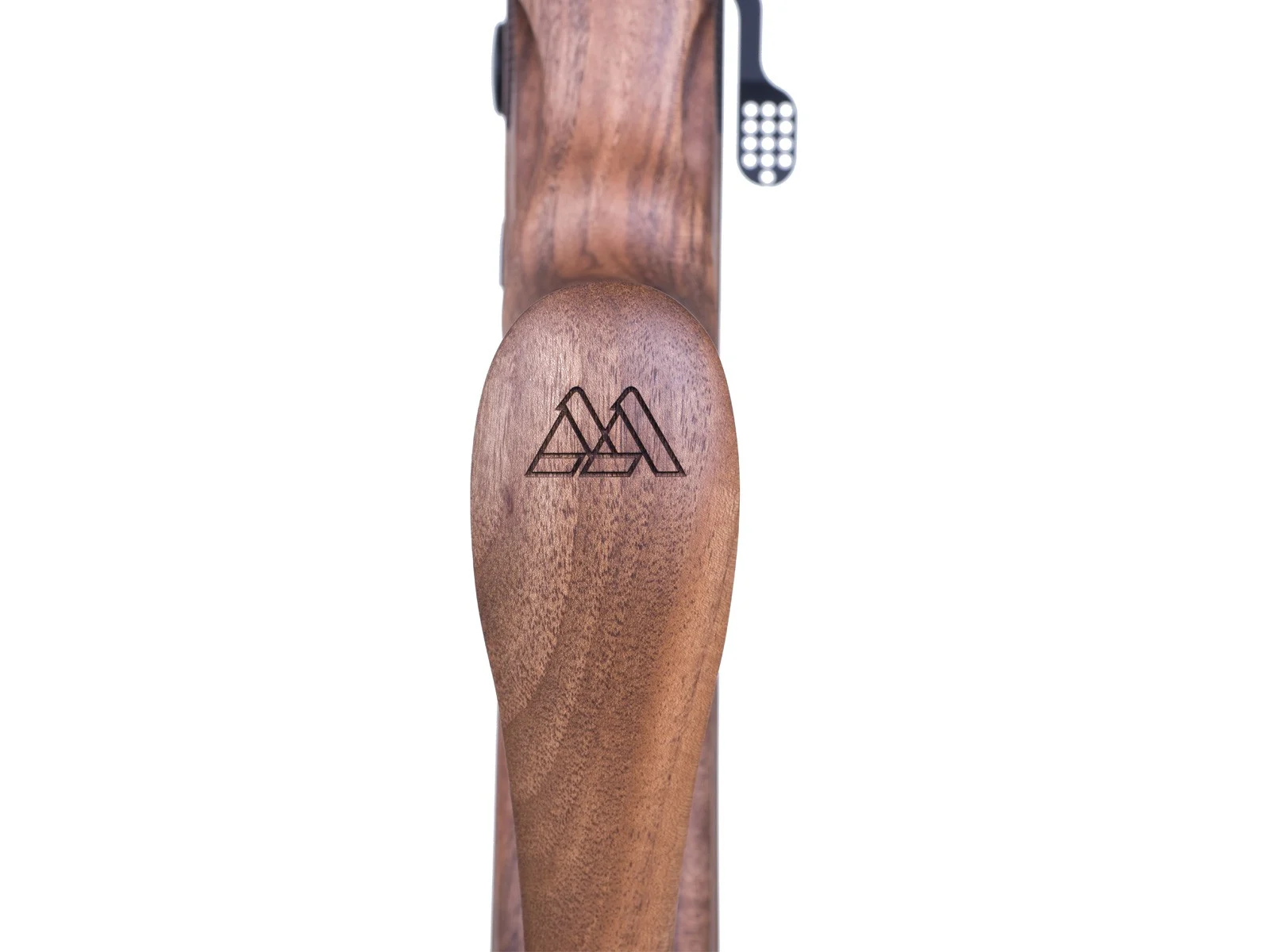
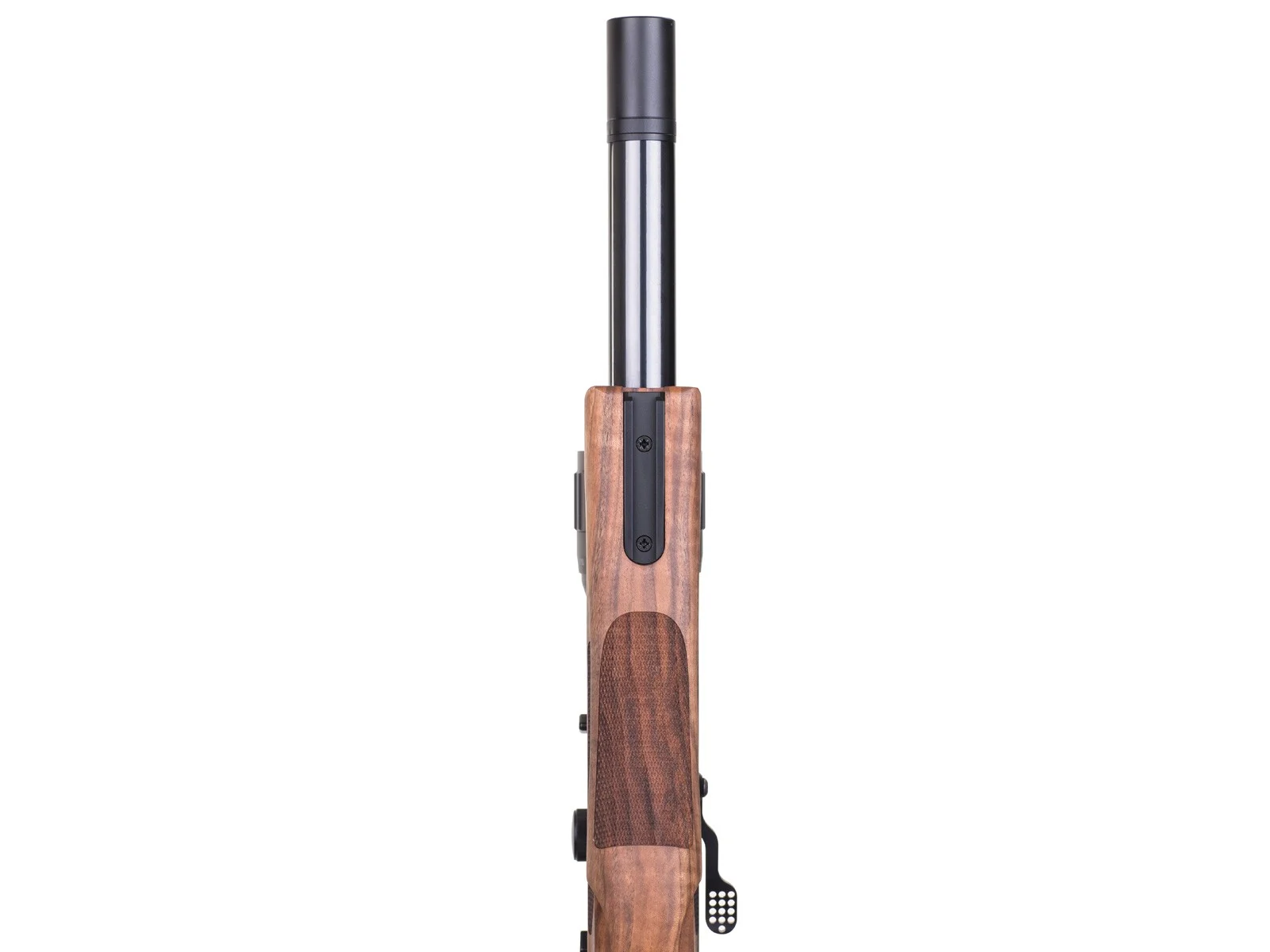
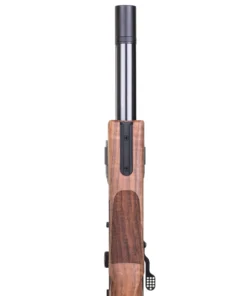
Available in .22 caliber, the carbine version of the Galahad features a compact, ergonomic walnut stock with a finely detailed pistol grip and forearm for ideal shooting comfort. The beautifully crafted walnut stock is ambidextrous and features a highly adjustable buttpad that pivots right or left depending on your preference. For added versatility, spacers can be fitted between the pad and stock to increase length of pull.
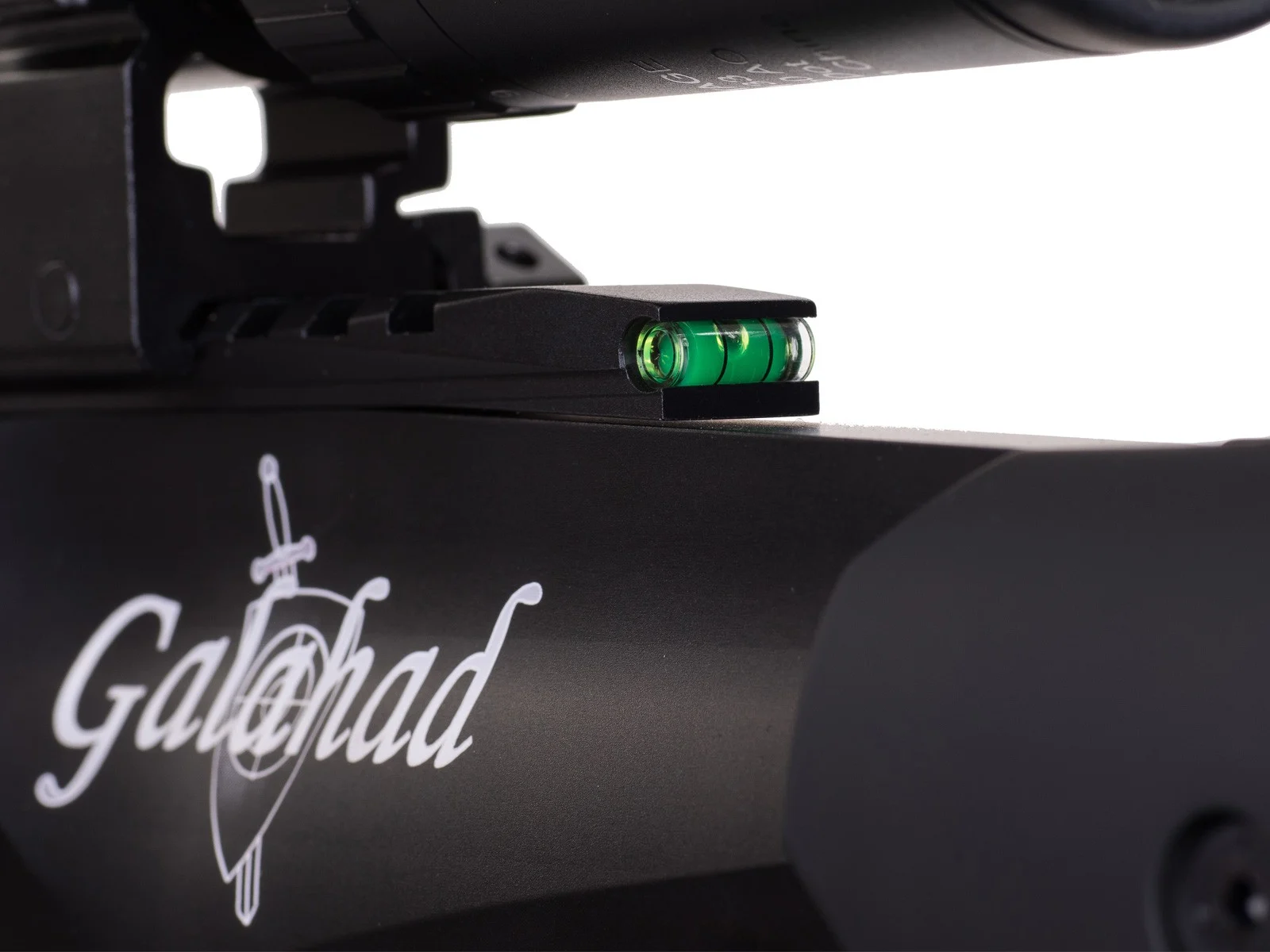
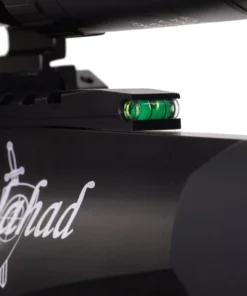
Air Arms loaded the Galahad with versatility and user friendly upgrades. With its state-of-the-art regulator, the Galahad offers exceptional shot string consistency in addition to more shots per fill versus a non-regulated PCP airgun. And because every gun offers multiple power settings, you customize the gun to your personal shooting preference based on the target you’re shooting at. For shooting at longer ranges, the integrated bubble level helps resolve cant issues, resulting in better accuracy.
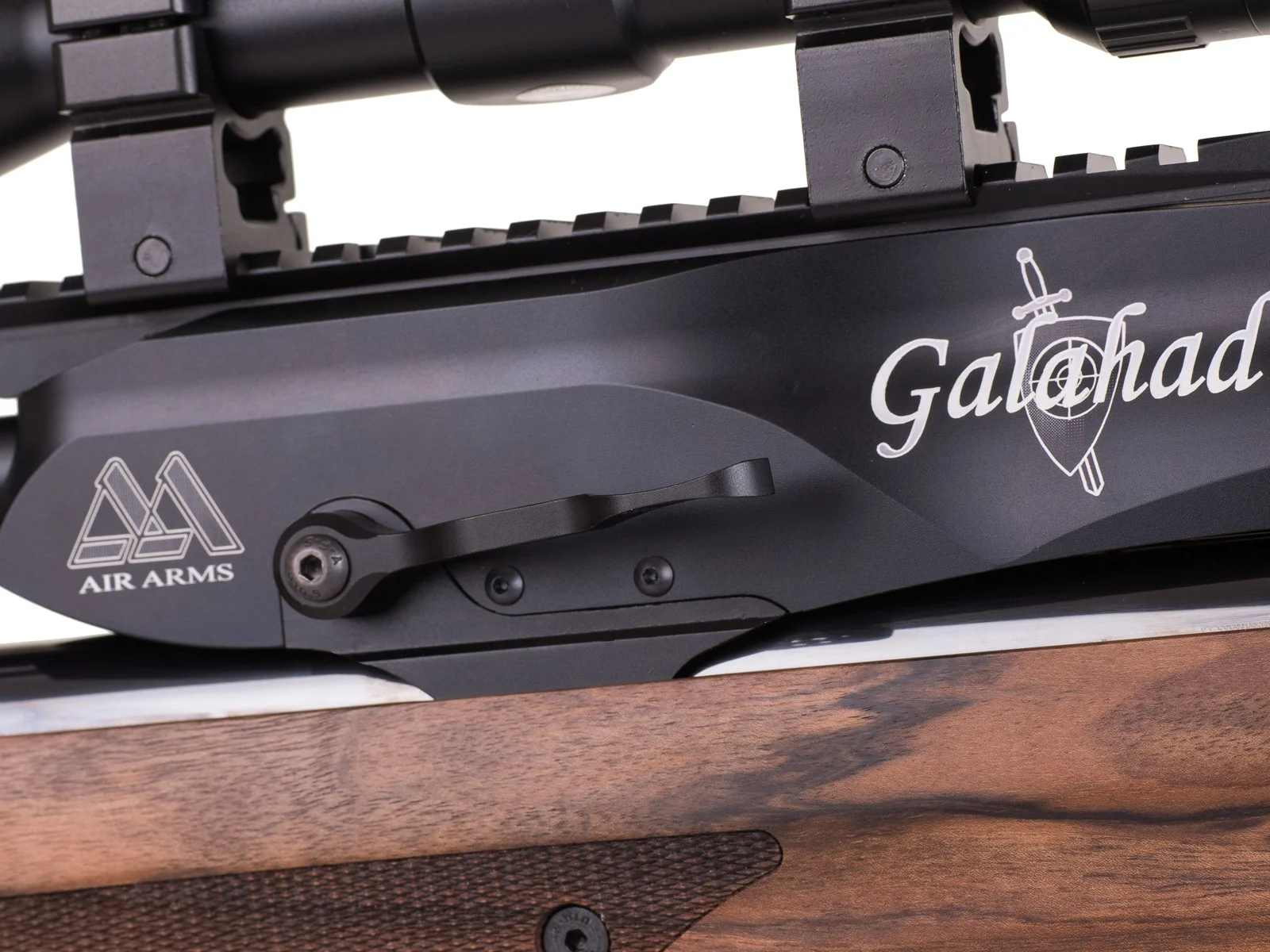
The aesthetically pleasing Galahad features a forward mounted cocking lever made from aircraft-grade aluminum at the center of the action, making it especially easy to cock and naturally comfortable. The cocking lever offers you the option of having it on either the right or left-hand side of the action making it fully ambidextrous. Body movement during the shot cycle is reduced allowing you to remain on target better. And, not only does the forward motion cocking design result in enhanced stealth because you don’t have to pull away from the rifle to cock it, but it also delivers marked improvements in shot placement.
With the attractive curves and lines of its sporting shape stock, the Galahad stands out from traditional, bulky bullpups. The center of gravity is just to the rear of the pistol grip meaning extra stability when handling the shorter action. And the distinctive shape of the pistol grip provides additional resting options in a compact shooting stance. The Galahad has a two-stage adjustable trigger, built-in pressure gauge, and a soft-touch cheekpiece that each add to shooting versatility and comfort. There is also a short rail under the forend for mounting additional accessories.
For the most sophisticated sporting air rifle loaded with features that ensure power, strength and accuracy, choose the Galahad by Air Arms.
Air Arms Galahad, Walnut
- Precharged pneumatic
- 3,625 psi/250 BAR fill pressure
- Integrated regulator
- Multiple power settings
- Compact ergonomic design
- Ambidextrous walnut stock
- Checkered pistol grip and forearm
- Unique forward motion cocking lever is transferable to either side
- Carbine version has fully shrouded barrel
- 2-stage adjustable trigger with safety
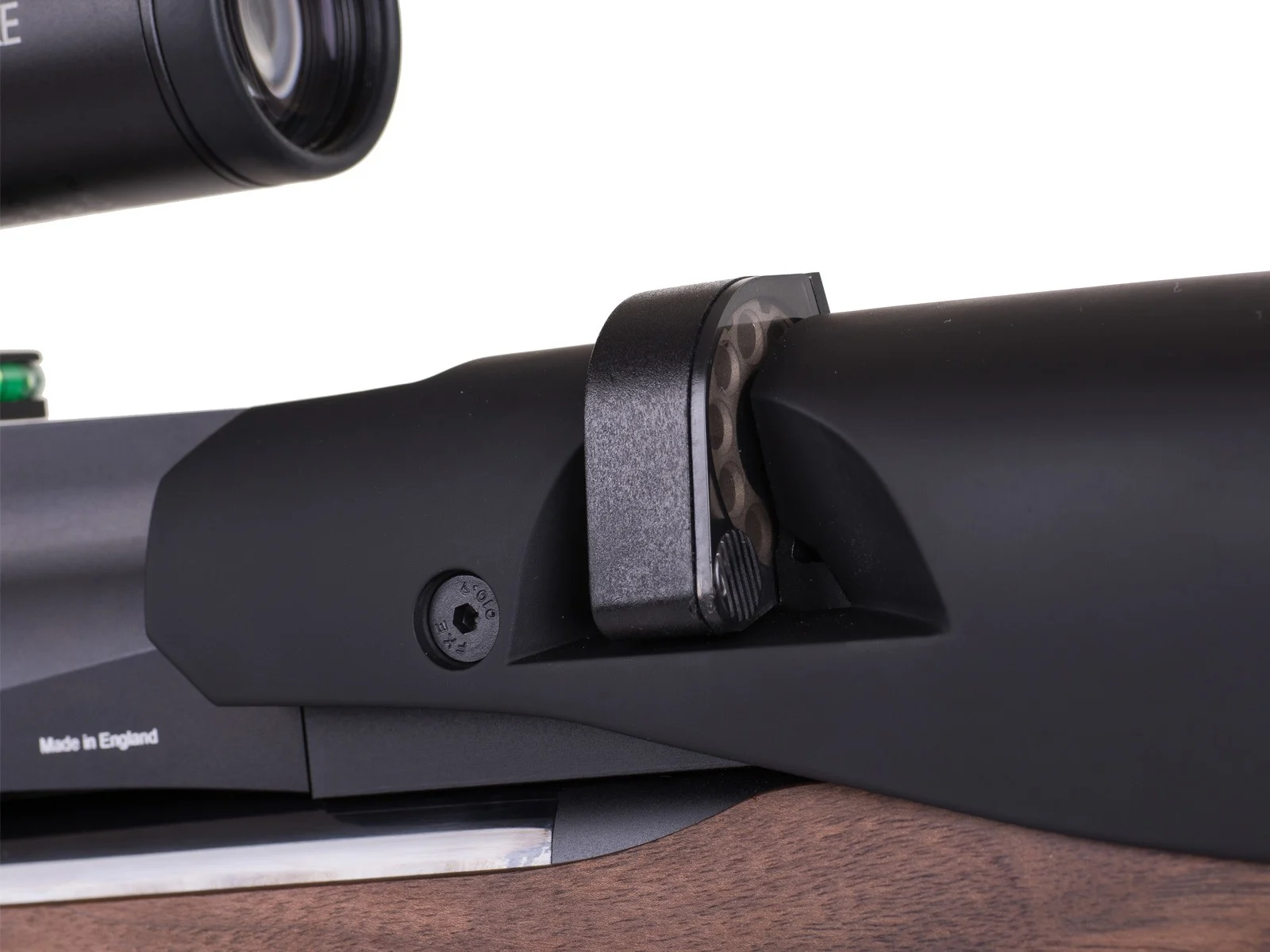
- 10-shot repeater
- Weaver/Picatinny scope rail (no open sights)
- Multi-axis adjustable, rubberized buttpad
- Black soft-touch cheekpiece
- Lothar Walther rifled barrel
- .22 caliber = 30 fpe
- Integrated level
- Built-in manometer (air pressure gauge)
- Easy-to-use probe filling
- Includes: 2, 10-shot magazines (scope not included)
- Weight: with moderator 8.3 lbs, w/out moderator 7.14 lbs
- Length: with moderator 31.6 in, w/out moderator 27.5 in
Specifications
BrandAir Arms
Caliber.22 (5.5mm)Max Velocity870 fps Muzzle Energy30 ft/lbsSuggested forSmall game hunting/target practicePowerplantPre-charged pneumaticLoudness2-Low-MediumWeight8.3 lbsFunctionRepeaterMax Shots per Fill45Cylinder Size188 ccActionSideleverFixed/adj. powerMultiple settingsShroudedYesScopeableWeaver/PicatinnyFront SightsnoneRear SightsnoneSafetyManualTriggerTwo-stage adjustableBarrelRifledBarrel Length15.55″Capacity10 round(s)Body TypeRifleStockWalnutButtplateAdjustableColorBrownOperating Pressure3625 PSI / 250 BARGrip OrientationAmbidextrousRegulatedYesIs Safe To Dry FireYesUpgradesw/ moderator
Air Arms Galahad Carbine, REG FAC Walnut Stock – Regulated Bullpup PCP Precision in a Compact Premium Platform
Air Arms Galahad Carbine, REG FAC Walnut Stock Overview
The Air Arms Galahad Carbine, REG FAC Walnut Stock is a compact regulated pre-charged pneumatic bullpup developed for shooters who want full-size performance in a shorter, highly maneuverable platform. First introduced in 2016, the Galahad departed from Air Arms’ more traditional rifle layouts by moving the action rearward while retaining proven internal technology derived from the company’s established multi-shot PCP systems. Air Arms describes the platform as combining a compact ergonomic design, regulator and valve system, transferable forward-motion cocking lever, adjustable two-stage trigger, and threaded barrel shroud.
Why Choose the Galahad Carbine?
The main reason to choose the Galahad Carbine is its combination of compact dimensions, balance, and regulated consistency.
The bullpup arrangement places much of the action behind the trigger, which reduces overall length without requiring the barrel to become excessively short. As a result, the rifle remains easy to maneuver while maintaining the barrel length needed for efficient pneumatic performance.
The centre of gravity sits slightly behind the pistol grip, which helps the rifle remain stable despite its shortened overall form. Air Arms specifically designed the platform to feel compact without becoming awkward or excessively front-heavy.
Regulated FAC Performance
The regulated FAC version uses an internal regulator to control the air pressure supplied to the firing valve.
This helps reduce velocity variation as reservoir pressure decreases.
More consistent valve pressure can support tighter groups, more predictable trajectories, and improved usable shot count.
Historical testing of the high-power Galahad reported approximately 28 ft-lb for the carbine configuration, although exact output depends on caliber, market specification, and setup.
Because this is an FAC-rated model, local licensing and ownership requirements should always be checked before purchase or use.
250 BAR High-Pressure Filling System
The regulated high-power Galahad is designed around a high-pressure reservoir.
Historical FAC specifications list filling up to approximately 250 BAR / 3,625 PSI.
A suitable high-pressure pump, diving cylinder, or compressor can therefore be used, provided it is correctly rated and clean, dry compressed air is supplied.
The rifle also incorporates a built-in pressure gauge so the shooter can monitor remaining reservoir pressure.
Correct filling is important because exceeding the specified pressure will not improve useful performance.
Compact Bullpup Handling
Compact handling is one of the Galahad Carbine’s defining advantages.
A reviewed regulated walnut carbine measured approximately 698 mm in its shorter configuration, while another FAC listing gives about 31.4 inches without a moderator and 35.5 inches with one. Exact dimensions can vary with configuration and accessories.
That compact footprint can make the rifle easier to handle from supported positions, around shooting benches, and in other confined environments where a conventional full-length rifle may feel cumbersome.
Forward-Motion Cocking Lever
One of the Galahad’s most distinctive engineering features is its forward-mounted cocking lever.
Instead of requiring the shooter to reach far backward, the lever is positioned close to the action and moves forward during operation.
Air Arms designed this arrangement to reduce unnecessary body movement and help the shooter remain aligned with the sighting system between shots.
The lever can also be transferred from one side to the other, making the rifle much more adaptable for right- and left-handed users.
10-Shot Repeating System
The Galahad uses the established Air Arms 10-shot rotary magazine system.
Two magazines were commonly supplied with the rifle, allowing shooters to prepare additional loaded magazines before a session.
The repeating system makes follow-up shooting efficient while maintaining a controlled mechanical loading process.
The magazine should always be loaded carefully, and the cocking lever should never be forced if unusual resistance is encountered.
Walnut Stock and Ergonomics
The walnut version is particularly distinctive because it combines the unconventional bullpup architecture with traditional premium woodwork.
The reviewed walnut stocks were manufactured by Minelli and feature pronounced checkering around the pistol grip and fore-end to improve grip and control.
The stock is ambidextrous, while the soft-touch cheekpiece provides a consistent head-contact surface.
This design makes the rifle easier to adapt to different shooting positions and user preferences.
Adjustable Buttpad
The rubber buttpad can be adjusted vertically and horizontally.
Air Arms also designed the system so spacers could be fitted to alter length where required.
These adjustments help the shooter establish a more natural shoulder position.
Correct stock fit supports repeatable cheek placement, comfortable trigger reach, and better optic alignment.
Two-Stage Adjustable Trigger
The Galahad incorporates an adjustable two-stage trigger with manual safety.
A properly adjusted two-stage system allows the shooter to take up the first stage before applying controlled pressure through the final release.
This helps reduce unnecessary rifle movement at the moment of firing.
Trigger adjustments should remain within safe manufacturer recommendations rather than being altered simply to achieve the lightest possible release.
Lothar Walther Barrel and Shroud
The rifle uses a rifled Lothar Walther barrel surrounded by a shroud.
Historical carbine specifications place barrel length at approximately 395 mm, or around 15.5 inches.
The shroud is threaded for compatible muzzle accessories where legally permitted.
The combination of a quality barrel, regulated air delivery, and stable bullpup chassis gives the Galahad a strong foundation for precision shooting.
Scope and Accessory Setup
Depending on configuration, the Galahad was offered with either Picatinny-style or traditional dovetail mounting arrangements.
The platform does not rely on open sights, so an appropriate optic is normally required.
A short accessory rail is also positioned underneath the fore-end, allowing suitable shooting accessories to be mounted when needed.
The integrated spirit level found on many configurations can help shooters control rifle cant during precision work.
When and Where the Galahad Makes Sense
The Galahad Carbine is particularly suited to shooters who value compactness without sacrificing regulated pneumatic performance.
Its short overall layout can be useful at established ranges and other lawful shooting locations where maneuverability matters.
The adjustable stock components and transferable cocking lever also make it suitable for shooters who want a more adaptable setup.
Because the FAC model produces substantially more energy than lower-powered versions, it should always be used with an adequate backstop and in accordance with local licensing and range requirements.
Why the Air Arms Galahad Carbine, REG FAC Walnut Stock Stands Out
The Air Arms Galahad Carbine, REG FAC Walnut Stock stands out because it combines premium walnut furniture with an unconventional yet carefully engineered bullpup action.
Its regulated power system supports consistency.
The forward cocking lever minimizes unnecessary movement.
The 10-shot magazine supports efficient repeated shooting.
The adjustable trigger and buttpad improve shooter control.
Meanwhile, the compact carbine dimensions make the rifle much easier to maneuver than many conventional full-length platforms.
For shooters seeking a distinctive premium PCP with strong Air Arms engineering heritage, regulated performance, refined walnut construction, ambidextrous ergonomics, and compact handling, the Galahad Carbine remains one of the company’s most unusual and technically interesting designs.
Practical Field Handling, Shooting Positions, Environmental Performance, Accuracy Management, and Performance Optimization
The Air Arms Galahad Carbine, REG FAC Walnut Stock is designed to make compact handling a practical advantage rather than simply a styling feature. Its short bullpup layout changes how the rifle balances, how the shooter supports it, and how quickly the action can be operated without disturbing the firing position. In real use, the best results come from combining the rifle’s mechanical consistency with disciplined body position, pressure management, optic setup, ammunition testing, and environmental awareness.
Preparing the Rifle Before Shooting
A consistent pre-shooting routine helps eliminate avoidable problems.
The shooter should check reservoir pressure, magazine condition, optic security, lever movement, stock hardware, and the visible condition of the rifle before beginning.
The muzzle should remain clear, and the loading path should be unobstructed.
If the rifle has been transported, mounting screws deserve extra attention because movement during travel can sometimes affect zero.
Finding the Correct Balance Point
The compact layout places much of the rifle’s mass closer to the shooter.
This can make the front end easier to manage compared with a long conventional rifle.
The supporting hand should be placed where the rifle naturally balances.
That position may be farther rearward than some shooters expect.
Once the correct support point is found, the rifle should feel more stable and require less muscular effort.
Standing Position
The shortened configuration can be useful when shooting unsupported.
The feet should provide a stable base.
The upper body should remain relaxed.
The supporting hand should carry the rifle rather than grip it excessively tightly.
The shooting hand should control the trigger and grip without introducing unnecessary sideways pressure.
Shorter aiming periods are usually better than holding the rifle on target for too long.
Kneeling Position
Kneeling can provide greater stability while maintaining mobility.
The supporting elbow can rest against the knee or thigh where appropriate.
The rifle should settle naturally into the shoulder.
If the shooter must twist the torso or force the muzzle onto the target, body position should be adjusted.
Natural alignment reduces fatigue and improves repeatability.
Sitting Position
Sitting can create a highly stable field position.
The elbows and knees can form a supportive structure.
The rifle should remain balanced rather than clamped tightly.
Because the action is compact, the shooter can maintain a comfortable posture without dealing with excessive overall length.
The head should remain naturally aligned with the optic.
Supported Shooting
The rifle performs well from a stable rest.
A bag, benchrest, or suitable bipod can reduce movement and allow the shooter to concentrate on trigger control.
Support pressure should remain consistent.
If the rifle is pushed firmly into the rest for one shot and lightly for the next, point of impact can change.
The goal is repeatability.
Rear Support
A rear bag can help control elevation.
Instead of lifting the rifle manually, the shooter can make small adjustments through the rear support.
This reduces muscular effort.
The rifle should settle naturally on the target.
If constant pressure is needed to hold the sight picture, the support setup should be changed.
Trigger Technique
The trigger should be pressed smoothly toward the rear.
The first stage provides preparation.
The final stage should be completed without jerking or pulling sideways.
The shooting hand should remain relaxed.
Excessive grip pressure can transfer movement into the rifle.
A predictable release is easier to reproduce when the finger moves independently.
Breathing Rhythm
Breathing naturally causes body movement.
The shooter should maintain a calm cycle.
After a normal exhale, there is usually a short pause when movement decreases.
This can be a good moment to complete the shot.
If the sight picture is not stable, the shooter should restart the breathing cycle rather than forcing the shot.
Follow-Through
Follow-through should continue after the trigger releases.
The head should remain behind the optic.
The rifle should stay supported.
The trigger finger should remain controlled.
This prevents unnecessary movement during the final part of the firing cycle and allows the shooter to observe how the sight behaved during the shot.
Using the Forward Lever Efficiently
The forward lever allows the next shot to be prepared with relatively little movement.
The shooter can remain behind the optic while cycling the action.
This is one of the practical strengths of the design.
However, the lever should still be operated deliberately.
Rapid movement should never become rough movement.
A smooth cycle supports reliability and keeps the shooter’s position more consistent.
Managing Magazine Changes
Magazine changes should be organized before the session begins.
Spare magazines should be stored where they are easy to access.
The shooter should avoid placing them loose in dusty pockets or on dirty surfaces.
When changing magazines, the action should be handled carefully and the loading area should remain clean.
A consistent routine reduces the chance of feeding problems.
Ammunition Testing
Different pellets may produce different levels of accuracy.
Testing should be systematic.
Several suitable designs should be evaluated under similar conditions.
The same distance, support position, pressure range, and optic setting should be maintained whenever possible.
Several groups should be fired before making a final choice.
Repeated results are more meaningful than one unusually good group.
Recording Group Performance
A simple record can help identify trends.
The shooter can note pellet type, group size, reservoir pressure, distance, wind, and support method.
This creates a useful performance history.
Over time, patterns become easier to see.
A particular pellet may consistently group better, or a specific pressure range may produce more predictable results.
Pressure Management
The pressure gauge should be checked during longer sessions.
The rifle performs most consistently within its normal operating range.
Once pressure falls too far, behavior may begin to change.
The shooter should learn the practical shot count available from a fill.
This helps avoid evaluating accuracy when the rifle is close to leaving its stable operating window.
Refilling Between Sessions
Refilling should be performed carefully.
The fill connection should remain clean.
The charging source should provide dry compressed air.
The gauge should be watched throughout the process.
The reservoir should only be filled to the appropriate pressure.
Allowing the system to cool and stabilize after filling can also help maintain consistency.
Optic Position
The optic should be mounted for natural eye relief.
Because the rifle is compact, proper scope placement is particularly important.
The shooter should not need to stretch the neck or pull the head backward.
A full sight picture should appear naturally when the rifle is shouldered.
Once the correct position is found, it should remain unchanged.
Controlling Cant
A compact rifle can sometimes be tilted without the shooter immediately noticing.
Cant can shift point of impact, especially as distance increases.
The shooter should check that the rifle remains level.
A visual level reference can be useful during precision shooting.
Consistent cant control is more important than repeatedly adjusting the optic to compensate for inconsistent technique.
Wind Awareness
Wind should always be considered during longer-range shooting.
Vegetation, flags, dust, and other indicators can provide useful information.
Conditions near the shooter may differ from those near the target.
A horizontal group shift may therefore be caused by wind rather than the rifle.
Observing conditions before adjusting the optic prevents unnecessary corrections.
Temperature Effects
Temperature can influence reservoir pressure and equipment behavior.
A rifle taken from a hot environment into cooler conditions may need time to stabilize.
Likewise, equipment left in direct sunlight can warm quickly.
For serious accuracy testing, the rifle should be allowed to adjust to ambient conditions before results are judged.
Humidity and Moisture
Damp conditions can affect comfort and equipment.
The walnut stock may feel different when wet.
The optic can fog, and metal surfaces can collect moisture.
After outdoor use, the rifle should be dried carefully before storage.
A damp case should also be allowed to dry separately.
Managing Fatigue
Compact dimensions do not eliminate physical fatigue.
Long sessions can still create shoulder, neck, and arm tension.
As fatigue increases, trigger control and head position often become less consistent.
Short breaks can help restore technique.
Once the shooter begins forcing the position, group size may increase even though the rifle is still performing correctly.
Field Movement
The compact format makes the rifle easier to carry and maneuver in confined areas.
However, the muzzle should always remain controlled.
The lever, optic, and stock should be protected from impact.
The rifle should never be used as a walking aid or placed carelessly against unstable surfaces.
Good handling preserves both safety and equipment condition.
Safe Backstop Selection
A suitable backstop is essential.
The shooter should know what lies beyond the target.
Hard surfaces that can create unpredictable ricochets should be avoided.
The firing location should be appropriate for the rifle’s power level.
Local rules concerning ownership, transport, range use, and field shooting should always be followed.
Practical Performance Optimization
The Air Arms Galahad Carbine, REG FAC Walnut Stock performs best when the shooter creates a consistent system around it.
Balanced support improves stability.
Correct optic placement improves head position.
Smooth trigger control protects sight alignment.
Pressure management keeps performance predictable.
Careful ammunition testing identifies reliable combinations.
Wind and temperature awareness help explain changes downrange.
When these elements are combined with disciplined handling and regular maintenance, the rifle becomes a highly capable compact platform.
Troubleshooting, Long-Term Ownership, Service Planning, Reliability Checks, and Practical Value
Long-term ownership of a regulated bullpup rifle depends on understanding how the system normally behaves and recognizing when that behavior begins to change. Small changes in pressure retention, loading feel, trigger response, accuracy, or sight alignment can provide useful warning signs before a more serious issue develops. A careful owner does not need to constantly dismantle the rifle. Instead, consistent observation, sensible maintenance, clean filling practices, and timely professional service provide the strongest foundation for dependable performance.
Recognizing a Sudden Accuracy Change
A sudden loss of accuracy does not automatically mean that the internal mechanism has failed.
The optic should be checked first.
Mounts, screws, rail position, and eye relief should all be inspected.
A loose scope can create dramatic point-of-impact changes.
After that, ammunition condition, barrel cleanliness, pressure level, weather, and shooting technique should be considered.
Troubleshooting is most effective when possible causes are checked one at a time.
Checking for Pressure Loss
Pressure retention is one of the easiest ways to monitor the health of the pneumatic system.
If the rifle is stored at a normal pressure and the gauge drops significantly without use, a leak may be present.
The owner should avoid repeatedly refilling the reservoir without investigating the cause.
A leaking seal, valve, fitting, or connection can worsen if ignored.
High-pressure repairs should be handled carefully and, where necessary, professionally.
Identifying Slow Filling Problems
If filling takes longer than expected, the problem may not be with the rifle itself.
The charging source should also be inspected.
A pump, compressor, filter, hose, or connector can reduce airflow if it is damaged or restricted.
The fill connection should remain clean and properly seated.
A slow fill should be investigated before the charging equipment is forced to work harder.
Unusual Gauge Behavior
The pressure gauge should respond smoothly.
A gauge that sticks, fluctuates strangely, or shows inconsistent readings deserves attention.
The owner should compare the reading with the charging equipment where possible.
A damaged gauge can make pressure management difficult.
Because reservoir pressure is important for both safety and consistency, uncertain readings should not be ignored.
Rough Cocking Lever Operation
The cocking lever should feel smooth and predictable.
If resistance increases suddenly, the first step is to inspect the magazine and loading path.
A damaged pellet, misaligned magazine, or debris can create resistance.
The mechanism should not be forced.
If the action remains rough after obvious causes are removed, the rifle may require technical inspection.
Magazine Feeding Problems
Feeding problems often begin with ammunition condition or magazine cleanliness.
Pellets should sit correctly in the chambers.
Damaged skirts can interfere with rotation.
Dust or debris may also cause rough indexing.
If one magazine causes repeated problems while another functions normally, the magazine itself is likely the first component to inspect.
Trigger Feel Changes
The trigger should remain predictable once properly adjusted.
A sudden change in pull weight, first-stage movement, or break quality should be taken seriously.
The rifle should not be used continuously if the trigger begins behaving unpredictably.
The owner should avoid making random adjustments.
A structured inspection is safer than repeatedly turning screws without understanding the cause.
Unexplained Vertical Grouping
Vertical group movement can come from several sources.
Changing pressure, inconsistent ammunition, shifting head position, poor follow-through, or environmental conditions can all contribute.
The reservoir pressure should be checked.
The optic should also be inspected.
If the issue appears only after many shots, it may be related to pressure range or shooter fatigue rather than a permanent mechanical fault.
Unexplained Horizontal Grouping
Horizontal spread is often influenced by wind, rifle cant, or inconsistent trigger pressure.
The shooter should confirm that the rifle is level before making major sight adjustments.
Scope mounts should be secure.
The same ammunition should be used during testing.
Changing multiple variables at once makes troubleshooting more difficult.
Reduced Shot Consistency
A regulated system should provide a stable firing cycle through its useful pressure range.
If the rifle begins to behave inconsistently, several factors should be considered.
Reservoir pressure, regulator condition, valve behavior, ammunition, temperature, and filling quality can all play a role.
A chronograph can be useful for diagnosis where appropriate and legal, but mechanical adjustments should not be made casually.
Changes in Sound
Owners often become familiar with the normal firing sound of their rifle.
A sudden increase or decrease in sound can indicate a change.
A loose front-end component, damaged seal, changing pressure, or accessory movement may be responsible.
The rifle should be inspected before continued heavy use.
Sound changes are useful diagnostic clues when combined with other observations.
Stock Movement
The walnut stock should remain securely attached.
Movement between the stock and action can affect handling and zero.
Mounting screws should be checked periodically.
However, they should not be overtightened.
Excessive force can damage wood or threads.
Any visible crack near a mounting point deserves immediate attention.
Buttpad and Cheekpiece Stability
Adjustable components should stay where they are set.
If the buttpad or cheekpiece moves during use, the shooter’s head and shoulder position can change.
This may produce apparent accuracy problems.
Adjustment hardware should remain secure but not excessively tight.
Once a comfortable setup is found, it should be marked or recorded so that it can be restored if moved.
Rail and Accessory Movement
Mounted accessories can create small but important changes in balance.
A loose accessory can also make noise or interfere with handling.
The rail should be inspected for secure attachment.
Mounted equipment should be checked periodically.
If accuracy changes after a new accessory is installed, its weight and mounting position should be considered during troubleshooting.
Moisture-Related Problems
Moisture can affect both external and internal components.
Condensation may develop when the rifle is moved from a cold environment into a warm one.
The rifle should be allowed to acclimate gradually.
If the stock or metalwork becomes damp, it should be dried before storage.
Repeated exposure to moisture can eventually affect finish, hardware, and sealing components.
Service Intervals
There is no need to dismantle the rifle after every season.
Professional servicing should be based on condition, usage, performance changes, and manufacturer guidance.
A rifle that holds pressure, cycles smoothly, and maintains accuracy may only need routine care.
However, persistent leaks, regulator problems, trigger irregularities, or action roughness should be addressed promptly.
Choosing Professional Service
High-pressure pneumatic systems require appropriate tools and knowledge.
Internal regulator, valve, reservoir, and pressure-bearing repairs should not be improvised.
A qualified technician can diagnose issues safely and replace worn components correctly.
Professional service can also reduce the risk of damaging expensive internal parts through unnecessary disassembly.
Keeping Spare Consumables
It can be useful to keep basic consumables on hand.
Suitable seals, magazine components, cleaning materials, and approved lubricants may reduce downtime.
However, spare parts should match the exact configuration.
Generic components should not be installed simply because they appear similar.
Pressure-system compatibility is especially important.
Maintaining a Service Record
A simple ownership record can make maintenance easier.
The owner can record filling dates, pressure behavior, servicing, seal replacement, optic changes, ammunition testing, and any unusual symptoms.
Over time, this history becomes valuable.
It helps identify when a problem began and whether a previous repair solved it.
Evaluating Long-Term Operating Cost
A pneumatic rifle requires some supporting equipment.
Charging equipment, maintenance materials, spare magazines, optics, and occasional servicing should be considered part of long-term ownership.
The advantage is that the rifle can deliver many shooting sessions from the same mechanical platform when properly maintained.
Reliable equipment usually provides better value than constantly replacing poorly maintained components.
Preserving Resale Condition
Careful ownership can also preserve resale value.
The walnut stock should remain free from unnecessary damage.
Original components and documentation should be kept where possible.
Service records can reassure a future buyer that the rifle has been maintained properly.
Avoiding unnecessary modifications also helps preserve originality.
Understanding When Not to Adjust
One of the most important ownership skills is knowing when to leave the rifle alone.
If accuracy is stable, pressure retention is good, and the action is smooth, unnecessary internal adjustment provides little benefit.
Constant tuning can create problems that did not previously exist.
A well-performing rifle should be enjoyed rather than repeatedly altered.
Planning for Long-Term Storage
If the rifle will not be used for an extended period, it should be cleaned externally, inspected, and stored securely in a dry environment.
The optic should remain protected.
The stock should not be compressed by heavy objects.
Storage pressure should follow manufacturer guidance.
Before returning the rifle to use, a full visual inspection should be completed.
Practical Ownership Value
The strongest long-term value comes from reliability, predictable handling, serviceability, and consistent performance.
A rifle that retains pressure, cycles smoothly, keeps its zero, and maintains accuracy becomes easier to trust.
Routine inspection reduces surprises.
Proper storage protects the stock and metalwork.
Clean filling protects internal components.
Careful troubleshooting prevents unnecessary repairs.
Professional servicing addresses problems that should not be handled casually.
With disciplined ownership, the platform can remain smooth, accurate, and dependable across many years of regular shooting.
Be the first to review “Air Arms Galahad Carbine, REG FAC Walnut Stock”
Related products


Air Arms

Air Arms

Air Arms

Air Arms
Air Arms

Reviews
There are no reviews yet.