
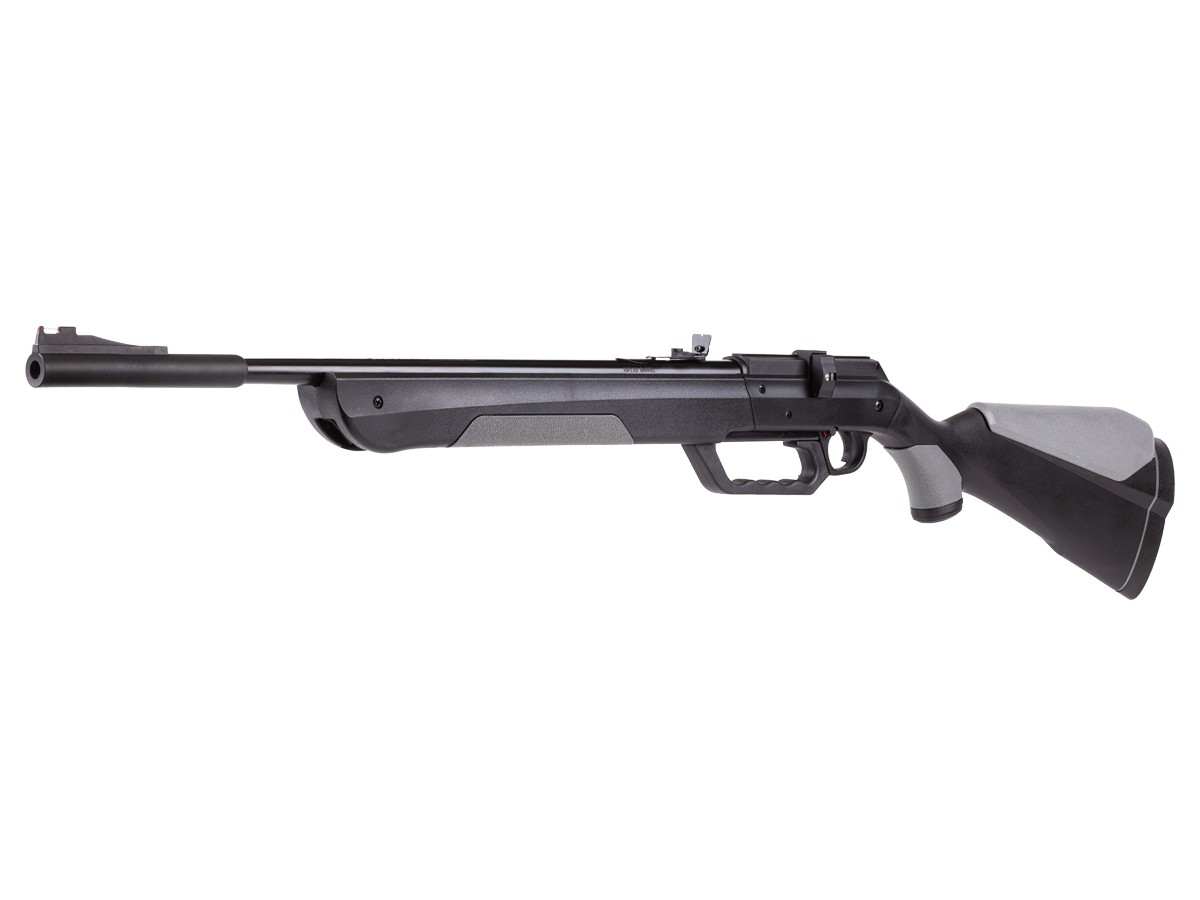
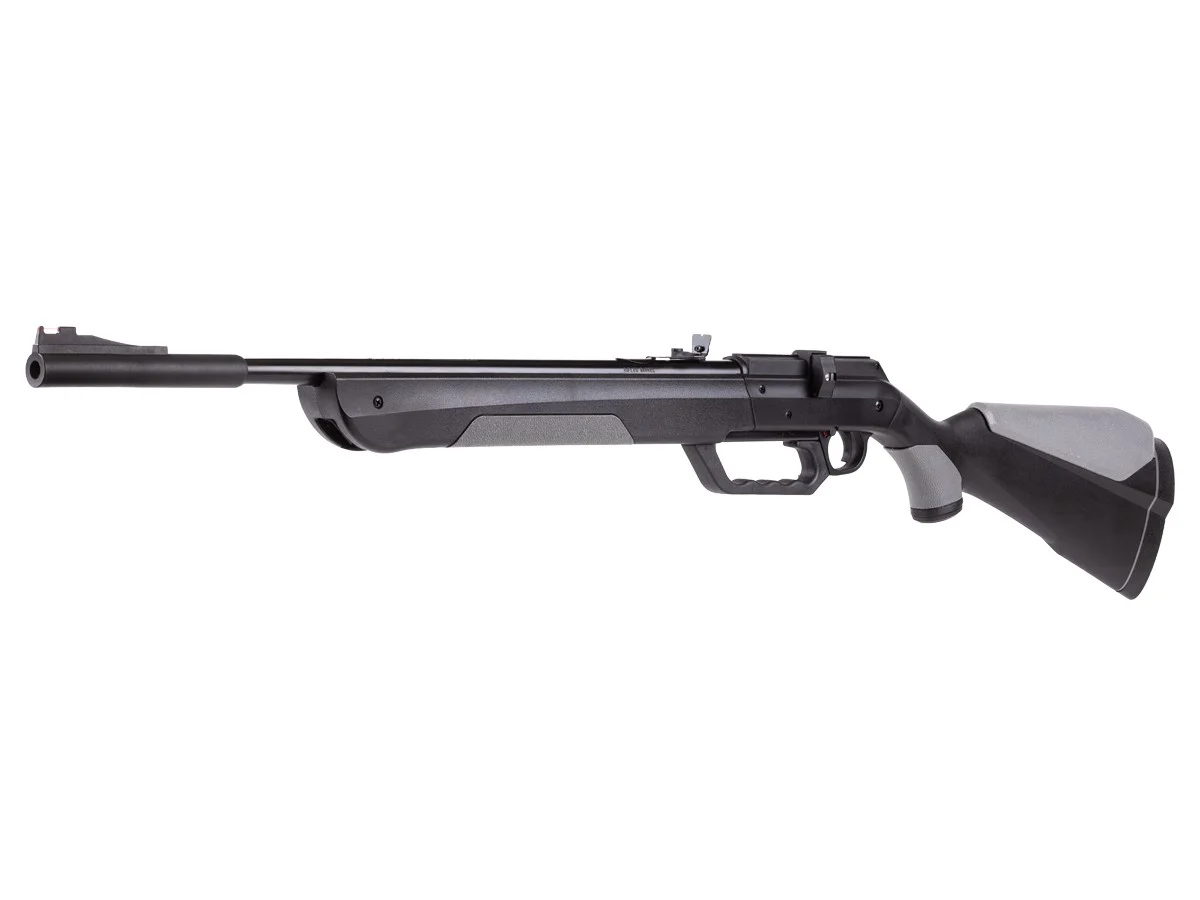





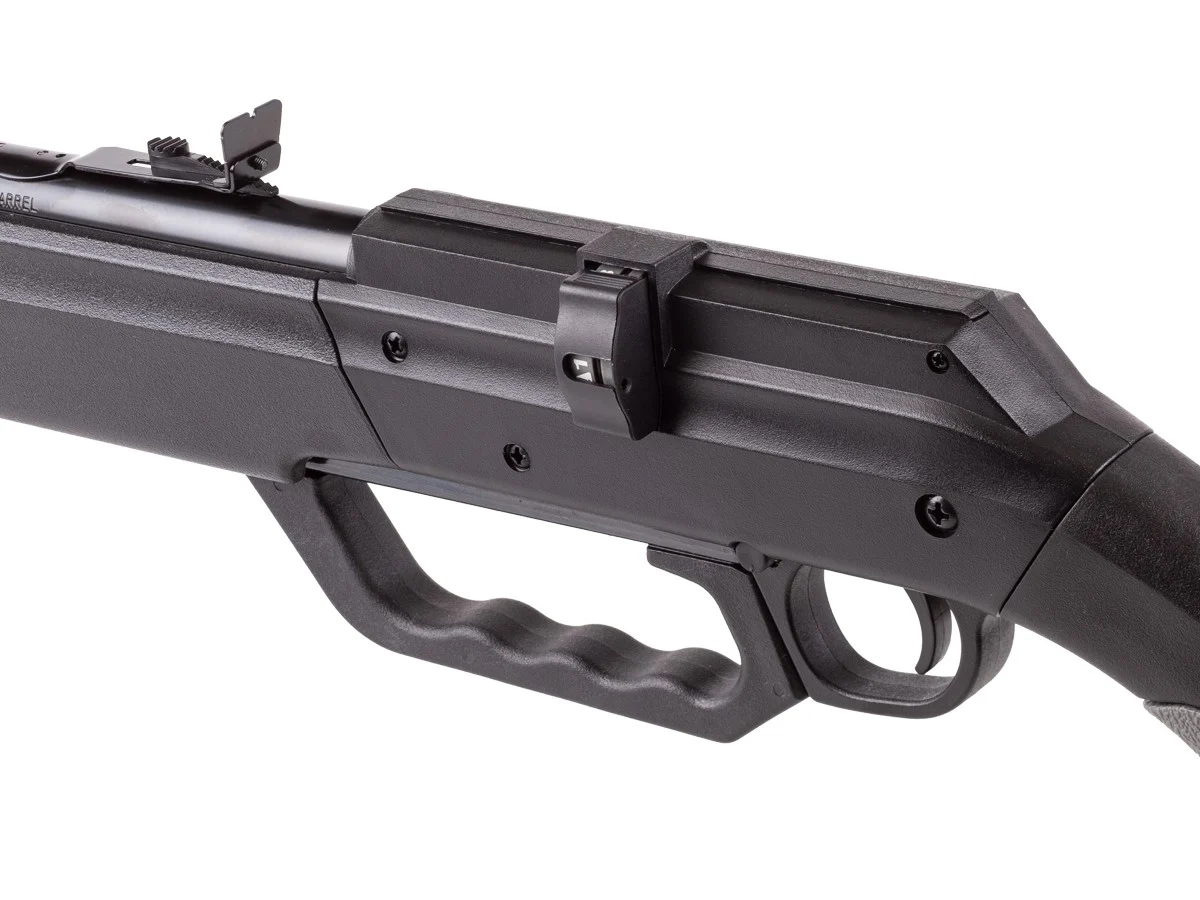







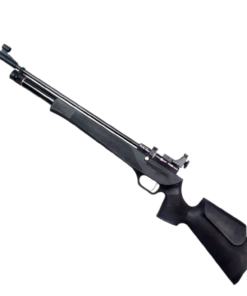
Crosman Vapor Max Pump Air Rifle
€100.00
Description
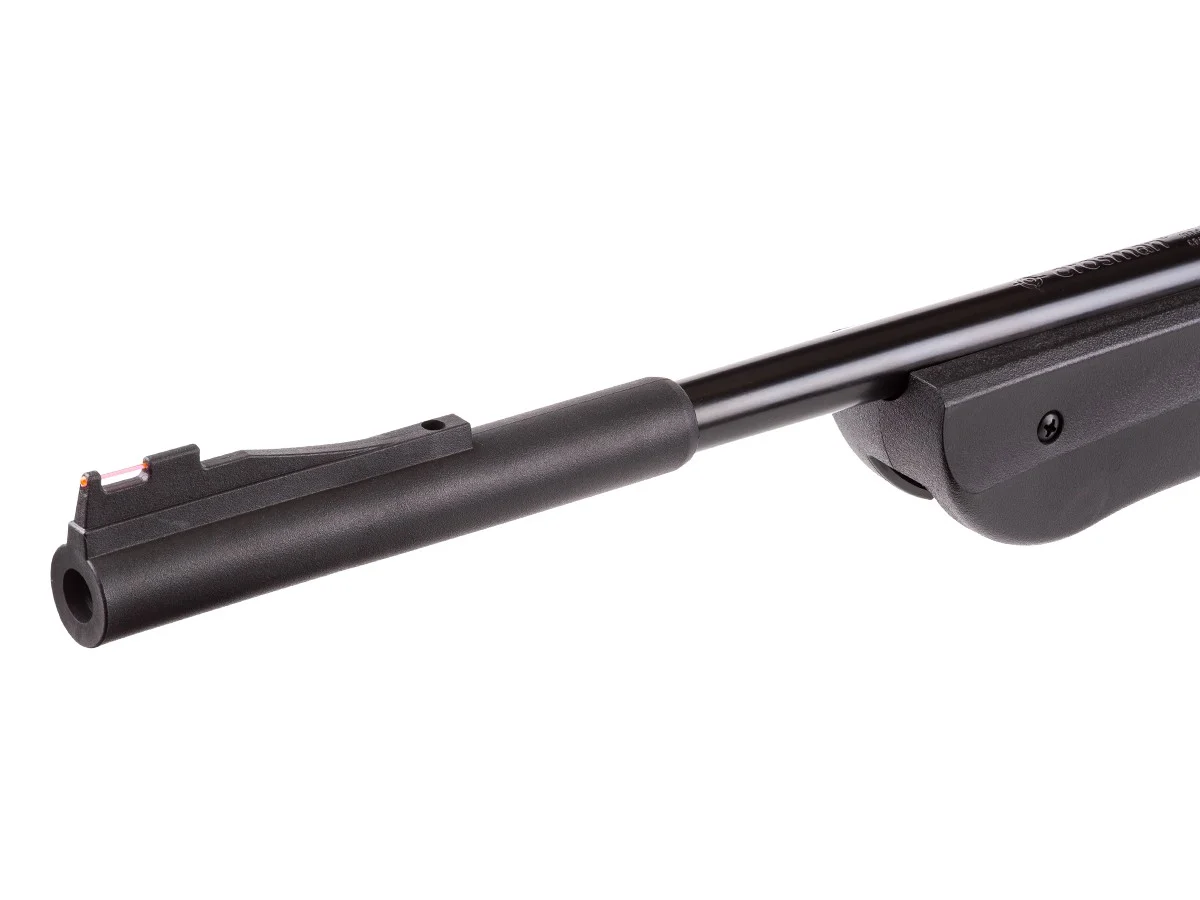
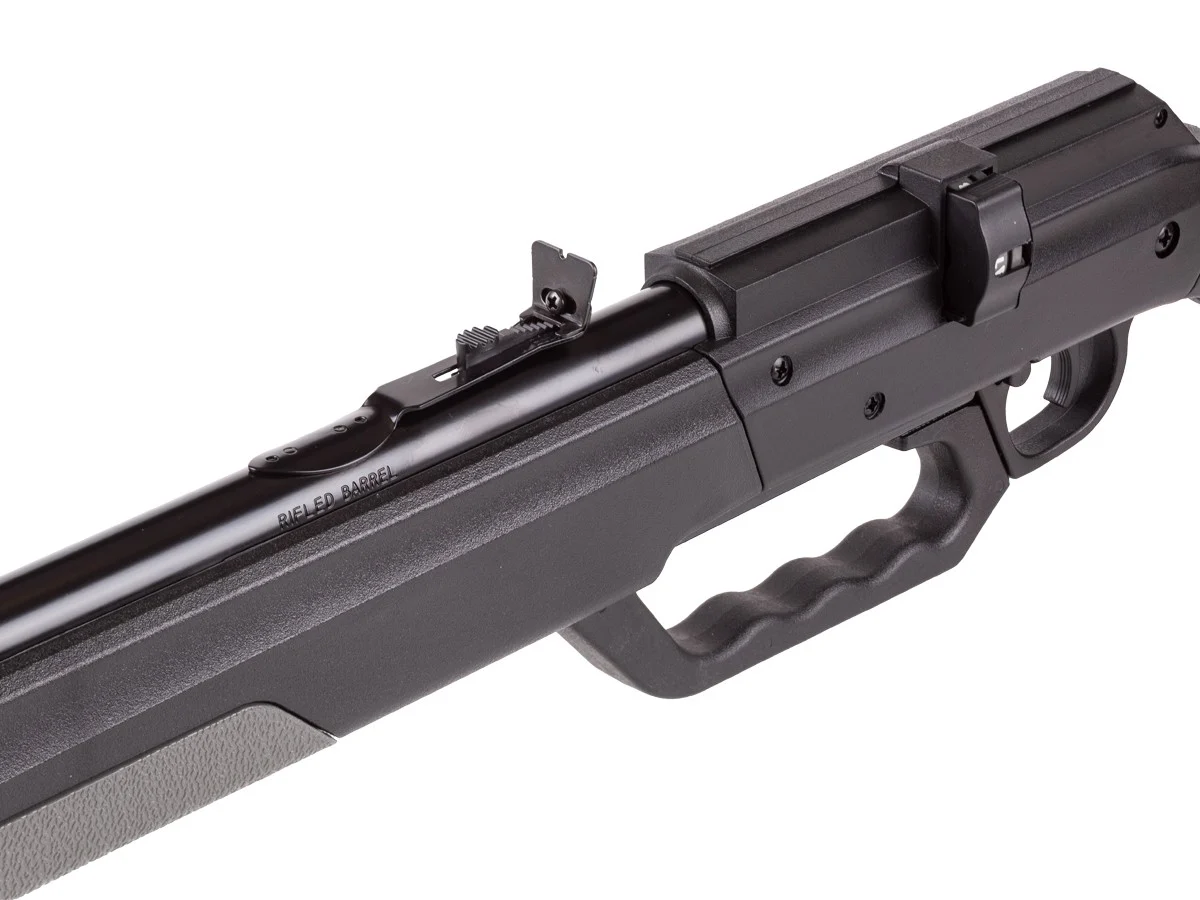
The Crosman Vapor Max Bolt-Action is a versatile, multi-pump pneumatic .177 caliber pellet rifle. It offers a 10 round rotary magazine and is a great all-around shooter. This rifle can be pumped between 1 and 10 times, with the first pump requiring 5.4 lbs of effort increasing to 27.4 lbs on the tenth pump. A 2-stage trigger, front fiber optic, and adjustable rear sight help put accurate rounds on target, while a 21.75” barrel with a 1:12 twist stabilizes pellets.
It weighs 4.6 lbs and has an overall length of 40.75 inches. This is a great rifle without the need for an outside power source, and it can launch pellets to speeds of up to 1,100 FPS. All you need are pellets and a target to shoot at.
The Crosman Vapor Max Bolt-Action Multi-Pump Pneumatic .177 Caliber Pellet Rifle is great for plinking, small game control, or as a survival rifle. Buy yours from Pyramyd AIR today.
Crosman Vapor Max Pellet Rifle
- .177 caliber
- Weight: 4.6 lbs
- Length: 40.75″
- Barrel: 21.75″
- Trigger pull: 3.1 lbs
- Multi-pump pneumatic
- Number of possible pumps: 1-10
- Max. velocity (alloy pellets): 1100 FPS
- Max. velocity (lead pellets): 900 FPS
- Max. energy: 14 FPE
- Repeater
- Manual safety
- 11mm Dovetail rail
- Fiber optic front sight
- Adjustable rear sight
- Bolt action
- Plastic buttplate
- Two stage non-adjustable trigger
- Includes two 10-round rotary magazines
Specifications
BrandCrosman
Caliber.177 (4.5mm)Max Velocity1100 fpsMuzzle Energy14 ft/lbsSuggested forSmall game hunting/plinkingPowerplantMulti-pump pneumaticLoudness3-MediumNoise Level84.46 dB Weight4.6 lbsFunctionRepeaterActionBolt-actionScopeable11mm dovetailFront SightsFiber OpticRear SightsAdjustableSafetyManualTriggerTwo-stage non-adjustableTrigger Pull3.1 lbsBarrelRifledBarrel Length21.75″Overall Length40.75″Capacity10 round(s)Cocking Effort1-10 PumpsBody TypeRifleStockSyntheticButtplatePlasticColorBlackGrip OrientationAmbidextrousIs Safe To Dry FireYes
Crosman Vapor Max Pump Air Rifle – Variable-Pump Control, 10-Shot Magazine Capacity and .177-Calibre Performance
Crosman Vapor Max Pump Air Rifle Overview
A Modern Variable-Pump Pellet Rifle
The crosman vapor max is a .177-calibre variable-pump pneumatic rifle designed for recreational target shooting, organised plinking and other lawful sporting applications. Unlike a spring-powered model, it stores compressed air through repeated movements of the forearm. The shooter can therefore vary the number of pumps within the manufacturer’s approved range to influence velocity and effort.
Crosman describes the Vapor Max as the newest evolution in its variable-pump rifle category. The rifle includes two 10-shot magazines, while current listings identify a bolt-action loading system, .177 pellet chambering and an overall length of approximately 41.55 inches. Crosman also states that the model can exceed 1,000 FPS when suitable lightweight alloy ammunition is used.
Why Choose the Vapor Max?
The main attraction is its independence from disposable cartridges or external filling equipment. A pcp air rifle and pcp rifle require a pump, compressor or high-pressure cylinder to charge their onboard reservoirs. By contrast, this rifle creates pressure through its integrated pumping arm.
The adjustable pumping process also gives the owner greater control over the shooting experience. Fewer pumps can be used for lower-energy paper-target practice where permitted, while the approved maximum pump count provides greater velocity. However, exceeding the manual’s stated limit can damage the air system and must be avoided.
Its 10-shot magazine also separates it from many traditional single-shot multi-pump designs. Consequently, the user can prepare several pellets while still operating the bolt between shots.
Crosman Air Rifles and Brand Background
crosman is an established manufacturer of air-powered sporting equipment. Searches for crossman, crosman crosman, crosmancrosman or similar misspellings normally refer to the same company. Crosman describes itself as an international designer and marketer of pellet rifles, crosman bb guns, pistols, ammunition and related products.
The wider crosman air rifles catalogue includes variable-pump, break-barrel, CO₂ and pneumatic platforms. Therefore, buyers should compare power source, ammunition, magazine design and intended use rather than assuming every model operates in the same way.
Pellet Rifle Versus BB Gun Designs
The Vapor Max is primarily presented as a pellet rifle chambered for crosman 177 pellet ammunition. A lead or alloy pellet differs from a steel bb gun projectile in shape and barrel engagement.
Search terms such as bb rifle, bb gun rifle, bee bee gun rifle, bb gunning, crosman bb and bb gun pistol describe a broad range of smoothbore or dual-ammunition products. They should not automatically be applied to this model.
Likewise, guns bb pistol, arp bb gun and full auto bb gun refer to platforms with completely different actions and feeding systems. Only ammunition approved for the rifle should be loaded.
Crosman M4-177 and Pumpmaster Alternatives
The crosman m4-177 is another variable-pump model. It uses .177 pellets and BBs, while the Vapor Max adds a modern 10-shot pellet-magazine arrangement.
The crosman 760 pumpmaster, repeated in searches as crosman 760 pumpmaster, is one of the company’s best-known multi-pump rifles. Anyone looking for a crosman 760 manual should use the exact model number because operating instructions vary between generations.
Other conventional pump alternatives include crossman 2100, 2100 classic crosman, crosman legacy 1000 and crosman 362. These models differ in calibre, magazine system, stock design and maximum performance. The official catalogue currently lists the 2100 Classic, Legacy 1000, 760 Pumpmaster, M4-177 and 362 within the company’s rifle range.
PCP and Competition Alternatives
A pcp air rifle stores high-pressure air inside a pre-filled reservoir and normally offers low-effort repeat shooting. Crosman also produces precision pneumatic equipment such as the crosman challenger, which targets formal competition rather than general plinking.
The Vapor Max is simpler because no external high-pressure charging system is required. Nevertheless, pumping must be repeated before each discharge, so it does not provide the uninterrupted shot cycle of a PCP platform.
Break-Barrel Alternatives
The crosman f4, also searched as crossman f4, uses Nitro Piston technology rather than an integrated pump. The crosman shockwave and crosman vantage plus belong to similar break-barrel categories.
A brake barrel bb gun is usually intended to mean a break-barrel rifle, although many break barrels fire pellets rather than BBs. A break-barrel stores energy by cocking the barrel once, while the Vapor Max requires multiple pumping strokes.
CO₂ Pistols and Revolvers
The crosman vigilante, crossman vigilante, crosman snr357, crosman c11, crosman 2240 and crosman 2300 belong to pistol or revolver categories. A pellet pistol, air gun pellet co2 revolver, or general air rifle and air pistol comparison should consider grip style, sight radius, power source and intended distance.
The crosman 1322 is a multi-pump .22-calibre pistol, while the 2240 uses CO₂. These compact designs offer portability, but the shoulder stock and longer sighting arrangement of a rifle generally support greater stability.
crosman co2 cartridges should only be used in equipment designed for them. They are unnecessary for the Vapor Max because its pressure is created manually.
Full-Auto CO₂ Platforms
The crosman dpms sbr, crosman dpms sbr full auto, crosman full auto bb gun, crosman full auto, crosman ak 1 and crossman st1 are CO₂-powered repeating BB platforms. They focus on rapid recreational shooting and tactical styling.
The Vapor Max does not offer automatic operation. Its bolt must be cycled, and the forearm must be pumped before the next shot. This slower process encourages deliberate aiming and conserves ammunition.
RepeatAir and Tactical Models
The 1077 crosman and crosman 1077 tactical use CO₂ and rotary pellet magazines. They provide faster follow-up capability but depend on cartridge temperature and remaining gas pressure.
The Vapor Max provides a different advantage: its power source can be restored manually without buying cartridges. This makes it suitable for shooters who prefer self-contained operation.
Maintenance and Crosman Pellgun Oil
crosman pellgun oil is intended for specific pneumatic and CO₂ sealing applications. However, lubricants should only be applied where the correct manual directs.
Excessive oil can attract dirt or enter areas where it does not belong. The pumping linkage, seals and barrel should not be treated casually with general-purpose petroleum products.
Support, parts and warranty assistance are available through Crosman’s customer-service system.
Discounts and Buying Considerations
A crosman discount code may be offered during manufacturer or retailer promotions, but availability changes over time. Buyers should compare the included magazines, warranty, shipping terms and seller reputation rather than selecting a listing solely by price.
The rifle is currently offered by several retailers in .177 calibre, with two 10-shot magazines highlighted as a central feature.
Final Buying Assessment
The Crosman Vapor Max suits shooters who want a self-contained variable-pump air rifle with more magazine capacity than a traditional single-shot pump design. It avoids CO₂ cartridges, high-pressure tanks and break-barrel recoil while retaining manual control over the pumping cycle.
Its strongest qualities are the 10-shot rotary system, adjustable pneumatic output, familiar bolt action and widely available .177 pellets. With the correct pump count, suitable ammunition, a safe backstop and consistent technique, it can provide economical, controlled and enjoyable target performance.
Variable-Pump Operation, Accuracy, Handling and Practical Ownership
Self-Contained Pneumatic Power
The rifle creates its own compressed air through repeated movement of the pumping arm. Each complete stroke adds pressure to the internal chamber, allowing the shooter to prepare the rifle without a separate cylinder, compressor or disposable cartridge.
This design makes the platform practical for casual target sessions because the power source is built directly into the rifle. However, the approved pumping range must always be followed. Too few strokes may produce weak performance, while excessive pumping can damage seals, valves or linkage components.
Every stroke should be smooth and complete. Short, rushed or partial movements can create inconsistent pressure and make accuracy more difficult to evaluate.
Adjusting Power Through Pump Count
One of the main advantages of a variable-pump system is the ability to change output within the manufacturer’s stated limits. Lower pump counts may suit short-range paper targets, while additional strokes can provide greater velocity when a longer shooting distance requires it.
The same pump count should be used throughout an accuracy test. Changing the number of strokes between shots changes internal pressure and may shift the point of impact.
A simple notebook can help track the number of pumps, pellet type, distance and group size. Over time, this information shows which combination provides the most consistent performance.
The owner should never assume that maximum pumping automatically produces the best accuracy.
Pumping Technique
The rifle should be held securely while the forearm is moved through its full arc. Fingers must remain away from pinch points around the linkage.
The pumping arm should be closed firmly but not slammed. Repeated impact can place unnecessary stress on hinges, pins and surrounding components.
A stable working position reduces fatigue. Some users may find it easier to support the rifle against the body while operating the forearm, although the muzzle must remain pointed in a safe direction.
When pumping becomes unusually stiff, stop and inspect the mechanism instead of applying excessive force.
Lightweight Synthetic Construction
The synthetic stock helps keep the rifle manageable during long practice sessions. It also tolerates minor moisture and everyday handling better than many unfinished wooden stocks.
Even so, the surface should be wiped after outdoor use. Dust, moisture and grit can collect around the pumping arm, trigger guard and loading area.
Strong solvents should be avoided because they may damage the finish or affect nearby seals. A soft cloth and mild cleaning product are normally sufficient for routine care.
The rifle should not be left inside a hot vehicle because excessive temperature may affect internal pressure and plastic components.
Magazine Loading and Inspection
The rotary magazine allows several pellets to be prepared before shooting begins. Each pellet should be inspected for a bent skirt, damaged head or visible contamination.
Damaged ammunition may not feed correctly and can reduce precision. Pellets should be seated evenly without being crushed or forced.
The magazine must be inserted in the correct orientation and pushed fully into position. If resistance is felt, remove it and check the alignment rather than forcing it into the action.
The shooter should count each shot. This helps maintain awareness of how many pellets remain and reduces uncertainty about the chamber condition.
Bolt Operation
The bolt should move smoothly through its entire operating cycle. A complete rearward and forward movement allows the magazine to index and positions the next pellet correctly.
Partial cycling may leave the action incompletely prepared. If unusual resistance appears, the bolt should not be forced.
A damaged pellet, misaligned magazine or contamination in the loading channel may be responsible. The muzzle must remain directed toward a secure backstop while the issue is examined.
Smooth, deliberate operation generally produces better reliability than fast or aggressive movement.
Preventing Double Loading
Double loading can occur when the bolt is cycled twice without firing the first pellet. Two pellets inside the barrel may reduce velocity, create an obstruction or produce an unpredictable impact.
When chamber status is uncertain, shooting should stop immediately. The magazine should be removed, and the loading area should be checked according to the manufacturer’s instructions.
Another pellet must never be fired in an attempt to clear a suspected blockage.
If an obstruction cannot be removed safely, the rifle should be inspected by a qualified technician.
Selecting Suitable Ammunition
A medium-weight domed pellet is often a sensible starting point for testing. However, individual barrels may prefer a different weight, head diameter or skirt design.
Several reputable options should be tested under the same conditions. Each group should be fired with the same pump count, rest position and sight setting.
The best pellet should load smoothly, feed reliably and produce repeated tight groups. The fastest option is not always the most accurate.
Pellets should be stored in a dry, rigid container. Loose storage inside a pocket or bag may damage the skirts.
Open Sights and Optic Use
The rifle may be used with its supplied sights for basic target practice. Open sights are lightweight and useful for developing alignment skills.
A compatible optic can provide a clearer view of smaller targets, especially at longer distances. However, the optic should remain proportional to the rifle’s size and weight.
The rings must match the mounting rail and scope-tube diameter. Eye relief should be adjusted from the natural shoulder position.
The shooter should see a complete image without repeatedly moving the head. Consistent cheek contact remains important because changing eye position can create alignment errors.
Zeroing Procedure
Initial zeroing should begin at a short distance with a large paper target and reliable backstop. A small group should be fired before any sight correction is made.
Adjustments should be based on the centre of the group rather than one impact. After each change, another group should be fired to confirm the result.
The same pump count and pellet type must be used throughout the process. Changing either variable may shift the impact point.
Once the short-range setting is established, the zero should be checked at the intended working distance.
Trigger Control
The trigger finger should contact the blade at the same point during every shot. Pressure should increase gradually and move directly toward the rear.
The remaining fingers should hold the grip with moderate, consistent pressure. Tightening the entire hand during release can move the rifle sideways.
After the shot, the shooter should maintain the position briefly. This follow-through helps preserve alignment and reveals whether the sights moved during trigger release.
A predictable trigger technique often improves group size more than adding extra magnification.
Managing Fatigue
Repeated pumping can become tiring during long sessions. Fatigue may cause incomplete pump strokes, inconsistent stance and rushed trigger control.
Shorter practice periods with regular breaks usually produce better results. When pumping effort or sight stability begins to decline, the session should pause.
A shooting log can also reveal when performance changes because of fatigue rather than equipment problems.
Quality practice is more valuable than firing a large number of poorly controlled shots.
Routine Maintenance
After shooting, remove the magazine and confirm that the chamber is clear. Wipe the exterior surfaces to remove fingerprints, moisture and dust.
The pumping linkage should be checked for dirt and visible wear. Lubrication should only be applied where the manual specifically recommends it.
The barrel does not require cleaning after every session. Cleaning becomes appropriate when accuracy declines or contamination enters the bore.
A soft pull-through system helps protect the crown and internal rifling.
Storage and Transportation
Store the rifle unloaded in a locked cabinet or secure container. The chamber should be empty, and the pumping system should not remain pressurised unless the manual specifically directs otherwise.
Ammunition and access keys should be controlled responsibly.
During transportation, use a padded case that protects the stock, sights, barrel, magazine and pumping arm.
With consistent pump counts, suitable pellets, careful loading and disciplined technique, the rifle can provide economical accuracy and dependable performance for lawful recreational shooting.
Advanced Accuracy, Troubleshooting, Safety and Long-Term Reliability
Establishing a Consistent Shooting Routine
Reliable accuracy begins with a repeatable preparation process. Before every session, inspect the pumping arm, linkage, stock, magazine, bolt, sights, trigger area and muzzle. Each component should appear secure, clean and free from visible damage.
Keep the muzzle directed toward a dependable backstop throughout preparation. The trigger finger should remain outside the guard until the rifle is fully prepared, the target has been verified and the shooter has deliberately decided to fire.
Use the same number of pumping strokes, shoulder pressure, cheek contact and supporting-hand position for every shot. Even small changes can alter velocity, sight alignment and point of impact.
Confirming an Unloaded Condition
Removing the magazine does not guarantee that the barrel is empty. A pellet may already have been loaded before the magazine was taken out.
Before cleaning, adjustment, transportation or storage, inspect the loading area according to the manufacturer’s recommended procedure. Avoid cycling the bolt repeatedly when chamber status is uncertain because another pellet may enter the barrel.
If an obstruction is suspected, stop shooting immediately. Never attempt to clear a lodged pellet by firing another one behind it.
Maintaining a Consistent Pump Count
The number of complete pumping strokes directly influences the amount of compressed air available for each shot. Therefore, changing the pump count during a group may create vertical spread and make accuracy difficult to evaluate.
Choose an approved pump count and use it consistently throughout the session. Every stroke should travel through its complete range and close firmly without being slammed.
A partial stroke may introduce less air than expected. If this happens, release the shot only into a safe backstop according to the approved procedure before restarting the test with a correct pumping sequence.
Inspecting the Pumping Linkage
The pumping arm and linkage should move smoothly without grinding, binding or excessive side-to-side movement.
Inspect pivot points for dirt, damage and loose hardware. Dust and grit may increase friction and accelerate wear.
Lubrication should only be applied where the manual specifically recommends it. Excess oil can attract debris, migrate into the compression system or affect sealing materials.
If pumping effort suddenly increases, stop using the rifle and inspect it rather than applying more force.
Developing Natural Point of Aim
Natural point of aim describes where the sights settle when the shooter relaxes. A stable position reduces muscular effort and supports smaller groups.
Assume the intended stance, close the eyes briefly and let the upper body settle. Reopen the eyes and observe where the sights rest.
If they settle beside the target, move the feet, hips or torso rather than forcing the rifle sideways with the arms. Muscular tension may temporarily hold the sights on target, but it often creates movement during trigger release.
Improving Supported Accuracy Testing
A padded rest can help separate rifle performance from shooter movement. Support the stock without allowing the barrel or pumping arm to contact a hard surface.
Use the same resting point for every shot. Moving the rifle forward or backward changes balance and may shift the impact location.
The rear of the stock may receive light support, but the rifle should not be clamped rigidly. Fire several groups before judging accuracy because one unusually small group may occur by chance.
Diagnosing Vertical Grouping
Vertical spread may result from inconsistent pump counts, changing sight height, breathing errors or varying shoulder pressure.
Begin by confirming that every shot receives the same number of complete pumping strokes. Then check whether the front sight or reticle is positioned at the same height during each release.
Breathing should also remain consistent. Fire during a comfortable natural pause rather than holding the breath for too long.
If the vertical pattern continues, inspect the ammunition and verify that the sights remain secure.
Diagnosing Horizontal Grouping
Horizontal spread often comes from sideways trigger pressure, changing grip tension or poor body alignment.
The trigger finger should move directly toward the rear. The remaining fingers should hold the grip with moderate and consistent pressure.
If the rifle must be forced sideways to reach the target, reposition the feet or torso. A naturally aligned stance reduces the need for muscular correction.
Loose sight screws may also produce unexplained horizontal movement.
Responding to a Weak Shot
A weak discharge may indicate insufficient pumping, an incomplete stroke, damaged ammunition, air leakage or a barrel obstruction.
Stop shooting immediately and confirm that the expected impact appeared. If it did not, the pellet may still be inside the bore.
Do not pump and fire again until the barrel has been confirmed clear. Another shot should never be used to remove a suspected blockage.
Repeated weak performance should be assessed by a qualified technician.
Diagnosing Air Leakage
A noticeable loss of pressure during or immediately after pumping may indicate a damaged seal or valve problem.
Unusual hissing sounds, reduced resistance or declining velocity should not be ignored. Check the rifle in a quiet location while keeping the muzzle pointed safely.
Do not dismantle internal pneumatic components without proper training. Incorrect repair may damage the valve or create unsafe operating conditions.
Professional servicing is appropriate when leakage continues after routine inspection.
Maintaining Magazine Reliability
Keep the magazine clean, dry and protected from impact. Dirt, damaged chambers or worn indexing parts may interfere with feeding.
Inspect every pellet before loading. Bent skirts, flattened heads and visible debris can reduce both reliability and accuracy.
If the magazine becomes difficult to insert, rotate or remove, do not force it. Remove it carefully and inspect the alignment.
A damaged magazine should be replaced before further use.
Protecting Sight Alignment
Transport, impact and loose screws can shift the point of impact.
After travelling, fire a confirmation group before beginning serious target work. If the group remains tight but has moved, a minor sight correction may be required. If it has widened, inspect the mounting hardware, stock screws and ammunition.
Sight screws should be tightened evenly. Excessive force may damage threads or distort components.
Cleaning the Barrel Safely
The barrel does not require cleaning after every session. Cleaning becomes appropriate when accuracy declines or contamination enters the bore pcp rifle.
A soft pull-through system is generally safer than a rigid metal rod. The muzzle crown and rifling should be protected from scratches.
Use only products suitable for airgun barrels. Harsh solvents and excessive oil should be avoided.
After cleaning, several settling shots may be required before normal grouping returns.
Storage and Long-Term Care
Store the rifle unloaded inside a locked cabinet or secure container. Remove the magazine and confirm that the chamber is empty.
The pumping mechanism should not remain partially open during storage. Follow the manual regarding whether any residual pressure should remain inside the system.
Keep the rifle in a dry, temperature-stable environment. Dampness may encourage corrosion, while excessive heat can affect seals and synthetic components.
Retain the manual, purchase receipt and service records. Avoid unauthorised modifications that may reduce safety or reliability.
With consistent pumping, suitable pellets, careful maintenance and disciplined handling, the rifle can provide dependable accuracy and economical performance throughout many years of lawful recreational ownership.
Be the first to review “Crosman Vapor Max Pump Air Rifle”
Related products

Snowpeak Airguns

Daystate Air Rifle



RAW Air Rifles
AIR GUN RIFLES

AIR GUN RIFLES
Reviews
There are no reviews yet.