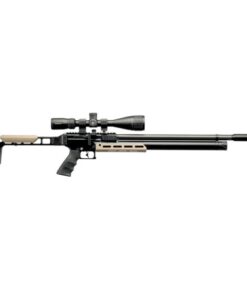
Artemis Snowpeak M25 PCP Air Rifle 5.5 mm Overview
Powerful 5.5 mm Regulated PCP Performance
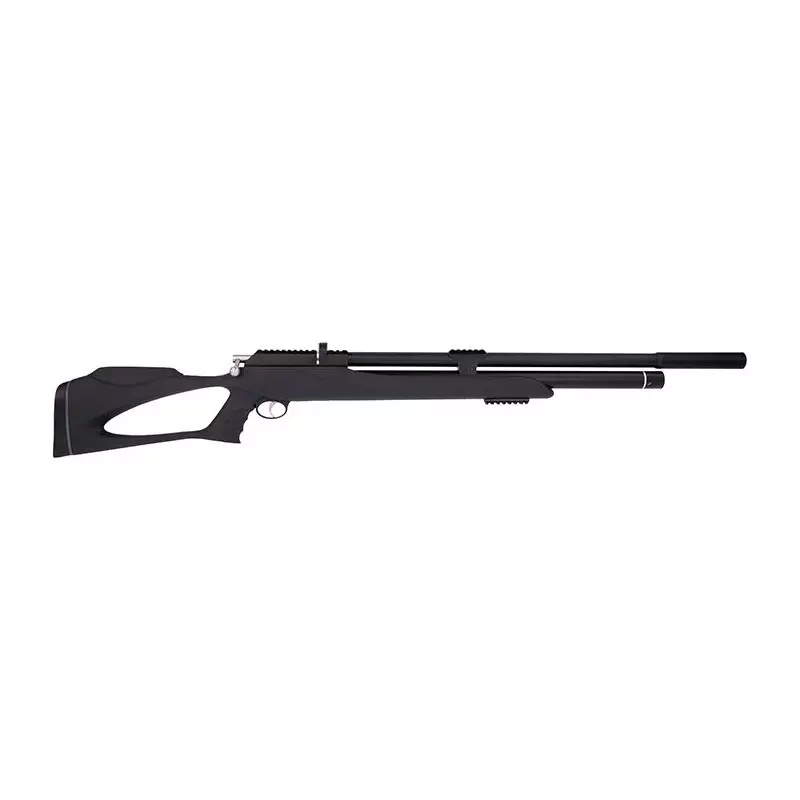
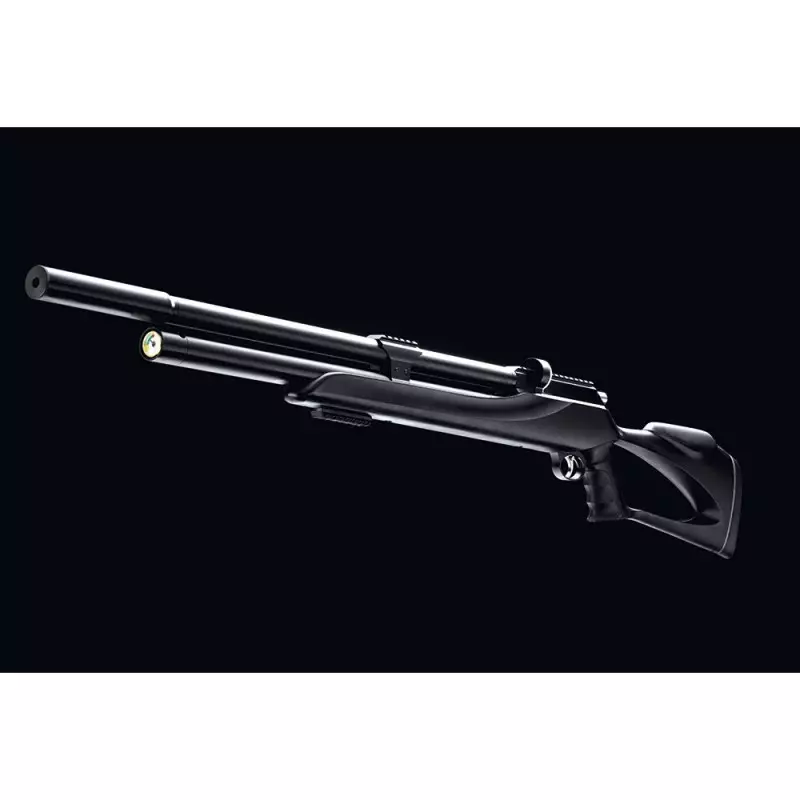
The ARTEMISSNOWPEAK M25 PCP AIR RIFLE 5.5MM is a full-length, bolt-action pneumatic rifle developed for adult shooters who want substantial air capacity, multi-shot convenience and stable shoulder-fired handling. Its 5.5 mm chambering is equivalent to .22 calibre, giving it access to a broad selection of domed, pointed and precision target pellets.
Official manufacturer specifications list a 550 mm barrel, 245 cc air reservoir, regulator, adjustable two-stage trigger and manual safety. The 5.5 mm version is listed with a 10-shot magazine and a maximum stated velocity of approximately 1,000 FPS. Its maximum filling pressure is stated as 25 MPa, equivalent to 250 bar. Published weight varies between approximately 3.8 and 4 kg.
Some regional listings describe a 200-bar version with an 11-shot magazine and a 579 mm barrel. Therefore, buyers should confirm the specifications printed on the individual rifle rather than assuming every market receives an identical configuration.
What Is a PCP Airgun?
Anyone asking what is a pcp airgun should understand that PCP means pre-charged pneumatic. Compressed air is stored inside the rifle’s reservoir before shooting begins. When the trigger is pressed, a controlled amount of air passes through the valve and propels the pellet along the rifled barrel.
A pcp pellet rifle produces little mechanical recoil because it does not depend on a heavy spring-driven piston. Consequently, the shooter can maintain a steadier sight picture and more consistent follow-through.
The regulator helps control the pressure delivered to each shot. Therefore, velocity and point of impact can remain more predictable through the rifle’s useful pressure range.
Snowpeak M25 Design and Handling
The snowpeak m25 uses a substantial synthetic stock with an ambidextrous shape. This design supports both right-handed and left-handed use while offering practical resistance to minor moisture and everyday wear.
The m25 rifle includes a Picatinny mounting rail for a compatible optic. However, many versions do not include open sights, so buyers should budget for a scope and suitable rings. Regional listings also mention an integrated pressure gauge, Foster-style quick-fill connection and supplied moderator.
The phrase m25 weapon appears in online searches, although the product should be marketed, stored and operated as regulated adult sporting equipment. Applicable ownership, energy and transportation laws must always be checked before purchase.
Snowpeak Airguns and Manufacturer Background
The snowpeak airguns range includes pistols, conventional rifles, compact carbines, bullpups and larger-calibre platforms. snowpeak sports states that the manufacturer began in 1976 and has designed and produced shooting equipment for more than four decades.
Customers searching snowpeaks, snow peak equipment, snow peak customer service or snow peak brand origin should consult the airgun manufacturer or an authorised regional distributor. The company should not be confused with unrelated brands using a similar name.
Snowpeak P35 and P35X PCP Comparison
The snowpeak p35, p35, snowpeak p35x, p35x, p35x pcp and pcp p 35 belong to compact bullpup families. Their actions sit behind the trigger, reducing overall length while retaining useful barrel dimensions.
A snowpeak p35 vs p35x comparison normally considers reservoir design, external adjustment, stock geometry and overall compactness. By contrast, the M25 uses a conventional full-length stock and forward-positioned action. It may therefore feel more familiar to shooters who prefer traditional rifle balance and a loading port located ahead of the trigger.
PR900 Gen 3 Comparison
The pr900 gen 3 belongs to a lighter and more compact sporting family. Its smaller air cylinder can be easier to fill manually, while its lower overall weight may suit extended recreational sessions.
However, the M25 offers a larger reservoir, longer barrel and broader calibre range. Therefore, it may be preferred by shooters who value a substantial platform and longer uninterrupted shooting sessions.
Snowpeak AP900 and AP900B PCP Air Rifle
The snowpeak ap900 and ap900b pcp air rifle use compact tactical-style stocks and different reservoir arrangements.
Those designs may suit users who want adjustable furniture and a shorter external package. The M25 instead offers full-length sporting geometry, a large air tube and a longer forward section that supports a stable two-handed position.
Snowpeak PP750 and PP750L PCP Air Pistol
The snowpeak pp750, pp750, snow peak pp750, Snowpeak PP750L and Snowpeak PP750L PCP Air Pistol belong to a compact pistol-carbine category.
A Snowpeak Air Pistol, PCP Pistol, Airgun Pistol or High power PCP air pistol prioritises portability and short overall dimensions. Customers searching Snowpeak PP750L PCP Air Pistol for sale may prefer a platform that can transition between pistol-style and shoulder-supported handling.
Nevertheless, the M25 offers a longer barrel, larger reservoir, full rifle stock and stronger stability from supported positions.
Snow Peak PP20 Target Pistol
The snow peak pp20, snowpeak pp20 and pistolet pcp arcea-snowpeak onix sport phrases refer to target-oriented pistols rather than full-sized rifles.
Those platforms concentrate on anatomical grips, adjustable competition sights and deliberate single-shot accuracy. The M25 instead provides two-handed shoulder support, magazine-fed operation and compatibility with rifle optics.
Snowpeak M50 Rifle Comparison
The m50 rifle belongs to a separate product family with a different action, external design and internal arrangement.
Buyers should not assume that its magazines, filling probes, stocks or internal components are interchangeable with those of the M25. Compatibility should always be confirmed through the manufacturer or distributor.
Snowpeak M60 and M60B Platforms
The snowpeak m60 and snowpeak m60b are larger platforms featuring different air-storage and magazine systems. They appeal to shooters seeking greater capacity or a different external layout.
The question how much did the m60 weigh may produce results for an unrelated military firearm. Searching the complete sporting-airgun name is necessary to avoid confusing the two products.
Snowpeak Max and Price Research
The snowpeak max and snowpeak max 1 price phrases generally relate to larger, high-capacity pneumatic models.
Although those platforms may offer greater reservoir volume or adjustment potential, they can also be heavier and require more air to refill. The M25 provides a middle ground through its 245 cc reservoir, full-length stock and manageable 5.5 mm magazine system.
HP300 Filling Equipment
The hp300 is associated with manual high-pressure filling equipment. A hand pump may be practical for owners without access to a certified air cylinder or dedicated compressor.
However, any filling system must supply clean, dry air and include compatible fittings. The exact maximum pressure printed on the rifle must be followed because regional listings vary between 200 and 250 bar.
Pellet 9mm and Correct Calibre Selection
The phrase pellet 9mm refers to ammunition for a much larger version of the platform. The M25 family is officially offered in 4.5, 5.5, 6.35, 7.62 and 9 mm configurations, with magazine capacity decreasing as calibre increases.
The rifle described here requires 5.5 mm/.22 pellets. Only ammunition matching the calibre marked on its barrel should be loaded.
T Rex 6000 and Snowfall Gun Clarification
The phrase t rex 6000 may refer to unrelated machinery or another product category. It is not an official alternative name for the M25.
Similarly, snowfall gun appears to be a mistaken or unrelated search phrase. Using the complete manufacturer, model and calibre will produce more accurate technical and replacement-part results.
Air Gun Accessories
Useful air gun accessories include a compatible Picatinny-mounted optic, strong rings, a certified filling system, quality .22 pellets, spare magazines, a padded case and approved eye protection.
A stable medium-magnification scope normally complements the rifle’s full-length design. However, excessively large accessories can add unnecessary weight and affect balance.
Why Choose the Artemis Snowpeak M25?
The M25 is a practical choice for adult shooters who want a regulated full-sized rifle, large air cylinder, smooth bolt action and multi-shot .22-calibre operation. Its synthetic ambidextrous stock offers durable handling, while the Picatinny rail allows straightforward optic installation.
Most importantly, the rifle combines substantial construction with a relatively simple operating system. With clean compressed air, suitable ammunition, secure optic mounting and responsible maintenance, it can deliver dependable accuracy and consistent performance for lawful target shooting and approved sporting applications.
Engineering, Accuracy, Handling and Practical Ownership
Regulated Pneumatic Operation
The rifle uses a pre-charged pneumatic system that stores compressed air inside an onboard reservoir. When the trigger is pressed, a measured quantity of air moves through the firing valve and propels the pellet through the barrel.
Because there is no heavy spring or piston moving during discharge, the firing cycle remains smooth and produces little mechanical recoil. This allows the shooter to maintain a stable sight picture and concentrate on trigger control, breathing and follow-through.
An internal regulator helps manage the pressure delivered to each shot. As a result, velocity can remain more consistent throughout the useful portion of the fill. However, pressure regulation cannot compensate for damaged ammunition, loose optic mounts or poor shooting technique.
Full-Length Rifle Configuration
The conventional layout places the action and loading area ahead of the trigger. This arrangement provides familiar handling for shooters who prefer a traditional shoulder-fired design.
The supporting hand can rest naturally beneath the fore-end, while the butt remains securely positioned against the shoulder. The longer platform also provides a stable base for mounting an optic and maintaining consistent head alignment.
Although the rifle is heavier than many compact alternatives, the additional mass can reduce unwanted movement during supported shooting. However, unsupported use may become tiring during extended sessions.
The shooter should practise shouldering the unloaded rifle to determine the most comfortable hand placement, cheek position and stance.
Synthetic Stock Construction
The synthetic stock offers practical resistance to moisture, scratches and changing outdoor conditions. It also requires less maintenance than many traditional wooden stocks.
After use, the surface should be wiped with a clean cloth to remove dust, moisture and fingerprints. Harsh solvents should be avoided because they may damage the finish or affect nearby polymer components.
The rifle should not be stored in direct sunlight or inside a hot vehicle. Excessive heat may increase internal pressure and accelerate wear on seals.
The ambidextrous shape allows both right-handed and left-handed shooters to establish a comfortable grip and shoulder position.
Reservoir Capacity and Shot Planning
The onboard air cylinder supports productive target sessions without requiring constant refilling. Actual shot count depends on calibre, power level, pellet weight, temperature and mechanical condition.
A practical approach is to begin with a known pressure and count every shot. At regular intervals, record the gauge reading, firing sound and point of impact.
After several sessions, the most consistent pressure range will become easier to identify. The shooter can then refill before accuracy or velocity begins to decline.
Continuing to shoot at very low pressure may produce weak shots, unstable valve behaviour or inconsistent impact placement. Refilling within the reliable operating range helps preserve performance.
Safe Filling Procedure
Only clean, dry compressed air should be used. Suitable filling methods may include a manual pump, certified storage cylinder or purpose-built compressor.
Before connecting the filling equipment, inspect the hose, seals, connector, gauge and charging port. Dirt, water and oil must not enter the pressure system because contamination may damage internal valves and sealing surfaces.
Air should be introduced gradually while both gauges are monitored. Rapid filling generates heat and may cause the pressure reading to change after the reservoir cools.
The maximum approved pressure printed on the rifle must never be exceeded. After filling, pressure trapped inside the hose should be released through the bleed valve before disconnection.
Bolt-Action Loading
The bolt should move smoothly through its complete operating cycle. Partial movement may prevent the magazine from indexing or leave the action incompletely prepared.
If resistance is felt, the mechanism should not be forced. A damaged pellet, incorrectly positioned magazine or contamination inside the loading area may be responsible.
The muzzle must remain pointed toward a secure backstop while the issue is inspected. Forceful operation can deform ammunition, damage seals or create uncertainty about the chamber condition.
Smooth, deliberate cycling generally provides better reliability than rapid or aggressive movement.
Magazine Loading and Handling
The rotary magazine allows several pellets to be prepared before shooting begins. Every pellet should be inspected before insertion.
Bent skirts, flattened heads and visible debris can interfere with feeding and reduce accuracy. Pellets should be seated evenly without being crushed or forced.
The magazine must be inserted in the correct orientation and pushed fully into position. If it does not enter smoothly, remove it and inspect the alignment.
The shooter should count every discharge. This reduces uncertainty about how many pellets remain and helps prevent accidental repeated cycling.
Preventing Double Loading
Double loading can occur when the bolt is operated more than once without firing the first pellet. Two projectiles inside the barrel may cause reduced velocity, an obstruction or unpredictable impact placement.
When chamber status is uncertain, shooting should stop immediately. The magazine should be removed, and the loading area should be inspected according to the approved procedure.
Another pellet should never be fired in an attempt to clear a suspected blockage. Qualified assistance should be obtained when an obstruction cannot be removed safely.
Rifled Barrel Performance
The rifled barrel gives the pellet controlled rotation during flight. This supports stability and repeatable grouping when suitable ammunition is used.
Barrel quality alone does not guarantee precision. Pellet dimensions, pressure consistency, optic alignment, environmental conditions and trigger technique all affect the final result.
Several ammunition types should be tested from a stable support at a measured distance. Repeated groups provide more useful information than one unusually accurate result.
Selecting Suitable Ammunition
A medium-weight domed pellet is often a sensible starting point. However, individual barrels may prefer different weights, head diameters or skirt designs.
The best option should load smoothly, feed reliably and produce consistent groups. Maximum advertised speed should not be the main selection factor.
Pellets should be stored inside a dry, rigid container. Loose storage in pockets or bags can deform the skirts and reduce consistency.
Trigger Control
A two-stage trigger allows the shooter to feel initial movement before reaching the final release point.
The trigger finger should contact the blade at the same point during every shot. Pressure should increase gradually and move directly toward the rear.
The remaining fingers should maintain moderate grip pressure. Tightening the entire hand during release commonly moves the muzzle sideways.
Any permitted adjustment should remain within the approved range. An excessively light setting may become unsafe.
Optic Selection and Mounting
A medium-sized variable optic normally complements the rifle’s full-length design. Oversized equipment may add unnecessary weight and affect balance.
The rings must match the rail and optic-tube diameter. Mounting surfaces should remain clean, while screws should be tightened gradually and evenly.
Eye relief should be set from the natural shooting position. The shooter should see a complete image without repeatedly moving the head.
Consistent cheek placement remains essential because changing eye position may introduce alignment and parallax errors.
Zeroing and Accuracy Testing
Initial zeroing should begin at a short distance with a large paper target and dependable backstop. Fire a controlled group before making any correction.
Adjustments should be based on the centre of the group rather than one impact. After each change, another group should be fired to confirm the result.
Once the short-range setting is established, the zero should be confirmed at the intended working distance.
Impact position should also be tested at shorter and longer ranges because pellet trajectory changes throughout flight.
Routine Care and Secure Storage
After shooting, remove the magazine and confirm that the chamber is empty. Wipe the stock and metal surfaces to remove moisture, dust and fingerprints.
The barrel does not require cleaning after every session. Cleaning becomes appropriate when accuracy declines or contamination is visible.
Store the rifle unloaded inside a locked cabinet or secure container. During transportation, use a padded case that protects the stock, optic, barrel, gauge and reservoir.
With clean compressed air, suitable pellets, secure optic installation and repeatable technique, the rifle can provide dependable accuracy, efficient operation and strong long-term sporting performance.
Advanced Accuracy, Troubleshooting, Safety and Long-Term Reliability
Establishing a Repeatable Shooting Routine
Consistent performance begins with a disciplined preparation process. Before each session, inspect the air reservoir, pressure gauge, stock, magazine, bolt, trigger area, optic mounts and muzzle. Every component should appear secure, clean and free from visible damage.
Keep the muzzle directed toward a dependable backstop throughout preparation. The trigger finger must remain outside the guard until the rifle is shouldered, the target has been identified and the decision to fire has been made.
Once the rifle is positioned, use the same cheek contact, shoulder pressure and supporting-hand location for every shot. Small changes in these contact points can move the point of impact, even when the rifle and ammunition are performing correctly.
Confirming an Unloaded Condition
Removing the magazine does not guarantee that the chamber is empty. A pellet may already have been loaded before the magazine was removed.
Before cleaning, adjustment, storage or transportation, inspect the loading area according to the manufacturer’s recommended procedure. Avoid cycling the bolt repeatedly when chamber status is uncertain because another pellet may enter the barrel.
If an obstruction is suspected, stop using the rifle immediately. Never attempt to clear a lodged projectile by firing another pellet behind it.
Developing Natural Point of Aim
Natural point of aim describes where the rifle settles when the shooter relaxes. A correct position reduces muscular effort and supports better repeatability.
Assume the intended shooting position, close the eyes briefly and allow the upper body to relax. Reopen the eyes and observe where the reticle rests.
When the sights settle beside the target, reposition the feet, knees or torso rather than forcing the rifle sideways with the arms. Muscle tension may temporarily hold the sights on target, but it often creates movement during trigger release.
Improving Bench-Rest Testing
A padded rest can help separate mechanical performance from shooter movement. Support the stock rather than placing the barrel or air reservoir directly on a hard surface.
Use the same support point for every shot. Moving the fore-end forward or backward can change balance and shift the point of impact.
The rear of the stock may receive light support, although the rifle should not be clamped rigidly. Fire several groups before evaluating performance because one unusually tight result may occur by chance.
Repeated patterns provide more reliable information about ammunition and mechanical consistency.
Recording Pressure and Shot Count
A written shooting log helps identify the most efficient operating range.
Begin with a known fill pressure and count every discharge. At regular intervals, record the gauge reading, group position, firing sound and bolt behaviour.
After several sessions, a pattern should become clear. The owner can then refill before accuracy, velocity or sound begins to change.
A sudden reduction in useful shot count may indicate leakage, regulator inconsistency, valve wear or another developing fault.
Recognising Pressure-Related Accuracy Changes
Vertical movement on the target may occur when pressure moves outside the most consistent range. However, breathing errors, loose mounts and changing cheek pressure can produce similar results.
Check simple external causes first. Confirm the pressure, inspect the pellets and verify that the optic remains secure.
Internal regulator or valve adjustments should not be attempted without suitable knowledge and equipment. Incorrect changes may increase air consumption, reduce reliability or damage seals.
Responding to a Weak Shot
A noticeably weak discharge requires immediate attention.
Stop firing and inspect the pressure gauge. If the sound was unusually soft or the expected impact did not appear, a pellet may remain inside the barrel.
Do not load another pellet until the bore has been confirmed clear. Low pressure, damaged ammunition, incomplete bolt operation or an obstruction may be responsible.
Repeated weak shots should be assessed by a qualified technician.
Diagnosing Bolt Resistance
The bolt should move smoothly through its complete cycle. Sudden resistance may indicate a damaged pellet, misaligned magazine or contamination inside the loading channel.
Do not force the mechanism. Keep the muzzle pointed toward the backstop, remove the finger from the trigger and inspect the magazine position.
Repeated force can damage seals, deform pellets or create uncertainty about the chamber condition.
If resistance continues after the ammunition and magazine have been checked, professional servicing may be required.
Preventing Double Loading
Double loading can occur when the bolt is cycled more than once without firing the first pellet.
Two projectiles inside the barrel may cause reduced velocity, obstruction or unpredictable impact placement. The risk increases when the shooter loses track of the loading sequence.
When chamber status is uncertain, stop immediately. Remove the magazine and inspect the loading area using the approved procedure.
Another shot should never be used to resolve the problem.
Detecting Air Leakage
A slow leak may cause pressure to fall over several hours or days. Temperature changes can also affect the gauge reading, so comparisons should be made under similar conditions.
Record the pressure after filling and check it later. Continued loss may indicate a damaged seal, filling-valve problem, gauge fault or internal leakage.
Never dismantle the reservoir, regulator or firing valve while pressure remains inside the system. High-pressure repairs require specialist tools and experience.
Maintaining Magazine Reliability
Keep magazines clean, dry and protected from impact. Dirt or worn indexing parts may interfere with feeding.
Inspect every pellet before loading. Bent skirts, flattened heads and visible contamination can reduce accuracy and mechanical reliability.
If a magazine becomes difficult to rotate, insert or remove, do not force it. A damaged unit should be serviced or replaced before use continues.
Protecting Optic Zero
Transportation, impact and loose screws can shift the point of impact.
After travelling, fire a confirmation group before beginning serious target work. If the group remains tight but has moved, a minor optic adjustment may be required. If it has widened, inspect the rings, rail, stock hardware and ammunition.
Mounting screws should be tightened evenly. Excessive force may damage threads or distort the optic tube.
Managing Parallax and Eye Alignment
Parallax can make the reticle appear to move when the shooter changes head position.
An adjustable optic should be set for the target distance whenever possible. However, repeatable cheek contact remains essential.
The eye should stay centred behind the scope during every shot. Inconsistent head alignment may create unexplained impact changes even when the rifle is functioning correctly.
Cleaning the Barrel Safely
The barrel does not require cleaning after every session. Cleaning becomes appropriate when accuracy declines, contamination appears or foreign material enters the bore.
A soft pull-through system is generally safer than a rigid metal rod. The muzzle crown and rifling must be protected from scratches.
After cleaning, several settling shots may be required before normal grouping returns.
Safe Storage and Long-Term Care
Store the rifle unloaded inside a locked cabinet or secure container. Remove the magazine and restrict access to pellets, charging equipment and keys.
The storage area should remain dry and temperature-stable. Damp conditions may encourage corrosion, while excessive heat can affect pressure and sealing components.
Retain the manual, purchase receipt and service records. Avoid unauthorised internal modifications that may reduce accuracy, invalidate warranty coverage or alter legal classification.
With clean compressed air, suitable ammunition, disciplined handling and professional servicing when required, the rifle can remain accurate, efficient and dependable throughout many years of lawful sporting ownership.

.22 Karma SLS Compact | Folding Stock - .22 CAL
PCP Air Rifle AGN Technology Uragan 3 Compact Red Laminate - .22 


Reviews
There are no reviews yet.