


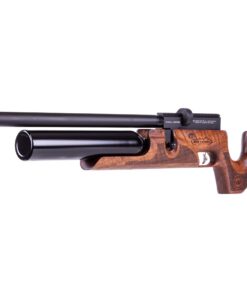
Kral Arms Puncher Mortal PCP Air Rifle


Price range: €500.00 through €600.00
The Kral Arms Puncher Mortal is a Turkish-made PCP that delivers real performance in .22 and .25 caliber without demanding a premium price. Kral has built a solid reputation for reliable, feature-rich PCPs, and the Puncher Mortal is a practical hunting and field rifle that fits that profile well.
- .22 Cal — rated at 800 fps, a capable choice for pest control and small game.
- .25 Cal — 750 fps with heavier pellets for more impact on medium-sized pests and game.
- PCP powerplant — consistent shot-to-shot performance with no cocking effort after the fill.
- Kral build quality — Turkish manufacturing with a strong track record in the mid-range PCP segment.
Kral Arms Puncher Mortal PCP Air Rifle – Compact Tactical PCP Performance, Adjustable Ergonomics and Practical Precision
The Kral Arms Puncher Mortal PCP Air Rifle is a compact tactical pre-charged pneumatic platform designed around adjustable ergonomics, multi-shot convenience, sidelever operation, and a manageable 200cc compressed-air system.
Unlike the larger Mortal X, the standard Mortal focuses more heavily on compactness. Its shorter barrel and smaller reservoir reduce overall dimensions while preserving the tactical stock system, multi-shot magazines, Picatinny mounting platform, and straightforward mechanical action that define the family.
Current factory specifications list three calibre options:
- .177 / 4.5mm
- .22 / 5.5mm
- .25 / 6.35mm
Magazine capacities are:
- 14 rounds in .177
- 12 rounds in .22
- 10 rounds in .25
The rifle uses a 200cc aluminum reservoir, approximately 200-bar working pressure, and a 40.7cm / 16.2-inch barrel. Overall length is adjustable from approximately 84cm to 92cm, while length of pull ranges from around 36.5cm to 44.5cm. Factory weight is approximately 3.51kg / 7.72lb.
200cc Air Reservoir
The 200cc reservoir gives the rifle useful air capacity without creating the bulk associated with a much larger bottle-fed PCP.
This makes the Mortal particularly suitable for shooters who want a tactical platform with manageable overall dimensions.
200-Bar Working Pressure
The pneumatic system operates at approximately 200 bar.
Only properly rated PCP filling equipment should be connected.
The stated maximum working pressure should never be exceeded.
40.7cm Barrel
The 40.7cm barrel contributes to the rifle’s compact dimensions while still providing a strong mechanical foundation for controlled target use.
Barrel length alone does not determine precision.
Ammunition quality, air consistency, optic setup, trigger control, and shooter technique remain critical.
Adjustable Tactical Stock
The rear stock can be adjusted through multiple positions.
This allows the shooter to alter length of pull and create a more comfortable shoulder position.
Folding Stock
The folding stock reduces storage and transport length.
The locking mechanism should remain secure and free from excessive movement.
Sidelever Action
The manually operated sidelever cycles the magazine between shots.
Smooth operation helps the shooter maintain shoulder position and sight alignment.
Picatinny Mounting System
The rifle uses a MILSPEC-style Picatinny arrangement for mounting suitable optics and accessories.
Any mounted equipment should be securely fitted without making the rifle unnecessarily heavy.
Adjustable Trigger
Factory information lists adjustable trigger pull weight and an adjustable trigger shoe.
This helps the shooter establish a comfortable and repeatable trigger position.
Factory Shot Count
Current factory information lists approximately:
- 70 shots in .177
- 60 shots in .22
- 50 shots in .25
Actual results can vary with ammunition, pressure, temperature, seal condition, and individual rifle variation.
Factory Velocity
Current Kral specifications list approximately:
- 850 fps / 18.3 J in .177
- 800 fps / 35 J in .22
- 750 fps / 42.8 J in .25
Regional versions can differ, so documentation supplied with the individual rifle should always be checked.
kral
kral commonly refers to the Kral Arms manufacturer and its broad range of sporting airguns.
The Mortal belongs to its Puncher PCP family.
kral arms
kral arms manufactures numerous PCP rifles with different stocks, reservoir capacities, barrel lengths, and intended handling characteristics.
kral np 02
The kral np 02 is another PCP platform from the manufacturer.
Its stock and air-system arrangement differ from the Mortal.
kral
Another kral search may refer broadly to the manufacturer rather than one particular model.
kral puncher
The kral puncher family includes conventional rifles, compact PCPs, tactical platforms, bullpups, and high-capacity designs.
The Mortal is one of its tactical adjustable-stock models.
krale
The term krale often appears in European airgun searches and should not be confused with the official manufacturer name.
a12 shotgun
The a12 shotgun belongs to a firearm category and has no technical relationship to the Mortal PCP system.
kral
A further kral search reference can simply indicate the brand.
n_01
The n_01 term relates to a different Kral product designation and should not be treated as a Mortal specification.
puncher mega
The puncher mega is another PCP in the broader family and uses different dimensions, reservoir capacity, and stock geometry.
puncher auto
The puncher auto belongs to a different action configuration.
The Mortal uses a manually operated sidelever.
rifle 223
The phrase rifle 223 concerns centerfire firearm terminology rather than PCP air rifles.
kr9
The kr9 belongs to another Kral product category and should not be confused with the Puncher Mortal.
kral breaker puncher
The kral breaker puncher is another compact PCP platform with a different stock and reservoir arrangement.
kral puncherk
The phrase kral puncherk appears to be a search variation associated with the Puncher family.
empire x
The empire x is another Kral PCP and emphasizes greater reservoir capacity and a different stock layout.
a12 gun
The a12 gun term refers to another firearm platform and is unrelated to the Mortal.
xm shotgun
The xm shotgun belongs to another firearm category and should not be confused with this compressed-air rifle.
223 arma
The phrase 223 arma relates to firearm terminology rather than PCP operation.
shotgun xm
The shotgun xm search term concerns another firearm product category.
223 rifles
The phrase 223 rifles describes centerfire rifles rather than air rifles.
bigmax
The bigmax belongs to another Kral PCP family with different air-capacity and size priorities.
arma 223
The term arma 223 again relates to centerfire firearm terminology rather than this PCP rifle.
akr gun
The phrase akr gun should not replace the proper Mortal model designation.
kalibre pistol
The term kalibre pistol generally appears in handgun-related searches rather than full-size PCP rifle descriptions.
tabancalar
tabancalar is associated with Turkish-language pistol searches and does not describe this rifle.
tactical tundra
The tactical tundra term refers to another product or search category.
shadow puncher
The shadow puncher is another Kral PCP platform with a substantially larger air system.
The Mortal places more emphasis on compact tactical handling.
air rifle pop
The phrase air rifle pop may appear in broad airgun searches.
For the Mortal, repeatable groups and consistent pressure management are more useful measures of performance.
kar gun
The term kar gun is not the official model designation.
np500
The np500 is another Kral PCP configuration and should be assessed using its own specifications.
kp12
The kp12 belongs to another firearm category rather than the Puncher PCP range.
rifle cal 22 semiautomatico
The phrase rifle cal 22 semiautomatico generally describes a semi-automatic firearm.
The Mortal is manually cycled.
kr 101
The kr 101 is another product designation and should not be confused with this rifle.
k12 shotgun
The k12 shotgun belongs to a firearm category and does not share the Mortal’s PCP system.
st-500
The st-500 term relates to another product family and is not a Mortal specification.
rutundra
The rutundra phrase appears in separate product searches and should remain separate from this air rifle.
krale airguns
Searches for krale airguns may lead to retailers or general airgun product listings rather than factory technical information.
410 shotgun semi auto magazine fed
The phrase 410 shotgun semi auto magazine fed describes a firearm configuration and has no technical relationship to the Mortal PCP.
pcp air gun
As a pcp air gun, the Mortal stores compressed air before firing.
This gives it a smoother firing cycle than a conventional spring-piston platform.
kiral
The term kiral can appear as a spelling variation when users search for Kral products.
kr-101
The kr-101 is another product designation and should be evaluated separately.
.223 guns
The phrase .223 guns relates to centerfire firearms rather than compressed-air rifles.
shadowf
The shadowf relates to another Shadow-family configuration with different dimensions and air capacity.
tundra tactical
The tundra tactical phrase relates to another product category rather than the Mortal.
Kral Puncher Breaker Air Rifle
The Kral Puncher Breaker Air Rifle is another compact PCP platform.
It uses different stock geometry and air capacity from the Mortal.
rifles pcp 5.5
The phrase rifles pcp 5.5 describes .22-calibre PCP rifles.
The Mortal is available in .22 alongside .177 and .25.
kr9 rifle
The kr9 rifle belongs to another Kral product category rather than the Puncher airgun lineup.
Kral Puncher Breaker
The Kral Puncher Breaker emphasizes compact bullpup handling.
The Mortal instead uses an adjustable tactical rear stock.
Kral Arms Puncher Breaker PCP Air Rifle
The Kral Arms Puncher Breaker PCP Air Rifle is a separate model and should be compared using its own specifications.
Kral Puncher Breaker Synthetic
The Kral Puncher Breaker Synthetic uses a synthetic bullpup stock and provides a different handling character from the Mortal.
Kral Puncher Breaker Walnut
The Kral Puncher Breaker Walnut combines the compact Breaker layout with traditional wooden styling.
Kral Arms PCP Rifle
A Kral Arms PCP Rifle can vary greatly in reservoir capacity, stock type, action configuration, barrel length, and weight.
Kral Puncher PCP
The Kral Puncher PCP family includes the Mortal, Mortal X, Empire models, Breaker, Shadow, NP series, Mega, Jumbo variants, and numerous other PCP platforms.
Kral Air Rifle
A Kral Air Rifle can use different airgun layouts depending on the model.
The Mortal specifically uses a pre-charged pneumatic system.
Kral Arms Airguns
Kral Arms Airguns include multiple sporting designs aimed at different preferences for capacity, size, ergonomics, and styling.
Kral Puncher Series
The Kral Puncher Series covers compact, tactical, traditional, bullpup, and large-capacity PCP rifles.
Kral Arms Puncher Breaker review
A useful Kral Arms Puncher Breaker review should examine pressure retention, accuracy, magazine function, ergonomics, trigger consistency, and practical handling.
Daystate Delta Wolf Performance
Daystate Delta Wolf Performance refers to an advanced electronically controlled PCP platform from another manufacturer.
Its electronic architecture is fundamentally different from the mechanically operated Mortal.
daystate blackwolf
The daystate blackwolf belongs to another manufacturer’s premium PCP lineup.
delta wolf
The delta wolf uses sophisticated electronic management and should not be treated as technically equivalent to the Mortal.
huntsman daystate
The huntsman daystate range follows a more traditional premium PCP design philosophy.
day state
The phrase day state is a common search variation for the Daystate brand.
daystate delta wolf
The daystate delta wolf is an electronically controlled PCP and occupies a different technical category from the Mortal.
daystate alpha wolf
The daystate alpha wolf combines premium construction with electronic control and should be evaluated independently.
puddy bottle cover
A puddy bottle cover typically relates to protective coverings for exposed bottle systems.
The Mortal uses a compact aluminum air reservoir instead.
daystate
daystate is a separate premium airgun manufacturer and should not be confused with Kral Arms.
alpha red wolf
The alpha red wolf phrase appears in searches associated with Daystate’s premium Wolf-family PCP platforms.
air gun pc
The phrase air gun pc may be intended as a search variation for PCP airguns.
A PCP stores compressed air before the firing cycle.
air gun suppressor
An air gun suppressor or moderator can be subject to different legal requirements depending on jurisdiction.
The Mortal has a threaded muzzle intended for compatible accessories where lawful.
what is a delta wolf
The question what is a delta wolf generally refers to Daystate’s electronically managed PCP rifle family.
That platform is unrelated to the Mortal’s mechanical system.
airgun moderator
An airgun moderator can reduce perceived muzzle report where legally permitted.
Compatibility and local regulations should always be confirmed.
black snood
The phrase black snood generally refers to an accessory or external cover rather than a core rifle component.
daystate wolverine sapphire
The daystate wolverine sapphire belongs to another premium PCP family from a different manufacturer.
day wolf
The phrase day wolf usually appears in searches relating to Daystate Wolf-series rifles.
Why the Mortal Stands Out
The Mortal’s strongest advantage is its balance of tactical adjustability and compact dimensions.
The 200cc reservoir keeps the air system relatively manageable.
The 40.7cm barrel helps reduce overall length.
The adjustable and folding stock allows the rifle to be adapted to different shooters.
The Picatinny mounting platform supports straightforward optic installation.
As a result, the rifle provides a tactical-style PCP without requiring the longer barrel and larger reservoir of the Mortal X.
How the PCP System Supports Precision
The pneumatic firing cycle produces less internal mechanical movement than a traditional spring-powered rifle.
There is no heavy piston moving rapidly during discharge.
Consequently, the shooter can maintain a more stable sight picture.
However, good shooting technique remains essential.
Why the Compact Reservoir Makes Sense
A larger reservoir would increase shot count.
However, it would also add weight and bulk.
The 200cc system helps the Mortal remain shorter and easier to manage.
This is one of the main differences between the standard rifle and the larger Mortal X, which uses a 330cc system and a longer 58cm barrel.
Why the Adjustable Stock Matters
Shooters have different arm lengths and preferred shoulder positions.
The adjustable stock allows length of pull to be changed.
This can improve:
Shoulder placement.
Trigger reach.
Head position.
Overall comfort.
Better fit generally makes repeatable shooting easier.
Why the Folding Stock Matters
A folding rear stock reduces the rifle’s storage footprint.
This can make transport and secure storage more convenient.
The mechanism should always lock securely before shooting.
Why the Barrel Matters
The choked, rifled barrel is one of the core precision components.
However, a good barrel still depends on compatible ammunition.
The best results normally come from controlled pellet testing rather than simply selecting the fastest option.
Why Pellet Selection Matters
Pellets vary in:
Weight.
Head diameter.
Skirt design.
Surface quality.
Manufacturing consistency.
A barrel may strongly prefer one design over another.
Why Maximum Velocity Is Not Everything
Velocity is only one performance metric.
A slower pellet can sometimes group much better.
For controlled target use, consistent point of impact is usually more valuable than maximum speed.
Where the Rifle Works Best
The platform is particularly well suited to lawful controlled target environments.
It can be used effectively from:
A bench.
A seated position.
A kneeling position.
A supported standing position.
A suitable backstop should always be used.
When the Mortal Makes Sense
The rifle makes sense for a shooter who wants:
A compact tactical PCP.
A 200cc reservoir.
A 200-bar air system.
A short 40.7cm barrel.
A folding stock.
Adjustable length of pull.
Multi-shot magazines.
Sidelever operation.
Picatinny mounting.
Three common calibre choices.
How Good Is the Practical Precision?
Practical precision should be judged by repeatable groups rather than a single exceptional shot.
Important factors include:
Pellet quality.
Pressure consistency.
Barrel condition.
Optic security.
Trigger control.
Stock fit.
Wind.
Shooter technique.
A rifle that consistently reproduces similar groups is far more useful than one judged only by its highest velocity.
Why the Trigger System Matters
A predictable trigger helps the shooter release the shot without disturbing the rifle.
The Mortal provides adjustment for trigger pull and trigger-shoe position.
Settings should remain within manufacturer guidance.
Why the Magazine Matters
The multi-shot magazine reduces interruptions.
That is useful during:
Group testing.
Scope zeroing.
Recreational target sessions.
Extended range practice.
Important Air Management Information
The pressure gauge should be monitored rather than relying entirely on estimated shot count.
The reservoir should only be filled with properly rated equipment.
Clean, dry compressed air should be used.
The stated working pressure should not be exceeded.
Important Maintenance Information
Routine maintenance should focus on prevention.
Keep the fill connection clean.
Protect the reservoir.
Monitor pressure retention.
Inspect magazines.
Protect the muzzle.
Keep the stock mechanism clean.
Check optic mounts.
Address persistent leaks promptly.
Avoid unnecessary internal disassembly.
High-Pressure Safety
The air reservoir contains compressed air at substantial pressure.
It should not be opened while pressurized.
Damaged high-pressure components should not be used.
Internal pneumatic servicing should follow manufacturer procedures and should be handled by someone qualified to work on PCP systems.
Safe Handling
The rifle should always be treated as capable of firing.
Keep the muzzle in a safe direction.
Keep the finger away from the trigger until firing is intended.
Use a secure backstop.
Store the rifle unloaded and secured against unauthorized access.
Legal Considerations
Airgun regulations vary between jurisdictions.
Rules can apply to:
Power.
Velocity.
Calibre.
Licensing.
Ownership.
Transport.
Storage.
Use location.
Sound-moderating equipment.
Factory specifications should never automatically be assumed legal in every market.
Final Section 1 Assessment
The Kral Arms Puncher Mortal PCP Air Rifle is a compact tactical PCP designed around a 200cc aluminum reservoir, 200-bar working pressure, 40.7cm barrel, adjustable folding stock, sidelever action, multi-shot magazine system, adjustable trigger, and Picatinny mounting platform.
Current factory specifications list .177, .22, and .25 calibre options, with magazine capacities of 14, 12, and 10 rounds respectively. Approximate shot counts are 70, 60, and 50 shots per fill, while current listed performance is approximately 850 fps / 18.3 J, 800 fps / 35 J, and 750 fps / 42.8 J depending on calibre.
Its strongest appeal is compact tactical versatility.
The shorter barrel limits overall length.
The moderate reservoir keeps unnecessary bulk under control.
The adjustable stock supports different shooters.
The folding mechanism simplifies storage.
The sidelever provides straightforward manual cycling.
The magazine reduces interruptions.
The Picatinny system supports practical optic mounting.
For lawful target shooting and recreational range use, the Mortal is best judged by repeatable groups, dependable air retention, comfortable stock fit, smooth action operation, and consistent ammunition performance rather than maximum velocity alone.
Quality pellets, sensible pressure management, secure optics, smooth trigger control, regular inspection, and responsible storage will have a greater influence on long-term satisfaction than headline specifications by themselves.
Practical Accuracy, Tactical Handling, Air Management, Optics, Maintenance and Ownership
Understanding the Rifle as a Compact Tactical PCP
The Puncher Mortal is designed as a compact pre-charged pneumatic platform that combines adjustable ergonomics, moderate air capacity, sidelever operation, and a tactical stock system.
Its layout is intended to remain practical rather than oversized.
The reservoir provides useful capacity.
The barrel keeps overall length manageable.
The stock can be adjusted to suit different shooters.
The folding mechanism helps reduce storage length.
The sidelever allows repeated shots without requiring a major change in shooting position.
When these features are combined with suitable pellets, secure optics, and careful pressure management, the rifle can provide a stable platform for lawful target shooting and recreational range use.
Why Compact Tactical Design Matters
A compact rifle can be easier to transport, store, and handle around a shooting bench.
Shorter overall dimensions can also make it more comfortable in seated and kneeling positions.
However, compact size should not be judged only by length.
Balance matters just as much.
A short rifle that carries too much weight in one area may still feel awkward.
The best setup should feel natural in the hands and stable at the shoulder.
Weight Distribution and Handling
The location of the air reservoir, action, stock, and barrel influences how the rifle feels.
A balanced platform can reduce unnecessary strain.
This matters during:
Standing practice.
Bench shooting.
Longer sessions.
Position changes.
Repeated group testing.
Good balance helps the shooter maintain a more consistent hold.
Understanding the PCP Firing Cycle
A pre-charged pneumatic rifle stores compressed air before the shot.
When the trigger is operated, a controlled amount of air is released.
That air propels the pellet through the barrel.
Because there is no heavy piston moving rapidly inside the action during firing, the shot cycle tends to feel smoother than a traditional spring-powered rifle.
Why a Smooth Shot Cycle Helps
Reduced internal movement can make it easier to maintain:
Sight alignment.
Cheek position.
Shoulder contact.
Trigger control.
Follow-through.
This does not guarantee precision by itself.
However, it removes one source of mechanical disturbance.
Air Reservoir Management
The air reservoir powers every shot.
Pressure should be checked before the session begins.
The gauge should also be monitored during longer use.
The shooter should learn where the rifle performs most consistently.
Why Factory Shot Count Is Only a Reference
Published shot-count figures are useful for comparison.
However, actual results can vary with:
Calibre.
Pellet weight.
Temperature.
Seal condition.
Valve behavior.
Reservoir pressure.
Shooting pace.
Individual rifle variation.
The gauge therefore provides more useful real-time information than relying only on a fixed number.
Learning the Useful Pressure Range
A simple shooting log can help reveal the most consistent operating range.
Record:
Starting pressure.
Ending pressure.
Number of shots.
Pellet type.
Group size.
Weather conditions.
Over time, the pattern becomes easier to understand.
Why Pressure Consistency Matters
Changes in pressure can influence shot behavior.
If air delivery becomes less consistent, velocity may also change.
That can affect point of impact.
Pressure management should therefore be treated as part of practical accuracy.
Filling Equipment
Only properly rated PCP equipment should be used.
Suitable options may include:
A compatible hand pump.
A rated high-pressure tank.
A purpose-built compressor.
The fill connection should always be clean and secure.
Filling Slowly
A controlled fill is preferable.
Rapid filling can produce heat.
A slower fill makes pressure easier to monitor and reduces unnecessary temperature change.
Avoiding Overfilling
The stated maximum working pressure should never be exceeded.
More pressure does not automatically improve accuracy.
Overfilling can place unnecessary stress on seals and other pneumatic components.
Clean and Dry Air
The quality of the filling air matters.
Moisture and contamination can affect internal components.
The fill connection should remain protected from dust and debris.
Temperature Effects
Pressure changes with temperature.
A reservoir filled while warm may show a lower reading after cooling.
This does not automatically indicate a leak.
Sidelever Operation
The sidelever should be operated smoothly.
There is no advantage in forcing it.
Why Smooth Cycling Helps
A controlled lever movement helps the shooter maintain:
Shoulder position.
Cheek weld.
Support-hand placement.
Optic alignment.
It can also reduce stress on the magazine and feeding system.
When the Lever Feels Unusual
If the sidelever suddenly becomes stiff, stop.
Possible causes can include:
Magazine misalignment.
A damaged pellet.
Debris.
Mechanical wear.
A feeding issue.
The action should not be forced.
Magazine Use
The multi-shot magazine reduces interruptions during shooting.
This is useful for group testing, zeroing, and recreational range sessions.
Magazine Inspection
The magazine should be checked regularly.
Look for:
Cracks.
Debris.
Uneven rotation.
Poor indexing.
Damaged internal parts.
Unusual pellet fit.
A damaged magazine can cause feeding problems.
Loading Pellets Carefully
Pellets should be loaded without damaging the head or skirt.
A deformed pellet may feed poorly.
It can also produce inconsistent groups.
Pellet Quality and Accuracy
A good barrel still depends on suitable ammunition.
Important pellet characteristics include:
Weight consistency.
Head diameter.
Skirt condition.
Surface finish.
Manufacturing consistency.
Why Different Pellets Produce Different Results
Every barrel can have its own preference.
One pellet may produce tight groups.
Another may behave less consistently.
Controlled testing is the best way to identify the better match.
Controlled Pellet Testing
Use the same:
Distance.
Pressure range.
Rest.
Optic setting.
Shooting position.
Target type.
Then compare group size.
Why the Fastest Pellet Is Not Always Best
A lightweight pellet may produce a high velocity figure.
That does not automatically mean better precision.
A slower pellet may group more consistently.
Practical Accuracy
Practical accuracy comes from the complete setup.
The rifle performs best when:
The pellet is suitable.
The pressure is stable.
The optic is secure.
The trigger is controlled.
The stock fits the shooter.
The shooting position is repeatable.
Barrel Performance
The barrel provides the mechanical path for the pellet.
Its condition matters.
Protecting the Muzzle
The muzzle should be protected from impact.
Damage near the crown can affect pellet release.
Barrel Cleaning
Aggressive or frequent cleaning is generally unnecessary.
Cleaning should be based on actual need.
When Cleaning May Help
Cleaning may be appropriate if:
Accuracy changes unexpectedly.
Contamination is suspected.
The rifle has been stored for a long period.
A different pellet behaves unusually.
A qualified technician recommends it.
Adjustable Stock
The tactical stock allows the rifle to fit different shooters.
Length of pull affects:
Shoulder position.
Trigger reach.
Head position.
Overall comfort.
Why Stock Fit Matters
A rifle that fits poorly is harder to shoot consistently.
The shooter may stretch.
The cheek position may vary.
Shoulder pressure may change.
Correct adjustment helps reduce these variables.
Folding Stock
The folding mechanism can make storage and transport more convenient.
It should lock securely before use.
Why the Folding Mechanism Should Be Checked
Any looseness can affect comfort and repeatability.
The locking area should remain clean and secure.
Shoulder Position
The butt should meet the shoulder consistently.
Too much pressure can create tension.
Too little can reduce stability.
Grip Position
The firing hand should remain secure but relaxed.
Excessive grip pressure can create unwanted movement.
Support-Hand Position
The support hand should be placed consistently.
A stable but relaxed support is preferable.
Trigger Control
The trigger should be pressed smoothly.
The shooter should become familiar with:
Take-up.
Break point.
Reset.
Finger placement.
Pull weight.
Why Trigger Finger Position Matters
An awkward finger angle can create sideways pressure.
The finger should move naturally to the rear.
Follow-Through
After firing, remain in position briefly.
Keep the cheek in place.
Maintain shoulder contact.
Keep the optic aligned.
Why Follow-Through Helps
It encourages consistency through the entire firing cycle.
Benchrest Use
The rifle is well suited to supported shooting.
A bench reduces some of the movement created by the shooter.
This makes testing more reliable.
Front Rest Position
The rest should support the rifle without interfering with the reservoir or controls.
Rear Support
A rear bag can help control elevation.
Small adjustments become easier.
Why Supported Shooting Helps
It provides a clearer picture of:
Pellet performance.
Optic stability.
Pressure consistency.
Mechanical accuracy.
Standing Shooting
Standing positions require more balance.
The compact format can feel manageable, but fatigue can still become a factor.
The shooter should avoid holding the rifle on target for too long.
Managing Standing Fatigue
A useful rhythm is:
Raise the rifle.
Settle the sight picture.
Take the shot.
Lower the rifle.
Rest briefly.
Kneeling Position
Kneeling can provide more stability than standing.
The adjustable stock can help make the position more comfortable.
Seated Position
Seated shooting can be practical for longer sessions.
It provides good stability without requiring a bench.
Shooter Fatigue
Fatigue can change technique.
Grip pressure can increase.
Shoulder position can shift.
Trigger control can become less smooth.
Head position can change.
Taking breaks can improve consistency.
Optic Selection
The rifle should be paired with an optic suitable for the intended distance.
Useful features include:
Clear glass.
Reliable adjustment.
Comfortable eye relief.
Appropriate magnification.
Secure mounts.
A practical reticle.
Why Oversized Optics Can Be Counterproductive
A very heavy scope can change the balance of the rifle.
Very high magnification can exaggerate small movements.
A moderate optic may be easier to use.
Scope Mount Security
Loose mounts can create shifting point of impact.
Mounts should be checked periodically.
Scope Height
The optic should sit at a height that allows a natural head position.
The shooter should not have to lift or lower the head excessively.
Picatinny Rail Use
The rail provides a practical mounting interface for compatible optics.
Accessories should be fitted securely.
Unnecessary weight should be avoided.
Zeroing
Zeroing should be done at a safe, known distance.
Use:
A stable rest.
Consistent pellets.
A secure backstop.
Small optic adjustments.
Once established, record the setting.
Rechecking Zero
Zero should be confirmed after:
Transport.
Impact.
Optic removal.
Mount changes.
Maintenance.
Changing pellet type.
Why Zero Can Shift
Possible causes include:
Loose mounts.
Different ammunition.
Impact.
Temperature changes.
Shooter inconsistency.
The cause should be investigated systematically.
Chronograph Monitoring
A chronograph can be useful for lawful performance monitoring.
It may reveal:
Velocity consistency.
Pressure-related changes.
Ammunition variation.
Possible seal issues.
Unexpected performance changes.
Why Consistency Matters More Than Peak Speed
For target use, predictable performance is generally more useful than maximum velocity.
Shooting Logs
A written record can help identify patterns.
Useful information includes:
Pellet type.
Distance.
Starting pressure.
Ending pressure.
Group size.
Weather.
Scope setting.
Why Logs Matter
Memory can be unreliable.
Written information makes comparison more objective.
Paper Targets
Paper targets provide a permanent record.
They make it easy to compare groups across sessions.
Marking Targets
Write:
Date.
Distance.
Pellet type.
Pressure.
Weather conditions.
This helps reduce confusion later.
Wind Awareness
Pellets can be affected by wind.
A changing point of impact does not automatically indicate a rifle problem.
Temperature
Temperature can influence both pressure and pellet behavior.
Comparisons are more useful when conditions are similar.
Formal Range Use
A controlled range provides:
Known distances.
Secure backstops.
Clear firing directions.
Established safety procedures.
This is ideal for technical testing.
Private Target Areas
Where private shooting is legal, the area should still be planned carefully.
Consider:
Roads.
Buildings.
People.
Animals.
Property boundaries.
Terrain.
Backstop Quality
The backstop should stop pellets safely.
It should be larger than the target area.
Eye Protection
Appropriate eye protection is recommended.
Ricochets and fragments can occur.
Exterior Cleaning
After shooting, wipe the rifle down.
Remove dust and moisture.
Keep moving controls clean.
Synthetic Stock Care
The synthetic stock is relatively straightforward to maintain.
A soft cloth can remove ordinary dirt.
Strong solvents should still be avoided unless specifically recommended.
Folding Mechanism Care
The stock hinge and locking area should be kept clean.
Dirt and debris should not be allowed to build up around the mechanism.
Reservoir Care
The air reservoir should be protected from:
Impact.
Extreme heat.
Sharp objects.
Chemical exposure.
Improper fittings.
Fill Port Care
The fill connection should remain clean.
Protective caps should be used where available.
Seal Monitoring
Possible signs of seal problems include:
Pressure loss.
Audible leakage.
Reduced shot count.
Inconsistent performance.
Difficulty retaining air.
Pressure Loss During Storage
A small pressure change may result from temperature.
Continuous loss can indicate a leak.
Avoiding Unnecessary Internal Work
High-pressure components should not be opened casually.
Internal servicing should follow manufacturer procedures.
Professional service is preferable when the cause of a problem is unclear.
Long-Term Storage
The rifle should be stored:
Dry.
Secure.
Away from excessive heat.
Away from chemicals.
Away from direct sunlight.
Away from unauthorized access.
Manufacturer guidance should be followed regarding reservoir pressure during extended storage.
Magazine Storage
Magazines should be stored clean and dry.
Damaged pellets should not be left inside.
Transport
During transport, the rifle should be unloaded and secured.
The magazine should be removed where appropriate.
The stock may be folded for storage where practical.
A suitable case should still be used.
Why a Proper Case Matters
A padded case protects:
The optic.
Barrel.
Stock.
Reservoir.
Action.
Folding mechanism.
Documentation
Keep:
The owner manual.
Serial number.
Purchase records.
Service history.
Warranty information.
Pellet-testing notes.
Chronograph records.
Why Documentation Helps
Good records simplify long-term maintenance.
They can also improve resale confidence.
Buying Used
A used PCP should be inspected carefully.
The air system and stock mechanism deserve particular attention.
Used Reservoir Inspection
Check for:
Dents.
Deep scratches.
Impact marks.
Damaged fittings.
Corrosion.
Any questionable condition should be assessed before use.
Pressure Retention Test
A used rifle should ideally demonstrate that it holds pressure.
A steadily falling gauge may indicate leakage.
Checking the Sidelever
The lever should operate smoothly.
Unusual resistance should be investigated.
Checking the Magazine
The magazine should rotate correctly and feed reliably.
Checking the Stock
The adjustable and folding components should lock securely.
Excessive play should be noted.
Checking the Trigger
Trigger operation should feel predictable and safe.
Asking About Service History
Useful questions include:
Has the rifle been serviced?
Has it ever leaked?
Have seals been replaced?
Has the reservoir been damaged?
Has the folding stock been repaired?
Has the rifle been modified?
Are the original magazines included?
Why Modifications Matter
Unknown modifications can affect:
Reliability.
Accuracy.
Safety.
Legal status.
Resale value.
A rifle close to factory specification is easier to evaluate.
Ownership Costs
The rifle itself is only part of the total budget.
Additional costs may include:
Filling equipment.
Pellets.
Optics.
Mounts.
Spare magazines.
Replacement seals.
Professional servicing.
Storage equipment.
Range fees.
Why Filling Access Matters
A PCP is easier to own when high-pressure air is readily available.
This should be considered before purchase.
Hand Pump Considerations
A hand pump is portable and does not require electricity.
However, filling requires physical effort.
Tank Filling
A suitable high-pressure tank can make refilling more convenient.
Compressor Use
A properly rated compressor can provide independence.
It should be maintained correctly.
Ammunition Availability
Calibre choice should consider local pellet availability.
A rifle is easier to own when suitable ammunition can be obtained consistently.
Why Consistent Ammunition Supply Matters
Once a pellet works well, maintaining a reliable supply can help preserve zero and repeatability.
Practical Accuracy Potential
The rifle can provide strong practical precision when the complete setup remains consistent.
Important elements include:
Suitable pellets.
Stable air pressure.
Secure optics.
Good stock fit.
Smooth trigger control.
Reliable magazines.
Consistent shooting technique.
Why Repeatability Is the Goal
One excellent group is encouraging.
Several similar groups provide a better measure.
Who May Appreciate This Platform
The rifle may suit shooters who value:
Compact tactical dimensions.
Adjustable stock length.
Folding-stock convenience.
Multi-shot operation.
Sidelever control.
Moderate air capacity.
Straightforward mechanical PCP ownership.
Supported target shooting.
Who May Prefer a Larger PCP
A shooter who wants very long shot strings may prefer a larger reservoir or bottle-fed system.
Who May Prefer a Lighter Platform
Someone who prioritizes minimum weight may prefer a smaller or simpler PCP.
Who May Prefer a Traditional Stock
Some shooters may prefer wood or a fixed sporting stock rather than an adjustable tactical layout.
Who May Prefer a Spring Rifle
A shooter who does not want external filling equipment may prefer a self-contained spring-powered rifle.
Range Session Preparation
Before shooting, check:
Air pressure.
Reservoir condition.
Pellet supply.
Magazine condition.
Stock lock.
Scope zero.
Backstop.
Filling equipment.
Protective gear.
Why Preparation Helps
A prepared session allows more time for shooting and less time solving avoidable problems.
Troubleshooting Large Groups
If accuracy suddenly worsens, check:
Pellet condition.
Air pressure.
Scope mounts.
Zero.
Magazine condition.
Wind.
Shooter fatigue.
Barrel condition.
Change One Variable at a Time
Changing several factors together makes diagnosis harder.
A systematic approach is more useful.
Troubleshooting Feeding Problems
If feeding becomes difficult:
Stop safely.
Remove the magazine.
Inspect the pellet.
Check the magazine.
Look for debris.
Do not force the sidelever.
Troubleshooting Air Loss
If pressure drops unexpectedly:
Check the gauge.
Listen for leaks.
Inspect the fill connection.
Check accessible seals.
Seek qualified service if the cause is unclear.
Routine Inspection
Regularly inspect:
Reservoir.
Gauge.
Fill connection.
Magazine.
Sidelever.
Trigger.
Safety.
Stock.
Folding mechanism.
Scope mounts.
Visible seals.
Preventive Maintenance
Routine care is more useful than frequent disassembly.
Keep the rifle clean.
Use quality pellets.
Protect the reservoir.
Monitor pressure.
Keep mounts secure.
Maintain the folding stock mechanism.
Address leaks promptly.
Safe Storage
The rifle should be stored unloaded and secured against unauthorized access.
Local storage requirements should be followed.
Legal Configuration
Airgun laws vary by jurisdiction.
Rules may apply to:
Muzzle energy.
Velocity.
Calibre.
Licensing.
Transport.
Storage.
Use location.
Sound-moderating equipment.
The rifle should remain within applicable law.
Why Maximum Output Is Not the Only Measure of Quality
A useful PCP should also provide:
Consistency.
Reliability.
Good ergonomics.
Air retention.
Magazine function.
Stable handling.
Practical accuracy.
Long-Term Ownership Value
Long-term value depends on how well the rifle fits the owner’s actual needs.
A compact tactical PCP can be more practical than a larger platform when portability, adjustability, and straightforward operation matter more than maximum shot capacity.
Resale Considerations
Condition and documentation matter.
Keep:
Original magazines.
Fill accessories.
Manuals.
Receipts.
Service records.
Original packaging where practical.
Why Original Equipment Helps
A complete package is easier to evaluate.
It can also simplify future servicing or resale.
Final Practical Assessment
The Kral Arms Puncher Mortal is a compact tactical PCP built around adjustable ergonomics, folding-stock convenience, multi-shot operation, sidelever control, and a moderate air reservoir.
Its strongest quality is versatility.
The short barrel helps control overall length.
The reservoir provides enough capacity for meaningful shooting sessions without creating unnecessary bulk.
The adjustable stock helps the rifle fit different shooters.
The folding mechanism simplifies transport and storage.
The magazine reduces interruptions.
The sidelever supports smooth manual cycling.
The Picatinny system provides a practical mounting interface for optics.
The rifle performs best when the owner focuses on consistency rather than maximum figures.
Use quality pellets.
Monitor air pressure.
Use properly rated filling equipment.
Keep the optic secure.
Operate the sidelever smoothly.
Maintain the magazines.
Keep the folding stock mechanism clean.
Protect the reservoir.
Address leaks promptly.
Use a safe backstop.
Store the rifle responsibly.
Stay within local legal limits.
With those fundamentals in place, the Mortal can provide a compact, practical, and repeatable platform for lawful target shooting, controlled range practice, and recreational PCP use.
Real-World Use, Precision Potential, Reliability, Buyer Considerations and Long-Term Ownership
Why the Compact Tactical Format Works in Practice
The Puncher Mortal is designed for shooters who want a compact pre-charged pneumatic rifle with adjustable ergonomics, multi-shot convenience, and a practical mechanical layout.
Its shorter overall dimensions can make transport, storage, and range handling easier than with a longer full-size platform.
At the same time, the rifle still has enough weight and structure to feel stable.
That balance between compactness and substance is one of its main practical strengths.
A very lightweight rifle may be easy to carry, but it can also move more easily during the shot.
A heavier platform can feel steadier but may become tiring.
The Mortal sits between those two extremes.
Why Balance Matters More Than Size Alone
Overall length is only one part of handling.
Weight distribution is equally important.
The location of the reservoir, barrel, stock, and action affects how the rifle feels in the shoulder.
A balanced setup can help reduce strain and make the rifle easier to control.
This matters during:
Bench shooting.
Standing practice.
Seated shooting.
Kneeling positions.
Repeated group testing.
Longer range sessions.
A well-balanced rifle is easier to use consistently.
Why Consistency Is the Real Measure of Precision
Practical accuracy is built around repeatability.
The goal is not simply to produce one excellent shot.
The goal is to reproduce the same result again and again.
That requires consistency in:
Pellet quality.
Air pressure.
Scope alignment.
Trigger control.
Cheek position.
Shoulder placement.
Support-hand position.
Follow-through.
When these variables are kept stable, the rifle can be evaluated properly.
Pellet Selection and Barrel Preference
Different barrels can prefer different pellets.
A pellet that performs very well in one rifle may not perform as well in another.
That is why controlled testing is important.
Important Pellet Characteristics
When evaluating ammunition, look at:
Weight consistency.
Head diameter.
Skirt quality.
Surface condition.
Overall finish.
Manufacturing consistency.
Pellets with visible damage should not be used for serious accuracy testing.
Why Pellet Weight Matters
Different pellet weights can behave differently.
A lighter option may produce higher velocity.
A heavier option may provide a different balance of stability and consistency.
The best choice should be identified through repeated group testing.
Why Maximum Velocity Is Not the Main Goal
A fast pellet can sound impressive on paper.
However, speed alone does not guarantee precision.
A slower pellet that produces repeatable groups is usually more useful for controlled target shooting.
The practical question should be:
Does the ammunition produce consistent point of impact?
That matters more than chasing the highest possible number.
Controlled Pellet Testing
A useful test should keep most variables constant.
Use the same:
Distance.
Pressure range.
Rest.
Optic setting.
Shooting position.
Target type.
Weather conditions when possible.
Then compare the results.
Why Several Groups Are Better Than One
One tight group can happen by chance.
Several similar groups provide stronger evidence.
Repeated performance gives a better picture of what the rifle and ammunition combination can do.
Air Pressure and Practical Consistency
The reservoir provides the energy for each shot.
As air is used, pressure gradually falls.
The shooter should learn how the rifle behaves across its usable pressure range.
Keeping a Pressure Log
A simple log can include:
Starting pressure.
Ending pressure.
Number of shots.
Pellet type.
Group size.
Weather.
This makes it easier to identify the range where performance feels most consistent.
Why Shot Count Varies
Published shot counts should be treated as general guidance.
Actual results can vary with:
Calibre.
Pellet weight.
Temperature.
Seal condition.
Valve behavior.
Shooting pace.
Individual rifle condition.
The gauge remains more useful than relying only on a theoretical number.
Filling Equipment as Part of Ownership
A PCP rifle requires access to high-pressure air.
This should be considered before purchase.
The most common options include:
A hand pump.
A high-pressure tank.
A suitable compressor.
Each option has advantages and limitations.
Hand Pump Use
A hand pump can be useful for occasional use.
It is portable and does not require electricity.
However, filling takes physical effort.
For some owners, this may be acceptable.
For others, a tank or compressor may be more convenient.
External Tank Use
A suitable high-pressure tank can make refilling quicker.
This is especially useful during longer shooting sessions.
The tank itself still requires access to a refill source.
Compressor Use
A properly rated compressor can provide independence.
However, compressors also require maintenance.
Filters, hoses, connections, and gauges should be inspected regularly.
Why Clean Air Matters
The quality of the compressed air matters.
Moisture and contamination can affect internal components.
Clean, dry air is preferable.
Fill Port Maintenance
The fill connection should remain clean.
Protective caps should be used when available.
Dust and debris should be kept away from the fitting.
Why Overfilling Should Be Avoided
The stated working pressure should never be exceeded.
Extra pressure does not automatically improve accuracy or shot count.
Overfilling can place unnecessary stress on the pneumatic system.
Temperature Effects
Pressure changes with temperature.
A reservoir filled while warm may show a lower reading after cooling.
This does not automatically indicate leakage.
Monitoring for Leaks
A small leak may appear gradually.
Possible signs include:
Falling gauge pressure.
Reduced shot count.
Audible air loss.
Unexpected performance changes.
Difficulty holding pressure.
Why Early Leak Detection Matters
A minor leak can become more noticeable over time.
Addressing it early can reduce future inconvenience.
Sidelever Operation in Real Use
The sidelever should be operated smoothly.
A controlled movement helps maintain the shooting position.
There is no benefit in cycling it aggressively.
Why Smooth Cycling Matters
Smooth operation reduces unnecessary movement.
It also reduces stress on the magazine and feeding components.
If the Lever Becomes Difficult to Move
Stop if the sidelever suddenly feels abnormal.
Possible causes can include:
Magazine misalignment.
A damaged pellet.
Debris.
Mechanical wear.
A feeding problem.
The action should not be forced.
Magazine Reliability
The magazine is central to multi-shot convenience.
It should rotate smoothly and feed pellets consistently.
Magazine Inspection
Look for:
Cracks.
Debris.
Uneven rotation.
Poor indexing.
Damaged internal parts.
Unusual pellet fit.
A damaged magazine should be replaced rather than forced into service.
Loading Pellets Carefully
Pellets should be loaded without damaging the skirt or head.
A deformed pellet can feed poorly.
It may also produce a wider group.
Spare Magazines
Spare magazines can be useful during long sessions.
They can also help diagnose feeding problems.
If one magazine works properly and another does not, the cause becomes easier to identify.
Adjustable Stock and Shooter Fit
The stock can be adjusted to better fit different shooters.
This is important because body dimensions vary.
A comfortable length of pull can improve:
Shoulder placement.
Trigger reach.
Head position.
Overall comfort.
Why Stock Fit Matters for Accuracy
A poorly fitted rifle is harder to shoulder consistently.
The shooter may stretch.
The cheek position may change.
The trigger finger may not sit naturally.
Correct adjustment helps reduce these variables.
Folding Stock Benefits
The folding stock makes the rifle easier to store and transport.
This can be especially useful when space is limited.
However, the locking mechanism should remain secure.
Why the Folding Mechanism Should Be Checked
Any looseness can affect comfort and confidence.
The hinge and locking surfaces should remain clean and free from damage.
Shoulder Position
The butt should meet the shoulder in the same place each time.
Too much pressure can create tension.
Too little can reduce stability.
Cheek Position
The shooter should develop a repeatable cheek weld.
The eye should align naturally with the optic.
Why Head Position Matters
If the head moves between shots, the sight picture can change.
Consistent head placement helps reduce this variation.
Grip Pressure
The firing hand should remain secure but relaxed.
Excessive tension can create unnecessary movement.
Support-Hand Position
The support hand should remain in a consistent position.
A stable but relaxed support usually works best.
Trigger Control
The trigger should be pressed smoothly.
The shooter should become familiar with:
Take-up.
Break point.
Reset.
Finger placement.
Pull weight.
Why Trigger Finger Placement Matters
If the finger presses sideways, the rifle can move during the shot.
A natural rearward press is preferable.
Follow-Through
After the shot, remain in position briefly.
Keep the cheek in place.
Maintain shoulder contact.
Keep the optic aligned.
Why Follow-Through Helps
It encourages consistency through the complete firing cycle.
Benchrest Use
The rifle is well suited to supported shooting.
A bench can reduce some movement and make technical testing easier.
Front Rest Placement
The rest should support the rifle without interfering with the reservoir or controls.
Rear Support
A rear bag can help control elevation.
This can make small aiming corrections easier.
Why Supported Shooting Is Useful
Supported shooting helps separate shooter movement from rifle performance.
It is useful for evaluating:
Pellets.
Pressure consistency.
Optic stability.
Magazine reliability.
Standing Use
Standing shooting requires more balance.
The compact format can feel manageable, but fatigue can still become a factor.
Managing Standing Fatigue
A useful routine is:
Raise the rifle.
Settle the sight picture.
Take the shot.
Lower the rifle.
Rest briefly.
This reduces unnecessary strain.
Kneeling Position
Kneeling can provide more stability than standing.
The adjustable stock can help make the position more comfortable.
Seated Position
Seated shooting can be useful for longer sessions.
It provides stability without requiring a bench.
Why Fatigue Affects Precision
Fatigue can change:
Grip pressure.
Shoulder position.
Trigger control.
Breathing.
Head position.
If groups begin to open, fatigue should be considered.
Breathing Control
A consistent breathing pattern can improve stability.
The shooter should avoid holding the breath for too long.
Optic Selection
The optic should suit the intended shooting distance.
Useful features include:
Clear glass.
Reliable adjustment.
Comfortable eye relief.
Appropriate magnification.
Secure mounts.
A practical reticle.
Why Large Optics Are Not Always Better
A very heavy scope can change the balance of the rifle.
Very high magnification can also exaggerate movement.
A moderate optic may be more practical.
Scope Mount Security
Mounts should be checked periodically.
Loose mounts can cause shifting point of impact.
Why Mount Problems Can Be Misdiagnosed
A changing zero may be blamed on pellets or the rifle.
Sometimes the real cause is a loose mount.
Scope Height
The optic should sit at a height that allows a natural head position.
The shooter should not need to stretch or lift the head excessively.
Rail Maintenance
The mounting rail should remain clean.
Mounting screws should remain properly secured.
Accessories should not be added simply for appearance if they increase unnecessary weight.
Zeroing
Zero should be established at a safe, known distance.
Use:
A stable rest.
Consistent pellets.
A secure backstop.
Small optic adjustments.
Once established, record the setting.
Rechecking Zero
Zero should be confirmed after:
Transport.
Impact.
Optic removal.
Mount changes.
Maintenance.
Changing ammunition.
Chronograph Monitoring
A chronograph can be useful for lawful performance monitoring.
It may help identify:
Velocity variation.
Pressure-related changes.
Ammunition inconsistency.
Possible seal problems.
Unexpected performance changes.
Why Velocity Data Helps
Velocity data can help determine whether a performance change is linked to the air system.
It is more useful as a diagnostic tool than simply as a way to chase higher figures.
Paper Target Testing
Paper targets provide a permanent record.
They make it easier to compare groups over time.
Marking Targets
Record:
Date.
Distance.
Pellet type.
Pressure.
Weather.
Scope setting.
This makes later comparisons easier.
Wind Awareness
Pellets can be affected significantly by wind.
A shifting point of impact does not automatically mean the rifle has a problem.
Temperature
Temperature can influence both air pressure and pellet behavior.
Comparisons are more meaningful when conditions are similar.
Formal Range Use
A controlled range provides:
Known distances.
Secure backstops.
Clear firing directions.
Established safety procedures.
This is one of the best environments for evaluating the rifle.
Private Target Areas
Where lawful, private shooting should still be planned carefully.
Consider:
Roads.
Buildings.
People.
Animals.
Property boundaries.
Terrain.
Backstop Quality
The backstop should safely stop pellets.
It should be larger than the target area.
Eye Protection
Appropriate eye protection is recommended.
Ricochets and fragments can occur.
Safe Muzzle Control
The muzzle should remain pointed in a safe direction at all times.
Trigger Discipline
The finger should remain away from the trigger until firing is intended.
Synthetic Stock Care
The synthetic stock is relatively easy to maintain.
Ordinary dust and dirt can usually be removed with a soft cloth.
Strong solvents should still be avoided unless specifically recommended.
Folding Mechanism Care
The hinge and locking mechanism should remain clean.
Debris should not be allowed to build up around the moving surfaces.
Barrel Care
The barrel should be protected from impact.
The muzzle area deserves particular attention.
Barrel Cleaning Philosophy
Frequent aggressive cleaning is generally unnecessary.
Cleaning should be based on need.
When Barrel Cleaning May Help
Cleaning may be appropriate if:
Accuracy declines unexpectedly.
Contamination is suspected.
The rifle has been stored for a long period.
A different pellet behaves unusually.
A qualified technician recommends it.
Reservoir Care
The reservoir should be protected from:
Impact.
Extreme heat.
Sharp objects.
Chemical exposure.
Improper fittings.
Seal Monitoring
Possible signs of seal problems include:
Pressure loss.
Audible leakage.
Reduced shot count.
Inconsistent performance.
Difficulty retaining air.
Avoiding Unnecessary Internal Work
High-pressure components should not be opened casually.
Internal servicing should follow manufacturer procedures.
Professional service is preferable when the cause of a problem is unclear.
Long-Term Storage
The rifle should be stored:
Dry.
Secure.
Away from excessive heat.
Away from harsh chemicals.
Away from direct sunlight.
Away from unauthorized access.
Manufacturer guidance should be followed regarding reservoir pressure during extended storage.
Magazine Storage
Magazines should be stored clean and dry.
Damaged pellets should not be left inside.
Transport
The rifle should be unloaded and secured during transport.
The magazine should be removed where appropriate.
A suitable padded case should be used.
Why a Good Case Matters
A proper case protects:
The optic.
Barrel.
Stock.
Reservoir.
Action.
Folding mechanism.
Documentation
Keep:
Owner documentation.
Serial number.
Purchase information.
Service history.
Warranty details.
Pellet-testing notes.
Chronograph records.
Why Records Matter
Good documentation simplifies maintenance.
It can also improve resale confidence.
Buying Used
A used rifle should be inspected carefully.
The air system, folding stock, and magazine system deserve particular attention.
Reservoir Inspection
Check for:
Dents.
Deep scratches.
Impact marks.
Corrosion.
Damaged fittings.
Pressure Retention Test
The rifle should ideally hold pressure over time.
A steadily falling gauge may indicate leakage.
Checking the Folding Stock
The hinge should move smoothly.
The locking mechanism should secure the stock firmly.
Excessive play should be noted.
Checking the Sidelever
The sidelever should operate smoothly.
Unusual resistance should be investigated.
Checking the Magazine
The magazine should rotate correctly and feed reliably.
Checking the Trigger
Trigger operation should feel predictable and safe.
Asking About Service History
Useful questions include:
Has the rifle been serviced?
Has it ever leaked?
Have seals been replaced?
Has the reservoir been damaged?
Has the stock mechanism been repaired?
Has the rifle been modified?
Are the original magazines included?
Why Modifications Matter
Unknown modifications can affect:
Reliability.
Accuracy.
Safety.
Legal status.
Resale value.
A rifle close to factory condition is easier to evaluate.
Ownership Costs
The rifle itself is only part of the total ownership budget.
Additional costs can include:
Filling equipment.
Pellets.
Optics.
Mounts.
Magazines.
Seals.
Professional servicing.
Storage equipment.
Range fees.
Why Filling Access Should Be Planned Early
A PCP rifle is much easier to own when high-pressure air is readily available.
This should be considered before purchase.
Ammunition Availability
Calibre choice should take local pellet availability into account.
A rifle is easier to own when preferred ammunition is consistently available.
Maintaining a Consistent Pellet Supply
Once a pellet works well, maintaining a reliable supply can help preserve zero and repeatability.
Practical Accuracy Potential
The rifle can provide strong practical precision when the complete setup remains consistent.
Important elements include:
Suitable pellets.
Stable air pressure.
Secure optics.
Correct stock fit.
Smooth trigger control.
Reliable magazines.
Consistent shooting technique.
Why Repeatability Is the Real Goal
One excellent group is encouraging.
Several similar groups are more meaningful.
Who Is Likely to Appreciate This Platform
The rifle may suit shooters who value:
Compact tactical dimensions.
Adjustable stock length.
Folding-stock convenience.
Multi-shot operation.
Sidelever control.
Moderate air capacity.
Straightforward mechanical operation.
Supported target shooting.
Who May Prefer a Larger PCP
A shooter who wants very long shot strings may prefer a larger reservoir or bottle-fed system.
Who May Prefer a Lighter PCP
Someone who prioritizes the lowest possible weight may prefer a smaller and simpler platform.
Who May Prefer a Traditional Stock
Some shooters prefer fixed wood or sporting-style stocks rather than tactical adjustable designs.
Who May Prefer a Spring Rifle
A shooter who does not want external filling equipment may prefer a self-contained spring-powered rifle.
Range Session Preparation
Before shooting, check:
Air pressure.
Reservoir condition.
Pellet supply.
Magazine condition.
Stock lock.
Scope zero.
Backstop.
Filling equipment.
Eye protection.
Why Preparation Improves the Session
A prepared session allows more time to focus on shooting and less time solving avoidable problems.
Troubleshooting Large Groups
If accuracy suddenly worsens, check:
Pellet condition.
Air pressure.
Scope mounts.
Zero.
Magazine function.
Wind.
Shooter fatigue.
Barrel condition.
Change One Variable at a Time
Changing several factors at once makes diagnosis harder.
A systematic approach is more useful.
Troubleshooting Feeding Problems
If feeding becomes difficult:
Stop safely.
Remove the magazine.
Inspect the pellet.
Check the magazine.
Look for debris.
Do not force the sidelever.
Troubleshooting Air Loss
If pressure drops unexpectedly:
Check the gauge.
Listen for leakage.
Inspect the fill connection.
Check accessible seals.
Seek qualified service if the cause is unclear.
Routine Inspection
Regularly inspect:
Reservoir.
Gauge.
Fill connection.
Magazine.
Sidelever.
Trigger.
Safety.
Stock.
Folding mechanism.
Scope mounts.
Visible seals.
Preventive Maintenance
Routine care is more useful than frequent disassembly.
Keep the rifle clean.
Use quality pellets.
Protect the reservoir.
Monitor pressure.
Keep the optic secure.
Maintain the folding stock mechanism.
Address leaks promptly.
Safe Storage
The rifle should be stored unloaded and secured against unauthorized access.
Local storage requirements should be followed.
Legal Configuration
Airgun laws vary between jurisdictions.
Rules may apply to:
Muzzle energy.
Velocity.
Calibre.
Licensing.
Transport.
Storage.
Use location.
Sound-moderating equipment.
The rifle should remain within applicable law.
Why Maximum Output Is Not the Only Measure of Quality
A useful PCP should also provide:
Consistency.
Reliability.
Good ergonomics.
Air retention.
Magazine function.
Stable handling.
Practical accuracy.
Long-Term Ownership Value
Long-term value depends on how well the rifle fits the owner’s actual needs.
A compact tactical PCP can be more practical than a larger platform when adjustability, storage convenience, and straightforward operation matter more than maximum air capacity.
Resale Considerations
Condition and completeness matter.
Keep:
Original magazines.
Fill accessories.
Manuals.
Receipts.
Service records.
Original packaging where practical.
Why Original Equipment Helps
A complete package is easier to evaluate.
It can also make future maintenance and resale simpler.
Practical Ownership Philosophy
The best results usually come from establishing a stable setup and keeping it consistent.
Choose suitable pellets.
Mount the optic securely.
Learn the practical pressure range.
Maintain the magazines.
Keep the folding mechanism clean.
Protect the reservoir.
Avoid unnecessary changes.
Why Constant Adjustment Can Hurt Performance
Changing the pellet, optic, stock setting, support position, and pressure range repeatedly makes it difficult to understand the rifle.
A stable setup provides better information.
Final Section 3 Assessment
The Kral Arms Puncher Mortal is a compact tactical PCP designed for shooters who value adjustable ergonomics, folding-stock convenience, sidelever operation, moderate air capacity, and multi-shot shooting.
Its strongest advantage is versatility.
The compact barrel helps keep overall dimensions under control.
The reservoir provides enough capacity for meaningful shooting sessions without adding excessive bulk.
The adjustable stock makes it easier to achieve a comfortable fit.
The folding system simplifies transport and storage.
The sidelever allows straightforward manual cycling.
The magazine reduces interruptions.
The mounting rail supports practical optic installation.
The rifle performs best when the owner focuses on consistency rather than maximum figures.
Use suitable pellets.
Monitor air pressure.
Use properly rated filling equipment.
Keep the optic secure.
Operate the sidelever smoothly.
Maintain the magazines.
Keep the folding mechanism clean.
Protect the reservoir.
Address leaks early.
Use a secure backstop.
Store the rifle responsibly.
Stay within local legal limits.
With those fundamentals in place, the Puncher Mortal can provide a compact, stable, and repeatable platform for lawful target shooting, controlled range practice, and recreational PCP use.
Its long-term appeal comes from the combination of manageable dimensions, adjustable ergonomics, useful air capacity, simple mechanical operation, and practical precision when the rifle is maintained and used consistently.
Be the first to review “Kral Arms Puncher Mortal PCP Air Rifle”
Related products


Kral Arms

Kral Arms

Kral Arms

Kral Arms


Kral Arms

Kral Arms
Reviews
There are no reviews yet.