
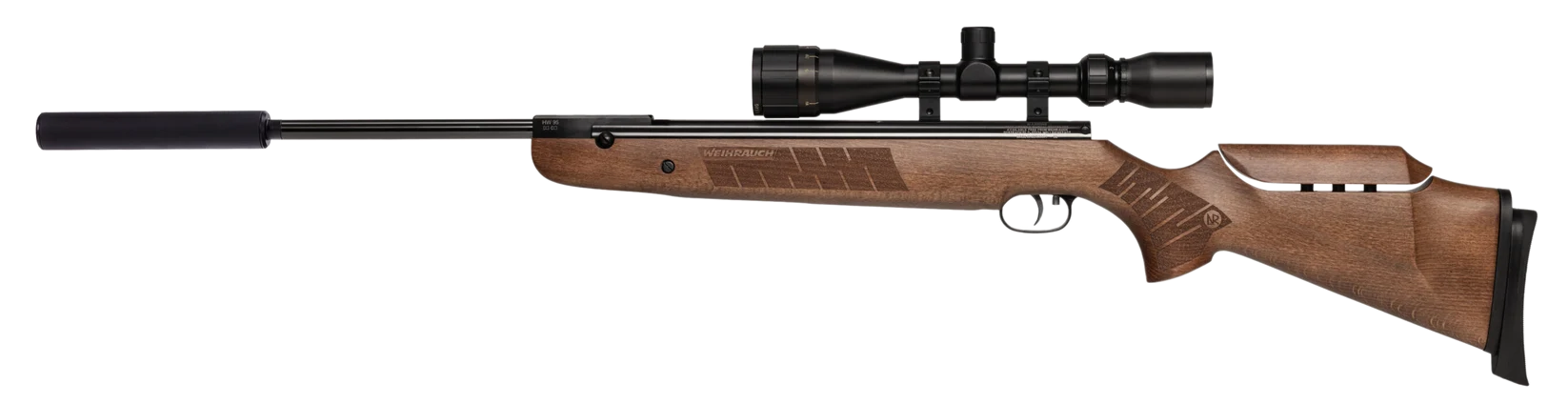

Weihrauch HW95S Adjustable

€565.00
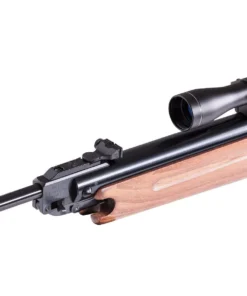
The Weihrauch HW95S Adjustable is a new version of this long-running popular spring piston air rifle. It includes a newly-designed walnut finished hardwood stock with adjustable cheekpiece and adjustable buttpad – it will fit you like a glove!
The Weihrauch HW95 was first introduced in 2005 and is still one of our best-selling spring guns – a testament to its superb design and in-field performance. It has been progressively improved since then, while retaining the classic hand finished build quality you’d expect from German Engineering.
The adjustable cheekpiece has push button operation – an innovative development recently introduced by Weihrauch. The model comes fitted with the High – Efficiency silencer which does an outstanding job of deadening the sound. The rifle is full-powered yet light weight while maintaining a solid build which keep cocking the barrel to a minimal effort. Perfectly suited for both garden plinking fun and hunting.

Trigger
2-Stage Match Rekord Trigger

Overall Weight
3.4kgkg

Overall Length
97.5cm

Loading Mechanism
Single Pellet loading

Barrel Length
31cmcm

Ambidextrous
Yes
Weihrauch HW95S Adjustable
Weihrauch HW95S Adjustable Overview
The Weihrauch HW95S Adjustable is a refined spring-piston break-barrel rifle built for shooters who want traditional mechanical simplicity combined with modern stock adjustability. Weihrauch lists the HW95S at approximately 3.40 kg, with a 1,075 mm overall length, 410 mm barrel, single-shot operation, spring-piston powerplant, and the company’s two-stage Rekord match trigger. Its hardwood stock carries a walnut-style finish and includes an individually adjustable cheekpiece plus a buttplate that can be adjusted both vertically and laterally. The stock is also suitable for right- and left-handed shooters.
For buyers comparing weihrauch, air rifles, a premium german air rifle, or established air rifle makes, the HW95S occupies an attractive middle ground between lightweight simplicity and serious precision-oriented ergonomics.
Adjustable Cheekpiece and Buttplate
The biggest distinction of the HW95S is its adjustable stock geometry.
The cheekpiece can be raised to help the shooter achieve a more natural and repeatable head position. Meanwhile, the buttplate can be adjusted vertically and laterally, allowing the rear of the stock to be tailored more closely to the shooter’s shoulder position.
That adjustability can improve comfort when moving between open sights and an optic.
It is also valuable for shooters of different builds because stock fit affects eye alignment, trigger reach, shoulder pressure, and overall repeatability.
For someone comparing hw95, weihrauch hw 95, weihrauch hw95 hw100 airgun air pistols, or other premium sporting models, the adjustable furniture gives this version a clear ergonomic advantage.
Break-Barrel Spring-Piston Operation
Unlike compressed air rifles that require an external charging source, the HW95S uses a self-contained spring-piston action.
The barrel is broken downward to cock the rifle and provide access for loading a single pellet.
Once loaded, the barrel is returned to battery and the rifle is ready to fire.
This simple mechanical system eliminates the need for tanks, pumps, compressors, fill probes, or regulated air reservoirs.
That independence appeals to shooters who want straightforward ownership.
It also distinguishes the HW95S from PCP platforms such as the weihrauch hw100, hw100 airgun, hw 100 bullpup, Snowpeak PP750L PCP Air Pistol, and other pre-charged systems.
Two-Stage Rekord Match Trigger
Weihrauch equips the HW95S with its well-established two-stage Rekord match trigger.
A predictable trigger is important because spring-powered rifles are sensitive to shooter movement.
The first stage allows controlled preparation before the shot, while the second stage provides a defined release point.
This can help the shooter maintain a stable sight picture and reduce unnecessary disturbance as the shot breaks.
Weihrauch also warns that internal trigger modifications should be left to qualified personnel because improper adjustment can create unsafe operation.
Open Sights and Traditional Marksmanship
The HW95S comes with open sights.
Weihrauch specifies a front sight tunnel with interchangeable inserts and a micrometer rear sight offering four different notch configurations on its break-barrel models in this family.
That makes the rifle suitable for shooters who enjoy traditional sighting methods.
Open sights can be valuable for recreational practice, marksmanship fundamentals, and shorter-distance target work.
A scope can also be fitted when greater aiming precision is preferred.
Calibers and Published Performance
Weihrauch currently lists the HW95S in:
- .177 – up to 275 m/s
- .20 – up to 210 m/s
- .22 – up to 200 m/s
The manufacturer notes that listed velocities are guideline figures and can vary depending on pellet type and legal market configuration.
The .177 version may appeal to shooters looking for a flatter trajectory.
The .20 offers an intermediate option.
The .22 uses a heavier pellet and may suit shooters who prefer that caliber’s characteristics.
The correct choice should be based on intended sporting use and local legal requirements.
Precision and Shooting Character
The HW95 family is designed around a comparatively lightweight sporting rifle format while preserving a substantial mechanical feel.
Weihrauch describes the HW95 line as suitable for leisure and sporting use with strong accuracy and efficiency.
Spring-piston rifles demand consistent technique.
The internal piston moves during the firing cycle, so grip pressure, shoulder position, support location, trigger control, and follow-through all influence results.
When those variables are controlled, the HW95S can provide the kind of repeatability expected from a premium traditional platform.
Comparison With Other Weihrauch Models
The Weihrauch HW90 and Weihrauch HW90 air rifle use a gas-ram system rather than the conventional spring-piston arrangement found here.
Therefore, the HW90 gas ram air rifle and broader Weihrauch gas ram rifle category provide a different cocking and firing feel.
The Weihrauch HW97K, hw97, and hw 97k use a fixed-barrel underlever configuration.
Meanwhile, the hw 30, weihrauch hw30, weihrauch hw30s, hw50, weihrauch hw50, weihrauch hw50s, hw50 s, hw50s, hw35, hw35 air rifle, hw35e for sale, hw 50, and weihrauch hw80 represent other traditional sporting designs with different weights, dimensions, and power characteristics.
Air Pistols and Other Weihrauch Searches
Search terms such as weihrauch hw45, weihrauch hw44, hw75, air pistols, what are air pistols, and weihrauch revolvers refer to different categories of equipment.
The HW95S is a full-size shoulder-fired sporting rifle.
Likewise, generic searches such as rifles de aire, air shot gun, sk x rifles, or Weihrauch pellet gun may bring up equipment with very different operating systems and intended uses.
The HW95S should therefore be evaluated specifically as an adjustable-stock, spring-powered sporting rifle.
Comparison With Snowpeak PCP Platforms
Buyers researching alternative pneumatic equipment may also encounter snowpeak airguns, snowpeak sports, snowpeak ap900, snowpeak max, snowpeak pp750, pp750, snow peak pp750, snowpeak p35, snowpeak p35x, p35, p35x, p35x pcp, pr900 gen 3, snowpeak m60b, snowpeak m60, snow peak pp20, snowpeak m25, ap900b pcp air rifle, snowpeak max 1 price, pcp p 35, m25 rifle, snow peak equipment, and hp300.
Those products occupy different formats, price levels, and power systems.
The HW95S offers something fundamentally different: self-contained spring operation with no need for high-pressure filling equipment.
Why Choose the HW95S Adjustable?
The main reason to choose this version is the combination of mechanical simplicity and personalized stock fit.
The adjustable cheekpiece can improve head position.
The movable buttplate can improve shoulder alignment.
The open sights preserve traditional usability.
The Rekord trigger supports controlled shot release.
The ambidextrous stock makes the rifle accessible to a wider range of shooters.
For someone who values accurate air rifles, quality German construction, and a traditional shooting experience without the support equipment required by PCP systems, the HW95S provides a compelling balance of refinement, adjustability, portability, and long-term usability.
Performance, Ergonomics, Accuracy, Handling, and Practical Ownership
This adjustable spring-powered rifle is designed for shooters who want traditional mechanical operation combined with a more personalized fit. Its strongest advantage is not simply power or appearance, but the way the stock geometry, trigger, sighting system, barrel, and break-barrel action work together to support repeatable shooting.
The rifle remains completely self-contained. There is no need for an external air source, high-pressure cylinder, compressor, or fill probe. For many shooters, that makes ownership simpler and more convenient. Once the rifle is properly set up, the focus can remain on technique, pellet choice, sight alignment, and consistent handling.
Adjustable Stock Fit
The adjustable cheekpiece is one of the most useful features for improving consistency.
A shooter should be able to place the cheek on the stock and naturally align the eye with the sights.
If the head has to be lifted, tilted, or pushed forward, consistency becomes more difficult.
The cheekpiece can be adjusted to create a more natural position.
This is especially useful when changing from open sights to a scope because the ideal head height can change.
Buttplate Adjustment
The adjustable buttplate allows the rear of the rifle to be positioned more comfortably against the shoulder.
Vertical adjustment can help the shooter find the correct height.
Lateral adjustment can improve alignment between the shoulder, cheek, and trigger hand.
A properly fitted buttplate can reduce unnecessary tension.
It can also improve repeatability because the rifle returns to the same shoulder position more easily.
For serious accuracy work, this is an important advantage.
Break-Barrel Operation
The break-barrel design is simple and familiar.
The barrel is moved downward to cock the spring and expose the breech for loading.
A single pellet is inserted before the barrel is returned to the firing position.
The action should be operated smoothly.
There is no benefit in slamming the barrel open or closed.
A deliberate cocking cycle reduces unnecessary wear and helps preserve alignment.
If the mechanism ever feels unusually stiff, it should be inspected rather than forced.
Consistent Cocking Technique
The shooter should use the same controlled motion each time.
The barrel should move through the full cocking stroke.
Once the mechanism is engaged, the pellet can be loaded carefully.
The shooter should keep the muzzle pointed in a safe direction throughout the process.
A consistent routine helps make operation both safer and more repeatable.
It also allows the shooter to notice changes in resistance that could indicate developing mechanical issues.
Spring-Piston Firing Behavior
The internal spring and piston create a distinct firing cycle.
When the trigger releases, the piston moves rapidly forward and compresses air behind the pellet.
This movement produces a characteristic recoil pattern.
It is not the same as firearm recoil.
Instead, the shooter feels internal movement in both directions.
This is why spring-powered rifles respond strongly to hold technique.
The rifle should be supported consistently rather than clamped tightly.
The Importance of a Relaxed Hold
A relaxed hold allows the rifle to move naturally during the shot.
Excessive grip pressure can change the way the action reacts.
That can shift point of impact.
The supporting hand should rest under the fore-end without squeezing.
The shoulder should provide steady but not excessive pressure.
The trigger hand should remain relaxed.
The goal is to repeat the same contact points every time.
Trigger Control
The two-stage trigger provides a refined release when used correctly.
The shooter should take up the first stage gently.
Once the second-stage wall is reached, pressure should increase smoothly.
The trigger should be pressed straight to the rear.
Side pressure can disturb the sight picture.
The shooter should also avoid anticipating the shot.
A smooth break is easier to achieve when the trigger is treated as part of a complete shooting routine rather than as a sudden final movement.
Follow-Through
Follow-through is especially important with spring-powered rifles.
The shooter should maintain cheek contact, shoulder position, and sight alignment after the shot breaks.
Moving immediately can disturb the rifle during the firing cycle.
A brief pause helps preserve consistency.
It also allows the shooter to observe the sight picture and better understand where the shot went.
Good follow-through becomes increasingly important as distance increases.
Open-Sight Use
The open sights provide a traditional aiming option.
They are especially useful for shorter-distance target practice and fundamental marksmanship training.
The shooter should keep the front sight centered within the rear sight.
The top edges should remain level.
The eye should focus primarily on the front sight.
The target may appear slightly less sharp.
This is normal.
Consistent sight alignment matters more than trying to make every element appear perfectly focused at once.
Scope Use
A scope can be fitted when greater aiming precision is desired.
The optic should be suitable for a spring-powered rifle.
The recoil cycle of this type of action can be demanding on equipment.
Mounts should also be secure.
The scope should be positioned so that eye relief is comfortable from a natural head position.
The adjustable cheekpiece can then be set to support a repeatable eye line.
This combination can make longer-distance aiming easier.
Establishing a Zero
Once the sighting system is chosen, the rifle should be zeroed at a practical distance.
A stable shooting position should be used.
Several shots should be grouped before making major adjustments.
The shooter should avoid chasing individual shots.
A group gives a more reliable indication of average point of impact.
After the zero is established, it should be checked periodically.
Pellet Selection
Different pellets can perform very differently in the same barrel.
The shooter should test several suitable types.
Weight, head size, skirt condition, and manufacturing consistency all influence performance.
Several groups should be fired with each option.
One unusually good group should not be treated as conclusive.
A pellet that performs consistently across multiple groups is a better choice.
Accuracy should remain the priority.
Pellet Condition
Each pellet should be inspected before loading during serious accuracy testing.
Bent skirts or visible deformation can affect flight.
Pellets should be stored in a dry, protected container.
The loading area should also remain clean.
Debris introduced at the breech can interfere with consistency.
Good ammunition handling is a simple but important part of achieving reliable results.
Benchrest Shooting
A benchrest can be useful for testing.
The rifle should be placed on a soft support rather than a hard surface.
The fore-end should contact the rest in the same position for every shot.
The rear of the rifle should also be supported consistently.
The shooter should avoid pressing the rifle firmly into the rest.
Allowing it to move naturally produces more meaningful results with a spring-powered action.
Standing Shooting
Standing shooting is more demanding.
The rifle’s weight can help stability once the shooter is settled, but it can also become tiring.
The support elbow should be positioned to create skeletal support.
The shooter should avoid relying entirely on arm muscles.
A relaxed stance usually creates less movement.
If the sight picture becomes unstable, it is better to lower the rifle and restart than to force the shot.
Kneeling and Seated Positions
Kneeling and seated positions provide more support than standing.
The shooter can use the knees and elbows to create stable contact points.
Comfort remains important.
An uncomfortable position creates muscle tension.
That tension eventually increases movement.
A stable position should feel natural enough to repeat.
The adjustable stock can help improve fit across these different positions.
Balance and Handling
The rifle is substantial enough to feel stable while remaining more manageable than heavier fixed-barrel designs.
The balance can change when a scope is added.
A large optic may make the rifle feel top-heavy.
A practical setup should therefore avoid unnecessary accessories.
A lighter, well-balanced configuration is often easier to control during longer sessions.
Barrel Lock-Up
A break-barrel rifle depends on consistent barrel lock-up.
The barrel should return to the same position every time it is closed.
The shooter should notice how the mechanism feels.
Any unusual looseness should be inspected.
A consistent lock-up is essential because both the barrel and sighting relationship depend on it.
Proper handling helps preserve this consistency over time.
Barrel Maintenance
The bore should not be cleaned aggressively without a reason.
If accuracy remains stable, frequent deep cleaning may not be necessary.
When cleaning is required, non-abrasive materials should be used.
The crown should be protected.
Harsh tools can damage the bore.
After cleaning, several shots may be needed before accuracy settles back to its normal level.
Exterior Care
The metalwork should be wiped after use.
Fingerprints and moisture can remain on the surface.
A soft cloth is usually sufficient.
The hardwood stock should also be kept clean.
If the rifle has been used in damp conditions, it should be dried before storage.
Water should not remain around the action, barrel, or stock hardware.
Internal Maintenance
Internal spring and piston components should not be dismantled casually.
The system stores mechanical energy.
Improper disassembly can be dangerous and may damage the rifle.
Excessive lubrication should also be avoided.
Too much oil inside the compression area can cause inconsistent operation.
Professional servicing is preferable when the rifle develops significant mechanical problems.
Safe Storage
The rifle should be stored in a secure, dry place.
A locked cabinet or suitable secure case is recommended.
Unauthorized users should not have access.
The rifle should be stored uncocked.
Pellets should also be kept responsibly.
Local storage requirements should always be followed.
Transport
A padded or rigid case provides protection during transport.
The barrel, sights, stock, and optic should be protected from impact.
The rifle should not move freely inside the case.
After significant travel, the zero should be checked before serious shooting.
Local transport laws should also be followed.
Long-Term Ownership
The rifle is well suited to shooters who want mechanical simplicity without giving up adjustability.
There is no need for charging equipment.
The stock can be tailored to the individual shooter.
The trigger supports controlled release.
The break-barrel action keeps operation straightforward.
Long-term reliability depends on smooth cocking, correct storage, sensible maintenance, and avoiding unnecessary mechanical stress.
Practical Value
The greatest value comes from the balance between traditional engineering and modern ergonomics.
The rifle remains self-contained and simple to operate, yet the adjustable cheekpiece and buttplate give the shooter a level of fit normally associated with more specialized target-oriented equipment.
For shooters who want a refined spring-powered platform that can be personalized for comfort and consistency, it offers a strong combination of accuracy potential, practical handling, and dependable long-term use.
Real-World Shooting, Accuracy Development, Durability, and Long-Term Care
A refined spring-powered rifle rewards consistency more than speed. The shooter gets the best results by developing a stable routine, paying attention to stock fit, using suitable pellets, and maintaining the same hold from one shot to the next. Because the action is mechanically self-contained, the entire shooting experience depends on the relationship between the shooter and the rifle rather than on external charging equipment.
The adjustable stock makes this especially useful for shooters who want to fine-tune head position and shoulder alignment. Small ergonomic improvements can make a noticeable difference during longer sessions because they help reduce unnecessary muscle tension and improve repeatability.
Setting the Cheekpiece Correctly
The cheekpiece should be adjusted so the shooter can place the face naturally on the stock and immediately achieve a clear sight picture.
The head should not need to be lifted, twisted, or pushed forward.
If a scope is fitted, the cheekpiece may need to sit higher than when open sights are used.
The ideal position is one that allows the eye to align naturally every time the rifle is shouldered.
Once the correct height is found, it should remain unchanged unless the sighting setup is altered.
Adjusting the Buttplate
The buttplate should sit comfortably against the shoulder.
Its vertical position can help determine how high or low the rifle sits.
Lateral adjustment can help align the stock more naturally with the shooter’s body.
The aim is not to force the rifle into position.
Instead, the rifle should settle into the shoulder with minimal tension.
A good fit improves stability and makes it easier to repeat the same stance.
Building a Repeatable Hold
Spring-powered rifles react noticeably to changes in grip pressure.
The supporting hand should therefore remain in the same position.
The trigger hand should stay relaxed.
Shoulder pressure should also remain consistent.
A very tight grip can change the way the rifle moves during the shot.
A relaxed, repeatable hold usually produces better results.
The shooter should allow the rifle to complete its firing cycle naturally.
Natural Point of Aim
A useful shooting position should place the sights close to the target without excessive muscular effort.
This is known as natural point of aim.
If the rifle naturally points too far left or right, the shooter should adjust body position rather than twisting the arms.
A natural stance is easier to repeat and produces less fatigue.
This becomes especially important during longer sessions.
Breathing Control
Breathing affects the movement of the rifle.
The shooter should breathe normally while preparing the shot.
A short natural pause after exhaling is often the most stable moment.
The shooter should avoid holding the breath for too long.
Extended breath-holding increases tension and can cause the sight picture to deteriorate.
The best shots often come from a relaxed rhythm rather than from forced concentration.
Trigger Technique
Trigger control is one of the most important factors in precision.
The first stage should be taken up smoothly.
Once the second stage is reached, pressure should increase gradually until the shot breaks.
The trigger finger should move straight backward.
The shooter should avoid suddenly jerking the trigger.
A clean release helps preserve sight alignment.
The adjustable stock can also help by placing the trigger hand in a more natural position.
Follow-Through
The shooter should remain in position after the shot.
The head should stay on the stock.
The supporting hand should not move immediately.
The sight picture should be maintained briefly.
This is especially important because the internal action continues moving during the firing cycle.
Good follow-through allows the rifle to behave consistently.
It also helps the shooter identify whether a poor shot came from technique or from another factor.
Learning the Recoil Pattern
The recoil pattern of a spring-powered rifle is unique.
The internal piston moves quickly, creating both forward and rearward movement.
The shooter should become familiar with this rhythm.
Trying to suppress the movement completely usually creates inconsistency.
Instead, the rifle should be supported in a way that allows it to move predictably.
This is one of the most important skills to develop.
Pellet Testing
A good pellet should provide consistent groups across several sessions.
Testing should be done from a stable position.
Different types should be tested separately.
The same distance and sight settings should be used.
The shooter should record group size rather than relying on memory.
Over time, this makes it easier to identify the most reliable option.
Pellet Weight
Weight can influence trajectory and shooting behavior.
Lighter pellets may travel faster.
Heavier pellets may retain energy differently.
The best choice depends on how the individual rifle responds.
Accuracy should always be the deciding factor.
A stable pellet that produces predictable groups is more useful than one chosen only for higher velocity.
Pellet Quality
Damaged pellets should be removed before use.
Bent skirts, dents, or irregular shapes can affect flight.
The shooter should keep pellets clean and dry.
A damaged pellet can create a poor shot even when technique is correct.
Good pellet quality helps reduce one more variable during testing.
Open-Sight Accuracy
Open sights can provide excellent training value.
The shooter should focus on keeping the front sight centered in the rear notch.
The top of the front sight should remain level with the rear sight.
The front sight should be the sharpest visual reference.
The target may appear slightly blurred.
That is normal.
Consistent sight alignment is more important than trying to focus equally on every element.
Scoped Accuracy
A scope can make precise aiming easier.
However, the optic should not compensate for poor technique.
Cheek position, trigger control, and follow-through still matter.
The scope should be mounted securely.
Eye relief should remain comfortable.
The adjustable cheekpiece can then be positioned so the eye naturally centers behind the optic.
This reduces the need to search for the correct sight picture.
Zero Confirmation
The sighting system should be checked periodically.
A sudden change in point of impact may come from loose mounts, altered stock fit, or a different pellet.
The shooter should confirm zero before assuming there is a mechanical fault.
Several shots should be grouped before adjustments are made.
Chasing individual impacts can lead to unnecessary changes.
Bench Shooting
A soft front rest can help evaluate mechanical consistency.
The rifle should contact the support in the same place every time.
Hard surfaces should be avoided.
The shooter should use the same shoulder pressure and cheek position.
A spring-powered rifle should not be clamped rigidly.
It should be allowed to move naturally.
This provides more meaningful accuracy testing.
Standing Technique
Standing is more demanding.
The rifle’s weight must be supported efficiently.
The shooter should position the supporting elbow so the skeleton carries as much of the load as possible.
Muscle tension should be minimized.
If the rifle begins to wobble excessively, the shooter should lower it and restart.
Forcing the shot usually reduces accuracy.
Kneeling and Seated Positions
Kneeling and seated positions can provide greater stability.
The shooter should use the knees and elbows as support points.
The adjustable stock can be useful here because the buttplate and cheekpiece can help maintain a comfortable position.
The body should not be forced into an unnatural posture.
Comfort improves repeatability.
Break-Barrel Lock-Up
The barrel should close firmly and consistently.
The lock-up should feel the same each time.
Any looseness or unusual movement should be investigated.
Because the barrel is also part of the sighting relationship, consistent lock-up is critical.
The barrel should never be slammed into position.
Smooth handling helps preserve long-term alignment.
Cocking Effort
The rifle should be cocked with steady force.
The motion should feel predictable.
If resistance suddenly changes, the shooter should stop and inspect the mechanism.
A developing issue is easier to address early than after continued use.
Mechanical parts should never be forced.
Breech Seal Inspection
The seal around the breech helps preserve compression.
It should remain clean and undamaged.
If performance drops unexpectedly, the seal may be one of the areas worth checking.
A damaged or worn seal can affect efficiency.
Inspection should be visual and gentle.
Replacement should be carried out correctly if needed.
Barrel Cleaning
Barrel cleaning should be performed only when necessary.
If accuracy remains stable, frequent cleaning may not provide any benefit.
When cleaning becomes appropriate, soft and non-abrasive equipment should be used.
The crown should be protected.
Aggressive cleaning can create more problems than it solves.
After cleaning, several shots may be needed before the barrel returns to its normal behavior.
Stock Care
The hardwood stock should be kept clean and dry.
Sweat, moisture, and dirt should be wiped away after use.
The adjustable hardware should also remain clean.
Any exposed metal components around the cheekpiece or buttplate should be checked periodically.
The stock should not be stored while wet.
Proper care helps preserve both appearance and function.
Exterior Metal Care
The barrel and action should be wiped after handling.
Fingerprints contain moisture and salts that can affect metal finishes over time.
A soft cloth is usually sufficient for regular maintenance.
If the rifle has been used outdoors in damp weather, it should be dried fully before storage.
Trigger and Safety Inspection
The trigger should feel consistent.
The safety should operate correctly.
If either changes unexpectedly, the rifle should be inspected before further use.
The owner should avoid unnecessary internal adjustments.
A refined trigger works best when kept clean and correctly maintained.
Spring and Internal Components
The internal spring and piston should not be dismantled without appropriate knowledge.
These components store significant mechanical energy.
Professional service is the safer option when major internal work is required.
The shooter should also avoid excessive lubrication.
Too much oil can affect consistency and create unwanted combustion inside the compression chamber.
Secure Storage
The rifle should be stored uncocked in a dry, secure place.
Unauthorized users should not have access.
A locked cabinet or suitable secure case is preferable.
The adjustable stock should not be left under pressure from heavy objects.
Any fitted optic should also be protected.
Local storage rules should always be followed.
Transport
During transport, the rifle should be placed in a padded or rigid case.
The barrel and stock should be protected from impact.
If an optic is fitted, it should not carry the weight of other equipment.
After long travel, zero should be checked.
The adjustable stock settings should also be confirmed in case they were disturbed.
Long-Term Reliability
A quality mechanical rifle can provide many years of service when treated correctly.
Smooth cocking, careful loading, proper storage, suitable lubrication, and regular inspection all contribute.
Small changes in sound, feel, or accuracy should be investigated rather than ignored.
Preventive care is almost always easier than major repair.
Long-Term Ownership Value
The combination of traditional self-contained operation and adjustable ergonomics gives this rifle a distinctive advantage.
The shooter does not need external charging equipment.
At the same time, the cheekpiece and buttplate can be tailored to individual fit.
That makes the rifle suitable for shooters who want classic mechanical operation without giving up modern comfort.
With consistent technique and sensible maintenance, it can remain accurate, reliable, and enjoyable for many years.
Section 4 – Buyer Guidance, Setup Planning, Care, Storage, and Long-Term Value
Choosing a premium spring-powered break-barrel rifle should involve more than comparing power figures or appearance. A serious buyer should think about fit, intended use, shooting environment, preferred sighting system, ammunition, storage, transport, and long-term maintenance.
This model is especially attractive because it combines traditional self-contained operation with adjustable ergonomics. The shooter can tailor the cheekpiece and buttplate to achieve a more natural position, while the spring-piston design removes the need for external charging equipment. That combination makes ownership relatively straightforward while still offering a refined shooting experience.
Who This Rifle Suits Best
This rifle is well suited to shooters who appreciate deliberate mechanical operation and want a platform that can be adjusted to fit them more precisely.
It can work well for recreational target shooting, marksmanship practice, and other lawful sporting use.
The adjustable stock can be especially useful for shooters who struggle to achieve a consistent head or shoulder position with fixed-stock rifles.
It can also suit experienced shooters who want a traditional platform but prefer more modern ergonomics.
Planning the Complete Setup
A complete setup should include suitable pellets, a secure case, cleaning supplies, and safe storage.
The open sights can be used immediately, so a scope is optional rather than essential.
If the shooter plans to install an optic, that cost should be included in the budget.
Mounts should also be chosen carefully.
A poorly fitted optic setup can reduce the benefit of the rifle’s adjustable stock.
Adjusting the Stock Before Serious Shooting
The cheekpiece and buttplate should be set before accuracy testing begins.
The shooter should first shoulder the rifle naturally.
Then the cheekpiece can be adjusted until the eye aligns comfortably with the sights.
The buttplate should then be positioned so the rifle sits securely against the shoulder without forcing the body into an awkward position.
Once a comfortable setup is found, it should be left unchanged during pellet testing.
Changing stock settings repeatedly can make it harder to judge real accuracy.
Choosing Between Open Sights and a Scope
Open sights are useful for basic marksmanship and shorter-distance shooting.
They keep the rifle simple and light.
A scope can provide a more precise aiming reference at longer distances.
The correct choice depends on how the rifle will be used.
The shooter should avoid installing an unnecessarily large optic.
Excess weight can change the balance and make the rifle less comfortable.
A practical, durable scope often works better than an oversized one.
Scope Mounting Considerations
A spring-powered rifle produces a distinctive recoil pattern.
That means the scope and mounts should be suitable for this type of action.
The rings should be installed evenly.
The scope tube should not be overtightened.
Eye relief should be checked before final tightening.
Once the optic is secure, the cheekpiece can be adjusted to support a natural head position.
This helps the shooter obtain the same sight picture each time.
Establishing Zero
The rifle should be zeroed from a stable supported position.
Several shots should be fired before making major adjustments.
The shooter should judge the center of a group rather than a single impact.
Once a useful zero is established, it should be confirmed at the distances most often used.
The zero should also be checked after significant transport, scope adjustment, or changes in pellet type.
Choosing Pellets
Pellet choice has a major influence on practical accuracy.
Several suitable types should be tested.
The best pellet is the one that produces reliable, repeatable groups.
Velocity should not be the only consideration.
A slightly slower pellet that groups consistently is often more useful than a faster option with poor stability.
Testing should be performed in calm conditions whenever possible.
Storing Pellets Properly
Pellets should be kept clean and dry.
Damaged tins can deform pellets.
Loose pellets should not be stored where they can collect dust or moisture.
Before loading, the shooter should inspect the pellet.
A bent skirt or visible dent can affect flight.
Good ammunition handling supports more consistent results.
Safe Cocking Routine
The barrel should be opened with a smooth, controlled movement.
The shooter should maintain control throughout the cocking stroke.
Once the action is cocked, the loading process should be deliberate.
The pellet should be seated carefully.
The barrel should then be returned to the closed position without slamming it.
A consistent routine reduces wear and helps the shooter notice if anything begins to feel unusual.
Monitoring Barrel Lock-Up
The barrel should lock into the same position every time.
Any looseness, side movement, or change in closing feel should be investigated.
Consistent lock-up is essential because the barrel forms part of the sighting relationship.
Repeated forceful closing can increase wear over time.
Smooth handling helps preserve the mechanism.
Trigger and Safety Checks
The trigger should remain predictable.
The safety should engage and disengage correctly.
If either begins to feel different, further use should stop until the cause is identified.
A sudden change in trigger weight or release point can indicate a mechanical issue.
Internal adjustments should be handled carefully.
Professional service is preferable when the owner is unsure.
Shooting Environment
A suitable shooting area is essential.
The backstop should be strong enough to contain the pellet safely.
The shooter should also know what lies beyond the target.
Light materials, fencing, vegetation, or uncertain ground should not be trusted as primary containment.
An approved range or properly prepared private area is a better option.
Local laws should always be checked before use.
Responsible Handling
The muzzle should always remain pointed in a safe direction.
The trigger finger should stay outside the trigger guard until the shooter is ready to fire.
The safety is useful, but it should never replace proper handling.
The shooter should also confirm whether the rifle is loaded before moving, storing, or handing it to another person.
These habits should become automatic.
Routine Cleaning
Exterior cleaning should be simple and consistent.
Metal surfaces should be wiped after use.
The stock should be cleaned gently.
Water, sweat, and dirt should not remain on the rifle.
Harsh chemicals should be avoided unless specifically suitable for the materials involved.
Routine care protects both appearance and function.
Barrel Maintenance
The barrel should only be cleaned when there is a reason.
A sudden decline in accuracy may justify inspection.
However, the shooter should first check the sights, mounts, pellets, and technique.
When cleaning is needed, non-abrasive materials should be used.
The crown should be protected.
Aggressive cleaning can damage precision surfaces.
Adjustable Hardware Care
The cheekpiece and buttplate adjustment mechanisms should remain clean.
Dust or grit should not be allowed to build up around moving parts.
Adjustment screws should be checked periodically.
They should remain secure without being overtightened.
If the stock begins to shift during shooting, accuracy can suffer.
Keeping the adjustment system stable helps preserve repeatable fit.
Stock Protection
The stock should be protected from unnecessary impacts.
Even though the rifle is designed for regular use, repeated knocks can damage the finish or adjustment hardware.
The stock should not be stored under heavy objects.
If it becomes wet, it should be dried before storage.
Careful handling also helps preserve resale value.
Internal Maintenance
The spring and piston system should not be dismantled casually.
These components store significant mechanical energy.
If the rifle develops unusual vibration, reduced power, abnormal noise, or excessive cocking resistance, qualified service is advisable.
Excessive lubrication should also be avoided.
Too much oil can create inconsistent behavior inside the compression system.
Storage Between Sessions
The rifle should be stored uncocked.
A dry, secure location is preferable.
A locked cabinet or secure case helps prevent unauthorized access.
If a case has been used outdoors in damp conditions, the rifle should be removed and dried before long-term storage.
Moisture trapped in a padded case can contribute to corrosion.
Long-Term Storage
Before extended storage, the rifle should be cleaned and inspected.
The barrel and action should remain dry.
The stock should be free from moisture.
The trigger and safety should function normally.
The rifle should remain uncocked.
When it returns to use, a short inspection and controlled test session should be performed before serious shooting.
Transport Protection
A padded or hard case is recommended for transport.
The rifle should not move freely inside the case.
The barrel, stock, sights, and optic should be protected from impact.
If the stock has adjustable components, their settings should be checked after a long journey.
A scope zero should also be confirmed.
Ownership Costs
One advantage of this design is the relatively low requirement for supporting equipment.
There is no need for a compressor, charging cylinder, air hose, or fill probe.
However, the owner should still budget for pellets, cleaning equipment, secure storage, a protective case, and optional optics.
Professional servicing may also be needed occasionally.
Planning for these costs provides a more realistic picture of ownership.
When Professional Service Is Appropriate
Professional service is recommended when there is a significant power loss, trigger malfunction, damaged seal, unusual noise, severe vibration, or major change in cocking effort.
Attempting internal repairs without the correct tools can cause additional damage.
A qualified technician can inspect the system properly and help preserve long-term reliability.
Long-Term Reliability
Long-term reliability depends largely on how the rifle is treated.
Smooth cocking, careful loading, suitable pellets, proper storage, and restrained lubrication all contribute.
Mechanical parts should never be forced.
Small changes in sound or feel should be investigated early.
Preventive care is usually easier and less expensive than major repair.
Overall Buyer Value
The strongest value comes from the balance between classic spring-powered simplicity and adjustable stock fit.
The rifle remains independent of external charging equipment while offering a level of ergonomic customization that can improve comfort and repeatability.
That makes it attractive to shooters who want traditional operation without accepting a completely fixed shooting position.
Final Ownership Perspective
A premium break-barrel rifle can provide many years of dependable service when used responsibly.
The owner should fit the stock correctly, choose suitable pellets, maintain a consistent shooting technique, keep the mechanism clean, and store the rifle securely.
The adjustable cheekpiece and buttplate add meaningful practical value because they allow the rifle to be tailored to the shooter rather than forcing the shooter to adapt completely to the stock.
When combined with careful handling and sensible maintenance, this makes the platform a strong long-term choice for shooters who value mechanical quality, comfort, precision, and straightforward ownership.
Be the first to review “Weihrauch HW95S Adjustable”
Related products

WEIHRAUCH

WEIHRAUCH


compressor

WEIHRAUCH
WEIHRAUCH

WEIHRAUCH

WEIHRAUCH
Reviews
There are no reviews yet.