


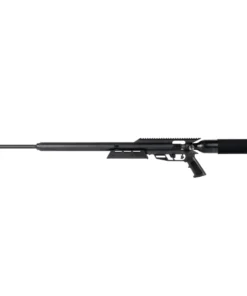
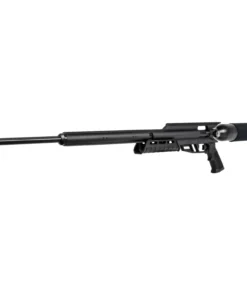


Texan® .510 Caliber

€750.00
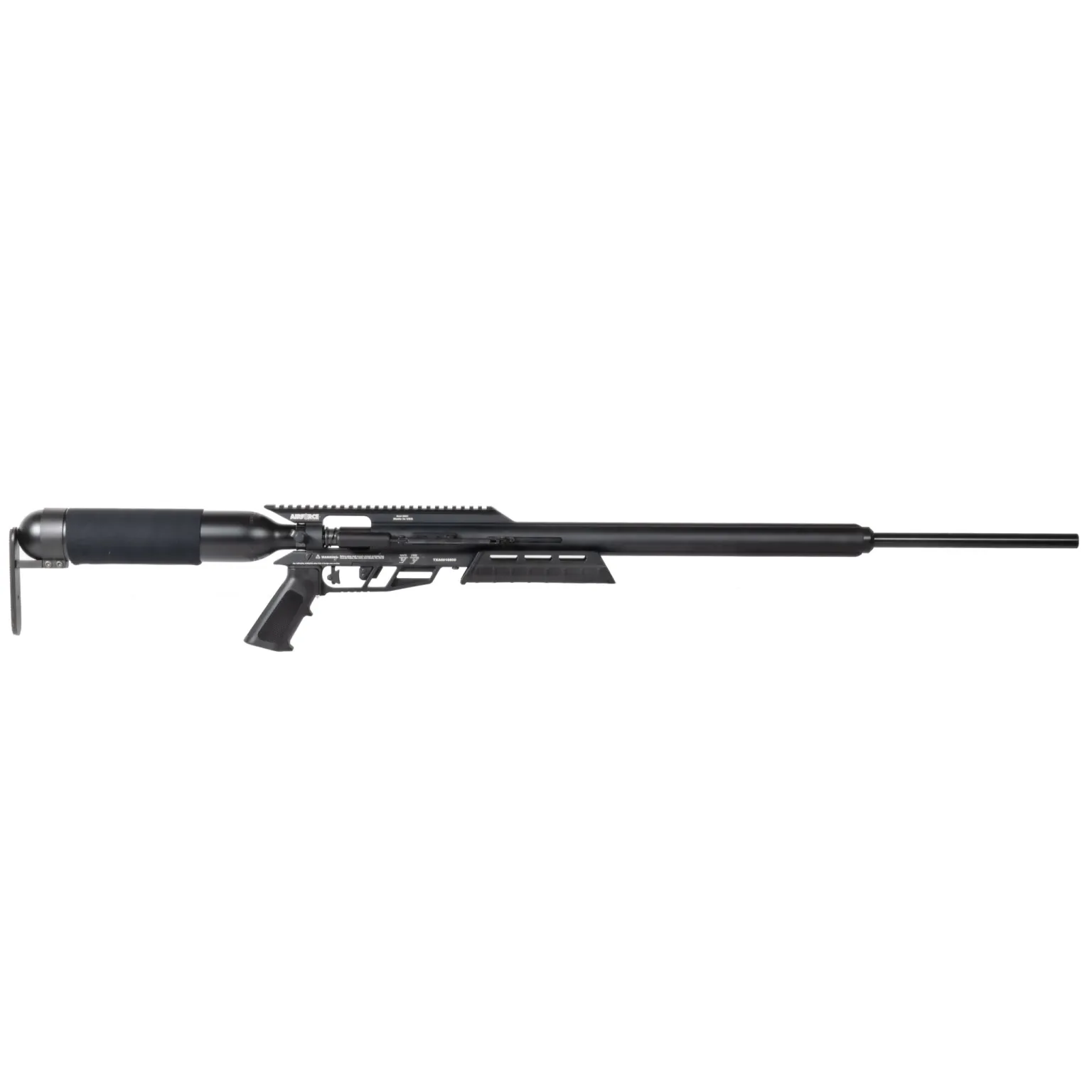
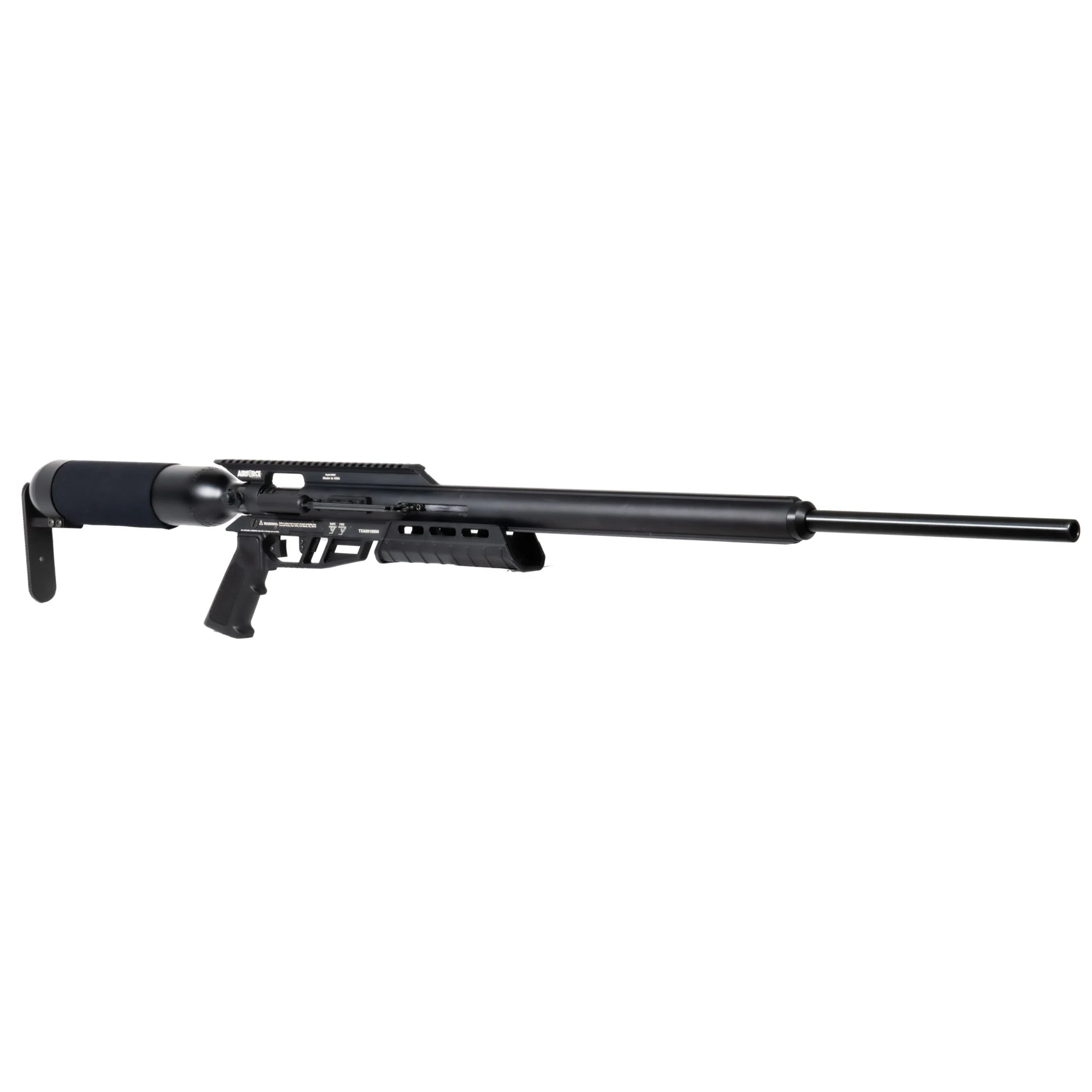
The AirForce Texan® .510 Caliber is the world’s most powerful production air rifle, designed to launch .510 caliber projectiles at velocities of over 1,000 feet per second and generating more than 800 foot-pounds of energy. This incredible power makes it an ideal choice for hunting large game such as deer, hogs, and predators. The rifle’s precision and stopping power ensure humane and effective results, even at long range.
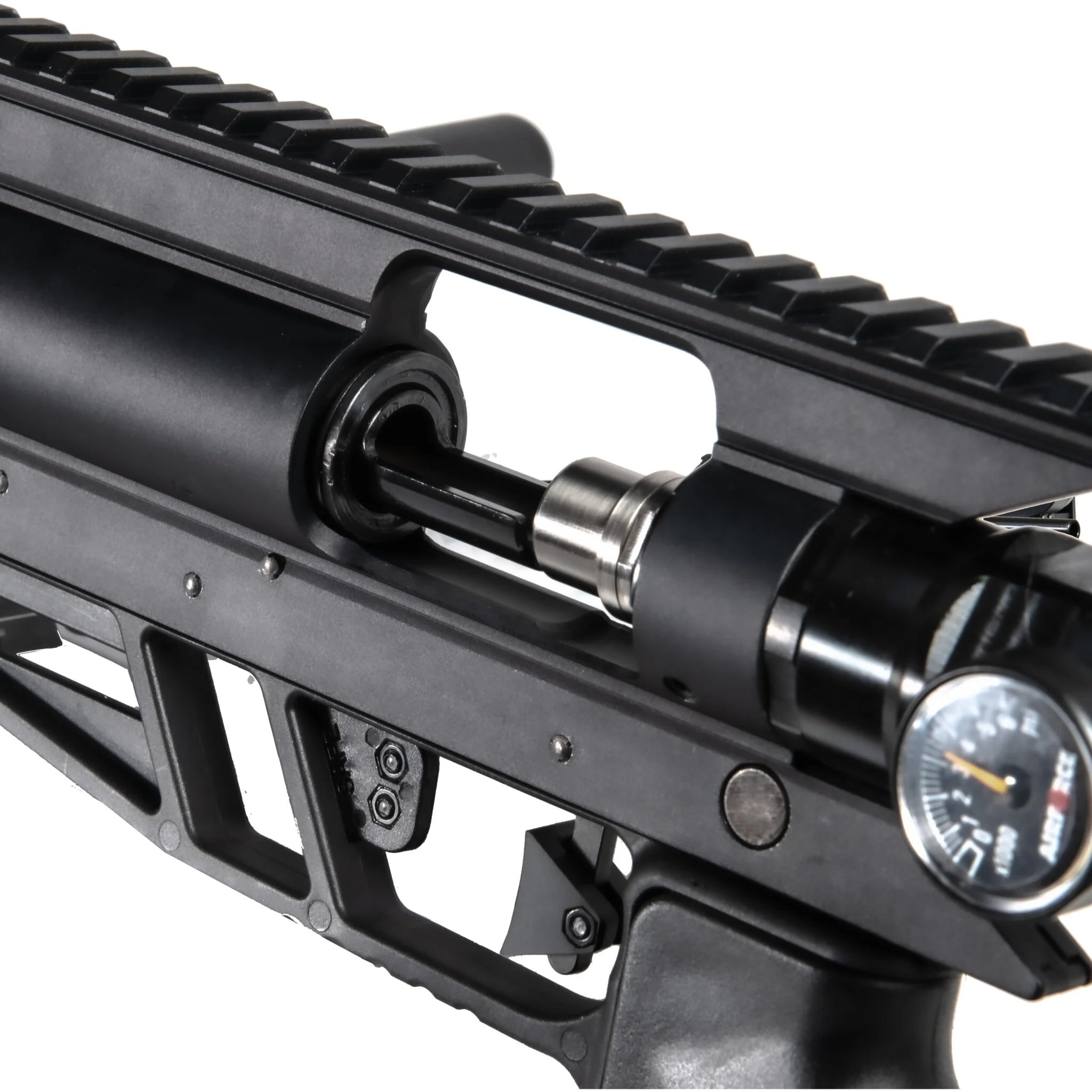
This new version of the Texan features a Picatinny Scope rail and an upper and lower dovetail rails for attaching accessories. In addition the new Texan has a manual safety.
Texan .510 Caliber
The Texan .510 Caliber features a 34-inch Lothar Walther barrel, known for its exceptional accuracy and durability, which is key for ensuring consistent performance when shooting heavy projectiles. The rifle is powered by a high-capacity 500cc Spin-Loc® aluminum air tank, allowing for multiple powerful shots per fill. The air tank operates at a fill pressure of 3,000 PSI, providing the air volume needed to drive projectiles with tremendous force while still offering ease of refilling with the integrated quick-fill port.
This Big Bore PCP air rifle is designed with user-friendly controls, including an adjustable power wheel that allows shooters to tailor the rifle’s energy output for different types of game or shooting distances. Despite its immense power, the Texan remains easy to handle, thanks to its lightweight aircraft-grade aluminum frame, ensuring that long hunting trips are less cumbersome.
The Texan’s straightforward, single-shot loading system and side-lever action make it quick and easy to operate in the field, while the integrated pressure gauge allows you to keep track of air levels during your hunt. Whether you’re aiming for long-range precision or needing heavy-hitting power, the .510 Cal Texan gives you the confidence and capability to take on the toughest hunting challenges.
- Action: Single Shot Sidelever
- Air Tank Volume: 500cc
- Barrel: 34” Lothar Walther
- Buttplate: Adjustable
- Caliber: .510
- Energy: 800+ FPE*
- Grip: Ambi
- Length: 48″
- Max Fill Pressure: 3,00 Psi /206 Bar
- Rails: Picatinny Scope Rail; Dovetail upper and lower for accessories
- Safety: Manual
- Sights: Open or Optical
- Shrouded: Yes
- Shots per Fill: 4-5
- Trigger 2 Stage, Adjustable
- Velocity: 1,000+ fps*
- Weight: 7.65 Lbs.
- Warranty: Limited Life Time
Texan® .510 Caliber – Full-Length Texas-Built Big-Bore PCP with 800+ FPE Capability
The Texan® .510 Caliber represents the full-length configuration of AirForce’s large-bore pneumatic platform. The latest carbon-fiber version combines a 34-inch barrel, 500 cc high-pressure reservoir, 3,625 PSI / 250 BAR maximum fill pressure, single-shot action, manual safety, two-stage adjustable trigger, 1:26 twist rate, and modern optics mounting. Current manufacturer figures state performance of up to approximately 1,100 fps and more than 800 foot-pounds, although actual results depend on projectile weight, pressure, and configuration.
Its full-length architecture distinguishes it from shorter Carbine, SS, LSS-shrouded, and Tex-Rex configurations.
AirForce
AirForce manufactures the platform in Texas, United States, with an emphasis on straightforward high-pressure pneumatic architecture.
Tex-Rex AirForce Brush Gun
The Tex-Rex AirForce brush gun is a newer and much shorter platform. Current manufacturer information identifies a 16-inch barrel, so those dimensions should not be applied to this 34-inch model.
Brush Gun
A Brush Gun generally emphasizes compact dimensions and maneuverability. The full-length configuration follows a different design philosophy by retaining substantially greater barrel length.
AirForce Airguns
airforce airguns produces several pneumatic platforms covering small-bore, utility, compact, and large-bore categories.
AirForce Airguns
The repeated airforce airguns search phrase commonly appears when researching the manufacturer’s different barrel, reservoir, and caliber options.
AirForce Texan
The airforce texan family includes multiple configurations. Therefore, exact barrel length, reservoir type, pressure rating, and dimensions should always be matched to the specific model.
Pellet Gun
The term pellet gun is very broad. Large-bore pneumatic equipment may use much heavier projectiles than traditional recreational diabolo ammunition.
Air Force Guns
Modern air force guns in this family operate using stored compressed air rather than combustion-driven cartridges.
Tex-Rex
tex-rex identifies a separate compact family and should not be treated as another name for the full-length version.
Air Rifle and Air Pistol
The phrase air rifle and air pistol includes spring-piston, CO₂, gas-ram, multi-pump, and pre-charged pneumatic systems.
AirForce Texan Air Rifle
The airforce texan air rifle combines single-shot loading with a large reservoir and long barrel designed around substantial pneumatic capacity.
Texas Air Force Rifle
The phrase texas air force rifle commonly appears in searches for the company’s Texas-manufactured platforms.
Air Force Texan LSS
The air force texan lss retains a 34-inch barrel but adds the Sound-Loc shrouded architecture and is considerably longer overall.
AirForce Talon P
The airforce talon p belongs to a much smaller pneumatic platform and should not be assigned large-bore specifications.
AirForce Texan SS
The airforce texan ss uses a shorter 24.75-inch barrel and separate sound-moderating architecture.
Air Gun Pump
An air gun pump or other filling source must be correctly rated for the required pressure.
Only clean, dry compressed air or another manufacturer-approved gas source should be used.
What Is an Air Rifle
For readers asking what is an air rifle, it is a projectile-launching platform powered by compressed gas or another non-combustion propulsion mechanism.
AirForce Condor Air Force Talon
The combined search airforce condorair force talon relates to separate product families with substantially different caliber and performance characteristics.
Air Force Tex Rex
The phrase air force tex rex refers to the newer compact large-bore family.
Air Force Tex Rex
The repeated air force tex rex phrase should likewise remain separate from full-length specifications.
AirForce TexanSS
airforce texanss identifies a shorter shrouded configuration rather than the full-length architecture.
AirForce 25
The phrase airforce 25 commonly relates to smaller-caliber pneumatic equipment and should not be confused with .510-inch specifications.
Bolt Action Air Rifles
Searches for bolt action air rifles should distinguish conventional bolt actions from the single-shot side-lever operating system used here.
High Powered Air Rifles 4000 FPS
The phrase high powered air rifles 4000 fps is technically inaccurate for this model.
Current manufacturer data lists up to approximately 1,100 fps, not 4,000 fps.
Air Force Talon P
The air force talon p remains a separate compact pneumatic system with different dimensions and output.
Air Guns for Target Shooting
air guns for target shooting cover an enormous range of energy levels.
A high-energy large-bore system requires a facility with an appropriate backstop and range rules.
50 Caliber Air Rifle for Deer Hunting
The phrase 50 caliber air rifle for deer hunting involves jurisdiction-specific wildlife laws, minimum-energy requirements, land permission, and humane-use standards.
Airgun Shooting Range Near Me
Someone searching airgun shooting range near me should confirm that the facility accepts high-energy large-bore pneumatic equipment.
Many standard recreational facilities do not.
AirForce Tex-Rex PCP Rifle
The AirForce Tex-Rex PCP rifle belongs to a newer compact platform with different pressure and barrel specifications.
Tex-Rex Brush Gun Air Rifle
The Tex-Rex Brush Gun air rifle uses a 16-inch barrel and is designed around greatly reduced overall dimensions.
AirForce Big Bore Airgun
An AirForce big bore airgun uses larger projectile diameters and significantly greater compressed-air demand than conventional recreational designs.
AirForce Texan Brush Gun
The phrase AirForce Texan Brush Gun is sometimes used informally, although current manufacturer naming separates the Texan and Tex-Rex families.
Airbolt Rifle
An airbolt rifle refers to specialized pneumatic equipment intended for alternative projectile systems.
Compatibility should never be assumed without manufacturer confirmation.
Airforcetexan
The search variation airforcetexan commonly points toward the broader large-bore family.
.30 Cal Air Rifle
A .30 cal air rifle uses a considerably smaller bore diameter, so its performance figures should not be compared directly with .510-inch specifications.
AirForce Tex-Rex Air Rifle
The AirForce Tex-Rex air rifle belongs to the manufacturer’s newer compact series.
AirForce Tex-Rex Hunting Rifle
The AirForce Tex-Rex hunting rifle phrase generally refers to field-oriented configurations within that shorter family.
Brush Gun PCP Air Rifle
A brush gun PCP air rifle normally emphasizes reduced length. The full-length configuration instead emphasizes long-barrel pneumatic architecture.
AirForce Big Bore Air Rifle
An AirForce big bore air rifle requires correctly rated filling equipment, secure storage, suitable range infrastructure, and compliance with local regulations.
AirForce Brush Gun
The AirForce brush gun designation most directly relates to the newer compact series rather than the full-length configuration.
Why the 34-Inch Barrel Matters
The 34-inch barrel is one of the defining engineering characteristics.
Its substantial length gives expanding compressed gas more distance to act behind the projectile before muzzle exit.
500 cc Carbon-Fiber Reservoir
The latest CF Series uses a 500 cc carbon-fiber reservoir.
Carbon-fiber construction reduces bottle mass while supporting the current higher working pressure.
250 BAR Maximum Fill Pressure
Maximum fill pressure is 3,625 PSI / 250 BAR.
This is higher than the 3,000 PSI specification associated with some earlier aluminum-reservoir versions.
Single-Shot Action
The operating system is single shot.
Each projectile is loaded individually, keeping the feeding architecture relatively straightforward.
1:26 Twist Rate
The current .510 barrel is listed with a 1:26 twist rate.
Twist contributes to projectile stabilization, although practical consistency also depends on projectile dimensions, mass, velocity, and barrel condition.
Adjustable Two-Stage Trigger
The trigger uses a two-stage design and permits positional adjustment.
A predictable release supports repeatable target technique when operated within manufacturer specifications.
Manual Safety
The latest configuration incorporates a manual safety.
It remains a supplementary control and never replaces responsible muzzle direction, handling, and storage.
Picatinny Optics Rail
A full-length Picatinny rail provides mounting space for compatible sighting equipment.
Upper and lower dovetail rails provide additional accessory mounting positions.
Weight and Overall Dimensions
The latest manufacturer product page lists approximately 6.75 pounds for the CF model.
Current documentation shows minor differences in stated overall length between publications, so generation-specific data should be checked rather than assuming every version has identical dimensions.
Velocity and Energy
Current manufacturer specifications state up to approximately 1,100 fps and more than 800 ft-lb depending on ammunition weight and configuration.
These figures describe maximum capability rather than guaranteed output with every projectile.
Precision and Repeatability
Practical precision depends on barrel quality, projectile compatibility, pressure behavior, optic mounting, trigger control, environmental conditions, and shooter input.
Raw energy alone does not guarantee tight groups.
Where This Configuration Fits
The full-length layout prioritizes maximum barrel length and pneumatic capacity rather than extreme compactness.
Consequently, it occupies a different position from shorter configurations intended primarily to reduce overall dimensions.
Important Pressure Information
The reservoir must never be charged beyond its specified maximum.
Filling hoses, fittings, cylinders, compressors, and connectors must all be appropriately pressure-rated.
Moisture should also be kept out of the system.
Important Range Information
Only a shooting facility designed to safely contain the energy produced by large-bore pneumatic equipment should be used.
A backstop intended exclusively for low-energy recreational equipment may be inadequate.
Legal Considerations
Ownership, transportation, storage, field use, caliber restrictions, wildlife regulations, and permitted energy levels vary by jurisdiction.
The legal status of the exact configuration should always be confirmed locally.
Overall Engineering Character
The Texan .510 combines a 34-inch barrel, 500 cc carbon-fiber reservoir, 250 BAR maximum fill pressure, single-shot action, two-stage adjustable trigger, manual safety, 1:26 twist, Picatinny optics mounting, accessory rails, and manufacturer-rated capability exceeding 800 ft-lb.
Its defining feature is the combination of long-barrel architecture and substantial compressed-air capacity in a relatively lightweight Texas-built large-bore pneumatic platform.
Pressure Stability, Long-Barrel Balance, Trigger Control, Optic Setup, and Practical Range Performance
Developing Consistent Performance
Repeatable results depend on controlling the same variables during every shooting session.
Projectile condition, reservoir pressure, sight alignment, trigger movement, shoulder contact, support-hand placement, breathing, temperature, and wind can all influence point of impact.
For meaningful testing, only one major variable should be changed at a time. Several groups should then be compared before deciding whether an adjustment has genuinely improved performance.
Understanding Stored-Air Behavior
A large high-pressure reservoir stores substantial pneumatic energy.
Because of this, pressure management should remain part of every shooting routine.
The reservoir, fill connection, hose, pressure gauge, and air source should all remain within their rated limits. Clean and dry compressed air is especially important because moisture can gradually affect internal components.
Starting From a Consistent Pressure
Accuracy testing becomes more useful when each session begins from approximately the same pressure level.
Starting one group immediately after filling and another near the lower useful range can make direct comparison difficult.
A repeatable starting point helps separate pressure-related changes from projectile differences, optic settings, and shooter technique.
Monitoring Air Consumption
The pressure gauge should be checked periodically during longer sessions.
Recording the starting and ending pressure over a known number of shots can help establish normal air consumption.
Over time, this creates a useful baseline.
If the system begins consuming noticeably more air under similar conditions, closer inspection may be appropriate.
Controlled Filling
Filling should be performed gradually.
Rapid compression creates heat, which can temporarily affect the gauge reading.
Allowing the reservoir to cool and stabilize before serious group testing can improve the consistency of pressure records.
Connections should also be inspected before pressure is introduced.
Temperature Awareness
Compressed gas responds to temperature changes.
A reservoir filled in cooler conditions may display a different reading after warming.
Likewise, pressure can fall as the system cools.
Therefore, a change in gauge reading should not automatically be interpreted as a mechanical problem without considering environmental temperature.
Managing Long-Barrel Balance
A long barrel, large reservoir, optic, mounts, and accessories can create noticeable forward mass.
The shooter should find a position that allows the rifle to settle naturally rather than fighting the weight.
Balance should always be evaluated with the normal sight and accessories installed because those additions can significantly alter handling.
Support-Hand Position
The supporting hand should remain relaxed.
Holding too far forward may increase muscular fatigue.
Holding too close to the body may reduce control of the front end.
The most effective position is the one where the rifle feels naturally balanced while the shoulders remain comfortable.
Once found, the same support point should be repeated consistently.
Shoulder Contact
The rear of the rifle should contact approximately the same area of the shoulder every time.
Excessive rearward pressure is unnecessary.
A secure but relaxed position generally provides better repeatability than forcing the rifle aggressively into the body.
Changing shoulder pressure can alter how the rifle settles.
Head Position
The head should return naturally to the same place behind the optic.
A changing head position can affect eye alignment and sight picture.
The shooter should avoid stretching the neck forward or forcing the head downward.
A comfortable position is easier to reproduce over longer sessions.
Eye Relief
The optic should be positioned so the full sight picture appears naturally from the normal shooting position.
If the shooter repeatedly moves forward or backward to obtain a complete image, the mounting position may need adjustment.
Correct eye relief improves comfort and reduces unnecessary movement.
Mounting Height
Mount height affects cheek contact and eye alignment.
A sight positioned too low may force the head downward.
One positioned too high may reduce stable cheek support.
The most useful height allows natural alignment without requiring awkward head movement.
Checking Mount Security
Mounting hardware should be inspected periodically.
Even a small amount of movement can create unexplained point-of-impact changes.
Fasteners should remain secure, but overtightening can damage threads or mounting surfaces.
Manufacturer torque guidance should be followed when available.
Trigger-Hand Position
The firing hand should remain secure but relaxed.
Excessive grip pressure can pull the rifle sideways.
The trigger finger should move independently from the rest of the hand.
Consistent finger placement helps pressure travel directly toward the rear.
First-Stage Control
A two-stage trigger allows the initial movement to be taken up before the final release.
The first stage should be approached smoothly.
The sight picture should remain stable while pressure increases gradually.
Rushing this movement can make the final release less predictable.
Final Trigger Release
The final release should remain controlled.
A sudden jerk can disturb alignment immediately before discharge.
Pressure should increase progressively rather than being applied abruptly.
Smooth movement generally produces more consistent results.
Follow-Through
The firing position should remain intact briefly after the shot.
The head should stay behind the sight, shoulder contact should remain unchanged, and the firing hand should stay relaxed.
Follow-through helps reveal whether unwanted movement occurred during the release.
Careful Single Loading
Each projectile should be handled carefully before loading.
Visible damage, dirt, or deformation can affect consistency.
If unusual resistance is felt during loading, the projectile should not be forced.
Instead, the loading area should be inspected for contamination or obstruction.
Projectile Inspection
A brief visual inspection can identify obvious damage.
Projectiles with severe deformation, contamination, or irregular surfaces should be separated from ammunition intended for serious group testing.
Consistent ammunition condition makes performance comparisons more meaningful.
Comparing Different Projectile Types
Different weights and profiles may produce different results.
Only one major variable should be changed during comparison.
Pressure, distance, support, sight settings, and weather should remain as similar as possible.
Repeated results provide better information than one unusually good group.
Supported Testing
A stable rest can help reduce shooter movement.
The rifle should contact the support at consistent points.
It should not be clamped rigidly.
Supported testing is useful for separating equipment behavior from shooter input.
Evaluating Vertical Spread
Repeated vertical spreading can result from pressure variation, breathing differences, support changes, or projectile inconsistency.
One unusual group does not provide enough evidence.
Several groups should be compared before mechanical changes are considered.
Evaluating Side-to-Side Spread
Horizontal variation may result from wind, trigger movement, shoulder pressure, or body-position changes.
If the same pattern appears repeatedly in calm conditions, technique and mounting setup should be reviewed.
Zero Confirmation
Sight adjustments should be based on the center of a complete group rather than individual impacts.
Changing settings after every shot creates confusion.
A better method is to fire a controlled group, make a small correction, and then confirm the change with another complete group.
Managing Cant
Tilting the rifle differently from shot to shot can influence point of impact.
A repeatable level position should therefore be developed.
If a level indicator is fitted, it can be used briefly as a confirmation rather than becoming the main focus of the shooting process.
Breathing Control
Natural breathing moves the upper body.
The shooter should avoid holding the breath for excessive periods.
A brief pause after normal breathing can provide a stable moment.
If alignment is not satisfactory, restarting the breathing cycle is preferable to forcing the shot.
Recognizing Fatigue
A substantial setup can become tiring during extended sessions.
Fatigue changes grip pressure, breathing, concentration, and sight alignment.
Groups may widen even though the equipment has not changed.
Short breaks can restore consistency more effectively than unnecessary adjustments.
Environmental Conditions
Wind, temperature, humidity, and lighting can influence observed results.
A change in point of impact should not automatically lead to mechanical adjustment.
External conditions should be considered before settings are changed.
Suitable Range Infrastructure
The shooting facility should be appropriate for the energy produced by the equipment.
Adequate backstops, safe distances, and clear range procedures are essential.
Facilities designed only for low-energy recreational equipment may not be suitable.
Maintaining Performance Records
A simple log can include starting pressure, ending pressure, projectile type, distance, group size, sight settings, temperature, and wind conditions.
Over time, these records help establish normal behavior and make gradual changes easier to recognize.
Overall Practical Performance
Strong practical performance comes from controlled pressure management, stable sight setup, consistent body position, careful projectile inspection, smooth trigger control, and awareness of environmental conditions.
When those factors remain consistent, the rifle becomes easier to evaluate and more predictable during lawful range use.
Repeatability across several groups remains a more meaningful measure of performance than one isolated exceptional result.
Real-World Handling, Shooting Rhythm, Sight Stability, Environmental Awareness, and Long-Term Consistency
Real-World Handling
A full-length large-bore pneumatic platform can feel noticeably different from shorter configurations because more of the overall mass extends forward of the shooter.
The barrel, reservoir, optic, mounts, and accessories all influence the final balance.
Therefore, the rifle should be evaluated with the complete setup installed rather than judging handling from the bare platform alone.
A well-balanced configuration is easier to control and can reduce unnecessary muscular strain during longer range sessions.
Finding the Natural Support Point
The supporting hand should rest where the rifle settles naturally.
Holding too far forward can increase fatigue.
Holding too close to the body may reduce control of the front end.
The most useful position is the point where the rifle remains stable while the shoulders and wrists stay relaxed.
Once this position is found, it should be repeated consistently.
Shoulder Placement
The rear of the rifle should contact approximately the same area of the shoulder during each shot.
Excessive rearward pressure is unnecessary.
A secure but relaxed mount usually supports better consistency.
If shoulder pressure changes significantly, the rifle may settle differently and the point of impact can shift.
Head Position
The head should return naturally to the same location behind the optic.
Changing head position can affect eye alignment.
The shooter should avoid stretching the neck forward or pressing the head downward excessively.
A comfortable position is easier to reproduce and reduces fatigue during extended sessions.
Eye Alignment
The full sight picture should appear quickly when the rifle is shouldered.
Repeated forward, backward, or sideways movement introduces another variable.
If natural alignment is difficult, the optic position or mounting height may need adjustment.
Comfort and consistency should remain the priority.
Selecting Magnification
High magnification makes small movements more visible.
This can be useful for precise aiming, but it can also make normal body movement appear exaggerated.
The shooter should use enough magnification to see the target clearly without making the sight picture unnecessarily difficult to manage.
Moderate magnification can often provide a calmer aiming experience.
Parallax Awareness
Parallax can affect apparent point of aim when the eye moves behind the optic.
If the sight includes a parallax adjustment, it should be set for the approximate target distance.
Consistent head placement also helps reduce variation caused by changing eye position.
Building a Consistent Shooting Rhythm
A calm routine can improve repeatability.
Each shot should follow the same sequence: prepare, load, settle into position, confirm alignment, control breathing, apply trigger pressure, fire, and maintain follow-through.
Rushing these steps can introduce unnecessary variation.
A steady rhythm also makes changes in mechanical feel easier to recognize.
Careful Loading
Each projectile should be handled carefully before being placed into the loading area.
Visible deformation, dirt, or surface damage can influence consistency.
If unusual resistance is felt, the projectile should not be forced.
Instead, the breech and loading area should be inspected for contamination or obstruction.
Keeping the Loading Area Clean
Dust, grit, and loose particles should be kept away from the breech and chamber.
Foreign material can interfere with smooth loading and may damage surfaces over time.
A quick visual inspection before and after use is usually sufficient.
Aggressive scraping or abrasive cleaning should be avoided.
Monitoring Pressure Behavior
The pressure gauge should be observed periodically during longer shooting sessions.
The shooter should learn how quickly pressure normally decreases.
A sudden change in air consumption may indicate a developing seal issue, valve problem, or another mechanical condition.
Knowing the normal pressure pattern makes unusual behavior easier to identify.
Allowing Pressure to Stabilize
Filling generates heat.
Immediately after charging, the gauge reading may change slightly as the reservoir returns toward ambient temperature.
Allowing the system to stabilize before serious group testing can make pressure comparisons more useful.
This is especially important when results are recorded over multiple sessions.
Temperature Awareness
Compressed gas responds to temperature changes.
A reservoir filled in cooler conditions may display a different reading after warming.
Likewise, pressure can fall as the system cools.
Temperature should therefore be considered whenever gauge readings appear unusual.
Projectile Storage
Projectiles should remain clean, dry, and protected from impact.
Loose storage can lead to deformation.
Hard tools, metal accessories, or damaged containers may affect their condition.
Proper storage helps maintain consistency before loading begins.
Comparing Different Projectile Types
Different weights and shapes can produce noticeably different results.
Only one major variable should be changed at a time.
Changing projectile type, pressure, sight settings, and support position simultaneously makes it difficult to determine what caused an improvement or decline.
Simple records can make testing more useful.
Avoiding Constant Sight Adjustment
Once the optic is securely mounted and zeroed, unnecessary corrections should be avoided.
Repeated adjustments can make it difficult to determine whether variation comes from technique, ammunition, weather, or equipment.
Zero should be confirmed through complete groups rather than individual impacts.
Checking Mount Security
Sight mounts should be inspected periodically.
Even a small amount of movement can create unexpected changes in point of impact.
Fasteners should remain secure according to manufacturer guidance.
Overtightening can damage threads or mounting surfaces.
Bench Shooting
On a bench, the rifle should contact the support at consistent points.
Changing the resting location can alter balance and shooter input.
The rifle should rest naturally rather than being clamped tightly.
Supported shooting is especially useful when evaluating mechanical consistency.
Seated Position
A seated position provides additional stability while still requiring body control.
The shooter should use natural support wherever possible.
The rifle should settle into the shoulder rather than being held entirely through muscular effort.
This can reduce fatigue and improve repeatability.
Standing Position
Standing introduces more natural movement.
The objective is not to eliminate every movement.
Instead, the shooter should control the movement pattern.
A smooth trigger release during a stable portion of that pattern is generally more practical than trying to remain completely motionless.
Kneeling Position
Kneeling provides an intermediate level of stability.
The supporting arm and body should work together naturally.
The rifle should rest into position rather than being forced there.
This reduces unnecessary muscular strain.
Breathing Rhythm
Breathing should remain natural.
A short pause after a normal breath can provide a stable aiming moment.
Holding the breath for too long creates tension.
If the sight picture is not satisfactory, restarting the breathing cycle is usually better than forcing the shot.
Follow-Through Awareness
After firing, the head should remain behind the optic briefly.
Shoulder contact should stay unchanged.
The shooter should continue observing the sight picture.
This helps identify whether unwanted movement occurred during trigger release.
Recognizing Fatigue
A substantial long-barrel setup can become tiring during extended sessions.
Grip pressure may increase, shoulders may tighten, and trigger control can become less smooth.
Groups can widen even though the equipment itself has not changed.
Short breaks are often more useful than immediate mechanical adjustments.
Wind Awareness
Wind can influence projectile movement significantly.
Range flags, vegetation, and other safe indicators can provide useful information.
A change in point of impact during windy conditions does not automatically indicate a mechanical problem.
Calm conditions provide a better reference for equipment evaluation.
Lighting Conditions
Bright sunlight, deep shade, glare, and changing cloud cover can alter how clearly the target and reticle appear.
Visual conditions can influence aiming confidence.
They should therefore be considered before changing sight settings after one unusual group.
Range Environment
The shooting facility must be suitable for the energy level of the equipment.
Adequate backstops, safe distances, and clear procedures are essential.
Facilities designed only for low-energy recreational equipment may not be appropriate.
Post-Session Inspection
After use, the reservoir exterior, pressure gauge, loading area, optic mounts, trigger, safety, stock, and muzzle area should be inspected.
Any unusual movement, damage, or change in feel should be identified early.
A brief inspection can prevent small issues from becoming larger problems.
Maintaining Performance Records
A useful log can include starting pressure, ending pressure, projectile type, distance, group size, temperature, wind, and sight settings.
Over time, these notes create a clearer picture of normal behavior.
They can also reveal gradual mechanical changes.
Overall Long-Term Performance
Reliable performance depends on more than mechanical capability alone.
Balance, pressure behavior, projectile condition, sight stability, breathing, trigger control, environmental awareness, fatigue management, and range suitability all contribute.
When these factors remain consistent, the rifle becomes easier to evaluate and more predictable during lawful range use.
Repeatable results across several sessions remain more meaningful than one unusually good group.
Maintenance, Storage, Pressure-System Care, Cleaning, Inspection, and Long-Term Reliability
Building a Preventive Maintenance Routine
Long-term reliability depends more on regular inspection than on frequent adjustment.
After every shooting session, the exterior, reservoir, filling connection, loading area, trigger, safety, optic mounts, stock, and muzzle area should be checked.
Small issues are easier to identify when the normal condition of the rifle is already familiar.
Routine observation also helps prevent unnecessary disassembly and makes gradual changes easier to recognize.
High-Pressure System Awareness
The compressed-air system stores substantial pressure and should always be treated carefully.
Reservoirs, hoses, fittings, gauges, valves, and filling equipment must remain within their rated limits.
Damaged or improvised components should not be used.
If unusual leakage, pressure loss, or valve behavior develops, qualified servicing is the safest response.
Using Clean and Dry Air
Only clean, dry compressed air should be introduced into the reservoir.
Moisture can contribute to internal corrosion and may eventually affect seals, valves, and pressure-bearing surfaces.
For that reason, filling equipment should include suitable moisture control and should be maintained according to the filling-system manufacturer’s instructions.
Inspecting the Fill Connection
Before filling, the connection point should be checked for dirt, moisture, or visible damage.
A contaminated fitting can introduce debris into the pressure system.
The connector should engage smoothly.
If the connection suddenly feels unusually tight, loose, or difficult to seat, filling should stop until the cause is identified.
Controlled Filling
The reservoir should be filled gradually.
Rapid compression creates heat and can temporarily affect the gauge reading.
A controlled fill allows better pressure management and reduces unnecessary thermal stress.
The stated maximum operating pressure should never be exceeded.
Allowing Pressure to Stabilize
After filling, a short stabilization period can be useful.
As the stored air cools toward ambient temperature, the gauge reading may change slightly.
This is normal.
For more consistent performance records, starting pressure should ideally be checked after the system has stabilized.
Monitoring for Slow Leaks
Slow pressure loss can indicate seal wear, leakage around a fitting, or another pneumatic issue.
However, temperature changes can also alter gauge readings.
Before assuming a mechanical problem, pressure should be compared under similar temperature conditions.
Repeated unexplained loss deserves inspection.
Seal Condition
Seals are essential to reliable operation.
They should not be replaced unnecessarily, but persistent leakage, inconsistent pressure retention, or unusual mechanical behavior may indicate servicing is required.
Only compatible replacement materials should be used.
Lubrication Discipline
High-pressure equipment requires careful lubricant selection.
Only products specifically approved for pneumatic systems should be used.
Excessive lubrication can attract debris or migrate into areas where it is not needed.
Minimal and correct application is preferable to frequent over-lubrication.
Keeping the Loading Area Clean
The loading area should remain free from dust, fibers, grit, and loose particles.
Foreign material can interfere with smooth projectile seating.
Routine cleaning generally requires only gentle methods.
Aggressive scraping or abrasive tools should be avoided because precision surfaces can be damaged.
Barrel Care
The barrel does not necessarily require cleaning after every short session.
However, visible contamination, unusual loading behavior, or a gradual decline in consistency may justify inspection.
Cleaning equipment should match the bore size.
Hard or abrasive tools should not be used against internal barrel surfaces.
Protecting the Muzzle Crown
The muzzle crown influences how the projectile exits the barrel.
Therefore, the front of the barrel should be protected from impact and hard contact.
During transport, the muzzle should not be allowed to strike tools, case hardware, or other equipment.
Caring for Exterior Barrel Surfaces
The outside of the barrel should remain dry and clean.
Fingerprints, moisture, and dirt can remain on exposed surfaces after handling.
A soft cloth can remove most contamination.
Harsh chemicals are rarely necessary for routine exterior care.
Checking Optic Mounts
Optic mounts should be inspected periodically.
Even slight movement can create unexpected changes in point of impact.
Fasteners should remain secure, but overtightening can damage threads or mounting surfaces.
Recommended torque values should be followed when available.
Inspecting Accessory Rails
Mounting surfaces should remain clean and undamaged.
Loose accessories can alter balance and create unwanted movement.
Any attached equipment should be checked after transport and extended range sessions.
Unused hardware should not be left partially tightened.
Trigger Inspection
The trigger should maintain a predictable feel.
A sudden change in movement, resistance, or release characteristics deserves attention.
Internal trigger components should not be modified casually.
If abnormal behavior develops, qualified servicing is preferable to experimental adjustment.
Safety Mechanism Check
The safety control should operate positively and consistently.
It should not feel excessively loose, stiff, or uncertain.
However, the safety mechanism never replaces correct muzzle direction, careful handling, or secure storage.
Stock and Grip Care
The stock and grip should be wiped clean after use.
Sweat, dust, and moisture can accumulate around frequently handled areas.
A soft cloth is usually sufficient for routine care.
Cleaning products should be compatible with the material and finish.
Exterior Metal Protection
Exposed metal surfaces should be inspected for fingerprints and moisture.
Sweat contains salts that can encourage corrosion.
After use, these areas should be wiped clean and dry.
A stable, low-humidity storage environment provides additional protection.
Managing Humidity
Humidity is one of the most important long-term storage concerns.
A rifle stored in a damp cabinet can develop corrosion even when it appears clean externally.
The storage location should remain dry and reasonably ventilated.
Moisture-control products can be useful in enclosed spaces when maintained properly.
Temperature Changes and Condensation
Moving equipment from a cold environment into a warm humid room can create condensation.
The rifle should be allowed to acclimatize before being enclosed in a case or cabinet.
Trapping moisture inside padded storage can create long-term corrosion problems.
Pressure Gauge Inspection
The gauge should remain easy to read and protected from impact.
A cracked lens, unusual needle behavior, or inconsistent readings should be investigated.
Pressure decisions should never rely on a gauge that appears damaged.
Storage Conditions
Long-term storage should follow manufacturer guidance.
The rifle should be kept in a stable, dry environment and protected from unauthorized access.
Pressure-system storage recommendations should be followed rather than guessed.
Secure Storage
The rifle should be secured according to applicable local law.
Where required, suitable cabinets, locks, or other access-control systems should be used.
Filling equipment and projectiles should also be stored responsibly.
Transport Protection
A suitable padded case can help protect the barrel, reservoir, gauge, stock, and optic during transport.
The rifle should not move freely inside the case.
Transport rules vary by jurisdiction and should be checked before travel.
Post-Session Inspection
A useful end-of-session routine includes checking pressure behavior, the loading area, sight mounts, trigger, safety, exterior surfaces, and muzzle.
This takes little time but provides valuable information.
Changes are easier to identify when inspections are performed consistently.
Keeping Maintenance Records
A maintenance log can include filling behavior, pressure retention, cleaning dates, service work, seal replacement, and unusual observations.
These records are especially useful when performance changes gradually.
They can also help distinguish recurring issues from isolated events.
Avoiding Unnecessary Modification
Frequent internal changes can make troubleshooting more difficult.
Pressure components, valves, trigger mechanisms, and other critical systems should remain within manufacturer specifications unless work is performed by a qualified technician.
A stable factory configuration provides a useful maintenance baseline.
Professional Servicing
Persistent leaks, damaged pressure components, abnormal trigger behavior, valve problems, or unexplained mechanical changes deserve professional attention.
High-pressure pneumatic systems should not be treated like simple low-pressure equipment.
Specialist servicing is appropriate whenever pressure-bearing components are involved.
Long-Term Reliability
Reliable ownership depends on clean filling practices, moisture control, careful storage, regular inspection, correct lubrication, secure mounting, and early attention to unusual behavior.
Preventive maintenance preserves function more effectively than constant adjustment or unnecessary disassembly.
When these habits remain consistent, the rifle becomes easier to monitor, safer to store, and more predictable during lawful range use.
Be the first to review “Texan® .510 Caliber”
Related products
AirForce
AirForce

AirForce

AirForce

AirForce


AirForce
Reviews
There are no reviews yet.