
Texan SS .457 Cal PCP Air Rifle
€8,080.00
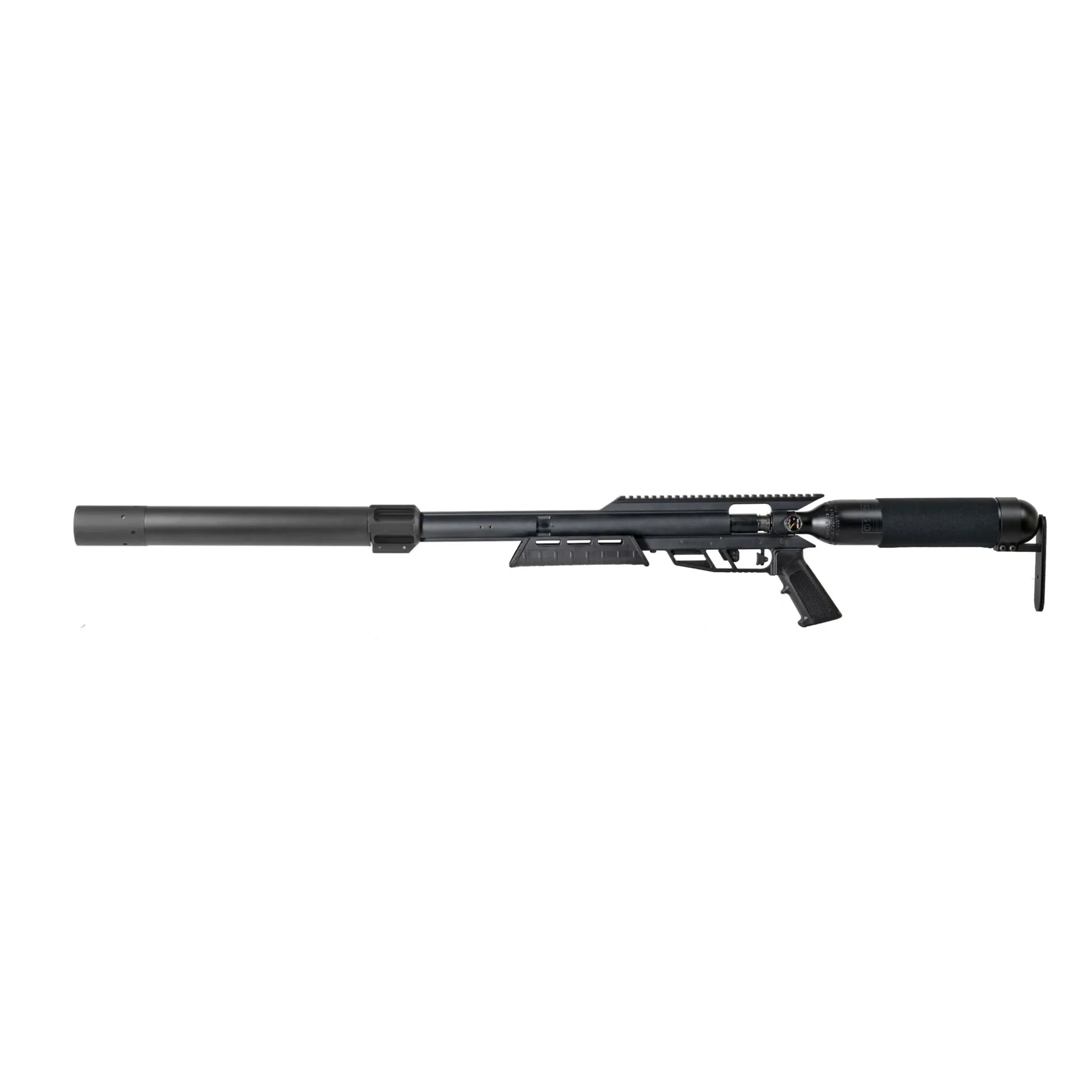
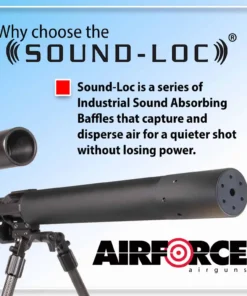
The Texan SS .457 – delivers serious big-bore performance in a quieter, more compact platform built for demanding hunters. Designed for deer, hogs, coyotes, and other medium to large game, the Texan SS combines proven Texan power with AirForce’s Sound-Loc® suppression system for a more stealthy shooting experience in the field.
Texan SS .457 Caliber Air Rifle
Developed directly from the compact Texan Carbine platform, the Texan SS was engineered for hunters who need a shorter, faster-handling rifle for maneuvering through thick brush, hunting blinds, trucks, and tight shooting environments.
Built around the compact Texan Carbine barrel platform, the Texan SS features a 24.75-inch rifled and shrouded Lothar Walther barrel paired with the integrated Sound-Loc® suppression system to help reduce report while still delivering the serious performance expected from the Texan platform.
The shorter Carbine barrel configuration helps improve maneuverability in hunting blinds, vehicles, and heavy brush while maintaining excellent balance and fast handling in the field.
Powered by the proven TX2 valve system and a durable 500cc aluminum air cylinder with a 3,000 PSI max fill pressure, the Texan SS .457 is capable of producing up to 400 foot-pounds of energy and velocities reaching up to 930 FPS.*
Its lightweight 43.5-inch design and adjustable buttplate make it comfortable to carry, shoulder, and shoot in a wide variety of hunting situations, while the smooth side-lever action provides fast and reliable loading in the field.
Every Texan is proudly built in Fort Worth, Texas, and features precision Lothar Walther barrels from Germany for exceptional accuracy and consistency.
Since its introduction, the Texan platform has earned a worldwide reputation for reliability, rugged construction, and real-world hunting performance on a wide variety of game animals.
What’s New in the Latest Texan Platform
Updated 500cc Air System
The newest Texan Aluminum Tank Series features an updated 500cc aluminum air cylinder engineered for dependable performance, stable pressure delivery, and excellent field balance.
Expanded Mounting Options
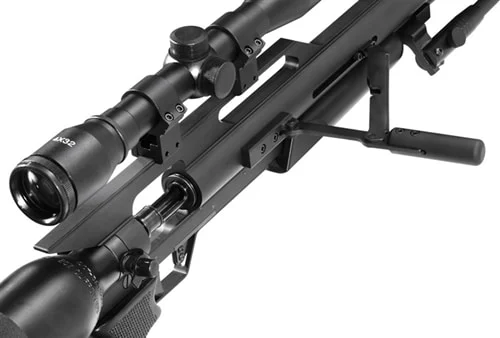
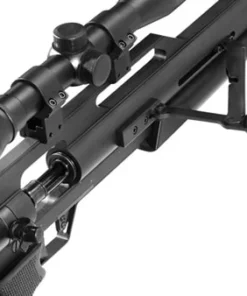
A full-length Picatinny optics rail, combined with upper and lower 11mm dovetail accessory rails, increases compatibility with modern optics and accessories including bipods, lights, lasers, and night vision equipment.
Improved Safety and Handling
A newly added manual safety provides shooters with an added layer of control while maintaining the simple, rugged operation the Texan platform is known for.
*Depending on projectile weight, power setting, and fill pressure.
Texan SS .457 Caliber Air Rifle
- .457 Caliber Lothar Walther Barrel
- Pressure Relief Device
- Adjustable Power
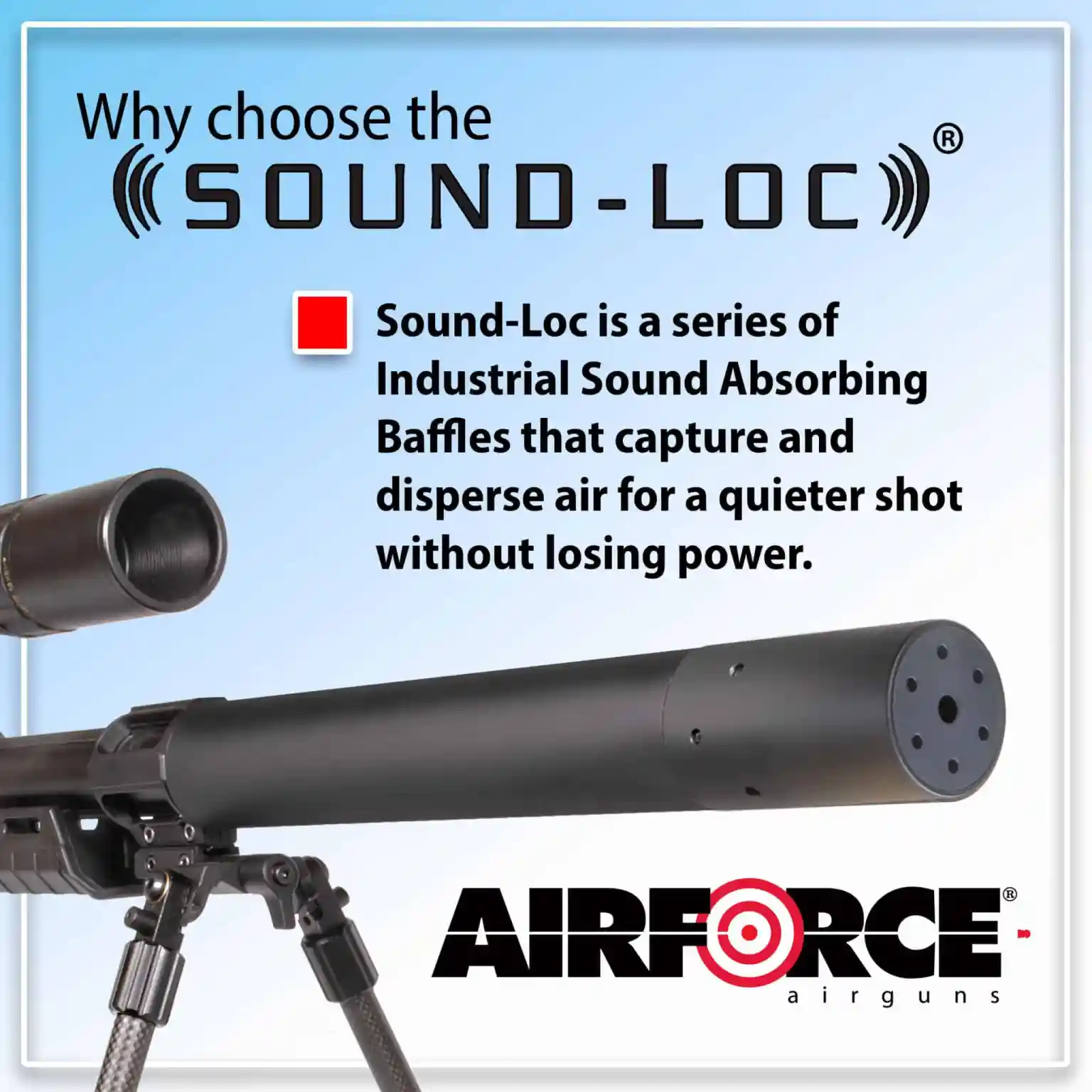
- Noise Reduction: Sound-Loc® technology for quieter shots
- Low Effort Side Lever Cocking
- Available in Original Black Finish
- Velocity: up to 930 feet per second*
- Max Fill Pressure: 3,000 psi/206 bar
- Action: Single shot
- Weight: 9 lbs
- Length: 45 inches
- Barrel: 24.75 inches
- Trigger: 2 stage, adjustable for position
- Sights: Open or optical may be installed
- Air Tank Volume: 500cc
- Safety: Manual
AirForce Texan SS .457 Cal PCP Air Rifle
AirForce Texan SS .457 Cal PCP Air Rifle Overview
The AirForce Texan SS .457 Cal PCP Air Rifle combines substantial big-bore performance with a shorter, more maneuverable layout and integrated sound reduction. AirForce currently equips the rifle with a 24.75-inch .457-caliber Lothar Walther barrel, updated 500cc aluminum air cylinder, 3,000 PSI / 206 BAR maximum fill pressure, adjustable power, low-effort sidelever cocking, two-stage adjustable trigger, manual safety, and Sound-Loc® technology. AirForce rates velocity at up to approximately 930 feet per second, depending on projectile weight, power setting, and fill pressure.
For shooters researching AirForce, airforce airguns, air force guns, airforce texan, airforce texan air rifle, airforcetexan, or the informal phrase texas air force rifle, the SS configuration offers a more compact alternative to the longer full-size platform.
24.75-Inch Lothar Walther Barrel and Precision
The 24.75-inch barrel is one of the defining differences between this configuration and the longer versions in the same family.
AirForce uses a Lothar Walther barrel to provide consistent rifling and stable projectile guidance. The shorter barrel also reduces overall rifle length, making the platform easier to manage in restricted shooting positions, blinds, and other environments where a full-length rifle can feel cumbersome.
Compared with an ordinary pellet gun, conventional air rifle and air pistol, or lightweight air guns, this rifle belongs to a much higher-energy category.
Search phrases such as high powered air rifles 4000 fps should not be confused with the actual performance of the rifle. It does not produce 4,000 fps. Its capability comes from combining relatively heavy .457-caliber projectiles with substantial pneumatic energy.
Sound-Loc Technology and Quieter Operation
A central feature of the SS configuration is Sound-Loc® technology, which AirForce uses to reduce muzzle report compared with an unsuppressed configuration.
That makes the rifle different from the standard full-length model while also separating it from the longer air force texan lss.
However, quieter operation should not be confused with silence. A high-energy large-caliber pneumatic rifle can still produce considerable sound, particularly in enclosed or reflective environments.
500cc Aluminum Air System
The latest aluminum-tank version uses a 500cc air cylinder with a maximum fill pressure of 3,000 PSI. AirForce states that the updated reservoir was developed for dependable pressure delivery, stable performance, and practical field balance.
Anyone considering an air gun pump should verify that their filling equipment is rated for the required pressure.
For shoppers asking what is an air rifle, this model is a pre-charged pneumatic system. Compressed air is stored in the reservoir and released through the firing system to propel the projectile.
Single-Shot Operation and Adjustable Power
The rifle uses a single-shot action with low-effort sidelever cocking rather than the traditional mechanism found on many bolt action air rifles.
Each projectile is loaded individually, which makes the rifle better suited to deliberate shooting than rapid magazine-fed operation.
Adjustable power allows the owner to tune performance for different compatible projectiles and shooting conditions.
The design is substantially different from smaller AirForce platforms appearing in searches such as airforce talon p, air force talon p, airforce condor, air force talon, airforce 25, .30 cal air rifle, and airbolt rifle.
Texan SS Compared With Tex-Rex and Brush Gun Designs
Buyers may also encounter Tex-Rex AirForce brush gun, Brush Gun, tex-rex, air force tex rex, AirForce Tex-Rex PCP rifle, Tex-Rex Brush Gun air rifle, AirForce Texan Brush Gun, AirForce Tex-Rex air rifle, AirForce Tex-Rex hunting rifle, brush gun PCP air rifle, AirForce brush gun, AirForce big bore airgun, and AirForce big bore air rifle.
These should not be treated as alternative names for the Texan SS.
The newer Tex-Rex family and other compact large-bore configurations use different pressure systems, reservoir specifications, dimensions, and performance targets. The Texan SS instead focuses on combining a 24.75-inch barrel with Sound-Loc technology and a relatively compact overall package.
Comparison With the Full-Size and LSS Platforms
The airforce texan ss and airforce texanss are designed to provide a shorter configuration than the standard full-length version.
The standard Texan uses a 34-inch barrel, while the SS uses a 24.75-inch barrel. Current manufacturer specifications put the SS at about 45 inches overall in its aluminum-tank form.
The longer LSS platform, meanwhile, uses a 34-inch barrel and a substantially longer overall layout while retaining sound-management features.
Therefore, the SS is the more compact choice for users who prioritize maneuverability.
Target Shooting and Lawful Hunting Applications
Searches for air guns for target shooting, airgun shooting range near me, and 50 caliber air rifle for deer hunting often overlap with large-bore pneumatic rifles.
This particular model is .457 caliber rather than .50/.510 caliber.
Where local law permits, its power class may support certain hunting applications, but hunters should always verify applicable caliber, energy, projectile, species, season, and land-use regulations before taking the rifle into the field.
Likewise, target use should take place where the range and backstop are appropriate for a high-energy big-bore rifle.
Comparing the Texan SS With FX PCP Rifles
Premium PCP shoppers may also research FX Panthera MkII, fx airguns sverige, fx airguns, fx impact m4, fx airguns sweden, fx leopard, fxairguns, fx impact m3, f x impact m3, fx drs tactical, fx impact, f x impact, fx air rifle, fx outdoors, fx drs, fx drs classic, impact m4 500mm, fx king, fx airguns usa, impact m4 air rifle, fx drs pro, fx leopard airgun, fx m4, fx impact m3 air rifle, fx wildcat, fx chronograph, fx panthera, pcp airguns, and fx dynamics.
Those models occupy the same broad premium pneumatic market, but many focus on regulated, magazine-fed precision shooting. The Texan SS takes a different approach by emphasizing heavy-projectile big-bore performance, mechanical simplicity, and compact handling.
Why Choose the Texan SS .457 Cal PCP Air Rifle?
The main reasons to consider this rifle are its 24.75-inch precision barrel, Sound-Loc technology, 500cc reservoir, 3,000 PSI operating system, adjustable power, low-effort sidelever cocking, manual safety, two-stage trigger, full-length Picatinny optics rail, and compact overall layout.
For an experienced adult shooter looking for a powerful but more maneuverable big-bore pneumatic rifle, the Texan SS .457 offers a practical combination of high energy, reduced report, simplified single-shot operation, and established AirForce engineering.
Performance, Air Management, Accuracy, Handling, and Practical Ownership
The .457-caliber configuration is designed around deliberate shooting, substantial pneumatic energy, and a more compact overall layout than a full-length big-bore rifle. Its shorter barrel, large air reservoir, integrated sound-management system, adjustable controls, and single-shot operation create a platform that rewards consistency rather than speed. For an experienced owner, the rifle can deliver strong practical performance when pressure, projectile selection, optic setup, and shooting technique are managed correctly.
Real-world results depend on more than one specification. Maximum velocity gives only part of the picture. Pressure stability, projectile quality, environmental conditions, shooter technique, and maintenance can all influence accuracy. Therefore, the best way to understand the rifle is through controlled testing and a consistent operating routine.
Understanding the Power System
The rifle uses stored compressed air to propel a large projectile.
When the trigger is operated, a controlled volume of high-pressure air is released through the firing system. That air expands behind the projectile and accelerates it through the barrel.
Because the projectile is considerably heavier than ammunition used in lightweight recreational rifles, each shot consumes a substantial amount of stored air.
This is why shot count is naturally lower.
The platform is designed around high-energy individual shots rather than a large number of low-energy shots from each fill.
Managing Reservoir Pressure
Pressure management is one of the most important aspects of ownership.
Before each shooting session, the reservoir pressure should be checked carefully.
The owner should never exceed the manufacturer’s specified maximum pressure.
During firing, pressure gradually falls.
Eventually, the rifle may reach a point where velocity and point of impact begin to change.
The shooter should learn where this transition occurs and establish a practical refill point.
Doing so helps maintain consistency from one session to another.
Understanding Useful Shot Count
Useful shot count should be judged by consistency rather than by how many times the rifle can physically be fired.
A shot that occurs after the reservoir has fallen well outside the preferred pressure range may not perform like the earlier shots.
For this reason, experienced users often focus on the number of consistent shots available within the most stable portion of the pressure curve.
A simple log can help identify this range.
The owner can record starting pressure, number of shots, projectile type, group size, and remaining pressure.
Over time, this information becomes valuable for planning shooting sessions.
Filling Equipment and Pressure Safety
The filling system should match the pressure requirements of the rifle.
Compressors, charging cylinders, hoses, fittings, gauges, and connectors should all be rated appropriately.
Improvised filling components should be avoided.
Connections should remain clean because dirt around a seal or fitting can cause leakage.
The reservoir should be filled in a controlled manner.
Rushing the process provides no advantage.
Once filling is complete, the connection should be depressurized correctly before removal.
High-pressure air deserves careful handling at every stage.
Projectile Selection
Projectile choice can have a major effect on accuracy.
Different weights and shapes may produce different velocities, trajectories, and points of impact.
A lighter projectile may travel faster, while a heavier projectile may retain greater momentum.
However, maximum velocity should not be the only objective.
The best projectile is usually the one that produces repeatable groups and behaves predictably from the rifle.
Testing should be methodical.
Several groups should be fired with one projectile before switching to another.
This allows useful comparisons to be made.
Projectile Condition and Uniformity
Projectiles should be inspected before loading.
Visible deformation, damaged edges, or inconsistent shapes can influence flight.
Using ammunition from a reliable batch can reduce unnecessary variation.
The shooter should also avoid mixing different projectile weights during serious accuracy testing.
Consistency in ammunition makes it much easier to determine whether changes in group size are caused by the rifle or the shooter.
Developing an Accuracy Baseline
Initial testing should be performed from a stable supported position.
A bench or solid rest reduces movement and allows the owner to evaluate mechanical consistency.
Several groups should be fired under similar conditions.
One exceptional group should not be treated as definitive proof of accuracy.
Likewise, one poor group may simply reflect shooter error or an inconsistent projectile.
Repeated results provide a more reliable picture.
Once the baseline has been established, the owner can begin practicing from less stable positions.
Trigger Technique
The two-stage trigger supports deliberate shooting.
The first stage allows the shooter to prepare for the break.
The second stage should be pressed smoothly.
Jerking the trigger can disturb the rifle just before the projectile exits the barrel.
The owner should also maintain follow-through.
Head position, shoulder contact, and grip should remain stable briefly after the shot.
Good trigger control often improves group consistency more effectively than unnecessary mechanical adjustments.
Shoulder Position and Grip
A repeatable shooting position helps reduce variation.
The rifle should contact the shoulder in the same location each time.
Grip pressure should remain consistent.
Holding the rifle much tighter for one shot than another can influence movement.
The shooter’s head should also return to the same position behind the optic.
A comfortable position makes this easier to repeat.
Optic Selection
The optic should match the distances and conditions in which the rifle will normally be used.
Maximum magnification is not the only consideration.
Clarity, eye relief, adjustment range, field of view, and reticle design can be equally important.
A large scope can also add noticeable weight.
For a relatively compact rifle, selecting an optic that preserves good balance may improve practical handling.
Mounting and Zero
The optic should be mounted securely.
Loose rings or bases can create inconsistent point of impact even when the rifle itself is performing correctly.
Fasteners should be checked periodically.
After installing an optic, the rifle should be zeroed from a supported position.
Zero should also be checked whenever projectile type changes significantly.
Transportation can affect alignment as well, so confirmation after a long journey is sensible.
Compact Handling
One advantage of the shorter configuration is improved maneuverability.
A reduced overall length can make the rifle easier to handle in confined environments compared with a longer platform.
However, it is still a substantial high-energy rifle.
Balance will depend on the optic and accessories installed.
Adding unnecessary equipment can reduce the handling advantage of the shorter design.
A practical setup should include only accessories that provide a clear benefit.
Supported Shooting
A stable rest can improve precision.
Supported shooting is particularly useful when zeroing the optic, testing different projectiles, or checking performance after maintenance.
The rifle should be positioned consistently on the support.
Moving the support point between groups can introduce another variable.
Keeping the setup consistent allows more meaningful comparisons.
Unsupported Shooting
Standing, kneeling, and seated positions are more demanding.
The shorter configuration can be easier to manage than a longer rifle, but substantial weight and energy still require careful control.
The owner should practice from realistic positions.
Personal distance limits should be based on what can be achieved consistently from those positions rather than on bench performance alone.
Environmental Conditions
Wind can affect projectile flight.
Even a large projectile may shift laterally as distance increases.
Temperature can also influence the pneumatic system.
Pressure readings may change when the rifle moves between significantly different temperatures.
For consistent results, the shooter should be aware of environmental changes and confirm point of impact when conditions vary substantially.
Sound Management
The integrated sound-management system is designed to reduce the report compared with an unsuppressed configuration.
However, the rifle should not be considered silent.
Substantial sound may still be produced, especially in enclosed areas or near hard surfaces.
Hearing protection may remain appropriate.
The shooter should also consider nearby properties, local noise rules, and range regulations.
Range and Backstop Requirements
A high-energy rifle requires an appropriate shooting environment.
Lightweight pellet traps may not provide sufficient containment.
The backstop should be capable of safely stopping the projectile.
The area beyond the target should also be considered.
A responsible shooting setup accounts for missed shots and potential penetration.
A professionally operated range that accepts high-energy pneumatic equipment is generally the most suitable environment.
Routine Maintenance
Routine care should focus on reliability.
External surfaces should be kept clean and dry.
The filling connection should remain free of contamination.
Moving parts should operate smoothly.
Fasteners should be checked periodically.
The barrel should not be cleaned aggressively after every session.
Cleaning is more appropriate when accuracy begins to decline or contamination is visible.
Suitable materials should be used to protect the bore.
Seal and Pressure Retention
The air system depends on reliable seals.
If reservoir pressure falls unexpectedly during storage, the rifle should be inspected.
Some leaks may be audible, while others occur slowly.
Only compatible lubricants should be used.
Internal high-pressure repairs should not be attempted casually.
If the problem involves the reservoir, valve, or another critical component, professional service is generally the safer choice.
Secure Storage
The rifle should be stored where unauthorized users cannot access it.
A locked cabinet or secure hard case provides both physical protection and controlled access.
The storage environment should remain dry and reasonably stable in temperature.
Excessive heat, moisture, corrosive chemicals, and direct sunlight should be avoided.
The optic and filling equipment should also be protected.
Transportation
A strong padded case can protect the barrel, optic, reservoir, and action during travel.
The rifle should not move freely inside the case.
After significant transportation, the system should be inspected and zero should be confirmed.
Applicable transportation rules should also be reviewed because requirements can differ between locations.
Long-Term Ownership
The platform offers its best performance when the owner treats pressure management, projectile selection, optic stability, and maintenance as parts of the same system.
Its shorter configuration provides practical handling advantages while preserving substantial big-bore capability.
For an experienced shooter with appropriate filling equipment, secure storage, suitable projectiles, and access to a safe shooting environment, the rifle can provide consistent accuracy, strong pneumatic performance, and dependable long-term service when operated and maintained responsibly.
Real-World Use, Accuracy Development, Handling, Maintenance, and Long-Term Reliability
The .457-caliber configuration is built around controlled shooting, substantial pneumatic performance, and a relatively compact layout. Its shorter barrel and integrated sound-management system make it easier to handle than many longer big-bore platforms, while the high-pressure air system still delivers the energy expected from a serious large-caliber rifle. However, getting the best results requires more than simply filling the reservoir and firing. Accuracy, consistency, reliability, and long-term service depend on the relationship between projectile selection, air pressure, optic setup, shooting technique, environmental conditions, and regular maintenance.
A disciplined owner will usually achieve better results than someone who focuses only on maximum power. Consistency should remain the central goal because predictable behavior is more useful than occasional peak performance.
Establishing Consistent Accuracy
The first step toward understanding the rifle is establishing an accuracy baseline.
A stable bench or supported rest provides the best environment for initial testing because it reduces movement caused by the shooter. The same support position should be used for every shot so that the rifle behaves consistently.
Several groups should be fired before making conclusions.
One excellent group may be the result of favorable conditions, while one poor group may come from shooter movement or an inconsistent projectile.
Repeated results provide a more reliable picture.
Once the owner understands normal performance from a supported position, the rifle can be tested from realistic field positions.
Projectile Weight and Performance
Different projectile weights can produce significantly different results.
A lighter projectile will generally accelerate faster, while a heavier projectile may retain more momentum and follow a different trajectory.
Neither option should automatically be considered superior.
The most useful projectile is the one that produces repeatable accuracy while remaining appropriate for the intended lawful application.
Changing projectile weight can also shift the point of impact.
Therefore, the optic should be checked whenever a different projectile is introduced.
The owner should avoid assuming that a zero established with one load will remain correct with another.
Projectile Quality
Uniform ammunition supports better consistency.
Projectiles should be inspected before loading.
Visible dents, deformation, or irregular shapes can influence how they engage the barrel and travel through the air.
Using ammunition from a consistent batch can reduce unnecessary variation.
When conducting accuracy testing, the shooter should avoid mixing multiple projectile designs within the same group.
A controlled testing process makes it easier to identify what the rifle actually prefers.
Understanding the Pressure Curve
Reservoir pressure changes after every shot.
Because large projectiles require substantial air volume, the pressure drop may be more noticeable than with smaller-caliber equipment.
The owner should learn where the rifle performs most consistently within the available pressure range.
A simple notebook can be useful.
Starting pressure, number of shots, projectile type, group size, and remaining pressure can all be recorded.
After several sessions, patterns usually become easier to identify.
This information can help establish a practical refill point.
Using a Chronograph
A chronograph can provide useful information about shot-to-shot consistency.
By recording velocity, the shooter can see whether performance remains stable as reservoir pressure decreases.
However, velocity should not become the only measurement that matters.
A slightly slower projectile that produces consistent groups may be more useful than a faster one that shows greater variation.
Accuracy and predictability should remain the priority.
Chronograph data is most valuable when combined with target results.
Developing a Reliable Zero
The rifle should initially be zeroed from a stable position.
Adjustments should be made gradually.
Instead of correcting the optic after every individual shot, the shooter should fire a group, evaluate the center of that group, and then make the necessary adjustment.
This approach reduces confusion.
Once zero has been established, it should be verified at other appropriate distances.
Knowing where the projectile impacts at several distances helps the shooter understand the trajectory more clearly.
Trigger Technique
Good trigger technique is essential for precision.
The first stage should be taken up smoothly while the sight picture remains stable.
Pressure should then increase gradually until the shot breaks.
Jerking the trigger can move the rifle just before the projectile exits the barrel.
Follow-through is equally important.
The shooter should maintain grip, shoulder contact, head position, and visual focus for a brief moment after firing.
This simple habit can improve consistency significantly.
Shoulder Position and Grip
The rifle should contact the shoulder in the same location for each shot.
Grip pressure should also remain similar.
Holding the rifle extremely tightly for one shot and loosely for another can introduce unnecessary movement.
A comfortable position is usually easier to repeat.
The shooter should also maintain the same cheek position behind the optic.
Consistency in body position makes small aiming errors easier to control.
Practical Handling
The shorter configuration offers practical handling advantages.
It can be easier to move within restricted spaces and less cumbersome during transportation than a longer platform.
However, overall balance still depends heavily on the optic and accessories.
A large scope, heavy mount, or multiple attachments can shift the center of gravity forward.
For this reason, accessories should be selected carefully.
A simpler configuration often provides better balance and easier long-term handling.
Supported Field Positions
A stable support can greatly improve practical accuracy.
A rest, bipod, shooting bag, or secure natural support may help reduce movement.
The support point should remain consistent.
Changing the way the rifle rests can affect stability.
Supported shooting is particularly useful when confirming zero or testing new projectiles.
It also provides a reliable way to determine whether an accuracy issue comes from the rifle or the shooter.
Unsupported Shooting
Unsupported shooting requires significantly greater control.
Standing positions can be demanding, especially during longer sessions.
Kneeling or seated positions may provide additional stability.
The shooter should practice under realistic conditions and establish personal distance limits based on repeatable results.
Bench accuracy should not automatically be assumed to represent performance from unsupported positions.
Real-world ability should be determined through practice.
Environmental Conditions
Wind remains an important factor.
Large projectiles can still move laterally in crosswinds, particularly as distance increases.
Changing wind speed and direction can cause different impacts even when the rifle is functioning perfectly.
Temperature can also influence reservoir pressure.
A rifle moved from a cool environment into a much warmer one may show a pressure change.
The owner should avoid exposing the reservoir to excessive heat and should remain aware of environmental effects.
Sound and Shooting Environment
The built-in sound-management system helps reduce muzzle report, but the rifle should not be considered silent.
Enclosed areas can make the report seem louder because sound reflects from nearby surfaces.
Hearing protection may still be sensible depending on the environment.
The owner should also consider surrounding properties, range rules, and local noise requirements.
Reduced sound should improve usability without reducing attention to responsible shooting practices.
Barrel Maintenance
The barrel should be cleaned when necessary rather than automatically after every short session.
If accuracy remains stable, frequent aggressive cleaning may not provide any benefit.
When cleaning becomes necessary, suitable equipment should be used.
Abrasive materials and harsh chemicals should be avoided.
The goal is to remove contamination while protecting the bore.
After cleaning, several shots may sometimes be required before the rifle returns to its previous level of consistency.
Action and Mechanical Care
The loading and cocking system should operate smoothly.
If unusual resistance develops, the mechanism should not be forced.
Dirt, wear, or a damaged component may be responsible.
The owner should inspect the rifle before continuing.
External fasteners should also be checked periodically because vibration and repeated use can eventually loosen hardware.
Preventative inspection can stop minor problems from becoming larger ones.
Air-Seal Maintenance
Reliable seals are essential to consistent performance.
The reservoir should retain pressure during storage.
Unexpected pressure loss may indicate a leaking seal or fitting.
Some leaks are obvious, while others develop slowly.
The owner should monitor the gauge periodically.
Only suitable lubricants should be used where required.
High-pressure internal components should be serviced professionally when the owner does not have the necessary experience.
Exterior Protection
External surfaces should be kept clean and dry.
After exposure to rain, humidity, dust, or dirt, the rifle should be wiped down before storage.
The filling connection should remain especially clean.
Protecting the exterior also makes inspection easier because developing corrosion, loose hardware, or physical damage becomes easier to notice.
The optic should receive similar care.
Storage
The rifle should be stored securely where unauthorized users cannot access it.
A locked cabinet or secure hard case provides useful physical protection.
The storage environment should remain dry and reasonably stable in temperature.
Excessive heat, direct sunlight, moisture, and corrosive chemicals should be avoided.
Filling equipment should also be stored safely.
High-pressure cylinders should be secured against falling or impact.
Transportation
A padded or rigid case can protect the barrel, optic, air reservoir, and action during travel.
The rifle should fit securely rather than moving freely inside the case.
After significant transportation, the owner should inspect the system before use.
Zero should also be verified because a hard impact can affect optic alignment even when no obvious damage is visible.
Applicable transportation requirements should be checked before traveling.
Long-Term Reliability
Long-term reliability depends on regular observation.
Changes in pressure retention, trigger behavior, loading effort, accuracy, optic stability, or mechanical feel should not be ignored.
Small issues are generally easier to correct when discovered early.
For an experienced owner who manages pressure carefully, selects consistent projectiles, maintains the rifle responsibly, and practices repeatable shooting technique, the platform can provide dependable performance for many years.
Its shorter layout, substantial pneumatic capability, controlled single-shot operation, and practical sound management make it a specialized but versatile choice for shooters who understand the responsibilities that come with powerful high-pressure equipment.
Buyer Planning, Setup, Safety, Maintenance, Storage, and Long-Term Value
Choosing a powerful .457-caliber pneumatic rifle involves more than looking at maximum velocity or energy figures. A prospective owner should think about the complete shooting system, including filling equipment, projectiles, optics, storage, transportation, maintenance, and access to an appropriate shooting environment. These practical considerations often determine whether the rifle will remain convenient, reliable, and enjoyable to use over the long term.
Because the platform combines a large air reservoir, substantial projectile energy, a relatively compact barrel arrangement, and deliberate single-shot operation, it is best suited to an experienced user who understands high-pressure pneumatic equipment. Careful setup from the beginning can prevent many common ownership problems later.
Evaluating the Rifle Before Regular Use
Before beginning serious use, the complete rifle should be inspected carefully.
The barrel, reservoir, pressure gauge, filling connection, action, trigger, safety, rails, optic mounts, and visible fasteners should all be checked.
The loading mechanism should move normally without excessive resistance.
The trigger should feel predictable.
The pressure gauge should show a reasonable reading for the current fill.
Any sign of physical damage, air leakage, unusual resistance, or loose hardware should be investigated before firing.
This inspection is particularly important after shipping or long-distance transportation.
Planning the Complete Setup
The rifle itself represents only part of the investment.
A suitable high-pressure filling system will be required. Depending on the owner’s situation, this may involve a compressor, charging cylinder, or another compatible source capable of safely reaching the required pressure.
An appropriate optic is another important consideration.
A quality sighting system should provide clear aiming, dependable adjustment, and enough durability for regular use.
Suitable mounting hardware, projectiles, a protective case, cleaning supplies, and secure storage should also be considered when planning the complete setup.
Filling Equipment Selection
The filling system should be chosen carefully.
Every compressor, hose, gauge, fitting, connector, and cylinder involved should be rated appropriately for the pressure being used.
Damaged components should never be used.
Connections should engage correctly without excessive force.
The filling port should remain clean because debris around a seal can interfere with proper pressure retention.
The reservoir must never be filled beyond the manufacturer’s stated maximum.
Increasing pressure beyond the approved limit does not provide a sensible performance advantage and can create unnecessary risk.
Developing a Consistent Filling Routine
A repeatable filling procedure can make ownership easier.
Before connecting the air source, the user should inspect the fitting and filling port.
Reservoir pressure should be checked.
The charging equipment should then be connected correctly before pressure is introduced.
Filling should be performed gradually and monitored through an appropriate gauge.
After the reservoir reaches the intended pressure, the filling line should be depressurized correctly before disconnection.
Using the same routine each time reduces the chance of mistakes.
Understanding Air Consumption
Large-caliber pneumatic rifles require substantial volumes of compressed air.
Therefore, the number of useful shots from each fill is naturally limited compared with smaller-caliber recreational equipment.
The owner should focus on consistent shots rather than attempting to extract the greatest possible number from one fill.
Once reservoir pressure falls beyond the rifle’s preferred operating range, velocity and point of impact may begin to change.
Refilling before this point can provide better repeatability.
Keeping Performance Records
A simple shooting record can provide valuable information.
The owner can note starting pressure, projectile type, number of shots, group size, environmental conditions, and remaining pressure.
Over several shooting sessions, patterns may become clear.
For example, the owner may identify a pressure range where group consistency is strongest.
A particular projectile weight may repeatedly perform better than others.
Records can also help identify developing problems.
If air consumption increases unexpectedly or group size suddenly becomes larger, previous results provide a useful reference.
Selecting the Right Optic
The best optic should match the intended shooting conditions.
Maximum magnification should not be the only consideration.
Clarity, eye relief, reticle design, adjustment range, field of view, and overall weight can all affect practical usefulness.
A very large scope may add significant weight and alter the balance of a compact rifle.
For many owners, a moderate optic with reliable adjustments can provide a better overall experience than an excessively heavy system.
Mounts should also be selected carefully and checked periodically.
Maintaining a Reliable Zero
The rifle should initially be zeroed from a supported position.
Several shots should be grouped before making major adjustments.
This provides a more dependable reference than correcting the optic after every individual shot.
Once zero is established, it should be confirmed periodically.
Changing projectile design, removing the optic, changing mounts, or transporting the rifle can alter point of impact.
If accuracy changes unexpectedly, the optic and mounting system should be inspected before assuming the rifle itself has developed a problem.
Balancing the Rifle
One advantage of the shorter configuration is improved maneuverability.
However, accessories can quickly change that advantage.
A large optic, heavy mount, bipod, and several additional attachments can increase overall weight and shift the balance forward.
The owner should therefore select accessories based on practical need.
A well-balanced rifle is generally easier to control from standing, kneeling, seated, and supported positions.
It can also be less tiring during longer shooting sessions.
Range Selection
A high-energy pneumatic rifle requires an appropriate shooting location.
Lightweight pellet traps may not provide sufficient containment.
The backstop should be designed to safely stop powerful large-caliber projectiles.
The shooter must also consider what lies behind the target.
A missed projectile or one that penetrates unsuitable material may continue traveling with significant energy.
A professionally designed range that accepts equipment in this performance class is generally the best environment for testing and regular use.
Responsible Sound Management
The integrated sound-management design reduces the report compared with an unsuppressed configuration, but the rifle should never be considered silent.
Sound can also appear louder in enclosed areas or around hard surfaces.
Hearing protection may remain appropriate.
The shooter should consider nearby properties, local noise requirements, and range rules.
Reduced report improves practical usability, but it does not eliminate the need for responsible shooting practices.
Routine Mechanical Inspection
Regular inspection can prevent many minor problems from becoming major ones.
Before each session, the owner should check the action, trigger, safety, pressure gauge, filling connection, optic mounts, and visible fasteners.
The action should move smoothly.
If loading or cocking suddenly becomes difficult, the mechanism should not be forced.
Unexpected resistance may indicate contamination, wear, or mechanical damage.
Investigating the problem early can prevent further damage.
Barrel Maintenance
The barrel should be maintained carefully.
Frequent aggressive cleaning is not always necessary.
If accuracy remains consistent, the barrel may not require cleaning after every session.
When accuracy begins to deteriorate or visible fouling is present, cleaning may be appropriate.
Suitable cleaning materials should be used.
Abrasive tools and harsh chemicals can damage the bore.
The goal should be to remove contamination while preserving the barrel’s internal surface.
Seal and O-Ring Care
Pneumatic reliability depends heavily on seals.
The reservoir should retain pressure during normal storage.
Unexpected pressure loss may indicate a leaking seal, fitting, or valve component.
Some leaks can be heard immediately, while others develop slowly.
The owner should monitor the pressure gauge periodically.
Only compatible lubricants should be used.
High-pressure internal components should not be dismantled casually.
Professional service is preferable when the problem involves the valve, reservoir, or another critical pressure-bearing component.
Exterior Protection
External surfaces should be kept clean and dry.
After use in rain, humidity, dust, or dirty conditions, the rifle should be wiped down before storage.
The filling connection deserves particular attention because contamination can interfere with sealing.
The optic should also be kept clean and protected.
Routine exterior care makes inspection easier and helps the owner notice developing corrosion, loose hardware, or physical damage.
Secure Storage
Secure storage is essential for equipment capable of substantial projectile energy.
The rifle should be kept where unauthorized users cannot access it.
A locked cabinet or secured hard case provides both physical protection and controlled access.
The storage area should remain dry and reasonably stable in temperature.
Excessive heat, direct sunlight, high humidity, and corrosive chemicals should be avoided.
Projectiles and filling equipment should also be stored responsibly.
Long-Term Storage
Extended storage requires additional attention.
The owner should follow the manufacturer’s recommendations regarding reservoir pressure rather than automatically leaving the system completely full or empty.
Before returning the rifle to regular use after a long break, the reservoir, fittings, seals, action, trigger, optic mounts, and safety should be inspected.
A controlled range session can then confirm normal operation.
This approach helps identify issues that may have developed while the rifle was unused.
Transportation and Protection
A quality padded or rigid case can protect the rifle during transport.
The barrel, optic, air reservoir, and action should be supported so they cannot move freely inside the case.
The rifle should not be placed where heavy objects can strike or crush it.
After significant transportation, the owner should inspect the complete system and verify zero before serious use.
Applicable transport regulations should also be checked because legal requirements can vary between jurisdictions.
Knowing When Professional Service Is Required
Not every maintenance problem should be handled by the owner.
Persistent pressure loss, damaged reservoir components, valve problems, abnormal trigger behavior, unexplained accuracy changes, or significant mechanical resistance may require qualified service.
Attempting to modify or repair critical high-pressure components without proper experience can create unnecessary risk.
Early professional attention is generally preferable to continuing to use equipment that is behaving abnormally.
Long-Term Ownership Value
The long-term appeal of this platform comes from its balance of substantial performance, compact handling, controlled single-shot operation, reduced report, adjustable controls, and straightforward mechanical design.
However, dependable service depends on disciplined ownership.
Air pressure should be managed correctly, suitable projectiles should be selected carefully, the optic should remain securely mounted, and maintenance should be performed before minor issues develop into larger problems.
For an experienced owner who has appropriate filling equipment, secure storage, dependable optics, consistent projectiles, and access to a suitable shooting environment, the rifle can provide years of reliable service. Its compact configuration makes handling practical, while its large-caliber pneumatic system delivers the substantial performance expected from a serious high-energy platform.
Be the first to review “Texan SS .457 Cal PCP Air Rifle”
Related products

AirForce
AirForce

AirForce

AirForce


AirForce
AirForce

AirForce
Reviews
There are no reviews yet.