

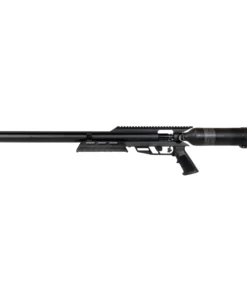
Texan® Carbine .357 Caliber


€800.00
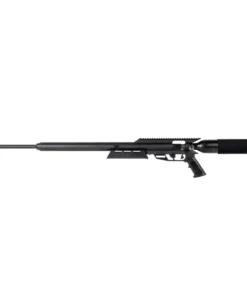
The AirForce Texan® Carbine .357 Big Bore Air Rifle brings the proven power and accuracy of the Texan platform into a shorter, more maneuverable package built for the field.
Featuring a 24.5-inch Lothar Walther barrel, the Texan Carbine .357 combines big-bore performance with a compact overall length that’s easier to carry and handle in heavy brush, hunting blinds and other tight environments. The .357 caliber offers an excellent balance of velocity, energy and projectile selection, making it a versatile choice for hunters who want substantial downrange performance without stepping up to the larger .457 or .510 calibers.
Powered by the Texan’s high-capacity Spin-Loc® air tank, the Carbine delivers the air volume needed to drive heavy .357 caliber projectiles with authority while retaining the straightforward operation and rugged construction that have made the Texan a proven hunting platform.
The current Texan Carbine configuration features a Picatinny optics rail, upper and lower dovetail accessory rails, and a manual safety. An adjustable power wheel allows shooters to tune performance for different projectiles and shooting applications.
Its aircraft-grade aluminum construction keeps weight manageable, while the shorter barrel makes the Carbine quick to shoulder and easier to maneuver than the full-length Texan.
For hunters looking for the versatility of the .357 caliber combined with the portability of the Texan Carbine, this rifle hits a particularly useful sweet spot in the Texan lineup.
Big-bore performance. Carbine maneuverability. Built in America.
The Texan Carbine .357 is available in Original Black.
*Velocity and muzzle energy vary depending on projectile weight, fill pressure, power setting and other conditions.
AirForce Texan® Carbine .357 Big Bore Air Rifle Specifications
- Action: Single Shot
- Air Tank Volume: 500cc
- Barrel: 24.75 inches
- Energy: up to 300 foot pounds*
- Length: 39 inches
- Max Fill Pressure: 3,000 PSI / 206 Bar (Only use compressed air or dry nitrogen)
- Safety: Manual
- Sights: Open or Optic may be installed
- Trigger: 2 Stage Adjustable for position
- Velocity: Up to 1,065 feet per second
- Warranty: Limited Lifetime
- Weight: 7.5 lbs.
Texan® Carbine .357 Caliber
exan® Carbine .357 Caliber Overview
What Is the Texan® Carbine .357 Caliber?
The Texan® Carbine .357 Caliber is a specialized pre-charged pneumatic air rifle designed around a large-bore configuration. Unlike conventional firearms, a PCP air rifle uses stored compressed air as its energy source. Consequently, the platform belongs to a specialized category of pneumatic equipment that should be handled, stored, and maintained responsibly.
The AirForce name is associated with a range of pneumatic products, while searches for airforce airguns, airforce texan, airforce texan air rifle, airforcetexan, and air force guns can lead to information about this broader product family. However, related model names should not automatically be interpreted as specifications of the Texan® Carbine .357 Caliber.
How Does a PCP Air Rifle Work?
A PCP system stores compressed air inside a pressure reservoir. During operation, controlled pneumatic energy is released to propel a compatible projectile. Therefore, understanding what is an air rifle begins with recognizing the difference between pneumatic propulsion and other systems.
The term air gun pump can refer to charging equipment used with certain pneumatic platforms, although the correct charging method and pressure requirements must always be confirmed from the manufacturer’s documentation.
Why the .357 Caliber Configuration Matters
The .357 caliber places this platform within the larger-bore section of the pneumatic market. As a result, it should not be considered equivalent to a conventional low-energy pellet gun or introductory recreational airgun.
Caliber alone, however, does not determine overall performance. Barrel condition, projectile compatibility, pneumatic condition, environmental factors, sighting equipment, and operator consistency can all influence results.
For that reason, generalized searches such as high powered air rifles 4000 fps should not be treated as specifications for this particular model unless they are confirmed by model-specific documentation.
Precision and Consistency
Precision is best understood through repeatability rather than isolated results. A single target group cannot fully describe the characteristics of a complete pneumatic system.
Instead, meaningful evaluation should involve consistent equipment, compatible ammunition, a stable shooting position, suitable sighting equipment, and reasonably consistent environmental conditions.
The condition of the barrel and pneumatic system should also be considered when evaluating changes in observed results.
Related AirForce Products
The supplied search terms include air force texan lss, airforce talon p, airforce texan ss, airforce condor, air force talon, and airforce 25. These terms can refer to other configurations or products within the wider market and should not be presented as interchangeable names for the Texan® Carbine .357 Caliber.
Likewise, terms including Tex-Rex AirForce brush gun, Brush Gun, tex-rex, AirForce Tex-Rex PCP rifle, Tex-Rex Brush Gun air rifle, AirForce big bore airgun, AirForce Texan Brush Gun, airbolt rifle, AirForce Tex-Rex air rifle, AirForce Tex-Rex hunting rifle, brush gun PCP air rifle, AirForce big bore air rifle, and AirForce Brush Gun can relate to other products or broader searches.
Other Airgun Terminology
The wider market also includes air rifle and air pistol, bolt action air rifles, airbolt rifle, and .30 cal air rifle. Each category can involve substantially different mechanical designs and specifications.
Consequently, information associated with another configuration should not be transferred to this model without verification.
AirMaks and Other Search Terms
Searches for airmaks katran, airmaks, airmarks, katran airmaks, air marks, katran, air max krait, and airmaks krait concern another area of the pneumatic market.
The same applies to AirMaks Arms air rifles, AirMaks Arms PCP air rifles, AirMaks Arms PCP rifles, AirMaks Arms for sale, AirMaks Katran, AirMaks Arms shop, and AirMaks Arms USA. These are not specifications or components of the Texan® Carbine .357 Caliber.
Responsible Ownership
Because the system uses stored compressed air, the pressure reservoir should be treated as a pressure-bearing component. It should not be drilled, cut, welded, heated, or modified.
The equipment should be maintained according to manufacturer recommendations and stored securely where unauthorized individuals cannot access it.
Target Shooting and Practical Use
The phrase air guns for target shooting covers a broad range of equipment. A large-bore pneumatic platform occupies a substantially different category from low-energy recreational target equipment.
Anyone searching for an airgun shooting range near me should first confirm that the facility permits the specific equipment and caliber.
A suitable controlled environment should include an appropriate backstop and clearly established range procedures.
Hunting and Pest-Control Terminology
Searches such as 50 caliber air rifle for deer hunting, best pellet gun for pest control, pellet gun for pest control, and air rifle for pest control describe broader market topics rather than establishing approved applications for this particular model.
Whether pneumatic equipment may legally be used for hunting or pest management depends on local regulations, species classifications, seasons, land permissions, and discharge restrictions.
Why, Where, and When Should It Be Used?
The appropriate use environment depends on local law and facility requirements. Where lawful target activities are permitted, a controlled shooting facility can provide an appropriate environment.
Before use, the equipment should be inspected for visible damage, unusual pressure behavior, or other mechanical concerns.
If an important component behaves unexpectedly, continued operation should be avoided until the cause has been appropriately evaluated.
Overall Product Character
The Texan® Carbine .357 Caliber should be viewed as specialized large-bore pneumatic equipment rather than an ordinary recreational air rifle.
Its overall ownership experience depends on mechanical condition, precision, maintenance, compatible equipment, secure storage, transportation, environmental conditions, and responsible handling.
For that reason, the most important information extends beyond a single specification. Proper care, manufacturer guidance, controlled environments, professional servicing when required, and compliance with applicable laws should remain central to responsible ownership.
Construction, Handling, Maintenance, Reliability, and Long-Term Care
The Texan Carbine .357 Caliber should be regarded as a specialized pneumatic system whose individual components work together as one mechanical platform. Understanding the purpose of each major component helps establish a responsible maintenance routine and makes it easier to recognize changes in condition over time.
Long-term ownership is influenced not only by the original construction of the equipment but also by storage conditions, transportation, inspection practices, environmental exposure, and the quality of maintenance. Therefore, the most useful approach is preventative rather than reactive.
Understanding the Main Components
A pneumatic platform of this type contains several major assemblies that perform different functions. The pressure reservoir stores compressed air, while the pneumatic mechanism regulates its release. The barrel provides the guided path for the projectile, while the action controls the mechanical interface. The trigger provides an important control function, and the stock supports the overall assembly.
Although each component has a separate purpose, their condition is interconnected.
For example, damage caused by an impact may not always be limited to the part that was visibly struck. Similarly, an unexplained change in pressure behavior may originate from a component that is not immediately visible.
For this reason, maintenance should consider the complete system.
The Pressure Reservoir
The pressure reservoir deserves particular attention because it contains stored compressed air.
Stored pressure contains energy, and therefore the reservoir should never be treated as an ordinary structural component.
It should be protected from impacts, corrosion, excessive heat, and unauthorized alterations. It should never be drilled, cut, welded, heated, reshaped, or otherwise modified.
If significant physical damage is observed, the equipment should remain out of service until the condition has been appropriately assessed.
A dent, crack, severe corrosion, or deformation can require professional inspection even when the equipment appears otherwise functional.
Pressure Management
Operating pressure should remain within the limits specified by the manufacturer.
The owner should not attempt to increase pressure beyond those limits in an effort to change performance.
Information from another model should not be substituted for the manufacturer’s specifications because different systems can use different reservoirs, valves, seals, and operating characteristics.
Correct pressure management is therefore an important part of preserving the equipment.
Charging Equipment
Any equipment used to supply compressed air should be appropriate for the specific platform.
Hoses, connectors, gauges, and other pressure-related components should be inspected before use.
A damaged hose should not be used.
A damaged connector should not be ignored.
A gauge that appears unreliable should not be relied upon for determining pressure.
Compatibility should be established from reliable technical information rather than assumed because a fitting appears to connect correctly.
Pressure Retention
The owner should become familiar with the normal pressure behavior of the equipment.
A significant change in pressure retention can indicate a problem.
Possible causes may involve seals, valves, connections, or other pneumatic components.
Repeatedly restoring pressure without determining the reason for the loss does not resolve the underlying issue.
If pressure behavior changes unexpectedly, the equipment should be taken out of normal use until an appropriate inspection or service procedure has been completed.
Internal Seals
Seals are important to pneumatic-system integrity.
Like many mechanical components, they can experience normal aging.
A change in pressure retention can therefore justify an inspection.
However, internal pneumatic components should not be dismantled casually.
Because the system contains stored pressure, internal work should be approached according to the manufacturer’s service requirements.
When specialized internal work is required, qualified professional service is preferable to improvised repair.
Valve System
The valve system contributes to controlled pneumatic operation.
Its internal components should remain in their intended configuration.
Unauthorized modifications should be avoided because changes to internal valve characteristics can affect the broader system.
If unusual operation develops, the cause should be identified before continued use.
A professional technician can assess whether the issue involves the valve, seals, connections, or another component.
Barrel Protection
The barrel should be treated as a precision component.
It should not be used as a carrying handle.
It should not be placed where it can strike hard surfaces.
During transportation, suitable protection should be provided.
The muzzle should also be protected against contamination.
Even a small amount of unsuitable debris can become a concern if it enters a sensitive area.
Barrel Maintenance
Barrel maintenance should follow manufacturer recommendations.
Improvised cleaning methods should be avoided.
Abrasive materials can cause unnecessary wear.
Unsuitable chemicals may affect finishes or other materials.
Cleaning should therefore be purposeful rather than excessive.
The objective is to maintain the equipment appropriately without introducing unnecessary mechanical or surface damage.
Stock Condition
The stock provides structural support and contributes to the overall handling characteristics of the equipment.
It should be inspected periodically for cracks, deformation, looseness, or evidence of impact.
A serious fall or collision should not automatically be dismissed simply because no major external damage is visible.
Internal or less obvious components may have been affected.
Where there is uncertainty following a significant impact, professional inspection is appropriate.
Action Condition
The action should operate according to its intended design.
The owner should become familiar with its normal movement and condition.
Unexpected resistance, unusual sounds, or changes in normal operation should be treated as potential warning signs.
A mechanical component should never be forced simply because it does not move as expected.
Forcing a component can potentially increase the severity of an existing problem.
Trigger Condition
The trigger should remain in its intended configuration.
The owner should understand its normal characteristics.
A sudden change in movement, resistance, or general behavior should prompt an inspection.
Unauthorized modification should be avoided.
Mechanical controls should not be altered simply to create a different operating sensation because doing so can change the characteristics of the system.
Mechanical Wear
Normal wear occurs throughout the life of mechanical equipment.
However, normal wear and damage are not the same.
A superficial cosmetic mark may have little mechanical significance, while damage affecting an important structural or pressure-bearing component can be considerably more serious.
The location, nature, and progression of a change should therefore be considered.
When its significance is uncertain, professional assessment provides a more reliable answer than visual assumptions.
Understanding Precision
Precision is a system characteristic.
The barrel, pneumatic mechanism, compatible projectile, sighting equipment, operator technique, and environmental conditions can all influence observed results.
Consequently, a single result cannot fully represent the equipment.
A meaningful assessment requires repeatable observations under reasonably consistent conditions.
Establishing a Baseline
A baseline can help the owner understand normal behavior.
The equipment can be inspected when its condition is known to be satisfactory.
Its external condition, mechanical movement, pressure behavior, and general operation can then be documented.
Later changes can be compared with that baseline.
This is particularly useful for long-term ownership because gradual changes can otherwise be difficult to recognize.
Environmental Conditions
Environmental conditions can influence both equipment condition and observed results.
Wind can affect projectile movement.
Temperature can influence materials and storage conditions.
Humidity can contribute to corrosion.
Dust can accumulate around mechanical interfaces.
Therefore, differences between two sessions should not automatically be attributed to mechanical deterioration.
Wind
Wind can change direction and intensity throughout a session.
Consequently, outdoor observations can vary even when the equipment remains unchanged.
A controlled environment can reduce some environmental variables when the purpose is to evaluate mechanical consistency.
The purpose of environmental control is simply to produce more meaningful observations.
Temperature
The equipment should be protected from unnecessary temperature extremes.
Excessive heat can create concerns during storage and transportation.
Very low temperatures can influence some materials and mechanical components.
Rapid changes in temperature can also create condensation.
For these reasons, stable storage and compliance with manufacturer recommendations are preferable.
Humidity
Humidity deserves particular attention.
Persistent moisture can encourage corrosion on exposed metal surfaces.
After exposure to damp conditions, the equipment should be dried appropriately before storage.
It should not be sealed inside a case while wet.
A dry, stable environment is preferable for long-term preservation.
Dust and Dirt
Dust can accumulate during transportation and outdoor use.
The equipment should therefore be inspected periodically.
The protective case should also be cleaned.
Otherwise, dirt within the case can transfer back onto equipment that has already been cleaned.
Light routine maintenance is preferable to allowing contamination to accumulate.
Corrosion
Corrosion should be addressed according to its location and severity.
A minor cosmetic surface change is different from corrosion affecting a critical mechanical or pressure-bearing component.
Aggressive sanding, grinding, polishing, or chemical treatment should not be used on important components without suitable technical guidance.
If the significance of corrosion is uncertain, professional assessment should be obtained.
Lubrication
Lubrication requirements depend on the equipment’s specific design.
Only products and procedures recommended by the manufacturer should be used.
A lubricant suitable for another type of mechanical equipment may not be appropriate.
Incorrect lubrication can affect seals, finishes, and internal components.
Applying more lubricant does not automatically improve operation.
Professional Servicing
Professional service becomes appropriate when an issue involves internal components, pressure-bearing assemblies, structural damage, or unexplained mechanical changes.
A qualified technician can inspect the equipment using appropriate procedures.
This is preferable to attempting unfamiliar repairs.
Professional service can also help preserve the original configuration and provide a documented maintenance history.
Recognizing Warning Signs
Owners should learn to recognize changes from normal condition.
Potential warning signs include unexplained pressure loss, unusual sounds, significant corrosion, visible structural damage, unexpected trigger behavior, abnormal action movement, or loose components.
When a significant change is identified, normal operation should stop until the cause has been established.
Maintenance Records
A simple maintenance record can be useful.
The owner can document inspection dates, cleaning, professional service, storage periods, and unusual observations.
The record does not need to be complicated.
Its value comes from establishing a history of the equipment.
A maintenance history can make gradual changes easier to identify and can provide useful information to a technician if professional service becomes necessary.
Transportation
Transportation introduces additional risks.
Movement can produce impacts.
Outdoor transportation can expose equipment to moisture.
Unsecured transportation can create access concerns.
A suitable protective case can reduce physical damage and help control these risks.
The equipment should be positioned securely inside the case.
Protective Case
The case should itself be maintained.
Latches, hinges, padding, and structural components should be inspected.
A damaged case may not provide adequate protection.
The interior should remain clean and dry.
Heavy objects should not be placed directly against the equipment.
Vehicle Storage
Equipment should not be unnecessarily left unattended inside a vehicle.
If transportation is necessary, applicable legal requirements should be followed.
The equipment should remain secured and inaccessible to unauthorized individuals.
Temperature extremes inside vehicles should also be considered.
Long-Term Storage
Before extended storage, the equipment should be inspected.
The storage environment should remain dry and reasonably stable.
Moisture should not be trapped against the equipment.
When the equipment is returned to service after a long period, another inspection should be performed before normal handling resumes.
Secure Storage
Secure storage protects both people and equipment.
The equipment should remain inaccessible to children and unauthorized individuals.
Where applicable, local storage requirements should be followed.
The storage area should also protect against moisture, excessive temperatures, physical impact, and prolonged dust exposure.
Household Security
Shared living environments require careful access control.
Children should not have unrestricted access.
Visitors should not handle the equipment without appropriate authorization and supervision.
The owner should also ensure that the storage location remains secure when nobody is present.
Preserving the Original Configuration
The original configuration should generally be preserved.
Unnecessary modifications can create additional variables.
They can also complicate troubleshooting and professional servicing.
Replacement components should be suitable for the exact configuration.
Manufacturer documentation should be retained so that future servicing can be based on reliable information.
Documentation
Model-specific documentation is more useful than generalized information from unrelated equipment.
Documentation can contain operating limitations, maintenance requirements, storage recommendations, service information, and other important technical details.
Information associated with another model should not automatically be transferred to this equipment.
Controlled Environment
Where lawful target activity is permitted, a suitable controlled facility can provide an appropriate environment.
The facility should be contacted beforehand when there is uncertainty about equipment acceptance.
All facility procedures should be followed.
The target area should provide an appropriate backstop and controlled projectile path.
Backstop
The backstop should be suitable for the activity.
The area beyond the target must also be considered.
The projectile path should not lead toward people, occupied buildings, roads, or uncontrolled areas.
A controlled shooting environment is one where the projectile path can be responsibly contained.
Range Discipline
Range procedures should be followed consistently.
The equipment should remain directed toward the designated area.
Handling should occur only when permitted.
Cease-fire instructions should be followed immediately.
Range personnel should be consulted whenever there is uncertainty.
Protective Equipment
Appropriate eye protection should be used according to facility requirements and responsible practice.
Protective equipment should fit correctly.
It should not interfere with safe handling or awareness of the surrounding environment.
Additional protection may be appropriate depending on the particular facility.
Legal Responsibilities
Large-bore pneumatic equipment can be regulated differently from ordinary recreational equipment.
Requirements may concern ownership, age, transportation, storage, discharge, importation, transfer, or field activity.
The owner should verify the rules applicable to the exact jurisdiction.
Information from another country or region should not be assumed to apply locally.
Field Activities
Activities outside a controlled facility require additional consideration.
Access to private land does not automatically establish permission to discharge equipment.
Restrictions can apply around residences, roads, public spaces, and occupied locations.
The legality of an intended activity should be established before it is undertaken.
Wildlife Considerations
Where wildlife-related activities are legally permitted, additional requirements may apply.
These can concern species, seasons, land access, location, equipment, and permitted methods.
Technical capability does not establish legal authorization.
Wildlife classifications differ between jurisdictions.
Pest Management
Pest-management activities can also be subject to restrictions.
Species classifications vary.
Residential and urban areas may impose additional discharge limitations.
The owner should establish the applicable requirements before considering such activity.
Appropriate Experience
Specialized pneumatic equipment should be approached by an experienced adult who understands responsible handling and pressure-system safety.
Anyone unfamiliar with this category of equipment should obtain appropriate instruction before operation.
Relevant knowledge includes pressure-system awareness, secure storage, transportation, routine inspection, maintenance, and applicable legal requirements.
Why Preventative Maintenance Matters
Preventative maintenance allows developing problems to be identified earlier.
It can help reduce corrosion.
It can preserve mechanical components.
It can support consistent condition.
It can also make professional servicing more straightforward because the equipment’s history is better understood.
Long-Term Reliability
Reliability is influenced by both construction and owner care.
Routine inspection can identify changes.
Proper storage can reduce environmental deterioration.
Careful transportation can reduce impact damage.
Appropriate maintenance can preserve mechanical components.
Professional service can address issues beyond routine owner care.
Overall Ownership Approach
The Texan Carbine .357 Caliber should be treated as specialized pneumatic equipment requiring informed ownership.
Its pressure-bearing components deserve particular attention.
Its mechanical and precision components should be protected.
Its storage should prevent unauthorized access.
Its transportation should be secure.
Its maintenance should follow manufacturer recommendations.
Its use should occur only in lawful and appropriately controlled circumstances.
Final Perspective
Responsible long-term ownership is based on consistency.
Inspect the equipment regularly.
Keep it clean and dry.
Protect it during transportation.
Store it securely.
Follow manufacturer maintenance requirements.
Avoid unauthorized modifications.
Monitor changes in pressure and mechanical behavior.
Seek professional service when necessary.
Maintain relevant documentation.
Verify applicable legal requirements.
Through these practices, the equipment can be maintained in an appropriate condition while avoidable problems associated with neglect, unsuitable maintenance, environmental exposure, insecure storage, and unauthorized mechanical changes can be reduced.
Precision, Reliability, Practical Ownership, and Responsible Use
A specialized large-bore pneumatic platform should be evaluated through its complete ownership experience rather than through a single specification. Mechanical condition, consistency, maintenance, storage, transportation, environmental exposure, and operator awareness all contribute to the way the equipment performs and remains serviceable over time.
For that reason, responsible ownership begins before the first authorized use and continues throughout the entire service life. A well-maintained system can be evaluated more reliably because changes in its condition are easier to recognize. Similarly, appropriate storage and transportation can reduce unnecessary deterioration and physical damage.
Understanding Precision
Precision is fundamentally about repeatability.
A single successful result does not establish the complete characteristics of equipment. Likewise, one unexpected result does not automatically establish that a mechanical fault exists.
A meaningful assessment should therefore be based on repeated observations made under reasonably consistent conditions.
The equipment should remain in an appropriate configuration during comparisons. Changes in environmental conditions, equipment condition, sighting arrangements, ammunition, or operator technique can otherwise make the results difficult to interpret.
Why Consistency Matters
Consistency allows the owner to distinguish between normal variation and a genuine change in equipment condition.
If several variables are changed at once, identifying the cause of a difference becomes considerably more difficult.
A structured approach is therefore preferable. The owner can maintain a record of relevant observations and compare later results with the established baseline.
This does not require complicated documentation. A simple record of inspections, maintenance, environmental conditions, and unusual observations can be useful over time.
Establishing a Baseline
A baseline represents the condition of the equipment when it is known to be functioning normally.
The external condition can be documented.
The mechanical controls can be checked for normal behavior.
The pressure system can be monitored according to manufacturer requirements.
The general condition of the stock, barrel, action, and other visible components can be recorded.
Once this baseline exists, future changes can be recognized more easily.
Barrel Condition
The barrel should receive careful attention because it contributes to consistent projectile guidance.
It should be protected against unnecessary impacts.
It should not be used as a carrying handle.
It should not be placed directly against hard surfaces where it could be damaged.
During transportation, appropriate protection should be provided.
The muzzle should also remain protected from contamination.
If significant damage is suspected, normal operation should be discontinued until the equipment has been appropriately evaluated.
Cleaning the Barrel
Barrel maintenance should follow the manufacturer’s recommendations.
Improvised cleaning methods should be avoided.
Abrasive materials can create unnecessary wear, while unsuitable chemicals can affect surfaces or other components.
Cleaning should be performed for a specific maintenance reason rather than simply because frequent intervention appears beneficial.
The objective is preservation of condition.
Pneumatic-System Reliability
The pneumatic system requires particular attention because compressed air stores energy.
The pressure reservoir should remain within manufacturer-specified operating requirements.
It should not be drilled, cut, welded, heated, reshaped, or otherwise modified.
Physical damage should not be ignored.
If a pressure-bearing component develops an unusual condition, the equipment should remain out of service until appropriately assessed.
Monitoring Pressure Behavior
The owner should become familiar with normal pressure behavior without attempting unnecessary internal adjustments.
An unexpected change in pressure retention can indicate a problem.
Possible causes can involve seals, valves, connections, or other pneumatic components.
Repeatedly restoring pressure without determining why it is being lost does not address the underlying problem.
When pressure behavior changes significantly, professional inspection should be considered.
Internal Components
Internal pneumatic components should not be treated as ordinary owner-maintenance items.
Seals and valves can require specialized service procedures.
Opening pressure-bearing assemblies without appropriate knowledge and equipment can introduce additional risks.
When internal maintenance becomes necessary, qualified professional service provides a more appropriate solution.
Action Reliability
The action should operate according to its intended design.
The owner should become familiar with its normal movement and condition.
Unexpected resistance, unusual sounds, or abnormal movement should be treated as potential warning signs.
A component that does not behave normally should never be forced.
Forcing mechanical components can potentially increase the severity of an existing problem.
Trigger Condition
The trigger should remain in its intended configuration.
The owner should understand its normal characteristics.
A sudden change in movement or resistance should prompt an inspection rather than repeated operation.
Unauthorized modifications should be avoided because mechanical changes can alter the behavior of the system and make subsequent servicing more difficult.
Structural Condition
The stock and other structural components should be checked periodically.
Cracks, deformation, looseness, or evidence of impact should receive appropriate attention.
After a substantial fall or collision, professional inspection can be appropriate even if the visible damage appears limited.
Not every internal problem is immediately visible from the outside.
Sighting Equipment
Any sighting equipment should be mounted and maintained appropriately.
If observations change unexpectedly, the sighting arrangement should be considered alongside the mechanical condition of the equipment.
A loose mounting system can create apparent changes that do not originate from the primary mechanical system.
The condition of mounting components should therefore be checked periodically.
Compatible Equipment
Only components and ammunition confirmed as suitable for the exact configuration should be used.
Physical compatibility does not automatically establish technical compatibility.
Dimensions, construction, weight, and other characteristics can influence operation.
The manufacturer’s documentation should therefore remain the principal reference when determining compatibility.
Unknown equipment should not be introduced simply because it appears physically suitable.
Operator Consistency
The person operating the equipment can influence observed results.
Body position, support, sight alignment, trigger control, and general consistency can all affect observations.
For that reason, equipment evaluation should not automatically attribute every variation to mechanical characteristics.
A consistent and controlled environment makes it easier to distinguish operator variation from equipment behavior.
Environmental Conditions
Outdoor environments introduce variables that can influence observations and equipment condition.
Wind can affect projectile movement.
Temperature can influence materials and storage conditions.
Humidity can contribute to corrosion.
Dust can accumulate around mechanical interfaces.
Consequently, two sessions conducted under different conditions may produce different observations without indicating a mechanical change.
Wind
Wind can vary in direction and intensity.
Outdoor results should therefore be interpreted with the surrounding conditions in mind.
A controlled environment can reduce some variables when the objective is to evaluate consistency.
This does not eliminate all variation, but it can make observations more useful.
Temperature
The equipment should be protected from unnecessary temperature extremes.
Excessive heat can create storage and transportation concerns.
Very cold conditions can affect certain materials.
Rapid temperature changes can also create condensation.
A stable storage environment and compliance with manufacturer recommendations can help reduce these concerns.
Humidity
Humidity is particularly relevant to long-term preservation.
Persistent moisture can encourage corrosion.
If the equipment becomes wet, it should be dried appropriately before storage.
It should not be sealed inside a case while damp.
The storage environment should remain reasonably dry.
Corrosion
Corrosion should be assessed according to its location and severity.
A superficial cosmetic mark is not equivalent to corrosion affecting an important mechanical or pressure-bearing component.
Aggressive sanding, grinding, or chemical treatment should not be attempted on critical components without appropriate technical guidance.
When the significance of corrosion is uncertain, professional assessment is preferable.
Dust and Contamination
Dust can accumulate during storage, transportation, and outdoor activity.
The equipment should therefore be inspected periodically.
The protective case should also be maintained because dirt inside the case can transfer onto the equipment.
Light routine cleaning is generally preferable to allowing contamination to accumulate over extended periods.
Lubrication
Lubrication requirements vary according to equipment design.
Only products and procedures recommended for the specific platform should be used.
A product suitable for another mechanical system may not be appropriate.
Incorrect lubrication can affect seals, finishes, and internal components.
Applying excessive lubricant should not be regarded as a substitute for proper maintenance.
Professional Servicing
Professional service becomes particularly important when the issue involves internal pneumatic components, pressure-bearing parts, structural damage, or unexplained mechanical changes.
A qualified technician can inspect the equipment using appropriate procedures.
This approach is preferable to experimenting with unfamiliar components.
Professional service can also help preserve the original configuration.
Recognizing Warning Signs
Owners should learn to recognize changes from normal condition.
Potential warning signs include unexplained pressure loss, unusual sounds, significant corrosion, visible structural damage, abnormal mechanical movement, unexpected trigger behavior, loose components, or other unexplained changes.
When a significant change is identified, continued operation should not be used as a troubleshooting method.
The equipment should instead be placed into a safe condition and appropriately evaluated.
Maintenance History
A maintenance record can provide valuable long-term information.
Inspection dates can be recorded.
Cleaning can be documented.
Professional servicing can be noted.
Unusual observations can be recorded.
The purpose is to establish a history that can help identify gradual changes.
If professional service later becomes necessary, the maintenance history can also provide useful background.
Transportation
Transportation creates additional opportunities for physical damage and environmental exposure.
A suitable protective case can reduce these risks.
The equipment should be positioned securely so unnecessary movement is minimized.
Hard tools and heavy objects should not be stored directly against it.
The case should remain clean and dry.
Vehicle Considerations
When transportation occurs in a vehicle, security should remain a priority.
Applicable transportation laws should be verified before travel.
The equipment should remain secured and inaccessible to unauthorized individuals.
It should not be unnecessarily left unattended.
Extreme temperatures inside vehicles should also be considered.
Long-Term Storage
Before extended storage, the equipment should be inspected.
The storage environment should remain dry and reasonably stable.
Moisture should not be trapped against the equipment.
The protective case should remain clean.
When the equipment is returned to service after an extended period, another inspection should be performed before normal handling resumes.
Secure Storage
Secure storage is an essential part of responsible ownership.
Children should not have access.
Unauthorized individuals should not be able to handle the equipment.
Where local regulations establish specific storage requirements, those requirements should be followed.
The storage location should also protect the equipment from moisture, excessive temperatures, physical impact, and prolonged dust exposure.
Household Security
Shared residences require careful access control.
The owner should ensure that household members who are not authorized cannot access the equipment.
Visitors should not handle it without appropriate supervision and authorization.
The storage location should remain secure even when the owner is away.
Preserving the Original Configuration
The original configuration should generally be preserved.
Unnecessary modifications introduce additional variables.
They can make troubleshooting more difficult.
They can complicate professional servicing.
They can also change characteristics that were established by the manufacturer.
Replacement components should therefore be appropriate for the exact configuration.
Documentation
Manufacturer documentation should be retained whenever possible.
It may contain information about maintenance, storage, service requirements, operating limitations, and approved components.
General advice concerning unrelated equipment should not replace model-specific instructions.
When uncertainty exists, manufacturer information and qualified technical guidance should be given priority.
Controlled Shooting Environment
Where lawful target activities are permitted, an appropriate controlled facility can provide a suitable environment.
The facility should be confirmed as appropriate before attendance.
All facility procedures should be followed.
The target area should have an appropriate backstop.
The surrounding area should also be controlled.
Backstop Requirements
The backstop should be appropriate for the activity.
The area beyond the target must also be considered.
The projectile path should not lead toward people, occupied structures, roads, or uncontrolled areas.
A responsible shooting environment is one where the potential projectile path can be appropriately contained.
Range Procedures
Range procedures should be followed consistently.
Handling should occur only when permitted.
The equipment should remain directed toward the approved area.
Cease-fire instructions should be followed immediately.
Range personnel should be consulted whenever uncertainty exists.
Protective Equipment
Appropriate eye protection should be used according to range requirements and responsible practice.
Protective equipment should fit properly.
It should not interfere with safe handling.
Additional protection may be appropriate depending on the facility and environment.
Legal Responsibilities
Regulations can differ significantly between jurisdictions.
Requirements may concern ownership, age, transportation, storage, discharge, importation, transfer, and field activities.
The owner should verify the rules applicable to the exact location.
Information from another country should not automatically be applied locally.
Field Activities
Activities outside controlled facilities require additional consideration.
Permission to access private land does not necessarily establish permission to discharge.
Restrictions may apply near residences, roads, public areas, and occupied locations.
The legality of an intended activity should be established before it is undertaken.
Wildlife Considerations
Where wildlife-related activities are legally permitted, additional requirements can apply.
These may concern species, seasons, locations, land access, equipment, and permitted methods.
Technical capability does not establish legal authorization.
Wildlife regulations should therefore be verified before any such activity is considered.
Pest Management
Pest-management activities can also be subject to restrictions.
Species classifications vary.
Residential and urban areas may have additional discharge requirements.
The owner should establish the applicable rules before considering any pest-management activity.
Appropriate Experience
Specialized pneumatic equipment should be approached by an experienced adult familiar with responsible handling and pressure-system safety.
Anyone unfamiliar with this category of equipment should obtain suitable instruction before operation.
Relevant knowledge includes pressure-system awareness, inspection, maintenance, secure storage, transportation, and applicable legal requirements.
Why Preventative Maintenance Matters
Preventative maintenance allows developing problems to be identified earlier.
It can help reduce corrosion.
It can preserve mechanical components.
It can support consistent equipment condition.
It can also make professional servicing more efficient because the equipment’s history is better understood.
Evaluating Long-Term Reliability
Reliability depends on both equipment condition and owner care.
Regular inspection can identify changes.
Appropriate storage can reduce environmental deterioration.
Careful transportation can reduce physical damage.
Correct maintenance can preserve mechanical components.
Professional servicing can address issues beyond routine owner care.
Understanding Performance Claims
Performance claims should always be considered in context.
Different configurations can produce different characteristics.
Environmental conditions can affect observations.
Individual equipment condition can change over time.
Therefore, model-specific documentation and controlled evaluation should take priority over generalized claims.
Practical Evaluation
A practical evaluation begins with mechanical condition.
The equipment should be inspected before use.
Observations should be made under controlled circumstances.
Changes should be recorded when useful.
Any difference should be considered alongside environmental conditions, maintenance history, equipment configuration, and operator consistency.
Long-Term Ownership
Long-term ownership is supported by consistency.
Inspect the equipment regularly.
Keep it clean and dry.
Protect it during transportation.
Store it securely.
Follow manufacturer maintenance requirements.
Avoid unauthorized modifications.
Monitor changes in normal mechanical and pressure behavior.
Seek professional service when necessary.
Maintain relevant documentation.
Verify applicable laws.
Final Perspective
The Texan Carbine .357 Caliber should be treated as specialized pneumatic equipment requiring informed and responsible ownership.
Its pressure-bearing components deserve particular care.
Its precision components should be protected against unnecessary damage.
Its mechanical controls should remain in their intended configuration.
Its storage should prevent unauthorized access.
Its transportation should be secure.
Its maintenance should follow manufacturer guidance.
Its use should take place only in lawful and appropriately controlled circumstances.
A preventative approach provides the strongest foundation for preserving equipment condition over time. Through regular inspection, suitable maintenance, secure storage, careful transportation, professional servicing when required, and compliance with applicable requirements, unnecessary risks associated with neglect, environmental exposure, improper maintenance, and unauthorized modifications can be reduced.
Be the first to review “Texan® Carbine .357 Caliber”
Related products

AirForce

AirForce
AirForce


AirForce

AirForce

AirForce
Reviews
There are no reviews yet.