


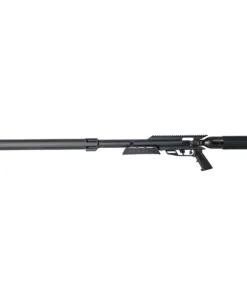
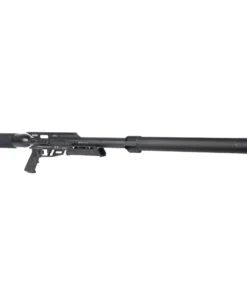

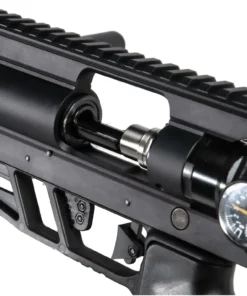
Texan LSS .357 Caliber

€890.00
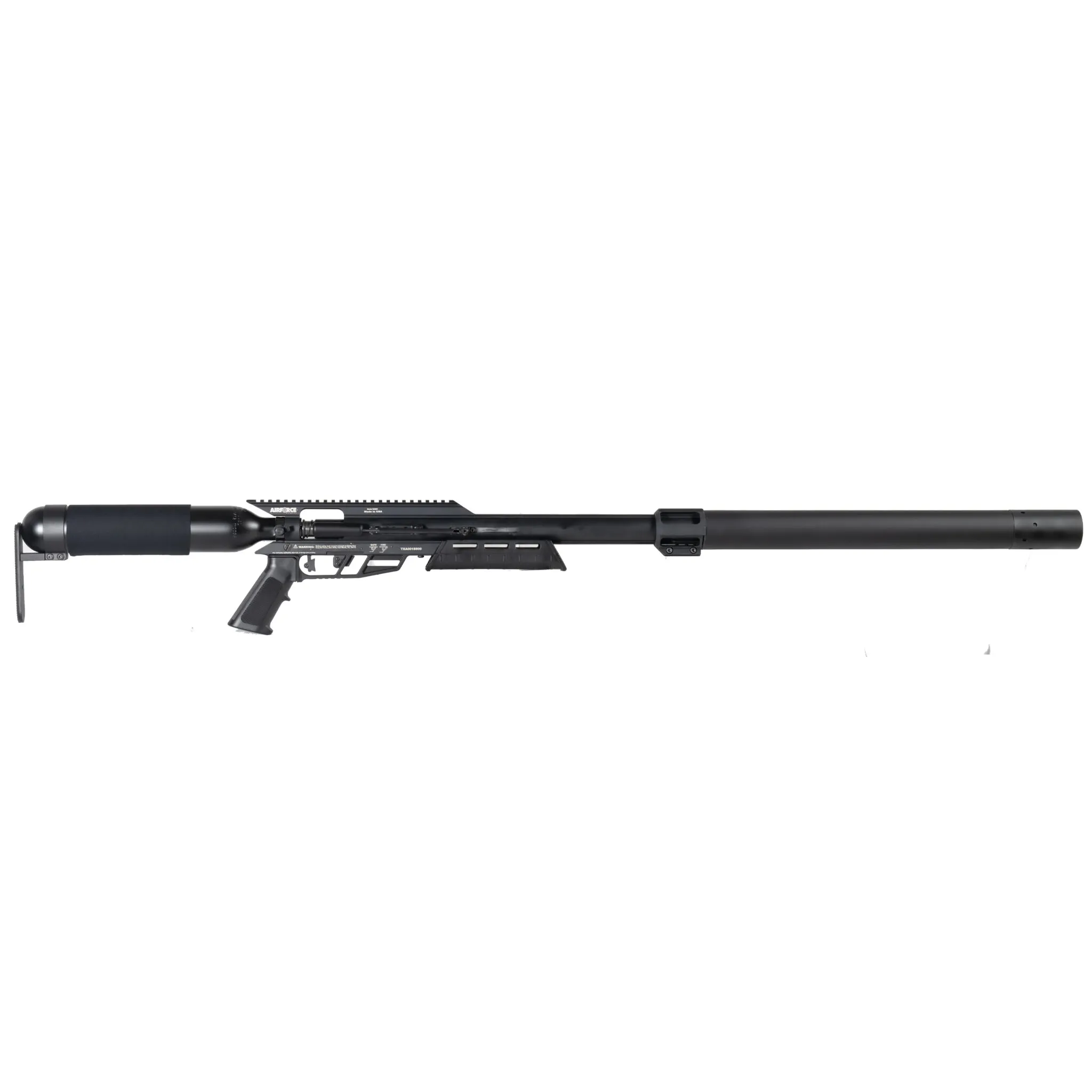
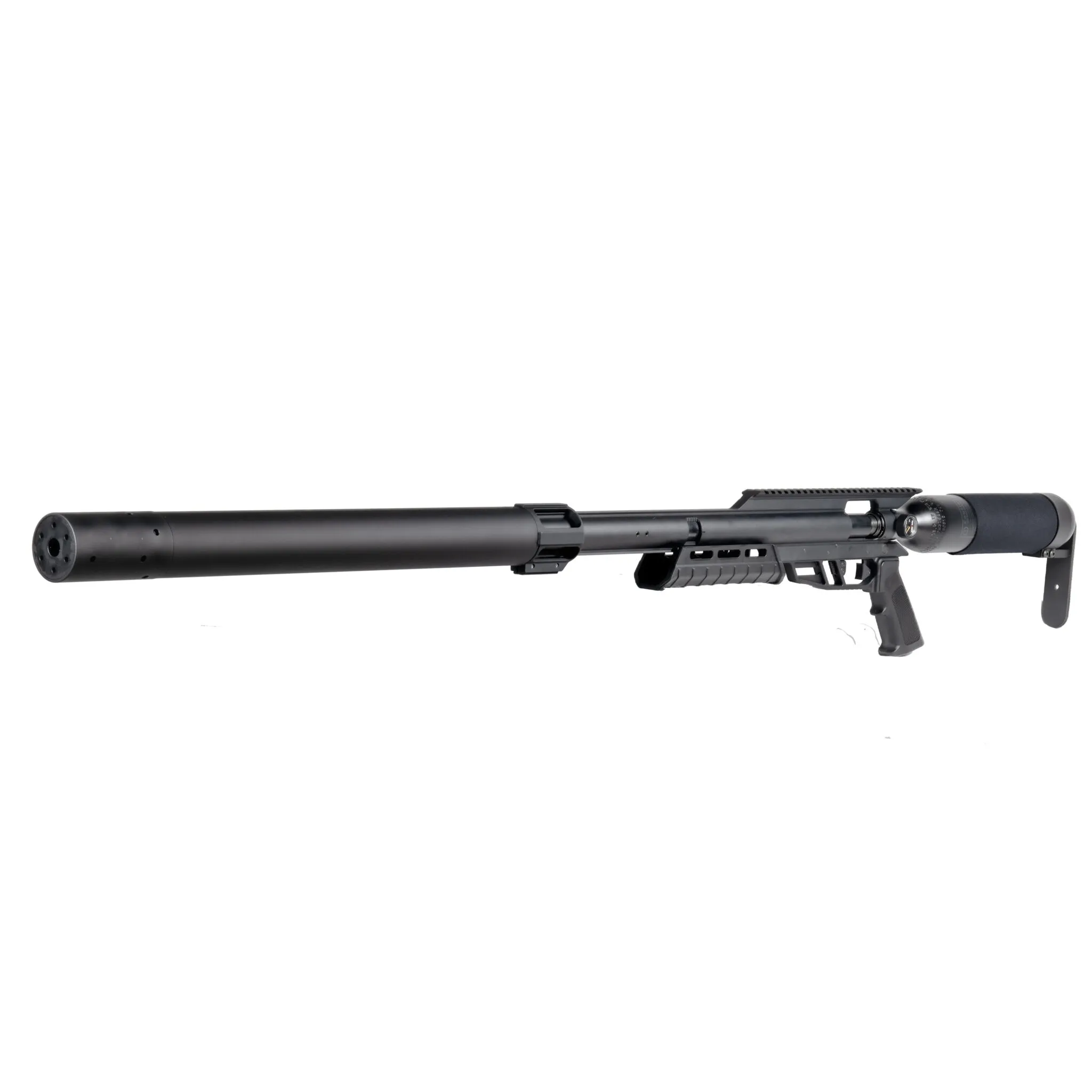
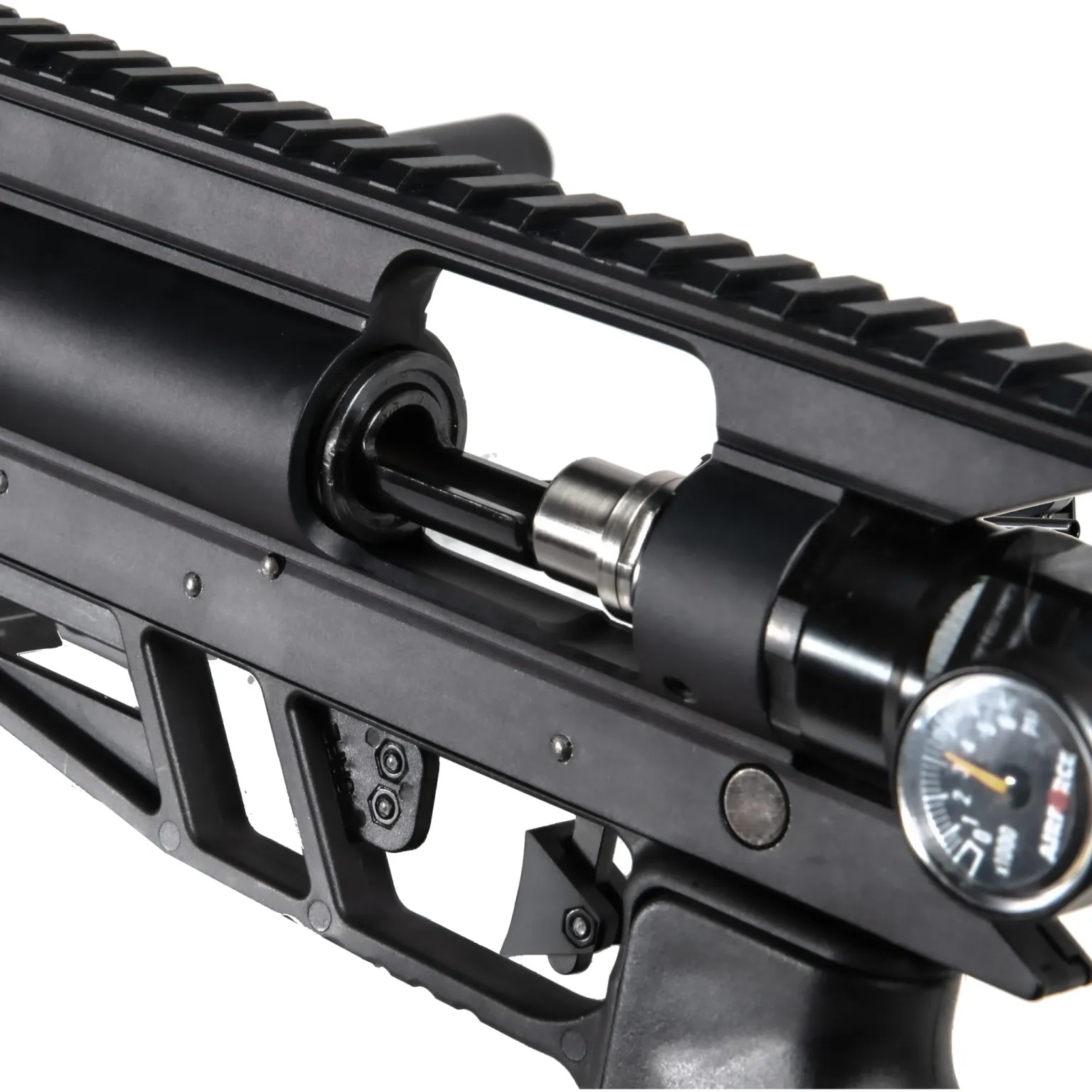
The AirForce Texan® LSS .357Big Bore gives shooters the best of both worlds by combining the power of a full sized Texan and the sound suppression system of the Texan SS. The concept for the LSS comes from direct feedback received from hunters in the field who wanted the extra power and ability to shoot heavier slugs provided by the traditional Texan with the added benefits of a quieter gun like the Texan SS. This new version of the Texan features a Picatinny Scope rail and an upper and lower dovetail rails for attaching accessories. In addition the new Texan has a manual safety.
Easy to load and simple to use, this Big Bore air rifle will let you focus on hunting with the knowledge you have enough power to get the job done.
The Texan LSS .357 Caliber is available in Original Black. We also offer shooting kits to meet your specific shooting application.
Texan® LSS .357 Big Bore PCP Air Rifle – Texan Series
- Action: Single Shot Sidelever
- Air Tank Volume: 500cc
- Barrel: 34” Lothar Walther
- Buttplate: Adjustable
- Caliber: .357
- Energy: 300+ FPE*
- Grip: Ambi
- Length: 51.5 Inches
- Max Fill Pressure: 3000 Psi /206 Bar
- Rails: Picatinny Scope Rail; Dovetail upper and lower for accessories
- Safety: Automatic
- Sights: Open or Optical
- Shrouded: Yes
- Shots per Fill: 4-5
- Trigger 2 Stage, Adjustable
- Velocity: 1,100+ fps*
- Weight: 8 Lbs
- Warranty: Limited Life Time
AirForce Texan LSS .357 Caliber Big Bore PCP Air Rifle
Texan LSS .357 Caliber combines the long-barrel performance of the traditional Texan platform with a shrouded configuration designed to reduce muzzle report. AirForce currently specifies the model with a 34-inch Lothar Walther barrel, 500cc air tank, 3,000 PSI / 206 BAR maximum fill pressure, single-shot sidelever action, adjustable two-stage trigger, adjustable buttplate, ambidextrous grip, accessory rails, and approximately 4–5 shots per fill. Manufacturer figures list velocity above 1,100 fps and energy exceeding 300 FPE, depending on projectile weight and power setting.
For buyers researching AirForce, airforce airguns, air force guns, airforce texan, airforce texan air rifle, airforcetexan, or the informal phrase texas air force rifle, this configuration provides a balance between full-length performance and quieter operation.
34-Inch Lothar Walther Barrel and Precision
The long 34-inch barrel is central to the rifle’s design. It gives compressed air additional time to accelerate a .357-caliber projectile before it exits the muzzle while precision rifling helps provide consistent stabilization.
The manufacturer lists the platform at more than 1,100 fps depending on ammunition and setup.
That places the rifle well above an ordinary pellet gun, lightweight air rifle and air pistol, or basic recreational air guns.
Searches such as high powered air rifles 4000 fps should not be mistaken for an actual specification. This rifle does not produce 4,000 fps. Its performance comes from balancing projectile mass, air pressure, barrel length, and usable muzzle energy.
500cc High-Pressure Air System
The rifle uses a 500cc reservoir operating at a maximum pressure of 3,000 PSI in the currently listed aluminum-tank configuration.
Anyone considering an air gun pump should ensure that the chosen filling equipment can safely handle the required pressure.
For buyers asking what is an air rifle, this platform belongs to the pre-charged pneumatic category. Compressed air is stored in the reservoir and released through the firing system to propel the projectile.
Single-Shot Sidelever Operation
The rifle uses a single-shot sidelever action rather than the conventional mechanism associated with many bolt action air rifles.
Each projectile is loaded individually. Consequently, the system favors deliberate shot preparation and precision instead of rapid magazine-fed shooting.
This approach also separates it from smaller platforms commonly searched as airforce talon p, air force talon p, airforce condor, air force talon, airforce 25, .30 cal air rifle, and airbolt rifle.
LSS Shrouded Configuration
The LSS was developed to combine the performance of the full-size Texan with quieter operation similar to the shorter SS configuration. AirForce states that the concept came from field feedback from hunters who wanted heavier-projectile capability without giving up sound reduction.
This makes the air force texan lss different from the shorter airforce texan ss and airforce texanss, which use a 24.75-inch barrel and a more compact overall configuration.
Tex-Rex and Brush Gun Comparisons
Buyers may also encounter Tex-Rex AirForce brush gun, Brush Gun, tex-rex, air force tex rex, AirForce Tex-Rex PCP rifle, Tex-Rex Brush Gun air rifle, AirForce Texan Brush Gun, AirForce Tex-Rex air rifle, AirForce Tex-Rex hunting rifle, brush gun PCP air rifle, AirForce brush gun, AirForce big bore airgun, and AirForce big bore air rifle.
These terms refer to related big-bore products and should not be treated as alternative names for the LSS .357. The LSS uses the longer 34-inch barrel and is designed around a different balance of power, handling, and sound reduction.
Target and Lawful Hunting Applications
The .357 version expands flexibility for shooters interested in predator, varmint, and small-to-medium-game applications where local law permits. AirForce specifically notes that the .357 and .308 versions increase flexibility within the LSS family.
Searches such as 50 caliber air rifle for deer hunting lead into the broader big-bore category, but this rifle is .357 caliber rather than .50/.510.
Likewise, anyone searching air guns for target shooting or an airgun shooting range near me should confirm that the chosen range permits high-energy PCP rifles and uses an appropriate backstop.
Comparison With Premium FX PCP Rifles
Buyers researching premium pcp airguns may also encounter FX Panthera MkII, fx airguns sverige, fx airguns, fx impact m4, fx airguns sweden, fx leopard, fxairguns, fx impact m3, f x impact m3, fx drs tactical, fx impact, f x impact, fx air rifle, fx outdoors, fx drs, fx drs classic, impact m4 500mm, fx king, fx airguns usa, impact m4 air rifle, fx drs pro, fx leopard airgun, fx m4, fx impact m3 air rifle, fx wildcat, fx chronograph, fx panthera, and fx dynamics.
Those platforms occupy the same broad premium pneumatic market, but many emphasize magazine-fed precision shooting. The LSS .357 takes a different approach by combining single-shot simplicity, a long barrel, substantial projectile energy, and a shrouded design.
Why Choose the Texan LSS .357 Caliber?
The main reasons to consider this rifle are its 34-inch precision barrel, 500cc reservoir, 3,000 PSI system, 300+ FPE output, 1,100+ fps potential, shrouded barrel, adjustable trigger, adjustable buttplate, Picatinny optics rail, accessory rails, and simple single-shot action. AirForce lists the model at approximately 51.5 inches long and 8 pounds, with a limited lifetime warranty.
For an experienced adult shooter seeking a powerful .357-caliber pneumatic rifle with long-barrel performance and reduced report, the Texan LSS .357 offers a strong combination of precision potential, mechanical simplicity, substantial energy, and proven AirForce engineering.
Performance, Accuracy, Air Management, Handling, and Practical Ownership
The .357-caliber configuration is designed for shooters who want a balance of substantial pneumatic power, manageable projectile size, long-barrel efficiency, and controlled single-shot operation. Unlike lightweight recreational rifles that prioritize high shot counts and casual use, this platform is built around deliberate shooting, careful pressure management, and repeatable accuracy.
Its practical performance depends on several interacting factors. Projectile weight, reservoir pressure, barrel condition, optic setup, trigger control, environmental conditions, and shooter technique all influence the final result. Therefore, the best way to get consistent performance is to treat the rifle as a complete system rather than focusing only on maximum velocity or energy.
Understanding the Power Delivery
The rifle operates by storing compressed air inside the reservoir and releasing a measured amount behind the projectile when the trigger is operated.
Because the projectile is larger and heavier than those used in small-caliber recreational rifles, each shot consumes a significant amount of air. The long barrel gives that expanding air more time to accelerate the projectile before it leaves the muzzle.
This design helps the platform produce substantial energy without relying on firearm ammunition.
However, maximum power should not be the only objective.
A well-tuned shooting setup that produces stable velocity and consistent groups is often more useful than one that simply generates the highest possible output.
Managing Reservoir Pressure
Pressure management is one of the most important parts of ownership.
Before each shooting session, the reservoir pressure should be checked carefully.
The owner should never exceed the manufacturer’s specified maximum pressure.
As shots are fired, reservoir pressure gradually decreases.
Eventually, the rifle will move outside its most consistent operating range.
At that point, velocity and point of impact may begin to change.
The shooter should learn where this transition occurs and establish a practical refill point.
Understanding Useful Shot Count
The number of shots that can physically be fired from one fill is not necessarily the same as the number of shots that provide the most consistent performance.
For practical accuracy, it is often better to focus on the stable portion of the pressure curve.
A shooter can record starting pressure, shot number, point of impact, group size, and ending pressure.
After several sessions, a useful pattern may become clear.
This information can help the owner understand when to refill and how many dependable shots to expect.
Filling Equipment
The filling system should be chosen carefully.
Compressors, cylinders, hoses, fittings, gauges, and connectors should all be rated appropriately for the pressure required by the rifle.
Damaged equipment should never be used.
Connections should remain clean and free from dirt.
Contamination around seals can cause leakage and reduce reliability.
Filling should also be carried out gradually.
Rushing the process provides little benefit and makes pressure monitoring more difficult.
Projectile Selection
Projectile choice can significantly affect accuracy.
Different weights, shapes, and designs may produce different velocities, trajectories, and points of impact.
A lighter projectile may travel faster, while a heavier projectile may retain more momentum.
Neither option should automatically be considered better.
The most suitable projectile is the one that provides repeatable accuracy while matching the intended lawful use.
Testing should be systematic.
Several groups should be fired with one projectile before changing to another.
Projectile Consistency
Uniform projectiles can improve repeatability.
Before loading, the shooter should inspect each projectile for obvious damage.
Bent, dented, or irregular projectiles may not travel consistently.
Using ammunition from the same reliable batch can reduce unnecessary variation during testing.
The shooter should also avoid mixing different weights while evaluating accuracy.
Consistent ammunition makes it much easier to identify whether changes in performance come from the rifle, the environment, or shooting technique.
Developing an Accuracy Baseline
Initial testing should be performed from a stable supported position.
A bench or solid rest reduces movement and provides a clearer view of the rifle’s mechanical consistency.
Several groups should be fired under similar conditions.
One unusually good group should not be treated as the normal result.
Likewise, one poor group does not necessarily indicate a problem.
Repeated performance is more meaningful.
Once a baseline has been established, the shooter can begin testing from more realistic positions.
Trigger Control
The two-stage trigger allows the shooter to prepare for each shot in a controlled way.
The first stage should be taken up smoothly.
Pressure should then increase gradually until the shot breaks.
Jerking the trigger can move the rifle immediately before the projectile exits the barrel.
Good follow-through is also important.
The shooter should maintain shoulder position, grip, and head placement for a moment after firing.
A consistent firing technique can improve accuracy without requiring major mechanical adjustments.
Shoulder Position and Grip
The rifle should contact the shoulder in the same location for each shot.
Grip pressure should also remain similar.
Holding the rifle tightly for one shot and loosely for the next introduces another variable.
A comfortable position is usually easier to repeat.
The shooter should also establish a consistent cheek position behind the optic.
Repeatable body position supports better sight alignment.
Optic Selection
The optic should suit the distances and conditions in which the rifle will be used.
Maximum magnification is not always the most important factor.
Clarity, eye relief, field of view, adjustment range, reticle design, and overall weight can all affect practical usefulness.
A heavy optic can change the rifle’s balance.
Therefore, the owner should select a scope that provides the necessary performance without making the system unnecessarily cumbersome.
Maintaining Zero
Once the optic has been installed, the rifle should be zeroed from a supported position.
Adjustments should be based on groups rather than individual shots.
After the zero is established, it should be checked periodically.
Changing projectile weight can shift the point of impact.
Transporting the rifle can also affect optic alignment.
If accuracy suddenly changes, the scope and mounts should be inspected before assuming there is a problem with the barrel or air system.
Handling the Long-Barrel Platform
The long barrel provides stability when the rifle is supported, but it also increases overall length.
This can make unsupported shooting more demanding.
The owner should avoid adding unnecessary accessories that increase weight or shift the balance too far forward.
A practical setup should focus on useful equipment.
A well-balanced rifle is easier to carry, shoulder, and control during longer sessions.
Supported Shooting
A stable support can significantly improve precision.
A bench rest, bipod, shooting bag, or another secure support can reduce movement.
The rifle should be positioned consistently on the support.
Changing the support point between groups can affect results.
Supported shooting is especially useful when testing new projectiles, confirming zero, or evaluating performance after maintenance.
Unsupported Shooting
Standing, kneeling, and seated positions require greater control.
The rifle’s length can make standing shots more difficult.
Kneeling or seated positions may provide better stability.
The shooter should practice under realistic conditions.
Personal distance limits should be based on repeatable results from the position that will actually be used.
Bench performance alone should not determine real-world expectations.
Environmental Conditions
Wind can influence projectile flight.
As distance increases, crosswinds may shift point of impact.
Temperature can also affect reservoir pressure.
A rifle filled in a cool environment may show a different pressure reading after moving into warmer conditions.
The owner should be aware of these changes.
Excessive heat should be avoided.
Stable environmental conditions make performance easier to predict.
Sound Management
The shrouded configuration is intended to reduce muzzle report, but the rifle should not be considered silent.
Sound can still be significant, particularly in enclosed areas or near hard surfaces.
Hearing protection may remain appropriate.
The shooter should also consider local noise restrictions and surrounding properties.
Reduced sound should improve usability while still maintaining responsible shooting practices.
Range and Backstop Requirements
The rifle should only be used where the backstop can safely contain high-energy projectiles.
Lightweight traps intended for small recreational equipment may not be sufficient.
The shooter should always know what lies behind the target.
A missed shot or projectile that penetrates unsuitable material can remain dangerous.
A properly designed range that allows equipment in this power class is often the safest environment.
Routine Maintenance
Routine care should focus on preserving reliability.
External surfaces should be kept clean and dry.
The filling connection should remain free from contamination.
The action should operate smoothly.
Fasteners and optic mounts should be checked periodically.
The barrel should not be cleaned aggressively after every short session.
Cleaning is more appropriate when accuracy begins to decline or when visible fouling is present.
Seal and Pressure Retention
The pneumatic system depends on reliable seals.
The reservoir should retain pressure during normal storage.
If pressure drops unexpectedly, the rifle should be inspected.
Some leaks may be audible, while others develop slowly.
Only compatible lubricants should be used.
High-pressure internal work should not be attempted casually.
Professional service is generally the safer choice when the problem involves the reservoir, valve, or another critical component.
Storage and Transportation
The rifle should be stored securely where unauthorized users cannot access it.
A locked cabinet or strong case can provide both physical protection and controlled access.
The storage environment should remain dry and reasonably stable in temperature.
During transportation, the rifle should be supported inside a padded or rigid case.
After significant travel, the owner should inspect the system and confirm zero before serious use.
Long-Term Ownership
The platform performs best when pressure management, projectile selection, optic stability, shooting technique, and maintenance are treated as parts of the same system.
For an experienced owner with appropriate filling equipment and access to a safe shooting environment, the rifle can provide a strong balance of accuracy, substantial pneumatic performance, long-barrel stability, and dependable single-shot operation.
Consistent maintenance and disciplined setup are the key factors that help preserve that performance over time.
Section 3 – Real-World Use, Accuracy Development, Environmental Performance, Maintenance, and Reliability
The .357-caliber configuration is best understood as a precision-oriented pneumatic platform that rewards consistency, preparation, and disciplined shooting. Its long barrel, large reservoir, single-shot action, and reduced-report configuration create a system that performs best when the shooter takes time to manage pressure, projectile selection, optic setup, and technique carefully.
Real-world accuracy depends on more than one component. A technically capable rifle can still produce inconsistent results when projectiles vary, the optic is loose, pressure changes too much, or the shooter alters position from one shot to the next. For that reason, the most important goal is repeatability.
Building a Consistent Shooting Routine
A repeatable routine helps reduce unnecessary variation.
Before each session, the shooter should check reservoir pressure, inspect the optic, confirm that the barrel and loading area are clear, and verify that the shooting environment is suitable.
The same basic preparation should be followed every time.
Once shooting begins, the shooter should try to maintain the same body position, grip pressure, shoulder contact, and head position.
These details may seem minor, but they can influence group size.
Consistency in setup makes it easier to identify whether changes in performance come from the rifle or from the shooter.
Understanding Practical Accuracy
Practical accuracy should be judged through repeated groups rather than one isolated result.
A single tight group may be encouraging, but it does not always represent normal performance.
Several groups fired under similar conditions provide a more realistic picture.
The rifle should first be tested from a stable supported position.
This reduces movement and provides a clearer view of mechanical consistency.
Once reliable results are established, the shooter can gradually introduce more realistic positions and distances.
Projectile Weight and Trajectory
Projectile weight can noticeably change the way the rifle behaves.
Lighter projectiles may produce higher velocity and a different trajectory.
Heavier projectiles may retain more momentum and show different performance at distance.
The best choice depends on repeatable accuracy and the intended lawful application.
When switching projectile weights, the shooter should verify zero again.
A rifle that is accurately sighted for one projectile may not produce the same point of impact with another.
This is especially important when the weight difference is substantial.
Projectile Shape and Uniformity
Weight is only one part of projectile selection.
Shape, diameter, surface condition, and manufacturing consistency can also affect performance.
Projectiles should be inspected before loading.
Any item with visible deformation, damage, or irregular shape should be set aside.
Using ammunition from a consistent batch can help reduce variation.
The shooter should avoid combining multiple projectile types during serious accuracy testing.
Keeping one variable constant makes comparisons much more useful.
Establishing the Best Pressure Range
The rifle will not necessarily perform identically across the entire reservoir pressure range.
As pressure decreases, velocity may eventually begin to change.
The shooter should identify the portion of the fill where performance remains most stable.
A simple shooting log can help.
The owner can record starting pressure, shot count, projectile weight, group size, and ending pressure.
Over several sessions, the most consistent portion of the pressure curve can become clear.
This information can then be used to decide when refilling is appropriate.
Using a Chronograph Effectively
A chronograph can provide useful information about velocity consistency.
It can help identify whether shot-to-shot variation increases as pressure falls.
However, chronograph readings should not be viewed in isolation.
The fastest shot is not automatically the best shot.
A slightly slower setup that produces stable velocity and tighter groups may be far more useful.
Chronograph data becomes most valuable when it is compared with target results.
This combination provides a clearer understanding of the rifle’s real performance.
Zeroing the Optic
A careful zeroing process is essential.
The rifle should be positioned on a stable rest and fired in groups.
The center of each group should be evaluated before making an adjustment.
Correcting the optic after every single shot can make the process confusing and inefficient.
Once the zero is established, the shooter should confirm it at several appropriate distances.
This helps build a better understanding of trajectory.
The optic should also be checked after long transport, hard impact, or major equipment changes.
Maintaining Optic Stability
A loose mount can create inconsistent impact points even when the rifle is functioning correctly.
Therefore, optic rings, bases, and rail connections should be inspected periodically.
Fasteners should remain secure but should not be overtightened.
If accuracy changes suddenly, the optic mounting system should be one of the first areas examined.
The shooter should also protect the optic during transportation.
A hard case with proper internal support can reduce the chance of movement or damage.
Trigger Control
Good trigger technique can significantly improve consistency.
The first stage should be taken up smoothly.
The shooter should then increase pressure gradually until the shot breaks.
Jerking or snatching the trigger can disturb the rifle.
Follow-through should continue after the shot.
The shooter should keep the head, shoulder, and grip stable briefly instead of immediately moving away from the rifle.
This helps preserve a repeatable firing sequence.
Shoulder Position and Cheek Placement
The rifle should contact the shoulder in the same location for every shot.
Cheek position behind the optic should also remain consistent.
Small changes in eye position can alter the apparent sight picture.
The shooter should choose a comfortable position that can be repeated easily.
An awkward setup may work for a few shots but becomes difficult to maintain during a longer session.
Comfort and consistency usually work together.
Supported Shooting
A bench rest, bipod, shooting bag, or another secure support can help reveal the rifle’s accuracy potential.
The support point should remain consistent between groups.
Changing where the rifle rests can introduce another variable.
Supported shooting is especially useful when testing projectiles, checking zero, or evaluating performance after maintenance.
It also helps the shooter distinguish mechanical issues from technique-related errors.
Unsupported Shooting
Unsupported positions are more demanding.
Standing shots require greater control, while kneeling or seated positions often provide improved stability.
The shooter should practice from the positions that are most likely to be used in real situations.
Personal distance limits should be based on repeatable performance from those positions.
A distance that produces excellent groups from a bench may not be realistic when the rifle is unsupported.
Wind and External Conditions
Wind can influence projectile flight, especially as distance increases.
Crosswinds may move the point of impact sideways.
Changing wind speed can also make groups appear inconsistent.
The shooter should observe surrounding vegetation, flags, or other wind indicators when available.
Power does not eliminate the effect of wind.
Understanding environmental conditions is part of developing good long-range discipline.
Temperature and Pressure Changes
Temperature can influence the behavior of a compressed-air system.
A rifle filled in a cool environment may show a different pressure reading after being moved into a warmer location.
The opposite can also occur.
The owner should avoid exposing the reservoir to excessive heat.
Stable storage conditions make pressure behavior easier to predict.
When environmental conditions change significantly, the shooter should confirm performance again before relying on previous settings.
Sound Management in Real Use
The shrouded configuration is designed to reduce muzzle report.
However, the rifle is still capable of substantial energy and should not be considered silent.
Sound level can vary depending on surroundings.
Enclosed spaces and hard surfaces can reflect sound and make the report appear louder.
Hearing protection may still be appropriate.
The shooter should also remain aware of nearby properties, local noise rules, and range requirements.
Barrel Cleaning
The barrel should be cleaned when necessary rather than automatically after every short session.
If accuracy remains stable, excessive cleaning may provide little benefit.
When performance begins to decline, the barrel can be inspected for fouling or contamination.
Suitable cleaning materials should be used.
Hard abrasives and harsh chemicals should be avoided.
The goal is to preserve the internal surface while removing material that may interfere with consistency.
Action and Loading System Care
The action should operate smoothly.
If loading or cocking becomes unusually difficult, the mechanism should not be forced.
Resistance can indicate dirt, wear, misalignment, or another mechanical issue.
The rifle should be inspected before continued use.
Routine cleaning around the action helps prevent debris from building up.
Simple preventive care can reduce the likelihood of larger problems later.
Seal and Pressure Retention
Reliable seals are essential.
The owner should monitor whether the reservoir holds pressure during storage.
Unexpected pressure loss can indicate a worn seal, fitting, or valve issue.
Some leaks may be audible, while others develop gradually.
Only compatible lubricants should be used.
If the problem involves high-pressure internal components, professional service is generally safer than casual disassembly.
Exterior Care
External surfaces should be kept clean and dry.
After use in humid, dusty, or wet conditions, the rifle should be wiped down before storage.
The filling connection should remain especially clean.
The optic should also be protected from dust and impact.
Routine exterior care makes it easier to detect corrosion, loose hardware, or physical damage before those issues become serious.
Secure Storage
The rifle should be stored where unauthorized users cannot access it.
A locked cabinet or secure case provides both safety and physical protection.
The storage area should remain dry and reasonably stable in temperature.
Excessive heat, moisture, direct sunlight, and corrosive chemicals should be avoided.
Filling equipment should also be stored safely.
High-pressure cylinders should be secured against impact or falling.
Transportation
A padded or rigid case is particularly useful because of the rifle’s overall length.
The barrel, optic, reservoir, and action should be supported so they cannot move freely.
After significant transportation, the rifle should be inspected.
The zero should also be checked before serious use.
Applicable transportation requirements should be reviewed because regulations can vary between jurisdictions.
Long-Term Reliability
Long-term reliability depends on observation and preventive care.
The owner should pay attention to changes in pressure retention, trigger feel, loading effort, accuracy, optic stability, and overall mechanical operation.
Small changes should not be ignored.
A minor leak or loose mount is usually easier to correct when detected early.
For an experienced shooter who maintains pressure correctly, uses consistent projectiles, protects the rifle during storage and transport, and develops disciplined shooting habits, the platform can provide reliable performance for many years.
Its long-barrel stability, single-shot simplicity, reduced-report configuration, and strong pneumatic capability make it a specialized but highly capable system when managed responsibly.
Buyer Planning, Practical Setup, Maintenance, Storage, and Long-Term Value
Owning a high-energy .357-caliber pneumatic rifle involves more than purchasing the rifle itself. A complete setup includes suitable filling equipment, dependable optics, appropriate projectiles, secure storage, transportation protection, maintenance supplies, and access to a safe shooting environment. These supporting elements have a major influence on how convenient, reliable, and enjoyable the rifle will be over the long term.
A prospective owner should therefore think about how often the rifle will be used, where it will be filled, how far it will normally be carried, and what type of shooting environment will be available. Planning these details before regular use helps reduce unnecessary problems later.
Inspecting the Rifle Before Regular Use
A careful inspection should be performed before the rifle enters regular service.
The barrel, air reservoir, filling connection, pressure gauge, action, trigger, safety, optic rail, mounts, and visible fasteners should all be checked.
The loading system should move smoothly.
The trigger should operate predictably.
The reservoir should hold pressure normally.
Any unusual resistance, visible damage, air loss, or loose hardware should be investigated before firing.
This initial inspection is particularly important after shipping or long-distance transportation because vibration and impact can sometimes affect mounts or other components.
Planning the Complete Setup
The rifle should be considered part of a complete shooting system.
A suitable high-pressure air source is essential.
Depending on the owner’s circumstances, this may involve a compressor, charging cylinder, or another approved source capable of meeting the required pressure safely.
An appropriate optic should also be selected carefully.
The rifle’s long barrel and strong performance potential deserve a sighting system that provides dependable adjustments, clear viewing, and secure mounting.
A protective case, suitable projectiles, cleaning supplies, and secure storage should also be included in the ownership budget.
Choosing Filling Equipment
All filling equipment should be rated correctly for the pressure involved.
Hoses, gauges, fittings, adapters, and connectors should remain in good condition.
Damaged components should never be used.
Connections should fit properly without excessive force.
The filling port should be kept clean because contamination can interfere with sealing and may cause gradual air loss.
The reservoir should never be filled beyond its approved limit.
Operating within the specified pressure range helps preserve reliability and reduces unnecessary stress on the system.
Developing a Consistent Filling Routine
A repeatable filling routine makes ownership safer and more convenient.
Before connecting the air source, the filling point and hose should be inspected.
The pressure gauge should be checked.
The connection should then be secured correctly before pressure is introduced.
Filling should be performed gradually while monitoring the gauge.
Once the intended pressure has been reached, the filling line should be depressurized correctly before being disconnected.
Following the same routine each time reduces the chance of overlooking an important step.
Understanding Air Efficiency
The goal of air management should not simply be to produce the largest number of shots from one fill.
Useful efficiency means maintaining stable performance across the shots that matter.
A rifle may continue to fire after leaving its most consistent pressure range, but velocity and point of impact may begin to change.
For that reason, the owner should identify the point where performance starts to decline and refill before that stage becomes significant.
This creates a more predictable shooting experience.
Keeping Performance Records
A simple performance log can be valuable.
The owner can record starting pressure, projectile weight, number of shots, group size, environmental conditions, and remaining pressure.
Over time, these records may reveal useful patterns.
The shooter may discover that certain projectiles consistently produce tighter groups or that a particular pressure range gives the most predictable results.
Records can also help detect developing mechanical issues.
Unexpected increases in air use or sudden accuracy changes become easier to identify when previous data is available for comparison.
Choosing an Appropriate Optic
The optic should match the intended use of the rifle.
High magnification can be useful in some situations, but clarity, eye relief, field of view, adjustment range, and reticle design are often equally important.
Weight should also be considered.
A large optic can change the balance of a long rifle.
A practical setup should provide enough optical performance without making the rifle unnecessarily heavy or difficult to handle.
Mounts should be selected carefully and checked periodically for movement.
Maintaining a Reliable Zero
Once the optic is installed, zero should be established from a stable supported position.
Several shots should be grouped before major adjustments are made.
This produces a more reliable reference than adjusting after each individual shot.
Zero should then be checked periodically.
A change in projectile type, optic position, mounting hardware, or transportation conditions can shift point of impact.
If accuracy changes unexpectedly, the optic and mounts should be inspected before assuming a barrel or air-system problem.
Managing Rifle Balance
The long barrel helps provide stability from a rest, but overall balance can change depending on the accessories installed.
A heavy optic, large mount, bipod, or multiple attachments can shift the center of gravity.
The owner should therefore choose accessories based on practical value.
A balanced rifle is easier to shoulder, carry, and control.
This becomes especially important during longer shooting sessions or when unsupported positions are used.
Selecting a Suitable Shooting Location
A high-energy pneumatic rifle requires a suitable range or private shooting area.
The backstop should be capable of safely containing the projectile.
Lightweight traps intended for low-powered recreational use may not be adequate.
The shooter should also consider what lies behind the target.
A missed projectile or one that penetrates unsuitable material can remain dangerous.
A properly designed range that allows equipment in this performance category is often the best choice.
Responsible Sound Management
The reduced-report design can make the rifle more comfortable to use, but substantial sound can still remain.
The shooter should consider hearing protection, nearby properties, local restrictions, and range rules.
Enclosed spaces can make the report appear louder because sound reflects from walls and other hard surfaces.
Reduced sound should therefore be treated as a practical advantage rather than an invitation to use the rifle in unsuitable locations.
Routine Mechanical Inspection
Regular inspection helps prevent minor problems from becoming serious.
The action should move smoothly.
The trigger should feel consistent.
The safety should operate correctly.
The pressure gauge should show expected values.
Fasteners and optic mounts should remain secure.
If the loading system suddenly becomes difficult to operate, it should not be forced.
Unexpected resistance can indicate debris, wear, or another mechanical issue that needs attention.
Barrel Maintenance
The barrel should be cleaned carefully and only when necessary.
If accuracy remains stable, aggressive cleaning after every short session may provide little benefit.
When cleaning becomes appropriate, suitable materials should be used.
Abrasive tools and harsh chemicals can damage the bore.
The objective is to remove fouling while protecting the precision surface.
After cleaning, several shots may be required before the rifle returns to its previous level of consistency.
Seal and Pressure Retention
The pneumatic system relies heavily on seals.
The owner should monitor whether the reservoir retains pressure during storage.
Unexpected pressure loss may indicate a worn seal, damaged fitting, or valve problem.
Some leaks are obvious, while others develop gradually.
Only compatible lubricants should be used.
Critical internal pressure components should not be dismantled casually.
Professional service is preferable when the cause of a problem is unclear.
Exterior Protection
External surfaces should be kept clean and dry.
After use in rain, humidity, dust, or dirty conditions, the rifle should be wiped down before storage.
The filling connection should remain especially clean.
The optic should also be protected from impact and contamination.
Routine exterior care makes it easier to notice developing corrosion, loose hardware, or physical damage before these issues become serious.
Secure Storage
The rifle should be stored where unauthorized users cannot access it.
A locked cabinet or secure hard case can provide both controlled access and physical protection.
The storage environment should remain dry and reasonably stable in temperature.
Excessive heat, high humidity, direct sunlight, and corrosive chemicals should be avoided.
Projectiles and filling equipment should also be stored responsibly.
Long-Term Storage
Extended storage requires additional attention.
The owner should follow manufacturer guidance regarding reservoir pressure.
Before returning the rifle to regular use after a long period, the reservoir, filling connection, seals, optic mounts, action, trigger, and safety should be inspected.
A short controlled range session can then confirm that the system is operating normally.
This helps identify any issue that may have developed while the rifle was unused.
Transportation and Protection
A strong padded or rigid case is recommended because of the rifle’s length.
The barrel, optic, reservoir, and action should be supported so they cannot move freely inside the case.
Heavy objects should not be allowed to strike or crush the rifle during transport.
After significant travel, the complete system should be inspected and the zero verified.
Transportation requirements should also be checked because rules can differ between jurisdictions.
Knowing When Professional Service Is Needed
Some routine maintenance can be handled by an experienced owner, but certain problems require professional attention.
Persistent pressure loss, damaged reservoir components, valve problems, abnormal trigger behavior, significant mechanical resistance, or unexplained performance changes should be investigated by someone with appropriate technical knowledge.
Attempting to force or modify critical pressure-bearing components can make a small problem much worse.
Long-Term Ownership Value
The long-term value of this platform comes from the way it combines substantial pneumatic performance, a long precision barrel, simple single-shot operation, reduced report, adjustable controls, and straightforward mechanical construction.
Reliable ownership depends on consistent care.
Air pressure should be managed correctly, projectiles should be selected carefully, the optic should remain secure, and maintenance should be performed before minor problems develop into larger failures.
For an experienced owner with suitable filling equipment, secure storage, dependable optics, and access to a safe shooting environment, the rifle can provide a strong combination of precision potential, practical performance, and dependable long-term service.
Be the first to review “Texan LSS .357 Caliber”
Related products

AirForce

AirForce

AirForce
AirForce

AirForce

AirForce

Reviews
There are no reviews yet.