


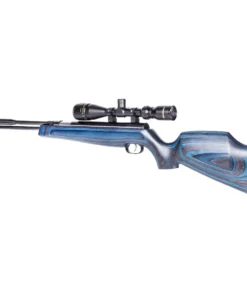
Weihrauch HW100 FAC
€1,130.00
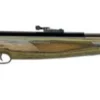
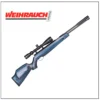
Our new sporter, the first pre-charged air rifle from Weihrauch: excellent accuracy • vibration free shot release • fast and easy repeating • 14-shot magazine capacity • filled air cartridge with 200 bar • integral pressure gauge and quick-fill equipment • available in cal. .177″ (4,5 mm) and .22″ (5,5 mm) and in cal. 5,0 mm (.20”) only in the FAC and 12 ft. lbs. / 16,3 J-version • well-balanced • two-stage adjustable match trigger with manual safety.
Handy and elegant sporter stock, oiled walnut, with checkering on the pistol grip and forearm, pistol grip cap, right hand only. (Scope not included.
Weihrauch HW100 FAC
Weihrauch HW100 FAC Overview
The Weihrauch HW100 FAC is a high-power pre-charged pneumatic rifle built around precision engineering, smooth operation, and dependable shot-to-shot consistency. Manufactured in Germany, the platform combines a regulated air system, fast sidelever action, 14-shot rotary magazine, adjustable two-stage match trigger, onboard pressure gauge, and quick-fill equipment. Weihrauch lists the HW100 in .177 and .22, while .20 is also available in FAC specification.
For shooters comparing premium air rifles, compressed air rifles, or a dependable german air rifle, the HW100 has become one of Weihrauch’s most recognizable PCP designs. It sits within the same broader product family that includes the Weihrauch HW90, Weihrauch HW45, Weihrauch HW95, Weihrauch HW44, Weihrauch HW50, Weihrauch HW97K, Weihrauch HW80, Weihrauch HW30, and other established sporting models.
Precision and Regulated Performance
Accuracy is one of the main reasons buyers consider the HW100 FAC.
The regulated system is designed to keep air delivery more consistent as reservoir pressure falls. That consistency matters because predictable air output helps reduce velocity variation between shots. Weihrauch also describes the HW100 as offering excellent accuracy and vibration-free shot release.
A published high-power HW100 T FAC test reported a 200-bar fill, approximately 36 high-power shots, and just under 30 ft-lb with .22 pellets in that specific setup. Actual FAC output can vary according to caliber, market specification, projectile weight, and configuration, so buyers should confirm the exact version being offered.
For buyers researching accurate air rifles, hw100 airgun, or weihrauch hw100, this consistency is central to the rifle’s appeal.
14-Shot Magazine and Sidelever Action
The HW100 uses a removable 14-shot rotary magazine together with a biathlon-style sidelever action. This arrangement allows quick follow-up loading without the more pronounced movement associated with some traditional bolt systems.
The sidelever operates smoothly and gives the rifle a refined mechanical feel.
For shooters accustomed to traditional air pistols, spring rifles, or other air rifle makes, the HW100 offers a distinctly different experience because loading, cocking, and regulated air delivery are integrated into one efficient system.
The magazine format also makes the rifle practical for range use and controlled field shooting where repeatability matters.
200-Bar Air System and Quick Fill
The standard HW100 design uses a compressed-air cylinder filled to 200 bar with an integrated pressure gauge and quick-fill connection.
This allows the shooter to monitor remaining pressure and refill without removing the cylinder during normal use.
For anyone moving from a spring-powered platform such as the Weihrauch HW90 air rifle, Weihrauch gas ram rifle, hw35 air rifle, hw 97k, hw97, hw97k, hw95, or hw50s, the PCP system offers a fundamentally different shooting experience.
Instead of relying on a spring or gas ram, stored compressed air drives the pellet.
That produces a vibration-free release and makes the rifle easier to shoot consistently from a stable position.
Match Trigger and Manual Safety
The rifle is equipped with a two-stage adjustable match trigger and manual safety.
A predictable trigger is especially important in a precision-oriented rifle because excessive trigger movement can disturb sight alignment before the pellet exits the barrel.
The two-stage system allows the shooter to establish the first stage before applying final pressure.
That controlled release is one reason the rifle has developed a reputation for precision.
Shooters familiar with weihrauch, weirauch, hw75, hw35, hw 50, hw50 s, or weihrauch hw30s will recognize the company’s longstanding emphasis on trigger quality and mechanical refinement.
Why Choose the HW100 FAC?
The primary reason to choose the FAC version is increased power beyond typical low-energy configurations.
That additional energy can provide flatter trajectories and greater retained energy when used within appropriate legal and safety limits.
However, more power also demands a stronger backstop, careful range selection, and greater awareness of local licensing requirements.
The HW100 FAC therefore makes the most sense for experienced users who have a legitimate need for the higher-output configuration and access to a suitable shooting environment.
It should not be confused with unrelated platforms such as sk x rifles, an air shot gun, or generic rifles de aire because the HW100 is specifically a precision PCP sporting rifle.
How Good Is the HW100 FAC?
The HW100 has a long-standing reputation for build quality, balance, mechanical consistency, and accuracy.
Published testing of the high-power T FAC variant reported 50-yard groups around the size of a 5p coin in favorable conditions, though real-world results will always depend on the shooter, ammunition, wind, optics, and individual rifle.
That level of potential is supported by the regulated action, stable firing cycle, and adjustable trigger.
The rifle’s value therefore comes less from novelty and more from a proven engineering layout.
Where and When It Makes Sense to Use
The HW100 FAC is most appropriate on authorized ranges or other lawful shooting areas that can safely contain a high-energy airgun projectile.
Its precision makes it well suited to structured target shooting and other lawful sporting uses.
Because FAC regulations vary, ownership and use should always be checked against local law.
The rifle’s 200-bar system also means owners need access to suitable high-pressure filling equipment.
For regular use, a certified cylinder or appropriate compressor can make ownership considerably more convenient.
Comparison With Other Weihrauch Models
The HW100 occupies a different category from many classic Weihrauch designs.
The Weihrauch HW90 and HW90 gas ram air rifle use a gas-ram powerplant rather than a PCP reservoir.
The Weihrauch HW95, HW50, HW30, and HW80 are known primarily as traditional spring-powered sporting rifles.
Meanwhile, the Weihrauch HW45 and Weihrauch HW44 belong to the company’s pistol range.
Terms such as weihrauch revolvers, what are air pistols, or air pistols therefore relate to different product categories.
The HW100 is designed specifically around regulated compressed-air performance.
Other PCP Platforms Buyers May Compare
Shoppers researching PCP equipment may also encounter names such as Snowpeak PP750L PCP Air Pistol, snowpeak airguns, snowpeak sports, snowpeak ap900, snowpeak max, snowpeak pp750, pp750, snowpeak p35x, pr900 gen 3, snow peak pp750, snowpeak p35, snowpeak m60b, snow peak pp20, p35, p35x, p35x pcp, snowpeak m25, ap900b pcp air rifle, snowpeak m60, snowpeak max 1 price, pcp p 35, m25 rifle, snow peak equipment, and hp300.
These products occupy different price points, formats, and intended uses.
The HW100 FAC is generally positioned as a premium German sporting PCP, so buyers should compare engineering quality, regulator performance, trigger feel, magazine design, stock configuration, service support, and legal power specification rather than looking at price alone.
Important Buyer Information
Before purchasing, confirm the exact caliber, FAC output, stock style, barrel configuration, rail type, included magazines, charging equipment, and licensing requirements.
The standard HW100 architecture supports Picatinny or 11 mm scope mounting depending on configuration, while the regulated action, 14-shot magazine, 200-bar cylinder, integrated gauge, quick-fill system, and two-stage adjustable trigger form the core of the design.
For experienced shooters who prioritize mechanical refinement, repeatability, accuracy, and premium German construction, the Weihrauch HW100 FAC remains a highly capable high-power PCP platform.
Performance, Accuracy, Air Management, Handling, and Practical Ownership
The FAC version is built for shooters who want more energy, a refined firing cycle, and consistent shot-to-shot performance from a premium pre-charged pneumatic platform. Its greatest strengths come from the way the action, regulator, trigger, magazine system, barrel, and air reservoir work together.
In practical use, this creates a rifle that feels composed rather than harsh. There is no heavy spring movement during the shot cycle, so the shooter can concentrate on sight picture, breathing, trigger release, and follow-through. That makes the platform easier to shoot consistently from a stable position, especially when the rifle is paired with a suitable optic and carefully selected pellets.
Regulated Air Delivery
One of the most important features of the system is regulated air delivery.
A regulator helps maintain more consistent pressure behind each shot as the reservoir pressure gradually falls. This improves shot-to-shot uniformity and can reduce velocity variation across the useful portion of a fill.
Consistency matters because changes in projectile velocity can affect point of impact.
A stable pressure system therefore contributes directly to predictable accuracy.
The shooter should still understand that performance will eventually begin to change as the reservoir approaches the lower end of its useful pressure range.
Recognizing that point and refilling before consistency deteriorates is part of good ownership.
Managing the Air Reservoir
The rifle should be filled only with clean, dry compressed air and within the approved pressure limit.
A suitable high-pressure cylinder, compressor, or other approved charging source can be used.
The pressure gauge should be monitored during filling.
The fill connection should remain clean.
Dust, dirt, moisture, or debris around the charging point can affect seals and fittings.
Filling should be performed steadily rather than aggressively.
A controlled routine helps reduce unnecessary heat buildup and makes it easier to stop at the correct pressure.
Useful Shot Count
The number of useful shots from one fill depends on caliber, power level, pellet weight, and the exact factory or market specification.
Higher-energy versions generally consume more air per shot than lower-power models.
For that reason, owners should focus on the consistent portion of the fill rather than the maximum possible number of shots.
A practical approach is to track starting pressure, number of shots fired, and remaining pressure.
After several sessions, the shooter can identify the range where the rifle performs most consistently.
This makes future range sessions more predictable.
Accuracy Potential
Accuracy depends on more than barrel quality alone.
The regulator, trigger, pellet choice, optic, shooting position, and environmental conditions all contribute.
A precision-oriented barrel provides the foundation, but the shooter still needs to find the pellet that the individual rifle prefers.
Different head sizes, weights, and designs can produce noticeably different group sizes.
Testing should be carried out methodically.
Several groups should be fired with each pellet rather than judging performance from a single group.
This helps separate genuine accuracy differences from shooter error or temporary wind changes.
Pellet Selection
Pellet selection is one of the easiest ways to improve consistency.
A pellet that fits the barrel well and remains uniform from one piece to the next will usually perform better than one with inconsistent dimensions.
The shooter should inspect pellets for damaged skirts or visible deformation.
Heavier pellets may suit higher-power configurations, but the best option should always be confirmed through actual testing.
Energy alone does not determine accuracy.
Stability and repeatability matter more.
Trigger Control
The adjustable two-stage trigger is an important part of the shooting experience.
A predictable first stage allows the shooter to prepare for the shot without releasing it prematurely.
The second stage should break cleanly and consistently.
Good trigger technique means applying pressure straight to the rear.
Sideways pressure can disturb sight alignment.
The shooter should avoid pulling suddenly.
Instead, pressure should increase smoothly until the shot breaks naturally.
This helps preserve the sight picture.
Follow-Through
Follow-through remains important even with a low-vibration firing cycle.
The shooter should keep the rifle supported and maintain the sight picture briefly after the shot.
Moving immediately can introduce inconsistency.
A steady cheek position and shoulder contact also help create a repeatable firing position.
The more consistent the body position becomes, the easier it is to identify whether a change in group size comes from the shooter, pellet, optic, or rifle.
Magazine Use
The rotary magazine system provides convenient multi-shot operation.
Each pellet should be seated correctly.
The magazine should rotate smoothly.
If resistance is felt, the action should not be forced.
Forcing the mechanism can damage pellets or internal parts.
Keeping the magazine clean helps maintain smooth operation.
Spare magazines can also be useful for organized range sessions because they reduce interruptions between groups.
Sidelever Operation
The sidelever should be operated with a smooth and deliberate motion.
There is no need to slam the action.
A consistent cocking movement helps maintain the refined feel of the system.
If the lever suddenly becomes difficult to operate, the cause should be investigated.
Debris, magazine alignment, or another mechanical issue may be involved.
Mechanical resistance should never be overcome by excessive force.
Optic Selection
A capable rifle deserves a dependable optic.
Magnification should suit the intended shooting distance.
Clarity, adjustment reliability, eye relief, reticle design, and mount quality all matter.
The optic should be mounted securely.
Mounting screws should be tightened correctly without excessive force.
After installation, the rifle should be zeroed from a stable position.
The shooter should avoid making large scope adjustments after every single shot.
Several shots should be grouped first.
Establishing Zero
A good zero should reflect the distances at which the rifle will actually be used.
The shooter should choose a practical range and confirm the point of impact there.
After the initial zero is established, it should be checked periodically.
A change in pellet type, optic position, or mounting hardware can shift point of impact.
Transportation can also affect zero.
A quick verification before an important range session can prevent unnecessary frustration.
Shooting Position
The rifle can be used from supported or unsupported positions.
A benchrest or stable rest is useful for testing mechanical accuracy.
This removes some human movement and makes pellet comparison easier.
Field positions introduce more variables.
Standing, kneeling, or seated shooting requires greater control.
The shooter should keep the body relaxed and use bone support where possible.
A stable position is more effective than excessive muscular tension.
Handling and Balance
Stock design and overall weight influence how the rifle feels.
A balanced rifle is easier to control during longer sessions.
The shooter should consider optic weight because a heavy scope can change the center of gravity.
Additional accessories can also affect balance.
A practical setup should include only equipment that provides genuine value.
Unnecessary weight can make the rifle less comfortable without improving performance.
Sound and Shooting Environment
Higher-energy pneumatic rifles can still produce significant sound.
A suitable shooting environment should therefore be chosen carefully.
A proper range is ideal.
The area should provide a strong backstop capable of containing the projectile.
Lightweight traps designed for low-powered airguns may not be suitable.
The shooter should also consider what lies beyond the target.
A safe backstop remains essential even when the target is struck correctly.
Wind and Environmental Conditions
Wind is one of the largest external influences on accuracy.
Even when the rifle performs consistently, crosswinds can move the pellet away from the intended point of impact.
The effect increases with distance.
Shooters should learn to observe vegetation, flags, or other indicators.
Temperature can also affect air pressure and pellet performance.
Keeping notes about conditions can help the shooter understand why groups change from one session to another.
Performance Logging
A simple log can be extremely useful.
The shooter can record pellet type, starting pressure, shot count, group size, distance, wind, and remaining pressure.
Over time, patterns become easier to identify.
The owner may discover that a certain pellet consistently performs better.
The useful pressure range may also become clear.
This information makes setup decisions more objective.
Cleaning the Barrel
The barrel should not be cleaned aggressively without reason.
If accuracy remains stable, frequent deep cleaning may be unnecessary.
When cleaning is required, suitable materials should be used.
Abrasive tools and harsh chemicals should be avoided.
The goal is to remove fouling while protecting the bore.
After cleaning, several shots may be needed before accuracy returns to its normal level.
Seal Care
Seals play an important role in air retention.
The owner should monitor whether the rifle holds pressure normally between sessions.
Unexpected air loss can indicate a seal or fitting problem.
Only compatible lubricants should be used.
Excessive lubrication can create its own problems.
If a leak continues, professional servicing is preferable to unnecessary disassembly.
Storage
The rifle should be stored securely where unauthorized users cannot access it.
A locked cabinet or suitable secure case is recommended.
The storage area should remain dry.
High humidity can contribute to corrosion.
The exterior should be wiped down before storage, especially after handling in damp conditions.
The optic and magazine should also remain protected.
Transport
A padded or hard case helps protect the rifle during transport.
The optic should not be allowed to strike hard objects.
The rifle should be secured inside the case so it cannot move freely.
After significant travel, the optic zero should be checked.
Local rules regarding transport and possession should also be followed.
Practical Ownership
The strongest ownership experience comes from combining good equipment with consistent habits.
Use clean compressed air.
Monitor pressure.
Choose pellets carefully.
Keep the magazine and action clean.
Check the optic regularly.
Store the rifle securely.
Avoid forcing mechanical parts.
These simple practices protect the system and help preserve accuracy.
For an experienced shooter with access to suitable filling equipment, secure storage, and a safe shooting environment, the rifle provides a refined combination of high-power pneumatic performance, controlled operation, strong accuracy potential, and dependable long-term usability.
Section 3 – Real-World Performance, Shooter Technique, Reliability, and Long-Term Care
A high-power pre-charged pneumatic rifle performs best when the shooter treats consistency as part of the entire system. Mechanical quality matters, but real-world results also depend on air pressure, pellet choice, optic setup, body position, environmental conditions, maintenance habits, and safe handling.
This model is particularly strong when the owner follows a repeatable shooting routine. The regulated action and refined trigger can provide a very consistent foundation, but the shooter still needs to control the variables that affect accuracy. That is why practical ownership involves more than simply filling the cylinder and firing.
Building a Consistent Shooting Routine
Consistency should begin before the first shot.
The rifle should be filled to the intended starting pressure, the optic should be checked, the magazine should be loaded carefully, and the shooting position should be established correctly.
The shooter should use the same cheek position, shoulder pressure, and trigger technique from one shot to the next.
Small changes in position can shift the point of impact.
A repeatable setup therefore helps reveal what the rifle is actually capable of.
Understanding the Best Pressure Range
A regulated system is designed to keep performance stable across a useful portion of the reservoir pressure.
However, the shooter should still learn where the rifle performs most consistently.
Chronograph data can help with this.
By recording velocity across a full fill, the owner can identify the range where variation remains smallest.
Once that range is known, shooting sessions can be planned more effectively.
This is especially useful when precision matters more than extracting every possible shot from the reservoir.
Chronograph Testing
A chronograph can provide valuable information.
It allows the shooter to measure velocity consistency and identify sudden changes in performance.
If the rifle begins producing unusually wide velocity differences, the cause may be related to air pressure, pellet variation, regulator behavior, or another mechanical factor.
Chronograph results should be recorded across several shots.
One unusual reading does not always indicate a problem.
Patterns matter more than individual numbers.
Pellet Testing
The best pellet should be selected through controlled testing.
Different designs can produce very different results.
The shooter should test one type at a time and avoid changing several variables simultaneously.
Groups should be fired from a stable position at the same distance.
Wind conditions should also be considered.
A pellet that groups tightly in calm conditions but becomes unstable at distance may not be the best overall choice.
Consistency should remain the priority.
Pellet Weight and Trajectory
Pellet weight affects trajectory and retained energy.
A heavier projectile may travel more slowly but can retain energy differently.
A lighter projectile may produce higher velocity but can also be more sensitive to wind.
The shooter should not select ammunition based only on speed.
Accuracy, stability, and predictability are more important.
The goal is to find the projectile that works best with the individual barrel and power level.
Magazine Loading
Magazine loading should be done carefully.
Each pellet should sit correctly without deformation.
Damaged skirts or poorly seated pellets can reduce accuracy.
The magazine should rotate freely.
If movement becomes stiff, it should be inspected rather than forced.
Keeping the magazine clean reduces the chance of debris interfering with operation.
Spare magazines should also be stored where dirt cannot enter them.
Sidelever Technique
The sidelever should be operated smoothly.
There is no benefit in slamming the mechanism.
A controlled motion protects components and helps maintain a refined shooting rhythm.
The lever should move without unusual resistance.
If it does not, the shooter should stop and check the magazine and action.
Trying to overpower a mechanical problem can create damage that could otherwise have been avoided.
Trigger Technique
The trigger should be pressed straight to the rear.
The shooter should take up the first stage gently and settle on the second-stage wall.
Pressure should then increase smoothly.
A sudden pull can move the rifle before the pellet leaves the barrel.
Good trigger technique is especially important at longer distances where even a small movement can enlarge the group noticeably.
The shooter should also avoid placing the finger too deeply around the trigger blade.
Follow-Through and Sight Picture
After the shot breaks, the shooter should maintain the firing position briefly.
This includes keeping the cheek on the stock, maintaining shoulder contact, and keeping the eye aligned with the optic.
Immediate movement can disturb consistency.
Follow-through also helps the shooter observe the point of impact more accurately.
Over time, this can improve diagnosis of missed shots.
Zero Confirmation
The optic should be checked periodically.
A rifle can appear mechanically inconsistent when the real issue is a shifted mount or loose ring.
The shooter should confirm zero after transport, after changing ammunition, and after any major adjustment.
This does not require constant re-zeroing.
A short verification group is usually enough to confirm that the setup remains stable.
Optic Mount Security
Mount screws should remain secure but should not be overtightened.
Excessive force can damage threads or scope tubes.
A stable mount is essential for repeatable accuracy.
The shooter should also confirm that eye relief remains comfortable.
If the scope position changes, the shooting stance may change as well.
This can affect consistency.
Supported Shooting
A stable rest is useful when evaluating the rifle itself.
It reduces human movement and helps isolate mechanical performance.
The fore-end should rest naturally without excessive pressure.
The rear of the rifle should also be supported consistently.
A stable bench setup can be especially useful for pellet testing, zero confirmation, and chronograph work.
The shooter should avoid changing rest position between groups.
Unsupported Shooting
Unsupported shooting introduces more movement.
The rifle may feel heavier during standing or kneeling positions.
The shooter should use skeletal support where possible instead of relying entirely on muscle tension.
Relaxed muscles produce less tremor.
The position should also be comfortable enough to repeat.
A stable natural point of aim is more useful than forcing the rifle onto target.
Wind Reading
Wind can become the dominant factor at longer distances.
Even when the rifle performs perfectly, crosswind can move the pellet.
The shooter should learn to observe grass, leaves, flags, and other indicators.
Wind can also vary between the firing point and target.
That means one correction may not work for every shot.
Patience is important.
Waiting for a more consistent condition can often produce better results than trying to compensate constantly.
Temperature Effects
Temperature can influence air pressure and shooting conditions.
A rifle filled in a warm environment may show a different gauge reading after moving into cooler conditions.
The shooter should allow equipment to stabilize when possible.
Pellet performance may also change slightly with temperature and wind density.
These effects are usually smaller than poor technique, but they become more noticeable when precision standards are high.
Range Selection
A high-power rifle requires a suitable shooting location.
The backstop should be strong enough to contain the projectile reliably.
The area behind the target should also be considered.
A safe range should provide enough distance and containment for the rifle’s output.
The shooter should never rely on vegetation, thin sheet material, or uncertain terrain as a primary backstop.
Controlled shooting environments are always preferable.
Pre-Shooting Mechanical Check
Before each session, the rifle should be inspected.
The air pressure should be checked.
The magazine should be clean.
The optic should remain secure.
The trigger and safety should function correctly.
The sidelever should move smoothly.
Any unusual sound, stiffness, or air loss should be investigated.
A short inspection can prevent minor issues from becoming larger problems.
Pressure Retention
The reservoir should retain pressure normally between sessions.
A noticeable pressure drop may indicate a leaking seal or fitting.
Small leaks can sometimes develop gradually.
That is why the shooter should become familiar with normal pressure behavior.
If the rifle begins losing air unexpectedly, the cause should be addressed.
Continuing to refill without investigating can waste air and allow the problem to worsen.
Seal Maintenance
Seals should be treated carefully.
Only suitable lubricants should be used.
Too much lubricant can attract dirt or interfere with operation.
The owner should avoid dismantling pressure-bearing components without proper knowledge.
If a leak involves the regulator, cylinder, or valve system, professional service is often the safer and more effective option.
Barrel Care
The barrel should be cleaned only when needed.
Frequent aggressive cleaning can do more harm than good.
If accuracy remains stable, routine wiping of the exterior may be enough.
When cleaning the bore, non-abrasive equipment should be used.
Harsh chemicals should be avoided unless specifically appropriate.
The objective is to remove deposits without damaging the barrel surface.
Exterior Maintenance
The exterior should be wiped after handling.
Fingerprints and moisture can remain on metal surfaces.
A clean cloth is usually enough for routine care.
If the rifle has been used in damp conditions, extra attention should be given before storage.
The stock should also be kept clean.
Wood and synthetic surfaces may require different care methods.
Storage Pressure
The rifle should be stored according to manufacturer guidance.
The reservoir should not be left completely neglected for long periods.
Before extended storage, the owner should inspect the system and make sure there are no obvious leaks.
When the rifle is returned to use, pressure retention and function should be checked again before firing.
Secure Storage
The rifle should be stored where unauthorized people cannot access it.
A locked cabinet or secure hard case is preferable.
The storage area should remain dry and temperature-stable.
Ammunition and filling equipment should also be stored responsibly.
Local regulations may impose additional requirements.
Those requirements should always be followed.
Transport
Transport should be planned carefully.
The rifle should be secured inside a padded or hard case.
The optic should not contact the case walls directly.
The magazine should be protected.
Filling equipment should also be transported safely.
After long journeys, the optic zero should be confirmed.
Local transport laws should be checked before travel.
Long-Term Reliability
Long-term reliability depends heavily on how the rifle is treated.
A regulated system, precision trigger, sidelever action, and high-pressure reservoir can provide excellent service when maintained correctly.
Problems often begin when dirt is introduced, pressure limits are ignored, components are forced, or maintenance is delayed.
Good ownership therefore means preventing unnecessary stress before it causes damage.
When Professional Service Is Appropriate
Professional servicing should be considered when there is persistent air loss, unusual regulator behavior, damaged pressure components, trigger problems, or significant mechanical resistance.
Internal high-pressure components should not be treated casually.
An experienced technician can diagnose problems more effectively than repeated trial-and-error adjustments.
This can also help preserve long-term reliability.
Final Performance Perspective
The strongest results come from combining mechanical quality with disciplined shooting habits.
Consistent air pressure, careful pellet selection, secure optics, repeatable trigger control, stable shooting positions, and proper maintenance all contribute to accuracy.
The rifle provides the foundation, but the shooter’s routine determines how consistently that potential is realized.
For an experienced owner who values refined operation, repeatable performance, and careful long-term maintenance, the platform can provide a dependable and highly satisfying shooting experience across many years of responsible use.
Section 4 – Buyer Guidance, Setup Planning, Storage, Safety, and Long-Term Value
Choosing a high-power pre-charged pneumatic rifle should involve more than looking at power figures alone. A serious buyer should consider the complete ownership experience, including filling equipment, optics, ammunition, secure storage, transport, routine servicing, and access to a suitable shooting location.
The rifle is engineered as a premium sporting platform, so it performs best when it is supported by equally dependable accessories and consistent maintenance. For that reason, planning the complete setup before purchase can save money, reduce frustration, and help the owner achieve more reliable performance from the beginning.
Who This Rifle Is Best Suited For
This type of rifle is best suited to experienced shooters who understand high-pressure air systems and want a refined, repeatable shooting experience.
It can also appeal to shooters moving from spring-powered equipment into a regulated pneumatic system.
The lack of heavy recoil and spring vibration creates a noticeably different firing cycle.
However, the higher-energy configuration requires responsible handling and a suitable backstop.
A buyer should therefore think carefully about where the rifle will be used and whether local laws permit ownership of the specific power level being considered.
Planning the Complete Setup
The rifle should be viewed as one part of a complete system.
A suitable optic will be required for precision shooting.
High-pressure filling equipment is also essential.
Additional magazines, a protective case, appropriate pellets, cleaning supplies, and secure storage may also need to be purchased.
These items should be included in the overall ownership budget.
Buying the rifle without considering supporting equipment can create unnecessary delays before it can be used effectively.
Choosing Filling Equipment
A reliable air source is one of the most important ownership requirements.
Options may include a certified high-pressure cylinder or an appropriate compressor.
Whatever system is chosen, it should be capable of delivering clean and dry compressed air.
Moisture and contamination should be kept away from the reservoir.
The filling hose, connectors, and pressure gauge should also be suitable for the intended working pressure.
Damaged fittings should never be used.
Establishing a Safe Filling Routine
A consistent filling routine reduces unnecessary risk.
Before connecting the air source, the fill port and connector should be inspected.
The pressure gauge should be visible.
The air supply should then be introduced gradually.
Rapid filling can create heat and make the final pressure harder to judge.
Once the correct pressure has been reached, the filling line should be depressurized properly before disconnection.
The same process should be followed every time.
Choosing the Right Optic
Optic selection should match the intended shooting distance.
Extremely high magnification is not always necessary.
Image clarity, reliable adjustments, eye relief, reticle design, and mounting quality often matter more.
A heavy optic can also change the rifle’s balance.
For that reason, the owner should choose a sighting system that provides enough magnification without adding unnecessary bulk.
Strong mounts are equally important because a shifting scope can make an accurate rifle appear inconsistent.
Mounting and Zeroing
The optic should be mounted carefully.
The rings should be aligned correctly and tightened evenly.
Overtightening can damage the scope or mounting hardware.
Once installed, zero should be established from a stable supported position.
The shooter should fire groups rather than adjusting after every shot.
This provides a more reliable indication of actual point of impact.
After the initial zero is established, it should be confirmed at the distances most commonly used.
Ammunition Planning
The rifle may perform differently with different pellet weights and designs.
A buyer should therefore expect to test several suitable options.
The best choice is not always the fastest.
Consistency, stability, and group size are more important than headline velocity.
Pellets should also be stored carefully.
Damaged skirts and deformed projectiles can reduce accuracy.
Keeping ammunition dry and protected helps preserve consistency.
Creating a Performance Log
A simple notebook or digital record can improve ownership considerably.
The shooter can record the pellet used, starting pressure, shot count, group size, distance, and weather conditions.
This makes it easier to identify patterns.
The owner may discover that the rifle performs best within a particular pressure range or with a specific pellet.
Over time, this information can reduce unnecessary experimentation.
Pre-Use Inspection
Before every session, the rifle should receive a quick inspection.
The reservoir pressure should be checked.
The magazine should be clean.
The action should move smoothly.
The trigger and safety should operate correctly.
The scope should remain secure.
Any unusual noise, stiffness, or air loss should be investigated before shooting.
This simple routine helps catch problems early.
Safe Range Selection
The shooting environment must be appropriate for the rifle’s energy level.
A strong backstop is essential.
The shooter should know what lies behind the target.
Thin boards, light metal traps, and uncertain terrain may not provide adequate containment.
An approved range or properly designed private shooting area is preferable.
The shooter should also consider noise, nearby property, and local restrictions.
Responsible Handling
The rifle should always be treated as loaded until confirmed otherwise.
The muzzle should remain pointed in a safe direction.
The trigger finger should stay outside the trigger guard until the shot is ready.
The safety should be used correctly, but it should never replace safe handling habits.
The shooter should also know the condition of the magazine and chamber before moving or storing the rifle.
Magazine Management
Magazines should be loaded carefully and kept clean.
Dirt can interfere with rotation.
Pellets should be seated properly and should not be forced into position.
If the action becomes difficult to operate, the shooter should stop and inspect the system.
Forcing the mechanism can damage both pellets and internal components.
Spare magazines can be useful, but they should be stored where debris cannot enter them.
Routine Exterior Care
After a shooting session, the exterior should be wiped down.
Metal surfaces can collect fingerprints and moisture.
If the rifle has been used in damp conditions, it should be dried before storage.
The stock should also be kept clean.
Care requirements may differ depending on whether the rifle has a wood or synthetic stock.
Using appropriate products helps preserve appearance without damaging the finish.
Barrel Care
The barrel does not require aggressive cleaning after every session.
If accuracy remains stable, unnecessary cleaning should be avoided.
When cleaning becomes necessary, non-abrasive equipment should be used.
The objective is to remove deposits without damaging the bore.
After cleaning, several shots may be required before the rifle settles back into its normal accuracy pattern.
Seal and Pressure Monitoring
The owner should pay attention to how well the system retains pressure.
A gradual change in pressure over a very long period may not always indicate a serious issue, but noticeable or repeated air loss should be investigated.
Seal problems should be addressed early.
Only suitable lubricants should be used.
Incorrect products can damage seals or attract dirt.
Internal pressure components should be serviced by someone with the appropriate technical knowledge.
Storage Between Sessions
The rifle should be stored securely in a dry environment.
A locked cabinet or secure case is preferable.
High humidity should be avoided because it can contribute to corrosion.
The rifle should not be stored where unauthorized people can gain access.
Ammunition and filling equipment should also be secured responsibly.
Local storage regulations should always be followed.
Long-Term Storage
If the rifle will not be used for an extended period, it should be inspected before storage.
The exterior should be clean and dry.
The optic should remain protected.
The reservoir should be left in the condition recommended by the manufacturer.
Before the rifle is returned to regular use, the owner should inspect pressure retention, trigger function, safety operation, and optic mounting.
A controlled test session should then be used to confirm normal performance.
Transport Protection
A padded or rigid case should be used during transport.
The rifle should not move freely inside the case.
The scope and barrel should be protected from impact.
Magazines should be secured separately.
High-pressure filling equipment should also be transported safely.
After a long journey, the rifle should be inspected and the zero should be checked before serious shooting begins.
Understanding Ownership Costs
The purchase price is only part of the total cost of ownership.
The buyer may also need a scope, mounts, air supply, pellets, magazines, case, cleaning equipment, and occasional servicing.
Planning for these costs creates a more realistic budget.
Premium equipment can provide excellent long-term value, but only when it is maintained properly.
Neglect can make even a well-engineered rifle expensive to restore later.
When Professional Service Is Needed
Not every problem should be handled at home.
Persistent leaks, regulator issues, damaged pressure components, abnormal trigger behavior, or significant action resistance should be examined professionally.
The high-pressure system deserves particular care.
Attempting to dismantle unfamiliar components can create further damage.
Qualified servicing is usually the better option when the cause of a problem is uncertain.
Long-Term Reliability
The design is capable of providing many years of service when maintained correctly.
Good reliability begins with clean air, correct filling pressure, suitable ammunition, careful handling, and regular inspection.
Mechanical parts should never be forced.
Small problems should be addressed before they become larger ones.
These habits help preserve both performance and resale value Weihrauch gas ram rifle.
Overall Buyer Value
The main attraction of this rifle lies in its combination of refined operation, consistent air delivery, smooth loading, quality trigger control, and strong accuracy potential.
It is not simply a high-energy platform.
Its real value comes from the way its different systems work together to produce a controlled and predictable shooting experience.
For an owner who is prepared to invest in proper filling equipment, a dependable optic, suitable ammunition, secure storage, and routine maintenance, it can provide excellent long-term performance.
Final Ownership Perspective
A premium rifle delivers its best results when ownership is approached carefully weihrauch hw95 hw100 airgun air pistols.
The shooter should understand the air system, keep the rifle clean, confirm zero regularly, use suitable ammunition, and maintain a safe shooting environment.
Responsible storage and transport are equally important.
When these practices are followed consistently, the rifle can remain accurate, reliable, and enjoyable for many years.
Its combination of precision engineering, smooth operation, strong performance, and practical multi-shot capability makes it a compelling choice for experienced shooters who value quality and long-term dependability.
Be the first to review “Weihrauch HW100 FAC”
Related products



compressor

WEIHRAUCH

WEIHRAUCH
WEIHRAUCH

WEIHRAUCH

WEIHRAUCH
Reviews
There are no reviews yet.