
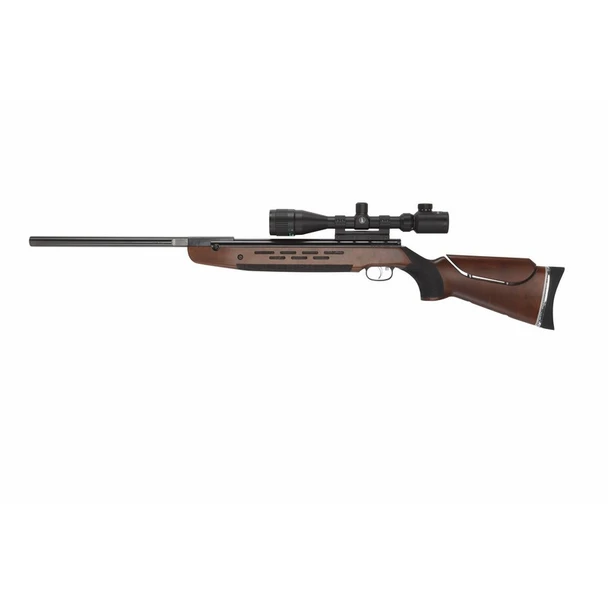

Weihrauch HW98 .22

€550.00
The Weihrauch HW98 is a break barrel air rifle with a heavy barrel sleeve, special stock with a long forearm. It features an individually adjustable cheek piece and buttplate. Thw HW98 is specially designed for scope shooting and equipped with the proven and world-famous match trigger “Rekord”.
Weihrauch HW98 Features
- Calibre: .22/.177
- Overall Length: 1100mm
- Barrel Length: 406mm
- Power: 12 ft-Lbs.
- .177 / 1000fps
- .22 / 722fps
- Weight: 3.75kg
Scope not included.
Weihrauch HW98 .22 – Precision German Break-Barrel Spring-Piston Air Rifle
Weihrauch HW98 .22 Overview
The Weihrauch HW98 .22 is a precision-oriented break-barrel spring-piston rifle developed specifically for shooters who prefer traditional mechanical operation combined with sophisticated stock adjustment and scope-focused ergonomics. Weihrauch currently specifies a 3.50 kg weight, 1,045 mm overall length, 310 mm barrel, single-shot action, adjustable two-stage Rekord match trigger, height-adjustable cheekpiece, vertically and laterally adjustable buttplate, and ambidextrous stock. In .22 caliber, the manufacturer lists a nominal velocity of up to 200 m/s, although actual output depends on the legal market specification and ammunition used.
Its heavy barrel sleeve, long fore-end, stippled gripping surfaces, threaded barrel, smooth cocking design, and adjustable furniture distinguish it from simpler break-barrel sporters. Weihrauch describes the model as being especially designed for scope shooting and suitable for training through advanced recreational use.
Weihrauch HW90
The Weihrauch HW90 uses a gas-ram powerplant rather than the conventional spring-piston mechanism found in the HW98.
weihrauch
weihrauch has developed numerous German sporting rifles and pistols using spring, gas-ram, and pneumatic systems.
hw 30
The hw 30 is lighter and more compact, while the HW98 places greater emphasis on stability, adjustability, and scope use.
weihrauch hw45
The weihrauch hw45 is an air pistol and therefore belongs to a different handling category.
weihrauch hw100
The weihrauch hw100 is a pre-charged pneumatic platform and uses stored compressed air rather than a mechanical spring.
weihrauch hw 95
The weihrauch hw 95 is another traditional break-barrel model, although its stock and barrel arrangement are different.
weihrauch hw44
The weihrauch hw44 belongs to the manufacturer’s pneumatic handgun range.
german air rifle
As a german air rifle, the HW98 emphasizes steel construction, precise machining, hardwood furniture, mechanical simplicity, and carefully designed trigger control.
air rifles
Modern air rifles can use spring-piston, gas-ram, CO₂, or pre-charged pneumatic power systems. This model uses a traditional spring-driven piston.
weihrauch hw95 hw100 airgun air pistols
The phrase weihrauch hw95 hw100 airgun air pistols covers several different platforms, so each should be compared according to operating system, weight, ergonomics, and intended sporting use.
hw100 airgun
A hw100 airgun requires compressed-air charging equipment, whereas the HW98 remains mechanically self-contained.
air pistols
air pistols use handgun-style ergonomics and differ significantly from full-size shoulder-fired sporting rifles.
rifles de aire
The term rifles de aire broadly describes air-powered rifles, including traditional spring-piston and modern pneumatic models.
hw50
The hw50 provides a lighter break-barrel alternative for shooters who prioritize portability.
what are air pistols
For people researching what are air pistols, they are compact air-powered handguns that use operating systems different from full-size shoulder-fired rifles.
weihrauch hw50
The weihrauch hw50 shares traditional spring-powered principles but offers lighter proportions.
sk x rifles
The phrase sk x rifles may appear in broader sporting-rifle searches but does not identify a feature or variant of the HW98.
air shot gun
An air shot gun belongs to a different projectile category and should not be confused with a rifled pellet platform.
air rifle makes
Among established air rifle makes, Weihrauch is strongly associated with durable German mechanical engineering.
weihrauch hw97k
The weihrauch hw97k uses a fixed barrel and underlever cocking system, whereas the HW98 uses break-barrel operation.
compressed air rifles
compressed air rifles usually store air inside a reservoir. The HW98 instead creates compressed air during its spring-piston firing cycle.
hw97
The hw97 family is designed around fixed-barrel underlever operation.
weihrauch hw50s
The weihrauch hw50s offers conventional break-barrel operation in a lighter sporting format.
weihrauch englisch
The search phrase weihrauch englisch commonly appears when users seek English-language product information about the German manufacturer.
hw50 s
The hw50 s offers a simpler and lighter alternative within the traditional spring-powered range.
hw35 air rifle
The hw35 air rifle belongs to one of the manufacturer’s classic break-barrel families.
hw 97k
The hw 97k emphasizes fixed-barrel stability and underlever cocking rather than hinged-barrel loading.
weihrauch hw80
The weihrauch hw80 is another substantial spring-powered break-barrel rifle with a different stock and action configuration.
weihrauch hw30
The weihrauch hw30 is considerably lighter and aimed at users who value straightforward handling.
hw35e for sale
The search phrase hw35e for sale relates to another classic platform and should not be confused with HW98 specifications.
hw97k
The hw97k remains an important comparison for shooters deciding between break-barrel and fixed-barrel spring-powered systems.
accurate air rifles
Among accurate air rifles, practical precision depends on barrel quality, trigger consistency, ammunition selection, optic stability, stock fit, and repeatable technique.
hw35
The hw35 provides historical context for the manufacturer’s long-running break-barrel engineering.
weihrauch revolvers
weihrauch revolvers belong to a separate handgun category and do not share the HW98’s rifle architecture.
hw 50
The hw 50 provides a lighter spring-powered shooting experience.
hw 100 bullpup
A hw 100 bullpup configuration uses pneumatic operation and a radically different receiver layout.
hw75
The hw75 is a precision air pistol rather than a break-barrel shoulder rifle.
hw95
The hw95 is another spring-powered break-barrel alternative with more conventional sporter ergonomics.
weirauch
The spelling weirauch sometimes appears in searches, although Weihrauch is the manufacturer’s correct name.
weihrauch hw30s
The weihrauch hw30s combines a compact spring-powered action with considerably lower overall weight.
hw50s
The hw50s sits within the manufacturer’s traditional break-barrel sporting range.
Weihrauch HW90 air rifle
The Weihrauch HW90 air rifle uses gas-ram technology, creating a different mechanical firing cycle.
HW90 gas ram air rifle
An HW90 gas ram air rifle stores energy in a gas strut rather than a conventional steel mainspring.
Weihrauch gas ram rifle
A Weihrauch gas ram rifle should not be confused with this model because the HW98 uses conventional spring-piston operation.
Weihrauch pellet gun
As a Weihrauch pellet gun, the HW98 .22 uses individually loaded pellets through a single-shot breech.
Spring-Piston Break-Barrel Engineering
The rifle operates through a mechanical spring and piston system. Breaking the barrel downward cocks the action and exposes the breech for loading.
After a pellet is inserted and the barrel is returned securely into position, the rifle is prepared for firing.
310 mm Barrel
Current Weihrauch specifications list a 310 mm barrel, considerably shorter than some earlier catalog versions. The current design combines this compact barrel with a substantial outer sleeve.
Heavy Barrel Sleeve
The heavy barrel sleeve gives the front end additional mass and contributes to a stable aiming feel.
It also gives the rifle its distinctive precision-oriented appearance.
Threaded Barrel
The current model includes a threaded barrel. Weihrauch’s accessory documentation specifically lists a dedicated ½-inch UNF threaded interface for the HW98, while also reminding users to comply with applicable firearm and airgun regulations.
Rekord Two-Stage Match Trigger
The adjustable Rekord two-stage match trigger is one of the strongest features of the platform.
Its defined first and second stages allow controlled trigger preparation before final release, which can support consistent shooting technique.
Adjustable Cheekpiece
The cheekpiece offers height adjustment.
This allows the shooter to establish more natural eye alignment with a mounted scope and is particularly valuable because the rifle was designed specifically around optical sights.
Adjustable Buttplate
The rear pad can be adjusted both vertically and laterally.
Consequently, shoulder placement can be refined to suit different body proportions and shooting positions.
Ambidextrous Stock
The stock is suitable for both right- and left-handed shooters.
A long fore-end and stippled gripping surfaces also support repeatable hand placement.
Why Should You Use This Design?
The main reasons are its self-contained mechanical operation, adjustable stock geometry, substantial construction, proven trigger system, and strong focus on precision shooting.
It requires no external air cylinder, hand pump, compressor, or electronic power source.
How Good Is the Rifle?
The platform is designed as a premium mechanical sporter rather than a lightweight entry-level rifle.
An official-hosted independent test characterized its build quality as particularly robust and highlighted its secure barrel lock-up and smooth cocking behavior.
How Does It Support Precision?
Precision begins with consistent barrel lock-up, stable optics, repeatable trigger control, and suitable ammunition.
The adjustable cheekpiece and buttplate can also improve shooter-to-rifle fit, helping the same sight alignment and shoulder position to be recreated from shot to shot.
Where Is It Best Used?
The rifle is particularly appropriate for lawful recreational target shooting, training, and other permitted sporting applications where deliberate single-shot precision is preferred.
When Is It Most Useful?
Its design makes the most sense when the shooter wants the independence of a traditional mechanical rifle but also values stock adjustment and a scope-oriented layout.
Important Information
- Operating system: Spring piston
- Action: Break barrel
- Loading: Single shot
- Caliber: .22 / 5.5 mm
- Current listed weight: 3.50 kg
- Overall length: 1,045 mm
- Barrel length: 310 mm
- Trigger: Adjustable two-stage Rekord match trigger
- Cheekpiece: Height adjustable
- Buttplate: Height and lateral adjustment
- Stock: Ambidextrous
- Barrel: Heavy sleeve and threaded muzzle
- .22 nominal manufacturer velocity: Up to 200 m/s, subject to market specification and ammunition
Overall Precision and Practical Value
The HW98 .22 combines classic break-barrel operation with unusually sophisticated stock adjustment and a deliberately scope-focused layout. Its solid weight, short sleeved barrel, refined trigger, adjustable cheekpiece, adjustable buttplate, long fore-end, and ambidextrous configuration create a stable platform for deliberate recreational shooting.
For shooters who appreciate traditional mechanical engineering but want more ergonomic refinement than a basic sporter provides, it offers a particularly well-developed balance of precision potential, durability, adjustability, and self-contained operation.
Mechanical Construction, Trigger Control, Accuracy Factors, Stock Adjustment, Handling, and Reliability
Overall Mechanical Construction
A premium break-barrel rifle relies on precise interaction between the barrel, breech, compression chamber, piston, spring, trigger mechanism, stock, and mounting system. Each component must return to a consistent position after every cocking and firing cycle.
Strong machining, secure fasteners, and controlled mechanical tolerances help preserve dependable performance over extended use.
Barrel Lock-Up
The barrel should close firmly after loading.
Consistent lock-up is essential because any movement at the breech can affect alignment and point of impact.
A secure closing system helps maintain repeatability from one shot to the next.
Barrel Pivot
The pivot area allows the barrel to move during cocking while still returning to a fixed firing position.
It should remain smooth without excessive looseness.
Too much play can reduce consistency, while unnecessary tightness can make cocking harder.
Cocking Cycle
The barrel should move smoothly through the complete cocking stroke.
A steady movement is preferable to sudden force.
Grinding, binding, or unusual resistance may indicate wear or contamination and should be investigated.
Spring-Piston Operation
The internal spring stores energy during cocking.
When the trigger releases, the piston moves forward and compresses air behind the pellet.
This mechanical process creates the characteristic firing cycle associated with traditional spring-powered rifles.
Mainspring Condition
The spring experiences repeated compression during use.
Over time, wear can influence smoothness and vibration.
Unexpected changes in firing feel or sound can indicate the need for inspection.
Piston Seal Health
The piston seal plays an important role in maintaining compression.
Wear, contamination, or age can reduce efficiency.
Internal inspection should only be carried out when technically justified.
Breech Seal Condition
The breech seal helps retain pressure when the barrel is closed.
Visible flattening, cracking, or deterioration can affect consistency.
Its condition should therefore be checked periodically.
Compression Chamber Care
The compression chamber should remain free from unsuitable lubricants and contamination.
Excess oil can negatively affect firing behavior.
Only products appropriate for this type of mechanism should be used.
Trigger Performance
A refined two-stage trigger can support more precise shooting.
The first stage allows controlled take-up, while the second stage provides a defined release point.
A predictable trigger helps reduce unwanted movement at the moment of firing.
Trigger Consistency
The trigger should feel similar from shot to shot.
Unexpected changes in weight, travel, or engagement should be taken seriously.
Consistency is more important than creating an extremely light trigger setting.
Trigger Adjustment
Adjustments should remain within safe limits.
Over-adjustment can reduce reliability.
If trigger behavior becomes unpredictable, the rifle should be inspected before continued use.
Automatic Safety
The safety should engage correctly during the cocking cycle.
Its operation should remain smooth and positive.
However, safe muzzle direction and responsible handling should always remain the primary safety measures.
Barrel Condition
The internal barrel surface should remain clean and free from damage.
Frequent aggressive cleaning is generally unnecessary when accuracy remains stable.
Protecting the bore from contamination and corrosion is more important.
Muzzle Crown Protection
The crown is a precision surface that affects how the pellet leaves the barrel.
Damage can influence consistency.
Care should therefore be taken during cleaning, handling, and transport.
Barrel Sleeve Stability
The heavy sleeve surrounding the barrel should remain firmly secured.
Its additional mass contributes to the rifle’s stable front-end feel.
Any looseness should be investigated before further accuracy testing.
Pellet Selection
Different pellet designs can produce noticeably different results.
Weight, head diameter, skirt quality, and manufacturing consistency all influence grouping.
Testing several appropriate options under similar conditions can help identify the most reliable choice.
Pellet Condition
Damaged pellets can create inconsistent flight.
Bent skirts or deformed heads should be avoided when evaluating precision.
A protective container helps preserve ammunition quality.
Accuracy Fundamentals
Precision depends on several systems working together.
Barrel condition, trigger control, pellet quality, optic stability, barrel lock-up, stock fit, and shooting technique all contribute.
Therefore, performance should be judged through repeated groups rather than individual shots.
Hold Sensitivity
Spring-powered rifles move during the firing cycle.
Changes in grip pressure or support position can alter the way the rifle reacts.
A consistent, relatively relaxed hold often produces better repeatability.
Fore-End Support
The support hand should remain in approximately the same location for every shot.
Changing the contact point can alter recoil behavior.
This is especially important when comparing group sizes.
Shoulder Pressure
Moderate shoulder contact is usually preferable to excessive pressure.
The rifle should be allowed to move naturally while maintaining a repeatable position.
Overly rigid control can reduce consistency.
Follow-Through
The shooter should maintain position briefly after trigger release.
Good follow-through reduces movement caused by anticipation.
It also helps the shooter evaluate technique more accurately.
Adjustable Cheek Support
The cheek support can be set to improve eye alignment with the optic.
A natural head position reduces unnecessary movement.
This can improve comfort and consistency during extended sessions.
Rear Pad Adjustment
The rear pad can be positioned to improve shoulder contact.
Correct adjustment helps accommodate different body dimensions and shooting positions.
Better fit can reduce muscular tension.
Stock Fit
Stock fit directly influences comfort and repeatability.
The grip, cheek support, fore-end, and rear pad should allow the shooter to maintain a natural position.
An awkward setup can create unnecessary movement.
Grip Control
The firing hand should remain relaxed.
Excessive pressure can introduce sideways movement.
A consistent grip also improves trigger control.
Scope-Oriented Setup
The stock geometry is designed to work effectively with optical sights.
Proper scope height, eye relief, and mount position should be established carefully.
The shooter should not need to force the head into an unnatural position.
Scope Mount Security
Mechanical recoil places unusual forces on scopes and mounts.
Fasteners should remain secure.
If point of impact changes unexpectedly, the sighting system should be checked before deeper mechanical problems are suspected.
Eye Relief
Correct eye relief improves both comfort and sight alignment.
The optic should provide a complete field of view from a natural shooting position.
Mount placement should be finalized before detailed zeroing.
Rifle Balance
The heavier barrel profile creates a stable and deliberate handling character.
This can be helpful from supported positions.
However, excessive accessory weight can shift the center of gravity and increase fatigue.
Accessory Weight
Large optics and heavy mounts can significantly change balance.
Only accessories that provide a genuine practical benefit should be added.
A simpler setup often preserves better handling.
Stock Screw Inspection
Repeated firing cycles can gradually loosen screws.
Action fasteners and mounting points should be checked periodically.
Loose stock hardware can affect both handling and accuracy.
Exterior Metal Care
Exposed steel surfaces should be wiped after use.
Fingerprints and moisture can contribute to corrosion over time.
Light preventive care helps preserve the finish.
Moisture Protection
The rifle should be completely dry before storage.
Water trapped around screws, stock inletting, or metal junctions can eventually cause damage.
A dry indoor environment is preferable.
Temperature Management
Extreme heat and rapid temperature changes should be avoided.
High temperatures can affect wood, seals, lubricants, and optics.
Stable storage conditions support long-term durability.
Transport Protection
During transport, the rifle should be unloaded and placed inside a suitable protective case.
The barrel, stock, optic, and adjustment components should be shielded from impact.
Applicable local transport rules should always be followed.
Routine Inspection
Before use, the barrel lock-up, stock screws, trigger behavior, safety function, optic mounts, and general condition should be checked.
After use, visible dirt and moisture should be removed.
Regular inspection makes developing problems easier to identify.
Professional Servicing
Internal work involving the spring, piston, seals, trigger assembly, or compression chamber should be handled by someone familiar with this type of mechanism.
Incorrect disassembly can damage components and create safety hazards.
Long-Term Reliability
Long-term reliability depends on secure barrel lock-up, healthy seals, smooth cocking, predictable trigger operation, stable optics, properly adjusted stock components, protected metal surfaces, suitable ammunition, and careful storage.
When these areas are maintained consistently, the rifle can preserve its refined handling, stable mechanical behavior, precision potential, and dependable performance across many years of lawful sporting and recreational use.
Practical Shooting Experience, Balance, Precision, Comfort, Optic Setup, and Everyday Use
Practical Shooting Character
A refined spring-powered break-barrel rifle encourages a deliberate shooting rhythm rather than rapid operation. Each shot requires cocking, single-pellet loading, sight alignment, trigger preparation, and controlled follow-through.
This sequence can help the shooter focus on consistency and technique. For recreational target use, that deliberate pace can be an advantage because it reduces unnecessary rushing and encourages more careful shot preparation.
Overall Handling
The rifle has a substantial but controlled feel.
Its weight helps create a stable platform, especially from a bench or supported position. At the same time, the comparatively compact barrel arrangement keeps the front end from feeling excessively long.
Handling remains deliberate rather than lightweight.
Balance
Good balance helps the rifle settle naturally into the shooting position.
The heavier front section provides a steady aiming feel, while the adjustable rear furniture allows the shooter to refine overall fit.
Accessory choice can still influence the center of gravity considerably.
Shoulder Fit
The rear pad should meet the same area of the shoulder for every shot.
Because it can be repositioned, the shooter can improve alignment according to body size and preferred shooting position.
A natural shoulder fit helps reduce tension.
Cheek Position
The adjustable cheek support is particularly useful when an optic is installed.
The shooter’s eye should naturally line up with the sight without excessive head movement.
Once the correct height is established, repeating the same cheek position becomes easier.
Grip Comfort
The firing hand should remain relaxed but secure.
Excessive pressure can introduce unnecessary movement.
A comfortable grip supports smoother trigger control and makes longer sessions less tiring.
Fore-End Support
The support hand should remain in approximately the same position beneath the fore-end.
Changing hand placement can alter how a spring-powered rifle reacts during the firing cycle.
Therefore, consistent support is important during accuracy testing.
Spring-Powered Recoil
The internal piston creates mechanical movement before the pellet leaves the barrel.
This is normal for the design.
Rather than trying to eliminate the movement completely, the shooter should allow the rifle to recoil naturally while maintaining a repeatable hold.
Hold Consistency
A consistent hold is more important than an excessively tight one.
Shoulder pressure, grip tension, cheek contact, and support-hand placement should remain similar from shot to shot.
Small changes can alter point of impact.
Trigger Control
The two-stage trigger supports deliberate shot release.
The first stage can be taken up while the sight picture settles.
Final pressure should then be applied smoothly until the shot breaks.
Trigger Finger Placement
The finger should contact the trigger blade naturally.
Pulling at an angle can move the rifle sideways.
A straight rearward movement helps preserve alignment.
Follow-Through
After the trigger releases, the shooter should maintain the same position briefly.
Lifting the head immediately or changing shoulder pressure too soon can disturb the firing sequence.
Good follow-through helps improve consistency.
Single-Shot Loading
Each pellet is loaded directly into the breech.
This gives the shooter an opportunity to inspect every projectile before use.
Although slower than magazine-fed operation, the process keeps the mechanism simple and encourages a controlled pace.
Cocking Rhythm
The barrel should be moved smoothly through the full cocking stroke.
A steady motion is preferable to abrupt force.
If resistance changes noticeably, the mechanism should be inspected rather than forced.
Barrel Closure
After loading, the barrel should close firmly and return to its normal locked position.
Consistent closure supports repeatable alignment.
Any unusual looseness should be investigated.
Pellet Selection
Different factory pellets can produce noticeably different results.
Weight, head diameter, skirt quality, and manufacturing consistency all influence grouping.
Testing several suitable options under similar conditions can help identify the most reliable match.
Pellet Inspection
Damaged pellets should be avoided during precision testing.
Bent skirts or deformed heads can create inconsistent flight.
A clean protective container helps preserve ammunition condition.
Accuracy Potential
Precision depends on several systems working together.
Barrel condition, trigger behavior, pellet quality, optic security, stock fit, barrel lock-up, and shooting technique all contribute.
Therefore, performance should be evaluated through repeated groups rather than isolated shots.
Scope-Oriented Shooting
The rifle is especially well suited to optical sights.
A properly installed scope can take full advantage of the adjustable cheek support and rear pad.
The optic should also be appropriate for the recoil characteristics of a spring-powered action.
Scope Height
Mount height influences head position.
If the optic sits too high, the cheek support may need adjustment.
The goal is to achieve a natural eye line without stretching or lowering the head excessively.
Eye Relief
Correct eye relief improves both comfort and repeatability.
The optic should provide a full field of view from a normal shooting position.
Mount placement should be finalized before detailed zeroing.
Scope Mount Stability
Mechanical recoil can gradually loosen unsuitable mounts.
Fasteners should therefore remain secure.
If the point of impact begins shifting unexpectedly, the sighting system should be checked first.
Bench Shooting
A bench provides a stable environment for evaluating precision.
A soft front rest can reduce human movement while still allowing the rifle to recoil naturally.
Rigid clamping should be avoided.
Supported Shooting
A stable support can improve consistency.
However, the rifle should contact the rest in approximately the same position for every shot.
Changing the support point can alter firing behavior.
Unsupported Shooting
The rifle’s weight becomes more noticeable when used unsupported.
A balanced stance and relaxed shoulders can reduce fatigue.
Long periods of holding on target should be avoided once stability begins to decline.
Kneeling Position
A kneeling position can offer more stability than standing.
The support elbow should remain consistently positioned.
Comfort matters because unnecessary muscular tension increases sight movement.
Sitting Position
A seated position can provide excellent control during longer sessions.
The rifle’s weight becomes easier to manage when more of it is supported by the body.
This can help maintain technique for longer periods.
Breathing Control
Breathing naturally moves the rifle.
A calm rhythm should be established before final trigger pressure is applied.
Holding the breath for too long can create tension and increase movement.
Sight Picture
The same aiming reference should be used for each shot.
Small changes in alignment can enlarge groups.
A clear and repeatable sight picture provides more meaningful feedback.
Wind Influence
Outdoor wind can affect pellet flight noticeably.
Changing crosswinds may move impacts even when the rifle and shooter remain consistent.
Calm conditions are preferable when evaluating mechanical precision.
Temperature Effects
Temperature can influence lubricants, seals, ammunition behavior, and shooter comfort.
Results recorded under very different conditions may therefore vary.
Stable testing conditions provide better comparisons.
Front-End Stability
The heavier barrel profile contributes to a steady aiming feel.
This can reduce small movements during supported shooting.
However, the additional front weight should be balanced with comfortable hand placement.
Accessory Management
Heavy scopes, mounts, or other accessories can alter the rifle’s natural balance.
Only equipment that provides a clear practical benefit should be added.
A simpler setup often preserves better handling.
Pre-Shooting Preparation
Before each session, the barrel lock-up, stock screws, optic mounts, safety function, trigger behavior, and general condition should be checked.
A short inspection helps identify obvious problems before shooting begins.
During the Session
Changes in cocking effort, recoil behavior, firing sound, trigger feel, or point of impact should be noticed.
A consistent mechanical feel provides a useful baseline.
Unexpected changes may indicate maintenance needs.
Post-Shooting Care
After use, exposed metal and wooden surfaces should be wiped clean and dry.
Moisture, fingerprints, and dust should not remain on the rifle for extended periods.
The rifle should then be stored securely.
Transport
During transportation, the rifle should remain unloaded and protected inside a suitable case.
The stock, barrel, optic, and adjustable components should be shielded from impact.
Applicable local transport rules should always be followed.
Storage
A dry, temperature-stable indoor environment is preferable.
The rifle should remain unloaded and secured against unauthorized access.
Local storage requirements should always be observed.
Long Shooting Sessions
The adjustable stock can improve comfort during extended use.
However, fatigue should still be monitored.
Once grip pressure, shoulder position, or sight stability begins changing, taking a break is more useful than continuing with poor technique.
Precision Evaluation
Accuracy should be assessed through several controlled groups.
Consistent ammunition, identical support positions, stable environmental conditions, and unchanged optic settings provide the most meaningful comparison.
This method helps separate shooter error from mechanical inconsistency.
Everyday Ownership
Routine ownership remains straightforward because the rifle relies on a mechanical powerplant rather than external charging equipment or electronics.
Attention can therefore remain focused on barrel condition, stock adjustment, optic security, trigger feel, ammunition quality, and proper storage.
Overall Practical Performance
A carefully maintained premium break-barrel rifle can provide a stable, controlled, and rewarding shooting experience.
When suitable pellets, secure optics, correct stock adjustment, consistent trigger technique, proper follow-through, and disciplined handling are combined, the platform can deliver excellent precision potential and dependable performance throughout lawful recreational and sporting use.
Preventive Maintenance, Mechanical Care, Storage, Inspection, and Long-Term Reliability
Preventive Maintenance Routine
A premium spring-powered break-barrel rifle benefits from regular inspection because long-term consistency depends on several mechanical components working correctly together. The barrel, pivot, breech seal, mainspring, piston, trigger assembly, safety mechanism, stock, scope mounts, and visible fasteners should all be checked periodically.
Routine maintenance helps identify small problems before they begin affecting accuracy, smoothness, or reliability.
Barrel Care
The barrel should remain clean, dry, and protected from physical damage.
Frequent aggressive cleaning is generally unnecessary when accuracy remains consistent. Instead, careful inspection and sensible maintenance usually provide better long-term results.
Bore Inspection
The internal bore should be inspected if accuracy changes unexpectedly.
Residue, contamination, or unsuitable ammunition may sometimes affect consistency.
Only suitable cleaning tools should be used so the internal rifling is not damaged.
Muzzle Crown Protection
The crown plays an important role in consistent pellet departure.
Small scratches, dents, or careless cleaning can affect performance.
Therefore, the muzzle should remain protected during storage, transportation, and maintenance.
Barrel Sleeve Condition
The heavier outer barrel section should remain secure.
Any looseness can alter balance and may affect consistency.
Its external surface should also be protected from corrosion, impact, and abrasive contact.
Barrel Lock-Up Inspection
The barrel should close firmly and return to the same position after each loading cycle.
Consistent lock-up supports repeatable alignment.
Any noticeable movement or unusual closing behavior should be investigated.
Pivot Condition
The barrel pivot should allow smooth movement without excessive side play.
Too much looseness can affect alignment, while excessive tightness can make cocking unnecessarily difficult.
Periodic inspection helps maintain correct operation.
Breech Seal Health
The breech seal helps retain compressed air during firing.
Flattening, hardening, cracking, or visible damage can reduce efficiency.
The seal should therefore be checked occasionally.
Mainspring Condition
The internal spring experiences repeated compression and release.
Over time, wear can affect smoothness, vibration, and consistency.
Unexpected mechanical noise or changes in firing behavior may indicate that professional inspection is needed.
Piston Seal Condition
The piston seal contributes directly to efficient compression.
Wear or contamination can reduce performance.
Internal inspection should only be performed when technically necessary rather than as routine casual maintenance.
Compression Chamber Care
The compression area should remain free from inappropriate lubricants and contamination.
Excess oil can affect normal operation.
Only maintenance products suitable for spring-powered mechanisms should be used.
Cocking Mechanism
The barrel should move smoothly through the complete cocking stroke.
Grinding, binding, or unusual resistance can indicate wear or misalignment.
The mechanism should never be forced if movement suddenly changes.
Trigger Maintenance
The two-stage trigger should retain a predictable feel.
Unexpected changes in pull weight, travel, or engagement should be investigated.
Safe and reliable operation should always take priority over creating an excessively light setting.
Trigger Housing
Dust and debris should not be allowed to accumulate around the trigger area.
External cleaning can be carried out carefully.
Internal disassembly should be avoided unless servicing is genuinely necessary.
Safety Function
The automatic safety should engage and release normally.
Any inconsistent operation should be corrected before further use.
Mechanical safety devices should always be supported by responsible handling and safe muzzle direction.
Adjustable Cheek Support
The cheek support should remain securely locked once positioned.
Its adjustment hardware should be checked occasionally.
A shifting setting can affect eye alignment and shooting consistency.
Rear Pad Adjustment
The rear pad should remain firmly secured in its chosen position.
Loose adjustment hardware can affect shoulder placement.
Its position should be checked before longer precision sessions.
Stock Attachment
The stock should remain firmly attached to the action.
Repeated firing cycles can gradually loosen mounting screws.
Loose hardware may affect both handling and point of impact.
Stock Screw Inspection
Action screws should be checked periodically.
They should remain secure without being overtightened.
Correct fastening helps preserve consistent mechanical alignment.
Stock Surface Care
The wooden stock should be protected from prolonged moisture, extreme heat, and harsh chemicals.
A soft cloth is usually sufficient for normal cleaning.
Any cracks around mounting points should be monitored carefully.
Grip Area
The grip should remain clean and dry.
Oil, moisture, or dirt can reduce hand control.
A consistent grip surface supports repeatable shooting technique.
Scope Rail Condition
The mounting rail should remain secure and clean.
Any movement between the receiver, mounts, and optic can affect zero.
The rail should be inspected before major accuracy testing.
Scope Mount Security
Mechanical recoil can gradually loosen mounting hardware.
Fasteners should remain secure, although excessive tightening should be avoided.
Correct installation helps maintain a stable point of impact.
Optic Inspection
The optic itself should be checked periodically for movement or visible damage.
Loose adjustment components can create inconsistent results.
A sighting problem should be ruled out before internal mechanical faults are suspected.
Pellet Storage
Pellets should remain clean, dry, and protected from deformation.
Bent skirts or damaged heads can reduce consistency.
A secure storage container helps preserve ammunition quality.
Ammunition Consistency
Using one proven pellet type during accuracy evaluation makes results easier to interpret.
Frequent changes between different projectile designs can make troubleshooting more difficult.
Consistency simplifies performance comparison.
External Metal Protection
Exposed steel should be wiped after use.
Fingerprints contain moisture and salts that may contribute to corrosion.
Light preventive care helps preserve the finish.
Moisture Management
The rifle should never be stored while wet.
Water can collect around screws, the stock inletting, barrel junctions, and optic mounts.
The entire rifle should be dry before storage.
Temperature Protection
Extreme heat and rapid temperature changes should be avoided.
High temperatures can affect wood, seals, lubricants, and optical equipment.
Long-term storage inside hot vehicles is therefore not recommended.
Chemical Exposure
Strong solvents, fuels, and household cleaners should be kept away from the rifle.
Some substances can damage seals or stock finishes.
Only compatible maintenance products should be selected.
Lubrication
Lubrication should remain minimal and appropriate.
Excess oil can attract dirt or migrate into unwanted areas.
Internal lubrication should follow established servicing procedures.
Avoiding Unapproved Modification
The spring, piston, trigger, or compression components should not be altered casually.
Mechanical changes can affect reliability, accuracy, and legal classification depending on jurisdiction.
Factory specifications should always be respected.
Protective Case Use
A properly fitted case helps protect the stock, barrel, optic, and adjustment components during transport.
The rifle should not move excessively inside the case.
Loose accessories should be stored separately.
Post-Transport Inspection
After travel, stock screws, scope mounts, barrel lock-up, and adjustable components should be checked.
Vibration can gradually loosen hardware.
A short inspection can identify these issues before shooting.
Safe Storage
The rifle should remain unloaded and secured against unauthorized access.
A dry, temperature-stable environment is preferable.
Applicable local storage requirements should always be followed.
Long-Term Storage
During extended periods of non-use, the rifle should remain clean, dry, unloaded, and protected from moisture.
Periodic inspections are still useful even when the rifle is not being fired.
This helps identify corrosion or loosening early.
Accuracy Monitoring
Unexpected changes in group size should be investigated systematically.
Ammunition condition, optic security, stock screws, barrel lock-up, trigger behavior, environmental conditions, and shooting technique should all be considered before internal servicing begins.
Professional Servicing
Internal work involving the spring, piston, compression chamber, trigger mechanism, or seals should be handled by someone familiar with this type of system.
Incorrect disassembly can damage components and create safety hazards.
Maintenance Records
Keeping simple records of repairs, servicing, seal replacement, spring work, and major inspections can make long-term ownership easier.
Documentation also provides useful history if the rifle changes ownership.
Long-Term Reliability.
Long-term reliability depends on secure barrel lock-up, healthy seals, smooth cocking, predictable trigger operation, stable optics, properly adjusted stock components, protected metal surfaces, suitable ammunition, and careful storage.
When these areas are maintained consistently, the rifle can preserve its refined handling, stable shooting character, precision potential, and dependable mechanical performance across many years of lawful recreational and sporting use.
Be the first to review “Weihrauch HW98 .22”
Related products
WEIHRAUCH
Reviews
There are no reviews yet.