
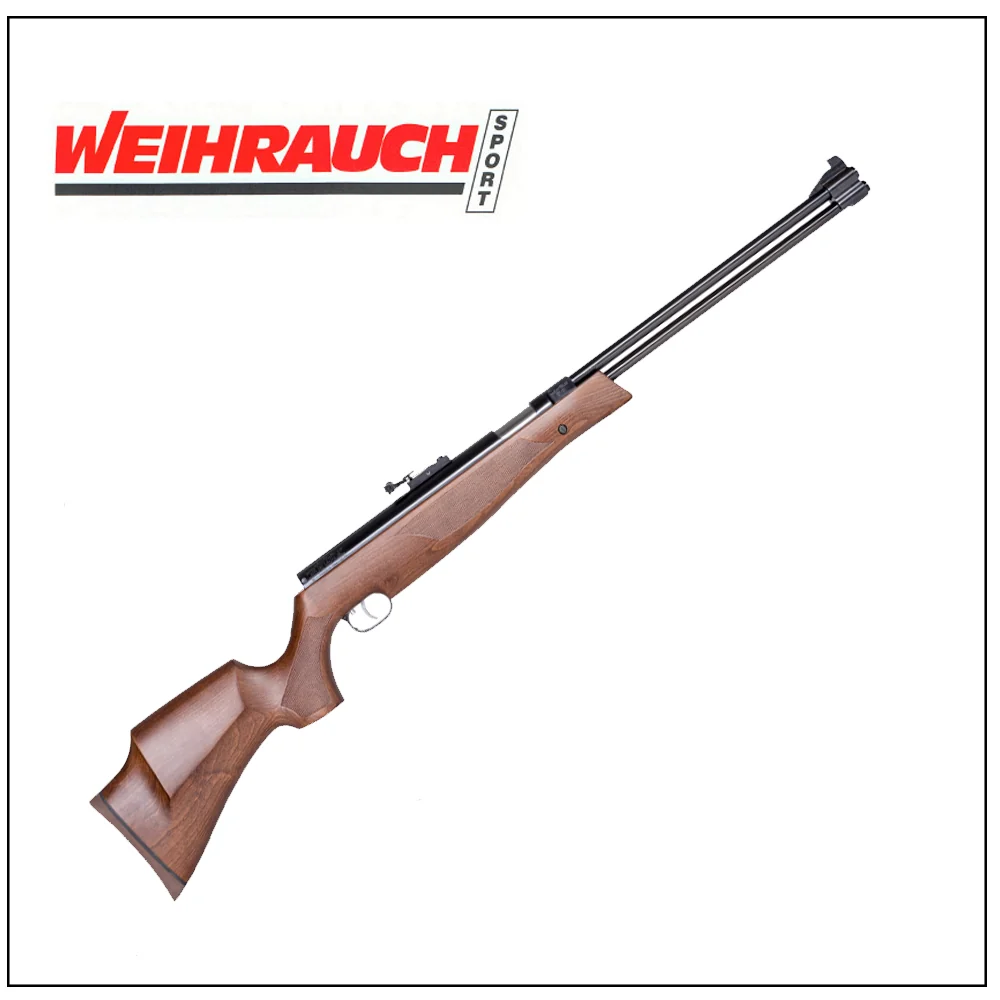
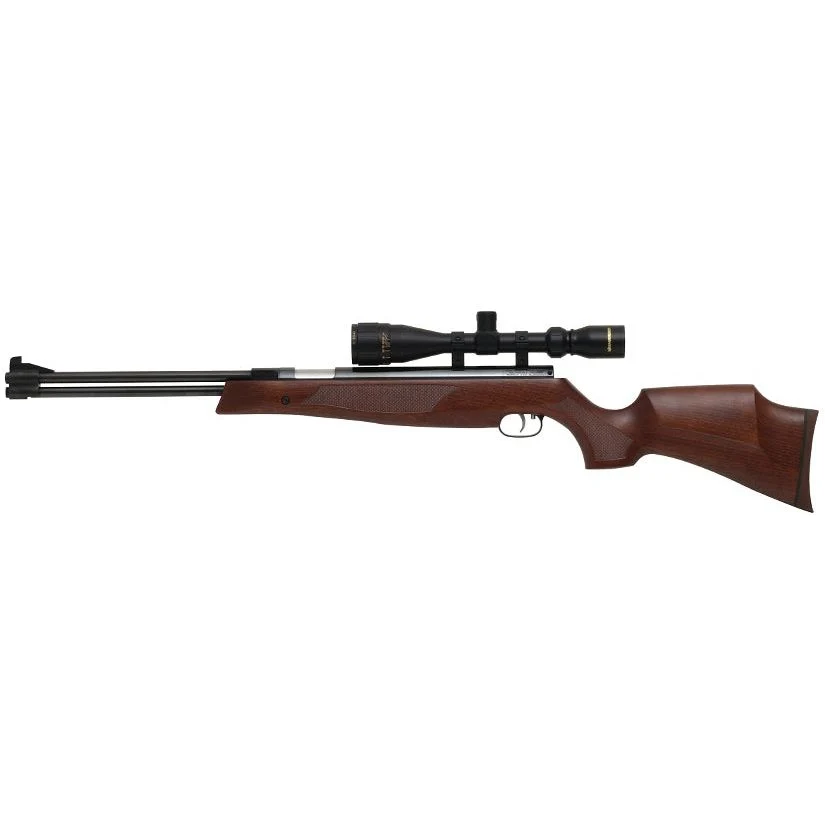


Weihrauch HW77K Open Sights
Weihrauch HW77K Open Sights Overview
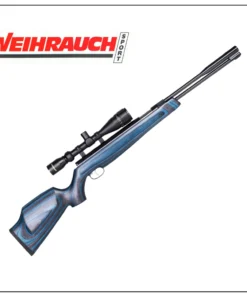
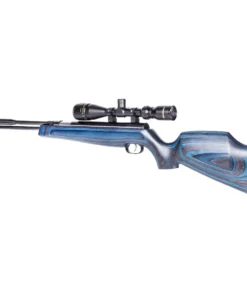
The Weihrauch HW77K Open Sights is a premium fixed-barrel, spring-piston rifle built for shooters who value mechanical precision, traditional operation, and dependable long-term performance. Weihrauch lists the HW77K at approximately 1,020 mm overall, with a 370 mm barrel, 4.0 kg weight, single-shot operation, automatic safety, and the renowned two-stage Rekord match trigger. The stock is suitable for both right- and left-handed shooters and features cheekpieces on both sides, checkering on the pistol grip and fore-end, plus a rubber buttplate.
For buyers comparing a german air rifle, traditional air rifles, or premium air rifle makes, this model stands out because it combines a fixed barrel with underlever cocking and genuine open-sight capability.
Fixed Barrel and Underlever Precision
The fixed-barrel design is central to the rifle’s accuracy potential.
Instead of hinging the barrel downward for cocking, the barrel remains permanently aligned with the action while a separate underlever compresses the spring. This arrangement helps maintain a consistent relationship between the bore and sighting system.
Weihrauch describes the HW77K as a precision-oriented sporting model with minimum recoil, strong accuracy, and long-distance capability.
For shooters researching accurate air rifles, weihrauch, weirauch, hw97, hw97k, or weihrauch hw97k, the HW77K offers a traditional alternative with the important addition of open sights.
Open Sights and Sight Adjustment
The HW77 family is equipped with a front sight post and a micrometer rear sight offering four different notch choices.
This allows the rifle to be used immediately without requiring a scope.
Open sights are especially valuable for fundamental marksmanship because they encourage consistent head placement, front-sight focus, trigger control, and follow-through.
The removable front sight also provides flexibility if the shooter later chooses to install an optic.
Two-Stage Rekord Match Trigger
The rifle uses Weihrauch’s well-known two-stage Rekord match trigger.
A refined trigger is especially important in a spring-piston rifle because internal movement occurs during the firing cycle.
The shooter can take up the first stage gradually before reaching the second-stage release point.
This helps reduce unnecessary disturbance to the rifle and supports a more predictable shot.
Shooters familiar with hw35, hw35 air rifle, hw50, weihrauch hw50, hw50 s, hw50s, weihrauch hw50s, hw 30, weihrauch hw30, or weihrauch hw30s will recognize the importance Weihrauch places on mechanical trigger quality.
Caliber Options and Performance
Weihrauch currently lists the HW77K in four calibers:
- .177 – up to 280 m/s
- .20 – up to 215 m/s
- .22 – up to 210 m/s
- .25 – up to 165 m/s
These manufacturer figures are guideline values and can vary according to pellet type and legal-market configuration.
The correct caliber should therefore be chosen according to intended sporting use, preferred trajectory, and local regulations.
Comparison With Other Weihrauch Models
The HW77K differs significantly from the Weihrauch HW90, Weihrauch HW90 air rifle, HW90 gas ram air rifle, and broader Weihrauch gas ram rifle category because it uses a conventional spring-piston underlever system rather than a gas ram.
It also differs from the weihrauch hw100 and hw100 airgun, which are compressed air rifles using stored high-pressure air.
Meanwhile, the weihrauch hw45, weihrauch hw44, hw75, air pistols, what are air pistols, and weihrauch revolvers belong to handgun-style categories rather than full-size sporting rifles.
Buyers searching weihrauch hw 95, hw95, weihrauch hw80, hw 50, or hw35e for sale are generally comparing other traditional sporting platforms with different actions, lengths, and handling characteristics.
Relationship to the HW97 Platform
The HW77K and hw 97k share the basic appeal of fixed-barrel underlever engineering, but the HW77K retains traditional open sights.
That is a major reason some shooters prefer it.
The rifle can be enjoyed in its classic configuration or paired with a scope later.
For shooters who want sighting flexibility, that makes the HW77K especially versatile.
Other Airgun Search Comparisons
Searches such as rifles de aire, air shot gun, sk x rifles, or Weihrauch pellet gun may bring up very different designs.
Likewise, PCP-oriented searches including Snowpeak PP750L PCP Air Pistol, snowpeak airguns, snowpeak sports, snowpeak ap900, snowpeak max, snowpeak pp750, pp750, snow peak pp750, snowpeak p35, snowpeak p35x, p35, p35x, p35x pcp, pr900 gen 3, snowpeak m60b, snowpeak m60, snow peak pp20, snowpeak m25, ap900b pcp air rifle, snowpeak max 1 price, pcp p 35, m25 rifle, snow peak equipment, and hp300 refer to equipment built around very different air systems and ownership requirements.
The HW77K does not require an external compressor, high-pressure bottle, or fill probe.
Why Choose the HW77K Open Sights?
The strongest reason to choose this rifle is the combination of a fixed barrel, proven spring-piston operation, open-sight versatility, automatic safety, premium trigger, and substantial hardwood stock.
It is approximately 100 mm shorter than the full-length HW77 while retaining the same basic fixed-barrel concept. The standard HW77 measures 1,120 mm overall with a 470 mm barrel, while the HW77K measures 1,020 mm with a 370 mm barrel.
For shooters who value mechanical independence, precision, traditional marksmanship, and premium German construction, the HW77K Open Sights remains a distinctive and highly capable sporting platform.
Accuracy, Handling, Open-Sight Use, Maintenance, and Practical Ownership
This fixed-barrel underlever rifle is built for shooters who appreciate traditional mechanical operation and want a stable, repeatable shooting platform. Its strongest qualities come from the relationship between the fixed barrel, underlever cocking system, refined trigger, open sights, substantial stock, and self-contained spring-piston action.
Because it does not depend on compressed-air charging equipment, ownership is relatively straightforward. The shooter only needs suitable pellets, a safe shooting environment, routine maintenance supplies, and secure storage. However, the rifle still rewards careful technique because spring-powered actions are sensitive to grip pressure, support position, trigger control, and follow-through.
Fixed-Barrel Accuracy
The fixed barrel provides a strong mechanical foundation for consistency.
Unlike a break-barrel rifle, the barrel does not move during cocking. Instead, a separate underlever compresses the spring while the barrel remains aligned with the action.
This helps maintain a consistent relationship between the bore and sighting system.
The design does not remove the need for good shooting technique, but it eliminates one variable associated with barrel lock-up.
That makes the rifle particularly attractive for shooters who value repeatability.
Understanding the Spring-Piston Firing Cycle
When the trigger is released, the internal piston moves rapidly and compresses air behind the pellet.
This creates a distinct recoil pattern.
The rifle moves differently from a pneumatic platform because the internal mass is moving before the pellet leaves the barrel.
For that reason, the shooter should avoid clamping the rifle too tightly.
A relaxed and repeatable hold generally produces better results.
The goal is to allow the rifle to move naturally and predictably.
Developing a Consistent Hold
The support hand should remain in the same place for every shot.
Shoulder pressure should also remain consistent.
The trigger hand should stay relaxed.
Changing these contact points can alter the way the rifle reacts during the firing cycle.
The shooter should experiment carefully to find the hold that produces the most consistent groups.
Once a reliable position is identified, it should be repeated as closely as possible.
Open-Sight Shooting
The open sights provide a traditional aiming method that can be highly effective at practical distances.
The shooter should center the front sight within the rear notch and keep the top edges level.
The front sight should remain the primary visual reference.
The target may appear less sharp, which is normal.
Consistent alignment matters more than trying to focus equally on the target and both sights.
Open-sight shooting also helps develop fundamental marksmanship skills.
Sight Adjustment
The rear sight should be adjusted gradually.
Large changes should not be made based on a single shot.
The shooter should fire a group and then assess the average point of impact.
This reduces the chance of chasing individual errors.
Once the rifle is correctly sighted in, the settings should be left alone unless conditions or ammunition change significantly.
A stable zero makes it easier to judge technique.
Using a Scope
A scope can be added if the shooter wants a more precise aiming reference.
The optic should be suitable for a spring-powered rifle.
Mounts should also be secure.
A spring-piston action creates a different recoil pattern than many other platforms, so durability matters.
The scope should be positioned so the shooter can obtain a full sight picture without stretching the neck.
Comfortable eye relief improves consistency.
Trigger Control
The two-stage trigger can help the shooter manage the shot more precisely.
The first stage should be taken up smoothly.
Once the second stage is reached, pressure should increase gradually.
The trigger should be pressed straight to the rear.
A sudden or sideways pull can move the rifle before the pellet exits the barrel.
A calm trigger release helps preserve sight alignment.
Follow-Through
Follow-through is essential.
After the shot breaks, the shooter should keep the head on the stock.
The supporting hand should remain in place.
The sights should stay aligned briefly.
Moving too quickly can disturb the rifle while the internal firing cycle is still completing.
Good follow-through helps improve group consistency and makes it easier to evaluate the quality of each shot.
Pellet Selection
Different pellets can produce noticeably different results.
The shooter should test several suitable types.
Weight, head size, skirt condition, and manufacturing consistency all matter.
Testing should be done under similar conditions.
Several groups should be fired with each pellet.
The best option is the one that consistently produces tight groups rather than the one that simply produces the highest velocity.
Pellet Quality
Damaged pellets should be removed before use.
Bent skirts or dents can affect flight.
Pellets should be stored in a dry container.
During serious accuracy testing, the shooter should inspect each pellet before loading.
This helps reduce unnecessary variation.
A clean loading routine also helps protect the barrel and chamber area.
Cocking Routine
The underlever should be operated smoothly.
The shooter should maintain control throughout the full cocking stroke.
Once the rifle is cocked, the loading area should be treated carefully.
The mechanism should never be allowed to close unexpectedly while fingers are near the breech.
A controlled routine improves both safety and mechanical longevity.
Loading the Pellet
The pellet should be inserted carefully.
It should sit correctly without being crushed.
The shooter should confirm that the loading area is clear before returning the lever to the firing position.
If anything feels unusual, the process should stop.
Forcing the action can damage the pellet or the mechanism.
A deliberate loading routine is preferable.
Handling the Underlever
The underlever should lock securely into place after loading.
Any looseness or unusual movement should be investigated.
The shooter should become familiar with the normal feel of the mechanism.
A sudden change in resistance may indicate wear or debris.
Mechanical changes are easier to address when they are noticed early.
Bench Shooting
A stable benchrest is useful for testing accuracy.
The fore-end should rest on a soft support.
Hard surfaces should be avoided.
The support point should remain the same for each shot.
The shooter should also maintain the same shoulder and cheek pressure.
A stable setup allows the rifle’s mechanical performance to be evaluated more accurately.
Standing Shooting
Standing is more challenging because the rifle is relatively substantial.
The shooter should use skeletal support where possible.
The support elbow should be positioned to carry weight efficiently.
Muscle tension should be minimized.
If the sight picture becomes unstable, it is better to lower the rifle and restart the process than to force the shot.
Kneeling and Seated Positions
Kneeling and seated positions can provide additional support.
The shooter should use the knees and elbows to create stable contact points.
Comfort remains important.
An uncomfortable position increases muscle tension and movement.
The best position is one that feels natural enough to repeat.
Managing the Rifle’s Weight
The rifle’s weight contributes to stability.
A heavier platform is often less sensitive to small hand movements.
This can be helpful during deliberate target shooting.
However, the weight may become more noticeable during longer unsupported sessions.
The shooter should choose shooting positions and accessories that preserve balance.
Adding unnecessary equipment can make handling more difficult.
Recoil Management
The recoil pattern is distinctive but manageable.
The shooter should avoid trying to suppress all movement.
Instead, the rifle should be held in a way that allows the same movement each time.
Consistency is more important than force.
A light, repeatable hold usually produces better accuracy than gripping the rifle as tightly as possible.
Wind and Environmental Conditions
Wind can affect pellet flight significantly.
Crosswind becomes increasingly important as distance increases.
The shooter should observe grass, leaves, flags, or other indicators.
Wind may also change between the firing point and the target.
During accuracy testing, waiting for similar conditions can produce more meaningful results.
Temperature Effects
Temperature can influence both the rifle and the shooter.
Cold conditions may make mechanical components and lubricants feel different.
Warm conditions may affect handling comfort.
The biggest effect is often on the shooter’s stability and concentration.
Whenever possible, accuracy testing should be performed in relatively consistent conditions.
Barrel Cleaning
The barrel should not be cleaned aggressively without a reason.
If accuracy remains stable, frequent deep cleaning may not be necessary.
When cleaning becomes appropriate, non-abrasive materials should be used.
The crown should be protected carefully.
After cleaning, several shots may be required before the barrel returns to its normal grouping behavior.
Trigger and Safety Inspection
The trigger should feel predictable from one session to the next.
The safety should operate normally.
If either changes suddenly, the rifle should be inspected before further use.
The shooter should avoid unnecessary internal adjustments.
Professional service is preferable when the cause of a problem is unclear.
Exterior Care
The metal surfaces should be wiped after use.
Fingerprints and moisture can contribute to corrosion.
The stock should also be kept clean and dry.
If the rifle has been used in damp conditions, it should be dried completely before storage.
Routine care helps preserve both appearance and function.
Internal Maintenance
The spring and piston system should not be dismantled casually.
These components store significant mechanical energy.
If the rifle develops unusual noise, excessive vibration, reduced power, or abnormal cocking resistance, professional inspection may be appropriate.
Excessive lubrication should also be avoided.
Too much oil can affect performance.
Safe Storage
The rifle should be stored uncocked in a secure, dry location.
A locked cabinet or suitable secure case is preferable.
Unauthorized users should not have access.
Pellets should also be stored responsibly.
Local storage regulations should always be followed.
Transport
A padded or rigid case provides useful protection during transport.
The sights, barrel, stock, and any fitted optic should be protected from impact.
The rifle should not move freely inside the case.
After long-distance travel, the sight settings or scope zero should be checked.
Long-Term Ownership Value
The strongest long-term advantage of this design is its mechanical independence.
The shooter does not need compressed-air cylinders, compressors, fill probes, or charging hoses.
The rifle remains completely self-contained.
At the same time, the fixed barrel, underlever system, open sights, refined trigger, and substantial construction provide a premium shooting experience.
With consistent technique, sensible maintenance, and secure storage, it can remain accurate, reliable, and enjoyable for many years.
Section 3 – Real-World Shooting, Accuracy Development, Durability, and Long-Term Care
A fixed-barrel underlever rifle rewards a disciplined shooting routine. Its mechanical layout provides a stable foundation, but the shooter still determines how consistently that potential is translated into real-world results. Grip pressure, support position, breathing, sight alignment, trigger control, pellet quality, and environmental conditions all play an important role.
Because the action is spring-powered, technique matters more than many new shooters expect. The rifle should not be forced into position or held excessively tight. Instead, the goal is to create a repeatable setup that allows the same movement during every firing cycle.
Building a Repeatable Shooting Position
The rifle should contact the body in the same way for each shot.
The cheek should rest on the stock at the same point.
Shoulder pressure should remain consistent.
The support hand should stay in the same location beneath the fore-end.
Small differences in these contact points can alter how the rifle reacts during the shot.
A repeatable position therefore improves both accuracy and diagnosis.
When the setup remains constant, it becomes easier to determine whether a poor group came from ammunition, sights, technique, or changing conditions.
Natural Point of Aim
A stable position should allow the rifle to point toward the target without excessive muscular effort.
If the shooter has to twist the torso or pull the rifle strongly into alignment, the position should be adjusted.
The body should be moved until the rifle naturally settles close to the intended point of aim.
This reduces fatigue and makes the position easier to repeat.
It also helps the shooter remain relaxed during longer sessions.
Breathing Control
Breathing causes movement through the chest and shoulders.
The shooter should breathe normally while preparing the shot.
A short natural pause after exhaling can provide a steadier moment for trigger release.
The pause should not be forced or held for too long.
Extended breath-holding can create tension and make the sights move more.
A calm rhythm generally produces better results.
Trigger Technique
The two-stage trigger should be used deliberately.
The first stage can be taken up smoothly while the sights remain aligned.
Once the second-stage wall is reached, pressure should increase gradually.
The finger should move straight to the rear.
A sudden pull can disturb the rifle just before the pellet exits the barrel.
The shooter should avoid trying to predict the exact moment of release.
A controlled break usually produces more consistent results.
Follow-Through
Follow-through is especially important with spring-powered actions.
After firing, the shooter should keep the head on the stock and maintain the same support.
The sights should remain aligned briefly.
The rifle should be allowed to complete its movement naturally.
Moving immediately after the trigger breaks can reduce consistency.
Good follow-through also helps the shooter evaluate the shot and recognize whether the sight picture changed during release.
Learning the Firing Cycle
Every spring-powered rifle has its own firing rhythm.
The internal piston moves before the pellet leaves the barrel, producing a characteristic forward and rearward movement.
The shooter should learn this rhythm rather than trying to eliminate it.
A very tight hold can change the movement and produce inconsistent impact points.
A light and repeatable support usually works better.
The most important goal is to let the rifle behave the same way every time.
Testing Support-Hand Position
The position of the support hand can influence group size.
Some rifles perform better when supported closer to the trigger guard, while others prefer a point farther forward.
The shooter can test this carefully.
Only one variable should be changed at a time.
Once the best support position is identified, it should be marked mentally and repeated.
This simple adjustment can improve consistency significantly.
Pellet Testing
Different pellets can behave very differently in the same barrel.
Testing should therefore be done methodically.
The shooter should use the same distance, shooting position, and sight settings.
Several groups should be fired with each pellet type.
One good group is not enough to prove that a pellet is ideal.
Repeated performance matters more.
The best pellet is the one that produces reliable accuracy across multiple sessions.
Pellet Weight
Pellet weight can influence trajectory, velocity, and wind sensitivity.
Lighter pellets may travel faster.
Heavier pellets may behave differently in changing conditions.
Neither option is automatically superior.
The shooter should judge performance through actual group testing.
Accuracy should remain the main priority.
A stable pellet that groups consistently is more valuable than one selected only because it produces a higher speed.
Pellet Quality
Damaged pellets should be removed before use.
Bent skirts or dents can affect the way the pellet leaves the barrel.
During serious accuracy testing, the shooter should inspect each pellet briefly.
They should also be stored in a dry, protected container.
Clean ammunition helps reduce unnecessary variation.
Open-Sight Practice
Open sights are useful for developing basic marksmanship.
The shooter should focus on front-sight alignment.
The front sight should remain centered in the rear notch.
The top edges should stay level.
The target may appear less sharp than the sights.
That is normal.
The goal is repeatable alignment.
Regular open-sight practice can improve shooting discipline even if an optic is later installed.
Scoped Shooting
A scope can provide a more precise aiming reference.
However, it does not remove the need for good technique.
The shooter still needs a consistent cheek position, relaxed hold, controlled trigger release, and proper follow-through.
The scope should be mounted securely.
Eye relief should also remain comfortable.
If the scope position forces the shooter into an awkward posture, accuracy may suffer.
Checking Zero
Zero should be verified periodically.
A change in point of impact may come from a shifted scope mount, a different pellet, or a change in shooting technique.
The shooter should fire a group before making adjustments.
One unusual shot should not lead to immediate changes.
Several impacts provide a better indication of the true point of aim.
Benchrest Testing
A stable bench is useful for evaluating mechanical consistency.
The rifle should rest on a soft support rather than a hard surface.
The same point on the fore-end should contact the rest for each shot.
Shoulder and cheek pressure should remain consistent.
The rifle should not be clamped down.
It should still be allowed to move naturally.
This produces more meaningful results for a spring-powered action.
Standing Practice
Standing requires more balance and strength.
The shooter should avoid supporting the entire rifle with muscle tension alone.
The support elbow can be positioned so the skeleton carries more of the weight.
The stance should remain relaxed.
If the sights begin to move excessively, the rifle should be lowered and the position reset.
Forcing the shot usually produces poor results.
Kneeling and Seated Positions
Kneeling and seated positions can provide greater stability.
The elbows and knees can create useful support points.
The shooter should choose a position that feels natural.
An uncomfortable posture quickly creates muscle tension.
A comfortable position is easier to repeat and usually produces better accuracy.
Wind Effects
Wind becomes increasingly important as distance increases.
Crosswinds can move a pellet away from the intended point of impact.
The shooter should observe grass, leaves, flags, or other indicators.
Wind may also vary along the pellet’s flight path.
During accuracy testing, waiting for similar wind conditions can help produce more meaningful groups.
Temperature and Weather
Environmental conditions can influence both the shooter and the rifle.
Cold weather can affect comfort and concentration.
Warm conditions can change how lubricants behave.
Humidity can also increase the need for exterior care.
The shooter should try to test accuracy under reasonably consistent conditions.
That makes it easier to compare results between sessions.
Cocking Routine
The underlever should be operated smoothly and with control.
The shooter should avoid rushing the cocking stroke.
Once the rifle is cocked, the loading area should be treated carefully.
Fingers should not remain in a vulnerable position while the mechanism is open.
Safe handling should become automatic.
A controlled routine also helps the shooter notice changes in mechanical feel.
Loading Technique
The pellet should be inserted carefully.
It should sit correctly without being crushed or deformed.
The loading area should remain clean.
The underlever should then be returned to its locked position smoothly.
If anything feels unusual, the shooter should stop and inspect the mechanism rather than forcing it.
Underlever Inspection
The underlever and linkage should be checked periodically.
The mechanism should feel solid and predictable.
Any looseness, unusual resistance, or grinding sensation deserves attention.
Small problems are generally easier to correct when noticed early.
Continued use of a damaged mechanism can increase wear.
Trigger and Safety Inspection
The trigger should feel the same from one session to the next.
The safety should also operate normally.
A sudden change in trigger weight or release behavior should be investigated.
The shooter should avoid unnecessary internal adjustments.
If there is any uncertainty, professional inspection is preferable.
Barrel Maintenance
The bore should not be cleaned simply because a certain number of shots have been fired.
If accuracy remains stable, frequent cleaning may not be necessary.
When cleaning is required, soft and non-abrasive materials should be used.
The crown should be protected carefully.
After cleaning, several shots may be needed before the rifle returns to its usual grouping behavior.
Exterior Care
The metal surfaces should be wiped after handling.
Fingerprints and moisture can contribute to corrosion over time.
The stock should also be kept clean and dry.
If the rifle has been used in wet or humid conditions, it should be dried thoroughly before storage.
Routine exterior care helps preserve both appearance and function.
Internal Maintenance
The spring, piston, and other internal components should not be dismantled casually.
These parts store significant mechanical energy.
If the rifle develops unusual vibration, excessive noise, reduced power, or abnormal cocking resistance, professional servicing may be appropriate.
Excessive lubrication should also be avoided.
Too much oil can create inconsistent performance inside the compression chamber.
Storage
The rifle should be stored uncocked in a secure, dry environment.
A locked cabinet or suitable secure case is preferable.
Unauthorized users should not have access.
The rifle should never be left wet inside a padded case.
Moisture trapped during storage can lead to corrosion.
Transport
A padded or rigid case provides useful protection.
The barrel, sights, stock, and any fitted optic should be supported properly.
The rifle should not move freely inside the case.
After long-distance transport, the sight settings or scope zero should be checked before serious shooting begins.
When Professional Service Is Appropriate
Professional servicing is recommended when there is a noticeable loss of power, unusual internal sound, major change in cocking effort, trigger malfunction, or damaged mechanical component.
Internal spring systems require the correct tools and knowledge.
Qualified service can prevent unnecessary damage and help preserve long-term reliability.
Long-Term Reliability
Long-term reliability depends on consistent care.
The rifle should be cocked smoothly, loaded carefully, stored correctly, and inspected periodically.
Mechanical parts should never be forced.
Small changes in sound, feel, or accuracy should be investigated before they develop into larger problems.
Preventive care is usually easier and less expensive than major repair.
Overall Ownership Value
The strongest long-term advantage of this design is the combination of mechanical independence, fixed-barrel consistency, open-sight capability, refined trigger control, and substantial construction.
There is no need for external charging equipment.
The rifle can remain ready for use with suitable pellets and normal maintenance.
For shooters who appreciate deliberate operation, traditional engineering, and the process of mastering spring-powered technique, it offers lasting value.
With careful handling, consistent shooting habits, and sensible maintenance, the rifle can remain accurate, dependable, and enjoyable for many years.
Buyer Guidance, Setup Planning, Storage, Safety, and Long-Term Value
Choosing a premium fixed-barrel underlever rifle should involve more than comparing specifications or appearance. A buyer should think about how the rifle will be used, whether open sights or a scope will be preferred, what type of pellets will be tested, how the rifle will be stored, and what level of maintenance is realistic over the long term.
This model is especially appealing because it combines traditional spring-powered operation with a fixed barrel and open-sight capability. That means it remains self-contained and does not rely on external charging equipment, while still offering the mechanical stability expected from a precision-oriented platform.
Who This Rifle Is Best Suited For
This rifle is best suited to shooters who appreciate deliberate mechanical operation and want a substantial, stable platform for target work and general sporting use where legally permitted.
It can appeal to experienced shooters who already understand spring-powered technique.
It can also work well for newer shooters who are willing to learn proper hold, breathing, trigger control, and follow-through.
The main requirement is patience.
This is not a platform that rewards rushed shooting.
Planning the Complete Setup
The rifle can be used with open sights immediately, so an optic is not required from the beginning.
However, many owners may later choose to add a scope for greater aiming precision.
A complete setup should therefore include suitable pellets, a protective case, cleaning supplies, secure storage, and optional scope mounts.
Planning these supporting items in advance can make ownership smoother.
Open Sights or Scope
Open sights preserve the traditional character of the rifle and are ideal for practicing basic marksmanship.
A scope can make precise aiming easier, especially at longer distances.
The choice depends on the shooter’s preference.
There is no need to rush into an optic if open-sight shooting is enjoyable.
Learning to shoot well with the factory sights can build strong fundamentals.
Choosing a Scope
If a scope is added, it should be suitable for spring-powered use.
The recoil pattern of this type of action places different demands on optics than a low-recoil pneumatic platform.
The scope should also be proportionate to the rifle.
A very large optic may make the rifle feel unnecessarily heavy.
Clarity, repeatable adjustments, eye relief, and durability are more important than excessive magnification.
Mounting the Scope Correctly
Mounts should be installed carefully and evenly.
The scope should not be overtightened.
Eye relief should be checked before final tightening.
The optic should sit in a position where the shooter can obtain a full sight picture without stretching or twisting the neck.
A natural head position supports better consistency.
After installation, the mounts should be rechecked after the first few shooting sessions.
Establishing Zero
The rifle should be zeroed from a stable position.
Several shots should be grouped before adjustments are made.
The shooter should work from the center of the group.
One impact should not be used as the basis for a major adjustment.
Once zero is established, it should be confirmed periodically.
Transport, mount movement, or a change in pellets can shift point of impact.
Selecting Suitable Pellets
Pellet selection can have a major effect on accuracy.
Several suitable options should be tested under similar conditions.
The best choice is the one that groups consistently.
Velocity should not be the only deciding factor.
A pellet that performs predictably is more valuable than one that simply produces a higher speed.
The shooter should also test more than one tin when making a final decision.
Pellet Storage and Condition
Pellets should remain clean and dry.
Tins should be protected from crushing.
During serious accuracy testing, visibly damaged pellets should be removed.
Bent skirts or dents can affect flight.
The shooter should also avoid touching pellets unnecessarily with dirty or oily hands.
Small details can matter when precision is the goal.
Safe Cocking Routine
The underlever should be operated in a controlled manner.
The shooter should maintain control throughout the cocking stroke.
The mechanism should not be slammed.
Once the rifle is cocked, the loading area should be treated carefully.
Fingers should not remain in a vulnerable position.
The process should become a deliberate and repeatable routine.
Loading Carefully
The pellet should be seated correctly without being crushed.
The loading area should remain clean.
Once the pellet is in place, the mechanism should be returned to battery smoothly.
If anything feels abnormal, the shooter should stop and inspect the action.
Forcing the system can create unnecessary wear or damage.
Underlever and Linkage Checks
The underlever and linkage should feel consistent.
Any looseness, unusual stiffness, grinding sensation, or change in movement should be investigated.
Mechanical changes are easier to address when noticed early.
The shooter should become familiar with the normal feel of the rifle so that differences are easier to detect.
Trigger and Safety Checks
The trigger should remain predictable.
The safety should operate correctly.
Any sudden change in trigger weight, release point, or safety function should be taken seriously.
The rifle should not be used until the cause is understood.
Internal trigger work should be left to someone with appropriate technical knowledge.
Backstop Selection
The shooting environment must be chosen carefully.
The backstop should be strong enough to contain the pellet safely.
The shooter should know what lies behind the target.
Thin boards, fences, vegetation, and uncertain terrain should not be relied upon.
A proper range or well-designed private shooting area is preferable.
Local laws should always be checked.
Responsible Handling
The muzzle should remain pointed in a safe direction.
The trigger finger should stay outside the trigger guard until the shooter is ready to fire.
The safety is useful, but it should not replace proper handling habits.
The rifle should also be confirmed as unloaded before storage or transport.
These practices should become automatic.
Bench Setup
A bench can be useful for accuracy testing.
The rifle should rest on a soft support.
A hard surface should be avoided.
The fore-end should contact the rest at the same point for each shot.
Shoulder and cheek pressure should remain consistent.
The rifle should not be clamped rigidly.
A spring-powered action performs best when allowed to move naturally.
Unsupported Shooting
Standing and kneeling positions require more control.
The shooter should use skeletal support wherever possible.
Muscle tension should be minimized.
If the sight picture becomes unstable, the rifle should be lowered and the position reset.
Forcing the shot usually reduces accuracy.
A calm routine produces better results.
Wind and Environmental Awareness
Wind can have a significant effect on pellet flight.
The shooter should observe flags, grass, leaves, and other indicators.
Temperature and humidity can also influence comfort and shooting conditions.
During serious accuracy testing, stable environmental conditions are preferable.
This makes it easier to judge the rifle and pellet combination fairly.
Cleaning the Barrel
The barrel should not be cleaned aggressively without a reason.
If accuracy remains stable, frequent deep cleaning may not be necessary.
When cleaning is required, non-abrasive materials should be used.
The crown should be protected carefully.
After cleaning, several shots may be required before the rifle returns to its usual grouping pattern.
Exterior Care
The metalwork should be wiped after every session.
Fingerprints and moisture can contribute to surface corrosion.
The stock should also remain clean and dry.
If the rifle has been used in rain or high humidity, it should be dried thoroughly before storage.
Routine care preserves both appearance and function.
Internal Maintenance
The internal spring and piston system should not be dismantled casually.
These components store significant mechanical energy.
If the rifle develops unusual vibration, reduced power, abnormal noise, or a sudden increase in cocking resistance, professional inspection is advisable.
Excessive lubrication should also be avoided.
Too much oil can create inconsistent operation.
Storage Between Sessions
The rifle should be stored uncocked.
A dry and secure location is best.
A locked cabinet or appropriate secure case helps prevent unauthorized access.
If a transport case has become damp, the rifle should be removed and dried before long-term storage.
Moisture should not be trapped around the metalwork.
Long-Term Storage
Before extended storage, the rifle should be cleaned and inspected.
The action should remain uncocked.
The sights or scope should be protected.
The stock should be dry.
When the rifle is returned to use, the shooter should check the trigger, safety, cocking mechanism, and sight settings before serious shooting begins.
Transport Protection
A padded or rigid case provides the best protection during transport.
The rifle should not move freely inside the case.
The sights, barrel, stock, and any fitted optic should be supported.
Heavy objects should not be placed on top of the rifle.
After long travel, the zero should be confirmed.
Ownership Costs
One advantage of the design is that it does not require external charging equipment.
There is no need for a compressor, air cylinder, filling hose, or pressure gauge.
However, the owner should still budget for pellets, a secure case, storage, cleaning supplies, optional optics, mounts, and occasional professional servicing.
These costs are relatively straightforward to plan.
When Professional Service Is Needed
Professional service is appropriate when there is significant power loss, unusual internal noise, trigger problems, major changes in cocking effort, or suspected internal damage.
The spring system should not be treated casually.
Qualified servicing can protect the rifle and prevent additional damage.
It can also help preserve long-term reliability.
Long-Term Reliability
A quality underlever rifle can provide many years of service when handled correctly.
Smooth cocking, careful loading, suitable pellets, proper storage, and sensible maintenance all contribute.
Mechanical parts should never be forced.
Small changes in sound or feel should be investigated early.
Preventive care is almost always easier than major repair.
Overall Buyer Value
The strongest value comes from the combination of fixed-barrel consistency, underlever operation, open-sight flexibility, refined trigger control, substantial construction, and complete independence from external charging equipment.
The rifle delivers a traditional mechanical experience while still offering the precision and durability expected from a premium sporting platform.
For shooters who enjoy deliberate operation and careful technique, that balance can be highly rewarding.
Final Ownership Perspective
A well-maintained underlever rifle can remain accurate and dependable for many years.
The owner should use quality pellets, maintain consistent shooting technique, protect the metalwork and stock, inspect the cocking system regularly, and store the rifle securely.
When these habits are followed, the platform can continue to provide strong accuracy, reliable mechanical performance, and a satisfying traditional shooting experience over the long term.
Be the first to review “Weihrauch HW77K Open Sights”
Related products
WEIHRAUCH

WEIHRAUCH

compressor

WEIHRAUCH
WEIHRAUCH

WEIHRAUCH

WEIHRAUCH

WEIHRAUCH
Reviews
There are no reviews yet.