


Texan Carbine .308 Caliber


€800.00
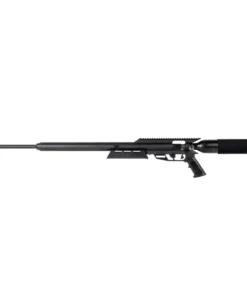
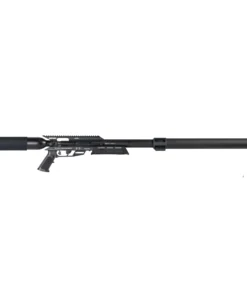
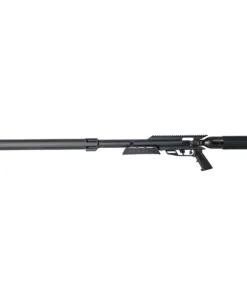
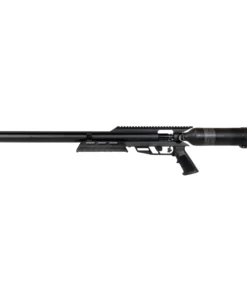
The AirForce Texan® Carbine .308 Big Bore Air Rifle delivers the legendary power of the Texan platform in a shorter, more maneuverable rifle built for hunters who demand performance without unnecessary bulk. Whether you’re working through dense brush, hunting from a blind, or carrying your rifle across long distances, the Texan Carbine offers the perfect balance of power, portability, and precision.
Built around a precision Lothar Walther barrel, the Texan Carbine launches .308 caliber projectiles at velocities exceeding 1,100 FPS, generating over 225 foot-pounds of energy depending on projectile weight and power settings. The proven single-shot design provides exceptional reliability and allows shooters to use a wide range of pellets and cast slugs.
The latest Texan Carbine features a 500cc air cylinder with a 3,000 PSI (206 BAR) fill pressure, providing increased air capacity for consistent performance in the field. A newly added manual safety enhances confidence while carrying and handling the rifle.
Versatility has also been expanded with a full-length Picatinny optics rail for mounting scopes, red dots, or thermal optics, while 11mm dovetail accessory rails offer additional mounting options for accessories. Combined with the adjustable two-stage trigger and adjustable buttpad, the Texan Carbine can be tailored to fit virtually any shooter.
Proudly built in Texas, the Texan Carbine .308 continues the AirForce tradition of delivering innovative, American-made airguns that redefine what big bore PCP performance can be.
Perfect For
From predators and deer-sized game where legal, the Texan Carbine .308 Caliber offers the power, accuracy, and handling serious hunters expect in a compact big bore platform. Its streamlined design makes it equally at home in thick timber, elevated blinds, or open country where quick handling can make all the difference.
AirForce Texan® Carbine .308 Big Bore Air Rifle Specifications
- Action: Single Shot
- Air Tank Volume: 500cc
- Barrel: 24.75 inches
- Energy: up to 225 foot pounds*
- Length: 39 inches
- Max Fill Pressure: 3,000 PSI / 206 Bar (Only use compressed air or dry nitrogen)
- Safety: Manual
- Sights: Open or Optic may be installed
- Trigger: 2 Stage Adjustable for position
- Velocity: Up to 1100 feet per second
- Warranty: Limited Lifetime
- Weight: 7.5 lbs.
Texan Carbine .308 Caliber
Product Overview
The Texan Carbine .308 Caliber is a large-bore pneumatic platform belonging to the specialized category of pre-charged pneumatic equipment. Unlike conventional cartridge firearms, pneumatic systems use stored compressed air as their energy source. Nevertheless, their pressure-bearing components and projectile-launching capability mean that they should be treated as serious equipment and handled only by appropriately trained adults in accordance with applicable laws.
What Is a PCP Air Rifle?
A pre-charged pneumatic system stores compressed air within a dedicated reservoir. The pneumatic mechanism subsequently controls the release of that stored energy. Because substantial energy can be contained within a pressurized reservoir, appropriate inspection, storage, and maintenance are important throughout the product’s service life.
The .308 designation identifies the nominal caliber of the configuration. Caliber alone, however, should not be interpreted as a complete description of performance. Actual characteristics depend on the specific configuration, manufacturer specifications, projectile compatibility, operating conditions, and equipment condition.
Construction and Engineering
The platform incorporates several major mechanical areas, including its pressure reservoir, pneumatic mechanism, barrel assembly, action, trigger controls, stock, and associated mounting points.
Each component serves a different purpose. However, they operate as an integrated system. Consequently, an apparent issue with one area should not automatically be isolated from the rest of the equipment.
The pressure reservoir deserves particular attention because it is designed to contain compressed air. It should never be drilled, welded, heated, cut, reshaped, or otherwise modified.
Precision and Consistency
Precision should be considered in terms of repeatability rather than a single performance observation.
Barrel condition, equipment configuration, environmental conditions, compatible ammunition, sighting equipment, and operator consistency can all influence observed results. Therefore, generalized claims associated with terms such as high powered air rifles 4000 fps should not be attributed to this specific configuration unless they are supported by manufacturer documentation.
Related AirForce Search Terms
Terms such as AirForce, airforce airguns, airforce texan, airforce texan air rifle, air force guns, airforce talon p, airforce texan ss, air force texan lss, airforce condor, and airforce 25 can refer to products or configurations within the broader pneumatic-airgun market.
Likewise, terms including Tex-Rex AirForce brush gun, Brush Gun, tex-rex, AirForce Tex-Rex PCP rifle, Tex-Rex Brush Gun air rifle, AirForce big bore airgun, AirForce Texan Brush Gun, AirForce Tex-Rex air rifle, AirForce Tex-Rex hunting rifle, brush gun PCP air rifle, and AirForce big bore air rifle should not be treated as interchangeable specifications for the Texan Carbine .308 Caliber.
Other Pneumatic Equipment
The wider market includes categories such as air rifle and air pistol, bolt action air rifles, airbolt rifle, and .30 cal air rifle. These can have substantially different designs and operating characteristics.
Similarly, AirMaks Arms air rifles, AirMaks Arms PCP air rifles, AirMaks Arms PCP rifles, AirMaks Katran, and related search terms concern other products and should not be presented as components or specifications of this platform.
Maintenance and Condition
The equipment should be maintained according to the manufacturer’s instructions. External components should be kept clean and dry, while pressure-bearing components should be inspected for signs of damage or corrosion.
Unusual pressure loss, structural damage, abnormal mechanical movement, or other unexpected changes should be treated as reasons for professional inspection rather than experimentation.
Safe Storage
Secure storage is essential. The equipment should remain inaccessible to children and unauthorized individuals and should be stored in accordance with applicable local requirements.
A dry, stable environment should be preferred, while unnecessary exposure to moisture, excessive heat, and physical impact should be avoided.
Legal Responsibilities
The legal classification of large-bore pneumatic equipment varies between jurisdictions. Requirements can concern ownership, minimum age, transportation, storage, transfer, importation, and discharge.
Consequently, applicable local legislation should be verified before ownership, transportation, or use. Information concerning airguns in another country should not automatically be assumed to apply locally.
Overall Assessment
The Texan Carbine .308 Caliber should be regarded as specialized pneumatic equipment rather than an ordinary recreational product. Its pressure system, mechanical components, storage requirements, maintenance needs, and legal responsibilities all deserve careful consideration.
For responsible ownership, manufacturer documentation should remain the primary technical reference, while qualified professional servicing should be used whenever a pressure-bearing or internal mechanical issue requires attention.
Construction, Maintenance, Storage, and Responsible Ownership
The Texan Carbine .308 Caliber is a specialized pneumatic platform that should be maintained as a complete mechanical system. Its pressure-bearing components, external structure, mechanical controls, and protective surfaces all require appropriate attention throughout the product’s service life. Consequently, responsible ownership is based not only on initial condition but also on regular inspection, suitable storage, careful transportation, and manufacturer-approved maintenance.
Understanding the Main Components
A pneumatic platform consists of several interconnected assemblies. The pressure reservoir is responsible for containing compressed air, while the pneumatic mechanism manages its controlled release. The barrel provides the projectile path, while the action and mechanical controls provide the operating interface. The stock supports the assembly and contributes to its overall handling characteristics.
Because these parts work together, maintenance should not focus exclusively on visible components. A problem that appears cosmetic may sometimes indicate a broader issue, particularly after an impact or prolonged exposure to unsuitable environmental conditions.
The manufacturer’s documentation should therefore remain the primary reference for model-specific maintenance, inspection intervals, approved replacement components, and servicing requirements.
Pressure Reservoir Care
The pressure reservoir should be treated as a pressure-bearing component.
Compressed air contains stored energy, so the reservoir should never be treated like an ordinary piece of structural material. It should not be drilled, cut, welded, heated, reshaped, or otherwise modified.
The exterior should be inspected periodically for significant dents, deformation, corrosion, cracks, or other unusual conditions. If damage is identified, the equipment should remain out of service until it has been assessed appropriately.
A pressure-bearing component should not be repaired through improvised methods.
Pressure-System Inspection
Routine external inspection can help establish whether the equipment remains in its normal condition.
The owner should become familiar with the normal appearance of the reservoir, connections, gauges, fittings, and other accessible components. Changes from that condition can then be recognized more easily.
Unexplained pressure behavior should not be ignored. Likewise, repeatedly restoring pressure without identifying the reason for a change does not address a potential underlying problem.
Where a pressure-related fault is suspected, appropriate professional servicing should be obtained.
Filling Equipment
Equipment used to supply compressed air should be appropriate for the specific system.
Hoses, connectors, gauges, and related components should be inspected for visible deterioration before use. Damaged pressure equipment should not be used.
A connector that appears physically compatible is not necessarily technically appropriate. Compatibility should therefore be confirmed using manufacturer documentation rather than visual assumptions.
Internal Components
Internal pneumatic components should generally be serviced according to the manufacturer’s procedures.
Seals, valves, pressure-related components, and other internal parts can require specialized knowledge and equipment.
Unnecessary disassembly should be avoided. In particular, pressure-bearing assemblies should not be opened casually.
If internal service becomes necessary, qualified professional assistance provides a more appropriate route than improvised repair.
Seal Condition
Seals can naturally deteriorate over time.
Their condition can influence pressure retention and general system behavior. However, a suspected seal problem should not automatically result in internal disassembly.
An appropriate inspection should first establish the nature of the issue.
Where replacement becomes necessary, the correct components and procedures should be used.
Valve Condition
The valve system is an important part of pneumatic operation.
Its internal configuration should be preserved.
Unauthorized modifications should be avoided because changes to internal components can affect the overall behavior of the equipment.
If unusual pneumatic behavior develops, the equipment should be evaluated rather than repeatedly adjusted without a clear diagnosis.
Barrel Protection
The barrel should be treated as a precision component.
It should not be used as a carrying handle, lever, support point, or convenient place to rest the equipment.
During transportation, it should be protected from hard impacts.
The muzzle should also remain protected from contamination and foreign material.
If significant damage is suspected, the equipment should be inspected before normal operation resumes.
Barrel Maintenance
Barrel maintenance should follow the manufacturer’s recommendations.
Improvised cleaning tools and unsuitable chemicals should be avoided.
Abrasive materials can produce unnecessary wear, while incompatible substances can affect surfaces or other components.
Maintenance should be purposeful.
More cleaning is not automatically better if the procedure itself introduces unnecessary wear.
Stock Inspection
The stock should be inspected periodically for cracks, looseness, deformation, or evidence of impact.
A significant fall or collision should be taken seriously even when visible damage appears minor.
Internal components can sometimes be affected without producing obvious external damage.
When the equipment has experienced a substantial impact, professional inspection can provide additional assurance.
Action Condition
The action should operate normally according to its intended design.
The owner should become familiar with its normal mechanical movement.
Unexpected resistance, unusual sounds, or changes in movement should not be ignored.
A mechanical component should never be forced when it does not behave normally.
Forcing a component can potentially increase the severity of an existing mechanical problem.
Trigger Condition
The trigger should remain in its intended factory configuration unless maintenance or service procedures specifically require otherwise.
A noticeable change in movement or resistance should be investigated.
Unauthorized modifications should be avoided.
Mechanical controls should not be altered simply to change their characteristics because doing so can affect the system and complicate future service.
External Surfaces
External surfaces should be kept clean and dry.
A soft, suitable cleaning material can be used where consistent with manufacturer recommendations.
Harsh chemicals should not be applied simply because they are effective on other materials.
Different surfaces can react differently to cleaning products.
The objective should be preservation rather than aggressive cleaning.
Corrosion Prevention
Corrosion can become more significant when moisture remains on metal surfaces for extended periods.
After exposure to damp conditions, the equipment should be dried appropriately.
It should not be placed into a sealed case while wet.
Storage should take place in a reasonably dry environment.
If significant corrosion develops on an important component, professional assessment should be considered.
Dust and Contamination
Dust can accumulate during storage, transportation, and outdoor exposure.
Routine inspection can help prevent contamination from becoming established.
The protective case should also be cleaned because dirt inside the case can transfer back onto equipment that has already been maintained.
Keeping both the equipment and its storage environment clean provides a more effective long-term maintenance approach.
Lubrication
Lubrication requirements depend on the design of the equipment.
Only products and procedures recommended by the manufacturer should be used.
A lubricant designed for another mechanical system may not be appropriate.
Incorrect lubrication can affect seals, surfaces, and internal components.
Excessive lubrication should not be regarded as a substitute for proper maintenance.
Recognizing Changes in Condition
Owners should become familiar with the normal condition of their equipment.
Potential warning signs can include unexplained pressure changes, unusual mechanical sounds, visible structural damage, significant corrosion, unexpected control behavior, loose components, or other unexplained changes.
A new or significant abnormality should be investigated rather than ignored.
Professional Servicing
Professional servicing is particularly appropriate when an issue involves internal pneumatic components, pressure-bearing parts, structural damage, or unexplained mechanical behavior.
A qualified technician can assess the equipment using appropriate procedures.
Professional service can also help preserve the original configuration and provide a documented record of maintenance.
Maintenance Records
A basic maintenance record can be valuable over the life of the equipment.
Inspection dates can be documented.
Professional service can be recorded.
Cleaning and storage periods can be noted.
Unusual observations can also be recorded.
This history can make gradual changes easier to recognize and can provide useful information if the equipment later requires professional attention.
Transportation
Transportation exposes equipment to additional risks.
Movement can produce impacts.
Poor storage can expose it to moisture.
Unsecured transportation can create access concerns.
A suitable protective case can reduce physical damage and provide a controlled environment.
The equipment should be positioned securely so that it does not move unnecessarily inside the case.
Protective Case Care
The protective case should be inspected as part of routine ownership.
Latches, hinges, padding, and structural components should remain in good condition.
A damaged case may provide less protection than intended.
The interior should remain clean and dry.
Heavy objects should not be placed directly against the equipment.
Vehicle Considerations
Transportation in a vehicle requires additional attention.
The equipment should remain secured and inaccessible to unauthorized individuals.
Applicable transportation requirements should be verified for the relevant jurisdiction.
It should not be unnecessarily left unattended.
Temperature extremes inside vehicles should also be considered because prolonged heat or cold can create additional storage concerns.
Long-Term Storage
Before extended storage, the equipment should be inspected.
The exterior should be clean and dry.
The storage environment should be reasonably stable.
Moisture should not be trapped against the equipment.
When the equipment is eventually removed from long-term storage, another inspection should be completed before normal handling resumes.
Secure Storage
Secure storage protects both the equipment and people nearby.
The equipment should remain inaccessible to children and unauthorized individuals.
Applicable local storage requirements should be followed.
The storage environment should protect against excessive moisture, unnecessary physical impact, and unsuitable temperatures.
Security should remain effective even when the owner is away.
Household Considerations
Shared living environments require careful access control.
Children should not have unrestricted access to specialized equipment.
Visitors should not handle it without appropriate authorization and supervision.
The owner should ensure that storage remains secure at all times rather than relying solely on personal presence.
Preserving the Original Configuration
The original configuration should generally be preserved.
Unnecessary modifications can introduce additional variables and complicate future servicing.
They can also make it more difficult to establish whether an unexpected behavior is associated with the original equipment or a later modification.
When a component requires replacement, the replacement should be appropriate for the exact configuration and supported by reliable documentation.
Manufacturer Documentation
Manufacturer documentation should be retained whenever possible.
It can provide model-specific information concerning maintenance, storage, servicing, operating limitations, compatible components, and other important requirements.
General information concerning another pneumatic platform should not automatically be substituted for model-specific instructions.
When there is uncertainty, manufacturer documentation and qualified technical advice should take priority.
Environmental Conditions
Environmental conditions can influence equipment condition over time.
Humidity can contribute to corrosion.
Dust can accumulate around mechanical interfaces.
Temperature extremes can affect storage conditions.
Rapid temperature changes can produce condensation.
For these reasons, stable environmental conditions are preferable whenever practical.
Inspection After Environmental Exposure
After exposure to rain, humidity, dust, sand, or other challenging conditions, the equipment should be inspected.
Visible contamination should be removed using an appropriate maintenance procedure.
The equipment should be allowed to dry appropriately before storage.
If contamination or damage affects an important component, professional assessment should be considered.
Inspection After Impact
A significant impact should trigger a careful inspection.
The owner should not assume that a lack of obvious external damage means that every component remains unaffected.
Structural areas, mechanical controls, and pressure-bearing components may require professional evaluation.
This is especially important when the equipment has been dropped or involved in a significant collision.
Understanding Normal Wear
Mechanical equipment naturally experiences wear during its service life.
However, wear should be distinguished from damage.
A minor cosmetic mark may have limited significance, while deformation or deterioration affecting an important component can require attention.
The location, severity, and progression of the change should therefore be considered.
Responsible Ownership
Responsible ownership extends beyond physical maintenance.
It includes secure storage, appropriate transportation, awareness of local requirements, professional servicing, and preventing unauthorized access.
The owner should also understand that manufacturer documentation is specific to the particular product configuration.
Generalized advice should not override those instructions.
Legal Responsibilities
Regulations governing large-bore pneumatic equipment can differ considerably between jurisdictions.
Requirements may concern ownership, minimum age, storage, transportation, importation, transfer, and discharge.
The applicable requirements should be verified for the specific location.
Rules applicable in one country should not automatically be assumed to apply in another.
Controlled Environments
Where lawful target activities are permitted, an appropriate controlled facility can provide an environment with established procedures.
The facility should be contacted beforehand when equipment acceptance is uncertain.
Range rules, safety procedures, protective-equipment requirements, and facility restrictions should be followed.
Backstop Awareness
A suitable backstop is an important part of a controlled environment.
The area beyond the intended target should also be considered.
The potential projectile path should not extend toward people, occupied structures, roads, or uncontrolled locations.
Responsible Handling
Handling should always prioritize control of the equipment and awareness of the surrounding environment.
It should remain pointed in a safe direction appropriate to the environment.
Unauthorized individuals should not be permitted to handle it.
When there is uncertainty about a condition, the safest approach is to stop and seek appropriate guidance rather than experiment.
Overall Maintenance Philosophy
The best long-term approach is preventative.
Inspect regularly.
Keep the equipment clean and dry.
Protect it during transportation.
Store it securely.
Follow manufacturer maintenance requirements.
Avoid unauthorized modifications.
Pay attention to unusual changes.
Seek professional service when necessary.
Maintain relevant documentation.
Verify applicable legal requirements.
Final Perspective
The Texan Carbine .308 Caliber should be maintained as specialized pneumatic equipment rather than treated as an ordinary household product.
Its pressure-bearing components deserve particular care.
Its precision components should be protected from unnecessary damage.
Its mechanical controls should remain in their intended configuration.
Its storage should prevent unauthorized access.
Its transportation should provide suitable physical protection.
Its maintenance should follow manufacturer recommendations.
A consistent preventative approach can help preserve the equipment’s condition throughout its service life while reducing avoidable problems associated with neglect, unsuitable maintenance, environmental exposure, insecure storage, and unauthorized mechanical modification.
Reliability, Precision, Practical Ownership, and Responsible Care
Long-term reliability depends on more than the condition of a product when it is first acquired. It is influenced by how consistently the equipment is inspected, stored, transported, maintained, and protected from environmental exposure. For specialized pneumatic equipment, these responsibilities become particularly important because the system contains stored compressed energy and incorporates precision mechanical components.
A responsible ownership routine therefore begins with understanding the normal condition of the equipment. Once that baseline has been established, changes can be recognized more easily. Small differences should not automatically be dismissed, especially when they involve pressure retention, structural condition, mechanical movement, or other important components.
Understanding Precision
Precision is best considered as repeatability under controlled conditions.
A single observation cannot fully characterize an equipment platform. Similarly, an unexpected result does not automatically demonstrate that a mechanical component has failed. Numerous variables can influence observed results, including equipment condition, environmental conditions, compatible ammunition, sighting equipment, and operator consistency.
Consequently, meaningful evaluation requires consistency.
When the same general configuration and conditions are maintained, changes become easier to identify. This approach is particularly useful for long-term ownership because it provides a reference against which later observations can be compared.
Establishing a Condition Baseline
A baseline is simply a record of normal condition.
The owner can document the visible condition of the equipment, the condition of external components, the normal movement of mechanical controls, and other relevant observations.
The record does not need to be complicated.
A basic maintenance log can contain inspection dates, cleaning dates, professional servicing, storage periods, and unusual observations.
Over time, this information can become valuable because gradual changes may otherwise be difficult to recognize.
Consistency of Equipment Condition
The original condition of the equipment should be preserved wherever practical.
Unnecessary modifications introduce additional variables.
If a mechanical characteristic later changes, it can become more difficult to determine whether the change originated from normal wear, environmental exposure, maintenance, or an alteration.
For that reason, manufacturer-supported configurations should generally be preferred.
Replacement components should also be appropriate for the exact configuration.
Barrel Care
The barrel should be treated as an important precision component.
It should be protected from unnecessary impacts and should not be used as a carrying handle.
During transportation, the barrel should be positioned so that it cannot strike hard objects.
The muzzle should remain protected from contamination.
If the equipment experiences a significant impact, the barrel should be inspected before normal operation resumes.
Cleaning Practices
Cleaning should be performed according to manufacturer recommendations.
The objective should be preservation rather than excessive intervention.
Unsuitable chemicals can affect finishes and other materials.
Abrasive materials can create unnecessary wear.
Improvised cleaning tools should therefore be avoided.
A consistent maintenance procedure is preferable to repeatedly experimenting with different products.
Pressure-System Awareness
The pressure system deserves particular attention.
Stored compressed air contains energy, so pressure-bearing components should be treated accordingly.
The reservoir should never be drilled, cut, welded, heated, reshaped, or subjected to unauthorized modification.
The owner should also avoid attempting to alter pressure characteristics without manufacturer-supported procedures.
If the pressure system develops an unexpected condition, professional evaluation is appropriate.
Recognizing Pressure Changes
Normal pressure behavior should become familiar to the owner.
An unexplained change can indicate a problem involving a seal, valve, connection, or another component.
Repeatedly restoring pressure without investigating the reason does not resolve the underlying issue.
A significant change should therefore be treated as a maintenance concern.
The equipment should remain out of normal operation until the condition has been appropriately evaluated.
Internal Pneumatic Components
Internal components require appropriate technical knowledge.
Seals, valves, and other pneumatic components may require specialized tools and procedures.
They should not be dismantled casually.
The presence of stored pressure makes inappropriate internal work particularly undesirable.
Where internal servicing becomes necessary, qualified professional assistance should be obtained.
Mechanical Controls
Mechanical controls should remain in their intended configuration.
The owner should become familiar with their normal movement and appearance.
Unexpected resistance, unusual sounds, looseness, or changes in normal movement should be investigated.
Mechanical components should never be forced.
Forcing a component can turn a manageable problem into a more complicated mechanical issue.
Trigger Condition
The trigger should be monitored as part of normal inspection.
The owner should understand its expected characteristics.
A sudden change should not simply be accepted as normal wear without consideration.
Unauthorized modifications should be avoided.
Any significant mechanical change should be assessed according to appropriate service procedures.
Structural Inspection
The stock and other structural areas should be inspected periodically.
Cracks, deformation, loose components, or evidence of impact deserve attention.
After a substantial fall or collision, professional inspection may be appropriate even when visible damage appears limited.
Not every mechanical problem can be identified through a simple external examination.
Environmental Exposure
The environment can influence equipment condition.
Humidity can encourage corrosion.
Dust can accumulate around interfaces.
Temperature extremes can affect materials and storage conditions.
Rapid temperature changes can produce condensation.
Consequently, the equipment should be protected from unnecessary environmental exposure whenever possible.
Moisture Management
Moisture should not be trapped against the equipment.
After exposure to rain or high humidity, the equipment should be dried appropriately before storage.
A damp product should not simply be placed inside a closed case.
The storage environment should remain reasonably dry.
This is particularly important for long-term preservation.
Corrosion Prevention
Corrosion should be identified early.
The significance of corrosion depends on where it occurs and how extensive it is.
A superficial cosmetic mark differs from deterioration affecting a critical mechanical or pressure-bearing component.
Aggressive treatment should not be applied to important components without appropriate technical guidance.
Where the seriousness of corrosion is uncertain, professional inspection is preferable.
Dust Management
Dust can accumulate during storage and transportation.
The equipment should therefore be inspected periodically.
The protective case should also remain clean.
Otherwise, dust and debris inside the case can transfer back onto equipment that has already been cleaned.
Keeping the storage environment clean is therefore part of equipment maintenance.
Lubrication
Lubrication should follow manufacturer recommendations.
Only appropriate products should be used.
A lubricant that works on another mechanical system may not be suitable for this equipment.
Incorrect products can affect seals, finishes, and internal components.
Excessive application should also be avoided.
Proper maintenance is more important than simply increasing the amount of lubricant used.
Professional Inspection
Professional inspection becomes particularly useful when the owner cannot confidently determine the cause of a change.
Examples include unexplained pressure loss, significant impact, structural damage, abnormal mechanical movement, unusual sounds, or substantial corrosion.
A qualified technician can examine the equipment using suitable procedures.
Professional assessment is preferable to continued operation when an important mechanical condition is uncertain.
Maintenance Documentation
A maintenance record can provide useful historical information.
Inspection dates can be recorded.
Professional service can be documented.
Cleaning can be noted.
Environmental exposure can be recorded when relevant.
Unusual observations can also be included.
Over time, these records provide a clearer picture of the equipment’s service history.
Transportation
Transportation should protect the equipment from unnecessary movement and impact.
A suitable protective case can reduce these risks.
The equipment should be secured within the case.
Heavy objects should not be placed directly against it.
The case should remain clean and dry.
Applicable transportation requirements should also be verified before moving specialized equipment between locations.
Vehicle Environment
Vehicles can expose equipment to temperature extremes.
A vehicle interior can become considerably hotter or colder than the surrounding environment.
Consequently, unnecessary prolonged exposure should be avoided.
The equipment should also remain secured and inaccessible to unauthorized individuals.
Legal requirements concerning transportation should be checked for the applicable jurisdiction.
Protective Case Inspection
The case itself requires maintenance.
Latches, hinges, padding, and structural components should be inspected periodically.
A damaged case may no longer provide appropriate protection.
The interior should remain dry.
Dirt and moisture should be removed rather than allowed to accumulate.
Long-Term Storage
Before extended storage, the equipment should be inspected.
The exterior should be clean and dry.
The storage environment should be stable.
Moisture should not be trapped against the equipment.
After a prolonged storage period, another inspection should be completed before the equipment is returned to normal handling.
Secure Storage
Secure storage is fundamental to responsible ownership.
The equipment should remain inaccessible to children and unauthorized individuals.
Where local requirements establish specific storage standards, those standards should be followed.
The storage location should also protect the equipment against moisture, excessive heat, unnecessary impact, and prolonged environmental exposure.
Household Access
Shared residences require careful consideration.
The owner should ensure that unauthorized household members cannot access the equipment.
Visitors should not handle it without appropriate authorization and supervision.
Secure storage should remain effective even when the owner is away from the residence.
Understanding Wear
Mechanical equipment naturally experiences wear over time.
However, wear and damage are different conditions.
A minor cosmetic mark may have limited mechanical importance.
A crack, deformation, severe corrosion, or unexpected movement can have considerably greater significance.
The location and progression of any change should therefore be considered.
Impact Damage
A significant impact can affect multiple components.
External appearance alone may not reveal the full condition of the equipment.
After a substantial fall, collision, or similar event, professional inspection may therefore be appropriate.
This approach can identify conditions that might otherwise remain unnoticed.
Storage Environment
The storage area should be selected carefully.
A stable environment is preferable.
Persistent moisture should be avoided.
Excessive temperature changes should be minimized.
The equipment should not be placed where it can easily fall or be struck by other objects.
Good storage practices can substantially reduce avoidable deterioration.
Responsible Transportation
Transportation should be planned rather than improvised.
The owner should understand applicable legal requirements before moving the equipment.
It should remain secured throughout transportation.
Unauthorized people should not have access.
A suitable protective case should be used where appropriate.
Manufacturer Guidance
Manufacturer documentation should remain the primary reference for model-specific information.
It can contain maintenance instructions, operating limitations, storage requirements, service information, and other technical guidance.
Information from unrelated equipment should not automatically be substituted.
When general information conflicts with model-specific instructions, the manufacturer’s documentation should take priority.
Legal Awareness
Regulations concerning pneumatic equipment vary between jurisdictions.
Requirements may apply to ownership, minimum age, storage, transportation, transfer, importation, and discharge.
Therefore, the owner should verify the rules applicable to the specific location.
A rule applicable in another country should not be assumed to apply locally.
Controlled Environments
Where lawful target activities are permitted, a controlled facility can provide a more suitable environment than an uncontrolled location.
Facility rules should be reviewed before attendance.
The facility should confirm that the particular equipment is permitted.
All established procedures should be followed.
Backstop Awareness
A suitable backstop is an important element of a controlled environment.
The area beyond the target should also be considered.
The potential projectile path should not extend toward people, occupied structures, roads, or uncontrolled areas.
The surrounding environment should therefore be evaluated before any lawful target activity.
Range Procedures
Range procedures should be followed consistently.
Handling should occur only when permitted.
The equipment should remain directed toward the designated area.
Cease-fire instructions should be followed immediately.
Range personnel should be consulted when there is uncertainty.
Protective Equipment
Appropriate protective equipment should be used according to facility requirements and responsible practice.
Eye protection is particularly important in environments where projectile activity occurs.
Protective equipment should fit correctly and should not interfere with safe handling or environmental awareness.
Operator Responsibility
Responsible ownership includes understanding personal limitations.
An individual who is unfamiliar with specialized pneumatic equipment should obtain appropriate instruction before operation.
The owner should understand basic pressure-system awareness, storage, transportation, maintenance, and applicable legal requirements.
When uncertainty exists, seeking qualified guidance is preferable to experimentation.
Practical Ownership
A good ownership routine is straightforward.
Inspect the equipment.
Keep it clean.
Keep it dry.
Protect it during transportation.
Store it securely.
Follow manufacturer instructions.
Avoid unauthorized modifications.
Document significant maintenance.
Seek professional service when necessary.
Verify applicable legal requirements.
These practices provide a strong foundation for responsible long-term ownership.
Reliability Over Time
Reliability should be viewed as a combination of equipment condition and maintenance discipline.
Regular inspection can reveal developing problems.
Appropriate storage can reduce environmental deterioration.
Careful transportation can reduce physical damage.
Suitable maintenance can preserve mechanical components.
Professional servicing can address problems beyond routine owner care.
Understanding Changes
Not every change represents a serious problem.
However, significant or unexplained changes deserve attention.
The most important consideration is whether the equipment remains within its normal condition.
When an owner cannot confidently determine the significance of a change, professional assessment is the appropriate next step.
Preventative Maintenance
Preventative maintenance is generally more effective than waiting for a failure.
Regular inspection can identify corrosion before it progresses.
Appropriate storage can reduce environmental damage.
Careful transportation can prevent avoidable impacts.
Proper documentation can reveal patterns over time.
Together, these practices support better long-term equipment management.
Overall Ownership Philosophy
The equipment should be treated with respect throughout its entire service life.
Its pressure-bearing components require careful attention.
Its precision components should be protected.
Its mechanical controls should remain appropriately maintained.
Its storage should prevent unauthorized access.
Its transportation should provide suitable protection.
Its maintenance should follow reliable technical guidance.
Its use should remain within applicable legal and facility requirements.
Final Perspective
Long-term reliability is built through consistent care rather than occasional corrective action.
Regular inspection helps establish the equipment’s normal condition.
Suitable maintenance helps preserve important components.
Secure storage protects both people and equipment.
Appropriate transportation reduces unnecessary physical damage.
Professional servicing provides a reliable solution when problems extend beyond routine maintenance.
Most importantly, responsible ownership requires recognizing the limits of personal knowledge. When a pressure-bearing, structural, or mechanical problem cannot be confidently assessed, the appropriate response is to stop normal operation and obtain qualified professional assistance Texan Carbine.308 CaliberTexan Carbine.308 CaliberTexan Carbine.308 CaliberTexan Carbine.308 CaliberTexan Carbine.308 Caliber.
Through this preventative approach, the equipment can be maintained in a responsible condition while avoidable problems associated with neglect, environmental exposure, improper maintenance, insecure storage, and unauthorized modification are reduced Texan Carbine.308 CaliberTexan Carbine.308 Caliber Texan Carbine.308 CaliberTexan Carbine.308 CaliberTexan Carbine.308 CaliberTexan Carbine.308 CaliberTexan Carbine.308 Caliber.
Be the first to review “Texan Carbine .308 Caliber”
Related products

AirForce

AirForce
AirForce

AirForce
AirForce

AirForce
AirForce

Reviews
There are no reviews yet.