

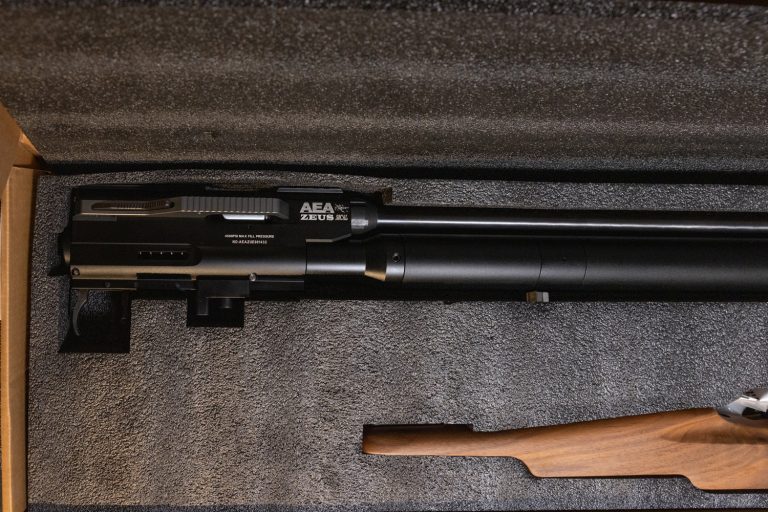
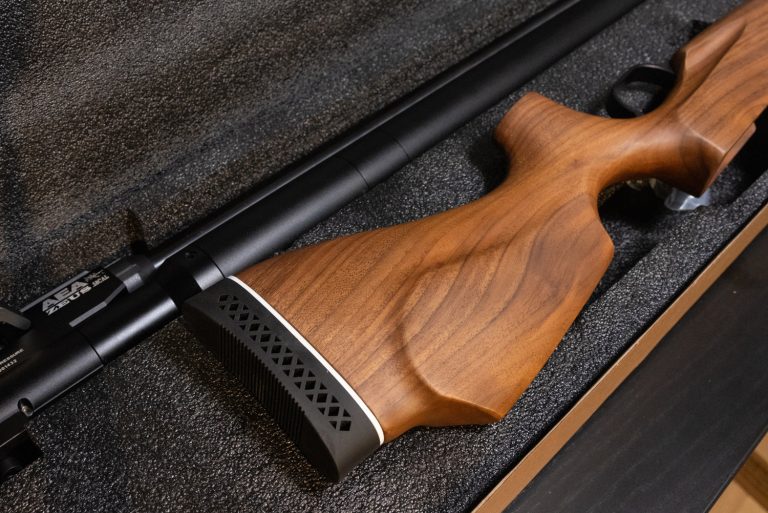


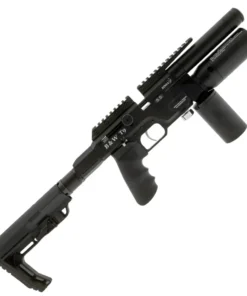
Zeus – Cal .58 (14.73mm) – 32″ Barrel – Earlier Production – Grade: AAA – 35% OFF

€1,000.00
About the Zeus – Cal .58 (14.73mm) – 32″ Barrel – Earlier Production – Grade: AAA – 35% OFF
Serial Number: AEAZUE001432
Reason for Outlet: Earlier Production – Never used
Fully Tested & Verified
Inside The Box
Zeus Airgun
x1 Fill Probe
Cardboard Box
x1 AEA Pellets
Warranty & Support
Covered under the standard warranty (1 year)
Same after-sales support as non-outlet products
Identical return and service policy
AEA Zeus .58 Cal (14.73mm) – 32″ Barrel – Earlier Production – Grade AAA – 35% OFF | Premium Big Bore PCP Air Rifle
AEA Zeus .58 Cal (14.73mm) – 32-Inch Barrel, Earlier Production, Grade AAA Condition, Advanced Big Bore Engineering and 35% Discount
AEA Zeus .58 Cal – Advanced Big Bore Pneumatic Engineering
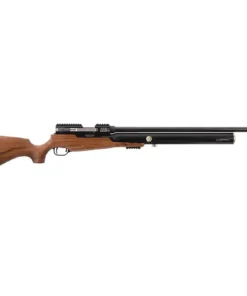
The AEA Zeus .58 Cal (14.73mm) – 32″ Barrel – Earlier Production – Grade AAA combines large-calibre pneumatic engineering, precision manufacturing and traditional wooden-stock craftsmanship.
This specialized pre-charged pneumatic rifle features a 32-inch barrel, single-shot construction and side-lever operating mechanism.
Furthermore, its substantial 660cc air cylinder reflects the technical requirements of a high-pressure sporting platform.
Unlike shorter configurations, the 32-inch model incorporates an extended barrel within an overall length of approximately 50 inches.
Additionally, the natural walnut stock contributes distinctive grain patterns and traditional styling.
The rifle is intended for experienced adult enthusiasts familiar with powerful pneumatic equipment and its maintenance responsibilities.
However, technical sophistication cannot replace professional inspection, safe handling or appropriate training.
Consequently, prospective owners should verify the exact production version and applicable legal restrictions before purchasing.
AEA Zeus .58 Cal – Technical Specifications
The following specifications correspond to the documented 32-inch configuration.
-
Manufacturer: AEA Precision Airguns
-
Model: Zeus
-
Calibre: .58 (14.73mm)
-
Barrel Length: 32 inches (813mm)
-
Overall Length: Approximately 50 inches (1,270mm)
-
Weight: Approximately 11.6 lbs (5.26kg)
-
Operating System: Pre-charged pneumatic
-
Action: Single-shot, side-lever
-
Air Capacity: 660cc
-
Maximum Filling Pressure: 4,500 PSI (approximately 300–310 bar)
-
Stock: Natural walnut, subject to the exact configuration
-
Muzzle Brake: Not included in the referenced standard specification
-
Production: Earlier-production outlet inventory
-
Advertised Condition: Grade AAA – Like New
-
Advertised Discount: 35%
Specifications and included accessories should be confirmed for the actual earlier-production unit.
Earlier Production – What Does Grade AAA Mean?
The seller identifies this configuration as an earlier-production item with Grade AAA condition.
According to the retailer’s published grading system, this classification indicates a like-new cosmetic appearance, with little or no visible wear. Such equipment may have undergone handling or testing.
Furthermore, the retailer advertises inspection procedures and a one-year outlet warranty.
However, these statements represent the retailer’s reported grading and inspection standards. They do not independently establish the condition of an individual item.
Consequently, buyers should request photographs, inspection documentation and warranty terms before purchase.
AEA Zeus .58 Cal – 35% Discount Information
AEA Airguns – Comparing Different Pneumatic Platforms
The broader aea airguns and aea guns collections include several distinct mechanical systems.
For example, bintac s45 aea, b&w m50, aea terminator and aea terminator gen 3 belong to different product families.
Furthermore, aea defender, aea defender 2 and aea defender 3 identify compact alternatives.
Although these products share broader pneumatic engineering principles, their mechanical construction and technical specifications differ substantially.
Consequently, comparisons should rely on verified individual product information.
BinTac T9 – Alternative Compact Airgun Research
Related expressions include bintac t9, bintac, bin tac, bintac lIc and bintaclic.
Furthermore, bintac t9 price, bintac t9 full auto and bintac t9 amazon relate to separate product searches.
The term pistol also appears within this wider market category.
However, these expressions do not describe the Zeus configuration.
BinTac M50, T50 and MCAR – Other Product Families
Additional searches include bintac m50, bintac m50 for sale, bintac m50 pump action, bintac t 50, bintac t50, bintac t50 for sale, bintac t50 extreme and aea bintac t50 extreme.
Meanwhile, bintac mcar, bintac mcar air rifle, bintac mcar 457 and bintac s45 for sale concern other models or commercial listings.
These alternatives have different mechanical characteristics and compatibility requirements.
AEA Megalodon – Understanding Big Bore Alternatives
The aea megalodon family represents another category of pneumatic equipment.
Related searches include aea megalodon 58 cal, aea megalodon 50 cal price, aea megalodon 50 caliber, aea megalodon air rifle and megalodon air rifle.
Additionally, aea megalodon 58 cal bintac m50 appears in broader product comparisons.
However, these terms concern separate products whose specifications should not be attributed to the Zeus.
AEA Harpoon – Specialized Pneumatic Equipment
Search expressions associated with the aea harpoon family include aea harpoon price, aea harpoon magnum, aea harpoon gun, aea harpoon cartridge, aea .50 harpoon, aea harpoon air gun, bintac aea harpoon, harpoon for sale and harpoon air gun.
These products use different configurations and accessories.
Consequently, compatibility must be confirmed independently.
AEA Zeus MKII – Comparing Different Generations
The AEA Zeus MKII (Bullpup) Standard 18 Big Bore is a different configuration from the earlier-production 32-inch model.
Similarly, zeus 72 cal air rifle price concerns another calibre option.
The manufacturer’s later-generation products may incorporate revised components, dimensions or technical specifications.
Therefore, buyers should not assume that accessories or published figures apply across generations.
Compressed-Air Equipment and Related Accessories
Broad searches such as anti air tanks, air tank for pep airguns, bee bee gun rifle and airgun shotgun may appear alongside pneumatic equipment listings.
However, these expressions do not identify approved accessories for this particular configuration.
Pressure-bearing components must comply with the manufacturer’s exact technical requirements.
Professional inspection, correct documentation and responsible storage remain essential.
Why Consider This Earlier-Production Model?
The principal attraction of this offering lies in its distinctive 32-inch construction, traditional wooden styling and Grade AAA outlet classification.
Furthermore, the advertised discount provides a substantial difference from the retailer’s reference price.
However, purchasing value depends on actual condition, remaining warranty coverage and suitability for the buyer’s jurisdiction.
Prospective owners should confirm the individual item’s serial number, condition report and exact included accessories.
The AEA Zeus .58 Cal 32″ earlier-production model combines specialized pneumatic engineering with an attractive outlet offering, subject to verification of its condition and technical documentation.
Advanced Pneumatic Engineering, Precision Manufacturing, Premium Craftsmanship, Earlier-Production Quality, Mechanical Reliability, Durability and Long-Term Ownership Value
Understanding the Importance of Advanced Pneumatic Engineering
Advanced pneumatic engineering represents a sophisticated combination of mechanical design, specialized materials and carefully controlled manufacturing processes. Modern developments in this field have allowed manufacturers to produce increasingly complex equipment with distinctive structural and operating characteristics.
Furthermore, precision production methods contribute to accurate component dimensions and consistent assembly quality.
However, advanced engineering cannot be evaluated solely through published technical specifications. Material integrity, professional workmanship and maintenance requirements also influence overall quality.
Consequently, prospective owners should consider the complete mechanical arrangement.
A thoughtfully developed system combines durable construction, appropriate component relationships and dependable manufacturing standards.
Moreover, responsible maintenance helps preserve the original engineering condition throughout ownership.
Why Precision Manufacturing Matters
Precision manufacturing forms the foundation of sophisticated mechanical equipment. Through specialized machining processes, manufacturers can produce detailed components according to carefully established dimensional requirements.
Furthermore, computerized production methods support consistency across manufacturing batches.
However, accurate machining represents only one part of the production process.
Material preparation, finishing techniques, professional assembly and quality assurance also contribute to the completed product.
Consequently, manufacturing excellence requires attention throughout every production stage.
Carefully developed components should maintain their intended mechanical relationships when assembled according to the manufacturer’s specifications.
Professional inspection supports confidence in the overall construction.
Understanding Earlier-Production Engineering
Earlier-production equipment provides an opportunity to examine established manufacturing designs from previous production periods.
These products may retain distinctive construction characteristics, materials or exterior features associated with their manufacturing generation.
Furthermore, earlier-production inventory may remain unused despite originating from an older manufacturing batch.
However, production age and actual condition are separate considerations.
Consequently, buyers should distinguish unused inventory from previously operated equipment.
Accurate identification markings and original documentation provide useful background information.
Professional inspection remains important because environmental exposure and storage conditions may influence material condition even when operational use has been limited.
Why Earlier-Production Equipment Can Offer Value
Earlier-production equipment may provide an attractive ownership opportunity when original construction quality remains satisfactory.
Manufacturers sometimes revise exterior designs, component arrangements or production methods without fundamentally changing the intended purpose of a product.
Furthermore, retailers may offer discounts on inventory manufactured during previous production periods.
However, a lower price does not automatically establish superior value.
Prospective owners should consider remaining warranty coverage, component availability and applicable servicing requirements.
Consequently, responsible purchasing involves evaluating both the financial savings and the actual equipment condition.
A well-documented product can provide meaningful value when its technical suitability has been independently established.
Understanding Premium Condition Grading
Condition grading provides a structured method for describing the appearance and reported state of previously manufactured equipment.
Retailers may use classifications to distinguish products with minimal cosmetic wear from items showing more noticeable handling marks.
Furthermore, grading systems can help prospective buyers understand differences between available inventory.
However, grading terminology is not universally standardized.
A classification used by one retailer may differ from another retailer’s system.
Consequently, buyers should examine the actual grading criteria.
Supporting photographs, inspection reports and accurate product descriptions provide more meaningful information than a grade designation alone.
Why Cosmetic Condition and Mechanical Condition Are Different
Cosmetic condition concerns visible appearance, including exterior finishes, surface marks and material presentation.
Mechanical condition concerns the integrity and operation of internal components.
Although these characteristics may be related, they should not be treated as identical.
Furthermore, equipment with an attractive exterior may still require maintenance or inspection.
Conversely, minor cosmetic marks do not necessarily indicate structural damage.
Consequently, professional evaluation should consider both categories.
A transparent product description should distinguish confirmed inspection findings from subjective cosmetic assessments.
Understanding Professional Pre-Sale Inspection
Professional inspection helps establish the actual condition of specialized mechanical equipment before ownership changes.
Qualified technicians may examine structural components, manufacturing markings, material condition and available servicing records.
Furthermore, written inspection findings provide useful information for prospective buyers.
However, the existence of an inspection does not automatically establish that every future maintenance requirement has been satisfied.
Consequently, buyers should review the inspection’s date, scope and conclusions.
Any unresolved concerns should receive appropriate professional attention.
Transparent documentation contributes to informed purchasing decisions and responsible long-term ownership.
Why Manufacturing Quality Remains Important
Original manufacturing quality influences the structural characteristics and potential durability of specialized equipment.
Manufacturers establish requirements for materials, dimensions, surface finishes and assembly procedures.
Furthermore, professional quality assurance helps identify production irregularities.
However, manufacturing reputation cannot independently establish the present condition of an individual product.
Previous handling, storage and maintenance also influence long-term suitability.
Consequently, buyers should consider original construction quality alongside current inspection findings.
A carefully manufactured assembly provides a strong foundation for continued preservation when appropriately maintained.
Understanding Premium Metal Construction
Metal components contribute significantly to the structural integrity of sophisticated mechanical assemblies.
Manufacturers may select specialized alloys because of their strength, machinability and dimensional characteristics.
Furthermore, precision machining allows complex component shapes to maintain established engineering tolerances.
However, metal components remain vulnerable to corrosion, accidental damage and unauthorized alterations.
Consequently, appropriate inspection remains necessary.
Protective surface treatments can contribute to material preservation.
Responsible maintenance helps protect original construction quality throughout ownership.
Why Structural Integrity Matters
Structural integrity describes the ability of an assembly to maintain its intended mechanical characteristics under approved operating conditions.
Manufacturers consider material strength, dimensional relationships and appropriate component connections during development.
Furthermore, consistent production processes support structural reliability.
However, accidental impact, corrosion or unsuitable repairs may influence condition.
Consequently, suspected deterioration requires qualified assessment.
Owners should avoid improvised structural modifications.
Preserving the manufacturer’s original design supports professional servicing and responsible ownership.
Understanding Precision-Machined Components
Precision-machined components require accurate dimensional control and suitable material preparation.
Modern production methods allow manufacturers to create complex mechanical shapes with repeatable measurements.
Furthermore, professional measurement procedures contribute to manufacturing consistency.
However, machining precision alone does not guarantee overall product quality.
Surface finishing, material selection and correct assembly remain equally important.
Consequently, high-quality engineering requires coordinated attention across several manufacturing processes.
A carefully manufactured component contributes value when it maintains its intended relationship with surrounding assemblies.
Why Manufacturing Tolerances Are Essential
Manufacturing tolerances establish acceptable dimensional variations during production.
Different components require different tolerances according to their functions and material characteristics.
Furthermore, suitable tolerances help maintain correct relationships between adjoining parts.
However, extremely small tolerances are not automatically necessary for every application.
Engineers must balance dimensional accuracy with structural requirements and practical manufacturing considerations.
Consequently, successful design depends on selecting appropriate tolerances for each component.
Professional inspection helps verify whether manufacturing requirements have been satisfied.
Understanding Traditional Natural Wood Craftsmanship
Natural wood contributes a distinctive appearance to specialized sporting equipment.
Each piece possesses individual grain patterns, tonal variations and structural characteristics.
Furthermore, professional shaping and finishing can highlight the material’s natural beauty.
However, wood remains sensitive to environmental conditions.
Excessive humidity, prolonged heat and unsuitable storage may influence its dimensions or exterior appearance.
Consequently, careful preservation remains important.
Quality craftsmanship combines attractive natural materials with appropriate manufacturing techniques.
Why Individual Wood Grain Adds Character
Natural timber develops unique patterns during growth, making every finished component visually distinctive.
Different grain arrangements may create subtle variations in colour, texture and appearance.
Furthermore, carefully selected wood can contribute traditional styling to modern mechanical equipment.
However, grain appearance should not be confused with structural quality.
Material condition, protective finishing and manufacturing accuracy remain important.
Consequently, buyers should evaluate both visual presentation and practical construction.
The distinctive appearance of natural materials contributes to individual product character.
Understanding Protective Wood Finishes
Protective finishes help preserve natural wood against ordinary handling and environmental exposure.
Manufacturers may apply specialized treatments according to the intended application.
Furthermore, professional finishing contributes to a consistent exterior appearance.
However, protective coatings cannot eliminate every environmental risk.
Aggressive cleaning products, excessive moisture and unsuitable temperatures may damage finished surfaces.
Consequently, maintenance should follow manufacturer guidance.
Gentle cleaning and appropriate storage contribute to long-term preservation.
Why High-Quality Material Selection Matters
Material selection represents a fundamental engineering decision.
Manufacturers evaluate strength, dimensional stability, weight, corrosion resistance and manufacturing suitability.
Furthermore, different components require different physical characteristics.
Certain assemblies benefit from specialized metal alloys, while others may incorporate polymers or sealing materials.
However, no single material offers ideal characteristics for every application.
Consequently, engineers must select materials according to their intended responsibilities.
Appropriate maintenance helps preserve these original material properties throughout ownership.
Understanding Advanced Pressure-System Construction
Compressed-gas technology relies on specialized pressure-bearing components designed for established operating conditions.
Manufacturers must consider structural strength, material compatibility and appropriate safety requirements.
Furthermore, modern production processes contribute to dimensional consistency.
However, pressure-bearing equipment introduces significant maintenance responsibilities.
Damaged components, unauthorized alterations or unsuitable servicing may create serious hazards.
Consequently, owners should follow manufacturer documentation and applicable inspection requirements.
Professional technical assistance remains important whenever pressure-related concerns develop.
Why Pressure Vessel Integrity Is Important
Pressure vessels represent specialized engineering structures manufactured for defined operating conditions.
Their construction requires appropriate materials, accurate manufacturing and professional quality assurance.
Furthermore, identification markings provide useful information about individual components.
However, exterior appearance cannot establish every aspect of structural integrity.
Previous impact, corrosion or unsuitable storage may influence condition.
Consequently, suspected damage requires professional assessment.
Pressure-bearing components should never receive unauthorized structural repairs.
Understanding Mechanical Reliability
Mechanical reliability represents an important characteristic of premium equipment.
A carefully manufactured assembly should maintain appropriate functionality within the conditions established by its manufacturer.
Furthermore, consistent production procedures contribute to dependable component relationships.
However, reliability depends on several interconnected factors.
Material quality, manufacturing accuracy, maintenance and environmental exposure all influence long-term condition.
Consequently, unusual mechanical behavior should receive professional attention.
Appropriate inspection supports responsible ownership.
Why Mechanical Consistency Matters
Mechanical consistency reflects the relationship between accurate manufacturing and appropriate component interaction.
Carefully selected materials contribute to structural stability.
Furthermore, professional assembly supports the intended mechanical arrangement.
However, sophisticated equipment remains subject to ordinary wear.
Consequently, unexpected changes in operation should not be ignored.
Qualified servicing may become necessary when deterioration develops.
Preserving the original approved configuration supports long-term serviceability.
Understanding Internal Component Quality
Internal components perform essential functions within sophisticated mechanical assemblies.
Manufacturers establish requirements concerning material suitability, dimensional accuracy and mechanical compatibility.
Furthermore, professional assembly contributes to consistent relationships between individual parts.
However, internal condition cannot always be evaluated through exterior appearance.
Consequently, unusual behavior or suspected deterioration requires professional assessment.
Unauthorized dismantling should be avoided.
Accurate maintenance records support future servicing decisions.
Why Original Engineering Specifications Matter
The manufacturer’s original specifications establish the intended relationship between structural components and mechanical assemblies.
Unauthorized modifications may influence these relationships in ways that are not immediately apparent.
Furthermore, visually similar replacement parts may possess different characteristics.
Consequently, servicing should follow approved technical procedures.
Owners should avoid improvised alterations.
Preserving the original configuration supports mechanical integrity and responsible long-term care.
Understanding Mechanical Safety Requirements
Mechanical safety features contribute to the overall design of specialized sporting equipment.
Manufacturers develop these components according to established engineering requirements.
Furthermore, professional assembly supports their intended function.
However, mechanical safety systems cannot eliminate every risk associated with improper handling.
Consequently, responsible behavior remains essential.
Owners must follow applicable safety procedures and manufacturer instructions.
Equipment should remain inaccessible to unauthorized individuals.
Why Ergonomic Design Matters
Ergonomic design considers the relationship between equipment dimensions and individual physical characteristics.
Manufacturers evaluate exterior contours, structural proportions and overall weight distribution.
Furthermore, thoughtful construction may contribute to practical comfort.
However, individual preferences vary considerably.
A configuration suitable for one person may not provide identical comfort for another.
Consequently, prospective owners should evaluate personal requirements.
Comfort should complement safe and responsible handling.
Understanding Weight Distribution
Overall weight provides useful technical information, but it cannot completely describe perceived balance.
Different structural arrangements may influence handling characteristics.
Furthermore, separately fitted accessories can alter the completed configuration.
However, lighter equipment does not automatically represent superior quality.
Material strength and structural integrity remain important.
Consequently, buyers should evaluate weight alongside dimensions and construction quality.
Why Exterior Finishing Quality Matters
Exterior finishing contributes to the appearance and preservation of manufactured equipment.
Protective treatments may help reduce ordinary environmental deterioration.
Furthermore, consistent finishing reflects attention to production quality.
However, exterior appearance cannot establish internal mechanical condition.
Consequently, cosmetic assessment should remain separate from technical inspection.
Appropriate cleaning helps preserve original surfaces.
Understanding Corrosion Protection
Corrosion can affect metal components under unsuitable environmental conditions.
Moisture, contamination and prolonged exposure may contribute to deterioration.
Furthermore, different materials provide varying levels of resistance.
However, corrosion-resistant materials are not permanently immune to damage.
Consequently, regular inspection remains valuable.
Significant deterioration requires qualified evaluation.
Clean and dry storage supports long-term preservation.
Why Protective Storage Is Essential
Protective storage helps preserve specialized equipment against unnecessary environmental exposure.
Appropriate conditions may reduce the likelihood of moisture-related damage, contamination and accidental contact.
Furthermore, secure storage helps prevent unauthorized access.
However, protective environments cannot eliminate all maintenance responsibilities.
Consequently, periodic inspection remains important.
Responsible storage combines environmental preservation with appropriate physical security.
Understanding Temperature-Related Material Changes
Different materials respond differently to temperature variation.
Metals, natural wood, polymers and sealing compounds possess distinct physical characteristics.
Furthermore, prolonged excessive heat may affect certain finishes or components.
However, ordinary seasonal changes do not automatically establish deterioration.
Consequently, equipment should remain in conditions consistent with manufacturer guidance.
Appropriate environmental protection contributes to long-term preservation.
Why Humidity Protection Matters
Humidity can influence metal surfaces, natural materials and certain mechanical components.
Prolonged damp conditions may encourage corrosion or surface deterioration.
Furthermore, rapid environmental changes may contribute to condensation.
Consequently, clean and dry storage remains important.
However, suspected moisture damage requires professional assessment.
Preventive care helps preserve original material condition.
Understanding Protective Transportation
Transportation exposes equipment to vibration, accidental contact and environmental changes.
Suitable protective cases may reduce cosmetic damage.
Furthermore, organized packing helps prevent loose accessories from contacting delicate components.
However, protective packaging cannot eliminate every transportation hazard.
Consequently, equipment should receive appropriate inspection following significant travel.
Applicable transportation regulations must also be followed.
Why Professional Maintenance Supports Longevity
Professional maintenance helps preserve the intended condition of sophisticated mechanical equipment.
Qualified technicians understand relevant servicing requirements and can evaluate components needing attention.
Furthermore, approved replacement parts contribute to compatibility.
However, technical servicing must follow applicable manufacturer instructions.
Consequently, unauthorized repairs should be avoided.
Accurate maintenance records support future professional assessments.
Understanding Genuine Replacement Components
Replacement components must correspond to the manufacturer’s approved specifications.
Visually similar parts may differ in dimensions or material characteristics.
Furthermore, manufacturing generations may incorporate technical changes.
Consequently, unverified substitutions can introduce compatibility concerns.
Authorized service providers can help identify appropriate replacements.
Professional installation supports mechanical integrity.
Why Manufacturer Documentation Matters
Manufacturer documentation provides important information about original construction, maintenance requirements and operating limitations.
Furthermore, official instructions help identify approved components.
However, documentation must correspond to the exact production configuration.
Different generations may feature meaningful technical differences.
Consequently, owners should retain relevant manuals and identification records.
Accurate documentation supports responsible ownership.
Understanding Professional Quality Assurance
Quality assurance helps manufacturers establish whether products satisfy intended engineering requirements.
Inspection procedures may examine dimensions, material condition and assembly integrity.
Furthermore, documented production methods support consistency.
However, final visual inspection cannot establish every internal characteristic.
Consequently, quality control should extend throughout manufacturing.
Professional inspection contributes to dependable construction.
Why Authenticity Verification Is Important
Authenticity helps establish whether equipment corresponds to its claimed manufacturing identity.
Identification markings and original documentation provide useful information.
Furthermore, reputable suppliers may assist with verification.
However, exterior markings alone cannot establish current mechanical condition.
Consequently, authenticity checks should complement professional inspection.
Accurate identification supports future servicing.
Understanding Equipment Condition Reports
Condition reports provide structured information about an individual product.
They may document exterior appearance, identification details and inspection findings.
Furthermore, photographs can support written assessments.
However, incomplete documentation may leave important questions unresolved.
Consequently, prospective owners should review the report’s scope.
Professional findings provide a stronger foundation for purchasing decisions than unsupported promotional claims.
Why Transparent Grading Builds Confidence
Transparent grading helps buyers understand the condition represented by a retailer’s classification.
Clear descriptions should distinguish cosmetic appearance from mechanical inspection findings.
Furthermore, available photographs help reduce uncertainty.
However, grading terminology may vary between sellers.
Consequently, buyers should request the relevant grading criteria.
Accurate information supports informed purchasing decisions.
Understanding Warranty Protection
Warranty coverage provides a framework for addressing qualifying manufacturing defects.
Manufacturers and retailers establish specific coverage terms.
Furthermore, purchase documentation may support future claims.
However, warranty protection may exclude ordinary wear, accidental damage or unauthorized alterations.
Consequently, buyers should review applicable conditions.
Clear documentation supports realistic ownership expectations.
Why After-Sales Support Adds Value
After-sales support can provide valuable assistance throughout ownership.
Authorized providers may offer technical documentation, replacement components and professional servicing.
Furthermore, reliable communication helps resolve legitimate maintenance concerns.
However, support availability differs between regions.
Consequently, buyers should verify accessible technical assistance.
Reliable support contributes value beyond the initial purchase.
Understanding Total Ownership Costs
The initial purchase price represents only part of the financial commitment.
Professional servicing, protective storage and replacement components may create additional expenses.
Furthermore, regional requirements may influence ownership costs.
However, future maintenance expenses cannot always be predicted precisely.
Consequently, responsible budgeting should accommodate foreseeable obligations.
A realistic financial assessment supports long-term satisfaction.
Why Discounted Equipment Requires Careful Evaluation
Discounted equipment can offer meaningful savings when its condition and technical suitability remain satisfactory.
Earlier-production inventory may be offered at reduced prices for commercial reasons unrelated to mechanical deterioration.
Furthermore, a documented inspection can provide useful reassurance.
However, advertised savings should not replace careful evaluation.
Consequently, buyers should consider warranty coverage, actual condition and service availability.
The strongest purchasing value combines reasonable pricing with verified technical suitability.
Understanding Long-Term Durability
Durability depends on original manufacturing quality, environmental exposure and maintenance history.
Carefully manufactured equipment may provide extended service when appropriate requirements remain satisfied.
Furthermore, protective storage contributes to preservation.
However, no mechanical system remains permanently unaffected by wear.
Consequently, professional assessment may eventually become necessary.
Long-term durability reflects original quality combined with responsible care.
Why Legal Compliance Is Important
Legal requirements differ between countries and jurisdictions.
Certain equipment configurations may require specific authorization, licensing or registration.
Furthermore, transportation and importation can involve separate regulations.
However, manufacturer specifications do not override applicable legislation.
Consequently, prospective owners should verify local requirements before purchasing.
Responsible compliance supports lawful ownership.
Understanding Responsible Ownership
Responsible ownership involves appropriate maintenance, secure storage and compliance with applicable safety requirements.
Furthermore, owners should understand the limitations established by the manufacturer.
However, personal familiarity cannot replace professional technical knowledge.
Consequently, specialized servicing should remain the responsibility of qualified personnel.
A safety-focused approach supports equipment preservation and responsible recreational participation.
Why Long-Term Value Depends on More Than Price
Long-term value reflects the relationship between manufacturing quality, actual condition and ownership responsibilities.
A discounted purchase may appear attractive initially.
However, future servicing requirements can influence total ownership costs.
Furthermore, access to authorized technical support contributes practical value.
Consequently, buyers should evaluate the complete ownership experience.
A carefully documented product may provide meaningful satisfaction when its condition and technical suitability justify the investment.
Final Assessment of Advanced Engineering, Earlier-Production Quality and Responsible Ownership
Premium mechanical equipment represents the combined expertise of engineers, material specialists and experienced manufacturing professionals.
Its overall quality depends on carefully selected materials, accurate manufacturing and dependable structural relationships.
Furthermore, earlier-production equipment can retain meaningful value when its condition and technical suitability have been verified.
However, manufacturing age alone cannot establish current serviceability.
Environmental exposure, handling history and maintenance records also influence condition.
Consequently, prospective owners should obtain appropriate inspection documentation.
Pressure-bearing components require particular attention because their structural integrity remains essential.
Furthermore, authentic identification markings help establish the correct manufacturing configuration.
Original technical documentation supports future servicing and compatibility decisions.
A favorable cosmetic grade may indicate careful preservation, but it cannot independently establish complete mechanical suitability.
Consequently, professional assessment should remain central to the purchasing process.
Warranty terms and available after-sales support also deserve consideration.
For responsible owners, secure storage, lawful transportation and appropriate maintenance contribute to long-term preservation.
Ultimately, the most valuable equipment is not simply the item offered at the largest discount.
Lasting value comes from the combination of precision manufacturing, verified condition, dependable materials, professional servicing, transparent documentation and responsible ownership.
Be the first to review “Zeus – Cal .58 (14.73mm) – 32″ Barrel – Earlier Production – Grade: AAA – 35% OFF”
Related products
AEA Air Gun

AEA Air Gun
AEA Air Gun
AEA Air Gun



AEA Air Gun

Reviews
There are no reviews yet.