


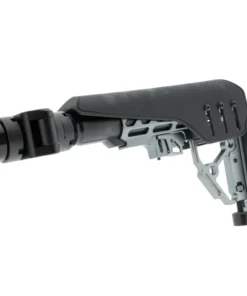


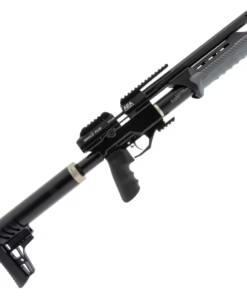
BinTac/AEA S45 .45 Cal Semi-Auto

Price range: €1,000.00 through €1,400.00
Semi-Auto. Integrated Shroud. Available in 4,500 PSI and 7,000 PSI.
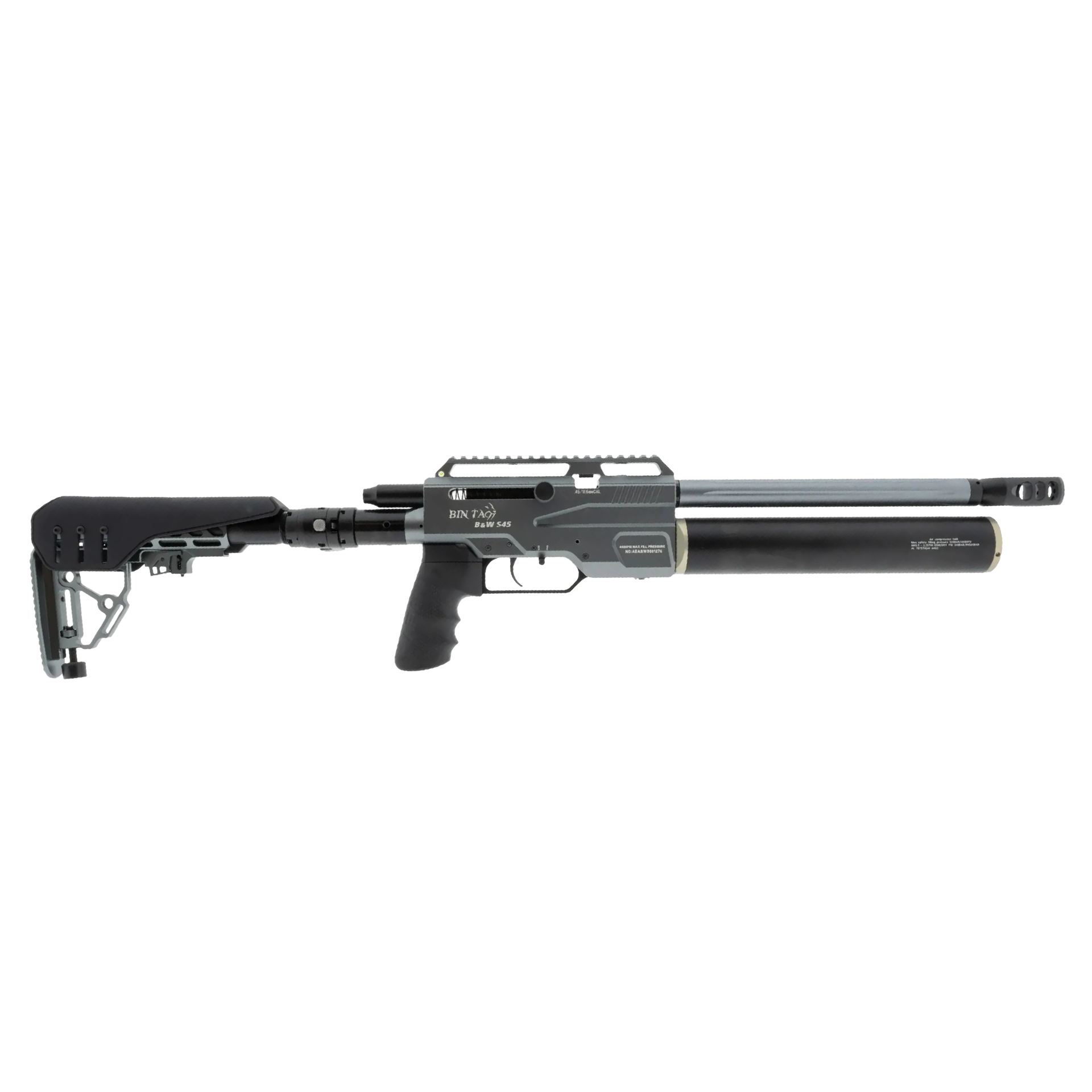
The BinTac S45 is a very hard-hitting semi-automatic .45 caliber big bore PCP air rifle delivering between 300–350+ FPE — matching or exceeding standard .45 ACP ballistics in an air-powered platform. Featuring gas-operated semi-automatic cycling, dual-tank air configuration, integrated shroud silencer and muzzle brake, and Picatinny rail for optics.
Available in two configurations: the 4,500 PSI long-barrel version for maximum shot count and velocity with heavy slugs, and the 7,000 PSI compact version for shooters who want the same big bore performance in a shorter, more maneuverable package.
Overview:
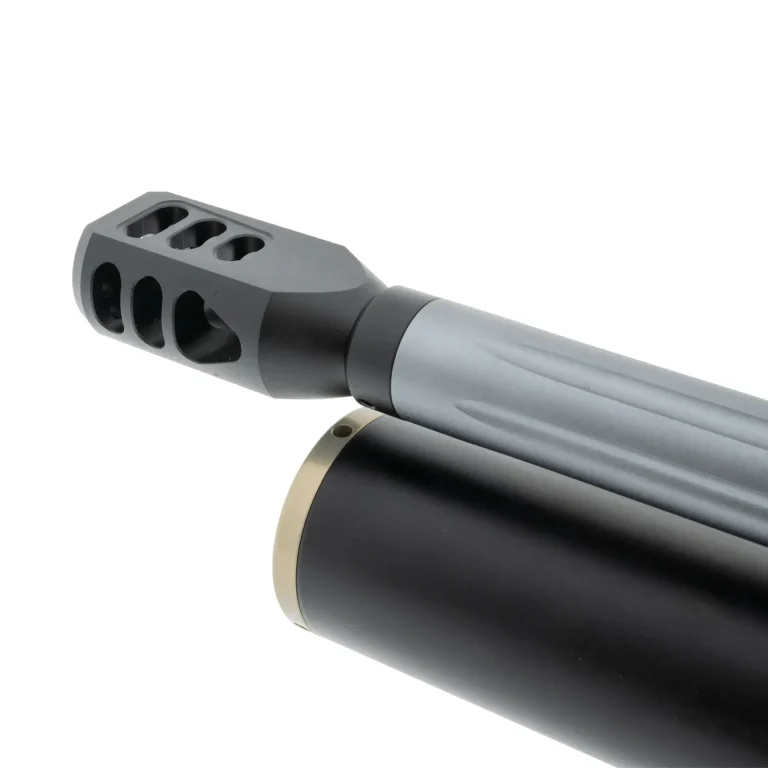
The S45’s gas-operated semi-automatic action delivers rapid-fire big bore shooting capability with the 6-shot CNC detachable magazine, and the dual-tank front and rear bottle setup manages the heavy air consumption demanded by the .45 caliber platform. The integrated shroud silencer and muzzle brake mitigate extreme muzzle blast and recoil for improved control and comfort during extended shooting sessions.
The 4,500 PSI version features a 24″ barrel and 850–950cc dual-tank system for maximum velocity with 235-grain slugs at 800+ FPS and 18+ effective shots per fill.
The 7,000 PSI version trades barrel length for a more compact 36″ overall length — using an inline 4,500 PSI rear tank regulator to ensure consistent shot-to-shot velocities across the high-pressure system, delivering 800+ FPS with 200-grain slugs for 12+ effective shots per fill.
Key Features:
- Gas-operated semi-automatic action for rapid-fire big bore shooting
- 300–350+ FPE — matches or exceeds standard .45 ACP ballistics
- Dual-tank configuration — front and rear air bottles
- Integrated shroud silencer for reduced muzzle blast
- Integrated muzzle brake for recoil mitigation
- Top-mounted Picatinny/Weaver rail for scopes and red dots
- 6-shot CNC detachable magazine
- 7,000 PSI version features inline 4,500 PSI rear tank regulator for consistent velocities
- Available in 4,500 PSI and 7,000 PSI configurations
Specifications per Pressure Variant
| Spec | 4,500 PSI | 7,000 PSI |
|---|---|---|
| Overall Length | 36 inches | 36 inches |
| Weight | ~8 lbs | 10.5–11 lbs |
| Barrel Length | 13-14 inches | 13-14 inches |
| Air Capacity | 350–800cc | 800cc max |
| Fill Pressure | 4,500 PSI | 7,000 PSI (regulated to 4,500 PSI) |
| Muzzle Velocity | 800+ fps (200gr slugs) | 800+ fps (235gr slugs) |
| Shots Per Fill | 12+ effective shots | 18+ effective shots |
Shared Specifications
| Spec | Value |
|---|---|
| Caliber | .45 |
| Action | Gas-operated semi-automatic |
| Magazine Capacity | 6 rounds |
| Max Energy | 300–350+ FPE |
| Optics Rail | Picatinny/Weaver |
| Sound Management | Integrated shroud silencer + muzzle brake |
What’s Included
- BinTac S45 .45 Cal Air Rifle
- Dual air tanks (pre-installed — sizing varies by configuration)
- 2x CNC detachable 6-round magazines
- Fill probe / charging adapter
- Manufacturer’s user manual
BinTac/AEA S45 .45 Cal Semi-Auto – High-Power Big Bore PCP Air Rifle with Advanced Pneumatic Engineering, Precision Construction and Semi-Automatic Technology
BinTac/AEA S45 .45 Cal Semi-Auto – Advanced Big Bore Airgun Technology, Technical Specifications, Precision Engineering, Mechanical Reliability and Modern Performance
BinTac/AEA S45 .45 Cal Semi-Auto – Advanced Pneumatic Engineering
The BinTac/AEA S45 .45 Cal Semi-Auto combines high-pressure pneumatic engineering with a compact, magazine-fed design developed for experienced adult airgun enthusiasts.
Built around a .45-calibre platform, this specialized model features a semi-automatic operating system, substantial air capacity and carefully manufactured mechanical components.
Furthermore, its 13-inch barrel and folding configuration distinguish it from longer conventional sporting designs.
The standard S45 Regular incorporates a six-round magazine, a 350cc aluminum front air tank and a Picatinny optical mounting interface.
Additionally, the manufacturer’s published specifications identify an integrated muzzle brake and a maximum filling pressure of 4,500 PSI.
However, technical characteristics vary across S45 generations. Later versions may incorporate different pressure ratings, barrel lengths and air-storage arrangements.
Consequently, prospective owners should verify the exact model before comparing specifications or selecting accessories.
BinTac/AEA S45 .45 Cal Semi-Auto – Technical Specifications
The following details correspond to the S45 Semi-Auto Regular, rather than every available version.
-
Brand: BinTac / AEA
-
Model: S45 Semi-Auto Regular
-
Category: Big Bore PCP Air Rifle
-
Calibre: .45 (approximately 11.43 mm)
-
Action: Semi-automatic
-
Barrel Length: 13 inches
-
Overall Length: 36 inches
-
Folded Length: 26 inches
-
Approximate Weight: 8 lbs (3.63 kg)
-
Magazine Capacity: 6 rounds
-
Front Air Tank: 350cc aluminum
-
Maximum Filling Pressure: 4,500 PSI
-
Published Muzzle Velocity: Over 800 FPS with the manufacturer’s stated 200-grain reference projectile
-
Advertised Muzzle Energy: Approximately 300+ FPE
-
Optics Mounting: Picatinny rail
-
Muzzle Equipment: Integral muzzle brake
These are published product specifications, not independently verified performance guarantees.
AEA Airguns – Understanding the S45 Product Family
The broader aea airguns and aea guns collections include several pneumatic operating systems and product categories.
For example, consumers researching bintac s45 aea, b&w m50, aea terminator and aea terminator gen 3 encounter different manufacturing generations and configurations.
Furthermore, bintac s45 for sale searches may return both earlier and updated versions.
Consequently, identifying the correct manufacturing version remains essential.
The S45 Regular and later B&W configurations should not be described as mechanically identical without verification.
BinTac T9 – Compact Pneumatic Models and Market Comparisons
Alternative searches include bintac t9, bintac, bin tac, bintac lIc and bintaclic.
Additionally, bintac t9 price, bintac t9 full auto and bintac t9 amazon concern separate commercial listings or product characteristics.
Although the term pistol appears in this market, compact handheld products differ from the rifle configuration discussed here.
Each model requires independent evaluation of its technical documentation.
BinTac M50, T50 Extreme and MCAR – Alternative Engineering Designs
The expressions bintac m50, bintac m50 for sale, bintac m50 pump action, bintac t 50, bintac t50, bintac t50 for sale, bintac t50 extreme and aea bintac t50 extreme identify other products or search categories.
Furthermore, bintac mcar, bintac mcar air rifle and bintac mcar 457 concern a separate product family.
Although these alternatives share a broader market category, their specifications and mechanical arrangements differ.
Therefore, buyers should never assume component interchangeability without manufacturer confirmation.
AEA Megalodon – Large-Calibre Airgun Comparisons
The aea megalodon range represents another branch of specialized pneumatic engineering.
Related expressions include aea megalodon 58 cal, aea megalodon 50 cal price, aea megalodon 50 caliber, aea megalodon air rifle and megalodon air rifle.
Additionally, aea megalodon 58 cal bintac m50 appears in broader product research.
However, these names concern different models and should not be treated as specifications for the S45.
AEA Harpoon – Specialized Pneumatic Technology
The aea harpoon product family attracts searches such as aea harpoon price, aea harpoon magnum, aea harpoon gun, aea harpoon cartridge, aea .50 harpoon, aea harpoon air gun, bintac aea harpoon, harpoon for sale and harpoon air gun.
These products use different configurations and specialized components.
Consequently, Harpoon-related accessories should not be assumed compatible with the S45 platform.
AEA Defender – Compact Sporting Equipment
The expressions aea defender, aea defender 2 and aea defender 3 relate to another segment of the pneumatic equipment market.
Although these products may share certain manufacturing principles, their dimensions and mechanical characteristics differ from the S45.
Consequently, comparisons should focus on verified specifications rather than brand association alone.
AEA Zeus MKII – Big Bore Pneumatic Engineering
The AEA Zeus MKII (Bullpup) Standard 18 Big Bore represents another specialized large-calibre design.
Similarly, zeus 72 cal air rifle price concerns research into a separate product and calibre category.
The Zeus family differs significantly in construction and operating characteristics.
Therefore, published measurements from that family should not be attributed to the S45.
Air Tanks, Accessories and Related Product Categories
Broad accessory searches include anti air tanks, air tank for pep airguns, bee bee gun rifle and airgun shotgun.
However, these expressions do not establish product compatibility.
Pressure-bearing components and accessories require verification against the exact manufacturer’s specifications.
Furthermore, protective storage and professional servicing remain important considerations for responsible ownership.
Why Consider the BinTac/AEA S45 Semi-Auto?
The S45 stands out within the big-bore category through its combination of .45-calibre construction, semi-automatic operation and compact folding design.
Furthermore, the published six-round magazine capacity and Picatinny mounting interface provide clearly identifiable technical characteristics.
Its construction may appeal to experienced enthusiasts evaluating specialized pneumatic equipment for lawful recreational activities at appropriate facilities.
However, actual precision, operating consistency and long-term reliability depend on the individual unit, its condition and appropriate maintenance.
The BinTac/AEA S45 .45 Cal Semi-Auto represents a distinctive combination of high-pressure engineering, specialized mechanical construction and contemporary sporting design.
Before purchasing, buyers should confirm the exact production version, included components, legal requirements and availability of qualified technical support.
Advanced Pneumatic Engineering, Precision Manufacturing, Mechanical Performance, Premium Construction, Technical Reliability, Modern Design and Long-Term Ownership Value
Understanding the Importance of Advanced Pneumatic Engineering
Advanced pneumatic engineering represents an important achievement in modern mechanical technology. Through carefully developed pressure-management systems, specialized structural components and sophisticated manufacturing methods, manufacturers can produce equipment designed for consistent operation under established conditions.
Furthermore, modern engineering allows complex assemblies to combine mechanical functionality with carefully controlled dimensional requirements.
However, technical sophistication alone does not guarantee superior manufacturing quality. Material selection, component accuracy, professional assembly and appropriate maintenance all influence the finished product.
Consequently, buyers should evaluate the complete engineering arrangement rather than focusing exclusively on individual features.
A thoughtfully developed system combines structural integrity, manufacturing consistency and practical design. Moreover, proper maintenance helps preserve these characteristics throughout long-term ownership.
Why Precision Manufacturing Is Essential
Precision manufacturing provides the foundation for sophisticated mechanical equipment.
Modern machining processes allow manufacturers to produce detailed components according to carefully established dimensions. Furthermore, computerized production methods support repeatability across manufacturing batches.
However, accurate machining represents only one stage of product development.
Material preparation, component finishing, professional assembly and quality assurance also contribute to the completed product.
Consequently, reliable construction requires coordinated attention throughout manufacturing.
Carefully controlled production processes help preserve the intended relationships between individual components.
The resulting consistency can contribute to dependable mechanical operation when equipment remains within its approved specifications.
Understanding Premium Mechanical Construction
Premium mechanical construction involves the integration of suitable materials, accurate dimensions and carefully developed component relationships.
Each assembly must correspond to the manufacturer’s original engineering requirements.
Furthermore, modern manufacturing techniques support consistency between individual production units.
However, premium construction should not be judged exclusively by exterior appearance.
The quality of internal components, structural connections and protective finishes also influences long-term value.
Consequently, prospective owners should examine available technical documentation alongside visible manufacturing quality.
A carefully constructed product offers a foundation for responsible maintenance and dependable ownership.
Why Material Selection Matters
Material selection plays a fundamental role in mechanical engineering.
Manufacturers consider strength, hardness, corrosion resistance, dimensional stability and manufacturing suitability when selecting materials.
Furthermore, different components require different physical characteristics because their mechanical responsibilities vary.
Certain applications benefit from strong metal alloys, while others may require specialized polymers or sealing compounds.
However, no single material provides ideal characteristics for every application.
Consequently, engineers must evaluate individual materials within the complete mechanical arrangement.
Appropriate maintenance helps preserve these materials and supports the manufacturer’s intended structural integrity.
Understanding High-Strength Metal Components
Metal components contribute significantly to the structural integrity of modern mechanical assemblies.
Manufacturers may select specialized alloys because of their strength, durability and suitability for precision machining.
Furthermore, carefully manufactured metal components can maintain consistent dimensions throughout production.
However, even high-quality metals remain vulnerable to corrosion, accidental damage and unsuitable modifications.
Consequently, regular inspection remains important.
Protective surface treatments may reduce ordinary environmental deterioration.
Responsible storage and manufacturer-approved maintenance help preserve original construction quality.
Why Structural Integrity Is Important
Structural integrity describes the ability of an assembly to maintain its intended mechanical characteristics under approved conditions.
Manufacturers establish material requirements, dimensional specifications and appropriate construction methods.
Furthermore, professional inspection helps identify manufacturing irregularities.
However, structural condition may change because of physical damage, environmental exposure or unauthorized repairs.
Consequently, suspected deterioration requires qualified assessment.
Owners should avoid improvised structural modifications.
Preserving the manufacturer’s original construction supports responsible long-term ownership and future professional servicing.
Understanding Precision-Machined Components
Precision-machined components require accurate dimensional control and suitable material preparation.
Computer-controlled manufacturing equipment can produce intricate shapes while maintaining established tolerances.
Furthermore, professional measurement procedures support consistency.
However, dimensional accuracy alone cannot establish complete component quality.
Surface characteristics, material suitability and correct assembly remain equally important.
Consequently, manufacturing excellence depends on several interconnected production stages.
A carefully manufactured component contributes value when it functions correctly within the complete approved arrangement.
Why Manufacturing Tolerances Matter
Manufacturing tolerances define acceptable dimensional variations during production.
Different components require different levels of accuracy according to their intended responsibilities.
Furthermore, appropriate tolerances help adjoining components maintain the relationships established during engineering development.
However, extremely small tolerances do not automatically indicate superior design.
Engineers must balance dimensional accuracy with material characteristics and practical manufacturing requirements.
Consequently, successful production depends on selecting appropriate tolerances for each component.
Professional quality assurance helps establish whether the completed assembly satisfies its intended specifications.
Understanding Advanced Pressure-System Construction
Compressed-gas systems require carefully manufactured pressure-bearing components.
Their design incorporates specialized materials, structural calculations and established operating limitations.
Furthermore, modern production methods contribute to consistent component construction.
However, pressure-bearing equipment creates important safety responsibilities.
Damage, contamination or unauthorized modifications may compromise structural integrity.
Consequently, owners must follow the manufacturer’s operating restrictions and maintenance instructions.
Professional assessment remains essential whenever pressure-related damage or unusual mechanical behavior develops.
Why Pressure Management Requires Professional Attention
Pressure-management technology relies on specialized mechanical assemblies designed for established operating conditions.
Manufacturers must consider material strength, dimensional accuracy and component compatibility.
Furthermore, suitable quality assurance contributes to structural reliability.
However, pressure-bearing components should never receive unauthorized adjustments or improvised repairs.
Consequently, professional servicing remains necessary when technical concerns arise.
Maintaining the manufacturer’s approved configuration helps preserve the original engineering design.
Responsible ownership requires continued awareness of applicable inspection and maintenance obligations.
Understanding Pressure Vessel Engineering
Pressure vessels represent specialized structures manufactured for defined operating conditions.
Their construction requires appropriate materials, professional production and relevant inspection procedures.
Furthermore, identification markings can provide important information about individual components.
However, external appearance cannot reveal every internal concern.
Previous impact, corrosion or unsuitable storage may influence structural condition.
Consequently, damaged vessels should receive qualified assessment.
Unauthorized alterations must be avoided.
Appropriate documentation supports responsible equipment management throughout ownership.
Why Sealing Technology Matters
Sealing components perform essential functions within specialized pneumatic systems.
Manufacturers select suitable compounds according to pressure requirements, environmental conditions and compatibility with surrounding materials.
Furthermore, precise manufacturing helps maintain appropriate dimensional relationships.
However, sealing materials may deteriorate through aging, contamination or unsuitable chemical exposure.
Consequently, inspection and replacement should follow manufacturer guidance.
Unverified lubricants or incompatible materials may create additional maintenance concerns.
Professional servicing helps preserve the intended mechanical arrangement.
Understanding Mechanical Reliability
Mechanical reliability represents an important characteristic of sophisticated sporting equipment.
A carefully manufactured assembly should operate according to the conditions established by its manufacturer.
Furthermore, consistent production methods contribute to predictable component relationships.
However, reliability depends on several interconnected factors.
Material quality, manufacturing precision, proper maintenance and environmental exposure all influence long-term condition.
Consequently, unexpected changes in mechanical behavior should receive professional attention.
Preserving the original configuration supports dependable ownership.
Why Mechanical Consistency Is Valuable
Mechanical consistency reflects the interaction between accurate manufacturing and suitable component construction.
Carefully selected materials help preserve the intended relationships between adjoining assemblies.
Furthermore, professional quality assurance contributes to manufacturing repeatability.
However, ordinary use may gradually influence mechanical condition.
Consequently, owners should remain attentive to unusual changes.
Qualified inspection may become necessary when deterioration is suspected.
Appropriate servicing helps maintain the manufacturer’s established specifications.
Understanding Modern Mechanical Controls
Mechanical controls require carefully designed components and appropriate manufacturing tolerances.
Manufacturers consider geometry, material strength and structural compatibility throughout development.
Furthermore, professional assembly helps maintain correct component relationships.
However, complex internal mechanisms should never receive unauthorized modifications.
Consequently, technical servicing must follow approved procedures.
Unexpected resistance, unusual movement or visible damage requires appropriate evaluation.
Responsible maintenance supports the preservation of the original design.
Why Safety Engineering Is Essential
Safety engineering forms an important part of modern sporting equipment development.
Manufacturers establish technical requirements intended to address foreseeable operating conditions.
Furthermore, carefully manufactured components contribute to mechanical integrity.
However, no mechanical safety system can eliminate every risk associated with careless handling.
Consequently, owners must understand the manufacturer’s instructions and applicable safety responsibilities.
Secure storage remains essential.
Responsible behavior should take priority over convenience or personal familiarity with the equipment.
Understanding Modern Ergonomic Design
Ergonomic design considers the relationship between equipment dimensions and individual physical characteristics.
Manufacturers examine exterior contours, contact surfaces, structural proportions and overall weight.
Furthermore, thoughtful design can contribute to convenient handling and transportation.
However, individual preferences vary considerably.
A configuration comfortable for one person may not suit another.
Consequently, prospective owners should consider their physical requirements and relevant manufacturer guidance.
Successful ergonomic construction combines practical comfort with dependable structural engineering.
Why Weight Distribution Matters
Overall weight represents only one characteristic of mechanical equipment.
Different component arrangements can influence the perception of balance during ordinary handling.
Furthermore, separately fitted accessories may alter the completed configuration.
However, lighter equipment does not automatically provide superior quality.
Structural strength, manufacturing materials and individual preferences remain important.
Consequently, weight distribution should be considered alongside overall construction.
Thoughtful engineering balances practical comfort with appropriate structural requirements.
Understanding Lightweight Construction
Lightweight construction involves selecting suitable materials and developing efficient component arrangements.
Manufacturers must balance reduced mass with mechanical strength and durability.
Furthermore, careful design can eliminate unnecessary structural weight.
However, excessive weight reduction may conflict with other engineering priorities.
Consequently, successful lightweight construction requires comprehensive material knowledge.
The strongest designs maintain appropriate structural characteristics while avoiding unnecessary complexity.
Why Exterior Finishing Quality Matters
Exterior finishing contributes to both product appearance and material protection.
Manufacturers may use specialized coatings or surface treatments according to the underlying materials.
Furthermore, consistent finishing reflects attention to production quality.
However, protective surfaces remain vulnerable to abrasion, contamination and unsuitable cleaning methods.
Consequently, owners should follow manufacturer-approved care procedures.
Appropriate maintenance helps preserve the original appearance.
Cosmetic condition should nevertheless remain separate from professional assessment of mechanical integrity.
Understanding Corrosion Protection
Corrosion can influence exposed metal components under unsuitable environmental conditions.
Humidity, contamination and improper storage may contribute to deterioration.
Furthermore, protective treatments provide varying levels of resistance.
However, corrosion-resistant materials are not completely immune to environmental damage.
Consequently, regular visual inspection remains valuable.
Significant deterioration affecting structural components requires professional evaluation.
Clean, dry storage helps preserve manufactured surfaces.
Why Surface Durability Is Important
Surface durability contributes to the preservation of exterior components during ordinary ownership.
Manufacturers consider material hardness, protective treatments and expected environmental exposure.
Furthermore, appropriate finishing can reduce certain forms of cosmetic deterioration.
However, repeated contact may eventually produce visible wear.
Consequently, owners should distinguish ordinary cosmetic marks from suspected structural damage.
Professional inspection becomes important when deterioration affects mechanical integrity.
Careful handling supports long-term presentation and preservation.
Understanding Optical Equipment Quality
Modern optical equipment incorporates specialized lenses, carefully manufactured housings and sophisticated internal components.
Manufacturers consider material quality, optical clarity and mechanical consistency.
Furthermore, protective coatings may contribute to visual performance.
However, advertised magnification alone cannot establish overall optical quality.
Lens construction, environmental conditions and individual eyesight also influence the viewing experience.
Consequently, buyers should consider verified technical information rather than promotional specifications alone.
Why Lens Construction Matters
Lens construction requires careful control of material characteristics and optical geometry.
Manufacturers may incorporate multiple elements within a coordinated optical arrangement.
Furthermore, precision manufacturing contributes to consistency between individual components.
However, the number of lens elements does not automatically establish superior image quality.
Optical design, protective coatings and professional assembly remain important.
Consequently, overall quality should be evaluated through the complete optical system.
Understanding Protective Lens Coatings
Protective optical coatings can influence light transmission and reflection characteristics.
Manufacturers develop specialized treatments according to the intended application.
Furthermore, consistent coating processes contribute to product quality.
However, delicate optical surfaces may be damaged by unsuitable cleaning chemicals.
Consequently, owners should use appropriate maintenance materials.
Careful storage and protective covers help reduce unnecessary environmental exposure.
Why Optical Housing Strength Matters
Optical housings protect delicate internal assemblies against ordinary handling and environmental conditions.
Manufacturers select suitable materials according to structural and practical requirements.
Furthermore, careful assembly supports component integrity.
However, accidental impact can affect internal condition even when exterior damage appears limited.
Consequently, suspected damage should receive appropriate assessment.
Protective transportation and secure storage contribute to long-term preservation.
Understanding Accessory Compatibility
Accessory compatibility depends on dimensions, mounting standards and manufacturer-approved specifications.
Different components may appear similar without sharing identical technical requirements.
Furthermore, production generations may introduce changes that influence compatibility.
Consequently, buyers should verify accessory suitability before purchase.
Unauthorized modifications may compromise structural integrity.
Accurate documentation helps identify appropriate components and supports future servicing.
Why Complete Accessory Documentation Matters
A clear accessory inventory helps prospective owners understand the exact contents of a package.
Furthermore, accurate descriptions distinguish included components from separately available products.
However, promotional photographs may occasionally display accessories that are not included.
Consequently, buyers should request confirmation before purchase.
Product documentation should identify important components individually.
Transparent information helps prevent misunderstandings and supports informed decision-making.
Understanding Professional Quality Assurance
Quality assurance contributes to consistency throughout manufacturing.
Inspection procedures may examine dimensions, surface condition, structural integrity and assembly quality.
Furthermore, documented production processes support traceability.
However, final visual inspection cannot establish every internal mechanical characteristic.
Consequently, quality control should extend throughout production.
Carefully developed inspection procedures contribute to dependable manufacturing standards.
Why Skilled Manufacturing Professionals Matter
Experienced engineers and technicians contribute valuable knowledge throughout product development.
Their expertise supports material selection, mechanical design, production planning and professional inspection.
Furthermore, practical experience helps identify manufacturing challenges.
However, manufacturer reputation alone cannot establish the quality of every individual product.
Consequently, buyers should consider actual construction and verified documentation.
Professional expertise provides meaningful value when supported by consistent quality standards.
Understanding Routine Maintenance
Routine maintenance helps preserve the intended condition of specialized mechanical equipment.
Owners should follow manufacturer instructions concerning cleaning, inspection and storage.
Furthermore, accurate maintenance records can provide useful information about previous servicing.
However, ordinary exterior care should remain separate from complex internal maintenance.
Consequently, unauthorized disassembly should be avoided.
Professional attention may become necessary when mechanical concerns develop.
Why Professional Servicing Supports Reliability
Professional servicing provides access to specialized technical knowledge and appropriate inspection procedures.
Qualified technicians can evaluate damaged components, ordinary wear and maintenance requirements.
Furthermore, genuine replacement parts support compatibility with the original design.
However, servicing must follow applicable manufacturer instructions.
Consequently, owners should seek appropriately qualified professionals.
Accurate records help document completed work and support future inspections.
Understanding Genuine Replacement Components
Replacement components must correspond to the manufacturer’s approved specifications.
Visually similar parts may differ in material characteristics or dimensions.
Furthermore, production changes can influence compatibility between equipment generations.
Consequently, unverified substitutions should be avoided.
Authorized technical providers can help identify suitable components.
Professional installation supports the preservation of mechanical integrity.
Why Maintenance Records Add Long-Term Value
Maintenance records provide useful information about the service history of specialized equipment.
They may identify inspections, approved repairs and component replacements.
Furthermore, organized documentation supports future professional assessments.
However, historical servicing cannot automatically establish present condition.
Consequently, current inspection remains important.
Transparent maintenance information contributes to responsible ownership and informed purchasing decisions.
Understanding Environmental Storage Requirements
Storage conditions influence the preservation of metal components, polymers and specialized mechanical materials.
Excessive humidity, unsuitable temperatures and contamination may contribute to deterioration.
Furthermore, prolonged environmental exposure can affect equipment even during periods of limited use.
Consequently, appropriate storage remains essential.
However, favorable storage conditions cannot replace professional maintenance.
Regular condition assessment supports long-term preservation.
Why Humidity Protection Matters
Humidity can influence metal surfaces and certain mechanical components.
Prolonged damp conditions may contribute to corrosion or contamination.
Furthermore, temperature changes can encourage condensation.
Consequently, equipment should remain in suitable storage environments.
However, previously exposed components may require professional assessment.
Preventive care supports material preservation and helps reduce avoidable deterioration.
Understanding Temperature Stability
Different engineering materials respond differently to temperature variation.
Metals, polymers and specialized sealing compounds possess distinct physical characteristics.
Furthermore, prolonged excessive heat may influence protective finishes.
Consequently, owners should follow manufacturer storage recommendations.
However, normal seasonal changes do not automatically establish damage.
Suitable environmental protection supports responsible long-term care.
Why Protective Transportation Is Important
Transportation exposes mechanical equipment to vibration, accidental contact and environmental changes.
Suitable protective cases may reduce unnecessary cosmetic damage.
Furthermore, organized packing prevents loose accessories from contacting sensitive components.
However, protective packaging cannot eliminate every transportation hazard.
Consequently, equipment should receive appropriate inspection after significant travel.
Applicable transportation regulations must also be followed.
Understanding Secure Storage Responsibilities
Secure storage protects specialized equipment from unauthorized access.
Furthermore, suitable storage conditions contribute to material preservation.
However, physical security represents only one consideration.
Humidity, temperature and environmental contamination may also influence long-term condition.
Consequently, responsible owners should combine access control with appropriate environmental protection.
Safe storage remains a fundamental ownership responsibility.
Why Product Authenticity Matters
Product authenticity helps establish whether equipment corresponds to its claimed manufacturing identity.
Identification markings and original documentation provide useful information.
Furthermore, reputable supply channels can support verification.
However, exterior markings alone cannot establish complete mechanical condition.
Consequently, authenticity checks should complement professional inspection.
Accurate identification supports maintenance and future technical assistance.
Understanding Warranty Protection
Warranty protection provides a framework for addressing qualifying manufacturing defects.
Manufacturers and retailers establish specific coverage terms and exclusions.
Furthermore, proof of purchase may be required when requesting support.
However, accidental damage, ordinary wear and unauthorized modifications may fall outside warranty coverage.
Consequently, buyers should review applicable conditions before purchasing.
Clear documentation supports realistic expectations.
Why After-Sales Support Matters
After-sales support contributes to the overall ownership experience.
Authorized providers may offer technical guidance, replacement components and professional servicing.
Furthermore, reliable communication can simplify legitimate maintenance concerns.
However, support availability differs between regions.
Consequently, buyers should verify accessible technical assistance.
Reliable support adds value beyond the initial purchase.
Understanding Long-Term Durability
Durability depends on original manufacturing quality, environmental exposure and maintenance history.
Carefully manufactured components may provide extended service when properly maintained.
Furthermore, secure storage and protective transportation contribute to preservation.
However, no mechanical equipment remains permanently unaffected by wear.
Consequently, periodic professional assessment remains important.
Long-term durability reflects construction quality combined with responsible ownership.
Why Total Ownership Costs Matter
The initial purchase price represents only part of the financial commitment.
Professional servicing, replacement components and protective storage may create additional expenses.
Furthermore, regional regulations can influence ownership costs.
However, future maintenance expenses cannot always be predicted precisely.
Consequently, responsible budgeting should accommodate foreseeable requirements.
A realistic financial assessment supports long-term purchasing satisfaction.
Understanding Legal Compliance
Legal requirements vary between countries and jurisdictions.
Certain equipment configurations may require licensing, registration or other authorization.
Furthermore, transportation and importation can involve additional restrictions.
However, manufacturer specifications do not override applicable laws.
Consequently, prospective owners should verify current requirements before purchasing.
Responsible compliance supports lawful ownership.
Why Authorized Recreational Facilities Matter
Authorized recreational facilities provide environments governed by established safety procedures.
Furthermore, professional supervision may help participants understand equipment responsibilities.
However, access requirements differ between locations.
Consequently, individuals should verify applicable rules before participating.
Suitable facilities support organized recreational activities while emphasizing responsible conduct.
Safety should remain the primary consideration.
Understanding Responsible Ownership
Responsible ownership combines appropriate equipment selection with maintenance, secure storage and legal compliance.
Furthermore, individuals should understand the limitations established by the manufacturer.
However, personal confidence cannot replace professional technical qualifications.
Consequently, specialized servicing should remain the responsibility of trained personnel.
A safety-focused approach supports equipment preservation and responsible recreational participation.
Why Transparent Product Information Builds Confidence
Accurate product descriptions help buyers understand manufacturing characteristics, technical specifications and included components.
Furthermore, clear documentation distinguishes verified information from promotional estimates.
However, exaggerated claims can create unrealistic expectations.
Consequently, responsible descriptions should communicate relevant limitations alongside technical features.
Transparent information supports informed decisions and long-term customer confidence.
Understanding Long-Term Ownership Satisfaction
Ownership satisfaction depends on more than original appearance or purchase price.
Manufacturing quality, maintenance accessibility and component compatibility all influence practical value.
Furthermore, accurate documentation supports future servicing.
However, premium styling alone cannot guarantee dependable mechanical condition.
Consequently, buyers should evaluate the complete ownership experience.
Responsible maintenance contributes to lasting satisfaction.
Final Assessment of Engineering Excellence, Manufacturing Quality and Responsible Long-Term Ownership
Premium mechanical equipment reflects the combined expertise of engineers, material specialists and experienced manufacturing professionals.
Its overall quality depends on carefully selected materials, accurate production methods and dependable structural relationships.
Furthermore, professional quality assurance contributes to manufacturing consistency.
Advanced pneumatic technology demonstrates the importance of specialized pressure-bearing assemblies and appropriate mechanical integrity.
However, sophisticated engineering creates corresponding maintenance responsibilities.
Pressure-bearing components must remain within manufacturer-approved operating limits.
Consequently, unauthorized modifications and improvised repairs should always be avoided.
Professional servicing supports the preservation of mechanical condition.
Furthermore, appropriate storage helps protect materials against environmental deterioration.
Accurate documentation contributes to future inspection and maintenance decisions.
For prospective owners, important considerations include verified technical specifications, authentic manufacturing, component compatibility and available after-sales support.
However, attractive exterior presentation cannot independently establish superior quality.
Long-term value depends on the relationship between original construction standards and responsible ownership.
Consequently, purchasing decisions should account for both immediate suitability and future maintenance responsibilities.
Carefully selected equipment may provide meaningful satisfaction when supported by dependable construction, realistic expectations and professional technical assistance.
Ultimately, responsible ownership requires continued attention to mechanical condition, safe handling, secure storage and applicable regulations.
The greatest long-term value comes from combining precision manufacturing, high-quality materials, professional maintenance, reliable documentation and responsible equipment care.
Be the first to review “BinTac/AEA S45 .45 Cal Semi-Auto”
Related products


AEA Air Gun
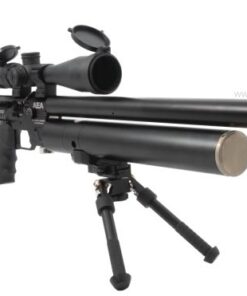
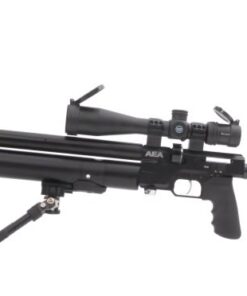
AEA Air Gun

AEA Air Gun



Reviews
There are no reviews yet.