
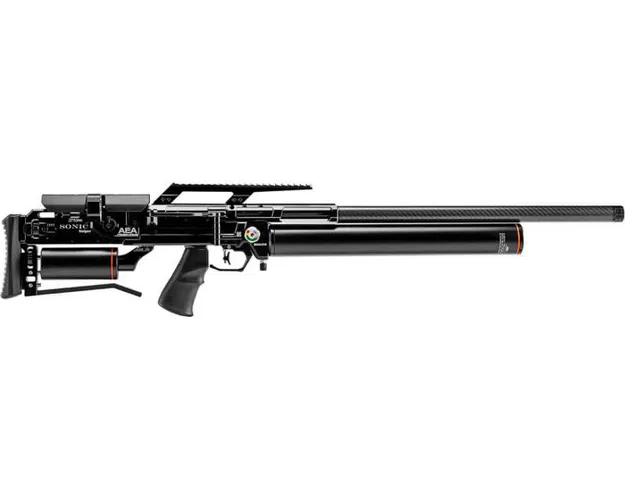
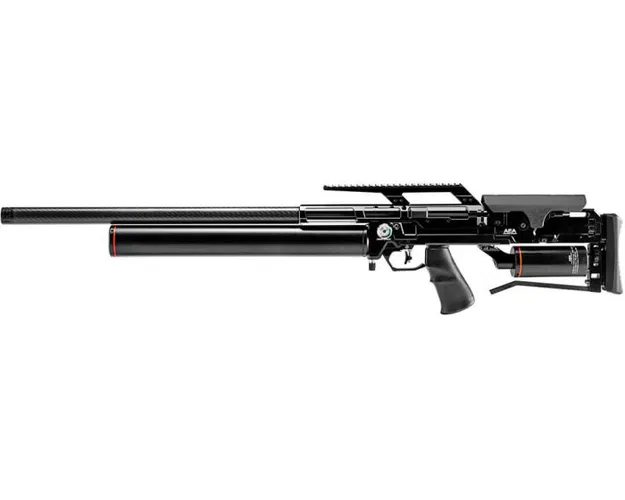
AEA Sonic Sniper

€750.00
-
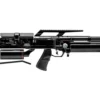
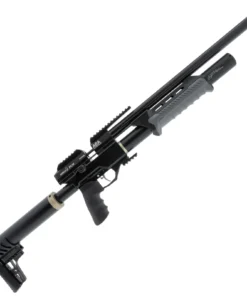
The AEA Sonic Sniper is a remarkable bullpup PCP air rifle that delivers exceptional performance. This rifle sets itself apart with its ultra-high pressure capability, resulting in a high shot count and extreme velocities from a single fill. This makes the AEA Sonic Sniper a revolutionary air rifle for serious shooters.
With an impressive maximum fill pressure of 480 bar (7000 psi) and an adjustable regulator ranging from 100 to 250 bar, this air rifle delivers extremely powerful and consistent shots. The large 100 cc plenum supports a stable airflow, which translates into high velocities and precision. In the .30 calibre version, it can even break the sound barrier with a 50 grain slug, reaching supersonic speeds of up to 426 m/s (1400 fps)!
The shot count per fill with the Sonic Sniper is equally impressive. Depending on the calibre, you can fire up to 180 shots (.22 cal), 90 shots (.25 cal) or 30 shots (.30 cal) on a single tank. This allows the shooter to focus more on shooting, rather than frequently refilling the air reservoir.
The AEA Sonic Sniper features a Weaver/Picatinny rail for mounting a scope or other optics. In addition, the rifle is equipped with an adjustable stock to ensure the most ergonomic shooting position for every user. The Foster quick-disconnect fitting allows for fast and easy refilling of the air tank.
AEA Sonic Sniper features:
- Bullpup PCP
- Fires projectiles at extremely high velocity
- Adjustable regulator (100-250 bar)
- 100 cc plenum
- High shot count per fill
- Foster quick-disconnect fitting
- Weaver/picatinny rail for optics
- Adjustable stock
- Rubberised grip
BrandAEA Airguns StatusNew Calibre5.5 mm (.22), 6.35 mm (.25), 7.62 mm (.30) Power sourcePCP Cylinder capacity (cc)400 Fill pressure (bar / psi)480 / 6962 RegulatedYes Energy (Joule)160, 200, 270 Cocking systemSide lever Magazine capacity9, 10, 12 Weight (gram)4900 Barrel length (mm)813 Total length (mm)1006 Riflescope includedNo Mounting rail typeWeaver / Picatinny StockAmbidextrous Stock materialAluminium / Synthetic SightsNo open sights Extras2 magazines, Tools
AEA Sonic Sniper – Technical Ultra-High-Pressure PCP Air Rifle Overview
AEA Sonic Sniper Architecture, Pressure System, Caliber Options, and Related AEA/BinTac Terminology
AEA Sonic Sniper
The AEA Sonic Sniper is the 32-inch-barrel version of the Sonic family. Compared with the shorter Compact version, the Sniper emphasizes maximum barrel length and higher manufacturer-rated energy within the same core platform.
Bullpup Architecture
The Sonic uses a compact bullpup layout.
This arrangement places much of the action farther rearward, helping accommodate a long barrel without requiring a traditional full-length rifle layout.
The result is a configuration that combines substantial barrel length with comparatively concentrated overall packaging.
32-Inch Barrel
The Sniper uses a 32-inch barrel, whereas the Compact model uses 18 inches.
Barrel length influences pneumatic efficiency and velocity potential, but practical precision still depends on ammunition consistency, barrel condition, mechanical alignment, pressure stability, sighting equipment, and environmental conditions.
480 BAR / 7000 PSI Maximum Fill Pressure
One of the most technically distinctive characteristics is the 480 BAR / 7000 PSI maximum fill pressure.
That places the Sonic among exceptionally high-pressure production PCP systems. Only equipment specifically rated for the required pressure range should be used with the system.
Adjustable Regulator
AEA lists an adjustable regulator operating between 100 and 250 BAR.
The regulator helps manage pressure delivered from the reservoir to the firing system, supporting more predictable pneumatic behavior.
100cc Plenum
The current Sonic specification includes a 100cc plenum.
The plenum acts as an intermediate air volume between the regulated supply and firing valve, forming an important part of the rifle’s high-output pneumatic architecture.
Caliber Options
AEA currently offers the Sonic in .22, .25, and .30 caliber.
Magazine capacity varies by caliber, with 12 rounds listed for .22, 10 for .25, and 9 for .30.
.22 Configuration
The .22 Sniper is currently rated by AEA at up to 120 FPE / 160 J.
That figure is a manufacturer maximum rather than a guarantee for every individual rifle or ammunition combination.
.25 Configuration
The .25 Sniper is listed at up to 150 FPE / 200 J.
As with all pneumatic platforms, actual output depends on setup, ammunition, pressure state, and mechanical condition.
.30 Configuration
The .30 Sniper carries the highest current manufacturer figure at up to 200 FPE / 270 J, with AEA also noting velocities up to approximately 1400 FPS in the platform.
AEA Airguns
aea airguns refers to the wider AEA product family.
The current catalog includes bolt-action, semi-automatic, pump-action, and other PCP platforms, including the Sonic, Zeus, Megalodon, Terminator, Challenger, and SF families.
AEA Guns
The phrase aea guns is broad brand terminology rather than a model-specific designation.
The Sonic should therefore be described through its own specifications rather than by transferring figures from other AEA models.
BinTac
bintac is associated with a separate airgun catalog and distribution ecosystem.
It should not automatically be used as another name for the Sonic.
Bin Tac
The phrase bin tac is simply a spacing variation of the same brand term.
BinTac LLC
bintac llc refers to the BinTac company rather than the AEA Sonic model designation.
Bintaclic
The phrase bintaclic appears to be a spelling or search variation of BinTac-related terminology.
BinTac T9
The bintac t9 is a different pneumatic platform.
Its operating characteristics should not be transferred to the Sonic.
BinTac T9 Price
The phrase bintac t9 price concerns another model’s retail cost rather than Sonic engineering.
BinTac T9 Full Auto
The phrase bintac t9 full auto describes another operating concept and should not be used to characterize the Sonic Sniper.
BinTac T9 Amazon
The phrase bintac t9 amazon is retail-search terminology rather than a Sonic specification.
BinTac M50
The bintac m50 is another large-bore pneumatic platform.
It does not share the Sonic’s exact caliber, barrel, regulator, or pressure specifications.
BinTac M50 for Sale
The phrase bintac m50 for sale concerns commercial availability rather than technical information.
BinTac M50 Pump Action
The phrase bintac m50 pump action refers to another mechanical architecture.
B&W M50
b&w m50 is another model-family term and should not be treated as a Sonic designation.
BinTac T50
The bintac t50 is a separate platform.
Its specifications should not be mixed with the Sonic Sniper.
BinTac T 50
bintac t 50 is simply another formatting variation of the same model term.
BinTac T50 Extreme
The phrase bintac t50 extreme identifies another configuration rather than the Sonic.
BinTac T50 for Sale
The phrase bintac t50 for sale is commercial search terminology.
AEA BinTac T50 Extreme
The phrase aea bintac t50 extreme combines related brand terminology but does not identify the Sonic Sniper.
BinTac S45 AEA
The phrase bintac s45 aea refers to another pneumatic family.
BinTac S45 for Sale
The phrase bintac s45 for sale concerns another model.
BinTac MCAR
The bintac mcar is a separate long-range PCP platform.
It should not be confused with the Sonic even though both may appear in long-range pneumatic searches.
BinTac MCAR Air Rifle
The phrase bintac mcar air rifle therefore refers to another product family.
BinTac MCAR 457
The phrase bintac mcar 457 concerns another caliber and architecture.
AEA Harpoon
The aea harpoon belongs to another AEA-related pneumatic platform family and should not be treated as another name for the Sonic.
AEA Harpoon Price
The phrase aea harpoon price concerns pricing for that separate product.
BinTac AEA Harpoon
The phrase bintac aea harpoon relates to the Harpoon ecosystem rather than Sonic specifications.
AEA Harpoon Magnum
The aea harpoon magnum belongs to another configuration family.
AEA Harpoon Gun
The phrase aea harpoon gun describes another model rather than the Sonic.
AEA Harpoon Cartridge
The phrase aea harpoon cartridge concerns Harpoon-specific equipment and is unrelated to Sonic magazine architecture.
AEA .50 Harpoon
The aea .50 harpoon operates in a much larger caliber class than the Sonic’s .22/.25/.30 range.
AEA Harpoon Air Gun
The phrase aea harpoon air gun again refers to the separate Harpoon platform.
Harpoon Air Gun
harpoon air gun is broad terminology rather than a Sonic designation.
Harpoon for Sale
The phrase harpoon for sale concerns retail availability, not Sonic engineering.
AEA Megalodon
The aea megalodon is part of AEA’s pump-action category rather than the Sonic platform. AEA currently lists Megalodon variants separately from the Sonic.
AEA Megalodon Air Rifle
The phrase aea megalodon air rifle therefore refers to another model family.
Megalodon Air Rifle
Likewise, megalodon air rifle is not another name for the Sonic.
AEA Megalodon 58 Cal
The phrase aea megalodon 58 cal concerns a significantly larger caliber than the Sonic’s available range.
AEA Megalodon 50 Cal Price
The phrase aea megalodon 50 cal price concerns another platform and commercial query.
AEA Megalodon 50 Caliber
The phrase aea megalodon 50 caliber does not describe the Sonic.
AEA Megalodon 58 Cal BinTac M50
This combined phrase mixes multiple unrelated model names and should not be interpreted as one verified specification.
AEA Defender
The aea defender belongs to another AEA-family platform.
AEA Defender 2
The phrase aea defender 2 refers to another generation or configuration.
AEA Defender 3
Likewise, aea defender 3 does not identify the Sonic.
AEA Terminator
The aea terminator belongs to AEA’s semi-automatic category. AEA currently lists the Terminator separately from the Sonic and SF models.
AEA Terminator Gen 3
The phrase aea terminator gen 3 refers to another generation of the Terminator platform.
AEA Zeus MKII (Bullpup) Standard 18 Big Bore
The AEA Zeus MKII (Bullpup) Standard 18 Big Bore belongs to a very different large-bore category.
The Zeus family is listed separately from the Sonic within AEA’s current catalog.
Zeus 72 Cal Air Rifle Price
The phrase zeus 72 cal air rifle price concerns a large-bore Zeus model rather than the Sonic Sniper.
Pistol
The term pistol does not accurately describe the Sonic Sniper, which is a bullpup rifle-format PCP platform.
Bee Bee Gun Rifle
The phrase bee bee gun rifle generally refers to small-caliber BB equipment.
The Sonic instead uses .22, .25, or .30 caliber airgun projectiles depending on configuration.
Airgun Shotgun
The phrase airgun shotgun describes another projectile and barrel architecture and does not apply to the Sonic.
Anti Air Tanks
The phrase anti air tanks is unrelated terminology and should not be confused with PCP reservoirs.
Air Tank for PCP Airguns
The phrase air tank for PCP airguns relates generally to external compressed-air equipment.
Because the Sonic can operate at up to 480 BAR / 7000 PSI, any external charging system must be specifically rated for the required pressure range.
Why the Sniper Configuration Matters
The principal difference between the Sonic Compact and Sonic Sniper is barrel length.
The Sniper uses a 32-inch barrel, compared with 18 inches for the Compact, and AEA lists higher maximum energy figures for the Sniper across all three calibers.
Why the High-Pressure Architecture Matters
The 480 BAR maximum fill pressure is central to the Sonic’s engineering.
Such pressure creates a substantially different servicing environment from conventional lower-pressure PCP systems.
Pressure-rated components, correct filling equipment, and professional servicing are particularly important.
Why the Regulator and Plenum Matter
The adjustable regulator and 100cc plenum work together as part of the rifle’s pressure-management architecture.
The regulator controls incoming pressure, while the plenum stores the regulated air volume available to the firing system.
Precision Considerations
Practical precision depends on the complete system.
Barrel condition, projectile consistency, pressure stability, regulator health, sight mounting, mechanical alignment, and environmental conditions all contribute.
A long barrel or high velocity figure alone does not guarantee accuracy.
Important Pressure-System Information
AEA’s current official listing specifies 480 BAR / 7000 PSI maximum fill pressure and a 100–250 BAR regulator range.
Because those pressures are unusually high for an air rifle, any reservoir damage, questionable fittings, gauge problems, unexplained leakage, or undocumented internal modification should receive qualified assessment before continued use.
Overall Technical Perspective
The AEA Sonic Sniper is best characterized as a 32-inch-barrel, bullpup PCP platform offered in .22, .25, and .30 caliber, with 480 BAR maximum fill pressure, 100–250 BAR regulator range, 100cc plenum, and magazine capacities of 12, 10, and 9 rounds respectively.
Its defining technical characteristics are the ultra-high-pressure pneumatic system, long Sniper barrel, regulated airflow architecture, compact bullpup packaging, and multi-caliber availability. For responsible ownership, the most important considerations are strict adherence to the supplied manual, secure unloaded storage, compatible ammunition, appropriate protective equipment, pressure-rated charging hardware, and qualified servicing whenever structural or pneumatic integrity becomes uncertain.
Engineering Design, Bullpup Handling, High-Pressure Architecture, Precision Factors, and Practical Performance
The long-barrel configuration combines a compact bullpup layout with a substantial pressure system, long internal barrel path, regulated air delivery, and magazine-fed operation. These characteristics create a platform that is mechanically different from a conventional small-caliber recreational air rifle. Therefore, overall quality should be evaluated through the condition and interaction of the complete system rather than by one headline figure. Barrel integrity, regulator behavior, pressure retention, sight stability, mechanical alignment, ammunition consistency, and maintenance all influence real-world performance.
Bullpup Architecture
The bullpup layout places the action farther toward the rear of the rifle.
This allows a long barrel to be fitted without creating the same overall length that a conventional stock arrangement would require.
As a result, the platform combines substantial barrel length with a comparatively compact external profile.
Long-Barrel Characteristics
A long barrel can support efficient use of compressed air by allowing expanding gas to act over a greater internal distance.
However, barrel length alone does not guarantee superior precision.
The internal bore, crown condition, alignment, mounting rigidity, projectile quality, and pressure consistency all remain important.
Overall Balance
Bullpup construction changes where the rifle’s mass is concentrated.
The action, reservoir, and mechanical components sit farther rearward than on a conventional design.
This can make the rifle feel more centralized in balance, although optics and other accessories can alter that relationship.
Handling Comfort
Comfort depends on individual body proportions.
Shoulder position, cheek placement, trigger reach, grip geometry, and overall weight all influence how naturally the platform fits.
A configuration that feels compact does not necessarily feel lightweight.
High-Pressure Reservoir
The pressure reservoir is one of the most important components from a structural perspective.
It stores compressed air at unusually high pressure and should remain free from serious dents, deep scratches, corrosion, swelling, or deformation.
Any suspected reservoir damage should receive professional assessment.
Pressure-System Integrity
The complete pressure system includes the reservoir, regulator, plenum, valves, seals, fittings, and gauges.
Each component must remain within manufacturer specifications.
Persistent leakage, unexplained pressure loss, or visible damage should result in use being stopped until the problem has been properly assessed.
Regulator Function
A regulator helps manage the pressure delivered from the main reservoir to the firing system.
Stable regulation contributes to more predictable operation across the usable pressure range.
However, internal regulator work should remain within manufacturer-supported procedures rather than experimental adjustment.
Plenum Role
The plenum acts as an intermediate volume of regulated air.
Its purpose is to provide a controlled supply to the firing system after pressure has been reduced from the main reservoir.
This makes it an important part of the rifle’s overall pneumatic architecture.
Seal Condition
Seals naturally experience wear through repeated pressure cycles.
Heat, contamination, storage conditions, and unsuitable chemicals can accelerate deterioration.
Persistent pressure loss may indicate that one or more sealing components require servicing.
Gauge Reliability
Pressure indicators should remain readable and physically intact.
A cracked lens, damaged housing, irregular movement, or questionable reading should not be ignored.
Reliable pressure information is particularly important in high-pressure equipment.
Magazine Function
Magazine-fed operation adds convenience but also introduces another mechanical component that must remain in good condition.
Magazines should remain free from cracks, deformation, or unusual resistance.
Damaged feeding components can interfere with normal cycling.
Action Operation
The action should retain smooth and predictable movement.
Grinding, binding, scraping, or sudden increases in resistance can indicate contamination, wear, or misalignment.
Forcing an abnormal mechanism can worsen an existing problem.
Trigger Characteristics
A predictable trigger contributes to consistent handling.
Unexpected changes in resistance, movement, or engagement may indicate mechanical deterioration.
Internal trigger alterations should be avoided unless carried out through appropriate professional servicing.
Precision Factors
Practical precision depends on several interacting variables.
Barrel condition, projectile uniformity, pressure stability, sight alignment, mechanical consistency, environmental conditions, and user technique all contribute.
No single feature can guarantee accuracy.
Sight-Mounting Stability
Installed sighting equipment should remain firmly secured.
Loose mounting hardware can create apparent precision problems even when the barrel and pneumatic system remain mechanically healthy.
Mounting surfaces should therefore be inspected periodically.
Ammunition Consistency
Compatible ammunition should remain clean and uniform.
Substantial variation in projectile dimensions or condition can influence repeatability.
Only manufacturer-compatible ammunition should be used.
Environmental Temperature
Compressed gas behavior can change with temperature.
Pressure readings may vary when equipment moves between significantly different environments.
Manufacturer pressure limits should always remain the governing reference.
Humidity and Moisture
Moisture can encourage corrosion on exposed metal surfaces.
After use in damp conditions, the rifle should be dried before storage.
Protective cases should also remain clean and dry.
Dust and Debris
Dust and grit can accumulate around moving parts and fittings.
Routine exterior cleaning can help prevent contamination from building up.
Sensitive pressure connections deserve particular protection.
Used-Equipment Considerations
Previously owned equipment should be assessed carefully.
Minor cosmetic marks may reflect ordinary handling, while severe corrosion, persistent leakage, damaged fittings, structural deformation, or undocumented internal modifications deserve significantly more concern.
Modification History
Unknown internal modifications complicate assessment.
Changes involving pressure-bearing components, regulators, valves, or mechanical systems may alter factory operating characteristics.
Professional inspection is appropriate when previous work cannot be verified.
Transportation
A suitable protective case should prevent uncontrolled movement during transport.
The rifle should remain unloaded and secured according to applicable requirements.
Heavy objects should not strike the barrel, reservoir, gauge, or sighting equipment.
Secure Storage
Secure storage should prevent unauthorized access.
The rifle should remain unloaded and inaccessible to children or unauthorized individuals.
Applicable local storage requirements should always be followed.
Long-Term Reliability
Long-term reliability depends primarily on preservation rather than constant modification.
Regular inspection, compatible components, careful transportation, secure dry storage, and qualified servicing can help maintain structural and pneumatic condition.
Overall Practical Assessment
The long-barrel bullpup architecture combines compact packaging with substantial pneumatic capacity and a sophisticated pressure-management system. Its real-world quality depends on structural integrity, stable pressure retention, sound mechanical operation, secure sight mounting, compatible ammunition, and appropriate maintenance.
Persistent leakage, reservoir damage, severe corrosion, abnormal mechanical resistance, or uncertain pressure-system integrity should always be professionally assessed before recreational use continues.
Maintenance, Condition Inspection, Cleaning, Storage, Transportation, and Long-Term Care
Maintaining a high-pressure pneumatic platform requires consistent attention to its mechanical condition, structural integrity, and storage environment. Because the system contains components that operate under substantial pressure, routine care should focus primarily on preservation and early identification of deterioration. Unnecessary internal adjustment should be avoided. Instead, accessible components should be inspected regularly, manufacturer guidance should be followed, and qualified servicing should be obtained whenever the pressure system or mechanical assembly shows abnormal behavior.
Routine Visual Inspection
Regular inspection is one of the simplest ways to identify developing problems.
Accessible surfaces should be checked for corrosion, cracking, looseness, deformation, impact damage, or unusual wear. Becoming familiar with the equipment’s normal appearance makes gradual changes easier to recognize.
Reservoir Condition
The reservoir deserves particular attention because it contains compressed air.
Its exterior should remain free from significant dents, deep scratches, swelling, severe corrosion, or other visible deformation. Suspected structural damage should be professionally assessed before further use.
Pressure Retention
Unexpected pressure loss can indicate deterioration somewhere within the pneumatic system.
Seals, valves, fittings, or other components may require attention. Persistent leakage should be investigated rather than repeatedly compensated for without determining the underlying cause.
Gauge Inspection
Pressure indicators should remain readable, secure, and physically intact.
A cracked face, damaged housing, unusual movement, or inconsistent indication can reduce confidence in the gauge. Questionable components should be professionally inspected.
Seal Condition
Sealing components naturally age over time.
Repeated pressure cycles, temperature changes, contamination, unsuitable chemicals, and storage conditions can influence their service life.
When replacement becomes necessary, compatible components should be used.
Filling Interface Care
The filling connection should remain clean and protected from dust, moisture, and physical damage.
Contamination around a pressure connection can interfere with proper sealing. Only compatible equipment rated for the system should be connected.
Exterior Cleaning
Routine exterior cleaning should remain conservative.
A clean, soft cloth is generally appropriate for removing fingerprints, dust, and light contamination from accessible surfaces.
Aggressive solvents and abrasive materials should be avoided unless specifically approved by the manufacturer.
Barrel Exterior
The barrel should remain protected from moisture, corrosion, and substantial impacts.
After exposure to damp conditions, accessible surfaces should be dried before storage.
Serious corrosion or visible deformation requires further assessment.
Internal Barrel Care
Internal maintenance should follow manufacturer instructions.
Excessive cleaning can create unnecessary wear, especially when unsuitable tools or abrasive materials are used.
The objective should be preservation rather than alteration of internal surfaces.
Mechanical Action
The action should retain predictable movement.
Grinding, scraping, binding, excessive looseness, or unexpectedly heavy resistance can indicate contamination, wear, or mechanical misalignment.
An abnormal mechanism should not be forced.
Trigger Condition
Trigger behavior should remain consistent over time.
Unexpected changes in resistance, movement, or engagement deserve attention.
Internal modification should not be used as a substitute for diagnosing a mechanical problem.
Safety Mechanism
The mechanical safety should remain functional and free from obvious damage.
Nevertheless, mechanical safeguards should never replace responsible handling.
Secure storage and controlled access remain essential.
Supporting Structure
The stock and supporting chassis should remain structurally sound.
Cracking, deformation, loose attachment areas, or unexpected movement should be investigated.
Minor cosmetic marks generally matter less than structural deterioration.
Fastener Inspection
Visible attachment hardware can gradually loosen through repeated handling.
Periodic checks can identify obvious movement or damage.
Excessive tightening should also be avoided because threads and surrounding materials can be damaged.
Mounting Interfaces
Sight and accessory mounting surfaces should remain stable and undamaged.
Loose mounting hardware can create unwanted movement and may be mistaken for a problem elsewhere in the system.
Mounted equipment should also be protected during transportation.
Moisture Protection
Moisture is a significant long-term concern for metal components.
Equipment exposed to rain or humid conditions should be dried before being placed into storage.
A damp platform should not remain sealed inside a closed protective case.
Corrosion Monitoring
Corrosion can begin in areas that are not immediately visible.
Periodic examination of accessible recesses and attachment points can reveal early deterioration.
Significant corrosion near structural or pressure-bearing components requires professional evaluation.
Temperature Management
Extreme temperatures should be avoided during extended storage.
Closed vehicles exposed to direct sunlight can become substantially hotter than the surrounding environment.
A stable indoor environment generally provides better long-term protection.
Condensation
Rapid changes between cold and warm environments can produce condensation.
Moisture may form around metal surfaces and mechanical interfaces.
Allowing the equipment to acclimatize and dry appropriately helps reduce corrosion risk.
Dust and Debris
Fine dust, sand, and grit can accumulate around moving interfaces.
Routine exterior cleaning helps prevent excessive buildup.
Pressure connections should receive particular protection against contamination.
Protective Case
A suitable case protects against accidental impact and abrasion.
The interior should remain clean and dry, while padding should support the main structure without pressing heavily against the barrel, gauge, fittings, or controls.
Transportation
During transportation, the equipment should remain unloaded and appropriately secured.
The protective case should not be allowed to move freely or carry heavy objects against vulnerable components.
Applicable transportation requirements should always be observed.
Long-Term Storage
Extended storage requires a secure, dry, and reasonably temperature-stable environment.
The equipment should remain unloaded and inaccessible to children and unauthorized individuals.
Periodic inspection remains useful even when the equipment is not being regularly used.
Previously Owned Equipment
Used equipment deserves additional attention because its complete maintenance history may be unavailable.
Minor finish marks can reflect normal handling. Persistent leakage, severe corrosion, structural deformation, damaged fittings, or undocumented internal alterations are considerably more significant.
Repair History
Professional servicing records can provide useful information about previous maintenance.
They may document component replacement or earlier inspections.
Unknown work involving pressure-bearing parts should receive careful assessment.
Avoiding Improvised Repairs
Components that appear similar are not necessarily interchangeable.
Materials, dimensions, tolerances, sealing characteristics, and pressure ratings can differ considerably.
Makeshift repairs should never be used on pressure-bearing components.
Maintenance Documentation
Basic records can support responsible long-term ownership.
Professional inspections, replacement components, significant impacts, and major repairs can be documented so that future servicing has a clearer maintenance history.
When Professional Service Is Necessary
Professional assessment becomes particularly important when persistent leakage, significant corrosion, reservoir deformation, damaged fittings, structural cracking, or abnormal mechanical behavior appears.
High-pressure components should not be experimentally repaired.
Overall Maintenance Perspective
Good maintenance centers on preservation, inspection, and early recognition of problems. Cosmetic wear may have little practical significance, whereas pressure loss, structural deformation, severe corrosion, damaged fittings, or unusual mechanical behavior can indicate conditions requiring immediate attention.
Consistent exterior care, dry and secure unloaded storage, careful transportation, environmental protection, compatible replacement components, and qualified servicing provide the strongest foundation for preserving long-term condition.
Practical Ownership, Handling Characteristics, Environmental Protection, Condition Evaluation, Storage, and Responsible Long-Term Care
Practical ownership of a sophisticated high-pressure pneumatic platform requires attention to much more than exterior appearance or headline performance figures. The combination of a long barrel, compact architecture, substantial reservoir, regulated pneumatic components, and precision mechanical assemblies means that handling, transportation, storage, environmental exposure, and routine inspection can all influence long-term condition. For this reason, preservation should focus on maintaining structural integrity and predictable mechanical behavior while avoiding unnecessary alterations.
Overall Ownership Experience
The compact architecture concentrates numerous mechanical components into a relatively short overall package.
Although this arrangement can make storage and transportation more manageable, the equipment can still have substantial weight. Therefore, compact dimensions should not automatically be interpreted as lightweight construction.
Balance and Weight Distribution
Weight distribution affects how equipment feels when handled.
The position of the reservoir, barrel, action, stock structure, and mounted equipment determines the center of gravity.
Additional accessories can further change that balance.
Handling Considerations
Careful handling helps protect precision and pressure-bearing components.
The equipment should primarily be supported through its intended structural surfaces rather than through external fittings, gauges, or mounted accessories.
This reduces unnecessary stress on vulnerable areas.
Ergonomic Characteristics
Comfort depends on individual proportions and preferences.
Shoulder position, cheek placement, grip geometry, hand reach, and overall weight can influence how naturally the platform feels.
A compact design may still require adjustment in handling technique because of concentrated weight.
Barrel Protection
The barrel should remain protected against substantial impacts and deformation.
During storage and transportation, sufficient clearance should prevent repeated contact with hard surfaces.
Any significant impact followed by visible damage should receive appropriate inspection.
Reservoir Protection
The reservoir is particularly important because it contains compressed air.
Significant dents, deep scratches, swelling, severe corrosion, or deformation should never be dismissed as ordinary cosmetic wear.
Questionable structural condition requires qualified assessment.
Pressure Gauge Protection
The pressure indicator should remain protected against impact and unnecessary external loading.
A protective case should provide sufficient clearance around this component.
Visible cracking or abnormal readings should be investigated.
Mechanical Control Protection
External controls should not remain compressed against case padding or storage surfaces.
They should maintain their expected movement without unusual looseness, resistance, or binding.
Sudden changes can indicate developing mechanical problems.
Environmental Exposure
Environmental conditions gradually influence equipment condition.
Humidity, rain, dust, salt, heat, and condensation can affect metal surfaces, seals, finishes, and supporting materials.
Proper environmental protection therefore contributes directly to longevity.
Humidity Management
Persistent humidity can accelerate corrosion.
A dry, reasonably ventilated storage environment is preferable.
Less visible metal areas should occasionally be examined because deterioration can begin in recessed locations.
Rain and Water Exposure
Equipment exposed to rain should be dried before storage.
Moisture can remain around attachment points and recessed surfaces even after larger areas appear dry.
Wet equipment should not remain sealed inside a closed case.
Dust and Sand
Fine particles can collect around mechanical interfaces and fittings.
Routine exterior cleaning helps prevent excessive accumulation.
Sensitive pressure connections should remain particularly well protected from contamination.
Temperature Changes
Significant temperature changes can influence both compressed gas and surrounding materials.
Moving equipment between cold and warm environments can also create condensation.
Allowing gradual acclimatization can help limit moisture accumulation.
Excessive Heat
Extended exposure to extreme heat should be avoided.
Closed vehicles exposed to direct sunlight can reach temperatures considerably higher than the surrounding environment.
Stable indoor storage is generally more suitable.
Protective Case Selection
A protective case should provide adequate internal space and cushioning.
The equipment should not move freely, but padding should not place excessive pressure against the barrel, reservoir, gauge, or mechanical controls.
The case interior should remain dry.
Transportation Considerations
During transportation, the equipment should remain unloaded and appropriately secured.
The case should be positioned so sudden movement cannot cause uncontrolled impacts.
Applicable transportation requirements should always be followed.
Preventing Accidental Damage
Many forms of damage occur during transportation rather than ordinary storage.
Dropping a case, stacking heavy objects against it, or allowing equipment to move freely can create unnecessary impact stress.
Careful organization helps reduce these risks.
Secure Storage
Secure storage should prevent unauthorized access.
The equipment should remain unloaded and inaccessible to children or other unauthorized individuals.
Applicable local storage laws and requirements should take priority.
Long-Term Storage
Equipment placed into extended storage should still receive periodic inspection.
Changes in humidity, corrosion, case condition, or component integrity can develop gradually.
Long-term storage should therefore include occasional condition checks.
Previously Owned Equipment
Previously owned equipment requires careful evaluation because its complete history may not be available.
Minor finish marks can reflect ordinary use.
Structural damage, severe corrosion, persistent pressure loss, damaged fittings, or undocumented internal alterations deserve much greater attention.
Cosmetic Versus Structural Wear
Cosmetic wear primarily changes appearance.
Structural deterioration can influence reliability and safety.
Understanding this distinction prevents minor scratches from receiving excessive attention while serious mechanical problems remain unnoticed.
Modification History
Unknown modifications can make condition assessment more difficult.
Alterations involving pressure-bearing components or important mechanical assemblies may change original characteristics.
Professional inspection is appropriate when previous internal work cannot be verified.
Replacement Component Quality
Replacement parts should be compatible with the specific equipment.
Visual similarity does not guarantee identical dimensions, materials, tolerances, or pressure ratings.
Critical components should never be substituted solely because another part appears to fit.
Routine Condition Monitoring
Useful inspection does not require unnecessary internal disassembly.
Accessible surfaces, fasteners, mounting areas, controls, the barrel, reservoir, gauge, and external fittings can be visually examined for changes.
Early detection remains the main objective.
Recognizing Warning Signs
Persistent pressure loss, significant corrosion, reservoir deformation, structural cracking, damaged fittings, or unusual mechanical resistance should receive immediate attention.
Continued operation does not prove that such conditions are harmless.
When Use Should Stop
Use should stop whenever structural or pressure-system integrity becomes uncertain.
Suspected reservoir damage, substantial corrosion, persistent leakage, or significant mechanical abnormalities should be professionally assessed before the equipment returns to service.
Professional Servicing
High-pressure pneumatic equipment requires appropriate technical expertise.
Improvised repairs, incompatible components, and unauthorized pressure-system alterations can introduce unnecessary hazards.
Qualified servicing provides the appropriate approach.
Documentation
Manufacturer documentation and professional service records should be retained where available.
These records can help establish previous maintenance, component replacement, and inspection history.
They can also simplify future professional servicing.
Responsible Operating Environment
Use should occur only in lawful and appropriately controlled environments.
Suitable protective equipment, controlled access, responsible handling, and adequate safeguards against unintended impacts remain important.
Applicable local regulations should always be followed.
Long-Term Preservation
Consistent preventive care generally contributes more to longevity than frequent internal intervention.
Dry storage, careful transportation, environmental protection, secure access control, and prompt attention to developing problems can substantially reduce deterioration.
Overall Practical Assessment
Responsible ownership ultimately depends on maintaining confidence in the equipment’s structural and mechanical condition. Cosmetic marks may have little practical importance, whereas pressure loss, reservoir deformation, severe corrosion, damaged fittings, structural cracking, or abnormal mechanical behavior can indicate significant problems.
Regular inspection, secure unloaded storage, careful transportation, environmental protection, compatible replacement components, and qualified servicing whenever pressure-system integrity becomes uncertain provide the strongest foundation for dependable long-term care.
Quality Assessment, Durability, Ownership Considerations, Documentation, Service Life, and Responsible Care
Evaluating a sophisticated high-pressure pneumatic platform requires more than examining its appearance or focusing on individual performance figures. Manufacturing quality provides the starting point, while maintenance history, environmental exposure, transportation, storage, servicing, and previous treatment determine how well the original condition is preserved. Consequently, long-term assessment should consider the complete mechanical and structural system. Pressure-bearing integrity deserves particular attention because deterioration in these areas can have significantly greater consequences than ordinary cosmetic wear.
Overall Quality Assessment
Quality should be evaluated through structural integrity, mechanical consistency, component alignment, and general condition.
An attractive exterior can indicate careful ownership, but appearance alone cannot confirm internal condition.
Accessible mechanical and pressure-bearing components should therefore receive appropriate inspection.
Construction Quality
Good construction involves more than surface finishing.
Secure attachment points, stable structural components, predictable controls, properly supported assemblies, and sound pressure-bearing parts contribute to overall quality.
These characteristics should remain consistent throughout ownership.
Mechanical Durability
Moving components naturally experience gradual wear.
Normal wear should not cause sudden binding, grinding, excessive looseness, or dramatic changes in mechanical behavior.
Unexpected changes deserve inspection rather than continued operation through additional force.
Structural Durability
Structural components should remain free from significant cracking, deformation, and movement.
Attachment areas deserve particular attention because they connect major assemblies.
Any deterioration involving pressure-bearing structures requires greater caution.
Material Condition
Different materials age in different ways.
Metal surfaces can develop corrosion, seals can lose elasticity, finishes can wear, and supporting materials can suffer impact damage.
Environmental protection can substantially reduce premature deterioration.
Exterior Finish
The external finish provides both appearance and surface protection.
Minor scratches may simply reflect normal handling.
Deeper damage deserves attention where underlying material has become exposed to moisture and potential corrosion.
Mechanical Consistency
Predictable operation is an important indicator of condition.
Controls should retain their familiar movement, mounting points should remain stable, and structural components should not develop unexpected looseness.
Significant changes should be investigated.
Previously Owned Equipment
A used example requires additional consideration because its complete history may not be available.
Previous storage, transportation, servicing, and environmental exposure can all influence present condition.
A clean exterior does not automatically establish excellent mechanical condition.
Cosmetic Wear
Light scratches, finish marks, and handling wear primarily affect appearance.
These signs do not necessarily indicate poor maintenance.
However, exposed surfaces should still be monitored so cosmetic deterioration does not eventually contribute to corrosion.
Signs of Extensive Use
Frequently contacted areas can show greater finish wear over time.
This alone does not establish poor mechanical condition.
Structural integrity and predictable mechanical behavior remain more meaningful indicators.
Service History
Professional service documentation can provide useful information about previous maintenance.
Records may establish when important components were inspected or replaced.
A documented history can also make future servicing easier.
Unknown Repairs
Undocumented internal work creates uncertainty.
External repairs may be visible, while internal alterations can be difficult to evaluate without appropriate expertise.
Unknown work involving pressure-bearing components deserves professional assessment.
Manufacturer Documentation
Original documentation should be retained whenever possible.
Manufacturer instructions provide equipment-specific information concerning maintenance, inspection, limitations, storage, and servicing.
These instructions should take priority over generalized advice.
Identification Information
Factory identification markings should remain intact and readable.
Legitimate purchase documentation and professional service records should also be preserved where appropriate.
Maintaining these records can simplify future servicing and ownership documentation.
Owner Familiarity
Familiarity with normal condition makes developing problems easier to recognize.
Changes in mechanical movement, component stability, pressure retention, or exterior condition become more noticeable when the owner understands how the equipment normally behaves.
New-Owner Considerations
Someone unfamiliar with high-pressure pneumatic equipment should prioritize understanding manufacturer documentation, storage requirements, inspection procedures, and applicable regulations.
Basic ownership responsibilities should be understood before advanced maintenance is considered.
Secure Storage
Storage should protect both the equipment and surrounding people.
The platform should remain unloaded and inaccessible to children and unauthorized individuals.
Physical access control provides a more dependable safeguard than relying entirely on mechanical controls.
Environmental Protection
Humidity, rain, condensation, dust, salt, and excessive temperatures can gradually influence equipment condition.
Environmental protection should therefore remain part of normal ownership rather than being considered only after visible deterioration appears.
Transportation Protection
A correctly fitted protective case can reduce abrasion and accidental impacts.
The equipment should remain secured inside the case so that it cannot move freely.
Vulnerable components should not carry the weight of surrounding objects.
Periodic Condition Checks
Routine inspection helps identify deterioration before it becomes extensive.
Accessible structural areas, mounting interfaces, external fittings, controls, and pressure-bearing surfaces can be examined without unnecessary disassembly.
The objective should be early detection.
Replacement Component Compatibility
Replacement components should be appropriate for the specific system.
Parts that appear similar can differ in dimensions, materials, tolerances, sealing characteristics, and pressure ratings.
Compatibility should therefore be confirmed rather than assumed.
Avoiding Unnecessary Alterations
Frequent modification does not automatically improve quality or reliability.
Alterations can complicate future servicing and make original specifications more difficult to verify.
Preserving a mechanically sound original configuration is often preferable.
Professional Maintenance
Routine exterior care can generally remain straightforward.
However, internal pressure-system problems require suitable technical expertise.
Persistent leakage, structural damage, questionable fittings, or uncertain previous repairs should receive professional assessment.
Recognizing Serious Problems
Certain conditions deserve immediate attention.
Significant reservoir damage, persistent pressure loss, structural cracking, severe corrosion, damaged pressure fittings, or substantial changes in mechanical behavior can indicate conditions requiring qualified inspection.
Long-Term Service Life
Service life depends heavily on treatment.
Dry storage, careful transportation, protection from impacts, regular inspection, appropriate servicing, and compatible replacement components can reduce unnecessary deterioration.
Neglect can shorten useful life regardless of original manufacturing quality.
Ownership Documentation
Keeping purchase records, manuals, inspection documentation, and professional service information creates a useful history.
This information can help technicians understand previous maintenance and provides greater transparency if ownership later changes.
Responsible Ownership
Responsible ownership combines secure storage, lawful transportation, controlled access, regular condition assessment, and appropriate professional servicing.
These responsibilities remain important throughout ownership, including periods when the equipment is rarely used.
Preserving Long-Term Condition
Preventive care generally provides greater value than repeated intervention.
Protecting the equipment from moisture, excessive heat, contamination, unauthorized access, and accidental impacts can help preserve both appearance and mechanical integrity.
Overall Long-Term Assessment
Long-term quality should ultimately be judged through structural integrity, pressure-system condition, mechanical consistency, maintenance history, and appropriate ownership practices. Cosmetic appearance remains useful, but it should never outweigh evidence concerning structural or pneumatic condition.
A carefully maintained example should have stable structural components, predictable mechanical behavior, appropriately preserved external surfaces, and documented professional servicing where necessary. Persistent leakage, serious corrosion, deformation, cracking, or unexplained mechanical changes should never be ignored.
Consistent inspection, dry and secure unloaded storage, careful transportation, preservation of manufacturer documentation, avoidance of improvised modifications, and qualified servicing whenever structural or pressure-system integrity becomes uncertain provide the strongest foundation for responsible long-term preservation.
Be the first to review “AEA Sonic Sniper”
Related products



AEA Air Gun



BinTac

AEA Air Gun
Reviews
There are no reviews yet.