









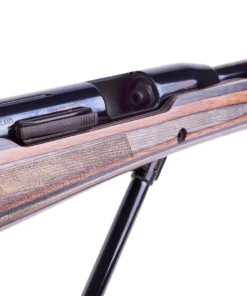

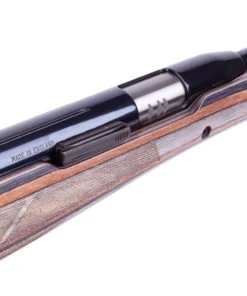


Air Arms TX200US Ultimate Springer Hunter Carbine Laminate

€1,300.00
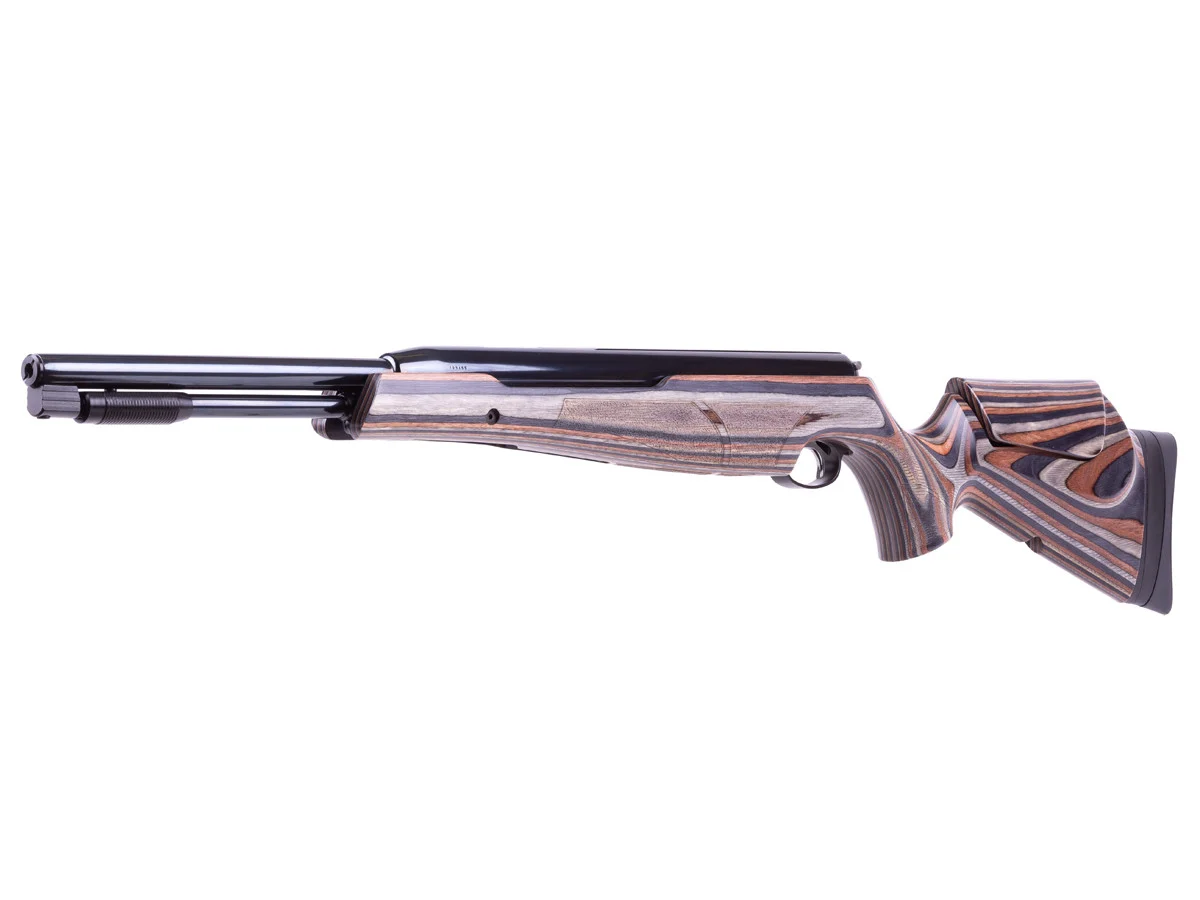
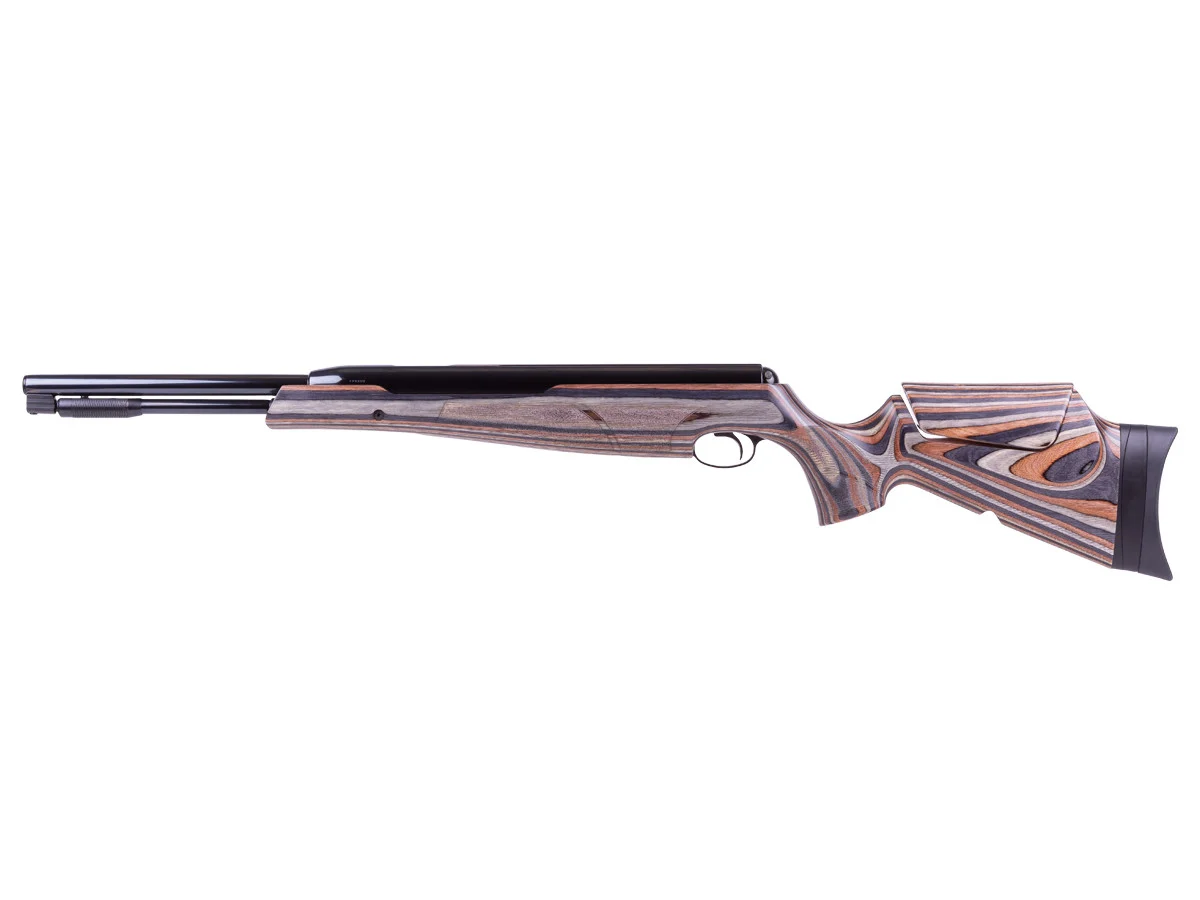
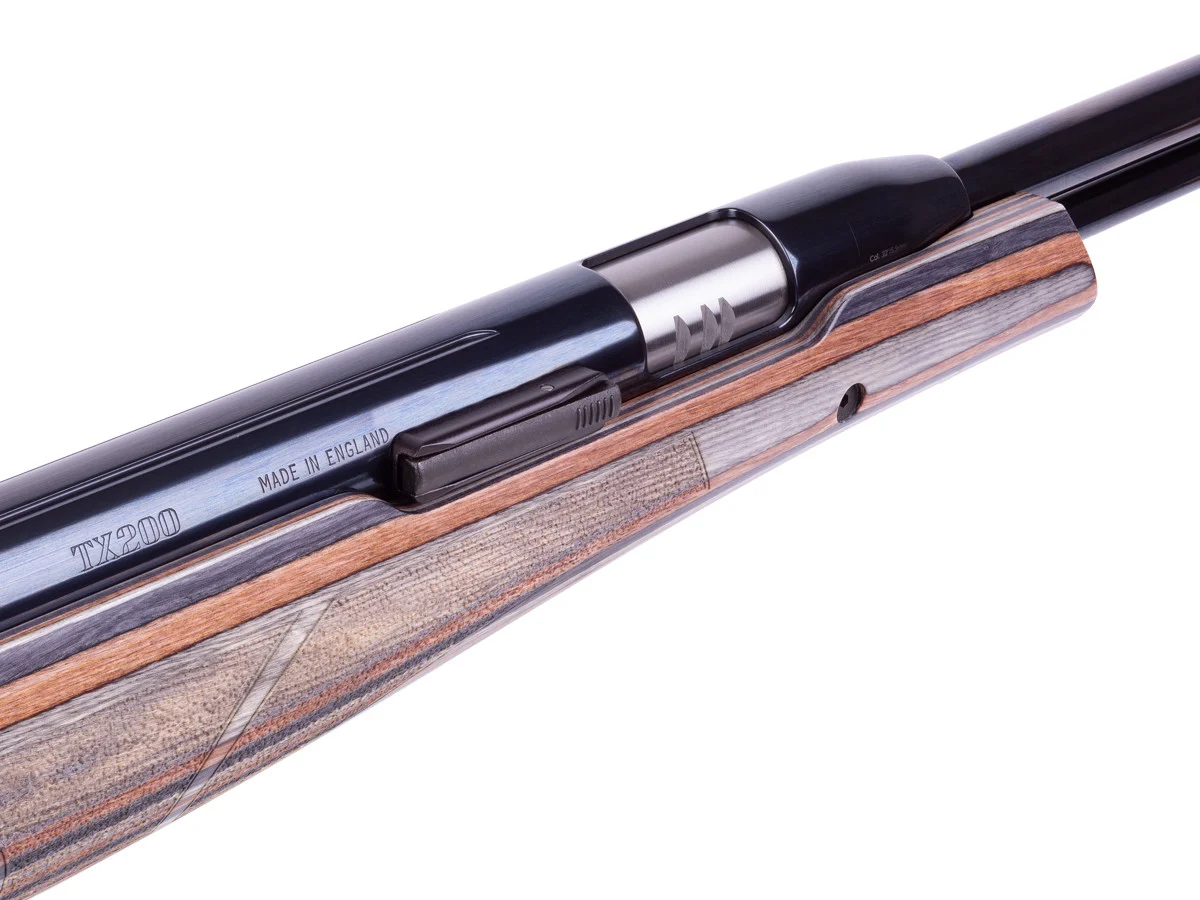
The Air Arms TX200 Ultimate Springer Hunter Carbine with laminate stock answers the call from shooters wanting more adjustability in their springers. Bringing together the undeniable performance and quality of the TX200, with the adjustability and feel of the Ultimate Sporter stocks previously seen only on PCP rifles. Never before has a factory rifle been better suited to dominate in the hunting woods, and the field target course right out of the box!
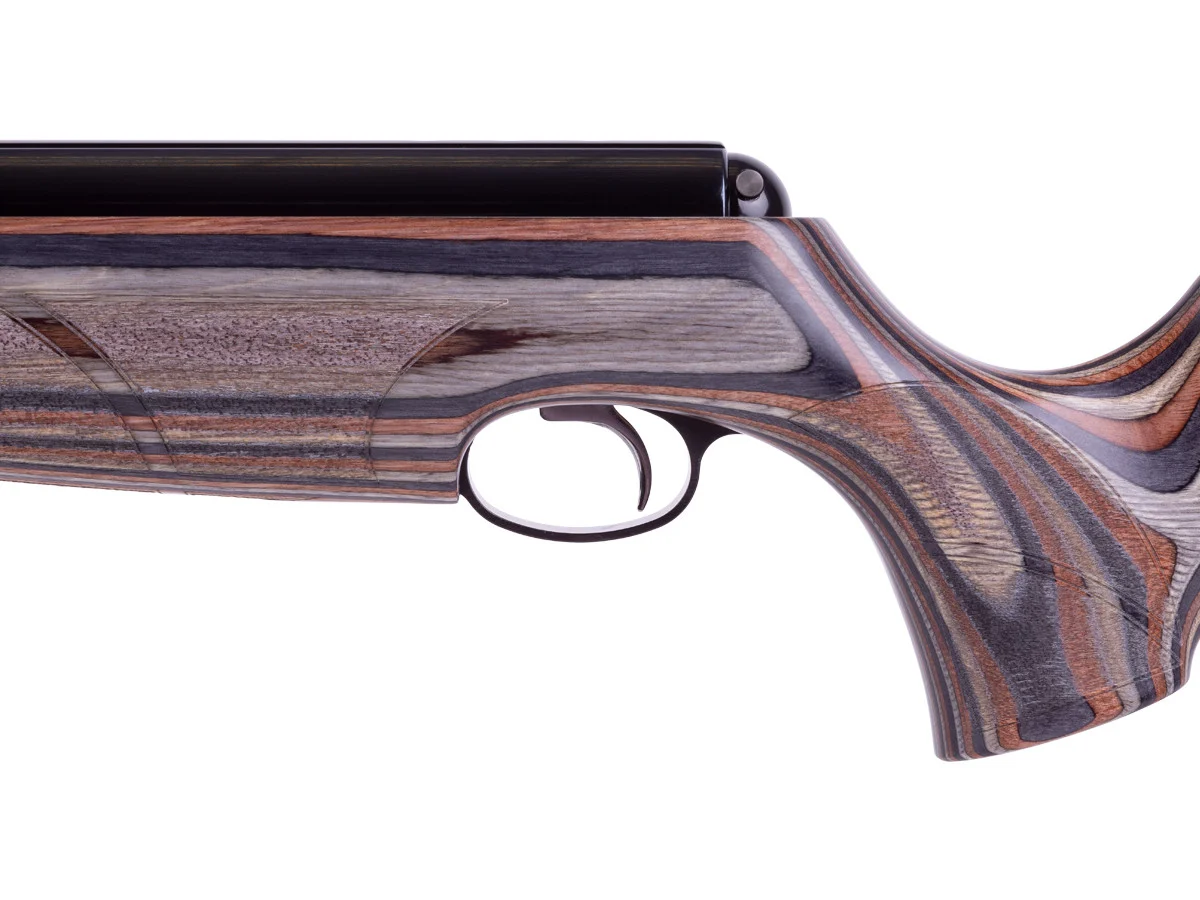
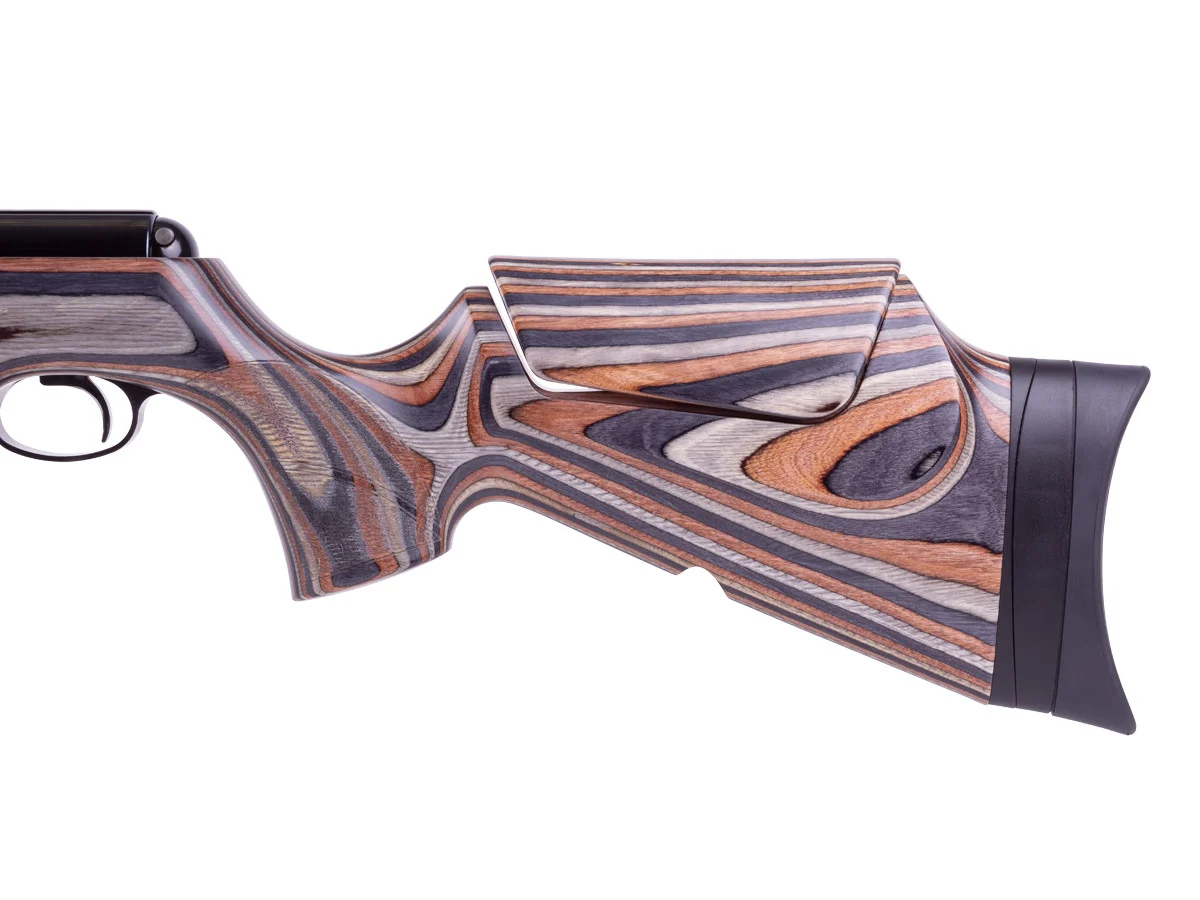
This model of the air rifle offers an eye-catching laminate stock with laser-cut stippled texturing on the forearm and grip to provide a firm hold. In addition, it includes a fully-adjustable cheekpiece that adjusts for both vertical and horizontal adjustment, as well as a 3-axis rubber buttpad for ideal fit and comfort, and it also includes a ball joint for complete tilt and rotation adjustment.
Consistent and predictable shots from the Air Arms TX200 Ultimate Springer Hunter Carbine are further aided by the adjustable, high-luster trivalent chrome plated two-stage trigger with a tactile finish for improved feel. The renowned accuracy of this air rifle is enabled by its use of a Lothar Walther match-grade barrel that includes a full shroud for quieter shots.
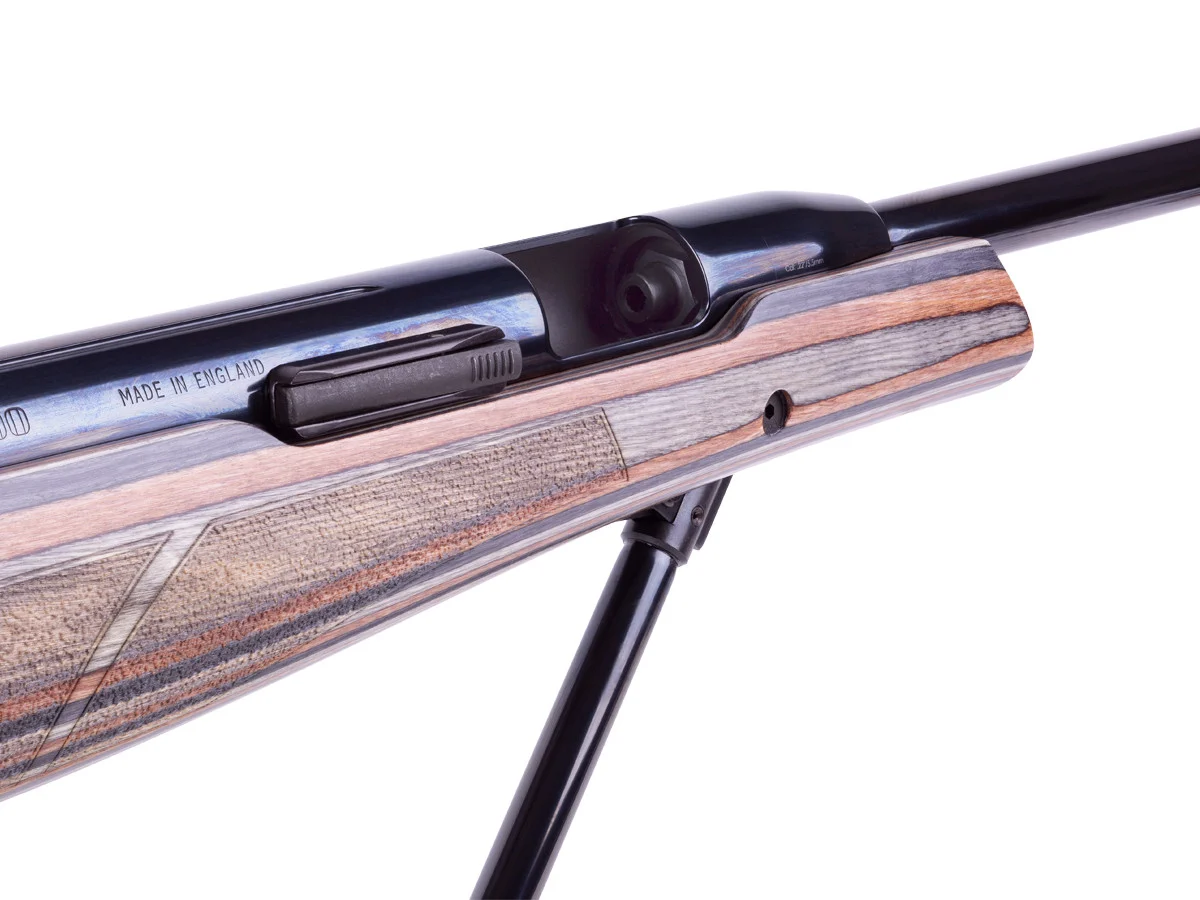
The air rifle has an 11mm dovetail optics rail In order to accommodate a scope to provide improved sighting options and to work in conjunction with the adjustable cheekpiece for optimal eye alignment. To experience outstanding craftsmanship that results in an heirloom-quality air rifle, buy an Air Arms TX200 Ultimate Springer Hunter Carbine with laminate stock from Pyramyd AIR today.
Air Arms TX200 Ultimate Springer Hunter Carbine, Laminate
- Spring-piston powerplant
- Lothar Walther match-grade barrel
- Ambidextrous laminate stock
- Shrouded barrel with 1/2″x20 female threaded end
- Max. power: 14.3 FPE (.177), 17.4 FPE (.22)
- Two-stage adjustable trigger
- High-luster trivalent chrome plated trigger with tactile finish
- Automatic safety on trigger unit
- Secondary bear-trap safety
- 11mm dovetail optics rail
- Laser-cut stippled grip and forearm
- Cheekpiece with vertical, lateral, tilt, and swivel adjustments
- Three-axis adjustable rubber buttpad
- Barrel length: 12.56″
- Overall length: 38.39″
- Weight: 9.7 lbs.
- Limited lifetime warranty
Specifications
BrandAir Arms
Caliber.22 (5.5mm)Max Velocity739 fpsMuzzle Energy17.4 ft/lbsSuggested forSmall game hunting/target practicePowerplantSpring-pistonLoudness3-MediumWeight9.7 lbsFunctionSingle-shotActionUnderleverFixed/adj. powerFixedShroudedYesScopeable11mm dovetailFront SightsnoneRear SightsnoneSafetyAutomaticTriggerTwo-stage adjustableBarrelLothar WaltherBarrel Length12.56″Overall Length38.39″Capacity1 round(s)Cocking Effort34lbsBody TypeRifleStockLaminatedButtplateRubberColorLaminateGrip OrientationAmbidextrous
Air Arms TX200US Ultimate Springer Hunter Carbine Laminate – Precision Underlever Spring Rifle
The Air Arms TX200US Ultimate Springer Hunter Carbine Laminate combines three important elements of the TX200 family: a self-contained spring-piston powerplant, the shorter Hunter Carbine configuration and the adjustable Ultimate Springer stock.
Air Arms describes the TX200 as a high-quality spring-powered underlever rifle known for mechanical precision and a smooth firing cycle. The Hunter Carbine version uses a shorter barrel than the standard TX200, creating a more compact and slightly lighter handling format, while the Ultimate Springer stock adds an adjustable cheekpiece and butt pad for more personalized fit.
The result is a rifle aimed at shooters who appreciate traditional spring-powered mechanics but also want modern ergonomic adjustment.
Unlike a pre-charged pneumatic rifle, the TX200 does not need an external air cylinder, hand pump or compressor. Instead, the shooter operates the fixed underlever to compress the mainspring and piston system before each shot.
Air Arms uses a Lothar Walther match-grade barrel, an adjustable trigger and a synthetic-bearing-supported piston system intended to reduce friction and help produce a smoother firing cycle.
Air Arms TX200US Ultimate Springer Hunter Carbine Laminate
The Air Arms TX200US Ultimate Springer Hunter Carbine Laminate pairs the compact Hunter Carbine action with the fully adjustable Ultimate Springer laminate stock.
Why This Configuration Matters
The shorter action improves handling.
Meanwhile, the adjustable stock lets the shooter refine cheek height and shoulder position.
Why Fit Matters
Consistent rifle fit can improve:
Head position
Scope alignment
Trigger reach
Shoulder contact
Repeatability
Hunter Carbine Configuration
The Hunter Carbine uses a shorter barrel than the standard TX200.
Air Arms states that the HC is more compact and slightly lighter, while the full-length TX200 offers a longer barrel and somewhat smoother firing character.
Why Compactness Helps
A shorter rifle can feel easier to manage during:
Standing shooting
Kneeling positions
Range movement
Field-target courses
Why Shorter Does Not Mean Less Capable
Air Arms specifically states that both versions remain highly accurate.
Ultimate Springer Adjustable Stock
The Ultimate Springer stock is available in laminate and incorporates an adjustable cheekpiece and butt pad.
Why the Cheekpiece Matters
The shooter can bring the eye naturally into alignment with the optic.
Why the Butt Pad Matters
It helps establish a more repeatable shoulder position.
Why This Supports Precision
A rifle that fits consistently reduces the need for muscular compensation.
Laminate Stock
Laminate construction uses bonded layers of wood rather than a single natural timber blank.
Why Laminate Is Popular
It offers:
Dimensional stability
Distinctive appearance
Rigid construction
Consistent machining
Why Stability Matters
A stable stock provides a consistent interface between shooter and action.
Underlever Spring-Piston Action
The TX200 uses a fixed-barrel underlever system.
Why This Is Different From a Break Barrel
The barrel stays fixed while a separate lever is used to cock the spring mechanism.
Why a Fixed Barrel Matters
The barrel does not need to hinge between shots.
That removes one moving barrel joint from the firing sequence.
Direct Barrel Loading
The TX200 uses direct loading into the fixed barrel.
Why This Matters
The pellet is inserted manually before the action is returned to the firing position.
Why Deliberate Loading Helps
The shooter can inspect the pellet before chambering it.
Lothar Walther Match-Grade Barrel
A Lothar Walther match-grade barrel forms a central part of the TX200 design.
Why Barrel Quality Matters
The barrel controls the final alignment and stabilization of the pellet before it exits.
Why Consistency Matters
Uniform bore dimensions contribute to repeatable shot placement.
Adjustable Trigger
The TX200 uses an adjustable trigger system.
Why Trigger Quality Matters
Shot release should occur without excessive disturbance to the rifle.
Why Adjustment Should Remain Conservative
The trigger is a safety-critical mechanism.
Any adjustment should remain within manufacturer instructions.
Synthetic Bearing System
Air Arms uses synthetic bearings within the piston system to reduce friction.
Why Reduced Friction Helps
It can support:
Smoother cocking
More consistent piston movement
Reduced mechanical harshness
Balanced Mainspring System
The mainspring and guide system are engineered to work together.
Why
Spring rifles generate internal movement when fired.
Why Smoothness Matters
A controlled firing cycle makes the rifle easier to shoot consistently.
Spring-Recoil Characteristics
Unlike PCP systems, a spring rifle produces a distinctive recoil cycle.
Why
The piston accelerates inside the compression chamber before pellet discharge.
Why Technique Matters
The shooter should use a repeatable hold rather than trying to clamp the rifle excessively.
Self-Contained Power
The TX200 does not need an external compressed-air source.
Why This Matters
There is no need for:
Air cylinder filling
High-pressure compressor
PCP charging hose
What Is Still Required
Safe ammunition handling
Correct cocking technique
Routine maintenance
.177 Calibre
Air Arms currently offers the TX200 in .177.
Why .177 Is Common for Target Shooting
Its trajectory is generally flatter than that of heavier .22 pellets at comparable legal power levels.
.22 Calibre
The TX200 is also available in .22.
Why .22 Behaves Differently
Its pellets are usually heavier and follow a different trajectory.
Dovetail Scope Rail
The rifle includes a standard dovetail rail for scope mounting.
Why Scope Choice Matters
Spring rifles have a distinctive two-direction recoil impulse.
A scope should therefore be rated appropriately for spring-powered use.
Integrated Moderator
Air Arms currently describes the TX200 as including a built-in moderator.
Why This Matters
The muzzle assembly helps manage discharge noise.
It does not remove the need for safe shooting environments or local legal compliance.
Air Arms S510 XS Ultimate Sporter FAC
The Air Arms S510 XS Ultimate Sporter FAC belongs to a very different design family.
It is PCP-operated, whereas the TX200 uses a self-contained spring-piston mechanism.
air rifle
An air rifle propels a pellet using compressed gas or mechanically compressed air rather than firearm cartridge propellant.
The TX200 creates its compressed air mechanically through its spring-piston system.
air gun
An air gun is a broader category that includes spring rifles, PCP rifles, CO₂ systems and pneumatic pistols.
air arms
Air Arms manufactures both spring-powered and PCP sporting rifles.
The TX200 is one of its established underlever spring platforms.
air rifles
Air rifles differ significantly in power system, calibre and intended sporting use.
The TX200 belongs to the fixed-barrel spring-piston category.
pellet guns
The term pellet guns describes air-powered equipment intended to fire shaped airgun pellets.
cal .177 pellets
cal .177 pellets are suitable only for rifles chambered in .177.
Correct calibre should always be confirmed before loading.
break barrel pellet gun
A break barrel pellet gun uses the barrel itself as the cocking lever.
The TX200 does not.
Its barrel remains fixed.
airguns
Airguns include multiple operating systems.
The TX200 is mechanically self-powered rather than pre-charged.
air pisto
The phrase air pisto generally refers to an air pistol.
The TX200 is a shoulder-fired rifle.
177 caliber
177 caliber corresponds to the smaller of the two current TX200 calibre options.
177 pellet vs.22 pellet
The 177 pellet vs.22 pellet comparison primarily involves pellet mass and trajectory.
.177
Typically offers the flatter path.
.22
Typically uses a heavier projectile.
air arms s510 ultimate sporter .177 sub 12
The air arms s510 ultimate sporter .177 sub 12 is a PCP rifle and should not be confused with the spring-powered TX200.
what is an air rifle
For what is an air rifle, it is a shoulder-fired air-powered sporting arm that propels pellets using compressed air or gas.
airgins
The term airgins is commonly a misspelling of airguns.
.22 air rifle
A .22 air rifle uses 5.5 mm pellets.
The TX200 is currently available in that calibre as well as .177.
air arms s510
The air arms s510 uses pre-charged pneumatic operation and magazine loading.
That design is fundamentally different from the TX200.
air riflery
air riflery includes formal target shooting and other lawful sporting disciplines.
The TX200 has a long association with spring-rifle field-target competition.
airgun shooting range near me
For airgun shooting range near me, established clubs and authorized ranges provide controlled firing lines, approved backstops and defined safety procedures.
air arm
The phrase air arm is sometimes used informally, although Air Arms is the correct manufacturer name.
target air rifle shooting
target air rifle shooting rewards stable position, consistent hold, careful sight alignment and smooth trigger control.
A spring-powered platform additionally rewards repeatable recoil management.
air arms s410
The air arms s410 is a multi-shot PCP platform rather than a spring underlever design.
air arms tx200
The air arms tx200 is Air Arms’ established fixed-barrel underlever spring rifle family.
It is known for its mechanical precision, smooth firing cycle and use in springer competition.
177 air rifle
A 177 air rifle uses 4.5 mm pellets.
The .177 TX200 configuration is commonly associated with precision target disciplines.
how do air guns work
For how do air guns work, the answer depends on the powerplant.
In the TX200
The underlever compresses a mainspring.
When fired, that spring drives a piston forward.
The piston compresses air.
That compressed air propels the pellet through the fixed barrel.
Air rifle cleaning kit
An Air rifle cleaning kit should be suitable for precision airgun barrels.
Appropriate Care May Include
Soft exterior cloth
Suitable pull-through system
Manufacturer-approved products
Aggressive bore cleaning should be avoided.
177 caliber vs 22
The 177 caliber vs 22 comparison should be made according to lawful intended sporting use.
For formal target shooting, .177 often has a trajectory advantage.
air guns for home defense
The phrase air guns for home defense should not be treated as a recommended role for this rifle.
The TX200 should be used for lawful sporting and target purposes in suitable controlled environments.
air compressor rifle
The phrase air compressor rifle generally relates to PCP equipment.
The TX200 does not require a compressor.
pcp hand pump
A pcp hand pump is irrelevant to normal TX200 operation because no pre-charged air cylinder needs to be filled.
air rifle calibers
Common air rifle calibers include .177, .22 and larger options.
The current TX200 range is offered in .177 and .22.
prosport air arms
The prosport air arms reference relates to the Air Arms Pro Sport, another spring-powered platform with different cocking and stock geometry.
what is break barrel air rifle
For what is break barrel air rifle, the barrel hinges downward and acts as the cocking lever.
The TX200 instead uses a separate underlever and fixed barrel.
Air Arms S510 XS Ultimate Sporter FAC Walnut Stock
The Air Arms S510 XS Ultimate Sporter FAC Walnut Stock belongs to Air Arms’ PCP line.
It should not be attributed to the TX200 platform.
Air Arms S510 XS Ultimate Sporter
The Air Arms S510 XS Ultimate Sporter uses a pneumatic powerplant and magazine system.
The TX200 uses mechanical spring power.
Air Arms S510 FAC
The Air Arms S510 FAC is a high-power PCP configuration and differs fundamentally from this spring-powered platform.
Air Arms S510 XS FAC PCP Air Rifle
The Air Arms S510 XS FAC PCP Air Rifle stores compressed air in a cylinder.
The TX200 generates compressed air mechanically for every shot.
Air Arms air rifle
An Air Arms air rifle may be PCP or spring-powered depending on model.
The TX200 is one of the manufacturer’s principal spring-powered designs.
JTS AirStryke Carbine
The JTS AirStryke Carbine belongs to a different manufacturer and product family.
It should not be treated as a TX200 variant.
jts airguns
jts airguns refers to another brand of air-powered sporting equipment.
jts airacuda
The jts airacuda is a separate PCP rifle platform.
jts airacuda max
The jts airacuda max is also unrelated to the TX200 mechanism.
jts airacuda 25
The jts airacuda 25 refers to another rifle and calibre configuration.
airacuda
airacuda is a JTS model name rather than an Air Arms product.
Jts aircuda
Jts aircuda is commonly used as a misspelling or shortened spelling of Airacuda.
jts pellets
jts pellets are ammunition products from another manufacturer.
Any pellet used in the TX200 must match the rifle’s stated calibre.
jts stealth hawk
The jts stealth hawk is unrelated to the TX200 family.
airacuda max
airacuda max refers to another PCP platform rather than a spring-powered rifle.
airacuda pcp
The airacuda pcp stores compressed air, while the TX200 does not.
jts compressor
A jts compressor is intended for high-pressure pneumatic equipment.
It is unnecessary for TX200 operation.
jts airacuda max 30
The jts airacuda max 30 refers to another platform and a substantially larger calibre than the TX200 options.
jts airacuda max 30 cal
The jts airacuda max 30 cal is not related to this rifle.
jts airstryke
jts airstryke belongs to a separate PCP design family.
jts firearms
The phrase jts firearms refers to another manufacturer’s product range and should not be associated with the Air Arms TX200.
177 cal pellet gun
A 177 cal pellet gun uses 4.5 mm pellets.
The .177 version of the TX200 is a precision fixed-barrel underlever spring rifle rather than a generic break-barrel platform.
Why the Hunter Carbine Format Matters
The shorter HC layout changes the balance and handling of the rifle.
Why It Can Feel More Responsive
Less barrel length ahead of the action can reduce the feeling of forward mass.
Why This Matters During Standing Shooting
A more central balance can reduce fatigue during unsupported positions.
Air Arms itself notes that the HC is more compact and slightly lighter than the full-length model.
Why the Ultimate Springer Stock Matters
The adjustable stock allows more individualized fit.
Why This Is Useful
Shooters differ in:
Shoulder height
Neck length
Scope height
Preferred head position
Why Adjustable Ergonomics Help
The rifle can be fitted to the shooter instead of forcing the shooter to adapt completely to the rifle.
Why Spring-Rifle Technique Is Different
A spring-powered rifle moves internally during the firing cycle.
Why
The piston and mainspring accelerate before the pellet leaves the barrel.
Why This Matters
The shooter must use a consistent hold.
Why Excessively Tight Holding Can Hurt Consistency
Trying to restrain every movement can make each shot react differently.
Better Principle
Use a stable, repeatable hold and let the firing cycle behave consistently.
Why Balance Matters
The Hunter Carbine’s more compact dimensions can make the rifle feel centrally balanced.
Why This Helps
Less muscular correction may be needed during standing positions.
Why the Fixed Barrel Matters
The barrel does not move during cocking.
Why This Can Support Repeatability
The relationship between barrel and scope rail remains mechanically fixed.
Why Direct Loading Matters
The pellet goes directly into the barrel.
Why
There is no rotary magazine between pellet and bore.
Why the TX200 Has a Strong Competition Reputation
The TX200 has been used successfully in recoiling rifle competition.
Air Arms documents competitive use of the Hunter Carbine platform, including HFT recoiling classes.
Why Mechanical Independence Matters
No separate charging equipment is needed.
Why This Simplifies Ownership
There is no:
High-pressure cylinder
Fill probe
Charging hose
PCP regulator
What Still Needs Maintenance
Spring
Piston seal
Trigger
Cocking mechanism
Barrel
Stock hardware
Why the Firing Cycle Matters
A spring rifle should feel consistent from shot to shot.
Why
Changes in vibration can influence practical accuracy.
Why Synthetic Bearings Help
Air Arms uses synthetic bearings to reduce friction around the piston system.
Why Reduced Friction Is Helpful
The piston can move more consistently through its stroke.
Why the Mainspring Matters
The mainspring stores the mechanical energy used for each shot.
Why Condition Matters
Spring fatigue or damage can change firing behavior.
Internal servicing should be carried out appropriately rather than through unsafe modification.
Why Scope Selection Matters More on a Springer
Spring-powered rifles create a distinctive forward-and-rearward recoil impulse.
Why
The piston moves abruptly inside the action.
Therefore
Use optics and mounts rated for spring-rifle recoil.
Air Arms specifically recommends properly fitted mounts and an appropriate spring-rated scope.
Why Mount Security Matters
A moving scope changes point of impact.
Why This Can Be Mistaken for an Accuracy Problem
The barrel may be grouping consistently while the optic itself shifts.
Why Pellet Selection Matters
Different barrels can prefer different pellet dimensions or weights.
Better Evaluation
Test in controlled conditions.
Change one pellet variable at a time.
Why .177 Is Common in Competition
The generally flatter trajectory can simplify holdover across changing distances.
Why .22 Feels Different
Heavier pellets travel with a different velocity and trajectory profile.
Why the Rifle Should Be Zeroed Methodically
A reliable zero establishes the reference for all other distances.
Why
Trajectory is curved rather than perfectly flat.
Why the Adjustable Cheekpiece Helps Scope Alignment
A high-mounted optic may require additional cheek height.
Why This Matters
The shooter’s eye should settle naturally behind the scope.
Why the Adjustable Butt Pad Helps Position
Shoulder fit can change between standing, kneeling and prone positions.
Why
Body geometry changes with posture.
Why the Laminate Stock Is Well Suited to Adjustment
Laminate material is dimensionally stable and can support precise machining around adjustable components.
Why the Carbine Is Still Not a PCP
Compact dimensions do not indicate the power system.
The rifle remains a spring-powered underlever.
Why No Compressor Is Required
The energy for each shot is stored mechanically in the spring.
Why This Is Convenient
The rifle can be prepared without carrying external pressure equipment.
Why Correct Cocking Technique Matters
The underlever should be operated smoothly and securely.
Important
Follow manufacturer safety instructions throughout the loading cycle.
Why the Safe-Lok System Matters
The TX200 incorporates Air Arms’ Safe-Lok loading design.
Why
It is intended to support safer loading of the underlever spring system.
Mechanical safeties should never replace safe muzzle handling.
Why the Rifle Requires a Safe Backstop
Pellets must be contained reliably.
Why
A paper or metal target by itself may not stop the projectile safely.
Why Range Use Is Appropriate
Controlled ranges provide:
Defined firing points
Approved backstops
Known target distances
Safety procedures
Why Legal Limits Matter
Air-rifle power and ownership requirements vary by jurisdiction.
Therefore
The exact version should be checked against current local law before use.
Why Internal Power Modification Is Not Appropriate
Unapproved changes can alter:
Safety
Reliability
Legal classification
Firing behavior
Why Routine Maintenance Matters
Spring rifles do not require high-pressure pneumatic maintenance, but they still require care.
Monitor
Cocking mechanism
Trigger
Stock screws
Scope mounts
Barrel condition
Spring behavior
Why Exterior Cleaning Matters
Moisture and fingerprints can affect metal finishes.
After Use
Wipe exposed metal surfaces with an appropriate cloth.
Why the Barrel Should Be Cleaned Conservatively
Excessive cleaning is unnecessary.
Better Practice
Follow manufacturer maintenance recommendations.
Air Arms recommends cleaning the exterior, keeping the cocking mechanism clear of debris, periodic barrel cleaning and professional servicing when needed.
Why Professional Servicing Can Be Useful
The mainspring and compression system store mechanical energy.
Why
Incorrect disassembly can be hazardous.
Why Storage Matters
The rifle should be stored unloaded, securely and according to applicable law.
Avoid
Persistent damp
Unauthorized access
Excessive heat
Why a Suitable Case Helps
The laminate stock, scope and metalwork can all be damaged during transport.
Why Zero Should Be Checked After Travel
Spring-rated mounts are secure when installed correctly, but transport can still disturb equipment.
Why the TX200 Hunter Carbine Ultimate Springer Is Precise
Its precision comes from several features working together:
Fixed barrel
Match-grade barrel
Consistent spring system
Synthetic bearings
Adjustable trigger
Adjustable stock
How Good Is the TX200 Hunter Carbine Ultimate Springer?
Its strongest characteristic is the combination of traditional spring-powered independence with competition-oriented mechanical refinement.
The rifle does not depend on external air charging.
At the same time, it incorporates a high-grade barrel, controlled firing system and adjustable ergonomics.
Why Precision Requires the Shooter as Well as the Rifle
Spring-rifle accuracy is highly technique-dependent.
The Shooter Influences
Hold pressure
Trigger release
Head position
Follow-through
Why Follow-Through Matters
The firing cycle continues for a brief period after the trigger releases.
Therefore
The shooter should avoid moving immediately.
Why Natural Point of Aim Matters
The rifle should settle naturally toward the target.
Why
Less muscular correction reduces movement.
When the Hunter Carbine Configuration Makes Sense
The shorter version is useful when the shooter values:
Compact handling
Central balance
Spring-powered independence
Adjustable stock fit
Where It Is Best Used
Suitable environments include:
Authorized ranges
Formal target courses
Lawful private shooting areas with reliable backstops
Why It Should Not Be Viewed as a Defensive Tool
This is a sporting spring rifle.
Its appropriate role is controlled, lawful target and sporting use.
Important Ownership Information
Before use, confirm:
Correct calibre
Local legal requirements
Safe trigger operation
Secure scope mounts
Appropriate pellet type
Reliable backstop
Final Section 1 Assessment
The Air Arms TX200US Ultimate Springer Hunter Carbine Laminate combines the compact characteristics of the Hunter Carbine with the ergonomic adjustability of the Ultimate Springer stock.
Air Arms confirms that the current TX200 family is a spring-powered underlever platform built around a Lothar Walther match-grade barrel, adjustable trigger and self-contained mechanical powerplant. The Hunter Carbine uses a shorter barrel than the standard rifle, while the Ultimate Springer configuration adds an adjustable cheekpiece and butt pad.
That combination gives the rifle a distinctive role.
It is more compact than the standard TX200 while retaining a fixed barrel and direct-loading underlever action.
The laminate stock also provides a rigid, dimensionally stable platform with the additional benefit of ergonomic adjustment.
For formal target shooting, that adjustability can help the shooter create a more repeatable relationship between eye, scope, trigger and shoulder.
The firing cycle is equally important.
A TX200 is not recoil-free.
Its mainspring and piston move internally during every shot, which means technique remains part of the accuracy equation.
A smooth, repeatable hold is therefore more important than attempting to restrain the rifle aggressively.
Air Arms’ use of synthetic bearings and a carefully engineered spring and piston system is intended to reduce friction and mechanical harshness.
The fixed Lothar Walther barrel provides the mechanical foundation for precision, while the dovetail rail allows a suitable spring-rated scope to be fitted securely. Air Arms specifically notes that optics used on the TX200 should be suitable for spring-rifle recoil.
The rifle is currently available in .177 and .22, allowing shooters to select the appropriate legal configuration for their sporting discipline.
Unlike PCP rifles, no compressor, air cylinder or hand pump is required.
Every shot is powered by the rifle’s own cocked spring mechanism.
That mechanical independence is one of the TX200’s defining characteristics and helps explain why the platform remains popular among shooters who enjoy traditional spring-powered equipment.
Safe use remains essential.
The rifle should be loaded and operated only with the muzzle directed toward a safe area, and every target should have a reliable backstop.
Local laws governing air-rifle ownership, power and use should always be followed.
For shooters interested in a mechanically sophisticated fixed-barrel spring rifle for controlled target and sporting use, the TX200 Hunter Carbine Ultimate Springer Laminate offers a technically mature combination of compact handling, adjustable ergonomics and traditional self-contained operation.
Handling, Recoil Control, Ergonomics, Accuracy, Setup, Maintenance and Long-Term Ownership
Overall Handling Character
The Air Arms TX200US Ultimate Springer Hunter Carbine Laminate is designed around a compact, self-contained spring-rifle experience with a strong emphasis on control, repeatability and mechanical refinement.
Its shorter Hunter Carbine format gives the rifle a more centralized feel than a longer full-length underlever, while the adjustable laminate stock helps the shooter tailor cheek height, shoulder contact and overall fit.
That combination matters because spring rifles respond strongly to how they are held.
Unlike a pre-charged pneumatic system, which produces very little internal movement, this rifle contains a mainspring and piston that accelerate inside the action during every shot.
As a result, the shooter becomes part of the operating system.
The quality of the rifle sets the mechanical foundation, but consistent technique determines how much of that precision appears on target.
Why the Carbine Format Feels Different
A shorter barrel and more compact front end change how the rifle balances.
Why Balance Matters
The farther weight sits from the shooter’s body, the more leverage it creates.
A shorter front assembly can therefore feel quicker to control.
Why This Can Help
The rifle may feel easier to manage during:
Standing positions
Kneeling positions
Range transitions
Supported target work
Why Compact Does Not Mean Unstable
The laminate stock and substantial spring-rifle action still provide useful mass.
That weight can actually help settle the rifle during a carefully controlled shot.
Why Weight Can Be Helpful
A very light spring rifle may react more sharply during the firing cycle.
Additional mass can soften the subjective feel of internal movement.
Why Weight Can Also Create Fatigue
The shooter still needs to support the rifle.
During long unsupported sessions, forearm and shoulder fatigue can increase.
Why Position Matters
Good body structure reduces the amount of muscular effort required.
Natural Point of Aim
The rifle should naturally settle near the target before the trigger is pressed.
Why
If the shooter has to force the rifle sideways or vertically using muscle tension, the position is less repeatable.
Why Spring Rifles Reward Relaxed Technique
Excessive gripping can change the way the rifle moves during the firing cycle.
Better Principle
Use a stable, repeatable and moderate hold.
Why Consistency Is More Important Than Tightness
The same hold pressure from shot to shot is more useful than simply holding as tightly as possible.
Recoil Cycle
The recoil impulse of a spring rifle is more complex than that of many other airgun systems.
Why
The mainspring expands.
The piston accelerates forward.
The compression chamber pressurizes.
The pellet begins moving.
The piston then stops abruptly.
Why This Creates Movement
Those internal events produce both rearward and forward forces.
Why Optics Must Be Suitable
Some scopes designed only for firearms or low-recoil systems may not tolerate this two-direction impulse well.
Why Spring-Rated Optics Matter
An optic should be designed to survive repeated bidirectional shock.
Scope Mount Security
Mounts should remain secure without being over-tightened.
Why
A moving scope can make the rifle appear inaccurate even when the barrel and action are functioning correctly.
Why One-Piece Mounts Are Sometimes Favored
A rigid mount can help resist movement under repeated spring recoil.
Why Correct Rail Engagement Matters
The mount should sit squarely and securely on the dovetail.
Why Scope Position Matters
Eye relief should feel natural.
Why
The shooter should not have to move the head excessively between shots.
Cheekpiece Adjustment
The adjustable cheekpiece allows the eye to be aligned more naturally with the scope.
Why This Is Important
A repeatable head position improves consistency.
Why Head Position Changes Matter
Small changes can affect the sight picture, especially with magnified optics.
Butt-Pad Adjustment
The adjustable butt pad helps the rifle return to the same shoulder position.
Why
The rear of the rifle influences:
Eye alignment
Trigger reach
Rifle angle
Overall balance
Why Adjustment Should Be Tested Across Positions
A setup that feels ideal from a bench may feel different when standing or kneeling.
Standing Position
Standing creates the least external support.
Why
The rifle is mainly stabilized through the shooter’s body.
Why Balance Matters More Here
A front-heavy rifle can create fatigue faster.
Why the Carbine Can Help
Its shorter format reduces some forward leverage.
Kneeling Position
Kneeling can provide more skeletal support.
Why
The elbow and knee can be used to create a more stable structure.
Why Stock Fit Still Matters
The cheekpiece and butt pad should still support a natural alignment.
Supported Shooting
A rest or bag can help evaluate mechanical grouping.
Why
It reduces some shooter movement.
Why Spring Rifles Still Need Care on a Rest
Hard clamping can alter their firing behavior.
Better Practice
Use a stable but not excessively rigid support.
Why Hard Surfaces Can Change Point of Impact
A spring rifle may react differently depending on how the forend is supported.
Why the Same Support Method Matters
Consistency should be maintained across testing sessions.
Hold Sensitivity
Some spring rifles are more hold-sensitive than others.
Why
Internal movement interacts with stock support and shooter pressure.
Why the TX200 Is Often Considered Refined
Its design aims to reduce mechanical harshness.
Why Reduced Friction Helps
Synthetic bearing surfaces can make piston movement smoother.
Why a Smooth Firing Cycle Matters
Less abrupt vibration can improve practical consistency.
Why Shooter Technique Still Matters
No mechanical refinement completely removes spring-rifle dynamics.
Trigger Control
The trigger should be pressed smoothly and predictably.
Why
Jerking the trigger can move the rifle just before pellet release.
First Stage
The first stage allows the shooter to prepare.
Second Stage
The second stage provides the final release point.
Why This Helps
A clear second-stage break can improve confidence.
Why Over-Adjustment Is Risky
Too little engagement can compromise safety.
Best Practice
Keep adjustments within manufacturer limits.
Direct Loading
The pellet is inserted directly into the fixed barrel.
Why
There is no magazine or rotary indexing system.
Why This Can Be Useful
The shooter can inspect each pellet before loading.
What to Check
Skirt condition
Head shape
Visible dirt
Why Damaged Pellets Matter
A deformed pellet may fit the bore differently.
Why Pellet Selection Matters
Different pellet designs can group differently.
Why
Variation in weight, head size and skirt shape can influence barrel fit.
Controlled Testing
Test one pellet type at a time.
Why
Changing multiple variables at once creates confusing results.
Why Group Size Matters More Than Individual Shots
One flyer does not define the rifle’s accuracy.
Better Approach
Shoot repeated groups under similar conditions.
Barrel Consistency
The fixed barrel remains in the same relationship to the action and scope rail.
Why This Is Valuable
There is no barrel hinge to return to position after every shot.
Why Fixed-Barrel Design Is Not Automatically Accurate
Mechanical design helps, but barrel quality, pellet choice and shooter technique still matter.
Crown Condition
The crown should remain undamaged.
Why
The pellet exits at this point.
Why Symmetry Matters
Uneven gas release can disturb the pellet at the moment of exit.
Barrel Cleaning
Cleaning should be conservative.
Why
Excessive or aggressive cleaning can do more harm than good.
When Cleaning May Be Appropriate
Accuracy changes unexpectedly
Contamination enters the bore
A major pellet change is made
Manufacturer guidance recommends it
Why a Pull-Through Can Be Preferable
A soft pull-through reduces the risk of damaging the crown.
Why Metal Rods Need Caution
Incorrect use can scrape the bore or crown.
Cocking Stroke
The underlever should be operated smoothly.
Why
The cocking mechanism places the mainspring under tension.
Why Safe Handling Is Critical During Cocking
The system stores substantial mechanical energy.
Why the Lever Should Remain Under Control
Follow manufacturer instructions throughout loading.
Why Fingers Should Be Kept Clear of Unsafe Areas
A spring-powered action can close with force if mishandled.
Safe-Lok System
The loading system includes a safety-oriented anti-beartrap concept.
Why This Matters
It is intended to reduce the chance of accidental closure.
Why Mechanical Safety Is Not Enough
Safe hand placement and muzzle direction remain essential.
Mainspring Condition
The mainspring is central to the power system.
Why
It stores the energy used for every shot.
Why Spring Condition Matters
Wear or fatigue can alter firing behavior.
Signs of Possible Change
Different firing sound
Different vibration
Loss of consistency
Reduced output
Why Internal Spring Work Should Be Professional
The spring remains under preload.
Why
Incorrect disassembly can be dangerous.
Piston Seal
The piston seal helps compress air in the chamber.
Why
A damaged seal can reduce consistency.
Possible Symptoms
Harsh firing cycle
Loss of efficiency
Unusual smell or smoke
Why Excess Lubricant Is a Problem
Too much lubricant can migrate into the compression chamber.
Why This Matters
Combustion-like dieseling can occur.
Why Manufacturer Guidance Matters
Only suitable lubricants should be used.
Compression Tube
The compression chamber should remain clean and properly serviced.
Why
Consistent compression supports consistent pellet launch.
Why DIY Polishing Is Not Automatically Beneficial
Removing material can alter tolerances.
Better Approach
Leave internal tuning to experienced specialists.
Stock Screws
Stock hardware should remain secure.
Why
Movement between action and stock can influence point of impact.
Why Over-Tightening Is Wrong
Excessive force can damage threads or stock material.
Laminate Stock Stability
Laminate construction tends to be dimensionally stable.
Why
Its bonded layers reduce some of the movement associated with natural timber.
Why Moisture Still Matters
The stock finish should still be protected.
Cleaning the Stock
Use a soft cloth.
Why
Harsh chemicals can damage the finish.
Why Soaking the Stock Is Poor Practice
Prolonged moisture can affect wood-based materials.
Range Zeroing
The rifle should be zeroed in a controlled environment.
Why
A known zero provides the reference for other distances.
Why a Spring Rifle May Need More Shots to Confirm Zero
Shooter technique variation can influence groups.
Better Approach
Use several consistent groups rather than adjusting after every shot.
Why Rest Position Matters
Place the rifle on the same part of the forend during testing.
Why
Changing the support point can change the way the rifle reacts.
Scope Parallax
Parallax can create apparent reticle movement when eye position changes.
Why
The reticle and target image may not be on the same focal plane.
Why This Matters at Short and Medium Distances
Small aiming errors can become significant on small targets.
Why Repeatable Cheek Position Helps
It reduces eye-position variation.
Rifle Cant
Tilting the rifle can alter point of impact.
Why
Gravity still acts vertically while the optic and barrel are rotated.
Why a Consistent Orientation Matters
It removes another variable.
Breathing Control
Breathing moves the upper body.
Why
The chest and shoulders shift during respiration.
Natural Pause
Many shooters release the shot during a natural breathing pause.
Why
It reduces movement without creating excessive tension.
Follow-Through
Maintain the firing position after the trigger breaks.
Why
The spring cycle and pellet travel continue for a brief period.
Why Early Movement Can Hurt Accuracy
The rifle can be disturbed before the pellet fully exits.
Calling the Shot
The shooter can learn to judge whether the sight moved during release.
Why
This helps separate technique errors from equipment issues.
Long Sessions
The rifle’s weight and spring cocking effort can create fatigue.
Why
Every shot requires a complete cocking cycle.
Why Technique Helps
Efficient movement reduces unnecessary effort.
Why Cocking Should Not Be Rushed
Fast, uncontrolled movement can increase wear or create unsafe handling.
Why Rhythm Matters
A steady pace helps maintain concentration.
Temperature
Spring rifles are less dependent on compressed-air cylinder temperature than PCP systems.
Why
No stored high-pressure reservoir is involved.
Why Temperature Can Still Matter
Lubricants, seals and pellet behavior can still change slightly.
Cold Conditions
Cold can affect grip and shooter comfort.
Why Clothing Matters
Heavy clothing changes shoulder contact.
Hot Conditions
Heat can affect stock feel and lubricant behavior.
Why Equipment Should Still Be Kept Out of Extreme Heat
Prolonged high temperature is unnecessary stress.
Rain
Moisture should be removed after wet sessions.
Why
Metal surfaces can corrode.
Why the Laminate Stock Should Be Dried
Water should not remain around seams or hardware.
Wind
Wind can move the pellet significantly.
Why
Airgun pellets are relatively light.
Why Accurate Rifles Still Need Wind Judgment
Mechanical precision cannot eliminate environmental drift.
Why Repeated Conditions Matter During Testing
Group comparisons are more meaningful when wind is similar.
Target Distance
Trajectory changes with distance.
Why
Pellets slow and drop as they travel.
Why a Known Zero Is Important
It provides the reference point for expected impact.
Why Actual Range Data Is Better Than Generic Tables
Each rifle, pellet and scope setup is slightly different.
Recording Performance
Keep notes on:
Pellet type
Zero distance
Scope position
Group size
Weather
Why
Patterns become easier to identify.
Diagnosing Accuracy Changes
Start with simple causes.
Check
Shooter technique
Pellet condition
Scope mounts
Stock screws
Wind
Then Consider
Barrel condition
Internal spring system
Piston seal
Why This Order Helps
It avoids unnecessary disassembly.
Sudden Vertical Spread
Possible causes can include:
Hold inconsistency
Pellet variation
Scope movement
Firing-cycle changes
Sudden Horizontal Spread
Possible causes can include:
Wind
Cant
Trigger technique
Mount movement
Why One Group Is Not Enough
Repeated testing gives better evidence.
Scope Mount Movement
Spring recoil can slowly shift mounts.
Why
The action experiences movement in more than one direction.
Why Stop Pins or Appropriate Mounting Systems Matter
They help resist creeping.
Why Regular Inspection Helps
A small shift can be corrected before it affects many sessions.
Recoil-Safe Accessories
Any accessory fitted to the rifle should tolerate spring-rifle vibration.
Why
Repeated mechanical shock can loosen unsuitable components.
Why Simple Setups Can Be More Reliable
Fewer accessories mean fewer mounting points that can move.
Long-Term Mechanical Care
Routine care should remain simple.
Main Tasks
Wipe the exterior
Keep the barrel clean when needed
Check stock screws
Check scope mounts
Monitor cocking feel
Why Internal Service Should Be Infrequent but Proper
Opening the spring system unnecessarily adds risk.
Why Professional Service Is Sensible
A competent technician can inspect:
Mainspring
Piston seal
Guides
Trigger system
Cocking linkage
Why Service History Helps
It provides a record of mechanical work.
Storage
Store the rifle unloaded and secured.
Why
Unauthorized access should be prevented.
Dry Environment
Persistent damp should be avoided.
Why
It can affect metal surfaces and stock condition.
Why the Rifle Should Not Be Stored Cocked
The spring system should generally not remain unnecessarily compressed.
Why
Long-term tension is not part of normal storage practice.
Transport
Use a suitable case.
Why
The laminate stock, scope and metalwork can all be damaged by impact.
Why Zero Should Be Checked After Travel
Repeated knocks can shift optics.
Why the Underlever Should Be Protected
External cocking components should not be bent or struck.
Legal Use
The rifle should be used only where lawful.
Why
Air-rifle rules vary between jurisdictions.
Why Power Category Matters
Different versions may fall into different legal classes.
Why Unauthorized Power Changes Should Be Avoided
They can affect:
Legal status
Reliability
Firing behavior
Safety
Suitable Use Environments
Appropriate environments include:
Authorized ranges
Structured target courses
Lawful private shooting areas with reliable backstops
Why a Safe Backstop Matters
A target does not necessarily stop a pellet.
Why Hard Surfaces Can Be Hazardous
Ricochets can occur.
Why Range Discipline Matters
The muzzle should remain controlled at all times.
Long-Term Ownership Costs
The rifle avoids some of the costs associated with pneumatic equipment.
No Need For
Charging cylinder
High-pressure pump
Compressor
Fill hose
Ongoing Costs May Include
Pellets
Scope maintenance
Spring-rated mounts
Professional servicing
Cleaning supplies
Why This Simplicity Appeals to Some Owners
The rifle is self-contained.
Why Self-Contained Does Not Mean Maintenance-Free
Mechanical parts still wear.
Why the Trigger Should Remain Dry and Clean
Debris can affect feel.
Why Excess Oil Is Poor Practice
It can attract dirt.
Why Cocking Linkage Should Be Inspected
Repeated mechanical movement can eventually create wear.
Signs Worth Investigating
New play
Grinding feel
Unusual noise
Why Resistance Should Not Be Forced
Mechanical changes usually have a cause.
Long-Term Precision
A good spring rifle can remain accurate for many years.
Why
The fixed barrel and robust mechanical design provide a stable foundation.
What Can Change Over Time
Spring condition
Seal condition
Scope mounting
Stock screws
Pellet batches
Why Routine Checks Help
They identify gradual changes before they become serious.
Why Technique Often Matters More Than Small Mechanical Differences
Once the rifle is functioning correctly, shooter consistency can become the largest variable.
Why This Is Useful for Training
The rifle provides clear feedback on hold quality.
Practice Priorities
Stable position
Relaxed support
Trigger control
Follow-through
Why Repetition Helps
A consistent routine reduces random variation.
Why the Same Pellet Matters During Practice
Changing ammunition frequently makes performance harder to interpret.
Why a Known Scope Setting Matters
Repeated adjustment can introduce confusion.
Why Major Changes Should Be Tested Separately
One variable at a time provides clearer results.
Who May Appreciate This Rifle Most
It suits shooters who enjoy:
Traditional mechanical operation
Single-shot loading
Fixed-barrel precision
Adjustable ergonomics
Self-contained power
Who May Prefer a PCP Instead
A shooter who wants almost no recoil or easier shot cycling may prefer a pneumatic system.
Why the Springer Experience Is Different
The firing cycle is part of the challenge.
Why Some Shooters Value That
It rewards technical consistency.
Practical Strengths
The platform offers:
Compact handling
Fixed barrel
Adjustable stock fit
Spring-powered independence
Refined firing cycle
Practical Considerations
The owner must manage:
Spring recoil
Cocking effort
Scope compatibility
Hold sensitivity
Mechanical servicing
Why These Are Not Flaws
They are characteristics of the operating system.
Why Understanding the System Improves Results
The better the shooter understands the rifle’s behavior, the easier it becomes to work with it rather than against it.
Final Section 2 Assessment
The Air Arms TX200US Ultimate Springer Hunter Carbine Laminate is a mechanically sophisticated spring-powered rifle whose performance depends on the relationship between engineering quality and shooter technique.
Its shorter Hunter Carbine format makes it more compact and can reduce forward leverage compared with a longer rifle.
The laminate Ultimate Springer stock then adds useful ergonomic adjustment, allowing the shooter to refine cheek height, shoulder contact and eye alignment.
The fixed barrel provides a stable mechanical relationship between barrel and optic rail.
The underlever system keeps the barrel stationary during cocking.
The Lothar Walther barrel provides the precision foundation.
The adjustable trigger supports controlled shot release.
The spring and piston system provides complete independence from external compressed-air equipment.
However, that same mechanical powerplant produces a distinctive recoil cycle.
The rifle therefore rewards a consistent hold.
Excessive gripping, changing support points or poor follow-through can produce variation even when the action itself is functioning perfectly.
Optic selection is also important.
Spring-powered rifles create bidirectional recoil, so both scope and mounts should be suitable for that environment.
Mount security should be checked regularly.
Barrel care should remain conservative.
The crown should be protected.
The stock should remain dry.
Stock screws, scope mounts and cocking components should be inspected periodically.
Internal spring-system servicing should be left to experienced technicians because the mainspring stores substantial mechanical energy.
For long-term ownership, the rifle is relatively straightforward.
It does not require a pump, dive cylinder, compressor or filling hose.
Instead, the main responsibilities are mechanical inspection, proper storage, conservative barrel care and correct spring-rifle technique.
When used on a suitable range with a reliable backstop and operated within local law, the TX200US Ultimate Springer Hunter Carbine Laminate offers a refined combination of compact handling, adjustable ergonomics, fixed-barrel precision and traditional self-contained spring power.
Its strongest quality is not simply mechanical accuracy.
It is the way the rifle rewards repeatable technique.
When the shooter uses the same hold, the same support point, the same trigger routine and the same follow-through, the platform can provide highly consistent sporting and target performance over many years of careful ownership.
Be the first to review “Air Arms TX200US Ultimate Springer Hunter Carbine Laminate”
Related products

Air Arms

Air Arms

Air Arms

Air Arms


Air Arms
Reviews
There are no reviews yet.