





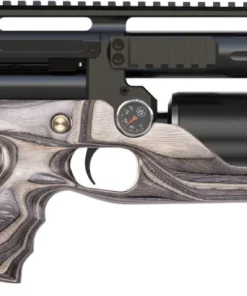
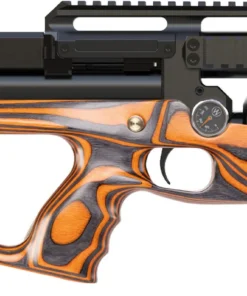
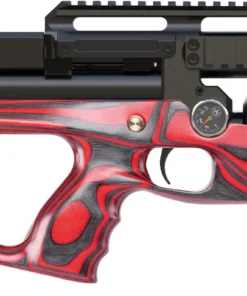
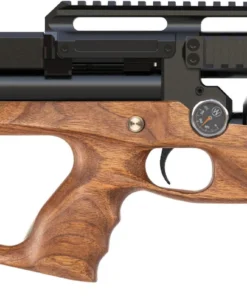
AirMaks Arms KRAiT-T Long
Price range: €1,200.00 through €1,390.00
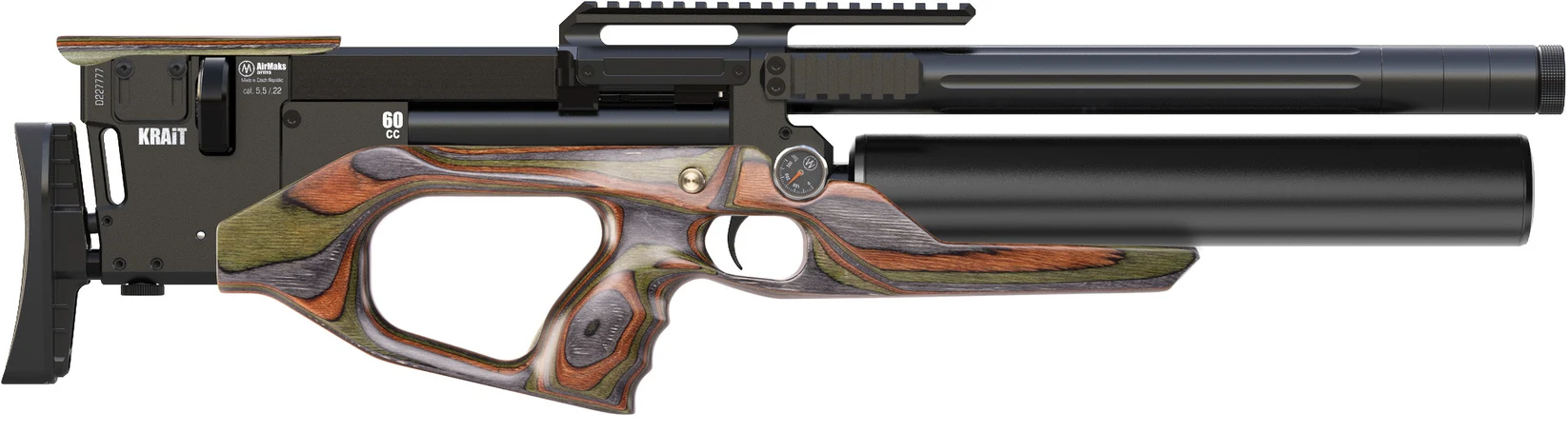
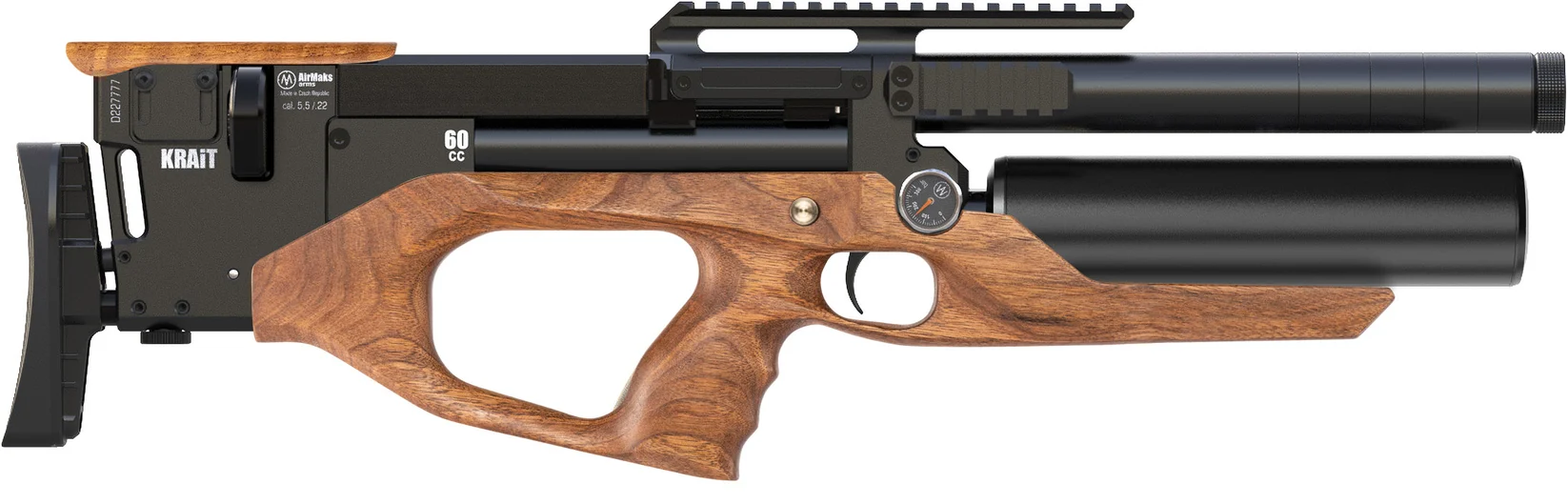
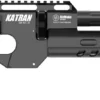
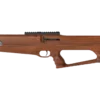
The tube version of the KRAIT. The lightweight and comfortable air rifle KRAIT has an ergonomic right-hand AR15 grip, a length adjustable stock with height adjustable butt-pad and cheek-piece. The KRAIT has a 60 cc plenum size bottle. The pressure regulator and the valve have external adjustment. The Picatinny Scope rail has 20 MOA.
Easy-cocking side lever comfortably situated near the trigger with a possibility to change right-left side. The trigger has a 2-stage adjustment.
- Height adjustable cheek piece
- Length and height adjustable butt pad
- 3 Picatinny rails for accessories
- AR15 right-hand Grip
- Side lever action, right-left changeable
- AR15 style safety, right-left changeable
- Two-stage trigger with external adjustment
- Supplied with Negrini case
- HUMA-AIR Regulator
- Anti-double feed system
- External velocity regulation screw
- 20MOA Picatinny rail
- 1/2” UNF thread for moderator
- CZ Barrel with 1:17.7 twist
- Magazine – 18 shot (.177), 16 shot (.22), 14 shot (.25)
- Shot Count:
KRTU .177 180
KRTU .22 200
KRTU-L .177 300
KRTU-L .22 320
AirMaks Arms KRAiT-T Long – Premium Czech PCP Bullpup Air Rifle with Extended Precision Barrel, Adjustable Stock and Advanced Regulated Air System
AirMaks Arms KRAiT-T Long – Advanced PCP Engineering, Precision Manufacturing, Extended Barrel Design and Premium Sporting Performance
AirMaks Arms KRAiT-T Long – European Craftsmanship and Innovative Bullpup Design
The AirMaks Arms KRAiT-T Long brings together contemporary Czech engineering, compact bullpup styling and premium mechanical construction. Designed for enthusiasts who appreciate sophisticated pneumatic sporting equipment, the extended configuration combines a full-length barrel with a relatively compact overall profile.
The manufacturer’s closest published designation is KRAiT LT (Long Tube), which features a 520mm choked barrel, 340cc tubular air reservoir and adjustable ergonomic components. The exact KRAiT-T Long SKU should be confirmed before publication because the shorter KRAiT T and longer KRAiT LT have different specifications.
Furthermore, its two-stage trigger, precision-machined components and practical stock adjustments contribute to its distinctive engineering identity.
AirMaks, AirMaks Katran and AirMaks Krait – Premium Sporting Equipment Collections
The manufacturer offers several product families, including AirMaks Katran and AirMaks Krait.
Common searches include airmaks, airmarks, air marks, katran airmaks, katran, air max krait, airmaks krait, ar max, arm max and max arms.
However, some of these expressions are spelling variations or references to unrelated businesses.
Buyers researching AirMaks Arms air rifles, AirMaks Arms PCP air rifles, AirMaks Arms PCP rifles, AirMaks Arms for sale, AirMaks Arms shop and AirMaks Arms USA should confirm the actual model and authorized regional availability.
Similarly, uramax is not an alternative designation for the manufacturer.
KRAiT Long Tube – Engineering Specifications and Technical Information
The manufacturer’s published KRAiT LT specifications include:
-
Manufacturer: AirMaks Arms
-
Country of origin: Czech Republic
-
Operating system: Pre-charged pneumatic
-
Configuration: Bullpup with tubular air reservoir
-
Calibres: .177 (4.5mm), .22 (5.5mm), .25 (6.35mm)
-
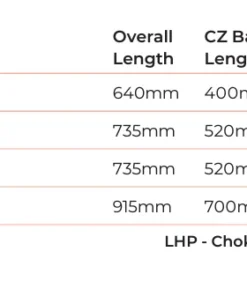
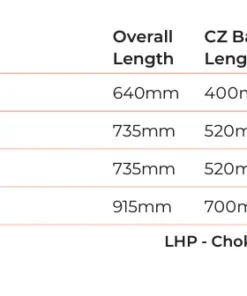
Barrel length: 520mm, choked
-
Overall length: Approximately 730mm in the model-specific specification
-
Weight: Approximately 3.16kg
-
Air reservoir: 340cc
-
Maximum reservoir pressure: 300 bar
-
Plenum: 60cc
-
Trigger: Adjustable two-stage
-
Action: Reversible side lever
-
Stock: Length-adjustable
-
Cheekpiece: Height and angle adjustable
-
Buttpad: Height-adjustable
-
Optics interface: 20 MOA Picatinny rail
-
Additional mounting: Three accessory rails
-
Safety: Reversible manual mechanism
Magazine capacities are listed as 18, 16 and 14 rounds for .177, .22 and .25 respectively. Published dimensions may vary slightly between manufacturer catalogue revisions.
What Does PCP Air Rifle Mean? Understanding Compressed-Air Technology
A common question among prospective buyers is what does pcp air rifle mean?
PCP refers to pre-charged pneumatic technology. These systems store compressed air in a dedicated reservoir rather than relying on a conventional spring-powered mechanism.
The international expression komprimiran zrak also describes compressed air.
Additionally, this technology differs from CO2 pellet guns, which use carbon dioxide cartridges or cylinders.
High-pressure pneumatic equipment requires appropriate inspection, manufacturer-approved filling equipment and careful storage.
RTI Arms Mora, RTI Mora Sniper and Alternative Precision Sporting Platforms
Customers comparing European designs may encounter RTI Arms, RTI guns, RTI gun and RTI store.
Other searches include RTI Arms Mora, RTI Mora, RTI Arms Mora 22, RTI Mora 22, RTI Mora Sniper and RTI Mora for sale.
These expressions identify a separate manufacturer’s sporting equipment.
Furthermore, RTI rails and M Lok rail extension accessories should not automatically be considered compatible with this product.
Benjamin Bulldog Magnum Series Bullpup and Other Airgun Categories
The Benjamin Bulldog Magnum Series Bullpup represents another sporting equipment family.
Related searches include benjamin air rifle, benjamin air rifles, benjamin bulldog, benjamin bulldog 457 20 joules, benjamin break, benjamin airbow and benjamin marauder pcp.
Broader searches such as air rifle and air pistol, airgun and air bows pellet rifle cover different operating systems and product categories.
Consequently, these items should be evaluated independently rather than presented as variants of the same model.
Optical Accessories, Maintenance Products and Equipment Compatibility
Popular accessory searches include Vector Continental 2-12×44, Vector Continental 2 12×44, Vector 2 12 and Vector 5 30×56.
Other terms include scope mounting level kit, scope level kit, Javelin Pro Hunt TAC bipod and M Lok rail extension.
Meanwhile, Predator Polymag 1007-01 air gun pellets represent ammunition, while silicone grease for O-rings relates to maintenance materials.
Searches for 10 22 arrow conversion and 150mm lens M12 concern unrelated accessory categories.
Accessory inclusion and compatibility must be confirmed for the actual supplied configuration.
Pest Control Searches, Responsible Use and Safety Requirements
Searches such as best pellet gun for pest control, pellet gun for pest control and air rifle for pest control frequently appear in broader airgun research.
However, use involving animals is subject to applicable laws, animal-welfare requirements and professional competence.
Furthermore, novelty searches such as hamster with gun, hamster with a gun and hamster holding gun are unrelated to the rifle’s specifications or intended sporting applications.
Appropriate recreational use should occur only in authorized environments with suitable protective equipment and secure storage procedures.
Why Choose the AirMaks Arms KRAiT-T Long?
This extended platform offers distinctive European manufacturing, a compact bullpup profile and specialized pneumatic construction.
Its tubular reservoir, carefully developed barrel assembly and adjustable ergonomic features reflect a strong emphasis on modern mechanical engineering.
Furthermore, the manufacturer’s established technical documentation provides useful information for evaluating the model’s components and ownership requirements.
Actual performance, energy classification and suitability depend on the specific calibre, regional version and applicable legislation.
For authorized sporting enthusiasts seeking a refined European PCP platform, the extended configuration offers an appealing combination of precision craftsmanship, practical design and technical sophistication.
Advanced Pneumatic Engineering, Precision Manufacturing, Premium Craftsmanship, Exceptional Durability and Long-Term Ownership Benefits
Understanding the Importance of Advanced Engineering in Premium Sporting Equipment
Modern pneumatic sporting equipment represents an impressive combination of mechanical engineering, material science, industrial innovation and carefully developed manufacturing techniques. Every component contributes to the overall quality of the finished product, while the relationship between individual assemblies influences reliability, consistency and long-term serviceability.
A premium mechanical system requires more than an attractive exterior. Its internal components must satisfy specific dimensional requirements, withstand their intended operating conditions and remain compatible throughout the expected service life.
Furthermore, manufacturers must balance several engineering considerations, including strength, weight, comfort, safety and production consistency.
Modern manufacturing technologies allow engineers to produce detailed components with carefully controlled dimensions. Computer-controlled machinery, precision measuring instruments and specialized inspection methods contribute to consistent production standards.
However, advanced machinery alone cannot guarantee exceptional quality. Experienced technicians, suitable materials and reliable assembly procedures remain essential.
Consequently, a premium sporting product should be evaluated as a complete engineering system rather than through a single advertised characteristic.
For enthusiasts who appreciate sophisticated craftsmanship, this combination of modern manufacturing and practical design provides lasting appeal.
Why Precision Manufacturing Makes a Significant Difference
Precision manufacturing plays an essential role in the production of sophisticated mechanical equipment.
Manufacturers establish dimensional specifications for individual components to ensure compatibility during assembly. These specifications help determine how mechanical parts interact within the finished product.
Furthermore, closely controlled production tolerances can reduce variation between components.
Modern machining processes allow manufacturers to reproduce intricate shapes with considerable consistency. Nevertheless, appropriate inspection remains necessary because manufacturing equipment can experience wear or produce occasional deviations.
The final quality of a component depends on several factors, including material selection, machining accuracy, surface finishing and quality assurance.
Consequently, dependable production requires attention throughout the manufacturing process.
A carefully manufactured sporting product should demonstrate satisfactory component alignment, consistent external finishing and appropriate structural construction.
However, attractive workmanship should never replace technical verification.
The most meaningful measure of manufacturing quality involves conformity with the manufacturer’s approved specifications.
The Importance of High-Quality Materials and Structural Integrity
Material selection forms the foundation of dependable mechanical engineering.
Different components experience different physical conditions, making it necessary to select materials with suitable strength, hardness, flexibility and resistance to environmental deterioration.
Metal alloys frequently provide structural support, while specialized polymers and elastomers perform functions that require flexibility or sealing properties.
Furthermore, protective coatings help preserve exposed surfaces.
However, every material has limitations.
Metal components can corrode when exposed to moisture, while certain polymers may deteriorate after prolonged exposure to unsuitable chemicals or extreme temperatures.
Consequently, material quality must always be considered alongside appropriate maintenance.
A well-developed product incorporates materials selected for their intended functions rather than their appearance alone.
Structural components require particular attention because they contribute to the integrity of the complete assembly.
Furthermore, pressure-bearing parts must satisfy additional engineering requirements.
Responsible owners should therefore avoid unauthorized component substitutions or modifications that could compromise the original design.
Understanding the Benefits of Compact Mechanical Construction
Compact construction has become an important feature of many contemporary sporting products.
A carefully arranged mechanical system can reduce overall dimensions while retaining essential structural components.
This approach may provide advantages in transportation and storage.
Furthermore, compact equipment can offer a distinctive appearance compared with traditional full-length designs.
However, compactness alone does not determine quality.
The arrangement of internal components influences balance, weight distribution and ergonomic comfort.
Consequently, the manufacturer must consider the relationship between mechanical construction and the physical requirements of the intended user.
A shorter profile may be convenient for one individual while another may prefer a more conventional configuration.
The most appropriate design depends on personal comfort, intended lawful activities and practical ownership requirements.
Premium compact engineering therefore involves balancing dimensional efficiency with structural reliability and appropriate ergonomics.
Why Ergonomic Design Matters for Comfort
Ergonomics concerns the relationship between equipment and the people who use it.
A thoughtfully designed sporting product should accommodate ordinary differences in body proportions while preserving its intended mechanical configuration.
Grip shape, stock geometry, contact surfaces and overall weight all influence comfort.
Furthermore, adjustable components may help accommodate different users.
However, individual preferences and physical measurements vary considerably.
Consequently, one configuration cannot be assumed suitable for everyone.
Comfort also depends on the complete equipment arrangement.
Optional accessories can change overall weight and balance, creating a different physical experience from the original configuration.
Therefore, prospective owners should examine dimensions, material characteristics and ergonomic suitability rather than relying exclusively on appearance.
A refined design integrates practical comfort with dependable mechanical construction.
The Importance of Adjustable Ergonomic Components
Adjustability can provide useful flexibility within premium sporting equipment.
Manufacturers may incorporate adjustable contact surfaces to accommodate different physical proportions.
These features contribute to the overall adaptability of the product.
Furthermore, carefully engineered adjustment mechanisms can demonstrate attention to user comfort.
However, adjustable components introduce additional mechanical interfaces that require appropriate construction and inspection.
Their reliability depends on material quality and compatibility with the surrounding assembly.
Consequently, owners should use adjustable features only within the manufacturer’s approved limits.
Unauthorized alterations may affect structural integrity or safety.
Adjustability should therefore be understood as an ergonomic benefit rather than an invitation to modify the original engineering.
A carefully designed system balances flexibility with dependable construction.
Understanding the Relationship Between Weight and Balance
Total weight provides useful information about sporting equipment, but it does not describe the complete handling experience.
Two products with similar mass may feel noticeably different because their weight is distributed differently.
Furthermore, the location of major components influences perceived balance.
A compact design may concentrate weight toward one section of the assembly, while a more traditional configuration distributes it differently.
Consequently, individual comfort depends on the complete arrangement.
The addition of optional accessories may also change the overall weight.
Therefore, published specifications should be interpreted according to the configuration they describe.
Prospective owners should consider the intended complete setup rather than relying exclusively on the manufacturer’s basic weight figure.
Balanced engineering requires attention to structural requirements and ergonomic considerations.
Appreciating the Value of Premium Surface Finishing
Surface finishing contributes to both product appearance and material preservation.
Manufacturers use different treatments to protect metal components, improve visual consistency and reduce ordinary environmental deterioration.
Furthermore, carefully finished surfaces demonstrate attention to manufacturing detail.
Uniform coatings, consistent component alignment and appropriately completed edges can contribute to the overall impression of craftsmanship.
However, even premium finishes have limitations.
Scratches, moisture and unsuitable cleaning chemicals may affect their appearance.
Consequently, owners should follow manufacturer-approved maintenance procedures.
Abrasive cleaning products should generally be avoided because they can damage protective surfaces.
The objective of routine exterior maintenance is to preserve the original finish without altering the equipment’s construction.
With appropriate care, a well-finished product can retain much of its original appearance over an extended period.
Why Pressure Reservoir Construction Is Important
A pressure reservoir represents one of the most technically demanding components of a compressed-air system.
Its design must accommodate the manufacturer’s specified operating pressure while maintaining appropriate structural integrity.
Consequently, suitable materials, controlled manufacturing and rigorous quality assurance are essential.
Furthermore, the reservoir must remain compatible with the complete mechanical assembly.
Pressure-bearing components should never be modified without manufacturer authorization.
Damage, corrosion or uncertainty about condition requires professional assessment.
Similarly, owners should not substitute pressure-related components merely because they appear physically compatible.
The manufacturer may establish inspection intervals or specific service requirements.
These instructions must be followed throughout the equipment’s service life.
Dependable reservoir construction provides an important foundation for the complete system, but responsible ownership remains essential.
Understanding the Importance of Regulated Pressure Management
Pressure regulation is a recognized feature of modern pneumatic engineering.
A regulator manages pressure according to the manufacturer’s intended operating parameters.
Its construction may involve specialized mechanical components, seals and carefully manufactured internal surfaces.
Furthermore, consistency depends on the condition of the complete assembly.
However, regulation does not eliminate every possible source of variation.
Environmental temperature, component condition and other operating factors may influence overall behavior.
Consequently, the presence of a pressure regulator should not be interpreted as a guarantee of identical performance under every condition.
Professional servicing becomes important when pressure-related faults occur.
Owners should avoid unauthorized internal adjustments.
A refined pressure-management system reflects sophisticated engineering, but its continued reliability depends on appropriate maintenance.
The Importance of High-Quality Sealing Components
Seals perform an essential function in many pneumatic systems.
Their purpose is to maintain the intended separation between pressurized and non-pressurized areas.
Manufacturers select sealing materials according to specific mechanical and environmental requirements.
These materials may need appropriate flexibility, dimensional stability and compatibility with surrounding components.
Furthermore, seal performance depends on correct manufacturing and installation.
However, sealing materials can deteriorate through age, contamination or unsuitable operating conditions.
Consequently, replacement may eventually become necessary.
Only compatible components and manufacturer-approved servicing methods should be used.
Inappropriate lubricants or cleaning products can damage certain sealing materials and may create safety concerns.
Professional maintenance helps preserve the intended integrity of the system.
Why Mechanical Consistency Matters
Mechanical consistency is an important characteristic of a well-manufactured sporting product.
A carefully assembled system should operate within the manufacturer’s defined specifications.
However, mechanical consistency depends on several interconnected factors.
Material quality, dimensional accuracy, assembly procedures and maintenance all contribute.
Furthermore, individual components may experience gradual wear during normal service.
Consequently, regular inspection and appropriate servicing remain necessary.
A product that previously operated normally may develop faults through age or environmental exposure.
Unexpected mechanical behavior should therefore receive professional attention.
The goal of maintenance is to preserve the original approved configuration rather than introduce unauthorized changes.
The Role of Professional Manufacturing Standards
Professional manufacturing standards help establish consistency across production.
Manufacturers may use dimensional inspection, material verification and final product assessment to determine whether components satisfy the intended specifications.
Furthermore, documented procedures support repeatability.
However, quality assurance involves more than one final inspection.
Reliable production requires attention throughout design, machining, finishing and assembly.
Consequently, the quality of the finished product reflects the manufacturer’s complete production system.
Accurate product identification and technical documentation also support future maintenance.
For prospective owners, these factors can contribute to long-term confidence.
Why European Engineering Traditions Remain Relevant
European mechanical manufacturing has a long history of technical development and detailed craftsmanship.
This tradition continues to influence contemporary sporting equipment.
Manufacturers may combine established industrial knowledge with modern production processes.
Furthermore, regional expertise in machining and materials can contribute to product development.
However, geographical origin alone does not guarantee superior quality.
Actual standards depend on the individual manufacturer’s design, production and inspection procedures.
Consequently, buyers should evaluate verified specifications and available technical documentation.
Traditional craftsmanship provides appeal when supported by dependable engineering.
Understanding the Benefits of Manufacturer Documentation
Manufacturer documentation provides essential information about technical equipment.
Official instructions may describe maintenance requirements, safety precautions and approved component configurations.
Furthermore, product identification details help distinguish different production versions.
This is particularly important when a manufacturer offers several closely related models.
Specifications may vary according to configuration or regional requirements.
Consequently, buyers should verify that published information corresponds to the actual item.
Purchase records and technical manuals should also be retained.
These documents may assist with professional servicing, warranty claims and future ownership transfers.
Accurate documentation contributes to responsible long-term ownership.
The Importance of Proper Maintenance
Maintenance supports the preservation of mechanical equipment.
However, appropriate procedures depend on the specific materials and assemblies involved.
The manufacturer’s instructions should therefore guide all routine care.
Furthermore, owners must distinguish between ordinary exterior cleaning and specialized internal servicing.
Pressure-bearing components require particular caution.
Unauthorized dismantling can create serious safety hazards.
Consequently, complex maintenance should be completed by qualified professionals.
The objective is to preserve the product’s intended mechanical condition while identifying wear before it develops into more significant problems.
A carefully maintained product may remain serviceable for many years, subject to the manufacturer’s requirements.
Protecting Exterior Metal Components
External metal surfaces can experience corrosion when exposed to moisture or contaminants.
Even high-quality finishes require appropriate protection.
Consequently, equipment should be stored in a clean, dry environment.
Ordinary dust and fingerprints may be removed using manufacturer-approved cleaning methods.
However, abrasive products and aggressive chemicals should be avoided.
Furthermore, excessive lubrication can attract dirt or affect surrounding materials.
Owners should follow the manufacturer’s guidance when selecting protective products.
Visible corrosion affecting important components should receive professional assessment.
Preventive care helps preserve appearance and reduces avoidable environmental deterioration.
Why Storage Conditions Affect Equipment Longevity
Storage conditions influence both product preservation and safety.
A suitable environment should protect equipment from unnecessary moisture, extreme temperatures and chemical contamination.
Furthermore, unauthorized access must be prevented.
A secure cabinet or other legally compliant storage arrangement may be appropriate.
However, local regulations determine the exact requirements.
Excessive humidity can encourage corrosion, while prolonged heat may affect certain materials.
Consequently, equipment should not remain in unsuitable storage conditions for extended periods.
Protective cases may reduce physical damage, but they do not eliminate environmental concerns.
Responsible storage supports long-term ownership.
Understanding the Importance of Transportation Protection
Transportation exposes sporting equipment to additional handling and environmental conditions.
A suitable protective case can reduce accidental exterior damage.
Furthermore, organized transportation helps prevent contact with loose objects or contaminants.
However, equipment must remain secured according to applicable laws.
Different jurisdictions may impose specific transportation requirements.
Consequently, owners should verify the relevant regulations before travelling.
Excessive heat or moisture during transportation should also be avoided where possible.
Careful handling contributes to preserving the original condition.
The Value of Professional Inspection
Professional inspection provides an important safeguard when maintaining technical equipment.
Qualified technicians can evaluate mechanical condition and identify components requiring attention.
Furthermore, specialized knowledge helps determine whether manufacturer-approved replacements are necessary.
Owners should not continue using equipment that displays unusual mechanical behavior or suspected pressure-related damage.
Such concerns require appropriate evaluation.
Professional inspection is particularly important when maintenance history is incomplete.
A thorough assessment provides greater confidence than external appearance alone.
Why Genuine Replacement Components Matter
Replacement parts should correspond to the manufacturer’s approved specifications.
Components that appear similar may differ in dimensions, materials or intended function.
Consequently, unverified substitutions can introduce reliability or safety concerns.
Furthermore, installation procedures may require specialized tools or professional qualifications.
Owners should therefore rely on approved components and authorized servicing.
Accurate maintenance records can help document replacements.
This information may become useful during later inspections.
Preserving the original engineering configuration contributes to dependable serviceability.
Understanding Long-Term Mechanical Durability
Durability depends on the relationship between original manufacturing quality and subsequent ownership conditions.
Suitable materials and consistent production provide a strong foundation.
However, no mechanical system remains permanently unaffected by wear.
Environmental exposure, repeated operation and aging may influence component condition.
Consequently, periodic maintenance remains important.
The manufacturer’s service recommendations should determine appropriate procedures.
Furthermore, suspected damage must be addressed before continued use.
Long-term durability is therefore a shared responsibility between the manufacturer and the owner.
Why Quality Equipment Requires Responsible Ownership
Premium engineering does not eliminate the need for responsible behavior.
Sporting equipment capable of causing serious injury must be stored securely and used only in appropriate, lawful environments.
Furthermore, the owner should understand applicable legal requirements.
These may include restrictions on possession, transportation and authorized activities.
Consequently, compliance should be verified before purchase.
Mechanical safety features provide additional protection but cannot replace safe handling.
Qualified instruction can help new owners understand relevant responsibilities.
Responsible ownership protects people, property and the condition of the equipment.
The Importance of Authorized Sporting Environments
Recreational sporting equipment should be used within appropriate facilities and legal frameworks.
Authorized ranges and sporting clubs may provide structured environments with established safety procedures.
Furthermore, qualified supervision can be beneficial for individuals developing familiarity with technical equipment.
However, the suitability of a location depends on local regulations and the nature of the activity.
Private property does not automatically provide authorization for use.
Consequently, owners should verify applicable permissions.
Appropriate protective equipment and secure storage arrangements remain essential.
The quality of the sporting environment is as important as the quality of the equipment.
Why Appearance Should Not Replace Technical Evaluation
An attractive product may create a strong first impression.
However, external appearance does not establish the condition of internal components.
A polished finish can coexist with mechanical wear or neglected maintenance.
Consequently, buyers should evaluate available documentation and service history.
Professional inspection may be appropriate for pre-owned equipment.
Furthermore, product descriptions should distinguish verified facts from promotional claims.
Transparent information helps establish realistic expectations.
Technical condition should always receive priority over cosmetic appeal.
The Importance of Accurate Product Specifications
Accurate specifications help consumers compare different sporting products.
Published information may include dimensions, weight, materials and operating characteristics.
However, manufacturers sometimes offer multiple configurations with different specifications.
Consequently, information should correspond to the actual product version.
Regional variants may also differ because of legal requirements.
Furthermore, optional accessories can influence the final configuration.
Retailers should clearly identify what is included.
Transparent specifications support informed purchasing decisions and reduce misunderstandings.
Evaluating Premium Craftsmanship Against Purchase Price
Premium sporting equipment may command higher prices because of manufacturing complexity and material selection.
However, cost alone does not establish superior suitability.
Different buyers prioritize different characteristics.
Some value compact design, while others prefer traditional appearance or straightforward servicing.
Consequently, purchasing decisions should reflect individual requirements.
Maintenance expenses and available technical support also influence long-term value.
A well-chosen product balances verified quality with practical ownership considerations.
Why After-Sales Support Matters
After-sales support can influence the long-term ownership experience.
Authorized service providers may offer access to appropriate replacement components and technical information.
Furthermore, manufacturer documentation can help resolve maintenance questions.
However, service availability varies by location.
Prospective buyers should therefore verify local support arrangements.
Warranty conditions should also be reviewed.
Unauthorized modifications may affect coverage.
Retaining purchase and servicing records can simplify future assistance.
Understanding the Importance of Warranty Protection
Warranty protection provides a framework for addressing qualifying manufacturing defects.
However, terms differ between manufacturers and retailers.
Coverage may exclude ordinary wear, accidental damage or unauthorized modifications.
Consequently, buyers should review the applicable conditions carefully.
Furthermore, proof of purchase may be required.
Professional servicing can help preserve compliance with certain warranty requirements.
A transparent warranty policy contributes to purchasing confidence.
However, warranty coverage should never be confused with a guarantee of unlimited service life.
The Financial Benefits of Long-Term Serviceability
A product’s value depends partly on its ability to remain serviceable over time.
Reliable construction and access to approved maintenance can reduce avoidable replacement expenses.
Furthermore, appropriate storage helps preserve external condition.
However, total ownership costs may include professional servicing and replacement components.
Consequently, purchase price should be evaluated alongside foreseeable maintenance requirements.
A premium product can represent attractive value when it remains appropriate for the owner’s needs.
Nevertheless, no financial return or future resale price can be guaranteed.
Why Traditional Craftsmanship and Modern Technology Work Together
Contemporary sporting equipment often combines traditional design principles with sophisticated manufacturing methods.
Carefully finished surfaces contribute visual refinement, while modern mechanical assemblies provide technical functionality.
Furthermore, compact engineering can distinguish contemporary products from earlier configurations.
However, successful integration requires balance.
Appearance must not compromise reliability, safety or serviceability.
A premium product should demonstrate a coherent relationship between its materials, mechanical components and intended application.
For enthusiasts who appreciate craftsmanship, this combination can provide lasting satisfaction.
Understanding the Importance of Product Authenticity
Authenticity matters when purchasing specialized sporting equipment.
A genuine product should correspond to the manufacturer’s stated specifications and identification information.
Furthermore, accurate documentation can help establish the correct model.
Buyers should avoid relying exclusively on informal product names or photographs.
Similar-looking items may contain different components.
Consequently, authorized retailers and reliable documentation provide useful reassurance.
A transparent seller should clearly describe the actual configuration.
This supports informed purchasing decisions and responsible ownership.
The Lasting Appeal of Precision Craftsmanship
Precision craftsmanship involves careful attention to materials, manufacturing accuracy and final presentation.
Its appeal extends beyond appearance.
Accurately manufactured components contribute to the integrity of the complete product.
Furthermore, appropriate finishing helps preserve exposed surfaces.
However, quality remains dependent on proper maintenance.
A carefully constructed product can deteriorate when neglected.
Consequently, long-term satisfaction involves both original manufacturing standards and responsible ownership.
Premium craftsmanship is most valuable when supported by dependable documentation and serviceability.
Final Assessment of Engineering Quality, Comfort and Long-Term Ownership Benefits
Premium pneumatic sporting equipment represents a combination of advanced mechanical design, material technology and detailed manufacturing.
Its quality depends on the relationship between individual components rather than one isolated feature.
Precision machining supports dimensional consistency, while carefully selected materials contribute to structural durability.
Furthermore, ergonomic design influences comfort and practical suitability.
Compact construction may provide convenient dimensions, but its benefits depend on individual preferences and the complete product configuration.
Pressure-bearing components require particular attention because their integrity is central to safe operation.
Consequently, unauthorized modifications and unsuitable maintenance methods should always be avoided.
Manufacturer-approved care helps preserve the original engineering characteristics.
Secure storage and responsible transportation protect both the equipment and the surrounding community.
Furthermore, professional inspection provides valuable support when technical concerns arise.
For prospective buyers, the most meaningful considerations include verified specifications, material quality, authorized servicing and long-term suitability.
Premium appearance contributes to ownership satisfaction, but mechanical integrity remains more important.
A carefully manufactured product can provide lasting value when maintained appropriately and used within the manufacturer’s intended limitations.
Ultimately, exceptional sporting equipment combines dependable construction, refined craftsmanship, responsible engineering and a practical ownership experience.
Be the first to review “AirMaks Arms KRAiT-T Long”
Related products
Airmaks

AirMaks Arms
AirMaks Arms

AirMaks Arms


AirMaks Arms
AirMaks Arms

AirMaks Arms


AirMaks Arms
Reviews
There are no reviews yet.