
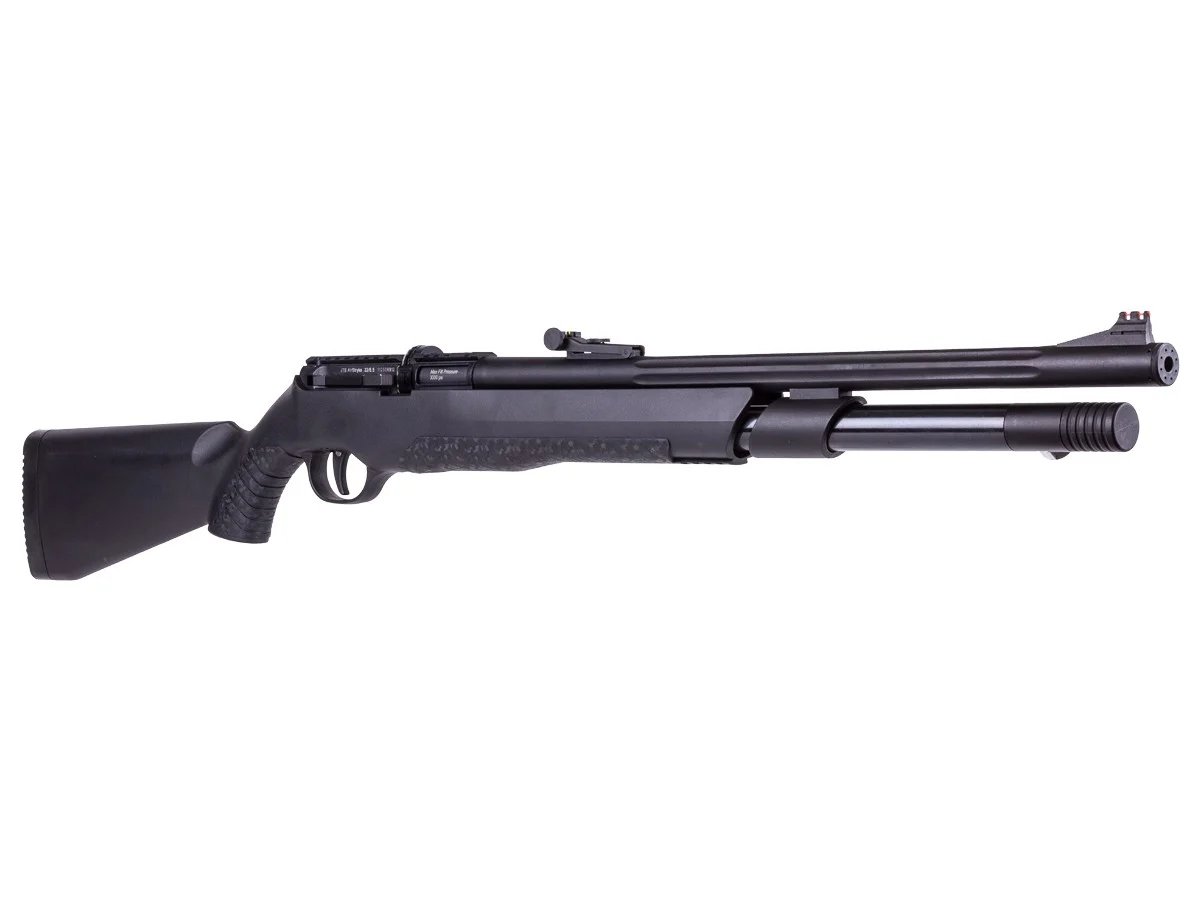
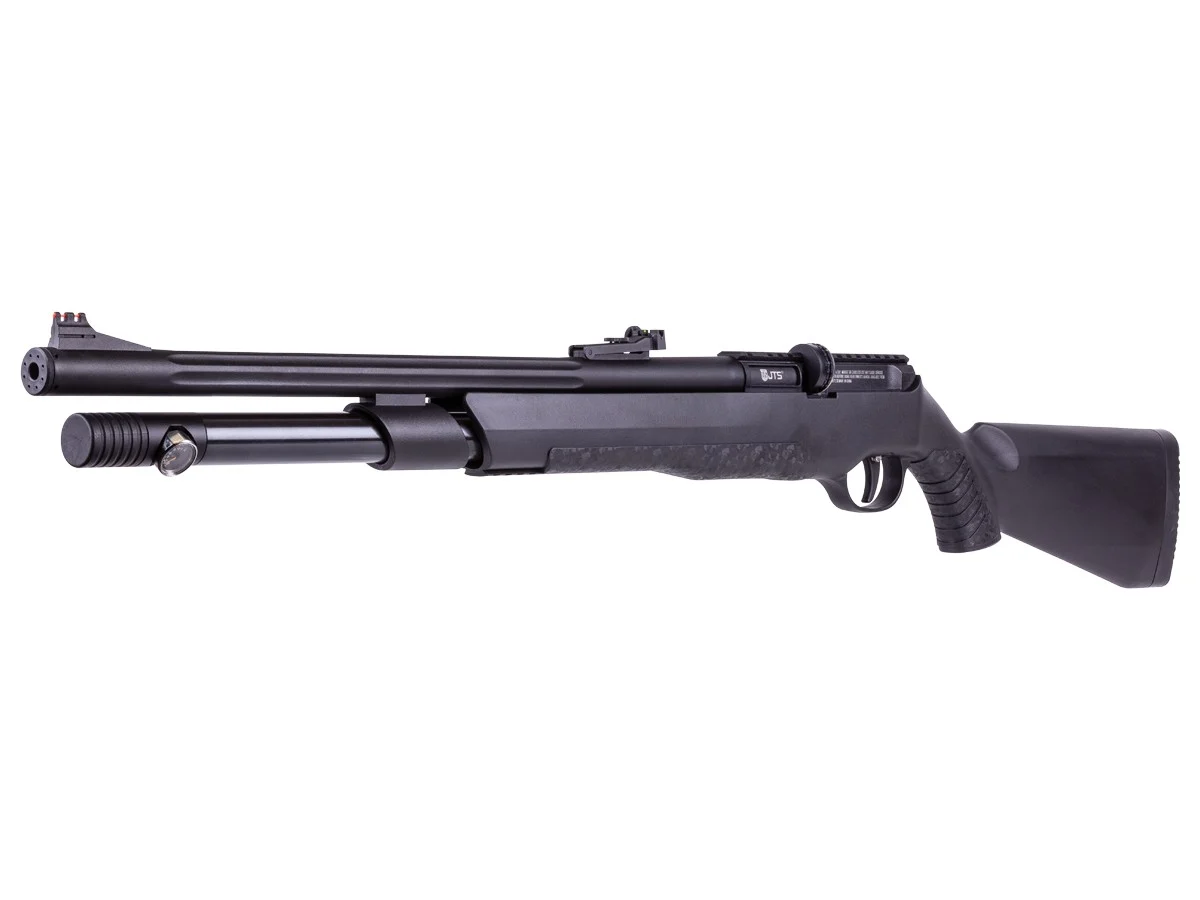
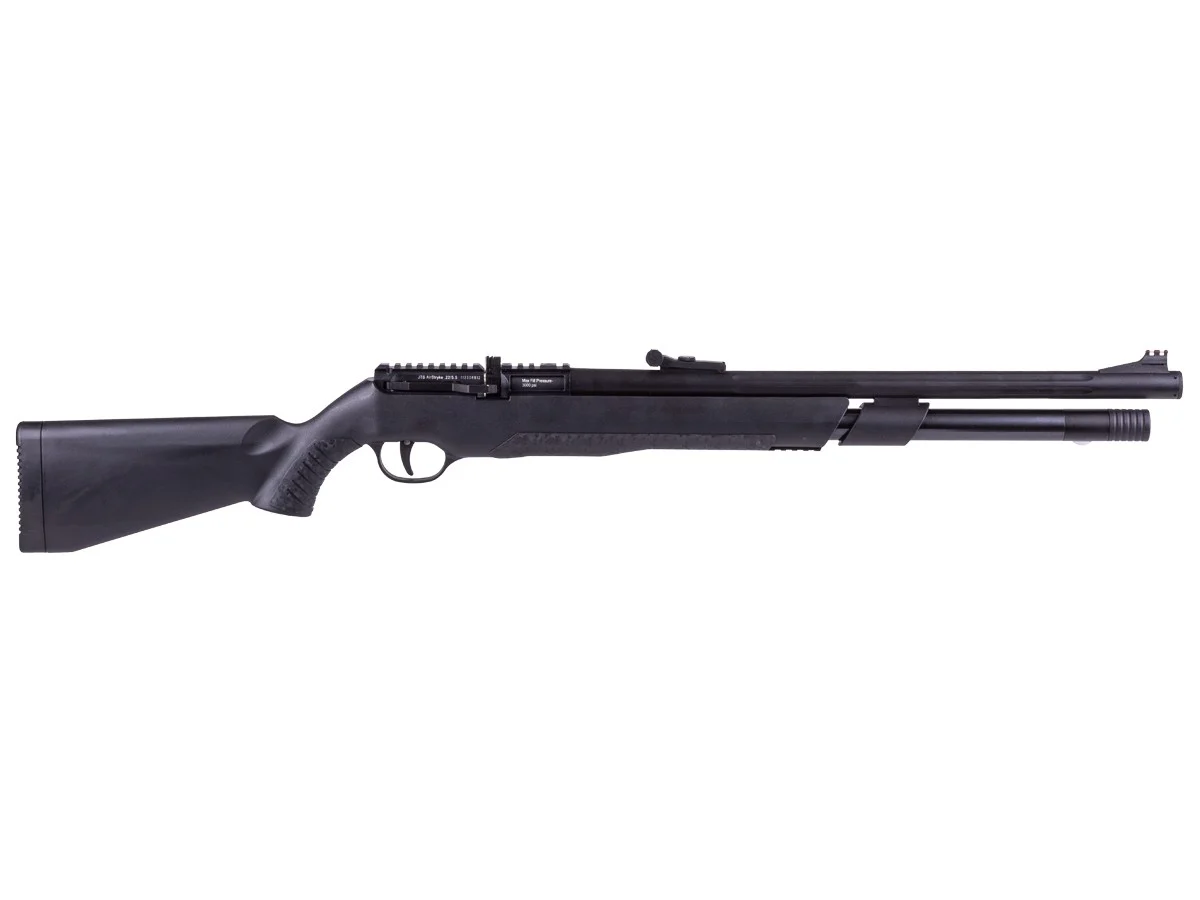
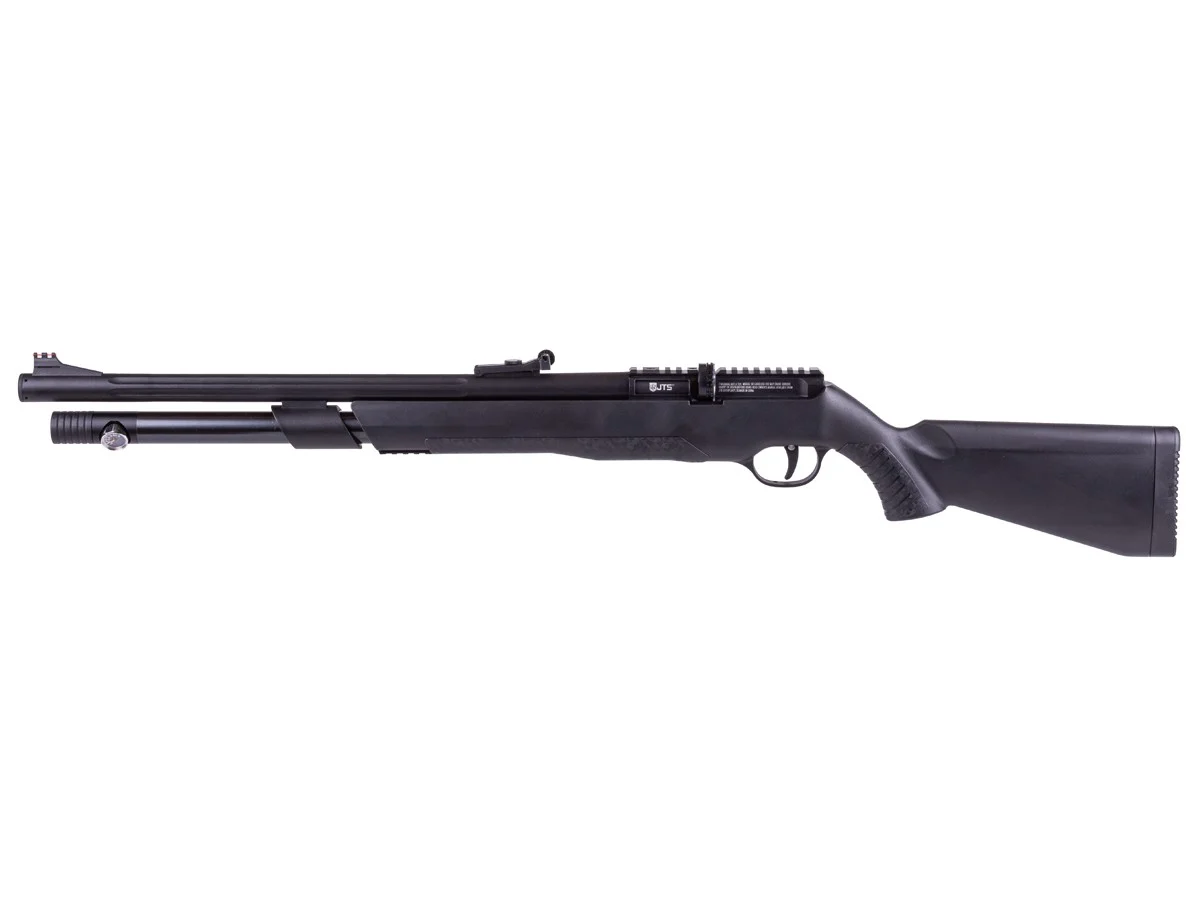
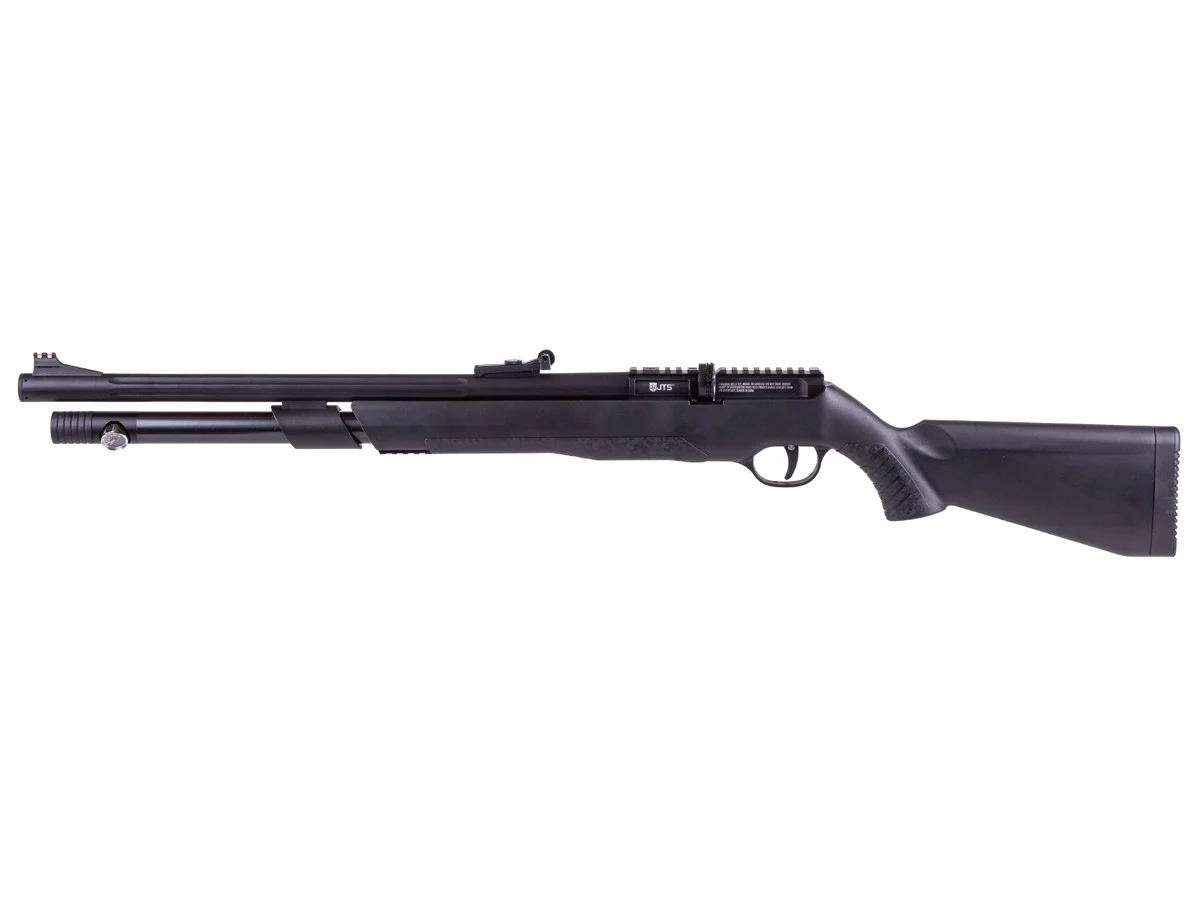
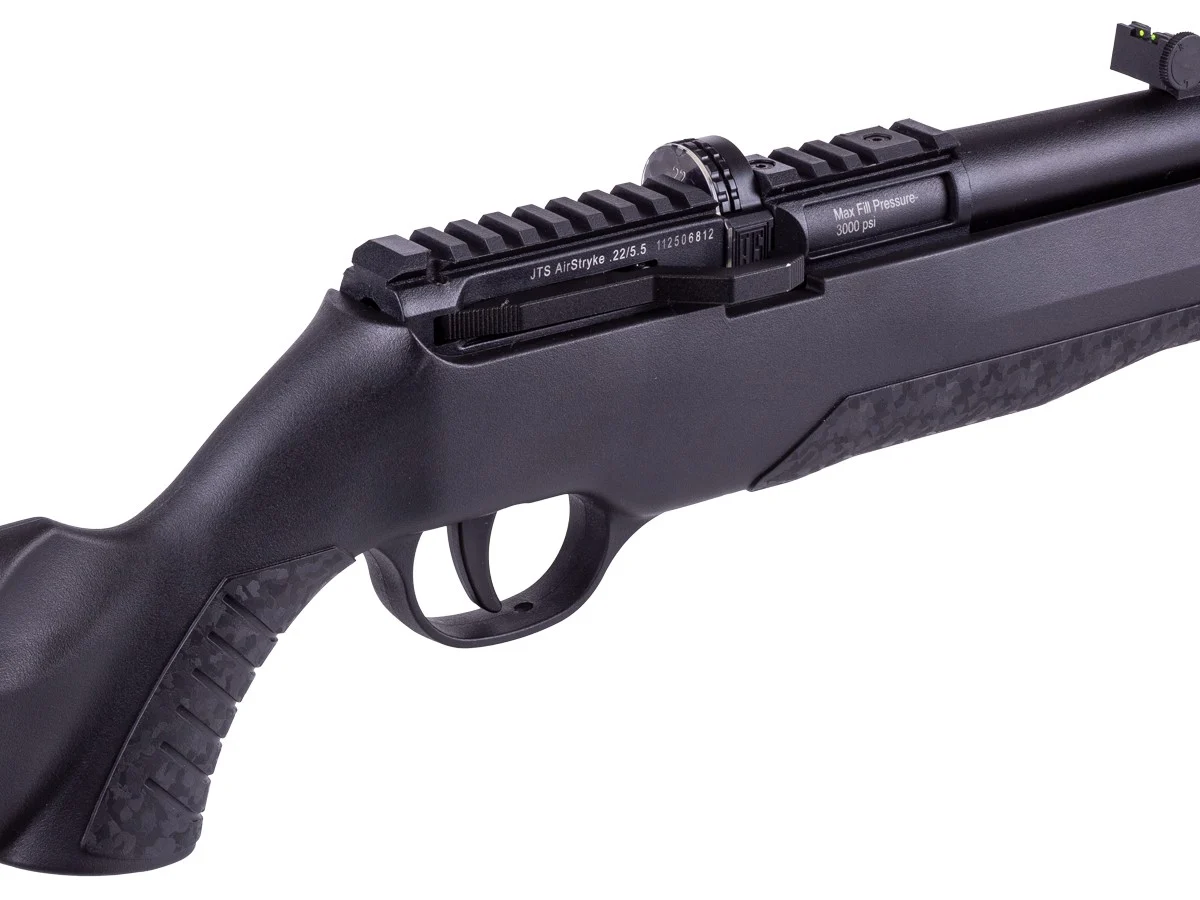






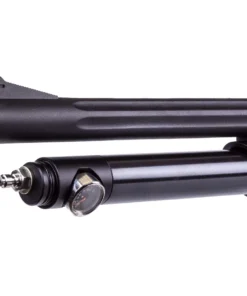
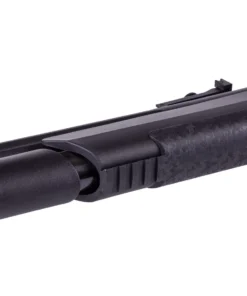
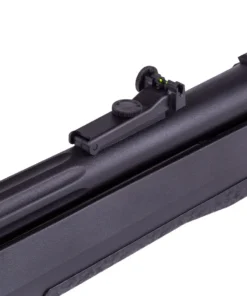

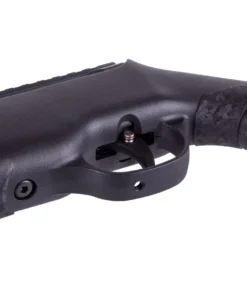

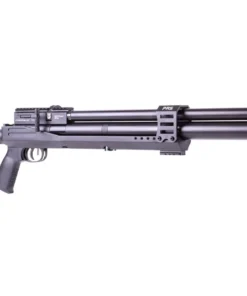
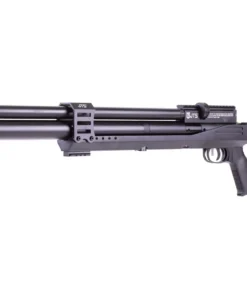
JTS AirStryke PCP Air Rifle

€110.00
Description
The JTS AirStryke PCP Air Rifle offers an incredibly affordable entry into the world of PCPs, and is packed with features that deliver dependable performance at an outstanding price point.
Key Takeaways.
- The AirStryke is an extremely affordable PCP air rifle, perfect for new airgunners.
- Includes a large number of features for its price, which makes it a great value.
- Features a regulator to provide consistent velocity across an entire shot string.
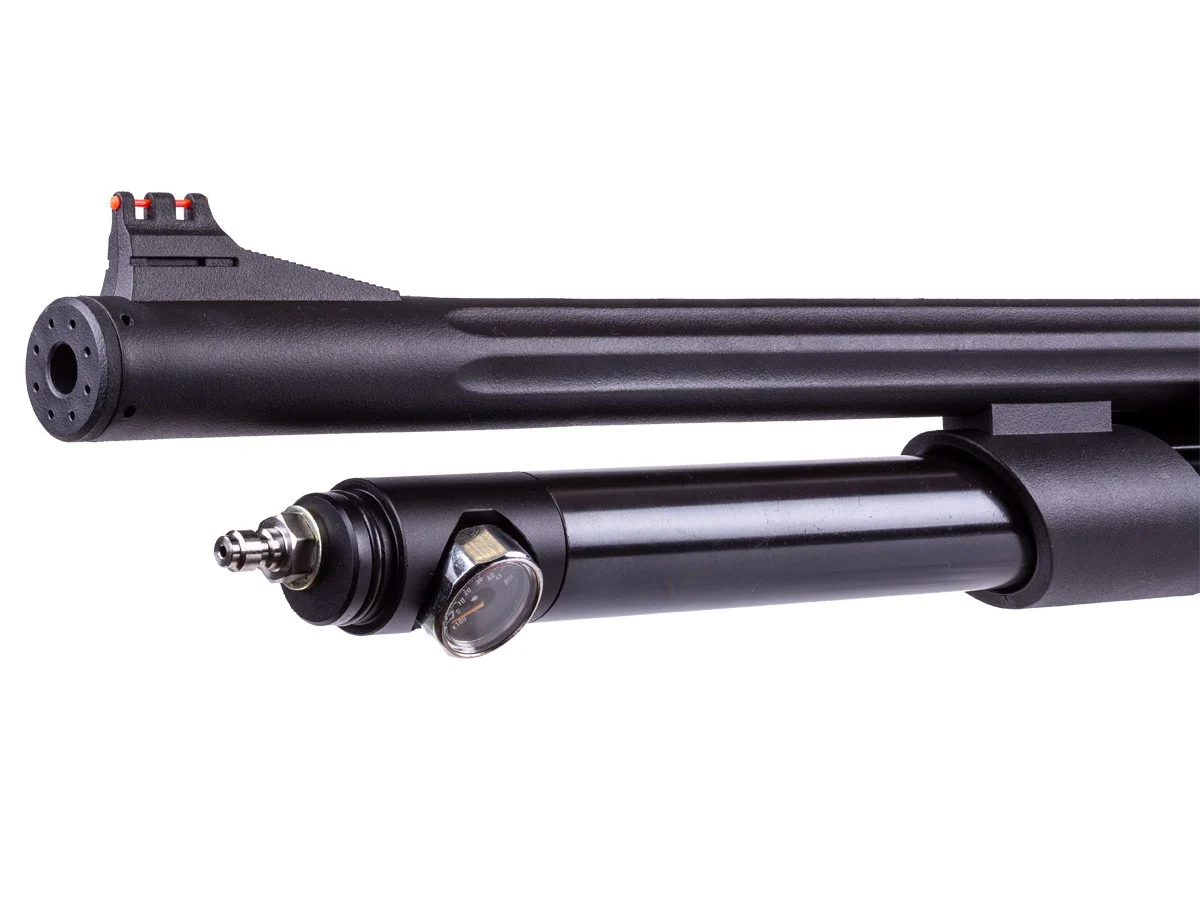
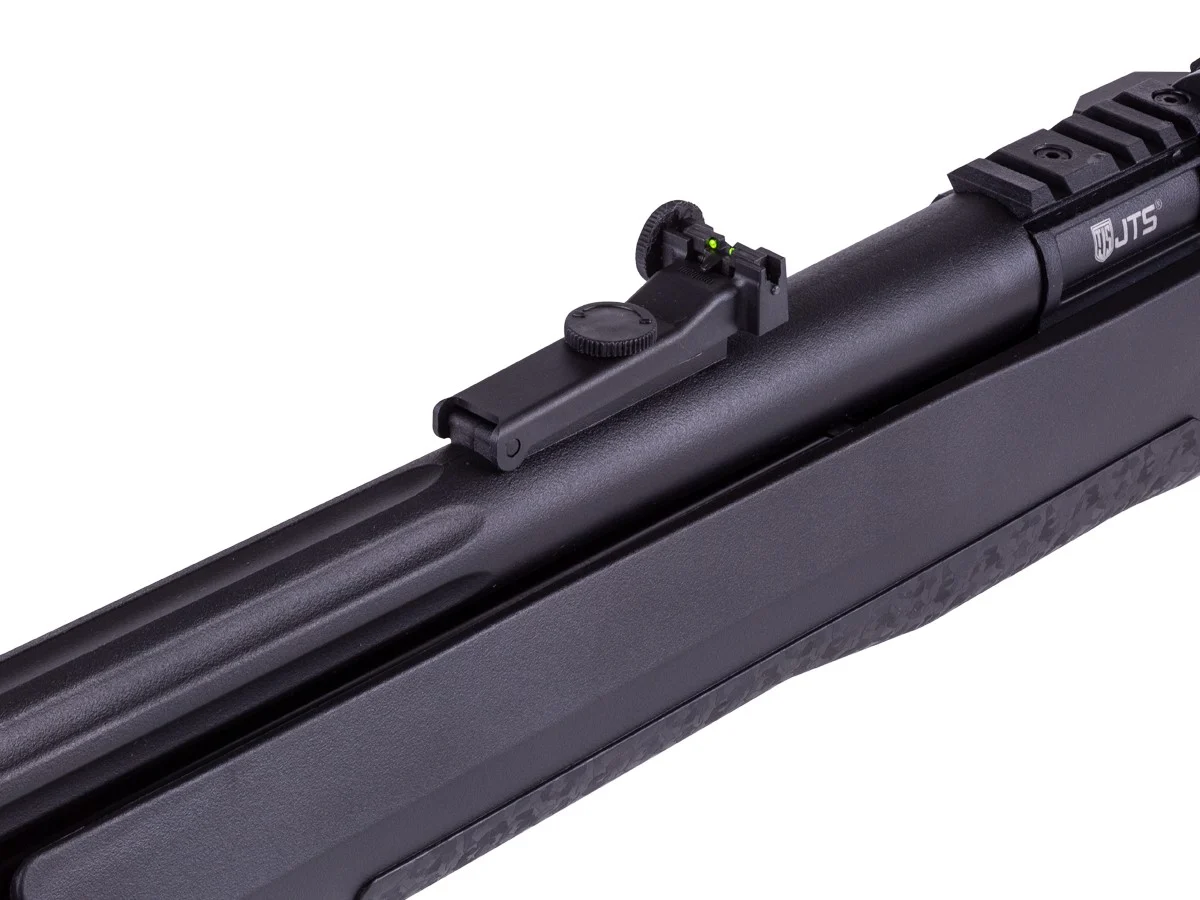
- The fixed fiber optic front sight and adjustable fiber optic rear sight enable close-range accuracy without a scope.
Outstanding Value and Features
The JTS AirStryke is designed to be very affordable as well as providing many features and options, offering high performance without a high price. This makes it an ideal choice for new shooters or those looking to expand their collection with a budget-friendly entry point to PCP performance.
Dependable Performance and Accuracy
Experience reliable power and impressive accuracy with the JTS AirStryke. It features an internal regulator for consistent velocity from each shot, combined with a rifled barrel for better precision, and an internal moderator for quieter shots. These features mean it excels at plinking, target shooting, pest control, and small-game hunting.
- Consistent performance from the regulated PCP (Pre-Charged Pneumatic) power plant.
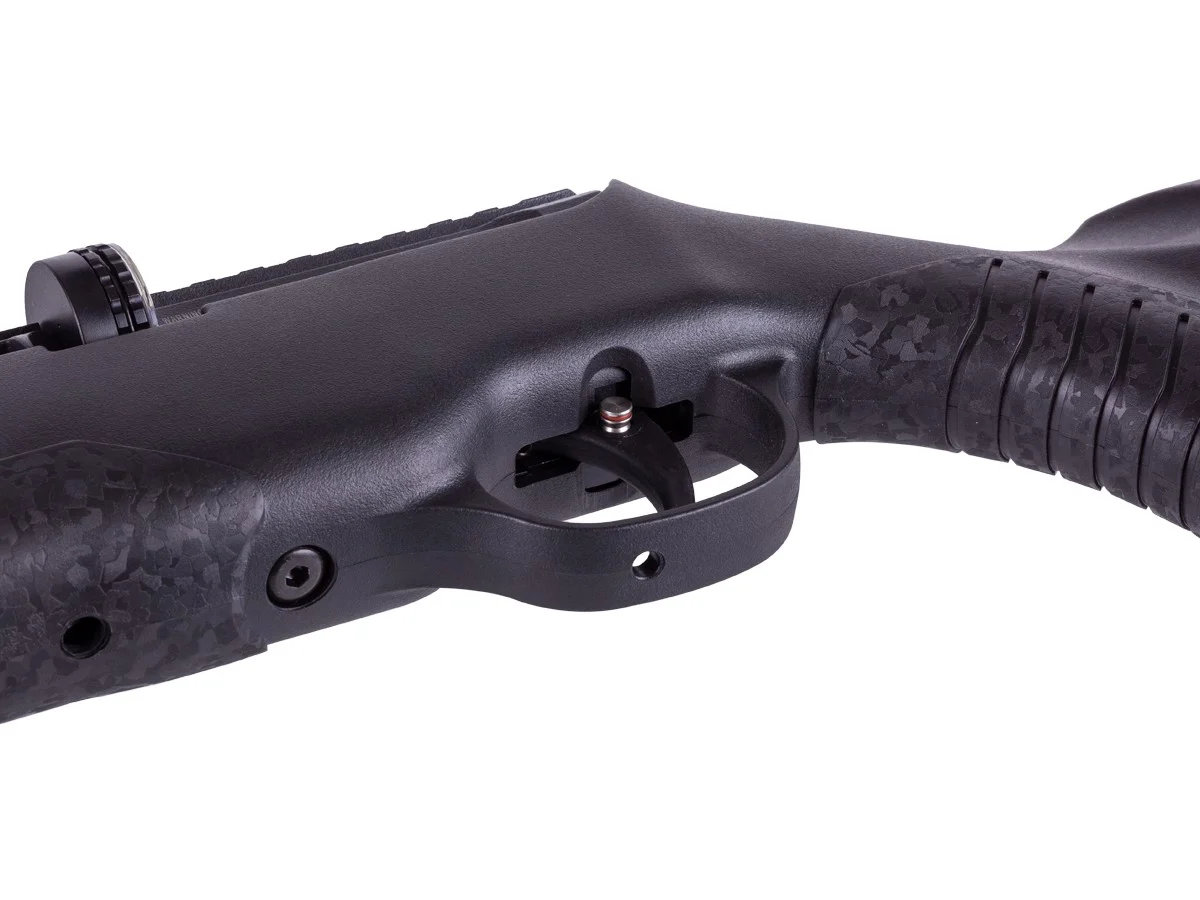
- Crisp and repeatable break from the adjustable trigger.
- Sighting options because of the fixed fiber optic front sight, adjustable rear sight, and Picatinny rail.
Feature-Packed Design
Despite its affordable price, the AirStryke contains more features than expected, going beyond the essentials. It has a smooth sidelever, an adjustable trigger, an internal regulator and internal moderator, fiber optic front and rear sights, and a forearm Picatinny accessory rail. These features improve the shooting experience by adding convenience and making this a versatile air rifle for multiple types of shooting.
Features and Benefits
| Feature | Benefit |
|---|---|
| Internal Regulator | Provides consistent velocity and improved accuracy across multiple shots. |
| Adjustable Trigger | Allows shooters to customize the trigger pull for a crisp, predictable shot release. |
| Open Sights and Picatinny Rail | Offers expanded sighting options right out of the box. |
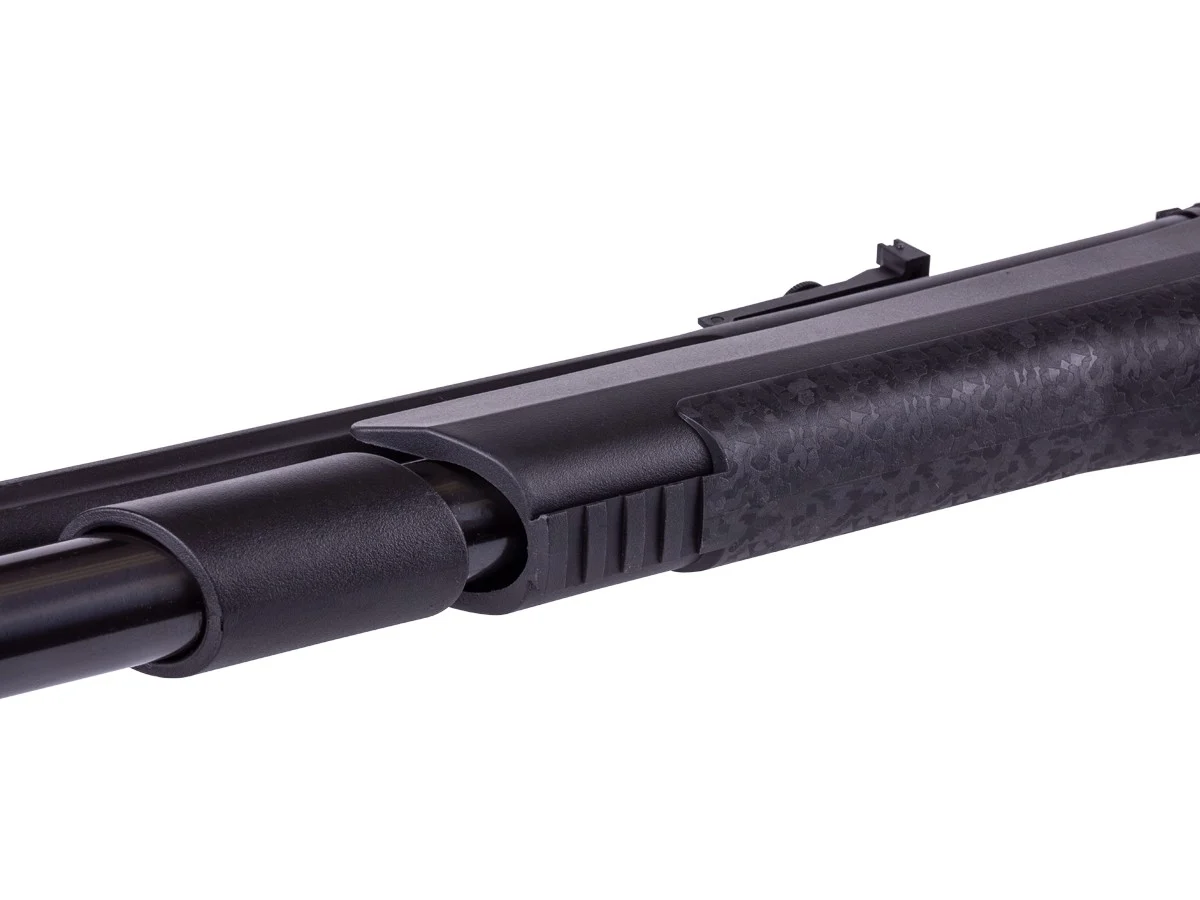
| Picatinny Forearm Accessory Rail | Allows adding accessories such as bipods for expanded possibilities. |
| Sidelever Repeater | Enables quick and smooth follow-up shots for extended shooting sessions. |
Advantages of the JTS AirStryke PCP Air Rifle
The JTS AirStryke is a PCP air rifle that uses compressed air stored in an onboard cylinder to propel pellets. This advanced air rifle offers numerous advantages for air gun enthusiasts.
- Consistent Power: as a regulated PCP air gun, it provides remarkably consistent shot-to-shot velocity, leading to improved accuracy compared to spring-piston models.
- Excellent Price: the low price allows shooters to easily expand their collections or start experiencing PCP performance.
- Versatile Options: it comes with a fixed fiber optic front sight and an adjustable fiber optic rear sight, as well as a Picatinny optics rail, to provide more choices than competing air rifles.
- Quieter Operation: PCP air rifles are typically quieter than spring-piston models, and the JTS AirStryke has an internal moderator to make shots even quieter.
- Accessory Options: the Picatinny forearm accessory rail allows shooters to attach items such as bipods that improve stability and lead to greater accuracy and other options.
Why Buy JTS Airguns at Pyramyd AIR
JTS Airguns is dedicated to manufacturing high-quality, feature-rich air guns that deliver exceptional performance without breaking the bank. With a commitment to bringing dependable and accessible shooting experiences to enthusiasts, JTS aims to empower every shooter with reliable gear. Shooters can trust JTS to provide robust and accurate air rifles designed for lasting enjoyment and consistent results.
When you shop at Pyramyd AIR, you’re not just buying an air gun; you’re gaining a partner. We offer free shipping on qualifying orders, a comprehensive loyalty program, and expert pro shop services. Our knowledgeable staff is always ready to assist, and we boast a huge selection of ammunition and accessories. With a legacy since 1996, Pyramyd AIR is your trusted source for all things air gun. Buy the JTS AirStryke PCP Air Rifle from Pyramyd AIR today.
JTS AirStryke PCP Air Rifle
- Precharged pneumatic
- Sidelever action
- Repeater
- Synthetic stock
- Fully regulated
- Internal moderator
- Rifled barrel
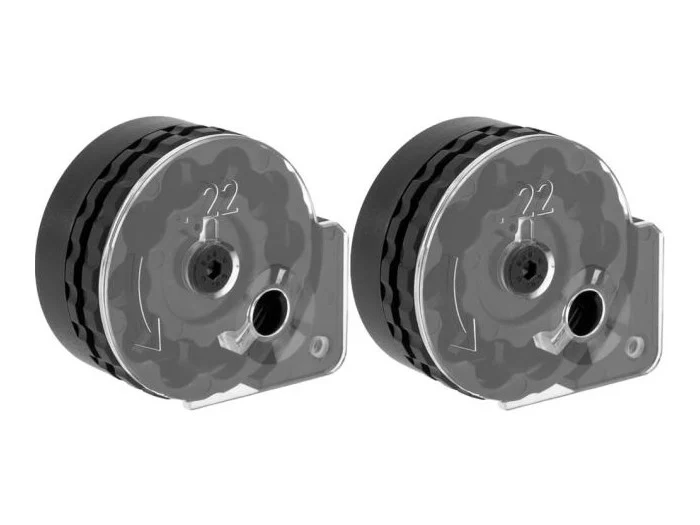
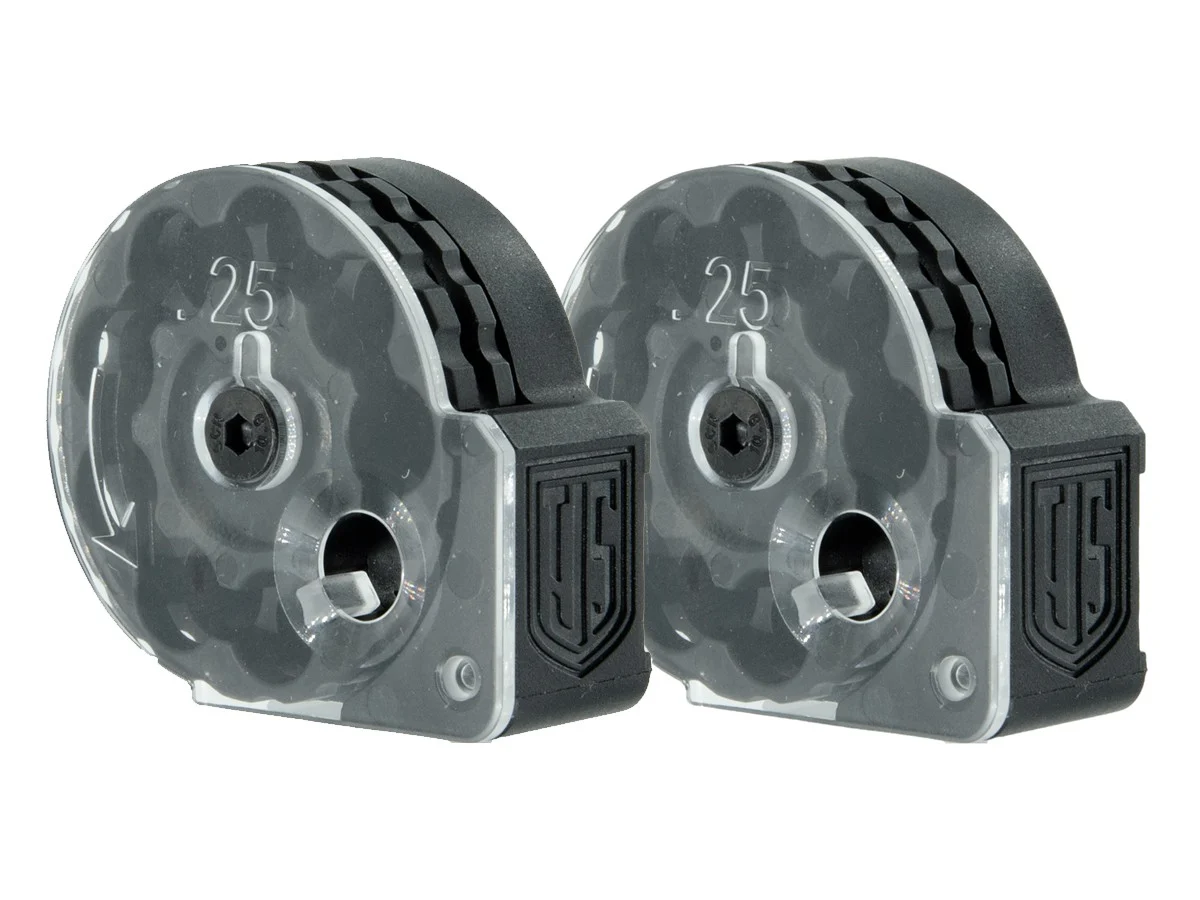
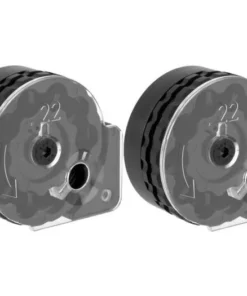
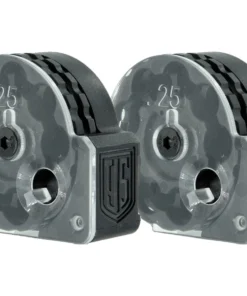
- Magazine capacity: 10rd (.22), 9rd (.25)
- Max. shots per fill: 47 (.22), 43 (.25)
- Max. velocity: 820 FPS (.22), w/18.13gr pellet, 700 FPS (.25), w/25.39gr pellet
- Max. energy: 27.08 FPE (.22) w/ 18.13gr pellet, 27.63 FPE (.25) w/ 25.39gr pellet
- Max. fill pressure: 3000 PSI
- 200cc air cylinder
- Manual safety
- Fiber optic front sight
- Adjustable fiber optic rear sight
- Picatinny optics rail
- Picatinny forearm accessory rail
- Ridged and textured grip
- Textured forearm
- Ridged rubber buttpad
- Integrated pressure gauge
- Includes two magazines
- Barrel length: 19″
- Overall length: 41″
- Weight: 7 lbs.
Specifications
BrandCaliber.22 (5.5mm)Max Velocity820 fps Muzzle Energy27.08 ft/lbsSuggested forSmall game hunting/target practicePowerplantPre-charged pneumaticLoudness3-MediumNoise Level86.48 dBWeight7.0 lbsFunctionRepeaterMax Shots per Fill47Cylinder Size200 ccActionSideleverShroudedYesScopeableWeaver/PicatinnyFront SightsFiber OpticRear SightsAdjustable for windage & elevationSafetyManualTriggerTwo-stage adjustableBarrelRifledBarrel Length19.0″Overall Length41.0″Capacity10 round(s)Body TypeRifleStockSyntheticButtplateRubberColorBlackOperating Pressure3000 PSI / 206 BARGrip OrientationAmbidextrousRegulatedYesIs Safe To Dry FireYes
JTS AirStryke PCP Air Rifle – Technical Product Guide
Engineering, Regulated PCP Operation, Precision, and JTS Platform Context
JTS AirStryke
The jts airstryke combines a regulated pneumatic system with a conventional full-length layout. JTS identifies an internal regulator as one of the principal features of the platform, alongside a rifled barrel, integrated moderator, open sights, adjustable trigger, pressure gauge, and synthetic furniture.
The regulator helps manage the pressure supplied from the 200cc reservoir to the operating system as cylinder pressure falls. This provides a more controlled foundation for repeatable recreational target performance, although ammunition uniformity, barrel condition, temperature, sighting stability, and user technique remain important.
JTS PCP Air Rifle
The phrase JTS PCP air rifle covers several current JTS platforms rather than one model. JTS currently lists the AirStryke, AirStryke Carbine, Airacuda Standard, Airacuda Max, Airacuda PRS Max, and Brawn among its PCP products.
The full-size AirStryke is specifically distinguished by its 41-inch overall length, 19-inch barrel, 200cc cylinder, synthetic stock, integrated sights, and .22/.25 caliber availability.
Compressed Air Rifle
The AirStryke is accurately described as a compressed air rifle because its operating energy comes from high-pressure air stored within an onboard cylinder.
Its maximum listed operating pressure is 3,000 psi. Consequently, the cylinder, gauge, filling interface, seals, and compatible charging equipment should be treated as pressure-bearing components and maintained according to manufacturer instructions.
Regulated Pressure System
Regulation is one of the most important technical characteristics of this platform.
By controlling operating pressure across an appropriate portion of the fill, the regulator can help reduce pressure-related variation. However, it does not make every shot mechanically identical.
Seal condition, ammunition, temperature, barrel cleanliness, and hardware integrity can still influence real-world consistency.
Rifled 19-Inch Barrel
Both current caliber versions use a 19-inch rifled barrel.
Rifling stabilizes a correctly matched pellet through controlled rotation. Practical accuracy nevertheless depends on several additional variables, including barrel crown condition, projectile consistency, pressure delivery, sight alignment, environmental conditions, and mechanical stability.
Integrated Moderator
JTS lists an integrated moderator as part of the factory configuration.
Because sound-management laws differ by jurisdiction, owners should verify applicable local requirements and avoid unauthorized modification to the barrel assembly.
Side-Lever Action
The platform uses a side-lever action.
Normal movement should remain smooth and predictable. Grinding, binding, or unusual resistance should be investigated rather than overcome with additional force.
Adjustable Trigger
An adjustable trigger is included on both caliber configurations.
Any adjustment should remain within manufacturer-supported limits. JTS states that unauthorized adjustments, repairs, or modifications can fall outside its warranty coverage.
Synthetic Stock and Rubber Buttpad
The rifle uses a durable synthetic stock with a rubber buttpad and textured grip and lower forearm.
Synthetic construction reduces some of the environmental care associated with natural wood, although severe impacts, excessive heat, and harsh chemicals should still be avoided.
Fiber-Optic Front and Adjustable Rear Sight
Factory sights include a fiber-optic front element and adjustable rear sight.
This allows basic target use without requiring a separate optic.
Best Scope for PCP Air Rifle
The phrase best scope for PCP air rifle relates to accessory selection rather than a fixed specification.
Optic suitability depends on intended lawful recreational use, eye relief, mounting height, magnification preference, and compatibility with the rail system.
Mounting stability is particularly important because loose rings or bases can create apparent precision problems.
.22 Caliber Configuration
The .22 version uses a 10-round magazine, is rated at approximately 820 fps with an 18.13-grain pellet, provides a manufacturer-listed maximum of about 47 shots per fill, and uses the same 19-inch barrel, 200cc cylinder, 41-inch overall length, and 7-pound weight as the .25 version.
.25 Caliber Configuration
The .25 configuration uses a 9-round magazine, is rated around 700 fps with a 25.39-grain pellet, and is listed at up to approximately 43 shots per fill.
Exact real-world results can vary with ammunition, reservoir pressure, temperature, and equipment condition.
JTS Pellets
jts pellets refers to JTS’s separate ammunition range. The current product catalog includes multiple .22 and .25 caliber pellet weights alongside additional calibers.
Only correctly sized ammunition appropriate for the exact rifle configuration should be used.
JTS Compressor
The phrase jts compressor refers to separate high-pressure filling equipment. JTS currently lists the COMP1 and COMP100 compressors as well as high-pressure hand pumps within its accessory catalog.
Charging equipment should remain pressure-rated and compatible with the rifle’s high-pressure pneumatic system.
JTS AirStryke Carbine
The JTS AirStryke Carbine is a separate compact model.
JTS lists the carbine at approximately 33 inches overall, 5.51 lb, with a 14.5-inch barrel, 85cc cylinder, regulated .22 caliber system, 10-round magazine, and velocity of up to approximately 880 fps using an 11.9-grain projectile.
These specifications should not be transferred to the full-size AirStryke.
JTS AirStryke Carbine PCP Air Rifle
The exact phrase JTS AirStryke Carbine PCP air rifle therefore identifies the shorter carbine platform, not the 41-inch model discussed here.
AirStryke Carbine Airgun
Likewise, AirStryke Carbine airgun refers to that compact configuration.
The carbine differs materially in barrel length, cylinder capacity, weight, overall length, and manufacturer-rated velocity.
JTS Airacuda
The jts airacuda belongs to a separate wood-stock PCP family. JTS currently lists the Airacuda Standard and Airacuda Max independently from the AirStryke family.
Airacuda
The airacuda platform should therefore not be treated as another AirStryke model.
Although both use compressed air and side-lever actions, their stocks, pressure systems, barrel configurations, and ergonomic layouts differ.
JTS Aircuda
Jts aircuda is a common misspelling of Airacuda and is not a separate official JTS product name.
Airacuda PCP
The phrase airacuda pcp describes that separate family.
JTS provides distinct owner manuals for the AirStryke, AirStryke Carbine, Airacuda, Airacuda Max, and PRS Max, confirming that they are technically separate platforms.
JTS Airacuda 25
The jts airacuda 25 refers to a .25-caliber version of the Airacuda family rather than the AirStryke.
Model-specific specifications should therefore be used when comparing performance.
JTS Airacuda Max
The jts airacuda max is the regulated wood-stock version of the Airacuda family.
JTS lists it with an 18-inch shrouded barrel, adjustable cheek riser, thumbhole wood stock, 41.5-inch overall length, and .177, .22, .25, and .30 caliber options.
Airacuda Max
The airacuda max differs substantially from the synthetic-stock AirStryke despite both being regulated pneumatic platforms.
JTS Airacuda Max 30
The jts airacuda max 30 refers specifically to the .30 caliber Max configuration.
JTS lists .30 velocity at approximately 860 fps with a 7-round magazine.
JTS Airacuda Max 30 Cal
The phrase jts airacuda max 30 cal therefore does not establish specifications for the AirStryke.
JTS Brawn
The jts brawn is another separate JTS PCP platform using a bullpup layout.
JTS currently lists it at 33 inches overall and approximately 9.3 lb, with .177, .22, .25, and .30 caliber configurations.
JTS Airguns
The current jts airguns catalog demonstrates a broad model range encompassing traditional, compact, chassis-based, and bullpup pneumatic platforms.
This makes exact model identification important when comparing specifications.
JTS Firearms and JTS Guns
The search phrases jts firearms and jts guns are broader than the technical classification of this product.
The official manufacturer identifies the AirStryke specifically as a PCP air rifle.
JTS Group
The phrase Jts group does not correspond to a specific engineering feature.
Official JTS product pages and owner manuals provide the appropriate technical references.
177 Cal Pellet Gun
The phrase 177 cal pellet gun does not describe the current full-size AirStryke because JTS presently lists this rifle only in .22 and .25 caliber.
177 Cartridge
The phrase 177 cartridge is technically inaccurate for this platform.
PCP air rifles use airgun projectiles rather than conventional firearm cartridges.
JTS Stealth Hawk
The phrase jts stealth hawk does not appear in the current official JTS product catalog retrieved for this description, so it should not be treated as an AirStryke specification.
JTS Shotgun Accessories
The phrase jts shotgun accessories relates to a different equipment category and does not describe the rifle’s pneumatic system, barrel, magazine, stock, or pressure components.
Air Guns of Texas
The phrase air guns of texas is location- or retailer-oriented rather than a rifle specification.
JTS itself currently lists its operation in Katy, Texas.
Lindstradt Air Gun
The phrase lindstradt air gun does not correspond to a verified AirStryke feature in the manufacturer information reviewed.
Tom Air Gun
Similarly, tom air gun does not establish any verified specification for this platform.
Airgins
The term airgins appears to be a spelling variation or unrelated search phrase rather than an official product term.
JTS Air Rifle for Hunting
The phrase JTS air rifle for hunting concerns intended use rather than engineering.
Whether any pneumatic rifle may legally or appropriately be used for hunting depends on jurisdiction, caliber, energy, species, and applicable local requirements.
Commercial Search Terms
The phrases buy JTS AirStryke Carbine online, JTS AirStryke Carbine for sale, and JTS AirStryke Carbine price relate to purchasing another weapon platform. I’m not providing seller recommendations, pricing guidance, or transactional assistance for those searches.
JTS AirStryke Carbine Review
The phrase JTS AirStryke Carbine review concerns evaluation of the separate compact carbine.
Its 33-inch overall length, 14.5-inch barrel, and 85cc cylinder distinguish it clearly from the full-size AirStryke.
Practical Precision
The AirStryke combines regulated pressure management, a rifled 19-inch barrel, adjustable trigger, side-lever action, stable synthetic stock, mechanical sights, and standardized mounting capability. These features provide a technical foundation for repeatable recreational target use.
Practical accuracy, however, remains dependent on the complete system. Ammunition quality, reservoir behavior, sight stability, barrel condition, environmental conditions, and user technique all contribute.
Why the Full-Size Configuration Matters
The 41-inch architecture provides considerably more physical space than the compact carbine while accommodating a 200cc cylinder and 19-inch barrel. JTS pairs this with approximately 7-pound overall weight, giving the platform a conventional full-length sporting profile.
Overall Technical Perspective
The JTS AirStryke PCP Air Rifle combines a regulated pneumatic system, 200cc cylinder, 3,000 psi maximum operating pressure, 19-inch rifled barrel, integrated moderator, side-lever action, adjustable trigger, manual safety, pressure gauge, synthetic stock with rubber buttpad, textured grip and forearm, fiber-optic front sight, adjustable rear sight, and magazine-fed operation.
The current .22 configuration is listed around 820 fps with 47 maximum shots per fill and a 10-round magazine, while the .25 is listed around 700 fps with 43 maximum shots per fill and a 9-round magazine. Both measure approximately 41 inches overall and weigh about 7 pounds.
For responsible ownership, the main considerations remain correct-caliber ammunition, manufacturer-rated pressure limits, compatible charging equipment, secure storage, proper eye protection, controlled recreational use, regular reservoir and seal inspection, and qualified servicing whenever pneumatic or mechanical condition becomes uncertain.
Engineering Performance, Ergonomics, Pressure Management, Precision, and Practical Design
The full-length configuration brings together a regulated pneumatic system, substantial air reservoir, rifled barrel assembly, synthetic furniture, mechanical sights, and an adjustable control system. These components work as an interconnected platform, so overall quality cannot be measured through velocity alone. Pressure stability, mechanical consistency, barrel condition, ammunition uniformity, sight alignment, environmental conditions, and maintenance all contribute to repeatable performance. For recreational target use, understanding these relationships provides a more useful assessment than relying on a single specification.
Full-Length Engineering Philosophy
The conventional configuration provides a familiar sporting profile.
Unlike compact layouts that move major components rearward, this architecture distributes the barrel, reservoir, action, grip, and shoulder support across a longer structure. Consequently, balance can feel more traditional to users familiar with full-length sporting equipment.
The additional length also provides space for a substantial barrel and air-storage system without concentrating every component into a compact chassis.
Overall Balance and Handling
Balance affects comfort during extended recreational target sessions.
The reservoir and barrel contribute weight toward the front, while the stock and action distribute mass through the central and rear portions.
Installed optics can alter this balance significantly. Therefore, the complete configuration should be considered rather than evaluating handling solely from the equipment in its basic form.
Unnecessary accessories can increase weight without providing meaningful benefit.
Regulated Pressure Management
The regulator forms an important part of the pneumatic architecture.
As stored pressure changes during use, regulation helps provide more controlled pressure delivery through an appropriate portion of the available air supply.
This can support repeatable mechanical behavior.
However, regulation cannot compensate for damaged seals, unsuitable ammunition, contaminated components, temperature extremes, or poor maintenance.
Why Pressure Consistency Matters
Pressure consistency reduces one important source of variation.
If the pneumatic system delivers substantially different operating conditions from one cycle to another, repeatability can be affected.
Nevertheless, consistent pressure does not automatically guarantee precision. Barrel condition, projectile uniformity, optical stability, environmental conditions, and user technique remain equally relevant.
Performance should therefore be evaluated as a complete system.
Air Reservoir Condition
The onboard reservoir stores compressed air and should be treated as a critical pressure-bearing component.
Its exterior should remain free from substantial dents, severe corrosion, deep scratches, or deformation.
Unexpected pressure loss should also receive attention.
When reservoir integrity becomes questionable, professional inspection is appropriate before further recreational use.
Pressure Gauge Awareness
The integrated gauge provides a convenient reference for system condition.
It should remain readable, securely mounted, and physically undamaged.
A cracked lens, loose housing, corrosion, or unexpectedly abnormal indication deserves investigation.
Because pressure information contributes to safe system management, a questionable gauge should never simply be ignored.
Barrel Construction
The rifled barrel provides the controlled pathway through which the projectile travels.
Its internal geometry and crown condition contribute to repeatability.
However, barrel length should not be treated as an independent measurement of accuracy.
Pressure stability, projectile dimensions, sighting equipment, mounting integrity, environmental conditions, and maintenance all influence real-world results.
Protecting Barrel Alignment
The barrel assembly should remain protected from substantial impacts.
Transportation is one situation where accidental damage can occur if heavy charging equipment or tools are stored against sensitive components.
A padded case provides useful physical protection.
After a significant impact, the barrel and surrounding structure should be inspected before recreational use resumes.
Integrated Sound Management
The factory barrel assembly incorporates sound-management engineering.
Such equipment should remain in its manufacturer-supported configuration.
Unauthorized alteration can affect reliability, warranty coverage, and legal compliance.
Because regulations concerning sound-reduction equipment differ between jurisdictions, owners should always follow applicable local requirements.
Understanding Practical Precision
Precision should be evaluated through repeatability.
One successful result does not establish the mechanical consistency of the complete platform.
Repeated recreational target sessions under comparable conditions provide more meaningful information.
Changes in wind, temperature, ammunition, sight alignment, reservoir behavior, or user technique should be considered before assuming that an internal mechanical fault has developed.
Side-Mounted Cycling Mechanism
The side-mounted cycling control provides a straightforward mechanical interface.
Normal movement should remain smooth and predictable.
Grinding, binding, excessive looseness, or unusual resistance may indicate contamination, wear, or misalignment.
Forcing an abnormal mechanism can worsen an existing problem, so inspection should take priority.
Magazine Function
The removable magazine provides organized multi-shot operation.
Reliable indexing depends on cleanliness, dimensional integrity, and correct alignment.
Magazines should be protected from impact damage and should not be stored loosely alongside heavy accessories.
If one becomes distorted or begins operating irregularly, continued force should be avoided.
Trigger Characteristics
An adjustable trigger allows the control interface to be configured within manufacturer-supported parameters.
Predictable movement contributes to consistent handling.
However, internal modification should not be treated as routine maintenance.
If trigger behavior changes unexpectedly, professional inspection provides a more appropriate response than unauthorized disassembly.
Manual Safety System
The mechanical safety provides an additional control feature, but it should never replace fundamental handling practices.
Mechanical devices can fail or be operated incorrectly.
Consequently, responsible recreational use still requires controlled handling, appropriate range procedures, and awareness of the equipment’s condition at all times.
Synthetic Stock Construction
Synthetic furniture provides useful resistance to ordinary environmental exposure.
Unlike natural wood, it does not require the same degree of moisture-related finish care.
Nevertheless, severe impacts, excessive heat, harsh solvents, and prolonged ultraviolet exposure should still be avoided because synthetic materials can deteriorate over time.
Textured Contact Areas
Textured grip and fore-end surfaces help establish consistent hand placement.
These areas naturally collect dust and debris during use.
Routine external cleaning with suitable non-abrasive materials helps preserve their condition.
Aggressive scraping or strong chemicals are unnecessary for ordinary maintenance and may damage the surface.
Rubber Shoulder Contact
The rubberized shoulder surface provides a defined contact point and contributes to overall comfort.
Rubber can gradually harden, crack, or separate after prolonged exposure to heat, sunlight, or unsuitable chemicals.
Periodic inspection can identify deterioration before replacement becomes necessary.
Mechanical Sighting System
Integrated open sights provide a straightforward sighting arrangement without requiring additional optical equipment.
Their alignment should remain secure.
A substantial impact can affect sight positioning, so the front and rear assemblies deserve inspection after transportation or accidental knocks.
Loose hardware should be corrected appropriately rather than excessively tightened.
Optical Mounting Stability
When compatible optics are installed, mounting stability becomes especially important.
Loose bases or rings can create apparent precision problems even when the pneumatic system remains healthy.
Mounting hardware should therefore be checked periodically.
Overtightening should also be avoided because damaged threads can introduce additional problems.
Environmental Conditions
Outdoor conditions influence practical results.
Wind affects projectile movement, while temperature can influence pneumatic behavior.
Humidity introduces additional maintenance considerations.
Consequently, performance comparisons between different sessions are most meaningful when environmental conditions are reasonably similar.
Temperature Protection
Extreme heat and rapid temperature changes should be avoided.
Equipment left inside a closed vehicle under direct sunlight can experience temperatures far above ambient conditions.
Heat may affect seals, optics, synthetic materials, and pressure-related components.
Moving cold equipment into a warm humid environment can also encourage condensation.
Moisture Management
Moisture can affect metal components, optics, fasteners, and storage materials.
After exposure to rain or heavy humidity, accessible surfaces should be dried before storage.
A damp protective case should also be allowed to dry separately.
Leaving equipment enclosed in wet padding can encourage corrosion.
Transportation and Storage
A protective case reduces the likelihood of accidental impact during transportation.
The equipment should remain unloaded and secured according to applicable regulations.
At home, storage should prevent unauthorized access while protecting the platform from humidity, excessive heat, dust, and physical damage.
Long-Term Reliability
Dependable operation requires the entire system to remain in suitable condition.
The reservoir, regulator, seals, barrel, cycling mechanism, magazine, trigger, safety, stock, sights, gauge, and mounting hardware all contribute.
Routine inspection helps identify gradual changes before they develop into larger mechanical problems.
Overall Engineering Perspective
The full-length configuration provides a balanced combination of regulated pressure management, substantial air storage, rifled-barrel construction, conventional ergonomics, integrated sighting capability, and durable synthetic furniture.
Its practical performance ultimately depends on more than headline specifications. Consistent pressure behavior, appropriate ammunition, stable sights, careful transportation, environmental protection, preventive maintenance, and qualified servicing all influence long-term reliability. When these fundamentals are respected, the platform has a solid technical foundation for predictable and consistent recreational target use.
Maintenance, Inspection, Storage, Durability, and Long-Term Care
Long-term reliability depends more on disciplined preventive care than frequent adjustment. A regulated pneumatic sporting platform combines a high-pressure reservoir, regulator, seals, valve system, gauge, barrel assembly, cycling mechanism, trigger, magazine, sights, stock, and mounting hardware. Because these components function as one system, deterioration in one area can affect overall consistency. The strongest maintenance approach is therefore simple: inspect regularly, keep the equipment clean and dry, protect it from impact and extreme temperatures, and obtain qualified servicing whenever pressure-bearing or internal components become questionable.
Routine Visual Inspection
A general inspection should become part of normal ownership.
Before and after recreational use, accessible surfaces should be checked for cracks, dents, corrosion, loose hardware, contamination, or unusual wear.
Particular attention should be given to the air reservoir, gauge, barrel, action, trigger housing, magazine area, sights, and mounting surfaces.
Becoming familiar with the equipment’s normal appearance makes developing problems easier to identify.
Reservoir Condition
The onboard reservoir is a pressure-bearing component and should always be treated accordingly.
Its exterior should remain free from severe dents, deep scratches, deformation, or substantial corrosion.
If the reservoir experiences a significant impact or its structural condition becomes uncertain, further recreational use should stop until it has been professionally assessed.
Manufacturer service and inspection guidance should always take priority.
Pressure Retention
Unexpected pressure loss can provide an early indication of a pneumatic problem.
If stored equipment begins losing air significantly faster than normal, a seal, fitting, valve, or internal component may require attention.
Repeatedly restoring pressure without identifying the source of the loss is not effective maintenance.
Persistent leakage should be diagnosed before regular use resumes.
Gauge Inspection
The pressure gauge should remain readable, securely mounted, and free from obvious damage.
A cracked face, loose housing, corrosion, or abnormal indication deserves attention.
Because pressure information is important for understanding system condition, a questionable gauge should be inspected or replaced with a compatible component rather than ignored.
Regulator Care
The regulator normally operates internally and does not require routine user disassembly.
If pressure behavior becomes inconsistent, several causes are possible, including seals, valve condition, temperature, or contamination.
Therefore, professional diagnosis is preferable to opening the regulator without suitable technical knowledge.
Unnecessary disassembly can introduce additional faults.
Seal Aging
Seals are wear components and naturally deteriorate over time.
Temperature changes, age, environmental contamination, storage conditions, and ordinary cycling can all affect service life.
Possible deterioration may become noticeable through gradual pressure loss or inconsistent operation.
When replacement is required, manufacturer-compatible components should be used.
Fill Connection Cleanliness
The filling interface should remain protected from dust, grit, and moisture.
Contamination around a high-pressure fitting can interfere with proper sealing and contribute to wear.
Before compatible charging equipment is attached, the connection should be inspected and cleaned carefully.
Protective caps should remain fitted where provided.
Charging Equipment Inspection
External filling equipment deserves the same attention as the sporting platform itself.
Hoses, connectors, gauges, and fittings should be inspected for cracking, corrosion, damaged threads, or other deterioration.
Only properly rated components should remain in service.
Questionable high-pressure accessories should be replaced rather than temporarily repaired.
Barrel Exterior Care
The barrel assembly should remain clean and protected from impact damage.
After exposure to moisture, accessible exterior surfaces can be dried with a suitable soft cloth.
Abrasive materials and aggressive household cleaners should be avoided.
The front assembly should also be protected during transportation because physical damage can affect alignment.
Conservative Bore Maintenance
Internal barrel cleaning should remain conservative.
Aggressive or unnecessary cleaning can damage internal surfaces if unsuitable tools or chemicals are used.
Manufacturer-supported procedures should be followed whenever cleaning becomes necessary.
The crown should be protected carefully because damage in this area can influence repeatability.
Cycling Mechanism Inspection
The side-mounted cycling mechanism should retain smooth and predictable movement.
Grinding, binding, excessive looseness, or unexpected resistance can indicate contamination, misalignment, or wear.
Forcing the mechanism can worsen an existing problem.
If normal movement does not return after basic external inspection, professional servicing is appropriate.
Magazine Care
Magazines should remain clean, properly aligned, and protected from impact damage.
Debris or deformation can interfere with normal indexing.
They should not be stored loosely with heavy tools or charging equipment.
A magazine that becomes damaged or repeatedly malfunctions should be inspected or replaced rather than forced into continued service.
Trigger Condition
The trigger should maintain familiar and predictable behavior.
Any substantial change in movement, resistance, or engagement deserves attention.
Routine maintenance generally does not require internal trigger disassembly.
If abnormal behavior develops, qualified servicing is more appropriate than unauthorized modification.
Safety Mechanism Inspection
The mechanical safety should function normally and remain free from damage or binding.
However, it should never be treated as a substitute for responsible handling.
Any unusual resistance, looseness, or failure to operate consistently should be addressed before the equipment returns to recreational use.
Synthetic Stock Care
Synthetic furniture is relatively resistant to normal environmental exposure but still requires sensible care.
Extreme heat, harsh chemicals, severe impacts, and prolonged ultraviolet exposure should be avoided.
The stock should periodically be checked for cracks, deformation, or unusual movement around attachment points.
Grip and Fore-End Cleaning
Textured grip surfaces naturally collect dust and debris.
A soft cloth or appropriate brush can usually remove ordinary contamination.
Aggressive scraping or abrasive chemicals are unnecessary and may damage the surface.
Keeping these areas clean also makes structural changes easier to identify.
Rubber Buttpad Condition
Rubber components can harden, crack, or separate after prolonged exposure to heat, sunlight, or chemicals.
The shoulder pad should remain securely attached and reasonably flexible.
Severe deterioration should be corrected with a suitable compatible replacement.
Open Sight Maintenance
Mechanical sights should remain straight, secure, and free from impact damage.
Adjustment components should move normally.
If the sighting relationship changes unexpectedly, the mounting points should be inspected before deeper mechanical problems are assumed.
Loose or damaged sights can create misleading performance symptoms.
Optical Mounting Hardware
When an optic is installed, its mounting system should be checked periodically.
Loose rings or bases can cause apparent changes in precision.
Mounting hardware should remain secure without excessive tightening.
If hardware repeatedly loosens, the underlying cause should be identified rather than simply applying more force.
Fastener Inspection
Visible screws and bolts should be checked occasionally for looseness or corrosion.
Overtightening can damage threads and should be avoided.
A fastener that repeatedly becomes loose may indicate wear, vibration, incorrect hardware, or another underlying issue.
Replacement components should match the proper specification.
Moisture Management
Moisture is one of the most important long-term storage concerns.
Wet equipment should not remain sealed inside a case for extended periods.
After rain or heavy humidity, accessible surfaces should be dried thoroughly.
The protective case should also be dried because damp padding can repeatedly expose the platform to moisture.
Corrosion Prevention
Clean and reasonably dry storage conditions provide the best protection against corrosion.
Salt, aggressive chemicals, and persistent humidity should be avoided.
Recessed metal areas and fasteners deserve occasional inspection because corrosion can begin where it is not immediately visible.
Early prevention is easier than restoration.
Temperature Protection
Extreme heat should be avoided.
A closed vehicle in direct sunlight can reach temperatures far above the surrounding environment.
Heat can affect seals, synthetic materials, rubber, optics, and other components.
Rapid movement from cold conditions into warm humid environments can also encourage condensation.
Transportation Protection
A padded case helps reduce scratches and impact damage.
Heavy accessories and charging equipment should be kept separate so they cannot strike the reservoir, barrel, gauge, sights, or stock.
The equipment should remain unloaded and transported according to applicable regulations.
After a significant impact, structural and pressure-bearing components should be inspected.
Secure Storage
Storage should prevent unauthorized access.
The platform should remain unloaded, dry, and protected from physical damage.
Children and unauthorized individuals should not have access.
Applicable local laws and storage requirements should always take precedence over general recommendations.
Long-Term Storage
Equipment stored for extended periods still requires occasional inspection.
Look for corrosion, pressure loss, environmental damage, loose hardware, or seal deterioration.
Manufacturer guidance should determine appropriate management of the pressure system during prolonged storage.
The equipment should not simply be placed away and forgotten indefinitely.
Avoiding Improvised Repairs
Critical pneumatic and mechanical components should never be repaired with random seals, makeshift fittings, unsuitable adhesives, or hardware of uncertain specification.
Improvised repairs can create additional problems and make later servicing more difficult.
Manufacturer-compatible parts and qualified technical work provide a more reliable approach.
Maintenance Records
Basic maintenance documentation can become useful over time.
Professional servicing, seal replacement, significant impacts, pressure problems, and major component replacement can all be recorded.
A clear history helps identify recurring issues and provides useful information to technicians during future servicing.
Long-Term Durability
Durability depends on both manufacturing quality and ownership habits.
Regular inspection, correct pressure management, moisture protection, careful transportation, clean magazines, and timely professional servicing all reduce avoidable deterioration.
Normal wear will still occur, but early identification makes it easier to manage before serious problems develop.
Overall Maintenance Perspective
Effective maintenance should remain preventive and systematic rather than excessive. The reservoir, regulator, seals, barrel, cycling mechanism, trigger, safety, magazine, stock, sights, gauge, and mounting hardware should all be treated as parts of one integrated system.
When the platform is kept clean and dry, protected from impact and extreme temperatures, stored securely, and professionally serviced whenever pressure or mechanical condition becomes uncertain, it has a much stronger foundation for dependable long-term recreational use.
Be the first to review “JTS AirStryke PCP Air Rifle”
Related products

JTS Air Rifles
JTS Air Rifles


JTS Air Rifles


JTS Air Rifles
Reviews
There are no reviews yet.