
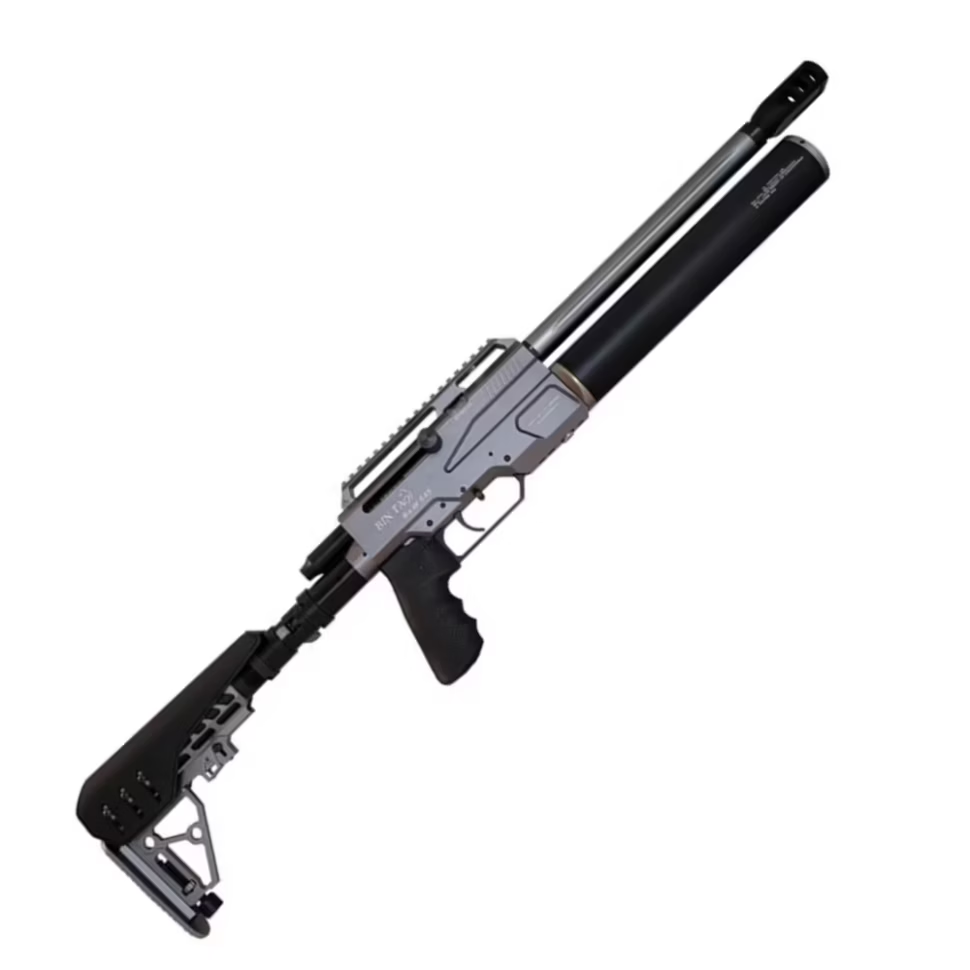
BinTac S45 Regular .45 Semi Automatic PCP Air Rifle

€1,000.00
BinTac S45 Regular Cal .45 Semi Automatic PCP Air Rifle
The BinTac S45 Regulator is a big bore .45 caliber semi-automatic PCP air rifle designed for air gun hunting and long-range shooting.
Featuring a 33 cm barrel it delivers up to 406 joules of energy out of this ultra compact design
The 6-shot magazine ensures fast follow-up shots, while the Picatinny rail allows for easy optic mounting. With a maximum fill pressure of 310 bar, it provides around 18 effective shots per fill.
This item can only be sold to persons 18 years and older.
For this item we have to carry out an age check.
You can upload a copy/scan/photo of a legal identification document such as a passport, European ID or driver’s license in the order. Parts of the document may be made illegible or designated as a copy. However, your name, document number and place of issue must be legible. Your copy ID will only be used for verification purposes and will not be retained. If you are not able to upload it right now, we will contact you per email before shipping
We can ship these items only to the countries listed below:
Belgium, Bulgaria, Cyprus, Czechia, Denmark, Estonia, Finland, France, Germany, Greece, Hungary, Ireland, Italy, Kroatia, Latvia, Lithuania, Luxembourg, Monaco, Netherlands, Poland, Portugal, Romania, Slovakia, Slovenia, Spain, Austria, Sweden, United States.
Specifications
| Brand | BinTac |
|---|---|
| Model | .45 / 11,4 |
| Cocking system | Semi Automatic |
| Magazine capacity | 6 (.45 / 11,4) |
| Mounting base | Weaver / Picatinny |
| Rifle Stock Type | Ambidextrous |
| Stock material | Synthetic |
| Weight (gram) | N.A. |
| Barrel length (mm) | 330 |
| Extra accessories included |
Fill probe, Magazine |
BinTac S45 Regular .45 Semi Automatic PCP Air Rifle
BinTac S45 Regular .45 Semi Automatic PCP Air Rifle
The BinTac S45 Regular .45 Semi Automatic PCP Air Rifle is a large-caliber pneumatic platform designed around high-pressure operation, rapid semi-automatic cycling, substantial construction, and a configurable shoulder-fired chassis. Current European specifications list the rifle in 11.4 mm/.45 caliber, with a 330 mm barrel, approximately 91.5 cm overall length, a 350 cc air reservoir, 310 bar/4500 PSI maximum fill pressure, 6-shot magazine, adjustable stock, single-action trigger system, and Weaver/Picatinny-style top rail.
The semi-automatic action automatically prepares the next chambered round after the firing cycle, distinguishing this platform from bolt-action, sidelever, or pump-operated systems. Because the rifle combines a large bore with a high-pressure reservoir, correct charging equipment, reservoir inspection, seal maintenance, secure storage, and adherence to local law are especially important.
Bintac T9
The bintac t9 is a separate model family and should not be confused with this large-bore sporting platform.
Bintac
bintac produces several PCP platforms ranging from compact systems to larger-caliber rifles.
Bintac LLC
bintac llc lists multiple pneumatic rifles, service information, and product families through its current catalog.
Bintac M50
The bintac m50 is a separate large-caliber design and uses a different action architecture.
Bintac T9 Price
A bintac t9 price search concerns another product family and should not be used to determine this rifle’s value.
AEA Harpoon
The aea harpoon is another large-caliber pneumatic platform with a different configuration.
AEA Harpoon Price
aea harpoon price refers to another model and does not represent this rifle’s pricing.
AEA Zeus MKII Bullpup Standard 18 Big Bore
The AEA Zeus MKII (Bullpup) Standard 18 Big Bore belongs to another large-caliber platform family and uses a bullpup layout.
Bin Tac
bin tac is a common alternative search spelling for the brand.
Bintac AEA Harpoon
The bintac aea harpoon phrase refers to another product distributed through the same broader retail network.
Bintaclic
bintaclic is commonly used as a misspelled or shortened brand search.
AEA Airguns
aea airguns include numerous high-pressure pneumatic platforms covering several calibers and action types.
Bintac T 50
The bintac t 50 belongs to another family and should be evaluated separately.
AEA Megalodon
The aea megalodon uses a pump-action system rather than the semi-automatic architecture found here.
Bintac S45 AEA
The bintac s45 aea search term most closely relates to this family of large-caliber semi-automatic sporting rifles.
Harpoon for Sale
A harpoon for sale query concerns another pneumatic platform and should not be treated as this model.
Bintac MCAR
The bintac mcar belongs to another rifle family with different dimensions and internal architecture.
Bintac T50
The bintac t50 is a separate high-pressure platform.
Bintac M50 for Sale
A bintac m50 for sale search relates to another large-caliber rifle.
Bintac MCAR Air Rifle
The bintac mcar air rifle is another model series and should be compared using its own factory specifications.
Bintac T50 for Sale
A bintac t50 for sale query concerns a different product category within the same brand.
Bintac MCAR 457
The bintac mcar 457 shares the .457-caliber category but uses a different rifle design.
Bintac S45 for Sale
A bintac s45 for sale search directly relates to availability of this model family, although local purchasing and possession laws must be checked.
AEA Harpoon Magnum
The aea harpoon magnum belongs to another high-pressure pneumatic design.
B&W M50
The b&w m50 is another large-caliber rifle and should not be confused with the semi-automatic platform described here.
AEA Megalodon 58 Cal
The aea megalodon 58 cal is a substantially larger-bore pump-action configuration.
AEA Megalodon 50 Cal Price
The aea megalodon 50 cal price concerns another caliber and model family.
Megalodon Air Rifle
The megalodon air rifle uses pump-action cycling and is mechanically different from this design.
Bintac T9 Full Auto
The bintac t9 full auto search term refers to another platform and should not be used to characterize this rifle.
AEA Defender
The aea defender belongs to another compact pneumatic platform family.
AEA Megalodon 58 Cal Bintac M50
The phrase aea megalodon 58 cal bintac m50 combines separate product families and should not be treated as a single specification.
Pistol
A pistol uses handgun ergonomics, whereas this model is designed as a shoulder-fired rifle.
Bintac T9 Amazon
A bintac t9 amazon search concerns another product and marketplace availability.
AEA Megalodon Air Rifle
The aea megalodon air rifle is pump-operated and should be evaluated separately.
AEA Defender 2
The aea defender 2 is another product family with different dimensions and operating characteristics.
AEA Harpoon Gun
The aea harpoon gun uses a separate cartridge-based pneumatic architecture.
AEA Harpoon Cartridge
An aea harpoon cartridge belongs to another platform and is not part of this rifle’s normal magazine system.
AEA Terminator Gen 3
The aea terminator gen 3 is another pneumatic rifle family.
AEA Megalodon 50 Caliber
The aea megalodon 50 caliber is a larger pump-action configuration.
AEA Guns
aea guns cover numerous action types, barrel lengths, and calibers.
Bintac T50 Extreme
The bintac t50 extreme is another model and should not be confused with the S45 Regular.
AEA .50 Harpoon
The aea .50 harpoon belongs to another large-caliber pneumatic family.
AEA Bintac T50 Extreme
The phrase aea bintac t50 extreme relates to another rifle platform.
Bintac M50 Pump Action
A bintac m50 pump action search concerns a different action style and product family.
Harpoon Air Gun
A harpoon air gun differs in design, feeding system, and intended configuration.
AEA Defender 3
The aea defender 3 is another compact pneumatic platform.
AEA Terminator
The aea terminator belongs to another rifle family and should be compared independently.
Anti Air Tanks
The phrase anti air tanks should not be confused with compressed-air reservoirs used in sporting pneumatic rifles.
Bee Bee Gun Rifle
A bee bee gun rifle generally refers to BB ammunition, whereas this platform uses a substantially larger caliber.
Zeus 72 Cal Air Rifle Price
The zeus 72 cal air rifle price concerns a much larger-bore platform and does not define this model.
Air Tank for PCP Airguns
An air tank for pcp airguns can serve as an external charging source when it is correctly rated and compatible with the required pressure.
AEA Harpoon Air Gun
The aea harpoon air gun belongs to a different high-pressure pneumatic family.
Airgun Shotgun
An airgun shotgun uses a different projectile concept and should not be confused with this rifled large-caliber platform.
.45 Caliber Configuration
The rifle uses an approximately 11.4 mm/.45-caliber bore. Current published specifications list a six-round magazine, making it a multi-shot platform intended for experienced lawful users.
Semi-Automatic Operation
The defining operating characteristic is its semi-automatic action. The system cycles the next round automatically after each firing cycle, reducing the need for manual bolt or lever operation between shots.
350 CC Air Reservoir
The standard configuration is currently listed with an approximately 350 cc reservoir, creating a compact balance between air capacity and overall size.
4500 PSI Maximum Fill Pressure
The rifle is specified for a maximum fill pressure of approximately 310 bar/4500 PSI. Only correctly rated, clean, dry charging equipment should be used.
330 MM Barrel
The regular configuration uses an approximately 330 mm barrel, helping keep the platform relatively compact while maintaining a conventional shoulder-fired layout.
Adjustable Stock
An adjustable stock helps accommodate different shoulder positions and shooting postures. Correct adjustment improves comfort, sight alignment, and repeatable handling.
Weaver/Picatinny Optics Rail
The top mounting interface supports compatible sporting optics. Secure rings, correct eye relief, and stable mounting hardware are important for maintaining consistent alignment.
Why This Platform Stands Out
The main appeal comes from combining a large caliber, high-pressure pneumatic system, six-round magazine, semi-automatic cycling, compact reservoir, adjustable stock, and standardized optics mounting in one substantial sporting platform.
How Precision Is Supported
Practical precision depends on consistent reservoir pressure, sound seals, stable optics, good barrel condition, suitable ammunition, secure stock adjustment, and repeatable handling.
Raw energy alone does not determine precision. Mechanical consistency and proper maintenance remain equally important.
Where It Fits Best
This model is best suited to experienced users in lawful controlled-range or sporting environments where its caliber, energy level, and semi-automatic configuration are permitted.
When Maintenance Matters
Reservoir condition, pressure retention, fill fittings, seals, valve behavior, magazine indexing, stock hardware, optic mounts, and trigger feel should all be monitored regularly.
Important Ownership Information
Because this is a high-pressure large-caliber platform, reservoir integrity and correct charging practices are critical. Any damaged pressure component, persistent leak, abnormal cycling, or unusual mechanical behavior should be inspected professionally before continued use.
Overall Engineering Character
The BinTac S45 Regular .45 combines semi-automatic operation, a 6-shot magazine, 350 cc air capacity, 4500 PSI charging pressure, adjustable stock, 330 mm barrel, and standardized optics mounting into a compact large-caliber pneumatic rifle.
For experienced lawful users who value mechanical sophistication, rapid cycling, substantial construction, and straightforward optic integration, it presents a technically distinctive platform. Correct maintenance, secure storage, clean high-pressure charging equipment, and strict adherence to manufacturer guidance remain central to dependable long-term ownership.
Pressure Management, Semi-Automatic Function, Handling Comfort, Inspection, and Long-Term Reliability
High-Pressure Operating Character
This rifle relies on a stored-air system, so dependable operation begins with correct pressure management. Reservoir condition, valve behavior, seal integrity, gauge accuracy, fill fittings, and the quality of the charging air all influence long-term reliability.
Because the platform cycles automatically between shots, pneumatic health and mechanical cleanliness are both important. Changes in either area can affect feeding, cycling, and consistency.
Reservoir Condition
The air reservoir should remain free from dents, corrosion, deep scratches, thread damage, or impact marks.
Any structural concern involving a pressure-bearing component should be treated seriously.
A damaged reservoir should not be filled until it has been evaluated by a qualified technician.
Pressure Retention
Stored pressure should remain reasonably stable during normal storage.
Unexpected pressure loss can indicate worn seals, damaged fittings, valve problems, or gauge issues.
Repeatedly adding air without identifying the reason for a leak can allow a small problem to become more serious.
Gauge Awareness
The pressure gauge should remain readable and mechanically secure.
A sticking needle, erratic reading, or obvious inconsistency should be investigated.
Pressure management should never depend on a gauge that appears unreliable.
Controlled Filling
Charging should be carried out gradually with properly rated equipment.
Rapid filling can generate unnecessary heat inside the reservoir and place additional stress on seals.
A steady filling process also makes abnormal pressure behavior easier to notice.
Clean and Dry Air
Only clean, dry compressed air should enter the system.
Moisture and contamination can contribute to corrosion, valve problems, and premature seal wear.
A suitable filtration setup therefore supports long-term internal condition.
Fill Fitting Inspection
The fill connection should remain clean and undamaged.
Dust, grit, damaged sealing surfaces, or contaminated connectors can cause leakage.
Both the rifle fitting and external charging equipment should be checked before every fill.
Seal Condition
Seals are essential to pressure retention.
Slow leakage, repeated pressure loss, or audible hissing can indicate deterioration.
Replacement should be carried out with suitable components and approved service procedures.
Valve Behavior
The valve should operate consistently from one session to another.
Changes in sound, pressure consumption, or cycling behavior can indicate wear, contamination, or internal sealing problems.
Persistent irregularities should receive professional inspection.
Semi-Automatic Cycling
The action should cycle smoothly and consistently during normal operation.
Failures to cycle, partial cycling, unusual resistance, or erratic feeding should be treated as signs that the pressure system, magazine, or internal action requires inspection.
The mechanism should not be forced.
Magazine Condition
The magazine should remain clean, correctly aligned, and free from deformation.
Damaged feed lips, indexing components, or internal contamination can affect normal operation.
A magazine that becomes difficult to insert or remove should be inspected rather than forced.
Magazine Indexing
The magazine should advance consistently through each cycle.
Irregular indexing can create feeding problems and unnecessary wear.
Repeated misalignment should be addressed before normal use continues.
Feed Path Inspection
The feed path should remain clear of debris and damaged ammunition.
Contamination can interfere with reliable cycling.
Any recurring feeding issue should be investigated methodically rather than treated only as a magazine problem.
Trigger Familiarity
The trigger should feel consistent from one session to another.
Unexpected changes in travel, resistance, or release characteristics can indicate contamination, loosened components, or mechanical wear.
Random adjustment should not be the first response.
Safety Function
The safety should engage and disengage clearly.
It should not become unusually stiff, vague, or loose.
Any change in function should be investigated before further use.
Stock Adjustment
The rear assembly should be adjusted to provide comfortable shoulder contact and stable head position.
Once a suitable setting is found, the mechanism should remain secure.
Excessive movement or looseness should be corrected.
Shoulder Contact
The rear section should sit naturally against the shoulder.
Excessive pressure is unnecessary and can increase fatigue.
Consistent contact supports stable eye alignment and overall control.
Grip Comfort
The grip should allow the wrist to remain in a natural position.
A relaxed but controlled hold generally reduces fatigue and improves repeatability.
Excessive tension should be avoided.
Supporting-Hand Position
The forward hand should support the rifle naturally without contacting moving components.
A consistent position helps manage the weight of the receiver, reservoir, and barrel.
Hand placement should remain clear of the action during cycling.
Balance Management
Large-caliber pneumatic rifles can feel dense because the reservoir, receiver, barrel, and magazine system concentrate significant mass into a relatively compact package.
A stable stance and natural support position help manage this balance.
Optic Mount Stability
The top rail and optic hardware should remain secure.
Loose rings or bases can create apparent accuracy problems even when the pneumatic system is functioning normally.
Mounting screws should be checked periodically without overtightening.
Eye Relief
The optic should provide a complete sight picture from a natural head position.
If the user must repeatedly stretch or tilt the head, mount placement may need refinement.
Comfortable eye relief supports repeatable alignment.
Ammunition Condition
Projectiles should remain clean, correctly formed, and free from visible deformation.
Damaged ammunition can create feeding issues and inconsistent results.
Dry, protected storage helps preserve condition.
Consistent Ammunition Selection
Using one suitable projectile type during evaluation makes mechanical changes easier to interpret.
Constantly changing ammunition can make it difficult to determine whether variation comes from pressure, optics, feeding, or projectile differences.
Barrel Inspection
The barrel should remain protected from impacts and bending forces.
Visible damage or unusual movement should be investigated before continued use.
It should never be used as a leverage point.
Muzzle Protection
The muzzle and crown should remain clean and protected.
Damage around this area can influence consistency.
Cleaning tools should be used carefully to avoid striking or scratching the crown.
Exterior Cleaning
Dust, fingerprints, moisture, and light contamination can generally be removed with a soft cloth.
Harsh solvents should be avoided unless specifically approved.
Keeping exterior surfaces clean also makes corrosion easier to identify.
Fastener Checks
Visible screws, stock hardware, rail fasteners, and action components can loosen gradually.
Periodic inspection helps identify changes early.
Fasteners should only be tightened to appropriate specifications.
Moisture Protection
After use in damp conditions, the rifle should be dried before storage.
Moisture should not remain around the reservoir, action, fill connection, trigger area, barrel, or external hardware.
Long-term exposure can contribute to corrosion.
Temperature Management
Extreme heat should be avoided, especially while the system remains pressurized.
Hot vehicles and prolonged direct sunlight can affect seals, lubricants, optics, and reservoir pressure.
Stable indoor storage generally provides better protection.
Transport Protection
A padded case helps protect the reservoir, optic, barrel, stock, and external controls.
The rifle should remain unloaded and securely positioned during transport.
Applicable local regulations should always be followed.
Safe Storage
Storage should remain secure, dry, and reasonably temperature stable.
The rifle should be protected from unauthorized access, chemical vapors, excessive heat, and moisture.
Long-term pressure condition should follow manufacturer guidance.
Monitoring Performance Changes
Unexpected changes in cycling, pressure retention, magazine behavior, trigger feel, or optic alignment should be investigated systematically.
Several adjustments should not be made at once because this can hide the original cause.
Professional Servicing
Persistent leaks, damaged pressure components, valve faults, action problems, trigger issues, or abnormal cycling should be handled by qualified technicians.
High-pressure systems require correct tools and safe servicing procedures.
Overall Long-Term Reliability
Long-term reliability depends on sound pressure components, clean dry air, secure seals, consistent cycling, correct magazine function, stable optics, suitable ammunition, careful storage, and timely servicing.
When these areas are maintained methodically, the rifle remains easier to inspect, more predictable to operate, and more dependable throughout responsible and lawful sporting use.
Practical Handling, Setup Consistency, Ergonomic Refinement, Inspection, and Everyday Ownership
Real-World Handling
A compact large-caliber pneumatic platform should feel stable, predictable, and comfortable during lawful recreational use. Practical handling depends on shoulder position, grip angle, supporting-hand placement, stock adjustment, optic alignment, magazine condition, pressure consistency, and the overall balance of the system.
Because significant mass is concentrated around the receiver, reservoir, and barrel, a natural stance helps reduce fatigue during longer sessions.
Establishing a Repeatable Position
Consistency begins with body position.
The shoulder, cheek, trigger hand, and supporting hand should return to approximately the same locations each time.
Excessive tension can make the rifle feel less stable, while a relaxed and repeatable position usually supports better control.
Stock Adjustment
The rear assembly should be adjusted so that the rifle sits naturally against the shoulder.
The setting should allow comfortable eye alignment with the optic without forcing the head forward or backward.
Once a suitable position is found, the adjustment mechanism should remain secure.
Shoulder Contact
The rear section should make firm but comfortable contact with the shoulder.
Excessive pressure is unnecessary and can increase fatigue.
Consistent shoulder placement also helps maintain the same sight picture from one session to another.
Grip Comfort
The grip should allow the wrist to remain in a natural position.
If the hand has to twist sharply or stretch excessively, trigger control can become less consistent.
A comfortable grip reduces unnecessary muscular tension.
Trigger Reach
The trigger finger should contact the blade naturally.
The hand should not need to shift position each time.
Correct reach supports smoother control and more repeatable handling.
Supporting-Hand Position
The forward hand should support the rifle without interfering with moving components.
A consistent location helps manage the concentrated weight of the system.
The hand should remain clear of the action during normal cycling.
Balance Evaluation
The rifle can feel dense compared with lighter small-caliber platforms.
This is largely due to the mass of the pressure vessel, receiver, barrel, magazine, and stock hardware.
A balanced support position can make the overall weight feel more manageable.
Semi-Automatic Cycling Awareness
The action should cycle consistently during normal use.
Changes in timing, feeding, or mechanical feel should be treated as maintenance indicators.
Repeated malfunctions should not be ignored or forced through.
Magazine Insertion
The magazine should seat correctly without excessive force.
Difficulty during insertion can indicate contamination, alignment problems, or damage.
If resistance changes noticeably, the interface should be inspected before continued use.
Magazine Removal
Removal should also remain smooth.
A magazine that begins sticking may have accumulated dirt or developed deformation.
Routine inspection can prevent simple issues from becoming more serious.
Magazine Indexing
The magazine should advance consistently through its normal cycle.
Irregular indexing can lead to feeding problems.
If rotation becomes inconsistent, the magazine and surrounding mechanism should be checked carefully.
Feed Path Condition
The feed path should remain clean and free from debris.
Damaged or contaminated projectiles can create problems even when the magazine itself is functioning properly.
Any repeated feeding issue should be investigated systematically.
Pressure Baseline
A useful ownership routine includes understanding normal pressure behavior.
Gauge readings should remain predictable during filling, storage, and normal operation.
Unexpected pressure loss deserves attention rather than repeated topping-up.
Reservoir Retention
A healthy pneumatic system should hold pressure within normal expectations.
Slow leakage can indicate seal wear, fitting damage, or valve problems.
Monitoring the gauge over time helps identify changes early.
Fill Connection Care
The fill point should remain clean, dry, and protected.
Dust or damaged sealing surfaces can cause leaks.
Both the rifle fitting and external charging connector should be checked before filling begins.
Charging Equipment Inspection
Hoses, gauges, filters, connectors, and external cylinders should remain in good condition.
Any damaged high-pressure component should be replaced before use.
Correct pressure ratings are essential.
Clean Air Management
Only clean, dry compressed air should enter the system.
Moisture can contribute to corrosion and seal deterioration over time.
A suitable filtration setup supports long-term internal reliability.
Seal Awareness
Seals should retain pressure without audible leakage.
Hissing, unexplained pressure loss, or repeated filling problems can indicate deterioration.
Seal work should follow approved procedures.
Valve Consistency
The valve should behave predictably from one session to another.
Unexpected changes in sound, pressure use, or cycling can indicate wear or contamination.
Persistent changes should receive professional inspection.
Trigger Feel
The trigger should remain consistent.
Changes in resistance, travel, or release characteristics can indicate contamination or mechanical wear.
Random adjustment should not be used as the first troubleshooting step.
Safety Function
The safety should operate clearly and positively.
It should not become unusually loose, stiff, or vague.
Any noticeable change should be investigated before further use.
Optic Positioning
The optic should provide a full sight picture from a natural head position.
If the user must repeatedly stretch or tilt the head, mount position may need refinement.
Comfortable alignment reduces fatigue.
Mount Security
Optic rings and rail hardware should remain secure.
Loose mounting components can create apparent consistency problems.
Periodic inspection helps prevent unnecessary troubleshooting.
Ammunition Condition
Projectiles should remain clean, correctly formed, and free from visible damage.
Deformation or contamination can affect feeding and consistency.
Dry, protected storage helps preserve condition.
Consistent Ammunition Use
Using one suitable projectile type during evaluation provides clearer information.
Constantly switching ammunition can make it difficult to determine whether variation comes from pressure, feeding, optics, or projectile differences.
Barrel Exterior Inspection
The barrel should remain protected from impact and bending forces.
Any significant knock during transport should be followed by inspection.
Visible alignment changes should never be ignored.
Muzzle Condition
The muzzle and crown should remain clean and protected.
Damage around this area can influence repeatability.
Cleaning tools should be used carefully.
Exterior Cleaning
Dust, fingerprints, moisture, and light contamination can usually be removed with a soft cloth.
Strong chemicals should be avoided unless specifically approved.
A clean exterior also makes corrosion easier to identify.
Moisture Management
After use in damp conditions, the rifle should be dried before storage.
Moisture should not remain around the reservoir, action, trigger area, fill fitting, barrel, or fasteners.
Long-term exposure can contribute to corrosion.
Temperature Stability
Extreme heat should be avoided.
High temperatures can affect seals, lubricants, optics, and reservoir pressure.
Stable indoor storage generally provides better long-term protection.
Transport Preparation
Before transport, the rifle should be unloaded and securely positioned.
A padded case helps protect the reservoir, optic, stock, barrel, and external controls.
Applicable local regulations should always be followed.
Post-Transport Inspection
After travel, the pressure reading, optic mounts, magazine fit, stock hardware, and visible fasteners should receive a quick check.
Transport vibration can occasionally loosen components.
Troubleshooting Methodically
When performance changes, only one variable should be evaluated at a time.
Pressure retention, magazine function, optic security, ammunition condition, trigger feel, and stock stability should be checked systematically.
This makes the actual cause easier to identify.
Professional Servicing
Persistent leaks, valve faults, action problems, trigger issues, damaged pressure components, or abnormal cycling should be handled by qualified technicians.
High-pressure pneumatic systems require correct tools and safe servicing procedures.
Overall Practical Ownership
Everyday reliability depends on stable pressure, healthy seals, consistent cycling, correct magazine function, secure optics, suitable ammunition, careful storage, and regular inspection.
When these areas are monitored consistently, the rifle remains easier to evaluate, easier to maintain, and more dependable throughout responsible and lawful sporting use.
Preventive Maintenance, Pressure-System Care, Mechanical Inspection, Storage, and Long-Term Serviceability
Preventive Maintenance Routine
A large-caliber pneumatic sporting platform should be maintained through regular inspection rather than only after a problem appears. Preventive care should focus on the reservoir, fill connection, gauge, seals, valve system, cycling components, magazine interface, trigger area, safety, stock hardware, optics mounting, barrel condition, and exterior finish.
Consistent maintenance helps identify gradual wear early and supports dependable long-term operation.
Reservoir Inspection
The pressure vessel should remain free from dents, deep scratches, corrosion, impact marks, or thread damage.
Any structural concern involving a pressure-bearing component should be treated seriously.
If damage is suspected, the reservoir should not be filled until it has been professionally evaluated.
Pressure Retention Monitoring
Stored pressure should remain reasonably stable during normal storage periods.
Unexpected pressure loss may indicate a worn seal, damaged fitting, valve issue, or gauge problem.
Repeatedly restoring pressure without identifying the cause of a leak can allow a minor fault to become more serious.
Gauge Condition
The gauge should remain easy to read and securely mounted.
A sticking needle, erratic movement, or obviously inaccurate reading can make safe pressure management difficult.
Any suspected gauge problem should be corrected before continued use.
Fill Port Care
The fill connection should remain clean, dry, and protected from dirt.
Dust, grit, or damaged sealing surfaces can cause leakage and unnecessary seal wear.
Before charging, both the rifle fitting and external connector should be inspected.
Charging Hose Inspection
High-pressure hoses should remain free from cuts, crushing, cracked fittings, or visible deterioration.
Damaged hoses should never be used.
Only equipment correctly rated for the required pressure should be connected.
Clean Air Management
Moisture and contamination can reduce the service life of internal pneumatic components.
Clean, dry compressed air helps protect the valve system, seals, and reservoir surfaces from corrosion.
Suitable filtration should therefore be part of the filling setup.
Controlled Filling
Charging should be performed gradually.
Rapid filling can create unnecessary heat inside the reservoir and place additional stress on seals.
A steady pressure increase also makes unusual behavior easier to detect.
Seal Condition
Seals should maintain pressure without audible leakage.
Hissing, repeated pressure loss, or inconsistent pressure retention can indicate deterioration.
Replacement should use correct materials and approved servicing procedures.
Valve System Care
The valve should operate consistently from one session to another.
Changes in sound, air consumption, or cycling behavior can indicate wear, contamination, or internal seal problems.
Persistent irregularities should receive professional inspection.
Cycling Mechanism Inspection
The action should cycle smoothly and consistently.
Roughness, incomplete movement, unusual resistance, or new mechanical noise should be investigated before continued use.
The system should never be forced through abnormal resistance.
Internal Linkage Condition
Pins, screws, joints, and moving linkages should remain secure.
Repeated cycling can gradually introduce play into these areas.
Periodic inspection helps identify looseness before feeding or timing is affected.
Magazine Maintenance
The magazine should remain clean, correctly aligned, and free from deformation.
Dirt, damaged internal parts, or excessive lubricant can interfere with indexing.
If feeding becomes inconsistent, the magazine should be inspected before other adjustments are made.
Feed Path Inspection
The feed path should remain clear of debris and damaged projectiles.
Contamination or alignment problems can create repeated feeding issues.
These problems should be investigated methodically rather than treated only as magazine faults.
Trigger Area Care
The trigger area should remain clean and protected from excess lubricant.
If trigger feel changes, random adjustment should be avoided.
Persistent changes in travel, resistance, or release characteristics should be professionally evaluated.
Safety Inspection
The safety should continue to engage and disengage clearly.
It should not become unusually stiff, vague, loose, or difficult to operate.
Any change in function should be investigated before further use.
Stock Hardware Condition
Stock adjustment components and mounting points should remain secure.
Looseness can affect comfort and alignment.
Hardware should be inspected periodically and tightened only to appropriate specifications.
Grip Fastener Inspection
Grip screws can loosen gradually through repeated handling and transport.
The grip should remain firm without movement.
Overtightening should be avoided because damaged threads can create larger maintenance problems.
Optics Rail Inspection
The top rail should remain secure and undamaged.
Loose rail hardware can create apparent accuracy problems even when the rest of the rifle is functioning correctly.
Periodic inspection helps prevent unnecessary troubleshooting.
Optic Mount Condition
Rings and bases should remain firmly secured.
Transport vibration and repeated use can gradually loosen mounting hardware.
Fasteners should be checked periodically without excessive force.
Barrel Exterior Care
The barrel should remain protected from dents, impact, and bending forces.
Visible damage or unusual movement should be investigated before continued use.
It should never be used as a leverage point.
Muzzle Protection
The muzzle and crown should remain clean and protected.
Damage in this area can influence consistency.
Cleaning equipment should be used carefully so the crown is not scratched or struck.
Bore Cleaning
Internal cleaning should be based on actual condition rather than habit.
Aggressive rods, abrasive compounds, or unsuitable chemicals can create unnecessary wear.
Approved cleaning procedures should remain the preferred approach.
Exterior Surface Cleaning
Dust, fingerprints, and light contamination can generally be removed with a soft cloth.
Strong household chemicals should be avoided.
A clean exterior also makes early corrosion or surface damage easier to notice.
Fastener Checks
Visible screws, action hardware, stock components, rail fasteners, and external fittings should be inspected periodically.
Repeated cycling and transport can gradually loosen hardware.
Correct specifications should always be followed.
Moisture Protection
After exposure to damp conditions, the rifle should be dried before storage.
Moisture should not remain around the reservoir, fill connection, action, trigger area, barrel, stock hardware, or optics rail.
Extended exposure can contribute to corrosion.
Temperature Management
Extreme heat should be avoided, especially while the system remains pressurized.
Hot vehicles, direct sunlight, and poorly ventilated storage spaces can affect seals, lubricants, optics, and pressure behavior.
Stable indoor conditions generally provide better protection.
Case Maintenance
A padded case should remain clean and dry.
Foam or fabric interiors can trap moisture after exposure to rain or humidity.
The case should be dried fully before long-term storage.
Long-Term Storage
For extended storage, the rifle should remain unloaded, dry, secure, and protected from unauthorized access.
Pressure condition should follow manufacturer guidance.
Chemical vapors, excessive heat, and prolonged moisture exposure should also be avoided.
Periodic Storage Inspection
Equipment that remains unused for long periods should still be inspected occasionally.
Pressure condition, reservoir surfaces, seals, optics, stock hardware, and exterior metal should all be reviewed.
Small changes are easier to manage when found early.
Recognizing Developing Problems
Changes in pressure retention, cycling behavior, trigger feel, magazine function, gauge readings, or stock stability should be taken seriously.
Several adjustments should not be made simultaneously.
A methodical inspection is usually more effective.
Professional Servicing
Persistent leaks, damaged pressure components, valve faults, action problems, trigger issues, or abnormal cycling should be handled by qualified technicians.
High-pressure pneumatic systems require correct tools and safe servicing procedures.
Long-Term Serviceability
Long-term reliability depends on sound pressure components, clean dry air, healthy seals, consistent cycling, correct magazine function, secure optics, careful storage, and timely professional servicing.
When preventive maintenance remains consistent, the rifle stays easier to inspect, easier to troubleshoot, and more dependable throughout responsible and lawful sporting use.
Be the first to review “BinTac S45 Regular .45 Semi Automatic PCP Air Rifle”
Related products
AEA Air Gun
AEA Air Gun


AEA Air Gun

Reviews
There are no reviews yet.