


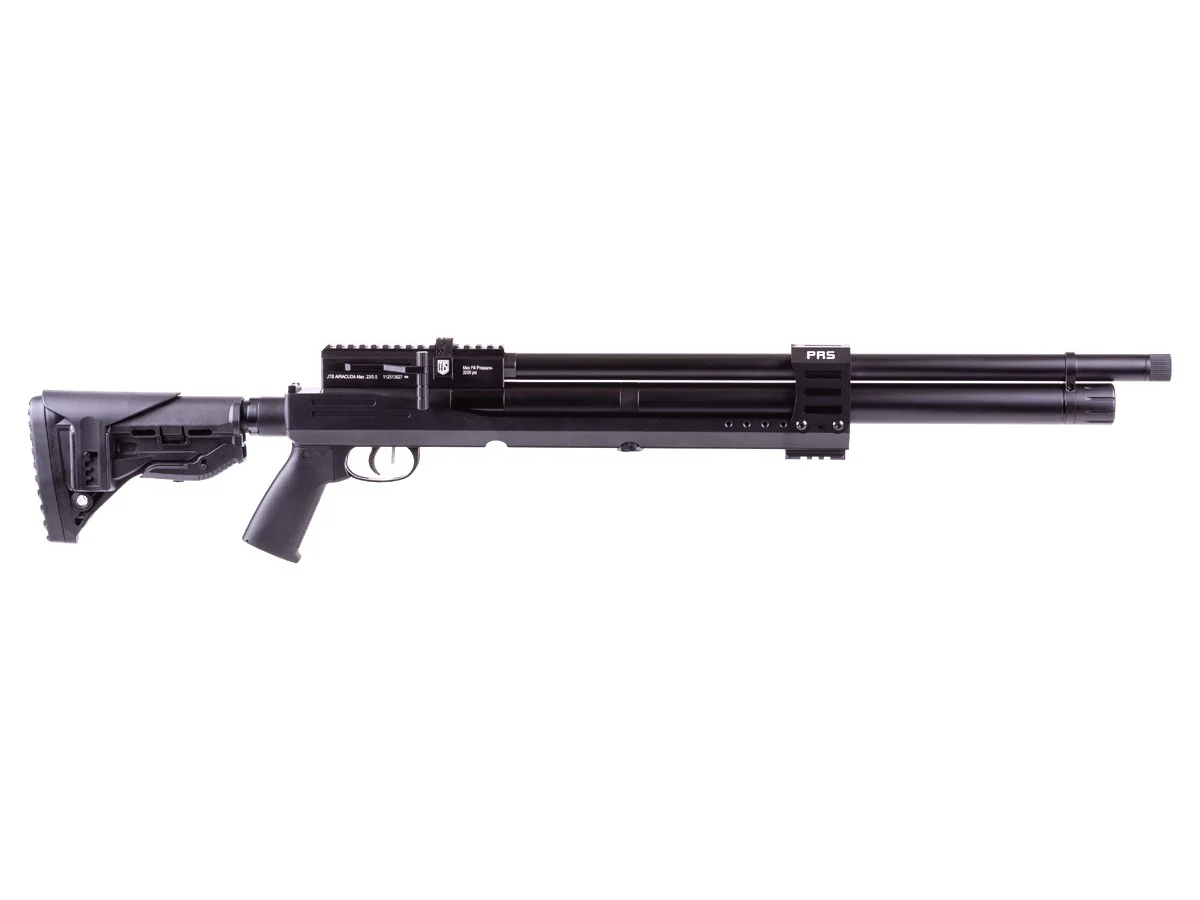
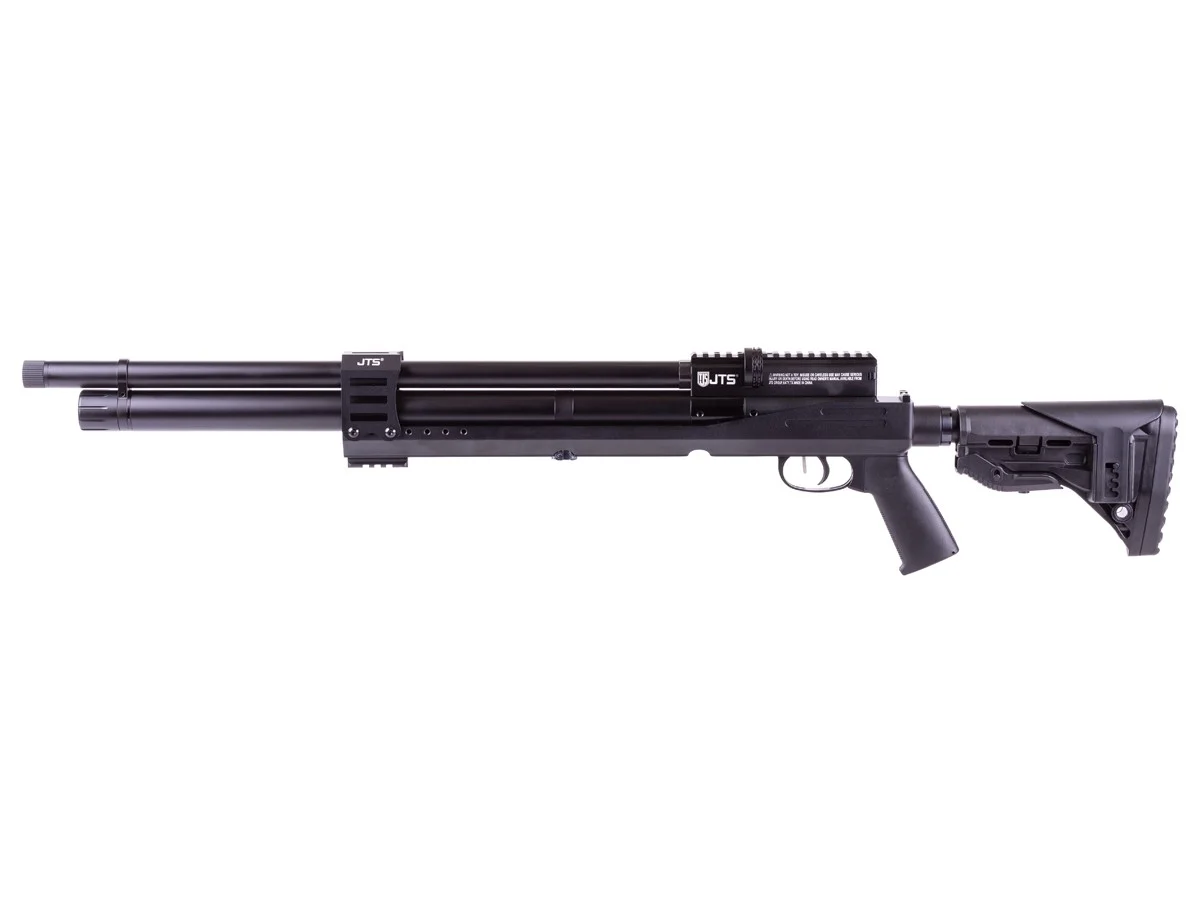


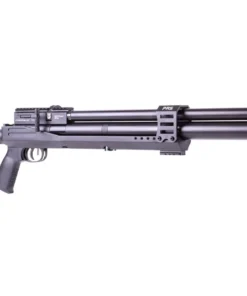
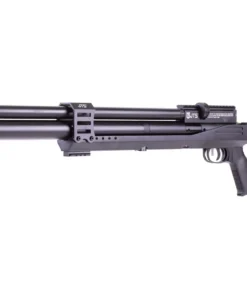
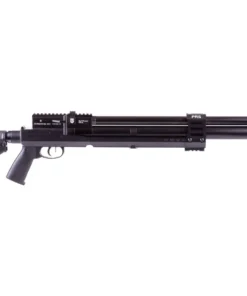
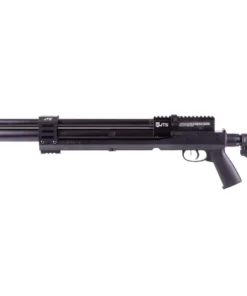



JTS Airacuda PRS Max PCP Air Rifle


€350.00
Description
The JTS Airacuda PRS Max PCP Air Rifle offers high performance at a reasonable price considering the included features and options, paired with a high-quality custom aluminum alloy chassis for lightweight accuracy. In addition, the air rifle provides shooters with a chance to customize the setup because it uses an AR-compatible grip and an AR-compatible buttstock that can be changed to suit the user’s preferences.
Key Takeaways
- An advanced, custom aluminum alloy chassis and bridge provide superior performance and options
- The air rifle offers opportunities for personalization with the grip and buttstock
- The internal regulator delivers consistent velocities and steady and predictable performance that leads to accuracy
Advanced Custom Chassis for Lightweight Functionality
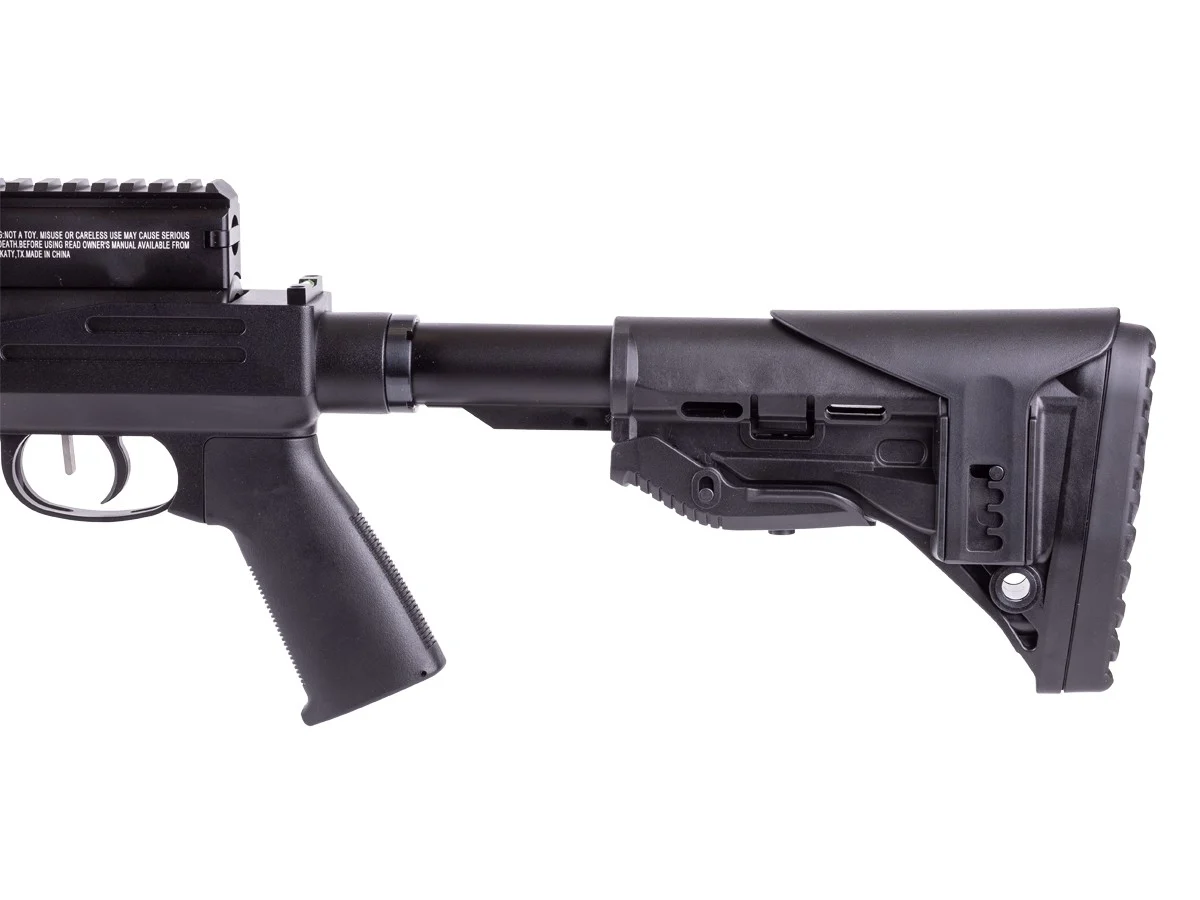
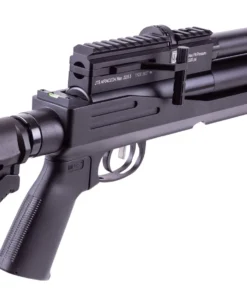
The feature that sets the JTS Airacuda PRS Max apart from other airguns in the lineup is the custom aluminum alloy chassis that offers ergonomics, stability, and control that leads to accurate shots. It features a patented adjustable buttstock with elevation-adjustable cheekpiece, and it has a simple length adjustment lever that results in a variable length of pull. In addition, it has a ridged rubber buttpad to provide comfortable control.
Internal Regulator for Consistent Performance
The internal regulator on this air rifle means that each shot leaves the rifled barrel with stable velocities, meaning lower variation across an entire shot string. Consistent and predictable performance is one of the main factors that translates to dependable accuracy, meaning every shot can be taken with confidence.
Options for Customization
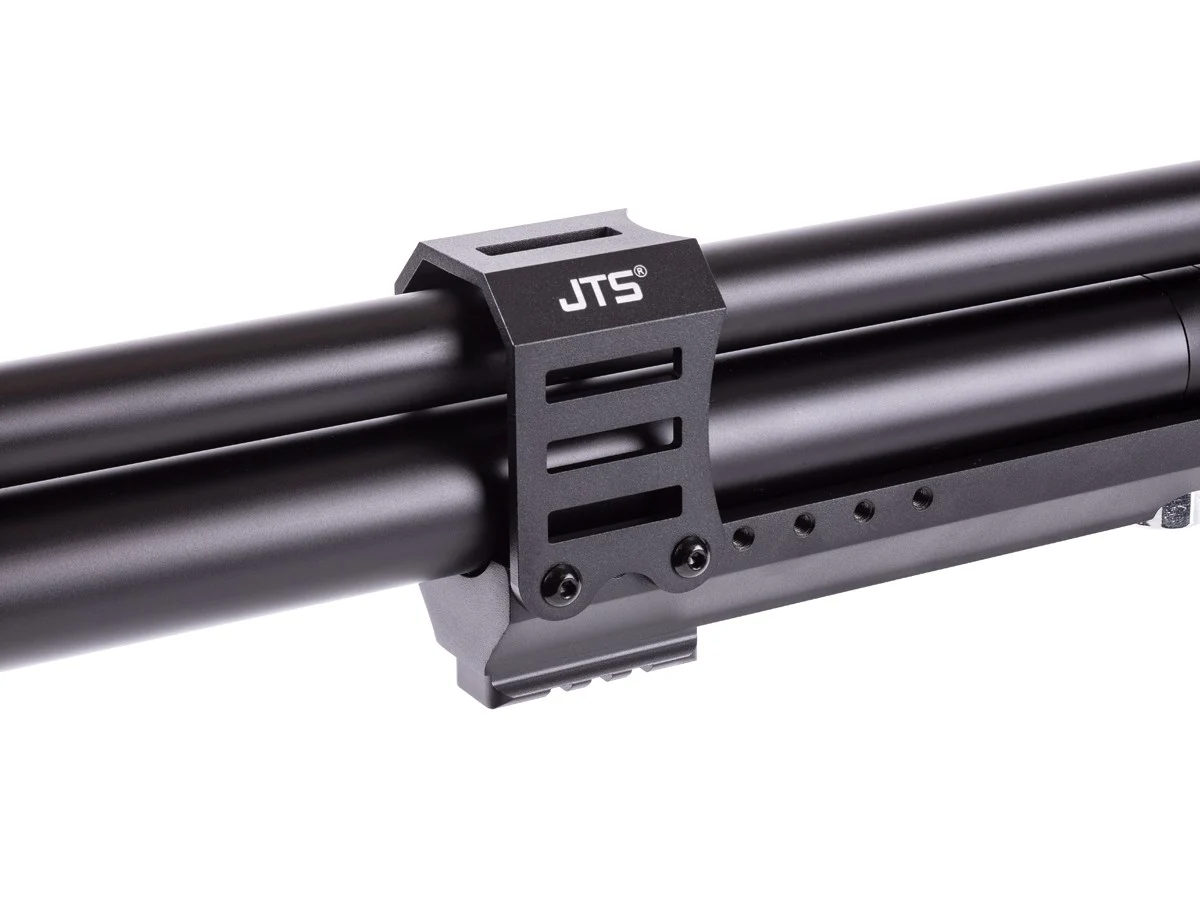
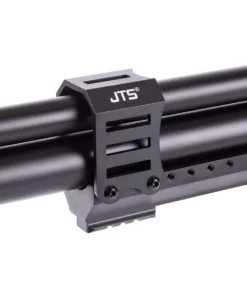
This air rifle provides opportunities for personalization, with an AR-compatible buttstock, AR-compatible grip, and the possibility of adding rails that extend the functionality of the airgun. In addition, the JTS Airacuda PRS Max has a Picatinny optics rail for adding a scope or other optic, as well as a Picatinny accessory rail underneath the front of the chassis for adding accessories such as a bipod for improved stability.
Features and Benefits
|
Feature |
Benefit |
|
Patented Adjustable Buttstock |
Provides lever for quick length adjustment, and can be switched for another AR-compatible buttstock. |
|
Ability to Customize |
Facilitates personalization because of its compatibility with the AR platform in terms of the grip and buttstock, and the possibility of adding rails. |
|
Internal Regulator |
Delivers consistent velocities from each shot, leading to predictable performance and improved accuracy. |
|
Advanced Custom Aluminum Alloy Chassis |
Offers high performance, improved toughness, and superior stability without adding unnecessary weight. |
|
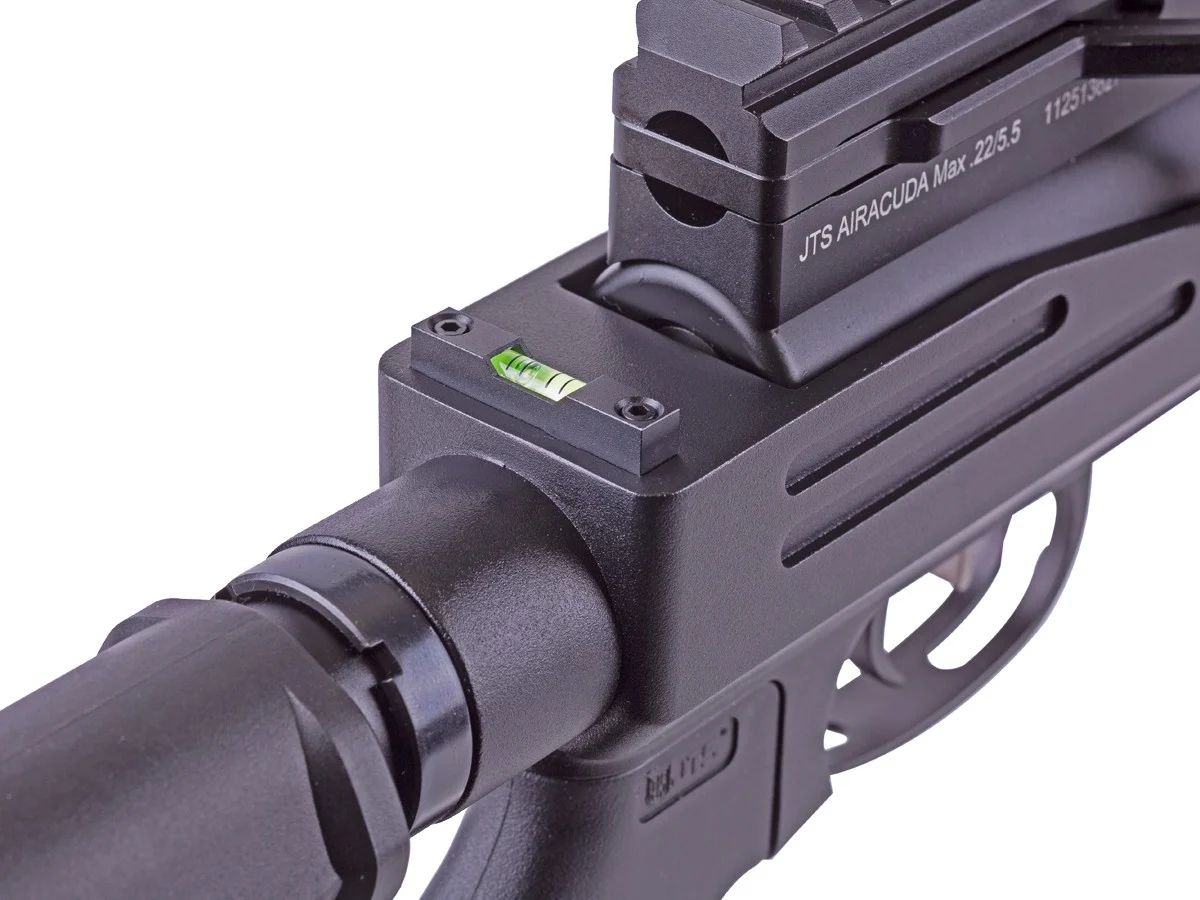
Bottom Picatinny Accessory Rail and Integrated Bubble Level |
Improves aiming accuracy and overall platform stability when combined with accessories such as a bipod. |
Why Buy JTS Airguns from Pyramyd AIR
JTS Airguns offers high-quality and thoughtfully-crafted airguns, pellets, and other accessories at reasonable prices for the features they provide. This practice allows shooters to experience dependability and ease of use that puts their needs front and center. JTS Airguns has a Katy, Texas headquarters with a design space and gunsmithing area to assist in creating their unique designs.
When you buy from Pyramyd AIR, you’re getting more than just great airguns, airgun accessories, and outdoor products. You’re also getting a valuable loyalty program, free shipping on qualifying orders, and expert pro shop services. Our knowledgeable staff is ready to assist you, and we offer a huge selection of ammo and other products for your shooting needs. In business since 1996, we are your trusted source for all things outdoors. Buy the JTS Airacuda PRS Max PCP Air Rifle at Pyramyd AIR now.
Additional Resources
- Shop Airgun Pellets
- JTS Airguns, Pellets, and Accessories
- Explore PCP Air Rifles
JTS Airacuda PRS Max PCP Air Rifle
- Precharged pneumatic
- Sidelever action
- Repeater
- Aluminum alloy chassis with bridge
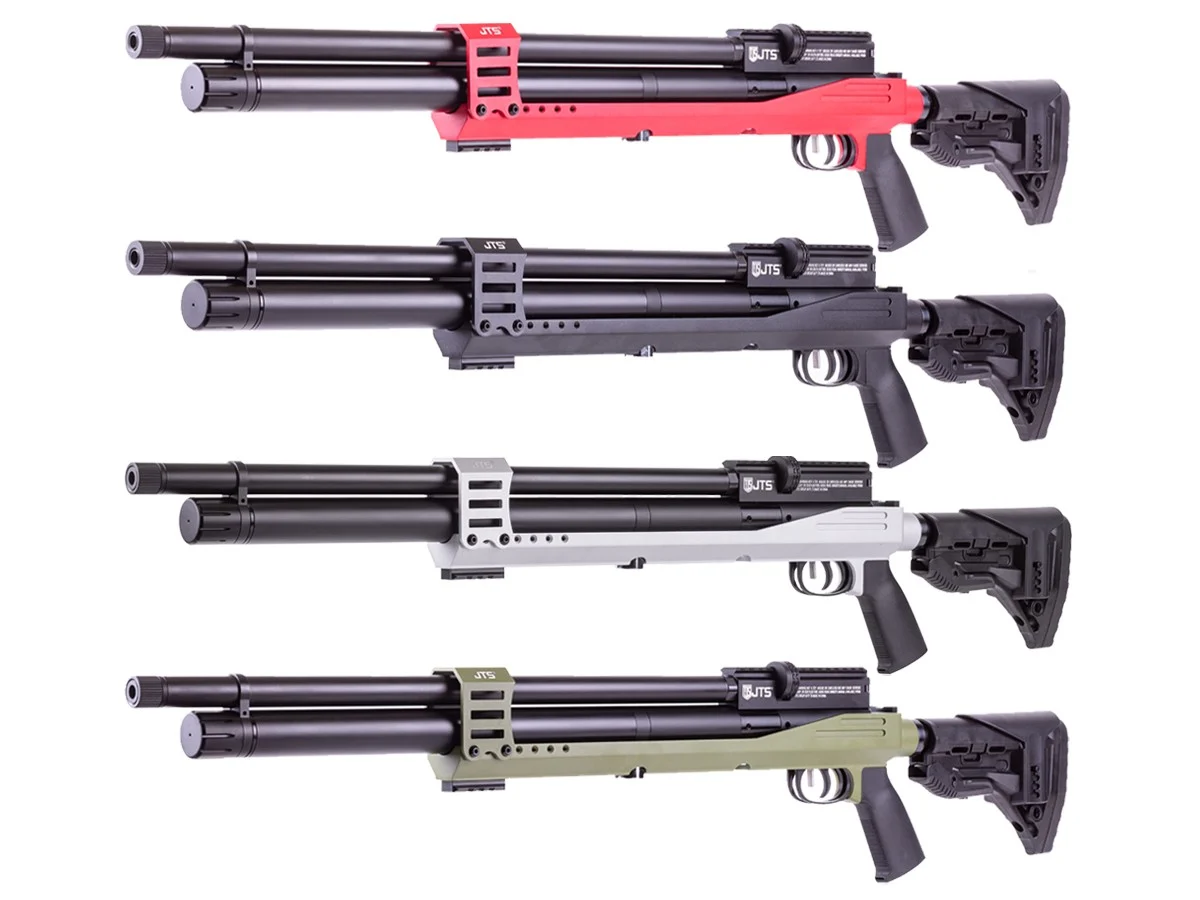
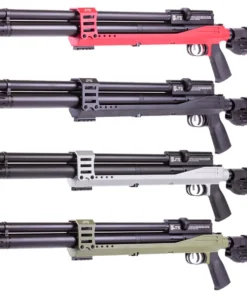
- Available chassis colors: black, green, red, silver
- Fully regulated
- 1/2 UNF adapter (.22/.25), M18-1 (.30)
- Max. fill pressure: 3,200 PSI/220 BAR
- Cylinder size: 220cc
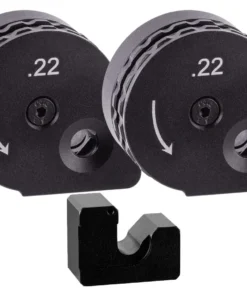
- Magazine capacity: 10 rounds (.22, .25), 7 rounds (.30)
- Max. shots per fill: 40 (.22), 30 (.25), 20 (.30)
- Max. velocity: 950 FPS (.22), 920 FPS (.25), 860 FPS (.30)
- Max. energy*: 36 FPE (.22), 48 FPE (.25), 74 FPE (.30)
- Two-stage adjustable trigger
- Manual safety
- AR grip
- Picatinny optics rail
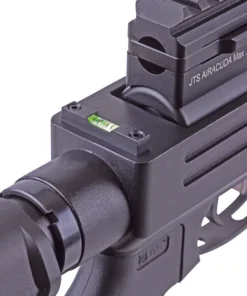
- Integrated bubble level
- Bottom Picatinny accessory rail
- Patented adjustable buttstock
- Elevation-adjustable cheekpiece
- Ridged rubber buttpad
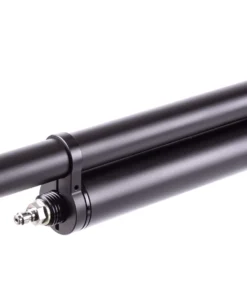
- Customizable pressure gauge placement options
- Sling adapter mount point on buttstock
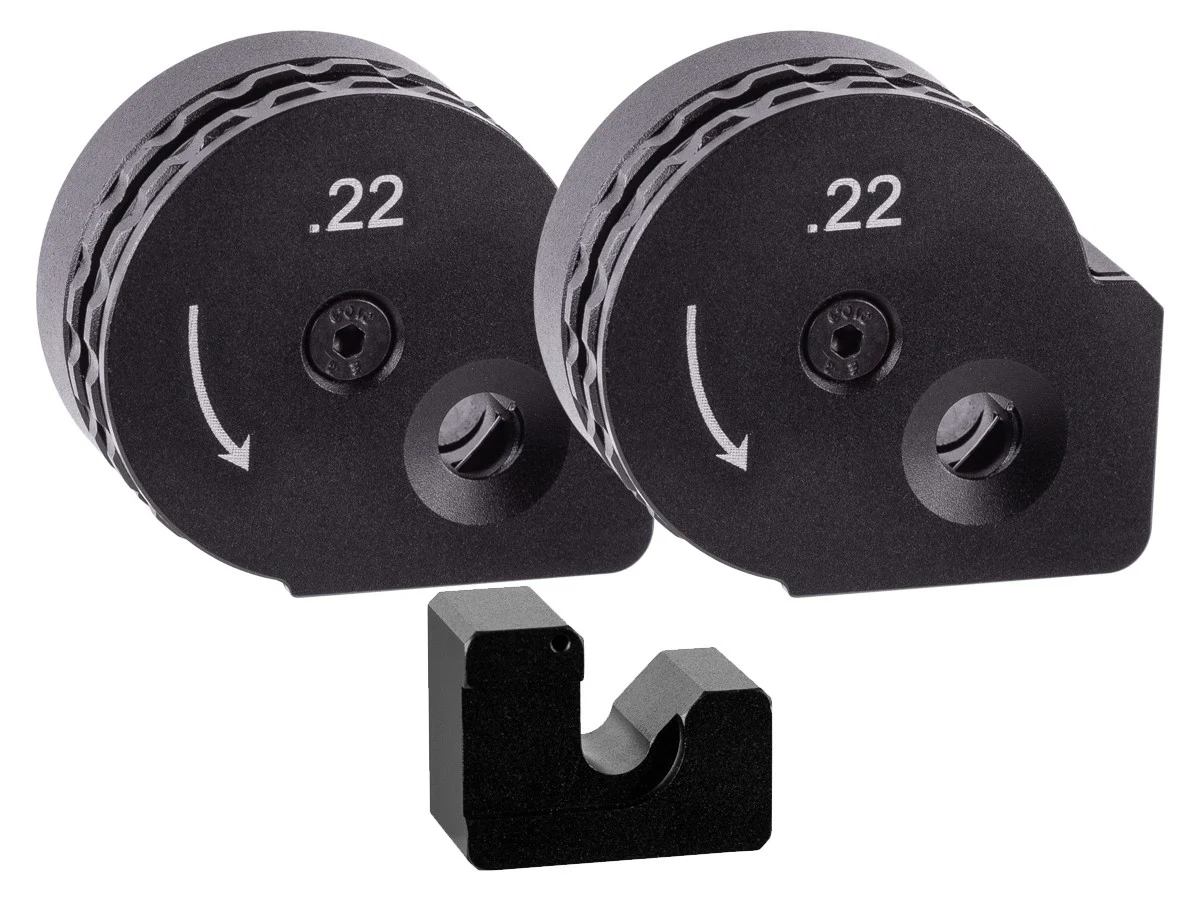
- Includes 2 metal magazines, single shot tray
- Barrel length: 21.1″
- Overall length: 38.8″-41.2″
- Weight: 8.5 lbs.
Specifications
Brand
JTS Airguns
Caliber
.22 (5.5mm)Max Velocity
950 fps
-
Muzzle Energy
36.28 ft/lbs
-
Suggested for
Small game hunting/plinkingPowerplant
Pre-charged pneumaticLoudness
3-MediumWeight
8.5 lbsFunction
RepeaterMax Shots per Fill
40Cylinder Size
220 ccAction
SideleverShrouded
YesScopeable
Weaver/PicatinnyFront Sights
noneRear Sights
noneSafety
ManualTrigger
Two-stage adjustableBarrel
RifledBarrel Length
21.1″Capacity
10 round(s)Body Type
RifleStock
AluminumButtplate
AdjustableColor
BlackOperating Pressure
3190 PSI / 220 BARRegulated
YesIs Safe To Dry Fire
Yes
JTS Airacuda PRS Max PCP Air Rifle – Technical Product Guide
PRS Max Engineering, Chassis Design, Regulated PCP Operation, Precision, and JTS Platform Context
JTS Airacuda PRS Max
The JTS Airacuda PRS Max is the chassis-based precision variant within the current Airacuda family. JTS positions the model around its aluminum-alloy structure, adjustable ergonomics, regulated pneumatic system, and competition-style accessory interfaces. The platform is currently offered in multiple chassis colors, including black, silver, red, and green.
Aluminum-Alloy Chassis
The aluminum-alloy chassis is one of the most important differences between this platform and the traditional wood-stock versions.
A rigid chassis can provide a consistent structural relationship between the action, mounting surfaces, stock interface, and accessories. JTS also lists a related drop-in aluminum chassis system for standard and Max models featuring precision-machined construction, M-LOK interfaces, upper and lower Picatinny rails, and an integrated bubble level.
Regulated PCP System
The platform uses a regulated pre-charged pneumatic architecture.
Regulation helps control the pressure delivered from the reservoir to the firing system as cylinder pressure changes. This supports more repeatable internal operating conditions over an appropriate portion of the fill.
However, practical precision still depends on ammunition consistency, barrel condition, sight stability, environmental conditions, and mechanical maintenance.
220cc Air Cylinder
The onboard air system uses a 220cc cylinder.
Its capacity is larger than that used on several more compact JTS models, supporting the manufacturer-listed shot counts across the available calibers.
As with any high-pressure pneumatic component, the cylinder should be inspected for dents, corrosion, deformation, or unexplained leakage.
21.1-Inch Rifled Barrel
The PRS Max uses a 21.1-inch rifled barrel, making it longer than the 18-inch barrel fitted to the wood-stock Max.
Barrel length contributes to the platform’s overall proportions, while practical accuracy depends on rifling quality, crown integrity, projectile uniformity, pressure consistency, and optical alignment.
Moderator-Ready Barrel
JTS describes the barrel as rifled and moderator ready.
Any compatible muzzle equipment should remain within manufacturer specifications and applicable local law.
Side-Lever Action
The platform uses a side-lever action, providing a compact mechanical interface for cycling the rifle.
The mechanism should remain smooth and predictable. Grinding, binding, or unusual resistance should prompt inspection rather than additional force.
Adjustable Two-Stage Trigger
JTS specifies an adjustable two-stage trigger.
A two-stage trigger provides a defined initial movement followed by the final release stage, supporting predictable recreational and precision-oriented handling when maintained within manufacturer-supported settings.
Upper and Lower Picatinny Rails
The PRS Max includes both upper and lower Picatinny rails.
The upper rail provides a standardized interface for compatible optics, while the lower rail supports appropriate accessories. Mounting hardware should remain secure because looseness can create apparent precision problems.
Bubble Level
An integrated bubble level is part of the current specification.
Its purpose is to help the user identify unwanted lateral cant in controlled target settings. It should be treated as an alignment aid rather than a substitute for correct sight setup.
Custom Pressure Gauge Placement
JTS lists custom pressure-gauge placement options.
This reflects the chassis platform’s emphasis on configurable ergonomics and visibility.
Any pressure gauge should remain readable, secure, and free from damage because it provides important information about the pneumatic system.
Single-Shot Tray
A single-shot tray is included alongside the two metal magazines.
This allows the rifle to be configured without a magazine during appropriate controlled target sessions.
JTS Airguns
jts airguns currently lists the PRS Max alongside the standard Airacuda, Airacuda Max, AirStryke, AirStryke Carbine, and Brawn. The company also offers compressors, hand pumps, magazines, chassis components, and ammunition.
JTS Airacuda
The jts airacuda Standard remains a separate wood-stock model within the same family.
It should not be treated as identical to the PRS Max because the chassis, barrel length, ergonomics, and pressure-system specifications differ.
Airacuda
The airacuda name therefore refers to a broader product family rather than one fixed configuration.
Correct model identification is important when comparing barrel length, caliber, reservoir capacity, stock system, and shot count.
JTS Aircuda
Jts aircuda is a common misspelling of Airacuda rather than a separate verified product.
JTS Airacuda Max
The jts airacuda max uses a wood thumbhole stock, 18-inch barrel, adjustable cheek riser, regulator, and approximately 41.5-inch overall length.
The PRS version replaces that traditional stock architecture with a dedicated aluminum chassis and adds several precision-oriented interfaces.
Airacuda Max
The airacuda max should therefore not be used interchangeably with the PRS Max name.
The two platforms share regulated PCP architecture but differ in chassis, barrel length, accessory mounting, overall ergonomics, and current caliber lineup.
JTS Airacuda 25
The jts airacuda 25 search phrase generally refers to a .25-caliber Airacuda configuration.
For the PRS Max specifically, JTS lists the .25 version at approximately 920 fps, 10-round magazine capacity, and up to 30 shots per fill.
JTS Airacuda Max 30
The jts airacuda max 30 refers to the wood-stock .30 Max platform rather than the PRS Max.
The PRS Max also has a .30 option, but its current manufacturer specification should be used independently.
JTS Airacuda Max 30 Cal
The phrase jts airacuda max 30 cal therefore should not establish the PRS specification.
For the PRS Max .30, JTS lists approximately 860 fps, 7-round capacity, and around 20 maximum shots per fill.
JTS AirStryke
The jts airstryke is a separate PCP family in the current JTS catalog.
Its synthetic sporting layout and specifications differ substantially from the aluminum-chassis PRS platform.
JTS AirStryke Carbine
The JTS AirStryke Carbine is JTS’s compact carbine platform and should remain separate from the PRS Max.
JTS AirStryke Carbine PCP Air Rifle
The phrase JTS AirStryke Carbine PCP air rifle refers to that compact model rather than the Airacuda PRS Max.
AirStryke Carbine Airgun
Likewise, AirStryke Carbine airgun is a different model designation and does not establish PRS Max specifications.
JTS Brawn
The jts brawn is JTS’s bullpup PCP platform and is listed separately from the PRS Max in the current catalog.
Its bullpup layout and stock architecture are materially different.
JTS Pellets
jts pellets refers to the manufacturer’s airgun ammunition line.
JTS currently lists multiple pellet and slug products across .177, .22, .25, .30, and other calibers.
Only compatible ammunition matching the exact caliber should be used.
JTS Compressor
The term jts compressor refers to separate high-pressure filling equipment. JTS currently lists both the COMP1 and COMP100 among its accessories.
Charging equipment should remain within the rifle’s and compressor’s respective manufacturer pressure limits.
Compressed Air Rifle
The PRS Max is accurately described as a compressed air rifle because its energy source is stored high-pressure air.
Reservoirs, gauges, valves, seals, hoses, and compatible charging equipment should therefore be treated as pressure-system components.
Best Scope for PCP Air Rifle
The phrase best scope for PCP air rifle relates to accessory selection rather than a fixed rifle specification.
The appropriate optic depends on intended lawful target use, mounting height, eye relief, magnification needs, and physical compatibility with the upper rail.
177 Cal Pellet Gun
The phrase 177 cal pellet gun does not describe the currently listed PRS Max, which JTS currently specifies in .22, .25, and .30.
177 Cartridge
The phrase 177 cartridge is technically inaccurate in this context because PCP air rifles use airgun projectiles rather than conventional firearm cartridges.
JTS Stealth Hawk
The phrase jts stealth hawk does not appear among the current official JTS products reviewed, so it should not be treated as a verified PRS Max feature.
JTS Firearms and JTS Guns
The phrases jts firearms and jts guns are broad search terms rather than precise technical model descriptions.
The product discussed here is specifically identified by JTS as a PCP air rifle.
JTS Group
The phrase Jts group does not establish any verified specification.
Official JTS product pages and owner manuals remain the appropriate technical reference.
Air Guns of Texas
The phrase air guns of texas is location- or retailer-oriented rather than an engineering specification.
Lindstradt Air Gun
The phrase lindstradt air gun does not correspond to a verified PRS Max specification in the official sources reviewed.
Tom Air Gun
Likewise, tom air gun does not identify a verified feature of this platform.
Airgins
The term airgins appears to be an unrelated or misspelled search variation rather than authoritative terminology.
JTS Shotgun Accessories
The phrase jts shotgun accessories refers to another product category and does not describe the PRS Max pneumatic or chassis system.
JTS Air Rifle for Hunting
The phrase JTS air rifle for hunting concerns intended use rather than engineering. Whether a particular air rifle may legally or appropriately be used for hunting depends on jurisdiction, caliber, energy, target species, and applicable rules.
Commercial AirStryke Search Terms
The phrases buy JTS AirStryke Carbine online, JTS AirStryke Carbine for sale, and JTS AirStryke Carbine price concern purchasing a separate weapon platform, so they are not used here to provide sellers, prices, or transactional guidance.
JTS AirStryke Carbine Review
The phrase JTS AirStryke Carbine review concerns a different JTS model and should not be treated as evidence about the PRS Max.
Practical Precision
The PRS Max combines a regulated pneumatic system, rigid aluminum-alloy chassis, long rifled barrel, adjustable two-stage trigger, bubble level, configurable pressure-gauge positioning, and standardized mounting surfaces. These features provide a technical foundation for controlled precision-oriented target use.
However, practical precision still depends on ammunition uniformity, pressure behavior, optic stability, barrel condition, environmental factors, and user technique.
Why the PRS Chassis Matters
The principal engineering distinction is the chassis architecture.
Compared with the traditional wood-stock Airacuda Max, the PRS design provides a rigid aluminum structure, additional mounting interfaces, integrated leveling aid, adjustable overall length, and a layout intended for greater configurability.
Overall Technical Perspective
The JTS Airacuda PRS Max combines a regulated PCP system, 220cc air cylinder, 21.1-inch rifled barrel, side-lever action, two-stage adjustable trigger, aluminum-alloy chassis, upper and lower Picatinny rails, bubble level, configurable pressure-gauge positioning, single-shot tray, and caliber-specific metal magazines. Current official specifications list approximately 950 fps in .22, 920 fps in .25, and 860 fps in .30, with maximum shot counts of 40, 30, and 20 respectively.
For responsible ownership, the important considerations remain exact caliber identification, compatible ammunition, appropriate high-pressure filling equipment, adherence to manufacturer pressure limits, secure storage, appropriate eye protection, controlled recreational use, and qualified servicing whenever the pneumatic or mechanical system becomes uncertain.
Engineering Performance, Chassis Ergonomics, Pressure Management, Precision, and Practical Design
The precision-oriented design combines a rigid chassis, regulated pneumatic system, long barrel assembly, adjustable controls, and standardized mounting surfaces within one integrated platform. These elements influence how the equipment feels, balances, and performs during controlled recreational target use. Maximum velocity alone does not determine overall quality. Instead, pressure consistency, structural rigidity, barrel condition, sight stability, ammunition uniformity, ergonomics, environmental conditions, and maintenance collectively determine repeatability. Understanding these factors helps explain why a chassis-based configuration can feel substantially different from a conventional sporting-stock design.
Chassis Construction and Structural Rigidity
The metal chassis provides the structural foundation for the complete system.
Compared with traditional furniture, a rigid chassis creates defined mounting points for the action, sighting equipment, grip, shoulder assembly, and accessories. This arrangement can help maintain a consistent relationship between major components.
However, rigidity does not eliminate the need for inspection. Loose hardware, physical damage, or improperly fitted accessories can still influence mechanical consistency.
Adjustable Overall Configuration
An adjustable chassis allows the equipment to accommodate different body proportions and sighting arrangements.
A comfortable configuration should support a natural shoulder position, stable head placement, and straightforward access to the primary controls.
Adjustment is valuable because ergonomics are highly individual. What feels balanced for one person may feel awkward for another.
Once a suitable configuration is established, adjustment hardware should remain securely locked.
Weight Distribution
A precision-oriented chassis configuration can feel more substantial than a lightweight recreational platform.
The reservoir, barrel, action, optical equipment, stock components, and additional accessories all contribute to overall balance.
Therefore, total weight should be considered after the complete setup has been assembled.
Unnecessary accessories can increase fatigue without providing meaningful practical benefit.
Regulated Pressure Management
The internal regulator plays an important role in pneumatic consistency.
As reservoir pressure changes, regulation helps provide more controlled pressure delivery during an appropriate portion of the available air supply.
This reduces one potential source of variation.
Nevertheless, the regulator cannot compensate for deteriorated seals, unsuitable ammunition, damaged components, temperature extremes, or inconsistent maintenance.
Reservoir Capacity and Consistency
A relatively substantial onboard reservoir provides stored compressed air for repeated operation.
Capacity can influence how frequently charging is required, but reservoir size alone does not determine performance.
Pressure-system condition is equally important.
Unexpected leakage, corrosion, deformation, or physical damage should be investigated because pressure-bearing components require careful treatment.
Pressure Monitoring
Accessible pressure information makes it easier to observe the pneumatic system’s condition.
Gauges should remain readable, securely mounted, and physically undamaged.
An unexpected change in pressure retention may indicate a seal, valve, fitting, or other internal problem.
If gauge behavior appears abnormal, professional inspection is preferable to estimating pressure.
Barrel Engineering
The relatively long rifled barrel forms an important part of the precision-oriented architecture.
Rifling provides controlled projectile rotation, while crown integrity and internal surface condition contribute to repeatability.
However, barrel length should not be interpreted as an automatic guarantee of superior accuracy.
Mechanical alignment, ammunition consistency, pressure stability, and environmental conditions remain equally relevant.
Protecting Barrel Alignment
The barrel assembly should remain protected from significant impacts.
Even when external damage appears minor, unwanted movement or deformation can affect alignment.
Transportation should therefore prevent heavy equipment from striking the front assembly.
If a substantial impact occurs, the equipment should be inspected before recreational use resumes.
Understanding Practical Precision
Precision is best evaluated through repeatability rather than isolated results.
A single successful target result reveals relatively little about the complete system.
Repeated performance under comparable conditions provides a better indication of mechanical consistency.
Wind, temperature, sight alignment, ammunition variation, and user technique should also be considered whenever results change unexpectedly.
Side-Mounted Cycling Control
The side-mounted cycling mechanism contributes to straightforward operation.
Normal movement should remain smooth and predictable.
Grinding, binding, excessive looseness, or unexpectedly heavy resistance may indicate contamination, wear, or another mechanical issue.
Applying additional force is not an appropriate solution when the mechanism no longer behaves normally.
Two-Stage Trigger Characteristics
A two-stage trigger provides two distinct phases of movement.
The first stage allows initial controlled travel, while the second provides the final mechanical release.
Predictable behavior can support consistent recreational target handling.
Any adjustment should remain within manufacturer-supported parameters.
Unexpected changes in resistance or engagement should prompt inspection rather than unauthorized internal modification.
Magazine System
A removable magazine provides organized multi-shot functionality.
Reliable indexing depends on dimensional integrity, cleanliness, and correct alignment.
Magazines should therefore remain protected from impacts and contamination.
If one becomes damaged or begins functioning irregularly, forcing continued operation can worsen the problem.
Replacement or qualified inspection provides the better approach.
Single-Loading Capability
A dedicated single-loading arrangement can be useful during controlled target sessions where individual projectile handling is preferred.
It also provides another way to evaluate equipment behavior independently from magazine indexing.
The loading component should remain clean and undamaged so that alignment is maintained.
Optical Mounting Interface
The upper mounting surface provides a standardized foundation for compatible sighting equipment.
Mounting stability is essential because loose rings or bases can produce apparent precision problems even when the pneumatic system remains healthy.
Hardware should be inspected periodically, particularly after transportation.
Excessive tightening should also be avoided because threads and mounting surfaces can be damaged.
Integrated Leveling Aid
A leveling reference can help identify unwanted lateral cant during controlled target use.
Consistent orientation becomes increasingly relevant when attempting to evaluate repeatability.
However, a leveling aid does not replace correct equipment setup, stable support, or proper sight alignment.
It should be regarded as one reference within the complete system.
Lower Mounting Interface
The lower accessory interface increases configuration flexibility.
However, every additional component adds weight and may change balance.
Accessories should therefore serve a genuine recreational purpose rather than simply occupying available mounting space.
All mounted equipment should remain secure and legally appropriate.
Environmental Effects
Outdoor conditions can influence results considerably.
Wind affects projectile movement after it leaves the barrel, while temperature can influence pneumatic behavior.
Humidity also matters from a maintenance perspective.
Comparisons between different sessions should therefore account for environmental differences before a mechanical fault is assumed.
Temperature Management
Compressed-air systems should be protected from extreme temperatures.
A closed vehicle in direct sunlight can become substantially hotter than the surrounding environment.
Excessive heat may affect seals, optics, pressure-related components, and other materials.
Rapid transitions from cold environments into warm humid spaces can also produce condensation.
Moisture Protection
Moisture can affect metal surfaces, optical equipment, fasteners, and internal components.
After exposure to rain or heavy humidity, accessible surfaces should be dried before storage.
A damp protective case should also be dried separately.
Leaving equipment enclosed in wet padding can encourage corrosion over time.
Transportation Considerations
A padded case provides useful protection during transportation.
Optics, gauges, reservoir components, barrel assemblies, and adjustment hardware should be protected from direct impacts.
Heavy charging equipment and tools should ideally remain separated.
The equipment should remain unloaded and transported according to applicable regulations.
Appropriate Recreational Environment
A properly controlled range provides the appropriate environment for evaluating precision and mechanical consistency.
Suitable containment, appropriate eye protection, clear operating procedures, and controlled access reduce unnecessary risk.
Facility rules and applicable local regulations should always determine where and how pneumatic sporting equipment may be used.
Long-Term Engineering Reliability
Reliable operation depends on the entire system working together.
The reservoir, regulator, seals, barrel, cycling mechanism, trigger, magazines, chassis, gauges, sighting equipment, and mounting hardware all contribute.
Routine inspection allows gradual deterioration to be identified before it develops into a more significant fault.
Overall Engineering Perspective
The chassis-based configuration provides a strong technical foundation for controlled precision-oriented recreational use through structural rigidity, adjustable ergonomics, regulated pressure management, a substantial barrel assembly, multiple sighting interfaces, and integrated alignment features.
Its practical quality ultimately depends on more than individual specifications. Consistent pressure behavior, secure mounting hardware, proper ammunition compatibility, environmental awareness, careful transportation, preventive maintenance, and professional servicing all influence long-term reliability. When these fundamentals are respected, the platform can maintain predictable mechanical behavior while providing the adjustability and structural stability expected from a precision-oriented pneumatic design.
Maintenance, Inspection, Storage, Durability, and Long-Term Care
Long-term reliability depends heavily on preventive maintenance and careful storage. A precision-oriented pneumatic platform contains numerous components that must continue functioning together correctly, including the pressure reservoir, regulator, seals, gauges, barrel assembly, cycling mechanism, trigger system, magazines, chassis, adjustment hardware, and sighting interfaces. Rather than constantly modifying or dismantling these systems, responsible maintenance should emphasize regular inspection, cleanliness, moisture protection, careful transportation, and professional servicing whenever internal or pressure-bearing components become questionable.
Routine Visual Inspection
A basic condition check should become part of normal ownership.
Accessible surfaces should be examined for corrosion, cracks, dents, loose hardware, contamination, or unusual movement. Particular attention should be given to pressure-bearing components, the barrel assembly, gauges, chassis connections, and adjustment mechanisms.
Recognizing the normal appearance of the equipment makes gradual deterioration easier to identify.
Pressure Reservoir Condition
The reservoir requires careful treatment because it contains highly compressed air.
Its exterior should remain free from severe dents, substantial corrosion, deep scratches, or visible deformation.
Damage involving a pressure-bearing component should never be dismissed as merely cosmetic.
If structural condition becomes uncertain, recreational use should stop until the component has received appropriate professional assessment.
Monitoring Pressure Retention
Pressure retention can provide useful information about pneumatic condition.
A system that suddenly begins losing pressure significantly faster than normal may have a deteriorating seal, fitting, valve, or another internal problem.
Repeatedly restoring pressure without identifying persistent leakage is not effective maintenance.
The cause should instead be diagnosed appropriately.
Gauge Condition
Pressure gauges should remain readable, secure, and physically undamaged.
Cracked lenses, loose housings, corrosion, or unusual indications should receive attention.
Because these instruments provide information about system condition, uncertainty about gauge accuracy should be addressed through qualified inspection rather than estimation.
Internal Pressure Regulation
The regulator normally functions internally without requiring frequent user intervention.
Unexpected inconsistency does not automatically mean the regulator has failed because seals, valves, temperature changes, and other factors can produce similar symptoms.
Consequently, professional diagnosis is preferable to unnecessary internal disassembly when pressure behavior becomes abnormal.
Seal Aging and Condition
Seals naturally deteriorate over time.
Temperature variation, contamination, storage environment, age, and ordinary mechanical cycling can influence service life.
Possible deterioration may appear as pressure loss or inconsistent pneumatic behavior.
When replacement becomes necessary, appropriate manufacturer-compatible components should be used.
Filling Interface Cleanliness
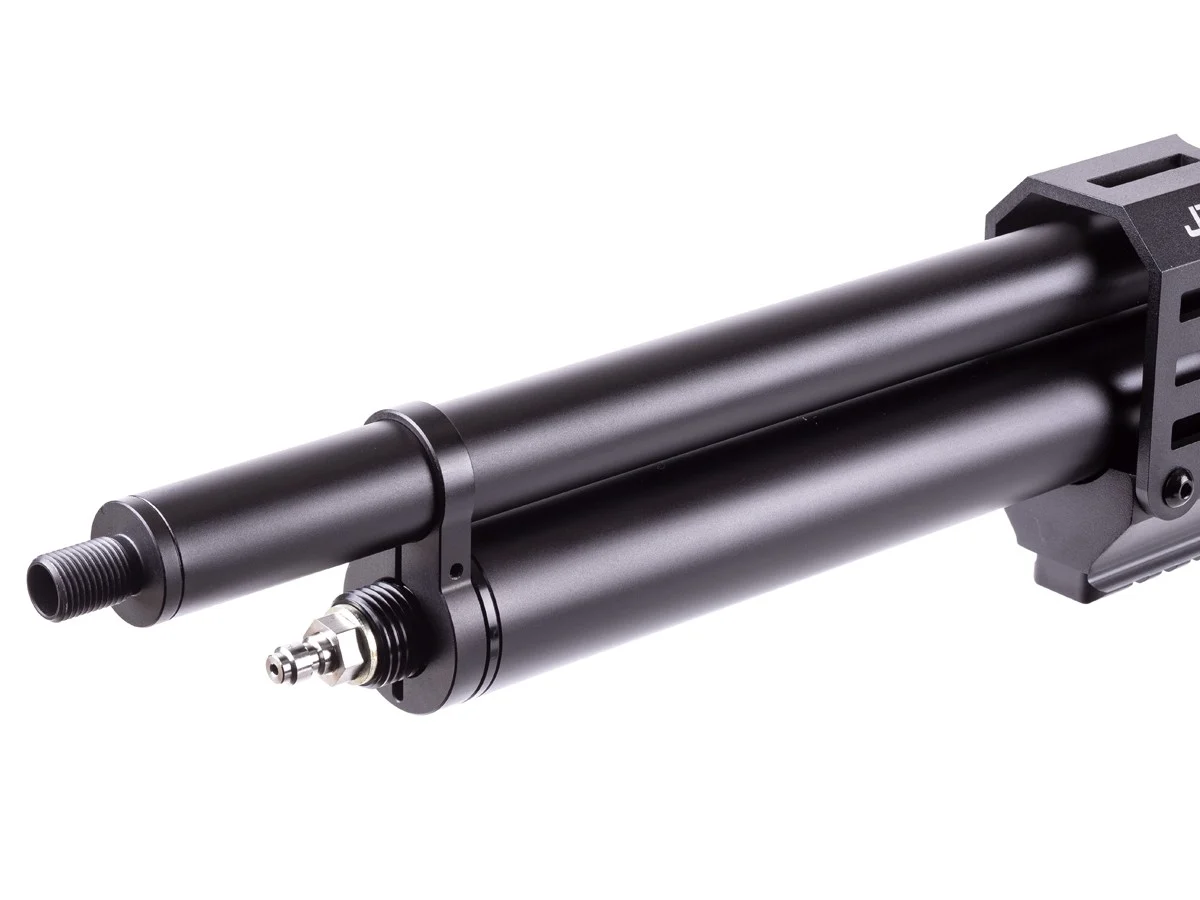
The external filling connection should remain protected from dust, grit, and moisture.
Contaminants can interfere with sealing surfaces and accelerate wear.
Protective covers should remain fitted when provided, especially during transportation and storage.
A damaged pressure fitting should receive qualified attention rather than makeshift repair.
Barrel Exterior Protection
The barrel assembly should remain clean and protected from substantial impacts.
After exposure to moisture, accessible exterior surfaces can be dried with a suitable soft cloth.
Harsh abrasives and aggressive chemicals should be avoided because they may damage protective finishes.
Transportation should also prevent heavy objects from striking the barrel.
Conservative Bore Care
Internal barrel maintenance should remain conservative.
Unnecessary aggressive cleaning can cause avoidable wear when unsuitable tools or chemicals are used.
Manufacturer-supported cleaning recommendations should take priority.
The objective should be preservation of the internal surfaces and crown rather than excessive polishing.
Cycling Mechanism Inspection
The cycling control should retain smooth, predictable movement.
Grinding, binding, excessive looseness, or substantial changes in resistance can indicate contamination or mechanical wear.
A mechanism that suddenly behaves abnormally should not simply be forced.
If external inspection does not reveal the cause, professional servicing is appropriate.
Magazine Maintenance
Magazines should remain clean and protected from deformation.
Dust, impact damage, or damaged indexing components can interfere with normal operation.
During transportation, magazines should not be allowed to move freely among heavy accessories or tools.
Damaged components should be inspected or replaced rather than forced into continued service.
Single-Loading Component Care
The dedicated single-loading component should also remain clean and undamaged.
Its surfaces should be checked periodically for deformation or accumulated debris.
Because correct alignment matters, damaged components should not be modified using improvised methods.
Compatible replacement parts provide the more dependable solution.
Trigger-System Inspection
The trigger should maintain familiar and predictable mechanical behavior.
Substantial changes in movement, resistance, or engagement deserve attention.
Routine ownership generally does not require internal trigger disassembly.
If abnormal behavior develops, professional inspection is preferable to unauthorized internal alteration.
Chassis Condition
The metal chassis provides structural support for several major components.
Inspect it periodically for cracks, deformation, impact damage, corrosion, or unexpected movement.
Attachment points deserve particular attention because looseness can influence overall stability.
Structural damage should receive qualified assessment before further recreational use.
Adjustable Stock Hardware
Adjustment mechanisms should move through their intended positions without excessive resistance.
Once configured, locking components should hold securely.
If an adjustment repeatedly becomes loose, simply applying increasing force may damage threads or hardware.
The underlying cause should instead be identified.
Grip Condition
The grip should remain firmly attached and structurally intact.
Inspect mounting areas periodically for cracks, movement, or damaged hardware.
Ordinary surface contamination can generally be removed with a soft cloth.
Strong solvents should be avoided unless their compatibility with the material is established.
Picatinny Interface Inspection
Mounting rails should remain straight and free from significant physical damage.
Installed accessories should sit securely without unwanted movement.
If mounting hardware repeatedly becomes loose, both the accessory and interface should be examined.
Excessive tightening can damage threads and should not be used as a substitute for proper diagnosis.
Optical Equipment Care
Optics require protection from impacts, moisture, and contamination.
External lenses should be cleaned using suitable optical-care materials rather than ordinary abrasive cloths.
Mounts and rings should be checked periodically because loose optical equipment can create apparent performance inconsistencies.
After transportation, mounting stability deserves particular attention.
Leveling Reference Inspection
An integrated leveling reference should remain clearly visible and physically secure.
If the chassis experiences a significant impact, the leveling component and surrounding mounting area should be inspected.
Damage to alignment-related equipment can affect its usefulness even when the rest of the platform appears unaffected.
Fastener Inspection
Visible fasteners should periodically be checked for unexpected looseness.
Overtightening should be avoided because excessive force can damage threads.
A fastener that repeatedly loosens may indicate wear, vibration, incorrect hardware, or another underlying issue requiring attention.
Moisture Management
Moisture is one of the most significant long-term storage concerns.
Wet equipment should not remain enclosed inside a protective case for extended periods.
After exposure to rain or heavy humidity, accessible surfaces should be dried thoroughly.
The case itself should also be dried because damp padding can maintain prolonged moisture exposure.
Corrosion Prevention
Metal components benefit from clean and reasonably dry storage conditions.
Persistent humidity, salt, and corrosive chemicals should be avoided.
Recessed areas and fasteners deserve occasional inspection because corrosion may begin where it is not immediately visible.
Early prevention is considerably easier than restoring heavily deteriorated components.
Temperature Protection
Extreme temperatures should be avoided whenever possible.
A closed vehicle exposed to direct sunlight can become substantially hotter than the surrounding environment.
Heat can affect seals, optical equipment, synthetic components, and other materials.
Rapid movement from cold environments into warm humid spaces can also encourage condensation.
Transportation Protection
A padded case can reduce accidental impacts during transportation.
Pressure-bearing components, gauges, barrel assemblies, optics, and adjustment mechanisms should be protected from heavy objects.
The equipment should remain unloaded and transported according to applicable regulations.
After a substantial impact, its structural condition should be checked before further use.
Secure Storage
Storage should prevent unauthorized access.
The equipment should remain unloaded, dry, protected from physical damage, and secured appropriately for the household and jurisdiction.
Applicable local requirements should always take priority when determining storage arrangements.
Long-Term Storage
Extended periods without use still require occasional inspection.
Check for corrosion, environmental damage, pressure loss, loose hardware, or deterioration of external components.
Manufacturer guidance should determine appropriate management of the pneumatic system during prolonged storage.
Avoiding Improvised Repairs
Pressure-bearing and critical mechanical components should never be repaired using unknown seals, makeshift fittings, unsuitable adhesives, or hardware of uncertain specification.
Improvised repairs can introduce additional faults.
Qualified servicing and compatible replacement components provide a more reliable approach.
Maintenance Documentation
A simple maintenance history can be useful throughout long-term ownership.
Professional servicing, seal replacement, component replacement, unusual pressure loss, significant impacts, and major inspections can all be recorded.
Such documentation makes recurring problems easier to identify and provides useful information during future servicing.
Overall Long-Term Care
Durability depends on the relationship between engineering quality and responsible ownership. Regular inspection, moisture protection, secure storage, careful transportation, clean mounting interfaces, and timely professional servicing reduce avoidable deterioration.
Most importantly, significant pressure loss, structural damage, corrosion, abnormal mechanical behavior, or uncertainty about pressure-bearing components should prompt inspection rather than continued recreational use. Consistent preventive care provides the strongest foundation for maintaining mechanical condition, structural integrity, and dependable long-term service.
Be the first to review “JTS Airacuda PRS Max PCP Air Rifle”
Related products


JTS Air Rifles


JTS Air Rifles


JTS Air Rifles

JTS Air Rifles
Reviews
There are no reviews yet.