

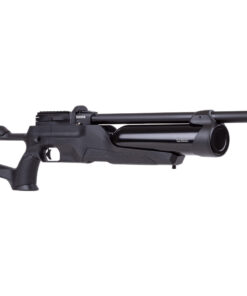
Reximex Accura PCP Air Rifle


Price range: €270.00 through €315.00
The Reximex Accura is a regulated PCP air rifle tested with quality JSB pellets, delivering consistent performance across its pressure range (3625 PSI down to 1450 PSI). Available in .22 Cal at 950 fps and .25 Cal at 850 fps, it’s a serious mid-range PCP built for accuracy-minded shooters.
The testing data is based on 18.13gr JSB pellets in .22 and 25.39gr JSB pellets in .25 — real-world, match-grade ammo numbers you can actually rely on.
- Calibers: .22 Cal (950 fps) and .25 Cal (850 fps)
- Regulated PCP: Consistent velocity across a wide fill pressure range (250 to 100 BAR)
- Tested with JSB pellets: Velocities verified with quality projectiles, not marketing-grade lightweight pellets
- Hunting and precision capable: Both calibers deliver practical downrange energy
Caliber Synthetic,.22 caliber, Walnut,.22 caliber, Synthetic,.25caliber, Walnut,.25caliber Brand Reximex
Reximex Accura PCP Air Rifle – High-Capacity PCP Performance, Adjustable Ergonomics and Multi-Caliber Precision
The Reximex Accura PCP Air Rifle combines substantial air capacity, adjustable ergonomics, multi-caliber versatility and a smooth side-lever operating system in a full-length pre-charged pneumatic platform. Designed for target shooting and other lawful sporting applications, the Accura offers .177, .22 and .25 caliber configurations, allowing shooters to select a version that suits their preferred balance of velocity, energy and ammunition characteristics.
Current Reximex documentation lists a 425cc aluminum air bottle, 250 BAR filling pressure, integrated sound moderator, power adjustment, adjustable cheekpiece, adjustable butt pad and a four-way adjustable trigger with manual safety. The rifle measures approximately 1,010mm overall with a 380mm barrel and weighs about 3.5kg in synthetic-stock configuration.
Why Choose the Reximex Accura?
The strongest reason to consider the Accura is its combination of capacity and adjustability.
Rather than focusing only on maximum velocity, the platform gives the shooter several practical adjustment points that can improve fit and consistency. Cheekpiece elevation can be matched to optic height, the butt pad can be positioned for more comfortable shoulder placement, and the trigger shoe provides multi-direction adjustment.
Meanwhile, the side-lever mechanism allows the action to be cycled without significantly disturbing the shooting position.
The generous 425cc reservoir also supports a comparatively high number of shots between fills. According to Reximex, optimal-velocity shot counts are approximately 168 in .177, 144 in .22 and 120 in .25 between the specified working-pressure range.
How Good Is the Accura for Precision Shooting?
Mechanical consistency, stable positioning and appropriate ammunition all contribute to accuracy.
The Accura’s adjustable stock geometry helps the shooter build a repeatable head and shoulder position. Additionally, the side-lever arrangement allows follow-up loading while maintaining a relatively stable shooting posture.
Magazine capacity varies by caliber. Factory documentation lists 14 shots for .177, 12 for .22 and 10 for .25.
For practical precision testing, different pellet weights and head sizes should be evaluated at a safe range because real-world grouping can vary significantly between ammunition types.
Caliber, Velocity and Energy
Factory figures list maximum muzzle velocities of approximately:
- .177 / 4.5mm: 1,150 fps
- .22 / 5.5mm: 950 fps
- .25 / 6.35mm: 850 fps
Corresponding published energy figures are approximately 33.6 joules, 49.3 joules and 55.2 joules respectively. Reximex notes that actual performance varies according to pellet weight, pellet shape, temperature, elevation and other conditions.
This is why searches for a tps to joules calculator, Tps joule calculator, fps to ft Ibs, or airgun joules calculator should be treated as conversion aids rather than substitutes for chronograph testing.
Side-Lever Operation
The side-lever cocking arrangement is one of the Accura’s most practical features.
A side lever allows the action to be cycled using a relatively short hand movement. For supported target shooting, this can help preserve shoulder and cheek position between shots.
Smooth operation also becomes useful when firing multiple magazine-fed shots during a range session.
The action should always be handled according to the manufacturer’s manual and local laws.
425cc Air Capacity
The 425cc aluminum bottle provides substantial onboard air storage.
Reximex specifies a maximum fill pressure of 250 BAR.
This larger reservoir helps explain the relatively high published shot count.
However, filling should always be completed using compatible equipment rated for the required pressure. Pressure-bearing components should not be modified or operated beyond manufacturer limits.
Adjustable Stock and Shooting Position
The stock provides adjustable cheek and butt-pad components.
These features are important because scope height, body proportions and shooting position vary between users.
Correct cheek placement helps maintain consistent eye alignment with an optic.
Likewise, butt-pad adjustment can improve shoulder positioning during supported or standing shooting.
These features make the rifle easier to configure for different lawful sporting applications.
Integrated Moderator
The Accura incorporates an integrated sound moderator according to the current manufacturer catalogue.
Its purpose is to moderate muzzle report where legally permitted.
Local regulations concerning moderators and airgun ownership should always be checked before purchase or use because requirements differ significantly between jurisdictions.
Reximex and Related Airgun Searches
The broader reximex and reximex airguns range includes several PCP platforms with different layouts.
For example, searches for reximex throne gen2, reximex throne gen 2, reximex mito, reximex mitos, reximex rра, reximex гр, and reximex lieva may lead shoppers toward other compact, bullpup or pistol-style products.
The manufacturer currently maintains separate manuals for models including Accura, Throne Gen2, Lyra K, RP/RPA, Daystar, Meta, Apex and other platforms.
Therefore, specifications from one model should not automatically be transferred to another.
Reximex Lyra K and Accura Comparison Search Intent
Searches such as Reximex Lyra K, Reximex Lyra-K PCP air rifle, Reximex Lyra-K airgun, Reximex Lyra-K review, Reximex Lyra-K PCP rifle, Reximex Lyra-K regulated PCP, Reximex Lyra-K compact PCP rifle, and Reximex Lyra-K tactical air rifle describe another model family.
Likewise, Reximex Lyra-K hunting rifle, Reximex Lyra-K accuracy test, Reximex Lyra-K scope package, and Reximex Lyra-K pellet gun should not be interpreted as Accura specifications.
The Accura should be evaluated using its own published dimensions, reservoir capacity, caliber options and shot-count data.
Buyer-Intent Searches
Commercial search phrases such as buy Reximex Lyra-K online, best price Reximex Lyra-K, gunseek, roxy max, and mx rex represent broader shopping or search-engine intent.
When comparing any PCP air rifle, buyers should concentrate on confirmed specifications, warranty conditions, local ownership requirements, available servicing and intended lawful use rather than relying solely on keyword-driven listings.
Pest Control and Small-Game Search Terms
Search phrases including Reximex Lyra-K for pest control and Reximex Lyra-K small game hunting relate to potential applications of another model rather than the Accura itself.
Any use involving live quarry should comply with local law, landowner permission, appropriate caliber and energy requirements, humane practices and the user’s demonstrated competence.
The Accura is equally suitable for discussing lawful recreational and target applications without assuming that every buyer intends to hunt.
Power Adjustment
The Accura includes a manufacturer-listed power adjustment control.
This feature can support setup for different lawful shooting environments and ammunition preferences.
However, users should remain within manufacturer specifications and any legal energy limits applicable in their jurisdiction.
The safest and most reliable approach is to evaluate actual output using appropriate chronograph equipment rather than relying only on theoretical conversion values.
Important Dimensions
The current manufacturer catalogue lists:
- Overall length: approximately 1,010mm / 39.7 inches
- Barrel length: approximately 380mm / 14.9 inches
- Weight: approximately 3.5kg / 7.7lb
- Air capacity: 425cc
- Maximum fill pressure: 250 BAR
- Magazine capacity: 14 / 12 / 10 depending on caliber
- Side-lever cocking system
- Adjustable cheekpiece
- Adjustable butt pad
- Four-way adjustable trigger
- Manual safety
- Integrated moderator
Why the Accura Offers Strong Practical Value
The Accura stands out because several desirable PCP characteristics are brought together in one platform: substantial onboard air capacity, useful magazine capacity, multi-caliber availability, an adjustable stock, adjustable trigger, integrated moderation and convenient side-lever operation.
Rather than being built around a single specification, the rifle provides a balanced configuration that can suit extended range sessions and precision-focused recreational use.
For buyers comparing the Accura with other Reximex platforms, the key considerations should be caliber, dimensions, ergonomics, shot capacity, intended legal use and access to suitable filling equipment.
When properly maintained, used responsibly and paired with ammunition that performs consistently in the individual barrel, the Reximex Accura PCP Air Rifle offers a capable combination of adjustability, efficiency, repeatability and practical PCP engineering.
Accuracy, Air Management, Trigger Control, Ergonomics, and Practical Shooting Performance
Building Consistent Accuracy
Consistent accuracy depends on the relationship between the rifle, ammunition, optic setup, shooting position, and shooter technique.
A well-designed pneumatic platform can provide excellent repeatability, but the best results are achieved when several variables are controlled at the same time.
The shooter should begin by establishing a stable position, confirming optic alignment, and testing several suitable pellet types.
Small differences in pellet weight, head size, and shape can influence grouping significantly.
For that reason, ammunition testing should be treated as part of normal setup rather than assuming one pellet will perform equally well in every barrel.
Stable Shooting Position
A repeatable position helps reduce unnecessary movement.
Whether the rifle is used from a bench, bipod, rest, or supported field position, the relationship between shoulder placement, cheek contact, hand position, and eye alignment should remain consistent.
The adjustable cheekpiece can help align the eye naturally with the optic.
Likewise, the adjustable butt section can improve shoulder contact.
When these adjustments are set correctly, the shooter can return to the same position more easily between shots.
Trigger Control
Trigger technique has a major effect on precision.
The trigger should be pressed smoothly rather than pulled abruptly.
A sudden movement can disturb the rifle at the moment of release.
The shooter should understand where the first stage ends and where the final release occurs.
Once this becomes familiar, the firing cycle can feel more predictable.
An adjustable trigger can help create a more comfortable setup, but safe engagement and manufacturer limits should always be respected.
Follow-Through
Good follow-through supports consistency.
After the shot is released, the shooter should maintain the same position briefly rather than lifting the head or moving the rifle immediately.
This helps prevent unnecessary disturbance during the final part of the firing cycle.
Follow-through becomes especially useful when testing groups because it encourages the same technique from one shot to the next.
It also makes it easier to identify whether poor results come from technique or equipment.
Side-Lever Operation
A smooth side-lever action can help maintain shooting position between shots.
Because the hand does not need to move as far as it would with some other cocking systems, the shooter may be able to preserve cheek placement and shoulder contact more easily.
This is particularly useful during supported target sessions.
The action should always be cycled fully and deliberately.
Partial or rushed operation can increase the chance of loading problems.
Magazine Use
A rotary magazine can improve shooting rhythm by reducing the need to handle individual pellets after every shot.
However, the magazine should be loaded carefully.
Damaged pellet skirts or incorrectly seated ammunition can affect feeding and accuracy.
The magazine should rotate smoothly and should not be forced.
If resistance develops, the cause should be checked rather than applying additional pressure.
Keeping the magazine clean can also help maintain reliable indexing.
Single-Shot Testing
Although magazine use is convenient, single-shot testing can sometimes be useful when evaluating ammunition.
Loading one pellet at a time removes magazine indexing from the test and can make it easier to determine whether grouping differences come from ammunition, feeding, or shooter technique.
This approach is particularly useful during initial accuracy testing.
Once a preferred pellet has been identified, normal magazine use can resume.
Managing Reservoir Pressure
A large onboard reservoir can support extended shooting sessions, but pressure management still matters.
The shooter should monitor the gauge regularly and avoid operating outside the recommended pressure range.
Performance may change as pressure falls.
For that reason, accuracy testing should ideally be carried out within the most consistent portion of the pressure cycle.
Recording starting pressure and ending pressure can help reveal how many useful shots are available before performance begins to change noticeably.
Filling Procedure
Filling should be carried out slowly and with compatible high-pressure equipment.
Rapid charging can generate unnecessary heat.
The connection should be clean before attachment.
Dust or moisture entering through the filling system can eventually affect internal seals or valves.
The pressure should be monitored throughout the process.
The reservoir should never be filled beyond the manufacturer’s stated maximum.
Controlled filling supports both safety and long-term reliability.
Pressure Gauge Monitoring
The pressure gauge provides a useful reference during normal use.
The shooter should become familiar with how quickly pressure falls during a session.
An unexpected drop may indicate a leak or another issue.
Small pressure changes caused by temperature can occur naturally.
However, rapid loss while the rifle is stored should be investigated.
Internal pressure components should not be dismantled casually.
Professional servicing is preferable when the cause cannot be identified externally.
Power Consistency
Consistent output helps maintain a stable point of impact.
Variations in pressure, ammunition weight, temperature, or mechanical condition can influence velocity.
For practical testing, a chronograph can provide useful information about shot-to-shot consistency.
However, numerical velocity should not be considered more important than actual group performance.
A pellet that produces slightly lower speed may still provide better precision.
The best setup is usually the one that combines stable output with reliable grouping.
Pellet Selection
Different barrels can prefer different pellets.
Testing should therefore include several appropriate weights and designs.
Groups should be fired under similar conditions.
The shooter should avoid changing multiple variables at once.
For example, changing both scope settings and pellet type simultaneously makes it harder to understand what caused the difference.
A systematic testing process provides more useful results.
Optic Mounting
A secure optic is essential for consistent accuracy.
Mounting hardware should remain tight without being over-tightened.
The optic should be positioned so that the shooter obtains a clear sight picture without stretching the neck.
Eye relief should remain consistent.
If the point of impact shifts unexpectedly, mounting hardware should be one of the first areas checked.
A small amount of movement can create a noticeable change at distance.
Zero Confirmation
Zero should be confirmed under realistic conditions.
A benchrest can help establish the mechanical setup because it reduces shooter movement.
Once the initial zero is established, it should also be checked from the positions normally used.
Different support methods can slightly change how the rifle is held.
The goal is to create a setup that remains practical outside the bench.
Environmental Conditions
Wind can have a significant influence on lightweight projectiles.
Even a small crosswind can move the point of impact at longer distance.
Temperature and air density can also influence performance.
For that reason, a group fired on a calm day should not always be expected to match results in gusty conditions.
Learning to recognize environmental effects helps prevent unnecessary changes to the rifle or optic.
Range Testing
A structured range session provides the best environment for evaluating performance.
The shooter can test ammunition, confirm zero, monitor pressure, and assess trigger feel under controlled conditions.
Targets should be placed at known distances with a safe backstop.
Shooting data can be recorded for future reference.
This makes later adjustments more informed.
Supported Shooting
A front rest or bipod can improve stability when used correctly.
However, the rifle should not be forced into the support.
A natural position is preferable.
The rear of the stock should remain comfortably controlled rather than excessively squeezed.
Consistent support pressure helps produce more repeatable results.
Standing and Field Positions
Unsupported positions require different technique.
The rifle’s weight should be balanced between the supporting hand and shoulder.
The shooter should avoid holding tension unnecessarily.
A relaxed position reduces fatigue and helps prevent movement.
Shorter practice strings are often more useful than continuing after control begins to decline.
Managing Fatigue
Fatigue affects both accuracy and decision-making.
After a long shooting session, trigger control may become less precise and body position may become inconsistent.
The shooter should recognize when concentration begins to decline.
Taking regular breaks can improve overall results.
A group fired while tired should not automatically be used to judge the rifle’s capability.
Cleaning and Accuracy
The barrel should not be cleaned aggressively without reason.
If grouping remains consistent, frequent deep cleaning may not be necessary.
When cleaning is required, appropriate materials should be used to avoid damaging the bore or muzzle crown.
The crown is especially important because pellet exit consistency affects accuracy.
A careful cleaning approach is preferable to excessive maintenance.
Long-Term Practical Performance
A well-maintained pneumatic rifle can provide excellent repeatability when pressure, ammunition, optic setup, trigger technique, and shooting position are managed consistently.
The strongest results come from methodical setup rather than constant adjustment.
When the shooter tests ammunition carefully, maintains stable pressure, confirms optic security, practices smooth trigger control, and records useful range data, the rifle becomes easier to understand and more predictable over time.
That combination of adjustability, capacity, controlled operation, and practical ergonomics can make the platform highly effective for lawful recreational and precision-focused shooting.
Handling, Shooting Technique, Accuracy Development, Setup Refinement, and Consistent Results
Building a Repeatable Shooting Position
A repeatable shooting position is one of the most important foundations for consistent performance.
The shooter should establish the same relationship between shoulder, cheek, supporting hand, trigger hand, and optic every time the rifle is mounted.
Small differences in head position or shoulder pressure can shift the sight picture and reduce consistency.
The goal is to create a natural position that can be reproduced without unnecessary muscular tension.
When the stock adjustments are set correctly, the rifle should come into alignment with the eye smoothly rather than forcing the shooter to move into an awkward posture.
Cheek Placement
Cheek placement should remain light and consistent.
Excessive pressure can alter how the rifle sits, while inconsistent contact can change optic alignment from one shot to the next.
The adjustable cheek section should be set so the eye naturally aligns with the center of the optic.
Once this position is found, repeated adjustment should be avoided unless the optic setup changes.
A stable cheek position improves comfort and helps reduce fatigue during longer sessions.
Shoulder Contact
The rear of the stock should sit securely against the shoulder without excessive force.
Too little contact can make the rifle feel unstable.
Too much pressure may create unnecessary tension through the upper body.
The ideal position provides support while allowing the shooter to remain relaxed.
This becomes especially important during supported shooting because the rifle should rest naturally rather than being forced into position.
Supporting Hand Position
The supporting hand should help stabilize the rifle without squeezing it excessively.
Grip pressure should remain consistent from one shot to the next.
Changing hand position can alter balance and may influence the point of impact.
For bench shooting, the rifle may be supported differently, but the same principle applies.
The support system should remain stable and repeatable.
Trigger-Hand Control
The trigger hand should maintain a comfortable grip without excessive tension.
The finger should contact the trigger naturally.
If the grip is too tight, movement can be transferred into the rifle during release.
A relaxed grip allows the trigger finger to move more independently.
This makes the final release smoother and easier to repeat.
Trigger Release
The trigger should be pressed progressively rather than pulled sharply.
The shooter should learn the first-stage movement and become familiar with the point just before release.
Once this is understood, the firing cycle becomes more predictable.
The final movement should occur without disturbing the sight picture.
A clean release is one of the easiest ways to improve practical group consistency.
Breathing Control
Breathing can influence rifle movement.
The shooter should avoid holding the breath for an unnecessarily long period.
A natural pause after exhalation often provides a stable moment for the shot.
However, the exact technique should remain comfortable.
If the shooter begins to strain, the position should be reset.
Consistent breathing helps reduce movement and can improve concentration during longer strings.
Follow-Through
Follow-through should continue after the shot is released.
The shooter should remain in position briefly rather than lifting the head immediately.
This helps maintain consistency through the complete firing cycle.
It also makes it easier to observe the shot result and identify errors in technique.
Good follow-through is especially useful when testing ammunition because it reduces the number of variables affecting the group.
Establishing a Testing Routine
A structured testing routine provides more useful information than random shooting.
One variable should be changed at a time.
For example, if testing different pellets, the scope settings and shooting position should remain unchanged.
If the optic is being adjusted, the same ammunition should be used throughout the process.
This makes the results easier to interpret.
Group Testing
Group size provides more useful information than one successful shot.
A single impact can be influenced by chance.
Several carefully fired shots provide a clearer picture of consistency.
Groups should be compared under similar conditions.
Wind, support method, pressure level, and shooter fatigue should all be considered.
The smallest group is not always enough to choose an ideal setup.
Repeatability across several groups matters more.
Ammunition Consistency
Pellet quality can affect precision.
Damaged skirts, inconsistent weight, or irregular dimensions can create variation.
Pellets should be inspected briefly before loading.
Any obviously damaged examples should be set aside.
The shooter may also find that one weight performs better than another.
Testing should be systematic rather than based only on published velocity figures.
Managing Magazine Feeding
The magazine should rotate smoothly and load pellets consistently.
If resistance develops, the shooter should stop and inspect the cause rather than forcing the mechanism.
Damaged pellets can create feeding problems and may also reduce accuracy.
Keeping magazines clean and protected helps maintain reliable operation.
Spare magazines should be stored carefully so they do not become contaminated with dirt or debris.
Cocking Rhythm
A consistent cocking rhythm can help maintain shooting position.
The action should be operated fully and smoothly.
Rushing the movement can create loading problems.
The shooter should avoid slamming the mechanism unnecessarily.
A deliberate cycle supports reliability and reduces wear.
Pressure Awareness
Pressure should be monitored during extended sessions.
The rifle may perform most consistently within a particular portion of the usable pressure range.
For that reason, groups should not always be compared directly when one was fired near maximum pressure and another was fired much later in the fill cycle.
Recording pressure alongside group results can help identify the most consistent operating window.
Chronograph Use
A chronograph can provide useful data about shot-to-shot velocity.
However, velocity alone should not determine the preferred setup.
A very fast pellet may not group as well as a slightly slower one.
The most useful combination is generally stable velocity, reliable feeding, and consistent accuracy.
Chronograph data should therefore support range testing rather than replace it.
Optic Alignment
The optic should remain level and properly positioned.
A tilted optic can create problems when making elevation and windage adjustments.
Eye relief should also remain comfortable.
The shooter should be able to obtain a full sight picture without moving the head excessively.
Once a suitable position is found, mounting hardware should be checked periodically.
Confirming Zero
Zero should be confirmed after changing ammunition, moving the optic, or making significant setup changes.
The first step should normally be a stable supported position.
Once the mechanical setup is confirmed, the shooter can test practical positions.
This helps show whether the zero remains useful outside the bench.
Environmental Awareness
Wind is often one of the biggest causes of changing impact point.
Even moderate movement in the air can affect lightweight projectiles at distance.
The shooter should observe wind direction and strength before blaming the rifle or optic.
Temperature can also influence pressure and performance.
Conditions should be noted when comparing groups from different days.
Standing Practice
Standing shooting requires balance and body control.
The supporting elbow and shoulder should work together to hold the rifle naturally.
The shooter should avoid excessive muscular tension.
Short practice sessions are often more productive than long sessions where fatigue begins to dominate.
Accuracy should be built gradually.
Supported Field Positions
Kneeling, sitting, or supported positions can provide more stability than standing.
The shooter should develop a repeatable position for each.
Support should be used to reduce movement rather than create unnecessary pressure on the rifle.
The same cheek position, trigger technique, and follow-through should be maintained.
Managing Fatigue
Fatigue can reduce precision without being immediately obvious.
The shooter may begin squeezing the grip harder, rushing the trigger, or changing head position.
These small changes can enlarge groups.
Regular breaks help maintain concentration.
A poor group fired late in a session should not automatically be treated as evidence of a mechanical problem.
Recording Results
A simple shooting log can be extremely useful.
The shooter can record pellet type, pressure range, distance, weather, group size, and any setup changes.
Over time, patterns become easier to identify.
This makes future adjustments more informed and reduces unnecessary experimentation.
Developing Long-Term Familiarity
Consistent performance develops gradually.
The shooter learns how the rifle balances, how the trigger feels, how pressure changes through the fill cycle, and which ammunition performs best.
This familiarity improves confidence and makes unusual changes easier to detect.
When setup, technique, ammunition testing, pressure management, and maintenance are handled consistently, the rifle becomes increasingly predictable and easier to use effectively across a wide range of lawful recreational and precision-focused shooting situations.
Be the first to review “Reximex Accura PCP Air Rifle”
Related products

Reximex

Reximex

Reximex

Reximex


Reximex
Air Gun Pistol
Reviews
There are no reviews yet.