



Snowpeak PP20


€400.00
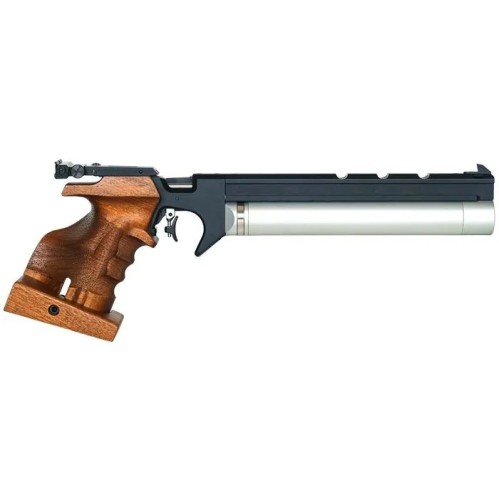
The Snowpeak PP20, a versatile pre-charged pneumatic air pistol designed for accuracy and reliability. Engineered for both target shooting and small game hunting, the PP20 offers a perfect balance of power and precision. Featuring an adjustable two-stage trigger and a smooth side-lever action, the PP20 ensures effortless and consistent shots. Its integrated regulator provides stable power output, enhancing shot-to-shot accuracy.
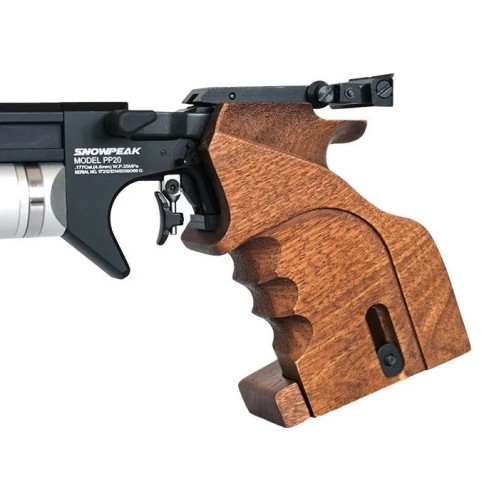
The pistol’s ergonomic grip, crafted for comfort and control, supports extended shooting sessions with ease. The Snowpeak PP20 comes equipped with an 11mm dovetail rail, allowing seamless mounting of optics for improved targeting. With its high shot count and impressive build quality, this air pistol is the ideal choice for shooters seeking performance without compromise.
The Specs:
| Calibre | .177 |
| Power | <8 Joules |
| Fill Pressure | 200 Bar |
| Shots Per Fill | 25-30 shots |
| Shot Capacity | Single Shot only |
| Trigger | Fully adjustable match trigger (200 -500g pull weight) |
| Safety | Side Safety |
| Barrel length | 24cm |
| Length | 42.5cm |
| Weight | 1.1kg |
Snowpeak PP20 Match PCP Air Pistol – Regulated 10-Metre Precision, Adjustable Control and Competition-Style Handling
Snowpeak PP20 PCP Air Pistol Overview
Purpose-Built Match Pistol for Precision Training
The snow peak pp20, also widely listed as the snowpeak pp20, is an entry-level match pistol developed for precision-focused target shooting. Unlike a general-purpose recreational handgun, it uses competition-style ergonomics, a regulated pneumatic system and a highly adjustable trigger to help the shooter build a consistent stance, grip and release.
Official specifications list the pistol in 4.5 mm calibre with a maximum stated velocity of 560 feet per second. It uses a 240 mm barrel, measures approximately 420 mm overall and weighs about 1.1 kg. Snowpeak also identifies a beechwood match grip and adjustable trigger pull ranging from 0.1 to 2 lbf.
Its single-shot arrangement encourages a deliberate firing rhythm. Therefore, the shooter can concentrate on sight alignment, breathing, trigger pressure and follow-through instead of rapid magazine cycling.
What Is a PCP Airgun?
Anyone asking what is a pcp airgun should know that PCP means pre-charged pneumatic. Compressed air is stored inside the pistol’s removable or integrated cylinder before shooting begins. When the trigger releases the valve, a measured quantity of air propels the pellet through the barrel.
This operating system allows a pcp pellet rifle or pistol to fire without the heavy spring movement found in conventional spring-powered equipment. Consequently, recoil remains minimal, which supports stable sight alignment and repeatable target performance.
The PP20 is regulated, so the firing valve receives more consistent operating pressure as the cylinder gradually empties. This pressure control helps maintain predictable velocity from shot to shot.
Snowpeak Air Pistol and Match-Grip Design
As a dedicated Snowpeak Air Pistol, PCP Pistol and Airgun Pistol, the PP20 prioritises precision rather than maximum energy. Its anatomical beechwood grip supports the hand and promotes consistent wrist positioning. Some retailers offer an adjustable grip arrangement designed to accommodate different hand sizes, while right-handed configurations are commonly listed.
The adjustable rear sight and removable front sight create a clear competition-style sight picture. Therefore, the shooter can refine horizontal and vertical alignment for controlled 10-metre practice. The PP20 is better described as a target pistol than a High power PCP air pistol, because its main purpose is accuracy, control and economical air consumption.
Snowpeak Airguns and Snowpeak Sports Background
The snowpeak airguns range includes target pistols, sporting carbines, tactical rifles and compact bullpups. Buyers searching snowpeak sports, snowpeaks, snow peak equipment, snow peak customer service or snow peak brand origin should use the airgun manufacturer’s official information or contact an authorised distributor.
Exact power, grip orientation, filling accessories and warranty coverage can vary between markets. For example, the standard PP20 is officially listed at 560 fps, while a low-power regional version is listed at 80 metres per second.
Snowpeak PP750 and PP750L PCP Air Pistol Comparison
The snowpeak pp750, pp750, snow peak pp750, Snowpeak PP750L and Snowpeak PP750L PCP Air Pistol belong to a different pistol-carbine category. Those models are designed around portability, shoulder-stock adaptability and multi-shot recreational use.
Customers searching Snowpeak PP750L PCP Air Pistol for sale may prefer the PP750L when they need a compact carbine-style setup. However, the PP20 offers a more specialised match grip, adjustable competition sights and a trigger system intended for precision target training.
The PP750L may reasonably be marketed as a High power PCP air pistol in some legal markets, whereas the PP20 focuses on controlled 10-metre performance.
Pistolet PCP Arcea-Snowpeak Onix Sport
The phrase pistolet pcp arcea-snowpeak onix sport reflects regional branding used by European distributors. The PP20 is also sold under Snowpeak, Artemis and Arcea-related naming in different countries.
Buyers should confirm the underlying model number instead of relying solely on a local product title. Current European listings identify the PP20 as a 4.5 mm pistol with approximately 7.5 joules, a 42 cc reservoir, adjustable sights and an ergonomic wooden grip.
Snowpeak P35, P35X and PCP P35 Platforms
The snowpeak p35, p35, snowpeak p35x, p35x, p35x pcp and pcp p 35 are shoulder-fired bullpup rifles rather than match pistols.
A snowpeak p35 vs p35x comparison usually examines reservoir size, external adjustment, stock design and field handling. Neither model provides the same one-handed competition ergonomics as the PP20.
Snowpeak AP900 and AP900B PCP Air Rifle
The snowpeak ap900 and ap900b pcp air rifle belong to a compact tactical-rifle family. Their shoulder stocks, larger reservoirs, optics rails and multi-shot magazines support a different type of sporting use.
The PP20 is lighter, simpler and better aligned with formal target practice. Therefore, it should not be evaluated through rifle-focused factors such as tactical rail space or large-bottle shot capacity.
PR900 Gen 3 and Conventional Rifle Alternatives
The pr900 gen 3 offers a lightweight sporting-rifle layout with shoulder support and multi-shot capability. It suits users who want traditional rifle handling rather than one-handed match-pistol technique.
The PP20 instead rewards careful wrist alignment, grip consistency and controlled trigger movement. Its low recoil and adjustable sights make it particularly suitable for developing precision fundamentals.
Snowpeak M25, M50 and M60 Comparisons
The snowpeak m25, m25 rifle, m25 weapon and m50 rifle refer to separate shoulder-fired platforms. Although “weapon” appears in online searches, these products should be presented and used as regulated sporting equipment under applicable law.
The snowpeak m60 and snowpeak m60b are larger multi-calibre rifles with substantially different reservoirs, magazines and stocks. The search question how much did the m60 weigh may also return results about an unrelated military firearm, so the complete airgun model name should always be used.
Snowpeak Max and Snowpeak Max 1 Price
The snowpeak max and snowpeak max 1 price searches relate to larger high-output platforms. These models prioritise energy, air capacity and rifle-based performance.
The PP20 serves a different buyer. It is intended for controlled target accuracy, adjustable ergonomics and economical shooting rather than maximum output.
HP300 and Filling Equipment
The hp300 name is associated with high-pressure filling equipment in the wider product ecosystem. The PP20 should be filled only with clean, dry compressed air through the correct adapter.
One retailer lists a maximum cylinder pressure of 200 bar and notes that the pistol includes a Foster-style filling connection, while package contents may include adapters, seals and a case.
The exact filling procedure should be confirmed before charging because incorrect adapter installation may cause immediate pressure loss.
Pellet 9mm and Correct Ammunition
The phrase pellet 9mm does not apply to this pistol. The PP20 is chambered in 4.5 mm, also known as .177 calibre.
Match-style flat-head pellets are commonly selected for paper targets because they create clean, measurable holes. However, the shooter should test several reputable options to identify the weight and head diameter that provide the most consistent groups.
T Rex 6000 and Unrelated Searches
The phrase t rex 6000 may identify unrelated machinery, filling equipment or a mistaken model search. It should not be treated as an alternate PP20 name.
Likewise, snowfall gun appears to be an unrelated search phrase rather than an official Snowpeak product designation.
Air Gun Accessories
Useful air gun accessories for the PP20 include approved .177 pellets, a compatible filling adapter, target cards, eye protection, replacement seals and a protective case.
The pistol already includes adjustable metallic sights, so a scope is generally unnecessary for traditional 10-metre training. Accessories should support consistency without changing the balanced match-pistol character.
Why Choose the Snowpeak PP20?
The main reasons to choose the PP20 are its regulated air delivery, fully adjustable match trigger, anatomical beechwood grip, adjustable sights and low-recoil firing cycle. It offers an accessible route into precision pistol shooting without requiring a premium competition-level budget.
It should be used at an authorised indoor or outdoor target range with a suitable pellet trap and safe backstop. With properly selected ammunition, careful grip adjustment, correct filling equipment and disciplined trigger control, the Snowpeak PP20 can provide dependable precision and strong value for developing and experienced target shooters.
Design, Accuracy, Handling and Practical Ownership
Match-Oriented Ergonomics
The pistol is shaped around deliberate target shooting rather than casual rapid fire. Its wooden grip fills the hand and supports the palm, helping the shooter maintain a repeatable wrist angle. This matters because even a small change in grip pressure can move the sights and widen a group.
The grip should feel secure without forcing the fingers into an unnatural position. During setup, the shooter should test finger placement, palm support and trigger reach. A properly fitted grip allows the trigger finger to move independently while the remaining fingers hold the pistol with consistent pressure.
Because hand sizes vary, minor adjustment may be needed before the pistol feels completely natural.
Single-Shot Loading System
The single-shot design encourages a controlled shooting rhythm. Each pellet is loaded individually, which gives the shooter time to inspect the ammunition and prepare mentally before every shot.
This slower process suits formal training because it discourages rushed firing. The shooter can focus on stance, breathing, sight alignment and trigger release without becoming distracted by rapid magazine cycling.
Before loading, inspect the pellet for a bent skirt, damaged head or visible contamination. A damaged pellet may enter the barrel unevenly and produce an unpredictable point of impact.
The loading area should remain clean, and the pellet should be inserted gently without excessive force.
Regulated Air Delivery
The internal pressure-control system helps provide a consistent quantity of air for each shot. Stable air delivery supports predictable velocity and reduces vertical movement on the target.
This becomes particularly valuable during precision practice, where small variations can affect group size. However, pressure regulation cannot compensate for poor grip technique, damaged pellets or incorrect sight alignment.
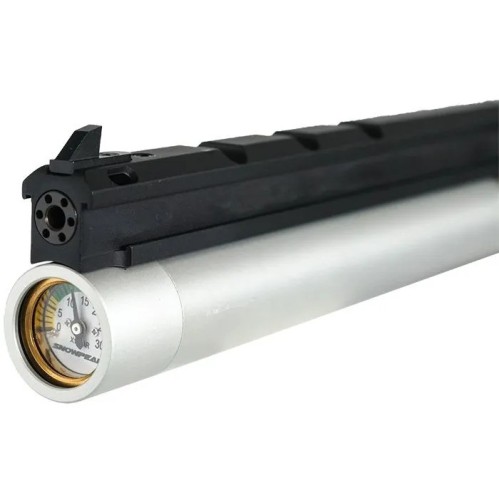
The shooter should still monitor reservoir pressure and avoid continuing after performance begins to change. A written shot-count record can help identify the most consistent operating range.
Reservoir Filling
The air cylinder must be filled only with clean, dry compressed air using compatible equipment. A suitable manual pump, certified cylinder or purpose-built compressor may be used when fitted with the correct connector.
Before filling, inspect the hose, seals and charging connection. Dust, moisture and oil should never enter the pressure system.
Air should be introduced slowly while the gauge is monitored. Rapid filling creates heat, which can produce a temporary pressure reading that changes as the cylinder cools.
The maximum approved pressure must not be exceeded. After filling, the line should be depressurised before the connector is removed.
Adjustable Trigger System
A refined trigger is one of the most important features of a precision target pistol. The trigger should allow the shooter to apply pressure gradually without disturbing the sight picture.
The finger should contact the trigger at the same point during every shot. Pressure must travel straight toward the rear rather than sideways.
The shooting hand should remain stable while the trigger finger moves independently. Tightening the entire hand during release can push the sights away from the centre.
Any adjustment should remain within the manufacturer’s approved limits. An excessively light setting may become unsafe and should be avoided.
Sight Alignment
The front and rear sights create a simple and precise aiming system. The shooter should centre the front sight inside the rear notch while keeping the top surfaces level.
The target may appear slightly blurred while the front sight remains clear. This is normal because the eye cannot focus sharply on the sights and target at the same time.
Consistent alignment is more important than attempting to hold the sights perfectly still. The shooter should accept a small amount of natural movement and release the shot smoothly within the stable aiming area.
Adjusting the Sights
Sight adjustments should be made only after several carefully fired shots. One poor impact may result from shooter error rather than an incorrect sight setting.
Fire a small group and identify its average position. Then make a measured correction to elevation or horizontal alignment.
After adjustment, fire another group before making further changes. This method prevents unnecessary movement of the sights.
The final setting should be recorded, particularly when different pellet types are tested.
Standing Position
Precision pistol shooting is commonly performed from a standing position. The feet should remain comfortably apart, with body weight distributed evenly.
The shooting arm should extend naturally without locking the shoulder excessively. The non-shooting hand may rest in a consistent position according to the chosen discipline.
The head should remain upright, and the pistol should rise toward the line of sight rather than forcing the head downward.
A balanced stance reduces fatigue and allows the sights to settle more predictably.
Breathing Control
Breathing causes natural movement in the upper body. The shooter should inhale normally, exhale comfortably and begin final trigger pressure during a brief natural pause.
The breath should not be held for too long. Extended breath-holding creates tension, visual disturbance and shaking.
When the shot cannot be completed comfortably, lower the pistol, breathe normally and begin again.
A calm breathing cycle supports better concentration and more consistent sight alignment.
Follow-Through
The shooter should maintain the firing position briefly after the trigger releases. The wrist, arm, grip and sight alignment should remain unchanged.
Moving immediately after the shot may disturb the pistol before the pellet has completely left the barrel.
Follow-through also helps the shooter observe sight movement and identify errors. If the front sight moves sharply during release, grip pressure or trigger technique may require improvement.
Pellet Selection
Flat-head target pellets are commonly used because they cut clean holes in paper. However, different brands and weights may produce different results.
Several reputable options should be tested under the same conditions. The best choice should load smoothly and produce repeated tight groups.
Pellets should be stored in a rigid container and protected from dirt, moisture and crushing.
Maximum speed is not the primary goal. Consistency and clean target performance matter more.
Routine Maintenance
After shooting, confirm that the pistol is unloaded and remove the air source only when the approved procedure requires it.
Wipe the exterior with a clean cloth to remove moisture, fingerprints and dust. The wooden grip should be protected from prolonged dampness and harsh chemicals.
The barrel does not require cleaning after every session. Cleaning becomes appropriate when accuracy declines or contamination is suspected.
A soft pull-through system is generally safer than a rigid rod.
Storage and Transportation
The pistol should be stored unloaded inside a locked case or secure cabinet. Pellets, charging equipment and access keys should be controlled responsibly.
During transportation, use a padded case that protects the sights, grip, barrel and pressure components.
The case should remain out of public view and must not be left unattended inside a hot vehicle.
Overall Practical Assessment
This pistol provides an accessible route into disciplined target shooting. Its regulated action, adjustable trigger, anatomical grip and precision sights support careful technical development.
The best results come from consistent stance, controlled breathing, suitable pellets and deliberate trigger movement.
With correct filling, secure storage and regular inspection, it can deliver reliable performance for lawful training, club practice and recreational precision shooting.
Advanced Technique, Troubleshooting, Safety and Long-Term Reliability
Building a Repeatable Match Routine
Consistent target performance depends on following the same preparation sequence before every shot. Begin by checking the air pressure, loading area, sights, grip position and target lane. Confirm that the pistol remains pointed toward the backstop and that the trigger finger stays outside the guard until the aiming process begins.
Once the shooter raises the pistol, the stance, arm position, grip pressure and head alignment should remain consistent. A repeatable sequence reduces mental distractions and makes technical errors easier to identify. Rather than rushing, the shooter should complete each step deliberately and restart the process whenever concentration is lost.
Developing a Stable One-Handed Stance
A one-handed stance requires balance rather than muscular force. The feet should remain comfortably apart, with body weight distributed evenly. The torso may turn slightly away from the target so that the shooting arm extends naturally.
The shoulder should remain low and relaxed. Excessive tension in the neck, wrist or upper arm can increase sight movement and cause fatigue.
The shooting elbow should be firm without becoming painfully locked. Meanwhile, the head should stay upright so the eyes can align naturally with the sights.
A stable position should feel repeatable, comfortable and sustainable across a complete practice session.
Establishing Consistent Grip Pressure
The grip should be firm enough to control the pistol but not so tight that the hand begins to shake. The middle, ring and little fingers should apply steady pressure while the trigger finger moves independently.
The thumb should rest naturally without pushing sideways. Uneven thumb pressure may disturb horizontal alignment.
Palm support should contact the hand consistently, but it must not create discomfort or restrict circulation. If the grip feels too large or too small, adjustments should be made before serious accuracy testing begins.
Once a suitable grip is found, it should not be changed between shots.
Controlling the Trigger Finger
The trigger finger should contact the blade near the centre of the fingertip pad. This position usually supports a straight rearward movement.
If too little finger is used, pressure may pull the pistol sideways. If too much finger is placed around the trigger, the opposite movement may occur.
Final pressure should increase smoothly while the sights remain aligned. The shooter should not attempt to predict the exact release point.
After the shot, the trigger should remain pressed briefly before it is allowed to reset. This habit supports better follow-through and reduces sudden finger movement.
Improving Sight Focus
The front sight should remain the primary visual focus. The target may appear slightly blurred, while the rear sight should remain visible enough to confirm equal spacing.
Trying to focus sharply on the target often causes the sights to become unclear. As a result, alignment errors may go unnoticed.
The shooter should accept natural movement within the aiming area. Attempting to freeze the sights completely usually creates tension.
A smooth trigger release during controlled movement produces better results than waiting too long for a perfect sight picture.
Managing Breathing During the Shot
Normal breathing creates movement in the shoulders, chest and shooting arm. Therefore, the shooter should raise the pistol while breathing naturally, exhale comfortably and begin final trigger pressure during a short pause.
The pause must remain relaxed. Holding the breath too long reduces oxygen, increases visual disturbance and creates shaking.
If the shot cannot be released comfortably, the pistol should be lowered. The shooter can then breathe normally and restart the sequence.
Forcing a shot after the ideal timing has passed often produces a poor result.
Strengthening Follow-Through
Follow-through means maintaining the complete firing position after the pellet leaves the barrel. The wrist, elbow, shoulder and head should remain stable for a brief moment.
The shooter should continue looking through the sights instead of lowering the pistol immediately.
This technique helps reveal what occurred during release. A sudden sight movement may indicate poor trigger control, changing grip pressure or anticipation.
Good follow-through also prevents the shooter from reacting too early to the sound or expected impact.
Recognising Trigger Anticipation
Anticipation occurs when the shooter reacts before the shot releases. Common signs include tightening the grip, pushing the pistol forward, closing the eyes or lowering the muzzle.
The best correction is to apply steady trigger pressure without trying to control the exact instant of discharge.
Short practice sessions help reduce anticipation because fatigue often makes the problem worse.
When several poor shots occur in a row, the shooter should stop, rest and rebuild the routine rather than continuing with deteriorating technique.
Tracking Accuracy Progress
A shooting journal can help measure improvement. Record the date, target distance, pellet type, pressure level, group size and technical observations.
The shooter may also note whether the session focused on stance, grip, sights or trigger control.
Over time, the journal can reveal patterns. For example, groups may widen after a certain number of shots because of fatigue, changing pressure or loss of concentration.
Objective records provide more value than relying only on memory.
Diagnosing Vertical Groups
Vertical spread may result from inconsistent breathing, changing wrist angle, uneven sight height or pressure variation.
The shooter should first confirm that the front and rear sights remain level. Then check whether the pistol is being raised to the same position for every shot.
Trigger timing may also contribute. Shots released too early or too late in the breathing pause can move vertically.
If technique appears consistent, pressure level and ammunition should be examined.
Diagnosing Horizontal Groups
Horizontal spread often comes from sideways trigger pressure, changing thumb tension or inconsistent grip placement.
The trigger finger should move directly toward the rear without pulling across the blade.
The thumb should remain relaxed, and the palm should contact the grip in the same position every time.
Natural body alignment should also be checked. If the shooting arm must be forced sideways to reach the target, the feet should be repositioned.
Responding to a Weak Shot
A weak discharge may indicate low pressure, damaged ammunition or an obstruction.
The shooter should stop immediately and inspect the pressure gauge. The barrel must be confirmed clear before another pellet is loaded.
Another shot should never be used to remove a suspected blockage.
If weak performance continues despite correct pressure and undamaged pellets, professional inspection is appropriate.
Detecting Pressure Loss
Pressure should remain reasonably stable during storage when temperature conditions remain similar.
A gradual drop may indicate a damaged seal, filling connection issue or internal valve problem.
The owner should record the gauge reading and check it again later under comparable conditions.
Pressurised components must not be dismantled casually. Internal repair should be performed by a technician familiar with high-pressure pneumatic systems.
Maintaining the Sights
The front and rear sights should be inspected for looseness, dirt and impact damage.
Adjustment screws should move predictably without excessive play. Once a reliable setting is established, it should be recorded.
The sights should be protected during transportation because even a minor impact may shift alignment.
Before an important session, a confirmation group should be fired to verify that the zero has not changed.
Cleaning the Barrel Carefully
The barrel does not require cleaning after every practice session. Excessive cleaning may cause unnecessary wear or damage.
Cleaning becomes appropriate when accuracy declines or contamination enters the bore.
A soft pull-through system is generally preferable to a rigid rod. The muzzle and internal surfaces must be protected from scratches.
After cleaning, several shots may be needed before the barrel returns to its normal performance.
Protecting the Wooden Grip
The grip should be wiped after use to remove moisture and skin oils.
Strong chemicals and excessive water should be avoided because they may damage the finish or cause the wood to swell.
The pistol should not be stored in a damp case. Both the grip and case must be completely dry before long-term storage.
Small surface marks should be treated carefully with products appropriate for finished wood.
Safe Storage and Transportation
The pistol should be stored unloaded in a locked case or secure cabinet. Ammunition, charging equipment and access keys should remain controlled.
During transportation, the sights, barrel, grip and pressure cylinder require padded protection.
The case should remain out of public view and should never be left inside a hot vehicle.
Applicable ownership and transport rules must always be followed.
Long-Term Ownership Assessment
Long-term reliability depends on clean compressed air, suitable pellets, careful filling and consistent maintenance.
Original documentation, spare seals, filling adapters and service records should be retained.
Unapproved internal modifications may reduce accuracy, create safety problems and invalidate warranty protection Snowpeak PP750L PCP Air Pistol for sale.
Be the first to review “Snowpeak PP20”
Related products
Snowpeak Airguns
Snowpeak Airguns
Snowpeak Airguns

Snowpeak Airguns
Snowpeak Airguns

Snowpeak Airguns
Air Gun Pistol


Snowpeak Airguns
Reviews
There are no reviews yet.