


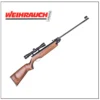
Weihrauch HW97KT Air Rifle – Fixed-Barrel Underlever Precision, Thumbhole Stock and Rekord Trigger
Weihrauch HW97KT Overview, Fixed-Barrel Engineering, Underlever Action, Thumbhole Stock, Rekord Trigger, Accuracy, Calibres and Practical Performance
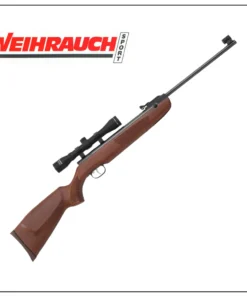
The Weihrauch HW97KT is a premium spring-piston underlever rifle designed for shooters who value fixed-barrel stability, substantial handling, refined trigger control and a distinctive thumbhole stock. It belongs to the same mechanical family as the HW97K, yet the KT version adds a dedicated thumbhole stock and an adjustable buttplate that can be moved vertically and laterally for improved fit. Current Weihrauch specifications list the rifle at approximately 4.30 kg, 1,030 mm overall length, with a 300 mm fixed barrel, single-shot loading, spring-piston power and a two-stage Rekord match trigger.
German Air Rifle Engineering
For buyers searching for a premium german air rifle, the HW97KT represents one of the more precision-focused mechanical designs in the current weihrauch range.
It uses a fixed barrel and separate underlever rather than a pivoting barrel.
As a result, the barrel stays permanently aligned with the receiver and optic system.
Fixed-Barrel Underlever Action
The HW97KT is not a break barrel pellet gun.
Instead, a lever located beneath the barrel is pulled downward to cock the internal spring-and-piston mechanism.
A single pellet is then loaded directly before the lever is returned to its normal position.
Why the Fixed Barrel Matters
The fixed barrel provides a stable mechanical relationship between the bore and optic rail.
Because the barrel does not pivot during every loading cycle, the sighting system remains aligned to the same receiver and barrel assembly.
For shooters researching accurate air rifles, this is one of the model’s most important design advantages.
300 mm Barrel
Current manufacturer data lists a 300 mm barrel.
The relatively short barrel keeps the overall length manageable while the substantial action and stock maintain a stable feel.
1,030 mm Overall Length
The rifle measures approximately 1,030 mm overall.
That gives it a full-size sporting profile without becoming excessively long.
4.30 kg Weight
Weihrauch currently lists weight at approximately 4.30 kg.
This makes the rifle heavier than many traditional sporting designs, but the mass contributes to stability during supported shooting.
Thumbhole Stock
The defining feature of the KT model is its thumbhole stock.
The opening around the grip creates a more enclosed hand position and can help the shooter establish a repeatable wrist angle.
This is especially useful during slow, deliberate precision shooting.
Adjustable Buttplate
The buttplate can be adjusted vertically and laterally.
Weihrauch specifically lists this as a defining feature of the KT stock.
That adjustment allows the rifle to be fitted more closely to the shooter’s shoulder position.
Stippled Grip and Fore-End
The pistol grip and fore-end include stippling.
This gives the hands a secure contact surface without requiring excessive grip pressure.
Ambidextrous Stock
The stock is suitable for both right- and left-handed shooters.
This makes the rifle useful for a wider range of owners and shared shooting environments.
High Comb
The stock uses a high comb designed specifically for scope-based shooting.
Because the rifle is supplied without traditional open sights, a scope is central to its intended setup.
Scope-Oriented Configuration
Weihrauch lists the HW97KT without conventional sights and describes the stock as being designed for optic use.
A suitable spring-rated scope should therefore be considered part of a complete shooting setup.
Rekord Two-Stage Trigger
The rifle uses the company’s established two-stage Rekord match trigger.
The first stage allows the shooter to prepare the shot while the second stage provides the final release.
A predictable trigger is especially important on a spring-powered precision rifle.
Automatic Safety
Independent factory-hosted test material identifies the platform as using an automatic safety.
The safety provides an additional safeguard during the loading and cocking cycle.
Correct muzzle control remains essential at all times.
Anti-Beartrap System
Factory-hosted test literature also notes an anti-beartrap mechanism.
This system is designed to reduce the risk of the action closing unintentionally during loading.
The underlever should still be handled carefully and controlled during the loading process.
Smooth Cocking Action
Weihrauch describes the platform as having an easy and smooth cocking cycle.
The underlever provides mechanical leverage while keeping the barrel itself stationary.
Single-Shot Operation
One pellet is loaded for each shot.
This encourages a deliberate shooting rhythm.
The simple loading system also reduces the number of feeding components involved.
Spring-Piston Power
The rifle uses a conventional spring-and-piston mechanism.
Unlike compressed air rifles, it does not require a pump, bottle or compressor.
This makes it fully self-contained during normal use.
.177 Calibre
Current manufacturer specifications list .177 with a reference velocity of up to approximately 280 m/s, depending on configuration and pellet.
Shooters searching cal .177 pellets, 177 caliber, or 177 air rifle often choose this calibre for target work because of its relatively flat trajectory.
.20 Calibre
The rifle is also listed in .20 calibre, with a reference velocity around 215 m/s.
Availability can vary by market.
.22 Air Rifle Version
The .22 air rifle version is listed at up to approximately 205 m/s.
The heavier projectile gives a different trajectory and shooting feel.
.25 Calibre
A .25 version is also listed, with a reference velocity around 165 m/s.
Again, local availability and legal restrictions should always be checked.
.177 Pellet vs .22 Pellet
The common comparison 177 pellet vs.22 pellet depends on intended use.
The smaller calibre usually provides a flatter trajectory, while the larger calibre carries more projectile mass.
For controlled recreational shooting, both can be precise when matched with suitable ammunition.
Weihrauch HW97K
The weihrauch hw97k, hw97, hw 97k, and hw97k use the same broad fixed-barrel underlever architecture.
The main distinction is stock configuration.
The KT model adds a thumbhole stock and adjustable buttplate.
Weihrauch HW90
The Weihrauch HW90 uses a different power system.
A Weihrauch HW90 air rifle, HW90 gas ram air rifle, or Weihrauch gas ram rifle uses gas-ram technology instead of a conventional coil spring.
Weihrauch HW95
The weihrauch hw 95 and hw95 are break-barrel sporting rifles.
They are lighter and use the barrel itself for cocking.
The HW97KT instead emphasizes fixed-barrel stability.
Weihrauch HW100
The weihrauch hw100, hw100 airgun, and hw 100 bullpup belong to the PCP category.
Those systems rely on high-pressure compressed air.
The HW97KT remains entirely mechanical.
Weihrauch HW50
Searches for hw50, weihrauch hw50, weihrauch hw50s, hw50 s, hw50s, and hw 50 relate to lighter spring-powered sporting rifles.
The KT model is considerably heavier and more precision-oriented.
Weihrauch HW30
The hw 30, weihrauch hw30, and weihrauch hw30s sit toward the lighter end of the range.
They may suit shooters who prioritize easy handling, whereas the KT model prioritizes stability.
HW35 Air Rifle
The hw35 air rifle, hw35, and searches for hw35e for sale refer to traditional break-barrel rifles.
They differ from the fixed-barrel underlever system used here.
Weihrauch HW80
The weihrauch hw80 is another full-size spring-powered break-barrel design.
The HW97KT offers a different shooting experience through its fixed barrel and underlever.
Weihrauch HW45, HW44 and HW75
The weihrauch hw45, weihrauch hw44, and hw75 are pistol-format products.
Someone searching air pistols, air pisto, or asking what are air pistols should distinguish them from a full-size shoulder-fired rifle.
Weihrauch Revolvers
Searches for weihrauch revolvers relate to another product category and do not describe any feature of the HW97KT.
Weihrauch Pellet Gun
The broad phrase Weihrauch pellet gun can describe many products.
The HW97KT specifically belongs to the premium single-shot underlever spring-piston category.
Weihrauch Brand Searches
Search variants such as weihrauch, weirauch, and weihrauch englisch commonly lead buyers toward the German manufacturer’s product range.
The KT configuration is one of the brand’s more distinctive fixed-barrel designs.
Weihrauch HW95 HW100 Airgun Air Pistols
The broad phrase weihrauch hw95 hw100 airgun air pistols covers several very different operating systems.
The HW97KT occupies a specific position as a heavy mechanical precision rifle.
Air Rifle Makes
Among established air rifle makes, Weihrauch is well known for traditional spring-powered engineering, robust construction and refined triggers.
The KT model combines all three.
Air Rifles, Pellet Guns and Airguns
Broad phrases such as air rifles, air rifle, air gun, airguns, airgins, pellet guns, and air riflery cover many operating systems.
This model specifically belongs to the spring-powered underlever category.
Rifles de Aire
The phrase rifles de aire simply refers to air rifles.
The KT model is a German-made precision example designed around deliberate mechanical shooting.
SK X Rifles and Air Shot Gun
Searches such as sk x rifles and air shot gun describe different categories and should not be confused with this model.
Air Arms Comparison
Buyers researching air arms, air arm, air arms s510, air arms s410, air arms tx200, or the Air Arms S510 XS Ultimate Sporter FAC may also consider this platform.
The TX200 is the closest mechanical comparison because it also uses a fixed-barrel spring-powered underlever system.
The S410 and S510 use PCP technology.
Air Arms S510 Ultimate Sporter .177 Sub 12
The phrase air arms s510 ultimate sporter .177 sub 12 describes a compressed-air platform.
That type of rifle requires external charging equipment.
The KT model does not.
What Is an Air Rifle?
For anyone asking what is an air rifle, this model is a clear mechanical example.
Stored spring energy drives a piston, which compresses air behind the pellet and propels it through the barrel.
How Do Air Guns Work?
People searching how do air guns work will encounter spring-piston, gas-ram, PCP and CO₂ systems.
This rifle uses a spring-and-piston powerplant cocked with an underlever.
Compressed Air Rifles
Unlike PCP compressed air rifles, this model does not store high-pressure air between shots.
The power is created mechanically during cocking.
Target Air Rifle Shooting
Weihrauch specifically positions the platform for field-target and silhouette-style shooting.
That makes it especially suitable for lawful target air rifle shooting where stability and deliberate precision matter.
Airgun Shooting Range Near Me
Anyone searching airgun shooting range near me can use a controlled facility for safe practice.
A suitable pellet-rated backstop remains essential.
Air Rifle Cleaning Kit
An Air rifle cleaning kit can be useful for occasional maintenance.
However, frequent aggressive bore cleaning is unnecessary.
Routine protection of external metalwork is usually more important.
Why Choose the HW97KT?
The strongest reasons are its fixed barrel, thumbhole stock, adjustable buttplate, smooth underlever action, Rekord trigger, substantial weight and self-contained spring-piston mechanism.
It is designed for shooters who value control and precision over minimum weight.
How Good Is the Precision?
Factory-hosted test material describes the model as one of the strongest production fixed-barrel mechanical rifles in its class and notes its proven use in HFT competition.
Actual group size still depends on pellet selection, optic setup, environmental conditions and shooter technique.
Where It Performs Best
The rifle is especially well suited to controlled target ranges and other lawful precision-shooting environments with a secure backstop.
Its weight and stock geometry make it particularly stable from supported positions.
When the HW97KT Makes Sense
Choose this model when fixed-barrel consistency, adjustable stock fit and mechanical independence matter more than light weight or multi-shot convenience.
It is particularly rewarding for shooters who enjoy mastering spring-powered technique.
Why the Thumbhole Stock Matters
The thumbhole design changes wrist position and hand placement.
For many shooters, this creates a more stable and repeatable grip.
That can improve trigger control during slow precision shooting.
Why the Adjustable Buttplate Matters
The ability to move the buttplate vertically and laterally allows the stock to fit the shoulder more closely.
That can improve comfort and consistency.
Why the Weight Matters
At approximately 4.30 kg before adding an optic, the rifle is substantial.
That mass can be an advantage when shooting from a bench, seated position or other supported stance because it helps create a planted feel.
Important Current Specifications
Current Weihrauch information lists approximately 4.30 kg weight, 1,030 mm overall length, 300 mm barrel length, single-shot operation, spring-piston power, two-stage Rekord match trigger, ambidextrous thumbhole stock, vertically and laterally adjustable buttplate and calibre choices of .177, .20, .22 and .25, depending on market.
For shooters seeking a substantial fixed-barrel rifle with refined ergonomics, precise trigger control and classic mechanical independence, the HW97KT remains a distinctive choice within the premium spring-powered category.
Handling, Shooting Cycle, Trigger Control, Accuracy Development, Ergonomics, Maintenance, Storage, and Practical Ownership
This fixed-barrel spring-powered rifle is designed for deliberate shooting, stable handling, and repeatable technique. Its substantial build, underlever operation, adjustable stock geometry, and refined trigger create a platform that rewards consistency rather than speed. Because the rifle is fully mechanical, it can be used without pumps, bottles, compressors, batteries, or external charging equipment, which keeps everyday ownership straightforward.
Overall Handling
The rifle has a solid and planted feel.
Its weight helps reduce unwanted movement from supported positions.
However, that same mass can become tiring during long unsupported sessions, so stance and session length should be managed carefully.
Balance
The action and stock create a stable balance point.
This helps the rifle settle naturally on target.
A consistent support position improves repeatability from shot to shot.
Shoulder Position
The butt should sit naturally against the shoulder.
Excessive pressure is unnecessary.
A consistent shoulder position helps the rifle react in the same way each time.
Adjustable Rear Fit
The rear of the stock allows the shooter to refine shoulder placement.
Small changes in position can improve comfort and head alignment.
A well-fitted rear section also helps maintain consistent body posture.
Thumbhole Grip
The thumbhole layout encourages a controlled wrist position.
The firing hand should remain relaxed.
Over-gripping can disturb the rifle during the firing cycle.
Support Hand Position
The support hand should remain in a consistent location.
Moving it too far forward or backward changes the way the rifle balances and reacts.
Once a comfortable point is found, it should be repeated.
Cheek Position
The head should return naturally to the same position behind the optic.
A stable cheek weld helps preserve sight alignment.
This becomes increasingly important on smaller targets.
Underlever Operation
The cocking lever should move smoothly through its full range.
The motion should feel controlled and even.
Grinding, scraping, or unusual resistance should be investigated.
Loading Cycle
The loading area becomes accessible after the action is cocked.
A single pellet is inserted carefully.
The lever should then be returned in a controlled manner.
Pellet Seating
The pellet should sit cleanly in the loading area.
Excessive force should not be required.
Damaged or deformed pellets should be discarded.
Single-Shot Rhythm
Loading one pellet at a time encourages a deliberate pace.
This gives the shooter time to reset breathing and body position.
It also helps prevent rushed shots.
Mechanical Firing Cycle
The internal spring and piston move during firing.
This creates a distinct mechanical impulse.
The shooter should allow the rifle to complete its movement naturally.
Follow-Through
Follow-through is especially important.
The shooter should maintain aim briefly after the shot releases.
Lowering or twisting the rifle too early can reduce consistency.
Trigger Control
The two-stage trigger allows careful shot preparation.
The first stage takes up initial movement.
The second stage provides the final release.
First Stage
The first stage should be taken up smoothly.
It should not be rushed.
A controlled movement helps preserve sight alignment.
Second Stage
Pressure should increase gradually until the shot breaks.
The trigger should not be jerked.
A clean release generally produces better groups.
Safety Function
The safety should be checked during every shooting session.
It should operate consistently.
Safe muzzle direction remains essential even when the safety is engaged.
Recoil Characteristics
The firing cycle produces both forward and rearward movement.
This is normal for a spring-powered action.
The shooter should work with that movement rather than trying to eliminate it completely.
Relaxed Hold
A relaxed hold usually gives the best consistency.
The rifle should not be clamped tightly against the body.
Natural movement is part of the design.
Accuracy Potential
The platform is capable of excellent practical precision.
However, ammunition quality, hold technique, trigger control, optic setup, and mechanical condition all contribute.
Accuracy depends on the entire system.
Group Testing
Several groups should be compared before judging performance.
One unusually tight group may not represent normal results.
Repeated consistency provides better information.
Bench Shooting
A bench is useful for ammunition testing and zero confirmation.
Soft support is preferable to rigid clamping.
The rifle should still be allowed to react naturally.
Standing Position
Standing is more demanding because of the rifle’s weight.
Shorter sessions are often more productive.
The shooter should focus on balance rather than trying to eliminate all movement.
Kneeling Position
Kneeling provides additional support.
The body should form a comfortable structure.
Unnecessary muscular tension should be avoided.
Seated Position
A seated position can be highly stable.
It is useful for longer recreational sessions.
The rifle should rest naturally rather than being forced into alignment.
Optic Position
The scope should sit at a comfortable height.
Eye relief should allow a natural head position.
The shooter should not need to stretch forward or lift the head excessively.
Mount Security
Mounting screws should remain secure.
Mechanical movement can loosen poorly fitted hardware.
A sudden shift in impact should prompt a hardware check.
Optic Suitability
The optic should be appropriate for a spring-powered firing cycle.
Some scopes are not designed for repeated movement in both directions.
Suitable equipment improves reliability.
Zero Retention
A stable zero depends on secure mounts, consistent ammunition, and repeatable technique.
If the impact point changes suddenly, basic hardware should be checked before large sight adjustments are made.
Pellet Selection
Different pellet designs can produce different group sizes.
Testing several quality options is worthwhile.
The most consistent option is usually the better choice.
Pellet Weight
Heavier and lighter pellets can behave differently.
Trajectory and firing feel may change.
Comparisons should be made under similar conditions.
Pellet Condition
Damaged pellets should not be used for serious accuracy testing.
Bent skirts and deformed heads can reduce consistency.
Ammunition should remain clean and protected.
Pellet Storage
A rigid container helps protect pellets.
Moisture and dirt should be avoided.
Different batches should remain organized.
Barrel Condition
The bore should remain free from obstruction.
Frequent aggressive cleaning is rarely necessary.
Condition should determine cleaning frequency.
Loading Area Care
The loading area should remain clean.
Dust and pellet fragments should not be allowed to accumulate.
A soft cloth or brush is usually sufficient.
Seal Condition
Seals are important for maintaining compression.
Wear can reduce consistency.
A noticeable change in firing behavior may justify inspection.
Stock Screws
Loose screws can affect accuracy.
They should be checked periodically.
Overtightening should also be avoided.
Stock Care
The stock should remain clean and dry.
Sweat and moisture should be wiped away.
Harsh household chemicals should not be used.
Thumbhole Area Care
The opening around the grip should be inspected occasionally.
Dust and moisture can collect in recessed areas.
A soft cloth or brush is usually enough for routine care.
Buttplate Adjustment
Adjustment hardware should remain secure.
If the position changes unexpectedly, screws should be checked.
Excessive force should not be used when making adjustments.
External Metalwork
Steel surfaces should be wiped after handling.
Fingerprints can hold moisture and salts.
A light protective film can help reduce corrosion.
Humid Conditions
High humidity requires extra attention.
The rifle should not be stored while damp.
A dry cabinet or secure storage area is preferable.
Condensation
Moving between cool and warm environments can create moisture.
The rifle should be allowed to dry before storage.
This is especially important in tropical climates.
Rain Exposure
Direct rain should be avoided.
If the rifle becomes wet, the stock and metal surfaces should be dried thoroughly.
Water can collect around screws and joints.
Heat Exposure
The rifle should not be left in extreme heat.
Hot vehicles can affect finishes and lubricants.
A stable indoor environment is better.
Cold Conditions
Cold can slightly alter mechanical feel.
The rifle should adjust gradually between environments.
Condensation should be monitored afterward.
Transport
A padded case helps protect the stock, optic, barrel, and finish.
The rifle should remain unloaded.
Local transport requirements should always be followed.
Range Preparation
Before shooting, inspect the barrel, safety, screws, optic, and cocking mechanism.
Confirm that the shooting area is secure.
A proper backstop is essential.
Backstop Selection
The backstop should safely contain pellets.
Hard surfaces can cause ricochets.
The area beyond the target should also be safe.
Indoor Use
Indoor practice requires a suitable pellet trap and enough space.
Noise and ventilation should be considered.
Improvised traps should be avoided.
Outdoor Use
Outdoor shooting introduces wind and changing light.
These conditions can make practice more challenging.
The location must remain lawful and controlled.
Wind Effects
Wind can alter pellet path.
Its effect increases with distance.
Learning to recognize changing conditions improves practical consistency.
Temperature Effects
Temperature can slightly affect lubrication and firing feel.
Comparisons are more meaningful under similar conditions.
Extreme conditions should be considered.
Long-Term Storage
For extended storage, the rifle should remain clean, dry, and unloaded.
External metal should receive light protection.
Periodic inspection is still useful.
Maintenance Routine
Routine maintenance is straightforward.
Most care involves wiping surfaces, checking screws, monitoring seals, and observing the firing cycle.
Frequent disassembly is unnecessary.
Main Spring Condition
The internal spring can gradually wear.
A noticeable change in vibration or firing behavior may indicate a problem.
Major changes should be professionally assessed.
Piston Seal
The piston seal is essential for compression.
Wear can reduce performance.
Replacement requires correct disassembly.
Trigger Servicing
The trigger should not be modified casually.
Incorrect work can create unsafe operation.
Professional servicing is preferable when problems develop.
Avoiding Unnecessary Modification
The rifle is designed to perform well in its intended configuration.
Changes made solely to increase output can reduce reliability and create legal issues.
Original mechanical balance is usually the better long-term choice.
Beginner Use
The single-shot layout encourages deliberate handling.
New shooters should still receive close supervision.
Safe muzzle direction and backstop awareness should be taught first.
Experienced Shooters
Experienced users often appreciate the mechanical feedback.
Small technique errors become noticeable quickly.
This makes structured practice especially rewarding.
Ownership Costs
Routine running costs are relatively modest.
Ammunition, basic maintenance products, optics, and occasional professional servicing make up most expenses.
There is no external charging equipment to maintain.
Resale Condition
Future value depends on mechanical and cosmetic condition.
Clean metalwork, healthy stock surfaces, secure optics, smooth cocking, and documented servicing all help.
A clear maintenance history can increase buyer confidence.
Overall Practical Ownership
This substantial fixed-barrel platform offers a strong combination of stability, refined ergonomics, mechanical simplicity, and precision potential. Its underlever action, thumbhole stock, adjustable rear fit, and smooth trigger make it especially suitable for deliberate recreational shooting and structured accuracy practice.
With suitable pellets, consistent technique, secure optics, sensible maintenance, dry storage, and professional servicing when genuinely necessary, the rifle can remain dependable, accurate, and enjoyable for many years.
Long-Term Durability, Internal Mechanism Care, Stock Protection, Barrel Preservation, Trigger Maintenance, Storage, Troubleshooting, and Ownership Value
A fixed-barrel spring-powered rifle can remain dependable for many years when its mechanical components, stock, barrel, trigger assembly, cocking linkage, seals, mounting system, and exterior finish are maintained correctly. Long-term reliability depends more on careful preservation than frequent adjustment. Routine inspection, sensible cleaning, proper storage, and early attention to unusual changes in sound, vibration, cocking resistance, or trigger behavior usually provide the best results.
Overall Mechanical Durability
The action is built around a traditional spring-and-piston system.
This arrangement is mechanically straightforward and does not rely on external pressure cylinders, batteries, electronic components, or regulators.
That simplicity can support a long service life when maintenance is handled correctly.
Fixed-Barrel Integrity
The barrel remains permanently aligned with the receiver.
Because it does not pivot during cocking, there is no barrel hinge repeatedly moving between shots.
This helps maintain consistent mechanical alignment over time.
Barrel Bore Condition
The bore should remain clean, dry, and free from obstruction.
Frequent aggressive cleaning is usually unnecessary.
Cleaning should be based on actual need rather than routine over-maintenance.
Muzzle Protection
The muzzle should be protected from impact.
Damage around the crown can affect consistency.
A padded case helps protect this area during transport.
Loading Port Condition
The loading area should remain clean.
Pellet fragments, dust, and debris should not be allowed to build up.
A clean loading port supports reliable operation.
Loading Seal
The seal around the loading area should remain flexible and intact.
Flattening, hardening, or cracking can reduce efficiency.
A noticeable change in performance may justify inspection.
Underlever Condition
The cocking lever should move smoothly through its full travel.
Grinding, binding, or sudden resistance should not be ignored.
The mechanism should never be forced.
Lever Retention
The lever should remain securely held when returned to its resting position.
Loose retention can create vibration or movement.
Any change in fit should be investigated.
Cocking Linkage
The linkage transfers movement into the internal compression system.
Its pivot points should remain smooth.
Excessive play can indicate wear.
Main Spring
The internal spring stores the energy needed for each shot.
Over time, springs can gradually fatigue.
A sudden change in firing behavior should be assessed.
Piston Seal
The piston seal is central to compression.
Wear can reduce consistency.
Replacement should be completed correctly.
Compression Chamber
The internal compression area should remain free from contamination.
Too much lubricant can create problems.
Internal maintenance should remain conservative.
Firing Vibration
Some movement is normal.
Excessive buzzing, rattling, or harshness can indicate loose hardware or internal wear.
External screws should usually be checked first.
Firing Sound
A change in sound can provide useful diagnostic information.
Metallic noises, scraping, or unusually sharp vibration should not be ignored.
The rifle should be inspected if the firing cycle changes noticeably.
Trigger Assembly
The trigger should remain smooth and predictable.
Its stages should not change unexpectedly.
Any sudden roughness deserves attention.
First-Stage Feel
The first stage should remain consistent.
Gritty or uneven movement can indicate contamination or wear.
Excess lubrication should be avoided.
Second-Stage Release
The final release should remain clear and repeatable.
A changing break point can affect accuracy.
Professional adjustment is preferable to aggressive modification.
Safety Function
The safety should operate correctly.
It should engage and release as intended.
Any irregular behavior should be addressed before continued use.
Stock Condition
The stock should remain dry and structurally sound.
Cracks around high-stress areas should not be ignored.
Stable storage conditions help preserve both fit and appearance.
Thumbhole Area
The opening around the grip should be inspected periodically.
This area experiences repeated hand pressure.
Any signs of cracking should be addressed early.
Grip Surface
The grip should remain solid and clean.
Sweat and dust can collect around textured areas.
A soft cloth or brush is usually enough.
Fore-End
The fore-end supports much of the rifle during use.
It should remain free from cracks or compression damage.
Loose action fit can affect consistency.
Adjustable Rear Assembly
The rear adjustment system should remain secure.
Moving parts should operate smoothly.
Excess force should not be used during adjustment.
Buttplate Condition
The buttplate should remain firmly attached.
Loose screws can affect shoulder placement.
Any worn hardware should be replaced correctly.
Stock Screws
Action screws should remain snug.
Loose screws can affect accuracy and firing feel.
Overtightening can also cause damage.
Avoiding Excess Torque
More pressure is not always better.
Too much force can damage threads or stock material.
Correct tension is preferable.
Scope Rail Condition
The mounting rail should remain clean and undamaged.
Burrs or dirt can interfere with secure mount seating.
Unnecessary modification should be avoided.
Mounting Screws
Mount screws should be checked periodically.
Repeated mechanical movement can loosen poor-quality hardware.
A sudden shift in impact should prompt inspection.
Optic Condition
The optic should remain secure and internally sound.
A damaged scope can mimic an accuracy problem.
The sighting system should be checked before assuming the rifle itself is at fault.
Zero Retention
Stable zero depends on secure mounts, consistent ammunition, and repeatable technique.
Large sight corrections should not be made before basic hardware checks.
Pellet Seating
Pellets should fit cleanly into the loading area.
A poorly seated pellet can reduce consistency.
Forcing ammunition should be avoided.
Pellet Quality
Uniform ammunition supports better accuracy.
Bent skirts and damaged heads should be discarded.
Pellets should remain clean and dry.
Pellet Storage
A rigid container is preferable.
Moisture and dirt should be avoided.
Different batches should remain organized.
Long-Term Accuracy
Accuracy depends on the complete system.
Barrel condition, trigger feel, screw tension, optic security, ammunition, and technique all contribute.
One weak component can affect results.
Diagnosing Accuracy Loss
If group size suddenly increases, begin with simple checks.
Inspect mounts, screws, pellet condition, optic condition, and shooting technique.
Internal disassembly should not be the first response.
Point-of-Impact Changes
A shift may result from loose hardware.
Changing ammunition can also move the impact point.
Temperature and support position may contribute.
Humidity Protection
High humidity increases corrosion risk.
External metal should be wiped after use.
Storage conditions should remain dry.
Condensation
Moving between cool and warm environments can create moisture.
The rifle should be allowed to dry before storage.
This is especially important in humid climates.
External Metal Protection
A light protective film can help preserve the finish.
Only a small amount is required.
Excess product can attract dust.
Rust Inspection
Small rust spots should be addressed early.
Corrosion is easier to manage before it spreads.
Regular visual checks are worthwhile.
Stock Finish Protection
The stock finish should remain clean.
Harsh household chemicals should be avoided.
A suitable care product can be used when appropriate.
Heat Exposure
Extreme heat should be avoided.
Hot vehicles can affect finishes and lubricants.
A stable indoor environment is preferable.
Cold Conditions
Cold can slightly alter mechanical feel.
The rifle should adjust gradually between environments.
Sudden temperature changes can create condensation.
Water Exposure
If the rifle becomes wet, it should be dried fully.
Water can collect around screws, joints, and mounting points.
Long-term dampness can create hidden damage.
Dust and Dirt
Dust can collect around the trigger, loading area, and action.
A soft cloth or brush is usually sufficient.
Abrasive cleaning should be avoided.
Transport Case
A padded case protects the stock, barrel, optic, and finish.
The rifle should remain unloaded during transport.
Local transport rules should always be followed.
Long-Term Storage
For extended inactivity, the rifle should remain clean, dry, and unloaded.
External steel should receive light protection.
Periodic inspection is still useful.
Storage Position
A secure dry cabinet or safe is preferable.
The rifle should not be stored where it can be knocked or compressed.
Unauthorized access should be prevented.
Post-Use Routine
After a session, wipe the metal surfaces.
Inspect the stock and optic.
Check for moisture before storage.
Pre-Use Routine
Before shooting, confirm that the barrel is clear.
Check the safety, screws, optic, and cocking lever.
A brief inspection can prevent avoidable problems.
Internal Lubrication
Too much internal lubricant can create issues.
Incorrect products may damage seals or alter firing behavior.
Major internal lubrication should be left to a competent technician.
External Lubrication
Only small amounts are normally needed.
Moving external joints can be maintained carefully.
Excess product should be removed.
Spring Servicing
Replacing the internal spring involves stored mechanical energy.
Correct tools and procedures are required.
Professional servicing is the safer option.
Seal Replacement
Seal work also requires proper disassembly.
Poor installation can reduce reliability.
Suitable replacement parts should be used.
Trigger Servicing
The trigger should not be modified casually.
Incorrect work can create unsafe operation.
Factory-standard function should be preserved.
Mechanical Troubleshooting
If the rifle becomes difficult to cock, develops severe vibration, loses consistency, or produces unusual noises, use should stop until the cause is identified.
Continuing to use a damaged mechanism can make repairs more expensive.
Avoiding Unnecessary Modification
The rifle is designed to perform well in its intended configuration.
Changes made solely to increase output can affect reliability and legal compliance.
Original mechanical balance is usually the better choice.
Legal Compliance
Power limits, licensing, transport, and storage rules vary by jurisdiction.
The owner should confirm local requirements.
Responsible ownership includes legal compliance.
Safe Storage
The rifle should remain inaccessible to unauthorized users.
Local storage rules should be followed.
Pellets should also be secured where required.
Resale Value
Condition strongly influences future value.
Clean metalwork, a healthy stock, secure optics, smooth cocking, and documented servicing all help.
Original condition is often attractive to buyers.
Service Records
Keeping maintenance records is useful.
Record spring work, seal replacement, trigger servicing, and professional inspections.
A clear history supports buyer confidence.
Cosmetic Preservation
Avoid unnecessary scratches and impacts.
Use a padded rest or case.
Do not place the rifle directly on rough surfaces.
Ownership Costs
Routine costs are generally modest.
Ammunition, maintenance products, optics, and occasional professional servicing make up most expenses.
There is no external charging system to maintain.
Reliability Over Time
Mechanical simplicity supports long service life.
A well-maintained spring-powered action can remain dependable for many years.
Regular inspection is more useful than frequent modification.
When Professional Service Is Needed
Professional help is appropriate for major power loss, trigger inconsistency, underlever problems, stock damage, excessive vibration, or unusual internal noises.
Early diagnosis can prevent more serious damage.
Preserving Original Performance
The best long-term approach is straightforward.
Use quality ammunition.
Keep hardware secure.
Protect the metalwork and stock.
Avoid unnecessary internal changes.
Overall Long-Term Ownership
This fixed-barrel precision platform rewards careful ownership rather than constant intervention. A healthy barrel, smooth cocking system, predictable trigger, secure optic setup, stable stock, and corrosion-free metalwork provide the foundation for dependable performance.
With dry storage, sensible cleaning, periodic inspection, suitable pellets, and professional servicing when required, the rifle can preserve its mechanical consistency, accuracy potential, ergonomic quality, and long-term value for many years.
Real-World Use, Range Setup, Accuracy Development, Environmental Performance, Transport, Buyer Evaluation, and Long-Term Practical Value
A substantial fixed-barrel spring-powered rifle is most rewarding when its mechanical stability, carefully shaped stock, refined trigger, and deliberate loading cycle are matched with consistent shooting habits. In practical ownership, the rifle works especially well for controlled recreational shooting, structured accuracy practice, and longer sessions where stability matters more than speed. Its weight and balance favor calm, repeatable use rather than rushed shooting.
Recreational Range Use
A controlled shooting range provides one of the best environments for regular use.
The shooter can concentrate on breathing, posture, trigger control, and group size without unnecessary distractions.
A suitable backstop also improves safety and makes performance easier to evaluate.
Paper Target Practice
Paper targets are useful for measuring improvement.
Group size can be compared over time.
They also help identify whether a change in ammunition, optic setup, or technique produces a genuine difference.
Bench Shooting
A bench position allows the rifle to settle naturally.
A soft front rest or bag can provide useful support.
Rigid clamping should generally be avoided because the action needs to complete its normal firing movement.
Supported Shooting
The same support point should be used repeatedly.
Changing the contact point can alter the way the rifle reacts.
Consistency makes comparisons more meaningful.
Standing Practice
Standing is more demanding because of the rifle’s mass.
The shooter should focus on balance rather than trying to hold completely still.
Shorter sessions are usually more productive.
Kneeling Position
Kneeling provides additional support.
The body should form a comfortable structure.
Excessive muscular tension should be avoided because fatigue can quickly reduce accuracy.
Seated Position
A seated position can be highly stable.
This is useful for longer sessions or careful group testing.
The rifle should rest naturally instead of being forced into alignment.
Building a Repeatable Hold
The same shoulder contact, grip pressure, support-hand placement, and cheek position should be repeated from shot to shot.
A consistent hold is one of the most important factors in spring-powered shooting.
Breathing Control
Breathing directly affects movement.
The shooter should avoid holding the breath for too long.
A natural pause in the breathing cycle often provides the steadiest moment.
Trigger Preparation
The first stage should be taken up smoothly.
Once the sight picture is settled, final pressure can be applied gradually.
This reduces unnecessary movement during release.
Follow-Through
The shooter should remain behind the sights briefly after the shot.
The rifle should not be lowered immediately.
Good follow-through helps the pellet leave the barrel before the shooting position changes.
Group Analysis
Several groups should be compared rather than relying on one result.
A single tight group may happen by chance.
Repeated consistency provides more reliable information.
Pellet Comparison
Different pellets may produce noticeably different group sizes.
Testing should be done under similar conditions.
Only one variable should be changed at a time.
Pellet Weight
Heavier and lighter pellets can behave differently.
Trajectory and firing feel may change.
The most consistent option is usually the better choice.
Pellet Condition
Damaged pellets should be avoided.
Bent skirts and deformed heads can reduce precision.
Ammunition should remain clean and protected.
Pellet Storage
A rigid container helps prevent damage.
Moisture and dirt should be kept away.
Different batches should remain organized.
Optic Setup
The optic should be mounted at a comfortable height.
Eye relief should allow a natural head position.
The shooter should not have to stretch forward or lift the head excessively.
Reticle Focus
The reticle should appear sharp and clear.
Poor focus can create eye strain.
Adjustment should be completed before serious group testing.
Zero Confirmation
Zero should be confirmed periodically.
A few careful shots can reveal whether anything has shifted.
Large corrections should not be made before checking hardware.
Mount Security
Mount screws should remain secure.
Repeated mechanical movement can loosen poorly fitted hardware.
Any sudden change in point of impact should prompt inspection.
Target Distance
Distance should match the shooter’s experience.
Shorter ranges are useful for confirming technique and equipment.
Longer distances make wind and trajectory more significant.
Wind Awareness
Wind can move a pellet away from the intended point.
The effect increases with distance.
Learning to recognize changing conditions improves practical performance.
Light Conditions
Strong sunlight, shade, and low light can affect target visibility.
Consistent lighting makes comparison easier.
Glare should be avoided where possible.
Indoor Practice
Indoor shooting can be practical with a suitable pellet trap and enough space.
Noise, ventilation, and access control should be considered.
Improvised traps should be avoided.
Outdoor Practice
Outdoor shooting introduces wind and changing weather.
These conditions can make practice more challenging.
The location must still remain lawful and controlled.
Safe Backstop
The backstop should safely contain pellets.
Hard surfaces that may create ricochets should be avoided.
The area behind the target must also be considered.
Target Placement
Targets should be positioned so that missed shots remain safely contained.
The entire shooting lane matters.
Safety should always come before difficulty.
Humid Conditions
High humidity requires additional attention to corrosion prevention.
Metal surfaces should be wiped after use.
The rifle should never be stored while damp.
Condensation
Moving between cool and warm environments can create moisture.
The rifle should be allowed to dry before storage.
This is particularly important in tropical climates.
Rain Exposure
Direct rain should be avoided.
If the rifle becomes wet, the stock and metalwork should be dried thoroughly.
Water can collect around screws and mounting points.
Hot Weather
The rifle should not be left inside a closed vehicle for long periods.
Excessive heat can affect finishes and lubricants.
A shaded environment is preferable.
Cold Weather
Cold can slightly change mechanical feel.
The rifle should adjust gradually between environments.
Condensation should be monitored afterward.
Transport to the Range
A padded case helps protect the stock, barrel, optic, and finish.
The rifle should remain unloaded.
Local transport requirements should always be followed.
Vehicle Transport
The rifle should not move freely inside a vehicle.
Secure storage reduces impact damage.
It should also remain inaccessible to unauthorized users.
Range Bag Setup
Useful equipment may include pellets, targets, eye protection, small tools, cleaning cloths, and any required documents.
Keeping everything organized makes sessions more efficient.
Pre-Shooting Inspection
Before use, check the barrel, safety, screws, optic, stock, and cocking mechanism.
Confirm that nothing loosened during transport.
A brief inspection can prevent avoidable problems.
Cocking Routine
The lever should be operated smoothly and deliberately.
Sudden force is unnecessary.
A consistent motion helps reduce wear.
Loading Routine
The pellet should be inserted carefully.
Fingers should remain clear of moving components.
The action should be closed only after proper seating is confirmed.
Shot Routine
A repeatable sequence improves consistency.
Set the position, settle breathing, prepare the trigger, release the shot, and follow through.
This makes errors easier to identify.
Avoiding Fatigue
Fatigue reduces precision.
Once technique begins to deteriorate, continuing the session may reinforce poor habits.
Shorter focused sessions are often better.
New Shooter Training
New users should learn safe muzzle direction first.
They should also understand loading, safety operation, and backstop selection.
Close supervision remains important.
Smaller Shooters
The rifle may feel heavy to smaller users.
Supported positions can help.
A lighter platform may be more appropriate if safe control is difficult.
Experienced Shooters
Experienced users often appreciate the mechanical feedback.
Small technique changes become noticeable quickly.
This makes structured practice especially rewarding.
Accuracy Development
Progress should be tracked over time.
Targets can be dated and saved.
This provides a clear record of improvement.
Diagnosing Poor Groups
Poor grouping can result from loose screws, unsuitable pellets, inconsistent hold, or poor trigger control.
Equipment should be checked before assuming a mechanical fault.
Point-of-Impact Changes
A shift can result from loose mounts or a change in ammunition.
Temperature and shooting position may also contribute.
The cause should be identified systematically.
Post-Shooting Routine
After the session, unload the rifle and inspect it.
Wipe the metal surfaces.
Check the stock and optic before storage.
Moisture Removal
Visible moisture should be removed.
A damp case should not be used for long-term storage.
The rifle should be allowed to dry naturally.
Case Storage
A soft case is useful for transport.
For long-term storage, a secure dry cabinet is usually better.
Soft cases can trap moisture.
Long-Term Inactivity
If the rifle will not be used for several months, clean the exterior and protect the steel lightly.
It should remain unloaded.
Periodic inspection is still worthwhile.
Returning After Storage
Before use after long storage, inspect the barrel, safety, stock, optic, screws, and cocking system.
A few careful shots can confirm normal operation.
Buyer Inspection
A used example should be assessed mechanically and cosmetically.
Check the stock, metal finish, cocking feel, trigger behavior, mounting rail, and general cleanliness.
Stock Condition
The stock should remain free from structural cracks.
Minor cosmetic marks may be acceptable.
Damage around the grip, fore-end, or mounting points deserves closer attention.
Metal Finish
Light handling wear may be cosmetic.
Active rust is more serious.
Corrosion should be addressed early.
Trigger Feel
The trigger should operate smoothly and predictably.
Any irregularity should be investigated.
A clean release supports consistent shooting.
Mechanical Sound
Normal operation should sound consistent.
Grinding, scraping, or unusually harsh vibration can indicate wear.
These symptoms should not be ignored.
Modification History
A buyer should ask whether the internal mechanism has been altered.
Undocumented changes can affect reliability and legal compliance.
Original-condition examples are generally easier to evaluate.
Service History
Records of spring replacement, seal work, trigger servicing, or professional inspection are useful.
A clear history helps future owners understand condition.
Cosmetic Value
Clean surfaces and a well-preserved stock support resale appeal.
Careful transport can prevent unnecessary damage.
Presentation matters even when mechanical condition is more important.
Mechanical Value
Smooth cocking, stable trigger behavior, secure hardware, and consistent accuracy are stronger indicators of long-term quality than appearance alone.
Mechanical health should always be prioritized.
Ownership Costs
Routine costs remain modest.
Pellets, basic maintenance products, optics, and occasional professional servicing account for most expenses.
There is no external charging equipment to maintain.
Long-Term Reliability
Mechanical simplicity supports durability.
With correct maintenance, the rifle can remain dependable for many years.
Routine inspection is more useful than constant modification.
Why Stability Matters
The rifle’s substantial weight helps reduce unwanted movement from supported positions.
This creates a planted feel.
For deliberate shooting, that can be a major advantage.
Why Stock Fit Matters
A well-fitted stock helps the shooter maintain consistent body position.
Good shoulder placement and hand alignment improve repeatability.
This becomes increasingly important as target size decreases.
Why Trigger Quality Matters
A predictable release helps preserve sight alignment.
This directly supports better groups.
Trigger quality becomes more noticeable as shooter skill improves.
When This Type of Rifle Makes Sense
It suits shooters who value precision, mechanical independence, and deliberate technique over rapid follow-up shots or minimum weight.
It is especially rewarding for users who enjoy mastering spring-powered shooting.
Overall Practical Value
This substantial fixed-barrel platform combines mechanical precision, stable handling, refined ergonomics, and straightforward long-term ownership. Its weight, adjustable stock geometry, smooth cocking system, and predictable trigger make it particularly suitable for controlled recreational shooting and structured precision practice.
With safe range use, suitable pellets, consistent technique, secure optics, careful transport, dry storage, regular inspection, and professional servicing when required, the rifle can remain accurate, reliable, and enjoyable for many years.
Be the first to review “Weihrauch HW97KT”
Related products

WEIHRAUCH


WEIHRAUCH
WEIHRAUCH

WEIHRAUCH
WEIHRAUCH
compressor
Reviews
There are no reviews yet.