




Snowpeak AP1000B Mercury CFB Air Rifle

€230.00
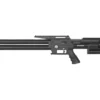
Snowpeak AP1000B Mercury CFBAir Rifle
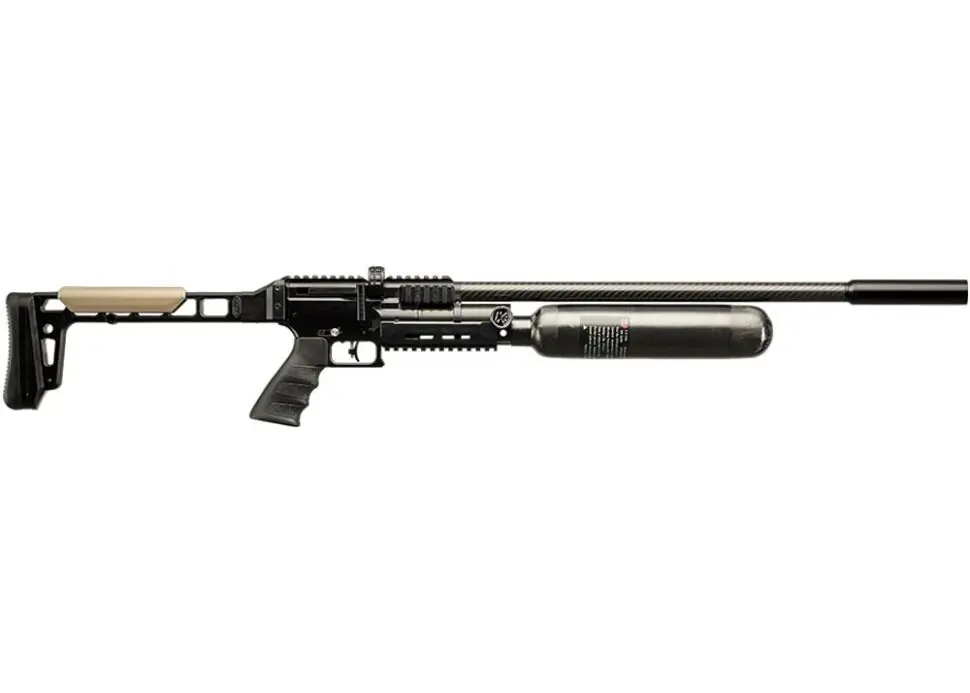
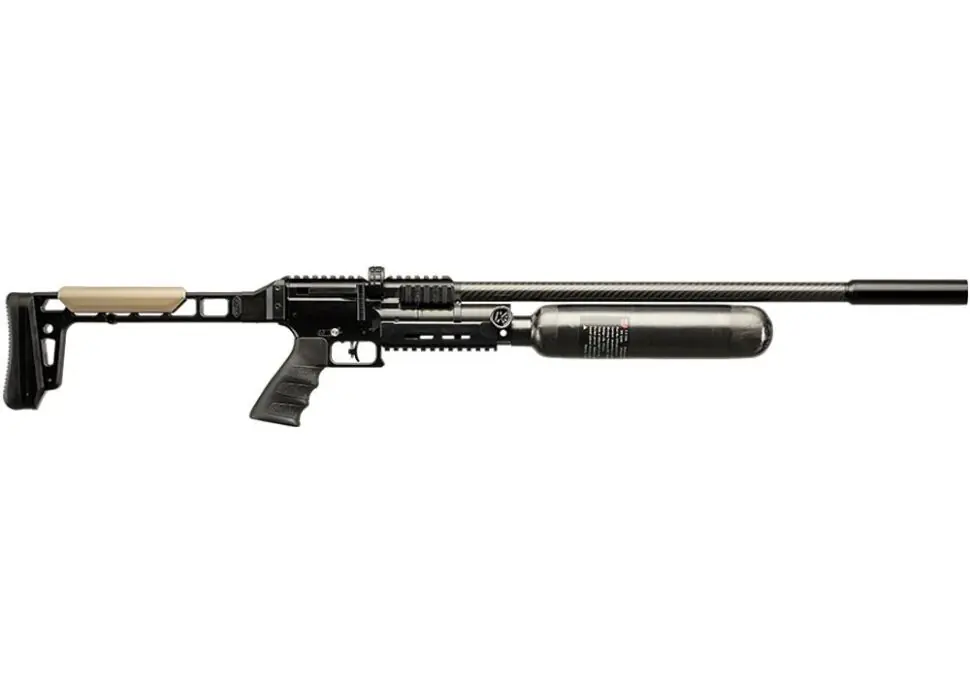
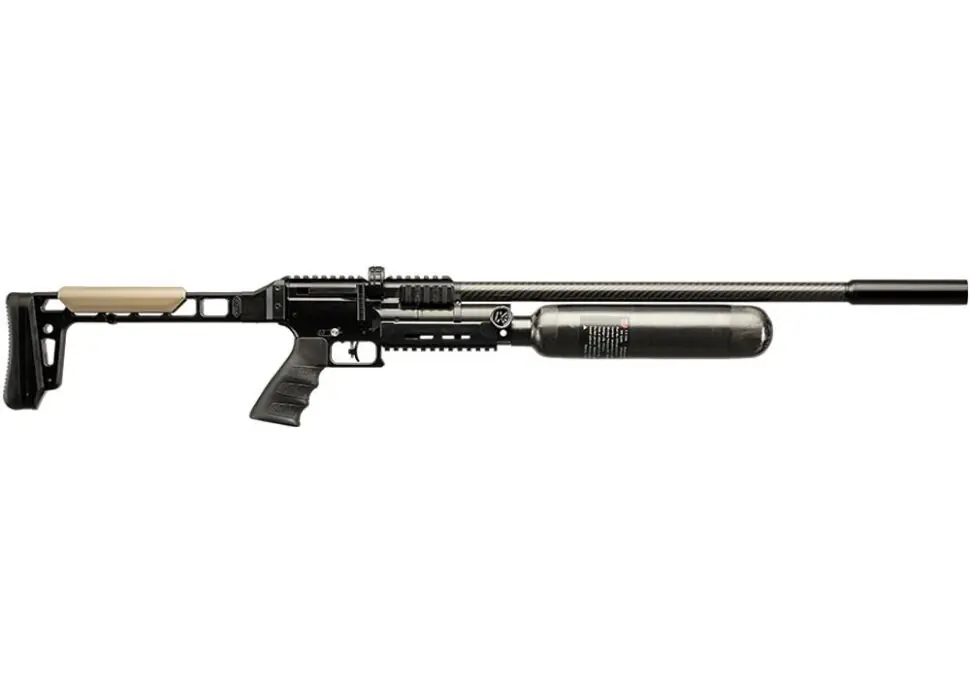
The Snowpeak AP1000B Mercury CFB is a lightweight PCP air rifle designed for easy handling and practical use. Its foldable stock reduces overall length, making the rifle convenient to transport and comfortable to carry during extended shooting sessions. The lightweight carbon fiber bottle with an air capacity of 500 CC stands for a lot of shots with ultra low weight.
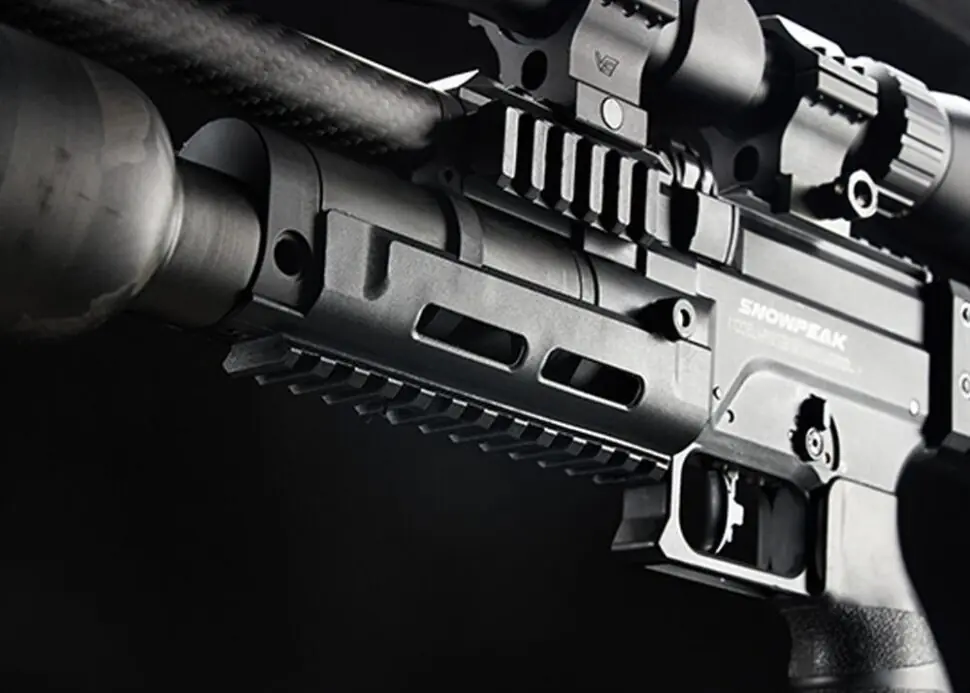
A built-in regulator ensures consistent output by stabilizing air pressure between shots. Combined with the adjustable trigger, M-lok slots for accessories it supports repeatable performance and precise shot control. The low overall weight of just 2600 gram is achieved through the use of durable synthetic components and a carbon barrel shroud and air bottle
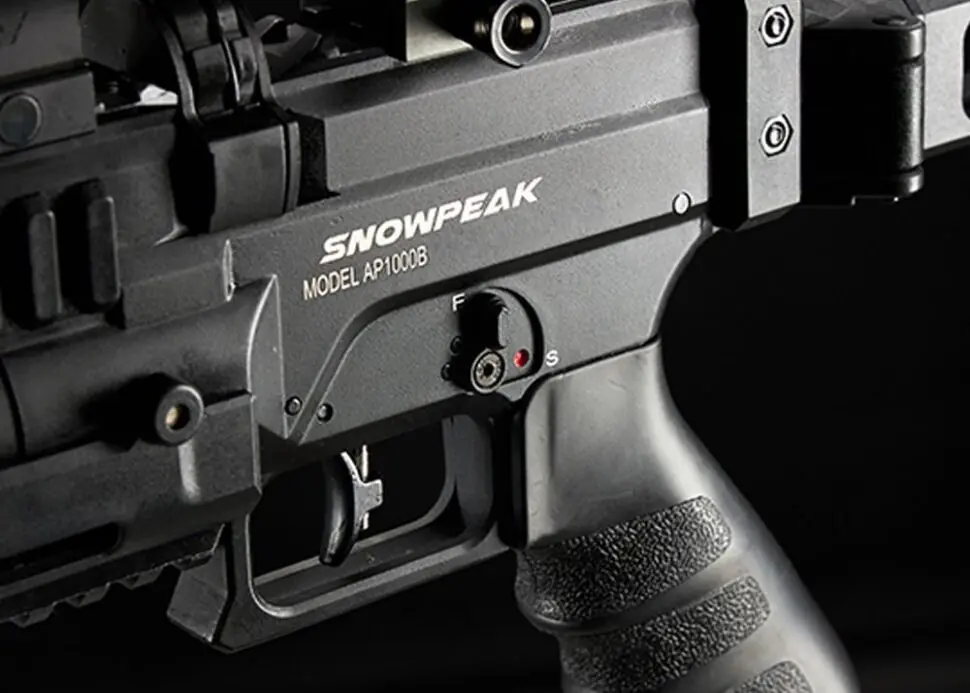
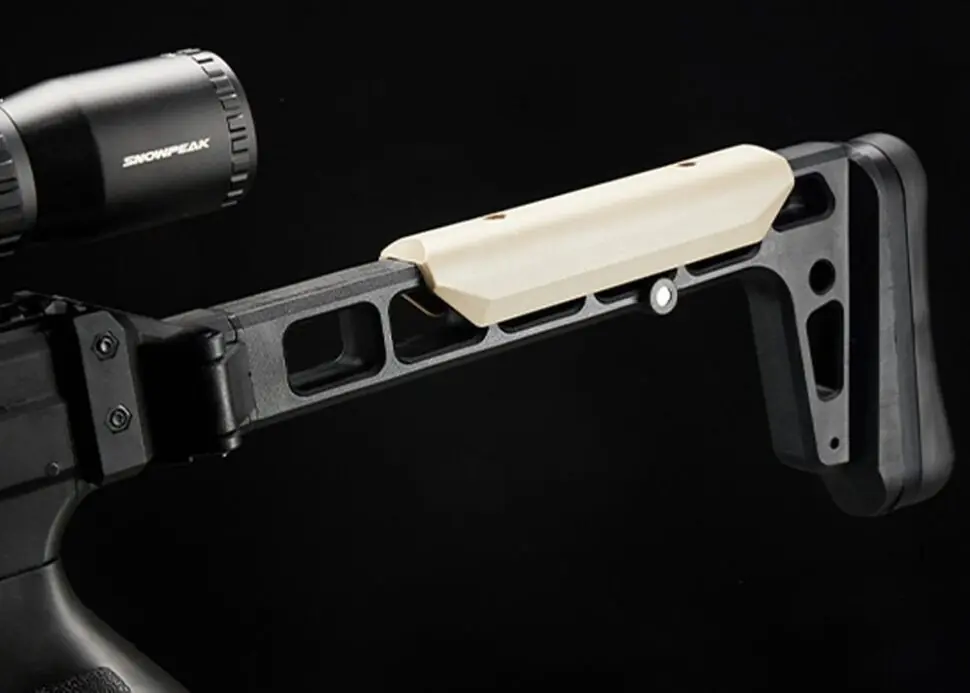
The skeletonized synthetic buttstock is fitted with a rubber butt pad for a secure shoulder position. An AR-15 style rubber pistol grip provides good ergonomics and control, while the thumb safety allows safe and intuitive operation. The air cylinder runs parallel to the barrel, keeping the rifle well balanced.
Below the air cylinder, the synthetic handguard is equipped with M-LOK slots for mounting a bipod or other accessories. A Weaver/Picatinny rail on top allows easy scope installation, while additional side-mounted Weaver/Picatinny rails provide space for further accessories.
Snowpeak AP1000B Mercury CFB features:
- Bottle capacity: 500 cc
- Filling pressure: 250 bar
- Integrated regulator
- Adjustable trigger
- Collapsible synthetic stock with rubber butt pad
- Carbon barrel shroud
- AR-15 style rubber pistol grip
- Weaver/Picatinny top rail for optics
- Side-mounted Weaver/Picatinny accessory rails
- M-LOK slots on the handguard
This item can only be sold to persons 18 years and older.
For this item we have to carry out an age check.
You can upload a copy/scan/photo of a legal identification document such as a passport, European ID or driver’s license in the order. Parts of the document may be made illegible or designated as a copy. However, your name, document number and place of issue must be legible. Your copy ID will only be used for verification purposes and will not be retained. If you are not able to upload it right now, we will contact you per email before shipping
We can ship these items only to the countries listed below:
Belgium, Bulgaria, Cyprus, Czechia, Denmark, Estonia, Finland, France, Germany, Greece, Hungary, Ireland, Italy, Kroatia, Latvia, Lithuania, Luxembourg, Monaco, Netherlands, Poland, Portugal, Romania, Slovakia, Slovenia, Spain, Austria, Sweden, United States
Specifications
| Brand | Snowpeak |
|---|---|
| Model | .177 / 4,5, .22 / 5,5, .25 / 6,35 |
| Cocking system | Side lever |
| Weight (gram) | 2600 |
| Barrel length (mm) | 500 |
| Length (mm) | 800-1056 |
| Mounting base | Weaver / Picatinny |
| Rifle Stock Type | Ambidextrous |
| Stock material | Aluminum / Synthetic |
| Extra accessories included |
2 Magazines, Fill probe, Spare O-Rings, Tools |
Snowpeak AP1000B Mercury CFB Air Rifle — Carbon-Fibre Bottle PCP, Regulated Air System, Folding Stock, and Lightweight Precision Platform
Snowpeak AP1000B Mercury CFB Engineering, Precision, Regulated Air Delivery, Handling, and Technical Overview
The Snowpeak AP1000B Mercury CFB Air Rifle is a lightweight regulated PCP platform designed around mobility, substantial onboard air capacity, comfortable handling, and straightforward optics integration. Snowpeak officially lists the AP1000B family with a 500mm barrel, calibers of 4.5mm/.177, 5.5mm/.22, and 6.35mm/.25, manual safety, and multi-shot operation. The carbon-fibre-bottle Mercury CFB version expands the air capacity to 500cc while retaining a comparatively low overall weight.
The Mercury CFB configuration uses a 250 BAR / 3,626 PSI filling pressure, integrated regulator, adjustable trigger, folding or collapsible synthetic stock, carbon barrel shroud, AR-style rubber pistol grip, and Weaver/Picatinny mounting interfaces. Retail specification data lists approximately 2.6kg overall weight, a total length adjustable from around 800 to 1,065mm, and manufacturer-market energy references of approximately 23J, 39J, and 49J depending on caliber and regional configuration.
Snowpeak PP750L PCP Air Pistol
The Snowpeak PP750L PCP Air Pistol is a much smaller platform. It should not be confused with the full-length Mercury CFB rifle, which uses a larger reservoir, longer barrel, and shoulder-stock configuration.
Snowpeak Airguns
Snowpeak airguns cover PCP rifles, pistols, spring-powered models, and related shooting equipment. The AP1000B belongs to the company’s PCP rifle range.
Snowpeak Sports
Snowpeak Sports is Snowpeak’s official shooting-equipment manufacturer website and currently lists the AP1000B platform with a 500mm barrel and multiple caliber choices.
Snowpeak AP900
The Snowpeak AP900 belongs to another Snowpeak product family. Its reservoir, barrel, action, and overall dimensions should not be assumed to match the AP1000B Mercury CFB.
Snowpeak MAX
The Snowpeak MAX line represents a different high-capacity PCP concept. The Mercury CFB instead focuses on combining a relatively large air bottle with lower weight and a folding-stock layout.
Snowpeak PP750
The Snowpeak PP750 is a compact PCP pistol/carbine platform and differs significantly from the AP1000B in reservoir capacity and rifle ergonomics.
PP750
The PP750 designation refers to another Snowpeak platform and should not be treated as an alternative name for the Mercury CFB.
Snowpeak P35X
The Snowpeak P35X belongs to Snowpeak’s bullpup-style PCP range, whereas the AP1000B uses a conventional folding-stock rifle layout.
PR900 Gen 3
The PR900 Gen 3 is another Snowpeak PCP rifle but is generally more compact and simpler in architecture than the Mercury CFB configuration.
Snow Peak PP750
The phrase Snow Peak PP750 refers to the PP750 family rather than the AP1000B Mercury.
Snowpeak P35
The Snowpeak P35 is a compact bullpup design. In comparison, the AP1000B uses a long conventional barrel-and-stock layout designed around easier accessory mounting and comfortable shoulder use.
Snowpeak M60B
The Snowpeak M60B is a separate PCP platform. Its specifications should always be checked independently.
Snow Peak PP20
The Snow Peak PP20 is a different compact pneumatic product and should not be confused with the Mercury CFB rifle.
P35
The P35 uses a compact bullpup architecture, while the Mercury CFB provides a traditional shoulder-stock configuration and extensive external mounting interfaces.
P35X
The P35X develops Snowpeak’s bullpup concept further. The AP1000B instead emphasizes a lightweight conventional configuration with a folding stock.
P35X PCP
A P35X PCP and the Mercury CFB both use pre-charged pneumatic operation, but their layouts, reservoirs, and handling characteristics differ.
Snowpeak M25
The Snowpeak M25 is another PCP rifle family offered in several calibers. It should not be used as a direct technical reference for the Mercury CFB.
AP900B PCP Air Rifle
The AP900B PCP air rifle is a separate model. Buyers should confirm the exact product code because similarly named Snowpeak rifles can have different air capacities and stock designs.
Snowpeak M60
The Snowpeak M60 belongs to a different Snowpeak PCP platform and should be evaluated using its own specification sheet.
Snowpeak MAX 1 Price
A Snowpeak MAX 1 price search concerns the MAX series, not the Mercury CFB. Prices between the two can vary considerably by market, caliber, dealer, and configuration.
PCP P 35
A PCP P35 uses compressed air stored onboard, but its bullpup geometry differs substantially from this rifle.
M25 Rifle
The M25 rifle is another Snowpeak PCP model and should not be confused with the AP1000B Mercury CFB.
Snow Peak Equipment
Snow Peak equipment for airgun shooters can include compatible magazines, optics, filling hardware, cleaning equipment, and transport cases.
HP300
The phrase HP300 can refer to different high-pressure products depending on the market. Any filling equipment used with this rifle must be suitable for its specified 250 BAR operating fill pressure.
Pellet 9mm
A pellet 9mm is not one of the listed Mercury CFB calibers. Current specifications identify .177, .22, and .25 versions.
Snowpeak P35 vs P35X
A Snowpeak P35 vs P35X comparison concerns two bullpup-style rifles. The Mercury CFB is structurally different because it uses a conventional folding-stock format.
Snowpeak PP20
The Snowpeak PP20 is another compact pneumatic model and serves a different purpose from the Mercury CFB.
M25 Weapon
The phrase M25 weapon generally refers to the Snowpeak M25 air rifle. It should not be confused with the AP1000B.
M50 Rifle
The M50 rifle belongs to another Snowpeak product family and requires its own specifications and compatibility information.
PCP Pellet Rifle
A PCP pellet rifle stores compressed air before firing. The Mercury CFB uses this principle together with an integrated regulator intended to improve pressure consistency.
Snowpeaks
Snowpeaks is a common broad search variation for Snowpeak airguns, rifles, pistols, and accessories.
Air Gun Accessories
Useful air gun accessories for a PCP rifle can include suitable optics, magazines, protective cases, cleaning equipment, and properly rated filling equipment. The AP1000B also provides Weaver/Picatinny rails and M-LOK mounting points.
Snowfall Gun
The phrase snowfall gun does not correspond to the documented AP1000B model name and appears to be an unrelated or mistaken search variation.
Snow Peak Customer Service
Snow Peak customer service for Snowpeak shooting products can be accessed through the manufacturer’s published contact channels in Shaoxing, Zhejiang, China.
Snow Peak Brand Origin
For Snow Peak brand origin, the airgun manufacturer is based in Shaoxing, Zhejiang Province, China, according to its official product and contact information.
What Is a PCP Airgun
For what is a PCP airgun, PCP means pre-charged pneumatic. Compressed air is stored in the rifle before use and released in controlled amounts during firing.
Pistolet PCP Arcea-Snowpeak Onix Sport
The phrase pistolet PCP Arcea-Snowpeak Onix Sport refers to Snowpeak products distributed or branded differently in certain markets. Exact model identification is important before comparing specifications.
How Much Did the M60 Weigh
For how much did the M60 weigh, the answer depends on the specific M60 variant and should not be inferred from the Mercury CFB’s approximate 2.6kg weight.
T Rex 6000
The phrase T Rex 6000 does not correspond to the AP1000B Mercury designation and likely relates to a different product.
Snowpeak PP750L
The Snowpeak PP750L is a compact PCP platform, while the Mercury CFB is a full shoulder-fired rifle with substantially greater air capacity.
Snowpeak Air Pistol
A Snowpeak Air Pistol is designed around compact handling and differs from the AP1000B in barrel length, air storage, and ergonomics.
PCP Pistol
A PCP Pistol uses the same general compressed-air principle but in a much smaller package than this rifle.
Airgun Pistol
An Airgun Pistol may use PCP, CO₂, spring, or other pneumatic propulsion depending on the design.
High Power PCP Air Pistol
A High power PCP air pistol should not be confused with the Mercury CFB because the AP1000B is a rifle platform with a 500mm barrel and shoulder stock.
Snowpeak PP750L PCP Air Pistol for Sale
The phrase Snowpeak PP750L PCP Air Pistol for sale concerns another Snowpeak product. Buyers should verify model, local laws, caliber, and actual configuration before acquisition.
Why the Carbon-Fibre Bottle Matters
The carbon-fibre bottle is one of the strongest practical features of the Mercury CFB. The standard AP1000 platform can use lower-capacity air storage, while the CFB version increases the available capacity to 500cc without producing the weight penalty expected from an equivalent heavy metal reservoir. Retail specifications put the complete rifle at approximately 2.6kg.
How the Regulated System Supports Precision
A built-in regulator stabilizes the pressure supplied to the firing mechanism. Therefore, as reservoir pressure gradually falls, the rifle can maintain more consistent air delivery through the useful regulated portion of the fill.
This can contribute to repeatable precision, particularly when combined with consistent ammunition, stable optics, a clean barrel, and controlled trigger technique.
Why the 500mm Barrel Is Important
The 500mm barrel provides a useful balance between overall rifle dimensions and internal projectile acceleration. Snowpeak officially lists this barrel length for the AP1000B.
However, practical accuracy is not determined by barrel length alone. Projectile condition, regulator stability, optic mounting, shooter technique, and environmental conditions remain important.
Folding Stock and Practical Handling
The folding or collapsible stock allows the rifle to become more compact for storage and transport. Retail specifications list an overall adjustable length ranging approximately from 800 to 1,065mm, depending on stock position.
The synthetic stock includes a rubber butt pad, while the AR-style rubber pistol grip provides a familiar and comfortable hand position.
Where the Rifle Works Best
The Mercury CFB is best suited to lawful target shooting and controlled range environments where its large reservoir, regulated shot behavior, lightweight construction, and optics compatibility can be used effectively.
Its combination of Picatinny and M-LOK mounting points also allows practical accessories to be added without modifying the core rifle.
When the Large Air Capacity Becomes Useful
The 500cc bottle becomes particularly valuable during longer shooting sessions because it can reduce how frequently the rifle needs to be refilled.
This makes the rifle more convenient for extended range practice and accuracy evaluation.
How Good Is the Precision?
The platform provides several useful mechanical foundations for precision: a regulated air system, 500mm barrel, adjustable trigger, stable optics rail, and substantial air capacity.
One recent retailer-listed .25-caliber user test reported a ten-shot string averaging approximately 236.4m/s with a 3m/s spread using a specific projectile, although individual results should not be treated as guaranteed factory performance.
Important Information About the Rifle
The Mercury CFB should be treated as a high-pressure pneumatic system. Current retail specifications list 250 BAR / 3,626 PSI as the filling pressure, so pumps, compressors, cylinders, hoses, and connectors must be appropriately rated.
The carbon-fibre bottle should be protected from deep scratches, impact, excessive heat, and unauthorized modification. Internal pressure-system servicing should be left to appropriately qualified personnel.
The rifle should also be stored unloaded, kept secured against unauthorized access, protected from moisture and excessive heat, and operated only where applicable airgun laws and range requirements permit.
Overall, the Snowpeak AP1000B Mercury CFB combines 500cc carbon-fibre air storage, regulated PCP operation, a 500mm barrel, folding stock, adjustable trigger, lightweight 2.6kg construction, side-lever action, Picatinny mounting, and M-LOK compatibility into a practical modern PCP platform built around mobility, repeatability, and comfortable range use.
Air Management, Precision Stability, Loading Consistency, Trigger Control, and Practical Reliability
High-Pressure Air System
The rifle relies on a pre-charged pneumatic system that stores compressed air in an onboard bottle and releases controlled amounts through the firing mechanism.
For reliable operation, the bottle, regulator, valve components, seals, fill connection, and pressure gauge should all remain in good condition.
The system should always be filled within the manufacturer’s approved limit.
Overfilling should never be used to increase performance because it can place unnecessary stress on pressure-bearing components.
If pressure behavior becomes irregular, the rifle should be inspected before further use.
Why Pressure Stability Matters
Stable pressure contributes directly to repeatable shot behavior.
When the regulator and air bottle operate correctly, each firing cycle is more likely to receive a controlled amount of air.
That consistency can support tighter groups and make precision testing easier to interpret.
However, air pressure is only one part of practical accuracy.
Projectile quality, barrel condition, optic stability, trigger technique, stock position, and environmental conditions also influence results.
For that reason, performance should always be evaluated as a complete system.
Bottle Condition and Monitoring
The air bottle should be checked regularly for visible damage, deep scratches, impact marks, or other abnormalities.
Pressure should also be monitored before and after use.
A gradual reduction during shooting is normal, but unexpected pressure loss while the rifle is stored may indicate a leak or sealing issue.
If pressure falls rapidly without use, the rifle should not simply be refilled and ignored.
The source of the loss should be identified before continued operation.
Filling Equipment Care
Filling equipment should always be rated for the required working pressure.
Hoses, connectors, probes, gauges, compressors, and cylinders should remain clean and undamaged.
Dust or grit around the filling point can interfere with seals or enter the pneumatic system.
Before filling, the connection should be checked visually.
If leakage occurs, filling should stop until the fitting is inspected.
Damaged or questionable high-pressure equipment should not be used.
Regulator Consistency
The regulator helps control the pressure supplied to the firing system.
When it operates consistently, the rifle is more likely to maintain stable behavior throughout the useful portion of the stored air.
Changes in firing sound, air use, or point of impact can sometimes indicate a regulator-related issue.
However, projectile variation, temperature changes, and loose optics should also be considered before internal work is attempted.
Regulator servicing should remain within manufacturer guidance.
Air Efficiency
Air efficiency describes how effectively the rifle uses stored pressure during normal operation.
A well-managed setup provides useful shot consistency without unnecessary air consumption.
The exact number of useful shots can vary with caliber, projectile type, temperature, and configuration.
The goal should not be to force the highest possible output.
Instead, the system should remain within its intended operating range so performance stays predictable and stable.
Large Air Capacity
A larger onboard air supply can reduce how often the rifle needs to be refilled during longer shooting sessions.
That can be useful for target practice and precision testing because fewer interruptions are required.
However, greater capacity also increases the importance of proper pressure monitoring and bottle care.
The bottle should remain protected from heat, impact, and sharp objects.
Its condition should be checked periodically rather than assumed to be fine because it still holds pressure.
Side-Lever Operation
The side-lever action should move smoothly and consistently.
Any sudden increase in resistance should be investigated before additional force is applied.
The lever, loading area, magazine, and projectile should all be checked.
Forcing a tight action can damage components or deform the projectile.
A consistent operating feel helps the shooter recognize developing mechanical issues early.
Magazine Condition
The magazine should remain clean, dry, and free from impact damage.
Projectiles should seat correctly and feed without excessive resistance.
If feeding becomes inconsistent, the magazine should be inspected rather than forced.
Dirt, deformation, or damaged internal components can interfere with reliable operation.
During storage and transport, magazines should be protected from hard impacts and loose objects.
Good magazine condition supports smooth loading and reduces unnecessary wear.
Loading Consistency
Consistent loading supports repeatable shot behavior.
Each projectile should enter the chamber smoothly and should not require unusual force.
If resistance increases, the magazine, projectile, chamber area, and visible action components should be checked.
Forcing the mechanism can deform the projectile or damage surrounding parts.
A clean loading area also makes developing issues easier to detect.
Projectile Condition
Projectile quality has a direct influence on practical precision.
Bent, dented, dirty, or visibly deformed projectiles can produce inconsistent results even when the rifle itself is functioning correctly.
Ammunition should be stored where it remains protected from moisture, dust, and impact.
For meaningful testing, the same projectile type and batch should be used whenever possible.
Changing several projectile variables during one session makes comparison less useful.
Barrel Stability
The barrel should remain secure and protected from impact.
Any visible movement or change in alignment should be investigated.
The rifle should not be carried by the barrel or rested against hard surfaces in a way that places unnecessary pressure on the front assembly.
Accessories should be positioned so they do not contact or disturb the barrel.
Stable support helps preserve repeatable point of impact.
Bore Care
The bore should remain free from obstruction and excessive contamination.
Cleaning should be performed carefully and only when necessary.
Aggressive or frequent cleaning with unsuitable tools can damage precision surfaces.
Before assuming the barrel requires cleaning, the shooter should first check projectile consistency, optic security, pressure behavior, and shooting technique.
A conservative maintenance approach is usually preferable to unnecessary intervention.
Muzzle Protection
The muzzle and crown should remain protected from knocks, dirt, and careless handling.
The rifle should not be stored with the front of the barrel pressed against a hard surface.
Damage in this area can influence projectile exit consistency.
If the rifle experiences a significant impact and accuracy changes afterward, the muzzle area should be checked before further testing.
Trigger Control
The trigger should remain smooth and predictable.
Pressure should be applied steadily rather than abruptly.
A consistent release helps preserve sight alignment during firing.
If the trigger begins to feel rough, unusually heavy, or unexpectedly light, the rifle should be inspected.
Any adjustment should remain within manufacturer-approved limits.
The goal should be reliable control rather than aggressive modification.
Grip Position
The grip should allow the hand and wrist to remain in a natural position.
Excessive grip pressure can create muscular tension and disturb alignment.
A grip that is too loose can also reduce control.
The ideal position is one that can be repeated consistently without strain.
The trigger finger should move smoothly while the rest of the hand remains stable.
Stock Position
The folding or adjustable stock should support a natural shoulder position.
Once a comfortable setup has been found, it should remain secure.
Any movement in the hinge or adjustment mechanism can alter eye alignment and body position.
The stock should therefore be checked periodically for looseness or unusual resistance.
A stable rear support helps preserve repeatability.
Eye Alignment
The shooter should be able to establish a natural eye position behind the optic.
Excessive head tilt or stretching can reduce consistency.
If alignment feels awkward, stock position or optic height may need to be reconsidered.
Once a suitable setup is established, unnecessary changes should be avoided.
Repeatable eye alignment helps preserve a stable sight picture.
Optic Mounting Stability
The sighting system should remain secure.
The rail, rings, mounts, and fasteners should all be checked periodically.
If point of impact changes unexpectedly, the optic mounting system should be inspected before internal rifle components are blamed.
Loose hardware can easily create inconsistent results.
Fasteners should be tightened appropriately without excessive force.
Support Position
A stable support position helps reveal the rifle’s actual mechanical consistency.
Whether the rifle is used from a bench, rest, bag, or another lawful support, contact points should remain repeatable.
Changes in support height or pressure can influence alignment.
Sensitive components should not be used as direct support points.
Consistent support reduces unnecessary shooter movement and makes performance easier to interpret.
Environmental Effects
Temperature and humidity can influence pneumatic behavior.
Cold conditions may affect pressure and efficiency, while excessive heat can increase bottle pressure.
The rifle should not be left inside a hot vehicle or exposed to direct sunlight for extended periods.
Humidity can contribute to corrosion on exposed metal parts.
Environmental conditions should therefore be considered when comparing air consumption, point of impact, or precision between sessions.
External Surface Care
External surfaces should be kept clean and dry.
Dust, fingerprints, moisture, and debris can accumulate around rails, screws, joints, and adjustment points.
A soft cloth is generally suitable for routine cleaning.
Strong solvents should be avoided unless they are known to be compatible with the materials and finish.
After use in damp conditions, the rifle should be dried before storage.
Transport Protection
A suitable case should protect the rifle from impact, vibration, moisture, and pressure on the optic, barrel, bottle, or folding-stock mechanism.
Loose accessories should not move freely inside the case.
The rifle should be unloaded and transported according to applicable local requirements.
After a long journey, optic mounts, pressure readings, stock hardware, and external components should be checked before use.
Secure Storage
The rifle should be stored unloaded, secured, and protected from unauthorized access.
The storage environment should remain dry and free from excessive heat.
Bottle pressure during storage should follow manufacturer guidance.
Magazines, projectiles, filling equipment, and accessories should also be kept clean and organized.
Good storage helps protect the pneumatic system, external finish, optics, seals, and mechanical components.
Long-Term Practical Reliability
Long-term reliability depends on disciplined maintenance, correct filling, careful loading, secure optics, stable stock hardware, and protection from impact.
Bottle condition, pressure retention, regulator behavior, trigger feel, magazine function, barrel stability, filling connections, and external fasteners should all be monitored over time.
Changes in air consumption, loading resistance, firing sound, pressure retention, or point of impact may indicate that inspection is required.
Internal high-pressure work should be left to appropriately qualified personnel.
When the rifle is kept within manufacturer limits, maintained carefully, stored properly, and handled consistently, it is more likely to preserve dependable precision, reliable operation, and stable mechanical performance over extended use.
Precision Behavior, Air Efficiency, Loading Consistency, Sight Stability, and Long-Term Mechanical Care
Understanding Practical Precision
Practical precision depends on the complete shooting system rather than one isolated component.
The barrel, projectile, optic, air pressure, trigger, stock position, support method, environmental conditions, and shooter technique all influence the final result.
For meaningful accuracy testing, the setup should remain as consistent as possible.
Using the same projectile type, support position, pressure range, optic setting, and body alignment makes it easier to identify whether a performance change comes from the rifle, ammunition, environment, or shooting technique.
Shot-to-Shot Consistency
Shot-to-shot consistency is one of the best indicators of stable mechanical performance.
When the regulator, valve system, air bottle, loading process, and projectile seating behave predictably, the rifle is more likely to produce repeatable results.
If consistency begins to change, several simple factors should be checked before internal adjustments are considered.
Pressure level, projectile condition, magazine function, optic security, barrel condition, and temperature should all be evaluated separately.
Testing one variable at a time usually produces more useful information.
Air Efficiency During Use
Efficient air use helps reduce unnecessary interruptions during longer shooting sessions.
However, efficiency should not be judged only by maximum shot count.
Stable performance is more important than forcing the system to deliver the highest possible output.
Caliber, projectile weight, ambient temperature, regulator behavior, and overall configuration can all influence air consumption.
The useful goal is predictable air management.
Monitoring the pressure gauge throughout the session helps the shooter understand the normal behavior of the rifle.
Recognizing Pressure Changes
Pressure should decrease in a gradual and predictable way during normal use.
Unexpected pressure loss while the rifle is stored may indicate a leak or sealing issue.
The gauge should therefore be checked before and after shooting.
If pressure falls significantly without use, repeated refilling should not replace proper inspection.
Rapid leakage, unusual sounds, or irregular gauge behavior should be taken seriously.
Internal high-pressure repairs should be left to appropriately qualified personnel.
Bottle Balance and Handling
A large air bottle can provide excellent capacity, but it also influences balance and overall handling.
The shooter should become familiar with how the rifle settles on a rest or in a supported position.
Heavy optics or accessories can shift the center of gravity further.
For consistent precision, the rifle should return naturally to the same position without requiring excessive muscular effort.
A balanced setup generally makes repeatable shooting easier and reduces fatigue during extended sessions.
Consistent Magazine Loading
The magazine should be loaded carefully and consistently.
Each projectile should seat correctly without being forced.
If loading becomes difficult, the magazine should be checked for dirt, deformation, impact damage, or alignment problems.
Damaged projectiles can also create unnecessary resistance.
Smooth magazine operation protects the loading system and supports repeatable projectile positioning.
Forcing a magazine that does not cycle normally can damage both the magazine and surrounding components.
Projectile Selection and Condition
Projectile consistency plays a major role in precision.
Bent, dirty, scratched, or visibly deformed projectiles can produce inconsistent results even when the rifle is functioning correctly.
Ammunition should therefore be stored in a clean, dry location where it remains protected from impact.
For meaningful testing, the same projectile type and batch should be used throughout an accuracy session.
Changing several projectile characteristics at once can make the results difficult to interpret.
Barrel Stability
The barrel should remain secure and protected from impact.
Any visible movement or change in alignment should be investigated.
The rifle should not be carried by the barrel or placed where unnecessary pressure is applied to the front assembly.
Accessories should also be mounted so they do not interfere with the barrel or shroud.
Stable barrel support is important because even small changes in alignment can influence point of impact.
Bore Condition
The bore should remain free from obstruction and excessive contamination.
Cleaning should be performed only when necessary and with suitable equipment.
Aggressive cleaning can damage precision surfaces if unsuitable rods, abrasives, or chemicals are used.
Before assuming that the barrel requires cleaning, the shooter should first check projectiles, optics, pressure behavior, and shooting technique.
A conservative approach usually helps preserve long-term barrel condition.
Crown Protection
The muzzle crown influences the final stage of projectile exit.
For that reason, it should remain protected from impact, dirt, and careless handling.
The rifle should not be stored with the muzzle resting directly against a hard surface.
If the front of the rifle receives a significant impact and accuracy changes afterward, the crown should be inspected.
Even small damage can influence consistency.
Trigger Predictability
A predictable trigger helps reduce unwanted movement during firing.
The trigger should feel consistent from shot to shot.
If it suddenly becomes rough, unusually heavy, or unexpectedly light, the rifle should be inspected.
Adjustments should remain within approved limits.
Frequent unnecessary changes can make accuracy testing more difficult because another variable is introduced.
The goal should be a stable and repeatable release rather than extreme trigger modification.
Grip Pressure
Grip pressure should remain natural and consistent.
Holding the rifle too tightly can create unnecessary muscular tension and disturb alignment.
Holding it too loosely can reduce control.
The grip, trigger finger, support hand, and shoulder position should work together comfortably.
A relaxed but controlled hold is generally easier to reproduce over many shots.
Repeatable grip pressure helps make performance testing more meaningful.
Shoulder Position
Shoulder contact should remain consistent from shot to shot.
The adjustable rear support should allow the rifle to settle naturally without forcing the body into an awkward position.
If stock hardware moves between shots, eye alignment and body position can change.
Adjustment points should therefore be checked periodically.
The goal is to create a natural position that can be repeated without excessive effort.
Folding Mechanism Stability
The folding mechanism should lock securely when the stock is extended.
Any unwanted movement at the hinge can influence shoulder alignment and handling.
The mechanism should open and close smoothly without being forced.
If unusual resistance, looseness, or play develops, the hinge should be inspected.
Keeping the folding components clean and protected from impact helps preserve reliable operation over time.
Eye Alignment
The shooter should be able to establish a natural eye position behind the optic.
Excessive head tilt or stretching may indicate that stock position or optic height should be reconsidered.
Once a suitable setup has been found, the relationship between the eye, stock, and optic should remain consistent.
Repeatable eye alignment helps preserve a stable sight picture and reduces variation between shots.
Optic Mounting Security
The optic, rings, rail, and fasteners should remain secure.
A loose mounting system can create point-of-impact changes that may look like an internal rifle problem.
If zero shifts unexpectedly, the optic system should be checked before the pneumatic system is adjusted.
Fasteners should be tightened appropriately without excessive force.
Overtightening can damage rails, threads, rings, or the optic itself.
Support Position
A stable support position helps reveal the rifle’s actual mechanical consistency.
Whether the rifle is used from a bench, rest, bag, or another lawful support, the contact points should remain repeatable.
Changes in support pressure or height can influence alignment.
Sensitive components should not be used as direct support points.
Consistent support reduces unnecessary shooter movement and makes results easier to interpret.
Regulator Stability Over Longer Sessions
During longer shooting sessions, stable regulator behavior becomes increasingly important.
The shooter should pay attention to whether firing sound, point of impact, or air consumption changes as pressure falls.
A sudden change does not automatically mean the regulator is at fault, but it can be one factor worth investigating.
Projectile condition, ambient temperature, and optic stability should also be considered before internal servicing is attempted.
Environmental Conditions
Temperature, wind, and humidity can influence performance.
Cold conditions can affect pressure and efficiency.
Excessive heat can increase bottle pressure.
Wind can influence projectile flight, especially as distance increases.
Humidity can contribute to corrosion and may also affect stored projectiles or optics.
When comparing results from separate sessions, environmental differences should therefore be considered.
Heat Management
The rifle should not remain in direct sunlight or inside a hot vehicle for extended periods.
Excessive heat can increase internal pressure and may affect seals or external components.
External heat should never be applied to the bottle.
If the rifle becomes unusually hot, it should be allowed to return to a suitable temperature before continued use or storage.
Moisture Protection
Moisture should be removed before the rifle is stored.
Water can collect around rails, fasteners, stock hardware, joints, and optic mounts.
The rifle should be dried before being placed in a closed case.
A damp case can trap moisture and encourage corrosion.
Magazines and projectiles should also remain dry because contamination can affect both feeding and precision.
Fastener Inspection
Fasteners should be checked periodically for movement.
If the same screw repeatedly loosens, the underlying cause should be investigated.
Applying more force is not always the correct solution.
Thread condition, component alignment, or surrounding hardware may need attention.
Overtightening can damage threads or distort parts.
Proper hardware care supports long-term mechanical stability.
External Surface Condition
External finishes should remain clean and free from unnecessary chemical exposure.
Dust and moisture can collect around mounting points, adjustment hardware, and exposed metal surfaces.
Routine wiping after use can help reduce accumulation.
If the rifle is used in humid conditions, drying should be completed before storage.
Surface care is not only cosmetic because corrosion or contamination can eventually affect nearby mechanical components.
Transport Protection
Transport should protect the rifle from vibration, impact, moisture, and pressure on the barrel, optic, bottle, or stock.
A suitable case should hold the rifle securely.
Loose accessories should not move freely inside the case.
The rifle should be unloaded and transported according to applicable local requirements.
After a long journey, optic mounts, stock hardware, pressure readings, and external components should be checked before use.
Storage and Pressure-System Protection
Storage should take place in a secure, dry environment away from excessive heat and unauthorized access.
The rifle should remain unloaded.
Bottle pressure during storage should follow manufacturer guidance.
The filling port should remain protected from dust and debris.
Magazines, projectiles, filling equipment, and accessories should also be organized and kept clean.
Proper storage helps reduce contamination and protects precision components from accidental damage.
Long-Term Mechanical Reliability
Long-term reliability depends on stable air management, careful loading, secure optics, predictable trigger behavior, protected barrel components, and regular inspection.
Pressure retention, regulator behavior, magazine condition, folding-stock stability, optic mounts, filling connections, fasteners, and external hardware should all be monitored over time.
Changes in air consumption, loading resistance, firing sound, pressure retention, or point of impact may indicate that servicing is required.
Internal high-pressure work should be left to appropriately qualified personnel.
When the rifle is operated within manufacturer limits, protected from impact, maintained carefully, and stored correctly, it is more likely to preserve dependable precision, stable handling, and consistent mechanical performance over extended use.
Be the first to review “Snowpeak AP1000B Mercury CFB Air Rifle”
Related products
Snowpeak Airguns

Snowpeak Airguns

Snowpeak Airguns

Snowpeak Airguns

Snowpeak Airguns

Snowpeak Airguns

Snowpeak Airguns

Snowpeak Airguns
Reviews
There are no reviews yet.