


Snowpeak AP900B

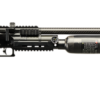
€355.00
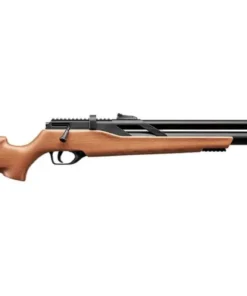
The Snowpeak AP900B is both super compact and ultra lightweight, and the list of integral features can’t fail to impress.
Lightweight build means it tips the scales at just 2.2kg, and with its tactical profile and folding synthetic stock design, there’s plenty to get excited about. This 350cc carbon bottle model is rated to 250bar, and the action comes regulated for a consistent output.
As for the folding design, this works brilliantly. Just press that smooth release button on the left side, and the stock folds back, making the AP900B super compact for stowage, yet ready for action in seconds; whether collapsing to carry in the field or deploying quickly at the range. The side-lever action is smooth and efficient, there’s a fully adjustable trigger unit, and the manual safety gives you full control over your setup.
In short, the highly effective Snowpeak AP900B blends tactical style features with light weight practicality; making it an excellent choice for either pest control or precision plinking.
Snowpeak AP900B Features
- Compact, light and versatile
- Ambidextrous folding synthetic stock
- Picatinny scope rail
- Side-lever multi or single shot action
- 3 way adjustable trigger
- 12” barrel with integrated moderator
- Easy plug-in probe style filling adaptor
Snowpeak AP900B Specifications
| Type | PCP |
| Scope Rail | Picatinny |
| Power Output | 10.8 – 11.8 ft lbs |
| Shots Per Fill Approx
.177 |
120 |
| Magazine Capacity
.177 |
12 |
| Number of Magazines | 2 |
| Overall Length | 600mm (Adjusted) – 855mm (Total) |
| Barrel Length | 310mm |
| Cylinder Capacity | 350cc |
| Max Fill Pressure | 250 Bar |
| Weight | 2.2kg |
| Warranty | 1 Year |
| Rifle Comes With | Fill Probe |
Snowpeak AP900B – Technical Compact PCP Air Rifle Overview
AP900B Engineering, Compact PCP Architecture, Precision Factors, and Related Snowpeak Platforms
Snowpeak Airguns
snowpeak airguns encompasses a broad catalog of pneumatic pistols, compact carbines, bullpups, and full-size rifles. Specifications should therefore remain tied to the exact product instead of being transferred between similarly named platforms.
Snowpeak Sports
snowpeak sports is the manufacturer’s technical product catalog where the AP900B is currently listed with its compact dimensions, folding stock, side lever, caliber choices, and trigger specifications.
Snowpeak AP900
The snowpeak ap900 is closely related to the AP900B. Snowpeak lists the standard AP900 with the same 310 mm barrel, 855 mm extended length, 600 mm folded length, and 930/850/750 fps caliber-dependent velocity figures, but at a lower listed weight of approximately 1.6 kg.
AP900B PCP Air Rifle
The phrase ap900b pcp air rifle accurately identifies the platform as a compact pneumatic carbine powered by stored compressed air rather than a spring-piston mechanism or CO₂ cartridge.
Compact Folding Architecture
The folding rear assembly is one of the model’s defining characteristics. At approximately 600 mm folded length, the design becomes significantly more compact for lawful storage and protected transportation.
Side-Lever Design
Snowpeak specifically identifies a side lever on the AP900B. This separates the model mechanically from bolt-operated and semi-automatic pneumatic platforms.
Adjustable Two-Stage Trigger
The manufacturer lists an adjustable two-stage trigger with approximately 3–8.5 lbf pull. Trigger consistency contributes to predictable recreational target performance, although any adjustment should remain within manufacturer guidance.
310 mm Barrel
The AP900B uses a 310 mm barrel, helping explain its compact overall proportions.
.177 Configuration
The 4.5 mm/.177 configuration is manufacturer-rated at approximately 930 fps.
.22 Configuration
The 5.5 mm/.22 configuration is listed at approximately 850 fps.
.25 Configuration
The 6.35 mm/.25 configuration is listed at approximately 750 fps.
Manual Safety
A manual safety is included in the current factory specification. It should remain an additional mechanical safeguard rather than a substitute for responsible handling.
What Is a PCP Airgun?
For what is a pcp airgun, PCP means pre-charged pneumatic. Compressed air is stored before operation and released through internal pneumatic components.
PCP Pellet Rifle
A pcp pellet rifle uses compressed air as its propulsion source. The AP900B fits this category, although its compact folding-stock format differentiates it from conventional full-size pneumatic rifles.
Snowpeak PP750L PCP Air Pistol
The Snowpeak PP750L PCP Air Pistol belongs to a different compact pistol/carbine family and should not be treated as an alternative designation for the AP900B.
Snowpeak PP750L
The Snowpeak PP750L uses a different frame, barrel arrangement, reservoir layout, and stock concept.
Snowpeak PP750
The snowpeak pp750, pp750, and snow peak pp750 terms refer to another compact pneumatic platform and should remain separate from AP900B technical data.
Snowpeak Air Pistol
The phrase Snowpeak Air Pistol describes a pistol-format product family rather than this compact carbine.
PCP Pistol
A PCP Pistol uses the same broad compressed-air principle but differs significantly in dimensions, barrel length, ergonomics, and supporting structure.
Airgun Pistol
An Airgun Pistol is broader terminology and can include pneumatic, spring-powered, or CO₂ designs.
High Power PCP Air Pistol
The phrase High power PCP air pistol does not accurately describe the AP900B because this platform is a folding-stock carbine rather than a pistol.
Snowpeak PP750L PCP Air Pistol for Sale
The phrase Snowpeak PP750L PCP Air Pistol for sale represents commercial search intent concerning another platform rather than AP900B technical information.
Snowpeak P35
The snowpeak p35, p35, and pcp p 35 searches concern a bullpup PCP family rather than the folding-stock AP900B.
Snowpeak P35X
The snowpeak p35x, p35x, and p35x pcp terms refer to another larger bullpup platform.
Snowpeak P35 vs P35X
The phrase snowpeak p35 vs p35x concerns comparison within that bullpup family and should not be used as AP900B specification data.
PR900 Gen 3
The pr900 gen 3 belongs to another pneumatic rifle family with its own reservoir, stock, and barrel configuration.
Snowpeak PP20
The snowpeak pp20 and snow peak pp20 terms refer to a precision-oriented PCP pistol rather than a compact folding-stock carbine.
Snowpeak M25
The snowpeak m25 belongs to a much larger pneumatic rifle family. Snowpeak currently lists the M25 with a 550 mm barrel, 245 cc air capacity, 25 MPa maximum pressure, and calibers extending up to 9 mm.
M25 Rifle
The phrase m25 rifle therefore concerns a substantially larger platform.
M25 Weapon
The phrase m25 weapon may occur in broad search queries, although exact model terminology is more useful when presenting technical information.
Snowpeak M60
The snowpeak m60 belongs to another rifle family and should not be confused with this compact model.
Snowpeak M60B
The snowpeak m60b is likewise a separate product family with different dimensions and pneumatic architecture.
How Much Did the M60 Weigh?
The phrase how much did the m60 weigh is ambiguous because M60 is used as a designation by unrelated products. Manufacturer context must be established before quoting a figure.
M50 Rifle
The phrase m50 rifle similarly refers to other equipment and should remain separate from AP900B specifications.
Snowpeak Max
The term snowpeak max refers to another Snowpeak product family.
Snowpeak Max 1 Price
The phrase snowpeak max 1 price concerns the larger MAX 1 platform. Snowpeak currently lists that model with a 550 cc air reservoir, 700 mm barrel, regulator, 30 MPa fill pressure, and 24/20/18-shot magazine capacities depending on caliber.
HP300
The term hp300 is ambiguous and should not be treated as an AP900B specification without exact model confirmation.
Pellet 9mm
The phrase pellet 9mm does not describe the AP900B. The current manufacturer listing identifies only 4.5, 5.5, and 6.35 mm configurations.
Snow Peak Equipment
The phrase snow peak equipment can produce mixed results because similarly named outdoor-equipment brands exist.
Exact product identification improves technical accuracy.
Snowpeaks
snowpeaks is a broad spelling variation and should not replace the correct manufacturer and model designation.
Air Gun Accessories
The phrase air gun accessories can include compatible sighting equipment, protective cases, maintenance supplies, and manufacturer-approved replacement components.
Snowfall Gun
The phrase snowfall gun is not a verified technical synonym for this platform.
Snow Peak Customer Service
The phrase snow peak customer service can produce results for unrelated brands. Snowpeak’s airgun catalog lists its own contact information through its Shaoxing, Zhejiang operation.
Snow Peak Brand Origin
The phrase snow peak brand origin can likewise create brand confusion. The official airgun catalog lists the manufacturer’s address in Shaoxing City, Zhejiang Province, China.
Pistolet PCP Arcea-Snowpeak Onix Sport
The phrase pistolet pcp arcea-snowpeak onix sport reflects regional distributor terminology for other pneumatic equipment and should not be treated as an AP900B designation.
T Rex 6000
The term t rex 6000 does not represent a verified AP900B specification.
Why the Compact Layout Matters
The approximately 855 mm extended and 600 mm folded dimensions give the AP900B a significantly smaller storage footprint than a conventional full-size rifle.
Why the Folding Stock Matters
A folding rear section allows the platform to retain shoulder-supported ergonomics when extended while reducing its physical footprint during appropriate storage and transportation.
Why the 310 mm Barrel Matters
The shorter barrel contributes directly to the model’s compact proportions. Its role should be considered together with barrel condition, ammunition uniformity, sight stability, and overall mechanical alignment rather than judged through length alone.
Why Precision Depends on More Than Velocity
Maximum velocity does not independently determine practical precision. Barrel integrity, ammunition consistency, sight stability, trigger behavior, pressure-system health, environmental conditions, and user technique all influence repeatability.
Why Condition Matters
Any pressure-based platform should be evaluated according to reservoir condition, seals, valves, controls, barrel integrity, stock hinge condition, and maintenance history. Persistent leakage or significant pressure-system damage deserves qualified professional attention.
Overall Technical Perspective
The Snowpeak AP900B is best understood as a compact folding-stock PCP carbine offered in 4.5, 5.5, and 6.35 mm, with a 310 mm barrel, side-lever action, adjustable two-stage trigger, manual safety, approximately 855 mm extended length, 600 mm folded length, and 2.2 kg listed weight. Manufacturer-rated maximum velocities are approximately 930, 850, and 750 fps depending on caliber.
Its identity should remain clearly separated from the AP900, AP1000, P35, PP750, PP20, M25, M60, MAX, and other Snowpeak families. For a neutral technical assessment, the most meaningful factors are verified manufacturer specifications, barrel condition, pressure-system health, trigger consistency, stock-hinge integrity, sight stability, suitable ammunition, dry storage, careful transportation, and qualified servicing whenever pressure-bearing components require attention.
Compact Engineering, Precision, Handling, Performance, and Everyday Practicality
A compact pneumatic carbine can offer an effective balance between manageable dimensions, comfortable handling, mechanical consistency, and straightforward ownership. While technical specifications provide useful reference points, real-world quality depends on how effectively the complete platform works as a unified system. Barrel stability, pressure consistency, trigger behavior, stock rigidity, sight alignment, ammunition uniformity, and general maintenance all influence the overall experience. Consequently, evaluating the design requires attention to both mechanical engineering and everyday usability.
Compact Design and Practical Advantages
Compact construction provides several practical benefits.
A shorter overall profile can make the equipment easier to store inside an appropriately sized protective case. Furthermore, reduced dimensions can simplify transportation while still allowing a shoulder-supported configuration when the rear section is extended.
This combination makes compact engineering especially useful when storage space is limited.
Folding Stock Convenience
A folding rear assembly adds another level of practicality.
When extended, it provides the structural support expected from a carbine. However, when folded, the equipment occupies considerably less space.
The folding mechanism should remain clean and mechanically secure because its condition directly affects structural stability.
Stable Shoulder Support
A secure rear support helps establish a comfortable and repeatable position.
The locking mechanism should remain firm when extended, without excessive movement.
If unusual looseness develops, the hinge and locking components should be inspected rather than forced or improvised.
Lightweight Handling
Moderate overall weight can make routine handling more comfortable.
However, weight alone does not determine ergonomics. Distribution matters equally because the barrel, reservoir, action, grip, and stock determine where the platform’s mass is concentrated.
Balanced construction can reduce unnecessary fatigue.
Grip Comfort
A well-positioned grip helps maintain a natural wrist angle.
Trigger reach should remain comfortable without requiring excessive stretching or awkward hand positioning.
Because individual hand dimensions vary, ergonomic comfort can differ between users.
Overall Balance
Good balance contributes to predictable handling.
A platform that feels excessively forward-heavy or rear-heavy may require more physical effort to hold consistently.
Compact construction can concentrate mass closer to the user’s main support points.
Barrel Stability
The barrel plays an important role in mechanical consistency.
It should remain securely mounted and protected from significant impact.
Any unexpected movement or visible deformation deserves inspection.
Barrel Condition and Precision
A clean, structurally healthy barrel provides a stronger foundation for repeatability.
However, precision cannot be attributed to the barrel alone.
Ammunition consistency, pressure behavior, sight stability, trigger predictability, environmental conditions, and user technique also influence practical results.
Understanding Practical Precision
Precision is best understood as repeatability under comparable conditions.
One isolated result cannot provide a complete assessment.
Instead, consistent mechanical behavior over multiple recreational sessions provides more meaningful information about overall condition.
Ammunition Uniformity
Uniform ammunition contributes to predictable behavior.
Physical variations between individual projectiles can affect consistency.
Only the correct caliber and an appropriate ammunition type should be considered.
Pressure-System Consistency
The compressed-air system represents the mechanical foundation of the platform.
Reservoir condition, seals, fittings, valves, and related components must work together correctly.
Stable operation generally indicates that these components are functioning within their intended parameters.
Reservoir Integrity
The reservoir is a pressure-bearing component and should receive appropriate care.
Its exterior should remain free from severe corrosion, substantial deformation, or significant impact damage.
Any questionable structural condition requires qualified professional assessment.
Pressure Retention
A healthy system should retain pressure according to its intended design.
Unexpected or persistent pressure loss can indicate seal deterioration, fitting problems, or another pneumatic issue.
Repeated leakage should be investigated rather than ignored.
Seal Condition
Seals experience natural aging.
Temperature changes, pressure cycles, contamination, storage conditions, and material quality can influence their service life.
Correct replacement components should be used whenever servicing becomes necessary.
Valve Reliability
The internal valve helps control compressed-air release.
Predictable valve behavior contributes to overall consistency.
Complex internal work should be performed by someone familiar with high-pressure pneumatic equipment.
Pressure Monitoring
A readable pressure indicator provides useful information about system condition.
It should remain protected against impact.
Unexpected readings should be investigated before assuming that everything is operating normally.
Trigger Predictability
A consistent trigger supports controlled recreational target use.
Predictability is generally more important than extremely light resistance.
A trigger that suddenly feels different may require inspection.
Two-Stage Trigger Character
A two-stage mechanism separates initial movement from the final release point.
When operating correctly, this arrangement provides recognizable mechanical feedback.
Any adjustment should remain within the manufacturer’s recommended parameters.
Safety Mechanism
The mechanical safety should operate positively and consistently.
It provides an additional safeguard, although responsible handling remains essential regardless of its position.
Unexpected changes in engagement deserve attention.
Operating Lever
The external operating mechanism should move smoothly through its intended travel.
Unexpected resistance may indicate contamination, wear, or mechanical misalignment.
Forcing abnormal movement can create additional damage.
Mechanical Smoothness
Consistent operation is generally a useful indicator of healthy mechanical condition.
Controls should feel similar from one session to another.
Sudden stiffness, looseness, or unusual movement should be investigated.
Sight Stability
Stable sighting equipment is important when assessing precision.
Even minor movement can create apparent changes in performance.
Therefore, mounting security should be checked before assuming that an internal mechanical problem exists.
Accessory Mounting
Mounting interfaces should remain clean and structurally intact.
Compatible accessories should be installed without excessive tightening.
Damaged hardware should be replaced with correctly specified components.
Outdoor Conditions
Environmental conditions can influence practical performance.
Wind can affect projectile movement, while temperature changes can influence pressure behavior.
Comparisons are therefore more meaningful when conditions remain reasonably similar.
Temperature Considerations
Extreme temperatures should be avoided whenever possible.
Excessive heat can affect seals, finishes, and other materials.
A stable storage environment generally supports better long-term preservation.
Moisture Protection
Humidity can encourage corrosion on exposed metal surfaces.
Equipment should therefore be reasonably dry before being stored.
This consideration becomes especially important in humid environments.
Routine Exterior Care
Regular maintenance does not require complete disassembly.
Removing dust, fingerprints, and moisture from accessible surfaces can provide meaningful protection.
Gentle preventive care is usually preferable to excessive intervention.
Storage Practicality
Compact folding construction can reduce the space required inside a suitable protective case.
However, the equipment should remain properly supported.
Heavy objects should not press against the barrel, sights, or folding mechanism.
Transportation Protection
A padded protective case can reduce accidental impact during transportation.
The equipment should remain secured rather than moving freely inside the case.
Applicable transportation requirements should always be followed.
Long-Term Reliability
Reliability depends heavily on ownership practices.
Careful transportation, dry storage, periodic inspection, correct maintenance, and timely professional servicing can substantially extend useful life.
Neglect can accelerate deterioration even when the original construction is robust.
Overall Practical Assessment
A compact folding pneumatic carbine can provide a useful combination of manageable dimensions, comfortable shoulder support, moderate weight, and predictable mechanical behavior. The folding architecture improves storage practicality, while the compact barrel and concentrated layout contribute to an easily managed overall profile.
Long-term performance ultimately depends on preserving the complete mechanical system. Barrel integrity, reservoir condition, pressure retention, seal health, trigger predictability, stock stability, sight security, and appropriate ammunition all influence consistency. When combined with careful handling, moisture protection, sensible maintenance, secure storage, and qualified servicing for significant pressure-system concerns, these characteristics can support dependable recreational performance and extended service life.
Durability, Build Quality, Storage, Inspection, Care, and Long-Term Performance
Long-term performance depends heavily on how well the complete platform is maintained after regular recreational use. Strong initial construction provides an important foundation, but durability is also influenced by storage conditions, transportation habits, environmental exposure, cleaning practices, component wear, and timely servicing. A well-preserved pneumatic platform can maintain dependable mechanical behavior and good exterior condition for many years. Therefore, ownership should focus on preventive care, careful inspection, and preservation of the original engineering rather than unnecessary modification.
Understanding Build Quality
Build quality involves more than the appearance of individual components.
The barrel, action, reservoir, stock assembly, grip, controls, mounting surfaces, and hardware should function together as one stable structure.
A platform that remains mechanically secure generally provides a stronger foundation for consistent long-term operation.
Structural Rigidity
Structural rigidity contributes to predictable handling.
Major components should remain securely positioned without unexpected movement.
Any developing looseness should be investigated because small mechanical changes can gradually become more significant.
Folding Assembly Durability
A folding rear assembly contains moving interfaces that naturally experience repeated mechanical loading.
The hinge should remain clean and properly aligned.
Regular inspection can help identify excessive movement, damaged hardware, or unusual wear before more substantial servicing becomes necessary.
Locking Mechanism
The locking interface should engage positively when the rear section is extended.
A stable connection supports predictable handling.
If the mechanism begins feeling unusually loose or difficult to operate, forcing it is not recommended.
Barrel Protection
The barrel should remain protected from accidental impact.
Although minor exterior marks may be cosmetic, significant deformation requires greater attention.
The mounting area and muzzle should be inspected periodically for visible damage.
Internal Barrel Condition
Internal maintenance should remain proportional to actual need.
An unobstructed and properly maintained bore supports consistent operation.
However, excessive cleaning with unsuitable materials can create unnecessary wear.
Reservoir Integrity
The compressed-air reservoir deserves particular attention because it is a pressure-bearing component.
Its exterior should remain free from severe corrosion, substantial deformation, or significant impact damage.
Questionable structural condition requires qualified assessment.
Pressure Retention
Pressure retention can provide useful information about overall pneumatic health.
Unexpected pressure loss may indicate deterioration in seals, fittings, valves, or related components.
Persistent leakage should be investigated instead of repeatedly ignored.
Seal Aging
Seals are normal wear components.
Their service life can be influenced by pressure cycles, temperature, contamination, storage conditions, and material age.
Eventually replacing worn seals can form part of responsible long-term maintenance.
Correct Replacement Materials
Replacement seals and related components should match the required specifications.
Physical similarity does not necessarily guarantee correct dimensions or material characteristics.
Proper compatibility supports pressure integrity.
Valve Condition
The internal valve controls compressed-air behavior within the mechanism.
Its operation should remain predictable.
Complex valve problems should receive professional attention rather than experimental modification.
Pressure Indicator
The pressure indicator should remain readable and protected from impact.
Unexpected readings can indicate an instrument or system problem.
A questionable gauge should not simply be assumed accurate.
External Finish
Protective finishes help shield metal surfaces against environmental exposure.
Small scratches can develop through normal handling.
However, exposed metal should not remain wet or contaminated for extended periods.
Corrosion Prevention
Preventing corrosion is generally easier than correcting advanced deterioration.
Accessible metal surfaces should remain reasonably clean and dry.
Routine visual inspection can identify early surface changes before they become serious.
Humidity Management
Humidity represents an important storage consideration.
Persistent moisture can accelerate corrosion and affect some mechanical components.
Equipment should therefore be dry before being placed into prolonged storage.
Synthetic Component Care
Polymer components generally require straightforward maintenance.
They should still be protected from extreme heat, severe impact, and incompatible chemicals.
Gentle cleaning is usually sufficient for ordinary surface contamination.
Grip Condition
The grip should remain securely attached and free from structural cracking.
Minor cosmetic wear may develop naturally.
Unexpected movement should receive attention because the grip forms an important handling interface.
Trigger Inspection
Trigger behavior should remain predictable.
Sudden changes in resistance or engagement can indicate contamination, wear, or an adjustment issue.
Unnecessary internal adjustment should be avoided.
Safety Mechanism Inspection
The safety should operate positively and consistently.
Unexpected looseness or resistance deserves investigation.
Mechanical safeguards remain supplementary to responsible handling practices.
External Control Condition
Operating controls should move smoothly through their intended range.
Abnormal stiffness should not automatically be overcome with greater force.
Inspection can help determine whether contamination, wear, or misalignment is responsible.
Fastener Maintenance
Accessible fasteners should remain secure.
However, excessive tightening can damage threads or mounting surfaces.
Correct tools and appropriately specified replacement hardware should be used when maintenance becomes necessary.
Mounting Surface Condition
Accessory interfaces should remain clean and structurally intact.
Damage can prevent mounted equipment from remaining stable.
Mounting hardware should therefore be inspected periodically.
Sight Protection
Installed sights can be vulnerable to accidental impact during transportation.
A suitable protective case should provide adequate clearance around mounted components.
Sight security should also be checked if consistency changes unexpectedly.
Routine Cleaning
Routine cleaning does not require complete mechanical disassembly.
Dust, fingerprints, moisture, and light contamination can generally be removed from accessible surfaces.
Simple preventive maintenance often provides substantial long-term benefits.
Cleaning After Outdoor Exposure
Outdoor use can expose equipment to dust, humidity, and other environmental contaminants.
A basic inspection afterward allows these materials to be removed before storage.
This can help reduce gradual deterioration.
Appropriate Maintenance Products
Only compatible cleaning and maintenance products should be used.
Certain chemicals can affect seals, polymer components, adhesives, or protective finishes.
Manufacturer recommendations should guide product selection.
Avoiding Excess Lubrication
More lubricant does not automatically improve mechanical reliability.
Excess material can attract dust and contamination.
Lubrication should therefore remain controlled and appropriate to the component involved.
Transportation Protection
A padded protective case can reduce the risk of accidental impact.
The barrel, reservoir, sights, controls, and folding assembly should remain protected.
The equipment should not move freely inside the case.
Storage With the Rear Section Folded
Compact folding construction can simplify storage.
However, the hinge should not remain under unnecessary pressure from other objects.
Adequate clearance inside the case helps protect the mechanism.
Secure Storage
Storage should prevent unauthorized access while also protecting the equipment from environmental deterioration.
A dry, reasonably temperature-stable location is preferable.
Applicable local requirements should always be followed.
Temperature Protection
Extreme temperatures can affect sealing materials, polymers, finishes, and pressure behavior.
Prolonged exposure to intense heat should therefore be avoided.
Stable indoor storage generally provides better long-term conditions.
Extended Storage Preparation
Before extended storage, accessible surfaces should be clean and dry.
Any visible mechanical concerns should be addressed beforehand.
Pressure-related storage procedures should follow manufacturer guidance.
Returning From Storage
After prolonged inactivity, a visual inspection is sensible.
The barrel, reservoir, folding mechanism, grip, controls, gauge, mounting surfaces, and accessible hardware can all be examined.
Unexpected deterioration should receive attention.
Avoiding Unnecessary Internal Work
Routine ownership rarely requires frequent internal disassembly.
Opening complex mechanical systems unnecessarily can introduce contamination, disturb seals, or damage small components.
Servicing should always have a specific purpose.
Professional Maintenance
Certain issues require specialized knowledge.
Persistent leakage, reservoir concerns, serious valve problems, structural damage, or unreliable controls may require qualified professional attention.
Pressure-bearing components deserve particular caution.
Used Condition Evaluation
A previously owned example should be assessed through more than appearance.
Structural integrity, pressure retention, mechanical behavior, maintenance history, and evidence of modification provide valuable information.
Cosmetic marks alone do not necessarily indicate poor mechanical condition.
Cosmetic Wear Versus Structural Damage
Small scratches and handling marks may be superficial.
Severe corrosion, cracking, deformation, persistent leakage, or damaged pressure-bearing components represent more significant concerns.
Recognizing this distinction supports better condition assessment.
Maintenance Documentation
Keeping a simple service record can become valuable over time.
Professional inspections, seal replacement, repairs, and major component changes can be documented.
This information can support future maintenance decisions.
Preserving Long-Term Value
Careful ownership can help preserve both functional and resale condition.
Clean surfaces, secure components, documented servicing, proper storage, and responsible transportation demonstrate that the platform has been maintained appropriately.
Overall Long-Term Assessment
A compact pneumatic platform with folding construction can retain dependable mechanical performance when preventive maintenance is treated as part of normal ownership. Structural rigidity, barrel condition, reservoir integrity, pressure retention, seal health, hinge stability, secure mounting interfaces, and clean external controls all contribute to durability.
Careful storage and transportation are equally important. Protecting the equipment from moisture, excessive heat, severe impacts, and unnecessary mechanical stress can reduce deterioration substantially. At the same time, complex pressure-system problems should receive qualified professional attention rather than improvised repair.
With regular inspection, appropriate cleaning, compatible maintenance materials, correct replacement components, dry storage, and careful transportation, the platform can retain its structural integrity, exterior condition, mechanical consistency, and practical recreational usefulness throughout an extended service life.
Be the first to review “Snowpeak AP900B”
Related products

Snowpeak Airguns

Snowpeak Airguns
Snowpeak T-Rex Bullpup Air Rifle – Detailed Technical Product Guide
Snowpeak Airguns
Snowpeak Airguns

Snowpeak Airguns

Snowpeak Airguns

Snowpeak Airguns


Snowpeak Airguns
Reviews
There are no reviews yet.