


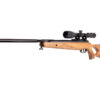
Benjamin Marauder Gen 3 PCP Air Rifle

€600.00
The Benjamin Marauder has been a benchmark PCP rifle for years, and the Gen 3 brings it up to date with refinements that matter. We stock the Marauder because it consistently delivers regulated-class accuracy and multi-shot convenience at a price that makes sense for hunters and backyard shooters alike.
Available in .22 Cal at 950 fps and .25 Cal at 800 fps, there’s a Marauder Gen 3 for whatever you’re hunting.
- .22 Cal up to 950 fps — fast, flat-shooting, and effective on small game
- .25 Cal up to 800 fps — more energy on target for larger pests and field use.
- Multi-shot repeater — Benjamin’s proven magazine-fed design
- PCP platform — consistent, fill-and-shoot performance without recoil
Caliber .22 Cal, .25 Cal Brand Benjamin
Benjamin Marauder Gen 3 PCP Air Rifle: Redesigned Power, Precision, and Regulated Performance
Why Choose the Benjamin Marauder Gen 3?
The primary reason to choose this benjamin air rifle is its combination of adjustability, shot capacity, quiet operation, and precision-focused engineering. Shooters can configure regulator pressure and hammer-spring tension to prioritize higher energy, greater efficiency, or a balance between the two.
Unlike co2 pellet guns, the rifle does not depend on disposable cartridges. It also differs from a benjamin break, brake barrel bb gun, benjamin prowler, benjamin vaporizer, or benjamin air rifle 22 break barrel, because its reservoir must be filled with high-pressure air before use.
However, once charged, the rifle can provide a substantial number of regulated shots. Testing and published specifications indicate that a properly configured .22 may deliver around 150 shots per fill at moderate settings.
How Good Is Its Accuracy and Precision?
A hammer-forged BSA barrel forms the foundation of the Gen 3’s precision capability. Its controlled rifling stabilizes each benjamin pellet, while the regulated air system helps reduce velocity variation across the usable shot string.
An independent production-rifle test conducted at 50 yards produced a strong initial group using 15.89-grain pellets directly from the magazine. Furthermore, a comprehensive review reported excellent accuracy with a broad range of ammunition and an average velocity standard deviation of 4.69 fps during testing.
For shoppers comparing cal .177 pellets or a 177 pellet gun, it is important to note that the commercial Gen 3 is currently listed primarily in .22 and .25 calibers. Therefore, anyone seeking a pellet rifle 1500 fps should not evaluate this regulated platform solely by maximum velocity. Stable energy, predictable trajectory, ammunition compatibility, and repeatable shot placement are more meaningful indicators of field performance.
How Does the PCP System Work?
Before shooting, compressed air is introduced into the 500cc reservoir through compatible high-pressure filling equipment. Afterward, the regulator meters air into the firing chamber at a controlled pressure. When the trigger is pressed, the hammer opens the valve, and a measured air pulse propels the projectile through the barrel.
This operation separates the rifle from a generic pneumatic gun bb gun rifle search result because the Gen 3 is a rifled, magazine-fed pellet platform rather than a conventional steel-BB gun.
The reversible sidelever makes cycling smoother and allows left- or right-side configuration. Consequently, follow-up loading is easier than with the bolt mechanism found on earlier generations.
Where and When Should It Be Used?
The rifle is intended for authorized target ranges, lawful private-property practice, pest management, competitive shooting, and permitted air guns for hunting. Its .22 configuration may suit small-game applications, while the higher-energy .25 version may be selected for more demanding lawful field use.
Every owner must confirm local regulations, suitable quarry, energy restrictions, land permission, transportation requirements, and safe shooting distances. A secure backstop must always be used, and the rifle must be stored unloaded and inaccessible to unauthorized users.
How Does It Compare with Other Benjamin Air Rifles?
The benjamin marauder, benjamin marauder pcp, benjamin marauder pcp air rifle, and pcp benjamin marauder names describe the wider Marauder family. The Gen 3 advances that platform with a larger bottle, externally adjustable regulator, redesigned synthetic stock, elevated cheekpiece, improved trigger blade, and reversible sidelever.
The benjamin marauder .25 emphasizes greater projectile mass and energy, while a benjamin pellet gun 22 cal or benjamin 22 air rifle generally offers flatter trajectory, lower air consumption, and broader pellet availability.
The benjamin armada provides a tactical-style alternative, whereas the benjamin marauder pistol offers more compact handling. Buyers building an air rifle and air pistol collection may also compare it with a benjamin air pistol, although the rifle provides greater reservoir capacity and substantially higher potential energy.
Comparison with Big-Bore Bullpup Platforms
The Benjamin Bulldog Magnum Series Bullpup, benjamin bulldog, benjamin bulldog 457, benjamin bulldog 457 20 joules, and benjamin marauder air rifle bulldog 357 belong to a different big-bore category.
Those platforms use larger projectiles and are designed for specialized applications. Therefore, they differ significantly in ammunition cost, air consumption, power, sound level, intended quarry, and legal classification.
Comparison with Arrow-Launching Platforms
The benjamin airbow airgun, benjamin bow, benjamin air bow, benjamin airbow m600, and benjamin pioneer airbow launch arrows rather than pellets.
Searches such as air bows pellet rifle and arrow gun for deer hunting may combine unrelated equipment types. However, arrow-launching platforms require purpose-built arrows and should never be loaded with conventional pellets or improvised ammunition.
Maintenance and Long-Term Importance
Routine inspection helps preserve consistent operation. Owners should monitor bottle pressure, examine seals, keep the barrel free from obstructions, verify magazine function, and ensure that scope mounts remain secure.
Complex internal work should be handled by an authorized benjamin air rifle repair technician. High-pressure components must not be dismantled without proper tools and expertise.
Ultimately, the Gen 3 is considerably different from a benjamin pellet gun, a benjamibenjamin nitro piston 22 air rifle for hunting, or an ordinary break-barrel model. Its regulated bottle system, high-capacity magazine, refined trigger, adjustable power, and precision barrel make it one of the most technically advanced benjamin air rifles for serious target shooters and responsible field users.
Advanced Engineering, Regulated Performance, and Practical Accuracy
Precision Engineering from the Inside Out
Modern pre-charged pneumatic technology has evolved considerably, and this rifle reflects that progress through thoughtful engineering focused on consistency, efficiency, and user control. Every major component has been designed to work together, allowing the shooter to achieve repeatable performance across a wide range of shooting conditions.
Rather than relying solely on raw power, the internal system emphasizes controlled air delivery, stable velocity, and smooth cycling. These characteristics contribute to improved precision while reducing unnecessary variation between consecutive shots.
The result is a shooting platform that performs predictably whether it is used for recreational practice or demanding field applications.
Benefits of a Regulated Air System
One of the most important features of a modern pneumatic rifle is pressure regulation.
Instead of allowing reservoir pressure to decrease unpredictably throughout the shot string, the regulator delivers a controlled amount of compressed air to the firing chamber before every shot.
This controlled air release produces several practical advantages:
- More consistent projectile velocity.
- Improved long-range precision.
- Reduced vertical stringing on targets.
- Better air efficiency.
- Greater confidence during extended shooting sessions.
By maintaining a stable operating pressure, the rifle produces repeatable performance even as the reservoir gradually loses pressure.
Adjustable Performance for Different Applications
Every shooter has different priorities.
Some prefer maximum power for field use, while others value higher shot counts during target practice. A configurable power system allows the rifle to be optimized for different situations without requiring permanent modifications.
Lower power settings generally improve air efficiency and increase the number of available shots per fill.
Higher settings provide greater projectile energy while naturally reducing overall shot count.
This flexibility allows owners to configure the rifle according to their intended shooting style rather than accepting a single factory configuration.
Smooth Cycling Improves Shooting Rhythm
Fast and reliable operation contributes significantly to overall shooting enjoyment.
A well-designed side-cocking mechanism requires minimal effort while allowing the next shot to be prepared quickly and smoothly.
Because less physical movement is required between shots, the shooter can maintain a more stable body position and consistent sight picture throughout the shooting session.
This becomes particularly valuable during accuracy testing, timed competitions, or situations requiring rapid follow-up shots.
Trigger Performance and Shooter Control
Trigger quality directly influences practical accuracy.
A clean, predictable trigger break allows the shooter to release each shot without disturbing the sight picture.
Gradual pressure applied straight to the rear minimizes unwanted movement while helping maintain proper alignment throughout the firing sequence.
Consistent trigger technique also reduces anticipation and encourages smoother follow-through after each shot.
As familiarity increases, the trigger becomes an extension of the shooter’s natural movement rather than an obstacle to precision.
Barrel Quality and Projectile Stability
Projectile stability begins inside the barrel.
Precision-machined rifling imparts controlled rotational spin, helping stabilize the projectile immediately after it exits the muzzle.
Uniform internal dimensions contribute to consistent engagement between the projectile and the rifling, supporting repeatable accuracy across different distances.
Selecting high-quality ammunition that matches the barrel’s preferences further enhances these characteristics.
Many experienced shooters test several projectile designs before identifying the option that consistently delivers the smallest group sizes.
Sound Moderation and Shooting Comfort
Reduced muzzle report benefits both the shooter and surrounding environment.
A quieter shooting experience encourages longer practice sessions while minimizing disturbance in appropriate shooting locations.
Lower mechanical vibration also contributes to improved comfort by reducing movement during the firing cycle.
Combined with balanced weight distribution and ergonomic stock geometry, these characteristics help maintain stability throughout extended periods of use.
Optimizing Optics Performance
Even the most accurate rifle depends on proper optic installation.
Mounting hardware should be tightened according to manufacturer recommendations to prevent gradual movement under repeated firing.
Once installed, the optic should be carefully zeroed at the preferred shooting distance before additional adjustments are made for longer or shorter ranges.
Maintaining consistent cheek position behind the optic improves eye alignment and reduces aiming errors caused by inconsistent head placement.
Routine inspection of mounting hardware ensures that accuracy remains unchanged over time.
Practical Performance in the Field
Outdoor environments present constantly changing challenges.
Wind direction, temperature, humidity, elevation, and lighting conditions all influence projectile flight to varying degrees.
Successful shooters learn to observe these conditions before every shot rather than relying entirely on equipment adjustments.
Small environmental corrections often produce greater improvements than repeated changes to the optic itself.
Developing this awareness strengthens overall shooting ability while improving consistency under real-world conditions.
Designed for Long-Term Reliability
Reliable equipment should perform consistently throughout years of regular use.
Durable materials, precision-machined internal components, and quality manufacturing standards all contribute to dependable operation.
Routine inspection before each shooting session helps identify loose fasteners, damaged seals, worn accessories, or other minor issues before they affect performance.
Combined with proper maintenance and responsible handling, these engineering principles allow the rifle to deliver dependable accuracy, efficient operation, and long-lasting performance across thousands of shots.
Maintenance, Care, and Long-Term Ownership
Establishing a Reliable Maintenance Routine
Proper maintenance is essential for preserving accuracy, extending service life, and ensuring dependable operation over many years of regular use. Although modern pneumatic rifles are built with durable materials and precision-machined components, routine care remains one of the most effective ways to prevent unnecessary wear.
After every shooting session, the exterior should be cleaned with a soft microfiber cloth to remove fingerprints, dust, moisture, and debris. Metal surfaces benefit from a light application of protective oil designed for sporting equipment. Any excess lubricant should be removed to prevent the accumulation of dirt and residue.
Performing these simple tasks consistently helps maintain both appearance and mechanical reliability.
Maintaining the Barrel
The barrel is one of the most critical components affecting long-term precision.
Unlike traditional firearms, air-powered rifles generally produce very little fouling, making frequent aggressive cleaning unnecessary. Excessive cleaning may even reduce consistency until the bore becomes lightly seasoned again.
Cleaning should only be performed when accuracy begins to decline or after an extended period of heavy use.
Use only cleaning equipment specifically intended for precision airgun barrels. Soft pull-through systems or non-abrasive cleaning rods help protect the rifling while removing accumulated residue.
Harsh chemicals and abrasive brushes should always be avoided because they may damage internal surfaces.
Caring for the Air Reservoir
The high-pressure air reservoir requires careful attention throughout its service life.
Only clean, dry compressed air from reliable filling equipment should be used. Moisture entering the reservoir may gradually affect internal components and reduce long-term reliability.
Filling should always be performed slowly, allowing pressure to stabilize naturally. Rapid filling may generate unnecessary heat and place additional stress on internal seals.
The recommended maximum fill pressure should never be exceeded. Following manufacturer guidelines preserves both safety and performance.
Regular inspection of the fill port, pressure gauge, and surrounding components helps identify potential issues before they become significant.
Protecting Internal Seals
High-quality seals play an important role in maintaining consistent pressure and dependable operation.
Although these components are designed for long service life, normal wear eventually occurs after repeated filling and shooting cycles.
Signs that inspection may be necessary include gradual pressure loss during storage, inconsistent velocity, or audible air leakage.
Replacing worn seals promptly helps restore efficiency while preventing unnecessary wear on surrounding mechanical components.
Internal servicing should always be performed by qualified personnel using appropriate replacement parts and specialized tools.
Magazine Care
Reliable feeding depends on a clean and properly maintained magazine.
Dust, dirt, and small debris can gradually interfere with smooth operation if allowed to accumulate.
After extended use, the magazine should be inspected carefully and cleaned using a dry cloth or compressed air where appropriate.
Projectiles should always be loaded carefully to avoid damaging skirts or deforming soft lead surfaces before chambering.
Proper handling helps maintain reliable cycling and consistent accuracy.
Safe Storage Practices
Correct storage significantly influences long-term durability.
The rifle should always be stored unloaded inside a secure location that prevents unauthorized access.
A cool, dry environment with stable humidity protects metal components from corrosion while preserving seals and stock materials.
Protective cases, lockable cabinets, or dedicated safes reduce the likelihood of accidental damage during storage or transportation.
If the rifle will remain unused for an extended period, periodic inspections should confirm that pressure, seals, and external components remain in excellent condition.
Preserving Accuracy Over Time
Mechanical precision depends on consistent care.
Projectiles should be stored in clean containers that protect them from contamination and physical damage.
Optics should be checked regularly to ensure mounting hardware remains secure.
Environmental conditions—including wind, temperature, humidity, and lighting—should always be considered when evaluating group size because each influences projectile flight differently.
Maintaining detailed shooting records helps identify the combinations of ammunition, distance, and environmental conditions that consistently produce the best results.
Pre-Shooting Inspection
A brief inspection before every shooting session contributes significantly to dependable performance.
Recommended inspection steps include:
- Confirm that all visible fasteners remain properly tightened.
- Verify that the optic has maintained its zero.
- Inspect the barrel for dirt or obstructions.
- Check the reservoir pressure before use.
- Ensure the trigger and safety operate correctly.
- Confirm smooth cycling of all moving components.
- Examine the stock for visible cracks or looseness.
- Verify that the rifle is clean and ready for safe operation.
Completing these checks requires only a few minutes while greatly improving reliability.
Safe Handling During Maintenance
Every maintenance procedure should begin with a complete safety check.
Always confirm that the rifle is unloaded before cleaning or inspection begins.
The muzzle should remain pointed in a safe direction throughout the entire maintenance process.
Protective eyewear is recommended whenever working around pressurized systems or mechanical components.
No component should ever be forced beyond its intended operating range, and damaged parts should be repaired before the rifle is returned to service.
Careful maintenance protects both the equipment and the shooter.
Building Long-Term Shooting Skills
Excellent equipment provides a solid foundation, but consistent practice ultimately determines shooting success.
Each training session should focus on specific objectives such as breathing control, trigger management, body positioning, sight alignment, or follow-through.
Practicing from both supported and unsupported positions develops confidence while preparing the shooter for a variety of real-world situations.
Reviewing targets after every session helps identify recurring errors and encourages gradual improvement through disciplined repetition.
Over time, these habits become second nature and contribute to consistently tighter shot groups.
Long-Term Value
Quality equipment delivers its greatest value when supported by responsible ownership.
Routine maintenance, proper storage, careful handling, and regular inspections preserve mechanical integrity while reducing long-term operating costs.
Owners who invest time in preventive care often experience more dependable performance, greater shooting confidence, and fewer unexpected maintenance issues.
With consistent attention and disciplined practice, the rifle remains a reliable companion for recreational shooting, precision marksmanship, competitive training, and lawful field applications for many years.
Practical Applications, Buying Considerations, and Ownership Experience
A Versatile Platform for Different Shooting Disciplines
A modern pneumatic rifle should be capable of adapting to multiple shooting environments while maintaining dependable performance. Whether the objective is recreational target shooting, precision practice, organized competition, or lawful pest management where regulations permit, versatility adds significant long-term value.
Its balanced design allows shooters to transition between benchrest accuracy testing and practical field use with minimal adjustment. This flexibility makes it suitable for both experienced enthusiasts and those advancing beyond entry-level equipment.
Rather than limiting owners to one style of shooting, the platform supports continuous skill development across a variety of disciplines.
Maximizing Accuracy in Everyday Use
Consistent accuracy depends on preparation, technique, and attention to detail.
Before every shooting session, the optic should be verified to ensure it remains securely mounted and properly zeroed. Small shifts in alignment can noticeably affect point of impact, especially at longer distances.
Maintaining the same cheek position, shoulder pressure, and grip for every shot promotes repeatable results. A relaxed shooting posture reduces unnecessary muscle tension, allowing the rifle to move naturally during the firing cycle.
Smooth trigger control followed by proper follow-through further minimizes shooter-induced movement and improves consistency.
Selecting Appropriate Shooting Distances
Progressive training produces better long-term results than attempting maximum distances immediately.
Beginning at shorter ranges allows the shooter to verify equipment setup while refining sight alignment and trigger control.
Intermediate distances introduce additional challenges involving projectile trajectory and environmental influences.
Long-range shooting requires careful attention to wind conditions, elevation adjustments, and distance estimation.
Advancing gradually through these stages builds confidence while strengthening overall shooting ability.
Understanding Environmental Influences
Outdoor conditions constantly affect projectile flight.
Wind direction and speed remain among the most significant variables influencing accuracy. Even gentle crosswinds may shift point of impact as distance increases.
Temperature, humidity, atmospheric pressure, and changing light conditions also contribute to subtle differences in performance.
Experienced shooters observe surrounding vegetation, wind indicators, or airborne particles before firing. These visual cues often provide valuable information that helps improve shot placement without making unnecessary equipment adjustments.
Developing Effective Practice Habits
Purposeful practice creates measurable improvement.
Instead of firing large numbers of shots without structure, each training session should focus on one or two specific objectives.
Examples include:
- Refining breathing techniques.
- Improving trigger control.
- Practicing different shooting positions.
- Evaluating projectile consistency.
- Confirming optic adjustments.
- Measuring group size.
- Recording environmental conditions.
- Reviewing previous performance.
Maintaining detailed notes allows progress to be tracked objectively while identifying techniques that consistently produce the best results.
Equipment Preparation Before Shooting
A brief inspection before each outing helps maintain reliability and safety.
Recommended checks include:
- Inspect the barrel for obstructions.
- Verify that all visible fasteners remain secure.
- Confirm that the optic has retained its zero.
- Check the pressure level before beginning.
- Ensure all controls operate smoothly.
- Examine the stock for visible damage.
- Verify proper trigger and safety operation.
- Confirm overall cleanliness.
Completing this routine reduces the likelihood of unexpected interruptions during shooting sessions.
Responsible Ownership
Responsible ownership extends beyond proper shooting technique.
The rifle should always be transported, stored, and used in accordance with applicable local laws and regulations.
When not in use, it should remain unloaded and secured inside a locked storage area inaccessible to unauthorized individuals.
Every shooting location should provide a safe backstop capable of completely stopping the projectile, while surrounding areas should be carefully evaluated before firing begins.
Ethical and responsible shooting practices protect both the shooter and the broader sporting community.
Long-Term Cost Efficiency
Investing in quality equipment often provides greater long-term value than repeatedly replacing lower-quality alternatives.
Routine maintenance, careful storage, and periodic inspections help preserve mechanical reliability while reducing repair costs over time.
Using high-quality projectiles and maintaining clean equipment also minimizes unnecessary wear on critical components.
As a result, owners can enjoy years of dependable performance with relatively modest ongoing maintenance requirements.
Is This the Right Choice?
This rifle is well suited for shooters who value precision, consistency, adjustability, and long-term reliability. Its engineering supports recreational shooting, organized target practice, competitive disciplines, and lawful hunting applications where permitted.
Those seeking equipment that can evolve alongside improving shooting skills will appreciate its ability to deliver consistent results across a wide range of distances and conditions.
Rather than focusing solely on maximum power, it provides a balanced combination of accuracy, efficiency, handling, and dependable operation.
Final Thoughts
Selecting a precision air rifle is a long-term investment in both equipment and personal skill development.
With regular maintenance, disciplined practice, responsible ownership, and careful attention to environmental conditions, shooters can achieve consistently impressive performance while extending the service life of their equipment.
By combining advanced engineering with proper technique, this platform delivers dependable accuracy, smooth operation, and lasting value for recreational enthusiasts, competitive marksmen, and responsible field users alike.
Be the first to review “Benjamin Marauder Gen 3 PCP Air Rifle”
Related products


Benjamin



Benjamin

Benjamin


Reviews
There are no reviews yet.