

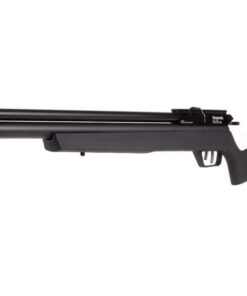
Benjamin Marauder Semi-Auto (SAM) PCP Air Rifle, Synthetic


Price range: €455.00 through €550.00
The Benjamin Marauder Semi-Auto (SAM) PCP Air Rifle in synthetic stock takes the proven Marauder platform and adds a semi-automatic action — making it one of the most shoot-friendly PCPs Benjamin has ever produced. Available in .22 cal at 950 fps, it’s a capable performer for both target shooting and small-game hunting.
- Semi-automatic PCP action: No manual bolt cycling between shots — just aim, fire, and follow up fast.
- .22 Cal at 950 fps: Strong downrange energy for pest control and hunting applications.
- Synthetic stock: Durable, weather-resistant construction that holds up in the field.
- Based on the Marauder platform: Built on Benjamin’s well-regarded regulated PCP heritage.
Caliber .22 cal, Benjamin Marauder Semi-Auto PCP Air Rifle, SyntheticStock Kit, Benjamin Marauder Semi-Auto PCP Air Rifle, Synthetic Stock Brand Benjamin
Benjamin Marauder Semi-Auto (SAM) PCP Air Rifle, Synthetic — Technical Product Description
Benjamin Marauder Semi-Auto (SAM) PCP Air Rifle Engineering, Precision, and Platform Overview
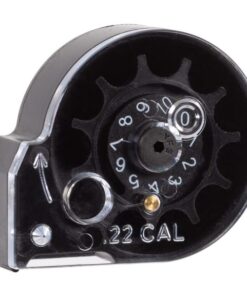
The Benjamin Marauder Semi-Auto (SAM) is a regulated, pre-charged pneumatic air rifle built around a .22-caliber system, a 10-shot rotary magazine, a rifled and shrouded steel barrel, a two-stage trigger, and an all-weather synthetic stock. Benjamin lists velocities of up to 950 fps, approximately 26 ft-lb of energy for the synthetic-stock configuration, and up to 60 shots per fill at 3,000 PSI. Its integrated sound suppression, raised cheekpiece, Picatinny mounting interface, and balanced stock further define the platform.
Benjamin Bulldog Magnum Series Bullpup
The Benjamin Bulldog Magnum Series Bullpup belongs to a different branch of Benjamin’s pneumatic lineup. Its bullpup architecture should not be confused with the conventional rifle layout of the SAM.
Benjamin Air Rifle
A benjamin air rifle can use several different operating systems. The SAM uses stored compressed air, allowing a relatively smooth firing cycle with reduced spring-generated Benjamin Marauder Semi-Auto PCP Air Rifle vibration.
Air Rifle and Air Pistol
The phrase air rifle and air pistol covers equipment with different dimensions, powerplants, capacities, handling characteristics, and legal classifications.
Benjamin Bulldog
The benjamin bulldog represents Benjamin’s large-bore PCP family and differs substantially from the .22-caliber semi-automatic Marauder platform.
Benjamin Air Rifles
Modern benjamin air rifles include break-barrel, PCP, and specialized pneumatic designs. Therefore, model-specific specifications should always be checked.
Benjamin Break
A benjamin break barrel system mechanically compresses its powerplant during cocking, whereas a PCP system stores compressed air before shooting.
Benjamin Airbow Airgun
The benjamin airbow airgun uses pneumatic energy with arrow-based projectiles, making its architecture fundamentally different from a pellet rifle.
Benjamin Marauder PCP
The benjamin marauder pcp family established a reputation around compressed-air operation, rifled barrels, multi-shot capability, and precision-oriented engineering.
Air Bows Pellet Rifle
The phrase air bows pellet rifle can combine two different projectile categories. Airbows launch arrows, whereas conventional pneumatic rifles generally launch pellets.
Benjamin Bulldog 457 20 Joules
Searches for benjamin bulldog 457 20 joules may refer to market-specific configurations or energy restrictions. Local specifications should be verified rather than generalized.
CO2 Pellet Guns
Unlike co2 pellet guns, the SAM uses compressed air stored in a refillable reservoir. Consequently, its operating characteristics differ from CO₂-powered equipment.
Benjamin Armada
The benjamin armada is another Benjamin PCP platform, although its configuration, furniture, ergonomics, and overall design philosophy differ from the SAM.
Benjamin Prowler
The benjamin prowler represents another part of the manufacturer’s airgun history and should not be treated as mechanically equivalent to a regulated semi-automatic PCP.
Benjamin Marauder Air Rifle Bulldog 357
The phrase benjamin marauder air rifle bulldog 357 combines two separate product families. Marauder and Bulldog platforms differ significantly in configuration and intended technical roles.
Benjamin Marauder
The benjamin marauder name has become associated with Benjamin’s PCP engineering. The SAM extends that family with a semi-automatic operating format.
Cal .177 Pellets
Although cal .177 pellets remain common throughout airgunning, the current SAM synthetic configuration is officially listed in .22 caliber.
Brake Barrel BB Gun
A brake barrel bb gun uses a very different powerplant and should not be compared directly with a high-pressure PCP rifle.
Benjamin Pellet Gun
A benjamin pellet gun may use different actions and powerplants, so the exact model determines its pressure, ammunition, and maintenance requirements.
Benjamin Bow
The benjamin bow terminology generally relates to pneumatic arrow-launching equipment rather than conventional rifled pellet platforms.
Benjamin Pellet
A benjamin pellet or other compatible quality projectile can influence grouping because projectile weight, diameter, shape, and manufacturing consistency affect barrel behavior.
Benjamin Air Rifle Repair
Professional benjamin air rifle repair becomes particularly important around pressurized components because PCP reservoirs, valves, seals, and fittings contain substantial stored energy.
Benjamin Air Rifle 22 Break Barrel
A benjamin air rifle 22 break barrel may share the same nominal caliber while operating completely differently from a .22 PCP system.
Benjamin Air Bow
The benjamin air bow category uses compressed air to propel arrows and requires model-specific handling, servicing, and legal consideration.
Benjamin Marauder .25
The benjamin marauder .25 belongs to another Marauder caliber category. Current Gen3 Marauder specifications include .25-caliber configurations, while the SAM is listed as .22 caliber.
Benjamin Bulldog 457
The benjamin bulldog 457 represents a substantially larger-bore concept and should not be confused with the SAM’s .22-caliber configuration.
Benjamin Marauder Pistol
The benjamin marauder pistol uses PCP technology in a compact format, with Benjamin currently listing a rifled barrel, rotary magazine, and two-stage trigger.
Benjamin Air Pistol
A benjamin air pistol normally differs from a full-sized PCP rifle in reservoir capacity, dimensions, handling, and intended sporting application.
Pellet Rifle 1500 FPS
A pellet rifle 1500 fps search emphasizes velocity, but velocity alone does not determine accuracy. Barrel quality, projectile stability, pressure consistency, and technique remain equally important.
Air Guns for Hunting
Air guns for hunting are subject to local laws, energy requirements, permitted species, seasons, and humane-use standards.
177 Pellet Gun
A 177 pellet gun typically uses smaller ammunition than the SAM’s .22-caliber platform, resulting in different ballistic characteristics.
Benjamin Airbow M600
The benjamin airbow m600 belongs to Benjamin’s arrow-launching pneumatic category rather than the conventional pellet-rifle category.
Benjamin Pioneer Airbow
The benjamin pioneer airbow similarly demonstrates how compressed-air technology can be adapted for arrow propulsion instead of pellet shooting.
Benjamin Marauder PCP Air Rifle
The benjamin marauder pcp air rifle family illustrates why controlled airflow, barrel quality, reservoir pressure, and projectile compatibility matter for repeatable precision.
Benjamin Pellet Gun 22 Cal
A benjamin pellet gun 22 cal uses the same nominal bore class as the SAM, although powerplant and action design can vary considerably.
Benjamin Vaporizer
The benjamin vaporizer belongs to a different Benjamin product category and should not be assumed to share SAM components or operating procedures.
Arrow Gun for Deer Hunting
An arrow gun for deer hunting falls under specialized equipment and wildlife regulations that may differ substantially by jurisdiction.
Benjamin 22 Air Rifle
A benjamin 22 air rifle can describe numerous designs. The SAM distinguishes itself through regulated PCP operation, a rotary magazine, and semi-automatic functionality.
PCP Benjamin Marauder
The phrase pcp benjamin marauder accurately identifies the compressed-air foundation of the platform. Consistent reservoir management is therefore central to predictable operation.
Pneumatic Gun BB Gun Rifle
A pneumatic gun bb gun rifle can describe several technologies, but ammunition type, bore design, and operating pressure must always be matched to the exact model.
Benjamibenjamin Nitro Piston 22 Air Rifle for Hunting
The search phrase benjamibenjamin nitro piston 22 air rifle for hunting refers to a gas-piston concept rather than the SAM’s PCP system. Although both may use .22-caliber projectiles, their firing cycles and maintenance requirements differ substantially.
Why Precision and Pressure Management Matter
The SAM’s regulated PCP architecture is important because shot-to-shot consistency depends heavily on controlled air delivery. Its rifled barrel stabilizes the projectile, while the shrouded system incorporates sound suppression. The 10-shot magazine supports repeated operation, and the synthetic stock is designed for practical all-weather durability. Benjamin currently lists the rifle at approximately 42.8 inches long and 7.2 pounds in its specifications.
Rather than judging the rifle exclusively by its advertised 950-fps maximum velocity, users should consider projectile compatibility, pressure condition, barrel cleanliness, optic stability, environmental conditions, and shooting technique. These factors determine how consistently any precision pneumatic platform performs in real-world target use.
Accuracy Potential, Handling, Ergonomics, Range Behavior, and Long-Term Reliability
Understanding Accuracy Potential
Accuracy in a pneumatic rifle depends on the interaction between mechanical quality, ammunition consistency, air delivery, sight alignment, and shooter technique. No single specification determines how well a rifle will group. Instead, performance is produced by several systems working together.
A stable barrel, predictable trigger, consistent pressure cycle, and properly mounted optic all contribute to repeatable results. However, even a mechanically accurate rifle can produce inconsistent groups if ammunition varies significantly in weight or shape.
For this reason, accuracy testing should be performed under controlled conditions. Using the same ammunition, pressure range, shooting distance, and support method makes it easier to evaluate whether performance is actually changing.
How Barrel Condition Influences Precision
The barrel plays a central role in projectile stability. Rifling inside the bore creates rotational movement as the pellet travels forward. This rotation helps the projectile remain stable in flight.
Barrel condition can influence performance over time. Dirt, excessive residue, physical damage, or an imperfect muzzle crown may affect the way the pellet exits the barrel. Therefore, the barrel should be protected carefully during transportation and maintenance.
Cleaning should also be approached conservatively. Excessive cleaning can introduce unnecessary wear, especially if improper tools or abrasive materials are used.
A clean and undamaged barrel generally supports predictable performance, but users should avoid assuming that more cleaning always produces better accuracy.
Projectile Consistency and Grouping
Projectile quality is another major factor in practical precision. Differences in weight, diameter, skirt shape, or manufacturing tolerance can affect velocity and stability.
Damaged pellets may also produce inconsistent results. Bent skirts, dents, or contamination can interfere with loading and barrel engagement.
For controlled testing, ammunition should be stored carefully and inspected before use. Changing ammunition types during the same accuracy test can make results difficult to interpret.
Some barrels may also perform better with certain projectile designs than others. Therefore, compatibility should be evaluated methodically rather than assuming that one pellet type will perform equally well in every rifle.
Handling and Weight Distribution
Handling is strongly influenced by balance and overall weight distribution. A rifle that feels balanced can be easier to keep stable during supported or controlled shooting.
However, accessories can change that balance. A heavy optic, mounting system, or other approved equipment can shift the center of gravity forward or rearward.
This change may influence how the rifle feels during extended use. Therefore, accessory selection should consider both function and overall handling.
A stable platform does not need to feel extremely light. In some situations, moderate weight can help reduce small movements, while excessive weight can contribute to fatigue.
Ergonomics and Repeatable Positioning
Ergonomics affects consistency because the shooter must establish the same relationship with the rifle from one shot to the next.
Cheek placement, shoulder contact, grip position, and eye alignment should remain as consistent as possible. If the shooter changes position frequently, the sight picture may also change.
A comfortable stock design can help reduce unnecessary muscular tension. This is important because excessive tension can introduce small movements into the aiming process.
The goal is not simply comfort. The more important objective is repeatability.
Trigger Control and Stability
The trigger is one of the final mechanical interfaces between the shooter and the firing system. A predictable trigger can help reduce movement immediately before the shot.
Pressure should be applied smoothly rather than abruptly. Sudden movement may disturb sight alignment and widen groups.
The trigger should also be inspected if its behavior changes unexpectedly. Unusual resistance, excessive movement, or inconsistent release characteristics may indicate that servicing is required.
Any adjustment should remain within the manufacturer’s approved limits.
Range Behavior and Trajectory
A projectile begins losing velocity as soon as it leaves the barrel. Gravity and aerodynamic drag gradually influence its path, creating a curved trajectory.
At shorter distances, these effects may appear relatively small. However, as distance increases, projectile drop and wind influence become more noticeable.
This is why practical accuracy at longer distances requires a greater understanding of environmental conditions and trajectory behavior.
Users should establish performance only at distances where they can maintain consistent and responsible control.
Wind and Environmental Influence
Wind is one of the most important external factors affecting pellet flight. Crosswinds can move a projectile laterally, while changing wind direction can create inconsistent impact patterns.
Temperature may also influence seals, lubricants, and pressure behavior. Although compressed-air systems are generally more stable than some alternative powerplants, extreme temperatures should still be avoided.
Humidity and moisture are equally important because prolonged exposure can contribute to corrosion.
After use in damp conditions, external surfaces should be dried before storage.
Magazine Reliability
The feeding system must remain clean and undamaged for consistent operation. Dirt, damaged ammunition, or magazine wear can interfere with proper cycling.
If the action becomes unusually resistant, forcing it should be avoided. The rifle should instead be made safe and inspected.
Magazines should be stored carefully and protected from impact. Routine cleaning can help prevent debris from affecting movement.
Correct loading also contributes to dependable operation and helps reduce feeding problems.
Optic Stability and Point of Impact
A securely mounted optic is essential for repeatable aiming. Loose screws or shifting mounts can create apparent accuracy problems even when the rifle itself is functioning correctly.
Mounting hardware should therefore be checked periodically, especially after transportation.
Eye position should also remain consistent. Changing cheek placement can alter sight alignment and make groups appear less stable.
If the point of impact shifts unexpectedly, the optic and mounting system should be inspected before assuming that the barrel or pressure system is responsible.
Long-Term Mechanical Reliability
Reliable performance depends largely on preventive maintenance.
Seals, valves, pressure fittings, fasteners, magazines, and external surfaces should be inspected periodically. Small problems are easier to correct before they develop into major faults.
Unexpected pressure loss should not be ignored because it may indicate a damaged seal or another issue within the pneumatic system.
Internal pressure-bearing components should be serviced carefully because they contain stored energy.
Storage and Protection
The rifle should be unloaded and secured before storage.
A dry environment helps protect metal and internal components from corrosion. Direct sunlight, extreme heat, and prolonged exposure to moisture should be avoided.
Protective cases are useful during transportation, but equipment should be dry before it is enclosed for long periods.
Overall reliability comes from disciplined care. Stable air pressure, secure optics, clean magazines, good ammunition, correct storage, and regular inspection all support consistent performance. When these factors are managed properly, the rifle can maintain predictable accuracy, dependable operation, and sound mechanical condition over extended use.
Build Quality, Air Efficiency, Comfort, Maintenance, and Responsible Ownership
Construction Quality and Overall Durability
Build quality has a direct influence on how reliably a precision pneumatic rifle performs over time. The relationship between the barrel, receiver, air reservoir, stock, trigger assembly, magazine system, and mounting hardware must remain stable if consistent performance is expected. Even small amounts of unwanted movement can eventually affect handling, sight alignment, or mechanical reliability.
A synthetic stock offers practical durability because it is generally resistant to moisture, minor temperature changes, and routine handling. Unlike traditional wood, synthetic material does not absorb moisture in the same way. Therefore, it can be especially useful in environments where humidity varies or where the rifle may be transported frequently.
However, durability does not eliminate the need for careful handling. Hard impacts can still damage the optic, barrel, muzzle, magazine, or pressure components. For this reason, a protective case should be used during transportation whenever possible.
Why Air Efficiency Matters
Air efficiency refers to how effectively the rifle uses the compressed air stored in its reservoir. A well-managed pneumatic system should release only the amount of air required for each firing cycle rather than wasting unnecessary pressure.
Efficient operation contributes to more consistent shot behavior and helps maintain useful performance throughout the reservoir’s normal operating range.
As the pressure level gradually decreases, the rifle may eventually move outside its preferred operating window. At that point, velocity and consistency can begin to change. Therefore, pressure should be monitored instead of allowing the reservoir to become excessively depleted.
Likewise, attempting to exceed the recommended fill pressure should be avoided. Higher pressure does not automatically create better performance and may place unnecessary stress on internal components.
Pressure Monitoring and Filling Practices
The pressure gauge provides important information about the condition of the air reservoir. Users should become familiar with normal pressure behavior so that unusual changes can be recognized quickly.
If the rifle loses a noticeable amount of pressure while stored, a seal, valve, or fitting may require inspection. Persistent leakage should not be ignored because it can indicate a developing mechanical issue.
Filling equipment should be suitable for high-pressure pneumatic systems. Connections should remain clean, and dust or debris should be kept away from the fill port.
Moisture control is also important. Repeatedly introducing damp air into a pressure system may contribute to corrosion over time, particularly in humid environments.
Comfortable Handling and Shooting Position
Comfort can influence practical consistency because a relaxed and repeatable position is easier to maintain than an awkward one.
The stock, grip angle, cheek support, overall length, and weight distribution all affect how naturally the rifle fits the shooter. A comfortable cheek position helps maintain consistent eye alignment with the optic, while stable shoulder placement supports repeatable positioning.
Excessive muscular tension can create small movements that affect the sight picture. Therefore, the rifle should be supported in a controlled manner rather than gripped more tightly than necessary.
A balanced platform can also reduce fatigue during longer range sessions.
The Importance of Weight Distribution
Weight alone does not determine whether a rifle handles well. The location of that weight is equally important.
A rifle with balanced weight distribution can feel stable and predictable. However, adding large optics or other accessories may shift the center of gravity.
Before installing accessories, users should consider how additional weight may affect handling. A heavier front end may improve stability in some supported positions, but it can also create fatigue during extended use.
Similarly, a rear-heavy configuration may feel more compact but could require a different shooting posture.
Trigger Consistency
The trigger plays an important role in practical accuracy because the shooter must release the shot without disturbing the rifle’s alignment.
A predictable trigger allows pressure to be applied gradually. This can help reduce unwanted movement immediately before the firing cycle begins.
However, trigger systems should only be adjusted within approved specifications. Excessive modification can affect reliability and may create unsafe conditions.
If the trigger suddenly feels different, unusually stiff, extremely light, or inconsistent, the rifle should be inspected before further use.
Magazine Care and Feeding Reliability
A semi-automatic platform depends heavily on reliable magazine operation.
The magazine should remain clean and protected from physical damage. Dirt, dust, or damaged pellets may interfere with proper feeding.
Pellets should be inspected before loading. Bent skirts or other deformation can affect both accuracy and magazine function.
If the feeding system begins to resist normal operation, forcing the mechanism should be avoided. Instead, the rifle should be made safe and checked according to the manufacturer’s instructions.
Regular inspection helps identify wear before it develops into repeated feeding problems.
Barrel Protection and Cleaning
The barrel is one of the most important components affecting accuracy, so it deserves careful protection.
The muzzle crown should be kept free from impact damage because it influences the way the projectile leaves the barrel. Even minor damage can affect consistency.
Cleaning should be performed only when necessary. Excessive cleaning may introduce unnecessary wear, especially when unsuitable tools are used.
Soft, appropriate cleaning equipment should be selected, and the manufacturer’s recommendations should be followed.
The barrel should never be treated aggressively simply because accuracy changes slightly. Other causes, such as ammunition, pressure, optics, or environmental conditions, should also be investigated.
Environmental Conditions and Storage
Environmental conditions can influence both performance and long-term durability.
Moisture can cause corrosion, while extreme heat may place additional stress on pressurized systems. Cold temperatures can also affect seals and lubricants.
For this reason, the rifle should not be stored in direct sunlight, enclosed hot vehicles, or excessively damp locations.
After exposure to rain or humidity, the exterior should be dried before storage.
A dry, secure storage area helps preserve the metal surfaces, stock, optic, and internal components.
Preventive Maintenance and Inspection
Preventive maintenance is generally more effective than waiting for a serious fault.
Before and after use, visible components should be inspected for damage, looseness, leaks, or unusual wear. Mounting screws should remain secure, while magazines and fill connections should be kept clean.
Pressure retention should also be observed over time.
If unusual sounds, inconsistent cycling, unexplained pressure loss, or mechanical resistance develop, the rifle should be inspected rather than repeatedly operated.
High-pressure components should be serviced by someone with appropriate knowledge and equipment.
Responsible Ownership and Long-Term Reliability
Long-term reliability depends heavily on disciplined ownership.
Correct filling practices, stable storage conditions, careful cleaning, suitable ammunition, secure optics, and regular inspection all contribute to predictable performance.
Mechanical systems usually provide warning signs before major problems occur. Therefore, changes in pressure behavior, feeding, trigger feel, accuracy, or cycling should not be ignored.
A precision pneumatic rifle should be treated as a carefully engineered mechanical system. When its pressure limits are respected, its components are protected, and its maintenance requirements are followed, dependable performance can be preserved over an extended period.
Responsible handling, secure storage, and compliance with local regulations remain just as important as mechanical care.
Real-World Performance, Shot Consistency, Range Management, Reliability, and Long-Term Care
Real-World Performance Beyond Published Specifications
Real-world performance depends on much more than a manufacturer’s headline figures. Velocity, energy, reservoir capacity, and magazine size can provide useful reference points, but they do not fully explain how a rifle behaves during repeated use. Practical performance is affected by air pressure, projectile consistency, barrel condition, environmental conditions, optic stability, and shooting technique.
For this reason, the most meaningful evaluation comes from observing how consistently the rifle performs under controlled conditions. When the same ammunition, pressure range, shooting distance, and support method are maintained, changes in grouping become easier to identify.
A rifle that performs consistently from one session to another demonstrates more practical value than one that only produces impressive figures under ideal conditions. Therefore, repeatability should always be considered alongside raw power.
Shot-to-Shot Consistency
Shot-to-shot consistency is one of the key indicators of a well-functioning pneumatic system. Each firing cycle should release a controlled quantity of compressed air, allowing projectile velocity to remain reasonably stable.
When velocity varies too much, vertical dispersion can increase because different projectiles may travel at slightly different speeds. This can become more noticeable as distance increases.
Pressure management therefore plays an important role. The rifle generally performs best when the reservoir remains within its intended operating range. As pressure drops too far, consistency may begin to decline.
Users should pay attention to changes in sound, point of impact, and pressure behavior. These changes can sometimes indicate that the system is moving outside its preferred pressure range.
Why Ammunition Quality Matters
Ammunition has a direct effect on accuracy and reliability. Individual projectiles can vary in weight, diameter, shape, and manufacturing quality. Even small differences may influence how they engage the rifling and travel through the barrel.
Damaged projectiles should not be used for accuracy evaluation. Bent skirts, dents, contamination, or deformation can affect both feeding and flight stability.
Storage is equally important. Ammunition should be protected from moisture, dirt, and physical damage. Keeping it in a clean container helps maintain consistency.
Different projectile designs may also behave differently in the same barrel. Therefore, performance should be evaluated methodically rather than assuming that one projectile will always be ideal.
Range Management and Trajectory Awareness
Every projectile follows a curved flight path. Gravity begins acting immediately after the projectile leaves the barrel, while air resistance gradually reduces velocity.
At short distances, this effect may appear minor. However, as range increases, projectile drop becomes more noticeable. Wind can also create greater lateral movement over longer distances.
This means that accurate shooting requires an understanding of distance and environmental conditions.
Responsible range use should always include a secure backstop and a clear awareness of what lies beyond the target. Projectiles can travel farther than expected, especially when fired at elevated angles.
For this reason, safe range design is just as important as mechanical accuracy.
Wind and Environmental Conditions
Wind is one of the most significant external factors affecting projectile flight.
A crosswind can move a projectile away from the intended point of impact, and variable wind can produce inconsistent grouping patterns. The effect becomes more noticeable as shooting distance increases.
Temperature may also influence seals, lubricants, and air pressure characteristics. Extremely cold conditions can make some materials less flexible, while excessive heat can increase pressure inside enclosed systems.
Moisture should also be considered. Damp conditions can promote corrosion, particularly when equipment is stored without being dried.
Environmental awareness therefore contributes to both performance and long-term durability.
Semi-Automatic Reliability
A semi-automatic system relies on several components working together correctly. Magazine function, air delivery, mechanical timing, and projectile condition all contribute to reliable cycling.
If the action begins to behave unusually, continued operation should be avoided until the cause is identified.
Forcing a resistant mechanism can create additional damage. Instead, the rifle should be made safe, unloaded according to the manufacturer’s procedure, and inspected carefully.
Magazines should remain clean and protected from impact. Any visible cracks, deformation, or unusual resistance may indicate that replacement or servicing is needed.
Reliable cycling depends on both mechanical condition and correct loading practices.
Optic Stability and Accuracy Retention
A securely mounted optic is essential for consistent aiming.
Even a small amount of movement in the mounting system can cause the point of impact to shift. For this reason, rings, bases, and mounting screws should be inspected periodically.
However, fasteners should not be overtightened. Excessive force can damage threads, mounts, or the optic itself.
If accuracy changes unexpectedly, the sighting system should be checked before assuming that the barrel or pneumatic system has developed a fault.
Consistent eye position also matters. Repeating the same cheek placement helps maintain the same visual alignment from shot to shot.
Maintenance of High-Pressure Components
High-pressure pneumatic systems require careful maintenance because they store significant energy.
Seals, valves, reservoirs, and fittings should be inspected if pressure retention changes unexpectedly.
Persistent air leakage should not be ignored. A slow leak may begin as a minor issue but can eventually affect performance or reliability.
Only appropriate lubricants should be used. Some oils can damage seals or react poorly under high-pressure conditions.
Internal pressure-bearing components should not be dismantled casually. Professional servicing may be the safest option when a fault involves the reservoir, valve system, or other pressurized parts.
Cleaning and Surface Protection
Routine cleaning helps preserve both appearance and mechanical condition.
External metal surfaces should be wiped clean after handling, particularly in humid conditions. Fingerprints, moisture, and dirt can contribute to corrosion over time.
The barrel should be cleaned only when necessary. Excessive cleaning can create unnecessary wear, especially when unsuitable rods or abrasive products are used.
The muzzle crown should receive particular care because damage in this area can affect projectile release and accuracy.
A careful, conservative maintenance routine is generally more effective than aggressive cleaning.
Storage and Transport
Proper storage protects both the equipment and the people around it.
The rifle should be unloaded and secured according to applicable law. Unauthorized access should be prevented, and ammunition should be stored responsibly.
A dry environment is preferable for long-term storage. Excessive heat, direct sunlight, and prolonged dampness should be avoided.
Protective cases are useful during transportation because they reduce the risk of impact damage to the barrel, optic, stock, and pressure components.
However, equipment should be dry before being stored inside a closed case for extended periods.
Long-Term Reliability and Responsible Ownership
Long-term reliability depends heavily on how consistently the rifle is maintained.
Pressure should be monitored, magazines should remain clean, optics should stay secure, and external components should be inspected regularly.
Changes in sound, cycling, trigger behavior, pressure retention, or accuracy can provide early warning that maintenance is required.
Ignoring these signs may allow a small issue to develop into a larger mechanical problem.
Ultimately, dependable performance comes from a combination of careful pressure management, correct ammunition, stable optics, responsible handling, and preventive maintenance. A well-maintained pneumatic rifle can remain consistent for many years, but that reliability depends on respecting its operating limits and following manufacturer guidance throughout its service life.
Practical Use, Accuracy Maintenance, Air Management, Component Care, and Long-Term Performance
Practical Use in Controlled Shooting Environments
A precision pneumatic rifle performs best when it is used in a controlled environment where distance, target placement, backstop quality, and environmental conditions can be managed carefully. This allows the shooter to understand how the rifle behaves without introducing unnecessary variables.
A stable shooting position is especially useful when evaluating performance. Supported shooting reduces movement and makes it easier to identify whether changes in grouping are caused by the rifle, the ammunition, the optic, or the shooter.
Consistency should remain the main objective. Using the same pressure range, ammunition type, shooting distance, and optic settings helps create more meaningful results. If multiple factors are changed at the same time, determining the cause of a performance difference becomes difficult.
Maintaining Accuracy Over Time
Accuracy is not a permanent characteristic that remains unchanged regardless of maintenance. It depends on the condition of several components.
The barrel should remain free from damage, the optic should stay secure, the magazine should feed properly, and the pneumatic system should maintain pressure consistently.
Small changes may gradually appear rather than developing suddenly. A slight shift in point of impact, unusual sound, or widening group size may indicate that something needs inspection.
Before assuming that the barrel is responsible, other factors should be checked. Loose mounting hardware, damaged ammunition, changing pressure, or inconsistent shooting technique can all create similar symptoms.
Air Reservoir Management
The air reservoir is central to the operation of the rifle. It stores the compressed air that powers each firing cycle, so its condition has a direct influence on reliability.
The reservoir should always be filled within the manufacturer’s recommended pressure range.
Overfilling should be avoided because pneumatic systems are designed around specific pressure limits. Increasing pressure beyond those limits does not guarantee better performance and may place unnecessary stress on seals, valves, and fittings.
The reservoir should also be monitored during storage. If pressure decreases noticeably without use, a seal or connection may require attention.
Why Clean Filling Equipment Matters
The condition of the filling equipment can affect the long-term health of the pneumatic system.
Dust and debris around the fill connection can enter the system if the connection is not kept clean. Moisture can also become a problem, particularly in humid environments.
For this reason, fill ports and connectors should be inspected before use. Appropriate filtration and moisture control should be used where recommended.
The filling process should be performed gradually and carefully. Rapid filling can generate heat, while careless handling can damage connectors or seals.
Using equipment that is properly rated for the required pressure is essential.
Magazine Inspection and Care
A magazine must function smoothly if reliable semi-automatic operation is expected.
The magazine should be kept clean and protected from impact. Dirt, damaged projectiles, or worn components may interfere with proper feeding.
Ammunition should be inspected before loading. Bent, damaged, or contaminated projectiles can affect both feeding and accuracy.
If the action feels unusually resistant, the mechanism should not be forced. The rifle should instead be made safe and inspected according to the manufacturer’s procedure.
Regular magazine inspection helps reduce unexpected interruptions during range use.
Optic Mounting and Zero Stability
A stable optic is necessary for repeatable aiming.
Mounting rings, bases, and screws should be checked periodically because transportation and repeated handling can sometimes loosen hardware.
However, overtightening should also be avoided. Excessive torque can damage threads, mounting surfaces, or the optic itself.
If the point of impact changes suddenly, checking the optic and mounts should be one of the first troubleshooting steps.
Consistent head position also affects sight alignment. Repeating the same cheek placement helps maintain the same visual relationship with the optic from one shot to the next.
Barrel Condition and Cleaning Frequency
The barrel should be treated as a precision component.
Cleaning may be necessary when accuracy noticeably declines or when visible contamination is present, but excessive cleaning is rarely beneficial.
Incorrect cleaning tools can damage the rifling or muzzle crown. Therefore, only suitable equipment and gentle methods should be used.
The muzzle crown deserves special attention because it affects how the projectile exits the barrel. Even minor damage can influence stability and grouping.
During transport, the barrel should be protected from impact and pressure.
Environmental Influence on Performance
Environmental conditions can influence both accuracy and mechanical reliability.
Wind can push projectiles away from the intended point of impact, particularly as distance increases. Variable wind can create inconsistent group patterns even when the rifle itself is functioning normally.
Temperature can affect seals and lubricants. Extremely cold environments may reduce the flexibility of some materials, while excessive heat can increase pressure inside enclosed systems.
Humidity creates another concern because moisture can contribute to corrosion.
After exposure to rain or damp conditions, external metal surfaces should be dried before storage.
Trigger and Safety System Inspection
The trigger and safety mechanisms should operate consistently.
Any sudden change in trigger feel should be taken seriously. Unusual stiffness, excessive movement, or unpredictable release characteristics may indicate that inspection is required.
Adjustments should remain within manufacturer-approved limits. Excessive modification may affect reliability and safety.
The safety mechanism should also be checked regularly to ensure it operates normally.
If either system behaves unexpectedly, the rifle should not be used until the issue has been identified.
Long-Term Component Protection
Long-term performance depends heavily on protecting seals, pressure fittings, mounting hardware, the barrel, and the feeding system.
Regular inspection allows small issues to be found early. A slightly loose fastener, minor pressure leak, or worn magazine component is easier to address before it develops into a more serious fault.
Preventive maintenance also reduces unnecessary disassembly. High-pressure internal components should not be opened casually because they can retain significant stored energy.
When internal servicing is required, qualified technical support is generally preferable.
Storage and Responsible Ownership
The rifle should be unloaded and secured before storage.
A cool, dry environment helps protect both metal and polymer components. Direct sunlight, extreme heat, and prolonged moisture exposure should be avoided.
Protective cases are useful during transportation, although the rifle should be dry before being stored in a closed case for long periods.
Ultimately, dependable long-term performance results from disciplined care. Correct air management, clean filling equipment, stable optics, good ammunition, careful storage, and routine inspection all help preserve reliability. When these practices are followed consistently, the rifle is more likely to maintain predictable operation and mechanical condition throughout its service life.
Be the first to review “Benjamin Marauder Semi-Auto (SAM) PCP Air Rifle, Synthetic”
Related products

Benjamin




Benjamin

Benjamin


Reviews
There are no reviews yet.