
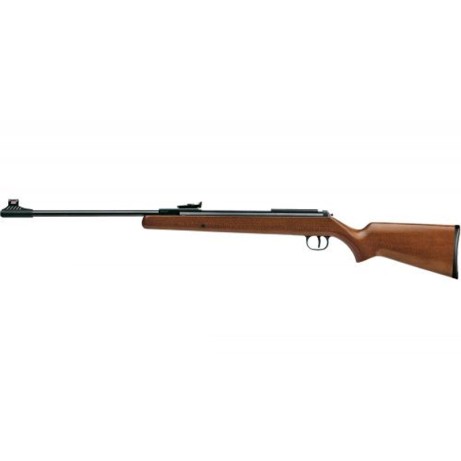
Diana 34 Classic
€400.00
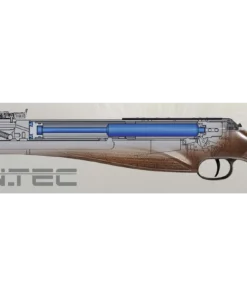
The 34 looks like a classically shaped air rifle but features internals that set it apart from the rest of the crowd. The robust breakbarrel spring system is powerful and consistent and is made from high grade materials to provide long lasting power, something that is different from other rifles in this price range.
Featuring a barrel that measures a shade under 50cm, the 34 is one of the most accurate rifles that Diana make and is ideal for both target shooting and pest control. The barrel also comes fitted with TRUGLO fibre optic sights for precision aiming, even in low light conditions.
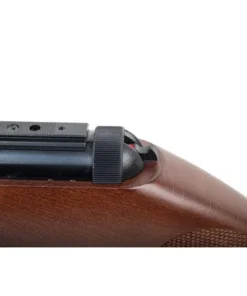
Crafted from specially selected beech wood and classically shaped, the 34 combines a universal look with a fantastic level of comfort for a truly enjoyable shooting experience.
Specification
- Calibre – .22 / .177
- Approx power – 11.5 ft/lbs
- Barrel Thread – N/a
- Stock – Beech Stock
- Overall Length – 114.3cm
- Barrel Length – 48.3cm
- Weight – 3.4kg
- Sights – Fibre Optic front sight & adjustable rear sight
- Safety – Automatic
Diana 34 Classic Air Rifle – German Engineering, Traditional Beechwood Craftsmanship and Premium Sporting Design
Diana 34 Classic – Product Description, Engineering, Design, Features and Technical Specifications
Introducing the Diana 34 Classic
The Diana 34 Classic represents decades of traditional German airgun manufacturing, combining established mechanical engineering with timeless sporting aesthetics. Developed by Diana, this recognizable model has maintained its position within the company’s traditional spring-piston product range.
The design is distinguished by its natural beechwood stock, carefully finished exterior, rifled steel barrel, and recognizable sporting proportions. Furthermore, its traditional appearance is complemented by modern components, including an adjustable T06 trigger and interchangeable fibre-optic sights.
Unlike contemporary PCP platforms, this model belongs to the spring-piston category. Consequently, its mechanical architecture is different from equipment that relies on an externally charged compressed-air reservoir.
Another distinguishing characteristic is its break-barrel configuration. The traditional arrangement contributes to the model’s recognizable identity and separates it from fixed-barrel and side-lever designs.
The stock is manufactured from beechwood, providing a natural finish with individual grain characteristics. Additionally, its ergonomic contours contribute to the overall appearance and physical construction.
The T06 trigger represents another important feature. It is associated with Diana’s established precision-oriented sporting product family.
Meanwhile, the adjustable and interchangeable fibre-optic sighting components distinguish the model from simpler traditional designs.
An 11mm mounting rail is also incorporated for compatible optical accessories.
For customers researching German sporting equipment, the Diana 34 Classic offers a combination of traditional materials, established manufacturing heritage, and modern product features.
Main Product Features
- German-made sporting air rifle.
- Traditional beechwood stock.
- Spring-piston operating system.
- Break-barrel construction.
- Rifled steel barrel.
- Diana T06 trigger mechanism.
- Adjustable and interchangeable fibre-optic sights.
- Automatic safety mechanism.
- Machined 11mm optics mounting rail.
- Traditional sporting appearance.
- Single-shot configuration.
- Available in .177 and .22 caliber configurations, depending on market.
- Manufacturer-supported replacement components.
Technical Specifications
| Specification | Manufacturer information |
|---|---|
| Manufacturer | Diana |
| Model | 34 Classic |
| Country of manufacture | Germany |
| Operating system | Spring-piston |
| Action | Break-barrel |
| Stock material | Beechwood |
| Barrel type | Rifled steel |
| Barrel length | 495mm |
| Overall length | 1,155mm |
| Approximate weight | 3.2kg |
| Trigger | T06 |
| Safety | Automatic |
| Sights | Adjustable fibre-optic |
| Mounting rail | 11mm |
| Loading arrangement | Single-shot |
| Available calibers | .177 and .22 |
Specifications should be checked against the exact regional version supplied.
German Manufacturing Heritage and Diana Brand Identity
The Diana name has been associated with sporting airgun manufacturing since 1890.
Over the decades, the company has developed a recognizable range of traditional and contemporary pneumatic sporting products.
The Diana 34 Classic reflects this established manufacturing identity.
Its design combines natural materials with mechanical components intended for long-term sporting ownership.
Furthermore, the product’s traditional exterior distinguishes it from modern synthetic-stock alternatives.
The manufacturer continues to offer several different product families, allowing customers to compare different construction approaches.
Traditional Beechwood Stock
One of the most recognizable features is the natural beechwood stock.
Unlike synthetic furniture, natural wood has individual grain patterns and variations.
Consequently, every finished stock may display slightly different visual characteristics.
The material provides a traditional sporting appearance that remains popular among enthusiasts.
Furthermore, its contoured exterior contributes to the product’s classic identity.
Wooden components require appropriate environmental care. Excessive moisture, prolonged heat exposure, and unsuitable cleaning products may affect their appearance.
Therefore, proper storage and maintenance should form part of responsible ownership.
T06 Trigger System
The T06 trigger is an established feature within Diana’s sporting product range.
Its design reflects the manufacturer’s emphasis on mechanical refinement.
The trigger assembly forms an important part of the complete product architecture.
Furthermore, its construction distinguishes the Diana 34 Classic from simpler recreational models.
All servicing and adjustments should follow official manufacturer documentation.
Unauthorized modifications should be avoided because the trigger is a safety-critical component.
Adjustable Fibre-Optic Sights
The factory sighting arrangement incorporates fibre-optic components.
These provide a recognizable visual design and distinguish the product from conventional all-metal sighting arrangements.
Furthermore, the manufacturer identifies the sights as adjustable and interchangeable.
The sight assembly contributes to the rifle’s traditional sporting configuration.
The exact supplied configuration should be confirmed with the retailer.
Rifled Steel Barrel
The Diana 34 Classic incorporates a rifled steel barrel.
The internal barrel construction forms part of the manufacturer’s traditional mechanical design.
Steel provides a durable material for the barrel assembly when manufactured and maintained appropriately.
Furthermore, the external barrel finish complements the wooden stock.
The barrel should be protected against corrosion and physical damage.
Automatic Safety System
An automatic safety mechanism is incorporated into the design.
This provides an additional mechanical safety feature.
However, a safety mechanism should never replace responsible handling.
The product must always be treated as potentially dangerous.
Secure storage, appropriate supervision, and compliance with the manufacturer’s instructions remain essential.
11mm Mounting Rail
The machined 11mm rail provides a standardized mounting interface.
It allows consideration of compatible optical accessories.
However, not every mounting component is suitable for every product.
Compatibility should be confirmed using manufacturer specifications.
The inclusion of a mounting rail provides additional flexibility without requiring the product to be supplied with an optical scope.
Overall Construction and Sporting Appearance
The Diana 34 Classic combines a traditional wooden exterior with black metallic components.
Its proportions reflect the established appearance of classic sporting equipment.
The long barrel and contoured stock contribute to its recognizable silhouette.
Furthermore, the finish provides an attractive combination of natural wood and metal.
For customers who prefer traditional sporting aesthetics, this design offers an alternative to contemporary polymer-stock products.
Diana 34 Classic and the Wider Diana Product Range
Customers researching the diana air rifle, air rifle diana, diana air rifles, and rws diana air rifle categories will encounter several models.
The Diana 34 Classic belongs to the traditional spring-piston family.
Other products include the Diana 34 EMS, Diana 48, Diana 350 Magnum, and Diana 460 Magnum.
Although these products share a manufacturer, their mechanical arrangements and external designs differ.
The diana pellet gun category therefore covers more than one operating system.
Similarly, the terms diana air pistol and diana chaser parts refer to different product categories.
Customers researching diana chaser accessories, lp8 diana, or diana r22 should verify the exact model before ordering components.
Diana 34 Classic Compared With the Diana 34 EMS
The Diana 34 EMS is another member of the manufacturer’s 34 family.
However, it introduces additional modular features.
The Classic configuration is distinguished by its traditional beechwood furniture and established exterior design.
The EMS family offers additional design flexibility and product-specific components.
Consequently, replacement parts should not be assumed interchangeable.
Comparing Diana 34 With Diana 48
The Diana 48 represents a different mechanical arrangement.
It is associated with fixed-barrel side-lever construction, whereas the Diana 34 Classic uses a conventional break-barrel configuration.
This distinction is important when comparing mechanical architecture.
Furthermore, their stock designs and overall dimensions differ.
Comparing Diana 350 Magnum and Diana 460 Magnum
The Diana 350 Magnum and Diana RWS 460 Magnum are separate models within the manufacturer’s broader sporting range.
Their specifications and mechanical characteristics should be evaluated independently.
Likewise, the diana 250 air rifle, diana 250, and diana two fifty identify other product searches.
These names should not be confused with the Diana 34 Classic.
Related Sporting Product Searches
Customers researching the wider sporting equipment market may also encounter:
- Umarex airguns.
- Umarex Notos.
- Umarex Gauntlet.
- Umarex Hammer.
- Umarex Zelos.
- Umarex Fusion 2.
- Weihrauch HW44.
- Crosman 1377.
- Benjamin Marauder Pistol.
- Gamo PT85.
- AirForce TalonP.
- Steyr LP10.
These are separate products and should be evaluated using their respective manufacturers’ documentation.
Likewise, Glock BB guns, airsoft Glock replicas, Umarex T4E products, and CO2 pistols belong to different product categories.
They should not be presented as accessories or compatible components of the Diana 34 Classic.
Why Product Authenticity and Documentation Matter
A genuine product should be accompanied by appropriate manufacturer identification and documentation.
Customers should verify the model designation, stock configuration, caliber, and applicable regional specifications.
Furthermore, the retailer should clearly identify included accessories and warranty coverage.
This reduces uncertainty and supports a more transparent purchasing experience.
Final Section 1 Overview
The Diana 34 Classic combines established German manufacturing heritage with traditional beechwood styling and recognizable sporting construction.
Its principal characteristics include a spring-piston system, rifled steel barrel, T06 trigger, adjustable fibre-optic sights, automatic safety, and machined optics rail.
The combination of natural materials and traditional exterior design makes it a distinctive member of the Diana product range.
For customers interested in classic German sporting equipment, it represents a recognizable product with a long-established design identity.
SECTION 2: Product Quality, Craftsmanship, Ownership Considerations, Maintenance, Safety and Frequently Asked Questions
Traditional Craftsmanship and Modern Manufacturing
The Diana 34 Classic demonstrates how established manufacturing traditions can remain relevant in a modern sporting product category.
Its natural wooden stock creates a different visual experience from contemporary synthetic alternatives.
Meanwhile, the metallic components provide the familiar appearance associated with traditional sporting equipment.
Manufacturing quality is influenced by material selection, component finishing, dimensional consistency, and inspection procedures.
Consequently, an attractive exterior should be supported by appropriate quality control.
The product’s longstanding design identity is an important part of its appeal.
Material Selection and Product Longevity
Materials influence the appearance and durability of sporting equipment.
Beechwood provides a traditional natural finish, while metallic components contribute to the mechanical structure.
However, every material requires appropriate care.
Environmental exposure, physical impacts, and unsuitable cleaning products can affect product condition.
Consequently, owners should follow the manufacturer’s maintenance recommendations.
Understanding Product Generations
Manufacturers sometimes introduce revisions to established product families.
These changes may affect exterior components, mechanical assemblies, and accessory compatibility.
Therefore, the exact model designation is important when ordering replacement components.
Customers should avoid relying exclusively on photographs or general product names.
The manufacturer documentation should remain the primary reference.
Warranty and Customer Support
Warranty coverage varies by retailer and regional distribution arrangements.
Customers should review the applicable conditions before purchasing.
Furthermore, proof of purchase and product identification may be required when assistance is requested.
Access to authorized technical support is an important consideration.
A reputable retailer should provide clear information about warranty procedures and genuine replacement components.
Secure Storage
Responsible storage is essential.
The equipment should be secured against unauthorized access, particularly where children or inexperienced individuals may be present.
A suitable lockable storage arrangement provides additional protection.
Furthermore, local regulations should be followed.
The manufacturer’s storage recommendations should also be observed.
Product Inspection and Maintenance
Regular external inspection helps identify visible deterioration.
Wooden components should be protected from excessive moisture.
Metallic surfaces should be kept in suitable condition.
Furthermore, damaged or defective components should receive professional assessment.
Internal mechanical servicing should be undertaken by qualified personnel.
Unauthorized repairs or modifications should be avoided.
Frequently Asked Questions
1. What is the Diana 34 Classic?
It is a traditional German-made spring-piston sporting air rifle featuring a beechwood stock and established mechanical design.
2. Where is the Diana 34 Classic manufactured?
The manufacturer’s official documentation identifies it as Made in Germany.
3. What material is used for the stock?
A traditional beechwood stock is supplied.
4. Does it have a wooden stock?
Yes. Natural beechwood is one of its principal exterior features.
5. What trigger system is included?
The model incorporates the Diana T06 trigger system.
6. Does it have an automatic safety?
Yes. An automatic safety mechanism is listed by the manufacturer.
7. What type of barrel is included?
The product incorporates a rifled steel barrel.
8. Are fibre-optic sights included?
Yes. The manufacturer lists adjustable and interchangeable fibre-optic sights.
9. Does it have an optics mounting rail?
Yes. An 11mm machined mounting rail is provided.
10. Is it a PCP model?
No. It belongs to the spring-piston category.
11. Is it a break-barrel design?
Yes. It uses a traditional break-barrel arrangement.
12. Is it a multi-shot model?
The manufacturer lists a single-shot configuration.
13. Which calibers are available?
The manufacturer’s current specifications identify .177 and .22 configurations.
14. Are all regional versions identical?
No. Regional specifications and permitted configurations may differ.
15. Does it come with a scope?
A scope should not be assumed included in the standard configuration. Check the retailer’s exact package description.
16. Can compatible optical accessories be purchased separately?
The 11mm rail provides a mounting interface. Compatibility should be verified with the accessory manufacturer.
17. Is the beechwood stock identical on every rifle?
Natural wood grain varies, so minor visual differences are normal.
18. Does the product require special storage?
Secure storage and protection against excessive humidity and temperature are recommended.
19. Can the stock be damaged by moisture?
Yes. Prolonged exposure to moisture can affect natural wood.
20. Are replacement components available?
Availability depends on the model, regional distributor, and current manufacturer stock.
21. Can components from other Diana models be used?
Compatibility should never be assumed. Exact model identification is necessary.
22. What is the difference between the Classic and EMS versions?
They belong to the same broad model family but have different design features and configurations.
23. Is the Diana 48 the same model?
No. The Diana 48 uses a different mechanical arrangement.
24. Does the Diana 34 Classic use compressed-air cylinders?
No. It is a self-contained spring-piston design.
25. What is the importance of the T06 designation?
It identifies Diana’s established trigger system.
26. Is the product suitable for beginners?
Suitability depends on local laws, physical capability, appropriate instruction, and responsible supervision.
27. Is it a toy?
No. It is sporting equipment capable of causing serious injury.
28. Is protective equipment important?
Yes. Appropriate protective equipment should be used in accordance with facility and manufacturer requirements.
29. Can it be transported internationally?
Transportation is subject to the laws of the departure country, destination country, transit countries, and carrier.
30. What should buyers verify before ordering?
Buyers should confirm the exact model, caliber, regional configuration, included accessories, warranty, and applicable legal requirements.
Final Product Assessment
The Diana 34 Classic represents a longstanding approach to sporting equipment manufacturing.
Its beechwood stock, traditional exterior, T06 trigger, adjustable fibre-optic sights, and German manufacturing heritage provide a distinctive product identity.
Furthermore, the combination of natural materials and established mechanical design appeals to customers who appreciate traditional sporting craftsmanship.
Responsible ownership should include appropriate maintenance, secure storage, and compliance with applicable regulations.
The result is a recognizable member of the Diana sporting range, supported by an established manufacturer and a distinctive traditional design.
Detailed Product Quality, Traditional Craftsmanship, Material Durability, Ownership Experience, Maintenance, Safety, Customer Support and Frequently Asked Questions
An Established Approach to Sporting Equipment Design
Traditional sporting equipment continues to attract interest because of its combination of mechanical construction, recognizable appearance, and established manufacturing principles. Products developed around traditional engineering concepts often appeal to customers who appreciate natural materials and carefully finished components.
The overall quality of a product should be assessed through several considerations. These include manufacturing consistency, material selection, exterior finishing, component durability, warranty support, and the availability of appropriate technical assistance.
Furthermore, the quality of the complete product should be considered rather than relying exclusively on its appearance.
A well-finished exterior contributes to the overall presentation. Nevertheless, long-term satisfaction also depends on the condition of the internal components and the availability of manufacturer-approved servicing.
Another important consideration is product documentation. Clear instructions provide customers with information about ownership responsibilities, storage requirements, inspection procedures, and applicable safety precautions.
Consequently, an informed purchasing decision should involve both the physical characteristics and the support arrangements associated with the product.
Traditional Woodworking and Exterior Craftsmanship
Natural wood has maintained an important place in sporting equipment manufacturing for generations.
Its popularity is partly explained by its appearance. Unlike synthetic materials, natural wood displays individual grain patterns, variations in tone, and distinctive visual characteristics.
These differences contribute to the character of each finished product.
Furthermore, wooden furniture can complement traditional metallic components, creating an attractive combination of natural and industrial materials.
The quality of woodworking depends on several manufacturing considerations. Surface preparation, shaping consistency, finishing quality, and material selection all contribute to the final appearance.
However, natural wood is affected by environmental conditions.
Humidity may cause dimensional changes, while prolonged exposure to unsuitable temperatures can affect the finish.
Physical impacts may also create scratches, dents, or other visible damage.
Consequently, appropriate environmental protection should be considered throughout ownership.
Understanding Natural Wood Grain
Natural grain variation is a normal characteristic of wooden products.
Some examples display darker patterns, while others have lighter and more uniform surfaces.
These differences should not automatically be interpreted as manufacturing defects.
Furthermore, the appearance of the finished material may vary according to the finishing process.
Customers purchasing products with natural wooden furniture should understand that the delivered example may not look exactly like the promotional photograph.
This is particularly important when online product images are used for purchasing decisions.
Retailers should therefore provide representative photographs and accurate descriptions.
Exterior Finishing and Presentation
The finish contributes to both appearance and surface protection.
A consistent finish can improve the visual presentation of natural materials while helping protect the underlying surface.
However, no finish is completely resistant to damage.
Scratches, impacts, unsuitable cleaning products, and environmental exposure may gradually affect its appearance.
Consequently, owners should avoid aggressive cleaning methods.
The manufacturer’s care recommendations should always be followed.
Additionally, products should be protected against unnecessary contact with abrasive surfaces.
A carefully maintained exterior can help preserve the original appearance over an extended period.
Metallic Components and Surface Protection
Metallic components contribute to the structural and mechanical characteristics of sporting equipment.
Their durability depends on material quality, manufacturing processes, surface treatments, and environmental conditions.
However, metallic surfaces may deteriorate when exposed to moisture or unsuitable chemicals.
Corrosion can affect appearance and may eventually compromise component condition.
Therefore, appropriate storage and routine external inspection are important.
Visible corrosion should not be ignored.
Where deterioration affects important mechanical components, professional assessment should be obtained.
Manufacturing Consistency and Quality Control
Manufacturing consistency is an important consideration when evaluating products from an established sporting equipment manufacturer.
A reliable manufacturing process should maintain appropriate dimensional tolerances and consistent finishing standards.
Furthermore, inspection procedures should identify visible defects before products reach customers.
However, no manufacturing process is entirely immune to occasional defects.
Consequently, product inspection remains important after delivery.
Customers should verify the model identification, external condition, packaging, and accompanying documentation.
Any suspected manufacturing issue should be reported to the retailer or authorized service provider.
The Importance of Authentic Product Identification
Authenticity is an important consideration when purchasing branded sporting equipment.
Customers should verify the manufacturer identification and exact model designation.
Furthermore, the retailer should provide clear information about the product’s origin and configuration.
Promotional images should correspond reasonably closely to the supplied item.
A product description should not combine specifications from several different versions.
This is particularly important when manufacturers introduce revised configurations or regional variations.
Clear identification reduces the possibility of purchasing an incompatible accessory or replacement component.
Understanding Product Generations and Manufacturing Revisions
Established manufacturers occasionally introduce revised versions of existing products.
These revisions may involve changes to exterior components, manufacturing processes, finishing, or supplied accessories.
Consequently, an older example may not be identical to a more recently manufactured version.
This does not automatically mean that one generation is superior.
Instead, the differences should be evaluated according to documented specifications.
Customers should use the exact product designation when requesting technical assistance.
Retailers should also avoid presenting historical specifications as current information without verification.
Product Documentation and Ownership Information
Documentation plays an important role in responsible ownership.
A complete documentation package should identify the product and provide relevant manufacturer instructions.
It may also include warranty information, maintenance recommendations, and safety warnings.
Furthermore, documentation helps customers understand the limitations of the product.
This is particularly important when regional regulations differ.
Owners should retain their documentation throughout the ownership period.
It may be required when requesting warranty assistance or purchasing approved replacement components.
Understanding Warranty Conditions
Warranty coverage is determined by the applicable manufacturer and retailer terms.
Customers should review the warranty before completing a purchase.
Important considerations include the coverage period, qualifying defects, exclusions, servicing arrangements, and proof-of-purchase requirements.
Furthermore, warranty conditions may differ between countries.
An international customer should not assume that identical coverage applies in every market.
The retailer should clarify which service arrangements are available.
Written warranty documentation is preferable to relying exclusively on informal assurances.
Customer Support and After-Sales Assistance
After-sales support contributes significantly to the overall purchasing experience.
Customers may require assistance with product identification, documentation, warranty enquiries, or replacement-component availability.
Consequently, a retailer should provide clear communication channels.
A professional support arrangement should also establish reasonable expectations concerning response times and servicing procedures.
Furthermore, customers should receive accurate information about the limits of available assistance.
Where specialist attention is necessary, the appropriate manufacturer-authorized service provider should be identified.
Replacement Components and Compatibility
Replacement-component compatibility is an important consideration throughout ownership.
Products within the same manufacturer’s range may share certain design characteristics while using different individual components.
Consequently, similarity in appearance does not establish compatibility.
Customers should identify the exact model and production configuration before purchasing replacements.
Furthermore, the manufacturer’s approved documentation should be used as the primary reference.
Unverified substitutes may introduce problems involving dimensions, materials, or mechanical suitability.
Genuine components provide a clearer basis for compatibility.
The Importance of Genuine Accessories
Accessories should be evaluated according to their intended compatibility and manufacturer specifications.
A component that appears suitable may not satisfy the necessary dimensional or mechanical requirements.
Furthermore, accessories can differ between regional product packages.
Customers should therefore confirm the precise contents of their purchase.
Retailers should identify optional accessories separately from standard inclusions.
This improves transparency and reduces misunderstandings.
Packaging and Delivery Presentation
Packaging contributes to the condition in which a product reaches its purchaser.
Suitable protective packaging helps reduce the possibility of scratches and physical damage during transportation.
However, packaging requirements depend on the product’s dimensions, materials, and applicable shipping regulations.
Customers should inspect the outer packaging upon delivery.
Visible damage should be documented and reported to the appropriate carrier or retailer.
Furthermore, the contents should be checked against the original order confirmation.
International Purchasing Considerations
International purchases introduce additional responsibilities.
Import regulations, customs procedures, carrier restrictions, and local ownership requirements may differ significantly between countries.
Consequently, customers should verify the applicable rules before placing an order.
A product permitted in one country may be restricted or require additional documentation elsewhere.
Furthermore, transportation companies may impose their own conditions.
The retailer should provide accurate information about the shipping arrangements available.
Customers remain responsible for ensuring that the transaction complies with the laws applicable to their location.
Responsible Ownership
Responsible ownership begins with understanding that sporting equipment is not a toy.
Even products designed for recreational activities can cause serious injury.
Consequently, appropriate precautions should be followed at all times.
Unauthorized individuals should not have access to the equipment.
Children and inexperienced individuals require particular protection.
Furthermore, products should never be left unattended in an accessible location.
Responsible ownership includes respecting local regulations, manufacturer instructions, and established safety standards.
Secure Storage Arrangements
Secure storage is essential.
A suitable lockable storage arrangement helps prevent unauthorized access.
The storage location should also protect the product against environmental damage.
Excessive moisture, extreme temperatures, and unnecessary physical contact may affect its condition.
Furthermore, storage arrangements should comply with applicable legal requirements.
The original carrying case may provide transportation protection, but it should not automatically be treated as a secure long-term storage solution.
Protecting Natural Materials During Storage
Natural wooden components require suitable environmental conditions.
Prolonged exposure to moisture may affect their dimensions and appearance.
Excessively dry conditions may also contribute to changes in the material.
Consequently, stable environmental conditions are preferable.
Wooden surfaces should be protected against impacts and abrasive contact.
Furthermore, suitable cleaning products should be selected according to the manufacturer’s recommendations.
These precautions can help preserve the original finish.
Protecting Metallic Surfaces
Metallic surfaces should be protected from unnecessary exposure to moisture and corrosive substances.
Appropriate exterior care helps maintain their appearance.
However, cleaning methods must remain consistent with manufacturer recommendations.
Abrasive materials and unsuitable chemicals may damage protective finishes.
Furthermore, visible deterioration should be assessed rather than concealed.
Where important mechanical components are affected, qualified technical assistance should be obtained.
Routine External Inspection
Routine external inspection helps identify visible changes in product condition.
Customers may look for obvious damage, loose exterior components, unusual corrosion, or deterioration of protective finishes.
However, external inspection should not be confused with internal mechanical servicing.
Specialized internal components may require professional attention.
Furthermore, any suspected structural or pressure-related defect should be handled by an appropriately qualified service provider.
The manufacturer’s documentation should guide inspection responsibilities.
Why Professional Servicing Matters
Specialized mechanical equipment may contain components that require specific knowledge and appropriate tools.
Consequently, internal repairs should not be attempted without the necessary qualifications.
Unauthorized disassembly may compromise safety and reliability.
Furthermore, incorrect replacement components can introduce additional problems.
Professional service providers can assess the condition of relevant assemblies and identify suitable manufacturer-approved components.
This is particularly important when an issue involves a safety-critical mechanism.
Recognizing Signs of Damage
Visible damage should never be ignored.
Cracks, severe impacts, unusual corrosion, and damaged exterior components may indicate a problem requiring further assessment.
Likewise, unexpected mechanical behavior should receive appropriate attention.
Customers should stop using equipment suspected of being defective and contact an authorized service provider.
Attempting to conceal a defect may create additional risks.
Accurate reporting allows the manufacturer or retailer to provide more appropriate assistance.
Cleaning and General Care
Cleaning should be undertaken according to manufacturer recommendations.
Different materials may require different products and methods.
Natural wood, metallic surfaces, and synthetic accessories should not automatically receive identical treatment.
Furthermore, unsuitable chemicals may damage finishes or other materials.
Abrasive cleaning products should be avoided unless specifically approved.
Owners should also avoid unnecessary exposure to moisture.
Appropriate general care helps maintain the product’s appearance and condition.
Environmental Conditions and Product Longevity
Environmental conditions influence the long-term condition of many manufactured products.
Humidity may affect natural materials.
Temperature variations may influence certain seals and protective finishes.
Dust and contamination may also affect exposed surfaces.
Consequently, appropriate storage conditions contribute to product longevity.
Furthermore, prolonged exposure to unsuitable environments should be avoided.
The manufacturer’s recommendations provide the most appropriate reference.
Understanding Long-Term Ownership Costs
The purchase price is only one part of the financial commitment associated with ownership.
Other expenses may include suitable storage, protective equipment, approved accessories, replacement components, and professional servicing.
Furthermore, shipping and import charges may apply when products are purchased internationally.
Consequently, customers should evaluate the total cost before purchasing.
A product with an attractive initial price may involve additional ownership expenses.
Transparent budgeting supports a more satisfactory purchasing decision.
Evaluating Overall Product Value
Overall value should be assessed through several factors.
These include construction quality, materials, design, reliability, warranty coverage, and after-sales support.
Furthermore, the product should match the customer’s lawful intended application.
A high purchase price does not automatically establish superior quality.
Likewise, a lower price does not necessarily indicate poor manufacturing.
A balanced evaluation should consider verified specifications and long-term ownership requirements.
The Importance of Honest Product Descriptions
Accurate product information supports customer confidence.
Retailers should distinguish between manufacturer specifications, retailer claims, and optional accessories.
Furthermore, specifications should not be copied from unrelated models.
This is particularly important when several products share similar names.
A transparent description should identify the exact configuration being supplied.
Customers should also be informed when regional differences may apply.
Honest product communication reduces misunderstandings and supports better purchasing decisions.
Why Customer Reviews Matter
Customer reviews can provide useful information about packaging, exterior appearance, communication, and ownership experiences.
However, individual experiences should not be treated as universal evidence.
Different customers may have different expectations.
Furthermore, a review may describe an older production version.
Consequently, reviews should be considered alongside official product documentation.
A combination of verified specifications and balanced customer feedback provides a stronger basis for evaluation.
Choosing a Reputable Retailer
The retailer contributes significantly to the purchasing experience.
Customers should consider the clarity of the product description, availability of support, payment transparency, and warranty arrangements.
Furthermore, the business should provide clear contact information.
A reputable retailer should be willing to clarify specifications and explain what is included.
Unclear product information and unrealistic promises should be treated cautiously.
Professional communication helps establish a more dependable commercial relationship.
Frequently Asked Questions
1. What makes this product distinctive?
Its combination of traditional wooden furniture, established mechanical construction, and recognizable sporting appearance distinguishes it within its category.
2. Is the natural wood appearance identical on every example?
No. Natural wood grain varies, so differences in tone and pattern are expected.
3. Can environmental conditions affect the stock?
Yes. Humidity, temperature, and physical impacts can influence natural wood.
4. Why is exterior finishing important?
It contributes to appearance and helps protect the underlying material.
5. Does a protective finish prevent all damage?
No. Appropriate storage and care are still required.
6. Can ordinary household cleaning products be used?
Not automatically. Cleaning products should be compatible with the manufacturer’s recommendations.
7. Why should product documentation be retained?
Documentation provides important identification, warranty, and safety information.
8. Does warranty coverage apply internationally?
Not necessarily. Coverage depends on the manufacturer’s and retailer’s regional arrangements.
9. What information should be checked before purchasing?
Customers should confirm the exact configuration, included accessories, warranty, and applicable regional specifications.
10. Why is the exact model designation important?
Different versions may use different components. Correct identification helps prevent incompatible purchases.
11. Are replacement components always available?
Availability depends on production status, regional distribution, and manufacturer stock.
12. Can components from similar models be substituted?
Compatibility should never be assumed. Manufacturer documentation should be consulted.
13. Why are genuine components recommended?
They provide a clearer reference for dimensions, materials, and intended compatibility.
14. What should customers do if a defect is discovered?
The retailer or authorized service provider should be contacted for appropriate assessment.
15. Can customers undertake internal repairs themselves?
Specialized internal servicing should be left to appropriately qualified personnel.
16. Why is secure storage important?
It helps prevent unauthorized access and reduces unnecessary exposure to environmental damage.
17. Is a carrying case sufficient for secure storage?
Not necessarily. A suitable lockable storage arrangement may also be required.
18. Can moisture damage metallic components?
Yes. Moisture can contribute to corrosion and deterioration.
19. How should wooden surfaces be protected?
Appropriate environmental conditions and manufacturer-approved cleaning products should be used.
20. What should be done if severe exterior damage occurs?
The condition should be assessed by an appropriate professional before further use.
21. Why should customers inspect packaging after delivery?
Inspection helps identify possible transportation damage and supports accurate reporting.
22. What if the delivered product differs from the advertised photographs?
The customer should contact the retailer and request clarification regarding the supplied configuration.
23. Are promotional accessories always included?
No. Optional accessories should be distinguished from standard package contents.
24. Why is accurate packaging information important?
It helps customers understand exactly what they are purchasing.
25. Can shipping restrictions differ between countries?
Yes. Customs, transportation, and import requirements vary.
26. Should customers verify import requirements before ordering?
Yes. Applicable regulations should be checked before completing an international purchase.
27. Why is after-sales support important?
It provides assistance with warranty enquiries, product identification, and approved replacement components.
28. What should a customer expect from professional support?
Clear communication, accurate technical information, and appropriate guidance concerning available servicing arrangements.
29. Do customer reviews guarantee the same experience for everyone?
No. Individual experiences vary, and reviews should be evaluated alongside verified documentation.
30. Does a premium price guarantee better quality?
No. Quality should be evaluated through materials, construction, reliability, and documented support.
31. Why is retailer transparency important?
It reduces misunderstandings about product specifications, package contents, and warranty coverage.
32. Can natural wood change appearance over time?
Yes. Environmental exposure and normal aging can influence its appearance.
33. Why should excessive heat be avoided?
Heat may affect finishes, materials, and certain components.
34. What is the importance of routine inspection?
It helps identify visible deterioration before it becomes a more significant concern.
35. Should damaged components be concealed or repaired without assessment?
No. Suspected defects should be reported and assessed appropriately.
36. Why should unauthorized modifications be avoided?
They may compromise safety, reliability, and warranty eligibility.
37. What should be considered when evaluating long-term value?
Construction, reliability, maintenance requirements, warranty, and service availability should all be considered.
38. Does a traditional design mean that maintenance is unnecessary?
No. All manufactured products require appropriate care.
39. Why should the original documentation remain accessible?
It provides an important reference throughout the ownership period.
40. What is the most important consideration before purchasing?
Customers should ensure that the exact configuration meets their lawful requirements and that appropriate storage, maintenance, and support are available.
Final Assessment: Craftsmanship, Reliability and Long-Term Ownership
Traditional sporting equipment continues to attract customers who appreciate natural materials, established manufacturing principles, and distinctive exterior design.
Its overall value should be considered through the quality of its construction, the consistency of its finish, the availability of genuine components, and the support arrangements offered by the retailer.
Furthermore, responsible ownership requires appropriate storage, environmental protection, and professional attention whenever specialized servicing becomes necessary.
A transparent purchasing process should also provide accurate product identification, realistic warranty information, and clear details about package contents.
Ultimately, long-term satisfaction depends on more than appearance or initial purchase price.
Reliable customer support, appropriate maintenance, and informed ownership decisions contribute to a better overall experience.
Be the first to review “Diana 34 Classic”
Related products

Diana Air Rifles


Diana Air Rifles


Diana Air Rifles
Diana Air Rifles
Diana Air Rifles
Diana Air Rifles
Diana Air Rifles
Diana Air Rifles
Reviews
There are no reviews yet.