


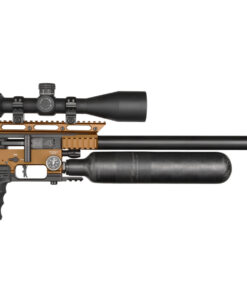


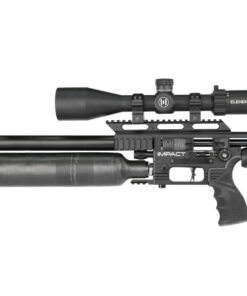

FX Impact M4 Sniper


€1,960.00
The Impact M4 fill port is recessed into the trigger guard, making the standard female quick disconnect incompatible. The extended female quick disconnect adapter clips right into your existing fitting, allowing for better reach.
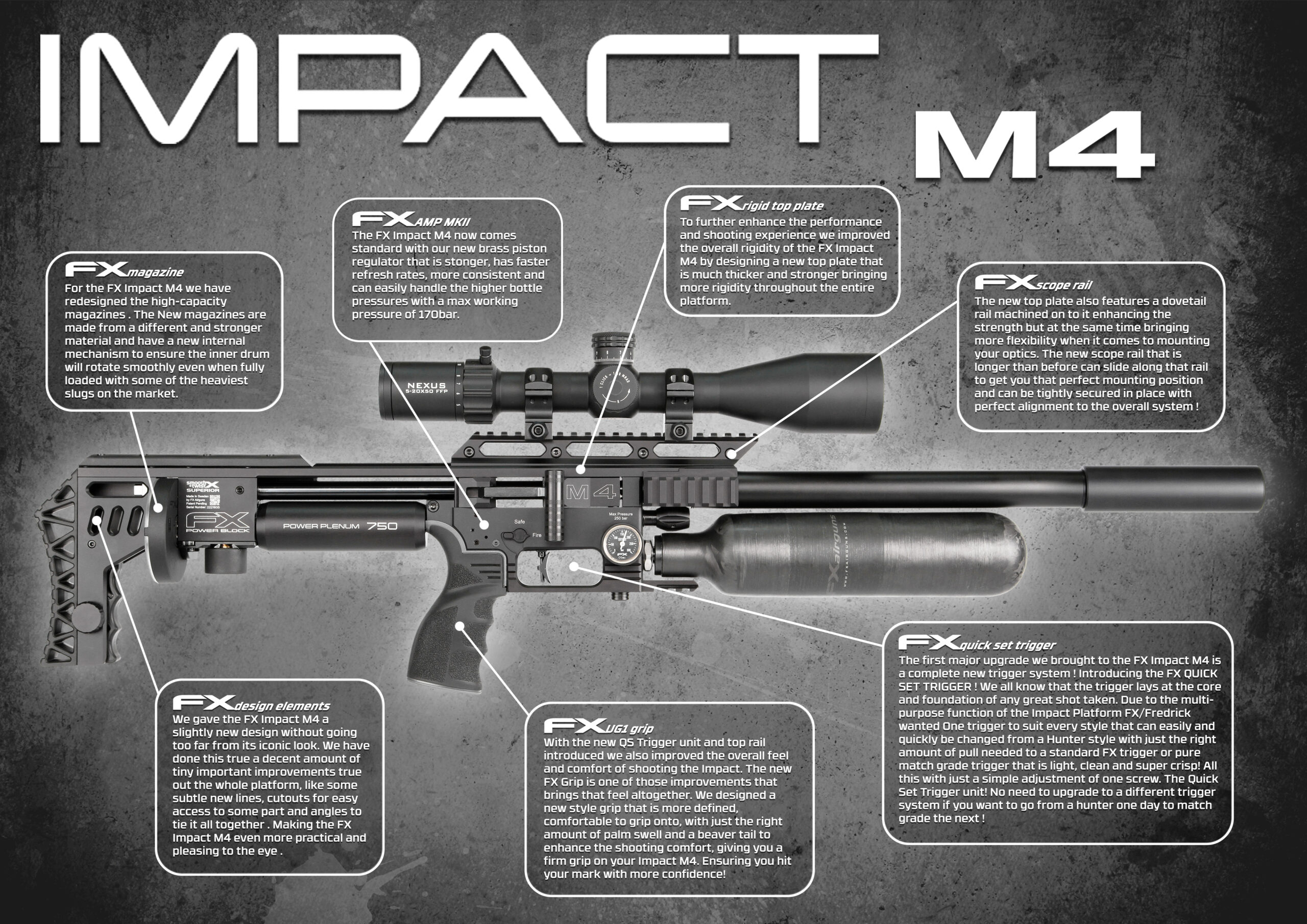
The FX Impact is undeniably one of the most iconic airguns on the market, having changed the airgun industry forever and truly making an impact when it was released back in 2015. With every new release of the FX Impact, we’ve made it better, more reliable, and accurate, reinforcing its presence in the industry. The FX Impact is an airgun that overtime has proven itself to be suited for just about any discipline, whether you’re a professional benchrest shooter, hunter, or a regular all-around shooter.
The platform offers the perfect setup for every occasion, Therefore, FX is pleased to announce the release of the FX Impact M4, improving the platform in different areas while ensuring to keep the iconic looks that make the impact so recognizable out in the field and in competitions.
The FX Impact has taken 1st place and podium spots at all the major competitions around the world since its release. So, FX Airguns has made it their mission to make the FX Impact M4 not only better in many different ways but also stronger and more rigid so you as a shooter can keep competing at the top and fighting for those wins!
Specifications:
Caliber: .177 | .22 | .25 | .30 | .35
Length: Compact: 640mm / 25″ | Standard: 860mm / 34″ | Sniper: 1000mm / 39″ | Extended: 1120mm / 44″
Weight: Compact: 2.8 kg / 6.1 lbs | Standard: 3.1 kg / 6.85 lbs | Sniper: 3.25 kg / 7.15 lbs | Extended: 3.35 kg / 7.35 lbs
Barrel Length: Compact: 500mm / 19.7″ | Standard: 600mm / 23.6″ | Sniper: 700mm / 27.5″ | Extended: 800mm / 31.5″
Barrel: 500mm: Superior STX | 600mm: Superior STX | 700mm: Superior STX | 800mm: Superior Heavy STX
Fill Pressure: 250 BAR
Air Capacity: Compact: 300cc | Standard: 480cc | Sniper: 580cc | Extended: 580cc
Plenum: Power Plenum 750
Regulator: Brass Piston AMP MKII
Trigger: Quick Set Trigger
Grip: FX UG1 Grip AR15 Style
Safety: Switch Style
Optics Rail: 30 MOA Picatinny
Cocking System: Reversible Smooth Side Lever.
Magazine: .177: 34 Shots | .22: 28 Shots | .25: 25 Shots | .30: 23 | .35: 18
Shot Capacity: .177: up to 375 shots | .22: up to 330 shots | .25: up to 160 shots | .30: up to 105 shots | .35: up to 45 shots
Energy: .177: up to 47J / 35 ft/lbs | .22: up to 117J / 87 ft/lbs | .25: 135J / 100 ft/lbs | .30: 169J / 125 ft/lbs | .35: 211J / 156 ft/lbs
*Maximum energy is obtained with the slug power kit installed using the 800mm barrel.
FX Impact M4 Sniper – 700mm Precision PCP Air Rifle for Long-Range Accuracy, Competition, and Advanced Sporting Use
FX Impact M4 Sniper Overview
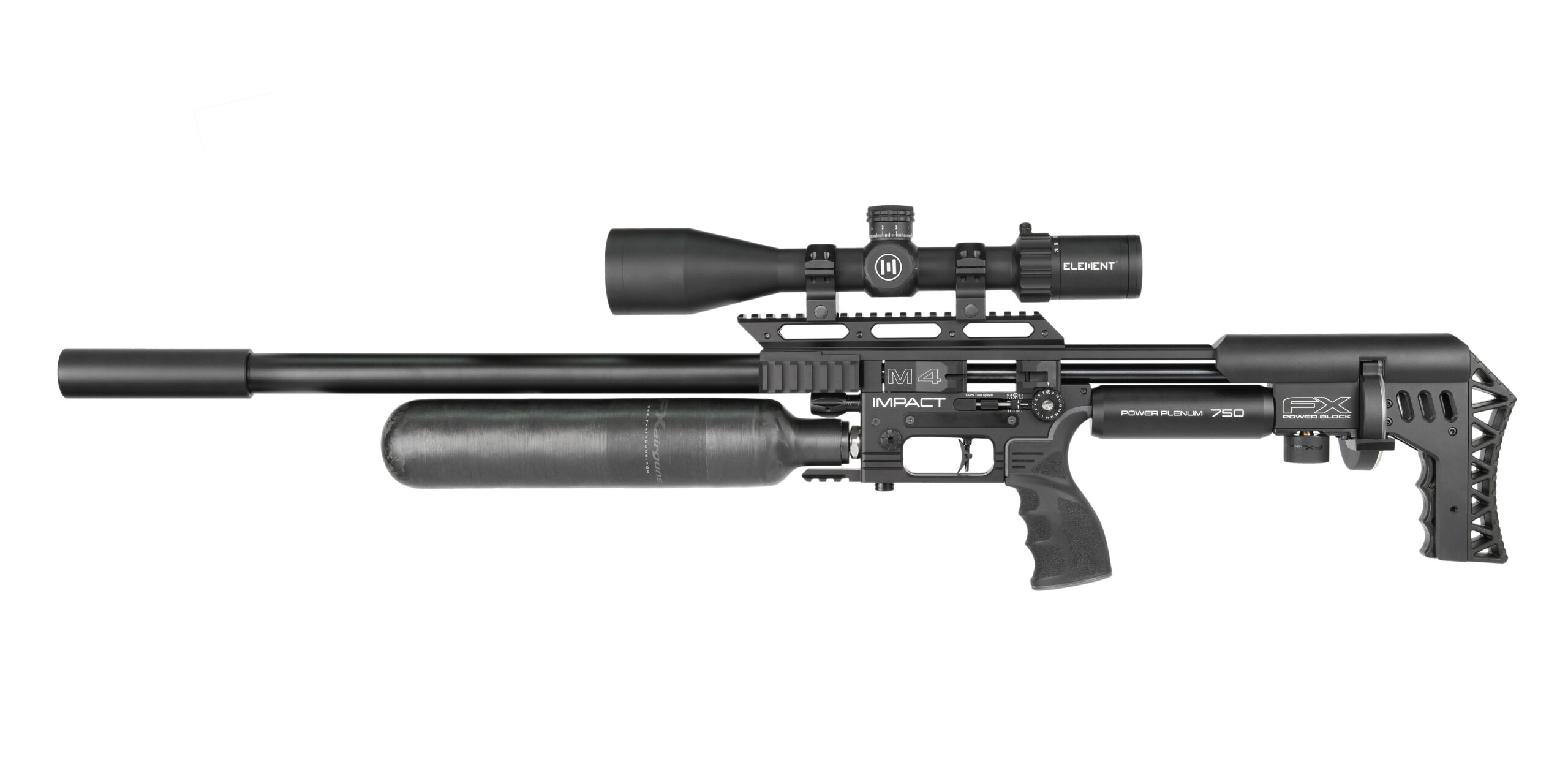
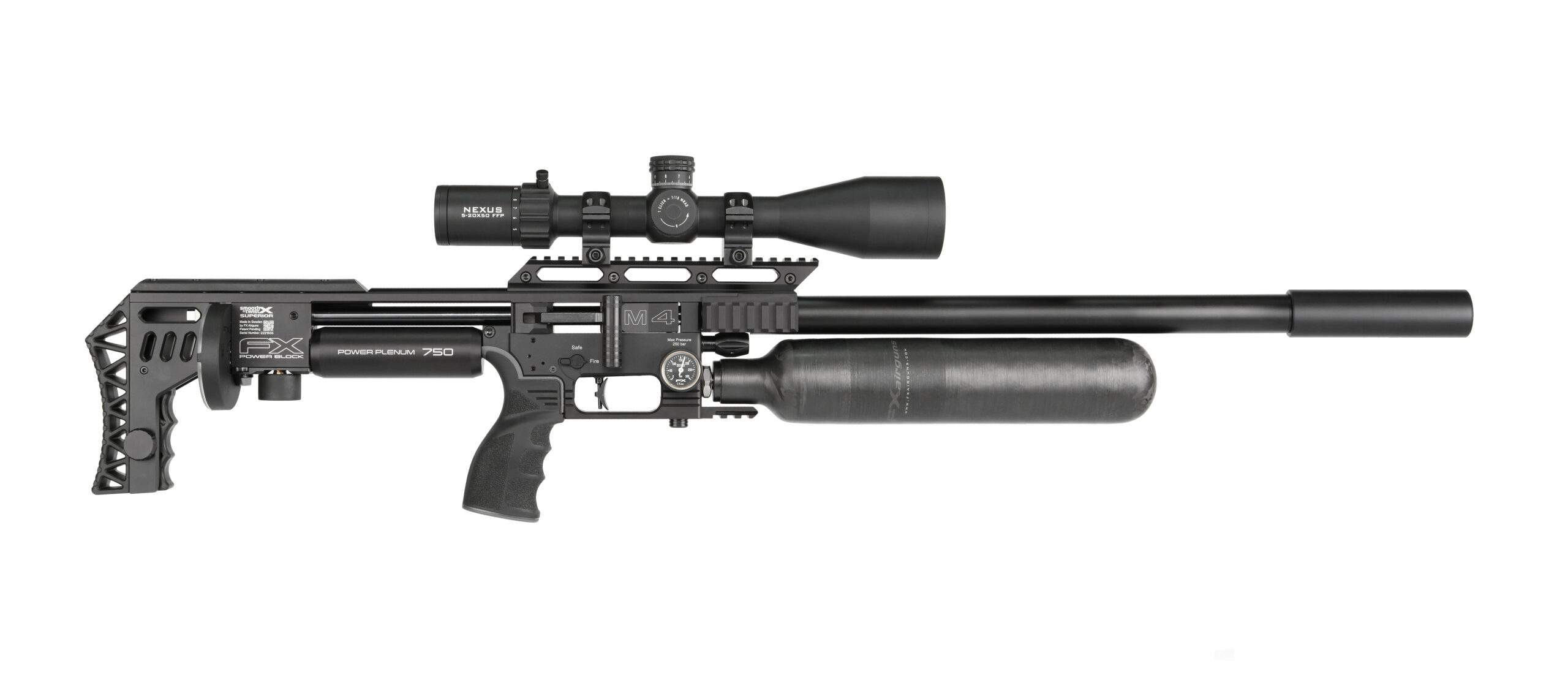
The FX Impact M4 Sniper is the 700mm-barrel version of FX’s flagship modular PCP platform, developed for shooters who want extended barrel length, a larger air supply, advanced tuning capability, and a highly configurable bullpup-style chassis. Current Sniper specifications list a 700mm barrel, 580cc removable carbon-fiber bottle, approximately 1000mm overall length, and roughly 3.25kg weight, although exact specifications can vary slightly by caliber and market.
FX also offers the Sniper in multiple calibers, including .177, .22, .25, .30, and .35 on some international configurations. Consequently, buyers should always confirm the exact regional version before purchase.
Why Choose the FX Impact M4 Sniper?
The strongest reason to choose the Sniper configuration is its balance between long-barrel efficiency and compact bullpup ergonomics.
A 700mm barrel gives compressed air more distance to accelerate the projectile, while the bullpup-style chassis prevents the rifle from becoming excessively long.
For experienced users comparing high end air rifles, this makes the Sniper particularly attractive for precision target use and other lawful sporting applications.
FX Impact M4 Engineering
The fx impact m4 introduces several major refinements over the previous generation.
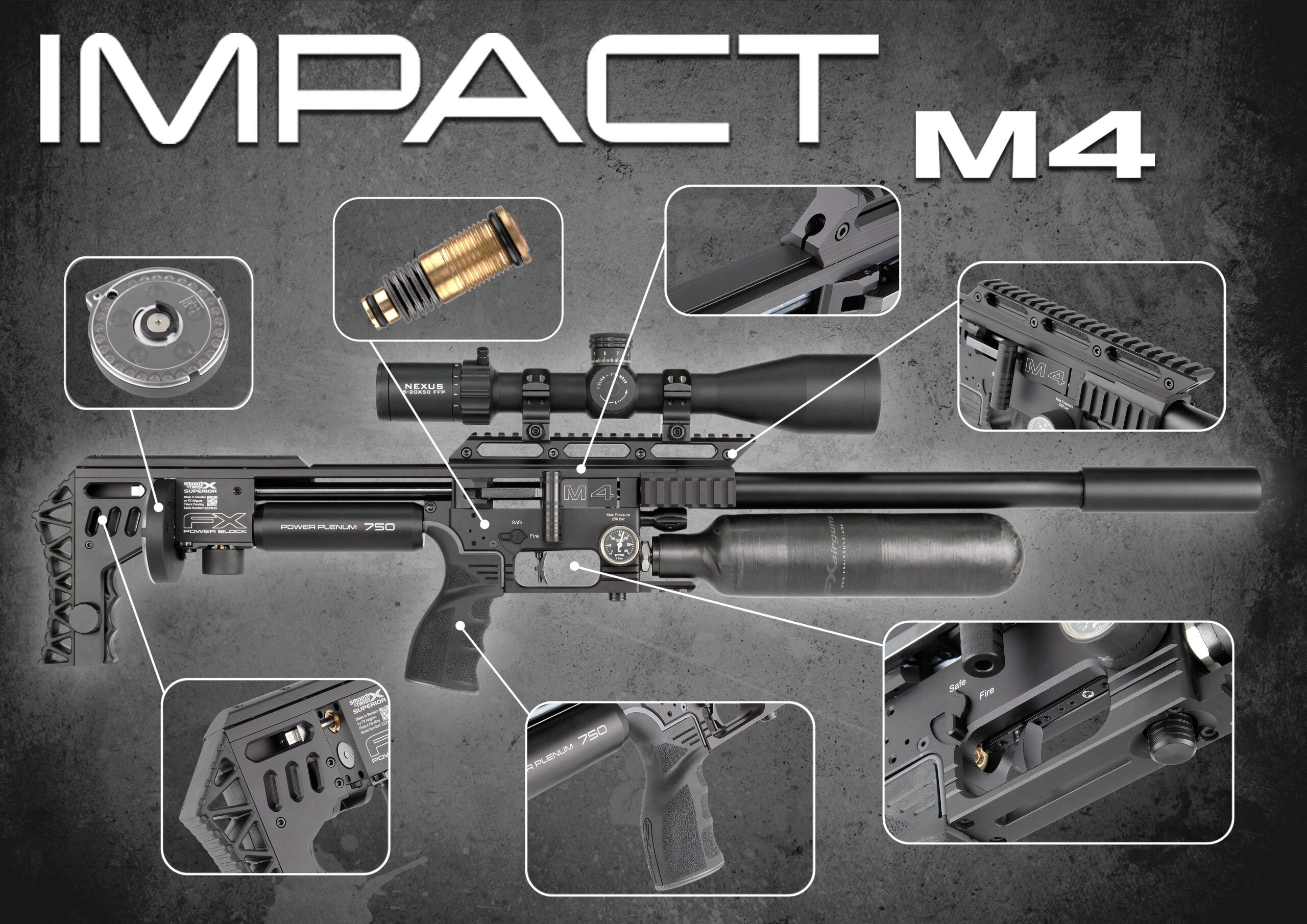
FX strengthened the upper structure with a thicker top plate, added its Quick Set Trigger, redesigned the magazine, improved the regulator, and installed a longer movable optics rail.
These upgrades also distinguish the fx m4, impact m4, and impact m4 air rifle from earlier fx impact m3, f x impact m3, fx m3, and fx m3 airgun platforms.
700mm Sniper Barrel
The Sniper configuration uses a 700mm barrel, compared with the shorter impact m4 500mm Compact and 600mm Standard versions.
The longer barrel supports efficient acceleration and provides a strong foundation for precision shooting.
Pyramyd AIR lists the 700mm Sniper with a 580cc carbon-fiber bottle and approximately 39-inch overall length.
This makes it especially relevant to shooters familiar with an fx impact m3 .22cal air rifle. 600mm barrel who want a longer configuration.
Power Plenum 750
The M4 platform incorporates a 75cc Power Plenum 750 paired with FX’s Power Block.
This combination increases regulated air capacity and optimizes airflow through the firing system.
For a precision pcp air gun, this large plenum helps create a stable foundation for consistent operation across a variety of approved projectile configurations.
AMP Regulator
The M4 uses FX’s updated brass-piston regulator.
According to FX, the regulator has improved strength, faster refresh behavior, and a maximum working pressure of approximately 170 bar on the regulated side.
That regulated architecture is one reason the rifle stands out among modern pcp airguns, fx pcp, and premium air guns.
Quick Set Trigger
The M4 introduced the Quick Set Trigger.
FX designed the system so users can change the trigger character from a more substantial sporting feel to a lighter match-style setup through adjustment.
For precision target work, predictable trigger behavior helps reduce shooter-induced movement.
Quick Tune System
The M4 also retains FX’s Quick Tune System.
This gives experienced users external control over approved tuning parameters.
However, adjustments should remain within FX specifications and applicable local laws.
High-Capacity Magazine
The M4 magazine was redesigned using stronger material and a revised internal mechanism intended to rotate smoothly even with heavier compatible slugs.
Magazine capacity depends on caliber.
Current Sniper specifications list capacities ranging from approximately 18 to 35 rounds depending on chambering.
Carbon-Fiber Air Bottle
The Sniper normally uses a 580cc carbon-fiber bottle rated to 250 bar in current factory configurations.
This gives the rifle a larger air supply than the Compact and Standard versions while keeping weight manageable.
Adjustable Optics Rail
The M4 top structure incorporates a dovetail-mounted optics rail that can be repositioned for better eye relief and scope alignment.
Krale also lists a 30 MOA Picatinny rail on the Sniper configuration.
This makes the rifle especially suitable for shooters who want precise optic placement.
Reversible Sidelever
The cocking lever can be moved from one side of the rifle to the other.
This benefits both right- and left-handed shooters.
The larger lever knob also supports smooth cycling during target sessions.
FX Impact M4 Versus FX Impact M3
The fx impact m3, f x impact m3, fx impact m3 air rifle, and fx impact m3 .22cal air rifle established many of the tuning concepts now refined in the M4.
However, the newer generation adds a stronger structure, revised trigger, updated regulator, redesigned magazine, and improved optics mounting.
Therefore, buyers comparing an fx impact air rifle across generations should view the M4 as an evolutionary refinement rather than a simple cosmetic update.
FX Panthera MkII and Dynamic Alternatives
The FX Panthera MkII, fx panthera, fxpanthera, fx dynamic, and fx dynamics are also aimed strongly at precision-oriented users.
However, the Impact M4 Sniper retains a more compact bullpup-derived layout and a highly modular bottle-fed architecture.
FX DRS Platform Comparison
The fx drs, fx drs tactical, fx drs classic, fx drs pro, and fx drs air rifle use a more traditional rifle layout.
By contrast, the Sniper concentrates the action toward the rear, helping accommodate its 700mm barrel without excessive overall length.
FX Leopard Comparison
The fx leopard, fx leopard airgun, and fx leopard air rifle also use compact architecture.
However, the Leopard uses an over-barrel tube concept, while the Sniper relies on a rear carbon-fiber bottle and the established Impact chassis.
FX Wildcat, Maverick, and Dreamline Families
Other well-known models include the fx wildcat, fx wildcat mk3, fx maverick, fx dreamline, and fx dreamline classic.
Each has a different balance of size, reservoir design, ergonomics, and intended use.
The Sniper remains one of FX’s most adjustable premium platforms.
FX Crown and King Alternatives
Shooters who prefer more traditional rifle ergonomics may consider the fx crown, fx crown mk2, fx crown mkii, fx crown mkll, or fx king.
The Impact M4 Sniper instead emphasizes compact modularity, external adjustment, and advanced chassis integration.
Swedish FX Airguns Heritage
The company behind fx airguns sverige, fx airguns sweden, fxairguns, fx air guns, fx, fx usa, and fx airguns usa continues to produce a wide range of premium PCP rifles, including the current Impact M4, DRS MKII series, Panthera MKII, Dynamic MKII, Leopard, King, Crown MKII, Wildcat MKIII, and Dreamline.
The Scandinavian search term luftgevær is also commonly used when researching this category.
Pellet and Slug Compatibility
The M4 is designed to work with both pellets and slugs.
Therefore, shooters researching fx pellets, fx halo slugs, or a premium pellet gun platform have considerable ammunition flexibility, provided the projectile matches the installed caliber, barrel system, and approved configuration.
Chronograph Use
An fx chronograph or fx pocket chronograph can be useful for measuring velocity consistency and confirming lawful performance.
This is particularly valuable when testing ammunition or checking the rifle after maintenance.
Impact M4 Ballistic Coefficient
The phrase impact m4 ballistic coefficient refers primarily to projectile characteristics rather than the rifle itself.
Ballistic coefficient varies according to projectile weight, shape, diameter, and velocity.
Therefore, no single BC value applies to the Sniper platform.
FX Impact M4 for Sale – Buyer Considerations
Anyone searching fx impact m4 for sale should verify barrel length, caliber, bottle size, magazine capacity, supplied case, and regional legal configuration.
The Sniper should not be confused with the shorter Compact or Standard versions.
Overall FX Impact M4 Sniper Performance
The FX Impact M4 Sniper combines a 700mm barrel, 580cc carbon-fiber bottle, Power Plenum 750, Quick Set Trigger, updated brass-piston regulator, redesigned high-capacity magazine, movable optics rail, reversible sidelever, accessory rails, and strengthened M4 chassis.
For shooters exploring the wider fx outdoors ecosystem, it offers a highly configurable precision platform that balances barrel length, air capacity, compact ergonomics, and repeatable performance in a way that distinguishes it from many other premium air gun designs.
Precision Performance, Air Efficiency, Barrel Stability, Trigger Control, Shooting Balance, and Real-World Use
The FX Impact M4 Sniper is built around a long-barrel precision layout that favors stable shooting, efficient air use, and consistent handling across demanding target sessions. Its 700mm barrel, large air supply, regulated firing system, rigid receiver, adjustable trigger, and compact bullpup structure work together to create a platform that rewards careful technique. In practical use, the rifle performs best when the shooter maintains consistent ammunition, stable fill pressure, repeatable body position, and a properly balanced optic and support setup.
Long-Barrel Precision Character
The 700mm barrel gives the rifle a distinctly precision-focused feel.
A longer barrel provides more distance for compressed air to accelerate the projectile before it exits.
This can support efficient projectile movement and stable velocity when the system is correctly configured.
However, barrel length alone does not create accuracy.
Consistent ammunition, proper maintenance, and shooter technique remain equally important.
Barrel Stability
A long barrel benefits from a rigid supporting structure.
The receiver and surrounding components are designed to reduce unwanted movement.
Maintaining alignment between the barrel, optic, and action helps produce repeatable groups.
Efficient Air Delivery
The rifle uses a regulated pneumatic system designed to deliver controlled air pressure from shot to shot.
This reduces the effect of changing bottle pressure across the useful part of the fill.
More consistent air delivery supports more consistent velocity.
Why Regulated Pressure Matters
Without stable pressure, projectile speed may vary more significantly.
At shorter distances, small changes may be difficult to notice.
At longer distances, those differences can become more visible as vertical spread.
Therefore, regulated pressure plays an important role in precision shooting.
Large Plenum Performance
The large plenum stores regulated air immediately before the shot.
This allows the firing system to access a consistent volume of air.
The result is a smoother and more predictable shot cycle.
Air Bottle Capacity
The large carbon-fiber bottle provides substantial air capacity.
This allows longer shooting sessions between fills.
Actual shot count varies according to caliber, projectile weight, operating pressure, and configuration.
Monitoring Pressure
The pressure gauge should be checked regularly.
The rifle should always be filled within the approved range.
Establishing a consistent refill point can help maintain repeatable performance.
Compact Bullpup Balance
Despite the long barrel, the bullpup arrangement keeps overall dimensions more manageable.
The action is positioned farther rearward.
This helps prevent the rifle from becoming as long as a traditional rifle using the same barrel length.
Weight Distribution
The rear air bottle and long barrel create a balance that is different from conventional rifles.
When supported correctly, the rifle can feel stable rather than excessively front-heavy.
Support position has a large influence on how the balance feels.
Benchrest Use
The Sniper configuration performs especially well from a stable bench.
A front rest or bipod reduces movement.
A rear bag can provide precise elevation adjustment.
The rifle should sit naturally rather than being forced into position.
Bipod Placement
Moving the bipod forward generally increases stability.
However, it can also make repositioning slower.
The best location depends on the shooter’s preferred balance.
Rear Bag Control
A rear bag can provide fine vertical adjustments.
Small squeezes are usually sufficient.
Large movements should be avoided once the rifle is settled.
Prone Shooting
Prone shooting offers a very stable platform.
The body should remain aligned naturally behind the rifle.
Twisting the torso can create uneven shoulder pressure.
Kneeling Position
Kneeling offers a balance between stability and mobility.
The supporting arm can be braced against the leg.
A relaxed posture reduces fatigue.
Standing Position
Standing is more demanding.
The rifle’s size and weight become more noticeable without support.
Shorter aiming periods can help maintain consistency.
Natural Point of Aim
The rifle should naturally point toward the target.
If the shooter must constantly push it sideways, body position should be adjusted.
Reducing muscular effort makes shooting more repeatable.
Trigger Performance
The adjustable trigger is one of the rifle’s most important precision features.
A controlled first stage allows the shooter to prepare for the shot.
The final break can then be completed deliberately.
Trigger Finger Placement
The trigger finger should contact the blade consistently.
Pressure should move straight toward the rear.
Sideways movement can disturb the sight picture.
Grip Pressure
A relaxed grip usually produces better consistency.
Squeezing too tightly can shift the rifle during the shot.
The firing hand should mainly guide rather than clamp the rifle.
Shoulder Contact
The rear of the rifle should contact the shoulder in the same place for each shot.
Excessive pressure is unnecessary.
Consistent contact is more important than force.
Cheek Position
A repeatable head position helps maintain consistent scope alignment.
The shooter should be able to shoulder the rifle and immediately see a full sight picture.
This reduces unnecessary movement.
Optic Height
The optic should sit at a comfortable height.
If it is too high, the shooter may lose cheek contact.
If it is too low, the head position may become uncomfortable.
Eye Relief
Proper eye relief allows the shooter to maintain a natural posture.
The head should not need to move forward or backward after shouldering the rifle.
Scope Magnification
Higher magnification can make precise aiming easier.
However, excessive magnification can exaggerate apparent movement.
The best setting provides enough detail without making the sight picture difficult to control.
Parallax Adjustment
Parallax should be set correctly for the target distance.
Poor adjustment can make the reticle appear to shift when the shooter moves the head.
This can affect group consistency.
Ammunition Selection
Different projectiles can behave differently in the same rifle.
Weight, shape, diameter, and manufacturing consistency all influence performance.
Testing should be done systematically.
Projectile Condition
Damaged ammunition should not be used for precision testing.
Bent skirts, deformed noses, or inconsistent surfaces can reduce accuracy.
Careful storage helps preserve quality.
Magazine Performance
The magazine should rotate smoothly.
Dirty or damaged magazines can interfere with feeding.
Any unusual resistance should be investigated rather than forced.
Loading Consistency
Projectiles should be loaded carefully.
Consistent loading reduces the chance of deformation.
The breech area should remain clean.
Chronograph Testing
Velocity testing can provide useful information about system consistency.
Several shots should be recorded.
A single reading does not provide enough information.
Evaluating Velocity Spread
A narrow spread usually indicates stable pressure and consistent ammunition.
A larger spread can result from several causes.
Temperature, fill pressure, projectile variation, or maintenance condition may all contribute.
Accuracy Testing
Accuracy should be evaluated through groups rather than individual shots.
Several repeatable groups provide a better picture of performance.
One good shot may simply be luck.
Distance Progression
Accuracy should first be confirmed at shorter distances.
Once the rifle and ammunition combination is proven, testing can be extended gradually.
This helps separate mechanical issues from environmental effects.
Wind Conditions
Wind can affect projectile flight significantly.
Variable wind can make a precise rifle appear inconsistent.
Calm conditions are preferable when evaluating mechanical accuracy.
Temperature Effects
Compressed air behavior changes with temperature.
Large temperature shifts can slightly influence pressure.
Allowing the rifle to acclimate helps improve repeatability.
Indoor Shooting
Indoor ranges remove wind from the equation.
This makes them useful for testing ammunition, trigger technique, and basic group performance.
Appropriate range rules and backstops remain essential.
Outdoor Target Shooting
Outdoor use introduces wind, changing light, and temperature variation.
The shooter should account for those factors before assuming the rifle is responsible for every point-of-impact change.
Barrel Cleanliness
The barrel should remain clean enough to maintain consistency.
However, excessive cleaning is unnecessary.
Cleaning should be performed only when required and with suitable tools.
Crown Protection
The muzzle crown should remain undamaged.
Even small imperfections can affect projectile release.
Careful handling during transport and cleaning is important.
Receiver Rigidity
A rigid receiver helps preserve alignment between the barrel and optic.
Mounting screws should remain secure.
Any unexplained change in accuracy should include a basic hardware inspection.
Optics Rail Stability
The optics rail should remain firmly mounted.
Loose rail hardware can create shifting point of impact.
This should always be checked before more complicated troubleshooting.
Accessory Balance
Every accessory changes the rifle’s weight distribution.
Large optics, bipods, weights, and other equipment should be added only when useful.
Too much equipment can make the rifle less comfortable.
Long-Session Comfort
Ergonomics become more important during extended shooting.
A poor cheek position or awkward grip angle can create fatigue.
Fatigue can then reduce shooting consistency.
Recognizing Shooter Fatigue
As fatigue develops, the shooter may grip harder, rush the trigger, or lose head position.
Group size often increases.
Short breaks can restore concentration.
Pre-Session Inspection
Before shooting, inspect reservoir pressure, optic security, magazine condition, mounting screws, trigger operation, and general mechanical function.
A short routine can prevent avoidable problems.
Post-Session Review
After shooting, note any changes in pressure behavior, accuracy, or cycling.
Unexpected changes should be investigated before the next session.
Used-Rifle Evaluation
A used example should be judged mainly by mechanical condition.
Air retention, regulator consistency, smooth cycling, barrel condition, magazine function, and mounting integrity matter more than minor cosmetic wear.
Overall Real-World Performance
The FX Impact M4 Sniper offers a strong combination of long-barrel stability, substantial air capacity, regulated consistency, adjustable trigger control, and compact bullpup handling.
Its 700mm configuration favors deliberate precision work.
Its large bottle supports extended shooting sessions.
Its rigid platform promotes repeatable alignment.
Its adjustable ergonomics help the shooter build a consistent position.
When ammunition, pressure, optic placement, support position, and shooter technique remain consistent, the rifle can deliver excellent precision and a highly refined shooting experience across a wide range of lawful target and sporting environments.
Build Quality, Barrel Care, Air-System Maintenance, Seal Health, Magazine Condition, Hardware Inspection, and Long-Term Reliability
The rifle is built around a complex combination of high-pressure air storage, regulated airflow, a long precision barrel, a rigid receiver, an adjustable trigger, a high-capacity magazine, and multiple external mounting interfaces. Because all of these components influence performance, long-term reliability depends on careful maintenance and regular inspection rather than appearance alone. A clean rifle may still have worn seals, unstable pressure behavior, loose hardware, or hidden impact damage. Therefore, owners should focus on structural condition, pressure retention, smooth cycling, and consistent mechanical function.
Overall Structural Condition
The main receiver should remain rigid and free from cracks, deformation, or looseness.
Any movement between the action, barrel assembly, optic rail, or mounting hardware can affect repeatability.
Minor cosmetic marks are usually less important than structural shifts.
For this reason, external hardware should be checked periodically.
Long-Barrel Protection
The 700mm barrel extends well forward and should be protected carefully during transport.
Longer barrels can be more exposed to accidental knocks inside cases, vehicles, or storage racks.
The barrel should never be used as a handle.
It should also remain free from heavy pressure when the rifle is stored.
Barrel Alignment
The barrel should appear properly centered and straight.
A hard impact can potentially disturb alignment.
If accuracy changes suddenly after the rifle has been dropped or struck, the barrel assembly should be one of the first areas inspected.
Barrel Exterior Care
The outside of the barrel should be kept clean.
Dust, moisture, and fingerprints should be removed periodically.
Small scratches may be cosmetic.
Dents or obvious deformation require more attention.
Bore Maintenance
The bore does not need aggressive cleaning after every session.
Excessive cleaning can create unnecessary wear.
Cleaning should be carried out only when needed and with tools suitable for the barrel.
Protecting the Muzzle Crown
The crown should remain free from damage.
This area influences how cleanly the projectile exits the barrel.
Cleaning rods and tools should not scrape it.
The rifle should also be transported so the muzzle cannot strike a hard object.
Barrel Liner Condition
If the installed system uses a removable liner, it should remain correctly seated.
Improper installation can affect alignment and consistency.
Any removal or replacement should follow the manufacturer’s recommended procedure.
Air Bottle Condition
The carbon-fiber bottle should be inspected carefully.
Look for deep scratches, impact damage, damaged threads, or signs of mishandling.
Because the bottle stores high-pressure air, visible structural concerns should never be ignored.
Bottle Thread Inspection
The threaded bottle connection should remain clean.
The bottle should screw into place smoothly.
Cross-threading can damage both the bottle and rifle connection.
If unusual resistance is felt, installation should stop immediately.
Fill Port Cleanliness
The fill connection should remain protected from dust and debris.
Contamination introduced during filling can damage seals.
A protective cap should remain installed whenever possible.
Using Clean, Dry Air
Only clean, dry compressed air should be used.
Moisture inside the pneumatic system can contribute to corrosion.
Dirty air can also affect regulator and valve performance.
A well-maintained compressor or certified filling source is important.
Controlled Filling
The bottle should be filled steadily rather than extremely quickly.
Rapid filling can generate unnecessary heat.
The pressure gauge should be monitored during the entire process.
The approved fill pressure should never be exceeded.
Pressure Gauge Condition
The gauge should remain easy to read.
Cracked lenses, fogging, or erratic readings should be investigated.
If indicated pressure appears incorrect, filling should stop until the cause is known.
Regulator Health
The regulator controls pressure entering the firing system.
A healthy regulator helps maintain consistent shot behavior.
If velocity changes noticeably without another obvious cause, regulator condition should be considered.
Recognizing Pressure Irregularities
Possible signs include unexpected velocity spread, shifting point of impact, or changing pressure behavior after storage.
These symptoms can have multiple causes.
Ammunition, temperature, and fill pressure should also be checked before concluding that the regulator is at fault.
Plenum Sealing
The plenum stores regulated air prior to each shot.
Its seals must remain reliable.
Persistent pressure loss or unusual air leakage should be investigated.
High-pressure internal work should be handled by a qualified technician.
Seal Condition
Seals gradually wear over time.
A slow leak during storage may indicate a damaged seal.
Correct replacement parts should always be used.
Improvised substitutes can reduce reliability.
Correct Lubrication
Only suitable high-pressure pneumatic lubricants should be used where required.
Excessive lubrication can attract dirt.
Incorrect oils can damage sealing materials.
Manufacturer guidance should determine what products are appropriate.
Valve Operation
The firing valve should behave consistently.
Changes in sound, shot feel, or pressure use may indicate a maintenance issue.
Internal valve servicing should be approached carefully.
Sidelever Operation
The cocking lever should move smoothly.
Roughness may indicate dirt, magazine interference, or mechanical wear.
The lever should never need excessive force.
If resistance develops, the cause should be found.
Magazine Condition
The magazine should rotate smoothly and feed consistently.
Cracked components, dirt, or damaged ammunition can cause problems.
The magazine should be inspected regularly.
Keeping the Magazine Clean
Dust and fragments can collect inside the mechanism.
Light cleaning helps preserve smooth movement.
Harsh chemicals are usually unnecessary.
Ammunition Condition
Damaged projectiles should not be loaded.
Bent skirts, irregular noses, or deformation can interfere with feeding.
A quick inspection during loading helps prevent avoidable issues.
Trigger Mechanism Care
The trigger should remain clean and predictable.
Any sudden change in feel deserves attention.
Adjustment screws should remain secure once a preferred setting has been established.
Safety Mechanism
The safety should engage and disengage positively.
If it becomes loose, unusually stiff, or unreliable, the rifle should not be used until the issue is corrected.
Mechanical safeties do not replace proper handling.
Grip Condition
The grip should remain firmly attached.
Any looseness can change trigger-hand position.
Mounting hardware should remain secure.
Rear Support Condition
The rear section should remain stable.
If any adjustable part begins moving during shooting, consistency can suffer.
All locking points should be checked periodically.
Optics Rail Stability
The top rail should remain secure.
Loose hardware can create shifting point of impact.
When accuracy changes unexpectedly, optic mounting should always be checked before assuming an internal rifle problem.
Scope Ring Hardware
Ring screws should be tightened evenly.
Overtightening can damage threads or the scope tube.
Correct tension is more important than excessive force.
Accessory Mounting Points
Side and lower mounting interfaces should remain clean and undamaged.
Accessories should be installed securely.
Loose equipment can create noise, movement, or balance changes.
Bipod Inspection
If a bipod is fitted, the mounting point should remain solid.
Hinges and legs should function correctly.
Loose bipod hardware can affect shooting stability.
External Surface Cleaning
The exterior should be wiped after use.
Moisture, sweat, and dust can build up around small joints and screws.
A soft cloth is usually enough for routine care.
Moisture After Outdoor Sessions
Rain or humidity can remain trapped around rails, screws, and recesses.
The rifle should be dried before storage.
Putting a damp rifle directly into a closed case can encourage corrosion.
Case Storage
A padded case protects the rifle during transport.
However, foam can trap moisture.
The rifle should be completely dry before long-term storage.
Heat Exposure
Extreme heat should be avoided.
A vehicle parked in direct sunlight can become very hot.
High temperature increases internal pressure and places additional stress on seals.
Cold Conditions
Cold temperatures can affect pressure behavior and seal flexibility.
Moving the rifle quickly from cold to warm conditions can also create condensation.
Gradual temperature adjustment is preferable.
Long-Term Storage
For longer storage periods, the rifle should remain clean, dry, and protected from impact.
The storage location should be secure and temperature stable.
Pressure condition should follow manufacturer guidance.
Pre-Session Inspection
Before shooting, inspect the bottle, pressure gauge, magazine, sidelever, trigger, optic, and external hardware.
A short check can reveal problems before they become more serious.
Post-Session Inspection
After shooting, look for fresh marks, loose screws, pressure loss, or changes in cycling.
Problems are easier to diagnose while the session is still fresh.
Monitoring Air Retention
If the rifle loses pressure while stored, the rate of loss should be observed.
Persistent leakage should not be ignored.
Repeatedly refilling a leaking system does not solve the underlying issue.
Monitoring Velocity Changes
Significant velocity changes may result from ammunition, fill pressure, temperature, regulator behavior, or seal condition.
Several readings should be compared before conclusions are made.
Monitoring Accuracy Changes
A sudden loss of accuracy should first trigger basic checks.
Inspect ammunition, optic mounts, barrel condition, support setup, and hardware.
Internal adjustment should not be the first response.
Used-Rifle Inspection
A second-hand example should be checked carefully.
Air retention, barrel condition, magazine function, smooth cocking, regulator behavior, and trigger operation are more important than cosmetic appearance.
Service History
A documented service history adds useful information.
Records of seal replacement, regulator work, or other maintenance can help establish how well the rifle has been cared for.
Cosmetic Wear Versus Mechanical Wear
Small scratches usually affect appearance more than function.
Pressure loss, rough cycling, damaged threads, unstable regulation, and loose components matter much more.
Professional Servicing
Complex internal work should be completed by qualified technicians.
High-pressure systems require proper tools and knowledge.
Incorrect disassembly can create safety risks and expensive damage.
Preserving Long-Term Value
Good maintenance protects both performance and resale value.
Use clean air.
Protect the barrel.
Inspect the bottle.
Keep the magazine clean.
Store the rifle dry fx air rifle.
Address leaks early.
Overall Long-Term Reliability
A well-maintained precision platform can remain highly dependable over many years.
Clean air protects internal components.
Healthy seals preserve pressure.
A protected barrel maintains alignment.
Secure optics and chassis hardware support repeatable accuracy.
Regular inspection, careful transport, correct filling, dry storage, and qualified servicing when needed help preserve smooth cycling, stable pressure behavior, and consistent performance throughout the rifle’s service life.
Be the first to review “FX Impact M4 Sniper”
Related products
FX Air Gun
FX Air Gun

FX Air Gun
FX Air Gun

FX Air Gun

FX Air Gun

FX Air Gun
FX Air Gun
Reviews
There are no reviews yet.