
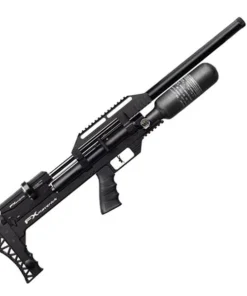
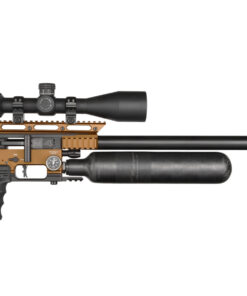
FX Maverick Black Sniper FAC
€1,700.00
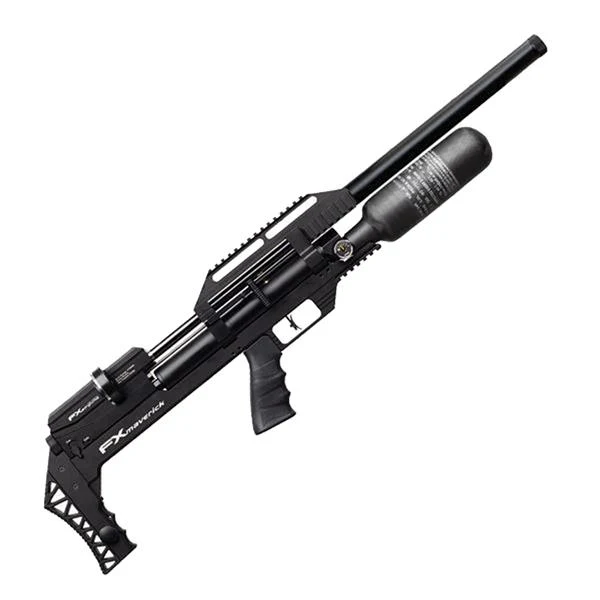
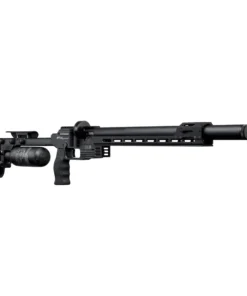
FX Maverick Black
The worlds first dual regulated airgun. Harder hitting, more consistent and more shots per fill.
The FX Maverick is a brand-new platform for FX Airguns. A rifle purpose built form the ground up with heavier pellet and slug shooting in mind. The Marverick features the largest power plenum yet on an FX rifle with the latest FX innovation, dual regulators!
FX Power Plenum with Dual Regulators
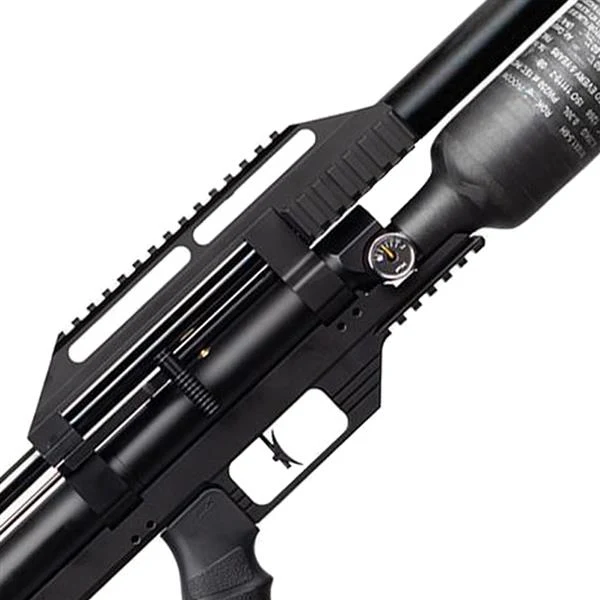
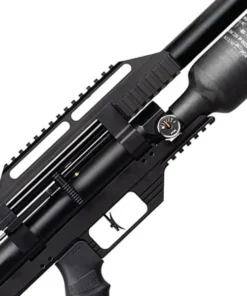
Dual AMP (Adjustable Match Precision) Regulators are employed to provide lower standard deviations in velocity and preserve the health of the regulators. The first regulator reduces the pressure in preparation for the second regulator. These work in tandem with the large 89cc Power plenum (and its accompanying porting and valving) to give a more consistent working pressure as well as proper airflow for heavier slugs.
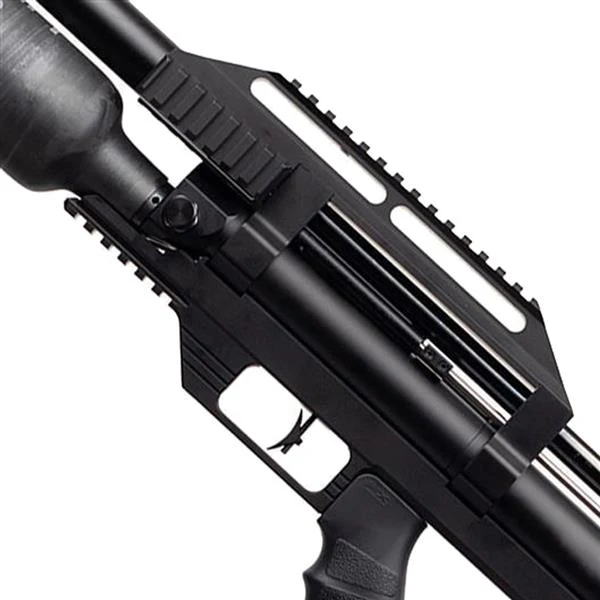
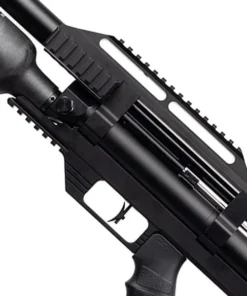
FX Side-Shot Magazine
High Capacity magazines that are incredibly easy to load by removing the entire face plate.
Features
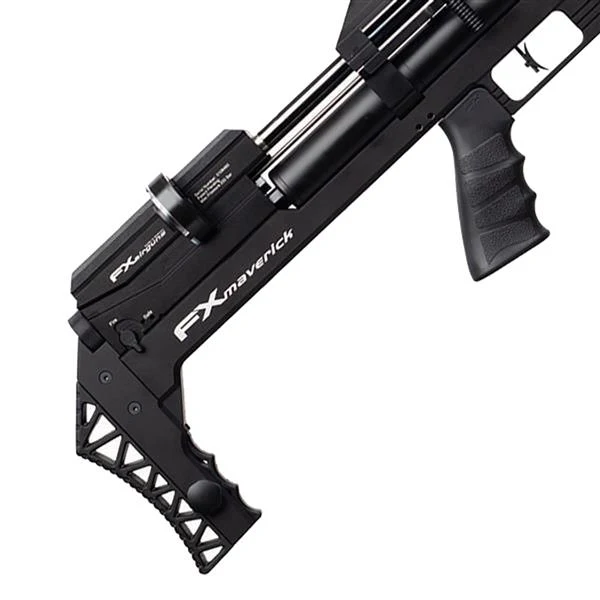
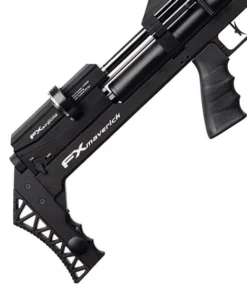
- Rear Power Adjuster – External rear hammer spring tension adjustment knob.
- Slug Power Kit (Optional) – Optional extra for producing more power when using slugs. Heavier hammer and slug pin.
- Changeable Calibres – Change calibres within minutes.
- Dual A.M.P. Regulators.
- Swap Barrel Liners – Changeable barrel liners to help optimise your rifle for different ammunition.
- Threaded Barrel – 1/2 UNF Barrel threaded ready for the moderator of your choice.
Efficiency FAC Sniper Edn (580cc bottle)
22 270 Shots / .25 170 Shots / .30 90 Shots
Efficiency FAC Compact (300cc bottle)
.177 180 Shots / .22 110 Shots / .25 70 Shots / .30 35 Shots
Efficiency FAC VP (400cc bottle)
.22 160 Shots / .25 100 Shots / .30 55 Shots
Efficiency 12FT/LB (480cc bottle fitted)
.177 600 Shots / .22 600 Shots
Efficiency 12FT/LB Compact (300cc bottle fitted)
.177 Shots / .22 Shots 480
Efficiency 12FT/LB VP (300cc bottle fitted)
.177 Shots / .22 Shots 435
FX Maverick Black Sniper FAC – Swedish PCP Air Rifle Engineering, Features, Design and Technical Overview
FX Maverick Black Sniper FAC – Product Description, Engineering Innovation and Technical Features
1.1 Introduction to the FX Maverick Black Sniper FAC
The FX Maverick Black Sniper FAC is a Swedish-engineered pre-charged pneumatic rifle featuring a distinctive aluminium chassis, dual-regulator architecture, and modular barrel system.
Developed by FX Airguns, this model belongs to the manufacturer’s specialized pneumatic equipment range. Its black exterior, forward-positioned sidelever, and carbon-fibre air reservoir create a recognizable contemporary design.
Unlike traditional spring-powered equipment, this pcp air gun uses stored compressed air. Furthermore, its dual AMP regulator arrangement represents one of the Maverick platform’s defining engineering characteristics.
The Sniper configuration is documented with a 700 mm barrel and 580 cc reservoir, although regional specifications and production variants should always be verified.
1.2 FX Airguns Sweden: Innovation and Manufacturing Heritage
The manufacturer’s international presence explains why customers search for fx airguns sverige, fx airguns sweden, fx airguns usa, fx usa, fxairguns, fx air guns, and fx outdoors.
Across its catalogue, fx airguns has developed numerous technical platforms. Consequently, the company is widely associated with modular construction, regulated pneumatic systems, and distinctive mechanical design.
The fx maverick belongs to this broader engineering heritage, alongside other fx pcp platforms and products within the high end air rifles category.
However, specifications and legal classifications vary across countries. Buyers should therefore distinguish the manufacturer’s international reputation from the exact configuration available in their jurisdiction.
1.3 Dual AMP Regulators and Mechanical Architecture
The FX Maverick’s pneumatic architecture incorporates two AMP regulators working within one integrated system.
This arrangement distinguishes it from many conventional pcp airguns and illustrates the manufacturer’s approach to regulated compressed-air technology.
Additionally, the aluminium chassis provides a structural foundation for the rifle’s principal assemblies.
The Smooth Twist X Superior liner system represents another characteristic of the platform’s technical design.
Nevertheless, accuracy, consistency, and durability cannot be guaranteed through component descriptions alone. Actual performance requires controlled testing of an identified factory configuration.
1.4 Comparing FX Maverick With Other FX Platforms
Consumers researching an fx air rifle frequently encounter the fx impact, f x impact, fx impact air rifle, fx impact m3, f x impact m3, fx impact m3 air rifle, fx m3, and fx m3 airgun.
Newer comparisons include fx impact m4, fx m4, impact m4, impact m4 air rifle, impact m4 500mm, impact m4 ballistic coefficient, and fx impact m4 for sale.
Other recognized product families include fx wildcat, fx wildcat mk3, fx dreamline, fx dreamline classic, fx crown, fx crown mk2, fx crown mkii, and fx crown mkll.
Meanwhile, the fx drs, fx drs classic, fx drs pro, fx drs tactical, and fx drs air rifle represent a different design family.
Additional names include fx panthera, fxpanthera, FX Panthera MkII, fx dynamic, fx dynamics, fx king, fx leopard, fx leopard airgun, and fx leopard air rifle.
These models should not be confused with the Maverick Sniper FAC.
1.5 Understanding Related Equipment and Product Terminology
Common research phrases include pellet gun, air gun, air guns, air rifle, luftgevær, air rifle and air pistol, and what is an air rifle.
These terms describe broad equipment categories rather than one manufacturer’s technical specification.
Similarly, fx impact m3 .22cal air rifle and fx impact m3 .22cal air rifle. 600mm barrel refer to distinct model configurations.
Accessory-related terms such as fx chronograph, fx pocket chronograph, fx pellets, and fx halo slugs also appear in specialist catalogues, but compatibility must be confirmed individually.
1.6 AirForce Airguns and Other Manufacturer Comparisons
Another manufacturer encountered in this market is AirForce, also searched as airforce airguns and air force guns.
Its separate catalogue includes the airforce texan, airforce texan air rifle, airforce texan ss, air force texan lss, airforce talon p, air force talon, and airforce condor.
Other search expressions include texas air force rifle, airforce texanss, airforce 25, air force tex rex, airforce tex rex, tex-rex, Tex-Rex AirForce brush gun, Brush Gun, and AirForce Tex-Rex PCP rifle.
Broader queries such as bolt action air rifles, high powered air rifles 4000 fps, and 50 caliber air rifle for deer hunting should not be interpreted as verified Maverick characteristics.
Likewise, air gun pump, air guns for target shooting, and airgun shooting range near me concern equipment ownership and sporting facilities rather than the rifle’s factory specifications.
1.7 Important Ownership Considerations
The FX Maverick Black Sniper FAC is distinguished by its dual-regulator construction, black aluminium chassis, modular architecture, and carbon-fibre reservoir.
However, its FAC designation is particularly important. In the United Kingdom, FAC-rated rifles require the appropriate Firearms Certificate, and regulated sales and transfers must follow applicable legal procedures.
Prospective owners should also confirm the exact calibre, factory configuration, included accessories, warranty conditions, and authorized servicing arrangements.
Ultimately, the model’s engineering identity is best evaluated through authentic manufacturer documentation, verified specifications, and responsible ownership requirements.
Advanced Engineering, Superior Build Quality, Mechanical Innovation, Precision Technology, Practical Applications, and Long-Term Ownership Benefits
2.1 Understanding the Engineering Excellence Behind This Advanced Design
Engineering excellence begins with a carefully developed relationship between mechanical components, structural materials, and the intended purpose of the finished product. This sophisticated platform reflects a design philosophy that emphasizes manufacturing consistency, mechanical organization, and technological innovation.
Rather than relying exclusively on appearance, the manufacturer integrates specialized pneumatic components with a contemporary structural framework. Consequently, the product demonstrates how modern industrial engineering can create a distinctive combination of technical sophistication and practical functionality.
One of its most recognizable characteristics is the integration of multiple mechanical assemblies within a unified construction. Each component performs a particular function, while the surrounding structure provides support and protection.
Furthermore, the design incorporates an advanced pressure-management arrangement, which distinguishes its internal architecture from simpler pneumatic systems. This feature reflects an engineering philosophy focused on controlled mechanical operation.
The quality of the finished product also depends on manufacturing tolerances, material selection, assembly standards, and quality-control procedures. These elements collectively influence the durability and consistency of precision mechanical equipment.
Importantly, complex engineering does not eliminate the need for professional maintenance. Instead, sophisticated systems require appropriate servicing procedures and genuine replacement components to preserve their intended characteristics.
For prospective owners, understanding this relationship between technology and maintenance provides a more realistic appreciation of the product’s value.
Ultimately, the appeal of this design lies in its combination of advanced manufacturing, structural adaptability, and carefully integrated mechanical systems.
2.2 Premium Aluminium Construction and Structural Integrity
The structural framework represents one of the most important aspects of the equipment’s physical design. Its aluminium construction provides a combination of rigidity, manageable weight, and manufacturing flexibility.
Aluminium alloys are widely used in precision engineering because they can accommodate complex machining processes while maintaining favorable mechanical properties.
Additionally, accurately machined structural components support consistent assembly and provide defined interfaces for adjoining parts.
However, material quality alone does not determine durability. The manufacturing process, dimensional tolerances, surface treatments, and fastening methods also contribute to overall construction quality.
A properly manufactured framework should demonstrate consistent finishing, secure component integration, and appropriate resistance to ordinary handling conditions.
Furthermore, protective finishes help maintain the appearance of exterior surfaces. Although these treatments can reduce certain forms of wear, they do not make the equipment immune to scratching, corrosion, or environmental deterioration.
Consequently, owners should protect the product against excessive moisture, abrasive contamination, and unnecessary mechanical impact.
The contemporary chassis design also creates a recognizable industrial appearance. Defined edges, machined surfaces, and carefully arranged structural elements communicate the technical nature of the equipment.
Nevertheless, visual sophistication should not be confused with independently established performance superiority.
Buyers should evaluate construction quality through verified manufacturer specifications, physical inspection, warranty documentation, and authorized technical support.
Together, these factors provide a meaningful foundation for assessing long-term structural reliability.
2.3 The Importance of Advanced Pressure-Management Engineering
Pressure-management technology plays a central role in the design of sophisticated pneumatic equipment.
The internal system incorporates a dual-regulator arrangement, which represents a notable departure from conventional single-regulator designs.
From an engineering perspective, regulators form part of the broader process of managing stored compressed air within an approved operating system.
Each pressure-containing component must satisfy specific mechanical and safety requirements.
Moreover, the complete assembly depends on compatible seals, accurately manufactured interfaces, and pressure-rated materials.
The presence of advanced regulation technology demonstrates the manufacturer’s commitment to specialized pneumatic design. However, it does not independently guarantee identical operating characteristics under every environmental condition.
Temperature, component condition, manufacturing variation, and service history can influence the behavior of mechanical systems.
Importantly, owners should avoid unauthorized adjustment or modification of internal pressure-related components.
Pressure-containing assemblies can present serious hazards when handled incorrectly. Therefore, inspection, repair, and component replacement should follow manufacturer documentation and qualified professional procedures.
Another consideration involves long-term maintenance support. Availability of authorized service providers and approved replacement parts helps owners maintain the original operating specification.
For customers evaluating premium equipment, the complexity of the pressure-management architecture should be considered alongside its servicing requirements.
The most meaningful advantage of advanced engineering is not complexity for its own sake, but a coordinated design supported by reliable manufacturing and appropriate technical oversight.
2.4 Understanding the Precision Barrel Architecture
The barrel assembly represents a defining element of the equipment’s mechanical design.
Its specialized construction incorporates a liner-based architecture intended to provide a modular approach to barrel manufacturing.
This differs from many conventional arrangements in which the barrel structure forms a more permanently integrated assembly.
From a manufacturing standpoint, liner-based construction creates distinct interfaces between the internal barrel component and its surrounding support structure.
Consequently, accurate production tolerances and component compatibility become particularly important.
The manufacturer uses a proprietary barrel system that forms part of its wider engineering heritage.
However, technical sophistication should not be interpreted as a guarantee of specific accuracy measurements.
Actual performance depends on multiple interacting variables, including component condition, manufacturing variation, environmental factors, and the circumstances under which testing occurs.
Furthermore, the exact factory configuration may differ according to model designation, production generation, and regional specification.
Prospective owners should therefore confirm published dimensions against the product identification information.
Maintenance also requires careful attention. Delicate internal surfaces can suffer damage from unsuitable cleaning materials or unauthorized mechanical intervention.
Accordingly, professional inspection and manufacturer-approved servicing remain the appropriate choices whenever significant maintenance becomes necessary.
Overall, the barrel architecture illustrates the importance of specialized manufacturing and documented component compatibility within a complex mechanical platform.
2.5 How Manufacturing Precision Supports Long-Term Quality
Precision manufacturing involves producing individual components within established dimensional and material requirements.
Modern mechanical equipment often depends on computer-controlled machining, specialized inspection instruments, and systematic assembly procedures.
However, manufacturing technology alone does not guarantee exceptional quality.
The reliability of the finished product also depends on inspection discipline, component traceability, suitable materials, and appropriate quality-control standards.
For example, mating surfaces must correspond with their intended design requirements. Similarly, mechanical interfaces should maintain the dimensions necessary for correct factory assembly.
Component consistency becomes particularly important when several assemblies interact within a compact structure.
Furthermore, manufacturers must consider how ordinary material expansion, repeated use, and environmental exposure may influence component relationships over time.
Quality-control procedures help identify manufacturing irregularities before products reach customers.
Depending on the manufacturer, these processes may involve dimensional checks, visual inspection, assembly verification, and appropriate functional testing.
Buyers should nevertheless avoid assuming that specific testing standards apply unless supporting documentation is available.
A legitimate product should carry appropriate identification information and be accompanied by relevant manufacturer documentation.
Additionally, authorized dealers can help verify factory specifications and warranty eligibility.
Manufacturing precision is therefore best understood as part of a complete quality system that includes design, production, inspection, documentation, and technical support.
2.6 Ergonomic Engineering and Individual Comfort
Ergonomics examines how physical equipment accommodates the dimensions and preferences of its intended users.
A sophisticated sporting-equipment design should consider differences in body proportions, individual comfort, and accessibility requirements.
The adjustable external structure provides an opportunity for authorized users to evaluate personal fit within the manufacturer’s intended configuration.
For example, external support components can influence how comfortably equipment rests against the body during ordinary handling.
However, ergonomic suitability cannot be established through product photographs alone.
Individual anatomy, clothing, physical strength, and personal preferences all affect perceived comfort.
Moreover, overall weight distribution may influence the way a product feels even when its total mass remains unchanged.
A well-balanced object can feel different from another product with identical weight but a different distribution of components.
Consequently, customers should consider physical dimensions and individual suitability rather than relying solely on promotional claims.
An authorized sporting-equipment retailer may provide opportunities to inspect the product under appropriate safety supervision.
The quality of external adjustment mechanisms also deserves attention.
Clearly defined operating limits, secure fittings, and accessible manufacturer documentation contribute to an understandable ownership experience.
Ultimately, ergonomic engineering offers the greatest value when it accommodates genuine differences between users without compromising the manufacturer’s original design specifications.
2.7 Why Weight Distribution and Structural Balance Matter
Weight distribution represents an important consideration in the design of specialized mechanical equipment.
Although total mass can be measured numerically, the way that mass is distributed influences handling characteristics and storage considerations.
A product with substantial weight concentrated in one area may feel different from an otherwise comparable design with more evenly distributed components.
Furthermore, external accessories can change the original weight distribution.
As a result, customers should distinguish factory measurements from figures associated with modified or accessorized examples.
The reservoir, chassis, barrel assembly, and external support components all contribute to overall physical characteristics.
However, the exact dimensions and weight depend on the factory configuration.
Buyers should therefore consult current manufacturer specifications rather than assuming that every version has identical measurements.
Portability also involves transportation requirements.
An appropriately fitted protective case can help reduce cosmetic damage and accidental contact with delicate external surfaces.
Nevertheless, protective transportation must comply with applicable legal restrictions.
Some jurisdictions require particular security arrangements, documentation, or procedures during transportation.
Importantly, manageable weight does not automatically establish suitability for every individual.
Personal comfort, physical limitations, and safe handling requirements should remain central to purchasing decisions.
The most reliable evaluation combines verified dimensional specifications with individual ergonomic assessment.
2.8 The Significance of Carbon-Fibre Reservoir Construction
Carbon-fibre composite technology is widely recognized for its applications in industries where weight management and structural performance are important.
Within pressure-rated equipment, composite reservoirs use engineered materials and manufacturing methods intended to satisfy defined operating requirements.
The design of such reservoirs requires careful consideration of material characteristics, pressure containment, manufacturing consistency, and inspection standards.
Carbon fibre can provide useful strength-to-weight properties when incorporated into appropriately engineered composite structures.
However, its presence does not eliminate pressure-related hazards.
A reservoir must be assessed according to its complete certified construction rather than the reputation of one material.
Furthermore, damage to composite structures may not always be obvious from a superficial inspection.
For this reason, owners should follow manufacturer guidance regarding inspection, service life, transportation, and replacement.
Exposure to excessive heat, severe impact, or unauthorized modification can create additional concerns.
Pressure-related components should never be repaired through improvised methods.
Instead, qualified professionals should determine whether the reservoir remains suitable for continued service.
Buyers should also verify identification markings and documentation where applicable.
Ultimately, the reservoir illustrates how advanced materials can contribute to contemporary engineering while maintaining the need for strict safety and maintenance practices.
2.9 Mechanical Design, Component Integration, and Functional Organization
The arrangement of components within the structural framework influences both manufacturing complexity and future servicing requirements.
A carefully organized design allows different mechanical systems to occupy defined positions while maintaining the necessary relationships between them.
This equipment incorporates a distinctive layout that separates several major assemblies while integrating them within one overall structure.
Consequently, the finished design presents a recognizable combination of exposed mechanical elements and protected internal components.
Component integration requires more than simply placing different assemblies close together.
Manufacturers must consider dimensional compatibility, structural support, mechanical movement, and access for approved maintenance.
Furthermore, individual parts may have different material properties and maintenance requirements.
The design must accommodate these differences without compromising the intended operating arrangement.
Another important factor is documentation.
Clearly identified assemblies allow qualified technicians to reference official parts information and service procedures.
This becomes particularly valuable when products remain in service over several years.
Customers should remember that visual access to a component does not automatically mean that user servicing is appropriate.
Certain assemblies require specialized tools, professional training, or manufacturer authorization.
Overall, effective component integration reflects coordinated mechanical engineering rather than isolated design features.
2.10 Practical Applications in Authorized Sporting Environments
Specialized sporting equipment can form part of organized recreational and competitive activities when its ownership and use comply with applicable legislation.
Authorized facilities may provide structured environments with established safety procedures, supervision, and appropriate infrastructure.
However, acceptance at a particular facility depends on its own rules and the equipment’s legal classification.
Prospective participants should contact facility operators before attending.
This helps confirm whether the equipment category is permitted and whether additional documentation is required.
Furthermore, different sporting organizations may maintain distinct eligibility requirements.
A product suitable for one recreational environment may not qualify for another organized discipline.
Therefore, customers should examine relevant rules rather than assuming universal acceptance.
Responsible participation also involves appropriate instruction and respect for established safety procedures.
Qualified coaches and facility personnel can provide guidance about lawful participation and permitted equipment categories.
Importantly, the technical sophistication of a product does not override the need for training or supervision.
New owners should familiarize themselves with official safety information before participating in organized activities.
The most appropriate practical application is one that combines verified legal eligibility, facility authorization, and responsible sporting conduct.
2.11 Understanding Mechanical Consistency and Performance Expectations
Mechanical consistency is an important concept in the evaluation of precision equipment.
It describes the extent to which a system maintains its intended characteristics under comparable conditions.
However, consistency must be established through appropriate measurements rather than assumed from product descriptions.
Sophisticated pneumatic systems incorporate multiple interacting components that can influence operational behavior.
Manufacturing tolerances, pressure-related assemblies, sealing elements, and environmental conditions all contribute to the overall system.
Furthermore, maintenance history may affect the condition of individual components.
A product that receives appropriate professional care may retain its intended characteristics more reliably than one exposed to unsuitable storage or unauthorized modifications.
Nevertheless, no complex mechanical system remains entirely unaffected by wear.
Performance figures should therefore identify the relevant configuration, testing method, and conditions.
Claims of exceptional precision or guaranteed consistency deserve careful examination when supporting evidence is absent.
Independent technical reviews can provide additional context, although their findings may not apply to every production variant.
Customers should also consider whether a review used original factory components or an altered configuration.
Ultimately, realistic performance expectations begin with transparent specifications and responsible interpretation of available evidence.
2.12 Environmental Factors and Equipment Preservation
Environmental conditions can influence the preservation and condition of sophisticated mechanical equipment.
Humidity, airborne dust, temperature fluctuations, and prolonged exposure to sunlight introduce different maintenance considerations.
For example, excessive moisture may contribute to corrosion on susceptible metallic surfaces.
Similarly, abrasive contamination can damage exterior finishes and affect exposed mechanical interfaces.
Although modern surface treatments provide a degree of protection, they cannot prevent every form of deterioration.
Consequently, suitable storage practices remain important.
Temperature management deserves particular attention because the equipment incorporates pressure-containing components.
Owners must observe the manufacturer’s prescribed storage and environmental limits.
Moreover, sudden temperature changes may encourage condensation when equipment moves between different environments.
Condensation can affect exposed surfaces and create additional preservation concerns.
A protective case may help during lawful transportation, but enclosed storage is not automatically suitable for extended periods.
Owners should follow official recommendations regarding cleanliness, ventilation, and environmental protection.
Strong chemicals and abrasive cleaning products should be avoided unless explicitly approved by the manufacturer.
By maintaining appropriate storage conditions, owners can help preserve exterior appearance and reduce avoidable deterioration.
2.13 Maintenance Planning and Professional Technical Support
Long-term ownership involves periodic attention to the equipment’s physical condition.
Although premium manufacturing can contribute to durability, ordinary wear remains an unavoidable consideration.
Mechanical interfaces, sealing elements, protective finishes, and pressure-containing assemblies may require inspection during the product’s service life.
However, maintenance procedures should follow official manufacturer instructions.
Generic recommendations cannot account for differences between production generations or factory configurations.
Professional assistance is particularly important when internal pneumatic components require attention.
Unauthorized disassembly may damage specialized parts or create serious safety risks.
Furthermore, improvised replacement components can introduce compatibility problems.
Genuine manufacturer-approved parts provide the appropriate reference for professional repairs.
Owners should retain records of authorized inspections and servicing.
Such documentation can help establish the maintenance history of the equipment and may prove useful during warranty inquiries.
A reliable service network also contributes to ownership confidence.
Before purchasing, customers should verify whether qualified support is available in their region.
Ultimately, responsible maintenance combines regular observation, careful environmental protection, appropriate documentation, and professional intervention whenever specialized work becomes necessary.
2.14 Long-Term Durability and Mechanical Wear
Durability describes the ability of a product to withstand intended conditions throughout its service life.
However, durability is not determined by one material or design feature.
It depends on manufacturing quality, component relationships, environmental exposure, maintenance, and normal operating conditions.
For sophisticated mechanical equipment, moving interfaces may experience gradual wear.
Sealing materials can also change over time as a result of aging and environmental conditions.
Similarly, exterior surfaces may develop cosmetic marks through ordinary handling.
These changes do not necessarily indicate a manufacturing defect.
Nevertheless, unusual damage or mechanical irregularities should be evaluated by qualified professionals.
The manufacturer may establish service intervals or inspection requirements for particular components.
Owners should follow those instructions rather than relying on unsupported assumptions about maintenance-free operation.
Furthermore, continued access to genuine replacement components may influence the practical lifespan of specialized equipment.
A product with strong technical documentation and authorized service support offers a clearer long-term maintenance pathway.
Durability should therefore be evaluated as an ongoing relationship between original engineering and responsible ownership.
2.15 Why Authenticity and Manufacturer Documentation Matter
Product authenticity is especially important when purchasing specialized premium equipment.
Counterfeit, incorrectly described, or improperly modified products may lack the manufacturing quality and documentation associated with genuine examples.
Consequently, buyers should verify the seller’s identity and the product’s provenance.
Original identification markings, purchase records, packaging, and manufacturer documentation can assist this process.
However, packaging alone does not guarantee authenticity.
Authorized retailers and official distributors may provide more reliable verification channels.
Furthermore, product descriptions should identify the exact factory configuration.
Differences in production generation, regional specification, and included accessories can affect customer expectations.
Buyers should request clarification when photographs and written specifications appear inconsistent.
Warranty documentation is another important consideration.
Terms may vary by market, distributor, and purchase arrangement.
A transparent seller should clearly explain coverage, exclusions, and the process for obtaining authorized support.
Customers should also examine payment security, return conditions, and applicable legal requirements.
The authenticity of the product and the reliability of the commercial transaction are related but separate considerations.
Together, proper documentation and transparent purchasing procedures support a more dependable ownership experience.
2.16 Comparing Premium Equipment With Conventional Alternatives
Premium mechanical products often introduce specialized features that are uncommon in simpler alternatives.
These may include advanced materials, more elaborate structural arrangements, additional adjustment mechanisms, and proprietary internal systems.
Such characteristics can contribute to a higher manufacturing cost.
However, a more complex design is not automatically suitable for every purchaser.
Some individuals may prefer simpler equipment with fewer maintenance requirements.
Others may place greater value on contemporary construction and specialized engineering.
The correct purchasing decision depends on personal circumstances, legal eligibility, available servicing, and documented product characteristics.
Furthermore, customers should compare total ownership costs rather than initial purchase prices alone.
Maintenance expenses, authorized service availability, protective storage equipment, and applicable regulatory obligations can influence the overall investment.
Brand reputation may offer useful context, but it should not replace examination of the exact product.
Similarly, favorable reviews should be evaluated according to their testing methods and relevance to the offered configuration.
A balanced comparison considers both the advantages and responsibilities associated with sophisticated equipment.
Ultimately, premium value is established when a product’s documented characteristics correspond with the purchaser’s genuine requirements.
2.17 The Importance of Safe Storage and Lawful Transportation
Responsible ownership requires careful attention to storage and transportation obligations.
These requirements vary significantly between jurisdictions.
Some regions mandate secure storage facilities, licensing documentation, or particular transportation procedures.
Consequently, owners should confirm current local requirements rather than relying on general international guidance.
Preventing unauthorized access remains a fundamental objective.
Children, visitors, and other unauthorized individuals should never have unrestricted access to regulated equipment.
Appropriate storage arrangements must account for applicable law and the manufacturer’s safety instructions.
Transportation introduces additional considerations.
A suitable protective case can help prevent cosmetic damage, but it does not independently satisfy every legal requirement.
Airlines, shipping companies, and public transportation operators may impose separate restrictions.
International transportation can also involve customs documentation, import permissions, and licensing conditions.
Before arranging shipment, purchasers should verify that the transaction is lawful in both the origin and destination jurisdictions.
Responsible ownership protects individuals, supports legal compliance, and contributes to the integrity of organized sporting activities.
2.18 Understanding Ownership Costs and Long-Term Value
The initial purchase price represents only one element of the total ownership experience.
Premium mechanical equipment may involve additional costs associated with secure storage, professional maintenance, authorized inspection, and appropriate documentation.
Regional regulations may also introduce licensing or administrative expenses.
Consequently, prospective owners should establish realistic financial expectations before purchasing.
Warranty coverage can influence maintenance costs, although exclusions and service conditions deserve careful review.
The availability of genuine replacement components is another consideration.
Specialized assemblies may require authorized servicing, which can affect both expense and convenience.
Furthermore, long-term value depends partly on the manufacturer’s continued support for the product.
Clear documentation and reliable service channels contribute to ownership confidence.
Resale value should not be assumed, because market demand, legal requirements, condition, and production changes can influence future pricing.
A carefully maintained product with verified provenance may attract greater buyer confidence than an undocumented example.
However, no future resale amount can be guaranteed.
Evaluating ownership costs through a realistic financial perspective helps customers understand the responsibilities associated with premium equipment.
2.19 Product Longevity, Future Servicing, and Resale Considerations
Product longevity involves both physical durability and the continued availability of appropriate technical support.
A mechanically sound product may remain serviceable for an extended period when genuine components and qualified professionals remain accessible.
However, changing production specifications can influence parts availability.
Owners should therefore preserve product identification details and official documentation.
These records help authorized technicians determine which components correspond with the original configuration.
Furthermore, maintaining accurate service records can support future ownership transfers.
Prospective purchasers often value evidence of legitimate ownership and responsible maintenance.
Nevertheless, resale transactions must comply with applicable regulations.
Some jurisdictions restrict private transfers or require licensed intermediaries.
Buyers and sellers should establish their respective obligations before completing a transaction.
Known defects, unauthorized alterations, and missing documentation should be disclosed transparently.
A responsible transfer process benefits both parties and reduces uncertainty.
Ultimately, longevity is best supported through careful preservation, authorized maintenance, reliable documentation, and compliance with current legal requirements.
2.20 Why This Engineering Platform Deserves Consideration
The principal appeal of this sophisticated design lies in the relationship between advanced mechanical architecture and contemporary structural engineering.
Its dual-regulator system, specialized barrel construction, aluminium framework, and composite reservoir illustrate a coordinated approach to modern pneumatic technology.
Furthermore, its distinctive exterior design provides a recognizable identity within the premium sporting-equipment market.
However, technical sophistication alone should not determine a purchasing decision.
Customers must consider legal eligibility, physical suitability, manufacturer support, servicing arrangements, and long-term ownership responsibilities.
Verified specifications remain more valuable than unsupported promises of exceptional performance.
Likewise, genuine documentation and transparent commercial terms contribute substantially to purchasing confidence.
The equipment’s specialized architecture may particularly interest technically knowledgeable enthusiasts who appreciate mechanical innovation and industrial design.
Nevertheless, responsible ownership demands an understanding of maintenance obligations and applicable regulations.
For these reasons, a careful evaluation should consider both the product’s engineering characteristics and the practical realities of ownership.
2.21 Final Assessment: Mechanical Sophistication and Responsible Ownership
This premium design demonstrates how modern manufacturing techniques, advanced materials, and specialized pneumatic systems can be incorporated into a distinctive mechanical platform.
Its engineering identity extends beyond external appearance.
The combination of structural rigidity, proprietary internal technology, and carefully organized assemblies reflects a substantial commitment to technical development.
Moreover, the use of contemporary manufacturing methods contributes to the product’s overall construction philosophy.
Long-term satisfaction, however, depends on more than the manufacturer’s original design.
Proper storage, verified authenticity, authorized maintenance, and compliance with local legislation remain essential.
Buyers should also maintain realistic expectations about performance and understand that individual configurations may differ.
Ultimately, this platform represents an example of sophisticated precision engineering whose value is best appreciated through verified technical information, responsible ownership, and appropriate professional support.
Be the first to review “FX Maverick Black Sniper FAC”
Related products
FX Air Gun
FX Air Gun
FX Air Gun

FX Air Gun

FX Air Gun

FX Air Gun

FX Air Gun

FX Air Gun
Reviews
There are no reviews yet.