

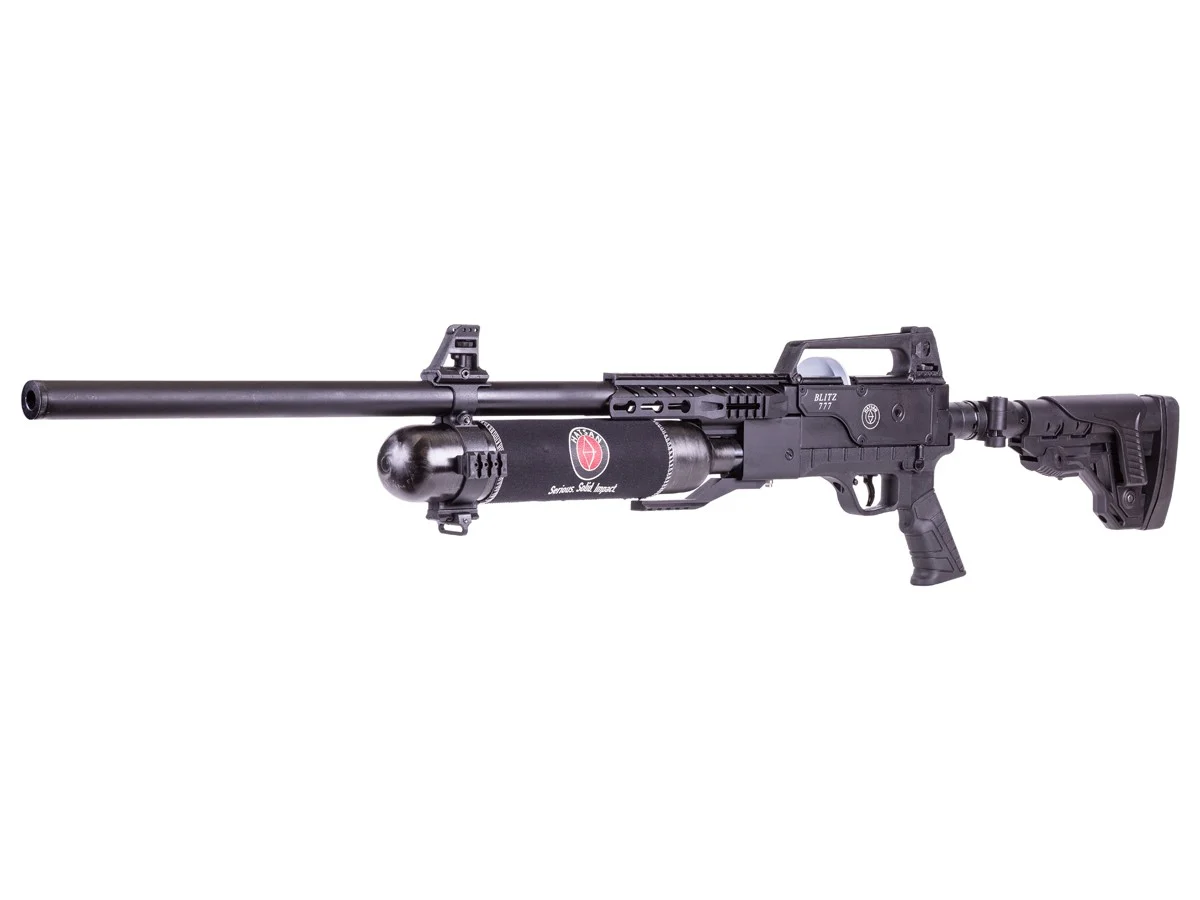
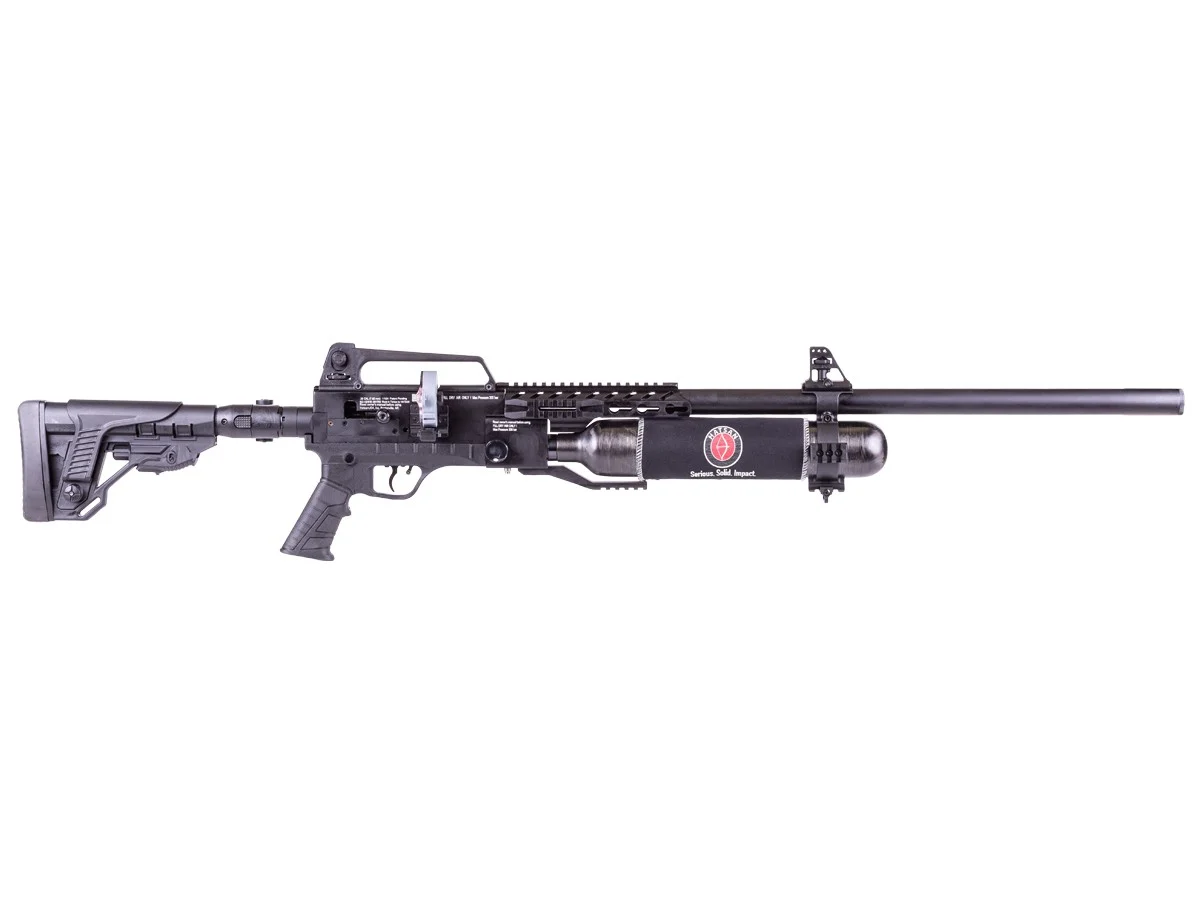
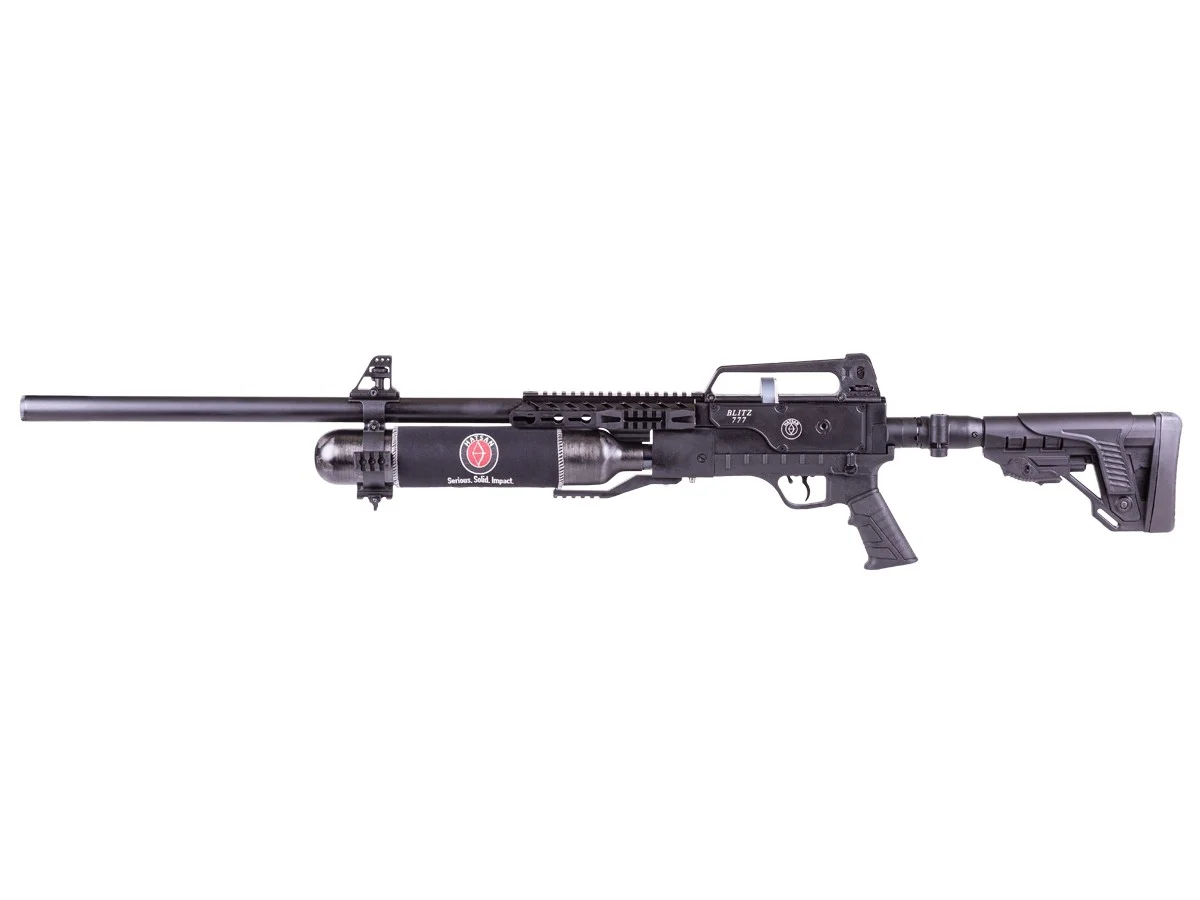







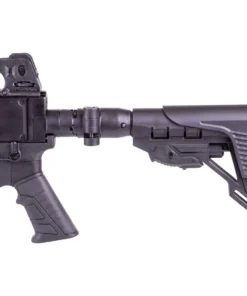


Hatsan Blitz 777 Full Auto PCP Air Rifle

€800.00
Description
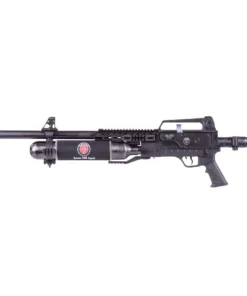
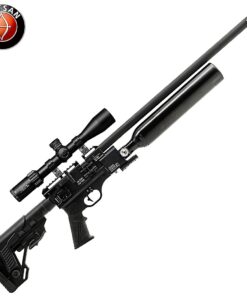
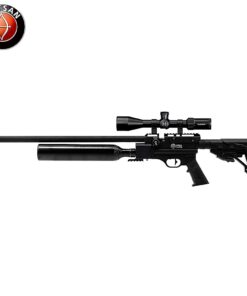
Available in .22, .25, and .30 calibers, the Hatsan Blitz 777 is an excellent hunting tool that’s also a blast to shoot at the range. This full-featured Pre-Charged Pneumatic (PCP) air rifle boasts a select fire system capable of shooting full-auto and emptying its magazine in under one second. Or, select semi-auto to make each projectile count as you land accurate shots through the 26” barrel.
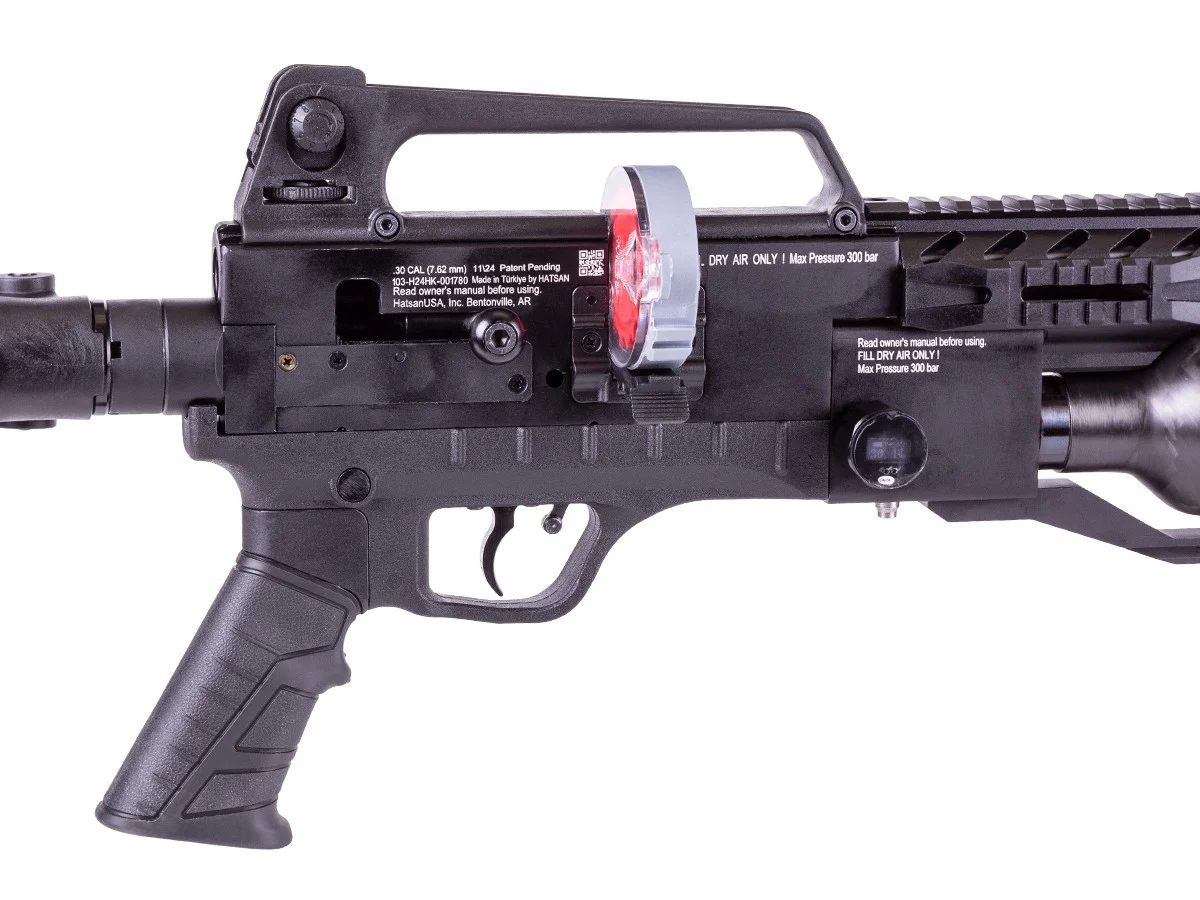
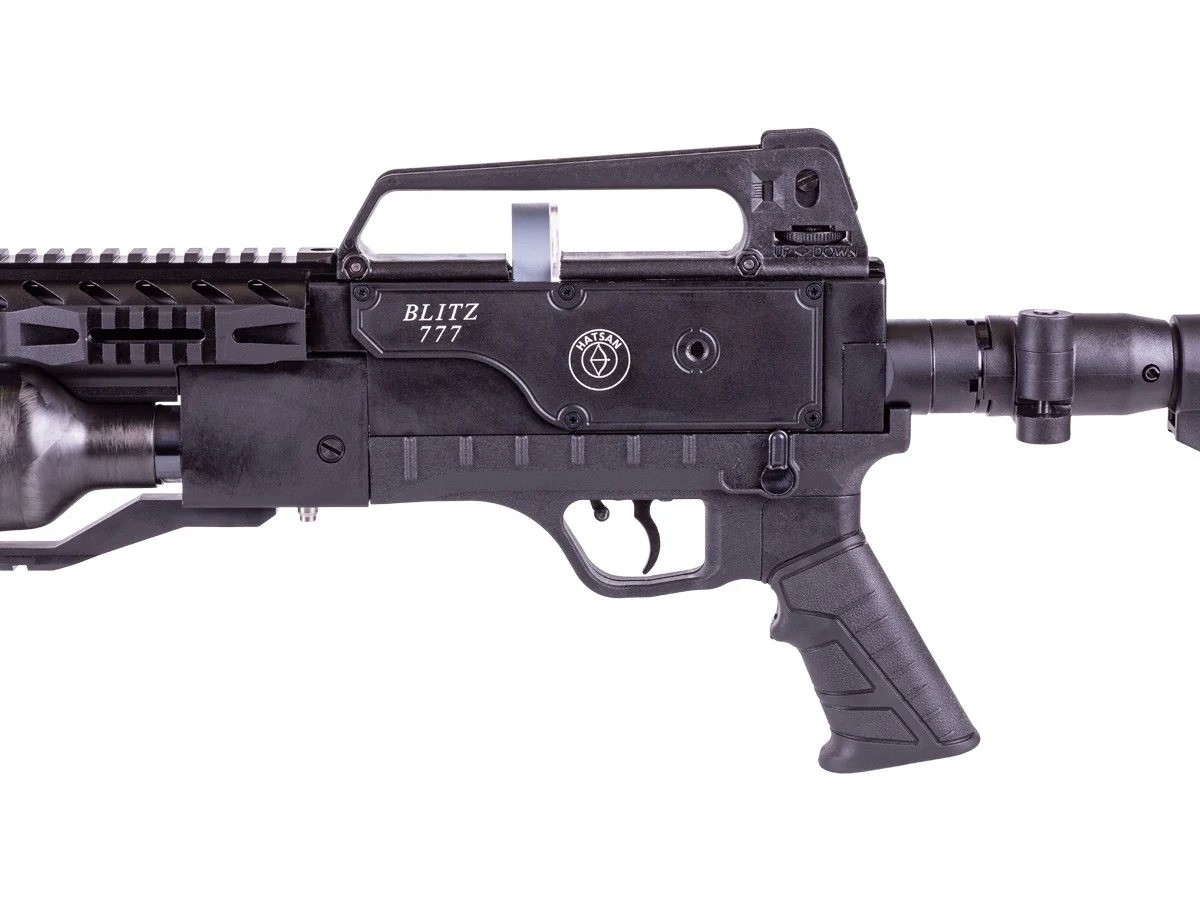
It has a detachable carry handle with an integrated rear sight which, when removed, makes room for a scope. The combo 11mm dovetail/Weaver optics rail will help you push your limits as an air gunner. It feels great when shooting thanks to a telescoping buttstock, adjustable cheek riser, and rubberized pistol grip.
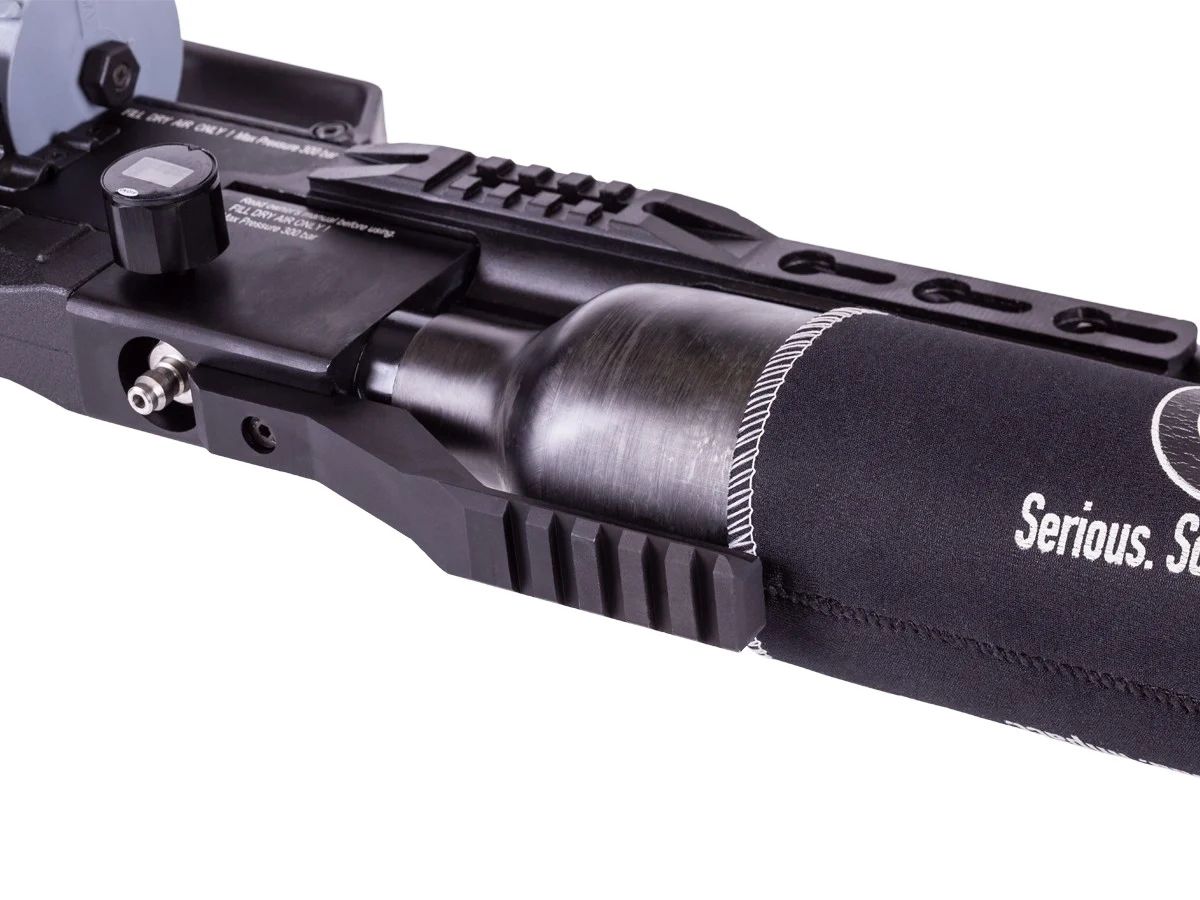
Bringing hours of fun to the range is the 700cc carbon fiber tank which allows for over 150 shots per fill. The .22 caliber PCP air rifle can launch pellets to a maximum velocity of 1,120 FPS with 41 FPE (25 cal is rated at 1,020 FPS with 45 FPE and 30 cal is rated at 760 FPS with 59 FPE). That’s enough power for small game hunting or a lot of fun at the range. The Blitz 777 works great with the Hatsan SwingLoad High Capacity Magazine for even more giggle-inducing automatic fire between re-loads.
Get a new PCP Air Rifle before your next hunt or range session. Choose your caliber and buy your Hatsan Blitz 777 from Pyramyd Air, today.
Hatsan Blitz 777 Full Auto PCP Air Rifle
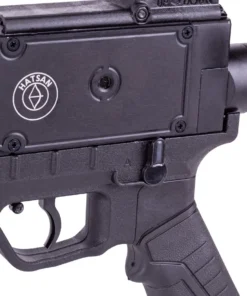
- Select fire: full/semi-auto
- Manual safety
- Available in .22, .25, and .30 calibers
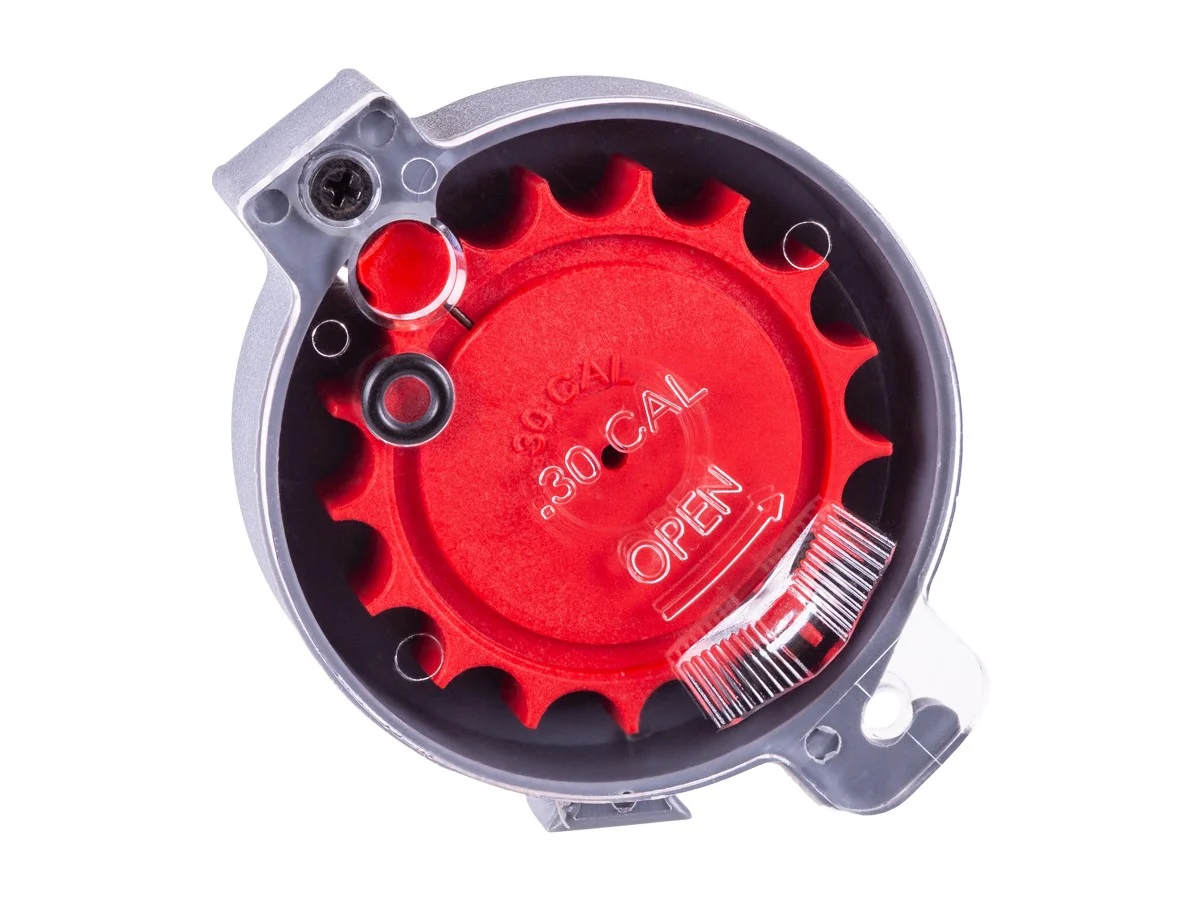
- Capacity: 21 rounds in .22; 19 rounds in .25; 16 rounds in .30
- 2 magazines included
- Velocity: 1,120 FPS in .22; 1,020 FPS in .25; 760 FPS in .30
- Energy: 41 FPE in .22; 45 FPE in .25; 59 FPE in .30
- Weight: 10.8 lbs
- Length: 48.5″ – 51.5″
- Barrel length: 26″
- Iron sights included
- Combo 11mm dovetail/Weaver scope mount
- Tank capacity: 700cc
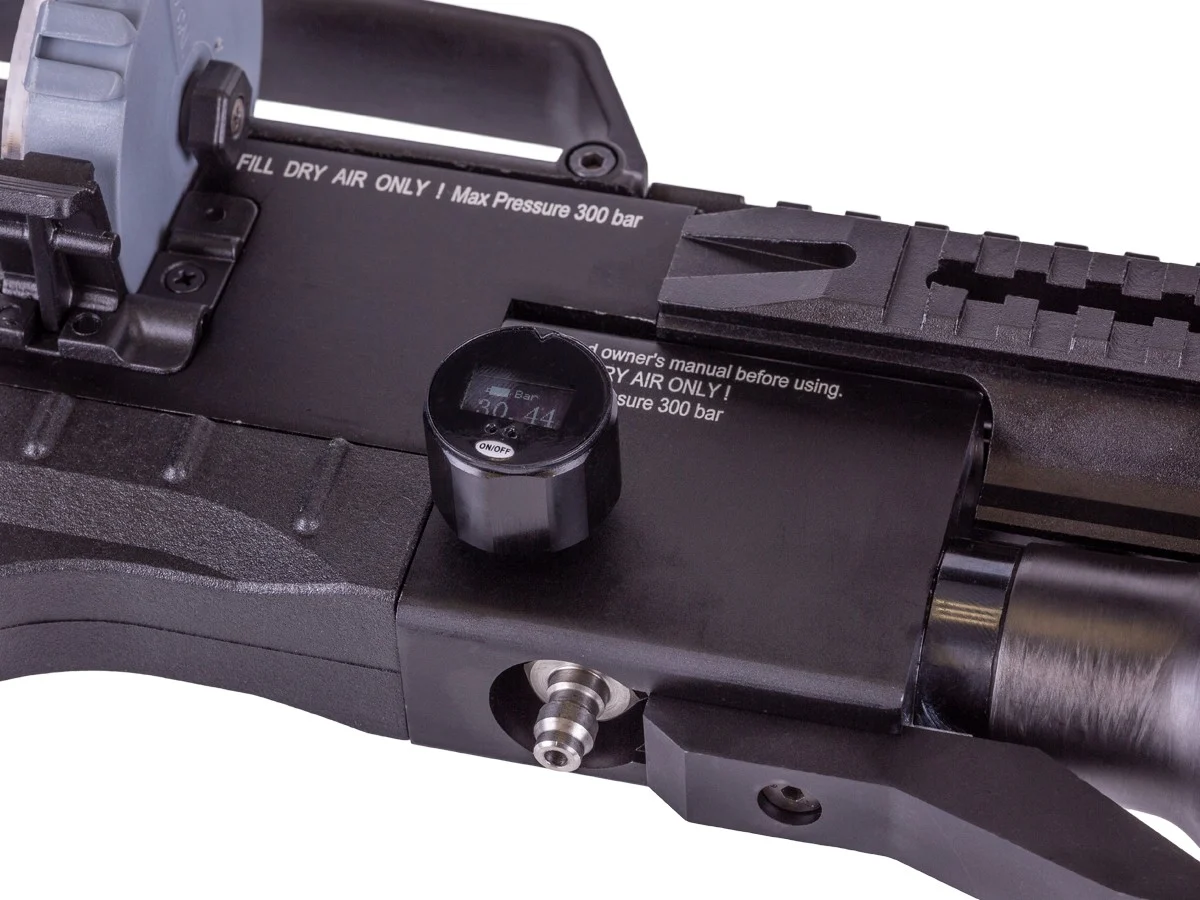
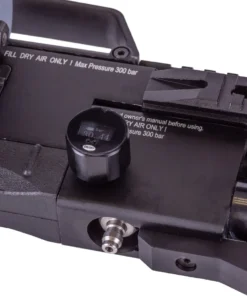
- Max fill pressure 300 BAR
- Digital tank pressure manometer
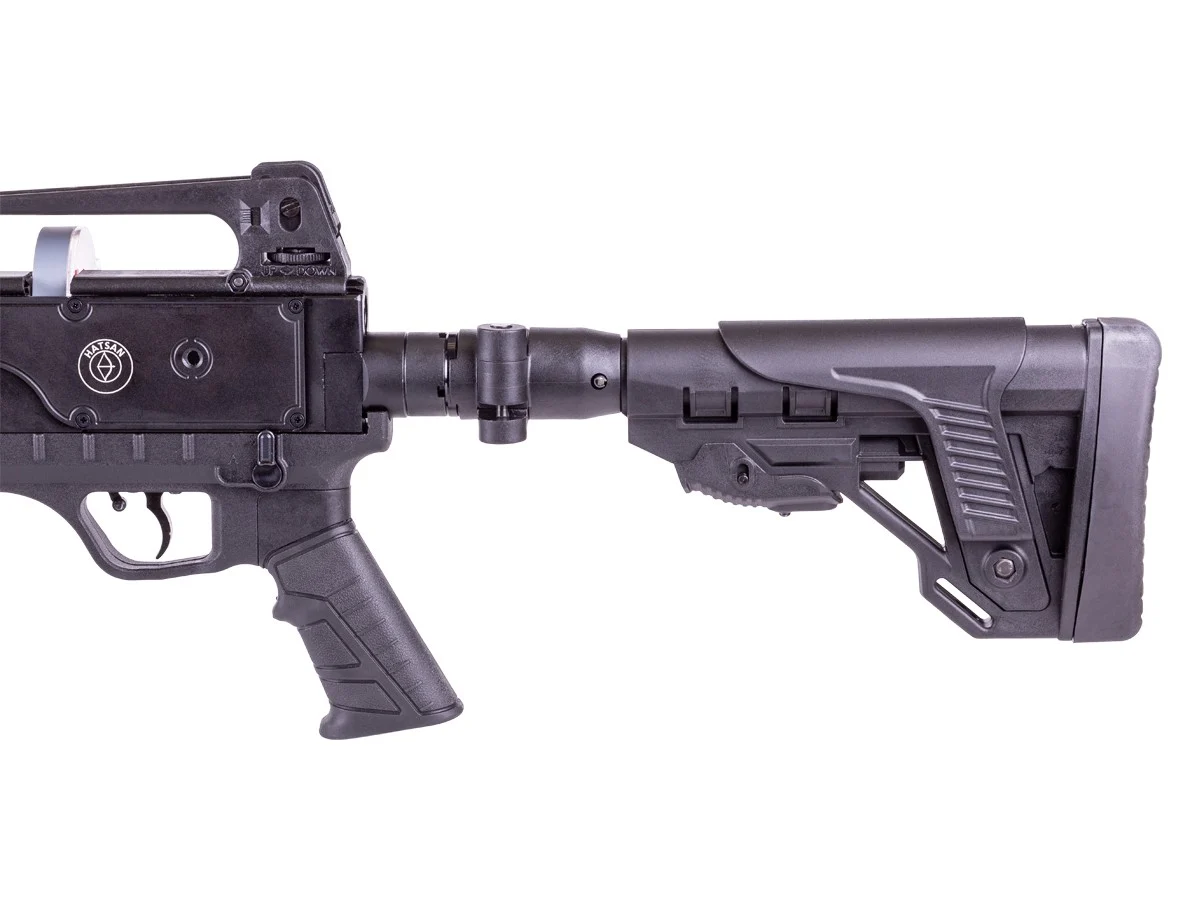
- Telescoping, folding stock with integrated pistol grip
- Integrated sling mounts
Specifications
BrandHatsan
Caliber.25 (6.35mm)Max Velocity1020 fpsMuzzle Energy45 ft/lbsSuggested forSmall game hunting/target practicePowerplantPre-charged pneumaticLoudness3-MediumNoise Level89.32 dB Weight10.8 lbsFunctionRepeaterMax Shots per Fill170Cylinder Size700 ccActionSemi/Full-autoShroudedYesScopeableWeaver & 11mm dovetailsFront SightsAdjustable for elevationRear SightsAdjustable for windage & elevationSafetyManualBarrelRifledBarrel Length26.0″Overall Length51.5″Capacity19 round(s)Body TypeRifleStockSyntheticButtplateAdjustableColorBlackOperating Pressure4351 PSI / 300 BARGrip OrientationAmbidextrousRegulatedNoIs Safe To Dry FireYes
Hatsan Blitz 777 Full Auto PCP Air Rifle – High-Capacity Select-Fire PCP Performance, 700cc Air System and Precision Engineering
The Hatsan Blitz 777 Full Auto PCP Air Rifle is a high-capacity pre-charged pneumatic platform engineered for shooters who want fast follow-up capability, a substantial compressed-air supply, large rotary magazines and a modern tactical configuration.
Unlike a conventional manually cycled PCP, the Blitz 777 uses an air-operated system that supports selectable firing modes. Consequently, the shooter does not need to operate a bolt or side lever between every shot when the rifle is used in its intended lawful configuration.
The platform is built around a large 700cc air reservoir, a maximum 300-bar fill pressure, a 585mm / 23-inch barrel, and an approximate overall weight of 4kg / 8.8lb. Hatsan also specifies a tactical side-folding stock, ergonomic pistol grip and elevation-adjustable cheek support.
Because the Blitz 777 combines high air capacity with rapid cycling, it is particularly important that owners follow applicable local regulations, range rules and safe handling procedures.
Selectable Semi-Automatic and Full-Automatic Operation
The defining characteristic of the Blitz family is its selectable firing system.
Instead of requiring manual cocking after every shot, the rifle uses an efficient air-operated mechanism to cycle the action.
This gives the platform a very different character from conventional PCP rifles.
Semi-automatic operation allows individual shots to be fired with repeated trigger presses.
Meanwhile, full-auto capability is provided where lawful and permitted.
The current official specification states that at least 100 bar of pressure is required for semi-automatic or full-automatic operation.
For owners, this means pressure management is particularly important because the action itself depends on sufficient air pressure.
700cc High-Capacity Air System
One of the biggest improvements associated with the Blitz 777 is its large 700cc air capacity.
That substantial reservoir is designed to support the rifle’s rapid-cycling operating system while providing an extended usable shot string.
The larger air system becomes especially valuable during longer supervised range sessions because fewer interruptions are required for filling.
However, shot count still depends on calibre, temperature, pellet selection, pressure and firing pattern.
300-Bar Fill Pressure
The Blitz 777 uses a maximum fill pressure of 300 bar according to Hatsan’s current technical specification.
This is higher than the 250-bar system used by the earlier standard Blitz.
Because of that pressure level, suitable filling equipment rated for the system should always be used.
Clean and dry compressed air is also important for maintaining seals, valves and internal components over time.
High-Capacity Magazine System
Magazine capacity varies according to calibre.
Hatsan’s current English Blitz 777 listing specifies capacities of:
- 21 shots in .22
- 19 shots in .25
- 16 shots in .30
This capacity supports extended shooting without constant magazine replacement.
Because the rifle can cycle rapidly, magazines should always be loaded carefully and inspected regularly for smooth rotation and reliable pellet alignment.
Extended Shot Capacity
Hatsan publishes approximately:
- 175 shots in .22
- 170 shots in .25
- 160 shots in .30
at optimal velocity under the manufacturer’s test conditions.
Actual performance can vary with pellet weight, pellet design, temperature, altitude and other operating conditions.
Therefore, published shot counts should be viewed as manufacturer reference figures rather than guaranteed results for every rifle or environment.
585mm Precision Barrel
The rifle uses a 585mm / 23-inch barrel.
Barrel quality plays an important role in consistent pellet stabilization.
However, mechanical precision alone cannot guarantee small groups.
Pellet compatibility, pressure consistency, optic setup, trigger control and shooter technique all remain important.
For serious target evaluation, several pellet types should be tested rather than assuming one option will perform best automatically.
Tactical Side-Folding Stock
The Blitz 777 uses a tactical side-folding stock.
This makes the platform easier to store and transport within applicable laws while retaining a full stock when deployed for shooting.
The stock also incorporates an adjustable cheek support.
A properly adjusted cheek position helps the eye return naturally behind the optic.
This improves repeatability during precision shooting.
Ergonomic Pistol Grip
The pistol-style grip supports a more upright firing-hand position.
A natural wrist angle can reduce unnecessary tension.
Additionally, predictable hand placement can improve trigger control.
The grip should be held firmly enough for control without excessive squeezing.
Why Air Pressure Matters So Much
Pressure management is particularly important in a rapid-cycling PCP.
The system needs sufficient stored air not only to propel the pellet but also to operate the action reliably.
Therefore, owners should monitor reservoir pressure rather than simply firing until the rifle stops cycling normally.
The manufacturer specifically notes the minimum pressure requirement for reliable semi/full-auto function.
How to Obtain Consistent Precision
Precision begins with repeatability.
Use the same pellet during testing.
Begin from a similar pressure.
Keep the optic securely mounted.
Use the same shoulder position.
Maintain the same cheek weld.
Fire controlled groups.
Record the results.
This approach makes it easier to determine whether a change came from the rifle, ammunition or shooter.
Why Pellet Selection Is Important
Different pellets can behave differently in the same barrel.
Weight influences velocity.
Shape can affect magazine feeding.
Head size can influence barrel fit.
Skirt condition can affect sealing.
Therefore, practical grouping should determine which pellet is preferred.
CARABINA HATSAN PCP BT65 SB ELITE Comparison
Buyers searching for CARABINA HATSAN PCP BT65 SB ELITE or hatsan bt65.25 specifications may also encounter the Blitz 777.
However, these platforms are mechanically different.
The BT65 is based around manually operated PCP architecture, whereas the Blitz family is built around an air-operated select-fire action.
Their specifications should not be mixed.
Hatsan Air Rifle Range
Searches for hatsan air rifle, hatsanusa, hatsan usa, and hatsan cover a broad selection of spring, gas-piston and PCP designs.
The Blitz 777 occupies a distinctive position because of its select-fire operation and high-capacity air system.
Hatsan Sortie and Sortie Tact Comparison
The hatsan sortie, hatsan sortie tact, hatsan sortie tact semi-auto pcp, and hatsan sortie threaded adapter relate to another semi-automatic Hatsan family.
The Sortie is significantly more compact and uses a different reservoir and action architecture.
Therefore, accessories and specifications should not automatically be treated as interchangeable.
Hatsan Velox Comparison
The hatsan velox belongs to another compact pneumatic category.
Its dimensions, handling characteristics and operating purpose differ substantially from those of the large Blitz 777 platform.
Hatsan Jet and Jet 2 Comparison
Searches for hatsan jet, hatsan jet 2, and hatsan jet i pcp .22 caliber pellet rifle kit generally relate to Hatsan’s compact modular PCP family.
The Blitz 777 is considerably larger and is designed around a much greater air supply.
Hatsan Flash Comparison
The hatsan flash uses a simpler manually operated PCP design.
It is lighter, less mechanically complex and intended for shooters who do not require select-fire capability.
Therefore, the Flash and Blitz 777 represent very different ownership experiences.
Hatsan FlashPup QE and BullBoss Comparison
The hatsan flashpup qe and hatsan bullboss use compact bullpup layouts.
Their shortened configurations make them easier to handle in confined sporting environments.
The Blitz 777 instead emphasizes high air capacity and rapid cycling.
Hatsan Hercules and Hercules Bully Comparison
Searches for hatsan hercules, hatsan hercules bully, and hercules bully air rifle refer to larger high-capacity PCP platforms.
Although these rifles may also emphasize substantial air storage, their actions differ from the Blitz 777.
Hatsan Harpoon and Piledriver Comparison
The hatsan harpoon and hatsan piledriver belong to specialized high-output product categories.
Their calibre choices, power characteristics and intended applications differ from the Blitz 777.
Specifications should therefore remain separated.
Hatsan Invader and Neutron Star Comparison
Search terms including hatsan invader and hatsan neutron star refer to other pneumatic platforms.
They should be evaluated according to their own technical specifications rather than being used to describe the Blitz 777.
Hatsan Blitz and Hassan Blitz Search Comparison
Searches for hassan blitz are commonly misspelled references to the Hatsan Blitz family.
The standard Blitz uses a 580cc reservoir and 250-bar fill pressure, whereas the Blitz 777 increases capacity to 700cc and 300 bar.
This distinction is important when comparing current models.
Hatsan Model 95 and Spring-Piston Alternatives
The hatsan model 95, hatsan mod 95, hatsan 95, model 95, hatsan 135, hatsan airtact air rifle, and hatsan mod 25 belong to different powerplant categories.
Most use spring or gas-piston mechanisms rather than compressed-air reservoirs.
Consequently, their recoil characteristics, loading procedures and maintenance requirements differ considerably.
Hatsan Refurbished Buying Considerations
A buyer searching hatsan refurbished should pay close attention to pressure retention, reservoir condition, magazine operation, firing-mode controls, trigger function, seals and service history.
With a mechanically complex PCP, verified maintenance history can be particularly valuable.
Air Pellet Gun and CO2 Pellet Rifle Comparison
Searches for air pellet gun and co2 pellet rifle cover a much wider category.
The Blitz 777 is a high-pressure PCP system rather than a CO2-powered rifle.
That difference affects filling requirements, pressure management and operating characteristics.
H&N Field Target Trophy and Pellet Selection
The phrase h&n field target trophy is commonly associated with pellet research.
However, no pellet should automatically be assumed to be the best match.
Magazine fit, barrel compatibility and repeatable grouping should be confirmed through testing.
Snowpeak PP750L PCP Air Pistol Comparison
The Snowpeak PP750L PCP Air Pistol, snowpeak pp750, pp750, and snow peak pp750 belong to a compact pneumatic category.
They should not be confused with the full-size high-capacity Blitz 777.
Snowpeak Airgun Search Context
Other comparison searches include snowpeak airguns, snowpeak sports, snowpeak ap900, snowpeak max, snowpeak p35x, pr900 gen 3, snowpeak p35, snowpeak m60b, snow peak pp20, p35, p35x, p35x pcp, snowpeak m25, ap900b pcp air rifle, snowpeak m60, snowpeak max 1 price, pcp p 35, m25 rifle, snow peak equipment, hp300, pellet 9mm, snowpeak p35 vs p35x, snowpeak pp20, and m25 weapon.
These terms relate to separate Snowpeak products and broader airgun searches.
They should be used only for product comparison and search relevance, not as specifications for the Blitz 777.
Why Choose the Hatsan Blitz 777?
The strongest reason to consider the Blitz 777 is its combination of high air capacity and unusual operating capability.
Its 700cc reservoir supports extended use.
The 300-bar system provides substantial stored-air capacity.
The 585mm barrel supports consistent projectile guidance.
The large magazine reduces interruptions.
The folding stock improves configuration flexibility.
The adjustable cheek support helps create repeatable optic alignment.
Most importantly, the air-operated selectable firing system gives the rifle a fundamentally different character from manually cycled PCP designs.
Where the Blitz 777 Makes the Most Sense
The Blitz 777 is best suited to lawful, controlled recreational environments where its operating system is permitted.
It can be especially attractive to experienced PCP users who already understand high-pressure filling equipment, air management, magazine maintenance and careful range discipline.
It is less suitable for buyers who simply want the lightest or simplest possible PCP rifle.
When the Blitz 777 Is the Better Choice
This platform makes the most sense when large air capacity, extended shot capability and rapid follow-up operation are more important than minimal weight or mechanical simplicity.
Shooters who prefer a lightweight manually operated rifle may be better served by a simpler platform.
However, someone who wants a distinctive select-fire PCP with considerable air capacity will find the Blitz 777 technically compelling.
Final Section 1 Assessment
The Hatsan Blitz 777 represents a specialized development of the modern PCP air rifle.
Its 700cc reservoir, 300-bar operating pressure, large-capacity magazines, 585mm barrel and selectable operating system create a platform built around extended shooting and rapid cycling.
At the same time, practical accuracy still depends on fundamentals.
The correct pellet must be selected.
Air pressure must be monitored.
The optic must remain secure.
The stock and cheekpiece should be fitted correctly.
Trigger control should remain smooth.
Maintenance must be performed responsibly.
When these principles are combined with the rifle’s advanced pneumatic design, the Blitz 777 provides a distinctive high-capacity PCP platform for experienced owners using it legally and responsibly in appropriate sporting and recreational environments.
Section 2 – Precision, Air Management, Handling, Optics and Responsible Long-Term Use
Understanding the Platform Before Use
The Hatsan Blitz 777 is a more complex PCP platform than a conventional manually cycled air rifle.
Its operating system depends on compressed air not only to propel the pellet but also to support the action.
Because of that design, the shooter benefits from understanding pressure behavior, magazine function, optic setup, trigger control, stock fit, and general maintenance before beginning an extended session.
A methodical approach makes the rifle easier to manage.
It also makes performance easier to evaluate.
Establishing a Reliable Baseline
A consistent setup should be created before evaluating precision.
Choose one suitable pellet.
Use the same magazine.
Begin from a similar fill pressure.
Keep the optic on the same zero.
Use the same shooting distance.
Maintain the same stock configuration.
Fire several controlled groups.
Record the result.
This creates a reference point that can be used later if performance changes.
Why Consistency Matters
An advanced PCP can appear inconsistent when the real cause is changing conditions.
Pressure may be different.
The pellet may have changed.
The magazine may not be loaded the same way.
The optic may have moved.
The shooter may be using a different position.
Keeping these variables stable makes troubleshooting much easier.
Pellet Selection
Pellet choice strongly influences practical accuracy.
Different weights can behave differently in the same barrel.
Head size can affect fit.
Skirt condition can influence sealing.
Projectile shape can affect magazine feeding.
For this reason, several suitable options should be compared.
Pellet Weight
Heavier pellets may produce lower velocity.
Lighter pellets may produce higher velocity.
Neither is automatically more accurate.
The correct choice is the one that produces repeatable groups with the individual rifle.
Pellet Shape
Projectile geometry can influence both feeding and flight.
Some pellets may move through the magazine more smoothly.
Others may group better.
The most useful choice should be based on actual testing rather than assumptions.
Inspecting Pellets
Damaged pellets can create misleading results.
Bent skirts can affect sealing.
Dirt can introduce inconsistency.
For serious target testing, obviously damaged pellets should be removed.
Batch Variation
Pellets from different production batches may behave slightly differently.
If a new tin changes group size, the rifle should not immediately be adjusted.
The ammunition itself may be responsible.
Comparing the new batch with a known batch can help identify the cause.
Magazine Reliability
The magazine is an important part of the overall system.
It should rotate smoothly.
Pellets should sit correctly.
The mechanism should remain clean.
If unusual resistance appears, it should not be forced.
Loading the Magazine Carefully
Careful loading helps maintain reliable feeding.
Pellets should be inserted without damaging skirts.
The magazine should not be overfilled.
Any pellet that does not sit correctly should be removed rather than forced into position.
Magazine Inspection
The magazine should be inspected periodically for visible wear.
The rotation mechanism should remain smooth.
Any cracked or damaged component should be addressed before continued use.
Air Pressure and Action Reliability
The operating system depends on adequate pressure.
As pressure falls, the rifle may eventually leave the range where the action operates normally.
This is one reason the pressure gauge should be monitored rather than ignored.
The shooter should learn the rifle’s practical operating range.
Starting Pressure
Testing should begin from a consistent pressure whenever possible.
A session started near full pressure should not be compared directly with one started much lower unless the purpose is specifically to evaluate pressure behavior.
Why the Entire Reservoir Does Not Need to Be Used
A large reservoir provides substantial capacity, but every remaining shot does not necessarily offer identical behavior.
Once pressure falls outside the useful operating range, refilling may make more sense than continuing.
Controlled Filling
The reservoir should be filled gradually.
Rapid filling creates heat.
Once the air cools, the displayed pressure may settle lower.
A controlled fill generally produces more predictable results.
Suitable Filling Equipment
Only properly rated high-pressure equipment should be used.
Hoses, couplers, and connectors should be suitable for the operating pressure.
Questionable equipment should not be used.
Clean and Dry Air
Clean, dry compressed air helps protect the internal pneumatic system.
Moisture can contribute to corrosion.
Dust can damage seals.
The fill connection should remain protected when not in use.
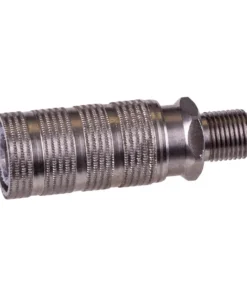
Fill Fitting Care
The filling connection should remain clean.
Protective caps should be used where supplied.
Dust and grit can damage sealing surfaces.
The fitting should be inspected regularly.
Hose Condition
High-pressure hoses should be checked for wear.
Cuts, cracking, or damaged fittings should not be ignored.
A questionable hose should be replaced.
Pressure Gauge Use
The gauge should be treated as a useful reference.
Starting pressure can be recorded.
Pressure can be checked after a known number of shots.
Over time, this helps the shooter understand practical air consumption.
Pressure and Temperature
Compressed air changes with temperature.
A reservoir filled while warm may show lower pressure after cooling.
A cold reservoir may show a higher reading after warming.
These normal changes should be considered before assuming a leak.
Recognizing a Possible Leak
A small pressure change after temperature stabilization may be normal.
Repeated pressure loss under stable conditions may indicate a sealing problem.
The pattern should be observed carefully before the cause is assumed.
Seal Wear
Seals are normal service items.
Their lifespan depends on pressure, cleanliness, temperature, and frequency of use.
Correct replacement components should be used when servicing becomes necessary.
Avoiding Unnecessary Internal Work
A properly functioning rifle does not need constant internal adjustment or disassembly.
Opening the system without a clear reason can create new problems.
Seals may be damaged.
Settings may be disturbed.
Leaks may be introduced.
Professional Servicing
The internal system operates under high pressure.
Valve work and deeper pneumatic servicing should be handled by someone with appropriate knowledge and tools.
This helps protect both the rifle and the user.
Barrel Performance
The barrel provides the mechanical foundation for consistent pellet flight.
However, the barrel does not work alone.
Pellet quality, pressure consistency, optic setup, and shooter technique all influence the final result.
Barrel Cleaning
The barrel should not be cleaned simply because time has passed.
If accuracy remains stable, frequent cleaning may be unnecessary.
Cleaning should be based on performance.
Gentle Cleaning
When cleaning becomes necessary, the process should remain careful.
The bore should be protected.
The muzzle should not be damaged.
Suitable equipment should be used.
Barrel Conditioning
A freshly cleaned barrel may need several shots before returning to its normal point of impact.
The shooter should allow performance to stabilize before changing the optic.
Muzzle Inspection
The muzzle should remain clean and undamaged.
A sudden accuracy change should include a visual inspection.
Small damage can influence projectile release.
Shroud and Barrel Assembly
The external barrel assembly should remain secure.
Any unusual looseness should be investigated.
A change in sound or grouping can justify inspection.
Trigger Control
The trigger should be pressed smoothly.
The finger should move primarily rearward.
The rest of the hand should remain relaxed.
A sudden pull can disturb the sight picture.
Trigger Finger Placement
Finger placement should feel natural.
Too much finger can create sideways pressure.
Too little contact can reduce control.
A straight rearward press is generally the goal.
Grip Pressure
The firing hand should remain controlled but relaxed.
Excessive grip pressure can create tension.
A repeatable moderate grip usually produces better consistency.
Follow-Through
The shot does not end the moment the trigger moves.
The shooter should stay behind the rifle.
The cheek should remain in place.
The optic should remain observed.
The trigger movement should finish naturally.
This helps the shooter understand what happened during each shot.
Calling the Shot
Shot calling is a useful precision skill.
The shooter watches the sight picture during release.
Any movement is noted.
The likely point of impact is predicted.
The target is then checked.
This makes it easier to separate shooter movement from equipment issues.
Stock Configuration
The stock should be configured for comfortable shoulder contact.
The cheek support should place the eye naturally behind the optic.
The grip should feel relaxed.
A poor fit can create unnecessary tension.
Cheek Position
The cheek should return to the same place on the stock.
A repeatable head position helps maintain consistent sight alignment.
Shoulder Contact
The stock should return to the same location on the shoulder.
Changes in shoulder pressure can alter how the rifle settles.
Consistency improves repeatability.
Support-Hand Placement
The support hand should use the same reference point.
Moving it forward or backward changes balance.
A consistent position helps the rifle settle naturally.
Understanding Weight and Balance
The rifle’s substantial air system and full-size construction give it a different balance from a lightweight carbine.
The shooter should find a support position that reduces unnecessary muscular effort.
Bench Shooting
A stable bench can help evaluate mechanical accuracy.
The rifle should be supported consistently.
The same contact points should be used.
Several groups should be compared.
Front Support
The front support should reduce movement without forcing the rifle.
A consistent support point produces more useful results.
Rear Support
A rear bag or similar support can help stabilize the stock.
Small elevation corrections can then be made without changing the entire position.
Standing Practice
Standing requires more balance.
Some movement is normal.
The goal is to manage movement rather than eliminate it completely.
A relaxed stance is generally more repeatable.
Kneeling Practice
Kneeling provides additional support.
The shooter should find a position that feels stable without excessive tension.
Seated Practice
A seated position can offer excellent support.
The shooter should still maintain consistent cheek and shoulder contact.
Prone Practice
Prone can be highly stable.
The optic position should allow a natural head angle.
Neck strain should be avoided.
Natural Point of Aim
The rifle should settle toward the target when the body relaxes.
If the shooter constantly forces alignment, body position should be changed.
Breathing Control
Breathing moves the upper body.
A comfortable pause after exhaling is often used for the shot.
The pause should remain natural.
Long forced breath holds can increase tension.
Avoiding Excessive Hold Time
Holding on target for too long can increase movement.
Muscles become tired.
Visual focus decreases.
If the shot does not develop naturally, lowering the rifle and restarting is usually better.
Visual Fatigue
Long sessions can tire the eyes.
The target may become less distinct.
The reticle may appear less sharp.
Short breaks can restore concentration.
Optic Selection
A suitable optic should match the rifle and typical shooting distance.
Clear glass matters.
Reliable adjustment matters.
Eye relief matters.
Field of view matters.
Extreme magnification is not always necessary.
Scope Mounting
The optic should be mounted securely.
The reticle should remain level.
Eye relief should feel natural.
The shooter should not need an awkward head position.
Mount Inspection
Scope mounts should be checked periodically.
Loose hardware can cause point-of-impact changes.
Overtightening should also be avoided.
Zeroing
Zero should be established with the pellet chosen for normal use.
Once a stable zero is found, constant adjustment should be avoided.
Frequent changes make the rifle harder to evaluate.
Confirming Zero
Zero should be checked periodically.
If impact shifts, the optic and mounts should be inspected before deeper troubleshooting begins.
Range Verification
Point of impact changes with distance.
The shooter should confirm actual performance at several useful ranges.
Real-world results are more valuable than generic trajectory assumptions.
Personal Range Reference
A simple range reference can be useful.
The shooter can record actual point of impact at several distances.
This creates practical information specific to the rifle and pellet.
Wind Effects
Wind can influence pellet flight.
The effect becomes greater as distance increases.
Outdoor groups should always be interpreted in relation to wind conditions.
Temperature Effects
Temperature influences compressed air.
It can also affect how ammunition behaves.
Comparisons are more meaningful when conditions are similar.
Lighting Effects
Lighting changes how the target and reticle appear.
Bright glare can reduce clarity.
Low light can make aiming more difficult.
Consistent conditions help during testing.
Chronograph Testing
A chronograph can provide useful information about velocity consistency.
Several shots should be measured.
Average velocity can be recorded.
Extreme spread can be reviewed.
Standard deviation can provide additional context.
Average Velocity
Average velocity gives the shooter a reference point.
If it changes significantly, pressure, temperature, pellet choice, or mechanical condition may have changed.
Extreme Spread
Extreme spread shows the difference between the fastest and slowest measured shot.
A smaller spread generally suggests more consistent velocity.
However, good numbers do not automatically guarantee tight groups.
Standard Deviation
Standard deviation shows how tightly measured shots cluster around the average.
Lower values can be useful.
However, the target should remain the final measure of performance.
Evaluating Group Shape
Group shape can reveal useful information.
A vertical pattern may suggest one type of inconsistency.
A horizontal pattern may suggest another.
An irregular group may point toward several combined factors.
Patterns should be evaluated over several groups rather than one target.
Tight Groups That Shift
If groups remain tight but move to another part of the target, the rifle may still be mechanically consistent.
Possible causes include optic movement, pressure differences, lighting, or changes in hold.
A shifted group is different from a larger group.
Groups That Become Larger
If groups open up, ammunition should be checked.
The optic should be inspected.
Pressure should be reviewed.
Shooter fatigue should be considered.
Magazine feeding and barrel condition may also deserve attention.
Accuracy Troubleshooting
Troubleshooting should follow a simple order.
Check the pellet.
Check the magazine.
Check the optic.
Check the mounts.
Check pressure.
Check shooter position.
Check environmental conditions.
Only after these factors are reviewed should deeper mechanical causes be considered.
Exterior Maintenance
The rifle should remain clean and dry.
Dust should be removed.
Moisture should not remain on metal surfaces.
Excess lubricant should be avoided.
Stock and Chassis Care
Adjustment points should remain secure.
The folding mechanism should operate correctly.
The cheek support should lock firmly.
Loose components should be addressed.
Accessory Management
Accessories should only be added when they serve a useful purpose.
Unnecessary weight can alter balance.
Loose accessories can create movement or noise.
Storage
The rifle should be stored securely.
Unauthorized access should be prevented.
The environment should remain dry.
Extreme heat should be avoided.
Heat Exposure
Vehicle interiors can become extremely hot.
This is not ideal for seals, optics, or pressurized systems.
The rifle should not be left in excessive heat unnecessarily.
Moisture Control
The rifle should be dried before long-term storage if exposed to moisture.
This helps protect metal parts and accessories.
Transport Protection
A suitable case helps protect the rifle during transport.
The optic, barrel, stock, magazine area, and reservoir should be protected from impact.
The rifle should be transported unloaded and in accordance with applicable law.
Evaluating a Used Example
A used rifle should be inspected systematically.
Pressure retention should be observed.
The magazine system should function correctly.
The trigger should remain predictable.
The stock should lock securely.
The cheek support should adjust correctly.
The optic rail should remain undamaged.
The barrel and shroud should be inspected.
Cosmetic Wear
Cosmetic marks do not automatically indicate poor performance.
A rifle can show normal handling wear and still function well.
Mechanical condition matters more than appearance.
Pressure Retention in a Used Rifle
Pressure should remain stable when temperature remains stable.
Persistent loss may indicate a leak.
The cause should be identified before continued use.
Magazine Condition in a Used Rifle
The magazine should index smoothly.
It should not bind.
Pellets should feed consistently.
Damaged magazines should be repaired or replaced.
Trigger Condition in a Used Rifle
The trigger should feel consistent.
Roughness or unpredictable release may indicate that servicing is needed.
Stock Condition in a Used Rifle
The folding mechanism should lock properly.
The cheek support should remain secure.
Any excessive looseness should be investigated.
Barrel Condition in a Used Rifle
The muzzle should remain undamaged.
The barrel assembly should be secure.
Any visible impact damage should be investigated.
Why the Large Air System Matters
The substantial reservoir supports longer sessions.
Fewer fills are needed.
This is useful during pellet testing, zeroing, and supervised recreational range use.
Why Reliable Magazine Function Matters
The magazine is central to the platform’s operation.
Smooth feeding improves consistency.
Clean loading reduces the chance of damaged pellets.
Why Stock Adjustment Matters
The folding stock and cheek support allow the rifle to be configured for more comfortable use.
A better fit improves eye alignment and trigger control.
Why Optic Setup Matters
A stable optic helps the shooter make use of the rifle’s mechanical precision.
Poor mounting can make an accurate rifle appear inconsistent.
Why Air Management Matters
Because the action depends on compressed air, pressure management is especially important.
The shooter should understand when the rifle is operating normally and when pressure has fallen outside the useful range.
Why Maintenance Discipline Matters
A complex pneumatic platform benefits from careful ownership.
Clean air matters.
Magazine cleanliness matters.
Seal condition matters.
Optic stability matters.
Storage conditions matter.
These habits improve reliability over time.
Who Will Appreciate This Platform
This rifle is best suited to experienced PCP users who already understand high-pressure filling equipment, magazine care, pressure monitoring, and disciplined range procedures.
It is less suited to someone who wants the simplest possible air rifle.
Final Practical Assessment
The Hatsan Blitz 777 combines a large compressed-air system, high-capacity magazine operation, a full-size tactical stock, adjustable cheek support, and advanced pneumatic cycling in one distinctive platform.
Its performance is best understood through consistency.
The same pellet should be used during testing.
Pressure should be monitored.
The magazine should remain clean.
The optic should remain secure.
The stock should fit the shooter properly.
Trigger control should remain smooth.
Environmental conditions should be considered.
Internal high-pressure work should be handled appropriately.
The rifle should also be stored and transported responsibly.
When these principles are followed, the Blitz 777 can provide a technically sophisticated, repeatable, and highly distinctive PCP shooting experience for lawful recreational and sporting use.
Section 3 – Advanced Ownership, Reliability, Precision Verification and Long-Term Care
Understanding Long-Term Performance
The Hatsan Blitz 777 is a sophisticated pneumatic platform, and long-term reliability depends heavily on disciplined ownership.
Its large air system, high-capacity magazines, stock assembly, pressure components, trigger group, barrel, optic setup, and internal cycling system all contribute to overall performance.
Because these systems work together, the rifle should be evaluated as a complete platform.
A problem that appears to involve accuracy may actually come from ammunition.
A feeding issue may be linked to magazine condition.
A pressure change may result from temperature rather than a leak.
For that reason, methodical inspection is far more useful than random adjustment.
Creating a Long-Term Reference Setup
A known reference configuration is one of the best tools an owner can establish.
Choose one pellet that has already shown good consistency.
Use the same magazine.
Begin from a similar fill pressure.
Keep the optic on the same zero.
Use the same stock and cheek-support position.
Shoot from the same distance.
Record several groups.
This becomes the rifle’s baseline.
If performance changes later, the owner has reliable data for comparison.
Why Records Matter
A simple shooting and maintenance log can make troubleshooting much easier.
Useful information can include:
Date.
Pellet type.
Pellet weight.
Starting pressure.
Ending pressure.
Number of shots.
Average group size.
Environmental conditions.
Any maintenance completed.
Any change in sound or feel.
Magazine used.
Optic adjustments.
Service work.
Over time, these notes create a clear history.
Separating Accuracy Problems from Mechanical Problems
Not every poor group indicates a mechanical fault.
Shooter fatigue can enlarge groups.
Wind can move pellets.
A loose optic can shift impact.
A different pellet batch can change results.
Pressure may be lower than usual.
Magazine feeding can also influence consistency.
The simplest explanation should always be checked first.
Pellet Compatibility
Every barrel has individual characteristics.
A pellet that performs exceptionally well in one rifle may not perform identically in another.
Head size, skirt shape, weight, and manufacturing consistency can all influence results.
The best pellet should therefore be determined through controlled testing.
Pellet Weight
Different pellet weights change how the rifle behaves.
Velocity may change.
Trajectory may change.
Air use can vary.
The most useful pellet is not necessarily the lightest or heaviest.
It is the one that produces stable results in the individual rifle.
Pellet Shape
Projectile shape can affect both feeding and accuracy.
Some designs may sit more consistently in the magazine.
Others may enter the barrel more smoothly.
Real target performance should guide the final decision.
Pellet Inspection
Damaged pellets should be removed before serious testing.
Bent skirts can affect sealing.
Dirty pellets can introduce inconsistency.
Visible defects can create misleading results.
Pellet Batch Variation
New production batches may behave differently from previous tins.
If accuracy changes immediately after switching ammunition, the rifle should not be altered automatically.
The ammunition should first be compared against a known batch.
Why Consistency Matters More Than Maximum Velocity
The highest possible velocity does not automatically produce the smallest groups.
Stable performance is usually more useful.
A smoother, more consistent shot string can provide better practical precision than chasing maximum output.
The target should always determine whether a setup is working well.
Chronograph Use
A chronograph can reveal useful information.
Average velocity can be recorded.
Extreme spread can be observed.
Standard deviation can be calculated.
Changes across a shot string can also be monitored.
These measurements help create a clearer picture of consistency.
Average Velocity
Average velocity provides a useful baseline.
If it changes noticeably without an intentional adjustment, several factors should be reviewed.
Pressure may have changed.
Temperature may be different.
Pellets may differ.
The air system may need inspection.
Extreme Spread
Extreme spread shows the difference between the fastest and slowest measured shot.
A smaller spread generally suggests greater velocity consistency.
However, small numbers are only useful if they correspond with good target results.
Standard Deviation
Standard deviation provides another way to evaluate shot-to-shot consistency.
Lower values may indicate a tighter velocity pattern.
However, numerical improvement alone does not guarantee better practical accuracy.
Understanding the Useful Pressure Window
The rifle performs best within a pressure range where the action, velocity, and point of impact remain predictable.
The owner should learn this range.
A known starting pressure helps.
Pressure can then be monitored during the session.
Once operation or accuracy begins to change, the system may be leaving its most useful range.
Pressure Stabilization After Filling
Compressed air becomes warm during filling.
A pressure reading taken immediately afterward may not represent the final stabilized value.
Allowing the system to cool can provide a more accurate reading.
This makes later comparisons more reliable.
Why Filling Technique Matters
Controlled filling helps reduce heat.
It also makes the final pressure easier to understand.
Filling equipment should always be suitable for the system.
The marked pressure limit must not be exceeded.
Air Quality
Clean, dry compressed air is important for long-term pneumatic health.
Moisture can contribute to corrosion.
Dust can damage seals.
The fill fitting should remain protected when not in use.
Fill Connection Maintenance
The connection should remain clean.
Protective caps should be used where available.
Dust and grit should be removed before attaching filling equipment.
Damaged sealing surfaces should not be ignored.
Hose and Coupler Inspection
High-pressure hoses should be checked periodically.
Cracking, cuts, bulges, or damaged fittings are reasons to stop using the equipment.
Couplers should connect securely.
Questionable equipment should be replaced.
Monitoring Pressure Retention
A properly functioning system should retain pressure under stable conditions.
Temperature changes can cause normal pressure movement.
Repeated loss under similar temperature conditions may indicate a leak.
The pattern should be recorded before the source is assumed.
Seal Condition
Seals are normal wear components.
Their service life depends on pressure, temperature, cleanliness, storage, and frequency of use.
When replacement becomes necessary, correct parts should be used.
Why Internal Work Should Be Limited
A rifle that performs correctly does not need unnecessary internal disassembly.
Opening the pneumatic system without a clear reason can create new faults.
Seals can be damaged.
Threads can be disturbed.
Leaks can be introduced.
Factory settings can also be changed unintentionally.
Professional Servicing
The internal system operates under high pressure.
Deeper servicing should be carried out by someone with appropriate knowledge and tools.
This is especially important for valve work, internal pressure components, and complex cycling mechanisms.
Magazine Condition
The magazine should rotate smoothly.
Pellets should sit correctly.
The mechanism should not bind.
Any unusual resistance should be investigated before continued use.
Magazine Cleanliness
Dust and debris can affect magazine operation.
The magazine should remain clean.
Excess lubricant should be avoided because it can attract dirt.
Loading Technique
Pellets should be loaded carefully.
The skirt should not be damaged.
The magazine should not be overfilled.
Any pellet that does not sit correctly should be removed rather than forced.
Comparing Multiple Magazines
If several magazines are used, each one can be marked discreetly for identification.
This can make troubleshooting easier.
If one magazine repeatedly produces feeding issues while another works normally, the cause becomes easier to isolate.
Action Feel
The cycling system should feel and sound consistent under normal operating conditions.
A sudden change in behavior should be treated as information.
Unusual hesitation, irregular cycling, or unexpected resistance should be investigated rather than ignored.
Trigger Consistency
The trigger should feel predictable.
The shooter should understand the first stage and final release.
If the trigger suddenly feels different, the rifle should be checked.
Trigger Finger Position
The finger should contact the trigger naturally.
The movement should be primarily rearward.
Sideways pressure can move the rifle during release.
Grip Pressure
The firing hand should remain relaxed.
Excessive grip tension can disturb alignment.
A repeatable moderate grip usually supports better precision.
Follow-Through
Follow-through remains important.
The shooter should stay behind the rifle after the shot.
The cheek should remain in contact with the stock.
The optic should remain observed.
This helps reveal what happened during the release.
Shot Calling
Shot calling develops awareness.
The shooter watches the sight picture during release.
Any reticle movement is noted.
The likely impact is predicted.
The target is then checked.
This makes it easier to determine whether a poor shot came from technique or equipment.
Stock Fit
The stock should place the rifle naturally into the shoulder.
The grip should feel comfortable.
The cheek support should align the eye with the optic.
The shooter should not need to force the head into position.
Cheek Support Adjustment
The cheek support should be set to create a repeatable sight picture.
Correct height reduces unnecessary head movement.
It also improves eye alignment.
Shoulder Contact
The stock should return to the same area of the shoulder.
Pressure should remain consistent.
Changing shoulder contact can alter how the rifle settles.
Support-Hand Placement
The support hand should use a repeatable position.
Moving it significantly changes balance.
A consistent location helps maintain stability.
Understanding Weight Distribution
The rifle’s large air system contributes to its balance.
Some shooters may prefer a more forward support position.
Others may find a central support position more comfortable.
The goal is to reduce unnecessary muscular effort.
Bench Evaluation
A stable bench is useful when assessing mechanical consistency.
The same support points should be used.
The rifle should not be forced into alignment.
Several groups should be compared rather than relying on one target.
Front Support
The front support should reduce movement without creating excessive pressure on the rifle.
Consistency is more important than absolute rigidity.
Rear Support
A rear bag can help stabilize the stock.
Small elevation changes can then be made without altering the entire body position.
Standing Practice
Standing is naturally less stable.
Some movement is normal.
The shooter should focus on balance and smooth trigger control.
Trying to eliminate every movement can create excessive tension.
Kneeling Practice
Kneeling offers additional support.
The position should remain comfortable.
Natural point of aim should be established before the shot.
Seated Practice
A seated position can be very stable.
The shooter should still maintain a consistent cheek weld and shoulder position.
Prone Practice
Prone can provide excellent stability.
However, the optic and cheek support should allow a comfortable head position.
Strain can reduce repeatability.
Natural Point of Aim
The rifle should settle toward the target when the body relaxes.
If the shooter constantly forces the rifle into position, body alignment should be changed.
Breathing
Breathing naturally moves the upper body.
A comfortable pause after exhaling is often used for a precision shot.
The pause should remain relaxed.
Avoiding Long Hold Times
Holding on target too long can increase movement.
Muscles become tired.
Visual clarity can decline.
If the shot does not develop naturally, restarting is often better.
Managing Fatigue
Long shooting sessions can reduce performance.
The hands become tired.
The shoulders become tired.
Visual concentration declines.
Short breaks can help restore consistency.
Optic Selection
A suitable optic should provide clear glass, appropriate magnification, reliable adjustments, and comfortable eye relief.
Extreme magnification is not always necessary.
A stable and repeatable sight picture is more important.
Scope Mounting
The optic should be mounted securely.
The reticle should be level.
Eye relief should be comfortable.
The shooter should not need an unnatural head position.
Checking Mount Integrity
Scope mounts should be checked periodically.
Loose hardware can cause point-of-impact movement.
Overtightening can also create problems.
Zero Verification
Zero should be checked periodically.
If impact shifts while groups remain tight, the optic and mounts should be inspected first.
A tight group in a new location often indicates a different issue from a rifle that suddenly produces wide groups.
Range Verification
Point of impact changes with distance.
The shooter should confirm real performance at several practical ranges.
Actual target data is more useful than generic assumptions.
Personal Range Data
A simple record can be created showing where the pellet impacts at different distances.
This produces a reference specific to the rifle, pellet, and optic.
Wind Effects
Wind can influence pellet flight significantly.
Its effect becomes more noticeable as distance increases.
Outdoor groups should therefore be evaluated alongside wind conditions.
Temperature Effects
Temperature affects compressed air.
It can also affect how ammunition behaves.
Comparisons are more useful when environmental conditions are similar.
Lighting Effects
Lighting can change how the target and reticle appear.
Bright glare may reduce clarity.
Low light may make aiming more difficult.
Consistent lighting helps during precision testing.
Diagnosing Point-of-Impact Movement
If a group stays tight but shifts, several causes are possible.
The optic may have moved.
The mounting hardware may be loose.
Pressure may be different.
Body position may have changed.
Lighting may also influence aiming.
The rifle may still be mechanically consistent.
Diagnosing Larger Groups
If groups become significantly larger, other factors should be reviewed.
Pellet condition.
Magazine feeding.
Barrel condition.
Pressure.
Optic stability.
Shooter fatigue.
Trigger technique.
The simplest causes should be checked first.
Barrel Maintenance
The barrel should not be cleaned automatically after a fixed number of shots.
If accuracy remains stable, unnecessary cleaning may provide no benefit.
Cleaning should be based on observed performance.
Gentle Barrel Care
When cleaning becomes necessary, the process should remain gentle.
The bore should be protected.
The muzzle should not be damaged.
Suitable materials should be used.
Barrel Conditioning
A freshly cleaned barrel may require several shots before normal grouping returns.
The optic should not be adjusted immediately unless the new point of impact remains stable.
Muzzle Condition
The muzzle should remain clean and undamaged.
Any visible impact should be investigated.
Damage at the muzzle can affect pellet release.
Barrel and Shroud Security
The barrel and outer assembly should remain secure.
Unexpected movement or looseness can affect consistency.
Any unusual change should be investigated.
Exterior Maintenance
The rifle should remain clean and dry.
Dust should be removed.
Moisture should not remain on metal surfaces.
Excessive lubricant should be avoided.
Stock and Folding Mechanism Care
The stock mechanism should operate smoothly.
Locking points should remain secure.
The cheek support should stay firmly in position.
Any excessive looseness should be addressed.
Accessory Rail Inspection
Mounted accessories should remain secure.
Loose equipment can change balance or create movement.
Only useful accessories should be installed.
Storage
The rifle should be stored securely.
Unauthorized access should be prevented.
The environment should remain dry.
Extreme heat should be avoided.
Heat Exposure
High temperatures can affect seals, optics, and pressurized systems.
The rifle should not be left in a hot vehicle or other excessively warm environment unnecessarily.
Be the first to review “Hatsan Blitz 777 Full Auto PCP Air Rifle”
Related products

Hatsan

Hatsan


Hatsan


Reviews
There are no reviews yet.