

PCP Air Rifle Hatsan Factor

€600.00
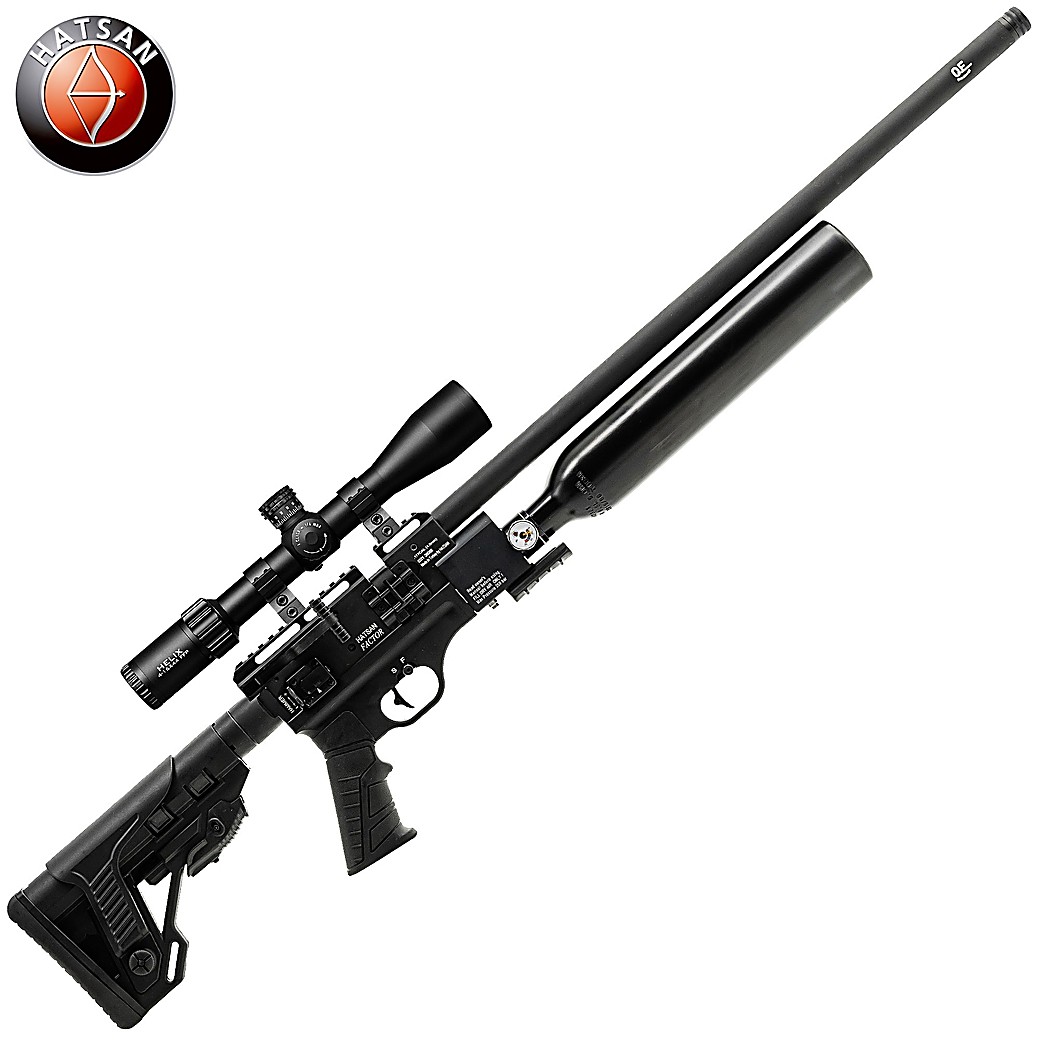
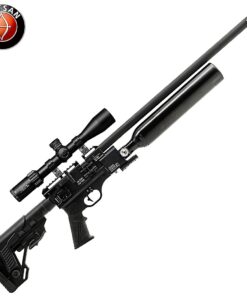
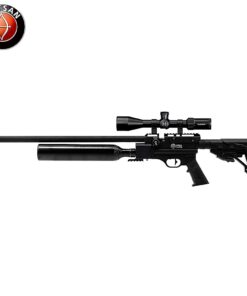
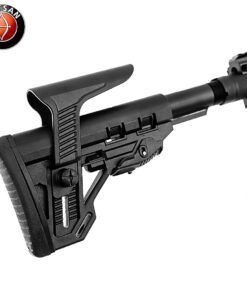
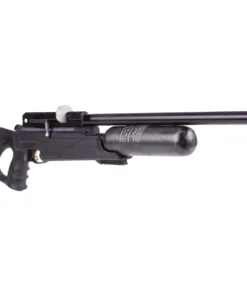
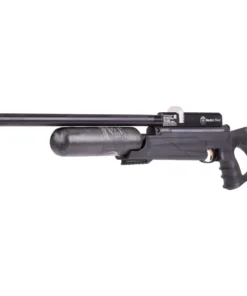
Hatsan introduces the Factor Air rifle, a compact, lightweight, and durable carbine with a telescopic tactical stock and soft rubber-finished handle.
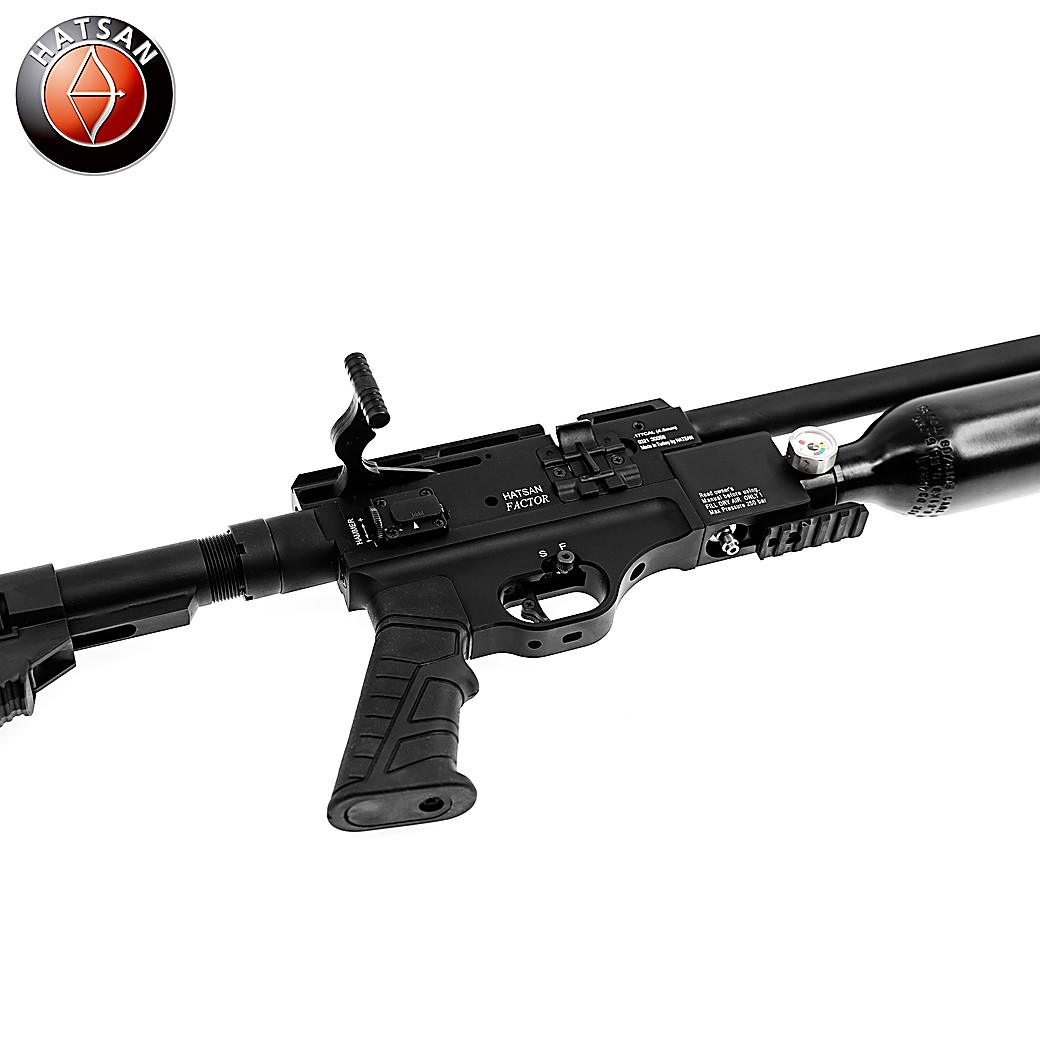
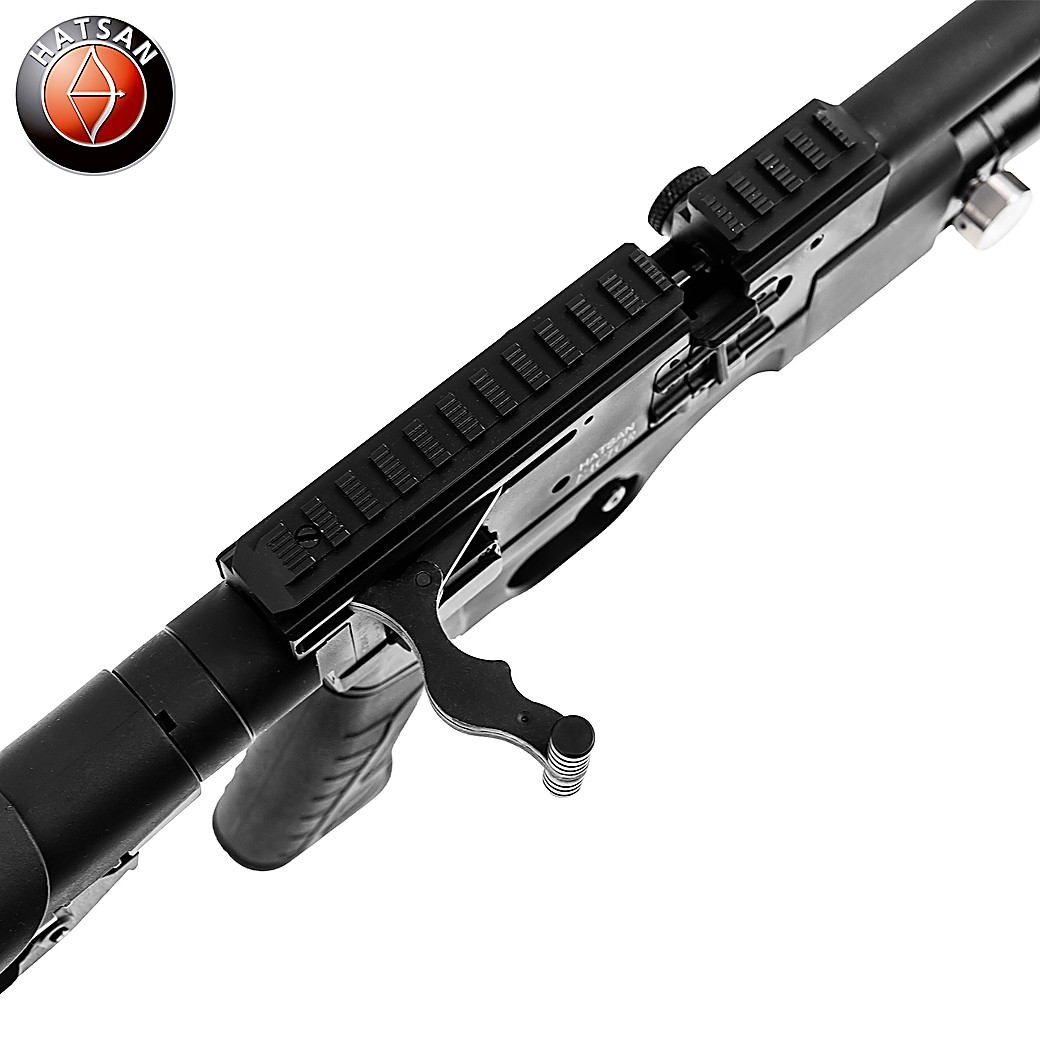
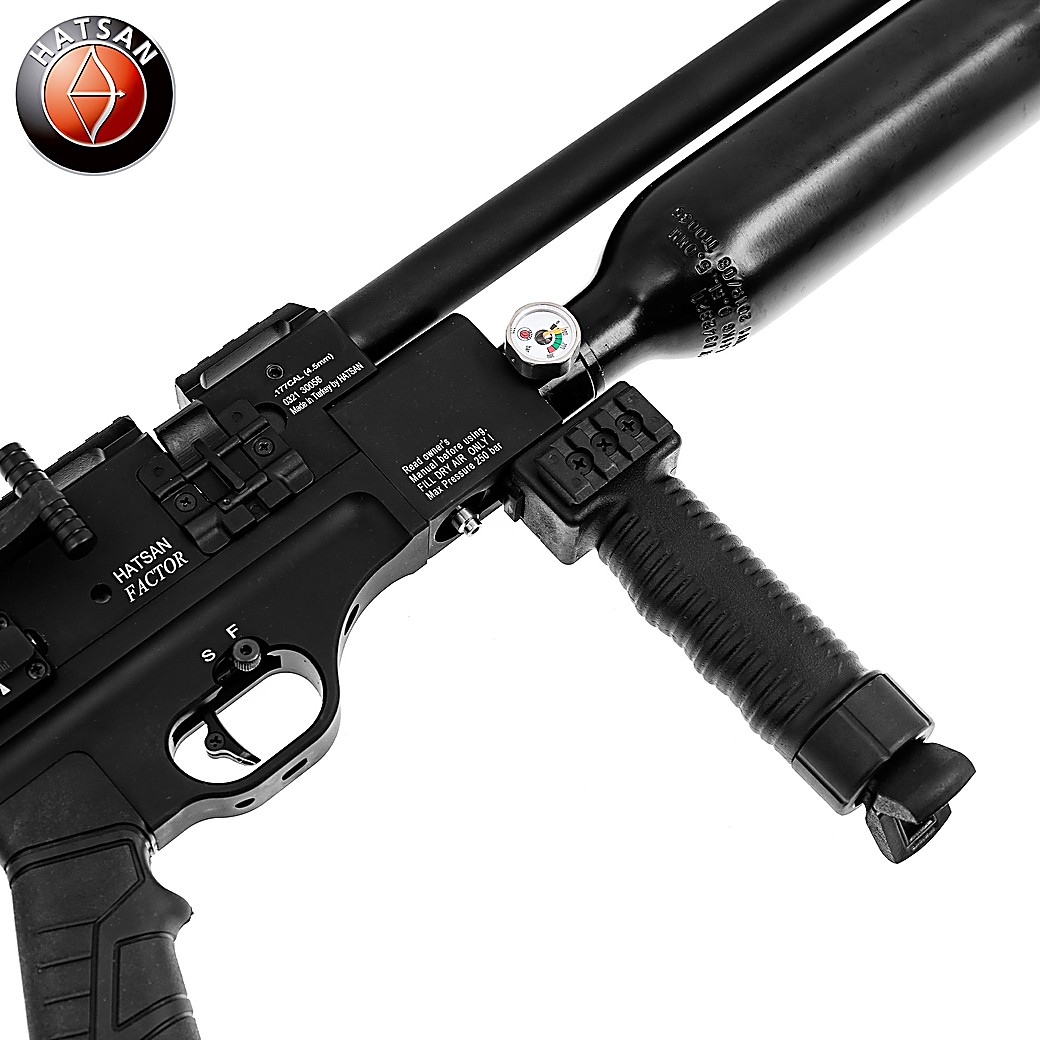
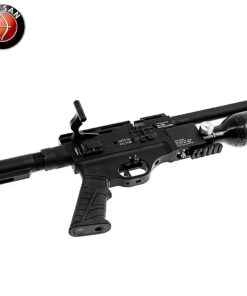
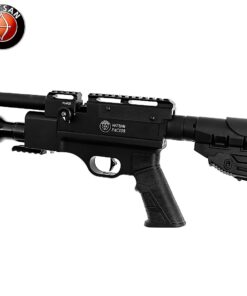
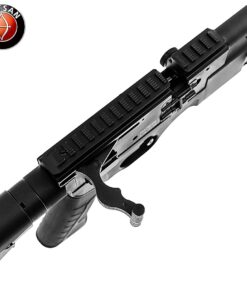
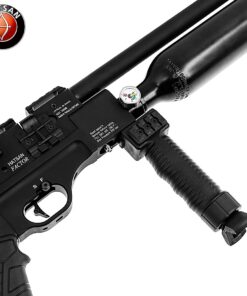
It features a scope rail, Weaver/Picatinny accessory rail, and a 500 cc aluminum air bottle with a pressure gauge and filling probe. The adjustable stock and cheekpiece, customizable 2-stage Quattro trigger, and fully shrouded barrel with an integrated moderator ensure discreet operation.
The Hatsan Factor PCP air rifle offers a blend of accuracy, strength, and convenience in a solid design, making it an ideal option for those looking for a top-tier airrifle.
PCP Air Rifle Hatsan Factor – High-Capacity Adjustable PCP Performance, Precision Engineering and Tactical Versatility
The PCP Air Rifle Hatsan Factor is a high-capacity, precision-oriented pre-charged pneumatic platform designed for shooters who want extensive adjustment, long shot strings, smooth side-lever cycling and adaptable ergonomics. Unlike simpler fixed-output PCP rifles, the Factor gives experienced users greater control over how the rifle behaves through its adjustable transfer port, external hammer-preload system, adjustable stock and two-stage match-style trigger.
The Factor is available in .177/4.5mm, .22/5.5mm and .25/6.35mm versions. Depending on calibre and market configuration, the rifle combines strong pneumatic performance with a large detachable air bottle and high-capacity rotary magazines.
Its tactical aluminium chassis, adjustable cheekpiece, telescopic stock, QuietEnergy barrel system and versatile optic mounting arrangement make the Factor particularly attractive for deliberate recreational target shooting and other lawful sporting applications.
500cc Detachable Air Bottle
One of the most important features of the Factor is its 500cc detachable aluminium air bottle.
This substantial air capacity is designed to support extended shooting sessions before refilling becomes necessary.
The detachable design also simplifies bottle inspection and replacement. In addition, compatible configurations can use a larger carbon-fibre bottle option, giving owners another way to manage capacity and overall weight.
For shooters who spend long sessions at the range, this large reservoir is one of the clearest advantages of the platform.
250-Bar Maximum Fill Pressure
The Factor uses a maximum fill pressure of approximately 250 bar.
This high-pressure system provides substantial stored air while supporting long shot strings.
A built-in pressure gauge allows the remaining air supply to be monitored, while a quick-disconnect filling arrangement helps simplify connection to compatible high-pressure equipment.
Clean, dry compressed air should always be used.
High-Capacity Multi-Shot Magazines
The Factor provides unusually generous magazine capacities for a manually cycled PCP rifle:
- .177 calibre: 24 shots
- .22 calibre: 21 shots
- .25 calibre: 19 shots
This reduces reloading interruptions during longer target sessions.
The shooter can remain behind the rifle, maintain cheek position and continue working through a consistent shooting sequence.
Smooth Side-Lever Action
The rifle uses a manually operated side lever rather than a traditional rear bolt.
This arrangement supports smooth cycling while allowing the firing hand to remain relatively close to the grip.
The cocking handle can also be configured for different shooter preferences, increasing the rifle’s ergonomic flexibility.
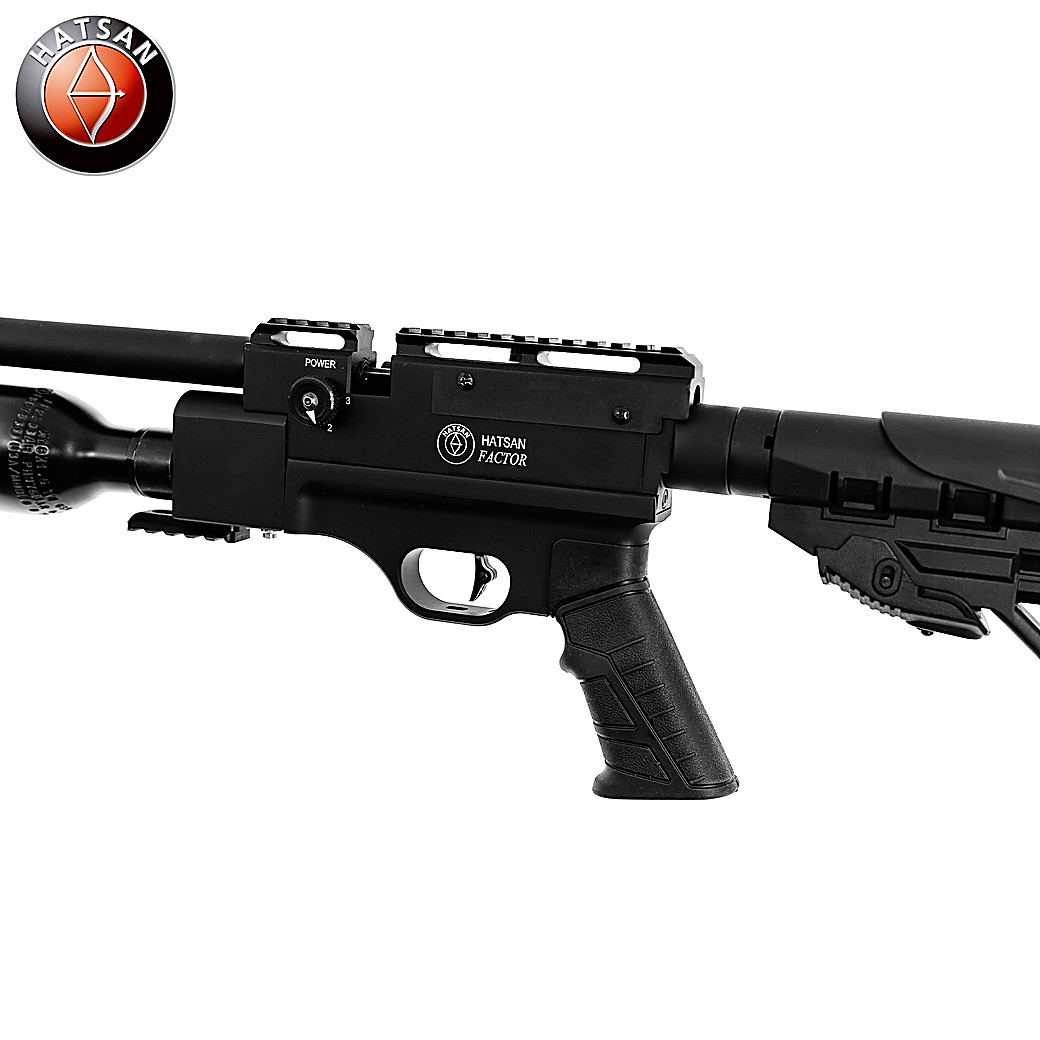
Adjustable Transfer-Port System
The Factor incorporates a three-position transfer-port adjustment.
This allows the airflow characteristics of the rifle to be changed within its intended operating range.
A shooter can therefore balance output and air consumption more effectively instead of being restricted to one fixed configuration.
For target use, the goal should not automatically be maximum power.
Consistency, pellet compatibility and air efficiency can often matter more.
External Hammer-Preload Adjustment
External hammer-preload adjustment adds another level of configuration.
Hammer preload influences how the firing valve operates.
Together with the transfer-port setting, it allows the rifle to be configured more precisely for the chosen pellet and desired performance.
Adjustment should always be approached methodically.
Changing one variable at a time makes it easier to understand the results.
QuietEnergy Fully Shrouded Barrel
The Factor incorporates Hatsan’s QuietEnergy barrel design.
The precision-rifled barrel is surrounded by an integrated shroud and sound-moderating system designed to reduce the firing report.
This gives the rifle a more refined firing cycle during lawful recreational and target use.
The system also complements the tactical appearance of the rifle without depending entirely on a separate external moderator.
Precision Rifled and Choked Barrel
A precision-rifled and choked steel barrel provides the mechanical foundation for accuracy.
The rifling stabilizes the pellet as it travels through the bore.
Meanwhile, the choke at the muzzle helps provide consistent pellet release.
However, practical accuracy still depends heavily on pellet selection, pressure consistency, optic setup and shooter technique.
Quattro Adjustable Match Trigger
The Factor uses Hatsan’s adjustable Quattro Trigger system.
This two-stage trigger allows the shooter to create a more predictable release.
The trigger shoe can also be adjusted to improve finger positioning.
A clean trigger break helps prevent unnecessary movement as the shot is released.
For precision-focused shooting, this can make a meaningful difference.
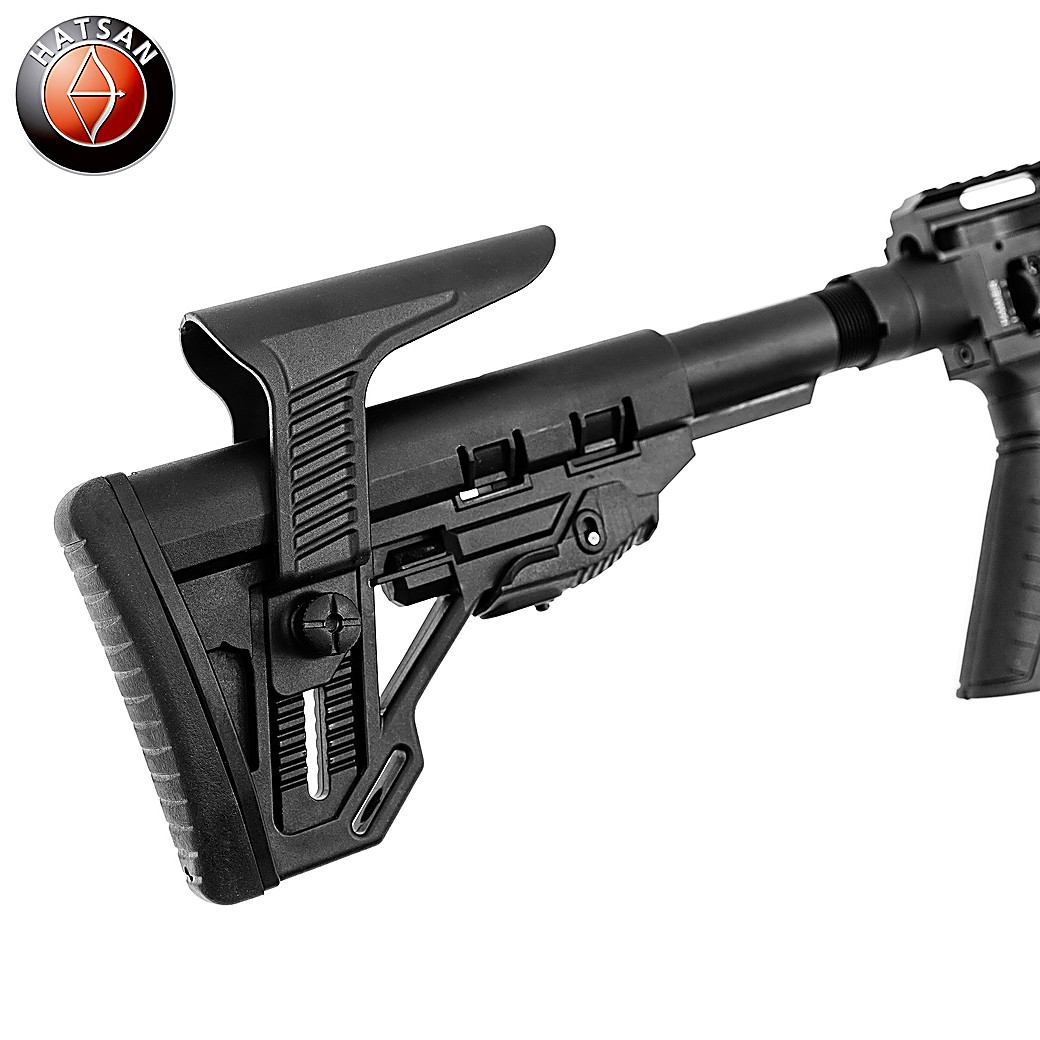
Adjustable Tactical Stock
The tactical stock can be extended or shortened to suit the shooter.
The cheekpiece can also be adjusted vertically.
These adjustments help create a natural relationship between the shoulder, trigger hand and optic.
Correct rifle fit improves comfort and repeatability.
Optic Mounting Flexibility
The Factor’s chassis supports compatible 11mm and 22mm scope mounting systems.
A lower accessory rail can also accept compatible equipment.
This provides flexibility when selecting an optic configuration for the intended shooting distance.
A properly mounted optic, suitable eye relief and repeatable cheek weld are essential for consistent accuracy.
CARABINA HATSAN PCP BT65 SB ELITE Comparison
Shooters researching CARABINA HATSAN PCP BT65 SB ELITE or hatsan bt65.25 specifications may also encounter the Factor.
Both belong to Hatsan’s PCP range, but they are different platforms.
The Factor emphasizes side-lever operation, substantial external adjustment and a large detachable bottle.
The technical specifications of the BT65 should therefore not be applied directly to the Factor.
Hatsan Air Rifle Range
Searches for hatsan air rifle, hatsanusa, hatsan usa, and hatsan cover a broad range of products.
The Factor sits toward the more adjustable, precision-oriented side of Hatsan’s PCP lineup.
It should not be confused with the company’s spring-piston, compact PCP or semi-automatic platforms.
Hatsan Sortie and Semi-Automatic Comparison
The hatsan sortie, hatsan sortie tact, hatsan sortie tact semi-auto pcp, and hatsan sortie threaded adapter searches refer to a separate semi-automatic platform.
The Factor is manually cycled with a side lever.
This gives it a different shooting rhythm and mechanical layout.
Hatsan Velox Comparison
The hatsan velox belongs to another compact airgun category.
The Factor is substantially larger and focuses on high-capacity air storage, adjustability and long-session precision.
Hatsan Jet and Jet 2 Comparison
Searches for hatsan jet, hatsan jet 2, and hatsan jet i pcp .22 caliber pellet rifle kit relate to compact modular PCP platforms.
The Factor is a full-size rifle with a substantially larger air supply and greater adjustment range.
Hatsan Flash Comparison
The hatsan flash offers a lighter and simpler PCP layout.
The Factor adds higher magazine capacity, greater air storage and more external adjustment.
A shooter prioritizing simplicity and light weight may prefer the Flash, whereas the Factor is designed for someone who wants greater configuration control.
Hatsan Bullpup Alternatives
The hatsan bullboss and hatsan flashpup qe use compact bullpup-style layouts.
Their action and magazine are positioned farther rearward to reduce overall length.
The Factor instead retains a conventional tactical rifle layout.
Larger Hatsan PCP Platforms
Searches for hatsan hercules, hatsan hercules bully, hercules bully air rifle, hatsan invader, hatsan neutron star, hatsan harpoon, hatsan piledriver, and hassan blitz refer to separate Hatsan platforms.
Their actions, calibre ranges, air capacities and performance characteristics differ from the Factor.
The specifications of these models should not be transferred to this rifle.
Hatsan Spring and Gas-Piston Comparison
Terms including hatsan model 95, hatsan mod 95, hatsan 95, model 95, hatsan 135, hatsan airtact air rifle, and hatsan mod 25 generally refer to different spring-piston or gas-piston designs.
The Factor uses pre-charged compressed air.
Consequently, its recoil characteristics, filling requirements and operating cycle are fundamentally different.
Hatsan Refurbished Buying Considerations
A search for hatsan refurbished may lead buyers toward pre-owned or factory-refurbished PCP equipment.
When evaluating a used Factor, pressure retention, bottle condition, seals, regulator consistency, side-lever function, magazine condition, trigger operation and overall maintenance history should be considered carefully.
Pellet Selection
Search terms such as air pellet gun, co2 pellet rifle, and h&n field target trophy often appear during ammunition research.
The Factor is a PCP rather than a CO2-powered rifle.
Pellet selection should be based on actual grouping performance.
Different pellet weights and shapes can behave differently at the same rifle setting.
Snowpeak PP750L PCP Air Pistol Comparison
The Snowpeak PP750L PCP Air Pistol, snowpeak pp750, pp750, and snow peak pp750 represent substantially more compact pneumatic designs.
They should not be confused with the full-size, high-capacity Factor.
Snowpeak PCP Search Context
Other related searches include snowpeak airguns, snowpeak sports, snowpeak ap900, snowpeak max, snowpeak p35x, pr900 gen 3, snowpeak p35, snowpeak m60b, snow peak pp20, p35, p35x, p35x pcp, snowpeak m25, ap900b pcp air rifle, snowpeak m60, snowpeak max 1 price, pcp p 35, m25 rifle, snow peak equipment, hp300, pellet 9mm, snowpeak p35 vs p35x, snowpeak pp20, and m25 weapon.
These phrases belong to separate Snowpeak models and product families.
They are useful only as comparison and research terms and should not be treated as Hatsan Factor specifications.
Why Choose the PCP Air Rifle Hatsan Factor?
The Factor stands out because it combines several high-end PCP features in one configurable platform.
Its large detachable bottle supports extended shooting.
The high-capacity magazine minimizes interruptions.
The side lever provides smooth manual operation.
The adjustable transfer port gives the shooter control over airflow.
The external hammer-preload adjustment adds further configuration possibilities.
The QuietEnergy barrel system reduces firing report.
The precision-rifled, choked barrel supports consistent pellet release.
The Quattro trigger provides a controlled two-stage firing interface.
The telescopic stock and adjustable cheekpiece improve ergonomics.
Together, these features make the Factor a strong option for experienced PCP users who value precision, adjustability and long-session practicality.
For lawful recreational target shooting and other sporting applications, it provides a sophisticated alternative to simpler fixed-output rifles while still retaining the mechanical dependability of manually operated side-lever loading.
Precision Setup, Air Management, Ergonomics, Optics and Practical Performance
A Rifle That Rewards a Methodical Setup
The Hatsan Factor performs best when it is approached as a precision system rather than simply a high-capacity air rifle.
Its large bottle, regulator, adjustable airflow, hammer preload, side-lever action, trigger, stock, barrel, and optic all influence how the rifle behaves.
Because several elements can be adjusted, the shooter benefits from working methodically.
A good setup should be repeatable.
A chosen pellet should remain consistent.
The same pressure range should be used for comparison.
The stock should stay in the same position.
The optic should remain secure.
Only one adjustment should be changed at a time.
This disciplined approach makes the rifle easier to understand and easier to refine.
Establishing a Starting Configuration
Before tuning anything, the shooter should establish a known reference setup.
Choose one pellet.
Use one airflow setting.
Keep the hammer setting unchanged.
Begin with a similar bottle pressure.
Use the same optic and shooting distance.
Fire several groups.
Record the results.
This reference becomes the baseline for all later changes.
Without a baseline, it is difficult to know whether an adjustment actually improved performance or simply changed it.
Why One Change at a Time Matters
The rifle offers enough adjustment to make random tuning tempting.
However, changing several variables at once creates confusion.
If the pellet, airflow, hammer setting, pressure, and scope are all changed during one session, the final result becomes difficult to interpret.
A better process is simple.
Change one variable.
Shoot several groups.
Record what happened.
Then decide whether another change is necessary.
Pellet Selection
Pellet selection can have a major effect on accuracy.
Different weights behave differently.
Head size can influence barrel fit.
Skirt condition matters.
Manufacturing consistency matters.
A pellet that performs well in one barrel may behave differently in another.
For that reason, several suitable options should be tested.
Repeating Pellet Tests
One tight group is not enough to choose a final pellet.
Random chance can produce one unusually small group.
Several groups should be fired with each option.
The most useful pellet is usually the one that performs well repeatedly.
Consistency matters more than a single impressive target.
Pellet Weight and Air Settings
Pellet weight should be considered together with the rifle’s air settings.
A heavier pellet may respond differently to one airflow setting than a lighter pellet.
The same applies to hammer preload.
The goal should not be maximum speed.
The goal should be a combination of stable velocity, useful efficiency, and good grouping.
Inspecting Pellets
Obviously damaged pellets should be removed before serious accuracy testing.
A bent skirt can affect alignment.
Dirt can affect sealing.
Small defects can create misleading results.
Careful loading removes one unnecessary source of inconsistency.
Magazine Convenience
The large-capacity magazine supports long shooting sessions with fewer interruptions.
The shooter can remain in position.
The cheek weld can stay consistent.
The support hand can remain stable.
This makes repeated target work more efficient.
Magazine Care
The magazine should rotate smoothly.
Pellets should sit correctly.
The mechanism should remain clean.
If resistance appears, the cause should be investigated rather than forced.
Clean magazines generally feed more reliably.
Side-Lever Operation
The side lever should be operated with a smooth and controlled motion.
The lever should not be slammed.
Unusual resistance should be investigated.
Smooth cycling reduces unnecessary wear and helps preserve pellet alignment during loading.
Reversible Lever Position
The lever can be configured to suit different shooter preferences.
This can improve ergonomics.
A shooter should choose the side that minimizes unnecessary hand movement and allows natural operation.
Understanding the Large Air Bottle
The rifle’s large bottle supports extended sessions.
However, large capacity does not remove the need for air management.
The shooter should learn the pressure range where performance remains most stable.
This helps identify the most useful part of the fill.
Fill Pressure Discipline
The bottle should be filled only with suitable high-pressure equipment.
Connections should remain clean.
The filling process should be controlled.
The marked maximum pressure should never be exceeded.
Slow Filling
A slower fill generally creates less heat.
This can make the final pressure reading more stable after the bottle cools.
It also reduces unnecessary thermal stress.
Clean and Dry Air
Clean, dry compressed air supports long-term reliability.
Moisture can create corrosion.
Dust can damage seals.
Fill fittings should therefore remain protected.
Quick-Disconnect Care
The filling connection should remain clean.
Protective caps should be used where supplied.
Hoses and couplers should also be checked for damage.
Understanding Useful Shot Count
The total number of shots from a bottle is less important than the number of consistent shots.
The useful shot range is where velocity and point of impact remain predictable.
Once performance begins to change, refilling may be more useful than continuing.
Pressure Logging
A simple shooting log can help.
Record the starting pressure.
Record the number of shots.
Record the ending pressure.
Repeat this over several sessions.
Patterns will become easier to identify.
Chronograph Testing
A chronograph can provide useful information about the rifle’s behavior.
Average velocity can be recorded.
Extreme spread can be reviewed.
Standard deviation can also be calculated.
These figures help the shooter understand consistency.
Average Velocity
Average velocity gives a useful reference.
If it changes significantly without an intentional adjustment, something else may have changed.
Temperature may be different.
Pressure may be different.
Pellets may be different.
The rifle may need inspection.
Extreme Spread
Extreme spread shows the difference between the fastest and slowest measured shot.
A smaller spread usually suggests better velocity consistency.
However, good velocity numbers do not automatically guarantee small groups.
Standard Deviation
Standard deviation provides another view of consistency.
Lower values can be useful.
However, target results still matter more than numerical perfection.
The Regulator
The regulator supports repeatable air delivery.
Its role is to help make each shot more consistent.
The shooter should avoid unnecessary internal regulator adjustment unless properly qualified.
External settings should be explored first.
Airflow Adjustment
The adjustable airflow system changes how much air is available during the shot.
Lower settings may improve efficiency.
Intermediate settings may offer a useful compromise.
Higher settings may increase output but also consume more air.
The correct choice depends on the pellet and intended lawful use.
Testing Airflow Settings
Each position should be tested under similar conditions.
Use the same pellet.
Begin from a similar pressure.
Keep the hammer setting unchanged.
Fire several groups.
Compare results.
This makes the effect of the adjustment much easier to understand.
Hammer Preload
Hammer preload affects how the valve operates.
Small changes can influence velocity and air consumption.
Adjustment should be gradual.
Large changes can make the rifle less predictable.
Balancing Hammer and Airflow
The goal is not to maximize both settings.
A balanced setup should provide:
Stable velocity.
Useful air efficiency.
Good grouping.
Predictable shot count.
Smooth firing behavior.
That balance is more useful than maximum output alone.
Avoiding Unnecessary Maximum Power
Maximum output may reduce efficiency.
It may increase air consumption.
It may also move the pellet outside the velocity range where it performs best.
For target work, consistency is usually more valuable.
Quiet Firing Characteristics
The shrouded barrel reduces the sharpness of the firing report.
This can make longer sessions more comfortable.
A quieter firing cycle can also make it easier to concentrate on trigger control and follow-through.
Barrel Stability
The long precision barrel provides a stable platform for pellet acceleration.
However, barrel length alone does not create accuracy.
Pellet compatibility, pressure consistency, optic setup, and shooter technique all matter.
Muzzle Condition
The muzzle should remain clean and undamaged.
A sudden change in grouping should include a visual inspection of the muzzle area.
Even small damage can affect projectile release.
Barrel Cleaning
Cleaning should be based on performance.
If the rifle continues to group well, frequent cleaning may not be necessary.
If accuracy declines unexpectedly, barrel condition can be investigated.
Gentle Cleaning
The barrel should be cleaned carefully.
Aggressive methods should be avoided.
Suitable materials should be used.
The muzzle and bore should be protected from damage.
Conditioning After Cleaning
A freshly cleaned barrel may not immediately return to its normal point of impact.
Several shots may be needed before performance stabilizes.
The shooter should wait before making unnecessary scope adjustments.
Trigger Setup
The adjustable trigger should be configured for control.
The lightest possible setting is not automatically the best.
The first stage should remain clear.
The second stage should break predictably.
Safety should always remain the priority.
Trigger Shoe Position
The trigger shoe can be adjusted to support natural finger contact.
This can improve comfort.
It can also reduce sideways pressure during the trigger press.
Trigger Finger Placement
The trigger finger should move mainly rearward.
Too much finger can pull the rifle sideways.
Too little contact can reduce control.
The ideal position supports a smooth release.
Follow-Through
The shooter should remain behind the rifle after the shot.
The cheek should stay on the stock.
The optic should remain observed.
The trigger movement should finish naturally.
This makes it easier to understand what happened during the shot.
Calling the Shot
Shot calling is a useful skill.
The shooter watches the reticle during release.
The expected impact can then be predicted.
When that prediction matches the target, technique awareness improves.
Adjustable Stock Length
The telescopic stock should be adjusted so the trigger hand feels natural.
The shoulder position should remain comfortable.
The shooter should not feel stretched or compressed.
Cheekpiece Height
The cheekpiece should place the eye naturally behind the optic.
If the shooter constantly needs to raise or lower the head, the setup should be changed.
A natural head position improves repeatability.
Pistol Grip Position
The grip should allow a relaxed wrist.
The trigger finger should reach the blade comfortably.
Excessive grip tension should be avoided.
Shoulder Position
The butt pad should return to the same place on the shoulder.
Consistent shoulder pressure helps the rifle settle predictably.
Support-Hand Placement
The support hand should remain in the same area.
Moving it forward or backward changes balance.
A comfortable reference point should be established.
Weight and Balance
The rifle is larger and heavier than a lightweight carbine.
That extra mass can improve stability from supported positions.
The large bottle also influences balance.
The shooter should experiment with support placement until the rifle settles naturally.
Bench Shooting
A stable bench is ideal for evaluating mechanical accuracy and tuning changes.
The rifle should be supported consistently.
The support should reduce movement without forcing alignment.
Several groups should be compared.
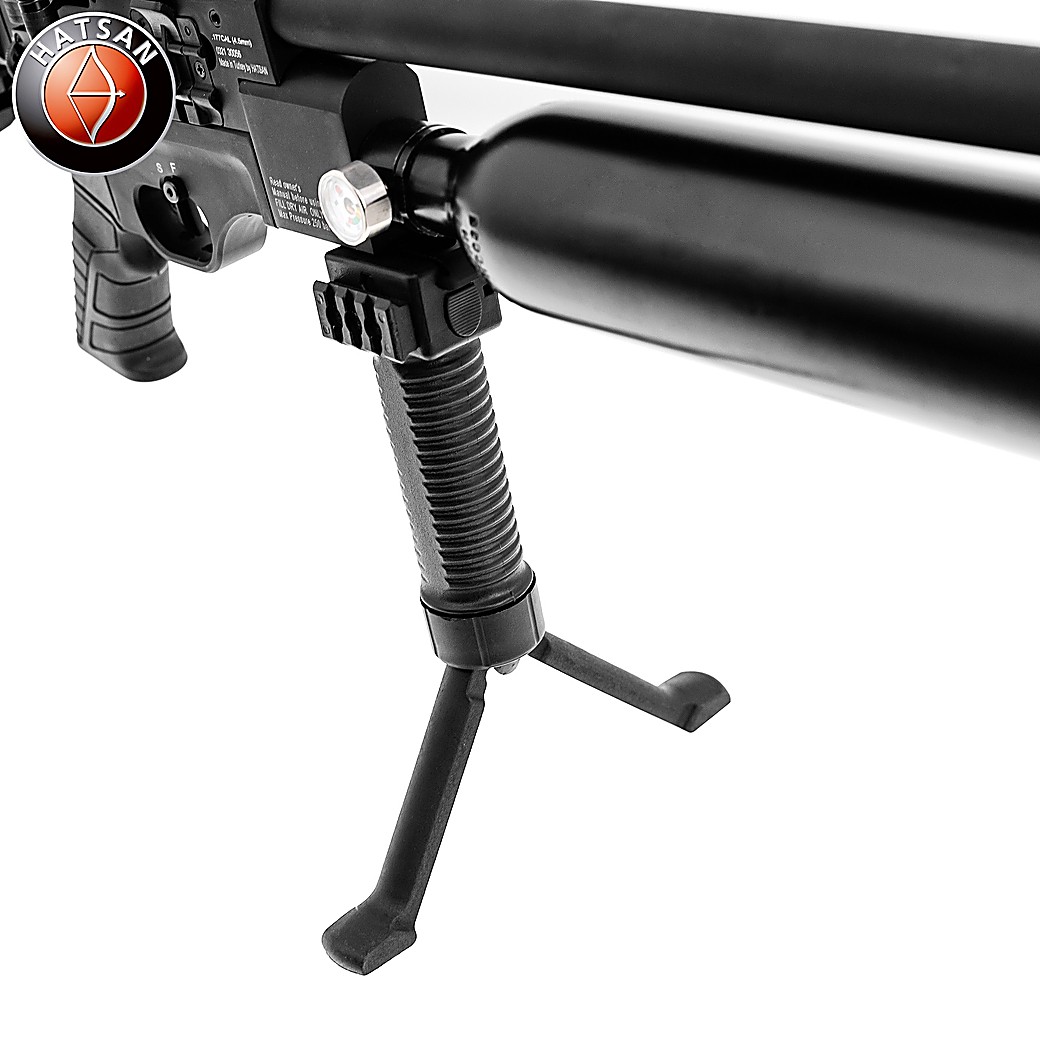
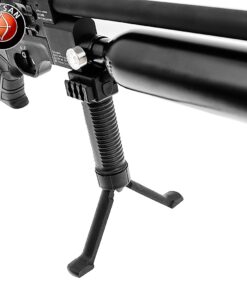
Bipod Use
A bipod can provide a stable front support.
However, shoulder pressure and rear support should remain consistent.
The rifle should still be allowed to settle naturally.
Rear Support
A rear bag or similar support can help stabilize the stock.
This can make small aiming corrections easier.
It is especially useful during precision testing.
Standing Shooting
Standing requires more physical control.
The rifle’s weight should be balanced rather than fought.
Shorter hold times can help reduce fatigue.
Kneeling Shooting
Kneeling provides more stability.
The shooter should find a position that can be repeated comfortably.
Seated Shooting
A seated position can provide excellent support.
The shooter should still maintain a consistent cheek weld and shoulder position.
Prone Shooting
Prone shooting can be highly stable.
However, the stock and scope should allow a comfortable head position.
Neck strain can reduce repeatability.
Natural Point of Aim
The rifle should settle toward the target when the body is relaxed.
If the shooter constantly forces the rifle into alignment, body position should be adjusted.
Breathing Control
Breathing moves the upper body.
A comfortable pause after exhaling is often used for the shot.
The pause should not be forced.
Avoiding Long Holds
Holding the rifle on target for too long can increase movement.
Muscles become tired.
Visual focus may decline.
If the shot does not develop naturally, restarting is usually better.
Optic Selection
A good optic should match the rifle and intended shooting distance.
Clear glass matters.
Reliable adjustments matter.
Eye relief matters.
A useful field of view matters.
Extreme magnification is not always necessary.
Scope Mounting
The scope should remain level.
Mounts should fit correctly.
Eye relief should be comfortable.
The optic should not require an unnatural head position.
Mount Inspection
Mounting hardware should be checked periodically.
Loose screws can create point-of-impact shifts.
Overtightening should also be avoided.
Zeroing
Zero should be established with the chosen pellet and final rifle settings.
Once zeroed, unnecessary adjustment should be avoided.
Confirming Zero
Zero should be checked periodically.
If impact changes, the optic and mounts should be inspected before deeper mechanical tuning begins.
Different Distances
Pellet trajectory changes with distance.
The shooter should verify actual point of impact at several useful ranges.
Generic ballistic estimates should not replace real testing.
Personal Range Reference
A simple reference can be created from actual target results.
Record point of impact at several distances.
This creates practical information that is specific to the rifle and pellet.
Wind
Wind can influence pellet flight.
The effect grows with distance.
Outdoor groups should be interpreted in relation to wind conditions.
Temperature
Temperature can affect compressed air.
A bottle filled while warm may show a lower pressure after cooling.
This should be considered before assuming a leak.
Lighting
Lighting affects how the target and reticle appear.
Changing light can alter aiming perception.
Similar lighting conditions improve testing quality.
Accuracy Troubleshooting
Accuracy problems should be investigated systematically.
Check the pellet.
Check the pressure.
Check the optic.
Check the mounts.
Review the airflow setting.
Review the hammer setting.
Review the stock fit.
Review trigger technique.
Only after these factors have been checked should more complex causes be considered.
Tight Groups That Shift
If groups remain tight but move to a different point, the rifle may still be mechanically consistent.
Possible causes include optic movement, pressure changes, lighting, or changes in hold.
A shifted group is different from a larger group.
Groups That Become Larger
If groups open up, ammunition should be checked.
The optic should be inspected.
Pressure should be reviewed.
Shooter fatigue should also be considered.
Bottle Inspection
The bottle should be checked periodically for visible damage.
Threads should remain clean.
The connection point should remain in good condition.
Applicable service requirements should always be followed.
Detachable Bottle Advantage
The detachable design makes servicing and replacement easier.
It can also simplify long sessions when compatible spare equipment is available and lawful.
Bottle Removal
The bottle should only be removed according to the manufacturer’s procedure.
Threads should never be forced.
Seals should remain clean.
Cross-threading should be avoided.
Seal Wear
Seals naturally wear over time.
Their lifespan depends on pressure, temperature, cleanliness, and frequency of use.
Correct replacement parts should be used.
Detecting Air Loss
A small pressure change after cooling may be normal.
Repeated pressure loss under stable conditions may indicate a leak.
The pattern should be observed carefully before the cause is assumed.
Internal Servicing
The rifle operates at high pressure.
Internal valve or regulator work should be approached carefully.
Professional servicing is the appropriate choice when the owner lacks the required tools or experience.
Avoiding Unnecessary Disassembly
A rifle that performs correctly does not need constant internal work.
Repeated disassembly can introduce new problems.
Routine external maintenance is usually enough until a real fault appears.
Exterior Maintenance
The rifle should remain clean and dry.
Dust should be removed.
Moisture should not remain on metal surfaces.
Excess lubricant should be avoided.
Chassis and Stock Care
The aluminium chassis and adjustable stock are relatively easy to maintain.
Fasteners should remain secure.
Adjustment points should move smoothly.
Harsh chemicals should be avoided.
Magazine Maintenance
The magazines should remain clean.
Rotation should remain smooth.
Damaged components should be replaced rather than forced.
Storage
The rifle should be stored securely.
Unauthorized users should not have access.
The storage location should remain dry.
Extreme heat should be avoided.
Transport
The rifle should be transported unloaded.
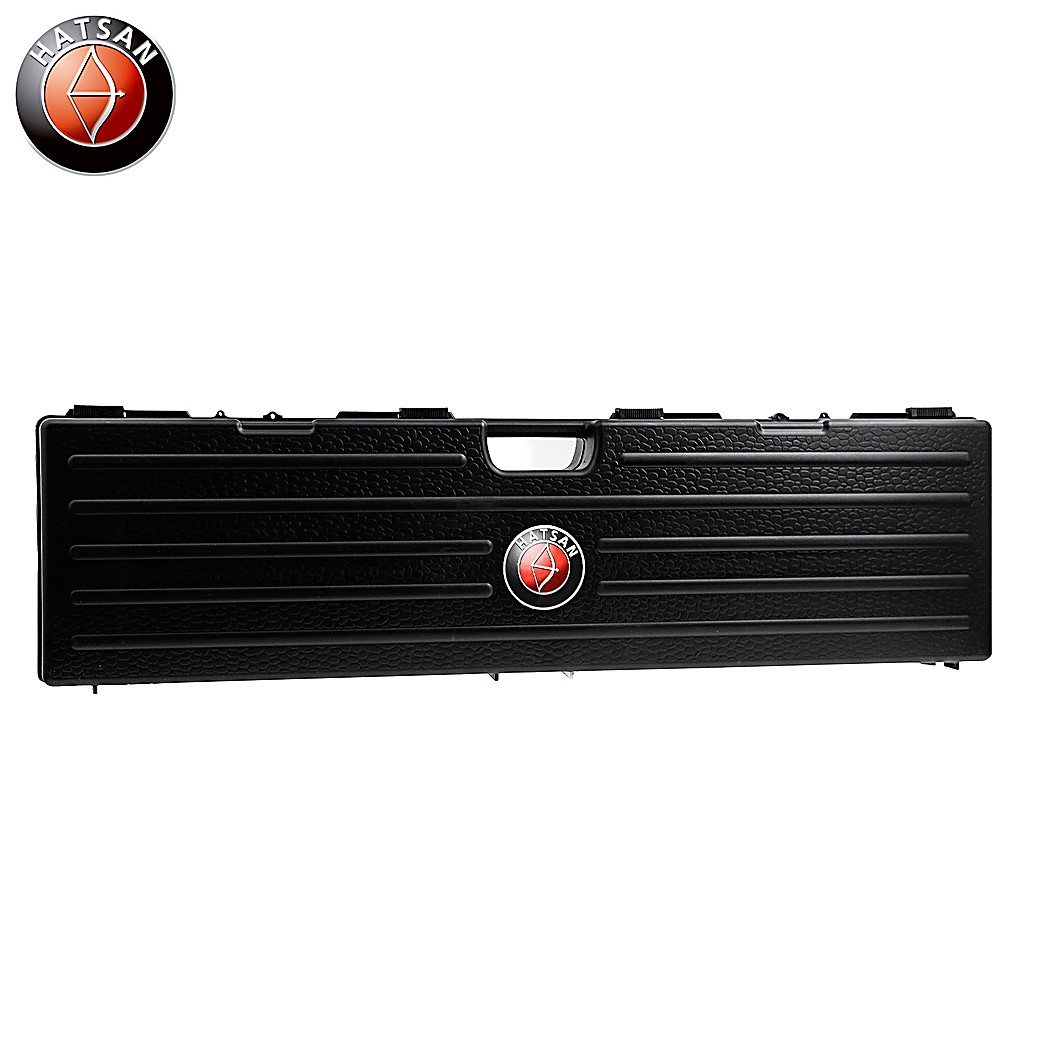
A suitable case can protect the barrel, bottle, optic, and stock.
Applicable laws should always be followed.
Optic Protection
The optic should be protected from impact.
Lens covers can help keep dust away.
The rifle should not be stored where the scope can be knocked out of alignment.
Long-Term Reliability
Long-term reliability comes from consistent habits.
Use clean air.
Protect the fill connection.
Use suitable pellets.
Monitor bottle pressure.
Keep magazines clean.
Protect the optic.
Avoid unnecessary internal adjustment.
Store the rifle correctly.
Why the Large Air System Matters
The large bottle supports long shooting sessions.
Fewer refills are needed.
This is useful during pellet testing, zeroing, and precision work.
Why Adjustability Matters
The adjustable airflow and hammer systems allow the shooter to refine performance.
This can improve efficiency.
It can improve consistency.
It can help match the rifle to a preferred pellet.
The value comes from careful adjustment rather than constant experimentation.
Why the Side Lever Matters
The side lever provides smooth manual cycling.
It keeps the firing hand close to the grip.
This supports a more consistent shooting rhythm.
Why the Trigger Matters
A predictable trigger helps reduce movement during release.
The adjustable trigger shoe can further improve ergonomics.
Why the Stock Matters
The telescopic stock and adjustable cheekpiece make the rifle easier to fit.
Correct fit supports better eye alignment and trigger control.
Why the Barrel System Matters
The precision-rifled and choked barrel provides the mechanical foundation for repeatable pellet flight.
The shroud also reduces the firing report.
This makes the rifle well suited to extended lawful target use.
Why the Optic Mounting System Matters
Flexible mounting options allow the shooter to choose an optic that suits the intended distance and style of shooting.
A properly selected optic can significantly improve practical precision.
Who Will Appreciate This Platform
The rifle will appeal most to shooters who value high air capacity, adjustable ergonomics, smooth side-lever operation, and the ability to refine performance.
It is especially suitable for experienced PCP users who prefer a configurable platform rather than a fixed-output design.
Final Practical Assessment
The Hatsan Factor combines air capacity, adjustment, ergonomics, and precision-oriented design in one platform.
The large bottle supports long sessions.
The regulator helps stabilize shot behavior.
The adjustable airflow system provides flexibility.
The hammer-preload control adds another tuning option.
The side lever provides smooth manual loading.
The trigger allows a predictable release.
The adjustable stock helps improve fit.
The shrouded barrel reduces firing report.
The high-capacity magazine reduces interruptions.
However, the rifle performs best when setup remains disciplined.
A reliable pellet should be chosen.
One variable should be changed at a time.
Pressure should be monitored.
The optic should remain stable.
The stock should remain in a repeatable position.
Trigger technique should stay smooth.
Maintenance should remain sensible.
When these habits are combined with the rifle’s configurable design, the Hatsan Factor can provide a highly adaptable and precise PCP platform with strong long-term value for lawful recreational target shooting and sporting use.
Section 3 – Advanced Precision, Tuning Strategy, Reliability and Long-Term Ownership
Understanding the Rifle as a Complete System
The Hatsan Factor is most rewarding when the shooter views it as a complete precision system rather than a collection of individual features.
The air bottle affects available pressure and shot capacity.
The regulator influences consistency.
The transfer-port setting controls airflow.
Hammer preload affects valve behavior.
The barrel guides the pellet.
The trigger influences release quality.
The stock determines how naturally the rifle fits.
The optic controls how precisely the shooter can aim.
Each component influences the others.
Because of this relationship, the best results come from maintaining consistency across the entire setup.
Building a Stable Reference Configuration
Before experimenting with advanced adjustment, a reference configuration should be established.
Choose a reliable pellet.
Set the stock to a comfortable length.
Set the cheekpiece.
Choose one airflow position.
Keep hammer preload unchanged.
Start from a known bottle pressure.
Zero the optic.
Shoot several groups.
Record the results.
This creates a dependable starting point that can always be restored later.
Why a Reference Setup Is Important
Without a baseline, tuning can become confusing.
A shooter may remember that the rifle felt better after one change but forget which other settings were different at the time.
Written records eliminate this uncertainty.
A strong baseline also helps diagnose problems.
If accuracy suddenly changes, the shooter can return to the original configuration and determine whether the change came from ammunition, air pressure, optics, maintenance, or adjustment.
Creating a Shooting Log
A simple shooting log can become one of the most useful ownership tools.
Record:
Pellet type.
Pellet weight.
Bottle pressure.
Transfer-port position.
Hammer setting.
Average velocity.
Shot count.
Group size.
Distance.
Temperature.
Wind conditions.
Any unusual behavior.
After several sessions, patterns begin to emerge.
Tuning With Purpose
Adjustment should always have a reason.
A shooter may want better efficiency.
Another may want a smoother firing cycle.
Someone else may want a particular pellet to group more consistently.
The goal should be identified before the rifle is adjusted.
Random changes rarely produce useful information.
One Adjustment at a Time
Only one major variable should be changed between tests.
For example, if the transfer port is changed, hammer preload should remain unchanged.
If hammer preload is altered, the pellet should remain the same.
If a different pellet is tested, the rifle settings should stay fixed.
This method allows the effect of each change to be understood.
Pellet Selection and Barrel Preference
Every barrel can show preferences.
Two rifles of the same model may not necessarily perform identically with the same pellet.
Manufacturing tolerances, pellet dimensions, and individual barrel characteristics can influence results.
For that reason, pellet selection should come from actual target testing.
Testing Pellet Weight
Different pellet weights can change velocity, trajectory, and air consumption.
A heavier pellet may retain energy differently.
A lighter pellet may produce a flatter short-range trajectory.
Neither is automatically superior.
The best choice is the one that produces repeatable accuracy in the intended setup.
Pellet Shape and Fit
Head shape can influence how the pellet enters the barrel.
Skirt design can influence sealing.
Some pellets may load more smoothly.
Others may show tighter groups.
The shooter should pay attention to both loading feel and target results.
Inspecting Ammunition
Damaged pellets should be avoided during serious testing.
Bent skirts may create inconsistent sealing.
Dirty pellets can introduce debris.
Irregular projectiles can make an otherwise accurate rifle appear inconsistent.
Batch Variation
Even the same pellet model can vary slightly between production batches.
If a new tin performs differently, the rifle should not immediately be retuned.
The ammunition itself should first be considered.
Velocity Versus Accuracy
Higher velocity can be attractive, but it should not be the only goal.
The most accurate setting may occur below maximum output.
A smoother and more efficient configuration can often produce better practical results.
The target should always be more important than the highest chronograph reading.
Chronograph Testing
A chronograph is especially useful with an adjustable platform.
It allows the shooter to see how changes affect velocity.
It can reveal whether pressure is stable.
It can show how many shots remain consistent.
It can also expose unexpected variation.
Average Velocity
Average velocity is a useful reference point.
If it changes significantly without a deliberate adjustment, something may have changed in the system.
Air pressure should be checked.
Temperature should be considered.
Pellet consistency should be reviewed.
Extreme Spread
Extreme spread measures the difference between the fastest and slowest shot.
A smaller spread generally indicates more stable performance.
However, it should not be considered in isolation.
A rifle can produce a good velocity spread while still grouping poorly with an unsuitable pellet.
Standard Deviation
Standard deviation provides another way to examine consistency.
Lower values may indicate tighter velocity clustering.
However, the target remains the final measure.
Numbers are useful only when they correspond with actual shooting results.
Mapping the Useful Pressure Window
Because the rifle has a large bottle, it is useful to understand how performance changes as pressure falls.
Begin from a known fill.
Fire a measured string.
Record velocity at intervals.
Continue until a clear change appears.
This helps define the useful pressure range.
Why the Full Bottle Does Not Need to Be Emptied
A large bottle may still contain considerable air after the rifle leaves its most consistent range.
There is no requirement to use every possible shot.
For precision shooting, stopping at the end of the useful range can make more sense.
Temperature and Pressure
Compressed air responds to temperature.
A bottle filled while warm may display less pressure after cooling.
A cold bottle may increase slightly when it warms.
These changes should be considered before diagnosing a leak.
Consistent Filling Conditions
Comparisons are more meaningful when filling conditions are similar.
A rifle filled rapidly may behave differently immediately afterward because the bottle is warm.
Allowing the system to settle creates better data.
Controlled Filling
Filling should be gradual.
Connections should remain clean.
The correct equipment should be used.
The marked pressure limit should never be exceeded.
Air Quality
Clean, dry air protects internal components.
Moisture can affect metal parts.
Contamination can damage seals.
The fill connection should remain protected between uses.
Bottle Inspection
The bottle should be inspected regularly.
Look for visible damage.
Check the neck.
Check the threads.
Check connection surfaces.
Any questionable damage should be evaluated before continued use.
Detachable Bottle Benefits
The detachable bottle design adds convenience.
It can simplify service.
It can make replacement easier.
It may also make long shooting sessions more practical where compatible equipment is available.
Bottle Installation
Threads should never be forced.
The connection should remain clean.
Seals should be in good condition.
Cross-threading can cause damage.
Be the first to review “PCP Air Rifle Hatsan Factor”
Related products
Hatsan




Hatsan


Reviews
There are no reviews yet.