
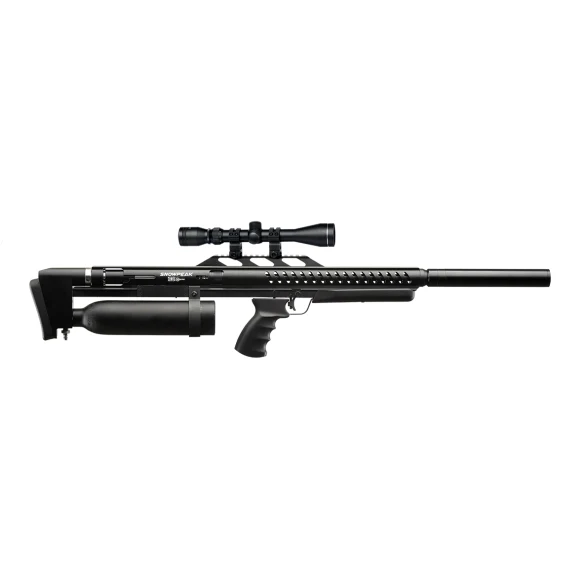
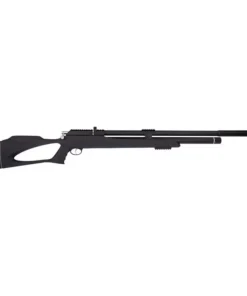
Snowpeak P18 PCP Air Rifle
€340.00
High Shooting Accuracy
Great Gas-saving Capability With High Usage Rate
With Suppressor
Simple Structure, Easy Handling And Good Stability
Exquisite Workmanship And Excellent Appearance
Built-in Pressure Gauge To Monitor The Air Reservoir Pressure
Standard Quick Fill Adaptor
| Action | SINGLE SHOT |
|---|---|
| Type | PCP |
| Stock | SYNTHETIC TACTICAL |
| Length (total) | 86.3cm |
| Weight | 3.53kg |
Snowpeak P18 PCP Air Rifle – Regulated Single-Shot Precision, 300CC Air Capacity, and Full-Size PCP Performance
Snowpeak P18 PCP Air Rifle Overview, Engineering, Precision, and Practical Performance
The Snowpeak P18 PCP Air Rifle is a full-size pre-charged pneumatic platform developed for shooters who value deliberate single-shot operation, regulated air delivery, generous reservoir capacity, and stable handling. According to Snowpeak’s current specifications, the P18 is offered in 4.5mm, 5.5mm, and 6.35mm, uses a 300CC air reservoir, features a 560mm barrel, operates at a maximum pressure of 25 MPa, measures approximately 865 × 175 × 68 mm, and weighs about 3.8 kg. Snowpeak also lists a consistent valve, manual safety, synthetic stock, and factory suppressor configuration.
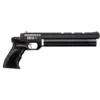
Snowpeak PP750L PCP Air Pistol.
The Snowpeak PP750L PCP Air Pistol belongs to a compact pistol-style PCP category rather than the full-size P18 rifle family.
snowpeak airguns
snowpeak airguns include compact pistols, traditional rifles, regulated match platforms, bullpups, and high-capacity PCP designs.
snowpeak sports
snowpeak sports is the manufacturer’s official product platform and lists the P18 as a single-shot air rifle with high shooting accuracy and strong air efficiency.
snowpeak ap900
The snowpeak ap900 belongs to a different lightweight platform and should not be confused with the heavier regulated P18.
snowpeak max
The snowpeak max family uses a very different high-capacity design, including substantially larger reservoirs and multi-shot operation.
snowpeak pp750
The snowpeak pp750 is a compact pneumatic platform designed around portability rather than the P18’s full-size rifle layout.
pp750
The pp750 remains a popular search term among users comparing smaller PCP platforms.
snowpeak p35x
The snowpeak p35x represents another compact PCP design with different ergonomics and architecture.
pr900 gen 3
The pr900 gen 3 is another Snowpeak rifle family that should be evaluated separately from the P18.
snow peak pp750
The phrase snow peak pp750 generally refers to the same compact pistol-carbine category rather than this rifle.
snowpeak p35
The snowpeak p35 belongs to another pneumatic family with a different design philosophy.
snowpeak m60b
The snowpeak m60b belongs to the larger modern multi-shot rifle category.
snow peak pp20
The snow peak pp20 represents another separate pneumatic platform.
p35
The p35 is commonly searched by users comparing compact PCP designs.
p35x
The p35x similarly belongs to another product family.
p35x pcp
The phrase p35x pcp is associated with a compact pre-charged pneumatic platform rather than the P18.
snowpeak m25
The snowpeak m25 is a multi-shot rifle with a different action, reservoir, and overall layout. Snowpeak lists the M25 with a 245CC reservoir and detachable magazine system.
ap900b pcp air rifle
The ap900b pcp air rifle is another separate platform intended for users seeking different handling characteristics.
snowpeak m60
The snowpeak m60 is a regulated multi-shot rifle that Snowpeak lists with a removable 205CC tank and larger magazine capacities.
snowpeak max 1 price
The phrase snowpeak max 1 price relates to a substantially different 550CC regulated platform with a 700mm barrel and detachable high-capacity magazine.
pcp p 35
The phrase pcp p 35 belongs to searches involving another compact PCP model.
m25 rifle
The m25 rifle should not be confused with the P18 because it uses a multi-shot magazine and different dimensions.
snow peak equipment
snow peak equipment can include pneumatic rifles, pistols, accessories, filling components, and other shooting-related items.
hp300
The term hp300 appears in pneumatic equipment searches but is not an official P18 model designation.
pellet 9mm
The phrase pellet 9mm should not be applied to the P18 because Snowpeak officially lists the P18 only in 4.5mm, 5.5mm, and 6.35mm.
snowpeak p35 vs p35x
A snowpeak p35 vs p35x comparison concerns two separate compact platforms and does not alter the P18’s specifications.
snowpeak pp20
The snowpeak pp20 remains another distinct model within the broader product range.
m25 weapon
The phrase m25 weapon refers to another Snowpeak rifle family rather than the P18.
m50 rifle
The m50 rifle belongs to a separate model series and should not be treated as another name for this rifle.
pcp pellet rifle
The P18 is fundamentally a pcp pellet rifle, using compressed air stored in an onboard reservoir to propel pellets through a rifled barrel.
snowpeaks
The term snowpeaks is commonly used informally when searching for products from the manufacturer.
air gun accessories
Compatible air gun accessories may include optics, cases, approved filling equipment, and routine maintenance products.
snowfall gun
The phrase snowfall gun appears to be a search variation rather than an official model designation.
snow peak customer service
Users searching snow peak customer service should verify that they are contacting the airgun manufacturer rather than another company with a similar name.
snow peak brand origin
The snow peak brand origin for this manufacturer is China, with Snowpeak listing its address in Shaoxing City, Zhejiang Province.
what is a pcp airgun
For anyone asking what is a pcp airgun, PCP means pre-charged pneumatic. Compressed air is stored inside an onboard reservoir and released in a controlled amount when the rifle is fired.
pistolet pcp arcea-snowpeak onix sport
The phrase pistolet pcp arcea-snowpeak onix sport concerns another compact pneumatic product category rather than the P18 rifle.
how much did the m60 weigh
The query how much did the m60 weigh relates to another model. Snowpeak currently lists the M60 at approximately 3.0 kg, while the P18 is listed at about 3.8 kg.
t rex 6000
The phrase t rex 6000 should not be applied to the P18. Snowpeak’s T-REX family is a separate regulated multi-shot design.
Snowpeak PP750L
The Snowpeak PP750L is a considerably smaller pneumatic platform designed for different handling requirements.
Snowpeak Air Pistol
A Snowpeak Air Pistol provides a different shooting experience from a full-length rifle such as the P18.
PCP Pistol
A PCP Pistol emphasizes compactness, whereas the P18 emphasizes rifle-style stability and a larger air reservoir.
Airgun Pistol
An Airgun Pistol should therefore be compared with the P18 only after considering the major difference in size, balance, and intended format.
High power PCP air pistol
A High power PCP air pistol remains a different equipment category from a regulated full-size rifle.
Snowpeak PP750L PCP Air Pistol for sale
The phrase Snowpeak PP750L PCP Air Pistol for sale reflects buyer-intent searches for another model and should not be presented as a P18 feature.
Regulated Air Delivery
One of the P18’s most important technical features is its regulated or consistent-valve system. Snowpeak’s official information lists a consistent valve, while its manual identifies the P18 as a regulated model. This design supports more predictable air delivery across the useful portion of a fill.
Single-Shot Precision
The P18 uses a single-shot loading system. This mechanically simple arrangement suits deliberate target shooting because each pellet is loaded individually rather than cycled from a detachable magazine.
300CC Air Reservoir
A 300CC air capacity gives the rifle a substantial onboard supply while maintaining a conventional full-size configuration.
560mm Barrel
Snowpeak currently specifies a 560mm barrel, giving the rifle a long sighting and projectile-guidance platform within its overall 865mm configuration.
Maximum Fill Pressure
The manufacturer specifies a maximum pressure of 25 MPa, equivalent to approximately 250 bar. Rated filling equipment should always be used, and this maximum should never be exceeded.
How Good Is the Precision?
Snowpeak specifically identifies high shooting accuracy as a core P18 characteristic. In practical use, precision still depends on pellet consistency, optic setup, pressure condition, environmental factors, and shooter technique.
Why Choose the P18?
The strongest reasons include regulated operation, single-shot simplicity, a large 300CC reservoir, long barrel, synthetic stock, and full-size stability.
Where Is It Best Used?
The platform is best suited to lawful recreational target shooting and structured precision practice where deliberate shot preparation is preferred.
When Does the P18 Make Sense?
The P18 makes particular sense for users who prioritize repeatability and mechanical simplicity over rapid multi-shot operation.
Important Snowpeak P18 Specifications
Snowpeak lists 4.5mm, 5.5mm, and 6.35mm calibers, respective published velocities above approximately 900, 800, and 700 fps with specified test pellets, a 300CC reservoir, 560mm barrel, 25 MPa maximum pressure, single-shot manual operation, manual safety, synthetic stock, approximately 865mm overall length, and about 3.8 kg weight.
Overall, the Snowpeak P18 offers a straightforward combination of regulated pneumatic operation, deliberate single-shot loading, useful reservoir capacity, and a stable full-size design for shooters who value controlled, precision-oriented recreational shooting.
Engineering Design, Regulated Air System, Handling, Trigger Control, and Precision Performance
Engineering Design and Mechanical Layout
The rifle is built around a straightforward full-size configuration that emphasizes stability, consistency, and controlled shooting.
Its mechanical arrangement supports users who prefer a conventional rifle feel rather than an ultra-compact design.
This type of layout can improve confidence because the shooter has more predictable contact points between the shoulder, cheek, grip, and stock.
Regulated Air Delivery
A regulated pneumatic system is designed to deliver air more consistently throughout the useful portion of a fill.
This helps reduce large variations in shot behavior and supports more predictable performance.
Consistent air delivery is especially valuable during precision-focused shooting where repeatability matters from one shot to the next.
Reservoir Capacity and Session Length
The onboard air supply gives the shooter enough capacity for extended use without constant refilling.
However, practical shot count depends on several factors, including caliber, environmental conditions, individual rifle condition, and how the system is set up from the factory.
Users should therefore judge real performance based on their own rifle rather than relying only on theoretical estimates.
Pressure Management
Proper pressure management is essential for both performance and safety.
The reservoir should always be filled within the manufacturer’s stated operating limit.
Correctly rated filling equipment should be used, and overfilling should never be attempted.
Safe Filling Practices
Filling should be carried out slowly and carefully.
Rapid filling can generate unnecessary heat, while incorrect equipment can create avoidable risks.
Users should regularly inspect hoses, fittings, and gauges to make sure everything remains in good condition.
Single-Shot Loading
The single-shot layout provides a simple and deliberate loading process.
Instead of relying on a repeating magazine, each pellet is loaded individually.
This reduces feeding complexity and can appeal to users who prefer careful target shooting rather than rapid follow-up shots.
Precision-Focused Operation
A single-shot system encourages the shooter to slow down and concentrate on each stage of the shooting process.
This can improve consistency because the user has more time to check position, breathing, sight alignment, and trigger control before every shot.
Barrel Stability
A stable barrel assembly is important for maintaining predictable accuracy.
The barrel must remain correctly aligned with the action and stock so the projectile exits under repeatable conditions.
Good structural consistency helps reduce unwanted variation.
Trigger Performance
The trigger plays an important role in precision shooting.
A predictable release allows the shooter to complete the shot without disturbing aim.
Consistency is more valuable than an excessively light pull because the shooter needs to know exactly how the trigger will behave.
Trigger Control Technique
Smooth pressure should be applied gradually.
The goal is to avoid jerking or sudden movement during the final stage of the shot.
Good technique becomes easier to develop when the trigger response remains consistent.
Stock Ergonomics
The stock provides the main physical connection between the shooter and the rifle.
Its shape influences shoulder placement, cheek position, grip angle, and overall balance.
A comfortable stock makes it easier to reproduce the same position from shot to shot.
Weight Distribution
Balanced weight distribution helps reduce unnecessary fatigue.
A rifle that settles naturally into position is easier to control during longer sessions.
This is especially useful during supported target shooting.
Full-Size Stability
The longer overall format provides a stable feel that many shooters prefer for structured range use.
Compared with very compact designs, a full-size rifle often allows a more relaxed shoulder position and better overall balance.
Bench Shooting
From a bench or other stable support, the rifle can provide a good platform for evaluating ammunition and shooter technique.
A supported setup reduces unnecessary movement and makes it easier to study group consistency.
Ammunition Selection
Different pellets can produce noticeably different results.
Weight, head size, shape, and manufacturing consistency all influence performance.
Testing suitable options under similar conditions is the best way to identify what works well with an individual rifle.
Shot Consistency
Consistency across a shooting session is influenced by air pressure, ammunition quality, and user technique.
A regulated system helps support repeatability, but proper maintenance and careful shooting habits remain important.
Environmental Influence
Temperature, wind, humidity, and lighting can all affect practical results.
The rifle may perform consistently while external conditions still influence where shots land.
Understanding these factors helps shooters interpret results more accurately.
Optic Setup
A correctly installed optic supports a comfortable and repeatable viewing position.
The shooter should not need to stretch or move the head excessively to achieve a clear sight picture.
Stable mounting and correct eye position improve confidence.
Shooting Position
A stable body position helps reduce movement.
Whether shooting from a bench, supported rest, or another controlled position, the shooter should aim to maintain the same posture from one shot to the next.
Reduced Mechanical Movement
Pneumatic rifles generally produce less vibration than spring-powered designs.
This smoother firing cycle can make it easier to maintain control during the shot.
Reduced movement also helps the shooter stay focused on follow-through.
Reliability and Simplicity
A simple loading system can contribute to dependable ownership.
Fewer feeding components mean fewer parts that can cause loading problems.
Regular inspection and responsible use further improve reliability.
Maintenance Considerations
Proper cleaning, careful pressure management, secure storage, and routine inspection all contribute to long-term performance.
The reservoir and internal pressure components should never be disassembled while pressurized.
Complex repairs should be left to a qualified technician.
Long-Term Ownership
A precision air rifle should be viewed as equipment that benefits from consistent care.
Owners who maintain the air system, protect the stock and barrel, and use suitable ammunition are more likely to enjoy dependable performance over many years.
Overall Section Summary
The engineering design focuses on regulated air delivery, mechanical simplicity, full-size stability, and deliberate precision shooting.
Its single-shot layout and balanced construction support users who prefer controlled target practice over rapid firing.
With responsible pressure management, suitable ammunition, good shooting technique, and regular maintenance, the platform can provide a stable and satisfying precision-shooting experience.
Practical Shooting Experience, Accuracy, Handling, and Real-World Performance
Practical Shooting Experience
The real value of a precision air rifle becomes clear during regular use.
A stable platform, smooth firing cycle, comfortable stock, and predictable trigger all contribute to a more controlled shooting experience.
When the rifle behaves consistently, the shooter can concentrate more effectively on technique, aiming, and overall improvement.
Accuracy Development
Accuracy is influenced by several factors working together.
Ammunition quality, shooting position, air pressure, environmental conditions, optic setup, and shooter technique all affect results.
The rifle provides the mechanical foundation, while consistent practice allows the user to build better performance over time.
Target Shooting Performance
For target shooting, repeatability is one of the most important qualities.
A dependable rifle allows the shooter to compare results from one session to another.
This makes it easier to identify improvements in technique and understand how different conditions influence accuracy.
Supported Shooting
A supported position can reveal the rifle’s practical precision more clearly.
Reducing unnecessary movement allows the shooter to concentrate on breathing, sight alignment, trigger control, and follow-through.
This creates a stable environment for evaluating performance.
Standing Position
Standing requires more balance and body control than supported shooting.
The rifle’s weight and full-size dimensions can provide stability, although proper posture remains important.
Regular practice helps users develop better control in this position.
Shooting Comfort
Comfort has a direct influence on consistency.
A rifle that fits naturally against the shoulder allows the shooter to maintain concentration for longer periods.
Reduced fatigue helps preserve technique as the session continues.
Balance and Control
Good weight distribution improves handling.
A balanced rifle settles more naturally into position and requires less corrective movement.
This makes the shooting process more predictable and comfortable.
Trigger Technique
Trigger control is one of the most important fundamentals in precision shooting.
The shooter should apply pressure smoothly and avoid sudden movement.
A predictable trigger response helps users develop better habits.
Follow-Through
Proper follow-through helps maintain consistency after the shot is released.
The shooter should remain in position and continue observing the target.
This makes it easier to understand technique and identify mistakes.
Ammunition Testing
Different pellets can produce different results even when they share the same caliber.
Weight, shape, manufacturing quality, and fit all influence performance.
Testing suitable options helps users identify which ammunition performs best with their individual rifle.
Group Evaluation
Shot groups provide useful information about consistency.
Tight, repeatable groups suggest that the rifle, ammunition, and shooter are working together effectively.
Larger or irregular groups may indicate that one or more variables need attention.
Pressure Behavior
The rifle’s performance can change gradually as reservoir pressure falls.
Users should become familiar with how consistency develops through a normal fill cycle.
Understanding this behavior helps improve planning and reduces uncertainty.
Environmental Conditions
Outdoor shooting introduces changing conditions.
Wind, temperature, humidity, and lighting can all influence practical results.
A shooter who understands these factors can interpret performance more accurately.
Wind Awareness
Even moderate wind can affect pellet travel.
Observing wind direction and strength is therefore important during precision shooting.
Experience helps users understand when environmental conditions may influence results.
Temperature Changes
Temperature can affect compressed air behavior and projectile performance.
Large changes between sessions may produce slightly different results.
Keeping notes can help users recognize patterns over time.
Optic Positioning
A correctly positioned optic supports a natural viewing position.
The shooter should not need to stretch, twist, or move excessively to achieve a clear sight picture.
Comfortable alignment improves repeatability.
Range Practice
Regular range sessions help users become familiar with the rifle.
Repeated practice builds confidence and allows the shooter to understand balance, trigger feel, air behavior, and preferred ammunition.
This familiarity is an important part of long-term improvement.
Skill Development
New users can develop basic shooting habits, while experienced shooters can refine more advanced techniques.
A predictable platform makes progress easier to evaluate.
Consistency allows improvements to become more noticeable.
Recreational Shooting
For recreational users, enjoyment is an important part of ownership.
A rifle that feels comfortable and dependable encourages more frequent use.
Regular practice can make the overall experience more rewarding.
Responsible Sporting Use
Air rifles should always be used responsibly and according to local laws.
Suitable shooting areas, secure backstops, safe handling, and careful storage are essential.
Responsible use protects both the shooter and surrounding environment.
Transport and Convenience
A full-size rifle requires proper protection during transportation.
A suitable case helps protect the stock, barrel, optic, and other components.
Careful transport reduces the risk of accidental damage.
Storage Between Sessions
Proper storage preserves both performance and appearance.
The rifle should remain dry, secure, and protected from unnecessary impacts.
Good storage habits contribute directly to long-term reliability.
User Familiarity
The more time a shooter spends with the rifle, the more predictable it becomes.
Understanding its handling characteristics, pressure behavior, trigger feel, and preferred ammunition creates greater confidence.
Familiarity improves consistency.
Overall Practical Value
A dependable air rifle should provide more than technical specifications.
It should feel comfortable, operate predictably, and support continued skill development.
When these qualities work together, the shooter gains a more complete and satisfying experience.
Final Performance Summary
In practical use, this platform offers a stable, deliberate, and precision-focused shooting experience.
Its regulated air system, full-size construction, and single-shot operation support users who value repeatability and careful shot preparation.
With suitable ammunition, responsible air management, proper maintenance, and consistent shooting technique, the rifle can provide dependable accuracy and enjoyable performance across regular target and recreational shooting sessions.
Maintenance, Storage, Protection, and Long-Term Reliability
Importance of Regular Maintenance
Regular maintenance is essential for keeping a precision air rifle dependable over time.
A well-maintained rifle is more likely to preserve consistent operation, stable performance, and a clean overall condition.
Routine care also makes it easier to identify developing problems before they become more serious.
Pre-Use Inspection
Before each shooting session, the rifle should be inspected carefully.
The user should look for loose components, unusual marks, visible damage, pressure irregularities, or changes in operation.
A quick inspection helps reduce unnecessary interruptions once shooting begins.
Post-Use Inspection
After each session, another inspection is useful.
Dirt, moisture, and residue can accumulate during normal use.
Checking the rifle after shooting allows these issues to be addressed before storage.
Exterior Cleaning
External surfaces should be cleaned with suitable soft materials.
Dust, fingerprints, and moisture should not be allowed to remain for long periods.
Gentle cleaning helps preserve finishes without creating unnecessary wear.
Stock Care
The stock should be protected from scratches, impacts, moisture, and extreme temperature changes.
Keeping it clean also improves the overall appearance of the rifle.
Proper stock care contributes to a better long-term ownership experience.
Barrel Care
The barrel should be treated carefully because its internal condition can influence consistency.
Cleaning should be carried out only when required and with appropriate equipment.
Aggressive or unnecessary cleaning can potentially damage sensitive surfaces.
Avoiding Excessive Cleaning
Precision equipment does not need constant deep cleaning.
Excessive cleaning can introduce unnecessary wear.
A controlled routine based on actual condition is usually more effective.
Reservoir Protection
The compressed-air reservoir is one of the most important components of the rifle.
It should be protected from physical impacts, excessive heat, corrosion, and improper filling practices.
The reservoir should never be opened or dismantled while pressurized.
Safe Filling Practices
Only correctly rated filling equipment should be used.
Filling should be performed slowly and carefully.
The manufacturer’s maximum stated pressure should never be exceeded.
Monitoring Pressure
Pressure should be checked before and during use.
Users should become familiar with normal pressure behavior.
Unexpected pressure loss may indicate that professional inspection is needed.
Seal Condition
Seals help maintain pressure throughout the pneumatic system.
Over time, they can wear or become damaged.
A noticeable increase in air loss may suggest that servicing is required.
Correct Lubrication
Only suitable lubricants should be used where recommended.
High-pressure pneumatic systems require compatible products.
Incorrect oils or greases can damage seals or create safety concerns.
Trigger Protection
The trigger mechanism should remain clean and protected.
Dust, moisture, and unnecessary manipulation should be avoided.
The trigger should not be disassembled unless the user has proper technical knowledge.
Mechanical Connections
Fasteners and other connections should be inspected periodically.
Loose components can affect comfort and consistency.
They should be secure without being excessively tightened.
Optic Mount Checks
If an optic is installed, the mounting system should also be inspected.
Movement between the optic and the rifle can cause changes in point of impact.
Stable mounting supports repeatable accuracy.
Protecting the Muzzle
The muzzle area should be protected from impacts and contamination.
Damage in this area can influence projectile release.
A protective case helps reduce accidental contact during transport.
Moisture Management
After exposure to damp conditions, the rifle should be dried before storage.
Moisture can contribute to corrosion and deterioration.
Special attention should be given to hidden areas where water may remain.
Temperature Management
Extreme heat and cold should be avoided whenever possible.
A rifle should not be left for long periods inside a hot vehicle or exposed to freezing conditions.
Stable storage environments are better for seals and pressure components.
Transportation Protection
A suitable case provides valuable protection during movement.
It helps prevent scratches, impacts, and unwanted shifting.
This becomes especially important when accessories are installed.
Safe Storage
The rifle should be stored securely and responsibly.
A dry, protected location helps preserve both function and appearance.
Storage should also comply with applicable local requirements.
Storage Position
The rifle should be positioned so that it cannot fall or experience unnecessary pressure.
Heavy objects should not be placed on top of it.
Good positioning reduces accidental damage.
Monitoring Performance Changes
Users should pay attention to changes in sound, accuracy, trigger feel, or air retention.
Sudden changes may indicate that maintenance or inspection is required.
Problems should be investigated rather than ignored.
Professional Servicing
Complex work involving the reservoir, internal valve system, seals, or pressure components should be handled by a qualified technician.
Professional servicing helps preserve safe operation and mechanical reliability.
Avoiding Unauthorized Modifications
Unapproved changes can affect performance, reliability, and safety.
The rifle should be maintained within its intended design.
Responsible ownership focuses on keeping the platform functioning correctly.
Developing a Maintenance Routine
Good maintenance does not need to be complicated.
Regular inspection, careful cleaning, proper filling, and secure storage provide most of the benefits required for long-term ownership.
Consistency is more important than excessive intervention.
Long-Term Reliability
A properly maintained rifle can remain dependable for many years.
Mechanical care, pressure awareness, and responsible storage all contribute to durability.
The owner’s habits play a major role in preserving performance.
Final Maintenance Summary
Long-term reliability depends on regular inspection, correct air management, careful cleaning, secure storage, and responsible handling.
By protecting the barrel, stock, trigger, air system, and external components, owners can preserve both performance and condition.
A well-maintained rifle remains more consistent, dependable, and enjoyable throughout its service life.
Final Evaluation, Ownership Experience, Long-Term Value, and Performance Summary
Final Evaluation
A well-designed air rifle should provide more than acceptable technical specifications.
It should also deliver consistent operation, comfortable handling, dependable accuracy, manageable maintenance, and a shooting experience that remains satisfying over time.
The strongest ownership value comes from equipment that performs predictably and allows the shooter to concentrate on technique rather than mechanical uncertainty.
Overall Shooting Character
The rifle provides a deliberate and controlled shooting experience.
Its single-shot format encourages careful preparation before each shot, which naturally suits users who enjoy structured target practice and precision-oriented sessions.
Rather than focusing on rapid follow-up shots, the platform rewards patience, consistency, and careful technique.
Precision-Focused Performance
Precision depends on the relationship between the rifle, ammunition, optic, shooter, and environmental conditions.
A stable platform helps reduce unnecessary variation and creates a stronger foundation for accurate shooting.
When the equipment behaves consistently, the shooter can identify whether changes in results come from technique, ammunition, or external conditions.
Regulated Consistency
One of the important advantages of a regulated pneumatic system is more predictable air delivery across the useful portion of a fill.
This supports repeatable shot behavior and gives the shooter greater confidence during longer sessions.
Stable performance also makes ammunition testing and group evaluation easier.
Mechanical Simplicity
A simple operating layout can provide meaningful long-term benefits.
The single-shot design reduces feeding complexity and gives the shooter direct control over each loading cycle.
Fewer moving feeding components can also simplify inspection and general maintenance.
Full-Size Stability
The full-size configuration creates a traditional shoulder-mounted feel.
For many users, this improves stability from supported positions and makes the rifle easier to settle into a consistent shooting stance.
The larger format may also suit shooters who prefer a more substantial and balanced platform.
Comfort During Extended Sessions
Comfort becomes increasingly important during longer practice periods.
A rifle that fits naturally against the shoulder allows the shooter to maintain concentration without constantly adjusting position.
Better comfort supports better technique and more consistent performance.
Skill Development
A dependable rifle can be valuable for developing shooting fundamentals.
Users can practice breathing control, trigger technique, sight alignment, body positioning, and follow-through under repeatable conditions.
Because the rifle behaves predictably, improvements are easier to recognize.
Ammunition Selection
Ammunition choice remains an important part of achieving strong results.
Different pellets may produce different levels of consistency, even within the same caliber.
Testing suitable options helps identify the combination that works best with the individual rifle.
Group Evaluation
Repeated groups provide useful information about practical accuracy.
A consistent pattern suggests that the rifle, ammunition, and shooter are working together effectively.
Sudden changes may indicate that technique, mounting, ammunition, or environmental conditions require attention.
Pressure Management
Understanding the air system is an important part of ownership.
Users should remain familiar with normal pressure behavior throughout a shooting session.
Good pressure awareness supports both performance and responsible operation.
Responsible Use
Air rifles should always be used in accordance with local laws and safe shooting practices.
Suitable shooting areas, secure backstops, careful muzzle awareness, and responsible storage are essential parts of ownership.
Safe habits protect both the shooter and others.
Maintenance Requirements
Long-term reliability depends on sensible maintenance rather than excessive intervention.
Regular inspection, correct filling procedures, careful cleaning, and proper storage provide most of the care needed for dependable operation.
Complex internal work should be left to qualified professionals.
Storage and Protection
Proper storage helps preserve both function and appearance.
The rifle should remain dry, secure, and protected from unnecessary impacts.
A suitable case is also valuable during transportation.
Long-Term Reliability
A rifle that is cared for properly can remain dependable for many years.
Mechanical simplicity, consistent air management, and responsible ownership all contribute to service life.
Regular attention helps prevent small issues from becoming larger problems.
Practical Ownership Value
Practical value comes from the relationship between performance, usability, durability, and maintenance requirements.
A rifle does not need excessive complexity to provide a satisfying experience.
For many shooters, repeatability and dependable accuracy are more important than additional features.
Suitable User Profile
This type of platform is particularly well suited to users who enjoy deliberate shooting and structured practice.
It can appeal to recreational shooters, target enthusiasts, and owners who prefer controlled operation over rapid cycling.
The predictable layout makes it easy to understand and rewarding to use.
Range Performance
At the range, the rifle provides a stable platform for testing technique and ammunition.
Its regulated operation and single-shot loading encourage careful preparation.
This makes it particularly suitable for shooters who enjoy evaluating groups and refining consistency.
Recreational Enjoyment
For recreational users, enjoyment is an important part of ownership.
A rifle that feels comfortable and performs predictably encourages more frequent practice.
Regular use also helps the shooter become more familiar with the equipment.
Value of Familiarity
Over time, users learn the rifle’s balance, trigger feel, preferred ammunition, and pressure behavior.
This familiarity creates confidence and helps improve consistency.
Experience becomes one of the most important factors in practical performance.
Final Ownership Perspective
The rifle offers a balanced combination of regulated pneumatic operation, full-size handling, mechanical simplicity, and deliberate single-shot shooting.
Its strongest appeal lies in predictability and stable performance rather than rapid-fire capability.
With suitable ammunition, careful air management, regular maintenance, and responsible use, it can provide a dependable and rewarding ownership experience.
Final Performance Summary
Overall, this platform is best understood as a precision-focused pneumatic rifle built around consistency, stability, and controlled operation.
Its air system, stock, barrel, trigger, and single-shot layout work together to provide a straightforward shooting experience.
For users who value repeatability, careful shot preparation, and long-term reliability, it offers a dependable foundation for continued practice, recreational shooting, and skill development.
Be the first to review “Snowpeak P18 PCP Air Rifle”
Related products

Snowpeak Airguns

Snowpeak Airguns

Snowpeak Airguns

Snowpeak Airguns
Snowpeak Airguns
Snowpeak Airguns


Snowpeak Airguns
Snowpeak Airguns
Reviews
There are no reviews yet.