
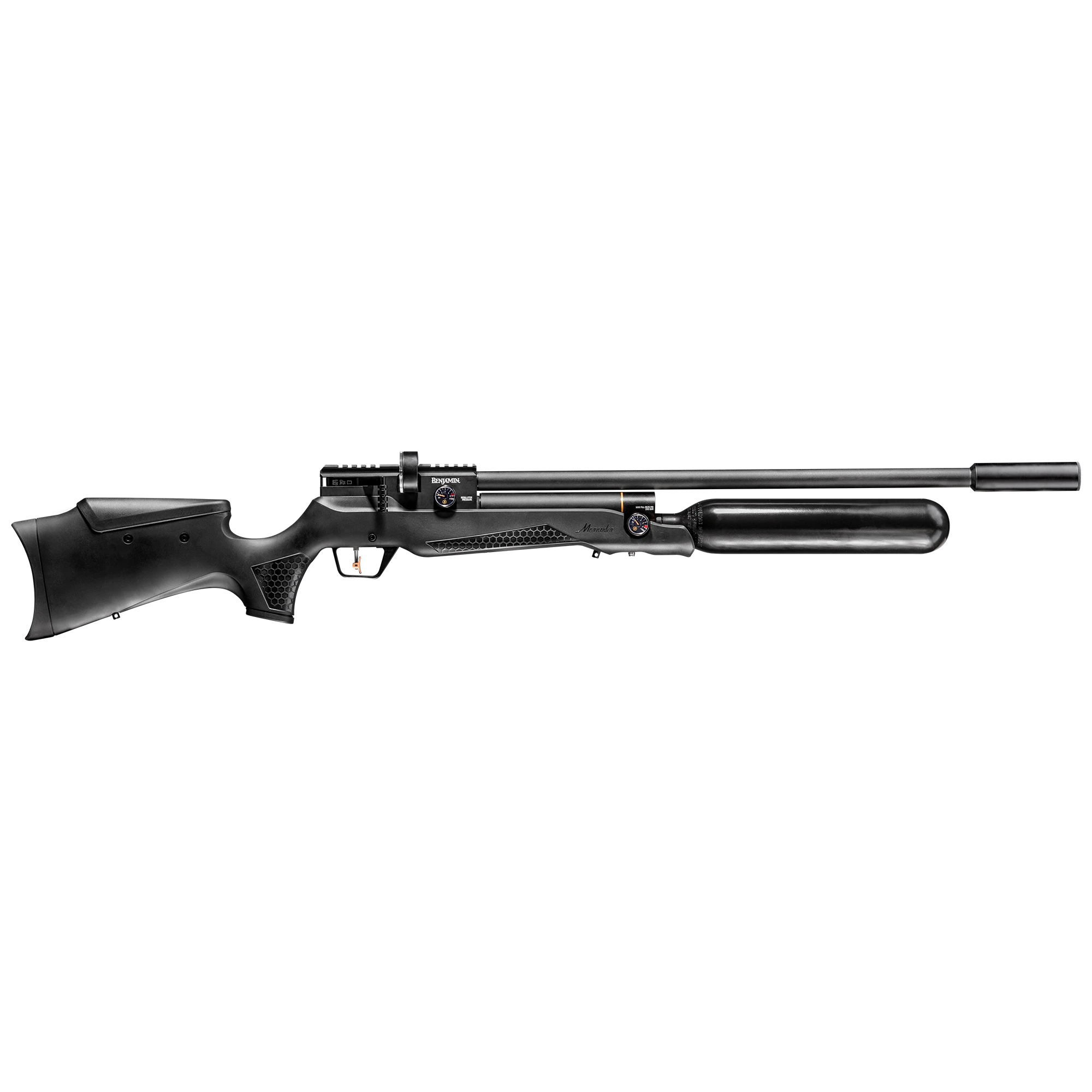
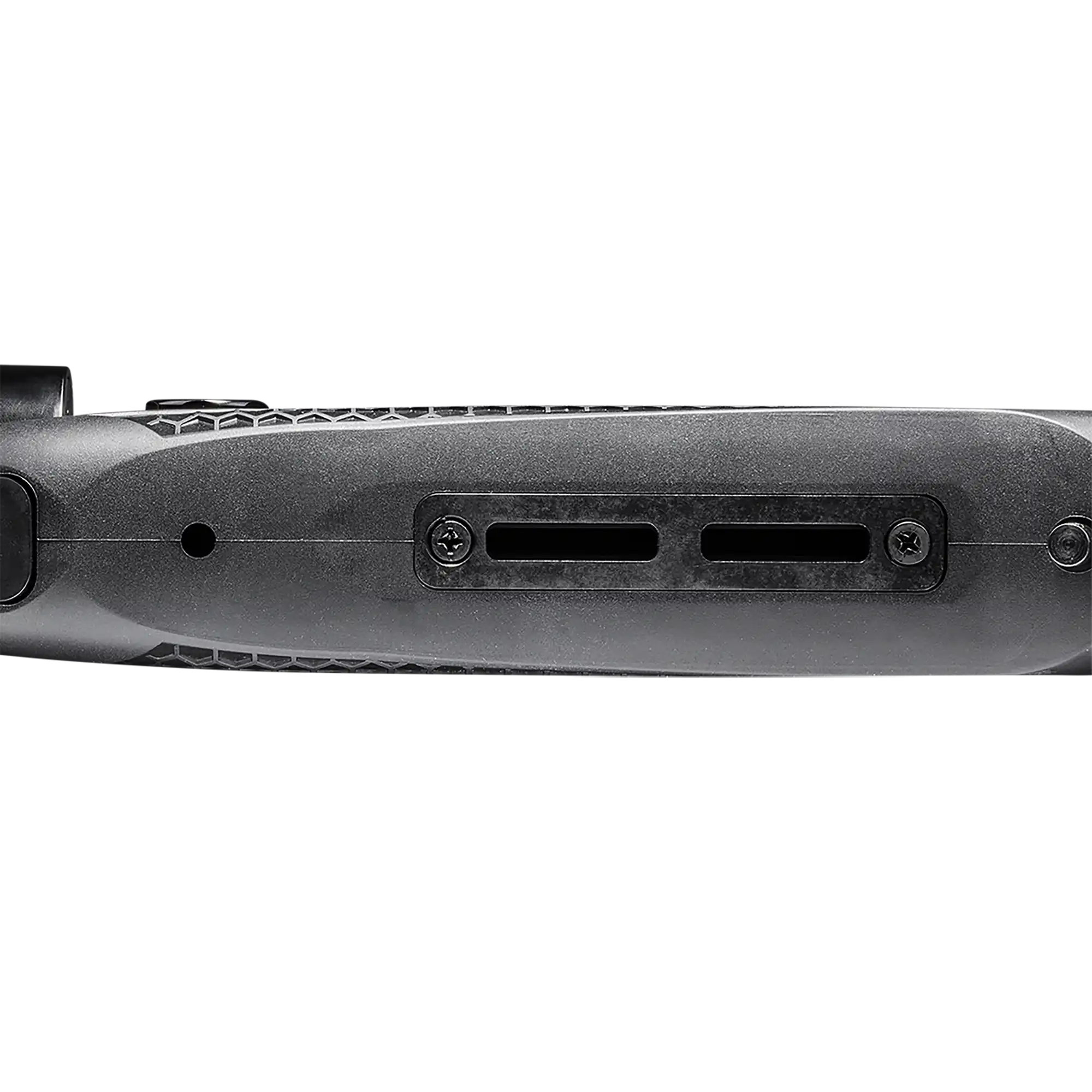
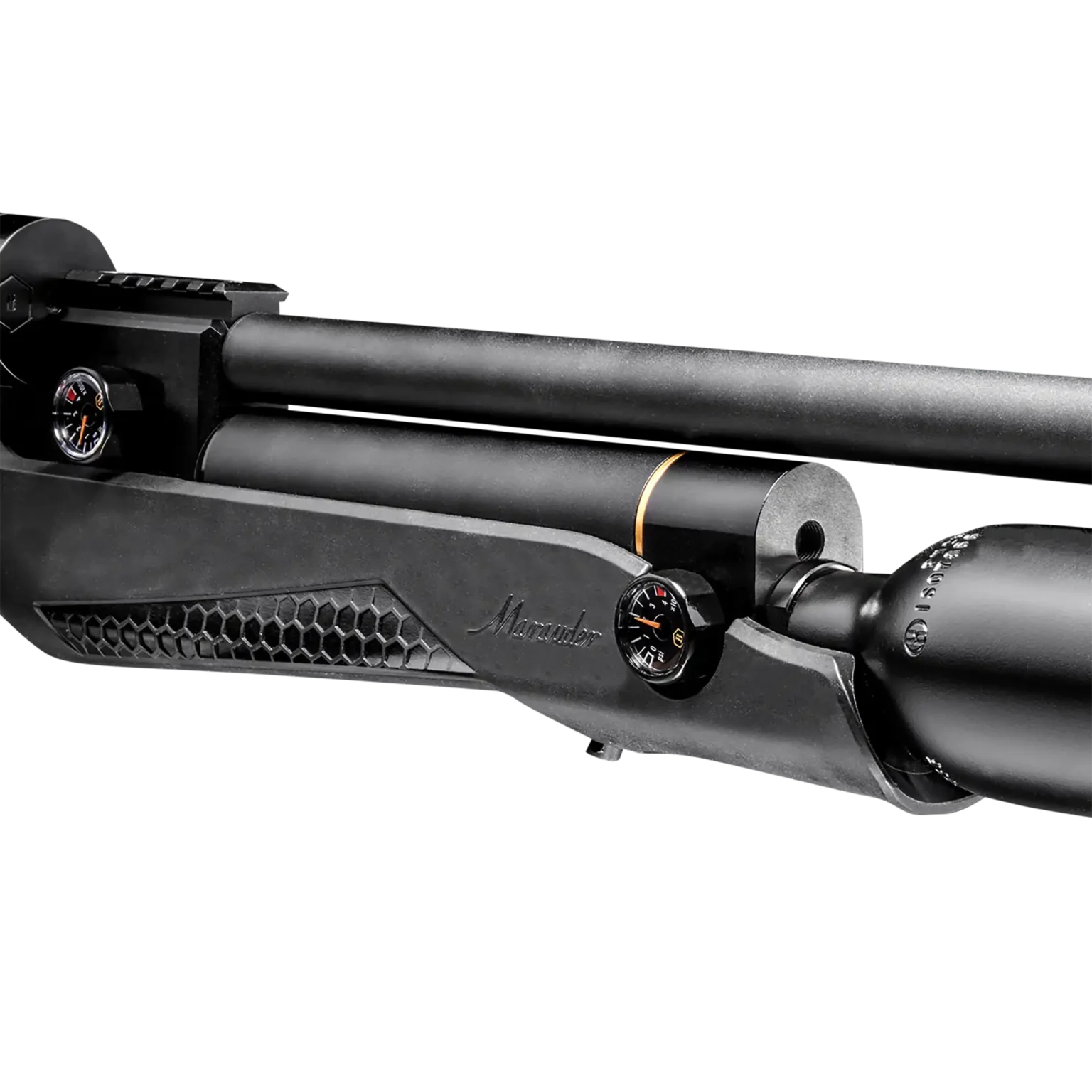

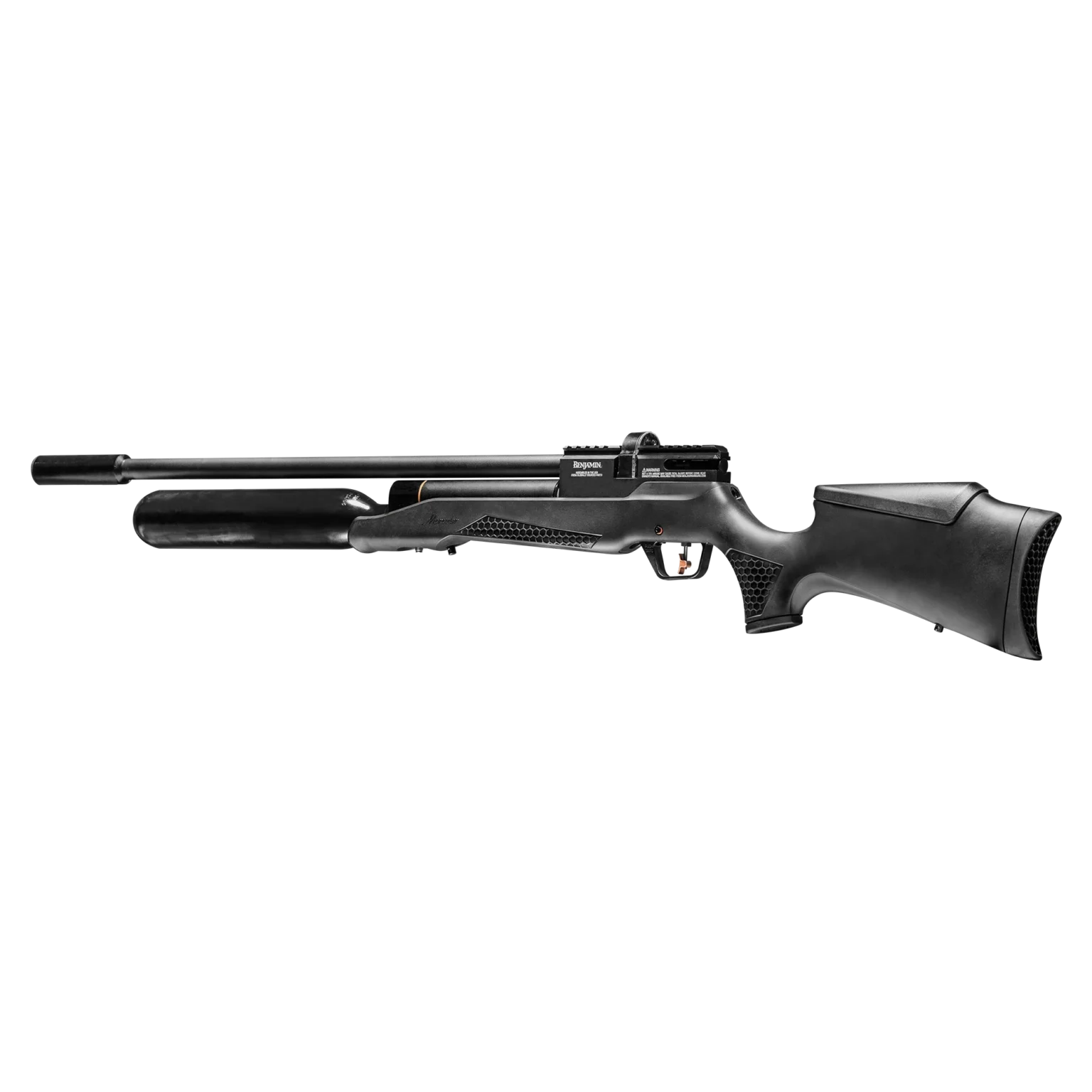






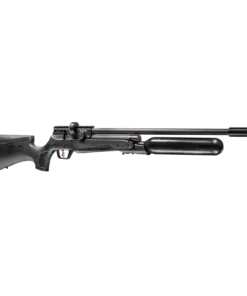



Benjamin Marauder Gen3


€530.00
The Next Generation of Marauder Performance
The Benjamin Marauder Gen3 PCP Air Rifle builds on one of the most respected names in pre-charged pneumatic airguns with increased power, smoother operation, and greater shot-to-shot consistency. Designed for hunters, precision shooters, and airgun enthusiasts, the Marauder Gen3 combines regulated performance with refined ergonomics and all-weather durability.
Available in both .22 and .25 caliber configurations, this multi-shot bolt-action PCP air rifle is powered by a 500cc air reservoir filled to 3625 PSI (250 BAR). The adjustable regulator helps maintain consistent pressure delivery for dependable accuracy and repeatable performance in the field or at the range.
Integrated sound suppression helps reduce report for a quieter shooting experience while maintaining the authority expected from the Marauder platform.
Built for Precision and Control
The Benjamin Marauder Gen3 is engineered to provide a smoother and more refined shooting experience. A lighter cocking effort of approximately 15 pounds allows for easier cycling and faster follow-up shots compared to previous generations.
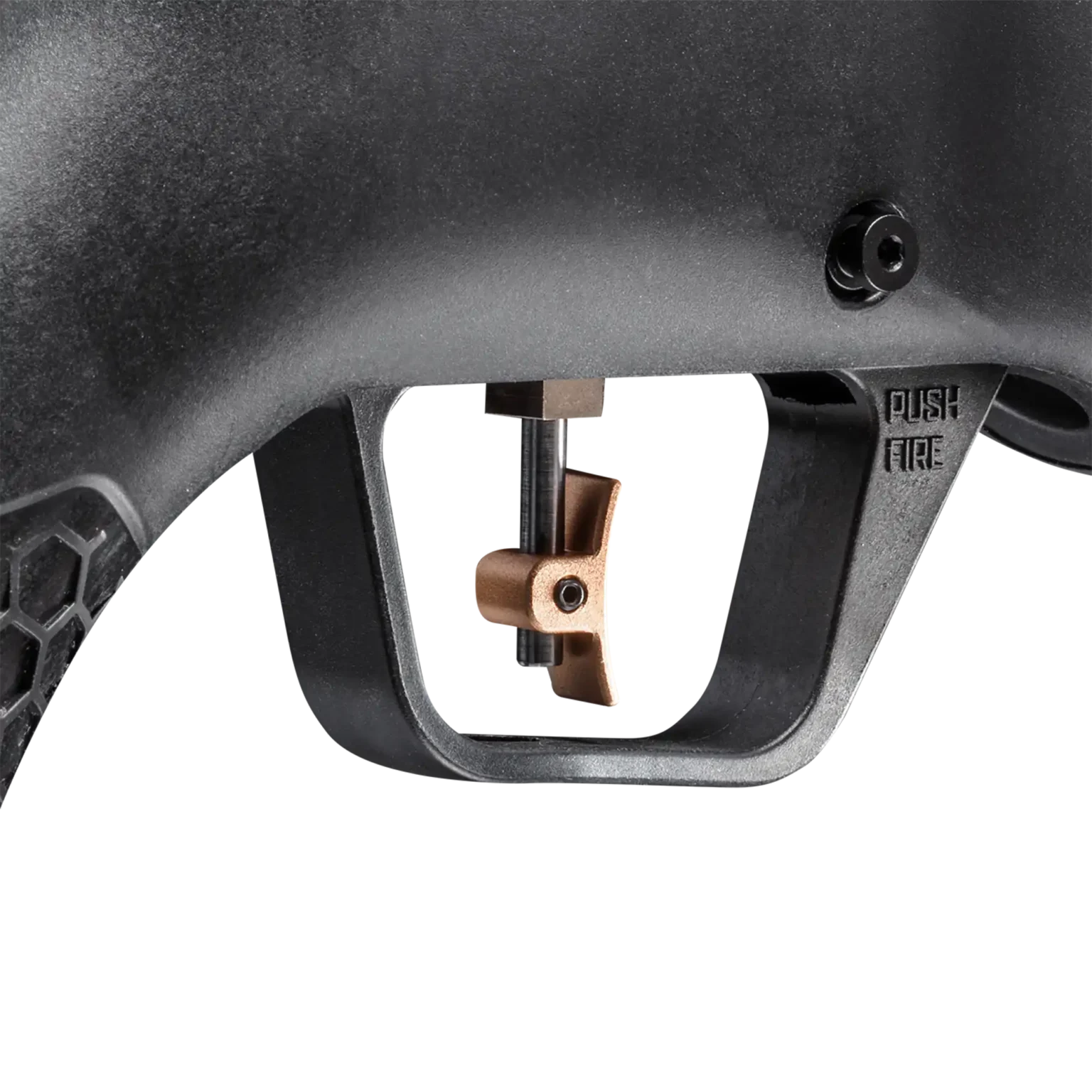
A two-stage adjustable trigger gives shooters greater control over trigger feel and break, helping support more precise shot placement and improved consistency at longer distances.
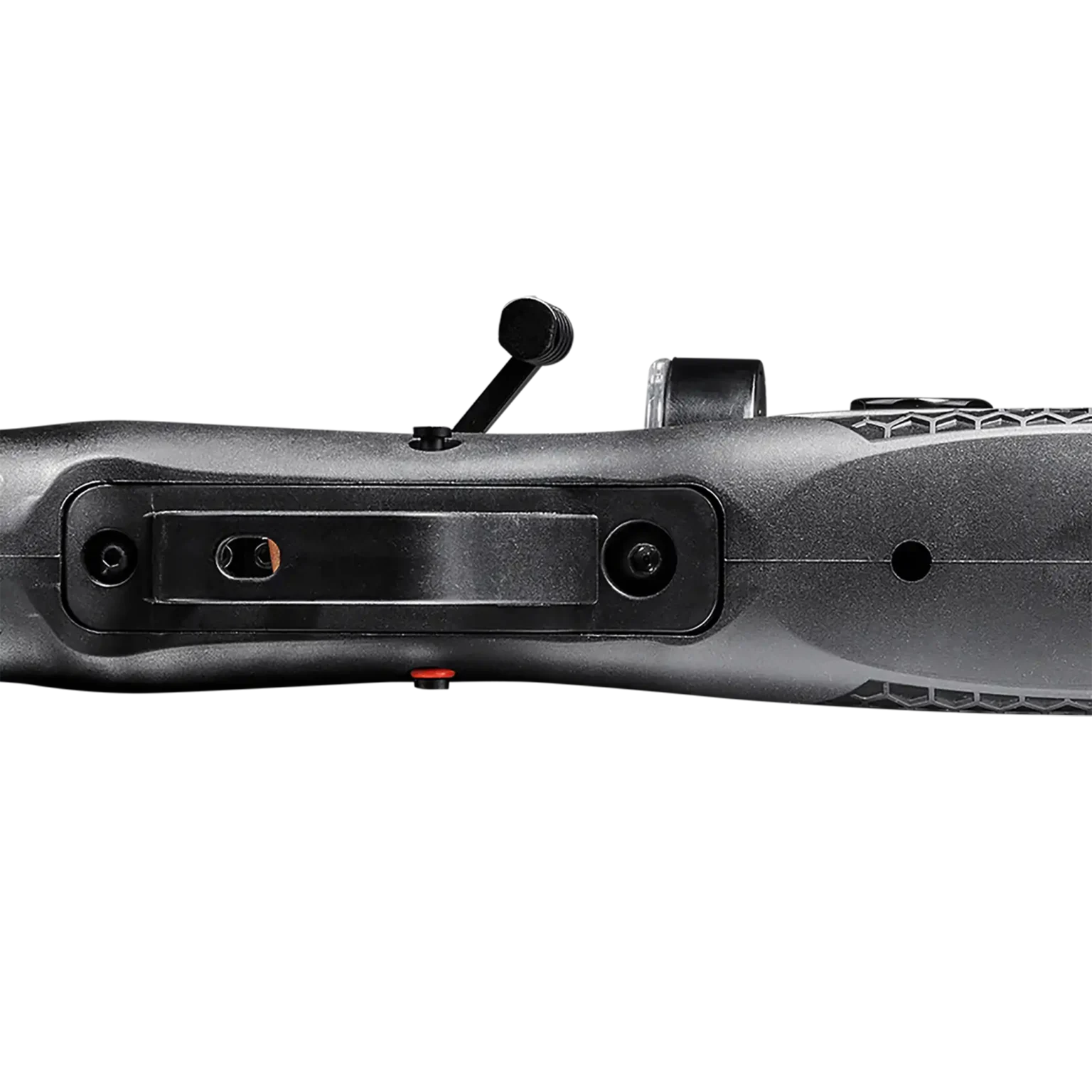
The all-weather synthetic stock is built for changing outdoor conditions and features an adjustable cheek piece for improved comfort and proper optic alignment. Whether shooting from the bench or carrying the rifle in the field, the stock design helps maintain a stable and repeatable shooting position.
Combined with regulated PCP performance and multi-shot capability, the Marauder Gen3 gives shooters the control and consistency needed for serious shooting applications.
Benjamin Marauder Gen3 .22 Caliber
The Benjamin Marauder Gen3 .22 caliber PCP air rifle delivers high velocity and regulated precision for small-game hunting, pest control, and target shooting.
With velocities up to 1200 FPS and energy up to 50 FPE, the .22 caliber configuration offers a balance of speed, efficiency, and downrange impact.
.22 Caliber Features
- 14 Round Capacity Magazine
- Velocities up to 1200 FPS
- Delivers up to 50 FPE
Benjamin Marauder Gen3 .25 Caliber
The Benjamin Marauder Gen3 .25 caliber PCP air rifle is designed for shooters who want greater energy and authority from a regulated PCP platform.
Delivering velocities up to 1150 FPS and energy up to 80 FPE, the .25 caliber version is built for demanding hunting and long-range shooting applications while maintaining smooth handling and repeatable performance.
.25 Caliber Features
- 12 Round Capacity Magazine
- Velocities up to 1150 FPS
- Delivers up to 80 FPE
Key Features
- REGULATED PCP PERFORMANCE
- MULTI-SHOT BOLT-ACTION PLATFORM
- 500CC HIGH-CAPACITY AIR RESERVOIR
- FILLS TO 3625 PSI / 250 BAR
- INTEGRATED SOUND SUPPRESSION
- LIGHTER 15 LB COCKING EFFORT
- ALL-WEATHER SYNTHETIC STOCK
- TWO STAGE ADJUSTABLE TRIGGER
- ADJUSTABLE CHEEK PIECE
- BUILT FOR HUNTING AND PRECISION SHOOTING
| Caliber: | .22, .25 |
|---|---|
| Lead Pellet Velocity: | up to 1200 fps (.22 Cal) up to 1150 fps (.25 Cal) |
| Powerplant: | PCP |
| Foot Pounds of Energy (FPE): | 50 ft-lbs (.22 Cal) 80 ft-lbs (.25 Cal) |
| Air Reservoir: | 500cc reservoir fills to 3625 PSI or 250 BAR and works with an adjustable regulator for consistent shots |
| Action: | Sidelever |
| Capacity | 14 Rounds (.22 Cal) 12 Rounds (.25 Cal) |
| Magazine: | Rotary Magazine |
| Trigger: | Two Stage |
| Cocking Effort: | 15 lbs |
| Noise Suppression: | Yes |
| Sling Mounts Included: | Yes |
| Stock Material: | Synthetic |
| Length | 45.6 in. |
| Warranty | 5 Year |
Benjamin Marauder Gen3 – Regulated PCP Performance, Sidelever Control, and Modern Precision Engineering
Benjamin Marauder Gen3 Overview
The Benjamin Marauder Gen3 represents the latest evolution of the long-running Marauder platform, combining a regulated PCP powerplant with a redesigned sidelever action, increased reservoir capacity, higher output, refined ergonomics, and multi-shot operation. Benjamin currently offers the Gen3 in .22 and .25 caliber, with a 500cc air reservoir filled to 3625 PSI / 250 BAR, an adjustable regulator, integrated sound suppression, synthetic all-weather stock, adjustable cheekpiece, and approximately 15 lb cocking effort.
The .22 version is listed at up to 1200 fps and 50 ft-lb, with a 14-round magazine, while the .25 configuration is listed at up to 1150 fps and 80 ft-lb, with a 12-round magazine. Published overall length is approximately 45.6 inches.
Benjamin Bulldog Magnum Series Bullpup
The Benjamin Bulldog Magnum Series Bullpup belongs to Benjamin’s big-bore bullpup family and is mechanically distinct from the conventional rifle layout of the Gen3.
benjamin air rifle
A benjamin air rifle can use spring, gas-piston, pneumatic, or big-bore technology. This model belongs specifically to the regulated PCP category.
air rifle and air pistol
The phrase air rifle and air pistol covers different handling formats. The Gen3 is a full-size shoulder-fired rifle rather than a handgun.
benjamin bulldog
The benjamin bulldog uses a compact bullpup layout and is intended for a very different caliber and sporting category.
benjamin air rifles
The broader range of benjamin air rifles includes mechanical, pneumatic, and big-bore platforms.
benjamin break
The phrase benjamin break generally relates to break-barrel models. The Gen3 does not use barrel cocking because it is powered from an onboard air reservoir.
benjamin airbow airgun
A benjamin airbow airgun launches arrows instead of conventional diabolo pellets and therefore belongs to another projectile category.
benjamin marauder pcp
The phrase benjamin marauder pcp closely matches the Gen3’s operating system because this model uses a high-pressure regulated pneumatic powerplant.
air bows pellet rifle
The phrase air bows pellet rifle combines two different projectile systems. Airbows launch arrows, whereas the Gen3 uses pellets.
benjamin bulldog 457 20 joules
The phrase benjamin bulldog 457 20 joules refers to a different large-caliber platform and should not be interpreted as a specification for this rifle.
co2 pellet guns
co2 pellet guns use carbon dioxide as their power source. The Gen3 instead uses high-pressure compressed air.
benjamin armada
The benjamin armada is another PCP platform but uses a different stock, chassis, and action layout.
benjamin prowler
The benjamin prowler belongs to the gas-piston break-barrel family rather than the regulated pneumatic category.
benjamin marauder air rifle bulldog 357
The phrase benjamin marauder air rifle bulldog 357 combines two separate product families. The Bulldog big-bore series should not be confused with the Marauder platform.
benjamin marauder
The benjamin marauder name has long been associated with shrouded barrels, PCP operation, multi-shot magazines, and precision-oriented performance.
cal .177 pellets
cal .177 pellets are smaller than either of the Gen3’s current .22 and .25 caliber configurations.
brake barrel bb gun
A brake barrel bb gun, more commonly written break-barrel, uses a hinged barrel for cocking. This rifle uses sidelever PCP operation instead.
benjamin pellet gun
As a benjamin pellet gun, the Gen3 is designed around rifled-barrel pellet ammunition rather than conventional steel BBs.
benjamin bow
A benjamin bow search generally relates to pneumatic arrow-launching products rather than this pellet rifle.
benjamin pellet
A suitable benjamin pellet or other compatible quality pellet may be used according to the caliber selected and manufacturer guidance.
benjamin air rifle repair
For benjamin air rifle repair, work involving the regulator, pressure reservoir, valve system, or other high-pressure components should be carried out by qualified service personnel rather than through casual disassembly.
benjamin air rifle 22 break barrel
A benjamin air rifle 22 break barrel uses a completely different mechanical powerplant from the .22 Gen3.
benjamin air bow
The benjamin air bow uses compressed air to launch arrows rather than pellets.
benjamin marauder .25
The benjamin marauder .25 description applies directly to one current Gen3 caliber. The .25 version uses a 12-round magazine and is listed up to 1150 fps and 80 ft-lb.
benjamin bulldog 457
The benjamin bulldog 457 is a large-caliber bullpup and should be evaluated separately from this multi-shot sporting rifle.
benjamin marauder pistol
The benjamin marauder pistol is a much more compact bolt-action PCP platform. Benjamin currently lists it with an 8-shot .22 magazine and up to 30 shots per fill.
benjamin air pistol
A benjamin air pistol uses compact handgun ergonomics rather than a full-size rifle stock.
pellet rifle 1500 fps
The phrase pellet rifle 1500 fps should not be applied to this model because Benjamin currently lists maximum lead-pellet velocity at up to 1200 fps in .22 and 1150 fps in .25.
air guns for hunting
Searches for air guns for hunting should always account for local law, permitted species, humane-use requirements, caliber, and verified energy.
177 pellet gun
A 177 pellet gun uses a smaller projectile than either of the current Gen3 configurations.
benjamin airbow m600
The benjamin airbow m600 belongs to the arrow-launching pneumatic category rather than conventional pellet rifles.
benjamin pioneer airbow
The benjamin pioneer airbow is another compressed-air arrow platform and should not be confused with the Gen3.
benjamin marauder pcp air rifle
The benjamin marauder pcp air rifle description fits the Gen3 directly because it is a regulated, multi-shot pre-charged pneumatic rifle.
benjamin pellet gun 22 cal
A benjamin pellet gun 22 cal accurately describes the caliber category of one Gen3 version. That configuration uses a 14-round rotary magazine.
benjamin vaporizer
The benjamin vaporizer belongs to a different product family and operating system.
arrow gun for deer hunting
An arrow gun for deer hunting belongs to an arrow-launching sporting category and should not be confused with a rifled pellet platform. Local hunting regulations should always determine lawful use.
benjamin 22 air rifle
The phrase benjamin 22 air rifle broadly covers many products, but the Gen3 .22 distinguishes itself through regulated air delivery, sidelever operation, 14-shot capacity, and a 500cc reservoir.
pcp benjamin marauder
A pcp benjamin marauder stores high-pressure air in an onboard reservoir and meters that pressure through the firing system. The Gen3 adds an adjustable regulator and a larger 500cc reservoir.
pneumatic gun bb gun rifle
The phrase pneumatic gun bb gun rifle covers several categories. The Gen3 is specifically a rifled pellet rifle rather than a conventional BB gun.
benjamibenjamin nitro piston 22 air rifle for hunting
The phrase benjamibenjamin nitro piston 22 air rifle for hunting refers to gas-piston break-barrel technology, which is mechanically different from the Gen3’s PCP system.
500cc High-Capacity Reservoir
One of the most significant Gen3 upgrades is its 500cc reservoir, which fills to 3625 PSI / 250 BAR and works with an adjustable regulator. Benjamin specifically highlights this system as part of the rifle’s improved consistency and efficiency.
Adjustable Regulator
The adjustable regulator is designed to maintain stable pressure delivery throughout the usable portion of the fill.
More consistent pressure supports more repeatable velocity and can help reduce unexplained vertical dispersion.
Sidelever Action
The Gen3 uses a refined sidelever action with approximately 15 lb cocking effort, providing smoother cycling than earlier configurations.
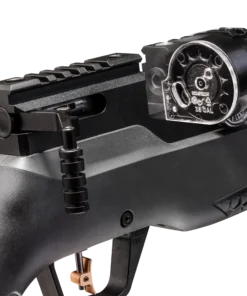
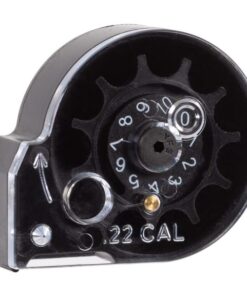
Multi-Shot Rotary Magazine
Magazine capacity depends on caliber.
The .22 model holds 14 rounds, while the .25 version holds 12 rounds.
Two-Stage Adjustable Trigger
The two-stage adjustable trigger allows the shooter to refine trigger feel and release characteristics.
A predictable break can help reduce unwanted movement during precision shooting.
Integrated Sound Suppression
The rifle incorporates factory sound suppression into its barrel system.
This contributes to the quiet operating character traditionally associated with the Marauder family.
Adjustable Cheekpiece
The synthetic all-weather stock includes an adjustable cheekpiece.
This allows head position to be refined around the installed optic and can improve repeatable eye alignment.
Why Should You Consider This Rifle?
The main reasons include increased reservoir capacity, regulated air delivery, multi-shot capability, sidelever operation, adjustable ergonomics, and significantly increased power compared with earlier generations.
It combines traditional Marauder characteristics with a more modern performance-focused architecture.
How Good Is the Precision?
Precision potential is supported by stable regulated pressure, a multi-shot rifled platform, adjustable trigger characteristics, improved stock fit, and reduced mechanical recoil.
However, actual grouping still depends on ammunition quality, optic stability, environmental conditions, and shooter technique.
Where Is It Best Used?
The platform is most appropriate for lawful recreational target shooting and other permitted sporting activities where strong pneumatic performance and consistent multi-shot operation are useful.
When Does the Gen3 Make Sense?
The Gen3 makes particular sense when the shooter wants more power and reservoir capacity than older versions while retaining regulated operation, sound management, and traditional full-size rifle ergonomics.
Important Technical Information
- Power system: Pre-charged pneumatic
- Current calibers: .22 and .25
- Action: Sidelever
- Reservoir: 500cc
- Maximum fill: 3625 PSI / 250 BAR
- Regulator: Adjustable
- .22 magazine: 14 rounds
- .25 magazine: 12 rounds
- .22 listed velocity: Up to 1200 fps
- .25 listed velocity: Up to 1150 fps
- .22 listed energy: Up to 50 ft-lb
- .25 listed energy: Up to 80 ft-lb
- Trigger: Two-stage adjustable
- Stock: All-weather synthetic
- Cheekpiece: Adjustable
- Sound management: Integrated
- Cocking effort: Approximately 15 lb
- Overall length: Approximately 45.6 inches
- Warranty: 5 years
Overall Precision and Practical Value
The Benjamin Marauder Gen3 represents a substantial modernization of the familiar platform. Its 500cc reservoir, higher 250 BAR fill pressure, adjustable regulator, sidelever action, increased magazine capacity, improved cocking effort, adjustable stock ergonomics, and integrated sound suppression create a more capable and refined pneumatic system.
For lawful sporting and recreational use, its strongest advantages are stable air delivery, low mechanical recoil, smooth multi-shot cycling, higher current power output, and a platform designed around consistent precision rather than mechanical complexity.
Mechanical Construction, Air-System Consistency, Sidelever Operation, Trigger Control, Accuracy Factors, and Long-Term Reliability
Overall Construction Quality
A modern regulated pneumatic rifle depends on precise interaction between the receiver, high-pressure reservoir, regulator, valve system, barrel, loading mechanism, trigger, stock, magazine, and optic mounting system.
Each component should remain secure and operate consistently. Good mechanical alignment helps preserve both reliability and repeatable accuracy across extended shooting sessions.
Receiver Integrity
The receiver acts as the central structural component of the rifle.
It supports the barrel, sidelever system, magazine interface, trigger mechanism, and optic mounting area.
Any looseness around mounting points should be investigated before continued accuracy testing.
High-Capacity Air Reservoir
The large onboard reservoir provides the compressed air required for each shot.
Because it operates at very high pressure, the cylinder should be protected from dents, deep scratches, excessive heat, corrosion, and impact.
Any questionable structural damage should be professionally evaluated.
Regulated Air Delivery
The regulator controls the pressure supplied to the firing valve.
A stable regulated pressure can improve shot-to-shot consistency by reducing unnecessary variation as reservoir pressure gradually decreases.
This is especially important during longer target sessions.
Regulator Consistency
A healthy regulator should provide predictable behavior throughout the useful portion of the fill.
If vertical point-of-impact variation increases unexpectedly, pressure regulation may be one of several factors worth checking.
Ammunition, optics, and technique should also be ruled out.
Fill Pressure Management
Only appropriately rated filling equipment should be used.
The maximum stated pressure should never be exceeded.
Controlled filling allows pressure to be monitored accurately and helps avoid unnecessary heat buildup in the reservoir.
Fill Port Condition
The filling connection should remain clean and protected from contamination.
Dust or debris can damage seals and create leaks.
The connector should also be inspected before each filling session.
Pressure Gauge Monitoring
The gauge provides useful information about stored air.
Checking pressure before and after use helps the shooter understand normal consumption.
It can also make gradual leakage easier to detect during storage.
Valve Performance
The valve controls the release of compressed air during firing.
Consistent valve operation supports stable velocity and reliable performance.
Internal valve servicing should be left to someone familiar with high-pressure pneumatic systems.
Sidelever Operation
The sidelever should move smoothly and positively.
A controlled cycling motion helps reduce unnecessary wear on internal components.
Grinding, binding, or sudden resistance should not be ignored.
Cocking Effort
Moderate cocking effort makes repeated operation more comfortable during longer sessions.
However, the lever should never be forced if movement becomes abnormal.
Changes in resistance may indicate contamination, misalignment, or wear.
Magazine Indexing
The magazine should rotate consistently and present each pellet correctly to the breech.
Poor indexing can cause feeding problems or pellet damage.
The magazine should therefore remain clean and protected from impact.
Magazine Maintenance
Feed openings and moving components should be kept free from dirt.
A damaged magazine can create repeated loading problems even when the rifle itself is functioning correctly.
Spare magazines should be stored securely.
Pellet Compatibility
Different pellets can behave differently in the same barrel and magazine.
Weight, head diameter, overall length, and skirt condition can all influence feeding and accuracy.
Testing suitable factory ammunition under similar conditions helps identify the best match.
Pellet Condition
Damaged pellets should not be used for serious accuracy testing.
Bent skirts or deformed heads can create inconsistent flight.
A clean storage tin helps preserve ammunition quality.
Barrel Condition
The rifled barrel should remain clean and protected from physical damage.
Aggressive cleaning is generally unnecessary when accuracy remains stable.
Routine inspection is often more useful than frequent cleaning.
Muzzle Crown Protection
The crown is an important precision surface.
Dents, scratches, or careless cleaning can affect projectile release.
The muzzle should therefore remain protected during transport and maintenance.
Barrel Alignment
The barrel assembly should remain secure relative to the receiver.
Any visible movement or unusual looseness should be investigated.
Stable alignment supports consistent point of impact.
Trigger Performance
A predictable two-stage trigger can improve practical precision.
The first stage allows controlled movement before final release.
A clean second-stage break helps reduce disturbance to the sight picture.
Trigger Consistency
The trigger should feel similar from shot to shot.
Unexpected changes in pull weight, travel, or engagement should be investigated.
Consistency is more important than creating an excessively light setting.
Trigger Adjustment
Any adjustment should remain within safe manufacturer-approved limits.
Over-adjustment can reduce reliability.
If the trigger begins behaving unpredictably, the rifle should be inspected before further use.
Safety Function
The safety should engage and release normally.
A mechanical safety should always be supported by responsible muzzle direction and proper trigger discipline.
The rifle should be treated as loaded whenever a magazine is installed and air pressure is present.
Low-Recoil Characteristics
A pneumatic powerplant produces very little mechanical movement compared with spring-driven systems.
This helps the shooter maintain a stable sight picture.
It also reduces one major source of technique-related disturbance during firing.
Accuracy Fundamentals
Precision depends on several factors working together.
Barrel quality, regulator consistency, pellet selection, trigger control, optic stability, stock fit, and environmental conditions all contribute.
Therefore, accuracy should be evaluated through repeated groups rather than isolated shots.
Optic Mount Security
Scope mounts should remain firmly attached.
Unexpected changes in point of impact can sometimes result from loose hardware.
The sighting system should always be checked before deeper mechanical issues are suspected.
Eye Relief
Correct eye relief improves comfort and consistency.
The optic should provide a complete field of view without forcing the head into an unnatural position.
Mount placement should be finalized before detailed zeroing.
Adjustable Cheek Support
The cheekpiece can help align the shooter’s eye with the optic.
A repeatable head position reduces unnecessary movement.
Once correctly adjusted, the setting should remain secure.
Stock Fit
The stock should sit naturally against the shoulder.
Grip angle, cheek height, and overall balance should allow a stable position without excessive muscular tension.
Comfort directly supports repeatability.
Grip Control
The firing hand should remain relaxed but secure.
Excessive grip pressure can introduce sideways movement.
A consistent grip also helps maintain smooth trigger control.
Rifle Balance
The platform’s larger reservoir and full-size layout create a substantial but stable feel.
Large optics can alter the center of gravity.
Accessory weight should therefore be considered carefully.
Exterior Surface Care
Metal and synthetic surfaces should be wiped after use.
Dust, moisture, and fingerprints should not remain on exposed areas for extended periods.
Light routine care helps preserve both appearance and function.
Moisture Protection
The rifle should be completely dry before storage.
Water can affect metal components, seals, optics, and fittings.
A cool, dry environment supports long-term reliability.
Temperature Management
Extreme heat can affect reservoir pressure and sealing components.
The rifle should not be left in hot vehicles for long periods.
Stable storage temperatures are preferable.
Transport Protection
During transport, the rifle should be unloaded and protected inside a suitable case.
The reservoir, barrel, optic, sidelever, and stock should be shielded from impact.
Local transport requirements should always be followed.
Routine Inspection
Before use, check reservoir pressure, magazine condition, sidelever movement, optic security, trigger behavior, safety operation, and general condition.
After shooting, inspect the rifle for moisture, loose hardware, or unusual wear.
Regular inspection helps identify developing problems early.
Professional Servicing
Internal work involving the reservoir, regulator, valve system, trigger, or other high-pressure components should be handled by someone familiar with pneumatic mechanisms.
Incorrect disassembly can damage parts and create serious safety hazards.
Long-Term Reliability
Long-term reliability depends on stable regulated air delivery, healthy seals, smooth sidelever operation, reliable magazine indexing, predictable trigger performance, secure optics, suitable ammunition, and careful storage.
When these areas are maintained consistently, the rifle can preserve strong precision potential, efficient air use, smooth multi-shot operation, and dependable performance across many years of lawful recreational and sporting use.
Practical Shooting Experience, Precision, Handling, Air Efficiency, Comfort, and Everyday Use
Practical Shooting Character
A modern regulated pneumatic rifle delivers a smooth and controlled shooting experience that differs noticeably from spring-powered systems. There is very little mechanical recoil during firing, while the multi-shot action allows the shooter to maintain a stable position between shots.
This makes the platform particularly suitable for deliberate target sessions where consistency, comfort, and repeatable sight alignment are important.
Low-Recoil Performance
Minimal mechanical movement is one of the strongest practical advantages of the pneumatic power system.
There is no heavy piston or mainspring moving through the action during the firing cycle.
As a result, the sight picture generally remains easier to control, especially when a stable support and appropriate optic are used.
Sidelever Shooting Rhythm
The sidelever creates a smooth loading sequence between shots.
A controlled lever movement allows the next pellet to be chambered without requiring major changes in shoulder position.
This helps maintain a consistent body position during longer strings.
Cocking Comfort
Moderate cocking effort can make repeated cycling less tiring.
The lever should be operated smoothly rather than aggressively.
If resistance changes noticeably, the mechanism should be checked before further use.
Multi-Shot Convenience
A rotary magazine allows several pellets to be prepared before the shooting session begins.
This reduces repeated manual loading and makes longer recreational sessions more convenient.
However, the shooter should always remain aware of whether the magazine still contains ammunition.
Magazine Awareness
A loaded magazine means the rifle can quickly be prepared for another shot after cycling the lever.
Therefore, careful muzzle direction and trigger discipline remain essential.
The magazine should be removed when shooting is complete.
Regulated Shot Consistency
The regulator helps keep operating pressure more stable while reservoir pressure gradually decreases.
Consistent air delivery can reduce shot-to-shot velocity variation.
This contributes to more predictable vertical point of impact when other variables remain controlled.
Air Efficiency
A large reservoir supports extended shooting before another fill is required.
Actual shot count depends on caliber, pressure, temperature, pellet choice, and the individual setup.
The pressure gauge should therefore be monitored rather than relying only on theoretical figures.
Pressure Monitoring
Checking pressure before shooting provides a useful starting reference.
Monitoring the gauge throughout the session helps identify when the rifle is approaching the lower end of its useful operating range.
It can also reveal unexpected air consumption.
Filling Routine
Only appropriately rated filling equipment should be used.
Connections should remain clean before filling begins.
Air should be introduced in a controlled manner while the gauge is monitored carefully.
Precision Potential
Practical accuracy depends on more than the barrel alone.
Regulator consistency, ammunition quality, trigger control, sight stability, stock fit, and environmental conditions all influence the final group.
Repeated controlled testing provides the most reliable assessment.
Pellet Selection
Different factory pellets can perform differently in the same barrel.
Weight, head diameter, skirt shape, and manufacturing consistency all influence accuracy.
Testing several suitable options under similar conditions can help identify the most consistent match.
Pellet Inspection
Damaged pellets should not be used during serious accuracy testing.
Bent skirts or deformed heads can cause inconsistent flight.
Pellets should remain clean, dry, and protected inside a suitable container.
Trigger Control
A smooth trigger press helps preserve sight alignment.
Pressure should be applied directly rearward rather than sideways.
Consistent finger placement also helps maintain repeatable release characteristics.
Trigger Follow-Through
The shooter should maintain position briefly after firing.
Even though recoil is mild, immediate head or shoulder movement can reduce consistency.
Good follow-through also encourages better shooting discipline.
Shoulder Position
The stock should meet the shoulder naturally.
Consistent shoulder contact helps recreate the same sight picture from shot to shot.
Excessive pressure is generally unnecessary due to the mild firing impulse.
Cheek Placement
The adjustable cheek support can be used to create more natural eye alignment with the optic.
Once the correct height is established, the shooter’s cheek should return to approximately the same location each time.
This helps reduce unnecessary head movement.
Grip Control
The firing hand should remain relaxed but secure.
Over-gripping can introduce tension into the upper body.
A consistent grip makes smooth trigger control easier.
Rifle Balance
The large reservoir and full-size layout create a stable platform.
However, heavy optics can shift the center of gravity.
Accessory selection should therefore consider both usefulness and balance.
Optic Setup
A properly installed scope can take advantage of the rifle’s low-recoil behavior and stable air delivery.
Mount position, ring security, reticle alignment, and eye relief should all be established carefully.
The sighting system should remain unchanged during serious group testing.
Eye Relief
Correct eye relief provides a full field of view without forcing the head forward or backward.
Comfortable alignment also helps the shooter maintain the same position throughout longer sessions.
Mount placement should be finalized before zeroing.
Scope Stability
Mounting hardware should remain secure.
If point of impact begins shifting unexpectedly, the optic and mounts should be checked before internal mechanical issues are suspected.
Loose hardware can create misleading accuracy problems.
Bench Shooting
A stable bench can help reveal the rifle’s mechanical precision.
A soft front support reduces human movement while allowing the rifle to remain naturally positioned.
The reservoir should not be placed under abnormal pressure from a hard rest.
Supported Shooting
Supported positions can improve consistency while reducing fatigue.
The contact point should remain similar for every shot when groups are being compared.
Changing the support location can alter alignment.
Unsupported Shooting
The full-size platform can also be used from unsupported positions.
A balanced stance and relaxed shoulders help reduce movement.
Long periods of aiming should be avoided once muscular fatigue begins affecting stability.
Breathing Control
Breathing naturally creates movement.
A calm rhythm should be established before final trigger pressure is applied.
Holding the breath for excessive periods can increase tension.
Sight Picture
The same aiming reference should be used throughout a group.
Small alignment differences can enlarge group size.
A repeatable sight picture allows mechanical and shooter consistency to be evaluated more accurately.
Wind Influence
Outdoor wind can move pellets considerably.
Changing crosswinds may produce horizontal dispersion even when the rifle is operating normally.
Calmer conditions are preferable when evaluating intrinsic precision.
Temperature Effects
Temperature can influence reservoir pressure, seals, ammunition behavior, and shooter comfort.
Results from dramatically different environmental conditions should therefore be compared carefully.
Stable testing conditions provide more useful information.
Extended Range Sessions
Large air capacity and multi-shot operation make longer sessions convenient.
However, fatigue can gradually change shoulder pressure, grip, breathing, and trigger control.
Regular breaks help maintain technique.
Pre-Shooting Preparation
Before beginning, the shooter should check pressure, magazine condition, sidelever movement, optic security, safety function, trigger behavior, and visible fittings.
A short inspection can prevent avoidable interruptions.
During the Session
Changes in cocking effort, firing sound, pressure consumption, trigger feel, or point of impact should be noticed.
A consistent mechanical baseline helps identify developing problems.
Unexpected changes should not be ignored.
Post-Shooting Care
After use, the rifle should be wiped clean and dry.
Moisture, fingerprints, and dirt should not remain on exposed surfaces.
The magazine should be removed and checked before storage.
Transport
During transportation, the rifle should remain unloaded and protected inside an appropriate case.
The reservoir, barrel, sidelever, stock, and optic should be shielded from impact.
Applicable local transport rules should always be followed.
Storage
A cool, dry, temperature-stable environment is preferable.
The rifle should remain unloaded and secured against unauthorized access.
Local storage requirements should always be observed.
Everyday Ownership
Routine ownership mainly revolves around pressure management, magazine care, optic security, barrel protection, trigger consistency, and high-pressure system inspection.
Because the powerplant is pneumatic, clean filling practices and healthy seals remain especially important.
Overall Practical Performance
A well-maintained regulated pneumatic rifle can provide a stable, smooth, and highly consistent shooting experience.
When appropriate pellets, secure optics, correct pressure management, reliable magazine function, controlled trigger technique, and disciplined handling are combined, the platform can deliver strong precision potential, efficient multi-shot operation, and dependable performance throughout lawful recreational and sporting use.
Preventive Maintenance, Pressure-System Care, Storage, Inspection, and Long-Term Reliability
Preventive Maintenance Routine
A regulated pneumatic rifle performs best when routine care is handled consistently. The reservoir, regulator, valve system, sidelever, magazine, barrel, trigger, stock, optic mounts, fill connection, seals, and visible fasteners should all be inspected periodically.
Preventive maintenance helps reveal developing problems before they begin affecting accuracy, air retention, feeding, or cycling.
Reservoir Care
The onboard reservoir is a high-pressure component and should be protected carefully.
Deep scratches, dents, heavy impact, excessive heat, corrosion, and chemical contamination should never be ignored.
Any questionable structural damage should be professionally assessed before the rifle is filled again.
Maximum Pressure Awareness
The manufacturer’s stated pressure limit should never be exceeded.
Only filling equipment rated for the required working pressure should be used.
Accurate monitoring during filling helps protect the cylinder, seals, fittings, and regulator.
Controlled Filling
Compressed air should be introduced gradually.
A controlled filling process reduces unnecessary heat buildup and makes pressure easier to monitor.
The connection should never be forced into place.
Fill Port Cleanliness
The fill connection should remain clean and protected from debris.
Contamination can damage seals or prevent a proper connection.
The probe, coupling, or adapter should also be inspected before use.
Pressure Gauge Monitoring
The pressure gauge provides useful information about stored air.
Checking it before and after use can help identify abnormal consumption.
Gradual pressure loss during storage may indicate a seal or fitting issue.
Seal Condition
Seals are essential for maintaining pressure throughout the system.
Wear, age, contamination, or unsuitable lubrication can eventually reduce sealing efficiency.
Persistent leakage should be diagnosed rather than repeatedly compensated for through refilling.
Regulator Health
The regulator helps maintain stable pressure delivery.
If shot behavior, air consumption, or consistency changes unexpectedly, the regulator may require inspection.
Internal regulator servicing should be handled by someone familiar with high-pressure systems.
Valve Condition
The firing valve controls the release of compressed air.
Consistent valve operation supports predictable performance.
Internal valve work should never be attempted while the rifle remains pressurized.
Sidelever Maintenance
The sidelever should cycle smoothly and positively.
Grinding, binding, or unusual resistance can indicate wear, contamination, or misalignment.
The mechanism should not be forced when movement becomes abnormal.
Lever Pivot Condition
Pivot points should remain secure without unnecessary stiffness.
Loose or worn hardware can affect cycling quality.
Periodic inspection helps preserve smooth operation.
Breech Area
The loading area should remain clean and free from damaged pellet fragments or debris.
Contamination around the breech can interfere with feeding.
Routine visual inspection is usually sufficient.
Magazine Care
The rotary magazine should remain clean and undamaged.
Feed openings and indexing components should be inspected regularly.
A faulty magazine can create repeated feeding issues even when the rest of the rifle is functioning correctly.
Magazine Storage
Magazines should be kept in a clean, protective location.
They should not be stored where dirt or hard objects can damage feed openings.
Spare magazines also benefit from regular inspection.
Barrel Condition
The rifled barrel should remain protected from impact, corrosion, and contamination.
Aggressive cleaning is generally unnecessary if accuracy remains consistent.
Routine inspection is more important than excessive cleaning.
Bore Inspection
The internal bore should be examined when accuracy changes noticeably.
Residue or contamination can sometimes influence pellet flight.
Only appropriate cleaning equipment should be used.
Muzzle Crown Protection
The crown is a precision surface and should remain free from dents or scratches.
Damage can affect pellet release and grouping.
Care should be taken during cleaning, transport, and storage.
Barrel Alignment
The barrel assembly should remain securely mounted.
Any visible movement or looseness should be investigated.
Stable alignment supports consistent point of impact.
Shroud Condition
The outer barrel assembly should remain secure and correctly positioned.
Loose or damaged components can affect balance or alignment.
Its condition should be checked periodically.
Trigger Maintenance
The trigger should retain predictable first- and second-stage behavior.
Unexpected changes in pull, travel, or engagement should be investigated.
Safe operation should always take priority over achieving a very light setting.
Trigger Housing
Dust and debris should not be allowed to accumulate around the trigger.
External cleaning can be performed carefully.
Internal disassembly should be avoided unless servicing is genuinely necessary.
Safety Function
The safety should engage and release normally.
Any inconsistent behavior should be corrected before further use.
Safe muzzle direction and trigger discipline should always remain the primary safety measures.
Stock Attachment
The stock should remain securely connected to the action.
Loose screws can affect handling and point of impact.
Fasteners should therefore be checked periodically.
Adjustable Cheek Support
The cheek support should remain firmly locked once positioned.
Loose adjustment hardware can change eye alignment.
Its setting should be checked before longer accuracy sessions.
Scope Rail Condition
The mounting rail should remain secure and clean.
Any movement between the rail, mounts, and optic can cause zero shifts.
The mounting surface should be inspected before accuracy testing.
Scope Mount Security
Mount screws should remain secure without being overtightened.
Even low-recoil rifles can experience loosened hardware through transport and repeated handling.
Correct installation helps maintain zero.
Optic Inspection
The optic should be checked for movement, damaged adjustment components, or loose rings.
A sighting problem can sometimes be mistaken for a mechanical rifle problem.
This should be ruled out during troubleshooting.
Pellet Storage
Pellets should remain clean, dry, and protected from deformation.
Bent skirts or damaged heads can affect feeding and accuracy.
A secure container helps preserve ammunition condition.
Ammunition Consistency
Using the same suitable pellet during accuracy testing makes performance easier to interpret.
Frequent ammunition changes can complicate troubleshooting.
Consistency provides a clearer mechanical baseline.
External Surface Care
Exposed metal and stock surfaces should be wiped after use.
Moisture, fingerprints, and dirt can contribute to long-term deterioration.
Light routine care helps preserve appearance and function.
Moisture Protection
The rifle should never be stored while wet.
Water can collect around fittings, stock screws, magazine openings, optic mounts, and other junctions.
The entire rifle should be dry before storage.
Temperature Management
Extreme heat and rapid temperature changes should be avoided.
High temperatures can increase reservoir pressure and affect seals, lubricants, and optics.
Long-term storage inside hot vehicles is not recommended.
Chemical Exposure
Strong solvents, fuels, aggressive cleaners, and unsuitable lubricants should be kept away from seals and high-pressure components.
Certain chemicals can damage synthetic materials and sealing surfaces.
Only compatible maintenance products should be used.
Lubrication
Lubrication should remain minimal and component-specific.
Excess oil can attract dirt or migrate into unwanted areas.
High-pressure components require particular care with lubricant compatibility.
Avoiding Unauthorized Adjustment
Internal pressure, regulator, valve, or trigger components should not be altered casually.
Unapproved adjustment can affect reliability, safety, and legal classification.
Factory specifications should always be respected.
Protective Case Use
A suitable case helps protect the reservoir, barrel, sidelever, optic, and stock during transport.
The rifle should not move excessively inside the case.
Loose accessories should be stored separately.
Post-Transport Inspection
After travel, optic mounts, stock screws, sidelever movement, reservoir condition, and visible fittings should be checked.
Vibration can gradually loosen hardware.
A brief inspection can prevent avoidable problems.
Safe Storage
The rifle should remain unloaded and secured against unauthorized access.
A dry, temperature-stable environment is preferable.
Applicable local storage requirements should always be followed.
Long-Term Storage
During extended periods of non-use, the rifle should remain clean, dry, unloaded, and protected from excessive heat or moisture.
Pressure-system storage should follow manufacturer guidance.
Periodic inspection is still worthwhile.
Pressure Retention Checks
Occasional gauge checks can help reveal slow leaks.
A gradual reduction in stored pressure may indicate a seal, fitting, regulator, or valve issue.
Repeated topping-up should not replace proper diagnosis.
Accuracy Monitoring
Unexpected changes in grouping should be investigated systematically.
Ammunition condition, optic security, regulator consistency, barrel condition, pressure behavior, magazine indexing, and shooting technique should all be considered.
This avoids unnecessary internal work.
Professional Servicing
Work involving the reservoir, regulator, valve assembly, trigger, pressure fittings, or other internal components should be handled by someone familiar with high-pressure pneumatic systems.
Incorrect disassembly can create serious safety hazards.
Maintenance Records
Keeping simple records of seal replacements, regulator servicing, repairs, professional inspections, and major maintenance can make long-term ownership easier.
Documentation also provides useful history if the rifle changes ownership.
Long-Term Reliability
Long-term reliability depends on stable pressure delivery, healthy seals, smooth sidelever operation, reliable magazine indexing, secure optics, proper air management, protected external components, suitable ammunition, and careful storage.
When these areas are maintained consistently, the rifle can preserve efficient multi-shot operation, strong precision potential, smooth handling, and dependable performance across many years of lawful recreational and sporting use.
Be the first to review “Benjamin Marauder Gen3”
Related products



Benjamin


Benjamin


Benjamin


Reviews
There are no reviews yet.