















Air Arms XTi-50 FT PCP Air Rifle


€3,500.00
Description
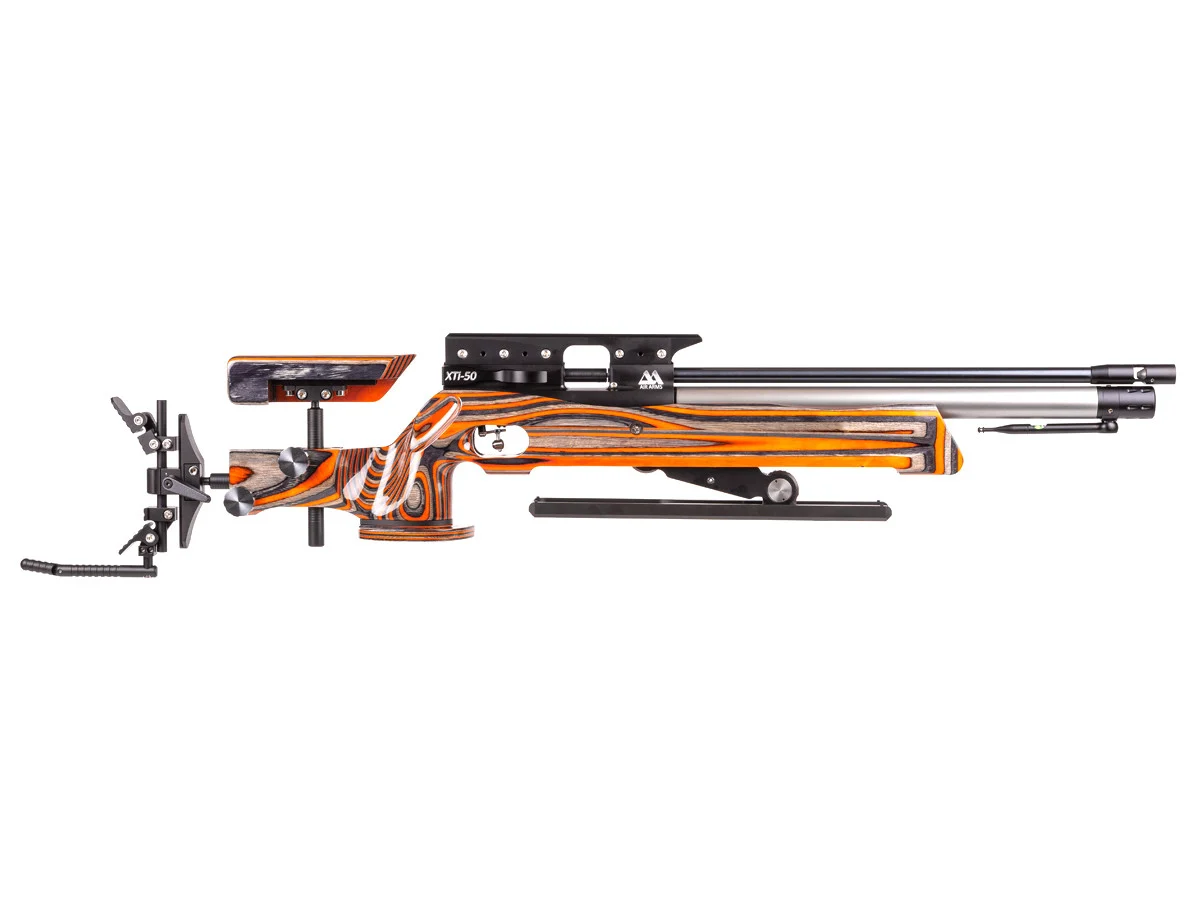
When it comes to building winning field target rifles, Air Arms knows a thing or two! The XTi-50 was born out of a desire to produce an uncompromising platform that shooters can expect to win with immediately. Decades of knowledge and experience have been put to use between Air Arms’ team of shooters and their engineers, producing a masterpiece that field target shooters will love.
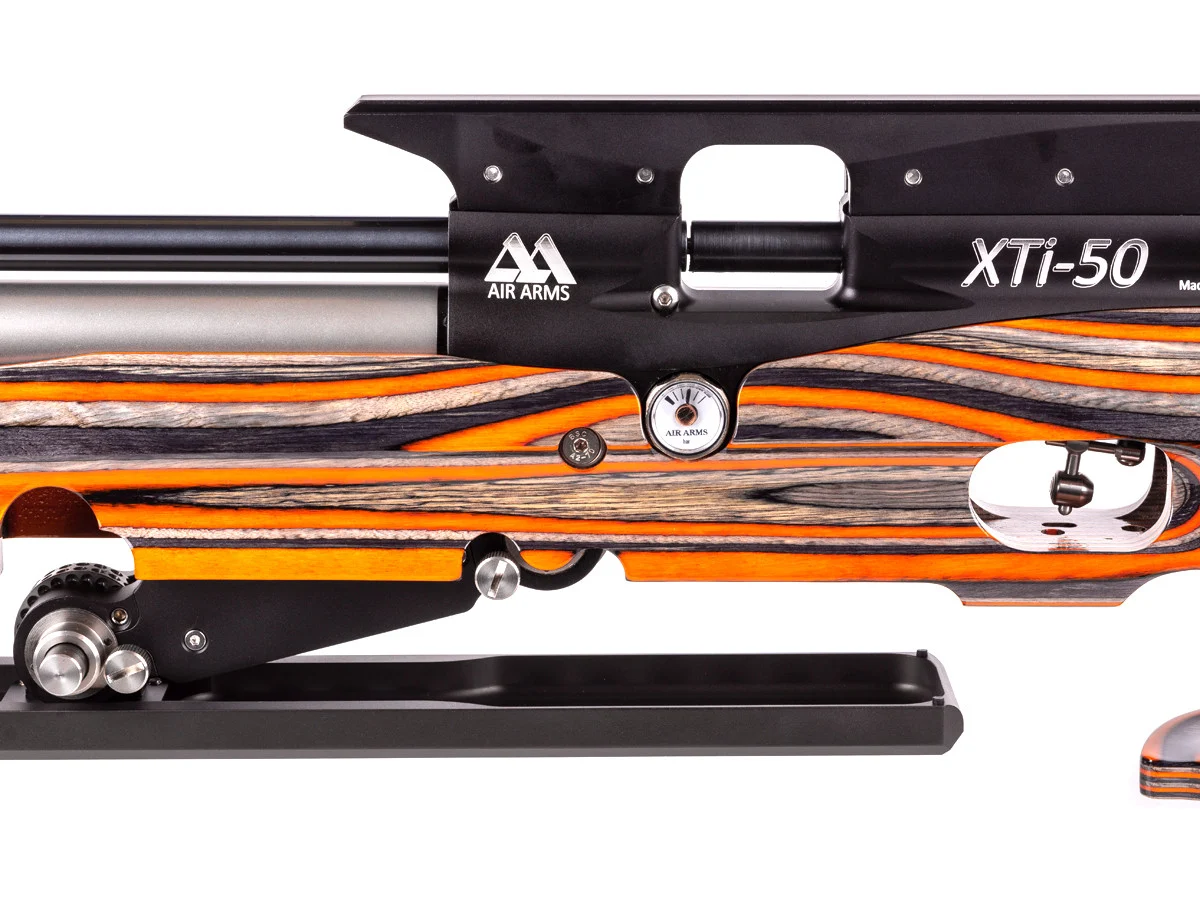
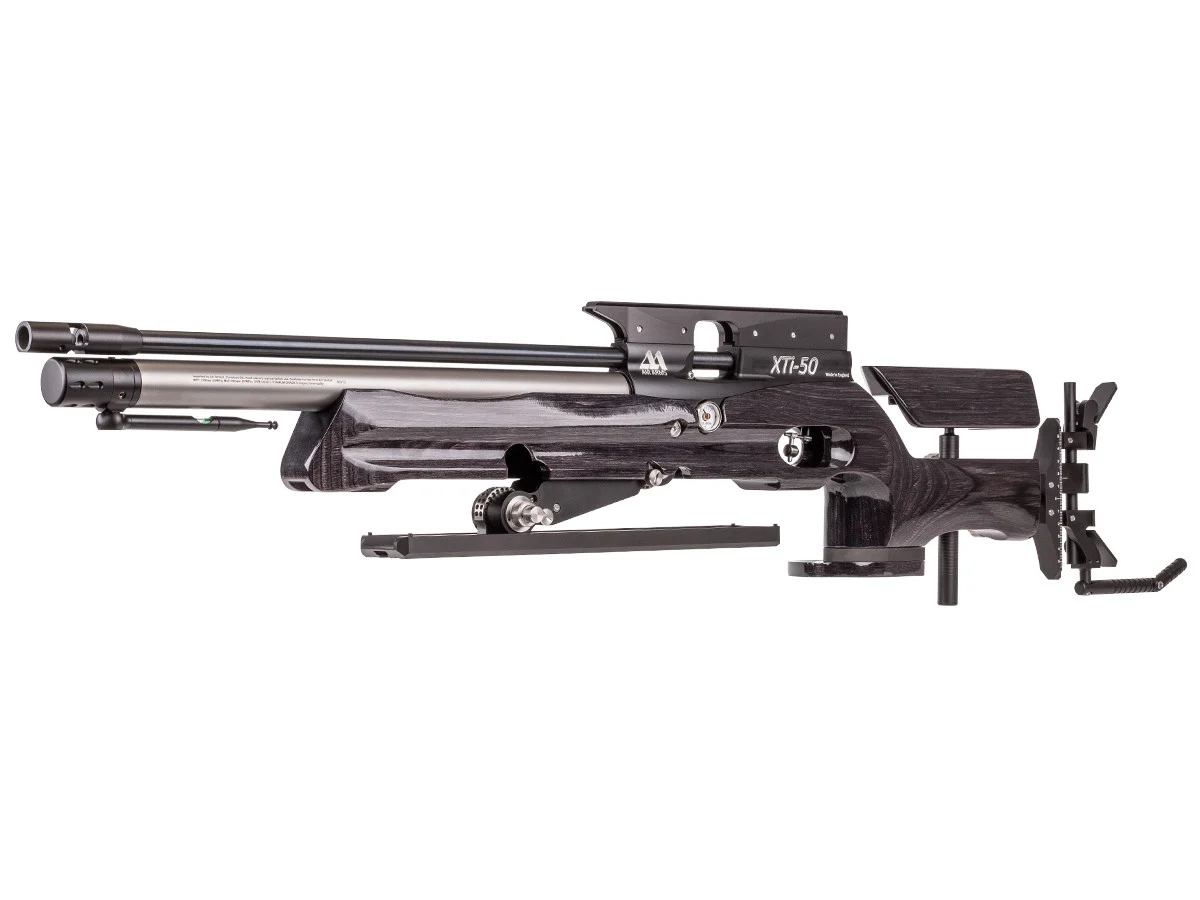
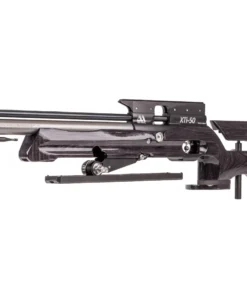
Whether you choose the eye-catching orange laminate or the sleek black laminate the XTi-50 stock is a beauty to behold, but it’s the one-touch-to-adjust hamster that shooters will appreciate. It’s set into the bottom of the stock, allowing for a smaller profile when traveling or shooting from a bench.
But with the single press of the adjustment button, the hamster can be moved to nearly any position, allowing for shooters to find comfort and stability no matter the terrain or target placement. The grip can be lengthened with palm shelf extensions for shooters with larger hands and features two thumb positions to help you find the perfect hand position. On the back of the stock, you’ll find a nearly infinitely adjustable cheek piece and butt-hook that allow for the perfect fit for any shooter of any size.
The XTi-50 action has had no expense spared either, featuring a specially commissioned match grade barrel that is fitted with a micro-adjustable air stripper. The rifle also has an adjustable mechanical energy absorber built into the action to reduce recoil as much as possible.
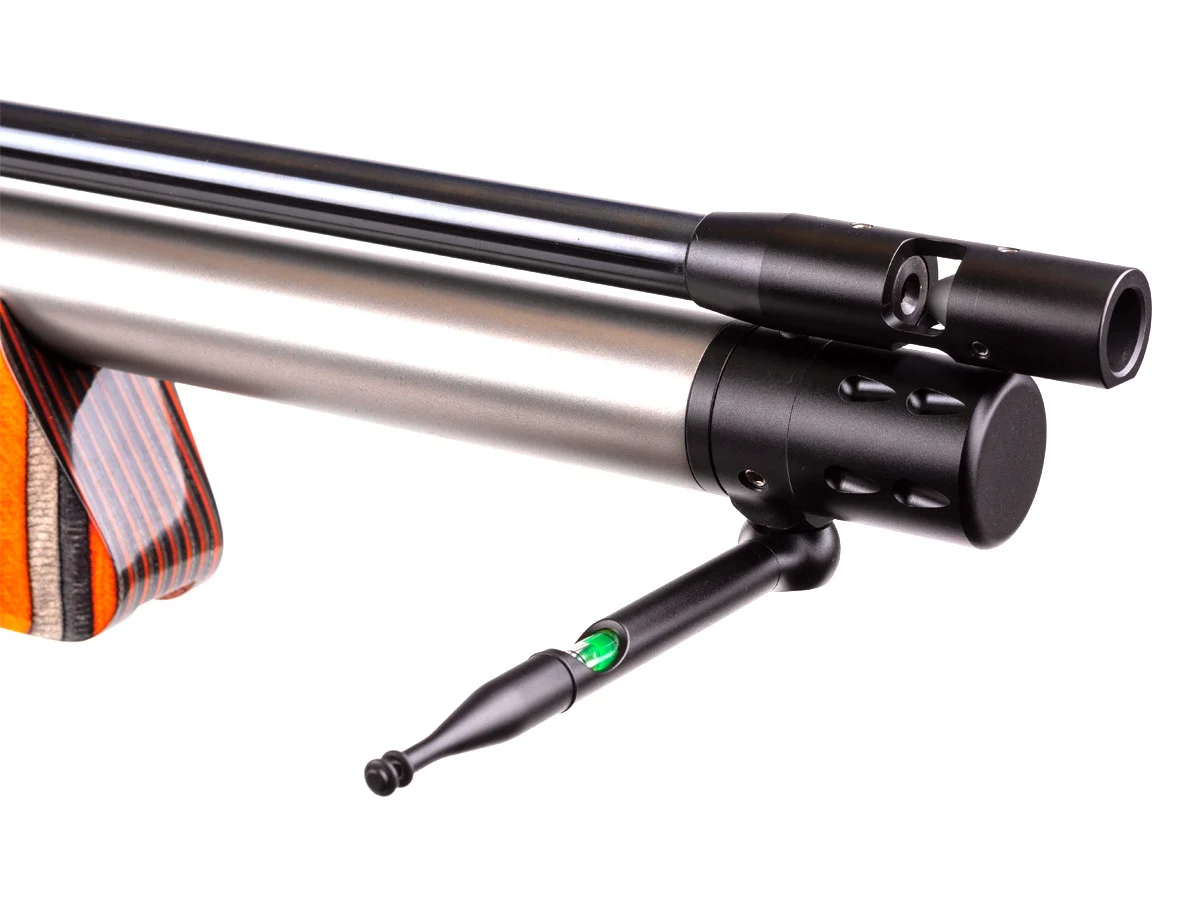
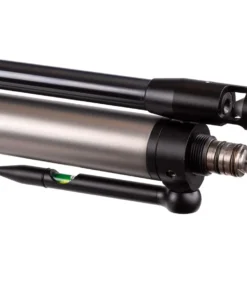
The regulator provides superb shot-to-shot consistency and is nested within a titanium air cylinder, which was chosen to reduce weight. As you would expect, the trigger is also match grade and fully adjustable. The action is fitted with a windicator arm and integrated bubble level right out of the box. The XTi-50 even includes an 11mm dovetail scope riser rail that has MOA droop built in.
Never before have we seen such a complete out of the box system for field target. In the past, shooters needed to piece things together over time, purchasing add-ons as they go. But with the Air Arms XTi-50, those additions have been made standard! Discover the absolute pinnacle of precision air rifles, and get your XTi-50 at Pyramyd AIR, today.
Helpful resources:
- Learn about hunting with air rifles
- Tips for picking the right airgun for hunting game & pests
- Learn about airgun hunting laws in your state
- Shop related categories: pellet guns, pellet rifles
- Pre-Charged Pneumatic
- Single-shot, sidelever operated action
- Fully regulated
- Fully-floating, match grade barrel
- Micro-adjustable air-stripper
- Adjustable mechanical energy absorption device built-in
- Titanium air cylinder
- Fill Pressure: 2,900 PSI/200 BAR
- 100 shots per fill
- Overall length: 37.6″ to 44.5″ (with butthook fitted)
- Weight: 10.4 lbs without scope
- Ambidextrous folding spirit level and wind indicator
- Grip features two thumb positions
- Extendable grip/palm shelf
- Available in Orange laminate or Black laminate stock with all weather finish
- Push button adjustable hamster (knee riser)
- Fully adjustable and extendable butt hook
- Infinitely adjustable cheek piece
- Quick-release cheek piece and butt pad adjustment (via thumb screws)
- High 11mm dovetail scope rail with MOA droop built-in
- Comes complete with Negrini Case
Specifications
BrandCaliber.177 (4.5mm)Max Velocity800 fps Muzzle Energy11.9 ft/lbsSuggested forSmall game hunting/target practicePowerplantPre-charged pneumaticLoudness4-Medium-HighWeight10.4 lbsFunctionSingle-shotMax Shots per Fill100ActionSideleverScopeable11mm dovetailFront SightsnoneRear SightsnoneTriggerFive-way adjustable matchBarrelRifledBarrel Length19.7″Overall Length39.0″Body TypeRifleStockLaminatedMaterialWood/MetalButtplateAdjustableColorOrangeOperating Pressure2900 PSI / 200 BARGrip OrientationRightRegulatedYesIs Safe To Dry FireYesIncludesCaseHard Case
Air Arms XTi-50 FT PCP Air Rifle – Purpose-Built Regulated Field Target Competition Platform
The Air Arms XTi-50 FT PCP Air Rifle was developed specifically around the requirements of competitive Field Target and Hunter Field Target shooting rather than being adapted from a conventional sporting rifle.
That distinction defines its design.
Air Arms built the platform around regulated pneumatic consistency, extensive ergonomic adjustment, a match-grade barrel system and precise trigger control. The result is a rifle intended to provide the stable, repeatable mechanical behavior demanded by technical target disciplines.
Air Arms currently specifies the XTi-50 with a single-shot side-lever action, fully regulated PCP powerplant, two-stage adjustable trigger, 200-bar fill pressure, adjustable laminate stock, match-grade barrel and micro-adjustable air stripper. The company lists an overall length of approximately 101.5 cm, an 18-inch barrel and a weight of approximately 4.1 kg in one current specification set.
The platform was launched in 2023 as a dedicated Field Target rifle and was developed with input from experienced competition shooters. Air Arms positions it as a specialist platform for FT and HFT rather than an all-purpose rifle.
Air Arms XTi-50 FT PCP Air Rifle
The Air Arms XTi-50 FT PCP Air Rifle is centered on four main performance areas:
Regulated shot consistency
Match-grade barrel performance
Extensive ergonomic adjustment
Competition-oriented trigger control
Why These Matter
Field Target shooting places considerable emphasis on repeatability.
The shooter must manage range estimation, wind, position, scope setup and precise shot placement.
Therefore, mechanical variation should be kept as low as possible.
Purpose-Built Field Target Design
The XTi-50 was designed specifically for competition use.
Why This Matters
Many sporting rifles are adapted for target competition.
The XTi-50 takes the opposite approach.
Its stock geometry, trigger, air system and barrel configuration were developed around competitive target requirements.
Fully Regulated PCP System
The rifle uses a fully regulated pneumatic action.
Why Regulation Matters
The regulator controls the pressure delivered from the main air reservoir to the firing valve.
Why This Helps
As the reservoir pressure falls during use, the regulator continues supplying a more consistent working pressure.
Practical Benefit
This supports:
Stable velocity
Predictable trajectory
Reduced vertical variation
Consistent point of impact
Shot-to-Shot Consistency
Consistency is especially important in Field Target.
Why
A small velocity change can produce a measurable vertical shift at longer target distances.
Air Arms specifically identifies regulated pressure control as one of the core design foundations of the XTi-50.
Free-Floating Match-Grade Barrel
The XTi-50 uses a free-floating match-grade barrel.
Why Free-Floating Matters
The barrel is allowed to remain mechanically isolated from unnecessary stock pressure.
Why This Supports Repeatability
External pressure can influence barrel behavior.
Reducing unwanted contact helps maintain a more consistent barrel condition.
Micro-Adjustable Air Stripper
The muzzle system includes a micro-adjustable air stripper.
Why
Compressed air exits the muzzle behind the pellet.
The air stripper is designed to manage that airflow as the pellet leaves the barrel.
Why Adjustment Matters
Competition shooters may fine-tune the system to support consistent pellet departure.
Single-Shot Operation
The rifle uses a single-shot action.
Why This Makes Sense for Competition
Field Target does not require rapid magazine-fed shooting.
Why Single Loading Can Help
The shooter can inspect each pellet individually before loading.
Side-Lever Action
The rifle uses a side lever.
Why
It provides straightforward access to the loading system while allowing the shooter to disturb the established position as little as practical.
Two-Stage Adjustable Trigger
The XTi-50 uses a two-stage adjustable trigger designed for precise competition control.
Why This Matters
The first stage allows deliberate preparation.
The second stage establishes the release point.
Why Trigger Repeatability Matters
A predictable break helps prevent unwanted movement immediately before the pellet leaves the barrel.
Adjustable Competition Stock
The stock provides extensive adjustment.
Air Arms highlights adjustability across the cheekpiece, butt, grip and overall stock geometry.
Why This Matters
Shooters vary in:
Arm length
Shoulder position
Neck length
Head position
Scope height
Preferred competition stance
Adjustable Cheekpiece
The cheekpiece can be positioned to establish natural eye alignment.
Why
A repeatable head position is essential for consistent scope use.
Adjustable Butt System
The butt assembly can be configured to suit shoulder position.
Why
Standing, kneeling and seated positions place the rifle differently against the body.
Adjustable Grip
Grip configuration can influence trigger-hand position.
Why
The firing hand should remain relaxed while allowing the trigger finger to move independently.
200-Bar Fill Pressure
Air Arms lists the XTi-50 with a 200-bar fill pressure.
Why Correct Pressure Matters
Overfilling should never be used as a way to obtain additional performance.
Why
The air system is designed to work within its specified pressure range.
Scope-Optimized Design
The rifle is supplied without conventional open sights because it is designed around telescopic optics.
Why
Field Target requires precise aiming and range estimation.
11 mm Dovetail or Picatinny Rail
Current specifications list scope mounting options including 11 mm dovetail or Picatinny depending on configuration.
Why Mounting Matters
A competition optic must remain securely aligned with the rifle.
.177 Configuration
Although Air Arms lists .177 and .22 configurations, .177 is strongly associated with Field Target competition because of its relatively flat trajectory.
Why .177 Is Common for FT
At typical competition energies, the smaller pellet generally follows a flatter trajectory than a heavier .22 pellet.
Why This Helps
Less trajectory curvature can simplify elevation correction.
Field Target Distances
Air Arms describes competitive FT targets as extending approximately from 8 to 55 yards depending on the rule set and event.
Why This Range Matters
A competition rifle must remain predictable across substantial changes in distance.
Air Arms S510 XS Ultimate Sporter FAC
The Air Arms S510 XS Ultimate Sporter FAC belongs to a different part of the Air Arms range.
It is a regulated multi-shot sporting PCP rather than a dedicated single-shot Field Target rifle.
air rifle
An air rifle launches a pellet using compressed air or another non-cartridge power source.
The XTi-50 uses high-pressure stored air.
air gun
An air gun is a broad category covering rifles and pistols powered by compressed air, spring systems or CO₂.
air arms
Air Arms is the British manufacturer of the XTi-50 and several other competition and sporting platforms.
The XTi-50 entered the company’s range in 2023 as a purpose-built competition model.
air rifles
Air rifles vary significantly in purpose.
Some emphasize general sporting use.
Others, such as the XTi-50, are highly specialized competition platforms.
pellet guns
The phrase pellet guns broadly refers to air-powered equipment designed to fire diabolo-style or related airgun pellets.
cal .177 pellets
cal .177 pellets are the standard 4.5 mm pellets commonly associated with Field Target use.
Why Pellet Consistency Matters
Competition performance can be affected by:
Pellet weight
Head size
Skirt condition
Batch variation
break barrel pellet gun
A break barrel pellet gun uses the hinged barrel to cock a spring or gas-ram mechanism.
The XTi-50 does not.
It uses stored compressed air.
airguns
Airguns include:
PCP rifles
Spring rifles
CO₂ systems
Pneumatic pistols
The XTi-50 belongs to the regulated PCP category.
air pisto
The phrase air pisto generally refers to an air pistol rather than a shoulder-fired competition rifle.
177 caliber
177 caliber is the calibre most strongly associated with high-level FT competition.
Why
Its trajectory characteristics suit the discipline particularly well.
177 pellet vs.22 pellet
The 177 pellet vs.22 pellet comparison involves trajectory, velocity and pellet mass.
.177
Usually offers a flatter trajectory.
.22
Usually uses a heavier pellet.
For formal FT, .177 is generally the more common competition configuration.
air arms s510 ultimate sporter .177 sub 12
The air arms s510 ultimate sporter .177 sub 12 is a different regulated PCP built for broader sporting use.
It should not be confused with the dedicated competition-oriented XTi-50.
what is an air rifle
For what is an air rifle, it is a shoulder-fired air-powered sporting arm that propels pellets using compressed gas or mechanically compressed air.
airgins
The phrase airgins is commonly a misspelling of airguns.
.22 air rifle
A .22 air rifle uses 5.5 mm pellets.
Air Arms lists the XTi-50 in .22 as well as .177, although .177 remains more typical for FT competition.
air arms s510
The air arms s510 is a multi-shot side-lever PCP family.
The XTi-50 instead emphasizes single-shot competition use and considerably greater ergonomic adjustment.
air riflery
air riflery includes multiple formal disciplines.
The XTi-50 is closely associated with Field Target and Hunter Field Target.
airgun shooting range near me
For airgun shooting range near me, a recognized club or dedicated target range provides the most appropriate environment for structured competition practice.
Why
A proper range provides:
Reliable backstops
Known distances
Firing procedures
Safe target placement
air arm
The phrase air arm is occasionally used informally, although Air Arms is the correct manufacturer name.
target air rifle shooting
target air rifle shooting depends on both equipment consistency and shooter technique.
Important Skills
Stable position
Range estimation
Wind judgment
Trigger control
Follow-through
air arms s410
The air arms s410 is an earlier sporting PCP design.
It is not a dedicated Field Target platform like the XTi-50.
air arms tx200
The air arms tx200 is a spring-powered underlever rifle.
It differs fundamentally from the pneumatic XTi-50.
177 air rifle
A 177 air rifle uses 4.5 mm pellets.
The calibre is heavily represented in formal target competition because its relatively flat trajectory can simplify elevation management.
how do air guns work
For how do air guns work, the mechanism varies by powerplant.
In the XTi-50
Compressed air is stored in the reservoir.
The regulator controls the pressure available to the firing system.
When the trigger releases the action, a metered amount of air propels the pellet.
Air rifle cleaning kit
An Air rifle cleaning kit intended for a competition PCP should use equipment suitable for a precision barrel.
Useful Items May Include
Soft exterior cloth
Suitable pull-through system
Cleaning patches
Manufacturer-approved maintenance products
Why Aggressive Cleaning Should Be Avoided
The bore and muzzle crown should not be unnecessarily damaged.
177 caliber vs 22
The 177 caliber vs 22 comparison becomes particularly relevant in target competition.
Why .177 Is Frequently Preferred
It usually provides:
Flatter trajectory
Smaller projectile diameter
Well-established target-pellet options
air guns for home defense
The phrase air guns for home defense does not describe the intended role of the XTi-50.
It is a purpose-built competition sporting rifle and should be used only for lawful target and sporting activity.
air compressor rifle
The phrase air compressor rifle is sometimes used informally for PCP equipment.
The rifle itself does not contain a conventional compressor.
Instead, it is filled from suitable high-pressure equipment.
pcp hand pump
A pcp hand pump may be compatible with some pneumatic rifles if properly rated.
However, competition shooters commonly prioritize clean, dry and consistent filling equipment.
Why
Stable preparation helps reduce another variable.
air rifle calibers
Common air rifle calibers include .177, .22 and larger options.
The XTi-50 is currently listed by Air Arms in .177 and .22.
prosport air arms
The prosport air arms reference concerns the Air Arms Pro Sport spring rifle.
It operates very differently from the XTi-50 PCP platform.
what is break barrel air rifle
For what is break barrel air rifle, it is a spring or gas-ram design where the barrel pivots during cocking.
The XTi-50 uses neither a break barrel nor a spring powerplant.
Air Arms S510 XS Ultimate Sporter FAC Walnut Stock
The Air Arms S510 XS Ultimate Sporter FAC Walnut Stock combines a regulated sporting PCP action with a traditional walnut stock.
The XTi-50 instead uses a highly adjustable competition-oriented stock system.
Air Arms S510 XS Ultimate Sporter
The Air Arms S510 XS Ultimate Sporter is designed around broader sporting versatility.
The XTi-50 is much more specialized toward FT and HFT competition.
Air Arms S510 FAC
The Air Arms S510 FAC refers to higher-power versions of the S510 sporting platform.
The standard XTi-50 competition specification is instead associated with sub-12 ft/lb UK competition limits.
Air Arms S510 XS FAC PCP Air Rifle
The Air Arms S510 XS FAC PCP Air Rifle is a regulated, higher-power sporting PCP.
It differs from the XTi-50’s competition-oriented single-shot layout.
Air Arms air rifle
An Air Arms air rifle can range from spring-powered sporting models to dedicated regulated competition PCP systems.
The XTi-50 represents the company’s specialist FT/HFT competition approach.
Why the XTi-50 Is Different
The XTi-50 was not developed as a general sporting rifle first.
Why This Matters
Its features were selected around competition requirements.
These Include
Regulated pressure
Extensive stock adjustment
Single-shot operation
Competition trigger
Free-floating barrel
Adjustable muzzle system
Why Regulation Matters at Long Range
Trajectory becomes increasingly sensitive to velocity variation as distance increases.
Why
A slower pellet remains in flight for longer and therefore drops more.
Why Stable Velocity Helps
It reduces one source of vertical point-of-impact variation.
Why the Barrel Is Free-Floating
The barrel is intended to remain isolated from external pressure.
Why
Changes in pressure against the barrel could alter mechanical behavior.
Why the Air Stripper Is Adjustable
The muzzle system allows fine control over airflow immediately after pellet exit.
Why
The final moment of pellet departure can influence consistency.
Why Stock Adjustment Matters in Field Target
FT involves specialized shooting positions.
Why
The rifle needs to fit the shooter while seated, kneeling or standing.
Why One Fixed Stock Position May Not Suit Everyone
Body proportions vary significantly.
Why Trigger Geometry Matters
Competition trigger feel involves more than pull weight.
It Also Includes
Blade position
Reach
First-stage travel
Break point
Why
The trigger should meet the finger naturally.
Why Eye Alignment Matters
Field Target optics often use substantial magnification.
Why
Small changes in head position become more noticeable.
Therefore
The cheekpiece should support a consistent eye line.
Why Rifle Weight Can Be Helpful
A competition rifle does not necessarily need to be very light.
Why
Additional mass can improve stability.
Tradeoff
The shooter must still manage the weight throughout a long competition.
Why Balance Matters More Than Weight Alone
A well-balanced rifle can feel easier to control than a lighter rifle with poor weight distribution.
Why the XTi-50 Uses Single-Shot Loading
Competition rules do not require rapid multi-shot operation.
Why Single Shot Makes Sense
It simplifies feeding and promotes deliberate pellet handling.
Why Pellet Batch Testing Matters
Competition pellets can vary slightly from batch to batch.
Why
Small differences in weight or dimensions can affect velocity and grouping.
Better Practice
Test under controlled range conditions before important events.
Why Chronograph Data Can Be Useful
A chronograph can reveal shot-string consistency where lawful and appropriate.
Air Arms notes that well-performing regulated competition rifles should produce tight and predictable strings, and significant velocity spread can indicate pellet or regulator issues.
Why a Baseline Matters
Record normal performance.
Useful Information
Average velocity
Pellet batch
Fill pressure
Zero
Stock settings
Why
Changes become easier to identify later.
Why Scope Setup Is Critical
Field Target places unusually high demands on the optic.
Why
The scope may be used for:
Aiming
Range estimation
Parallax correction
Why Mount Security Matters
Any optic movement can invalidate previously established zero and trajectory data.
Why Consistent Cant Matters
Tilting the rifle can change point of impact.
Why
The sight line is positioned above the barrel.
Therefore
A repeatable rifle angle matters.
Why Wind Reading Matters
The rifle cannot remove environmental effects.
Why
A pellet can be moved laterally by changing wind.
Why FT Is Technically Demanding
The shooter must combine mechanical precision with environmental judgment.
Why Position Building Matters
A stable position requires more than simply holding the rifle tightly.
Why
Good structure uses bones and body geometry rather than excessive muscle tension.
Why Trigger Follow-Through Matters
The shooter should maintain sight picture after release.
Why
Premature movement can disturb consistency.
Why Air Quality Matters
Clean, dry air is preferable for high-pressure pneumatic equipment.
Why
Moisture can contribute to internal corrosion.
Why Filling Safety Matters
Only correctly rated equipment should be used.
This Includes
Hoses
Adapters
Pumps
Cylinders
Compressors
Why 200 Bar Should Be Respected
The specified fill pressure is an engineering limit, not a performance suggestion.
Why
Overfilling can create unsafe conditions and may negatively affect operation.
Why Professional Service Matters
The regulator, valve and high-pressure system should be serviced appropriately.
Why
Internal components may remain under significant pressure.
Why the Rifle Should Be Stored Securely
Store it unloaded and in accordance with applicable law.
Why
Unauthorized access should be prevented.
Where the XTi-50 Fits Best
Its natural environment is controlled competition.
Appropriate Settings Include
Field Target clubs
Hunter Field Target courses
Dedicated target ranges
Formal competition venues
When the XTi-50 Makes Sense
The platform makes the most sense when the shooter wants a rifle designed from the beginning around serious competition.
Why
Its adjustability and regulated action are more specialized than those found on a conventional sporting rifle.
How Good Is the XTi-50?
Its technical strength comes from the integration of multiple precision systems rather than one isolated feature.
Those Systems Include
Regulated air delivery
Free-floating match barrel
Adjustable trigger
Highly adjustable stock
Micro-adjustable air stripper
Stable scope mounting
Why Precision Requires More Than Mechanical Accuracy
The rifle can minimize mechanical variation, but the shooter must still control:
Range estimation
Wind judgment
Position
Aim
Trigger release
Follow-through
Why It Can Suit Developing Competitors
Air Arms notes that the extensive adjustment range can be configured as a shooter’s technique develops, making the same platform useful from serious club competition through higher levels.
Important Ownership Information
Before use, confirm:
Correct calibre
Safe trigger operation
Correct fill pressure
Secure optic mounting
Suitable pellet
Legal power compliance
Reliable backstop
Final Section 1 Assessment
The Air Arms XTi-50 FT PCP Air Rifle is best understood as a specialist competition platform rather than a general-purpose pneumatic rifle.
Air Arms developed it specifically for Field Target and Hunter Field Target and launched the platform in 2023. The design combines a fully regulated PCP action, free-floating match-grade barrel, micro-adjustable air stripper, two-stage adjustable trigger and highly configurable stock.
The regulator is fundamental to the design.
By maintaining a more consistent working pressure as the main reservoir empties, it helps reduce velocity variation.
That becomes especially valuable as target distance increases because vertical pellet placement becomes increasingly sensitive to changes in launch velocity.
The free-floating barrel supports the same objective from a mechanical perspective.
It reduces unnecessary external influence on the barrel, while the adjustable air stripper manages airflow at the muzzle.
Ergonomic adjustment is equally important.
Air Arms designed the stock so that cheekpiece, butt, grip and other aspects of rifle fit can be adapted to the shooter.
That matters because Field Target competitors must reproduce their sight picture across multiple positions and throughout lengthy courses.
The single-shot side-lever system complements that competition focus.
Rapid follow-up shots are not the objective.
Instead, deliberate loading, careful pellet inspection and a controlled shot routine take priority.
Current Air Arms specifications list the rifle at up to 12 ft/lb in its standard UK competition configuration and with a 200-bar fill pressure.
Those specifications align with UK FT and HFT competition rules, where sub-12 ft/lb rifles can be used without the firearm certification requirements that apply above the legal threshold. Local law should still be checked wherever the rifle is owned or used.
The XTi-50’s precision therefore comes from the integration of its components rather than simply from barrel quality.
Regulated air pressure supports consistent velocity.
The barrel supports consistent pellet guidance.
The trigger supports controlled release.
The stock supports repeatable body alignment.
The scope system provides the aiming and ranging interface.
Finally, the shooter supplies the range estimation, wind judgment, position and follow-through required to convert that mechanical consistency into competition performance.
For lawful FT, HFT and structured target use, the XTi-50 represents Air Arms’ highly specialized approach to regulated PCP competition engineering.
Competition Handling, Ergonomics, Regulated Performance, Scope Setup, Maintenance and Long-Term Ownership
Overall Competition Character
The Air Arms XTi-50 is built around repeatable target performance rather than general-purpose handling.
Its regulated pneumatic action, competition stock, precision trigger, free-floating barrel and single-shot loading system all support a measured shooting process where consistency matters more than speed.
That distinction is important.
Field Target and Hunter Field Target place the shooter under changing positional and environmental conditions.
One shot may be taken from a seated position.
Another may be kneeling.
Another may require a standing stance.
Target size and distance also vary.
Therefore, a competition rifle needs to help the shooter reproduce the same relationship between body, stock, trigger, scope and barrel as reliably as possible.
Why Ergonomics Matter
Mechanical accuracy alone does not create consistent results.
The rifle must fit the shooter.
Why Fit Matters
Poor fit can force the shooter to compensate with muscle tension.
That can create movement.
A correctly adjusted rifle reduces the amount of compensation needed.
Cheekpiece Adjustment
The cheekpiece should support the head naturally.
Why
The eye should align with the center of the optic without the shooter having to lift or twist the neck.
Why This Is Especially Important With High Magnification
Small changes in head position can become much more noticeable through a powerful scope.
Why Repeatable Cheek Pressure Matters
Too much or too little pressure can slightly change eye alignment.
The goal is a natural, repeatable contact point.
Butt Adjustment
The butt assembly should sit consistently against the shoulder.
Why
Shoulder contact influences:
Head position
Trigger reach
Rifle angle
Balance
Why Standing and Seated Positions May Feel Different
The relationship between torso, shoulder and rifle changes depending on posture.
A highly adjustable stock allows the shooter to find a practical compromise.
Grip Adjustment
The firing hand should remain relaxed.
Why
The trigger finger needs to move independently.
Why Excess Grip Pressure Can Hurt Accuracy
A tense hand can twist the stock.
That movement can be transferred into the rifle during shot release.
Trigger Reach
The trigger blade should meet the finger naturally.
Why
A poor reach can force the shooter to pull sideways.
Two-Stage Trigger Control
The first stage allows the shooter to prepare the shot.
The second stage provides the final release point.
Why This Helps
The shooter can increase pressure gradually.
Why Trigger Consistency Matters
A predictable break builds confidence.
Why Trigger Adjustment Should Remain Conservative
The trigger is safety-critical.
Settings should remain within manufacturer guidance.
Single-Shot Loading
The XTi-50 uses deliberate single-shot loading.
Why This Suits Competition
Formal target shooting does not require rapid cycling.
Why Single Loading Can Help
The shooter can inspect every pellet.
What to Look For
Damaged skirt
Dirt
Deformed head
Why Pellet Condition Matters
Small defects can influence barrel fit or flight.
Why the Loading Routine Matters
A stable sequence helps the shooter maintain concentration.
A Consistent Routine Can Include
Load pellet
Close action
Set position
Confirm range
Set optic
Settle breathing
Release shot
Maintain follow-through
Side-Lever Operation
The side lever allows the action to be prepared with relatively little disturbance.
Why
The shooter can remain close to the established position.
Why Smooth Operation Matters
A lever that begins to feel different may indicate dirt, wear or another issue.
Why Forcing the Lever Is Not Appropriate
Mechanical resistance should be investigated.
Regulated Air System
The regulator is one of the most important systems in the rifle.
Why
Main reservoir pressure falls as shots are fired.
The regulator reduces that high pressure to a more stable working pressure.
Why Stable Working Pressure Matters
It supports consistent pellet velocity.
Why Velocity Consistency Matters
A pellet travelling at different speeds will not follow exactly the same trajectory.
Why Long Distances Expose Variation
Small differences become more visible as flight time increases.
Pressure Monitoring
The air system should remain within the manufacturer’s intended fill range.
Why
More pressure is not automatically better.
Why Overfilling Is Poor Practice
It can create unsafe conditions and may prevent the regulator from operating normally.
Filling Equipment
Only correctly rated filling equipment should be used.
Possible Options
High-pressure cylinder
Purpose-built PCP compressor
Suitable hand pump
Why Equipment Rating Matters
High-pressure pneumatic systems store significant energy.
Why Dry Air Matters
Moisture inside the system is undesirable.
Why
It can contribute to internal corrosion.
Filling Slowly
A controlled fill is preferable.
Why
Rapid compression generates heat.
Why Heat Changes Pressure Readings
Pressure can fall slightly as the air cools.
Shot Count Management
Competition shooters often track the usable number of shots between fills.
Why
A known shot count makes preparation easier.
Why a Competition Session Should Start With a Known Fill
This removes another variable.
Why Shot Count Can Change
Temperature
Pellet choice
Valve condition
Regulator behavior
Chronograph Monitoring
Where lawful and appropriate, a chronograph can help track performance.
Why
It reveals whether velocity remains stable.
Why a Single Reading Is Not Enough
A shot string is much more useful.
Why Baseline Data Matters
If normal performance is known, unusual behavior becomes easier to identify.
Scope Mounting
The optic is central to the XTi-50’s competition role.
Why
The shooter uses it not only for aiming but often for range estimation and trajectory management.
Why Mount Security Matters
A moving optic invalidates the zero.
Why Alignment Matters
The scope should sit squarely and consistently on the rail.
Scope Height
Scope height affects both ergonomics and trajectory reference.
Why
The optic sits above the barrel.
Why Excessively Low Mounting Is Not Always Best
If the shooter must force the head down, the setup may be less repeatable.
Why Excessively High Mounting Also Has Tradeoffs
Higher sight lines create greater separation between barrel and optic.
Best Principle
Use a height that provides natural, repeatable alignment.
Eye Relief
The scope should sit at a comfortable distance.
Why
The shooter should not need to crawl forward or move the head back excessively.
Parallax Adjustment
Field Target relies heavily on precise parallax control.
Why
Parallax error occurs when the target image and reticle are not optically aligned at the same focal plane.
Why This Matters
The reticle can appear to move if the eye shifts.
Why a Stable Cheekpiece Helps
Consistent eye position reduces this problem.
Range Estimation
Field Target often requires the shooter to estimate distance using the optic.
Why
Trajectory correction depends on range.
Why Small Range Errors Matter
The pellet’s drop changes significantly at longer distances.
Why Optic Familiarity Matters
The shooter should know how the scope behaves in different light and temperature conditions.
Temperature and Optics
Optical focus behavior can change slightly with temperature.
Why
Lens systems and mechanical parts expand and contract.
Why Competition Shooters Record Conditions
Patterns become easier to understand over time.
Wind
Wind is one of the largest external variables.
Why
The pellet is relatively light and remains exposed to moving air throughout flight.
Why Wind Is Difficult
Wind can vary between shooter and target.
Why a Mechanically Perfect Rifle Cannot Remove Wind Drift
The environment remains outside the rifle’s control.
What the Shooter Can Do
Observe flags
Watch vegetation
Note mirage
Compare previous shots
Why Experience Matters
Wind judgment improves through repeated exposure.
Position Building
The rifle’s adjustable stock supports several competition positions.
Why
Each position changes the body’s relationship with the rifle.
Seated Position
A stable seated position often allows the shooter to use skeletal support.
Why
Less muscular tension is required.
Why Natural Point of Aim Matters
The rifle should settle toward the target naturally.
Kneeling Position
Kneeling creates a different balance.
Why
The shooter has less support than seated but more structure than standing.
Why Stock Adjustment Helps
Correct shoulder and cheek placement reduce unnecessary tension.
Standing Position
Standing is usually the least stable.
Why
The body provides nearly all support.
Why Rifle Balance Matters More Here
Poor balance increases fatigue.
Why Competition Weight Can Help
A heavier rifle can resist small movements.
Why It Can Also Hurt
Too much weight can fatigue the shooter during long events.
Balance Over Total Weight
Where the weight sits can matter more than the absolute figure.
Why
Weight close to the body is easier to control than mass far forward.
Support-Hand Position
The hand should support the rifle consistently.
Why
Changing support height changes the rifle’s position relative to the body.
Why Excess Muscular Effort Is Counterproductive
Muscles tire and shake.
Breathing Control
Breathing moves the upper body.
Why
The chest and shoulders naturally rise and fall.
Practical Approach
Use a natural respiratory pause.
Why Long Breath Holding Is Poor Technique
It creates tension and discomfort.
Trigger Release
The trigger should be pressed straight back.
Why
Sideways input can move the rifle.
Why the Trigger Finger Should Move Independently
The rest of the hand should remain relaxed.
Follow-Through
Stay in position after the shot.
Why
Premature movement can affect consistency.
Why Follow-Through Also Helps Training
The shooter can observe how the reticle behaved during release.
Calling the Shot
Experienced shooters often learn to estimate where the shot landed based on reticle movement.
Why
This helps separate technique errors from equipment issues.
Barrel Condition
The free-floating barrel should remain undisturbed.
Why
External pressure may alter barrel behavior.
Why Accessories Should Not Press Against It
The barrel is intended to remain mechanically isolated.
Crown Protection
The muzzle crown should be protected.
Why
The pellet exits here.
Why Small Damage Can Matter
Asymmetric gas release may disturb pellet departure.
Air Stripper Condition
The adjustable muzzle system should remain secure.
Why
Its position affects airflow around the pellet.
Why Unnecessary Adjustment Can Be Counterproductive
A well-performing setup should not be altered without a reason.
Better Practice
Record the baseline before making changes.
Make One Change at a Time
Then test.
Why
Otherwise, it becomes difficult to know which change affected performance.
Pellet Testing
Competition rifles can show strong preferences for particular pellet batches.
Why
Small differences exist in:
Head diameter
Weight
Skirt shape
Lead consistency
Controlled Testing
Test pellets under stable conditions.
Why
Wind and technique should not dominate the comparison.
Why Group Size Matters
Repeated groups provide better information than one or two shots.
Why Batch Testing Is Useful
A pellet type may remain the same while production batches differ slightly.
Pellet Storage
Keep pellets clean and protected.
Why
Bent skirts or contamination can reduce consistency.
Why Loose Carrying Is Poor Practice
Pellets are relatively soft and can deform.
Zeroing
The rifle should be zeroed carefully.
Why
Zero provides the reference for trajectory correction.
Why One Zero Session Is Not Enough
Transport, temperature and scope movement can all change point of impact.
Why Zero Should Be Rechecked Before Important Events
Confidence in the setup reduces distraction.
Why Stable Supports Help During Zeroing
They reduce some human movement.
Why the Rifle Should Still Be Confirmed From Competition Positions
Bench performance does not fully represent real match use.
Cant Control
Tilting the rifle changes the geometry between scope and barrel.
Why
Gravity continues acting vertically while the sight line is rotated.
Why This Matters at Distance
Small cant errors can create horizontal and vertical displacement.
Why Repeatability Matters
The same rifle orientation removes one variable.
Weather Changes
Competition may take place in changing conditions.
Rain
Water can affect:
Grip
Optic clarity
Stock surfaces
Why Drying Is Important
Moisture should not remain on metalwork or laminated stock components.
Cold Conditions
Cold can affect:
Shooter comfort
Pellet behavior
Air pressure
Optics
Why Warm Clothing Changes Fit
Additional layers alter shoulder and cheek contact.
Hot Conditions
Heat can change reservoir pressure and optic behavior.
Why Direct Sunlight Should Be Avoided When Practical
The rifle can heat unevenly.
Competition Preparation
Preparation should begin before arriving at the course.
Useful Checks
Fill pressure
Pellet supply
Scope mounts
Trigger operation
Stock settings
Why
Problems are easier to solve before the event starts.
Why Major Changes Should Not Be Made on Match Day
The shooter has little time to adapt.
Better Approach
Test changes during practice.
Pre-Competition Zero Check
Where permitted, confirm point of impact.
Why
Transport can shift equipment.
Why One Flyer Should Not Cause Immediate Adjustment
Technique or wind may be responsible.
Better Practice
Confirm with a small group.
Baseline Stock Settings
Mark preferred stock positions.
Why
Adjustments can move during transport or service.
Why Documentation Helps
The rifle can be returned quickly to a known configuration.
Useful Records
Cheekpiece height
Butt position
Grip position
Scope placement
Zero
Pellet batch
Why Records Improve Troubleshooting
They show what changed.
Long-Term Pressure Retention
The rifle should hold pressure normally.
Why
Unexpected loss can indicate a seal or valve issue.
What to Watch For
Audible leaks
Gauge drop
Reduced shot count
Why Temperature Should Be Considered
Pressure changes slightly with temperature.
Why Repeated Loss Is More Significant
A persistent pattern suggests a mechanical issue.
Seal Condition
High-pressure systems depend on seals.
Why
They maintain airtight connections.
Why Seals Age
Pressure cycles
Time
Temperature
Wear
Possible Symptoms
Slow leakage
Reduced efficiency
Inconsistent operation
Why Seal Replacement Should Be Correct
Wrong materials or dimensions can cause problems.
Regulator Servicing
The regulator may eventually require maintenance.
Why
It contains precision components and high-pressure seals.
Why Professional Service Is Preferable
Incorrect work can affect both safety and performance.
Valve Maintenance
The valve controls air release.
Why
Its behavior directly influences shot consistency.
Signs Worth Investigating
Unusual air use
New discharge sound
Velocity variation
Trigger Maintenance
The trigger should stay clean and predictable.
Why
Competition performance depends heavily on release consistency.
When to Stop Using the Rifle
If the trigger behaves unpredictably, the rifle should be inspected before further use.
Side-Lever Maintenance
The lever should remain smooth.
Why
Unexpected resistance may indicate contamination or wear.
Why Force Should Not Be Used
Forcing the mechanism can damage parts.
Exterior Cleaning
Wipe the rifle after use.
Why
Moisture and fingerprints can remain on metal surfaces.
Why Excess Oil Is Not Helpful
It attracts dust.
Barrel Cleaning
Cleaning should be conservative.
Why
A precision barrel does not need aggressive treatment after every session.
When Cleaning May Be Appropriate
Accuracy changes unexpectedly
Contamination enters the bore
A new pellet behaves inconsistently
Why a Soft Pull-Through Is Useful
It reduces the risk of damaging the crown.
Stock Care
The laminate stock should remain clean and dry.
Why
Although laminate is stable, finishes and hardware still benefit from proper care.
Adjustment Hardware
Check stock adjustment screws regularly.
Why
Movement can alter rifle fit.
Why Over-Tightening Is Wrong
Excessive torque can damage threads or components.
Scope-Mount Maintenance
Check mount screws periodically.
Why
Even slight movement can shift zero.
Transport
Use a protective case.
Why
Competition scopes and adjustable stocks contain delicate components.
Why the Rifle Should Be Secured Inside the Case
Movement during travel can alter settings.
After Transport
Check:
Scope position
Stock settings
Pressure
Trigger function
Why
A short inspection prevents surprises.
Storage
Store the rifle unloaded, securely and according to applicable law.
Why
Unauthorized access should be prevented.
Dry Environment
Persistent damp should be avoided.
Why
Moisture can damage metalwork and internal components.
Long-Term Air Storage
Follow manufacturer guidance.
Why
High-pressure systems should remain within intended conditions.
Filling Equipment Maintenance
External air equipment also needs care.
Check
Hoses
Connectors
Seals
Cylinder test dates
Compressor filters
Why
The reliability of the rifle depends partly on clean, safe filling equipment.
Why Damaged Hoses Should Be Replaced
High-pressure hose failure can be dangerous.
Why Improvised Connectors Should Never Be Used
Incorrect fittings may not seal or may fail under pressure.
Legal Compliance
The rifle should remain within the legal configuration applicable to its location and competition class.
Why
Power limits and sporting rules vary by jurisdiction.
Why Unauthorized Internal Adjustment Is Poor Practice
It can affect:
Safety
Reliability
Accuracy
Legal status
Competition Rules
Always confirm the rules of the specific organization.
Why
Equipment limits may differ.
Areas That Can Be Regulated
Power
Rifle weight
Position rules
Accessory use
Why Rule Compliance Matters
A mechanically suitable rifle may still need specific configuration for a particular event.
Long-Term Precision
A competition rifle can remain accurate for many years if its systems remain stable.
Important Areas
Regulator
Barrel
Trigger
Scope
Stock hardware
Why Shooter Technique Often Becomes the Largest Variable
Once the rifle is functioning correctly, human inconsistency can exceed mechanical variation.
Why This Makes the Rifle Useful for Training
The platform gives clear feedback.
Training Priorities
Position
Range estimation
Wind reading
Trigger control
Follow-through
Why Structured Practice Works
Specific weaknesses can be isolated.
Why Simply Firing More Pellets Is Not Enough
Repetition without analysis may reinforce poor habits.
Practice With Purpose
One session might focus on standing.
Another might focus on ranging.
Another might focus on wind.
Why Equipment Should Stay Stable During Training
The shooter needs a consistent reference.
Diagnosing Poor Groups
Start with the simplest causes.
Check First
Wind
Pellets
Scope
Stock settings
Technique
Then Consider
Regulator behavior
Barrel condition
Mechanical service
Why This Order Helps
It prevents unnecessary disassembly.
Vertical Spread
Possible causes include:
Velocity variation
Range error
Breathing
Scope movement
Horizontal Spread
Possible causes include:
Wind
Cant
Trigger movement
Poor body alignment
Why Patterns Must Be Repeated
One group does not prove a mechanical fault.
Competition Fatigue
Long events can affect performance.
Why
Physical and mental concentration decline.
Why Stock Fit Helps
A comfortable position requires less effort.
Why Hydration and Rest Matter
Fatigue influences stability.
Why Equipment Familiarity Reduces Mental Load
The shooter can focus on targets rather than constantly checking the rifle.
Final Section 2 Assessment
The Air Arms XTi-50 is best understood as a highly specialized competition system whose greatest advantage lies in the integration of mechanical consistency and ergonomic adjustment.
Its regulator helps maintain stable working pressure.
The free-floating barrel reduces unnecessary external influence.
The adjustable air stripper manages muzzle airflow.
The two-stage trigger provides a controlled release.
The single-shot side-lever action supports deliberate pellet handling.
The stock can be adapted to the shooter’s body and competition position.
These features are most effective when the rifle is kept in a stable configuration.
Competition equipment should not be changed constantly without reason.
A known baseline is more valuable than continuous adjustment.
Record stock settings.
Record scope position.
Use a consistent pellet batch.
Know the normal fill routine.
Track zero.
Monitor shot-to-shot consistency.
When something changes, those records make diagnosis easier.
The same disciplined approach applies to technique.
The shooter should build a natural position, align the eye consistently, control breathing, press the trigger smoothly and maintain follow-through.
Wind and range estimation remain external challenges that the rifle cannot solve automatically.
Therefore, the mechanical consistency of the platform should be viewed as a foundation that allows the shooter to focus on those variables.
Long-term ownership also requires careful air-system management.
Only correctly rated filling equipment should be used.
Air should be clean and dry.
The specified pressure limit should be respected.
Hoses and fittings should be inspected.
Internal regulator or valve work should be handled by an appropriately qualified technician.
Routine maintenance should remain conservative.
Keep the rifle dry.
Check scope mounts.
Protect the barrel crown.
Clean the bore only when needed.
Inspect stock hardware.
Monitor pressure retention.
If trigger behavior, regulator consistency or side-lever operation changes significantly, professional service is appropriate.
For formal FT, HFT and controlled target use, the XTi-50 provides a highly refined platform for shooters who value repeatability, fit and technical consistency.
Its greatest strength is not simply that it can produce small groups.
Its strength is that it gives the shooter a stable, adjustable and mechanically consistent system from which accurate decisions about range, wind, position and technique can be made.
Be the first to review “Air Arms XTi-50 FT PCP Air Rifle”
Related products

Air Arms


Air Arms



Air Arms

Reviews
There are no reviews yet.